
Tuesday, December 30, 2025
More
    Home Blog Page 182

    Who Will Seize Assad’s Secret Weapons Arsenal?

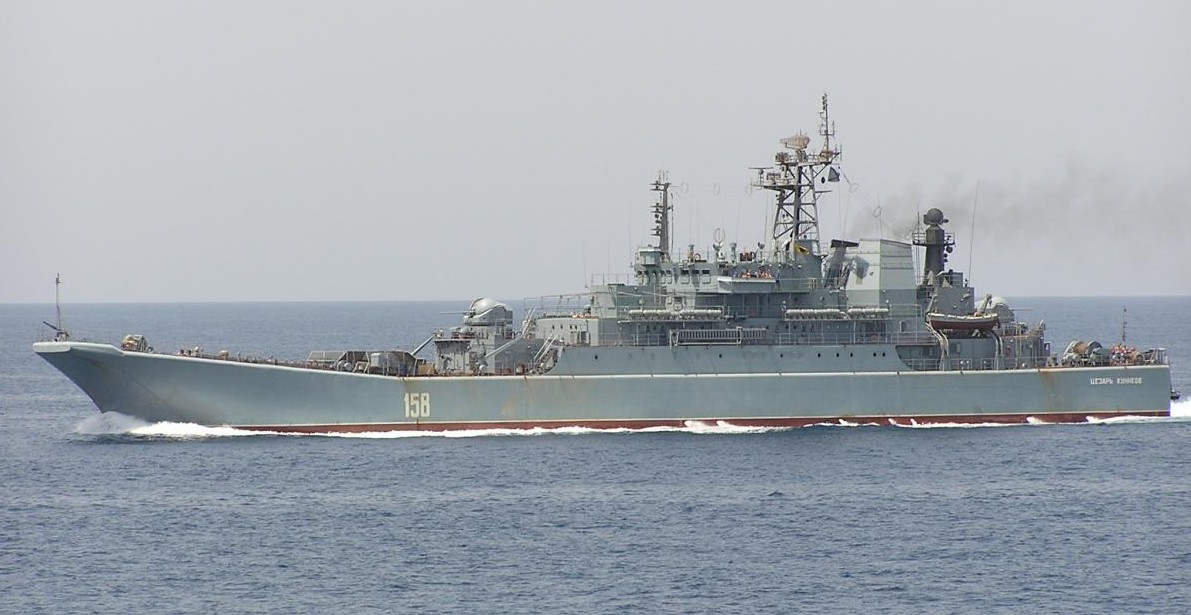
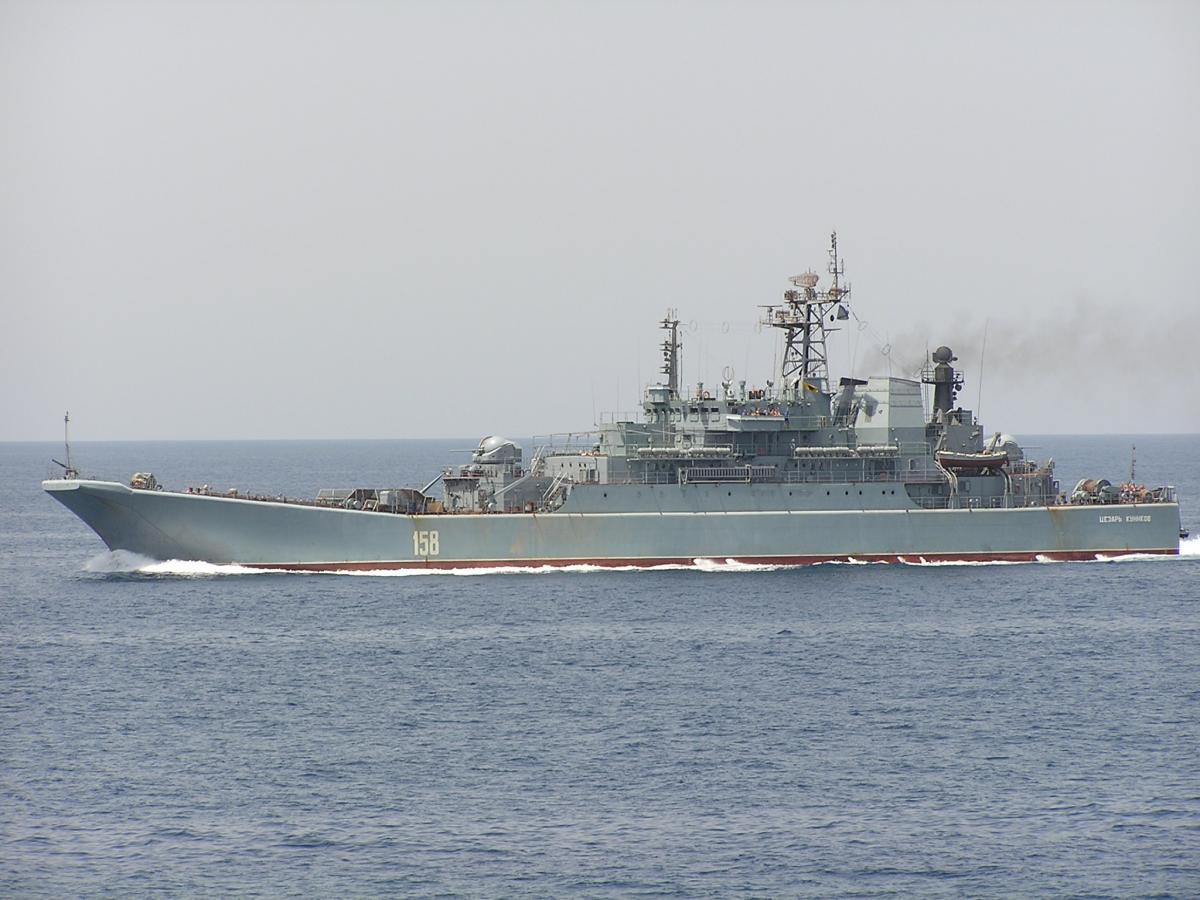
    Russian landing ship 158 'Tsezar Kunikov' spotted at the Red Sea, 2003. USNI photo
    Russian landing ship Tsezar Kunikov (158) was spotted at the red sea in 2003. This is one of the vessels the Russians have sent to Tartus in June, to help secure Russian interests in Syria. Photo: USNI

    King Abdullah II of Jordan warned Wednesday (July 18) that his northern neighbor Syria was on the brink of all-out civil war and that in a worst-case scenario, chemical weapons could fall into the hands of Al-Qaeda. He added that if such weapons were to fall into the hands of rebel forces – some of which he said are unknown quantities – then even reluctant UN members like Russia might support some kind of international action.

    Last week’s attack on Syria’s Cabinet ministers session gravely undermined the regime’s ability to function and suppress the uprising. The toughest blow to President Bashar Assad was the killing of Assef Shawkat, who was not only the president’s brother-in-law but also the person who in practice commanded all the regime’s security arms.


    Analysts warn that the blow to the regime may be so grave that Assad won’t be able to recover. Intelligence officials speak of the possibility that this was the decisive move that will prompt Assad to quit, flee or be killed, thereby leading to a cantonization of Syria – the creation of sub-national units, each of which will be dominated by a predominant sect -leading to a long period of chaos and uncontrolled sectarian bloodshed.

    Indeed the contours of the Syrian conflict already bear the hallmarks of sectarian cantonization, coupled with literally irrefutable precursors of sectarian cleansing in places such as Houla, Qubeir and other mixed areas in Syria, clearly signaling that the battle in Syria now is over consolidating sectarian cantonization.

    There is nothing new in such a trend: During the post-WWI French Mandate over the Levant, the region was subdivided into six, virtually independed and mostly ethnic populated states under general French mandatory rule. They were Damascus and Aleppo, inhabited by the Sunni majority, the coastal Alawite state, Jebel Druze (Souaida), the autonomous Sanjak of Alexandretta (1939 became Turkish Hatay) and greater Lebanon.

    The small Kurdish populated enclave in northeast Syria was never recognized as a separate entity. However, should new cantonization follow Assad’s regime demise, this community could try to join Kurdish enclaves in neighboring Iraq even drawing Kurdish eastern Turkey into a long aspired Kurdish republic, a move which could have tremendous regional repercussions, presenting Ankara with a frustrating challenge.
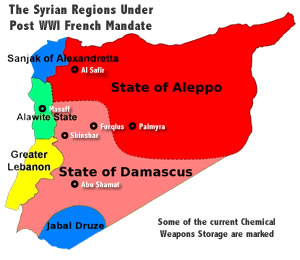
    The French cantons remained virtually independent, although far from quiet, until 1936 when the French decided to unite all Syria, but keep Lebanon separate. All Syrian regimes never accepted this state of affairs and regarded Lebanon as their clear sphere of national interest.

    A danger of a future return to separate ethnic cantonization marks a tremendous challenge to all Syria’s neighboring states, Turkey, Iraq, Jordan, Lebanon and foremost, Israel. There are already widespread fears that a Gaddafi-style collapse of Syria into uncontrolled chaos, could mean that dangerous weapons of mass destruction would fall into terrorist hands and spread around the globe.

    For several decades, Israeli intelligence has monitored Syria’s clandestine efforts to reach strategic parity with Israel’s military potential. Fully aware of Israel’s unchallenged air superiority, Syria opted for missiles, but while these could reach into Israel, weapons of mass destruction could only achieve a strategic effect by arming ballistic missile warheads.

    Syria’s emphasis has been devoted to develop a massive arsenal of chemical weapons. The first facility, which started producing such material, was named the Borosilicate Glass Project, established with aid from a German company. The facility produced dual-purpose chemicals, such as dichloro (2- chlorovinyl) arsine, a substance which is the main source of the GB Sarin-A nerve agent. Another company named Setma sprung up in the outskirts of Damascus, which imported Trimethyl Phosphate from India, under the pretense to produce organophosphate insecticide for Syrian agriculture purposes. This substance, experts know, is a precursor for the weaponization of nerve agents.

    A more ambitious program was started during the 1980s, when Syria’s military patrons, the Soviet Union rendered vital information over the production process of advanced chemical warfare weapons. This brought about the development of aerial bombs containing binary Sarin-A agent. The Syrians modified the Russian ZAB-2.5 incendiary bombs to include chemical warheads, allegedly, using DF and isopropyl alcohol substances in a binary system. During the nineties, the Syrians explored new ways to develop chemical warheads of even more lethal capability. They used the ex-Soviet aerial cluster bomb PTAB-500 to modify its warhead to carry chemical weapons.
    The most significant milestone in Syrian chemical weapons program was achieved when Syrian scientists mastered the development process of the notorious VX agent. Also known under the chemical name O-ethyl-S-(2-isopropylaminoethyl) methyl phosphonothiolate, VX rates among the most potent chemical weapons today. According to intelligence estimates, Syria’s strategic chemical weapons stockpile is still primarily composed of the nerve agent Sarin, but according to recent reports Syria has successfully produced the VX and that it may have tested missile warheads armed with this agent. (Check Defense-Update full report on the Syrianchemical weapons facilities.)

    Recent investigations by Sky News identified four sites where chemical agents are produced: Hama, Latakia, Al Safira and the Centre D’Etude et Recherche Scientifique laboratories in Damascus. Storage sites were also found at Khan abu Shamat, Furqlus, Hama, Masyaf (Albaida) and Palmyra. As to precise locations of chemical weapons storage sites, presently updated information is scanty, due to reports that Syrian forces have been seen relocating secret weapons loads from their underground bunkers to sofar unidentified locations. No doubt, intelligence, both western, Israeli and certainly Russian, are constantly monitoring these moves by satellite and other means, but the uncertainty of the whereabouts of these highly lethal weapons must create a nightmare to intelligence agency around in the region and the world.

    The ultimate solution would inevitably be to seize these depots with quick, effective and determined action by specially trained forces, located in position and high alert status to act immediately when the time is right.

    Syria is not the only place in which such danger exists. The nuclear arsenal in Pakistan is one of these and the US has already a top-secret contingency plan to secure Pakistan’s nuclear depots, should Al Qaeda or Taliban try to capture these, during internal loss of control. At the Nevada National Security Site, northwest of Las Vegas, Delta Force and SEAL Team Six squadrons already practice “Deep Underground Shelter” penetrations, using extremely sensitive radiological detection devices that can pick up trace amounts of nuclear material and help Special Operations locate the precise spot where the fissile material is stored.

    In an effort to keep their whereabouts away from prying U.S. intelligence efforts, the Pakistani army had recently taken to transporting nuclear warheads around the country via unmarked civilian-style vans on congested roadways. Sounds familiar to what the Syrian Army is doing these days?

    So who might be best placed to go in an seize the Syrian weapons of mass destruction before it is too late? Unconfirmed reports from Washington indicate that last May, 12,000 special forces commandos spent almost a month training for the sort of scenario now presented by Syria. But where are they and how quickly can they intervene in Syria-how will the Russians react to such action?

    Israel’s defense minister Ehud Barak told TV Channel 10 that he has ordered to step up intelligence preparations, monitoring every movement concerning Syrian chemical weapons stockpiles, however it seems hardly viable that an order to strike deep into Syria will be given, without creating a war situation.

    Elite Jordanian special forces and U.S. Army Green Berets are training in Jordan in case they have to move to secure Syria’s chemical or biological weapons Eager Lion military exercise in Jordan. Whether the King will send such forces into Syria is also doubtful.

    Russia’s role may unwittingly turn out to be helpful for those thinking about the chemical weapons stockpiles possessed by the Syrian regime.

    The Russian destroyer Smetlivy was heading for Tartus port with an escort of three landing ships, who according to unconfirmed reports might carry contingents of Special Forces trained and armed for covert action. Although their primary mission, by official Kremlin reports is to to “secure the port whatever unfolds beyond its chain fenced perimeter”, it would be reasonable to expect that the Russian Speznatz would become ideal to seize the Syrian chemical weapons when give the order. Moreover, as the Russians are already in place and with excellent information available they could even get away scot free and thus save an impossible situation, which no one else can cope with.

    Power Shake-up in North Korea

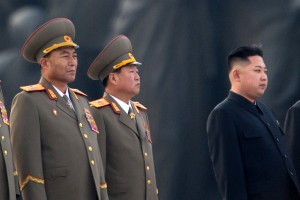
    North Korean leader Kim Jong-un with Ri Yong-ho, former chief of general staff of the Korean People’s Army, during the military parade in Pyongyang earlier in 2012.

    In an unexpected move, Vice Marshal Ri Yong-ho has been officially relieved of his duties according to North Korea’s Korean Central News Agency. At the time of his removal, the 69-year-old Ri held the position of Chief of the Korean People’s Army General Staff and was widely recognized as a strong supporter of Kim Jong-un and something of a military mentor to the new leader.

    In addition to his removal from the post of Chief of the General Staff, Ri was also removed from his position as Vice Chairman of the Central Military Commission of the Worker’s Party and his post in the powerful Presidium of the Party’s Political Bureau. The public announcement indicated that the decision to relieve Ri was reached during a meeting of the Worker’s Party Politburo on 15 July.


    The official announcement stated that Ri was retired from all of his military and political duties because of ill health although he appeared healthy and robust in several recent public appearances. Most observers believe ill health was not the issue and accept as more likely the prospect that he was purged. Also of some note, North Korean news media did not address Ri by the honorable title of “Comrade,” a veneration commonly accorded high-ranking officials upon their death or retirement. Ri and his parents were known to have close ties to the late Kim Jong-il and Ri’s sudden removal may be an indication that Kim Jong-un intends to lead the North in a direction contrary to that embraced by his father.

    How many of Ri’s men have also been removed remains unclear. So far, none are known to have been incarcerated. Some sources have been quoted as saying Kim has purged 20 or more officials from the top ranks since he came to power in December.

    General, Hyon Yong-chol

    On 17 July, Pyongyang announced the promotion of General Hyon Yong-chol to the rank of Vice Marshal and on 18 July he was appointed to the position of Chief of the General Staff as Ri’s replacement. As a veteran Army commander, he has received very little public exposure during his career. Hyon became a 4-star general in September 2010 along with five others including Kim Jong-un and Kim’s aunt, Kim Kyong-hui. Not much is known about Hyon, but many sources have said he comes from a family with ties to Kim Jong-il that goes back to the days of the resistance struggle against the Japanese.

    Also on 18 July as soldiers cheered and danced in the streets of Pyongyang, Kim Jong-un was awarded the title of Marshal, the North’s highest active military rank. The thousands of soldiers gathered in Pyongyang added a pledge of loyalty to Kim to their bout of public reverie. The title of Marshal, bestowed previously on Kim’s father and grandfather, is obviously another step forward in the new leader’s efforts to strengthen his hold on the military, the government, and the party. The Korean Central News Agency announced that the decision to promote Kim to Marshal was confirmed by the North’s Central Committee, the Central Military Commission of the Worker’s Party, the National Defense Commission, and the Presidium of the Supreme People’s Assembly.

    The rank of “Generalissimo” is the only rank senior to that of Marshal. Kim Il-sung, Kim’s grandfather, held the title and his father was awarded the honor after his death in December.

    Kim has steadily added new titles and honors to his resume since rising to power seven months ago. He has been named First Chairman of the National Defense Commission, First Secretary of the Worker’s Party, Chairman of the party’s Central military Commission, and he holds a seat on the Presidium of the Political Bureau. He was confirmed as Supreme Commander of the armed forces following his father’s death in December.

    Vice Marshals Ri Yong-ho and Choe Ryong-hae and the North Korean leader Kim Jong-un watch a military parade in Pyongyang, April 15. (ANP)

    In addition to the most recent leadership changes, many significant changes occurred in April. Choe Ryong-hae, a mid-level bureaucrat, seemed to be a big winner. Choe was named Director of the General Political Bureau, a title that makes him the military’s senior political commissar. He was also appointed a Vice Marshal; an extraordinary move that many observers say is unprecedented given that Choe is a civilian and not a member of the military’s elite.

    Choe also gained admission to the Worker’s Party Politburo Presidium and was named Vice Chairman of the Central Military Commission. During the Korean People’s Army 100th anniversary celebrations on 15 April, it was Choe who stood by Kim’s side instead of Ri. Choe’s father was himself a minister within the Korean people’s Army and a close associate of Kim Il-sung.

    North Korea’s new leader, Kim Jong Un, salutes beside the hearse carrying the body of his late father, North Korean leader Kim Jong Il, during the funeral procession in Pyongyang, North Korea, on Wednesday. Behind Kim Jong Un are Jang Song Taek.

    Choe, having no military experience, has enjoyed a rise in influence that mirrors Kim Jong-un’s own rise to power. Choe is also known to be a close associate of Kim’s uncle, Jang Song-taek. These developments appear to place Choe at the pinnacle of power and influence making him one of Kim’s top aides and close confidante.

    Kim Jong-un’s uncle, Jang Song-taek, is also believed to exercise considerable influence within the party and the government. Jang is married to Kim Kyong-hui, Kim Jong-il’s sister, and is believed by some to be the real power behind the throne. These assertions cannot be confirmed. What can be confirmed is that Jang is now serving as Vice Chairman of the National Defense Commission and as Administrative Director of the Worker’s Party Central Committee. Kim’s aunt, Kim Kyong-hui, holds the influential position of Secretary of the party’s Central Committee as well.

    Officially, the North is governed by a triumvirate. Kim technically shares leadership of the executive branch with Premier Choe Yong-rim and Parliament Chairman Kim Yong-nam. At least on paper, Kim is the commander of the armed forces while Choe Yong-rim heads the government and Kim Yong-nam is responsible for foreign affairs. For all practical purposes, Kim is believed to have complete control of the nation.

    While Kim has publicly continued his father’s “military-first” (Songun) policy, he also announced the promotion of several younger figures with experience in economics to key party positions in April. Although impossible to confirm, this move might be construed to be the first step in Kim’s drive to improve the nation’s economy.

    Reuters, quoting an unnamed informant reportedly with ties to Beijing and Pyongyang, reported on 20 July that all of the leadership changes point to an effort by Kim Jong-un and the Worker’s Party to gain greater control over the military with the intent of focusing more national attention and resources on rebuilding the economy. The unnamed source is quoted by Reuters as saying the North’s cabinet created a “political bureau” to exercise more complete control over the military’s role in the nation’s economy with plans to give more precedence to economic reforms that have been opposed by hardliners like Ri Yong-ho.

    Kim Jong-un reportedly established an “economic reform group” within the Worker’s Party with a mandate to develop new concepts to implement economic reforms. Beijing is believed to be a key advocate behind the drive for economic changes in the North. Beijing has long feared that an economic catastrophe in the North would lead to a mass exodus of North Korean refugees crossing the border into China.

    Reuters’ inside source claims that Kim and Jang “are in control of the military” now and are in a position to initiate economic changes without fear of military opposition. Other changes in the “Hermit Kingdom” have recently come to public notice as well.

    Women have been seen sporting short skirts in public venues, a recent rock concert drew applause from Kim Jong-un himself, and Kim has demonstrated he is not the reclusive figure of mystery his father was. In Pyongyang, new buildings are under construction and citizens on the streets can be seen talking and texting on cellphones. Such matters may seem minor, but they do seem to signify that change is coming to the reclusive communist regime. How far any new reforms may extend remain unknown at present, but future events may shed more light on Kim Jong-un’s vision for his nation in the future.

    Cyber Maneuvering and Morphing – are Defense Networks On Course to ‘Self Awareness’?

    Skynet poster
    Skynet – Is the science fiction nightmare of self-aware network comes true?

    Raytheon Company announced this week it is developing ‘cyber maneuvering’ techniques to thwart potential attackers in high-threat environments. Cyber maneuver is the technique of dynamically modifying aspects and configurations of networks, hosts and applications in a manner that is undetectable and unpredictable by an adversary but still manageable for network administrators.

    The company is deveoping this new technique under a $3.1 million contract awarded by the U.S. Army’s Communications, Electronics, Research, Development and Engineering Center (CERDEC), supporting the Morphing Network Assets to Restrict Adversarial Reconnaissance (MORPHINATOR) initiative managed by CERDEC Space and Terrestrial Communications Directorate. MORPHINATOR is designed to be used in conjunction with other existing security devices to provide an active defense approach to information assurance. In other words, acting as ‘cyber countermeasure’ against enemy cyber reconnaissance actions.


    Cyber maneuver is the technique of dynamically modifying aspects and configurations of networks, hosts and applications in a manner that is undetectable and unpredictable by an adversary but still manageable for network administrators. “The intent of cyber maneuver is to place computer network defense technology into a proactive state, thereby shifting the advantage away from the attacker,” said Jack Donnelly, director of Trusted Network Systems for Raytheon’s Network Centric Systems business. “By constantly changing the characteristics of the networks it resides on, MOPRHINATOR provides a more robust and trusted networking solution.

    MORPHINATOR would provide an adaptive defense response that would thwart an intrusion attempt by randomly changing network settings while simultaneously allowing the network to operate normally for an authenticated user.

    The system is not positioned as an alternative to traditional network defense systems, but offer an additional, ‘forward’ layer of security, employed in concert with existing security methodologies to enhance an system defenses in the event of an attack.

    Xinming “Simon” Ou, associate professor of computing and information sciences at Kansas State University.

    Another initiative is undergoing at the Kansas State University, where cybersecurity researchers are working under a US$1 million US Air Force contract to study an adaptive “moving-target defense” system to protect critical networks from attacks. Instead of malicious hackers or automated attackers needing to find only one security hole to exploit, a self-morphing computer network system that frequently removes whatever security privileges attackers may gain, would shift the security balance back to network administrators. Xinming “Simon” Ou and  Scott DeLoach, professor of computing and information sciences, are  currently researching moving-target defense.

    According to the researchers, the new approach could “substantially increase the security of online data for universities, government departments, corporations and businesses — all of which have been the targets of large-scale cyberattacks.” The new concept may also help develop a fundamental change in how computer networks are hosted, Ou said.

    Ou and DeLoach are looking into the viability of designs in which systems, after detecting an intrusion attempt, could autonomously respond by altering key configurations, essentially becoming self-defending networks. The study will also evaluate the feasibility and affordability of deploying such adaptive defense systems, particularly from a resource allocation perspective.

    Theoretical studies on morphing and active networks have been underway for a decade, but only recently the US government is investing seed money to evaluate their application in the real world.

    These studies are part of a broader ‘Moving Target‘ strategy launched by the Cybersecurity and Information Assurance (CSIA), under the Federal Cybersecurity R&D Strategic Plan outlined by the Federal Cybersecurity R&D Initiative (NITRD). The ‘Moving Target’ concept of operation enables the ‘cyber defenders’ to create, analyze, evaluate, and deploy mechanisms and strategies that continually shift and change over time, thus increasing complexity and cost for attackers, without affecting the protected network or its users. This strategy limits the exposure of vulnerabilities and opportunities for attack, and increasing system resiliency.

    While cyber researchers are excited with the potential of morphing and adaptive networks, Computerworld Darleen Storm touches the subject with caution, reminding readers of the science fiction self-morphing, self-aware computer network – Skynet, created with the best of cybersecurity intentions to “remove the possibility of human error and slow reaction time to guarantee a fast, efficient response to enemy attack.” It did not blink, sleep or eat. One day, when the administrators realized this self-aware system could change its own configurations, could detect and defend all systems, the admins tried to deactivate it. Then all humans, not only online attackers, became the threat to be eliminated and destroyed. Hello, Skynet.

    Israel, Italy Exchange Multi-Billion Dollar Defense Contracts

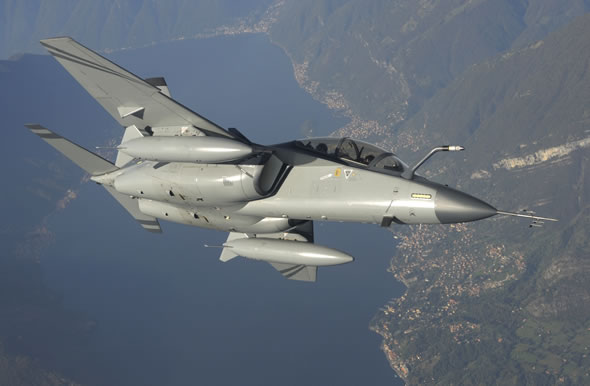
    Israel will receive 30 Italian Alenia Aermacchi M346 as part of a US$1 billion arms pact signed with Italy yesterday. Photo: Alenia Aermacchi
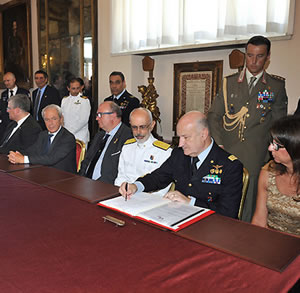
    The agreement was signed by the Italian Secretary General of Defence / DNA, Gen. S. A. Claudio Debertolis and the Director General of the Ministry of Defense of Israel, Gen. D. (Ret) Udi Shani.

    The Italian defense group Finmeccanica announced yesterday it has signed contracts worth approximately $850 million under a collaboration agreement between the Italian government and the Israeli governmentAmong the Group’s beneficiaries are Alenia Aermacchi, Selex and Elsag Telespazio. The main element in the contract is the supply of 30 M-346 advanced jet trainer aircraft by Alenia Aermacchi. The aircraft will be delivered starting 2014, over a period of two years. This agreement has a total value of about one million US$, including aircraft, engines, maintenance, logistics, and training simulators. Approximately $600 million are attributable directly to Alenia Aermacchi. The agreement was signed by the Italian Secretary General of Defence / DNA, Gen. S. A. Claudio Debertolis and the Director General of the Ministry of Defense of Israel, Gen. D. (Ret) Udi Shani.

    The Israel Air Force will receive 30 Italian M346 jet trainers beginning 2014, under a $1 billion defense pact signed yesterday in Italy. Photo: Alenia Aermacchi

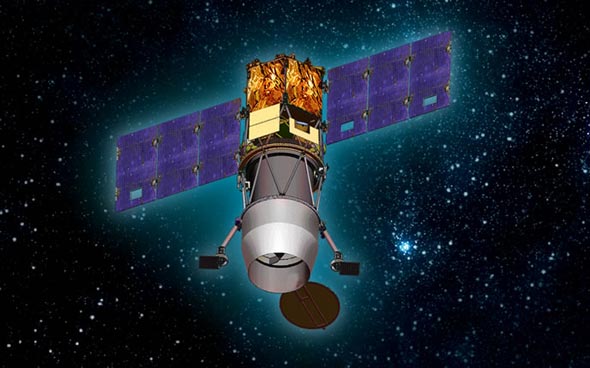
    Elsag Telespazio was selected to act as prime contractor for the Italian Ministry of Defense, supplying a military satellite system for the Italian Government. The OPTSAT-3000 high-resolution optical Earth observation, is worth more than $200 million. Telespazio will be responsible for supplying the entire system including the satellite, payload and ground segment, launch services and launch into orbit, the preparation and execution of operations and logistics. The company will also support the mission with in-orbit testing and commissioning. The satellite will be delivered in 2015, by the company Israel Aerospace Industries / MBT Space Division acting as subcontractor. Telespazio has awarded IAI a contract worth $182 million for the development and production of the satellite. IAI has been developing the OPSAT-3000 platform for several years for the Israeli Ofek 10 satellite. This program is likely to expedite now with the Italian contract in place setting a firm goal for the program.

    Israel Aerospace Industries MBT Space will build the OPSAT-3000 reconaissance satellite under subcontract by Elsag Telespazio, the prime contractor for the Italian MOD satellite programs. Photo: IAI

    Another Finmeccanica group company to benefit from the Israeli-Italian pact is SELEX Elsag, which supplies identification systems, communications and computers for the 30 trainers and delivery, and standard NATO communication link and identification systems for the two Conformal Airborne Early Warning (CAEW) aircraft IAI ELta will deliver to the Italian Air Force under the $750 million contract signed yesterday. The worth of new business for SELEX Elsag are approximately $41 million from the two programs.

    “This agreement represents an important statement not only of the operating companies Finmeccanica and Alenia Aermacchi, Telespazio and Elsag SELEX, but entire national economy,” said Giuseppe Orsi, President and Chief Executive Officer of Finmeccanica. “The agreement by which Finmeccanica expresses special thanks to Ministry of Defence, is the result of a fruitful collaboration between the Italian government, the Israeli government, the corporate world and various other institutions. It testifies to the high competitiveness of made in Italy technology worldwide, of which Finmeccanica is important garrison, and demonstrates that investments in technology are, for the Group and the Italian industrial system, the best way to ensure sustainable development that further increases in industrial capacity, making them more competitive on a global scale.”

    Two US companies will also benefit directly from the Israeli-Italian package. Gulfstream will deliver two G550 business jets, and Honeywell, providing the engines for the M346, will deliver at least 60 F124-GA-200 engines plus spare engines, spare parts and logistics to power the Italian aircraft. The aircraft and other ground equipment and simulators will be operated and maintained in Israel by the TOR corporation, a Joint Venture company established by IAI and Elbit Systems. Earlier this week the Israeli ministry of finance approved the MOD to commit 6.35 billion Israeli Shekels (about US$1.5 billion) from future defense budget to secure the M346 procurement and support, allocating about $600 million for the outsourcing of through life support over the next 25 years. TOR may end up with more revenues, as part of the program suopprt is already included in the aircraft procurement cost.

    Minhunter and Gizmo Help Warfighters Finding IEDs with Mine Detectors

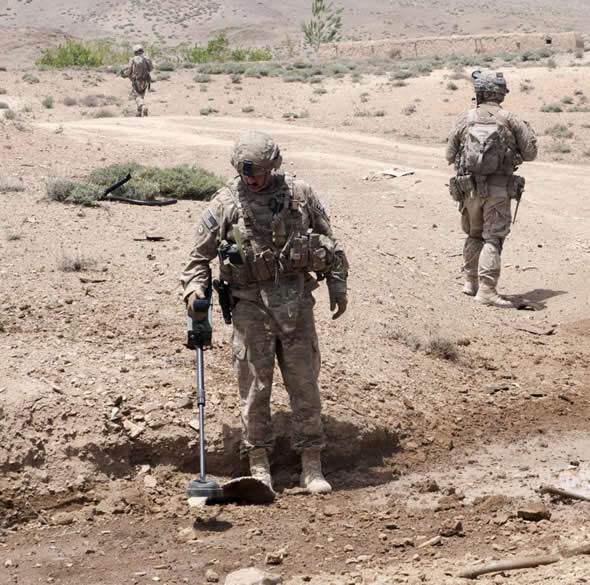
    Pfc. Nikko Williams, 3rd Platoon, Battle Company, 5th Battalion 20th Infantry Regiment, Task Force 1st Squadron 14th Cavalry Regiment, uses a Minehound to search for weapons caches in an orchard outside the village of Sowkray Tangay, Afghanistan. (Photo by Sgt. Christopher McCullough)
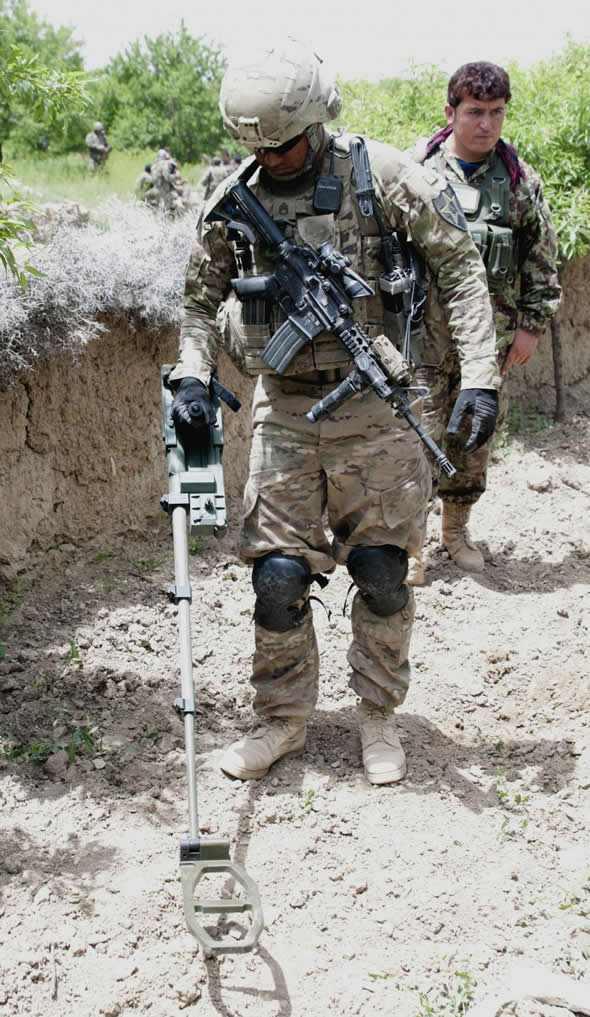
    Staff Sgt. Anthony Shaw (left), 787th Ordnance Company, 3rd Ordnance Battalion, uses a VMR-2 MineHound to search for possible secondary improvised explosive devices following an earlier incident. The MineHound’s ground penetrating radar allows operators to locate IEDs that may otherwise not be found by the naked eye. US Army Photo by Sgt. Christopher McCullough

    The joint Afghan National Army – U.S. forces counter improvised explosive device team of seven soldiers walked down the dusty rural road in Shamulzai District, Afghanistan, ahead of their convoy; scanning the route with their eyes for subtle clues that might help them visually identify an improvised explosive device, or IED, hidden on the road. When they see nothing, they verify as much by sweeping the same area with their VMR-3 Minehound and VMC-1 Gizmo metal detectors in a slow precise manner before walking ahead.

    “We walked a good four and a half (kilometers) in front of the whole convoy because we had just recently been hit with an IED on the route back (to Forward Operating Base Sweeney),” said Staff Sgt. Antonio Barajas, 3rd Platoon, 5th Battalion, 20th Infantry Regiment, Task Force 1st Squadron, 14th Cavalry Regiment, out of Joint Base Lewis-McChord, Wash. “All seven of us had Gizmos and Minehounds (and were) out there clearing the whole road so the rest of the convoy could make it back to FOB Sweeney safely.”

    “The Gizmo is just an easy (to use) metal detector used to identify metal or you can switch it to minerals,” explained Barajas when asked to describe the two devices used that day. “It’s a lot like the metal detectors you see men on the beach with, but on steroids,” said Pfc. Niko Williams, also from 3rd Platoon, 5-20 Infantry, Task Force 1-14 Cavalry.The use of such gadgetry has been a blessing to both ANA and International Security Assistance Forces in Afghanistan.
    For Barajas and his team, the MineHound’s ground penetrating radar enabled them to discover a secondary IED earlier in the day, prior to the IED strike on their convoy. That IED was only a hundred meters forward of the one that hit them. Without the MineHound, there stood a chance Barajas’ team may have missed that roadside bomb.

    According to the manufacturer, the German Vallon company, the VMR-3 Minehound and VMC-1 Gizmo metal detectors are dual sensor detectors capable of detecting command wires, non-metallic and low-metallic signature IEDs using ground penetrating radar (GPR). In addition to GPR, the Minehound uses a metal detector sensor,derived from the VMC-1, to find both metallic and non-metallic threats. The Vallon Company claims to have more than 2,000 Minehound detectors currently in use in Afghanistan. Both detectors have become an invaluable item in finding IEDs and weapons caches before they can be used against ANA or ISAF forces.

    The use of the Minehound and Gizmo detectors started with combat engineers and explosive ordnance disposal personnel, but they are now issued to non-EOD units such as Battle Company, 5-20 Infantry, to aid in the discovery of IEDs and weapons caches.

    Staff Sgt. Antonio Barajas, 3rd Platoon, Battle Company, 5th Battalion 20th Infantry Regiment, Task Force 1st Squadron 14th Cavalry Regiment, uses a Gizmo to search for weapons caches in an orchard outside the village of Sowkray Tangay, Afghanistan, May 7, 2012. The Gizmo is a handheld metal detector that uses metal detection technology to locate metallic threats such as mines and caches. US Army photo by Sgt. Christopher McCullough

    Since the onset of the Afghan War in 2001, homemade bombs have increasingly become the insurgent’s weapon of choice in Afghanistan and certainly their most effective weapon.  Almost 60 percent of all coalition forces wounded or killed in Afghanistan since the start of the war in 2001 have been due to IEDs, according to a May 2011 report from the Joint Improvised Explosive Device Defeat Organization, a U.S. Department of Defense organization located in Washington D.C.

    To complicate matters, insurgents in Afghanistan have been increasingly constructing IEDs to circumvent simple metal detectors. Some IEDs contain rudimentary materials such as wooden boards, foam rubber, and plastic containers. The finished product contains very little metal making it difficult for a traditional metal detector to pick up, but not for the Minehound with its ground penetrating radar.

    Increasingly compact, collapsible, light-weight metal detectors, such as the MineHound and Gizmo, are finding IEDs with more frequency than ever before, all of which has reduced the number of injuries or deaths to Afghan civilians, ANA and ISAF troops. In the hands of an infantry platoon, or similar-type unit, they are also being used to find weapons caches which often provide the insurgency with ample arms to fight for weeks or months.

    “In the orchards (the Minehound and Gizmo are) good because that’s where they often hide the caches,” said Barajas. “So far we’ve found two caches with the Gizmo and Minehounds, and also with the ANA helping us out with their resources.”

    Without doubt, improved technological devices such as the Minehound and Gizmo metal detectors are helping coalition troops across Afghanistan. “It helps a lot when we’re in the orchards or going through the towns when we use the Gizmos and Minehounds because it also allows if something does get missed by sight it will pick it up,” said Williams. “That’s what makes the Gizmo and Mine Hound so important,” said Williams. “It helps make sure people are not being taken out of the fight … (that) you’re keeping them in,” said Williams.

    By Sgt. Christopher McCullough
    From www.army.mil  

    Lockheed Martin Receives $68.9 Million Contract For PAC-3 MSE Production

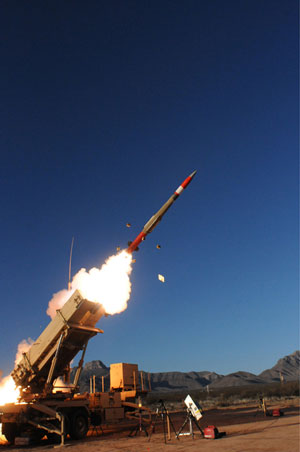
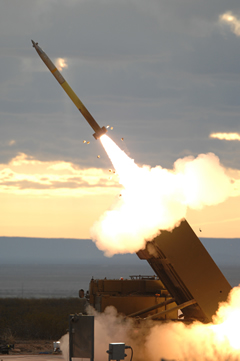
    PAC-3 MSE

    Lockheed Martin received a $68.9 million contract to prepare the Patriot Advanced Capability-3 (PAC-3) Missile production line for the introduction of the Missile Segment Enhancement (MSE) version of the combat-proven PAC-3 Missile.

    The PAC-3 MSE Missile provides increased performance, greater altitude and range than current PAC-3 missiles. The PAC-3 MSE Missile will be packaged in a single canister that stacks to provide flexibility for the Patriot air defense system launcher load-out requirements. The new  contract covers preparation of tooling and test equipment at the company’s production facility at Camden, Ark., as well as other sites and subcontractors, in anticipation of a production decision by the U.S. Army in 2013.


    The MSE is being developed under a spiral development of the Patriot missile, the MSE Missile was selected as the primary interceptor for the multi-national MEADS in September 2006. However, lacking clear US committment to follow on with fileding the system, the future of the MEADS is unclear.

    The PAC-3 Missile Segment upgrade consists of the highly agile hit-to-kill PAC-3 Missile, the PAC-3 Missile canisters (in four packs), a fire solution computer and an Enhanced Launcher Electronics System (ELES). These elements will be integrated into the Patriot system. Lockheed Martin Missiles and Fire Control is the prime contractor on the PAC-3 Missile Segment upgrade to the Patriot air defense system.

    TenCate Lowers 2012 Expectations Following a Drop in US Defense Sales

    In anticipation of the publication of the half-year figures on Friday, 27 July, 2012, TenCate announced today it has adjusted its financial outlook for 2012; based on the current half year results, the expected profit will be below 2011 level. The company said that uncertain political climate combined with economic conditions has had a negative effect on government expenditure in 2012. TenCate’s half year revenues decreased by 9% to € 540 million during the first half of 2012.

    This decrease had been partly anticipated. Revenues Advanced Armour and the Defender M product lines have thus far shown a decrease of approximately US$ 60 million, particularly with TenCate Defender™ M portfolio. Defender M is a flame retardant fabric developped in 2006 in response to an urgent U.S. military requirement for a fabric that could improve the protection from burn injuries, caused from Improvised Explosive Devices, (IEDs). In the following years TenCate Protective Fabrics USA won multiple solicitations from the US Army, US Marine Corps, US Air force and the US Navy and has become the fabric of choice for flame-resistant protection, credited with a major reduction in burn injuries. However, in 2012 this trend shifted. According to the company, due to an unexpected decline in buffer inventories at the US military.


    TenCate hopes to offset this decline with new US orders for various army units, however, these new opportunities may not be in line for this year. In contrast, sales of Defender M outside the US showed a positive trend. Defender M is currently delivered to the Australian Army, Norwegian Navy and to the Soldier of the Future program of the Italian Army (‘Forza Nec’ programme). In addition the company has now established new business for Defender M in Canada, India, the Netherlands, Sweden, the United Kingdom, Poland, the Czech Republic and Brazil. Additional prospects from follow-up orders from these countries and following trials in more than ten countries.

    For the near term TenCate plans to sharpen its strategic focus by the integration of activities and ‘synergy effects’ which will also involve personnel reductions, in an attempt to save €25 million on an annual basis.

    US Army $353 Million GMLRS Order Includes Supplies to Italy, Jordan and Singapore

    Lockheed Martin GMLRS
    Lockheed Martin GMLRS

    The US Army awarded Lockheed Martin US$353.2 million follow-on contract for the seventh production lot of Guided Multiple Launch Rocket System (GMLRS) Unitary rockets. Rockets from this production lot will be supplied to the U.S. Army and U.S. Marine Corps, and to the armies of Italy, Jordan and Singapore. This contract represents Italy’s first purchase of GMLRS rockets. Deliveries are scheduled to begin in December 2013. The company is currently supplying GMLRS under a $438 million production contract for 767 rockets, awarded in June 2011, that will expire in April 2014.

    GMLRS is an all-weather, rapidly deployable, long-range rocket that delivers precision strike beyond the range of most conventional weapons. It is designed for destroying targets at ranges up to 70 kilometers. A longer-range GMLRS+ rocket, with a reach of more than 120 kilometers, is being developed and tested by Lockheed Martin using company funds.


    Each GMLRS rocket is packaged in an MLRS launch pod and is fired from the Lockheed Martin HIMARS or M270 family of launchers. According to the manufacturer records, GMLRS Unitary rockets have achieved a combat-reliability rate of 98 percent.

    According to Lt. Col. T.J. Wright, the U.S. Army’s product manager for Precision Guided Missiles and Rockets, “GMLRS continues to be the long-range precision-fire weapon of choice when commanders need to decisively and accurately attack high value targets while minimizing the risk of collateral damage.” U.S. and allied forces have fired more than 2,200 of these precision munitions in support of military operations.

    UAE Orders 750 M-ATV Vehicles from Oshkosh Corporation

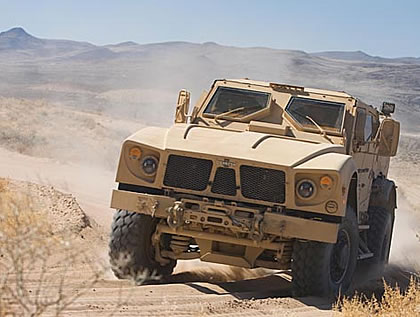
    M-ATV vehicles undergoing testing in the high desert of Western USA prior to shipment to Afghanistan. Photo: Oshkosh Defense.

    The UAE is buying 750 Mine Resistant Ambush Protected All-Terrain Vehicles (M-ATVs). Deliveries will commence between January and August 2013, pending standard regulatory requirements. The contract grants the UAE options for more vehicles in the future.


    “The UAE is central to our international growth strategy” said John Urias, executive vice president, Oshkosh Corporation and president, Oshkosh Defense.  To date, Oshkosh has received delivery orders for more than 9,500 M-ATVs.

    U.S. Lawmakers Cut Pentagon Ties with Russian Arms Exporter

    Alaed, the cargo vessel carrying the Syrian helicopters offloaded its cargo at the port of Baltiysk in the Kaliningrad region
    Alaed, the cargo vessel carrying the Syrian helicopters offloaded its cargo at the port of Baltiysk in the Kaliningrad region. Photo: Vestnik

    U.S. lawmakers passed a bill on Thursday breaking contracts between the Pentagon and Russian state-run arms exporter Rosoboronexport, which they claim is “arming the oppressive Syrian regime,” the House of Representatives said on its website, the Russian news agency Novosti reports. The bill, introduced by Democrat Congressman Jim Moran (VA), was passed by an overwhelming 407-5 vote and was attached to the 2013 U.S. military budget, according to the House of Representatives’ statement. The passage of the bill came several hours after Russia and China vetoed for the third time a UN Security Council resolution on Syria authorizing non-military sanctions against President Bashar al-Assad’s regime if it fails to withdraw heavy weapons and troops from urban areas within 10 days.


    Rosoboronexport signed a $367.5 million deal with the United States in May 2011 for delivery of 21 Mi-17V5s to equip the Afghan Air Force. All those helicopters have now been delivered, according to the Center for Analysis of Strategies and Technologies (CAST), a Moscow-based think-tank. The break with the United States could affect an option contract signed on July 18 for a further ten machines worth $171 million. Deliveries of the second batch were due by 2016. Another potential contract that looks set to be lost is for ammunition supplies to Afghanistan. In April, five U.S. defense firms invited Russia for the first time to become a subcontractor on the delivery of Russian-made ammunition for coalition forces in Afghanistan, Rosoboronexport said.

    In addition to the moral cause for the exclusion of the Russian company from the 2013 budget, Congressman Moran also argued the Afghans should have offered a choice of helicopters, not only the Russian type they have been familiar with in the past“There has never been a competition for supplying rotorcraft for the Afghan National Security Forces. Had there been one, I’m confident American firms would have done exceptionally well,” Moran said. However, some analysts doubt the Afghan government would want another helicopter type in its inventory.

    “In terms of follow-on orders the Mi-17 makes a lot of sense because of fleet commonality, crew and ground crew familiarity with the type, and the helicopter’s robustness and ability to be operated in austere condititions,” said Douglas Barrie, air warfare analyst with the London-based International Institute for Strategic Studies. CAST’s Ruslan Pukhov agrees. “It would be possible to buy Sikorsky helicopters, but they would have to wait three years for them and they would be more expensive, and be more complicated from the point of view of training. This is a political move, pre-election demagogery,” Pukhov said.

    This is not the first time Rosoboronexport is sanctioned by the US. The Russian company was subject to U.S. sanctions from 2006 to 2010 for allegedly providing nations including Iran and Syria with equipment that could be used to develop weapons of mass destruction. In mid-June 2012, U.S. Senator John Cornyn called on the Pentagon to take action against Rosoboronexport, but the Pentagon dismissed his claims, saying that dealing with Russia’s arms exporter was the “only legally available method” to supply the helicopters to Afghanistan.

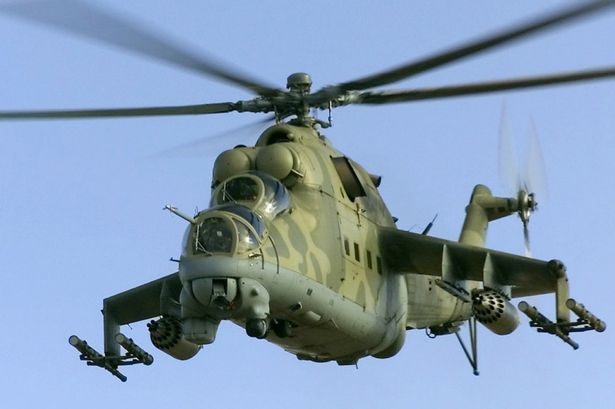
    Russia is the biggest supplier of arms to Syria, and maintains its only military base outside the former Soviet Union there. In recent days, a Russian cargo ship carrying a batch of refurbished Syrian Mi-25 attack helicopters and air defense systems returned to Syria after being overhauled has returned to the Russian port of Baltiysk in the Kaliningrad region, to offload its cargo after its voyage through the British. The ship turned back to Russia last June, after its insurance cover was suspended by its British insurer, Standard Club. It later turned back and entered the port of Murmansk, and was later re-flagged as a Russian registered vessel.

    Russian Mi-25 Attack Helicopter

    Lockheed Martin Chairman And CEO Bob Stevens Urges Congress To Avoid Automatic Defense Cuts

    Lockheed Martin CEO Bob Stevens
    Lockheed Martin CEO Bob Stevens

    CEO Bob Stevens warned against the consequences to U.S. national security and the economy of the automatic cuts known as sequestration, calling on Congress to find a better solution to address US fiscal challenges. “Every month that goes by without a solution is a month of additional uncertainty, deferred investment, lost talent and ultimately, increased cost,” Stevens said. “Respectfully, I urge you to take action to stop the sequestration process and ask that you do so soon.” Lockheed Martin reduced its workforce by 18 percent, or 26,000 employees, since 2009. Based on the limited information available on how sequestration will be implemented, the company roughly calculated that they could be required to lay off as many as 10,000 employees.


    “But which 10,000? And when? That is difficult to determine without additional guidance from the Government that allows us to narrow the potential impacts,” Stevens said. “We are very hungry for more guidance, very hungry for more information so we can narrow this and behave responsibly.” Stevens outlined Lockheed Martin’s recent cost-cutting efforts resulting in billions of dollars in reductions over the past three years, removing 1.5 million square feet in its facilities’ footprint, with another 2.9 million square feet reduction before the end of 2014.

    “Most tragically, we feel we will be unable to provide the equipment and support needed by our military forces, and we are unable to reliably estimate how many employees are going to lose their jobs and how many families are going to be disrupted.” Stevens cautioned.

    Italy Expands Airborne C4ISR Capabilities

    Italy is acquiring two G550 aircraft equipped with Israeli EL/M-2085 Conformal Early Warning Radar (CAEW), becoming the third operator of this type of aircraft.

    The ministries of defense Israel and Italy have signed today two agreements formalizing several defense acquisition packages worth over two billion US$. The Government-to-Govenrment (G2G) agreements include the selling 30 Alenia Aermacchi M346 advanced jet trainers to Israel, as part of a €1.1 billion arms transfer. As part of the buyback agreement, the Italian MOD acquired two G550 Airborne Early Warning aircraft from IAI. Under a parallel transaction, the Italian company Telespazio has signed IAI as a main subcontractor providing a reconnaissance satellite to be operated by the Italian company for the Itailain MOD. The total value of the Italian acquisition is US$932 million.

    The G550 CAEW is currently operational with the Israel and Singapore Air Forces. Once the deal is signed, the Italian Air Force will become the third operator of this type.


    The aircraft is equipped with four-panel bi-spectral AESA radar, IFF and passive electronic support measures (ESM) covering 360 degrees, a NATO compatible communications system developed by Elta and SELEX-Elsag, and a central computing system. The aircraft is also equipped with self-protection system (SPS) utilizing passive and active sensors and countermeasure systems. The system relays all data to the ground operations center in real time, in addition, a crew of six operators can operate the systems on a stand-alone mission.

    The satellite to be built for the Italians is believed to be latest OPSAT 3000 based observation satellite, equipped with the latest ‘Jupiter’ multi-spectral imaging payload from Elbit Systems, providing high-resolution imagery simultaneously in color and B/W modes. The satellite is in development by IAI/MBT Space Division.

    Italy is acquiring two G550 aircraft equipped with Israeli EL/M-2085 Conformal Early Warning Radar (CAEW), becoming the third operator of this type of aircraft. The CAEW uses four panel bi-spectral radar, IFF and ESM providing a comprehensive air situational picture. Photo: Tamir Eshel, Defense-Update

    The Italians are seeking to improve battlefield targeting, an operational requirement that evolved from the Libyan campaign of 2011. Such targeting capabilities should rely on employing advanced command and control, intelligence, surveillance and reconnaissance (C4ISR) capabilities for ad-hoc targeting.

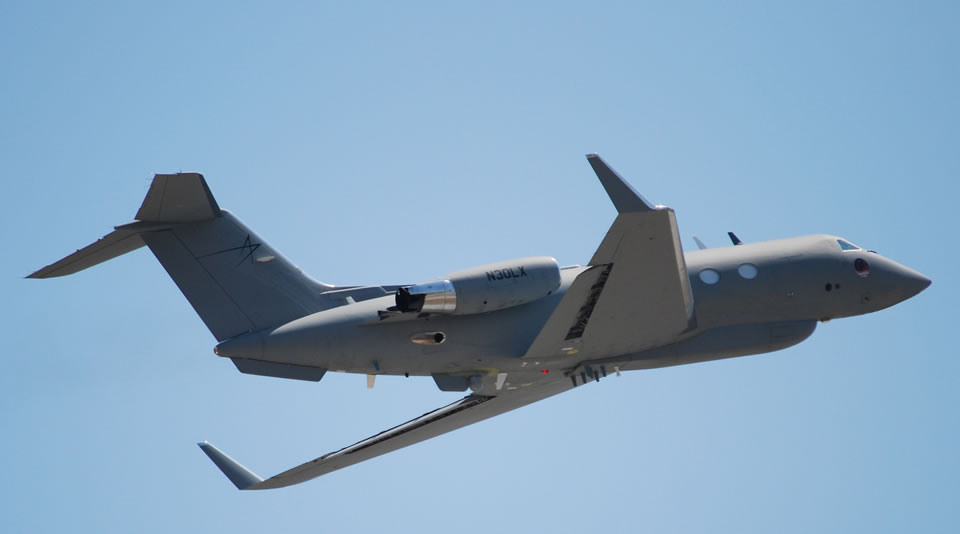
    As part of this learning process the Italian MOD is using a Gulfstream III business jet carrying multi-intelligence (MultiINT) sensors to collect, process and disseminate aerial intelligence and target information. The platform, known as the ‘Airborne Multi-Intelligence Laboratory’ (AML) was developed by Lockheed Martin and provided by the company for the Italian program. It will be used by the Italians to test and evaluate integrated airborne sensors for a period of 12 months. The US company is delivering the aircraft with three ground intelligence processing systems, flight crew and maintenance personnel. This agreement is for one year, with an option to extend to two years.

    The Italian Air Force will use the AML, with ‘multi-intelligence’ sensor suite that include signals intelligence arrays and electro-optical/infrared radar, in a live operational environment for the next year. The system is based on open architecture enabling the integration additional C4ISR components (software and hardware) in a matter of hours. Lockheed Martin’s AML team includes L-3 Communications Systems-West, Rockwell Collins, FLIR Government Systems and DRS. The team is currently offering an operational variant of the AML as the ‘Dragon’ family of ISR platforms. The Italian order is positioned as the first sale of the ‘Net Dragon’ provided under the ‘ISR as a Service’ concept.

    Lockheed Martin’s Net Dragon Airborne Multi-Intelligence Laboratory (AML). Photo: Lockheed Martin

    Sikorsky Signs Five-Year H-60 Helicopter Contract

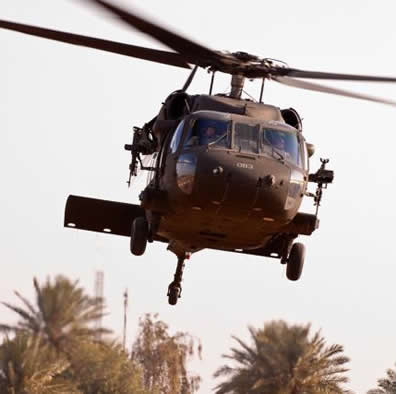
    The Turks will locally manufacture the new T-70S and will also offer it for export. Turkey is expecting a a market for 600 such helicopters over the next 20 years. Photo: U.S. Army

    On 9 July, the Sikorsky Aircraft Corporation confirmed that they have signed another multi-year contract to build a baseline quantity of 653 Black Hawk and Seahawk helicopters for the United States Army and Navy. The contract is valued at between $7.3 billion and $8.5 billion and could eventually reach as high as $11.7 billion.
    The contract is a five-year, multi-service agreement designated “Multi-Year Procurement 8 (MYP-VIII) as it represents the eighth multi-year procurement order for the H-60 helicopters signed since 1982. Finalization of the agreement is the result of three years of intense planning and six months of detailed negotiation.

    The contract is a price-framework arrangement instead of a fixed schedule order and follows the five-year MYP-VII contract signed in December 2007. The base award calls for the production and delivery of 653 helicopters with deliveries scheduled to begin this month and continue through December 2017.


    Aircraft orders will be processed through the US Foreign Military Sales (FMS) program and will include UH-60M helicopters for several allies and MH-60R Seahawk anti-submarine/anti-surface warfare aircraft for the Royal Australian Navy. The five-year contract also allows the Army and the Navy to order as many as 263 additional aircraft under the same terms as the base contract. Should the option for 263 additional helicopters be fully exercised, the contract could be worth as much as $11.7 billion over the five-year life of the agreement.

    Actual production quantities are decided on a year-by-year basis subject to funding allocations authorized by Congress and in line with Department of Defense (DoD) procurement needs. While orders are planned five years in advance, budget authorizations can and often do vary from year-to-year, funding will be the final determinant of the volume of orders actually submitted.

    From the buyer’s perspective, the attraction of multi-year contracts is significant cost savings coupled with production continuity that serves to stabilize manufacturing capacity and delivery schedules. Buying aircraft batches on a year-by-year schedule tends to increase prices and introduces uncertainty in the production cycle.
    The base contract calls for the procurement of UH-60M transport/light cargo Black Hawks and HH-60M Search and Rescue (SAR)/Medevac helicopters for the Army and MH-60R and MH-60S Seahawks for the Navy. Sikorsky will provide the helicopters, technical guidance and assistance, technical publications, on-site training, and upgrades as outlined in the contract.

    Some of the Army’s UH-60 helicopters still in service are now over 30 years old and the UH-60 fleet overall has an average age of 23 years. Replacement aircraft are definitely needed and the new helicopters will be a welcome enhancement to the Army’s air fleet.

    The US Navy is also in need of new helicopters. The new MH-60S/R aircraft are planned as replacements for the Navy’s SH-60B/F Seahawks, HH-60 SAR models, CH-46D Sea Knights, and HH-1N SAR helicopters. As the United States advances its “pivot” to the Asia-Pacific region, it is likely to believe that the US Navy’s air fleet will be called upon to perform more frequent missions of longer duration given the massive expanse of the Pacific.

    All of the contracted Sikorsky helicopters are militarized versions of the S-70, a design that first appeared in the 1972 as a replacement for the venerable UH-1 Huey. The UH-60 entered service with the US Army in 1979 and has compiled an enviable service record both in peacetime and in combat.

    UK Takes Delivery of First F-35B Lightning II Joint Strike Fighter

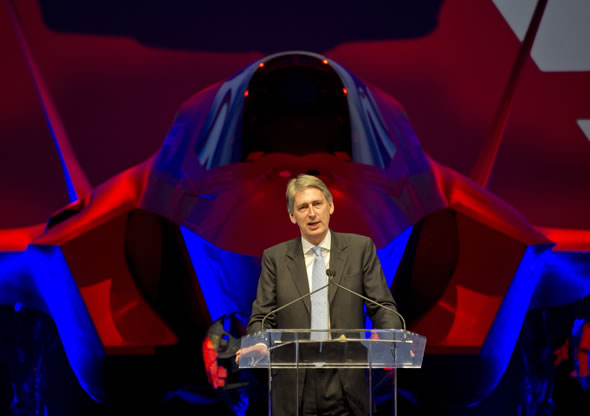
    At a ceremony in Fort Worth, Texas, Defence Secretary Philip Hammond formally accepted the first jet which will be known as Lightning II. Photo: Lockheed Martin
    At a ceremony in Fort Worth, Texas, Defence Secretary Philip Hammond formally accepted the first jet which will be known as Lightning II. Photo: Lockheed Martin

    The first of the UK’s next generation stealth combat aircraft has today been handed over to the Ministry of Defence (MoD) at a ceremony in Fort Worth, Texas. British Defence Secretary

    formally accepted the first jet which will be known as Lightning II. The aircraft are Short Take Off and Vertical Landing (STOVL) F-35 Joint Strike Fighters, manufactured by Lockheed Martin.


    “The delivery of the United Kingdom’s first Lightning II marks the beginning of a new era in our ability to project Air Power from the land or sea.” said Air Chief Marshal Sir Stephen Dalton,The Chief of the Air Staff. The UK is the first country outside the US to receive these aircraft and Mr Hammond today announced that the MoD intends to order a fourth Lightning II aircraft next year to add to the three already on contract. The total number of Lightning II to be procured by the MoD will be confirmed in the 2015 Strategic Defence & Security Review. The Royal Air Force (RAF) and Royal Navy will conduct flight trials of the jets, which will operate from land bases and from sea.

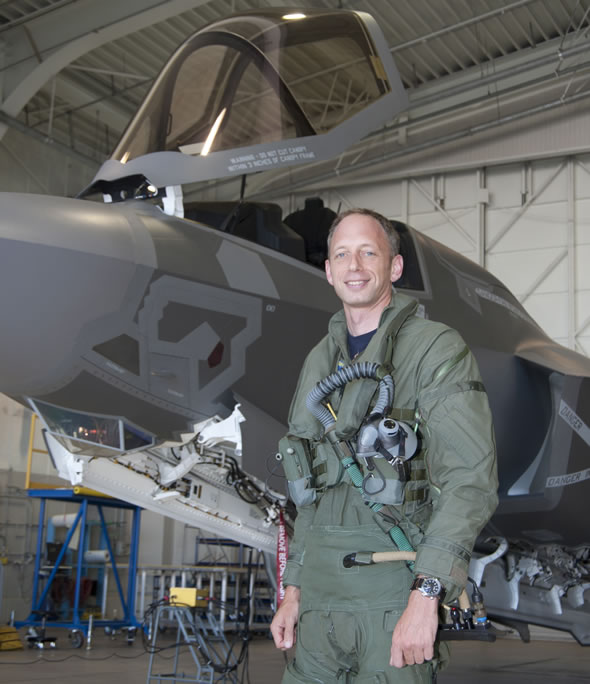
    After the ceremony, the UK’s new Lightning II jet took to the skies, flown for the first time by RAF Squadron Leader Jim Schofield, the UK’s lead test pilot. Photo: MOD

    Lightning II will be operational from land based airfields from 2018, when it will also commence flight trials off the HMS Queen Elizabeth carrier. Mr Hammond announced that the jets are likely to be based at RAF Marham, Norfolk, but that no decision has yet been made. “Jets at sea offer unmatched persistence and can guarantee the delivery of airpower around the globe. With the advent of Lightning II, UK Defence has its opportunity to maximise the utility of our carriers and this extraordinarily capable aircraft through a range of sea and land basing options. The result will be a strategic capability which will deliver for many decades to come.” Royal Navy Fleet Commander, Admiral Sir George Zambellas, added. The UK will benefit from interoperability with the US Marine Corps which operates STOVL aircraft similar to the Lightning II.

    The multi-role jet features the latest stealth and Intelligence, Surveillance Target Acquisition and Reconnaissance (ISTAR) technology and represents the cutting edge of combat aircraft design. Fifteen per cent of Joint Strike Fighter work is carried out in the UK and over 130 British companies contribute to the supply chain. It is worth over £1Bn to UK industry each year and will support around 25,000 British jobs over the next 25 years.

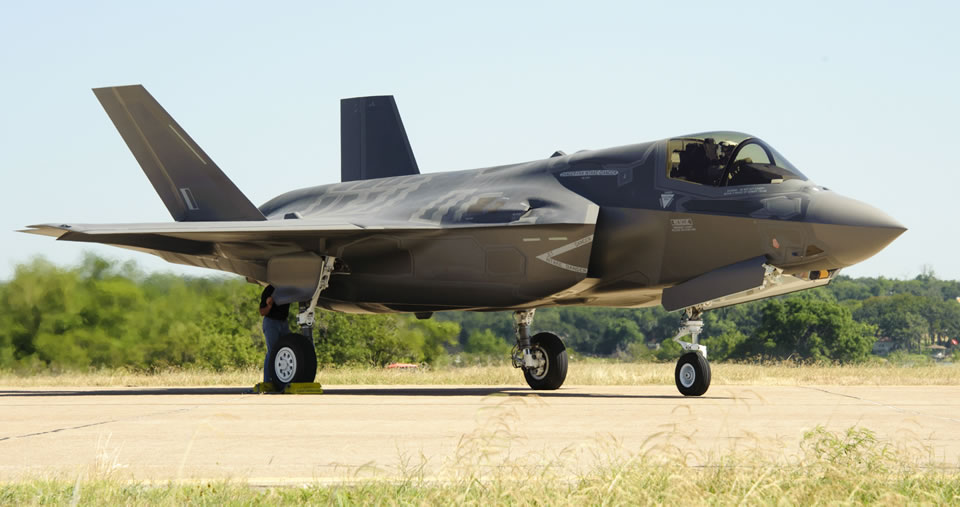
    The UK received today the first F-35B (STOVL) fighter aircraft. MOD is expected to commit to the full program by 2015. Photo via UK MOD

    Skunk Works and XTEND Simplify Multi-Drone Command

    0
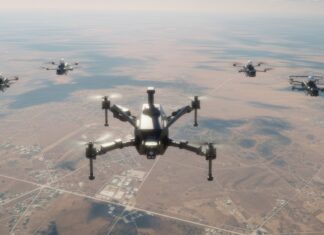
    Lockheed Martin Skunk Works® and XTEND have achieved a major milestone in JADC2 by integrating the XOS operating system with the MDCX™ autonomy platform. This technical breakthrough enables a single operator to simultaneously command multiple drone classes, eliminating the friction of mission handoffs. From "marsupial" drone deployments to operating in GPS-denied environments, explore how this collaboration is abbreviating the data-to-decision timeline and redefining autonomous mission execution.

    From Ukraine to Taiwan: The Global Race to Dominate the New Defense Tech Frontier

    0
    As traditional defense primes face mounting competition from agile “neoprimes” such as Anduril, Palantir and Helsing, the balance of innovation is shifting toward software-defined warfare and scalable, dual-use technologies, while global industry consolidation—marked by Boeing’s integration of Spirit AeroSystems and other strategic mergers—signals an intensified race to secure control over the defense technology value chain. Our Defense-Tech weekly report highlights these trends.

    Europe’s “Drone Wall”

    0
    In early October 2025, a coordinated wave of unmanned aerial system (UAS) incursions—widely attributed to Russia—targeted critical infrastructure across at least ten European nations. The unprecedented campaign exposed the fragility of Europe’s air defenses...

    Weekly Defense Update & Global Security Assessment

    0
    Executive Summary The past week (September 18-25, 2025) represents an inflection point where strategic defense concepts have transitioned from doctrine to tangible reality. An analysis of global events reveals four primary, interconnected trends shaping an...

    U.S. Air and Space Forces Push Next-Gen Programs at the AS&C 2025 Conference and...

    0
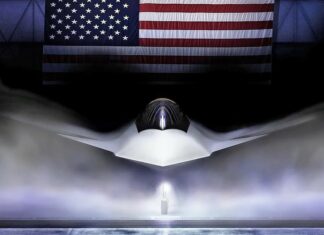
    At the 2025 Air, Space & Cyber Conference, U.S. Air Force and Space Force leaders unveiled major updates on next-generation fighters, bombers, unmanned systems, and space initiatives, highlighting both rapid innovation and critical readiness challenges as the services race to outpace global competitors. A short version is available here, with a more detailed version for subscribers.

    TADTE 2025: Reflecting Taiwan’s Strategic Themes

    0
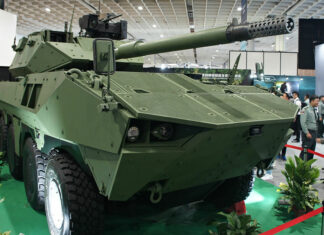
    The Taipei Aerospace & Defense Technology Exhibition (TADTE) 2025 crystallized around four dominant strategic themes that collectively illustrate Taiwan's comprehensive approach to defense modernization amid escalating regional tensions. Based on a detailed report by Pleronix (available upon request). Includes a Podcast discussion on TADTE 2025's highlighting Taiwan's four strategic themes beyond the post's coverage.

    Iron Beam 450 Completes Testing, Soon to Join With Operational Air Defense Units

    0
    Israel’s Iron Beam 450 high-power laser system has completed final testing, marking a major leap in air defense. Developed by Rafael, it offers precise, cost-effective interception of rockets, UAVs, and mortars, and is set for IDF deployment by 2025.