
Wednesday, December 31, 2025
More
    Home Blog Page 193

    US Wants a Stake in Israel’s Iron Dome Technology

    RAFAEL Iron Dome anti-rocket system

    Defense lawmakers in the U.S. House of Representatives are demanding ‘rights to Israel’s Iron Dome Technology’ before releasing the requested $680 million to follow-on production of the Iron Dome anti-rocket weapon systems for Israel, Washington news blog The Hill reports. “The United States has invested nearly $900 million into Iron Dome work, yet it has no rights to the technology involved,” according to the subcommittee’s legislation. The House proposal should share some rights to the weapon’s proprietary technology “as is consistent with prior U.S.-Israeli missile defense cooperation,” according to the subcommittee. If the new funding is granted, the US investment in the production phase of the Iron Dome would more than triple Israel’s own investment in the development of the system.
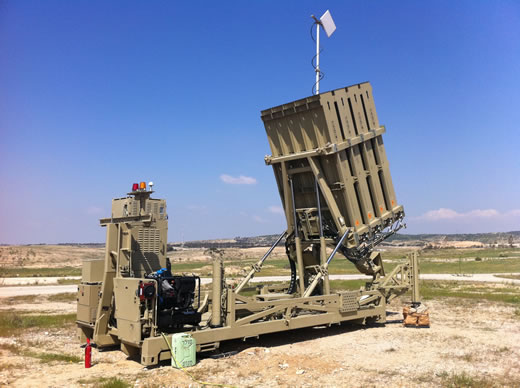
    The first Iron Dome anti-rocket system, was deployed on 'operational evaluation' near Beer Sheva in the Israeli Negev desert on March 2011. Weeks later it successfully engaged multiple salvos of 122mm rockets fired from Gaza at the city. Photo: Noam Eshel, Defense Update.

    While Israel often relies on US funding for full-scale development of its defense systems (such as the Merkava, Arrow or David’s Sling), the Israeli MOD has reserved proprietary rights to some highly sensitive technologies, including missiles, satellites, unmanned systems. As such proprietary technology, the Iron Dome anti-rocket weapon was developed exclusively, in record time, by Israel’s RAFAEL Advanced defense Systems, with an Israeli investment of nearly one billion Israeli Shekels (US$260 million.) Al the system’s elements, including the radar, battle management system, communications and the unique effector (including the missile interceptor, guidance and warhead), are products of Israeli inventions. This investment enabled the Israelis to accelerate the development, fielding the system within less than three years from the unofficial program launch.


    Beside the rapid availability of such an asset, which already proved critical for the country’s defense in the past year, by owning this Intellectual Property could enable Israel to export the system to its allies abroad without any foreign restrictions. Several customers have already lined up for the system and, executives at RAFAEL’s partner Raytheon Company believe the U.S. itself could be interested in its capability.

    “Iron Dome is a game changer. The threats Israel faces from incoming, indiscriminate terrorist rocket attacks are countered by this cutting edge anti-missile system. Iron Dome is fundamentally shifting political, diplomatic and military realities on the ground” said U.S. Rep. Howard L. Berman, the top Democrat on the House Foreign Affairs Committee and author of the “Iron Dome Support Act” (IDSA).

    Original co-sponsors of the legislation include Foreign Affairs Committee Chairman Ileana Ros-Lehtinen (R-FL), U.S. Rep. Gary Ackerman (D-NY), Ranking Member of the Middle East and South Asia Subcommittee, U.S. Rep Steve Chabot (R-OH), the Chairman of the Middle East and South Asia Subcommittee, U.S. Rep. David Cicilline (D-RI), and U.S. Rep. Ann Marie Buerkle (R-NY). Now House members are introducing a new claim, as they want Missile Defense Agency chief Lt. Gen. Patrick O’Reilly to “ensure the United States has appropriate rights to this technology” before further money is moved.

    House members suggest DOD and O’Reilly “should explore any opportunity to enter into co-production of the Iron Dome system with Israel, in light of the significant U.S. investment in this system,” according to the panel’s draft bill. Iron Dome developer RAFAEL and the US Raytheon Company have formed an ongoing cooperation for the development and future production of the David’s Sling medium-range air and missile defense system. Agreements about possible cooperation on the future production of Iron Dome have also been discussed, and Raytheon has informally briefed US military about the system its possible uses to defend US forces deployed abroad.

    Support for the Iron Dome is mounting on the Hill, since President Obama introduced his version of the FY2013 budget proposal, which didn’t include funding for the Israeli anti-rocket weapon program. In March, the Pentagon said it intended to seek funds to help Israel buy more Iron Dome equipment. At the same time  a bipartisan group introduced the Iron Dome Support Act in Congress, authorizing the administration to provide more funds for Israel to extend the air-defense system (UPI). A month later, a bill earmarking up to $680 million for Iron Dome procurement over three years from 2012 to 2015, was put together by members of the House of Representatives Republicans led by House Foreign Affairs Committee. Israeli officials said in early April that the ministry is seeking $700 million from the United States to pay for at least four additional Iron Dome batteries to reinforce the three already deployed.
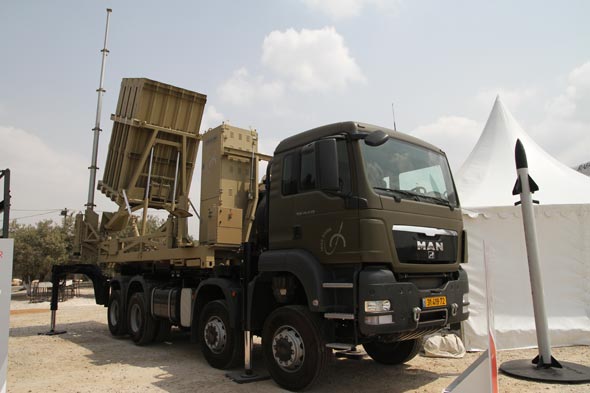

    RAFAEL is offering a mobile version of Iron Dome, for domestic and export customers. Photo: Noam Eshel, Defense-Update


    Does the US Need Two Military Clandestine Services?

    The Pentagon is launching a new intelligence organization called ‘Defense Clandestine Service’ (DSC), positioned to focus on interests of ‘national intelligence’ rather than battlefield intelligence and tactical support for the warfighter. While the pentagon is not specific where those interests are, the US most pressing intelligence priorities in recent years have included counter­terrorism on a global scale (with focus on the Middle East, Asia and Africa), nonproliferation issues related mainly but not exclusively to North Korea and Iran, and the growing military forces of China.


    These interests are covered by a plethora of clandestine organizations, including the Central Intelligence Agency (CIA), Defense Intelligence Agency (DIA) and the National Security Agency (NSA); other agencies focus on specific threats or technologies, such as the National Counterterrorism Center (NCTC) or National Reconnaissance Office and National Geospatial Intelligence Agency, responsible for remote sensing by spy satellites. Following the approved last week by Defense Secretary Leon E. Panetta the Pentagon is forming another service beside DIA. DOD intends to be operate this joint service complementary to other intelligence efforts, supporting and complementing intelligence activities under the Director of National Intelligence’s work.

    Lt. General Michael T. Flynn (Photo: Edgefighter)

    According to the Washington Post, Michael Vickers, the undersecretary of defense for intelligence and the main force behind the changes, is best known as one of the architects of the CIA’s program to arm Islamist militants to oust the Soviets from Afghanistan in the 1980s. He is also a former member of U.S. Special Operations forces.

    DIA was effectively conducting its traditional, and much larger, mission of providing intelligence to troops and commanders in war zones, it needed to focus more attention outside the battlefields on what is called “national intelligence” — gathering and distributing information on global issues and sharing that intelligence with other agencies. The mission statement of DIA covers these interests, in addition to directly supporting military operations (see video below).

    According to the Washington Post, the new service was developed in response to a classified study completed last year by the director of national intelligence, that concluded that the military’s espionage efforts needed to shift from tactical oriented support to broader operations, streamlining the efforts of the Defense Intelligence with other intelligence agencies, providing more complete and actionable picture for decision makers at the military. “It’s essentially designed to integrate defense intelligence capabilities with the broader intelligence community by leveraging unique military capabilities” said Navy Capt. John Kirby, the deputy assistant Secretary of Defense for media operations. He said the new service will inherent “existing capabilities and existing personnel to better focus on this particular kind of intelligence.” About 15 percent of the DIA’s case officers will be part of the Defense Clandestine Service, the Washington Post wrote. New, more clearly delineated career paths will give DIA case officers better opportunities to continue their espionage assignments abroad, he said.

    According to Kirby, one of the unique aspects of the Defense Clandestine Service will be its Human Intelligence (HUMINT) capabilities, “We’re very, very proficient at the technical side of intelligence collection and I think this will help us get a little bit better at the human intelligence effort.” Kirby eased concerns about the new DOD initiative evolving into a competitor to the CIA. “This isn’t about supplanting anybody, it’s not about taking over anything, it’s not about militarization of intelligence collection; it’s about making us better contributors to the overall team effort.” The new service wil offer new opportunities for DOD intelligence career officers. With planned manpower ‘of several  hundreds’, it will offer better career progression for military officers in the intelligence community. Kirby noted.
    Defense Update US & Canada

    Following are excerpts from recent news articles published ib Defense-Update, covering the North American defense market. The countries included in this report are: USA | Canada and Mexico. For an insight into each of the countries, click on the country name (not yet activated) for a detailed report listing the 10 recent news items for that specific country.


    [s_ticker_display]

      The U.S. Navy Orders Longer Endurance Fire Scouts

      Photo: Northrop Grumman
      The MQ-8C will extend mission endurance and payload lift far above the current level provided by the Firescout MQ-8B.

      The U.S. Navy has selected Northrop Grumman to produce the next-generation Fire Scout unmanned helicopter using the Bell 407 airframe. The new variant provides greater range, endurance and payload capacity to ship commander’s intelligence-gathering efforts.
      The Naval Air Systems Command awarded the company an initial order worth $262 million to deliver eight Fire Scouts. The Navy plans to purchase a total of 28 aircraft under a rapid development meeting evolving requirements for naval support in the African Command theater.

      The Fire Scout unmanned vehicle has played a significant role in multiple operations including three counter-piracy actions, a search-and-seizure operation, support of successful transits of the Strait of Hormuz; completion of a special operations proof of concept; and use as an intelligence, surveillance and reconnaissance asset for Operation Odyssey Dawn in Libya. In Afghanistan alone, Fire Scout has provided significant support to ground commanders by enhanced situational awareness to joint forces closely engaged against enemy combatants.


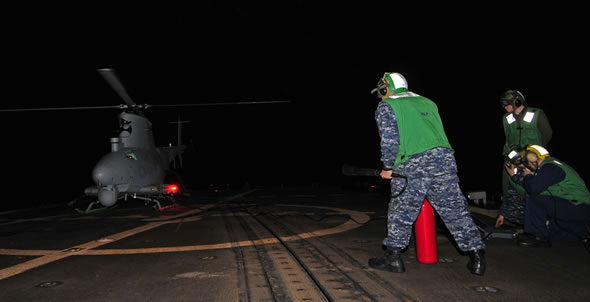
      Sailors prepare to launch an MQ-8B Fire Scout unmanned aerial vehicle (UAV) during nighttime flight operations aboard the guided-missile frigate USS Simpson (FFG 56). Simpson is conducting theater security cooperation and maritime security operations in the Naval Forces Africa area of responsibility. (U.S. Navy photo by Mass Communication Specialist 2nd Class Felicito Rustique/Released)

      Since 2006, the MQ-8B Fire Scout has accumulated over 5,000 flight hours with more than 3,000 flight hours tallied during operational deployments. The MQ-8B system is currently deployed on frigates and is being optimized for the smaller Littoral Combat Ship (LCS), to support naval Surface Warfare, Mine Countermeasures Warfare, and Anti-Submarine Warfare mission modules. The navy plans to deployed it  on guided missile destroyers as well. The Fire Scout also supports Special Operations Forces (SOF) mission. One such plane was lost recently in the Indian Ocean, as it failed to recover back on the USS Simpson. Another Firescout was lost in northern Afghanistan. While the two crashes were unrelated, the Naval Air Systems Command (NAVAIR) suspended operations of the remaining 14 Fire Scout until the mishapes are investigated.
      Northrop Grumman has demonstrated the integration of Fire Scout avionics and autonomous mission control through the company funded Fire-X program. The Fire Scout endurance upgrade has been designated as the MQ-8C.
      MQ-8B Fire Scout preparing for takeoff from a forward operation base in Afghanistan.

      The 407 system can carry ISR sensors and a useful load of more than 3,200 pounds (1.45 tons) for fuel, payloads and/or enhanced cargo hauling capabilities – internally or externally. The current MQ-8B can carry only 600 pounds (272 kg) of useful lift capacity. Fire-X will also be able to conduct ISR missions up to 16 hours in endurance (over twice the mission endurance of the current MQ-8B). It will be  and various cargo missions in support of U.S. Army and Marine Corps requirements.

      Fire-X, a vertical unmanned air system developed by Northrop Grumman Corporation and Bell Helicopter, a Textron company completed its first fully autonomous flight Dec. 10 at Yuma Proving Ground, Ariz., less than one year after development began. (Photo: Northrop Grumman by Chad Slattery).

      “Through our company-funded Fire-X demonstration effort we proved that using the mature unmanned systems architecture developed for the MQ-8B Fire Scout paired with the Bell 407 helicopter would provide greater capability efficiently and affordably,” said Duke Dufresne, vice president and general manager for unmanned systems. “By using systems that have many years of development already invested in them we can meet the Navy’s needs quickly.”

      Northrop Grumman is the prime contractor for the MQ-8C program. Major suppliers for new variant include Bell Helicopter and Rolls Royce. Final assembly of the new Fire Scout variant will be completed at Northrop Grumman’s Unmanned Systems Center in Moss Point, Miss.

      British Study Determines F-35C Would be More Economical Option Despite Costly Carrier Upgrade

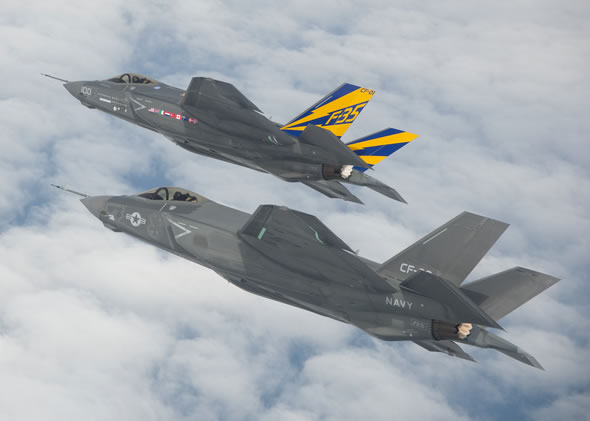
      A formation of two F-35C flying from Patuxent River over the Atlantic flight test range. The F-35C was designed to support the US Navy carrier Air Groups. Photo: Lockheed Martin
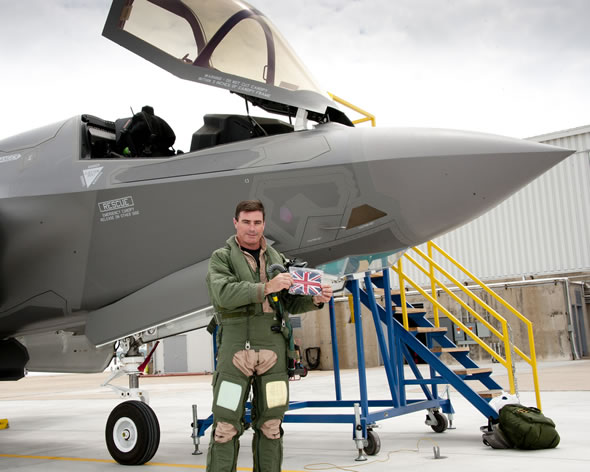
      Lockheed Martin test pilot Bill Gigliotti flew the F-35 BK-1, the United Kingdom’s first F-35B Lightning II production aircraft on Friday, 13, 2012.

      As Defense Update wrote before, (1, 2) the British Ministry of Defense (MOD) is evaluating two F-35 variants for its new aircraft carriers – the F-35B Short Take Off Vertical Landing (STOVL) and F-35C Carrier Variant (CV). The UK originally opted for the F-35B but under the 2010 Strategic Defence and Security Review (SDSR) MOD planned to overcome development delays and rising costs by adopting the F-35C developed for the US Navy, which was considered a more dependable long-term solution.

      But it seems the downside of the STOVL means more than costs and timetable. A classified operational analysis prepared for the MOD WAS leaked by the Daily Telegraph casts shadow on the capability of the F-35B to meet the requirements set by the military with at the number of  planes currently planned for procurement. The document stated that in order to fulfill the entire mission requirements set by MOD, which could be met by 97 F-35Cs, MOD will have to buy 136 F-35B STOVL ‘jump jets’, at an extra cost of £2.4 billion.


      Nevertheless, British Prime Minister David Cameron is expected to support shifting back to the STOVL variant.

      Among the missions these carrier-based fighters will have to perform are support missions in land locked areas such as Afghanistan, or long ranges missions to the Falklands, as well as over-land sorties protecting British interests in the Arabian Peninsula and Africa. In most of these contingencies, transit distance will significantly limit the mission endurance of a STOVL variant, whose fuel capacity has been limited to clear space for the lift fan. The CV variant carries extra fuel tanks in this empty space. Furthermore, the STOVL variant needs more fuel to support the fuel-guzzling hovering for the landing. According to the operational analysis study prepared for the MOD by the Defence Science and Technical Laboratory (DSTL), the F-35B could spend roughly 20 minutes over a target 300 nautical miles away from the aircraft carrier, compared with 80 minutes for the conventional F-35C.

      A formation of two F-35C flying from Patuxent River over the Atlantic flight test range. The F-35C was designed to support the US Navy carrier Air Groups. Photo: Lockheed Martin

      The construction of the Queen Elizabeth II aircraft carriers must match MOD choice of aircraft – protecting the deck surface from the high temperatures created by the jet blast on vertical landing, or adding catapults and arresting cables and extending the deck to support the catapult launch, which will also be able to support the French Rafale fighters on joint missions at sea. The F-35C choice has hidden extra costs as well. Catapults and arresting gear were not included in the original plan of the two carriers. MOD is estimating the conversion of the carriers from theoriginal design to one that supports the F-35C could cost up to £2 billion. MOD claim it cannot support these growing costs within the current budget and austerity plans as dictated by the SDSR.

      F-35s Progress Towards Weapons Delivery Flight Testing Later in 2012

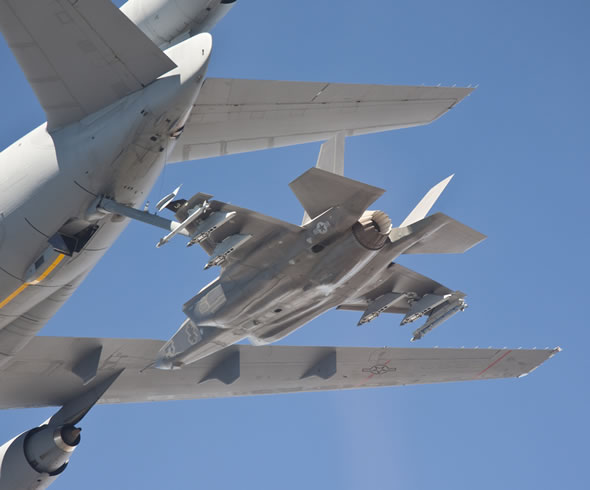
      On Saturday, April 21, a Lockheed Martin F-35A Lightning II conventional takeoff and landing aircraft completed the program's first in-flight refueling mission while configured with external weapons at Edwards Air Force Base, Calif. Photo: Lockheed Martin
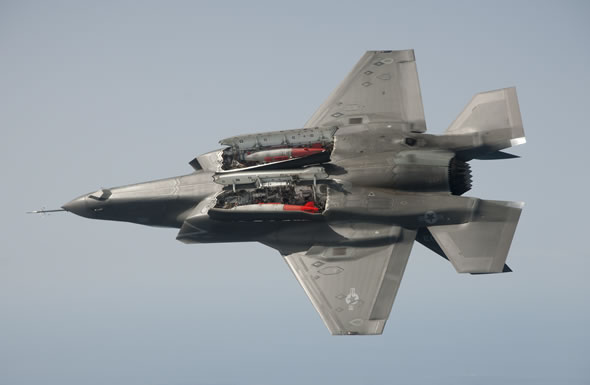
      F-35B test aircraft BF-3 flies with weapons bay doors open in March 2012. Photo: Lockheed Martin

      The testing program of the Lockheed Martin F-35 is rapidly progressing toward the weapon testing milestone, which will be significant in validating the new fighter’s combat capabilities for the first time. Among the testing were pit drops conducted at Pax River, and external carriage flights which included aerial refueling for the first time. A major step forward toward the F-35’s warfighting capability was achieved March 29, 2012 at the Naval Air Station at Patuxent River, where the F-35 completed a series of weapon release ground testing, demonstrating release and ejection of weapons configured in nine different combinations inside the F-35s internal weapon bays. Testing included inert versions of the GBU-12 Laser-Guided Bomb, the 1,000-pound GBU-32 Joint Direct Attack Munition and the AIM-120 Advanced Medium-Range Air-to-Air Missile.


      The weapons were dropped into a ‘pit drop’ at the base. Weapons pit-drop testing collects data to measure stresses on the airframe and adjacent stores, ensures proper weapon and suspension equipment function, and validates the separation models for the munitions’ ejection characteristics, including trajectories and velocities.

      More weapons testing on the F-35B and F-35C carrier variant is ongoing at Naval Air Station Patuxent River. Current test events including pit drops, captive carry and instrumented weapons environmental flights, lead-up to flight separation testing scheduled for later this year. The first and second F-35C test aircraft recently performed formation flights over the Atlantic Ocean test range. F-35C carrier variant of the Joint Strike fighter is distinct from the F-35A and F-35B variants with its larger wing surfaces and reinforced landing gear to withstand catapult launches and deck landing impacts associated with the demanding aircraft carrier environment.

      F-35B (BF-3) releases an inert GBU-32 GPS guided bomb into the drop pit at NAS Patuxent River, MD, as part of the preparation for the F-35 weapon drop flight testing scheduled for later in 2012. Photo: Lockheed Martin

      On Saturday, Apr. 21, the conventional takeoff and landing (F-35A) aircraft completed the program’s first in-flight refueling mission while configured with external weapons at Edwards Air Force Base, Calif. On this test flight the F-35A flew with two external inert AIM-9X weapons and four external stores. Internally, the jet was carrying two Joint Direct Attack Munitions and two Advanced Medium-Range Air-to-Air Missiles. The two-hour mission tested the flying qualities of the aircraft while maneuvering with external weapons. These tests are paving the way for weapons separation testing later this year.

      On Saturday, April 21, a Lockheed Martin F-35A Lightning II conventional takeoff and landing aircraft completed the program's first in-flight refueling mission while configured with external weapons at Edwards Air Force Base, Calif. Photo: Lockheed Martin

      Jihadists Arrive in Syria

      Activists and rebel soldiers based inside Syria say a small but growing number of Islamist radicals affiliated with global jihadi movements have been arriving in opposition strongholds in recent weeks and attempting to rally support among disaffected residents.

      Western diplomats say they have tracked a steady trickle of jihadists flowing into Syria from Iraq, and Jordan’s government last week detained at least four alleged Jordanian militants accused of trying to sneak into Syria to join the revolutionaries.


      The same thing happened in Bosnia. So-called “Afghan Arabs,” battle-hardened jihadists from all over the Arab world who previously volunteered to fight the Soviet occupation of Afghanistan, ran off to Bosnia to fight a jihad against Serbs when no one else would step up to help out the Bosnians. They made virtually no impact on the course of the war, but some of them stuck around after the fighting was finished and are still causing trouble even today.

      Some from the same crowd wanted to help out in Kosovo, too, but the Kosovars told them to get lost. They had help from the US and NATO and neither needed nor wanted help from radical Islamists.

      Bonsia and Kosovo are on the periphery of the Muslim world, but Syria is right in the heart of it. The longer the civil war there drags on, the more actual terrorists (as opposed to the make-believe terrorists Bashar al-Assad has been fighting so far) we should expect on the scene, especially if no one else will step up and help the Free Syrian Army in a serious way.

      If the US supplies weapons to the Syria opposition, the US can decide who gets the guns and who doesn’t, at least initially. If the US sits this one out, someone else will decide who gets the guns and who doesn’t.

      MICHAEL J. TOTTEN is a contributing editor for World Affairs who has reported from the Middle East, the Balkans, and the former Soviet Union. He is the author of The Road to Fatima Gate, which won the Washington Institute Silver Book Prize in 2011, In the Wake of the Surge, and the forthcoming Where The West Ends. His work has also appeared in the New York Times, Wall Street Journal, New Republic, City Journal, Reason, and numerous other publications. He lives in Oregon and is a former resident of Beirut. Contact him at [email protected].

      Follow Michael J. Totten on Twitter! @michaeljtotten

      GMLRS to Get a New Warhead

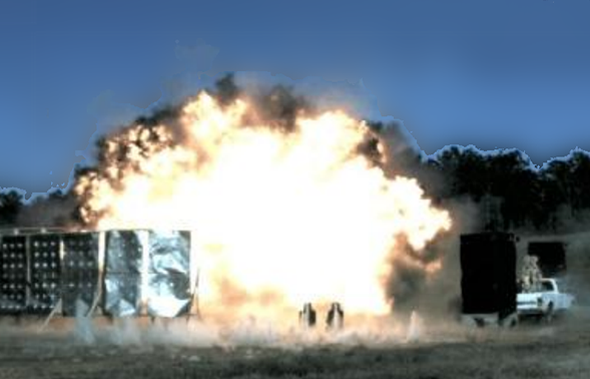
      An early stage test that validated the alternative warhead performance. Photo: ATK
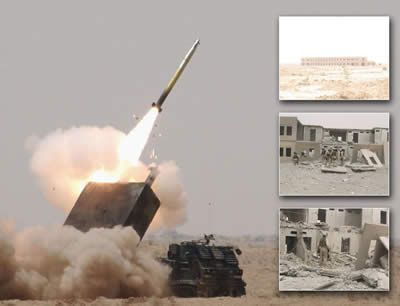
      GMLRS rocket firing. Photo: Lockheed Martin

      Lockheed Martin has received a $79.4 million contract from the U.S. Department of Defense to develop a new ‘Alternative Warhead’ (AW) for the Guided Multiple Launch Rocket System (GMLRS) that incorporates a new explosive area effector replacing the cluster warheads currently used with the weapon. Under the 36 month Engineering and Manufacturing Development Program awarded by the Army the company will move the developmental system into a producible product and perform type qualification necessary for introducing the new warhead into service.


      The original GMLRS was introduced in 2005 as an upgrade to the M26 rocket. At the time it came with a single types of warhead – a cargo bay containing multiple Dual-Purpose Improved Conventional Munition (DPICM) bomblets. However, this type proved ineffective in engaging urban targets, due to lack of penetration capability and the significant hazard of unexploded munitions left after the attack. Responding to the growing demand for heavy, precision firepower supporting urban fighting in Iraq and Afghanistan, the Army introduced a second warhead in 2008, this unitary warhead variant packs a 200-pound class high-explosive charge to provide precision strike blast and fragmentation effects with low collateral damage. However, this type did not provide the area effect of the cluster weapon. As a third type, the GMLRS AW unitary warhead is designed to as a ‘drop-in’ replacement for the currently fielded DPICM cluster warhead which will be phased out in upcoming years, with the 2008 DoD Policy on Cluster Munitions & Unintended Harm to Civilians comes to effect (Toward a Cleaner Battlefield, Defense-Update 2007). The AW rocket will service area target sets without producing unexploded ordnance. The AW will begin fielding in FY16 and is expected to achieve Initial Operational Capability by december 2016.

      During live-fire testing by the U.S. Army, the ATK-designed Alternative Warhead demonstrated that it meets performance and mission requirements, reduces technical risk and matches current weapon flight characteristics without major modifications to the existing GMLRS delivery system.

      GMLRS is a combat proven, all-weather, precision-guided rocket that provides increased accuracy over statistical artillery and rocket artillery weapons, thus reducing the number of rockets necessary to defeat current targets.

      An early stage test that validated the alternative warhead performance. Photo: ATK

      The warhead, developed by ATK is designed to meet or exceed the GMLRS DPICM unexploded ordnance (UXO) requirements, fit within the existing rocket architecture and concept of operations (CONOPS), and meet lethality and insensitive munitions requirements. All these requirements were validated in 2010 when live fire testing was conducted at White Sands Missile Range (WSMR), New Mexico. ATK’s design used innovative components to meet mission requirements, lower technical risk, and
      match current warhead flight characteristics with no modifications to the existing delivery system

      Turkey Blocking Israel From NATO Summit

      Turkey says it’s blocking Israel’s inclusion in a NATO summit in Chicago until Israel issues “a formal apology” for an attack on a Turkish ship in 2010. Turkish Foreign Minister Ahmet Davutoglu vetoed Israel’s participation in the summit — scheduled May 20-21 — during a NATO foreign ministers’ meeting last week in Brussels, the Hurriyet Daily News reported yesterday.


      “There will be no Israeli presence at the NATO meeting unless they issue a formal apology and pay compensation for the Turkish citizens their commandos killed in international waters,” a Turkish official told the Hurriyet Daily News. Davutoglu referred to the seizing of the Mavi Marmara in international water, enroute to Gaza, as part of an attempted Turkish effort to break the Israeli naval blockade on Gaza. Eight Turks and one Turkish-American citizen died in this attack, which resulted into violence following the commando’s attempt to take control of the ship. Relations between Turkey and Israel were sour before this incident but continued to deteriorate ever since.

      “There are demands from us for the removal of our veto but this is out of question,” the official said. Some foreign ministers, including those of the United States and France, have criticized Turkey for bringing its issues with Israel to the NATO platform, calling it a violation of NATO’s values.

      Norway to Spend US$1.74 Billion on Armored Vehicle Modernization

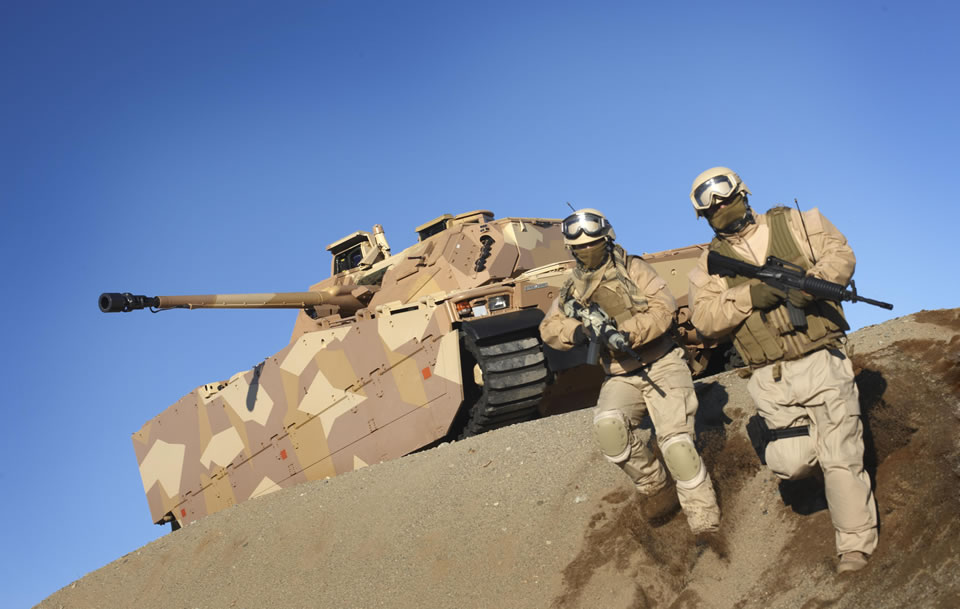
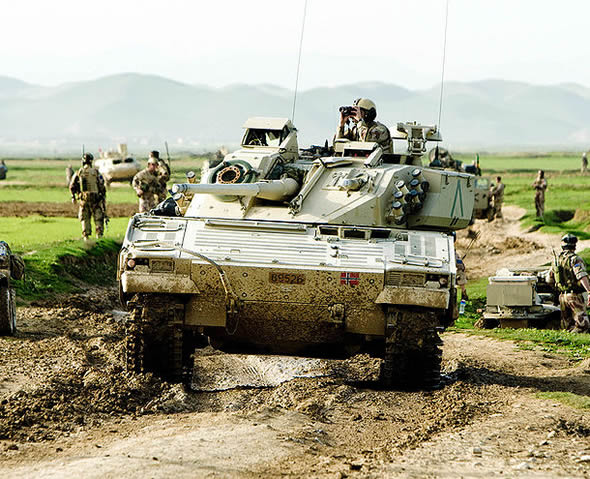
      BAE Systems is offering this latest modernized version of the CV9030. Photo: BAE Systems
      Norwegian CV90s worn out after long service in Afghanistan will receive comprehensive repair and modernization in the next four years.

      Updated June 21, 2012: In the upcoming months the Norwegian parliament will be asked to approve a strategic defense plan submitted by the government. The Norwegian defense ministry is asking for a significant increase in defense procurement, funding the acquisition of new fighters, armored vehicles, communications gear and unmanned systems. Restructuring of some of the units, support for cyber warfare and homeland security are also part of the increase.

      After the modernization of naval systems have been approved in recent months, the procurement of 41 new CV90 armored fighting vehicles (AFVs), upgrades of existing AFVs, new communications systems and unmanned aerial systems will equip two mechanized battalions. Deliveries will commence next year and continue for five years (until 2018). The total value of the new bill is 10 billion Norwegian Crowns (NOK) or about US$1.74 billion.


      The bill funds the procurement of armored vehicles supporting Norway’s two mechanized battalions, the Telemark the Armored Battalion, both will receive new and upgraded vehicles to cover shortfalls in their current inventories of medium armored vehicles. The third (Troms) battalion will be converted into rapid response light infantry battalion. Modifications to existing CV90 vehicles will include added mine protection, improved C4ISR integration, rubber band tracks and Remote Weapon Stations for self defense. In addition, Norway will procure additional CV90 hulls from BAE Systems, to replenish the total Norwegian inventory to 144 CV90s in different configurations, up from 103 currently in service. In addition, the project will include procurement of unmanned aerial and ground vehicles, remote ground sensors and C4ISR systems.

      Introducing the new bill, Norwegian Minister of Defence, Espen Barth Eide also indicated the Royal Norwegian Air Force modernization is also in the planning. The most prominent of this process is the decision to order 52 F-35 Lightning II Joint Strike Fighters for which 22-28 billion NOK (about 3.8 – 4.5 billion) have already been earmarked in future year budgets. The funding covers the acquisition of 46 aircraft, with options for additional six planes remaining for further decision. Despite the recent F-35 cost increases anticipated in the US the Norwegians did not change their cost estimates for their JSF procurement. Oslo’s recently updated cost estimate and risk analysis confirmed the ‘national estimates are still valid’, the defense plan assured Parliament. The investment cost is expected to be about the same as estimated in 2008 while lifecycle cost is estimated to have decreased by approximately 10 percent. In any case, Defense promises updated numbers will be presented to parliament before ordering the main body of aircraft.

      Parallel to the acquisition of new fighters, the RNoAF is planning to establish a forward operating base at Ørland, supporting all fighter planes assigned to Quick Reaction Alert (QRA), best positioned to support NATO operations and training missions with minimal environmental impact.

      The modernization process of all three services will contribute as a significant boost for the local industry. Norway requires foreign prime contractors to acquire 100% of the value of major defense programs to be reinvested in local industrial participation. Therefore, the five-year plan has significant upside for the defense and industrial sector in Norway.

      BAE Systems is offering this latest modernized version of the CV9030. Photo: BAE Systems

      Northrop Grumman Teams with Indonesian Companies to Offer AN/TPS-78 Air Surveillance Radars

      Northrop Grumman Corporation has signed a Memorandum of Understanding (MOU) with with PT Industri Telekomunikasi Indonesia and the Research Centre For Electronics And Telecommunications of The Indonesian Institute Of Sciences to facilitate collaboration on pending ground-based radar opportunities in Indonesia. The MOU was signed at the Sixth National Radar Seminar in Bali, Indonesia. Northrop Grumman provides the AN/TPS-78, the latest generation of state-of-the-art, operationally proven S-Band long-range surveillance radar deployed with the U.S. Air Force and foreign customers worldwide.


      According to Robert Royer, vice president of international systems at Northrop Grumman’s Land and Self Protection Systems Division, the MOU will gain the team access to and understanding of the Indonesian government and its unique requirements. “Our team looks forward to participating in the upcoming Indonesian ground-based radar competition designed to help Indonesia increase air surveillance control and secure its border.” Royer said.

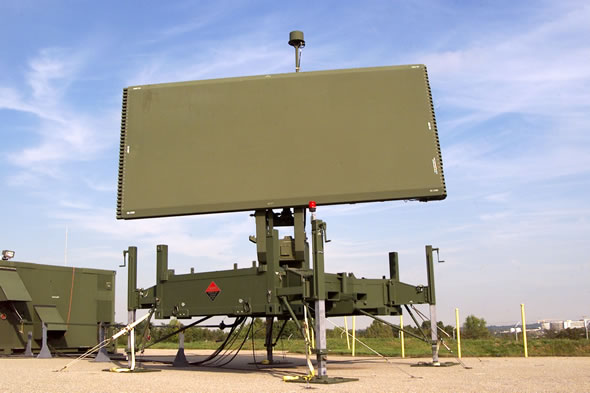
      TPS-78 Solid State Radar, to compete in an upcoming Indonesian air surveillance tender. Photo: Northrop Grumman

      Japan Orders Advanced CBRN Monitoring Systems from the USA

      Japan recently ordered 19 Biological, Chemical and Radiological Warning Systems from Lockheed Martin and its trading partner, the ITOCHU Corporation. The AbleSentry sensors are designed to provide authorities an early warning in case of a possible chemical, biological or radiological attack. The systems include a networked array of remote sensors providing a high probability of threat detection, while minimizing the potential for false alarms.


      It also integrates weather monitoring to accurately determine the threat propagation supporting the relevant decision making throughout the command chain. According to Lockheed Martin, networked sensors eliminate the possibility of a single sensor causing a system-wide false alarm. AbleSentry evolved from previous generation of Biological Aerosol Warning Systems (BAWS), adding chemical and radiological detection capabilities. Since 2005 the company delivered 24 such systems to the Japanese military.

      North Korea Issues Threat of Annihilation

      For the past several days, North Korea has directed a string of increasingly hostile threats at South Korean President Lee Myung-bak and his conservative administration. As usual with the North’s public pronouncements of doom, it is often difficult to separate reality from simple bombastic rhetoric. Such is the case with this latest round of promises of mass destruction.

      The most recent threats from the North differ from past announcements in that they have added a specific timeline and indicate that whatever is being planned will be executed in the very near future. North Korea’s state-run Korean Central News Agency interrupted regularly scheduled TV programing on 23 April for a special report promising to “reduce all the rat-like groups and the bases for provocations to ashes in three or four minutes.” The announcement also stated that the military would initiate “special actions” against the South in a very short time.


      The disturbing message has been tentatively attributed to the North’s Special Operation Action Group, a component of the Korean People’s Army Supreme Command. The warning also specified that the impending action would be accomplished using “unprecedented peculiar means and methods of our own style.”

      Shortly after issuing a warning of retaliation in response to South Korean military exercises in disputed territories in November 2010, North Korea initiated an artillery exchange with South Korean Marines on Yeonpyeong Island that resulted in several deaths and intensified fears of war on the Korean Peninsula. North Korea’s leadership has become increasingly sensitive about criticism leveled at its 13 April failed attempt to place a satellite into orbit. South Korea’s unveiling of a new cruise missile on 19 April has also rankled the North.

      The South, rarely known to engage in a campaign of one-upmanship with the North, announced on 19 April that they had developed and fielded a cruise missile capable of reaching any location within North Korea’s borders. The South’s new Hyunmoo-IIIC (also known as the Hyunmu-3C) cruise missile is purported to have a range of between 1,000 and 1,500 kilometers giving it the ability to hit targets anywhere in the North. Along with this new cruise missile, Seoul also unveiled a new short-range tactical ballistic missile.

      The two new missiles were featured in a public video presentation hosted by South Korean Major General Shin Won-sik, Director General of policy planning within the Defense Ministry. General Shin announced that the new tactical ballistic missile is “more powerful than” the South’s MGM-140 Army Tactical Missile System (ATACMS) and has a range of 300 kilometers. General Shin also confirmed that both missiles had successfully completed all required field testing and were deployed to meet “North Korea’s missile threats and other provocative schemes.”

      Of particular concern to the international community is the possibility that Pyongyang may conduct a third nuclear weapon’s test in the coming weeks or months. The South Korean newspaper, Chosun Ilbo, has reported that the North has completed all preparations for a third nuclear test at its northeast Punggye-ri nuclear test facility. A South Korean official, on condition of anonymity, is quoted by Chosun Ilbo as stating that satellite images indicate that tunnel excavations at the Punggye-ri site have been completed and it “is highly likely” that a nuclear device has been placed into positioned for testing. However, US Navy Captain John Kirby, speaking on behalf of the United States, informed reporters on 23 April that he was unaware of “any specific actions taken” by the North to carry out any overt provocations directed at the South and no indications that a nuclear test was imminent.

      Seoul also took no action to place the nation’s military on a higher alert status in light of intelligence reports that Pyongyang had not undertaken any significant troop movements or mobilization activities. The general consensus in the region is that it is extremely unlikely that Pyongyang is willing to initiate a large-scale assault against Seoul, especially considering the presence of sizeable US forces in the region and the long-standing US commitment to protect the South’s sovereignty.

      North Korea is known to have a respectable arsenal of weapons at its disposal that includes SCUD, Musudan, and Rodong missiles. The Musudan, with an estimated range of 3,000 kilometers, is believed capable of carrying a warhead of 650 kilograms. Seoul is well aware of the North’s capabilities and doesn’t take Pyongyang’s threats lightly.

      Also on 23 April, Chinese President Hu Jintao praised North Korea’s Kim Jong-Un while calling for the two nations to strengthen their relationship during a meeting with Kim Yong-Il, a senior North Korean representative. President Hu also stated his hope that the two nations would work together to pursue “peace and stability” throughout the region. China has historically been the sole ally of North Korea and can be expected to continue its support of Pyongyang, even in times of tension and in defiance of international condemnation of the North’s erratic behavior.

      Cracks Could Jeopardize Navy Plans to deploy LCS to Singapore

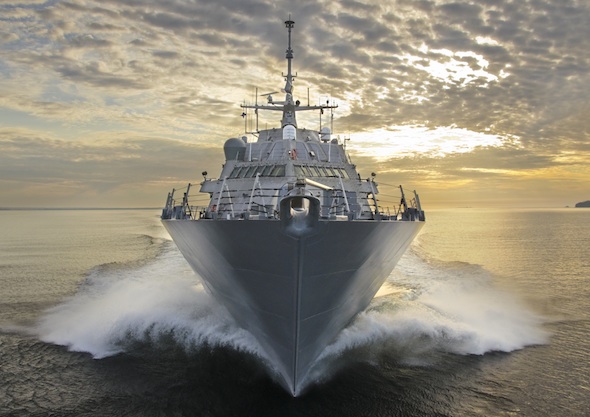
      LCS-3 USS Fort Worth - Photo: Lockheed Martin
      LCS 3 'Ft Worth' undergoing builder's sea trials, October 2010. Photo: Lockheed martin

      The U.S. Navy’ plans to base four Littoral Combat Ships (LCS) in Singapore. The lead ship of the LCS class, USS Freedom is expected to embark on a 10 month demonstration deployment to the area in 2013. The US Navy is hopeful that through this first deployment to the Southeast Asian Theater it will gain essential experience relevant for the development of concept of operations (CONOPS) for the new class of ships. Singapore officials specifically asked the Navy to deploy the LCS in the island state. The Navy now has two Freedom class vessels (video) and a single Independent class LCS. Ultimately, the Navy plans to build 55 LCSs, with construction split between the Lockheed Martin team and Austal. “LCSs will be an important part of a more agile future fleet,” Navy Secretary Ray Mabus said, noting the ships will allow for substantially more LCS forward presence than the frigates, Mine Counter-Measures ships, and coastal patrol craft they will replace.


      The plan was endorsed in a recent meeting between U.S. Defense Secretary Leon E. Panetta and Singapore Defense Minister Ng Eng Hen. According the American Forces Press Service, the defense leaders discussed the planned deployment. The joint statement said the ships will be deployed on a rotational basis and will not be based in Singapore. The deployment signals U.S. commitment to the region, and enhances the ability to train and engage with regional partners, the joint statement said. The rotational deployments will be part of the U.S.-Singapore partnership documented in the 2005 Strategic Framework Agreement, Pentagon spokeswoman Navy Cmdr. Leslie Hull-Ryde said. “This marks a significant movement in terms of our cooperation with Singapore,” she added. “The specific details related to this unprecedented engagement are still being discussed.”

      However, a recent report aired by the Project On Government Oversight (POGO) Claims that based on the ship’s history of design and equipment failure, the LCS is simply not ready to be deployed to Singapore, or to any other destination.

      Overly praising the LCS program, the U.S. Navy has been reluctant to share documents related to the vessel’s vulnerabilities with entities such as the Pentagon’s Office of the Director of Operational Test and Evaluation (DOT&E). But POGO has obtained documents that indicate that the Lockheed Martin’s USS Freedom (LCS-1, the first LCS ship) has been plagued by flawed designs and failed equipment. Since being commissioned, it has at least 17 known cracks, and has repeatedly been beset by engine-related failures.

      During the approximately two-month deployment in 2010 when the ship traveled from Mayport, Florida to its home port in San Diego, California, there were more than 80 equipment failures on the ship. These failures were not trivial, and placed the crew of the ship in undue danger. For example, on March 6, 2010, while the ship was in the midst of counter-drug trafficking operations and reportedly “conducted four drug seizures, netting more than five tons of cocaine, detained nine suspected drug smugglers, and disabled two ‘go-fast’ drug vessels,” The Navy release did not mention that during that mission, electricity went out on the entire ship, temporarily leaving the ship adrift at sea POGO reports.

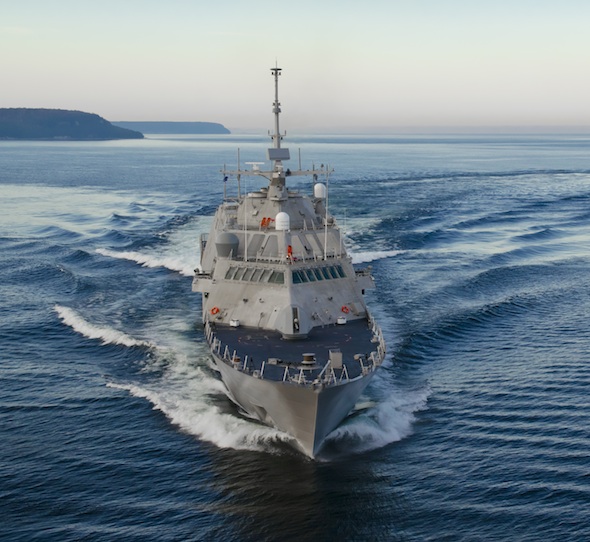
      LCS 1 'USS Freedom' at sea in 2008. The Freedom was the first-in-class littoral, coastal surface combatant. Photo: Lockheed Martin

      Before and during the ship’s second set of rough water trials in February 2011, 17 cracks were found on the ship, according to the Navy’s Crack Monitoring Survey During Rough Water Trials Period #2. Some of these were quite serious and indicative of significant design failures. For example, a crack over 18 inches long was found at the corner of the deckhouse near a bi-metallic strip that binds the ships aluminum deckhouse and steel hull together.

      Another crack was discovered “below the waterline and is currently allowing water in… When discovered there was rust washing onto the painted surface. It is thought this is rust from the exposed crack surface. It is unknown how long this crack existed prior to being discovered.

      These cracks are not without their consequences. In addition to allowing water to leak into the ship, the cracks severely limit the ship’s top speed, which was previously touted as exceeding 40 knots. Last May, the LCS program manager issued near term operating guidance for LCS-1, which placed significant constraints on the ship’s Safe Operating Envelope (SOE).

      According to the Near-Term Operational Guidance memo (enclosed), “there is risk associated with operating LCS 1 at the extreme edges of its SOE while transiting or deployed at significant distances from/to port (open ocean transit). Specifically, the new guidance states that in rough water the ship cannot travel at speeds greater than 20 knots. Even in calmer these faults limit the Navy’s “cheetah of the seas” to freighter speeds.

      Lockheed martin responded “These reports cited by POGO are based on selective information that is more than a year old. As the lead ship in a totally new class, the USS Freedom is providing important lessons that are being incorporated into future ships, and the Navy and contractors extensively test these lead ships purposely to obtain this insight only available through usage.

      USS Freedom has been certified and approved by both the Navy and the American Bureau of Shipbuilding. Solely focusing on isolated incidents on this first ship misrepresents the nearly decade of experience and knowledge Lockheed Martin now has building and maintaining these ships. Any issue that has arisen in the development, testing and usage of this lead ship has been, or will be, addressed to ensure she and future Freedom-class ships meet or exceed the Navy’s needs. And our overall LCS program remains on cost and on schedule.” Lockheed martin LCS Team commented.<a id=”video” name=”video”>

      Skunk Works and XTEND Simplify Multi-Drone Command

      0
      Lockheed Martin Skunk Works® and XTEND have achieved a major milestone in JADC2 by integrating the XOS operating system with the MDCX™ autonomy platform. This technical breakthrough enables a single operator to simultaneously command multiple drone classes, eliminating the friction of mission handoffs. From "marsupial" drone deployments to operating in GPS-denied environments, explore how this collaboration is abbreviating the data-to-decision timeline and redefining autonomous mission execution.

      From Ukraine to Taiwan: The Global Race to Dominate the New Defense Tech Frontier

      0
      As traditional defense primes face mounting competition from agile “neoprimes” such as Anduril, Palantir and Helsing, the balance of innovation is shifting toward software-defined warfare and scalable, dual-use technologies, while global industry consolidation—marked by Boeing’s integration of Spirit AeroSystems and other strategic mergers—signals an intensified race to secure control over the defense technology value chain. Our Defense-Tech weekly report highlights these trends.

      Europe’s “Drone Wall”

      0
      In early October 2025, a coordinated wave of unmanned aerial system (UAS) incursions—widely attributed to Russia—targeted critical infrastructure across at least ten European nations. The unprecedented campaign exposed the fragility of Europe’s air defenses...

      Weekly Defense Update & Global Security Assessment

      0
      Executive Summary The past week (September 18-25, 2025) represents an inflection point where strategic defense concepts have transitioned from doctrine to tangible reality. An analysis of global events reveals four primary, interconnected trends shaping an...

      U.S. Air and Space Forces Push Next-Gen Programs at the AS&C 2025 Conference and...

      0
      At the 2025 Air, Space & Cyber Conference, U.S. Air Force and Space Force leaders unveiled major updates on next-generation fighters, bombers, unmanned systems, and space initiatives, highlighting both rapid innovation and critical readiness challenges as the services race to outpace global competitors. A short version is available here, with a more detailed version for subscribers.

      TADTE 2025: Reflecting Taiwan’s Strategic Themes

      0
      The Taipei Aerospace & Defense Technology Exhibition (TADTE) 2025 crystallized around four dominant strategic themes that collectively illustrate Taiwan's comprehensive approach to defense modernization amid escalating regional tensions. Based on a detailed report by Pleronix (available upon request). Includes a Podcast discussion on TADTE 2025's highlighting Taiwan's four strategic themes beyond the post's coverage.

      Iron Beam 450 Completes Testing, Soon to Join With Operational Air Defense Units

      0
      Israel’s Iron Beam 450 high-power laser system has completed final testing, marking a major leap in air defense. Developed by Rafael, it offers precise, cost-effective interception of rockets, UAVs, and mortars, and is set for IDF deployment by 2025.