
Wednesday, December 31, 2025
More
    Home Blog Page 194

    Hyunmoo Missiles – Seoul Going Ballistic

    Hyunmoo 3 cruise missile under development at LIG Nex-1 under the ADD program is expected to become operational by 2014. Photo: ADD

    In response to the failed April 13th North Korean attempt to launch a satellite using a long-range ballistic missile, South Korea released a video showing launches of unidentified cruise missile and a ballistic missile, both indigenously developed in South Korea. The cruise missile was apparently the Hyunmoo 3, the ballistic missile is most obviously the Hyunmoo 2 developed in the late 1990s. The presentation made by Major General Shin Won-sik, an officer responsible for policy planning at the Ministry of defense in Seoul was meant to show North Korea that the south had weapons that could reach anywhere in the north. The two missile programs were developed indigenously and secretly for the at least four decades, extending the reach and offensive capability of South Korea to balance a large number of ballistic missiles deployed by the North. North Korea has about 600 ballistic missiles aimed at South Korea.


    Three years ago, South Korean media reported that a new cruise missile, with a range of 1,000 kilometers had secretly entered production in 2008. This has followed a series of test flights, some conducted in 2006, as mentioned in a US embassy brief published by Wikileaks.

    The recent information and video release indicates both programs are well. The ballistic missile program is progressing through flight-testing. The short-range ballistic Hyunmoo II ballistic missile with a range of 300 km uses solid propellant and has GPS/INS guidance, enabling it to hit a target at ‘several tens of meters’ accuracy. To compensate for the relatively low accuracy it is expected the warhead uses cluster munitions. Hyunamoo II has the general shape of the Russian Iskander missile. The ready to fire missiles are carried in four trailer-mounted cylindrical launchers-containers.

    The majority of the work took place at the South Korean ADD, with assistance from abroad. These developments were conducted at low profile, as Seoul was facing significant U.S. objection to such activities.
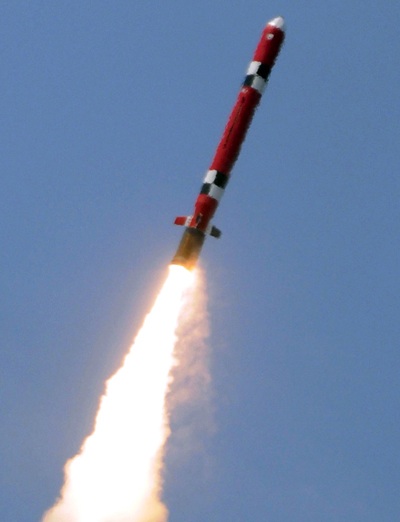
    Hyunmoo 3 cruise missile under development at LIG Nex-1 under the ADD program is expected to become operational by 2014. Photo: ADD

    The Koreans began experimenting with ballistic missiles during the 1980s, converting a Nike Hercules Surface to Air missile into a ballistic missile, a process similar to that taken be the Chinese converting an SA-2 into the CSS-8 ballistic missile. While the Koreans strived to extend the range and payload of their missiles, to meet the challenge posed by North Korean weapons, they were content with the quiet understanding form Washington to limit their missile’s range to 180 km; Since the mid- 1990s Seoul gradually expanded the limits of their missiles, along with U.S. relaxation of export permits, providing Seoul access to the ATACMS-1a missile, meeting the upper limit of the Missile Technology Control Regime (MTCR). South Korea has accepted the limitations of MTCR but public opinion in the country is calling for that limit to be broken, thus placing the entire area of its hostile neighbor North Korea vulnerable to ballistic missile attack from the south. Needless to say, North Korea is not accepting any limitations of missile development, manufacturing or export.In parallel, the Koreans began development of a cruise missile, initially reaching 500km and later extending maximum range beyond 1000km, both challenging the MTCR limits. Most recently the missile attained further increased range of 1,500 km, placing at risk not only North Korea, but also parts of China and Japan.

    Hyunmoo 2 short range ballistic missile was developed by South Korea to comply with the MTCR restrictions. More advanced versions are likely to surpass those limits. The missile is likely to have an accuracy of about 30 meter (CEP) and is equipped with a cluster munition warhead. Photo released by ADD.

    The Hyunmoo III cruise missile currently undergoing flight-testing is expected to become operational by 2014. These missiles are likely being developed with foreign assistance; according to unconfirmed data, the ADD is cooperating with the German-Swedish Taurus consortium, as the Europeans are particularly interested in offering the advanced warhead developed for the Taurus 350 weapon.

    The Land-based weapon is launched from a launcher container and is accelerated by a booster to reach initial speed. Its accuracy of 3-5 meters indicates the use of a terminal homing device, augmenting the midcourse guidance performed through the majority of the cruising flight by GPS/INS/terrain navigation performed through low-altitude, high subsonic speed. This family of land attack cruise missiles (LACM) includes three versions – the original ground launched long range missile (GLCM) Hyunmoo IIIA (Cheon Ryong, also known as Eagle 3) with a range of 1000 km and an air launched medium range (ALCM) and surface/submarine launch version, both having a range of more than 500 km and a warhead likely to weight 400kg. The air launched version of the missile is also known as Hyunmoo IIIB (Boramae) and the surface / submarine launched version (SLCM) is calles Hyunmoo IIIC (Chonzyong), destined for the KDX-III destroyers (each will be equipped with 30 such missiles).

    These cruise missiles employ mostly domestically developed technology. Similar weapons are also developed by Pakistan, India and China. Like the Tomahawk, Hyunmoo 3 appears to be about 6 meters (19 feet) long, weighs 1.5 tons, has a half ton warhead and is launched from concealed, fortified launch sites dug up into the hills facing North Korea. The missile developer is LIG Nex1, the country’s largest precision weapon system house. Following the completion of the Hyunmoo 3 the company is expected to commence development of a supersonic cruise missile, which has yet to have its own code-name, with the state-run Agency for Defense Development.


    Short Range Missiles Have Their Limits

    The limited range of its missile force has always been a cause for tension, as to bring such missiles into effect as deterrent weapons they had to be forward deployed closer to the demilitarized zone (DMZ), causing alerts on both sides. In 2011 South Korea announced it is forward deploying its ATACMS missiles close to the North Korean border. ATACMS is a 610mm rocket that fits in the same size container that normally holds six 227mm MLRS rockets. The ATACMS version in South Korean service has a range of 165 kilometers. That makes it capable of reaching many targets in theater but not the strategic targets in the depth of North Korea, such as the capital Pyongyang, which is 220 kilometers north of the DMZ). South Korea only has 220 ATACMS missiles. All of them have cluster bomb warheads. Half of them are unguided, and have a range of 128 kilometers. The other half have smaller warheads, GPS guidance and a range of 165 kilometers. This is apparently the version moved close to the border, in order to make the North Koreans nervous. South Korea originally bought ATACMS in 1998 not as a deterrent weapon but to have a weapon that could go after distant North Korean artillery and large concentrations of tanks.

    Israel MOD Approved 30,000 Defense Exports to 130 Countries in 2011

    Meir Shalit, Chief of API, IMOD.

    In 2011 the Israel Ministry Of Defense (IMOD) licensed over 1,200 companies and 6,000 individuals licensed to export defense products and services to foreign countries. Through the year the Export Control Branch at the IMOD (API).

    Overall, Israeli exporters comply with the regulations to the full extent, according to Export Control Branch chief Meir Shalit, the branch handled about 30,000 export applications in 2011 and approved 94%. Of those restricted, 43 were suspected in export control violations.


    The branch tracks 17,000 products and 1,500 defense technology knowhow and services. Since 2008 the branch granted export licenses to 130 countries and governments. “Our main goal is to secure the qualitative edge of Israel defense Forces, (IDF) by preventing uncontrolled distribution of sensitive technologies and defense products. We are also committed to maintain the international commitments and foreign relations of Israel, this is our job and our responsibility” said Shalit. He added API is considering to ease export control procedures by extending the license period from two to three years, open a ‘Green Line” for exporters and expediting the approval of ‘confidential’ level applications.

    Sentinent Develops MTI, Change Detection Capability for Land Combat Vehicles

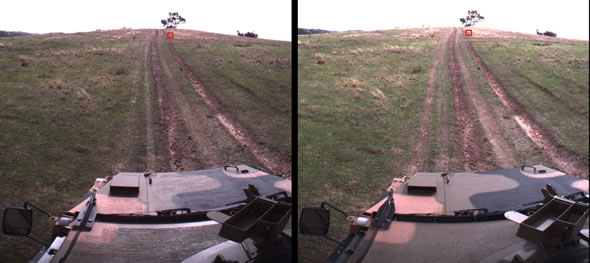
    The Desert Owl Ground Change detection (CDG) capability spots changes in objects along roads or designated areas and can warn the crew of potential threats from safe distance
    The Desert Owl was tested on a Bushmaster armored vehicle under a DSTO sponsored demonstration.

    Image intelligence (IMINT) is providing a growing part of the intelligence resources available for military forces. With the introduction of network enabled command and control systems, real-time IMINT is providing the foundation for the engagement of time-sensitive targets, in their ability to rapidly detect, identify and locate targets of opportunity, often obtained by air or ground based, persistent surveillance and observations. Such targets are most difficult to spot in asymmetrical warfare scenarios, as terror and guerrilla operatives activities often generate extremely low ‘signatures’, compared to high intensive military targets.


    Therefore, such observations must rely on advanced signal processing capabilities, such as hyper-spectral signature analysis, change detection and efficient means to detect suspicious or specific movements in a target-rich environment. Until recently, such capabilities have relied mainly on radar-based movement detection, while video motion detection employed mainly on airborne or stationary applications.

    The Australian company Sentient announced the successful demonstration of a software solution that automatically indicates movement and changes in electro-optical (EO) full motion video (FMV) imagery captured by ground vehicles. The system called Desert Owl was developed as part of the Australian Defense’s Capability and Technology Demonstrator Program (CTD). Desert Owl addresses two of the Defense capability requirements: moving target indication (MTI) and ground change detection (GCD). The test demonstrated the integration of such software in land combat vehicles. Desert Owl, currently at Technology Readiness Level six, could be applied to any Australian Defense Forces land vehicle.

    “Desert Owl adds unique capabilities to ADF vehicles,” said Dr Paul Boxer, Managing Director at Sentient Vision Systems. “This technology makes it much easier to detect and track moving objects and changes on the ground, thus delivering improved situational awareness to the vehicle commander.”

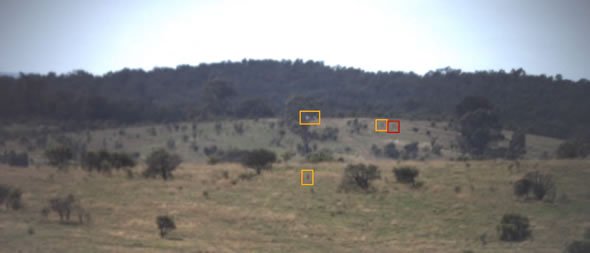
    Ground Moving Target detection was part of the capabilities supported by the Desert Owl. Photo: Sentinent

    Owl is a software suite including an MTI component and Change Detection app. The MTI processes the live video feed from a panoramic scanning camera mounted on the ground vehicle. Desert Owl monitors the area of observation obtained by the video in real-time, automatically indicating moving objects in the camera’s field of view. The system demonstrated how slow and stationary objects, almost impossible for a human to notice, could be detected at ranges of over 4 km. At the demonstration, held at the Puckapunyal Army training facility in Victoria (Australia),
Vinod Puri, Chief Technology Officer, DSTO Land Operations Division, stated that Desert Owl was able to provide precise detections, down to a few pixels in size, cuing operators to small or slow moving targets.

    The Desert Owl Ground Change detection (CDG) capability spots changes in objects along roads or designated areas and can warn the crew of potential threats from safe distance. Change detection can be performed while the vehicle moving at up to 60 km/h, analyzing the roadway and landscape ahead of the vehicle, detecting objects that have been added, moved or removed since the last transit. Photo: Sentinent

    By simply comparing live imagery with previously recorded imagery Desert Owl’s GCD technology can also identify visual changes. Dr Boxer explained that the GCD software can process live video in a vehicle moving at up to 60 km/h. It analyses the roadway and landscape ahead of the vehicle, detecting objects that have been added, moved or removed since the last transit, whilst effectively handling environmental and lighting changes.

    “The software’s ability to remember everything in detail allows it to indicate changes that are impossible for a human operator to locate, such as disturbances to the ground surface,” said Dr Boxer. “Finding those ground changes and detecting potential threats is key to situation awareness in today’s ground operations,” he added. “The ability of Desert Owl to detect that a pile of rocks or a bush has moved since yesterday has a very high potential to benefit counter – improvised explosive devices (C-IED) operations.”

    Sentient has been working with the Defense Science and Technology Organization (DSTO) for a number of years. Under a previous CTD Program Sentient developed its industry-leading automated target detection software for manned and unmanned aircraft – Kestrel Land MTI which is now available from the American UAV company AeroVironment for the Raven, Puma and Wasp III mini UAVs.

    First British F-35B Records Maiden Flight

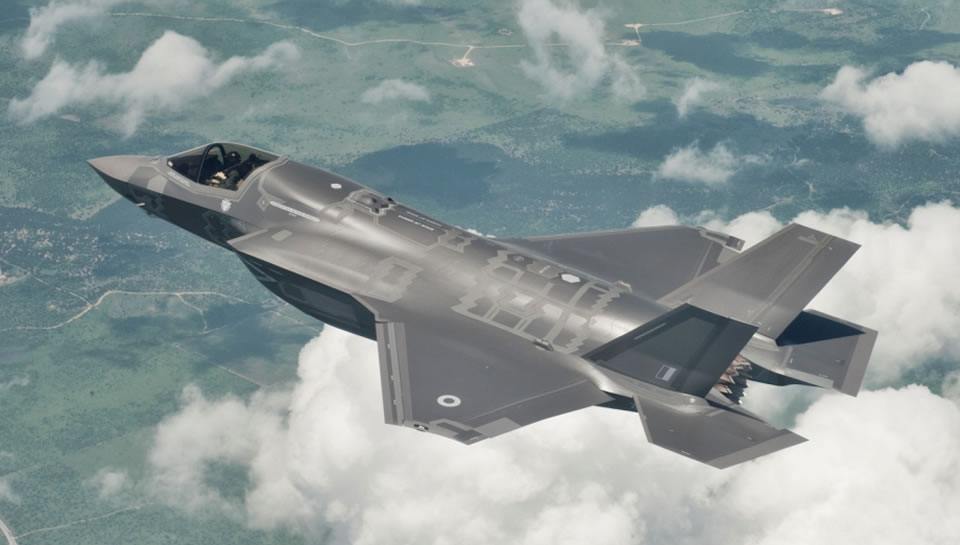
    The first British F-35B seen on its first flight, 13 April 2012. Photo: Lockheed Martin
    F-35 BK-1takes off on its maiden flight April 13, 2012

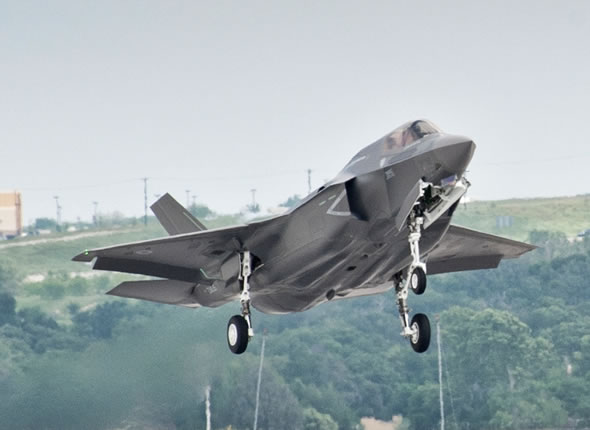
    BK-1, the United Kingdom’s first Lockheed Martin F-35 Lightning II production aircraft, flew its inaugural flight Friday. Lockheed Martin test pilot Bill Gigliotti took the short takeoff/vertical landing (STOVL) jet through a series of functional flight checks during a sortie that lasted 45 minutes. The jet will complete a series of company and government checkout flights prior to its acceptance by the U.K. Ministry of Defence. This BK-1 aircraft makes up one of the three F-35 fighters the MoD has already committed to buying; two F-35Bs and one F-35C.

    The first British F-35B seen on its first flight, 13 April 2012. Photo: Lockheed Martin
    The U.K. MOD will use this 5th Generation fighter for training and operational tests at Eglin Air Force Base, Fla., beginning later this year. The British MOD is still undecided about the type of aircraft to be procured for the new Queen Elizabeth aircraft carrier.

    In the 2010 Strategic Defence and Security Review (SDSR), Prime Minister David Cameron announced the Ministry of Defence would convert the carriers and buy the longer-range F-35C variant of the strike fighter. Originally the vessel was designed to operate the STOVL F-35B, but due to the delays and rising cost of this specific type, MOD was considering to modified the new carrier to operate the Carrier-Based F-35C version developed for the U.S. Navy.

    According to the Financial Times, the UK will not reconfigure its aircraft carriers, senior government officials have told their French counterparts. The decision also means the new British carriers will not be able to support French fighters, in times of need. Allowing France and the UK to share the expensive task of maintaining uninterrupted carrier capability at sea was an important reason for the switch, the SDSR noted at the time. Cameron is expected to announce his decision over the next few weeks.

    Eurosatory 2012 Preview

    The full edition of our weekly preview is available for €4.95 per edition. The first edition (11 May 2012) is available for trial at no charge.

    Eurosatory 2012 – the World’s largest defense expo will take place in Paris at the Parc d’Expositions north of Paris, 11-15 June 2012. This year the event hosts over 1,100 exhibitors indoors and outdoors. Many exhibitors are participating in the dynamic live demonstrations while others are grouped in technology clusters, appending to visitors focused attention.

    Focus Areas:Combat Vehicles, Unmanned Systems, C4ISR, Homeland Defense, Electro-Optics, Simulation & Training, Military Medicine, CBRNE.

    Modern and futuristic warfare will undoubtedly be ome of the main themes of the show. The French ‘Scorpion‘ program, is reaching a level of maturity enabling the industry group to showcase the capabilities of the new generation of vehicular and dismounted combat systems, command and control and integrated networking, that will be showcased in an operational demonstration scheduled for june. Similar concepts extensively networked troops and units, unmanned systems, ISR-based command and control, and advanced networking maximizing the use of precision attack, are likely to be highlighted by U.S., German, British and the Israelis.


    Combat Vehicles
    Combat vehicles are the core of the modern military force. In recent years, the difference between armored fighting vehicles and unprotected utility vehicles has faded, as military forces have engaged asymmetric threats compromising all assets, regardless of their echelon. It has also became evident that vehicles and personnel are exposed to attack over 360 degrees – front, flank, top, belly or the rear, raising the growing interest in 360 degrees protection, by passive and active protection means.

    The role of the Main Battle Tank is maintained, at least in the growing military forces in Asia, North Africa, the Middle East and, to some extent, Latin America. Considerable interest and debate follows the evolution of Infantry Combat Vehicles – tracked or wheeled – different concepts are aimed at full-scale (high intensity) military operations or low intensity conflicts.

    Mine and IED protected troop carriers are the latest category of combat vehicles that evolved in recent years. This category has always been available but such vehicles were fielded in relatively small numbers, supporting peacekeeping forces and special missions. Protecting the massive involvement of western armies in the wars in Iraq and Afghanistan demanded tens of thousands of such armored, mine protected vehicles that are now fielded and require refurbishment, and modification to adapt them for continuous use. The requirement for improved mine and ballistic protection for all tactical vehicles is now mandatory, and these platforms, optimized chassis, protection systems and vetronics are likely to dominate the indoor and outdoor display at the upcoming Eurosatory show.


    Back


    Need a hotel in Paris for the Eurosatory week?
    For the best rate and 24/7/365 availability
    Defense Update is Recommending:

    Unmanned Systems

    Responding to a growing interest in the use of unmanned systems and robotics, (20% of visitors have expressed interest in these applications) Eurosatory highlights such systems in the UAV-UGV cluster, which has been steadily growing in recent shows. The cluster offers manufacturers to promote their products in a specific area. Adjacent to this area is the 400m2 arena, where robots are performing live demonstrations, negotiating obstacles, highlighting mobility, handling, and mission performance. In recent years Eurosatory has attracted a growing number of UAV/UGV manufacturers, including Aerovironment, G-Nius, Infotron, Meggitt, Swisscopter and Workfly. Other UAV/UGV manufacturers are exhibiting in other halls, as well as in the outdoor live demonstration.


    Back


    Night Vision, Thermal, ISR Equipment
    Modern military operations are performed often at night, when the ability to see through darkness offers dramatic advantages in asymmetric warfare. Night vision and thermal imaging equipment is highlighted here at the Day, Night Vision & Optronic cluster, and throughout the exhibition. Over 400 exhibitors have displayed optronic equipment at the 2010 Eurosatory, and 20 percent of the 53,000 visitors expressed interest in these applications. Beyond the enabling of night vision, optronic equipment is relevant to much broader applications, for intelligence gathering, fire control, command and control, area surveillance, battle damage assessment and search and rescue and much more. These applications will be addressed in specific clusters or by exhibitors in the main halls.

    The full edition of our weekly preview is available for €4.95 per edition. The first edition (11 May 2012) is available for trial at no charge.


    Back


    Simulation & Training
    Armed Forces are being more committed in multi-face and changing conflicts and situations. Full- scale training is more and more costly and all countries are facing an economic downturn. Eurosatory is addressing this trend with the Training and Simulation cluster. While only 18% of the visitors are interested in these applications, the cluster offers a focal point for these visitors, addressing the need for improving operational skills and readiness despite force reduction and austerity measures effecting many armies and security forces.


    Back

    The full edition of our weekly preview is available for €4.95 per edition. The first edition (11 May 2012) is available for trial at no charge.

    Our apology: The following five links are automatically generated and are currently under construction. We are working on improving the odd-looking machine choice…

    PyongYang Prepares for 3rd Nuke Blast, Following Missile Launch Failure

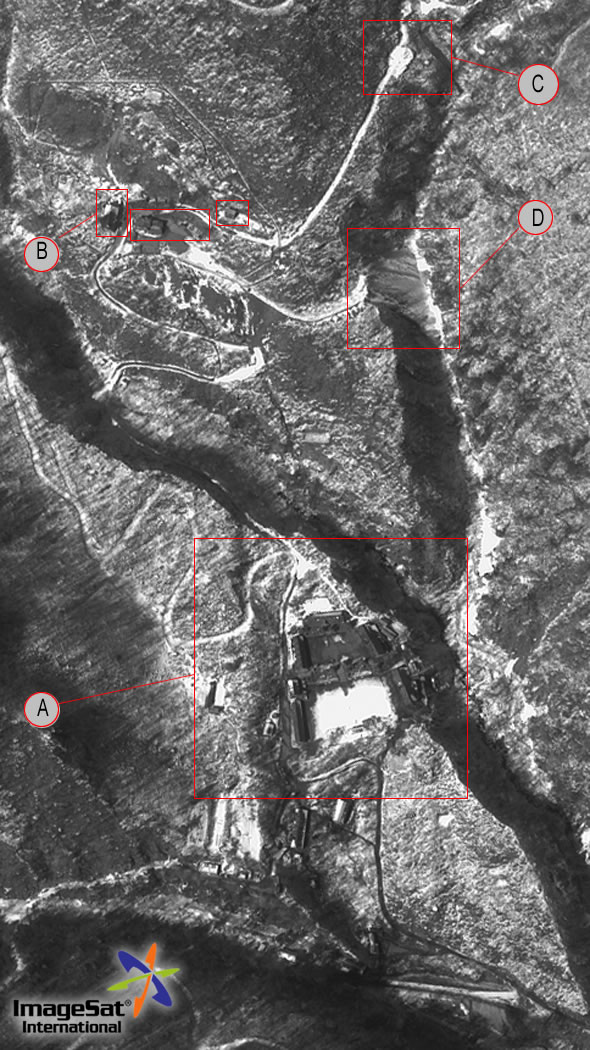
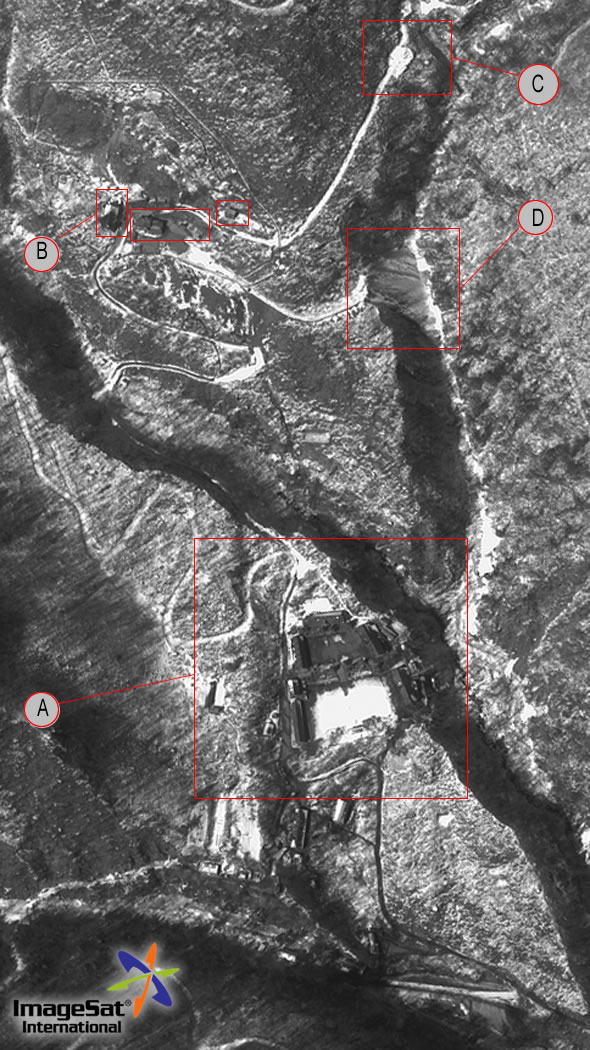
    Punggye-ri nuclear test facility shown in this EROS-B satellite image. The facilities shown are: A - expanded support facilities, B - tunnel entrance shelter and new construction at test site, C - new facility, possibly observation post (or new excavation soil dump - unlikely). D - excavation soil dump, existing since 2006. Photo: Imagesat.

    In defiance of international condemnation and pleas for restraint, North Korea launched its long-range Unha-3 rocket on Friday the 13th in an effort to place an Earth-observation satellite into a polar orbit.

    International news media outlets are reporting that North Korea launched its Unha-3 three-stage rocket on Friday at 7:39 AM Korean time from its northwestern Sohae Space Center at Tongchang-ri in an effort to place a satellite into Earth-orbit. South Korean and United States’ sources are reporting that all preliminary data indicates that the launch failed shortly after lift-off. No launch confirmation has been provided by North Korea yet.


    US, Japanese, and South Korean officials announced that data collected during the launch indicate the rocket broke apart, possibly within the first ninety seconds of flight. First reports say that an abnormally large “flare” was identified shortly after separation of the rocket’s first stage and the remaining portions of the rocket crashed somewhere in the sea. Officials speaking for the United States stated that no part of the rocket or the satellite made it out of Earth’s atmosphere.

    The Kilju nuclear test facility at Punggye-ri shown in this EROS-B satellite image taken 28 March 2012. The facilities shown are: A - expanded support facilities, B - tunnel entrance shelter and new construction at test site, C - new facility, possibly observation post (or new excavation soil dump - unlikely). D - excavation soil dump, existing since 2006. Photo: Imagesat.

    South Korea scrambled military helicopters and ships immediately following the launch in a search effort to locate and retrieve any debris that might be found. Before the launch, the United Nations announced that the Security Council was scheduled to meet sometime on Friday to discuss the launch. It is unknown if this meeting will be held as scheduled or will be delayed now that the North has completed its launch effort.

    The North’s launch was planned to be the highlight of the nation’s scheduled celebrations to commemorate the 100th birthday anniversary of Kim Il-Sung, the founder of the North Korean regime. Kim Il-Sung’s birthday, April 15th, has long been a national holiday in the North known as the “Day of the Sun.”While the failure of this launch is likely to be viewed by the international community as an “embarrassment,” it is equally probable that the North will claim that the endeavor was an unqualified success. Since 1998, North Korea has attempted four launches of multistage rockets, all attempts have failed.

    South Korean representatives have expressed their belief that this launch attempt will be quickly followed by a new nuclear test in keeping with the North’s past history. Two previous satellite-launch attempts preceded nuclear tests and South Korean intelligence sources are reporting that work is now underway to prepare for another test in the same region where previous nuclear tests were conducted.

    Based on information compiled by South Korean intelligence, reported by Associated Press on 9 April, it appears highly probable the North is nearing completion of necessary excavations at the northeast Punggye-ri nuclear test facility required to conduct a nuclear test. The Punggye-ri site was used to conduct tests following the failed rocket launches in 2006 and 2009.

    Ultra Fast Laser-Based Explosive Scanner Accelerates Airport Security Checks

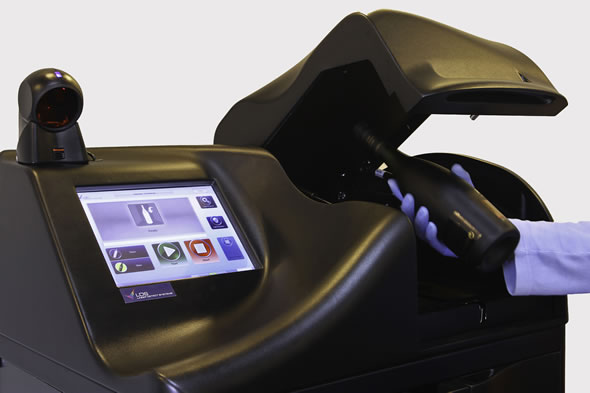
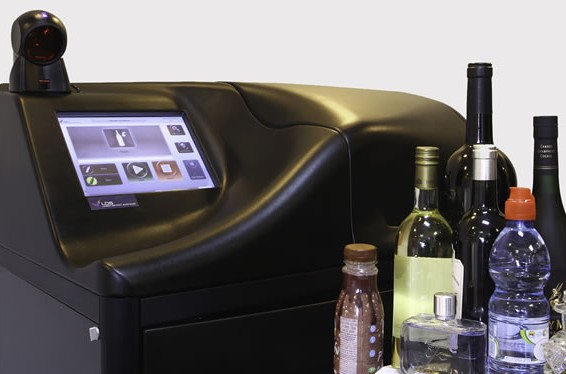
    The Israeli electro-optics expert Laser Detect Systems (LDS) has developed a laser-based explosive scanner utilizing Raman Spectroscopy to perform ultra-fast and highly reliable (low false negative and low false positive) detection and identification of solids, liquids or powders, enabling very high probability of detection of all types of explosives. The system successfully completed an exhaustive testing by explosive detection experts, led by the Israel’s internal security agency services and has recently been delivered for first operational pilot tests. Photo: LDS
    End to restricting liquids on airport security? An Israeli laser-based scanner detects illusive liquid explosives in 3-5 seconds. Photo: LDS

    Laser Detect Systems Ltd (LDS), an Israeli Electro-Optics Company has launched a breakthrough in explosive detection systems. The company announced today it completed testing of an innovative laser-based explosive scanner capable of detecting hard to detect liquid explosives in three to five seconds. Current explosive scanners are limited in their capability to detect certain types of explosives, hence the limitations imposed on carrying liquids on board passenger aircraft.


    The new Israeli scanner called LDS 5500D is a desktop laser-based explosive scanner enabling accurate and reliable detection of explosive materials and hazardous compounds in liquid, gel or powder form. The scanner employs advanced laser gated Raman spectroscopy scanning methods, enabling the scanner to achieve a high level of detection, and superior processing speed.

    The system successfully completed an exhaustive testing by explosive detection experts, led by the Israel’s internal security agency services. The tests included a wide range of inspections evaluating its detection capabilities and sensitivity, detecting and identifying a wide range of explosive materials, including those considered so far undetectable by other means.

    “We developed our new laser scanner in cooperation with Israel’s security agencies, according to Israeli operational security concepts. Meeting these standards, LDS 5500D offers the best performance among the systems available in the market today” said Eli Venezia, President & Chairman of LDS. “In terms of high sensitivity, low false alarm rate and throughput, our system offers a great improvement over current standards, performing a typical inspection in 3-5 seconds.” Venezia added.

    The LDS 5500D scans a wide range of standard, or improvised explosive materials in liquid, gel, powder or solid form, including materials contained in sealed plastic or glass bottles, as well as those materials mixed or diluted with other substances attempting to deceive existing sensors. LDS 5500D can also detect traces and residues of explosives on already inspected objects. Other applications of the LDS 5500D include reliable detection of narcotics, and forensic identification of chemicals in liquid, solid, gas and powder form.

    LDS plans to unveil th enew system at the upcoming Counter Terror Expo 2012 taking place in London, April 25-26. The company will be presenting jointly with IDO Security Inc, an Israeli company whose innovative “shoes on” walk through metal detector, the Magshoe, is already a fixture for metal detection in shoes and the lower extremities at numerous airport checkpoints worldwide.

    “The global market for fast, ultra sensitive and reliable explosive detection scanners is estimated at hundreds of millions of dollars and our new systems position LDS in a leading position in this field.” Said Venezia. At the Counter Terror Expo 2012 LDS will also present the LDS 6500R, Remote Scan system, a laser-based explosive detector capable of detecting standard and improvised explosive devices (IED) from a standoff distance. This laser scanner can also detect and identify hazardous materials and chemical warfare agents from tens of meters distance from the suspicious object.

    The Israeli electro-optics expert Laser Detect Systems (LDS) has developed a laser-based explosive scanner utilizing Raman Spectroscopy to perform ultra-fast and highly reliable (low false negative and low false positive) detection and identification of solids, liquids or powders, enabling very high probability of detection of all types of explosives. The system successfully completed an exhaustive testing by explosive detection experts, led by the Israel’s internal security agency services and has recently been delivered for first operational pilot tests. Photo: LDS

    GTAG Promotes Defense Exports for Israel’s SME

    Following the success of the first meeting, the Israeli Government Technology Allied Group (GTAG) is holding the second meeting on April 16, 2012. GTAG is an interest group supporting Israeli Small and Medium Enterprises (SME) active in the defense and security export market; its goals are to improve and streamline processes and bureaucracy hindering the growth and activities of SME in this sector. In this second meeting the group’s founder Lori Solberg will present new opportunities in South-East Asia, following visits in South Korea and Vietnam and discuss the ongoing changes in SIBAT and API, following GTAG requests to streamline and improve processes. Appreciating the importance and contribution of GTAG to the local industry, Defense-Update has been a supporter of GTAG since its foundation.

    Participation in GTAG meetings is free of charge but requires prior registration

    Rafael Invests in a Brazilian Aerospace Company

    The Israeli defense company Rafael Advanced Defense Systems announced the acquisition of a 40% stake in the Brazilian aerospace company GESPI Aeronautics, deepening its position in the growing Brazilian homeland security and defense market. The two companies formally announced the acquisition today at the LAAD Security 2012 event in Rio de Janeiro, Brazil. Based in Sao Jose dos Campos near Sao Paulo, GESPI operates in Brazil’s civil and security sector for over 20 years, serving the local Air Force, Army and Navy. “The acquisition of GESPI will allow us to implement the strategic policy of the Brazilian government for the transfer of advanced technology and expertise to projects of the Ministry of Defence of Brazil and various security agencies of production site, providing employment opportunities and export to other countries. ” Lova Drori, Senior Vice President of Marketing at Rafael said.

    North Korea Positions Rocket For Launch, Threatens Retaliation For Interference

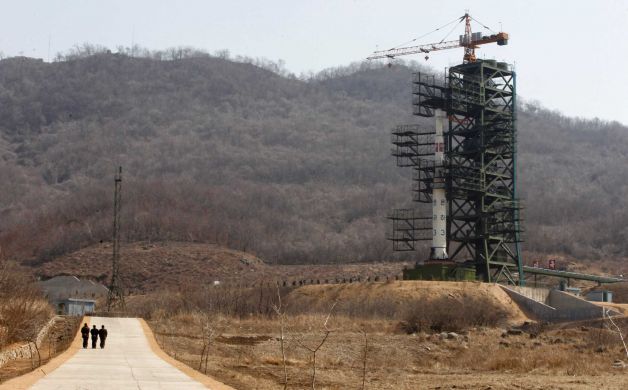
    Journalists leave the Unha-3 launch site. Reuters Photo, via Saylife

    North Korea’s new Unha-3 is now assembled on its launch platform in preparation for a highly controversial satellite launch later this week. And for the first time, the secretive North has granted a select group of international observers an extraordinary opportunity to view the rocket and witness the launch.

    Rising to a height of 30 meters and measuring 2.5 meters in diameter, all three stages of the Unha-3 are assembled and clearly visible on the launch platform at the new Sohae Space Center located in the northwestern part of the country at Tongchang-ri on the Cholsan peninsula, a mere 50 kilometers distance from the Chinese border.

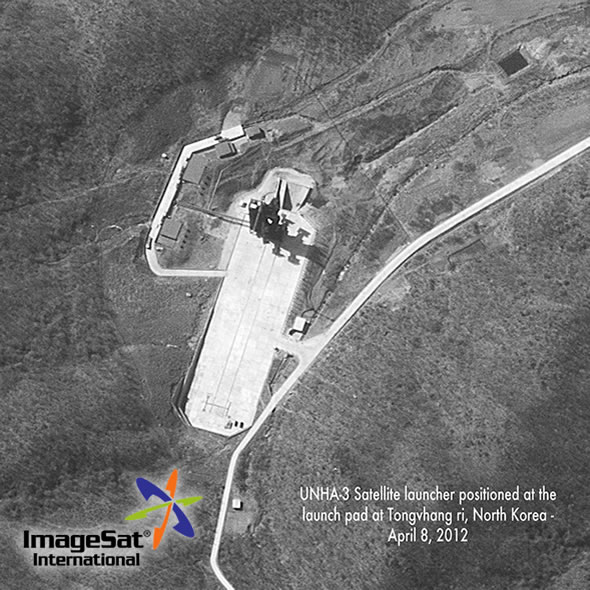
    April 8, 2012: Unha-3 satellite launcher positioned on the launch pad at Tongchang ri, west of Pyong Yang, on the western coast of North Korea. Photo: Imagesat International
    Despite claims by the United States and her Pacific allies that this is a dangerous ballistic missile test launch, North Korea insists that the Unha-3 rocket is designed to place an “Earth observation satellite,” the Kwangmyongsong-3, into orbit for scientific purposes. The rocket is scheduled to be launched sometime between 12 and 16 April to commemorate the 100th birthday anniversary of the nation’s founder, Kim Il-Sung. Should this launch be successful, it would go far in reinforcing the image of the North’s new leader, Kim Jong-Un, and would be a major boost to North Korea’s desire to be recognized as a nation of influence and power.

    According to Jang Myong-Jin, Director of the Sohae Space Center, the satellite will enable the North to accumulate scientific data needed to analyze and manage the nation’s agricultural pursuits, forest preserves, and natural resources. Jang told the assembled observers that the launch had been planned long ago and reiterated that the launch is not a missile test, but a peaceful scientific endeavor. Jang also voiced the North’s stance that, as a sovereign nation, they had every right, and indeed, a responsibility to develop a level of peaceful scientific technology many other nations now enjoy.

    When asked the cost of the North’s rocket program, Jang failed to provide any monetary measures, but insisted that hunger was not a reason to ignore the need to acquire advanced technology that could help his nation enter the ranks of the developed nations.

    International observers invited to view the rocket, mostly journalists, were transported to the space center aboard a special train to get a first look at the rocket, a white spire of 91 tons featuring distinctive lettering spelling out “Unha-3” in blue, a North Korean flag, and apparently lacking only installation of the satellite and final fueling to be fully ready for launch.

    The Kwangmyongsong-3 application satellite, to be put onto the Unha-3 (Milky Way 3) rocket at the West Sea Satellite Launch Site, is displayed during a guided media tour by North Korean authorities in the northwest of Pyongyang April 8, 2012. Reuters photo via Daylife.

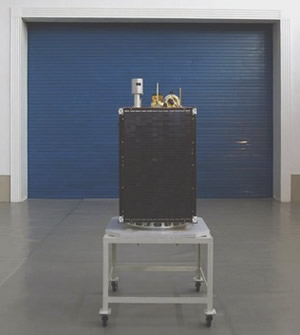
    Although restricted to viewing the Unha-3 from a distance of 50 meters, the journalists were allowed a much closer look at the Kwangmyongsong-3 (Shining Star) satellite. The satellite was described as being a box weighing 100 kilograms fitted with five antennae and solar panels to power electrical components.

    Jang also told the assembled journalists that final fueling would begin soon. The form of liquid fuel favored by the North is widely believed to be difficult to store in above-ground tanks for an extended period of time because it is highly toxic and extremely corrosive. This also makes it necessary for fueling to be delayed until only a few days before launch.

    Jang, to assuage any fears neighboring nations may have, also informed the journalists that the rocket was equipped with a self-destruct mechanism that could be activated at any time the launch appeared to deviate from its targeted trajectory or failed to perform as designed.

    In his comments, Jang also told the assembled journalists that the North had every intention of expanding its space program with plans to conduct future launches of vehicles weighing as much as 400 tons. The North has also issued a warning that any interference or shoot down of this rocket would be met with severe retaliation and “merciless punishment.”

    Japan and South Korea have already deployed missile batteries and Aegis-equipped warships and placed their armed forces on high alert in response to this rocket launch. Both nations previously gave their forces the go-ahead to shoot down the rocket should it appear to represent a danger to property or life. The US has also deployed missile-capable forces and high-tech surveillance assets in the Pacific as a “precautionary” measure to deal with this situation.

    US And Pacific Allies Prepare For North Korean Rocket Launch

    April 7, 2012: Unha-3 satellite launcher positioned on the launch pad at Tongchang ri, west of Pyong Yang, on the western coast of North Korea. Photo: Imagesat International
    April 7, 2012: Unha-3 satellite launcher positioned on the launch pad at Tongchang ri, west of Pyong Yang, on the western coast of North Korea. Photo: Imagesat International

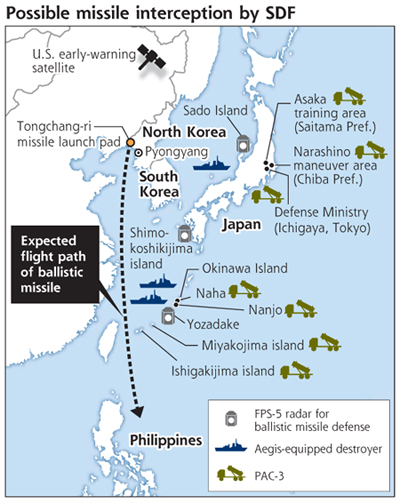
    In response to North Korea’s recent preparations to launch a satellite into orbit, the Japanese government deployed three Aegis-armed destroyers and Patriot missile batteries as a defensive measure to protect Japanese property and lives.

    The North Korean regime claims that the satellite launch, scheduled for some time between 12 and 16 April, is a major display to highlight the nation’s strength and technological advances in celebration of the centennial observance of Kim Il Sung’s, birthday on 15 April.  Kim Il Sung is revered as the nation’s founder and the 100th anniversary of his birth is cause for nationwide celebrations and demonstrations of the North’s “coming of age” as a nation of international influence and importance.

    North Korea’s state-controlled media has announced that this launch is designed to place an “Earth observation” satellite, the Kwangmyongsong-3, into a polar orbit to study weather patterns, agricultural conditions, and to locate promising natural resources.  This satellite is expected to relay “remote data in the UHF band and video in the X-band.”  The Unha-3 launch vehicle is aimed to fly a trajectory directly south of the launch site in the interest of protecting property and lives in neighboring nations, according to the North’s media announcements.

    The North says that the Kwangmyongsong-3 satellite is fitted with enhanced video equipment designed to transmit video images and related data to the General Satellite Control and Command Center.  The satellite is believed to weigh approximately 100 kilograms and will reportedly fly a solar-synchronous orbit at an altitude of 500 kilometers.  The satellite is reported to have an expected operational lifespan of two years.

    The North Korean rocket is expected to pass over or near the Sakishima Islands forming the southernmost portion of Okinawa Prefecture.  The North’s state-sponsored media has reported that the rocket’s first stage is expected to come down in the waters somewhat west of South Korea.  The second stage is expected to overfly open airspace near the Japanese Ishigaki and Sakishima islands eventually falling into open waters to the east of Luzon Island in the Philippines.

    The three deployed Japanese destroyers are equipped with RIM-161 Standard Missile-3 (SM-3) interceptors, a short- to intermediate range missile that is part of the Aegis Ballistic Missile System.  This missile was used successfully in 2008 by the US Navy to shoot down a crippled American satellite at an altitude of 133 nautical miles (247 kilometers) above the Pacific Ocean.  One shot, one missile, one kill.

    Japan's missile defense assets deployed to Intercept the North Korean missile on its ascent trajectory. Illustration: Daily Yomiuri
    Japan has also deployed Patriot PAC-3 missile batteries to the islands of Ishigaki and Miyako and the principal island of Okinawa as a second line of defense.  The government also deployed Patriot batteries in the vicinity of the Ministry of Defense’s Tokyo headquarters.Should the order be issued to shoot down the North Korean rocket, the SM-3 shipboard interceptors, as the first line of defense, will aim to bring down the rocket while it is above the Earth’s atmosphere.  Should the SM-3 shipboard missiles miss the target, the PAC-3 missile batteries will attempt to shoot down the rocket, or any remnants of the rocket, as it reenters the atmosphere.

    Japan’s Air Self-Defense Force (JASDF) has also been ordered to ready F-15s to provide air cover for the Aegis destroyers.

    South Korea has also issued a public warning that the South stands ready to destroy the North Korean rocket should it violate South Korean airspace.  South Korean sources have confirmed that two destroyers have been deployed to the West Sea to track the rocket’s trajectory.  ROKS Sejong the Great (DDG-991), a 7,600-ton Aegis-armed destroyer, is one of the ships deployed.

    A spokesperson for the South’s Ministry of National Defense  confirmed that the Ministry is prepared to track the rocket and shoot it down if it appears to represent a threat to life or property.  The deployed destroyers will be ordered to fire their Standard Missile-2 (SM-2) missiles to bring the rocket down if it fails to follow the planned trajectory or fails to function properly.

    South Korea also announced that Patriot PAC-2 missile batteries have been deployed as a second line of defense, the PAC-2s were acquired secondhand from Germany in 2007 and have been integrated with an Israeli Super Green Pine early warning radar system.

    The North’s new Sohae launch site at Tongchang-ri on the northwestern seacoast presents a new challenge to the South’s missile defense array as the new site can be placed into operable condition much more quickly than the older launch site.  Also, the angle of trajectory from this new site increases the level of difficulty for seaborne missile systems to acquire, target, and hit a rocket launched from this location.

    Despite the US Navy’s 2008 success in shooting down a rogue US rocket, some doubt exists regarding the ability of Japanese and South Korean forces to bring down the North’s Unha-3 launch vehicle.  Very little is known about the Unha-3, but it is believed to be an advanced version of the Unha-2 with a length of approximately 35 meters and a projected range estimated to be anywhere between 5,000 and 9,000 kilometers.  A scarcity of verifiable data makes it impossible to do any more than estimate the rocket’s capabilities on the basis of data gleaned from previous rocket launches.

    Newly released satellite imagery indicates that North Korea has moved the first stage of the Unha-3 rocket to the Sohae launch site.  Although not visible in the satellite photos, the Associated Press is reporting that an analysis provided by the US/Korea Institute at Johns Hopkins School of Advanced International Studies indicates that the first stage of the Unha-3 may already be in place within a gantry on the launch platform.  The support gantry on the platform is a closed structure and is likely obscuring a clear view of the rocket.

    Analysts with the Institute also believe that fueling activities have been completed.  Satellite images seem to indicate that the empty fuel and oxidizer tanks have been removed and the area around the launch pad has been cleared of loose objects and mobile equipment.  The road leading to the launch site is now blocked by a newly erected barricade and it appears that a heightened level of security has been instituted.

    With evidence that the Unha-3 rocket is nearing completion for launch, the US Department of Defense activated the nation’s global missile shield.  This action accelerates electronic monitoring, authorizes the deployment of Aegis-equipped interceptor ships, and raises the level of radar tracking activities in the Pacific region.  Three US interceptor ships deployed near Japan and the Philippines have been alerted as well as land-based missile batteries in the zone of greatest perceived danger.  These assets, according to unnamed sources, will be given the order to bring down the North Korean rocket should it deviate from its announced path of trajectory or should sensors indicate the rocket represents a danger to life or property.

    SOCOM Hires Arma Global to Deliver Deployed C2 Networks

    Arma Global Corp. will develop and deploy an advanced intelligence management, mission planning and control system for the US Special Operations Command. The company has been awarded SOCOM contract worth half a billion US$ for the job for the delivery of the Tactical Local Area Network (TACLAN) system. As the system provider, Arma Global will be responsible for system acquisition, design, integration, production, and delivery to SOCOM. ARMA Global was founded in 2008 as a full service integrator focused on government and commercial clients. Since its foundation the company has won several contracts form SOCOM, including the SOCOM Information Technology Enterprise Contract (SITEC) and IT services contracts. ARMA Global is also conducting non standard arms and ammunition purchasing on behalf of the Pentagon, to equip the Afghan National Army.

    In the past five years iGov managed the TACLAN program under under a five-year $470 million contract. The system provides SOF operational commanders and forward deployed forces advanced automated data processing and display capabilities to support situational awareness, mission planning and execution, and command and control of forces.

    TACLAN consists of various suites, Mission Planning Kits (MPK) and Field Computing Devices (FCD). Each TACLAN Suite consists of three transportable, integrated networks; 60 laptops; 10 intelligence processing laptops; communications routers and support equipment establishing forward deployed SOF Command and Control Nodes. Each MPK consists of four general laptops supporting SOF teams for detailed mission planning support. The FCDs uses a small handheld device enabling forward deployed teams to automatically interface with the TACLAN suite via tactical communications.

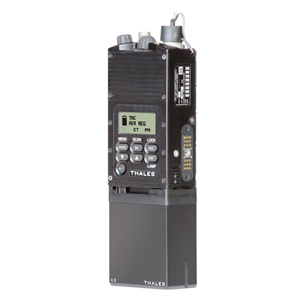
    Modernizing SOF tactical communications, Thales Communications, Inc., will supply SOCOM with the latest JTRS compatible joint enhanced multiband inter/intra team radio variant, replacing multiband inter/intra team radios currently in service. Deliveries under the $390 million contract will continue through summer 2016.

    Thales introduced the AN/PRC-148 GEM as an upgrade over the AN/PRC-148, providing a SCA-certified platform that allows inclusion of new JTRS waveforms while maintaining interoperability with legacy radios.

    Cassidian’s ‘Smart Jammer’ Equips Commercial Vehicles with IED Countermeasure

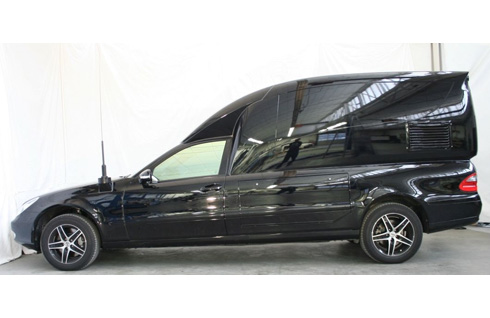
    Cassidian's smart responsive jammer is designed to deploy on commercial vehicles. The elevated top covers the multi-band antennae employed by the system. Photo: Cassidian

    Two jammer vehicles establish protective perimeter around VIP vehicle. Image: Cassidian
    High power jamming systems have long been used to protect VIP convoys from remotely controlled explosive charges. While brute force does the job in most cases, broad spectrum coverage and high power used often limit the use communications, networking devices, and other electronic systems employing wireless communications. The high power and high radiation levels used often require jammers to operate on dedicated, highly modified vehicles.

    Cassidian, the defense and security division of EADS recently unveiled a ‘new-generation’ Convoy Protection Jammer that uses ultra-fast ‘Smart Responsive Jamming’ technology’ to substantially enhance protection, while maintaining relatively low power consumption and uninterrupted communications. The system detects and classifies radio signals over a wide frequency range of 20 MHz to 6 GHz frequency range, looking for signals that could be used to trigger explosive charges and roadside bombs. After detection and classification, the system transmits jamming signals to block the signal in real-time, by precisely matching the hostile frequency band, thus interrupting the connection between remote controller and the explosive charge.

    Cassidian's smart responsive jammer is designed to deploy on commercial vehicles. The elevated top covers the multi-band antennae employed by the system. Photo: Cassidian
    Relying on digital receiver and signal processing technologies to achieve reaction times below one millisecond; it can intercept 1.5 million threat signals per second across all common frequency bands. By concentrating the jamming energy on the frequency that is active in each case, the system requires considerably less energy while maintaining uninterrupted communication for all passengers, security escorts.

    Digital Raven Enhanced with New Gimbaled Payload, Image Processing

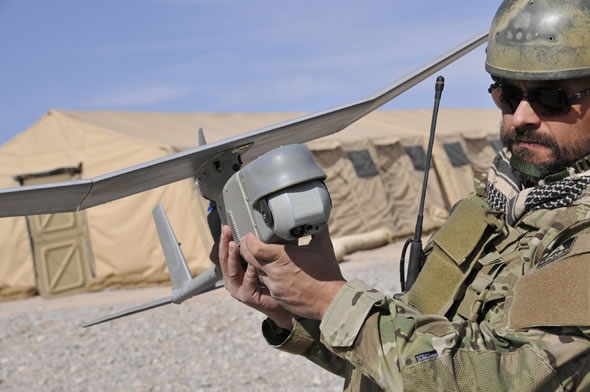
    RQ-11B Raven small UAS fitted with the Mantis gimballed EO Payload
    RQ-11B Raven small UAS fitted with the Mantis gimballed EO Payload. Photo: Aerovironment
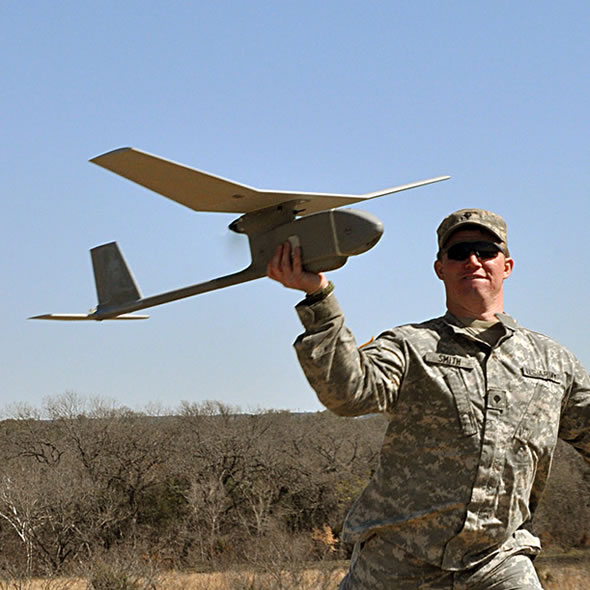
    Following the 'digital upgrade', Ravens are open for more enhancements. Photo: US Army

    The Raven small Unmanned Aerial System (SUAS) has become a popular intelligence, surveillance and reconnaissance asset supporting low echelon formations (battalion and below). The Raven won its popularity due to the system’s simplicity and reliability as the manufacturer, Aerovironment Inc. (AV) developed the system to be used and operated by soldiers, in the field – simple, robust and effective. One of the unique features of the Raven, as well as other small and Micro UAS from AV is the use of fixed cameras staring forward and sideways, offering the user simple means to focus on the mission and on the target. For those who want more from their Ravens, AV is now offering a new gimbaled payload enabling the operator to keep the target in sight regardless of the aircraft attitude or flight path. AV unveiled the new payload today at the Army Aviation Association of America Annual Professional Forum and Exposition.

    The modular payload is a member of AV’s Mantis family of gimbaled, micro multi-sensor payloads. It comes with a high-resolution color and an infrared thermal video sensor, as well as a laser illuminator (pointer), all integrated into a multi-axis sphere capable of continuous pan. The new gyro-stabilized payload will become a standard component of future Raven systems. AV also plans to offer it as an upgrade for previously fielded units. According to AV, upgrading existing digital Raven systems to accommodate the new payload requires only a software update to each air vehicle and ground control station.

    The new payload is one of four products offered in AeroVironment’s “Mantis” suite of gyro stabilized, gimbaled sensor payloads now available for commercial applications including unmanned aircraft systems, manned aircraft, ground vehicles and watercraft. Designated Mantis i23, the new payload fits under the Raven’s nose, it measures 3.1 inches in diameter and weighs only 450 grams (16 oz). It packs a 5 megapixel daylight camera and 640×480 bolometric (uncooled) IR thermal camera with four zoom levels. The payload uses two levels of stabilization – electro-mechanical (gyro) and electronic (image stabilization).

    The gimbaled payload doesn’t come cheap. At a price range of $48,000 – $30,000 (depending on quantity), the i23 costs almost as the whole Raven. However, at these rates, it is still relatively cheap, compared to larger and heavier multi-sensor payloads available on the market.

    The value of the gimbaled sensor payload is not measures only in dollars, as it enhances the Raven capabilities by allowing a higher level of visual fidelity and continuous observation of an item of interest, regardless of the air vehicle’s flight direction. Furthermore, the new payload replaces two separate Raven system payloads previously required for day and night operation, one containing a stationary electro-optical sensor, the other a stationary infrared sensor. Flight algorithms allow the air vehicle to manage its own flight path based on what the user wants to see, rather than requiring the user to control both the air vehicle and the sensor separately.

    “Our new mini-gimbal payload significantly increases the Raven system’s capability and can be quickly and easily integrated into the thousands of digitally enabled air vehicles already deployed,” said Tom Herring, AeroVironment senior vice president and general manager of its Unmanned Aircraft Systems business segment. Integrating the new gimbaled sensor payload marks the fourth upgrade to the Raven system since its introduction in 2003 and follows the successful introduction of AeroVironment’s digital data link (DDL) to replace the Raven system’s original analog communication modules.

    Kestrel moving target indication software processes MTI tracks from the Raven's digital video from live or recorded clips. Photo: Sentinent.

    Another innovation offered for AV’s small UAS, including the Raven is the Kestrel Moving Target Indication (MTI) package developed by the Australian company Sentinent. The software package is now available through AV, offering Raven, Puma or wasp III operators to automatically detect moving objects viewed through electro optical (VIS or IR) full motion video. Kestrel is integrated in the AV Common Ground Control System serving AV’s SUAS processing the video received from the drone to automatic extract motion detection and geo-location of detected tracks. The new application increases SUAS mission efficiency, by expanding area coverage and providing real-time and forensic operation support.

    In February 2012 AV secured the exclusive, global distribution rights of Sentinent’s Kestrel software and is now integrating the system with its SUAS systems.

    According to Herring this software makes it much easier to detect and track multiple moving objects in the battle space, thus delivering improved situational awareness to the system operator and tactical commander. “Kestrel Land MTI is deployed in a variety of theaters all over the world,” Simon Olsen, sales and marketing manager at Sentient added, “The automated cueing capability has proven to be a decisive edge in a number of operational missions. This extensive operational experience was a key prerequisite for this relationship to proceed.”

    The Mantis i23 miniature payload fitted on the Aerovironment RQ-11B Raven. This 450 gram miniature payload packs a 5 mp digital video camera, a 640x480 uncooled thermal imager and laser pointer. Photo: AerovironmentI

    Skunk Works and XTEND Simplify Multi-Drone Command

    0
    Lockheed Martin Skunk Works® and XTEND have achieved a major milestone in JADC2 by integrating the XOS operating system with the MDCX™ autonomy platform. This technical breakthrough enables a single operator to simultaneously command multiple drone classes, eliminating the friction of mission handoffs. From "marsupial" drone deployments to operating in GPS-denied environments, explore how this collaboration is abbreviating the data-to-decision timeline and redefining autonomous mission execution.

    From Ukraine to Taiwan: The Global Race to Dominate the New Defense Tech Frontier

    0
    As traditional defense primes face mounting competition from agile “neoprimes” such as Anduril, Palantir and Helsing, the balance of innovation is shifting toward software-defined warfare and scalable, dual-use technologies, while global industry consolidation—marked by Boeing’s integration of Spirit AeroSystems and other strategic mergers—signals an intensified race to secure control over the defense technology value chain. Our Defense-Tech weekly report highlights these trends.

    Europe’s “Drone Wall”

    0
    In early October 2025, a coordinated wave of unmanned aerial system (UAS) incursions—widely attributed to Russia—targeted critical infrastructure across at least ten European nations. The unprecedented campaign exposed the fragility of Europe’s air defenses...

    Weekly Defense Update & Global Security Assessment

    0
    Executive Summary The past week (September 18-25, 2025) represents an inflection point where strategic defense concepts have transitioned from doctrine to tangible reality. An analysis of global events reveals four primary, interconnected trends shaping an...

    U.S. Air and Space Forces Push Next-Gen Programs at the AS&C 2025 Conference and...

    0
    At the 2025 Air, Space & Cyber Conference, U.S. Air Force and Space Force leaders unveiled major updates on next-generation fighters, bombers, unmanned systems, and space initiatives, highlighting both rapid innovation and critical readiness challenges as the services race to outpace global competitors. A short version is available here, with a more detailed version for subscribers.

    TADTE 2025: Reflecting Taiwan’s Strategic Themes

    0
    The Taipei Aerospace & Defense Technology Exhibition (TADTE) 2025 crystallized around four dominant strategic themes that collectively illustrate Taiwan's comprehensive approach to defense modernization amid escalating regional tensions. Based on a detailed report by Pleronix (available upon request). Includes a Podcast discussion on TADTE 2025's highlighting Taiwan's four strategic themes beyond the post's coverage.

    Iron Beam 450 Completes Testing, Soon to Join With Operational Air Defense Units

    0
    Israel’s Iron Beam 450 high-power laser system has completed final testing, marking a major leap in air defense. Developed by Rafael, it offers precise, cost-effective interception of rockets, UAVs, and mortars, and is set for IDF deployment by 2025.