
Sunday, December 28, 2025
More
    Home Blog Page 239

    Japan’s Nuclear Reactor Situation Deteriorating

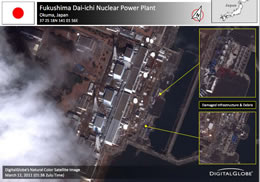
    Digital Globe images showing damage to the water intake ports at the Fukushima nuclear power plant, caused by the earthquaqe and tsunami. Two days later the reactor shield exploded. Image: 12.3.2011 by DigitalGlobe
    Damage to Fukushima Daiichi Nuclear Power Plant - March 13-14, 2011. Photos: DigitalGlobe

    The nuclear reactor situation in Japan has deteriorated significantly. Two more explosions occurred at the Fukushima Daiichi nuclear power plant on March 15.

    The first occurred at 6:10 a.m. local time at reactor No. 2, which had seen nuclear fuel rods exposed for several hours after dropping water levels due to mishaps in the emergency cooling efforts. Within three hours the amount of radiation at the plant rose to 163 times the previously recorded level, according to Japan’s Nuclear and Industrial Safety Agency.

    Elsewhere, radiation levels were said to have reached 400 times the “annual legal limit” at reactor No. 3. Authorities differed on whether the reactor pressure vessel at reactor No. 2 was damaged after the explosion, but said the reactor’s pressure-suppression system may have been damaged possibly allowing a radiation leak. After this, a fire erupted at reactor No. 4 and was subsequently extinguished, according to Kyodo. Kyodo also reported the government has ordered a no-fly zone 30 kilometers around the reactor, and Prime Minister Naoto Kan has expanded to 30 kilometers the range within which citizens should remain indoors and warned that further leaks are possible.

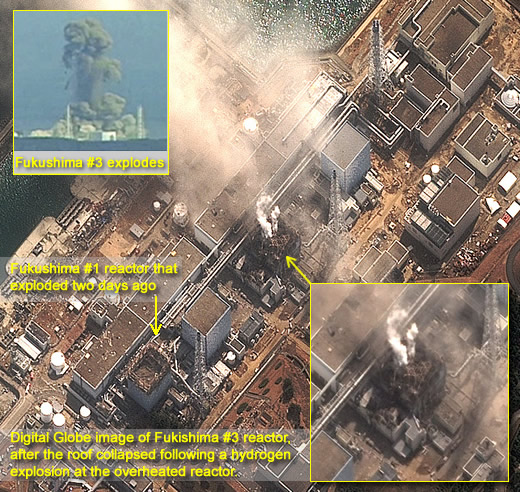
    Digital Globe image of Fukishima #3 reactor, showing the roof collapsed following a hydrogen explosion at the overheated reactor. Photo: 3/14/2011 by DigitalGlobe

    The Japanese government has announced a 30-kilometer no-fly zone and is expanding evacuation zones and urging the public within a wider area to remain indoors. The situation at the nuclear facility is uncertain, but clearly deteriorating. Currently, the radiation levels do not appear immediately life-threatening outside the 20-kilometer evacuation zone. But if there is a steady northerly wind, the potential for larger-scale evacuations of more populated areas may become a reality. This would present major challenges to the Japanese government. Further, the potential for panic-induced individual evacuations could trigger even greater problems for the government to manage.

    Read more: Red Alert: Radiation Rising and Heading South in Japan | STRATFOR

     

    Elbit Systems 2011 – Returning to Growth

    Yossi Ackerman, President & CEO, Elbit Systems

    Elbit Systems, Israel’s leading defense systems manufacturer has increased revenues in the fourth quarter to US$798.7 million, indicating 11.8% growth, compared to $714.7 million in the fourth quarter of 2009. The company reported today its 2010 revenues amounted to $2,670 million; Net profit of $183.5 million and Backlog of orders over $5.4 billion.

    This positive milestone for the company followed a tough year, which saw its revenues decline by $162 million in a year to year comparison (5.7% compared to 2009). The main attributes for lower revenues in 2010 represented several programs in the company’s land systems and UAVs operations. Winding-up of the M-60 upgrading project in Turkey, where Elbit Systems was providing an all-new turret control, optronics and electronics; decreased revenues from the Bradley project in the United States, where Elbit provides mission computers and vetronics and from the Watchkeeper project in the U.K. based on the company’s Hermes 450WK platform, all contributed to the pressure in 2010.

    Yossi Ackerman, President & CEO, Elbit Systems

    “2010 was a challenging year,” Joseph Ackerman, President and CEO of Elbit Systems commented, Despite the difficult year, Ackerman points to the long term effects for the company “we witnessed resumed growth in our backlog, while at the same time we achieved increased revenues levels in the fourth quarter.”

    The Company’s backlog of orders for the year ended December 31, 2010 totaled $5,446 million, (up $402 million from  $5,044 million reported in the previous year.) 72% of the current backlog is scheduled to be performed during 2011 and 2012.

    The increase in the Company’s revenues was driven mainly by the electro-optics and airborne systems areas of operations. Despite the tough year, the company increased its research and development spending in 2010 to $234 million, representing over 8% of gross revenue.

    “Most important for 2010 was the solid execution of our Merger and Acquisition strategy in support of our long-term goals. 2010 was a year of building on our internal competencies while acquiring complementary technologies and products that broadened our offerings to the defense market.” In 2010 and the first quarter of 2011 Elbit Systems consolidated its acquisition of three companies of the Mikal group, (Soltam, Saymar and ITL), solidified 100% holding of Elisra, strengthened its U.S. subsidiary with Texas based M7 Aerospace service company, and acquired two Brazilian companies Ares and PEO, bolstering its position in the growing Brazilian market, where the company recently announced two important contracts – the delivery of unmanned turrets for Brazil’s new armored vehicle and supply of Hermes 450 unmanned systems for the Brazilian Air Force.

    While the European market becomes tougher, Elbit Systems’ domestic activity (in Israel) has grown steadily in recent years, reflecting increased defense spending in Israel. Elbit Systems’ domestic revenues grew from 22% ($627.3 million) in 2009 to 24% in 2010 ($651 million). The current backlog represent 26% of domestic orders (about $1.416 billion).Recent acquisitions of domestic companies has also contributed to the local activity, as some of these companies maintained ongoing programs with the Israel MOD for years.

    “Our recent acquisitions open a number of new doors for us” Ackerman continued, “first, they add additional R&D capabilities in a number of new areas, which can potentially be beneficial across the entire breadth of our operations. Second, the acquisitions strengthen and expand our presence in the Training and Simulation, Artillery and MRO areas. Finally, our M&A and related activities enable us to expand our operations in strategic regions, notably Brazil and Australia. Looking ahead, as we begin to exploit the synergies of this group of new acquisitions”.


    Satellite Imagery, U-2 Chart Japan’s Earthquaqe, Tsunami Devastation

    Digital Globe image of Fukishima #3 reactor, showing the roof collapsed following a hydrogen explosion at the overheated reactor. Photo: 3/14/2011 by DigitalGlobe

    As Japan copes with the aftermath of the 8.9 magnitude earthquake and tsunami that struck March 11, earth reconnaissance satellites and aerial reconnaissance aircraft and unmanned vehicles are deployed to the area in an effort to assist emergency operations with up-to-date situational assessment and efficient response to the events of the highest priority.

    Digital Globe image of Fukishima #3 reactor, showing the roof collapsed following a hydrogen explosion at the overheated reactor. Photo: 3/14/2011 by DigitalGlobe

    Satellite imagery providers Digital Globe and Imagesat have released today updated images from the disaster area, showing the unprecedented scale of devastation.

    A U-2 high-altitude, all-weather surveillance and reconnaissance aircraft departs from Osan Air Base, South Korea, March 13, 2011, to capture imagery of the earthquake- and tsunami-affected areas of Japan. (U.S. Air Force photo/Senior Master Sgt. Paul Holcomb)
    Digital Globe images showing damage to the water intake ports at the Fukushima nuclear power plant, caused by the earthquaqe and tsunami. Two days later the reactor shield exploded. Image: 12.3.2011 by DigitalGlobe

    In addition to imagery acquired by satellites aerial manned and unmanned ISR systems dispatched to the area in support of the relief operations include the U-2 high-altitude, all-weather surveillance and reconnaissance aircraft from the 5th Reconnaissance Squadron here and RQ-4 Global Hawk remotely piloted aircraft from the 9th Operations Group’s Detachment 3 at Andersen Air Force Base, Guam. The U-2 has been deployed to capture high-resolution, broad-area synoptic imagery, by using an optical bar camera producing traditional film products which are developed and analyzed after landing. Once the aircraft returns with the film, it will be shipped to Beale AFB, Calif., where experts with the 9th Intelligence Squadron will process and analyze the 10,500 feet of film.
    “The broad, synoptic collection of large land mass and littorals are of great benefit to decision makers,” said Lt. Col. Spencer Thomas, the 5th RS commander. “It will aid them in determining locations and extent of damage the earthquake and tsunami have left.” From start to finish, the mission is expected to take four to five days.

    Dassault, BAE Systems to Cooperate Developing MALE UAVs

    BAE Systems and Dassault Aviation have signed a Memorandum of Understanding (MoU) to collaborate exclusively on the preparation and submission of a joint proposal to the UK and French Ministries of Defence for the design, development, production and support of a Medium Altitude Long Endurance (MALE) Unmanned Aircraft System (UAS). The signature follows the United Kingdom and French Governments agreement at the Anglo-French Summit in November 2010 to collaborate on the next generation MALE UAS to meet the requirements of both countries.

    BAE Systems' Mantis could provide the basic platform for teh new Franco-British MALE UAV cooperation
    BAE Systems' Mantis could provide the basic platform for teh new Franco-British MALE UAV cooperation. Photo: Defense Update

    Dassault was hoping to win a current French Air Force order with the Israeli Heron TP, marketed under a two-year cooperation with IAI and the Spanish company Indra. However, this contract is likely to be awarded to U.S. General Atomics delivering the MQ-9 Reaper. With the newly announced collaboration with the British company, Dassault is now aiming at furtehr down the road – the MoU will enable the two companies to establish a framework under which they may jointly ‘pursue long term business opportunities’ the ccompanies annauncement said.

    According to Eric Trappier, Executive Vice President International at Dassault Aviation, thejointly developed MALE UAS will provide both countries a cost-effective, intelligent autonomous exploitation system that will meet both countries’ military requirements within the future budgetary constraints under which both governments are expected to deal with.

    BAE Systems and Dassault Aviation have already completed a joint MALE UAS feasibility study for the United Kingdom and French Governments. This study has given both companies the confidence to move to the next stage of developing a joint proposal that will harness the considerable UAS capabilities of both BAE Systems and Dassault Aviation.

    Kevin Taylor, Managing Director Military Air & Information at BAE Systems emphasized the importance of the cooperation established among the two aviation industries, ensuring that the UK and France maintain their status as leading providers of aerospace capability. “We have a strong team in place that is ready to develop the future frontline UAS capability required by both the UK and France” Taylor added.

    Dassault is developing an unmanned combat aircraft (UCAV) technology demonstrator (nEUROn) under a multi-national cooperation with the EADS group, Italian Alenia, Swedish company Saab, Swiss RUAG and Helenic Aerospace Industries. The U.K is developing a similar platform under MOD/BAE Systems’ Taranis program. The current agreement on MALE UAVs could pave the way to extend such cooperation to unmanned combat aerial platforms as well.

    Updated: Saudi Troops Enter Bahrain

    Saudi Arabian forces were deployed today to Bahrain, to assist the local government dealing with civil unrest that followed violence encounters with demonstrators Friday.

    About 2,000 Saudi Arabian and UAE troops were deployed Monday to Bahrain, to assist the local government dealing with civil unrest that followed violent encounters with demonstrators that blocked main roads to the center of the Island’s capital Manama. The move came after thousands of anti-government protesters clashed with security forces in Manama on Sunday, it was the worst day of confrontation since demonstrations began a month ago. A day later the king declared a “state of national safety”, following continued conflict with demonstrators.

    According to Nabeel al-Hamer, a former information minister and adviser to the Bahrain royal court the troops are part of the Gulf Cooperation Council (GCC) special response unit. Thes units are tasked with protection of critical facilities such as government buildings and installations like oil facilities. Reuters has quoted eyewitnessessaying that about 150 armored troop carriers and about 50 armored scout vehicles headed for Riffa, a Sunni area that is home to the royal family.

    Aparently, Saudi Arabia is worried by the unrest in Bahrain as this would embolden restive Shiites in its own Eastern Province, the center of the oil industry but for Bahrain’s opposition the Saudi intervention is a “foreign occupation” officials from the largest opposition group Wefaq said today that any intervention by Gulf Arab forces on the Gulf island is considered a declaration of war and occupation. The oposition bloc in Bahrain is comprising seven opposition groups, mostly Shiites. The Iranian government Tuesday called the presence of Saudi troops in Bahrain “unacceptable,” saying the move “will further complicate the issue.”

    Read more: http://www.upi.com/Top_News/World-News/2011/03/15/Iran-Saudi-troops-in-Bahrain-unacceptable/UPI-80881300187008/#ixzz1GfmvONuL

    The Saudi move could derail a possible reconciliation with Bahraini opposition groups, including Wefaq which is the largest Shi’ite party. Representatives of the group met the Bahrain Crown Prince Sheikh Salman al-Khalifa earlier, to discuss a mechanism for national dialogue aimed at ending weeks of unrest. Bahrain’s Crown Prince said that a dialogue would address key opposition demands, including giving parliament more power and reforming government and electoral districts.

    Activists from Island’s Iran-backed Shi’ite majority are protesting for weeks over discrimination by the Sunni royal family. However, the foreign intervention (by Sunni Saudi troops) may have re-ignited the hardliners at opposition. The Saudi intervention is likely to stir sensitivity in the Gulf, where several Shiite communities complain of discrimination and marginalization. “Shiites in states with large Shiite populations, in particular Kuwait and Saudi Arabia, may intensify their own local anti-regime demonstrations,” Ghanem Nuseibeh, partner at consultancy Cornerstone Global, told Reuters. “The Bahraini unrest could potentially turn into regional sectarian violence that goes beyond the borders of the particular states concerned.” he added.

    Further reading: Bahrain and Saudi Arabia: Two kingdoms in turmoil


    The Amazon Giant Awakening – LAAD 2011 Preview

    Defense Update LAAD 2011 Preview. Original photo by Johnson Barros

    Brazil’s Growing Potential in Aerospace, Defense & Homeland Security

    On its path in becoming one of the world’s largest, fastest growing economies, Brazil offers aerospace, defense and homeland security companies an attractive growth market. Brazilian enterprises are involved in all domestic programs in this field and are leveraging domestic activities in developing regional and global reach. Spurring Brazilian demand for defense and homeland security is attracting major global arms exporters, particularly the European companies that have suffered dramatic cuts in domestic orders, seeking export markets to improve their backlog. At the same time, they also face growing competition from those countries they seeking to cooperate with – Brazil, Singapore, South Africa or South Korea.

    Defense Update LAAD 2011 Preview. Original photo by Johnson Barros
    Our Sponsor: IAI

    Such cooperation and competition is likely to surface at LAAD 2011 – Latin America Aerospace & Defense expo is the most important trade show for the defense and security industry in the region. This bi-annual event brings the domestic Brazilian defense industry together with international companies seeking to develop their business in that region. The upcoming exhibition will be focusing on the new trends stimulating Brazil and the entire Latin American continent, highlighting the growing role of aviation, maritime and homeland security.

    This eighth bi-annual edition will be focusing on the new trends highlighting Brazil and the entire Latin American continent, emphasizing the growing role of aviation, maritime and homeland security. In addition to the institutional and operational support by the Brazilian Ministry of Defense and three armed forces branches, LAAD 2011 is also supported by the national councils of the main police forces. As such, LAAD 2011 will spread over two halls – Hall 4 is devoted to aerospace and maritime security, while Hall 3 is highlighting land forces systems and homeland security, addressing federal and state law enforcement, civil security, intelligence and police. Other special focuses include the ‘Space Zone’, aligned with Brazil’s National Defense Strategy to develop advanced space capabilities, and promote domestic industry capabilities in this area. Training and simulation is another focus area, addressing evolving requirements for skill-development among military and security personnel.

    Homeland security is of primary concern for Brazil. Spanning over 8.5 million square kilometers this huge nation is bordering on ten neighboring countries over 17,000 kilometers of land borders, many of which lay over sparsely inhabited areas, posing tremendous challenge for law enforcement and control. (Read our special report on Brazil’s Homeland Security Highlights)

    Reports to follow in this series, prior to LAAD 2011 Expo:

    • Brazil’s Military Modernization
    • Brazil Defense Cooperation Agreements

    Further regional coverage

    • Latin American Defense – Regional Overview
    • Columbia’s Military Acquisitions
    • Venezuela Military Acquisitions
    • Chile Military Acquisitions

    LAAD 2011 Focus: Brazil’s Homeland Security Investments

    Rio de Janeiro is bolstering its emergency response operations by building a single, unified command and information center. IBM was selected as prime contractor for the job, being the company’s first public sector deal in Brazil in more than a decade. Cisco, Cyrela, Facilities, Malwee, Oi and Samsung are subcontractors for the IBM team. Photo: IBM

    Homeland security is of primary concern for Brazil. Spanning over 8.5 million square kilometers this huge nation is bordering ten neighboring countries over 17,000 kilometers of land borders, many of which lay over sparsely inhabited areas, posing a great challenge for law enforcement and control. Brazil’s homeland security market has grown significantly in recent years and is expected to surpass the national investment in defense, as the country is laying the infrastructure to support major international events in coming years.

    Rio de Janeiro is bolstering its emergency response operations by building a single, unified command and information center. IBM was selected as prime contractor for the job, being the company’s first public sector deal in Brazil in more than a decade. Cisco, Cyrela, Facilities, Malwee, Oi and Samsung are subcontractors for the IBM team. Photo: IBM

    The main areas of investment in border security are communications systems, surveillance equipment, intelligence support, physical protection and transport security. Among major projects currently underway, are the construction of new security command and control centers supporting sports events.


    Among these events are the World Military Games to be held in July in Rio de Janeiro later in 2011, hosting 5,000 athletes from 110 countries. The FIFA World Cup planned for 2014 will take place in 12 venues across the country. Brazil is expected to spend US$2.8 Billion on security and over $8.6 Billion on infrastructure improvements toward these games. By 2016 Brazil will host the summer Olympic Games. Toward this event, the country will spend additional $1.4 billion on security and $10 billion on venues and infrastructure.

    The pressure on defense expenditure is also reflected by the growing needs in supporting internal security, emergency and civil recovery, following a series of floods that devastated large urban areas. A new structure implemented within the armed forces promotes better coordination among various branches, enabling the military to better assist internal security operations, in support of law enforcement programs undertaken by the federal and local authorities.

    Our sponsor - Rafael

    Law enforcement campaigns launched by the states, in an effort to dominate neighborhoods ruled for years by outlaws, has also consumed a combined effort by state and federal law enforcement agencies, supported by the military. “The Brazilian authorities understand this determined effort is imperative now, preparing the country for major international sports events beginning 2013.”

    Overall, Brazil’s HLS efforts are directed at bolstering border security, routing criminal activities from rural and uninhibited areas and neighborhoods, and improving command and control over key regions, in preparation to the world cup and Olympic games (2014-2016). Infrastructure improvement investments are allocated in 12 states and regions, in support of the games, include transportation improvements, seaport and airport expansion, construction of stadiums, hotels, communications networks and associated security measures required for their safe operation.

    “These investments in infrastructure, transportation, command, control and surveillance networks associated with ‘safe city’ programs, national command control and communications (C3) and extensive training are being implemented in the next 3-4 years to meet the growing demand for security” says Leo Gleser, a homeland security consultant involved with domestic programs in Brazil and Latin America. “These assets will remain in Brazil after the games, and drive the country’s economy forward… Brazil has everything they need in terms of industrial and production capability, what they need now is know-how and technology to implement these needs in time and at the high quality required for the tasks ahead. This is a great opportunity for international companies seeking to establish presence and cooperate with the Brazilian industry” Gleser added. His company ISDS operates in 17 countries around the globe has recently established its operating offices in Rio de Janeiro, to tap the growing demand in the Brazilian market.

    “The Brazilian market represents a complex matrix of responsibilities and authorities that may confuse a foreign newcomer” says Gleser. Apart from the three military arms, there are numerous law enforcement and investigation authorities in Brazil, each requires its own command, control and communications, operational assets, training and support. Different Brazilian police departments are operating at federal and state levels, internal affairs or investigative, civil and military tasked with counter terror and anti-riot or transportation police and more. There are over 16 intelligence agencies operating in country. In the past these multiple intelligence agencies operated independently, along with specific political agenda but this is changing in recent years, with intelligence agencies refocusing more on their original tasks. In supporting these activities, intelligence agencies are open for acquiring advanced intelligence gathering tools, including datamining, archiving, analytic processing, and investigative processes.

    Brazilian federal police forces operating in Rio de Janeiro 2010, as part of a large scale campaign against crime gangs in Rio's suburbs.

    French VBL to Equip Russian Border Guards?

    Following an acquisition of LMV armored vehicles from Iveco in Italy, Russia is set to add another foreign supplier of armored vehicles. Russian ‘Center for the Analysis of the World Arms Trade’ is reporting today that Russia is in talks with French military manufacturer Panhard on the purchase of 500 VBL light armored vehicles for $260 million. The vehicles are to equip Russian Federal Security Service’s border guards units.

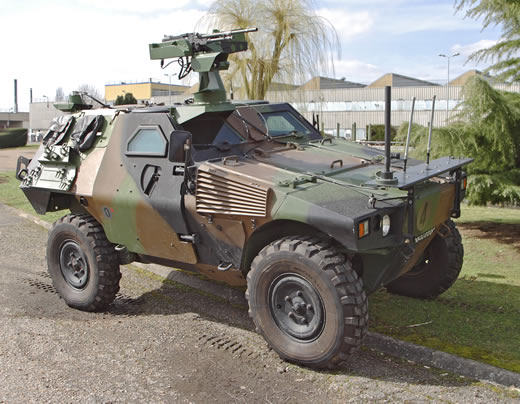
    over 2300 of Panhard's Véhicule Blindé Léger (VBL) are operational with 16 countries, the largest operators are the French and Greek Armies (shown in the photo above). If Russia completes this plan, the Russian border guards will be the second largest operator of this vehicle. Photo: Panhard.
    The light armored VBL shown here is equipped with the Wasp remotely operated weapon stations and counter-IED jammers, (antennae in the front) to protect vehicle operating in high threat environment. Photo: Panhard


    Saab Wins $180 Million Order for Carl-Gustaf Anti-Tank Ammo

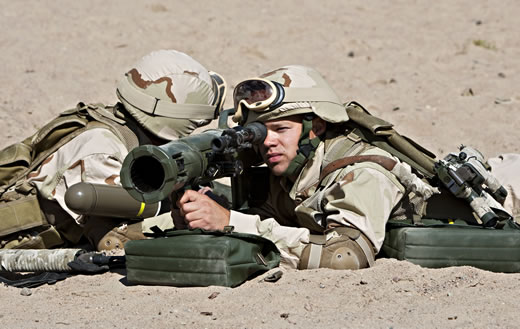
    Saab Dynamics' Carl Gustaf system has been in use for more than 50 years. It is in use in more than 40 countries, on every continent.

    Saab has received an order worth over US$180 million (MSEK 1155) for anti-armor projectiles for the Carl-Gustaf man-portable weapon system. The company will begin delivery of the first ammunition batches in September 2011 and continue supplies throughout 2012. The contract also includes an option that can give further orders for up to approximately $78 (MSEK 500), with deliveries in 2013. Saab Dynamics plans to add 40 jobs in its production plant at Karlskoga, Sweden to meet the tight delivery schedule.

    Saab Dynamics' Carl Gustaf system has been in use for more than 50 years. It is in use in more than 40 countries, on every continent. Photo: Saab Group

    Saab has not disclosed the identity of customer, but two countries likely to be capable of placing such substantial orders while remaining illusive are the UAE and Saudi-Arabia. Both have substantial inventory of Carl Gustaf M3, justifying large scale ammunition procurement.

    The Carl-Gustaf weapon system currently offered as the M3 multi-role weapon has a long and successful history. The weapon was first developed in 1947 and introduced into Swedish service in 1948. It is in use in more than 40 countries, on every continent. Today it still proves itself to be a highly modern and capable ground support weapon. The system has successively been modernized and adapted offering load weight reduction, add-on aiming devices, advanced ammunition types to meet new requirements introducing.

    Swedish arms sales in the Middle East spurred in recent years, with the recent instability in the region raising more opportunities, as was evident in the recent IDEX arms expo in Dubai. However, the Swedish Government has recently halted the deliveries of weapons to two Middle Eastern and North African countries due to the civil unrest at the region. Andreas Ekman Duse, the head of the Swedish Agency for Non-Proliferation and Export Controls announced this week.

    Sweden is the 11th largest arms exporter, according to figures for 2009 compiled by the Stockholm International Peace Research Institute (SIPRI). Swedish arms exports rose one percent in 2010 one percent to $2.15 billion (13.7 billion MSEK). The majority of sales (70 percent) accounted for the European Union, the United States and South Africa, with the exports to the UAE total $125 million (804 MESK) and $38 (246 MESK) to Saudi Arabia.

    Second F-35 Production Jet Takes First Flight

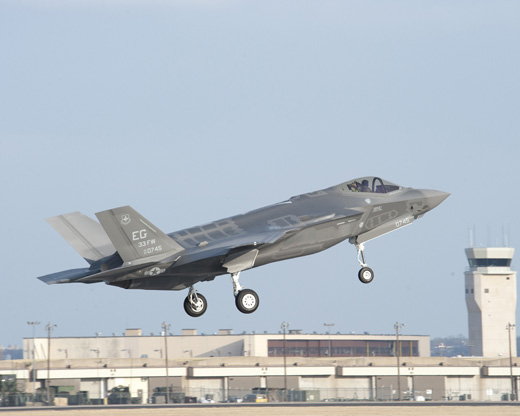
    AF-7 First flight. Lockheed Martin Photo By Randy Crites

    AF-7 First flight. Lockheed Martin Photo By Randy Crites

    AF-7, the second F-35 Lightning II production jet, takes off on its first flight Friday, March 4, from Naval Air Station Fort Worth Joint Reserve Base. The F-35A conventional takeoff and landing variant flew for 1.3 hours.

    AF-7 is the second and final aircraft from Low Rate Initial Production lot 1. The first, AF-6, flew for the first time a week earlier. The two production jets and eleven preproduction F-35 test aircraft have completed 683 flights since testing began in December 2006.

    Guardian Add-On Missile-Defense System Being Tested on a KC135 Tanker

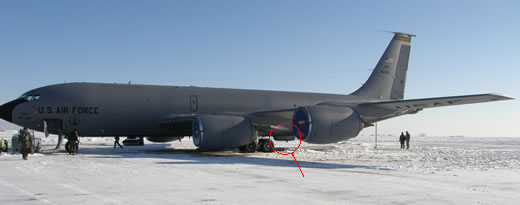
    Northrop Grumman's Guardian System installed on the fuselage of an Air National Guard 190th Air Refueling Wing KC-135 aircraft prior to flight testing from the Forbes Field Air National Guard Base, Topeka, Kan. (Photo: Northrop Grumman)

    A U.S. Air National Guard’s KC-135 air refueling aircraft equipped with the Northrop Grumman Guardian Anti-Missile Defense System has completed air worthiness flight testing and will soon commence the Operational Utility Evaluation (OUE). The aircraft, operating with the 190th Air Refueling Wing (ARW) began flight testing on January 11, 2011 and is scheduled to continue the OUE activities through the second quarter of 2011, to include additional flights and system tests at Eglin Air Force Base, Fla.

    Northrop Grumman's Guardian System installed on the fuselage of an Air National Guard 190th Air Refueling Wing KC-135 aircraft prior to flight testing from the Forbes Field Air National Guard Base, Topeka, Kan. (Photo: Northrop Grumman)
    An up-close view of Northrop Grumman's Guardian pod installed on an Air National Guard 190th Air Refueling Wing KC-135 aircraft. (Photo: Northrop Grumman)

    “Guardian will prove a viable option for providing aircraft protection without disruption to KC-135 missions. The KC-135 has flown in harm’s way since Vietnam and the time is right to add this extremely important defense capability” Said Col. Keith Lang, commander of the 190th ARW. “Guardian System leverages battle proven hardware and is ready for full rate production” said Carl Smith, vice president of infrared countermeasures for Northrop Grumman’s Land and Self Protection Systems Division. Preparing the aircraft to carry the Guardian kit was completed in 55 days. Similar attachments could be added to operational aircraft, enabling attachments of pods to aircraft operating in areas where MANPADS threats could be encountered. This concept of operation will enable the Air National Guard to maintain effective protection to its aircraft while deploying few pods only to the aircraft that require such protection.

    An advanced laser-based missile protection system, the Guardian System is designed to protect aircraft, crew and passengers from the advanced man-portable air defense systems (MANPADS). The system consists of a multi-band laser pointer/tracker and an ultraviolet missile warning sensor. The system is contained almost entirely in a single pod that mounts to the underside of the fuselage. Guardian operates by detecting launched missiles and then directing a non-visible, eye-safe laser to the seeker head of the incoming missile, disrupting its guidance signals.

    U.S. Air Force receives the Last Predator

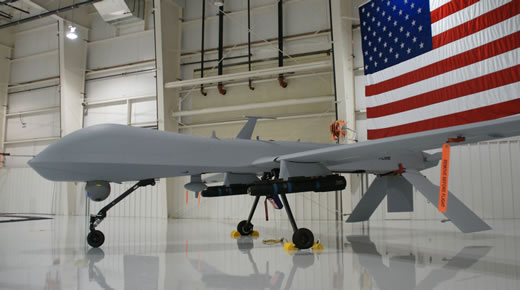
    MQ-1 Predator #268 was the last delivered to the U.S. Air Force. Since its first flight in 1994 Predators recorded more than 900,000 flight hours, most of them on combat missions. Photo: General Atomics

    On March 3, 2011 the U.S. Air Force accepted MQ-1 Predator tail number 268, the last manufactured for the service. Col. James Beissner, Air Combat Command’s Chief Irregular Warfare Division, accepted the aircraft on behalf of the Air Force. Since its first flight in July of 1994, 284 aircraft of the RQ/MQ-1 series have been produced, of which 269 were transferred to the U.S. Air Force (including three that also operated by the U.S. Navy). The 284 aircraft accumulated over 900,000 flight hours and maintained a fleet fully mission capable rate over 90 percent, making it one of the Warfighters most valuable assets, according to Colonel Coombs.

    MQ-1 Predator #268 was the last delivered to the U.S. Air Force. Since its first flight in 1994 Predators recorded more than 900,000 flight hours, most of them on combat missions. Photo: General Atomics

    “The hand-off of the last MQ-1 Predator to our U.S. Air Force customer commemorates not only what has been accomplished, but what we are still looking forward to achieve,” said Frank W. Pace, president, Aircraft Systems Group, General Atomics Aeronautical Systems, Inc. “17 years, 268 aircraft, and 920,000 flight hours later, our signature Predator A UAS line will continue to change the way we fight wars for many more years to come.”

    General Atomics continues to produce the MQ-1B Predator (Reaper) is a Medium-Altitude, Long-Endurance, Remotely Piloted Aircraft for the U.S. Air Force and foreign customers. Its primary missions are close Air Support, Air Interdiction, and ISR. It acts as a Joint Forces Air Component Commander-owned theater asset for Reconnaissance, Surveillance and target acquisition in support of the Joint Forces Commander. The company also produces the MQ-1C Grey Eagle for the U.S. Army, and has recently introduced the Predator XP for export customers. The company is also working on two advanced, stealthy versions – the MQ-9C Predator C (Avenger) for the U.S. Air Force and a carrier-based derivative for the U.S. Navy.

    MQ-1 Predator UAV are operating with the U.S. Air Force, Air National Guards, Air Force Reserves, and Central Intelligence Agency. The Italian Air Force also operates the RQ-1 for recce missions. Photo: General Atomics

    Reality Check for JSF

    If you work in Washington and rely on the major news outlets for your information you might be forgiven for having formed the opinion that the Joint Strike Fighter (JSF) program was fouled up. From the perspective of Fort Worth, where I recently went with a group of defense analysts to tour the factory, the JSF the story is very different.

    Gates: "As a result, I am placing the STOVL variant on the equivalent of a two-year probation. If we cannot fix this variant during this time frame and get it back on track in terms of performance, cost and schedule, then I believe it should be cancelled. We will also move the development of the Marine variant to the back of the overall JSF production sequence." Photo: Lockheed Martin

    Much of the criticism the program has suffered is due to challenges faced by the short-takeoff and vertical-landing (STOVL) variant of the JSF or F-35B. There was an aluminum bulkhead that cracked, vibrations that occurred when the air intake doors for the lift fan was partly opened and heating on some parts such as the drive shaft that powered the lift fan. The F-35B now has a two-year window in which to prove itself. In Washington, there seems to be a widespread impression that these problems have shut this part of the program down.

    Nothing could be farther from the truth. The F-35B is flying today. In fact, it has already successfully accomplished in the past two months three times the total test activities in all of 2010. The test program should be back on schedule in a couple of months. Two ways have been found to solve the cracked bulkhead problem. The intake doors have been redesigned. The heating problem is being closely monitored to find out if it is more than an anomaly. The fixes are being made that will turn the F-35B portion of the JSF program around.

    Another misperception in Washington is that the cost for the JSF has become prohibitive. The Cost Assessment and Program Evaluation (CAPE) office in the Department of Defense has warned that the price of the aircraft could come in well above the target price, which for the conventional takeoff and vertical landing variant is $65 million apiece. By the way, at $65 million a copy the fifth-generation JSF will be no more expensive than the price being charged for the latest versions of fourth-generation fighters. This means that the United States will be able to modernize its Air Force, Navy and Marine Corps tactical fighter fleets with a much better airplane at no greater expense than if they continued to buy what they fly now.

    However, the CAPE estimates do not reflect reality. Lockheed Martin has already negotiated a fixed price for the fourth set of low rate initial production aircraft 25 percent lower than the CAPE estimate of the price at this point in the development effort. CAPE projections of future costs need to be based on the reality of the price the government is actually paying for the JSF.

    It would be a good idea for more Washington insiders to get out of town and see the reality of the F-35 program in Fort Worth. There an amazing group of scientists, engineers and production workers are on the verge of transforming our idea of what a tactical fighter is and how it performs. In so doing, they are going to ensure U.S. air dominance for decades to come.

    This post by Daniel Goure, Ph.D. Vice President Lexington Institute was originally published on the Early Warning Blog.

    France to Announce MALE Acquisition Decsion Next Week

    According to French defense blog Secret Défense, the French MOD has decided to use General Atomics MQ-9 Reaper drones to fulfill the French Air Force requirement for Medium Altitude Long Endurance (MALE). France is planning to buy four aircraft and two ground stations; according to the blog editor Jean-Dominique Merchet, the French MOD is expected to announce the selection as early as next week.

    France is planning to operate four Reaper General Atomics MQ-9 fulfilling the requirement for Medium-Altitude Long-Endurance UAVs. Photo: General Atomics

    France considered four options for this MALE program. The extension of the current Harfang (IAI Heron) operating as part of the interim MALE program (Système Intérimaire de Drone Moyenne altitude longue endurance – SIDM) was the least costly but meant maintaining current capabilities throughout the decade. Another approach was to extend SDIM with the IAI’s larger platform, the Heron TP, as proposed by Dassault. Awaiting the completion of the ambitious Talarion, developed by EADS, was another option, which required further coordination with the Germans.

    Fielding the Reaper, already operated by the U.S. Air Force and British Royal Air Force (RAF), will enable the French to efficiently support operations in Afghanistan utilizing U.S. command and control infrastructure. Part of the Reapers operating from bases in Afghanistan are controlled over satellite links by members of the U.S. Air Force 42nd attack squadron and RAF No. 39 squadron, both units are located at the Creech Air Force Base in Nevada. If the French procurement is concluded, it is likely that the French Reapers will follow the same procedure. In contrast, Harfang, as other Heron I UAVs are operated from bases Afghanistan by French, German, Canadian and Australian operators, located in the country (although some of the drones are equipped with satellite links, enabling global operations similar to the Reapers).

    While the French maintain their Reapers will be restricted to reconnaissance operations, Paris it likely to follow Britain, that declared their drones will not be used in an offensive role but could not resist the temptation to use the drones to efficiently close the ‘sensor-to-shooter loop. France is hoping to further collaborate with Britain in the development of a future unmanned aircraft, either a growth version of Mantis or a future unmanned combat aircraft, combining the experience gained with the British Taranis and European nEURon program, led by the French.

    Related articles:

    Skunk Works and XTEND Simplify Multi-Drone Command

    0
    Lockheed Martin Skunk Works® and XTEND have achieved a major milestone in JADC2 by integrating the XOS operating system with the MDCX™ autonomy platform. This technical breakthrough enables a single operator to simultaneously command multiple drone classes, eliminating the friction of mission handoffs. From "marsupial" drone deployments to operating in GPS-denied environments, explore how this collaboration is abbreviating the data-to-decision timeline and redefining autonomous mission execution.

    From Ukraine to Taiwan: The Global Race to Dominate the New Defense Tech Frontier

    0
    As traditional defense primes face mounting competition from agile “neoprimes” such as Anduril, Palantir and Helsing, the balance of innovation is shifting toward software-defined warfare and scalable, dual-use technologies, while global industry consolidation—marked by Boeing’s integration of Spirit AeroSystems and other strategic mergers—signals an intensified race to secure control over the defense technology value chain. Our Defense-Tech weekly report highlights these trends.

    Europe’s “Drone Wall”

    0
    In early October 2025, a coordinated wave of unmanned aerial system (UAS) incursions—widely attributed to Russia—targeted critical infrastructure across at least ten European nations. The unprecedented campaign exposed the fragility of Europe’s air defenses...

    Weekly Defense Update & Global Security Assessment

    0
    Executive Summary The past week (September 18-25, 2025) represents an inflection point where strategic defense concepts have transitioned from doctrine to tangible reality. An analysis of global events reveals four primary, interconnected trends shaping an...

    U.S. Air and Space Forces Push Next-Gen Programs at the AS&C 2025 Conference and...

    0
    At the 2025 Air, Space & Cyber Conference, U.S. Air Force and Space Force leaders unveiled major updates on next-generation fighters, bombers, unmanned systems, and space initiatives, highlighting both rapid innovation and critical readiness challenges as the services race to outpace global competitors. A short version is available here, with a more detailed version for subscribers.

    TADTE 2025: Reflecting Taiwan’s Strategic Themes

    0
    The Taipei Aerospace & Defense Technology Exhibition (TADTE) 2025 crystallized around four dominant strategic themes that collectively illustrate Taiwan's comprehensive approach to defense modernization amid escalating regional tensions. Based on a detailed report by Pleronix (available upon request). Includes a Podcast discussion on TADTE 2025's highlighting Taiwan's four strategic themes beyond the post's coverage.

    Iron Beam 450 Completes Testing, Soon to Join With Operational Air Defense Units

    0
    Israel’s Iron Beam 450 high-power laser system has completed final testing, marking a major leap in air defense. Developed by Rafael, it offers precise, cost-effective interception of rockets, UAVs, and mortars, and is set for IDF deployment by 2025.