
Thursday, December 18, 2025
More
    Home Blog Page 29

    Aerospace, Defense & Security Events

    Subscribe to see past events

    October – December 2019 Events

    Traveling abroad? Our Travel Partner Agoda has the most attractive deals! AUSA – US Army Annual Meeting & Convention – 14-16 October 2019, Walter E. Washington Convention Center, Washington DC, USA
    Directed Energy Systems – 22-24 October 2019, London Mariott Hotel, Regents Park, London UK
    CPSE – China 17th Public Security Expo – 28-30 October 2019, Shenzhen Convention & Exhibition Center, Shenzhen, China
    Future Mortar Systems – 29-31 October 2019, Madrid Marriott Auditorium Hotel & Conference center, Madrid, Spain
    UVID International Conference of Unmanned Systems 7 November 2019, Avenue Convention Center, Airport City, Israel
    Future Armoured Vehicles Survivability – 12-14 November 2019, Kempthorne Tara Hotel, Kensington, London UK
    Dubai Airshow – 17-21 November 2019, DWC, Dubai Airshow Site
    Defense & Security – Tri-Service Asian Defense & Security Exhibition, Conference and Networking Event -, 18-21 November 2019, IMPACT Exhibition & Convention Center, Bangkok, Thailand
    Future Indirect Fires Eastern Europe – 19-21 November 2019, Hotel Swisshotel, Tallinn, Estonia
    Milipol – 19-22 November 2019, Paris-Nord Villepinte, Paris, France
    Expodefensa  International Defense & Security Trade Fair 2-4 December 2019, Bogota, Columbia
    I/ITSEC – Modeling, Simulation & Training Event – 2-6 December, Orlando, FL, USA
    Countering Explosive Threat & Demining – 10-12 December 2019, Hilton Wembley, London, UK
    GDA – Gulf Defense & Aerospace Exhibition & Conference – 10-12 December 2019, Kuwait International Fair, Kuwait
    Traveling abroad? Try our Travel Partner Agoda – attractive deals – recommended hotels Want to include your event in our list?
    Include your event in our list
    Sending

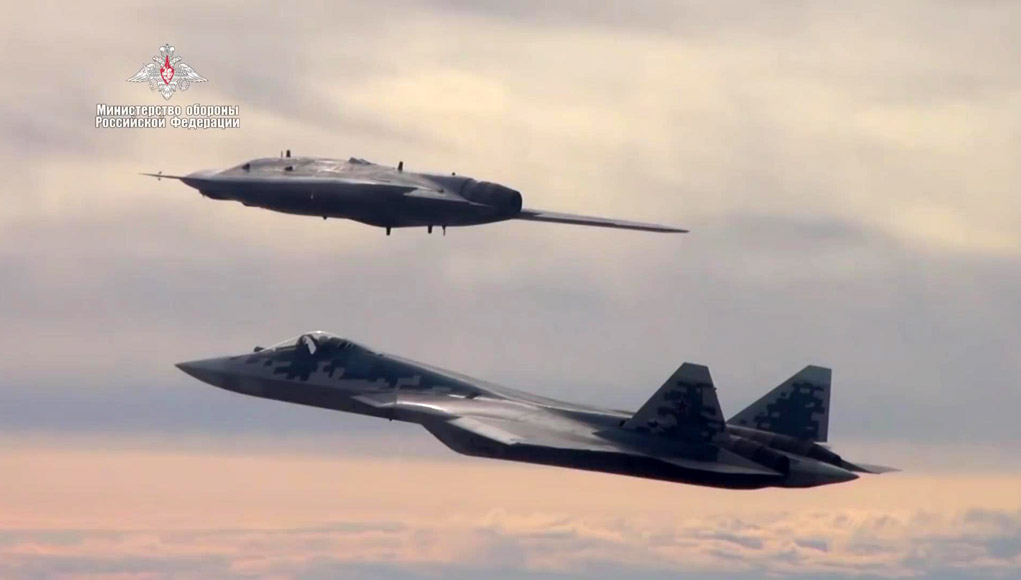
    S70 Okhotnik Flies MUM-T with Su-57

    Sukhoi and the Russian Ministry of Defense have flown the S-70 Okhotnik-B unmanned aerial vehicle with Su-57 fifth-generation fighter aircraft for the first time. The flight that laster 30 minutes was part of the ongoing test program. On this flight, Okhotnik-B flew with a full avionics configuration in an automated mode demonstrating key features for a Manned-Unmanned Teaming (MUM-T) capability.

    During the flight, Okhotnik provided sensor augmentation for the Su-57, by expanding the fighter’s radar coverage, enabling the Su-57 to acquire targets beyond the reach of its own radar, and outside enemy missiles and air defenses coverage.

    Okhotnik follows a stealth flying wing design that uses special materials and coatings that reduces its radar signature making it invisible to enemy radar. The UAV is equipped with optoelectronic, and radar sensors to perform both air dominance and reconnaissance missions.

    Bastion-P Test Reinforces Russian Control of Arctic Marine Route

    The Russian Ministry of Defense confirmed the completion of a successful firing test of the Onix P-800 ground-launched, supersonic anti-ship cruise missile at a naval target floating at the Arctic Sea, 200 kilometers from the Chukotka Peninsula. The test reinforces the Russian claim to control this new, strategic sea route that has opened as a result of global warming effects. On previous tests Bastion engaged naval targets from fixed coastal positions.

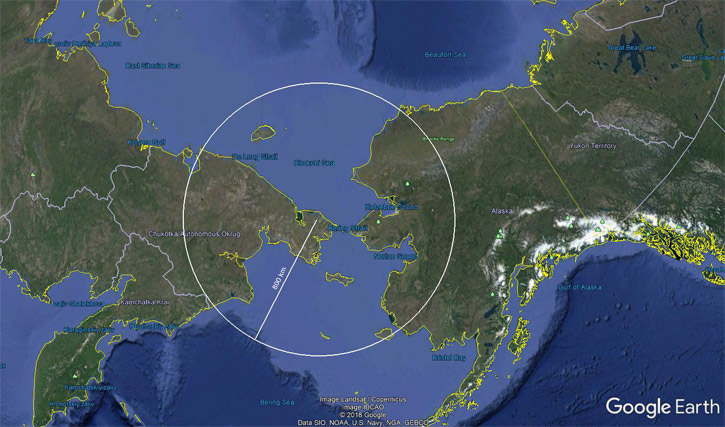
    The deployment of Bastion coastal defense missile system offers the Russian Navy a new capability to dominate the critical sea lanes along the Russian landmass in the arctic. Lack of infrastructure and ports limits the military options of nations in the region, to the use of long-range strategic weapons, but the Bastion, capable of hitting ships at sea at ranges of 500-800 km poses a conventional means of deterrence.

    The recent exercise demonstrated the capability of Bastion coastal defense systems to deploy using amphibious landing ships to a firing location inland in the Chukotka Peninsula. From a position about 200 inland, the Bastions was capable of striking targets along the entire eastern part of the Northern Sea Route, from the De Long to the Bering Straits. These sea lanes provide critical access routes to the Northern Sea Route, connecting the Pacific Ocean to the Atlantic Ocean and North-Sea and saving weeks on sea travel. This route passes almost entirely in parts of the arctic waters claimed by Russia.

    Map of the Bering Sea depicting the 800 km distance from the strategic Chukotka Peninsula.

    In March 2019, the Russian government introduced new rules of foreign military ships’ transit of the Northern Sea Route, under which warships are obliged to inform Russia of their plans 45 days in advance, and to admit Russian naval navigators aboard the vessels. According to the Tass news agency, in case of their refusal to comply with these requirements, warships may be denied transit and in case of their unauthorized passage along the route, Russia reserves the right to use “emergency measures.”
    Russia currently operates five K300 Bastion-P systems, of which two are deployed in the Pacific region, and three in Kaliningrad and Crimea. The Bastion coastal defense system uses the supersonic anti-ship Onix missile in a ground-launched configuration. In 2016 the first Bastion system was deployed to Kuril, on the Russian side of the Bering Sea, from where it could target Alaska. A second unit became operational in the region early 2019.

    The Onix missile weighs 3.1 tons of which 300 kg is the warhead (200 in the export version.) The missile can carry a semi-armor piercing high explosive warhead or a small thermonuclear warhead.

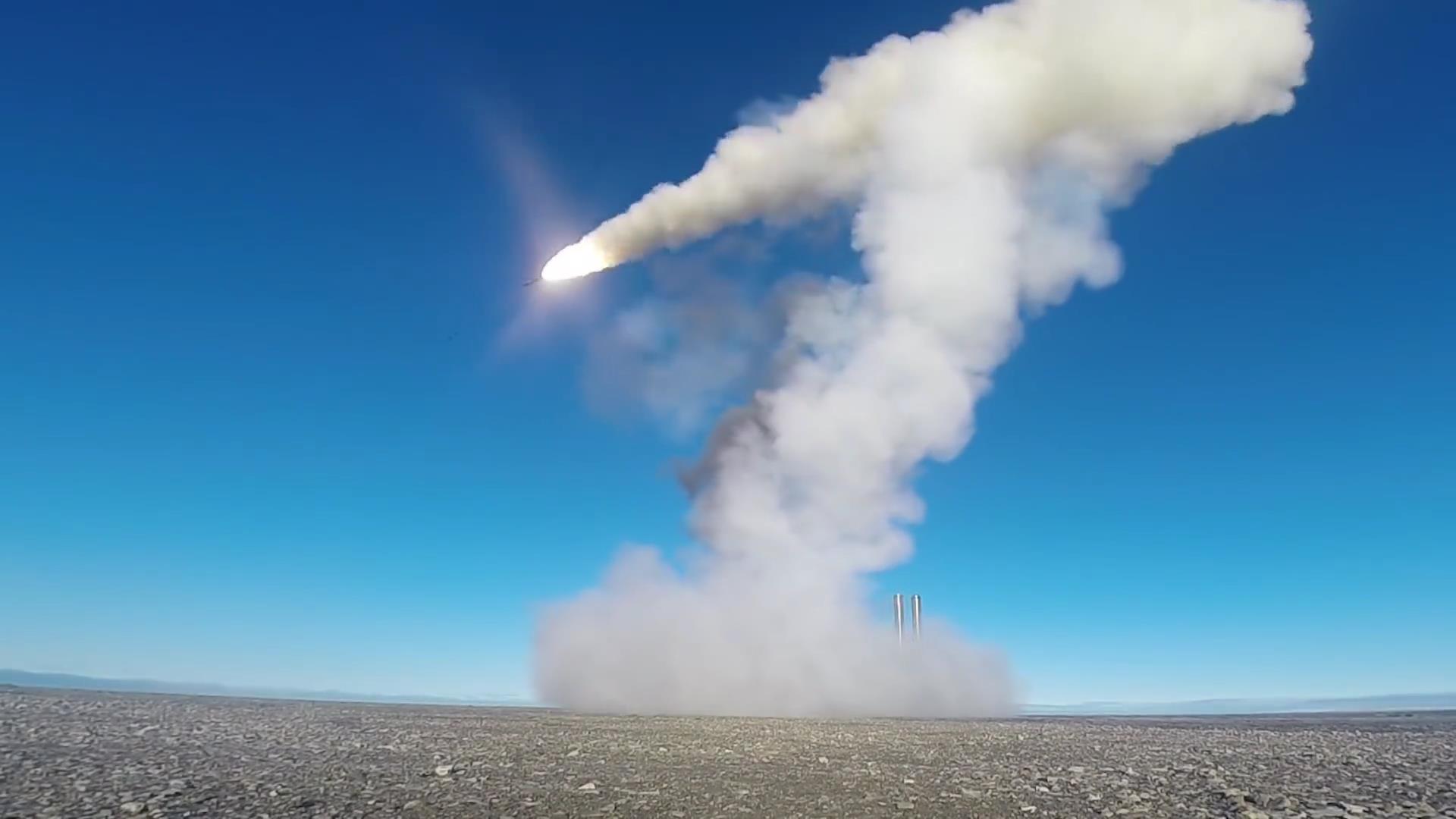
    Launched from a vertical launch tube, using a solid-rocket booster, the missile transitions to a horizontal flight and accelerates to a high supersonic speed powered by a ramjet fueled by kerosene (T-6). From coastal positions, the missile can attack naval targets beyond the horizon, at ranges of 600 kilometers in a ‘Hi-Lo’ trajectory, flying at a speed of 2.6-2 Mach. An improved version known as Onix-M will be capable of extending the range to 800 km. The new version is designed to operate over land and sea and attack naval and land targets with high precision.

    The Onix missile is operated by the Russian Navy, Vietnam, and Syria. the Syrian inventory may have been hit by an Israeli air attack in 2013 but some of the missiles are thought to have been delivered to the Lebanese Hezbollah.

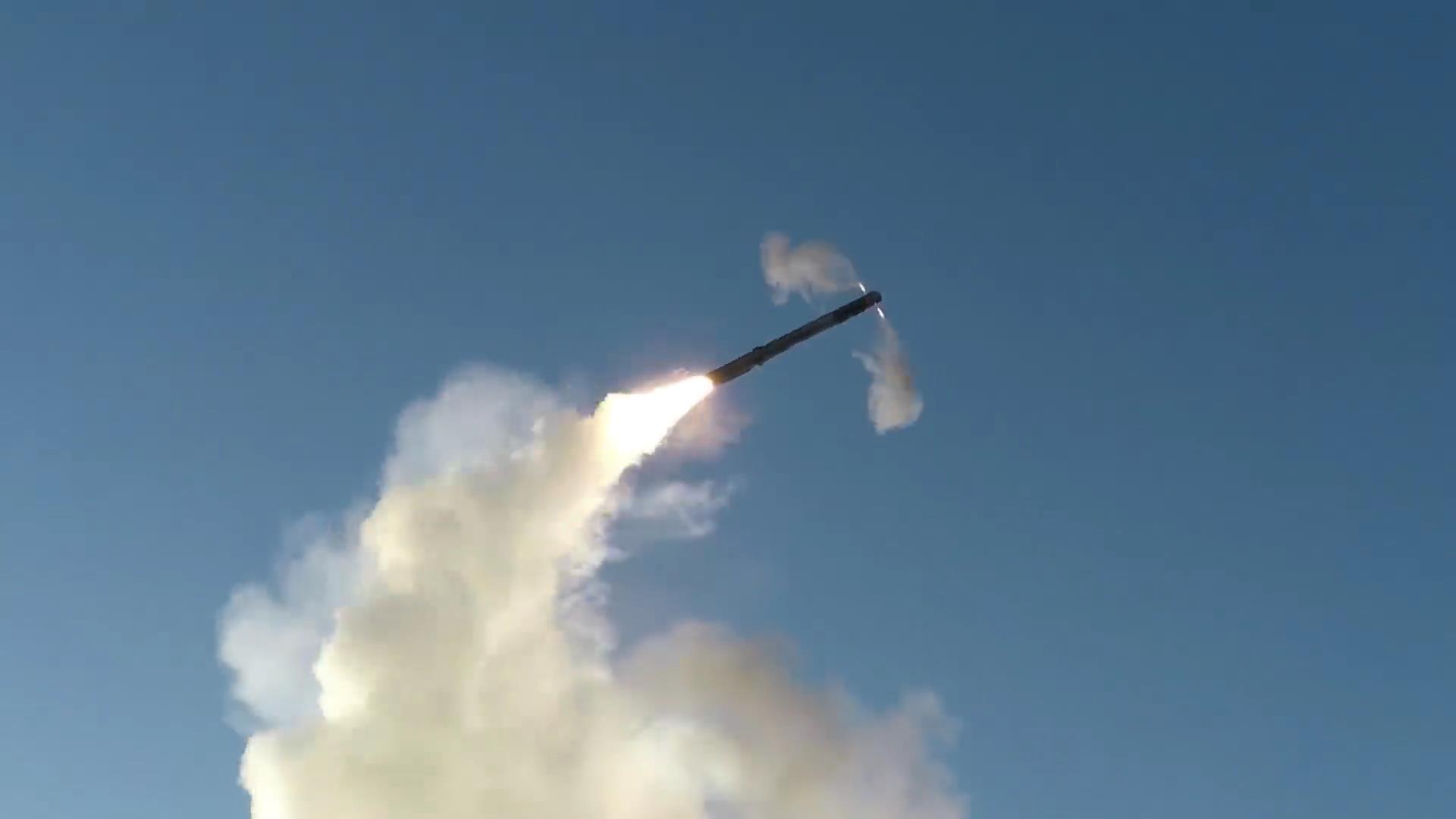
    P-800 Onix missile launched from a Russian Bastion coastal-defense unit. Photo: Russian MOD

    Satellite Imagery Unveils Iran’s Struggle to Establish a Protected BridgeHead on Syria-Iraq Border

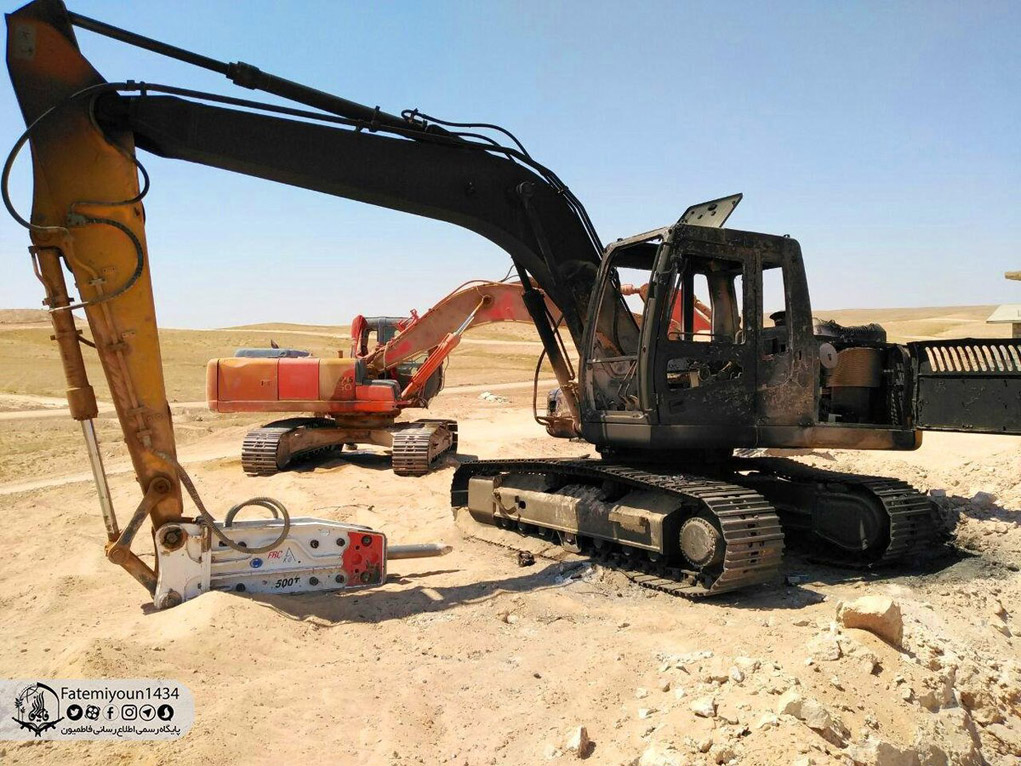
    A fleet of earth moving and construction machinery is operating on the sites, constructing a hangar and perimeter wall. Some of this equipment was targeted on the recent air attacks. Photo: Fatemiyoun

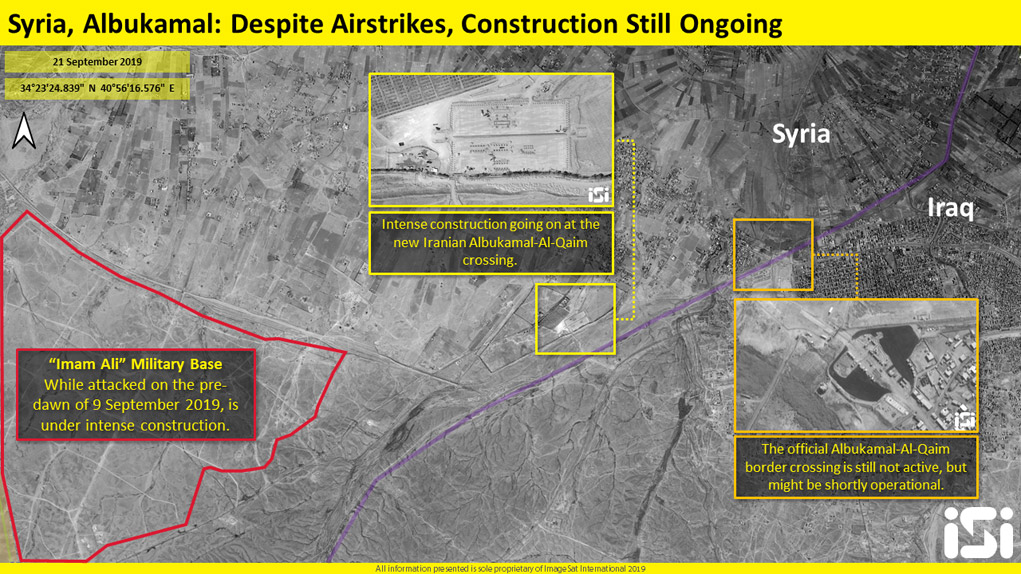
    The Iranians are racing against time and air attacks to build and fortify the Imam-Ali military compound near Albukamal, on the Syrian-Iraqi border. In recent months, Iran is constructing a civilian border passage at Albukamal-Al Qiam.

    Nearby, a short distance from the commercial gateway, a different compound is being built – designed to store and temporarily accommodate shipments of military hardware, missiles, and ammunition shipped from Iran, to support the Iranian Revolutionary Guards Quds force, through Iraq to Iran’s Shi’ite proxies in Syria and Lebanon.

    A general view of Albukamal-Al-Qiam Syria-Iraq border crossing showing the Imam-Ali compound on the left and commercial crossing on the right. Photo: Imagesat ISI.

    Once completed, Imam Ali compound will become Iran’s beachhead in Syria, and a central pillar in Iran’s ‘land bridge’ supporting Iran’s proxies in Syria and Lebanon via Irak. Once considered a safe haven for ISIS, Albukamal-Al-Qiam has become a strategic Iranian stronghold thought to be too far for the Israel Air Force to reach, a notion that, so far, allegedly proved wrong.

    The compound suffered repeated air attacks in recent months, and at least twice in September. The most recent attacks were recorded on September 9 and 16.

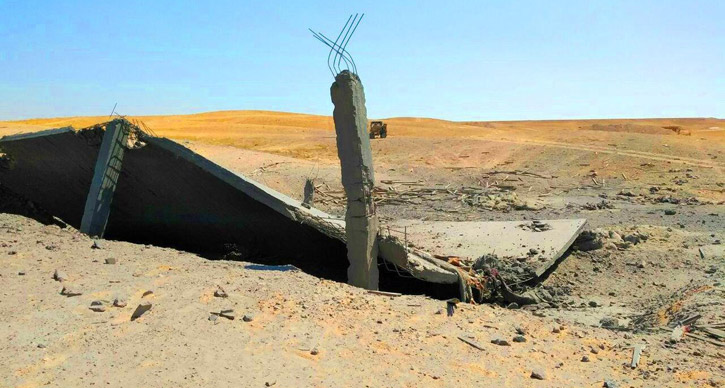
    One of the constructions destroyed by the air attacks.

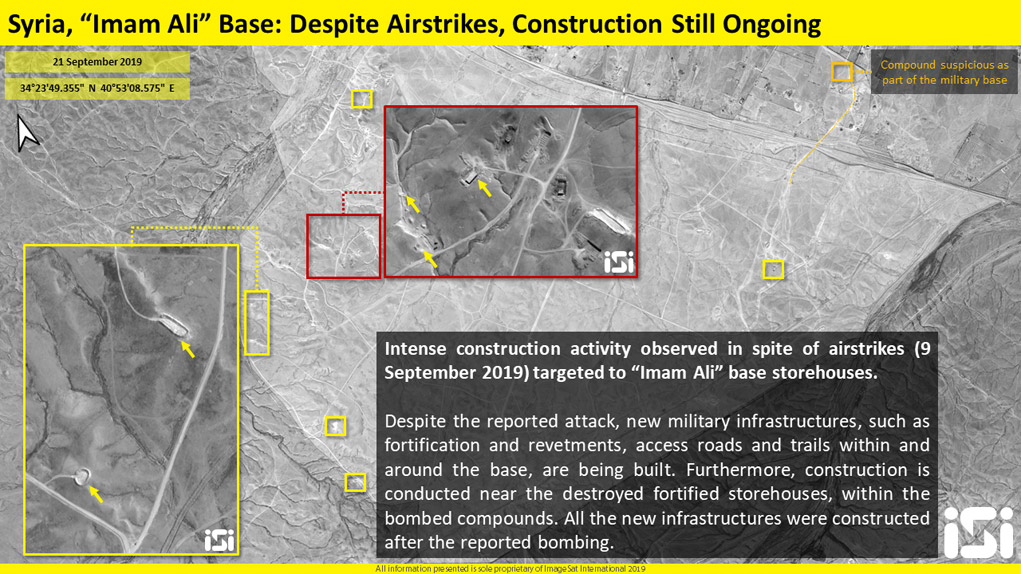
    Despite the attacks that destroyed structures and heavy engineering machines, extensive work continues at the compound, as the recent satellite images taken by Imagesat International (ISI) show.

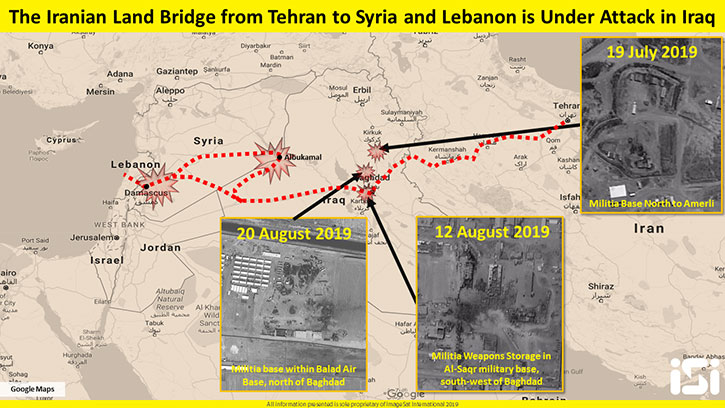
    Some of the recent attacks attributed to Israel, along the Iranian ‘land bridge’ from Iran to Lebanon. Map: ISI

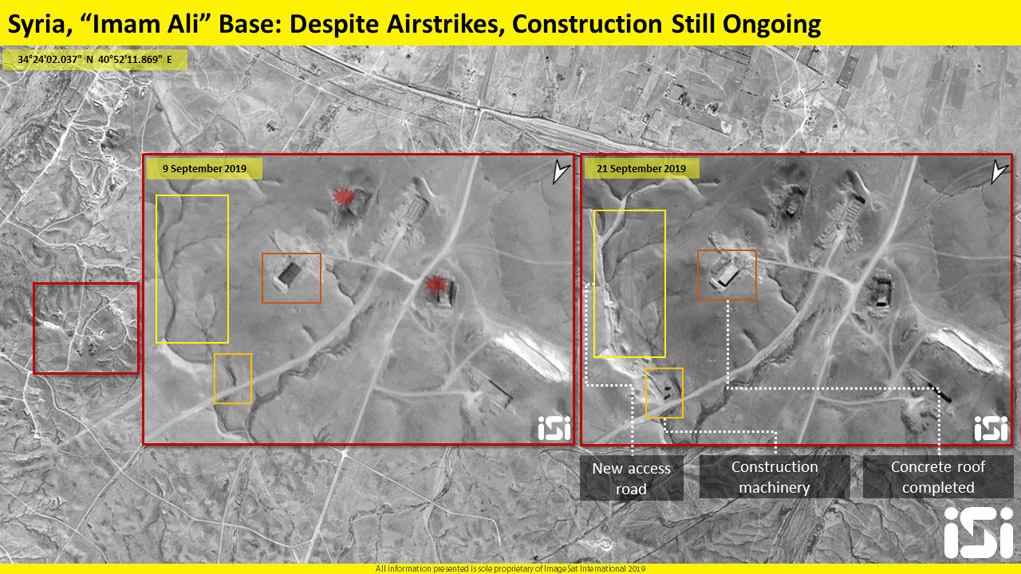
    New military infrastructures, including fortifications and revetments, paved access roads and trails within and around the base are clearly seen in the satellite photos. New structures are raised near those destroyed in previous attacks, showing the builder’s commitment to complete and deliver the protected facility despite the attacks.

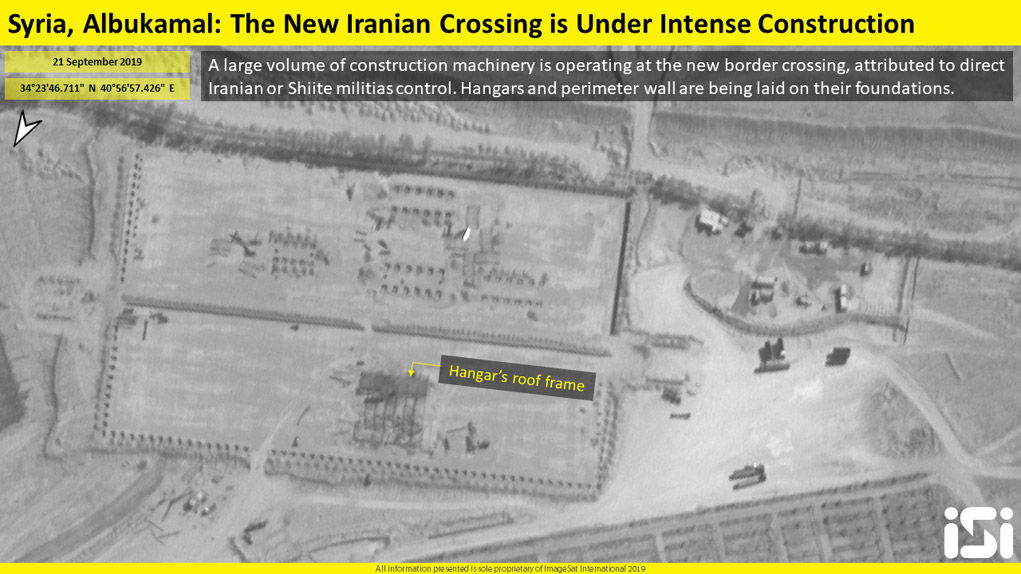
    A fleet of earthmoving and construction machinery is operating on the sites, constructing a hangar and perimeter wall. Some of this equipment was targeted on the recent air attacks. The images show new infrastructures were raised soon after the reported September 9th bombing.

    New structures built after the September 9th attack can be seen here, from an image taken two weeks later. Photo: ISI

    The identity of the attackers, whether they are manned or unmanned strike aircraft is yet unknown. The level of damage is moderate since most attacks were done against empty, incomplete structures and machinery. Given the Iranian determination, to establish the compound, it is expected that the Quds force will soon deploy air defense assets to the compound, to try and deter further attacks. If such a move is made, those air defense assets, including radars and missiles, will certainly become primary targets for future attacks.

    A logistical military compound is seen here with hangar and perimeter wall been built. Photo: ISI

    AFRL to Test a Drone-Swarm Killer HPM

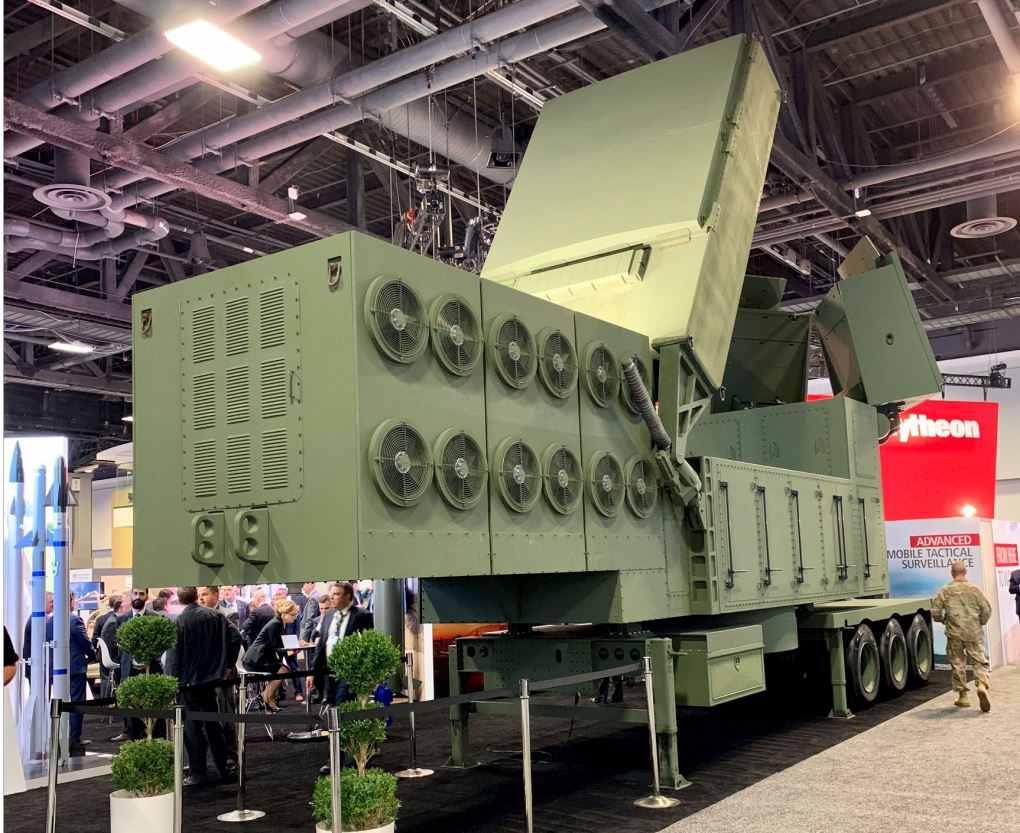
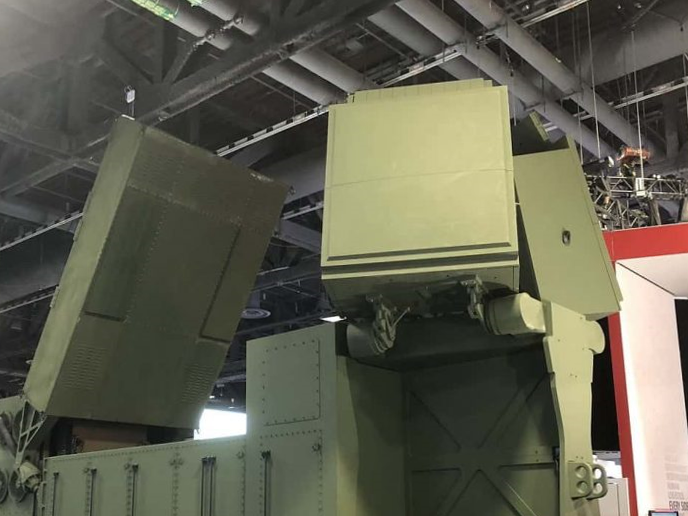
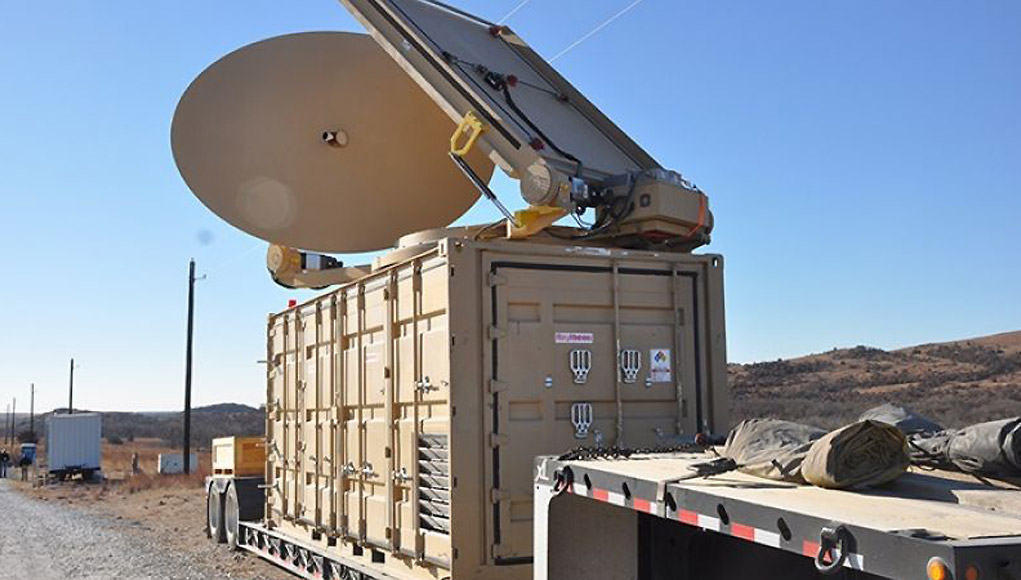
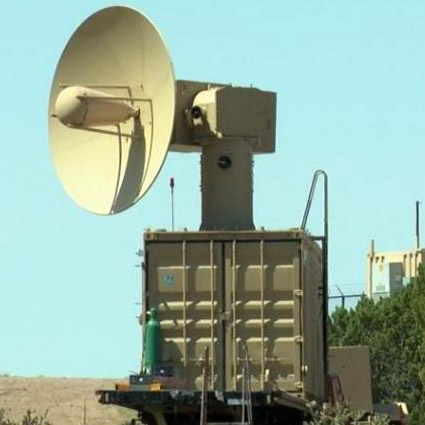
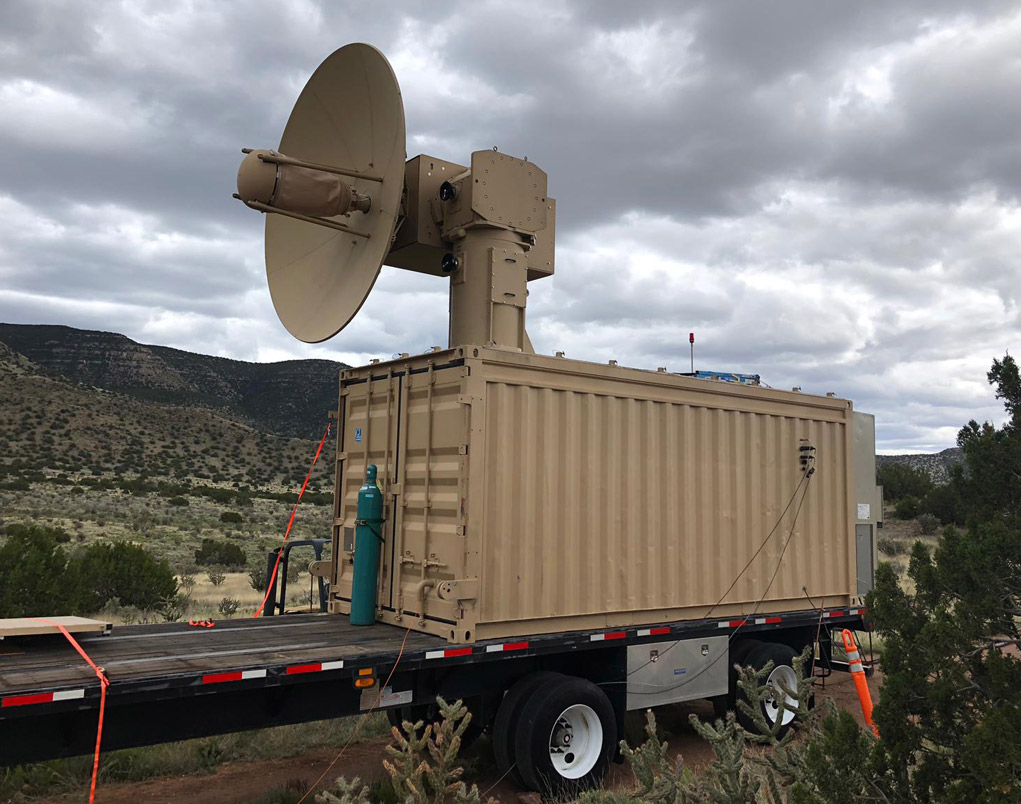
    Phaser HMP counter drone (CUAS) weapon. Photo: Raytheon

    The US Air Force Research Laboratory is investing US$16 million in further field assessment of Raytheon’s Phaser High Power Microwave System outside the continental U.S. The testing phase will span over 12 months in which the Phaser will engage simulated and real unmanned aerial systems threats. The evaluation will explore the effectiveness of Phaser’s counter-drone engagement without disrupting the necessary installation operations.

    The effectiveness of Phaser against drones has already been demonstrated at the Army MFIX exercise in 2018, when the system eliminated 33 drones, 2-3 at a time. Currently mounted on a shipping container-like box, Raytheon plans to significantly reduce the size in future versions.

    AFRL already evaluates two other HPM systems – the Tactical High-Power Operational Responder (THOR), that deploys as a means to provide base defense against drones, and ‘Counter-Electronic High-Power Microwave Extended-Range Air Base Air Defense’ system, or CHIMERA, designed to engage multiple targets over a larger area.

    The HPM contract follows a separate Air Force contract in which Raytheon will build two prototype high-energy laser systems, also to be deployed overseas. The HPM and HEL systems can be used independently or together to counter-unmanned aerial system threats. “There’s more than one way to defeat a drone,” said Dr. Thomas Bussing, Raytheon Advanced Missile Systems vice president. “We are delivering the world’s first defensive directed energy systems that can be used alone or in tandem to defeat enemy drones at the speed of light.”

    The Tactical High-Power Operational Responder (THOR) is designed to pursue multiple short-range targets. Photo: USAF

    AFRL is running an accelerated development program funded by the Office of the Secretary of Defense (OSD) and began testing prototype equipment in the first half of 2019. Tests have been carried out at White Sands Missile Range in New Mexico and Kirtland Air Force Base in Albuquerque in cooperation with equipment suppliers including Raytheon, BAE Systems, Leidos, and Verus Research. The AFRL hopes to field an initial development system in 2020 under a $15 million program.

    Click to subscribe to open the full version


    The Air Force Research Laboratory’s Tactical High Power Operational Responder developed for airbase defense. (Photo: AFRL Directed Energy Directorate)

    Maiden Flight for the US Navy Future Aerial Refueling Drone

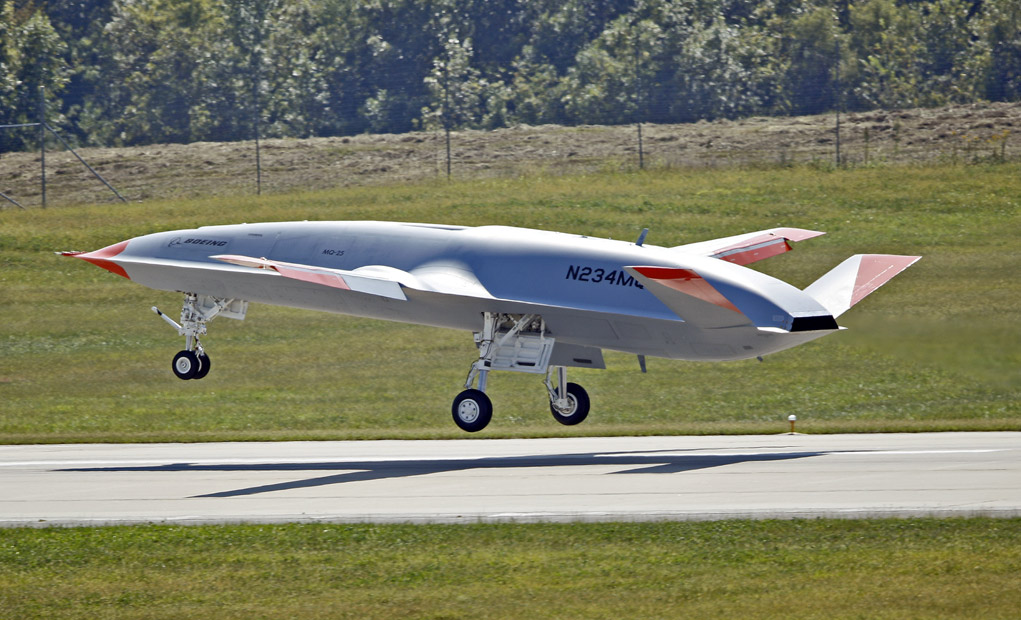
    MQ-25 T1 takes off on its first flight, September 19, 2019. Photo: Boeing

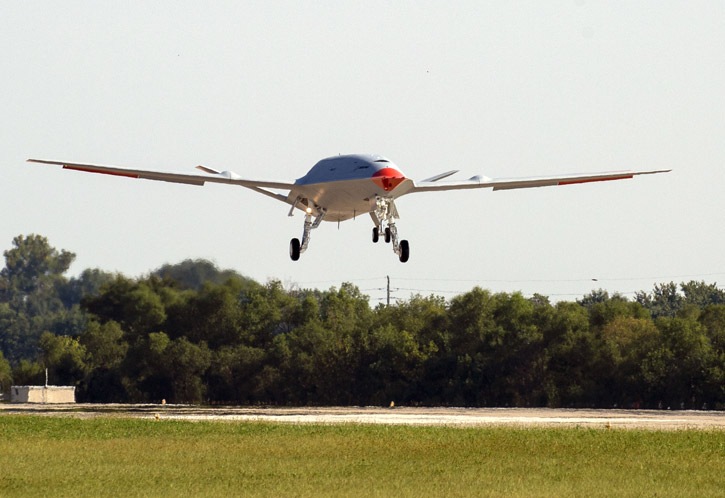
    The MQ-25 test asset, known as T1, completed the autonomous two-hour flight under the direction of Boeing test pilots operating from a ground control station at MidAmerica St. Louis Airport in Mascoutah, Ill., where the test program is based. The aircraft completed an autonomous taxi and takeoff and then flew a pre-determined route to validate the aircraft’s basic flight functions and operations with the ground control station.

    According to the Navy’s Unmanned Carrier Aviation (PMA-268) Program Manager Capt. Chad Reed, “The flight of this test asset two years before our first MQ-25 arrives represents the first big step in a series of early learning opportunities that are helping us progress toward delivery of a game-changing capability for the carrier air wing and strike group commanders.”
    The Boeing-owned test asset is a predecessor to the engineering development model (EDM) aircraft and is being used for early learning and discovery to meet the goals of the U.S. Navy’s accelerated acquisition program. T1 received its experimental airworthiness certificate from the FAA in September, verifying that the air vehicle meets the agency’s requirements for safe flight.

    MQ-25 T1 landing after its maiden flight. Photo: Boeing
    Testing will continue with T1 to further early learning and discovery that advances major systems and software development. “This aircraft and its flight test program ensures we’re delivering the MQ-25 to the carrier fleet with the safety, reliability, and capability the U.S. Navy needs to conduct its vital mission,” said Boeing MQ-25 Program Director Dave Bujold.

    Boeing will produce four EDM MQ-25 air vehicles for the U.S. Navy under an $805 million contract awarded in August 2018. The MQ-25 will provide the Navy with a much-needed carrier-based unmanned aerial refueling capability. It will allow for better use of the combat strike fighters currently performing the tanking role and will extend the range of the carrier air wing.

    The Netherlands Selects BAE Systems to Integrate APS into their CV9035NL AIFVs

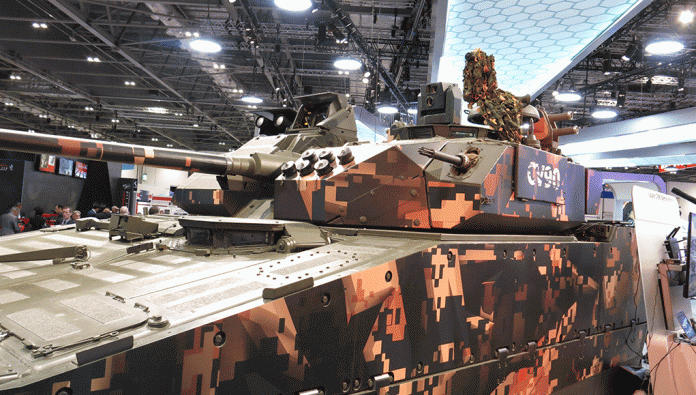
    BAE Systems displayed the CV9035 equipped with enhanced lethality, protection and situational awareness. Photo: Noam Eshel, Defense-Update

    The Royal Netherlands Army has been working closely with BAE Systems Hägglunds to study the implementation of the Iron Fist APS onto the CV9035NL since 2015. “Over the last couple of years, we have done a thorough job in studying the integration and conducting system tests with the Active Protection System for the CV90 platform,” said Joost Vernooij, Dutch Project Manager for CV90. “We are now confident that it will provide the capability we need, the APS will give us a significant combat advantage and will improve tactical operation,” Vernooij added.

    The first phase evaluated the feasibility of five systems. The second phase focused on the inherent performance and high-level integration of the APS. With the first layer of soft-kill technology integrated onto the Dutch Army’s CV9035NL fleet, plans are underway to add the Iron Fist’s final layer. The integration of APS is part of the Mid-Life Upgrade program of the CV9035NL, with focus on integration, Human Machine interfacing and performance optimization.

    Subscribe to get more insight

    BAE Systems displayed IMI’s Iron Fist Lightweight (IF-LC) Configuration on its CV9035. BAE Systems was selected by the Dutch MOD to integrate the Iron Fist system on the CV9035NL. The version that is likely to be fielded is the IF-Light Decoupled (IF-LD), the same version selected by the US Army and IDF. Photo: Noam Eshel, Defense-Update.

    “This development is a strategic milestone in the CV90’s holistic survivability approach.” Dan Lindell, the CV90 platform manager at BAE Systems Hägglunds explained. “It complements the already existing, stealth- and soft-kill layers with further means to defeat the incoming threat, making survivability even more achievable.” In addition to armored protection, the CV90’s overall survivability is enhanced by superior mobility, advanced signature management features, ease-of-use and maintainability, and a high degree of design efficiency. The APS adds the vehicle another layer of protection, provided by soft- and hard-kill countermeasures.

    The Royal Netherlands Army is one of seven European armies operating the CV90. The Netherlands currently operates 149 CV9035NL vehicles. Other operators include Sweden, Switzerland, Norway, Finland, Denmark, and Estonia. These nations are expected to follow the Dutch selection when extending the life of their AFVs.

    Lockheed Martin Prepared to Enhance F-35 Targeting Capability

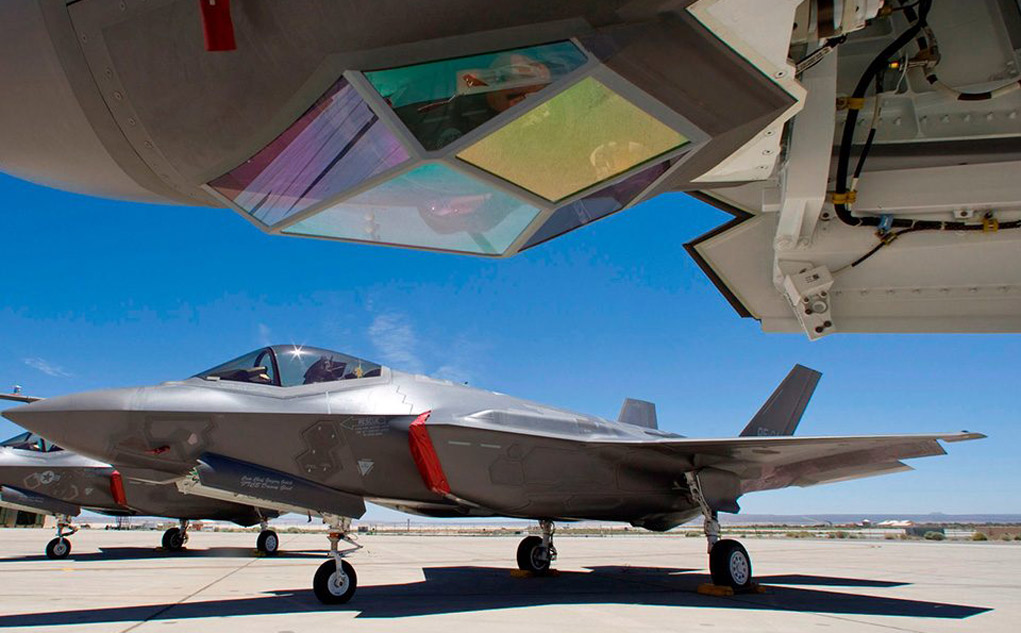
    Lockheed Martin said today it has developed an advanced version of the Electro-Optical Targeting System (EOTS) used in the F-35 Lightning II. The Advanced EOTS offers higher resolution and improved multi-spectral sensing. The development was funded through internal investment and was vetted through Operational Analysis against the most demanding F-35 missions. The Advanced EOTS includes a larger aperture and provides pilots with multi-spectral sensing options such as high-resolution Mid-Wave IR, Short-Wave IR and Near IR. Utilizing the same volume and weight, Advanced EOTS is effortless to integrate into the F-35 Lightning II with the “plug and play” feature.

    A comparison between the basic EOTS and Advanced EOTS shows the dramatic improvement of the new system. Photo: Lockheed Martin

    EOTS combines forward-looking infrared and infrared search and track functionality to support the pilot both in air-to-air and air-to-ground, in day and night conditions. EOTS allows aircrews to identify areas of interest, perform reconnaissance and precisely deliver laser and GPS-guided weapons

    Unlike the 360 degrees Distributed Aperture System and new large Area Display (LAD) that were modernized through alternative sourcing, Lockheed Martin developed the A-EOTS as a company-funded initiative, that that is offered as an option for future modernization, and not under the cost-cutting initiative. The company said it will integrate Advanced EOTS on F-35s, should customers require the upgrade as part of F-35 follow on modernization.

    According to the company, the new system provides higher performance at lower operating cost, compared to the EOTS currently used with the F-35. With increased reliability and reduced costs per operating hour, Advanced EOTS is expected to save more than a billion US$ for users over the system’s life span. The EOTS uses a low-drag, low weight package integrated into the F-35 Lightning II’s fuselage with a durable sapphire window. The system is linked to the aircraft’s integrated central computer through a high-speed fiber-optic interface.

    As the first sensor to combine forward-looking infrared and infrared search and track functionality, EOTS enhances F-35 pilots’ situational awareness and allows aircrews to identify areas of interest, perform reconnaissance and precisely deliver laser and GPS-guided weapons. Lockheed Martin has delivered more than 500 systems for all F-35 Lightning II aircraft delivered to US Air Force, Navy and Marine Corps, and foreign air forces.

    Advanced EOTS, an evolutionary electro-optical targeting system, is available for the F-35’s Block 4 development. Designed to replace EOTS, Advanced EOTS incorporates a wide range of enhancements and upgrades, including short-wave infrared, high-definition television, an infrared marker, and improved image detector resolution. These enhancements increase F-35 pilots’ recognition and detection ranges, enabling greater overall targeting performance.

    Raytheon’s Peregrine to Maximize Fighters Air/Air Loadout, Agility

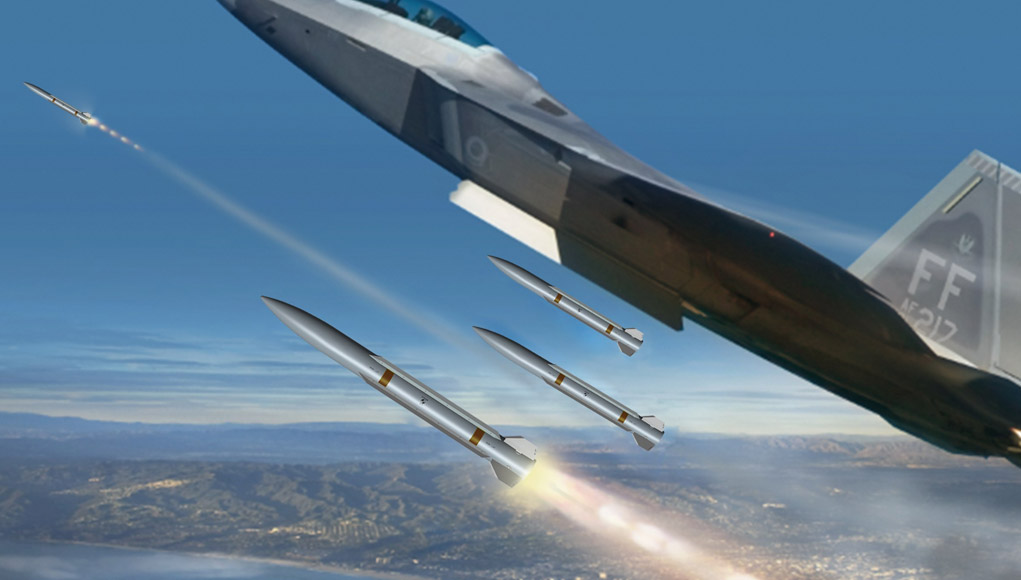
    At 1.80 meter length and 68 kg weight, Peregrine measures about half of the length and weight of AIM-120 AMRAAM, thus can double the internal missile loadout carried by F-22/F-35 fighters. Illustration: Raytheon

    Raytheon Company announced today it is developing a new medium-range, air-launched weapon called the Peregrine missile, that is half the size and cost of today’s AMRAAM air-to-air missiles, yet delivers greater effect. Raytheon develops the new weapon with internal funds, to maintain its dominance in the air-to-air weaponry market, after failing to win the Air Forces’ selection for the AIM-260 next-generation missile. The Air Force selected Lockheed Martin to develop the new missile to equip its 5GEN and 6GEN fighters.

    Peregrine will be shorter and lighter than the AIM-260 and is positioned to become a replacement for both AIM-120 and AIM-9X, as it enhances each of those missile’s capabilities, offering more energetic, agile and flexible air-to-air capabilities to current and new generation fighters.

    “Peregrine will allow U.S. and allied fighter pilots to carry more missiles into battle to maintain air dominance,” said Dr. Thomas Bussing, Raytheon Advanced Missile Systems vice president. “With its advanced sensor, guidance and propulsion systems packed into a much smaller airframe, this new weapon represents a significant leap forward in air-to-air missile development.”

    Subscribe to read the full version

    Reaper Drones to Master AI with Agile Condor Super Computing Pod

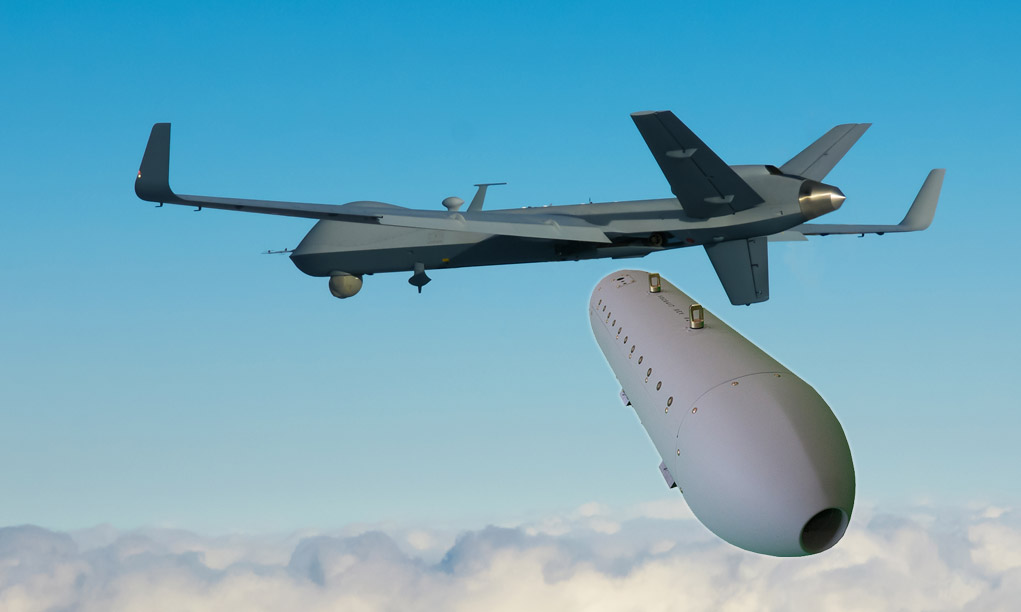
    General Atomics Aeronautical Systems, Inc. has been awarded a contract from the U.S. Air Force (USAF) to demonstrate the Air Force Research Lab’s “Agile Condor” capability using an MQ-9 Remotely Piloted Aircraft (RPA) owned by GA-ASI. Agile Condor is a high-performance computing architecture that will be used to demonstrate artificial intelligence and machine learning technologies.


    Agile Condor was developed by SRC under an Air Force Research Lab (AFRL) contract. GA-ASI will integrate the Agile Condor capability over a 10-month period beginning this month. The flight demonstration phase will be used to experiment with the Agile Condor payload to determine the optimum artificial intelligence and machine learning methodologies to find, identify and track select targets.

    “The ability to autonomously fuse and interpret sensor data to determine targets of interest is at the forefront of unmanned systems technology,” said David R. Alexander, president, GA-ASI. “The Agile Condor project will further enhance RPA effectiveness by specifically allowing a MQ-9 to surveil a large area of operations, autonomously identify pre-defined targets of interest and transmit their locations.”

    The Agile Condor capability also has the potential to dramatically reduce satellite bandwidth requirements as a result of its ability to automatically identify, classify, and nominate targets of interest. If operating in a fully autonomous mode, it would be possible to only engage in SATCOM connectivity or other data link channels to disseminate the imagery and location of those targets. This capability will be made possible by combining best-of-breed Artificial Intelligence advances along with those developed through GA-ASI’s investment in its Automation & User Experience Group, which specializes in Automation and Artificial Intelligence for the Warfighter.

    Missile Launch Detected by F-35 Provide Early Warning for Ballistic Missile Intercept Test

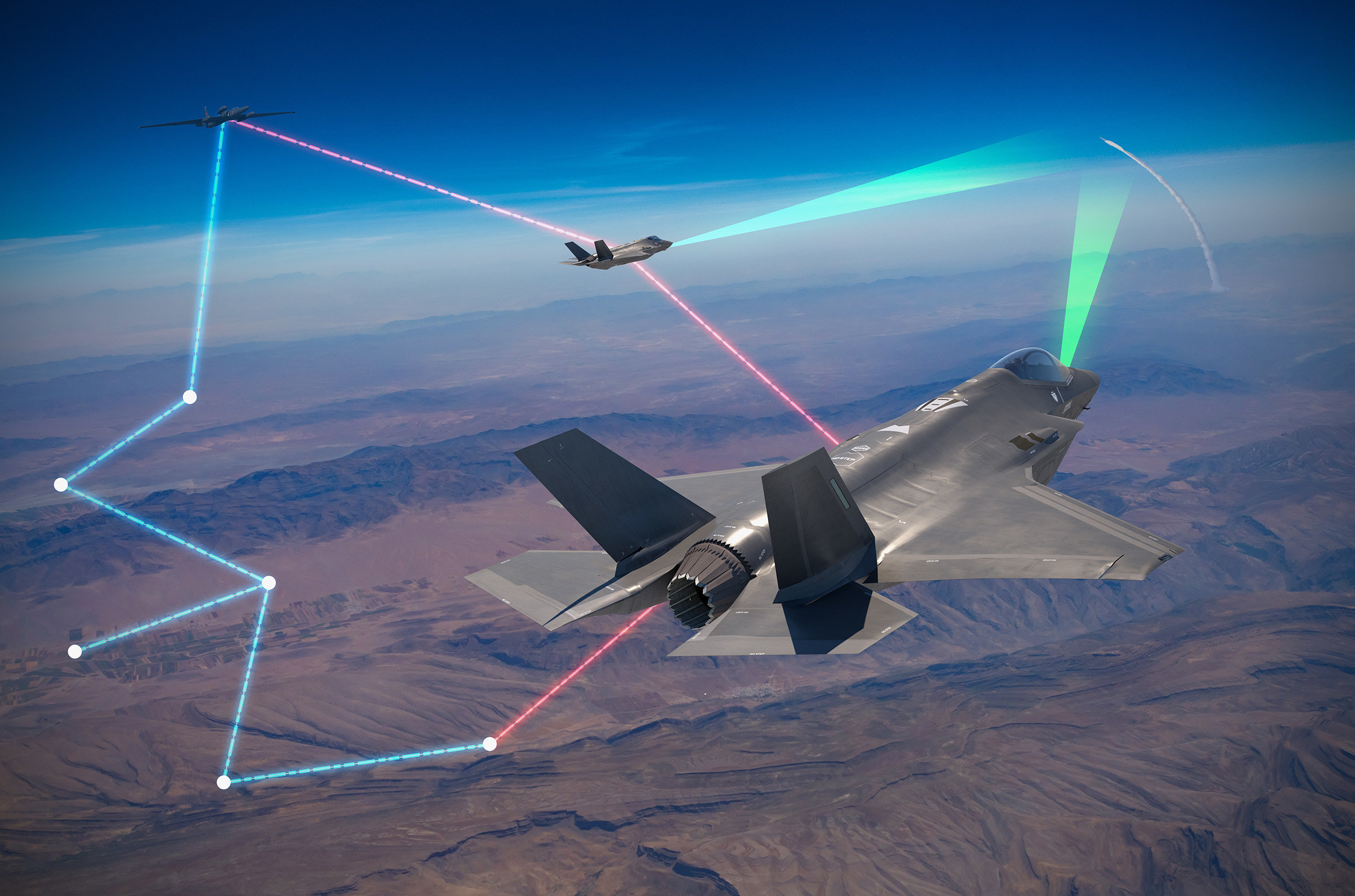
    Lockheed Martin Skunk Works, the Missile Defense Agency and the U.S. Air Force successfully connected an F-35, U-2 and a multi-domain ground station in a ground-breaking test demonstrating multi-domain operations and the secure distribution of sensitive information across multiple platforms. Illustration: Lockheed Martin

    Lockheed Martin Skunk Works, the Missile Defense Agency, and the U.S. Air Force successfully connected an F-35, U-2 and a ground station in a ground-breaking test demonstrating a secure distribution of sensitive information across multiple platforms, facilitating true multi-domain operation. During the demonstration, called Project Riot, an F-35 detected a missile launch at long range, using standard onboard sensors. It then shared that information through the U-2 gateway, providing an early warning to an air defense center on the ground, enabling the commander to quickly make the decision to target the threat. This level of connectivity reduces the data-to-decision timeline from minutes to seconds, a necessary precondition in fighting near-peer adversaries and advanced threats.

    Project Riot builds on a series of open systems architecture demonstrations proving how incremental increases in capability can be rapidly fielded to enable a connected network across air, ground, sea, space and cyber domains. The project is run under a partnership with the Air Force Life Cycle Management Center at Hanscom Air Force Base, Massachusetts, and the Missile Defense Agency. Leveraging common industry standards to drive down cost and shorten schedules, the team achieved four mission-critical data points in less than four months.

    “With its long-range standoff sensors, on-board processing and ability to operate in and around contested environments, the U-2 continues to play a critical role in demonstrating new capabilities today, while transforming operations for tomorrow’s battlespace,” said John Clark, vice president of ISR & UAS at Lockheed Martin Skunk Works. Through the demonstration, the team leveraged the modernized U-2’s payload capacity, modular design and open architecture to provide beyond-line-of-sight communications between the F-35 and a multi-domain ground station. The link established two new data paths to securely transmit 5th generation sensor data at multiple levels of security from the stealth fighter to the warfighter on the ground, thus enabling a multi-domain network of legacy and 5th generation systems. The information dissemination from the F-35 used the Air Force’s Universal Command and Control Interface and Open Mission Systems (OMS) standards.

    Australia Selects Korean, German Industries for Next Gen IFV/APC Evaluation

    KF-41 Lynx from Rheinmetall and AS-21 Redback from Hanwha are shortlisted to the final evaluation for the Australian Land 400 Phase 3 program.

    The Australian MOD has shortlisted two companies for the Land 400 Phase 3 Risk Mitigation Activity (RMA) of the next-generation tracked infantry fighting vehicle (IFV) and armored personnel carriers (APC), to replace the Australian M-113s. The two contenders are Hanwha Defense System AS21 Redback and Rheinmetall Lynx KF-41.

    LAND 400 Phase 3 is a $10-15 billion program which will recapitalize the M113 Armoured Personnel Carrier (APC) force of the Australian Army, with a combination of tracked IFV and APCs. The new family of vehicles will be better armed, highly protected and more efficient than the current M-113s. They will also be heavier and will rely on a new combat service support systems to sustain the battle.

    Defence Minister Linda Reynolds said: “These advanced vehicles will provide new levels of protection, firepower, mobility, and enhance communications… When fully delivered the LAND 400 Program will allow the Army to successfully sustain mounted close combat operations against emerging and future threats, as part of an integrated Australian Defence Force”

    The Lynx KF-41 is based on a brand new platform developed by Rheinmetall, which is operated by a crew of three and has the capacity to carry nine troops. It mounts the Lance 2.0 turret with 30-35mm automatic cannon, 7.62 mm coaxial machine gun. Rheinmetall can rely on the significant workshare already launched with Australian industries, and the Military Vehicle Centre of Excellence MILVEHCOE (facility) being established Redbank to support the Land 400 Phase 2 (Boxer) vehicle acquisition.

    The AS21 Redback is also based on a new platform that integrates an advanced Australian designed and built turret that mounts a 40mm automatic cannon, 7.62 mm coaxial machine gun and provisions for active protection system (APS). The vehicle is operated by a crew of three and has the capacity to carry eight troops. Both vehicles have an operational range of 500 km, and a top road speed of 70 km/h.  Hanwha has approached Australian companies and has already teamed with some, to develop the Australian configuration of AS21. While the power train and automotive elements would be delivered by the Koreans, Hanwha said it is open to local participation in the fields of armor, electronics, structural assemblies, and system integration for the AS21.

    Defense Industry Minister Melissa Price welcomed the announcement and stressed the importance of Australian Industry Content (AIC) in the multi-billion recapitalization effort. During the testing-phase Defence will work with the shortlisted tenderers to ensure small and medium enterprises across Australia have the opportunity to showcase their capabilities. Minister Price said.

    Elbit Systems of America to Provide Displays and Datalinks for Boeing Red Hawk (T-X)

    Boeing T-X was formally designated today by the US Air Force as T-7A. Photo: Boeing

    The cockpit arrangement of the T-X prototype depicts the central large area display, engine and fuel indicator panel on the left side, the HUD and touch panel UFPC.

    Elbit Systems of America confirmed it will supply Boeing a number of products – including cockpit displays, datalinks, and embedded training capabilities for the T-7A Red Hawk (formerly known as T-X) advanced pilot training aircraft Boeing is developing for the United States Air Force. In the initial phase, Boeing was selected to deliver 351 trainers, 46 simulators and associated ground equipment at a contract value of $9.2 billion with deliveries commencing over 10 years, from 2024 to 2034.

    Over the program life, that number is expected to grow to 1,000 trainers. Elbit Systems of America has joined the Boeing-Saab team at an early stage and is expected to become a sole supplier for those items. Analyst estimates of the package value are $250 million for the initial phase and over one billion US$ over the life of the program, not including future exports.

    Join as a subscriber to read further analysis of this report

    The first T-X prototype ready for flight. Photo: Boeing

    Attack on Saudi Oil Refineries Proves the Devastating Potential of Iranian Cruise Missiles

    Fires erupted at the largest oil refinery in Saudi Arabia, following a cruise missile attack on the facility.

    The location of the fire is an open reservoir south of the main facility. Photo: Google Earth

    Updated Report: On the night of September 14, 2019, several attacks rocked two strategic infrastructure sites in Saudi Arabia. One target was a gas plant near the large oil field at Khurais, recently developed by the Saudi national oil company Aramco. The second was the company’s main processing center and one of the world’s largest oil refineries at Abqaiq (Buqayq), 200 km northeast of Khurais.

    U.S. officials blame Iran as the culprit, indicating that the attack was launched from known staging areas across the Persian Gulf. But Iran’s proxy in the Arabian Peninsula, the Yemen Houthi Ansarallah stepped forward to take responsibility.

    At the morning after the attack Yemeni Houthi military spokesperson, General Yahya Sari, the attack, called ‘Operation Deterrent Balance 2’ was carried out by ten drones. However, the number of hits (18 in Abqaiq, four in Khurais) contradict the Houthi claim.

    According to Houthi military spokesman, Brig. Gen. Yahya Sari the attack was launched from three different positions within Yemen. Three types of drones were used – the Qasef-3, a hitherto unknown type with a range of 1700 km, that can carry four weapons, the long-range Samad-3 UAVs (a small drone with a maximum range of 1,500 km unveiled by Yemen two months ago) and a jet-powered UAVs (Sari did not identify the type but this was likely the Quds-1 cruise missile. The range of that missile has not been confirmed and, according to different sources, could be from 700 to 1,350 km). Each type of missile was launched from a different location. Sari said that some of the UAVs released decoys to jam Saudi radars and distract their air-defenses. Sari provided those details on a press conference on September 18.

    The US and Saudi Arabia pointed at Iran as responsible for the attack, claiming it came from Iran’s territory or from the Iran/Iraq border. On a press conference on September 18, Saudi defense officials confirmed that the weapons that performed were made by Iran. During the conference, the ministry presented the wreckage of seven delta-wing UAVs and two cruise missiles used in the attacks.

    Based on the forensic evidence collected at three sites attacked (two this month and another in May this year), the Saudis determined that 18 ‘delta-winged suicide drones’ participated in the attack on the Abqaiq refinery. The exact type of drone was not disclosed. Seven cruise missiles were launched at the oil field Khurais. The Saudis claim these missiles were of the Iranian Ya-Ali type. Only four of the seven missiles actually reached their target.

    Parts retrieved from the Abqaiq refinery site attacked by 18 suicide drones on the night of September 14, 2019, show a propeller-driven delta-winged drone, similar to the Iranian Toophan 2 (also known as Chamran 2)

    Defence Ministry spokesperson Colonel Turki al-Maliki said in a press conference in Riyadh a total of 25 drones and missiles were launched at two oil plants in last weekend’s strikes, including what he identified as Iranian Delta Wing unmanned aerial vehicles (UAV) and ‘Ya Ali’ cruise missiles. He said the missiles are known to be used by Iran’s Revolutionary Guards and could not be used by the Houthis due to their limited range.

    The Iranian Ya-Ali missile has a range of 700km, shorter than the range of Soumar missiles, previously indicated as culprits. Each Ya-Ali missile carries a warhead of 200 kg. However, missile parts presented by the Saudis were not similar to the Iranian Ya-Ali.

    Satellite photo from September 14, 2019, shows a major fire at the outskirt of Buqyaq (Abqaiq) refinery in Saudi Arabia. Satellite Photo: Planet

    Damage to structures and signs of fire are seen in this satellite image from Khurais. Photo: DigitalGlobe

    According to reports from Buqayq, 12 explosions were heard around 03:00 AM local time before multiple fires erupted at the site. The fires raged at least till morning, but according to Saudi sources, by then the fires were under control. Satellite images taken on the morning of September 15th confirm the main fires were put out by the next day. Images from Khurais indicate fires at the Hawiyh gas plant, though and satellite images of that site show no open fires. No casualties were reported by the Saudi authorities. Few minutes before the attack, tweets on twitter reported loud, low flying jets in the area (Kuwait?) and ‘noise of several drones.’

    Satellite images released by the US Administrations today indicate 17 points of impact on key infrastructure at the Abqaiq, some of the impacts punctured holes in liquified natural gas (LNG) storage tanks, but, no structural damage that would be caused by a major explosion. Some of the tanks do indicate fire damages.

    Punctured LNG storage tanks at Abqaiq. The damage from the September 14 attack seems to be caused by a small explosive shaped charge, (guided weapons?) rather than large cruise missiles such as the Soumar. The Iranians do have small, stealthy suicide drones that can cause such effects or drones that carry multiple PGM that would cause this damage. However, flying such drones over this protected site would be extremely difficult. Photo: DigitalGlobe.

    The damage inflicted by the Iranian suicide drone on the LNG tank indicates a small warhead and low speed.

    According to preliminary information, the successful attacks were made by low-flying aerial platforms, although the exact type of those platforms is yet unknown. Some speculations claim the attacks could have launched from Iraq, but this claim hasn’t been substantiated yet.

    While the Houthis, who originally took responsibility, have claimed several attacks in Saudi Arabia and the UAE so far, some of them by drones, most of their attacks used ballistic missiles, and more recently, cruise missiles, alas at shorter range. So far most of which targeted the south-western region, only a few have reached as far as Riyadh and the East of the kingdom.

    The US blames Iran for the strike, and current assessments are that it came from the north – i.e. – from Iraq. Nevertheless, the short-range from Iran to Saudi Arabia enables cruise missiles and drones to take a long route and reach their targets from any direction, in an attempt to circumvent the coastal-based air defenses and conceal the true origin of the attack.

    The recent strike was the second attack at Aramco oil facilities in a month. On August 17th the Houthis directed a similar attack at the Shaybah oil field in the kingdom’s South East region, under ‘Operation Deterrent Balance 1’. That attack that used three unmanned aerial vehicles, targeted wells and a refinery. Saudi officials acknowledged the report admitting the attack involved three unmanned aerial vehicles that have caused ‘slight damage’ to a gas station on site. According to preliminary assessments, the recent strike was more severe and effective than past attacks, causing Saudi Arabia to announce it may have to halve the supply of sweet (refined) oil in the coming days.

    Wreckage remaining from two cruise missiles retrieved after the attack on the Saudi Khurais oil field. The Saudis claim these are the Iranian Ya-Ali types.

    Tail parts that remained from one of the cruise missiles that crashed in Saudi Arabia and the remains of cruise-missiles shown by the Saudis do not conform to the Ya-Ali model, but to the Soumar, with much longer range.

    Most of the recent attacks involved Quds-1 cruise missiles. These are believed to be the Iranian built Soumar cruise missiles. Quds-1 is believed to be the Soumar, itself an Iranian developed canister stored, booster-launched surface-to-surface cruise missile. Soumar is an Iranian clone of the Russian Kh-55 obtained from Ukraine. The Iranian/Yemeni missile is powered by a small turbojet. Its claimed range is 1,350 km.

    The Ya-Ali light cruise missile was unveiled by the Iranian Revolutionary Guards in public in 2014. The Saudi Defense Ministry claimed the Ya-Ali was used by the Houthis in their attack on the Abha airport on June 2019. On that attack parts similar to the Soumar were also presented.

    If the recent attack was carried out by Quds-1 cruise missiles launched from Yemen, the operation indicates a step-change from previous attacks, for the simultaneous use of 10 missiles. The successful attack at an area well protected by several surface-to-air (Patriot and Improved Hawk) sites confirms the effectiveness of cruise missiles even in open and flat terrain. While at least one of the missiles have crashed on the way to the target, most of the missiles managed to break through the defenses and strike the refinery.

    Subscribe to Defense-Update to read our analysis (570 of 1,060 words)

    Skunk Works and XTEND Simplify Multi-Drone Command

    0
    Lockheed Martin Skunk Works® and XTEND have achieved a major milestone in JADC2 by integrating the XOS operating system with the MDCX™ autonomy platform. This technical breakthrough enables a single operator to simultaneously command multiple drone classes, eliminating the friction of mission handoffs. From "marsupial" drone deployments to operating in GPS-denied environments, explore how this collaboration is abbreviating the data-to-decision timeline and redefining autonomous mission execution.

    From Ukraine to Taiwan: The Global Race to Dominate the New Defense Tech Frontier

    0
    As traditional defense primes face mounting competition from agile “neoprimes” such as Anduril, Palantir and Helsing, the balance of innovation is shifting toward software-defined warfare and scalable, dual-use technologies, while global industry consolidation—marked by Boeing’s integration of Spirit AeroSystems and other strategic mergers—signals an intensified race to secure control over the defense technology value chain. Our Defense-Tech weekly report highlights these trends.

    Europe’s “Drone Wall”

    0
    In early October 2025, a coordinated wave of unmanned aerial system (UAS) incursions—widely attributed to Russia—targeted critical infrastructure across at least ten European nations. The unprecedented campaign exposed the fragility of Europe’s air defenses...

    Weekly Defense Update & Global Security Assessment

    0
    Executive Summary The past week (September 18-25, 2025) represents an inflection point where strategic defense concepts have transitioned from doctrine to tangible reality. An analysis of global events reveals four primary, interconnected trends shaping an...

    U.S. Air and Space Forces Push Next-Gen Programs at the AS&C 2025 Conference and...

    0
    At the 2025 Air, Space & Cyber Conference, U.S. Air Force and Space Force leaders unveiled major updates on next-generation fighters, bombers, unmanned systems, and space initiatives, highlighting both rapid innovation and critical readiness challenges as the services race to outpace global competitors. A short version is available here, with a more detailed version for subscribers.

    TADTE 2025: Reflecting Taiwan’s Strategic Themes

    0
    The Taipei Aerospace & Defense Technology Exhibition (TADTE) 2025 crystallized around four dominant strategic themes that collectively illustrate Taiwan's comprehensive approach to defense modernization amid escalating regional tensions. Based on a detailed report by Pleronix (available upon request). Includes a Podcast discussion on TADTE 2025's highlighting Taiwan's four strategic themes beyond the post's coverage.

    Iron Beam 450 Completes Testing, Soon to Join With Operational Air Defense Units

    0
    Israel’s Iron Beam 450 high-power laser system has completed final testing, marking a major leap in air defense. Developed by Rafael, it offers precise, cost-effective interception of rockets, UAVs, and mortars, and is set for IDF deployment by 2025.