
Sunday, December 21, 2025
More
    Home Blog Page 63

    F-35 Thermal Scan Highlights New Stealth Features

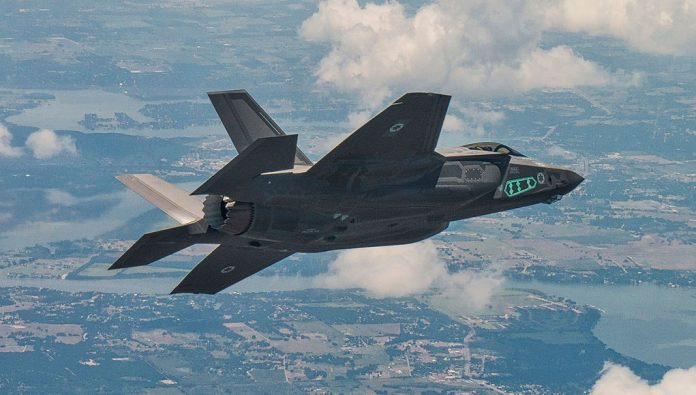
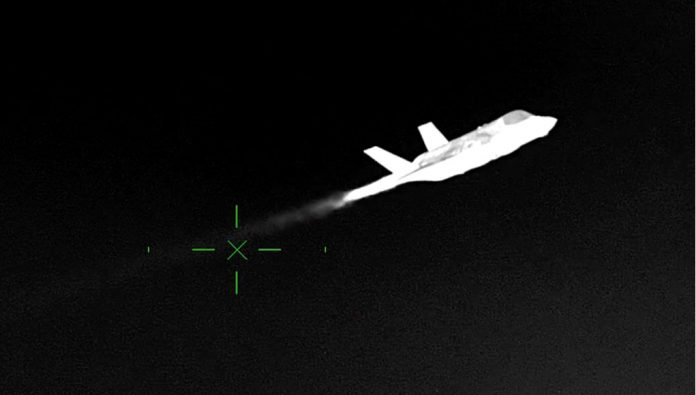
    FLIR Systems published today a short video depicting the F-35 Lightning II 5th Generation fighter during its flight display at the recent Farnborough Airshow (2016). The clip shows the JSF after a simulated takeoff, in forward flight, approach to vertical landing and hover.

    While the video highlights the extremely hot air exhaust during vertical hovering, it also shows the striking low thermal contrast of the skin, canopy and engine bay, against the sky, which testify to the Lightning II’s effective thermal masking. While the aircraft and exhaust are clearly visible against the sky background in the flypast, it is clear that such image is taken with maximum gain, which isn’t likely to be useful for normal operation. In other shots that are tuned to show the exhaust heat, the aircraft itself almost blends with background, as it would be, when seen in a front view that masks most of the jet exhaust. Low contrast objects would be less detectable by thermal imagers, at long range. For aircraft it also improves protection from heat seeking missiles.

    Critics of the F-35 claim that while its stealth design denies its detection by radars, infrared imagers can easily spot the aircraft at long range, by its heat signature. Unlike Russian, Chinese and European aircraft manufacturers that have employed infra-red search and track (IRST) technologies, US services are relying almost exclusively on radar for aerial situational awareness. While the F-35, like every physical object, has a thermal signature, this thermal scan shows its designers made significant effort to ‘flatten’ its thermal image, making the aircraft less detectable and trackable at long distance.

    The video clip shown below compares the recent images taken with FLIR Systems’ new Star SAFIRE 380-HDc high definition FLIR, with a similar video taken by another FLIR sensor in 2010, showing the F-22 Raptor. At the recent Farnborough show the F-35 Lightning II performed a flyby and hover, but did not perform high performance maneuvering like the Raptor did back in 2010. Previous FLIR videos of 4 Generation fighters such as the F-16, Typhoon, and Su-27 showed skin area with much higher thermal contrast.
    f35_thermal_hover_1021
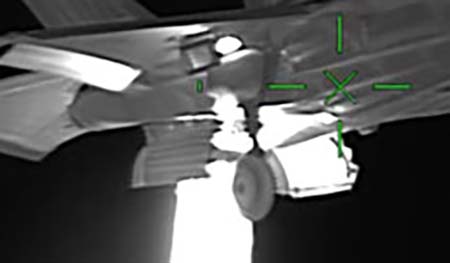
    The IR image maps the hot areas inside the wheels and weapons bays, which are covered in forward flight. Particularly impressive are the rear vertical engine doors – one side is boiling hot, the other side is as cool as the rest of the aircraft. Photo: FLIR Systems

    The most intriguing view is the forward flight, showing the aircraft from a forward 3/4 view, in very high contrast to the sky but low contrast between the hot air and cold aircraft – note that the camera shows minimal difference between the aircraft and hot air plume of the engine exhaust. In the flight phases where the engine runs in high power, the contrast between the air exhaust and aircraft, especially around the engine, is striking.

    At that short distance, the FLIR SAFIRE 380-HDc camera details the hot and cold parts on the aircraft, for example, the windows of the Distributed Aperture Systems (DAS), where high-resolution IR cameras are located.
    US Air Combat Command Declares F-35A ‘Combat Ready’

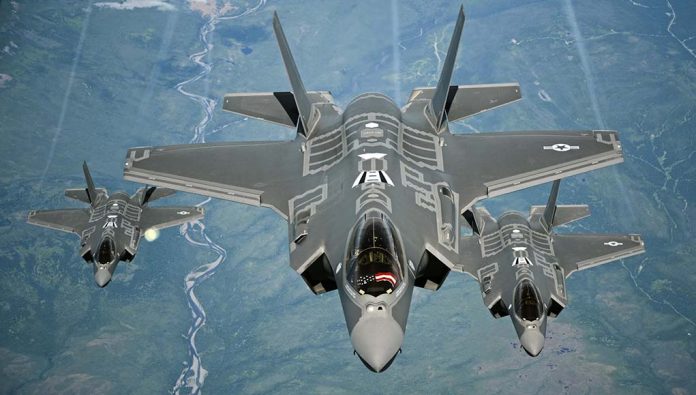
    F-35A Lightning II aircraft receive fuel from a KC-10 Extender from Travis Air Force Base, Calif., July 13, 2016, during a flight from England to the U.S. The fighters were returning to Luke AFB, Ariz., after participating in the world's largest air show, the Royal International Air Tattoo. (Photo: U.S. Air Force by Madelyn Brown)

    The F-35A Lightning II fifth generation fighter aircraft was declared ‘combat ready’ today by Gen. Hawk Carlisle, the commander of Air Combat Command. The 34th Fighter Squadron of the 388th Fighter Wing, based at Hill Air Force Base, Utah, is the service’s first operational F-35A squadron, having met all the established criteria for Initial Operational Capability including a successful June deployment to Mountain Home AFB, Idaho and a series of eight-aircraft sorties held in mid-July. Currently equipped with 15 combat-ready aircraft, the unit will eventually operate 24 F-35As.

    Gen. “Hawk” Carlisle, Commander, Air Combat Command lauded the efforts of the Airmen and the Joint Program Office in bringing “this powerful new weapons system” to operational capability. He noted that the aircraft had met all key criteria for reaching initial operational capability: Airmen trained, manned and equipped to conduct basic close air support, interdiction, and limited suppression/destruction of enemy air defenses in a contested environment. All that is achieved with an operational squadron of 12-24 aircraft; the ability to deploy and conduct operational missions using program of record weapons and missions systems; and having all necessary logistics and operational elements in place. An official ceremony is scheduled at Hill AFB on Friday August 5.

    “I am proud to announce this powerful new weapons system has achieved initial combat capability,” Carlisle said. “The F-35A will be the most dominant aircraft in our inventory because it can go where our legacy aircraft cannot and provide the capabilities our commanders need on the modern battlefield.”

    The Marine Corps inducted their first F-35B squadron at Yuma Air Station in Arizona in June last year and are currently fielding the VMFA-211, the second unit at the base. The first operational F-35B squadron, Marine Fighter Attack 121 (VMFA-121) currently has 10 F-35Bs and is scheduled to deploy to Iwakuni air station in Japan next year. By the next summer, the unit will get six additional jets and, by the summer of 2018, deploy to its first mission at sea, on board the Wasp Class amphibious landing dock USS Bonhomme Richard.

    While the F-35A is declared ‘combat ready’ it is not likely to deploy overseas in the near future, but the aircraft and crews will take part in combat training, to assess and demonstrate the jet’s capabilities and demonstrate its combat readiness.

    The F-35A is the latest addition to ACC’s fleet of deployable and fifth generation aircraft. It provides air superiority, interdiction, suppression of enemy air defenses and close air support as well as excellent command and control functions through fused sensors, and will provide pilots with unprecedented situational awareness of the battlespace that will be more extensive than any single-seat platform in existence.

    “The combat ready F-35A is the latest fifth generation fighter aircraft in the Air Force’s inventory and provides our nation air dominance in any environment.” Gen. David Goldfein, Chief of Staff of the Air Force said. “The F-35A brings an unprecedented combination of lethality, survivability, and adaptability to joint and combined operations, and is ready to deploy and strike well-defended targets anywhere on Earth,” Goldfein added.

    34 FS Airmen will fly and maintain the F-35A alongside Air Force Reservists from Hill’s 419th Fighter Wing. “It’s an honor to fly and maintain the F-35 with our active duty counterparts here at Hill,” 419 FW commander Col. David Smith, said. “Our units were the first to fly combat-ready F-16s nearly 40 years ago, and we’re very proud to have made history once again in bringing the Air Force’s newest fighter jet.

    Israel Develops a Highly Protected APC to Replace Thousands of M-113 ‘Tin Cans’

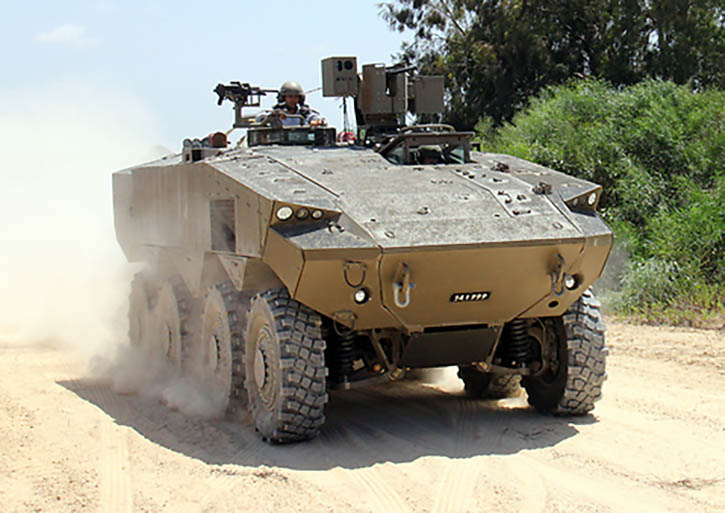
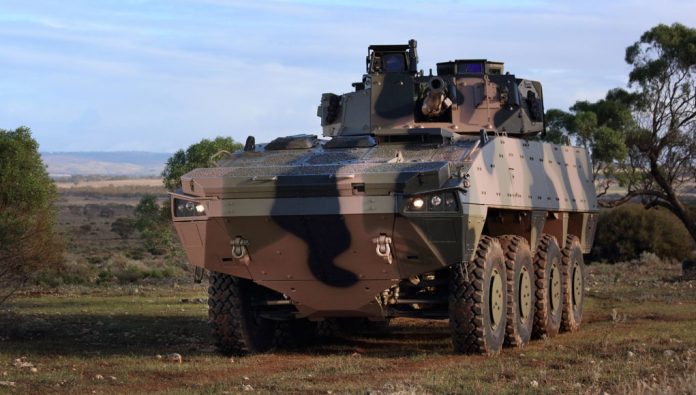
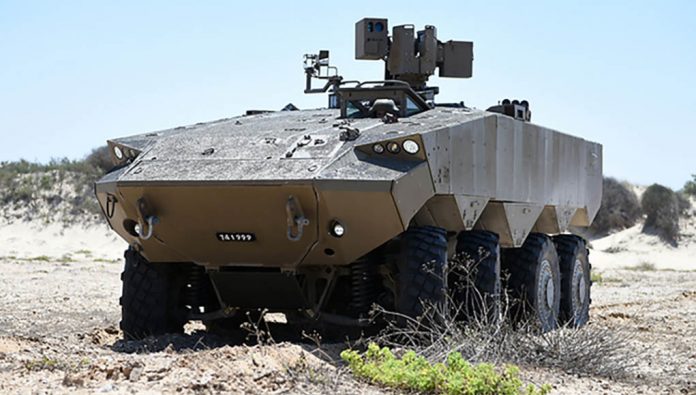
    Israel’s Ministry of Defense unveiled today the first prototype of the Eitan, a new 8×8 armored personnel carrier developed by the Ministry’s Tank Development Program Directorate (Mantak), as a possible successor for thousands of American-made M-113 Armored Personnel Carriers (APC) Israel has been operating since the 1970s. The new APC is said to be more protected, efficient and affordable than foreign off-the-shelf alternatives, and would be available at half the cost of the Israeli Namer Infantry Carrier Vehicle (ICV).

    The Israeli prototype is based on a proven automotive system, with an operationally proven powertrain that has been adopted by several armed forces in Europe. According to the head of Mantak, Brig. General Baruch Mazliah, using commercially available automotive components enabled the designers to develop an APC that will cost half as the tracked Namer, and less than similar wheeled APCs available in the world market. The hull was developed in the country, along with the weapon systems, survivability and protection systems used. According to Mazliah, the need for a wheeled armored vehicle such as Eitan evolved from lessons learned in recent combat operations in Gaza. The Eitan complements the Merkava and Namer, as it can transport infantry squads on roads, without relying on tank transporters. Eitan has a maximum road speed of +90 km/h (56 mp/h).

    Similar to Merkava and Namer, Eitan does not rely only on ballistic armor for protection but uses a combination of survivability systems for to enhance the survival of the crew, passengers, and the entire vehicle. Designed for a gross vehicle weight of up to 35 tons (77,000 pounds), Eitan provides sufficient base protection for common battlefield threats. Using the Trophy Active Protection Systems (APS), the vehicle can effectively avoid high-level threats without proportionally increasing the weight of its armor. To protect the occupants from blast effects, of mines and IEDs, Eitan has been designed with protected, relatively high floor. The tyres are fitted with runflat inserts meaning they can continue to function even after suffering multiple hits. The passive protection provided by modular armor is applied to the vehicle’s front and sides, while equipment modules add to its security. The vehicle will be initially produced at the Israel MOD AFV plant, at an annual production rate of several dozens of vehicles, as is the case with the Namer ICV.

    Israel's new Eitan 8x8 wheeled armored personnelo carrier has entered developmental testing. Two more prototypes are in production and will begin testing soon. Photo: Israel MOD
    Israel’s new Eitan 8×8 wheeled armored personnelo carrier has entered developmental testing. Two more prototypes are in production and will begin testing soon. Photo: Israel MOD

    The vehicle is designed as a common, modular platform that can be configured into different variants by replacing hull modules. Variants typically include APC and command vehicles equipped with remotely operated .50 Cal machine gun, and weapon carriers, to be fitted with remotely operated turrets mounting 30/40mm automatic cannon. The turret will also have accommodation for several missile launchers. The prototype shows clean surfaces enabling relatively uninterrupted 360-degree coverage for the weapon station and APS.

    A crew of three – commander, gunner and driver operate the vehicle. Each of the crew members has an individual, role-optimized operation position, seat and access hatch. The vehicle is designed to carry a full squad of nine troops in its fighting compartment. Troops can access and egress via the rear ramp door.

    Eitan is different than other 8×8 APCs designed for NATO forces, in its suitability to the unique operational conditions of the Israeli forces. While most 8×8 APCs evolved from lighter platforms, the Israeli APC was designed from scratch for 30-35 tons, which is the upper limit of similar designs. All 8x8s are designed for similar roles – they are designed as modular, role configurable platforms, in a weight range of 18-30 tons, each carrying 8-11 troops.

    Subscribe to read the full version of this article

    Expanding Strategic Defense in Space – China’s Missile Interceptors and Satellite Killers

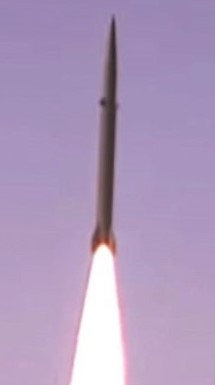
    China conducted the first exo-atmospheric missile intercept test in 2010. This image was taken from a video aired on Chinese TV this week. It was taken during a follow-on test in 2013.

    Chinese missile interceptor launched on a test flight. Image: Chinese TV
    Chinese missile interceptor launched on a test flight. Image: Chinese TV
    China’s Defense Ministry confirmed today that it was pressing ahead with anti-missile system tests after pictures appeared on state television, depicting a successful missile intercept test conducted in 2010. The Chinese announcement coincides with growing tension over South Korea’s decision to allow the U.S. deployment of THAAD anti-missile system in the Korean peninsula.

    According to Yang Yujun, spokesman of the People’s Republic of China’s Defence Ministry, the development of missile defense capabilities is an essential part of the country’s national security strategy. “It will improve the self-defense capability of China and is not targeting any particular country and will not affect international strategic stability,” Yujun said, adding that China would consider taking unspecified measures to maintain strategic balance in the region. China is unimpressed by Washington claims that the introduction of THAAD poses no threat to China.

    The missiles carrying the interceptor are known as SC-19. The missiles and its derivatives was successfully used in a number of exo-atmospheric ballistic missile defense (BMD) intercepts between 2003 and 2015. In addition to its BMD role, the weapon could possibly be used against hypersonic glide vehicles surfing in the upper atmosphere.
    In addition to the development of indigenous, its missile defense capability China is also pursuing means to kill or disable adversary satellites. The two programs are likely sharing some capacity, and Chinese authorities described at least some of the satellite interception tests as missile intercepts, thus avoiding international scrutiny about military experiments in outer space.

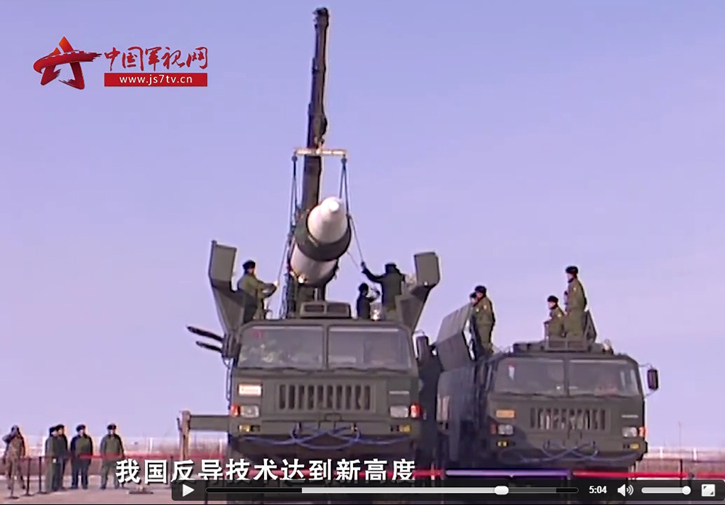
    Chinese crew prepares an interceptor missile (possibly SC-19) for trial, 2013. Photo: Chinese TV
    Chinese crew prepares an interceptor missile (possibly SC-19) for trial, 2013. Photo: Chinese TV
    Earlier this week Beijing released another video depicting an anti-satellite test conducted last year. The eighth, and most recent test involved a Dong-Neng 3 exo-atmospheric kill vehicle deployed by satellite launcher that positions the DN-3 in a collision course with the orbiting target. These kinetic interceptors are carried on SC-19 launchers.

    Two years earlier a test of the larger DN-2 EKV demonstrated an intercept of an orbital target at an altitude of 18,600 miles, where intelligence and navigation satellites are positioned. The congressional U.S.-China Economic and Security Review Commission report of 2015 described that test as demonstrating “a new high-altitude anti-satellite capability” that could be deployed as early as 2020.

    While ‘direct fire’ ASAT capabilities are considered for use only at war, don-kinetic capabilities could be used to disable or ‘kidnap’ adversary assets in space. China is already developing such capabilities, although they are positioned to help avoid potential risks posed by space debris and disabled spacecraft. While Chinese official sources claim that the task of the Aolong-1 (Roaming Dragon) spacecraft sent into orbit last month will be cleaning up space junk, other analysts suspect it could serve a military purpose. In peacetime, the spacecraft could patrol space and prevent defunct satellites from crashing into other satellites or down on earth. Likewise, since they do not explode or create debris, they could be used against enemy assets in space as a ‘clean’ anti-satellite weapon. To conduct its task Aolong-1 is designed to identify such ‘non-cooperative’ target, approach and synchronize position to deploy its robotic arm to establish a firm grip.

    Chinese researchers with the 502 Institute at the China Aerospace Science and Technology Corporation said last year that China would launch a multi-tasking space robot by 2020 that could maintain, refuel and repair satellites in orbit.

    First Israeli F-35 ‘Adir’ is Airborne

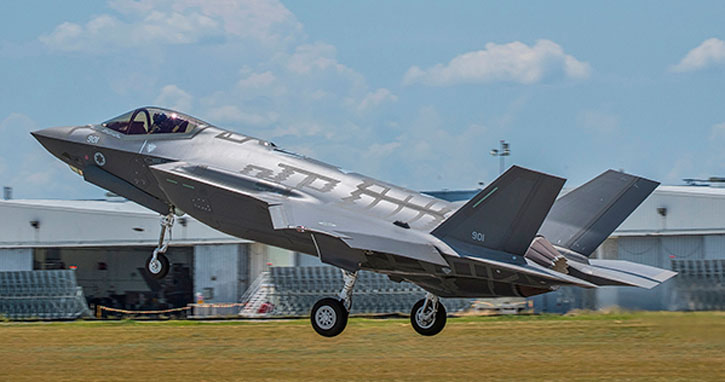
    The first F-35 bound to Israel made its maiden flight June 26 from Fort Worth, Texas, flown by Lockheed Martin’s test pilot. The aircraft will now conduct a series of flight tests to confirm its airworthiness.
    It is expected to land in Israel on December 12, 2016. These test flights will be concluded in November, in time for the first two aircraft to begin their cross-Atlantic ferry flight to Israel.
    Since the Israeli government decision was made in September 2010, IAF personnel have been preparing for the arrival of the new jets. The first cadre of aircrew members is currently undergoing conversion training. An advanced simulator center is constructed at the base to help train pilots along with technical crews that are trained to maintain the new, stealthy fighter jet. At the IAF Air Base in Nevatim, infrastructure is being prepared for the arrival of the first aircraft in December.

    Israel's first F-35I (Tail number 901) takes off on its maiden test flight from the airport adjacent to Lockheed Martin's assembly line. Photo: Lockheed Martin
    Israel’s first F-35I (Tail number 901) takes off on its maiden test flight from the airport adjacent to Lockheed Martin’s assembly line. Photo: Lockheed Martin

    Australia Shortlists Boxer, AMV-35 for Future Combat Recce Vehicle

    The Australian Defense ministry announced that two European companies – British BAE Systems and German Rheinmetall, as the bidders shortlisted as potential suppliers of armored combat vehicles for the Australian Army’s Mounted Combat Reconnaissance Capability, also known as ‘Land 400 Phase 2’ program, to become the successor of the 8×8 ASLAV currently in service.  The Australian Minister for Defence Industry, Christopher Pyne, announced.

    The two AFV shortlisted are the Boxer and AMV-35, both are 8×8 wheeled vehicles, offering better protection and mobility over the current ASLAV, and equipped with a manned turret mounting an automatic gun. The Australian requirement is for 225 vehicles in seven variants.

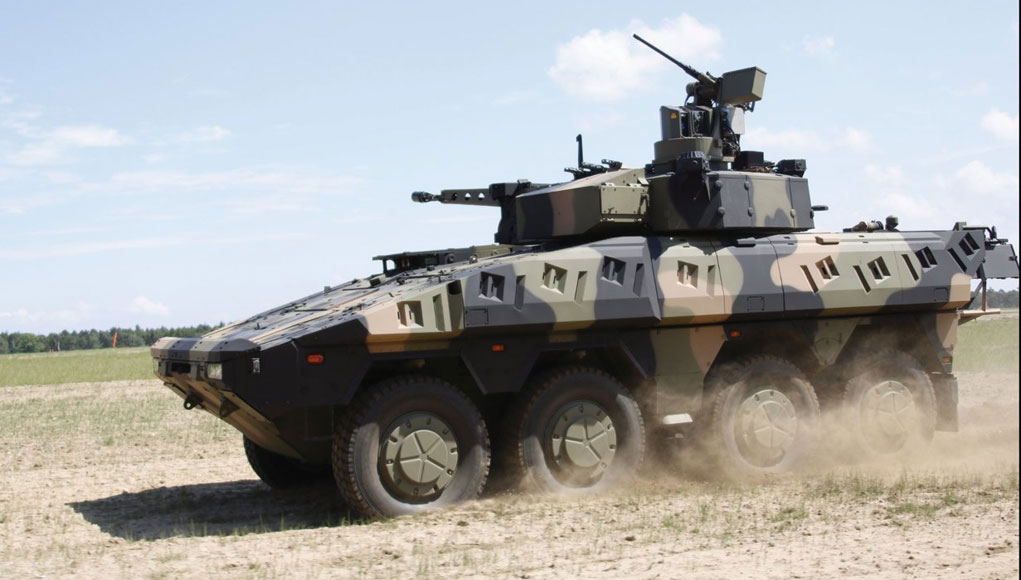
    The Boxer CRV has the Lance turret mounting a 30mm cannon. Photo: Rheinmetall
    The Boxer CRV has the Lance turret mounting a 30mm cannon. Photo: Rheinmetall
    The acquisition is part of the larger Land 400 program designed to replace Australia’s entire fighting vehicle fleet. The selection comes at the completion of the review of opportunities to improve Australian industry involvement in , LAND 400 Phase 2. In addition to industrial participation, all options will be required to include through-life support in Australia.

    The Boxer is jointly produced by Artec, a German-Dutch contractor. Boxer CRV is fitted with the Lance turret mounting Rheinmetall’s Mk-30-2 30mm cannon fitted with the company’s distinctive airburst ammunition capability. The 30mm gun can be upgraded to 35 mm cannon. 

    Rheinmetall Defence has offered the Commonwealth the latest version of the BOXER 8X8 vehicle that is fitted with the in-service Lance turret and a growth path that includes a 35 mm main gun and the Northrop Grumman command, control, communications, computers, intelligence, surveillance and reconnaissance (C4ISR) architecture.

    The turret is designed with integrated launchers for Spike missiles. The modular vehicle is designed with unique upgradeable armor that enhances the vehicle’s survivability against the full spectrum of battlefield threats including small arms, heavy machine guns, mines, NBC contaminants and Improvised Explosive Devices (IEDs). 

    Rheinmetall has recently unveiled a version of the Boxer, fitted with a version of its Active Defence System (ADS), extending the vehicle’s protection against Rocket Propelled Grenades (RPGs) attack beyond the statistical protection provided by passive armor.

    boxer_crv_ads_1021
    The latest configuration of the Boxer CRV shows the active defense system comprised of 26 explosive modules activated by sensors detecting an incoming RPG or other shaped-charge projectile in close proximity to the protected vehicle. Photo: Rheinmetall
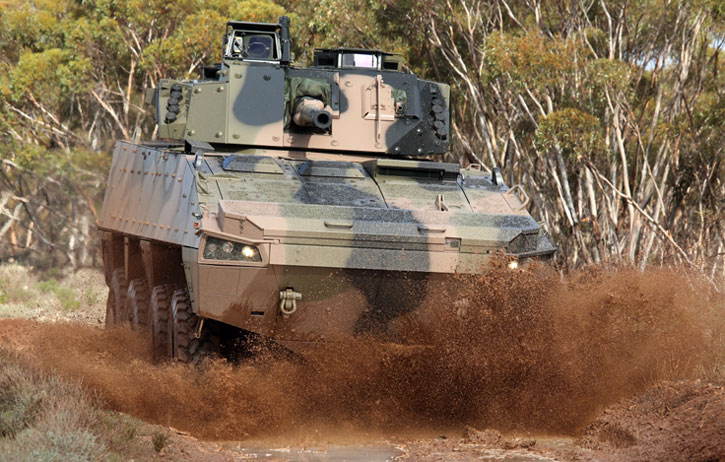
    The AMV-35 is proposed by BAE Systems. The hull was designed and is produced by the Finnish based company Patria. The E35 turret mounting the Bushmaster III 35mm cannon was developed for BAE’s CV-9035 is a product of Sweden-based BAE Systems Hägglunds division.

    The two were selected from a list of contenders that also included a modern variant of the Light Assault Vehicle (LAV-6) from General Dynamics Canada and the Sentinel II, based on the Singaporean Terrex 3, proposed by Singapore Technologies and Elbit Systems. The French manufacturer Nexter withdrew from the competition following the Australian decision to limit their selection to operationally proven systems. Nexter proposed an upgraded version of VBCI , equipped with the new T40 turret mounting the 40mm CTI cannon that has been selected by the French and British military but not been fielded yet.

    BAE has built  three test vehicles for the Australian Defence Force’s test and evaluation program. Photo: BAE Systems
    BAE has built three test vehicles for the Australian Defence Force’s test and evaluation program. Photo: BAE Systems
    The tender evaluation was expected in March this year but delayed to conduct a review of the acquisition process. “The review undertaken by Deloitte Australia found clear alignment between the LAND 400 Phase 2 tender evaluation process and the policy direction and priorities of the 2016 Defence Industry Policy Statement.” Pyne said. The review was completed last month.

    “The Turnbull Government is committed to maximising Australian industry involvement during the next stage of the evaluation process and Defence will continue to work collaboratively with companies as part of a broader Australian industry program,” Pyne added.

    Both Patria and BAE Systems Hägglunds have transferred technology involved in the production of the AMV and the E35 turret to several other countries, successfully demonstrating capability transfer and the in-country economic advantages this brings, including long-term sustainment, upgrade and maintenance activities.

    “BAE Systems will produce the AMV35 in Australia if we are selected as the successful tender. This will secure and retain in-country capability and contribute significantly to the Australian economy throughout the expected 30-plus year life and sustainment of the vehicles.” BAE Systems Australia Chief Executive Glynn Phillips commented.
    The Defense ministry will facilitate workshops around Australia where local industry can showcase their capabilities to the international manufacturers that are leading the bids for the LAND 400 Phase 2 tender. These activities will result in the development of costed options for differing levels of Australian industry participation in the acquisition and support of LAND 400 Phase 2, including Australian-produced or assembled components as well as local manufacturing of foreign systems.

    Pyongyang is Moving Rodong Missiles Closer to the Border with the South

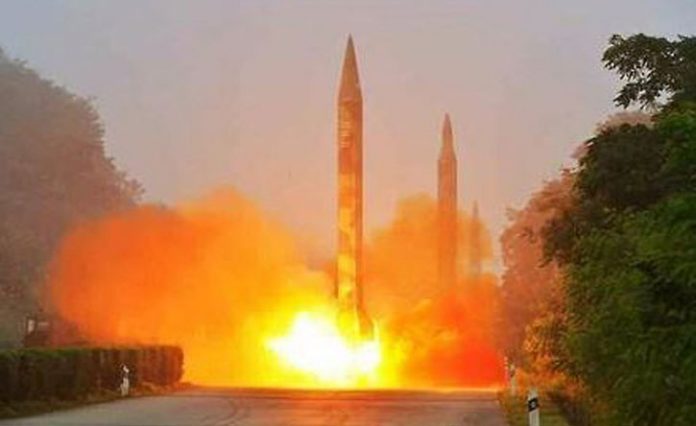
    The Rodong-1 missiles the North launched Tuesday were fired from Hwangju County, some 45 kilometers south of the capital Pyongyang.

    North Korea has moved the Rodong Intermediate-Range Ballistic Missile (IRBM) launchers closer to the South in an attempt to circumvent the missile defense shield soon to be established by the U.S. THAAD missiles.

    North Korea maintains several ballistic missile bases throughout the country, strategically located to attack targets in the region.

    The Kusŏng site, located in North P’yongan province houses Rodong missiles. These missiles target U.S. forces in Japan. Hwasong-5/6 (SCUD-B) missiles are based at the Kalgol-dong site located in Chagang province in the Northern region, north of pyongyang. Okp’yŏng-dong site is located in Kangwon province, Southeast of the capital, where both Hwasong and Rodong missiles. These missiles target South Korea. There are other numerous smaller sites, scattered around the country, serving for mobile launcher pads. The

    The recent Rodong missiles tested by the North on the high-trajectory were launched from the base in Hwangju Province, some 45 kilometers south of the capital Pyongyang.

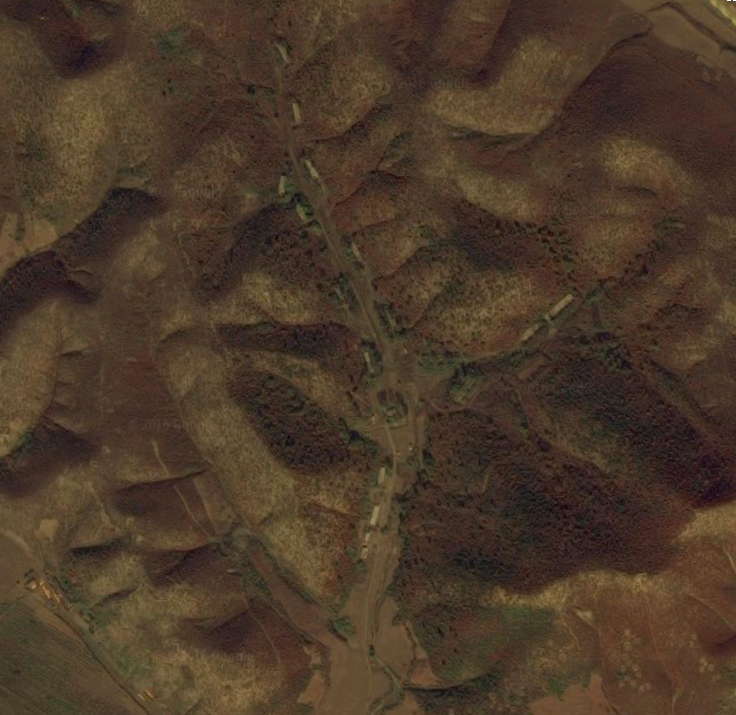
    Tucked among the mountains adjacent to the Hwangju military air base, the missile storage facility maintains 12 storage facilities, logistical shelters and launch pads for mobile launchers. It is located some 45 kilometers south of the capital Pyongyang.
    Tucked among the mountains adjacent to the Hwangju military air base, the missile storage facility maintains 12 storage facilities, logistical shelters and launch pads for mobile launchers. It is located some 45 kilometers south of the capital Pyongyang.

    The missiles are reportedly positioned closer to the front demilitarization line, alongside the short-range Scud missiles. The missile is a copy of the Russian Scud C, locally produced in North Korea as ‘Rodong’ and as the ‘Shihab’ in Iran.

    With a diameter of 1.25 meters and length of 15.6 meters the missile can throw a payload weight of one ton at a range of 1,000-1,300 km. In March 2014 Pyongyang tested these weapons in high-short trajectory and flew them to a range of 650 km. Their range was shortened by firing at a higher launch angle (up to 160 km, compared to 40 km of the Scud-type missiles). The high trajectory increased the missile’s speed of decent to 7 Mach terminal speed, thus avoiding interception by Patriot PAC-2/3 missiles.

    North Korea is believed to possess some 300 Rodong missiles and fewer than 50 mobile launchers.

    Analysts also warn that steep trajectory would also enable Pyongyang to deploy Electro-Magnetic Pulse (EMP) attack that would cripple electrical grid and electronics over a large area, using a small nuclear detonation high in the atmosphere.

    China Expects J-20 Stealth Fighter to Be Combat Ready in 2019

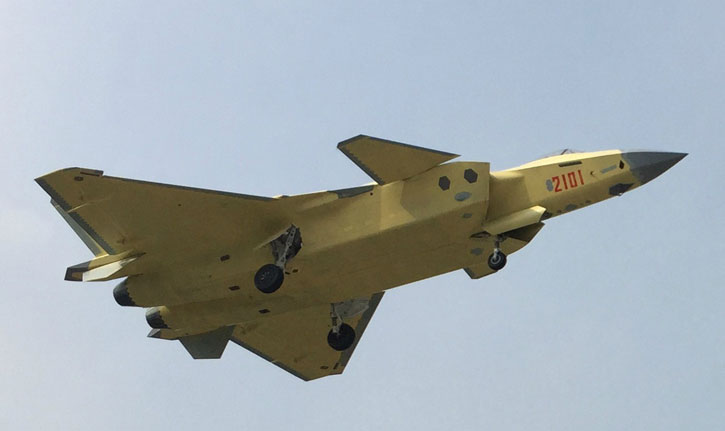
    The first Chengdu J-20 stealth fighter from the Low-Rate Initial Production made its first flight January 18, 2016 at Chengdu. The aircraft is one of four conducting flight acceptance tests for the Chinese Air Force.

    Last December China’s Chengdu Aircraft Company (CAC) inaugurated the production line for China’s J-20 5th Generation, stealth fighter, that has since entered Low Rate Initial Production (LRIP). Two LRIP aircraft have already rolled off the line; the first began flight testing in January.

    The Chinese People’s Republic Army Air Force (PLAAF) is believed to have received four J-20 jets, which have been tested and completed acceptance tests recently. The first front-line regiment is supposed to activate and receive aircraft by June 2017 and is expected to be combat ready by 2019. That milestone could be pushed forward, given the budget priority. The final requirement could be between 500 to 700.

    The configuration of those LRIP planes is similar to the latest prototypes, 2016 and 2017 that were the pre-production and technology demonstrator variants. Nomenclature identifies the aircraft – prototypes and pre-production aircraft are designated 20XX while production versions are designated 21XX.

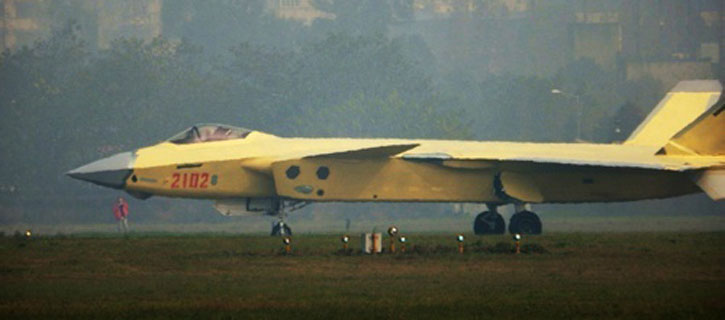
    The second low-rate initial production aircraft marked 2102 seen during ground checks at Chengdu.
    The second low-rate initial production aircraft marked 2102 seen during ground checks at Chengdu.

    Chengdu’s No.611 Institute developed the plane. This large interceptor made its first flight in 2011. Two Russian-made Saturn AL-31F power the prototypes and first production aircraft accelerating it to a maximum speed of Mach 1.7.

    Two lateral bays accommodate highly maneuverable PL-9/PL-10 IR missile. The main weapon bay can carry longer weapons can accommodate four PL-15 medium-range AAMs or the new PL-21 ramjet powered, long Range Air/Air Missiles, similar to the MBDA Meteor. Additionally, large air/ground weapons can be carried in this bay.

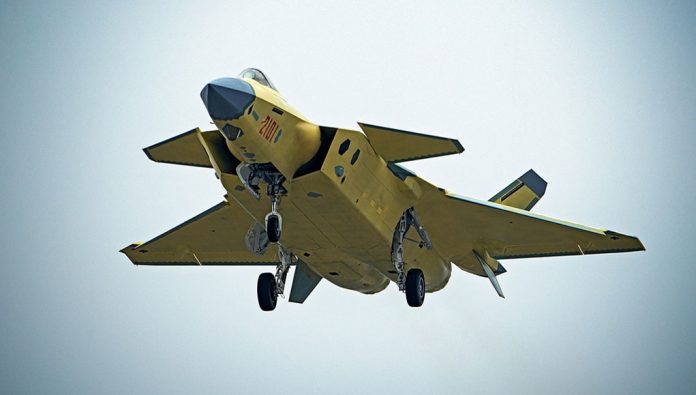
    The 2101 aircraft is equipped with distinctive diamond-shape infra-red distributed aperture and electro-optical targeting sensors (under the fuselage) enabling the pilot to acquire air and surface targets in stealth mode, without using the powerful AESA radar.
    The 2101 aircraft is equipped with unique diamond-shape infra-red distributed aperture and electro-optical targeting sensors (under the fuselage) enabling the pilot to acquire air and surface targets in stealth mode, without using the powerful AESA radar.

    Germany to use Heron 1 UAVs to Support UN Peacekeepers in Mali

    The German Luftwaffe plans to deploy a detachment of HeronI UAVs to Gao later in 2016, for a mission that will last 18 months. The drones will be leased from the manufacturer IAI. Photo: German MOD
    mali_gao
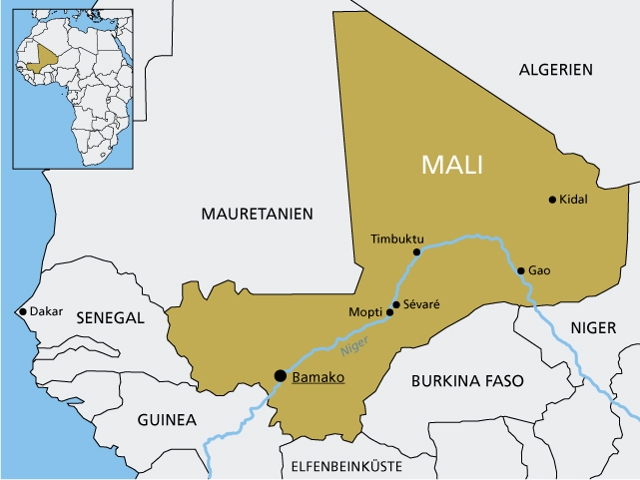
    The Aera of Operation (AOR) in Mali is twice as large as Germany. Aerial surveillance provides the only effective solution. Map: Bundeswehr

    At the beginning of July 2016, Germany has taken over responsibility for the intelligence unit in Mali, previously operated by Dutch forces. The Dutch unit operated the smaller and lighter Boeing/Insitu Scan Eagle Unmanned Aerial Systems (UAS) for such missions. As part of the intelligence operations, drones are often used to secure the perimeter of the UN MINUSMA mission. The German forces will be able to cover much larger areas and conduct missions for more than 24 hours, using Heron 1 drones. The UN attention is focused mainly on the North-Eastern Gao region.

    The area of operation – north of Mali – is more than twice the size of Germany, what requires the deployment of effective means of surveillance, with long endurance and high area capacity. Based on the extremely positive experience made in Afghanistan, the German forces opted to deploy Heron 1 Unmanned Aerial Systems (UAS) to Mali. Airbus Defense and Space announced yesterday it had signed a contract with the German Defence Procurement Agency (BAAInBw) to provide such surveillance drones in support of the Bundeswehr mission in Mali.

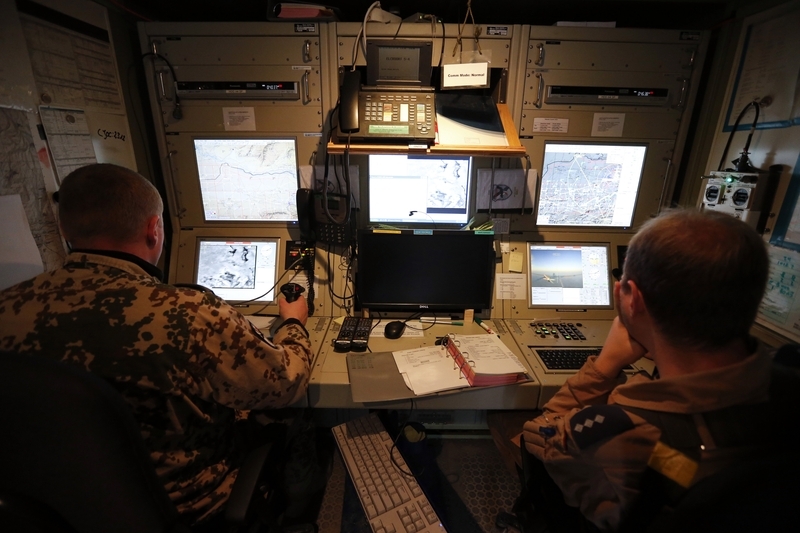
    The detachment to Mali will consist of three Heron 1 UAVs equipped with satellite datalink and electro-optical and infrared sensors. Two containerized ground control units will support the operation, providing mission planning, remote control during takeoff, mission flight and landing. The GCS will also provide the facility for sensor control and data exploitation, in support of local peacekeeping forces.

    Although the drones will be leased by Airbus Defense & Space, they will be operated by German military. Photo: Reuters
    The UAS will be leased from Israeli manufacturer IAI for 18 months, and operated by Airbus in a similar operations concept practices in Afghanistan in 2010. Military missions will also be in future flown solely by military personnel. The operations in Mali will start in November 2016 and are initially planned until February 2018.

    “A major success factor for this new assignment is our experience gained in more than 2,300 missions over Afghanistan, ” said Thomas Reinartz, Head of Sales for unmanned aerial systems at Airbus. “There we have proven our reliability to the full satisfaction of our customer – with a fleet availability higher than 95 percent.”

    The United Nations (UN) Multidimensional Integrated Stabilization Mission in Mali (MINUSMA) mission was established by the UN Security Council resolution 2100 of 25 April 2013 to support political processes in Mali, as the Central African country was torn by rebel forces strengthened by extremists fleeing from Libya. MINUSMA was assigned with security and stabilization related tasks, protecting civilians and support the transitional authorities of Mali in the stabilization of the country and implementation of the transitional roadmap.

    By leasing more Herons, rather than committing its drones, the Bundeswehr maintains the high availability and operational flexibility of its drone fleet, regarding contract duration. Moreover, the leased units are fully compatible and interoperable within NATO. Other Heron I systems are already in use by the French Air Force, operating in Mali since the beginning of Operation Serval in January 2013.

    The extension of the Heron 1 operational model is paving the way also for the next drone generation – Heron TP – already selected by the Germans as their future Medium Altitude, Long Endurance (MALE) unmanned aerial system. Heron TP will succeed the Heron 1 and bridge the timeframe until a European drone development will be available.

    Seoul Insists Korean-Bound THAAD Remain Independent of Regional Defenses

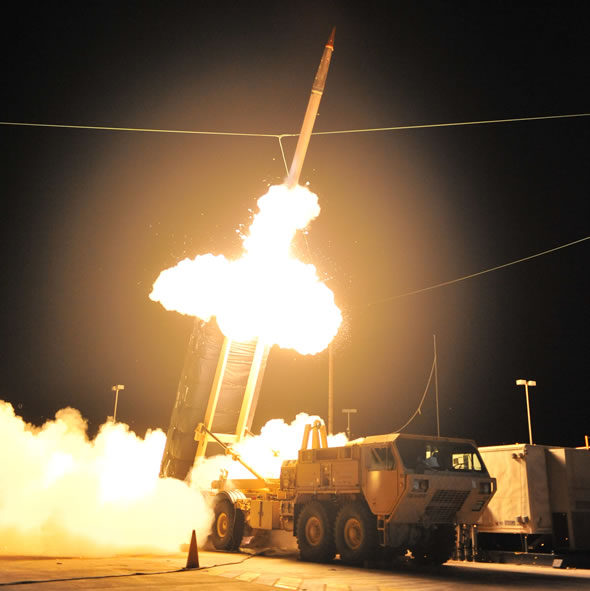
    The U.S. Army Terminal High Altitude Area Defense (THAAD) missile system performed a successful intercept October 5, 2011, scoring simultaneous kills of two targets. Photo: Lockheed Martin

    Although South Korea approved the planned deployment of the U.S. Terminal High-Altitude Area Defense (THAAD) systems in the Republic of korea, Seoul insists the system will operate autonomously and independently of the U.S. regional missile defense system. Washington has deployed a network of land and sea-based radars, interceptors, and command centers to protect its bases in the Pacific from potential missile attacks from North Korea, Russia or China.

    Seoul announced on July 8 that it would allow a U.S. THAAD battery to be stationed in the country after months of deliberation. The site selected for the U.S. missiles is near the rural town of Seongju in the southeastern part of the Korean peninsula. The site is expected to become active in 2018. The new assets are expected to protect the entire area of South Korea and the U.S. forces stationed in the country.

    Korean Defense Minister Han Min-koo’s remarks made at the National Assembly policy review session come after speculations that the deployment of the THAAD system in South Korea will invariably lead to the Seoul’s joining the Washington-led missile defense system which is seen by some as a move to isolate China. Yonhap news agency reported.

    The Seoul government has persistently said that it has no intention of joining the MD system. Instead, South Korea plans to establish the indigenous “Korean Air and Missile Defense” (KAMD) system, to face the evolving threat of North Korean missile and nuclear threats. While KAMD will extend the protection of South Korea, from the outset, it was designed to operate independently of foreign, regional missile defense networks such as those operated in the region by the U.S. Army and Navy.

    “In line with this policy, Seoul has stepped up efforts to build up KAMD,” Han Min-Koo said. He made clear that the THAAD to be employed in South Korea will not be sharing information with the wider MD network.

    The MD is a sensitive issue because it can alienate neighboring countries such as China and Russia that South Korea wants to maintain good relations with. China, in particular, is Seoul’s No. 1 trading partner, and a key player in Seoul’s drive to get North Korea to give up its nuclear ambitions.

    Meanwhile, North Korea is stepping up its missile testing. Yesterday, North Korea tested three ballistic missiles simulating a preemptive strike against South Korean ports and airfields.

    The first two missiles fired were short-range Scud variants, and the third was a medium-range Nodong, it was the 25th missile test conducted by North Korea this year. All three were fired into the sea off the east coast of North Korea.

    According to North Korean state media, the tests successfully simulated air-burst nuclear detonations, which if accurate and proven, would enable North Korean ballistic missiles to detonate above and out of range of the Patriot missile defense systems currently deployed in Korea.

    The United States has available ballistic missile defense (BMD) capability and inventory -including a number of surface vessels carrying AEGIS systems, THAAD Battery in Texas and an Aegis Ashore Site with a TYP-2 Radars in Hawaii and japan that can be quickly activated to counter the North Korean nuclear ballistic missile threats. Other assets include Japanese AEGIS destroyers that also have ballistic missile defense capabilities.

    Iran receives missiles for S300

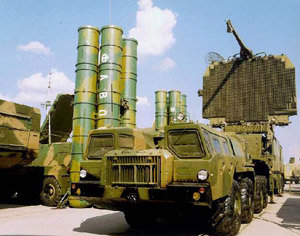
    The Iranian news agency Tasnim said today that Tehran had received the first batch of interceptor missiles of the Russian S-300 PMU-2 air defense system. Parts of the systems, including radars and reloaders, were unveiled during April 17, 2016, National Army Day. According to the contract signed in 2007, Iran ordered five batteries of S-300 PMU 1, but Moscow blocked the delivery of those systems under the sanctions imposed on Iran by the UN Security Council. The original contract revised in 2015 enabled Moscow to upgrade the systems delivered to Iran to the more advanced PMU2 version. The system is expected to reach operational capability within months.

    Israel Requests Eight SH-60F SeaHawk from US Navy Surplus

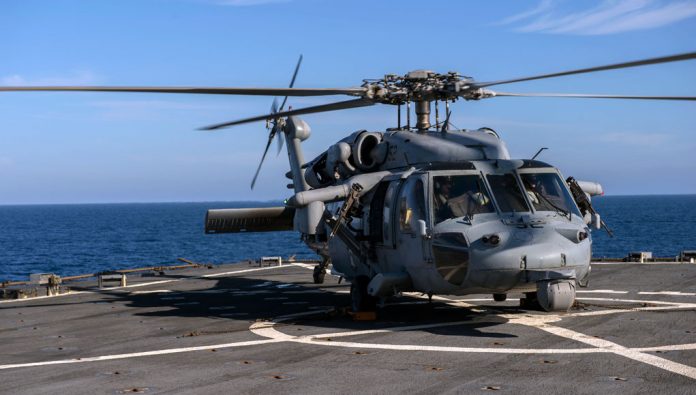
    Sikorsky/US Navy SH-60 Sea hawk. U.S. Navy photo by Zachary Eshleman
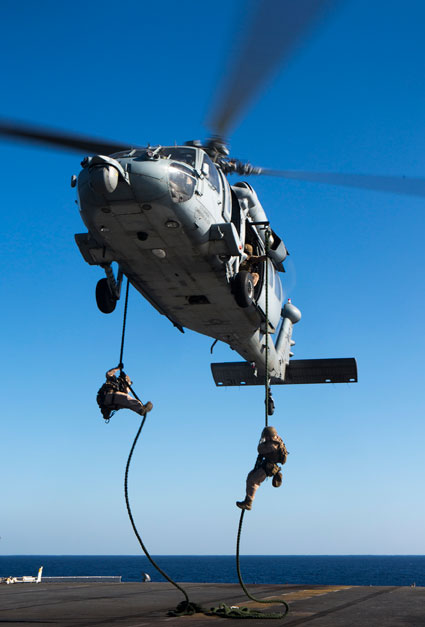
    US Marines fast rope out of an SH-60 Seahawk with Amphibious Squadron 4 during fast rope training aboard the amphibious assault ship USS Kearsarge Nov. 5, 2015. U.S. Marine Corps photo by Cpl. Joshua W. Brown
    US Marines fast rope out of an SH-60 Seahawk with Amphibious Squadron 4 during fast rope training aboard the amphibious assault ship USS Kearsarge Nov. 5, 2015. U.S. Marine Corps photo by Cpl. Joshua W. Brown

    Jerusalem is seeking US approval for the support package to maintain eight SH-60F Sea-Hawk Helicopters to Israel be delivered from US Navy surplus to support the Israeli Navy security operations in the Mediterranean Sea. The Israel Navy currently operates French produced HH-65 Dolphin helicopters built by Airbus Helicopters, procured via the USA in 1983. The new helicopters will initially work with the four new Magen Class, Meko-100  corvettes, Israel will receive from Germany by 2020. The US Defense Security Cooperation Agency (DSCA) confirmed the State Department’s approval for the planned transfer in its notification to Congress earlier this month.

    The original request for eight airframes was submitted and approved in February 2015. The recent announcement relates to the related equipment and support package. According to the package list, Israel requested 12 T-700 GE401C engines, a universal (navalized) version of the T700 powerplant. Each SH-60F uses two such engines. Of the 12 engines ordered, ten will be installed in five of the eight airframes, and two maintained as spare engines. The remaining three airframes could be maintained for future service or are likely to be cannibalized for spare parts.

    The helicopters will operate on these Corvettes will be committed to secure the Leviathan Natural Gas Field located within Israel’s Economic Exclusion Zone (EEZ), about 60 nautical miles off the East Mediterranean coast. The SH-60F helicopters will be used onboard these new frigates to patrol and protect these gas fields as well as other areas under threat. The US agency assesses the support package for the eight airframes at $300 million.

    The SH-60F entered operational service with the US Navy in 1986. The helicopter primarily serves as primary antisubmarine warfare (ASW) and Search and Rescue (SAR) aircraft. The SH-60F can carry offensive weapons, primarily on ASW missions. These include Mk 46, Mk 50, or Mk 54 torpedoes. It cal also carry various fuselage-mounted machine guns, for self-defense. Some of the weapons deployed by the Israel Air Force have already been tested on board the SH-60 helicopters, these include the Delilah loitering weapon and hellfire guided missile.

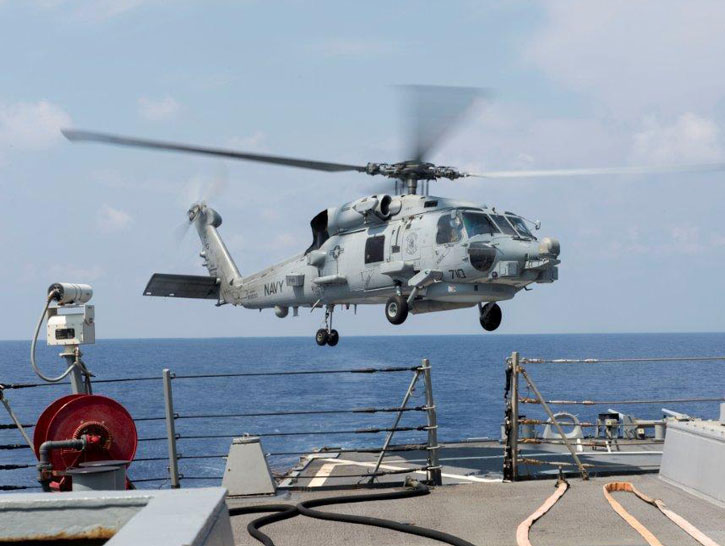
    An SH-60F Sea Hawk helicopter prepares to land aboard the guided-missile destroyer USS Gonzalez (DDG 66). Gonzalez is underway participating in a Composite Training Unit Exercise with the Harry S. Truman Strike Group. (U.S. Navy Photo by D. C. Ortega)
    An SH-60F Sea Hawk helicopter prepares to land aboard the guided-missile destroyer USS Gonzalez (DDG 66). Gonzalez is underway participating in a Composite Training Unit Exercise with the Harry S. Truman Strike Group. (U.S. Navy Photo by D. C. Ortega)

    IMDO and MDA Successfully Complete Integrated Ground Test

    The Israeli Missile Defense Organization (IMDO) in conjunction with the United States Missile Defense Agency (MDA) and the United States European Command (EUCOM) successfully conducted an Integrated Ground Test which ended on June 22nd. The test validated the combined United States/ Israeli Missile Defense integrated architecture for the defense of Israel. The test is known as ‘Integrated Ground Test-2016 (IGT-16)’ lasted five days and evaluated the integration and efficiency of different weapon systems operating together, providing an active defense to the state of Israel in a time of war. The test was carried out by Elisra, a subsidiary of Elbit Systems.

    The integrated architecture consisted of the Israeli Arrow Weapons System using Arrow-2 and Arrow-3 interceptors, and the David’s Sling Weapon System interoperating with the United States assets consisting of Command and Control elements, Aegis ships, Terminal High Altitude Area Defense (THAAD) and Patriot missile defense systems and the US AN/TPY-2 radar positioned in southern Israel. The David’s Sling missile defense system, which was recently delivered to the Air Force, participated in the drill as part of its transition to becoming operational.

    During the test, scenarios consisted of multiple missile and rocket attacks were simulated against Israel with both United States and Israel successfully employing, engaging and destroying the simulated incoming threats. The test demonstrated the United States’ commitment for the protection of Israel as well as the interoperability between the United States and Israeli integrated defense
    system architecture.

    Successful Tests for Indo-Israeli Land-Based Air Defense System

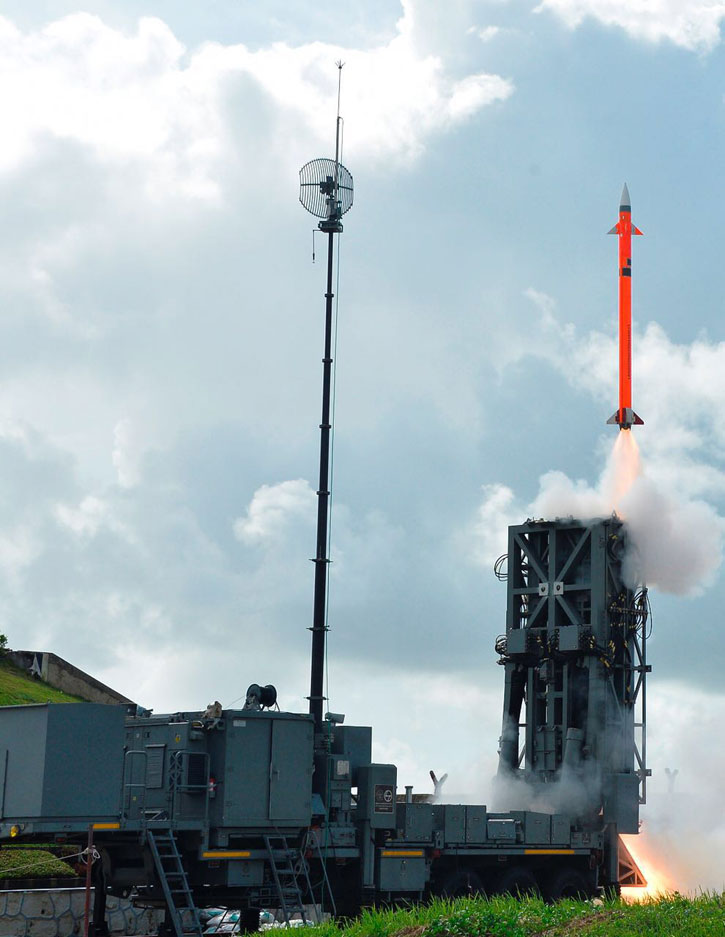
    MRSAM_Launch725India’s Defense Research and Development Organization (DRDO) and Israel Aerospace Industries (IAI), and the Indian Air Force today conducted the first successful tests of the Medium Range Surface Air Missile (MRSAM) – air & missile defense system. Two successful intercepts of targets representing realistic air and cruise missile threats were conducted sequentially this morning, from the Indian Chandipur test range in Balasore off the Odisha coast.

    The trial began on 08:15 local time. Two successful intercepts of targets representing realistic air and cruise missile threats were conducted sequentially this morning, from the Indian Chandipur test range in Balasore off the Odisha coast.

    Once the targets entered the defended zone, the systems’ radar detected the threat, computed an intercept plan and launched the missile. Once cleared off the vertical launcher the missile maneuvered toward the target following the planned intercept path. The interceptor’s radar acquired the target and navigated the weapon to the kill. Two targets were used, and two interceptors were fired through the test, which validated all the systems’ elements, to the satisfaction of the customer in the Indian test range.

    MRSAM is an advanced air and missile defense system, with land and naval configurations, providing ultimate protection against a variety of aerial platforms. The land-based system shares many common elements with the naval LRSAM system. The main difference is using a single face of the marine Elta Systems MF-STAR radar on a rotating pedestal, providing 360 degrees coverage.

    The MRSAM is a derivative of the Barak-8 air defense system, covering 70 km that has already been deployed on vessels of the Indian and Israeli Navies. Barak-8 is capable of intercepting various aerial, and air breathing threats such as aircraft, cruise missiles, sea-skimming missiles and various guided weapons. Unlike previous generation interceptors the Barak-8 interceptor developed by Rafael uses a data link to update the weapons throughout the engagement, enabling a higher level of flexibility and area coverage. IAI is the system Barak-8 system designer, along with the DRDO that has built the land-based launcher system.

    Designers of MRSAM are also considering an extended range version of the system, using boosted interceptors that will be able to double the systems’ reach to 150 km.

    Skunk Works and XTEND Simplify Multi-Drone Command

    0
    Lockheed Martin Skunk Works® and XTEND have achieved a major milestone in JADC2 by integrating the XOS operating system with the MDCX™ autonomy platform. This technical breakthrough enables a single operator to simultaneously command multiple drone classes, eliminating the friction of mission handoffs. From "marsupial" drone deployments to operating in GPS-denied environments, explore how this collaboration is abbreviating the data-to-decision timeline and redefining autonomous mission execution.

    From Ukraine to Taiwan: The Global Race to Dominate the New Defense Tech Frontier

    0
    As traditional defense primes face mounting competition from agile “neoprimes” such as Anduril, Palantir and Helsing, the balance of innovation is shifting toward software-defined warfare and scalable, dual-use technologies, while global industry consolidation—marked by Boeing’s integration of Spirit AeroSystems and other strategic mergers—signals an intensified race to secure control over the defense technology value chain. Our Defense-Tech weekly report highlights these trends.

    Europe’s “Drone Wall”

    0
    In early October 2025, a coordinated wave of unmanned aerial system (UAS) incursions—widely attributed to Russia—targeted critical infrastructure across at least ten European nations. The unprecedented campaign exposed the fragility of Europe’s air defenses...

    Weekly Defense Update & Global Security Assessment

    0
    Executive Summary The past week (September 18-25, 2025) represents an inflection point where strategic defense concepts have transitioned from doctrine to tangible reality. An analysis of global events reveals four primary, interconnected trends shaping an...

    U.S. Air and Space Forces Push Next-Gen Programs at the AS&C 2025 Conference and...

    0
    At the 2025 Air, Space & Cyber Conference, U.S. Air Force and Space Force leaders unveiled major updates on next-generation fighters, bombers, unmanned systems, and space initiatives, highlighting both rapid innovation and critical readiness challenges as the services race to outpace global competitors. A short version is available here, with a more detailed version for subscribers.

    TADTE 2025: Reflecting Taiwan’s Strategic Themes

    0
    The Taipei Aerospace & Defense Technology Exhibition (TADTE) 2025 crystallized around four dominant strategic themes that collectively illustrate Taiwan's comprehensive approach to defense modernization amid escalating regional tensions. Based on a detailed report by Pleronix (available upon request). Includes a Podcast discussion on TADTE 2025's highlighting Taiwan's four strategic themes beyond the post's coverage.

    Iron Beam 450 Completes Testing, Soon to Join With Operational Air Defense Units

    0
    Israel’s Iron Beam 450 high-power laser system has completed final testing, marking a major leap in air defense. Developed by Rafael, it offers precise, cost-effective interception of rockets, UAVs, and mortars, and is set for IDF deployment by 2025.