Tuesday, December 23, 2025
More
    Home Blog Page 85

    FelxIS – A Missile That is More Than the Sum of its Parts

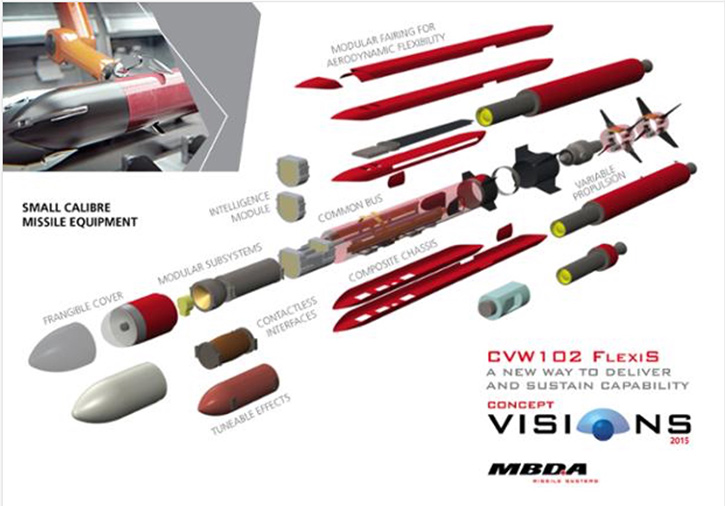
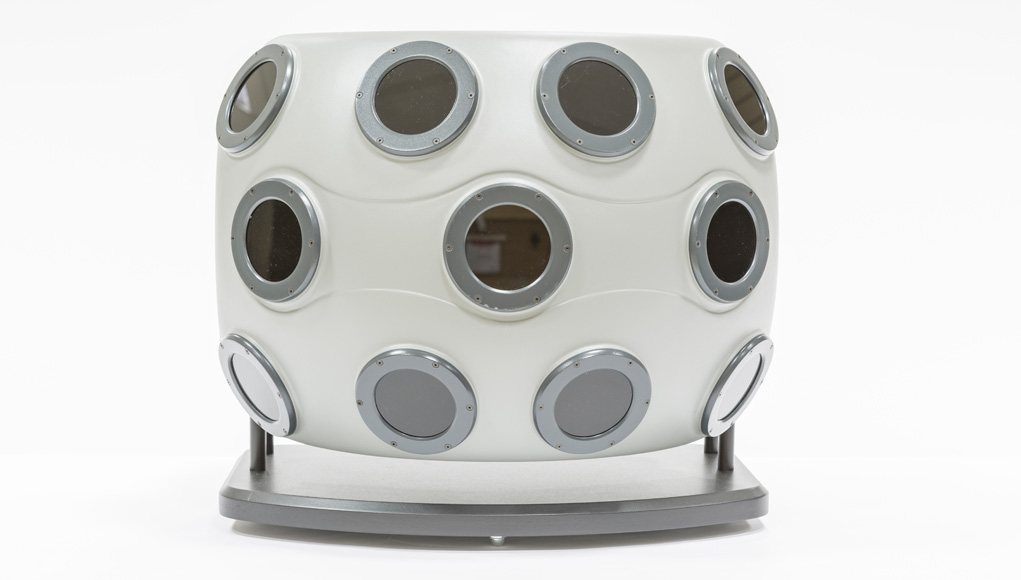
    MBDA is introducing today at the Paris Air Show a new, modular approach to missile design, as part of its traditional ‘Concept Vision’ theme. The new design dubbed ‘FlexIS’ is designed in standard diameters and comprises a common bus and flight control system, modular, contactless interface linking the seeker bay in the front and modular processor bank, providing the missile’s brain, located at the center. The rear part is also modular, accepting a variety of propulsion modules – miniature turbojet, single or dual pulse rocket with different propellant capacity supporting a broad range of applications.

    Different warheads can be used, from ‘tunable effects’, proximity triggered fragmentation, shaped charge with penetration body etc. Topping the modular kit are common,composites made fairings, providing the outer and aerodynamically optimized fuselage for the weapon.

    The modular design enable users to stockpile missile components rather than complete missiles, thus optimizing logistics and storage. This approach enable rapid evolution of fast changing elements, such as electronics and electro-optics, while keeping other components – such as propulsion units explosive or other energetic materials – last in storage and ready for use through their expected shelf life. The new approach would reduce life cycle cost and enable flexible evolution of missiles to meet future threats at incremental costs.

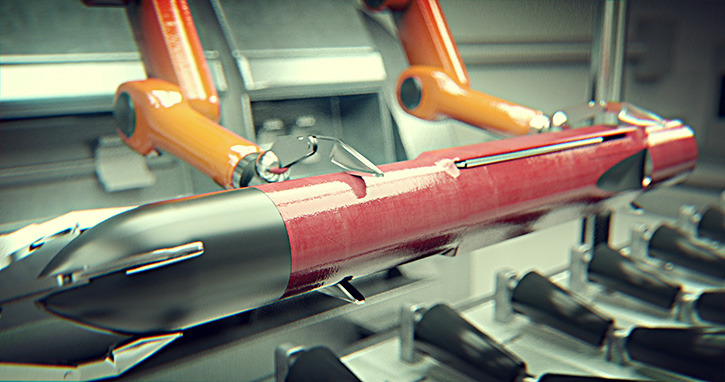
    automated assembly systems enabling ad-hoc manufacturing of weapons for specific applications. Illustration: MBDA
    automated assembly systems enabling ad-hoc manufacturing of weapons for specific applications. Illustration: MBDA

    User air forces will be equipped with automated assembly systems enabling ad-hoc manufacturing of weapons for specific applications. This flexible approach will be particularly essential for carrier strike groups required to grow their combat capabilities (through new weapons variations) without increasing weapons storage space on board.

    The futuristic concept would also reduces the restrictions required for the handling of energetic or explosive materials, since many parts of the final weapon will be non energetic. Hence, parts such as electronic cards, sensors, radomes, fairings, wings or actuators could be stored and transported to the carrier or airbase by conventional delivery services.

    FullSizeRender

    F-35 – Beyond Stealth

    The arrival of F-35 Joint Strike Fighters will introduce new dimensions in aerial warfare, given the unique attributes of the new 5th Generation (5GEN) fighter. While low-observable techniques are always the most obvious and outspoken about the new fighter, the F-35 has much more to offer than stealth, Lockheed Martin experts say. The combination of unique sensors, sensor fusion, man-machine interface and the integration of the F-35 as part of a broader fleet of aircraft comprising a totality of air power, are the convincing arguments driving air forces worldwide to opt for the new fighter. While the F-35 is the most expensive fighter jet ever built, developers say that, just like the smartphone is no longer just a phone, the F-35 represents the model for future combat aircraft for the next 30-40 years.

    The uniform low-observable envelope, cloaking the aircraft from certain radars, its suite of sensors and their fusion into the avionics system and displays enable the F-35 to remain mostly invisible and virtually ‘untouchable,’ yet highly potent, even in an airspace considered ‘denied access’ for conventional 4GEN fighters.

    Facing such odds, air powers with 4GEN aircraft would opt to carry out attacks from standoff range, relying on guided weapons and satellite-based sensors or long-range airborne Intelligence, Surveillance and Reconnaissance (ISR) to provide targeting for those weapons. Such attacks would require longer flight time and intensive electronic warfare support, potentially providing early warning to the enemy. Relying on its inherent stealth and ability to operate in ‘electro-magnetic silence,’ the F-35 can effectively penetrate contested airspace, provide ‘close-in,’ real-time intelligence and deliver weapons with maximum surprise. Once the nerve centers and primary assets of the enemy air defense network are destroyed, 4G fighters can join the battle, delivering the full effect of the combined air power.

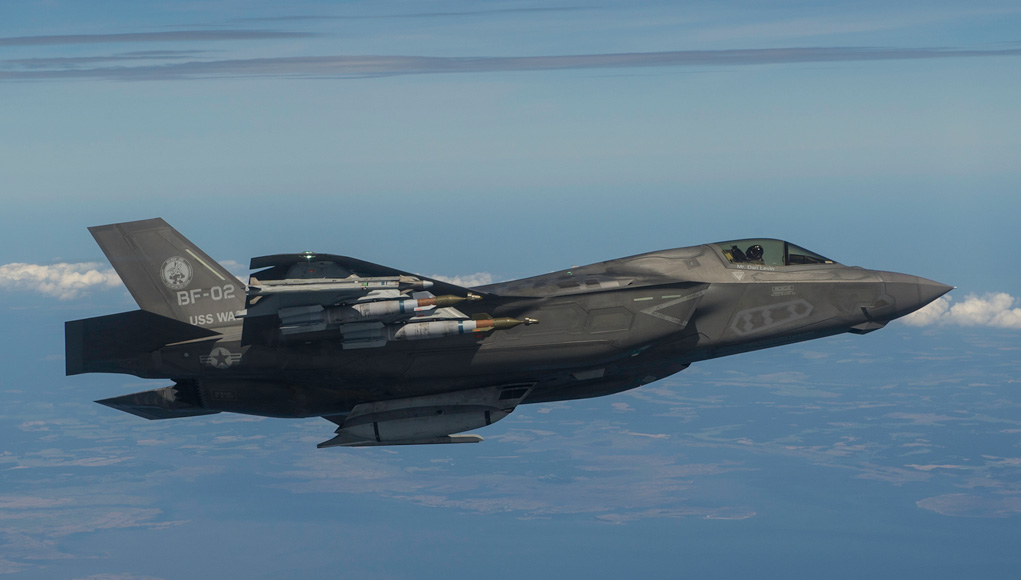
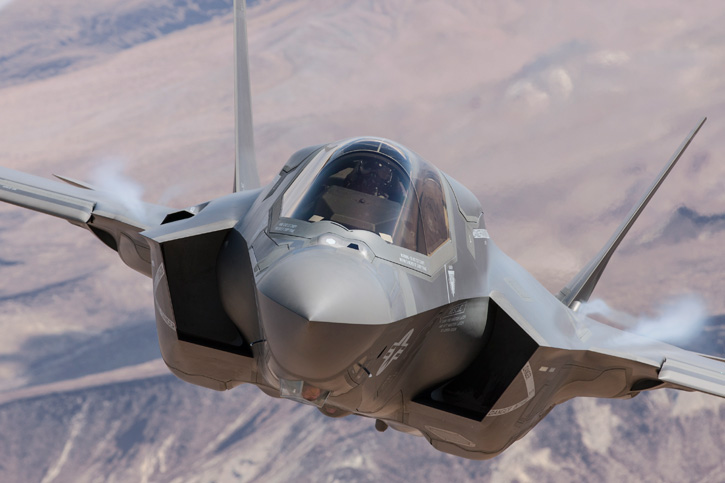
    And F-35B during asymmetrical stores testing over the Eastern Shore of Maryland on May 26, 2015. Photo:
    And F-35B during asymmetrical stores testing over the Eastern Shore of Maryland on May 26, 2015. Photo:

    Equally effective are F-35s in gaining air superiority in contested airspace. Again, their stealth capability means they can roam the sky anywhere, without being detected or, if detected, without being targeted by fire-control radars (used by fighter aircraft or SAMs). Unlike conventional fighters which gain their effectiveness by fighting in formations, the F-35s can be dispersed over much larger areas, without losing the situational picture and operational coordination. This means they can optimally employ their weapons to cover large areas with a minimal number of planes, with both aircraft pilots and ground controllers sharing common situational pictures throughout their missions.

    Although the number and variety of weapons that can be carried in their internal bays is limited, the ability to launch these weapons with full surprise, and the ability to target weapons carried by other aircraft, enables a formation of F-35s to achieve their missions in conditions hindering successful results by other means, Lockheed Martin experts said.

    “Even the threats that can see the F-35 from a distance can’t do anything about it,” Al Norman, the Lightning II F-35 Program Chief Test Pilot said. Since these radars and weapons cannot target and lock missiles on the F-35, given the fact that these assets rely primarily on sensors operating in the X-Band, which is the focus of the F-35 RCS reduction. “Take for example a long-range threat such as the S-300 and its many variants – it can engage a 4th Generation fighter from hundreds of miles away, but the effective range against a JSF would be much, much shorter. In fact, an F-35 could get to a close range from an S-300 site and launch weapons against it, without relying on stand-off weapon engagement.“

    The stealth is not the purpose of the F-35, but one of its means of breaking the enemy kill chain. “When you fly against an enemy air defense, ground-based or air-based, you always find yourself facing an X-Band radar,” says Michael P. Howe, Director of Business Development at Lockheed Martin. “Although potential adversaries – China and Russia, for example — have come up with counter-stealth radars, they continue to rely on X-Band radars for targeting and fire control.”

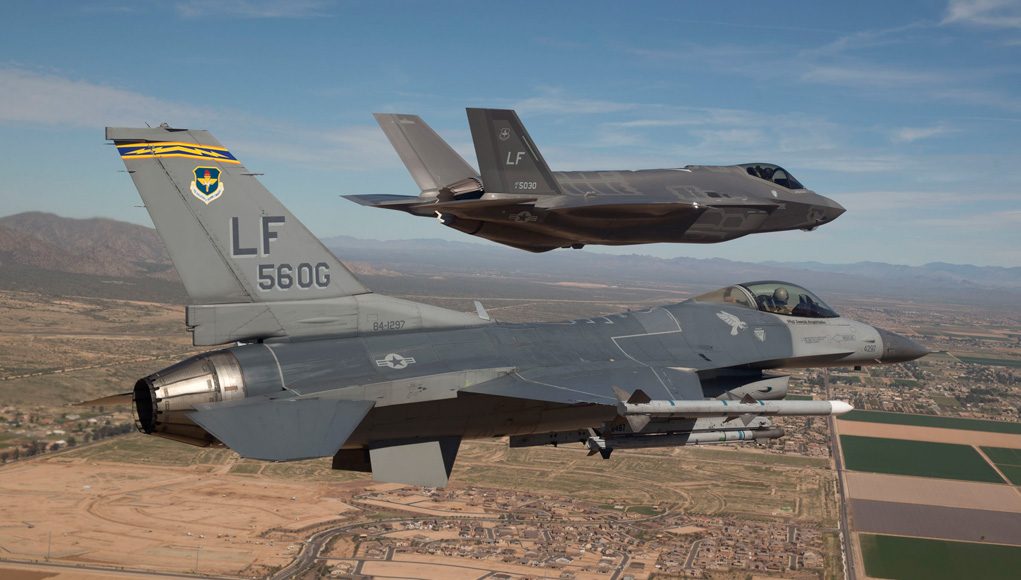
    4GEN welcomes 5 GEN: The first F-35 arrives at Luke Air Force Base, Ariz., escorted by an F-16. (Photo: USAF by Jim Hazeltine)
    4GEN welcomes 5 GEN: The first F-35 arrives at Luke Air Force Base, Ariz., escorted by an F-16. (Photo: USAF by Jim Hazeltine)

    According to Howe, the current and planned technology phases (3I-3F) are at least 15 years ahead of the threat: “We definitely plan to evolve beyond that,” Howe added, hinting at the Block 4, scheduled for 2020 and expected to integrate several foreign weapon systems required by international partners, such as Israel, Japan and Korea.

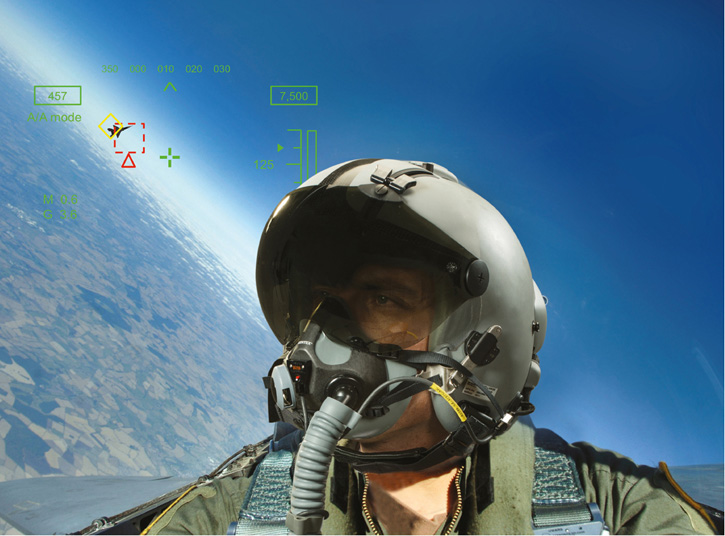
    One of the unique features of the F-35 is its Large Area Display and Helmet Display Systems – providing the pilot with an unprecedented level of situational awareness, through the presentation of a large and detailed tactical display, a display of specific sensors using a touch screen to show specific points of interest or potential targets, and unobstructed coverage over the entire sphere, derived by the helmet display showing real-time images from the Distributed Aperture System (DAS).

    “The helmet is what makes the F-35 fly so intuitively,” Howe elaborates. “DAS provides the missile warning and full sphere visibility, with sensor images and flight data projected on the visor. You can point, designate a target and launch a weapon, just by looking at it.” Norman explained. This system enables the pilot to see and engage targets without banking or pointing the F-35 at them, thus maintaining optimal stealth and remaining hidden from enemy radars.”

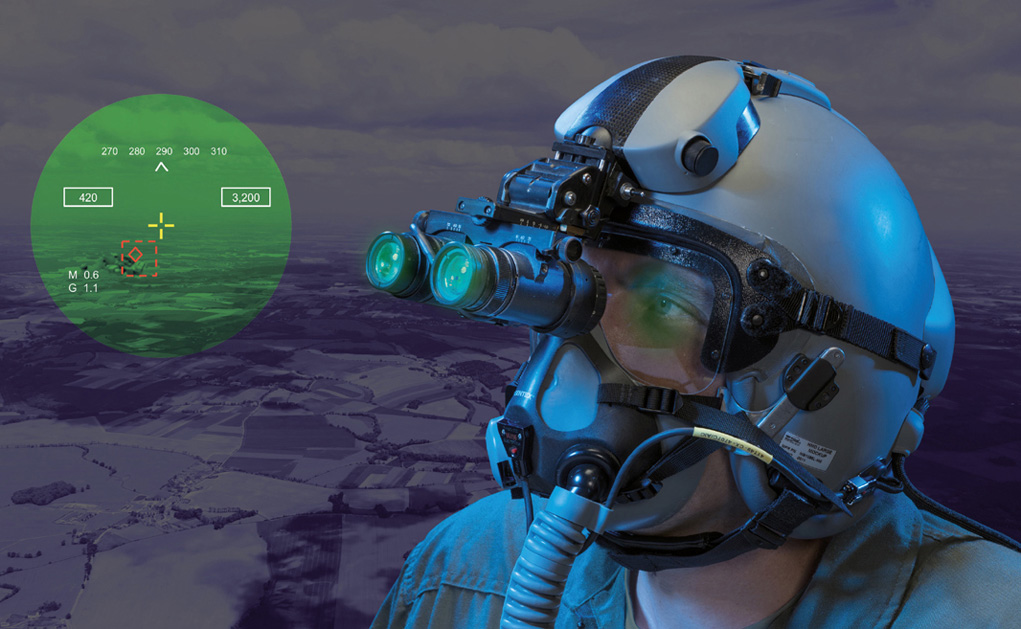
    The new helmet display system also has an integrated Night Vision System located above the visor. This new sensor enables the pilot to see laser markers in addition to the thermal images provided by DAS.

    “The advanced, multi-spectral sensor suite gives the F-35 pilot unprecedented situational awareness – for hundreds of miles. Therefore, the F-35s are much more than a better replacement for the F-16s; they are capable of enhancing the entire combat force,” Norman added. “This capability is introducing pilots with new combat maneuvers and tactics, in ways they had never imagined of before.”

    According to Norman, an F-35 pilot can control his aircraft up to a 50° angle of attack, while an F-16 can do so only up to 26°. “This is a great advantage. Pilots begin to think and fly differently when they can do almost anything and see anything, anytime.” Said Norman.

    The F-35 has the MADL, a special datalink developed for the F-35, that transfers data covertly and at very high speed. Therefore, the F-35 is always part of a larger team of aircraft and can always assist and fight together with the others, even when they don’t fly in close formation. When flying in mixed forces, F-35s can communicate with other aircraft and assets using Link 16 or other specific datalinks provided by the air force.

    An F-35B short takeoff/vertical landing aircraft flies behind a tanker on a mission over Edwards Air Force Base, Calif., in September 2013.
    An F-35B short takeoff/vertical landing aircraft flies behind a tanker on a mission over Edwards Air Force Base, Calif., in September 2013.

    Charting the International Path for the F-35

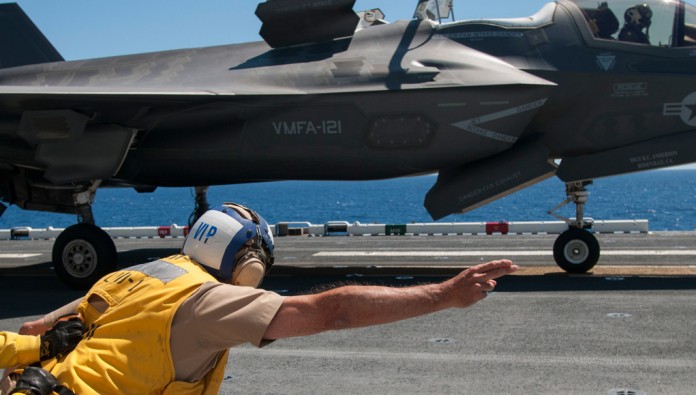
    The F-35 will be reaching a critical milestone next month — the declaration of the first US Marine Corps F-35 unit, VFMA-121, operational and combat ready at its home base in Yuma, AZ. The squadron recently deployed at sea for its first operational test (OT-1), on USS Wasp (LHD-1). Taking part in the test were four of the ten aircraft operating with VFMA-121 and two from VFMA-501, from Beaufort, SC. Along with 120 marines and technicians deployed at sea for two weeks, they conducted 100 flight missions with the new F-35B Short Take Off, Vertical Landing (STOVL) aircraft.

    f35_night_loading_1021
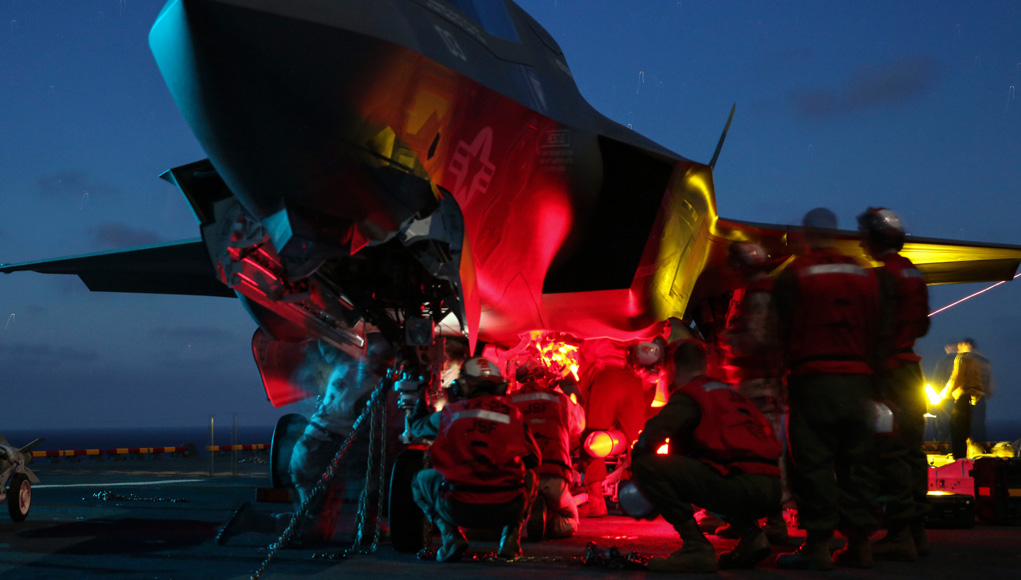
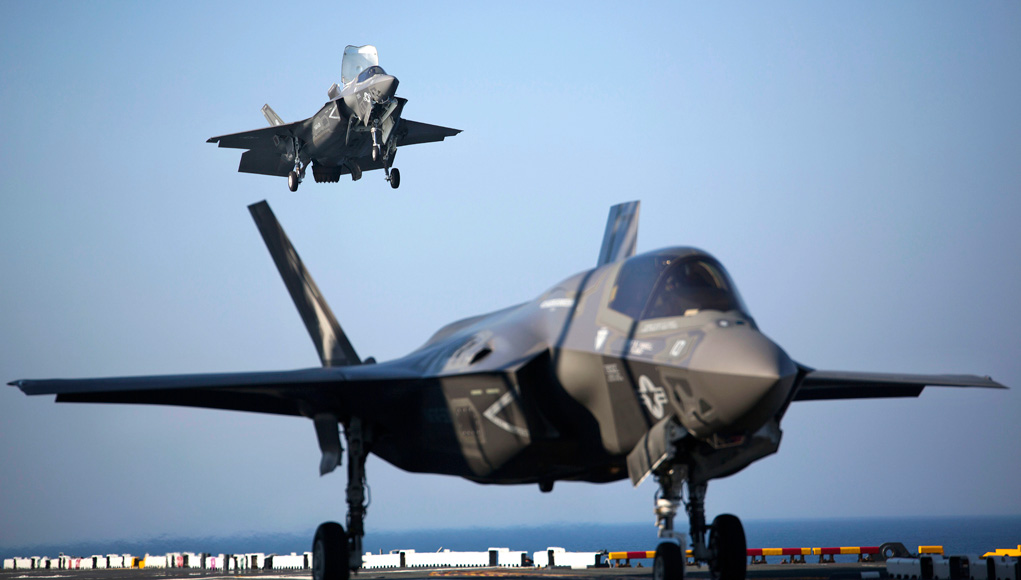
    Marine corps ground crews loading armmament on an F-35B on board USS Wasp during a night drill, as part of OT-1 tests. Photo: US Marine Corps

    The deployment evaluated the operational and logistic footprint of a full detachment of six F-35Bs at sea, aboard U.S. Navy amphibious ships. During OT-1 the Marines safely conducted 100 F-35B takeoffs and landings during day and night for extended range operations, and confirmed the reliability of the Block 2B software configuration. The test also evaluated the inter-operability of aircraft-to-ship network communications and trained officers handling the aircraft on board and technicians providing maintenance activities and weapons loading and offloading.

    The next milestone in the Marine Corps’ F-35B program is the initial operating capability (IOC), scheduled to take place this summer, following the final operational readiness inspection (ORI) in July.

    “As the Marine Corps supports the President’s strategy to rebalance in the Pacific, we’re bringing the most advanced technologies and capabilities of our force to the region with the F-35. The continued development and fielding of the Short Take Off, Vertical Landing Lightning II remains the centerpiece of this effort,” U.S. Marine Corps Deputy Commandant for Aviation Lieutenant General Jon Davis said.

    f35_powerpack_loading_v22_725
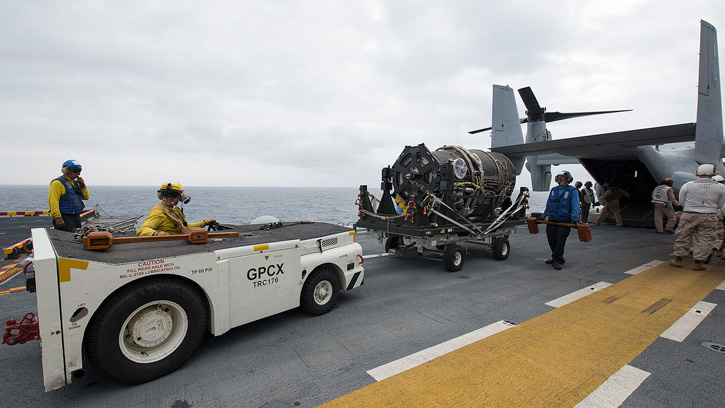
    Part of the test included the delivery of a complete F-135 powerplant to the Wasp, by V-22 tilt rotor aircraft. Photo: US Marine Corps.

    The first deployment is scheduled to take place in 2017, when VMFA-121 will deploy to Iwakuni, Japan. According to the current Marine Corps Aviation Plan, the F-35 is slated to replace completely the EA-6B Prowler by 2019, and the AV-8B Harrier by 2026. The Legacy F/A-18 Hornet will follow, with a scheduled sundown in 2030.

    Also in 2017 Israel will become the first international operator of the F-35A, when its first squadron is scheduled to become operational at the Israel Air Force (IAF) Nevatim Airbase. The first two F-35As are expected to land in Israel in December 2016. Other international air forces are scheduled to receive F-15s before Israel, but these are to remain in the USA for training. Israel has opted to train its pilots and technicians at home, and to deploy the new aircraft in Israel as soon as possible.

    Israel has ordered two squadrons of conventional F-35As, but future orders could also include F-35Bs, given the Israeli concern of its air bases being targeted by ballistic missiles with precision attack capabilities.

    Norway will be the third country beginning F-35 operations that year, along with the first deliveries to Japan and Israel. Norway has funded the procurement of 22 F-35s, from the 52 it plans to operate. Japan will receive 42 of these jets, Israel has committed to buy 33 of the planes.

    The delivery of F-35Bs to the Royal Air Force (RAF), scheduled to begin operations with No. 617 Squadron from RAF Marham in Norfolk, is expected to take place by 2018. The Royal Air Force and Royal Navy plan to operate 138 F-35B STOVL aircraft. The British F-35s are expected to fly from Queen Elizabeth-Class aircraft carriers. By 2020 two US Air Force F-35A squadrons will also be based permanently in the UK, at RAF Lakenheath.

    The first delivery to Australia is also expected by late 2018. Australia plans to operate about 100 aircraft. Turkey is also expected to buy about 100 F-35As, the first will be delivered in 2018 as the Republic of Korea that will also receive the first of its 40 F-35As that year.

    A year later the Netherlands is scheduled to receive the first eight aircraft ordered last year. Italy will receive 90 F-35 aircraft — 60 F-35A conventional takeoff and landing variants and 30 F-35B STOVL jets, to replace 253 Legacy fighters.

    The British crews are already training for carrier operations; sixteen Royal Navy and Royal Air Force members were embedded aboard the Wasp last month to support the US Marine Corps’ operational tests. “United Kingdom participation in the F-35 program has been absolutely critical to our success,” said Lt. Gen. Chris Bogdan, Program Executive Officer for the F-35 Lightning II Joint Program Office. “The Royal Navy plans to integrate the F-35 with the two new Queen Elizabeth II aircraft carriers, as they gradually phase out the Tornado GR4 from RAF service. F-35 brings a complementary next-generation level of survivability and lethality,” said Royal Navy Lt. Cmdr. Neil Mathieson, the UK’s F-35B Ship Integration Lead.

    “Our Queen Elizabeth-Class carriers are the largest and most powerful warships ever built in the U.K.,” said Mathieson. “They are capable of the widest range of roles, from defense diplomacy and humanitarian assistance to full combat operations, providing flexibility and choice throughout their 50-year life.”

    According to Mathieson the unique, low observable nature of the F-35 will allow strike forces deployed from the new carriers unprecedented access to very-high-threat environments, allowing the U.K. to conduct operations across the full range of operational scenarios, day or night, in fair or inclement weather.

    The program office anticipates additional orders of +750 aircraft, beyond the +3,000 already received, bringing the total projected production to about 4,000. (The F-16 program produced 4,500 in nearly 4 decades.) This production volume exceeds any other aircraft currently in production or planning. Right now all customers get identical aircraft – either F-35As or F-35Bs (STOVL).

    These two models will replace nine different types and models of 4th Generation fighters. F-35 development has been proceeding since 2001, and it is the most tested aircraft in history. Air forces are expected to operate the F-35s for the next 30 to 40 years. Therefore, when the thousands of F-35s are deployed, they will constitute a huge market for sustainment and support.

    Air Force Lt. Gen. Christopher Bogdan, F-35 Program Executive Officer, says he is targeting at least 150 F-35s for each of those Block Buy years, for a cumulative total of more than 450 U.S. and export aircraft.

    As the F-35 reaches higher production rates toward the end of the Low Rate Initial Production Phase, the US is pressing international partners and foreign customers to commit to F-35 orders. To be able to benefit from cost reduction, customers must commit to a multi-year block purchase. While the US is prepared to accept such commitments, some of the international partners have not yet decided if or how many of the aircraft they will buy. While export sales represent about 40 percent of production for the next years, Lockheed Martin has firm orders for only 30 of the aircraft, Aviation Week reports.

    Under the Block Buy Plan the US and its international partners would place orders for a period of three years – from FY 2018 through 2020, giving prime contractors and suppliers the incentive to invest in cost-reduction products and more leverage in their own purchases. To benefit from the cost savings, customers will have to commit to the program by 2016. Those who do not take part in this block purchase will encounter cost increases.

    f35_on_wasp_ot1_1021
    Six of the US Marine Corps F-35B deployed on board USS Wasp for OT-1. Photo: US Marine Corps

    Elbit Systems Introduces SuperVision – Another Step Toward the Cockpit of the Future

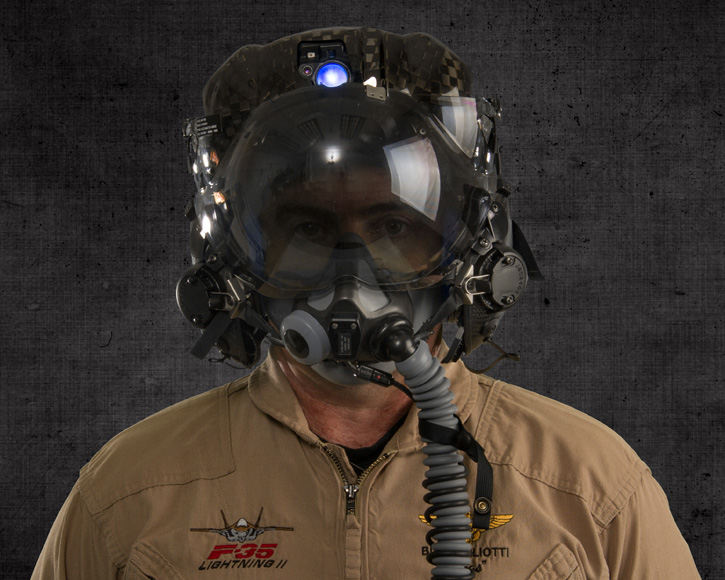
    The F-35’s Helmet Mounted Display Systems jointly developed by Elbit Systems and Rockwell Collins provide pilots with unprecedented situational awareness. All the information pilots need to complete their missions – airspeed, heading, altitude, targeting information and warnings – is projected on the helmet’s visor, rather than on a traditional Heads-up Display. Photo: Lockheed Martin
    The F-35’s Helmet Mounted Display Systems jointly developed by Elbit Systems and Rockwell Collins provide pilots with unprecedented situational awareness. All the information pilots need to complete their missions – airspeed, heading, altitude, targeting information and warnings – is projected on the helmet’s visor, rather than on a traditional Heads-up Display. Photo: Lockheed Martin

    The F-35’s Helmet Mounted Display Systems provide pilots with unprecedented situational awareness. All the information pilots need to complete their missions – airspeed, heading, altitude, targeting information and warnings – is projected on the helmet’s visor, rather than on a traditional Heads-up Display. This approach greatly reduces the pilot’s workload and increases responsiveness.

    Additionally, the F-35’s Distributed Aperture System (DAS) streams real-time imagery from six infra-red cameras mounted around the aircraft to the helmet, allowing pilots to “look through” the airframe. The helmet also provides pilots with night vision through the use of an integrated camera. Elbit Systems is jointly developing the system with Rockwell Collins through their Joint Venture company, VSI.

    At the Paris Air Show 2015, Elbit Systems is launching ‘SuperVision’ – an innovative man-machine interface that could narrow the gap that the F-35 helmet and displays has opened over current generation aircraft.

    The new approach integrates graphical, intuitive presentation of sensor feeds and spatial information using synthetic terrain models, live sensor feeds, tactical information, aircraft and air-data. SuperVision also enables the pilot to interact with the information displayed to him, using standard HOTAS controls and line-of-sight tracking performed by the helmet mounted display and sight system.

    The SuperVision interface generates a conformal image of the world outside the cockpit, integrated with data from the aircraft systems, surroundings and threats, fusing together the various layers of information. Harsh environment and weather conditions, in conjunction with the immense flow of information during the flight, call for an intuitive display of flight and visual data.

    This new concept integrates sensors, avionics systems and display in an intuitive way, reducing pilots’ workloads and allowing them to focus on the successful completion of their mission, while flying “Head-Up” in any terrain and in all visibility conditions.

    SuperVision will be implemented in different ways on fighter aircraft, trainers, transport planes and rotorcraft. Each application will employ different sensors, displays and applications.

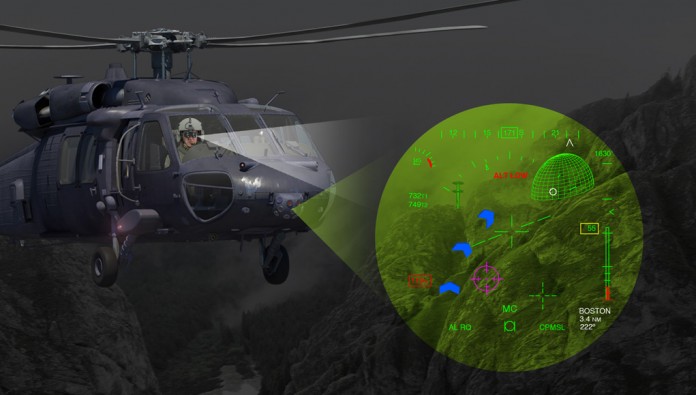
    Brightnite-sensor1021Elbit Systems is also developing BrightNite as a primary flight sensor for helicopters, augmenting the standard Aviator Night Vision Imaging System (ANVIS) and Forward Looking Infra-Red (FLIR) used on current platforms. BriteNite enables utility helicopters to successfully perform Degraded Visual Environment (DVE) missions, including Brownout and Whiteout, in more than 90% of the nights, provides them with piloting capabilities of attack helicopters and enables a new level of operational flight.

    DJHMCS_colorFor fighter aircraft and trainers, the new Digital Joint Head Mounted Cueing System (D-JHMCS) or Elbit Systems’ Targo helmet display will provide the main SuperVision display and cueing system. The helmets will be used with lightweight and comfortable head mounted display (HMD), which offers an improved HMD Center of Gravity (CG) and balance and thus reduces neck strains. Plug and play, with minimal installation requirements and the ability to operate with the aircraft’s current tracker and Electronic Unit, DJHMCS can replace legacy JHMCS equipment with no A/C modifications required, thus reducing life-cycle costs.

    Among the main advantages of DJHMCS is its ability to display full motion video in color in both day and night missions. The system’s proven symbology, combined with color, creates a superior solution that provides intelligent vision in the cockpit, which is an essential capability for SuperVision integration. For example, color cueing provides immediate and intuitive recognition of friendly, threat and unknown targets, or designates threat areas to create a complete view of the air, ground and sea picture.

    DJHMVS-NIGHT

    The other element supporting SuperVision is the new-generation cockpit (CockpitNG), based on a smart central large area display (LAD) that supports multi- touch technology, to present all avionic components, sensor data and images, tactical displays and maps in one suite. CockpitNG is fully integrated with the Helmet-Mounted and Head-Up displays, allowing pilots to operate the aircraft in a smooth and customizable manner.

    SuperVision applications for transport planes, such as the C-130J, or the upgraded C-130, enhance the situational awareness and mission effectiveness of tactical transports flying low-level night missions. A flexible and modular solution, C-Suite provides accurate, real-time information projected on the Head-Up, Head-Down or Helmet Mounted displays.

    SuperVision in trainers will enable cadets and pilots to fly on low-cost advanced trainers that will be able to simulate the behavior of advanced aircraft in avionics performance, flight controls and emergency procedures.

    Using embedded avionics and advanced helmet displays enabled by the Targo helmet, Elbit Systems is already demonstrating the technology enabling pilots to see virtual targets launching virtual missiles at them, while they fly Aermacchi M-346 Lavi advanced trainers. The cockpit displays on the Lavi will be able to mimic those on the F-16I, F-15I and, eventually, the F-35.

    Elbit is a partner in the organization integrating the training suite on the Israeli M-346 and the provider of most of the IAF simulator facilities.


    Germany to Replace its Patriots SAMs with MEADS

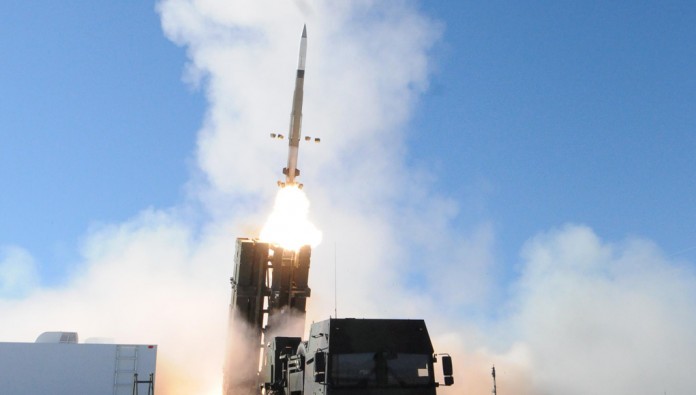
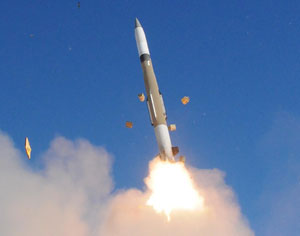
    MEADS launches a PAC-3 MSE missile. In a November 2013 flight test, MEADS intercepted and destroyed two simultaneous targets attacking from opposite directions during a stressing demonstration of its 360-degree air and missile defense (AMD) capabilities at White Sands Missile Range. Photo: Lockheed Martin
    MEADS tested in 2013
    MEADS tested in 2013

    The German Federal Ministry of Defence has chosen the Medium Extended Air Defense System (MEADS) as the basis for Taktisches Luftverteidigungssystem (TLVS), a next-generation network-based tactical air- and missile-defense system. It will replace the Patriot air defense systems initially fielded in the 1980s.

    In recent years Germany has upgrade its Patriot fire units towards the latest configuration, adding a modern adjunct processor, to enhance the radar’s range and discrimination over legacy capabilities.

    MEADS has been developed through MEADS International, a cooperative venture between MBDA and Lockheed Martin. TLVS is being carried out under the system leadership of MBDA Deutschland, which continues to draw on MBDA Italia’s capabilities, as well as on a proven industry partnership between Lockheed Martin and Airbus Defense and Space. The technologies generated within the framework of the tri-national MEADS development process represent the equivalent of € 4 billion. Germany has shouldered a 25% share of the investment.

    “I’m convinced that MEADS is the right system to meet Germany’s future air=defense needs,” says Thomas Homberg, Managing Director of MBDA Deutschland. “With this decision in favor of MEADS, Germany has opted for a powerful, state-of-the-art, long-term, ground-based, air- and missile-defence system sufficient to meet the threats both of today and of the future. This decision is a great success for MEADS, our long-term partners and for MBDA Deutschland, for whom it also represents a major responsibility and commitment to deliver the necessary level of industrial performance. It is now our shared responsibility, together with the armed forces, to provide a solid basis for the introduction of the system.”

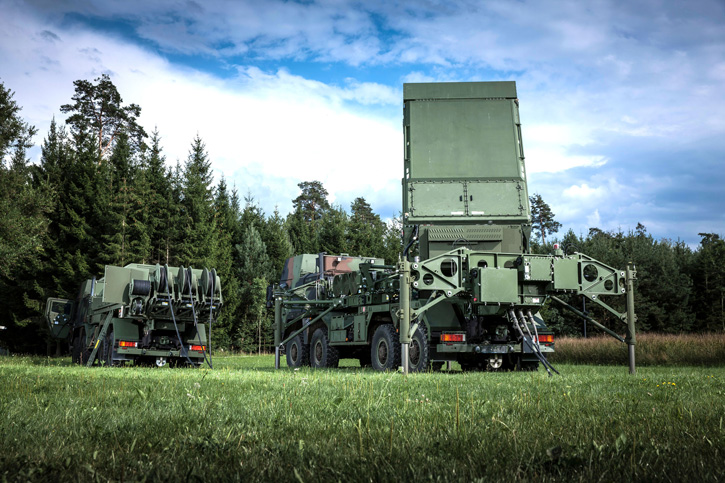
    The MEADS Multifunction Fire Control Radar, shown in its German configuration, can detect and track advanced threats with 360-degree coverage and no blind spots. The radar is highly mobile and A400M transportable. Each MEADS element is lightweight and truck-mounted, mobile enough to move protection as needed or when forces move. Its rotating radars and advanced launchers provide 360-degree capability, and all components are networked using open architecture software and plug-and-fight capability. Photo: Lockheed Martin
    The MEADS Multifunction Fire Control Radar, shown in its German configuration, can detect and track advanced threats with 360-degree coverage and no blind spots. The radar is highly mobile and A400M transportable. Each MEADS element is lightweight and truck-mounted, mobile enough to move protection as needed or when forces move. Its rotating radars and advanced launchers provide 360-degree capability, and all components are networked using open architecture software and plug-and-fight capability. Photo: Lockheed Martin

    The MEADS-based TLVS can be used for both national and alliance defense and to protect deployed troops during operations. Special features of the system include 360-degree coverage, open-system architecture and “plug & fight” capability, which allows for the coupling of additional sensors and weapon systems, as well as rapid deployability. In 2013, at the White Sands Missile Range in New Mexico, MEADS became the first air- and missile-defense system to demonstrate a dual intercept of targets attacking simultaneously from opposite directions. MEADS is designed to significantly reduce operation and support costs by covering a larger area with less manpower and equipment, and less demand on airlift. Once in theater, MEADS elements emplace more quickly and can be repositioned without shutting the system down.

    “We are honored that MEADS will provide the foundation for Germany’s next-generation air- and missile-defense system,” said Mike Trotsky, vice-president of air- and missile-defense at Lockheed Martin Missiles and Fire Control. “Only MEADS has demonstrated the advanced network capabilities and 360-degree defense that are now essential requirements for air- and missile-defense systems.” Lockheed Martin branches in Dallas, Texas; Huntsville, Alabama; Orlando, Florida; and Syracuse, New York, are expected to support the German program.

    MBDA Deutschland has been involved in international air-defense programs for the past 40 years, with activities related to systems such as the Stinger, Roland, Gepard, Patriot, RAM and, now, the MEADS.

    “We have not received formal notification from the German MoD on their plans for the TVLS acquisition and will continue to fully support their consideration of alternatives prior to a final contract award.” Raytheon said in a comment to the news. Raytheon, leading the ‘Patriot Alliance’ expressed confidence in its low-risk, and cost-effective solution, which provides 360-degrees of coverage with open architecture, can advance the missile defense capabilities of the German Ministry of Defense. Germany remains part of the 13-nation strong Patriot partnership. “As such, Germany enjoys 100% of Patriot modernization upgrade and improvement benefits while contributing a fraction of the community shared costs, as was the case when Germany supported a $212m Engineering Services Contract awarded this past March.” Raytheon spokesperson commented.

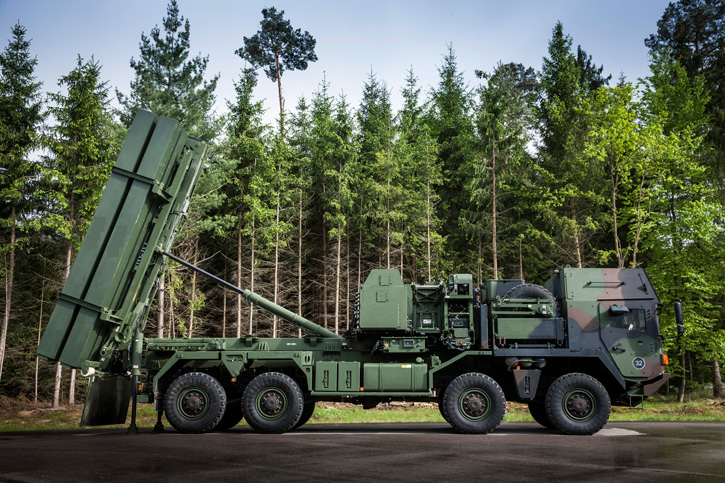
    A MEADS launcher in the German configuration is A400M transportable and can engage and defeat targets attacking from any direction. Using its 360-degree defensive capability, MEADS defends up to eight times the coverage area using far fewer system assets. Each MEADS element is lightweight and truck-mounted, mobile enough to move protection as needed or when forces move. Its rotating radars and advanced launchers provide 360-degree capability, and all components are networked using open architecture software and plug-and-fight capability. Photo: Lockheed Martin
    A MEADS launcher in the German configuration is A400M transportable and can engage and defeat targets attacking from any direction. Using its 360-degree defensive capability, MEADS defends up to eight times the coverage area using far fewer system assets. Each MEADS element is lightweight and truck-mounted, mobile enough to move protection as needed or when forces move. Its rotating radars and advanced launchers provide 360-degree capability, and all components are networked using open architecture software and plug-and-fight capability. Photo: Lockheed Martin

    New Missile Killer Performs Test Flight, on Schedule for 2018 Deployment

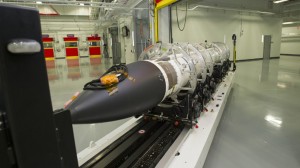
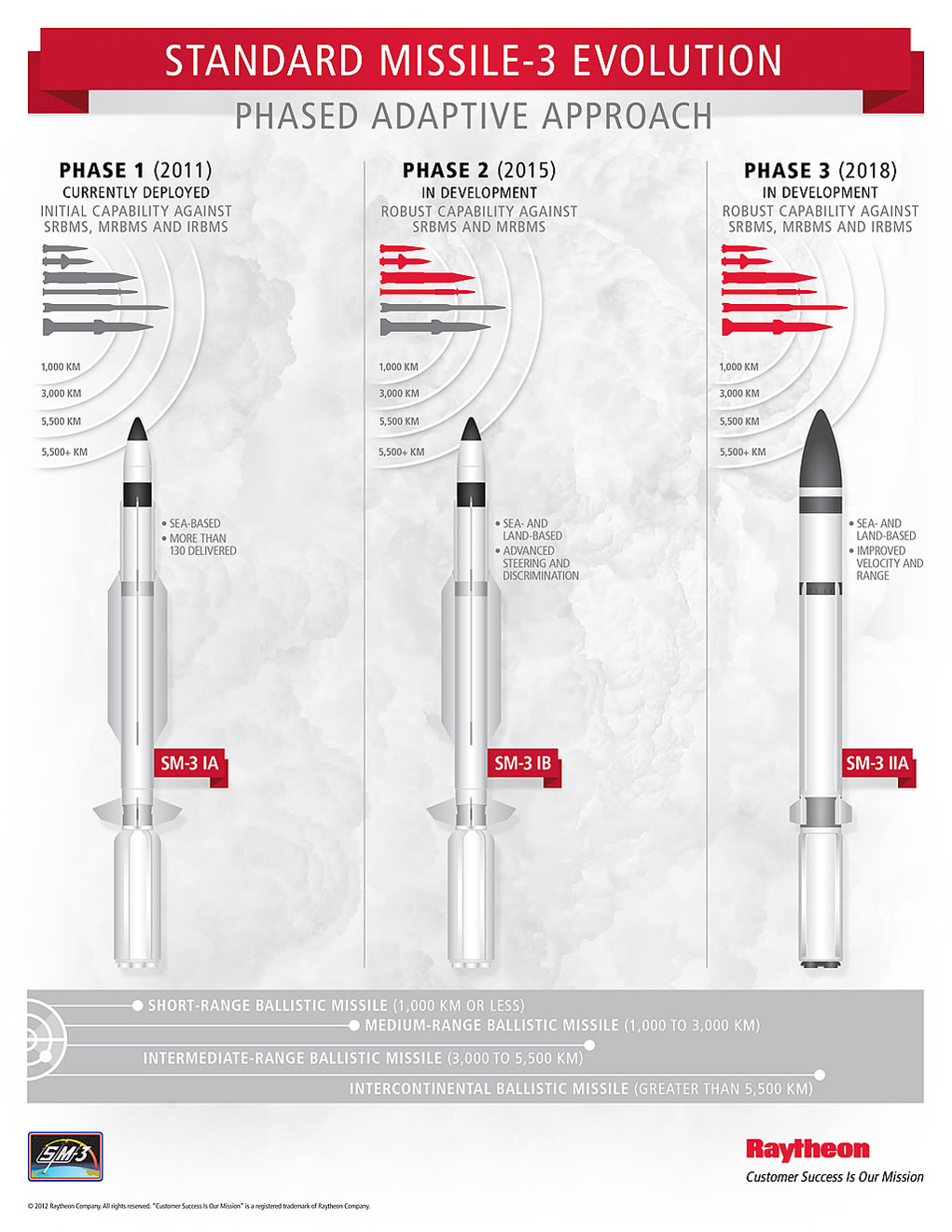
    The Standard Missile (SM)-3 Block 2A interceptor, developed under an agreement signed in 2006, is a bigger and more capable version of the Raytheon-built SM-3 Block 1A and 1B interceptors, part of the U.S. Missile Defense Agency’s sea-based Aegis Ballistic Missile Defense system. Photo: MDA
    The Standard Missile (SM)-3 Block 2Ar interceptor, developed under an agreement signed in 2006, is a bigger and more capable version of the Raytheon-built SM-3 Block 1A and 1B interceptors, part of the U.S. Missile Defense Agency’s sea-based Aegis Ballistic Missile Defense system. Photo: Raytheon

    The United States and Japan have conducted the first flight test of a new version of the Standard Missile-3 (SM-3 Block IIA).

    This new missile interceptor is designed to extend the reach of current AEGIS Ballistic Missile defense systems deployed on naval ships and ashore. It is being developed jointly by the two countries at a combined cost of $2 billion. When deployed, the new missile will extend the defensive capability of AEGIS BMD systems to intercept intermediate-range ballistic missiles (missiles capable of attacking targets at ranges of up to 5,500 km.). The current SM-3 Block IB can only engage short- and medium-range ballistic missiles (with attack ranges of up to 3,000 km.).

    Saturday’s test evaluated the performance of the missile’s nose cone, steering control, booster separation, and the performance of second- and third-stage propulsion. “The success of this test keeps the program on track for a 2018 deployment at sea and ashore,” said Taylor Lawrence, president of Raytheon’s missile systems section.

    The flight test, from the Point Mugu Sea Range, San Nicolas Island, California, was performed by The Technical Research and Development Institute (TRDI), Japan’s Ministry of Defense (MOD), and the U.S. Missile Defense Agency (MDA), in cooperation with the U.S. Navy.

    The Standard Missile (SM)-3 Block 2A interceptor, developed under an agreement signed in 2006, is a bigger and more capable version of the Raytheon-built SM-3 Block 1A and 1B interceptors, part of the U.S. Missile Defense Agency’s sea-based Aegis Ballistic Missile Defense system.
    The Standard Missile (SM)-3 Block 2A interceptor, developed under an agreement signed in 2006, is a bigger and more capable version of the Raytheon-built SM-3 Block 1A and 1B interceptors, part of the U.S. Missile Defense Agency’s sea-based Aegis Ballistic Missile Defense system.

    Pakistani Thunders over Paris

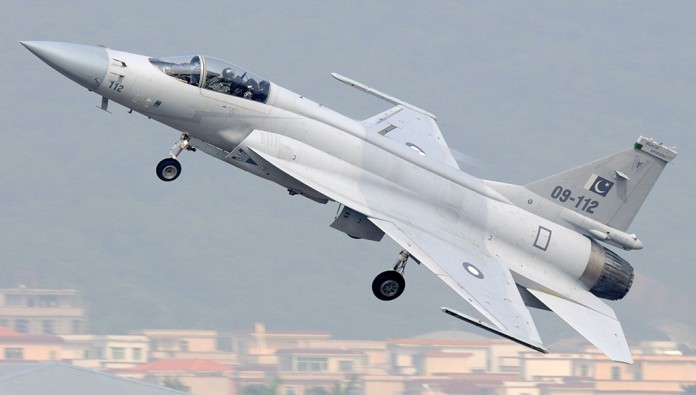
    Pakistan Air Force Chengdu JF-17 Photo: Shimin Gu
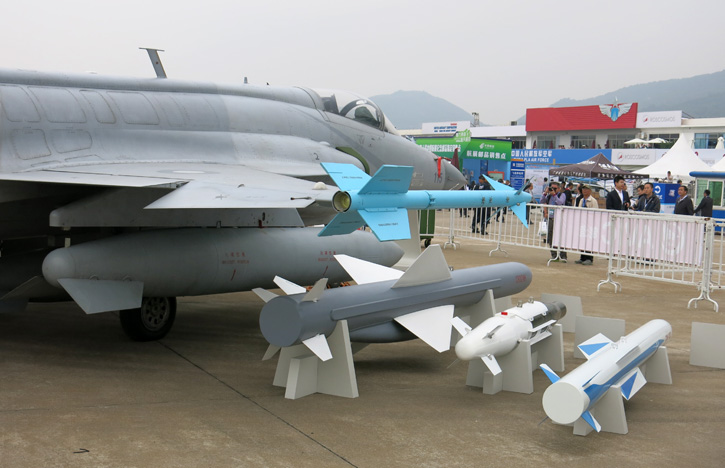
    The JF-17 was on display at the recent China Airshow in Zhuhai, China where it was shown with a wide range of Chinese made weapons. Photo: Tamir Eshel, Defense-Update
    The JF-17 was on display at the recent China Airshow in Zhuhai, China where it was shown with a wide range of Chinese made weapons. Photo: Tamir Eshel, Defense-Update

    Three Pakistani Air Force (PAF) JF-17 Thunder fighter aircraft will be taking part in the Paris Air Show opening at the Paris Le Bourget airport next week. This Chinese-Pakistani fighter jet will participate in the daily flight demonstration. It will also be on display in the ground exhibit.

    China and Pakistan are promoting the J-17 as a low-cost alternative to more advanced and expensive combat jets. The aircraft has been proposed to a number of countries in Asia and Latin America but has not yet scored export sales. Among the prospective clients still on the table are Bangladesh, Nigeria and Myanmar. China and Pakistan have demonstrated the aircraft at various international air shows, including the Farnborough Air Show in the UK, the China Air Show in Zhuhai, and air shows in Turkey and Dubai.

    The JF-17 Thunder was developed jointly by Pakistan and China, by Chengdu Aircraft Industry Group. Fifty planes have already been delivered and comprise two PAF fighter squadrons. Production of the follow-on Thunder JF-17 Block 2 variant began in 2013. Aircraft of this model are currently being assembled at the Pakistan Aeronautical Complex. Pakistan remains the only operator of this jet. Thunder Block 2 is equipped with an aerial refuelling probe and advanced avionics suite, improved cockpit ergonomics and updated Electronic Counter Measures (ECM), and can carry a wider range of ordnance.

    From 2017 the Pakistani Air Force is expected to receive the third variant – JF-17 Block 3, to be equipped with a new, Active Electronically Scanned Array (AESA) radar. This lightweight, all weather, multi-role fighter jet will become the mainstay of the PAF, as it plans to replace its ageing fleet of fighter aircraft with JF-17s. These are designed to carry out both air-to-air and air-to-ground strikes, and can be fitted with beyond-visual-range (BVR) missiles.

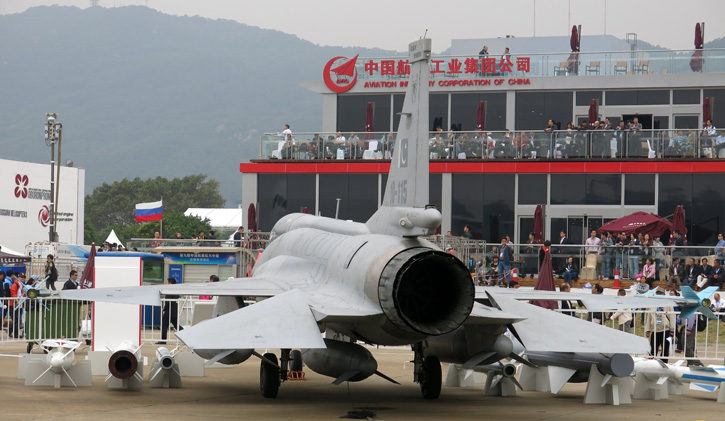
    Another view of the JF-17 in China. November 2014. Photo: Tamir Eshel, Defense-Update
    Another view of the JF-17 in China. November 2014. Photo: Tamir Eshel, Defense-Update

    IAI Unveils a UHF Radar that Tracks Stealth Aircraft from Hundreds of Kilometers Away

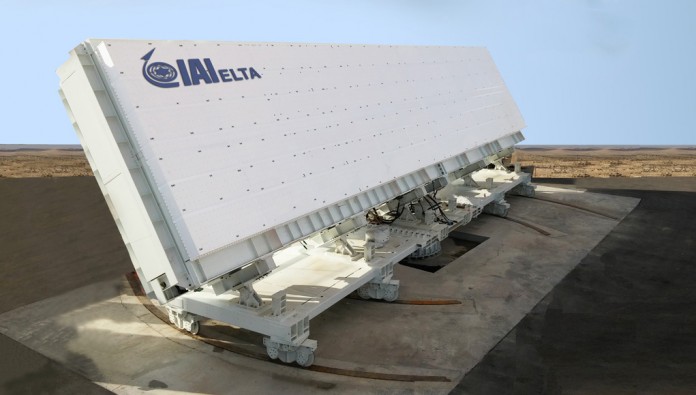
    The ULTRA C-22 packs 11 stacks of two modules each, measuring 10 by 30 meters. It is a strategic system for the detection and tracking of ballistic missiles and space objects at very long ranges. Photo: IAI
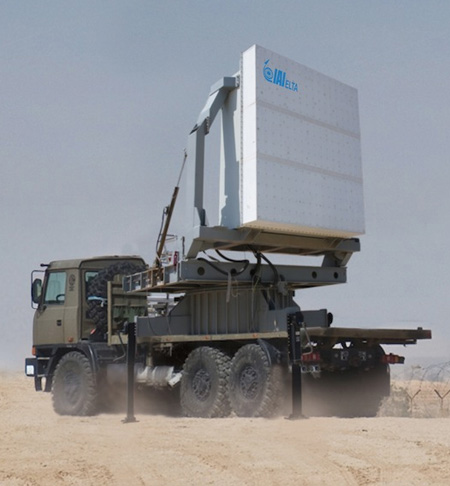
    The basic ULTRA module, designated ULTRA-C1, comprises a single AESA cluster. Photo: IAI
    The basic ULTRA module, designated ULTRA-C1, comprises a single AESA cluster. Photo: IAI

    Israel Aerospace Industries (IAI) is unveiling an advanced, UHF, Active Electronically Scanned Array (AESA) Radar at the Paris Air Show. It is designed to search, detect and track ‘air breathing targets,’ including low-observable (stealth) aircraft, missiles, UAVs and ballistic missile targets at very long range, providing operating early warning. The new radar, which has already become operational with an unspecified customer, is part of the new ULTRA family of UHF radars developed by IAI’s ELTA Systems Group and subsidiary.

    “Ballistic missiles present a significant global threat to nations,” explained Mr. Nissim Hadas, IAI Executive VP & ELTA President. “We note increasing requirements world-wide for early warning radars, in order to extend the currently available Air Situation Picture and allow commanders and decision makers the valuable extra time for making informed and educated decisions concerning necessary defensive measures.”

    The ULTRA (ELM2090) often operates as an early warning asset, supplementing other radars, such as the Super Green Pine (ELM2080S) and the Multi-Mission Radar (ELM2084), providing increased early warning of all types of threats, including stealth aircraft and unmanned aerial systems (UAS) well beyond the range of existing sensors. Once such targets are detected, tracks can be transferred to other assets providing target acquisition and fire control.

    The basic module, designated ULTRA-C1, comprises a single AESA cluster measuring 3×3 meters. It is mounted on a rotating pedestal covering 360 degrees. ULTRA C-1 is configured as a relocateable system designed to provide an autonomous search and detection capability at a range of up to 500km for a typical fighter aircraft.

    “We note increasing requirements world-wide for early warning radars”

    Another variant is ULTRA-C6, which comprises six clusters (three stacks of two units). It is designed to provide early warning, at long ranges, of satellites, ballistic missiles and other airborne targets, while the ULTRA C-22 (a 22-cluster configuration packing 11 stacks of two modules and measuring 10 by 30 meters) is a strategic system for the detection and tracking of ballistic missiles and space objects at very long ranges.

    Both C-6 and C-22 are based in fixed sites but can be aimed at specific sectors, using trainable mounts to point the entire array toward an area with coverage of 320 degrees. These radars are employed primarily for long-range early warning against missile attacks, or for space debris monitoring and surveillance. Other cluster configurations are possible to meet specific customer requirements.

    The ULTRA radars, already operationally proven, use a modular, common UHF-band cluster architecture capable of wide-angle electronic scanning in both elevation and azimuth. They can be used as autonomous search radars, supporting all defence layers: Air Defence Surveillance for medium ranges, Early Warning for long ranges, and strategic coverage for very long ranges.

    Saudi Patriots foil Yemeni SCUD Missile Attack

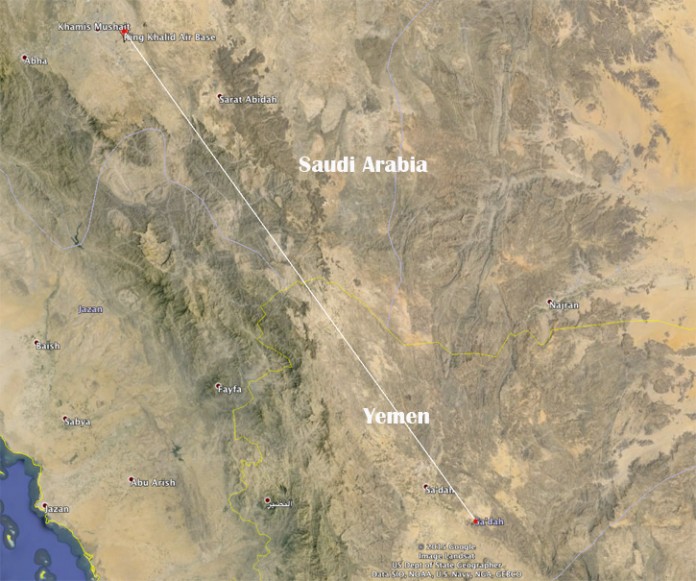
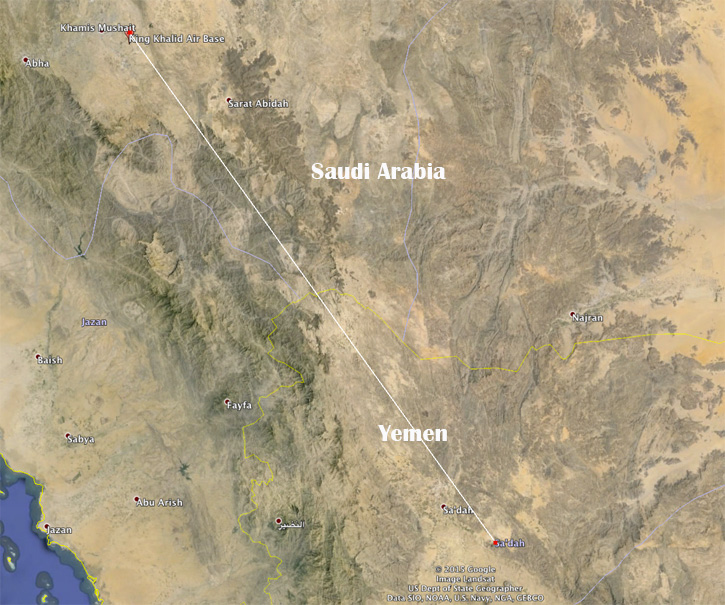
    yemeni_scud_attack_on_saudi_arabiaIn a potential escalation of the months long war, Iranian backed Yemeni Houthi rebels fired a Scud ballistic missile at Royal Saudi Arabian Air Force (RSAF) King Khalid Airbase west of Khamis Mushait, one of the kingdom’s largest military bases. The attack was launched from an area near the Yemeni town of Saada, about 180 km (111 miles) south of the targeted Saudi airbase.

    This is the first missile intercept of a SCUD by a Patriot missile since the 1991 Gulf war. In the recent intercept which took place at dawn on Saturday June 6, 2015 two Patriot missiles were launched scoring a successful target kill. In 1991 four Patriots were fired against each SCUD, achieving marginal results. The performance of the Patriot in 1991 was controversial, due to conflicting US, Saudi and Israeli assessments studying the missiles’ performance in each theater. During the 2003 Gulf War the Patriot was used against Iraqi Ababil 100 and Al-Samoud 2 short range ballistic missiles, but no SCUDs were fired.

    Saudi Arabia has been leading a regional coalition fighting against the Shiite Houthi rebels that have overthrown the Sunni government in Sanna two months ago.

    Yemen’s ballistic missiles were the major targets for the Saudi attack. Yemen had a stock of some 300 Scuds, the majority of those missiles were destroyed by the coalition attack. The recent attack indicates not all Scuds have been destroyed and the Houthis still have the military power to threaten cities along the Saudi southern border with Yemen.

    The coalition responded to Saturday’s attack by targeting and damaging the Scud launcher, which was located south of the Houthi stronghold city of Saada, according to SPA.

    Defense Exhibitions: Q4 – 2016

    Subscribe to see past eventsFor Events taking place before October 2016 – Click Here

    Travelling abroad? Try these attractive deals from our Travel Partner – Agoda


    AUSA 10-12 October 2016, Washington DC, USA


    African Air Expo 12-14 October 2016, Kotoka International Airport, Accra, Ghana


    Japan International Airshow 12-15 October 2016, Tokyo Big Sight, Tokyo, Japan


    Air Defence Asia – Japan 13 October 2016, Tokyo Conference Center, Ariake, Tokyo, Japan


    Homeland Security Week 17-19 October 2016, Washington DC, USA


    20150715-Euronaval-Banner-DEFENSE UPDATE-180x150Euronaval 17-21 October 2016, Le Bourget, Paris, France


    Unmanned Systems Defense
    25-26 October 2016 – The Ritz Carlton Pentagon, Arlington, VA.


    Airborne ISR 26-27 October 2016.


    Commercial UAV Expo 2016 31 October – 2 November 2016, Las vegas, NV. USA


    Milipol Qatar 31 October – 2 November, 2016, Doha, Qatar


    Airshow China 2016 1-6 November 2016, Zhuhai, China


    Indodefence 2-5 November, 2016 Jakarta, Indonesia


    Indoaerospace 2-5 November, 2016 Jakarta, Indonesia


    Israel’s Homeland Security 2016, 14-17 November, 2016 Tel Aviv, Israel


    Cybertech 2016, 14-17 November, 2016 Tel Aviv, Israel


    International Fighter Meeting 2016 15-17 November 2016, London, UK


    Joint Precision Fires Future (JPF2)
    16 November 2016, Armed forces Officers Club, Abu Dhabi, UAE


    UK Security Expo 30 November -1 December 2016, Olympia, London, UK


    Transport Security 30 November -1 December 2016, Olympia, London, UK


    DefenseUpdateBanAds16_180x150I/ITSEC 2016 28 November – 2 December, Orlando, FL, USA

    The annual Interservice/Industry Training, Simulation, and Education Conference (I/ITSEC) showcases simulation, education, modeling, and training technology for the exchange of information among industry, the military, and the educational communities. The conference attracts 15,000 training and simulation specialists from around the world. The exhibition hosts +500 exhibitors displaying cutting-edge simulation solutions for air, land and naval applications, innovative training technologies and concepts. One of the themes this year is ‘Operation Blended Warrior’, featuring the concepts and technologies for consistent, persistent Live-Virtual-Constructive (LVC) training. Defense-Update is proud to sponsor I/ITSEC 2016. Visit Defense-Update Milisim at booth 2565


    IDEAS 2016 22-25 November 2016, Karachi Expo Centre, Karachi, Pakistan


    Exponaval 28 November, 2 December 2016, Valparaiso, Chile


    BIDEC 2016 Bahrain International Defence Exhibition & Conference, 6-8 December 2016, Bahrain International Exhibition & Convention Centre, Bahrain


    SHIELD AFRICA 24-26 of January 2017 – Abidjan – Cote d’Ivoire


    Travelling abroad? Try these attractive deals from our Travel Partner – Agoda

    Want to include your event in our list?

    Include your event in our list
    Sending

    Defense Exhibitions: Q2 – 2016

    Subscribe to see past eventsFor Events taking place before April 2016 – Click Here

    Travelling abroad? Try our Travel Partner Agoda – attractive deals – recommended hotels


    FIDAE 2016 31 March – 3 April 2016, Santiago, Chile


    Marine South, 6-7 April 2016, MCB Camp Lejeune, NC, USA


    Border Security Expo – 13-14 April 2016, San Antonio, TX, USA


    SPIE DSS (Defense, Security & Sensing) 17-21 April 2016, Baltimore MD, USA


    DSA 2016 – April 18-21 2016, Kuala Lumpur, Malaysia


    Counter Terror expo 2016 19-20 April, 2016 Olympia, London


    Marrakech Aero Expo & Air Show 27-30 April, 2016 Menara Airport, Marrakech, Morocco


    QUAD-A, 27-30 April 2016, Atlanta, GA


    XPONENTIAL (AUVSI) 2-5 May 2016, Ernest N. Morial Convention Center New Orleans, MS, USA


    SOFEX 2016 May 9-12, 2016, Amman, Jordan


    IDEB 10-12 May 2016, Bratislava, Slovakia


    Sea-Air-Space (Navy League) 16-18 May, 2016 Gaylord National Convention Center, National Harbor, MD. USA


    4th International Fires Conference 17-18 May 2016, Beit Hatothan – Zikhron Ya’akov, Israel.

    180x150_fire-conference_enThe two-day event is organized by the Israeli Artillery Association in cooperation with the IDF Ground Forces HQ and the Artillery Corps. The conference will discuss lessons learned from recent conflicts and future developments related to artillery and fires. It will focus on a range of themes including, missiles, rocket artillery and precision fires, air/ground coordination, deployment of static and precision networked fires, cyber aspects of modern weapons and more.


    Future Armoured Vehicles Eastern Europe (AUVSI) 17-18 May 2016, Prague, Czech Republic.

     The Future Armoured vehicles event returns to Prague, featuring the development plans and armoured vehicle focus of Eastern Europe, with speakers from the military and MODs of Czech Republic, Slovakia, Estonia, Poland, Austria, Spain, Netherlands, as well as industry briefings covering the latest technologies.


    Rapid 2016 – Printing, Scanning, Additive manufacturing 17-19 May, Orange County Convention Center, Orlando, FL. USA


    ITEC 2016 (Defense, Training & Simulation expo) 17-19 May 2016, ExCel, London, UK


    Helicopter Technology 180x150Helicopter Technology Eastern Europe 2016 19-20 May 2016, Budapest, Hungary

    Helicopter Technology Eastern Europe 2016 returns for a second successful year, this time to Budapest, Hungary on the 19th and 20th May 2016. Last year’s inaugural event was recognized for excellence by many leading defence forces in both central and Eastern Europe and hosted more senior heads of Air Force and Helicopter Commands than any other event in Europe. As Central and Eastern Europe continue to be a key focus for defence equipment upgrades, the rotary fleet remains a key asset in both domestic and international military operations and therefore a focused conference is essential to ensure continued advancement of capability, equipment and joint interoperability.


    HeliRussia 19-21 May 2016 – Crocus Expo, Moscow, Russia


    Asia Pacific China Police 20-23 May 2016, CNCC – Beijing, China.


    Future Artillery 2016 23-25 May 2016, Radisson Blu Portman Hotel, London, UK


    Humanitarian Airlift and Disaster Response Asia-Pacific 23-24 May 2016, Singapore

    180x150 Humanitarian Airlift and Disaster Response Asia-Pacific copySMi’s Humanitarian Airlift and Disaster Response Asia-Pacific conference will provide updates on capabilities and requirements from national militaries for humanitarian operations, detailing how civil-military cooperation is enhancing the NGO response to regional humanitarian disasters. Furthermore, the two-day programme will also address what is being done to overcome the key challenges of humanitarian logistics and what role innovative technologies have to play in enhancing the disaster response. These topics will be addressed by military speakers, civil-military coordinators, regional logistic experts and disaster response organisations, therefore bringing together all key regional stakeholders for disaster response exercises.


    Security Israel 2016 24-25 May 2016, TLV Convention Center, Tel Aviv, Israel.


    Naval Combat Systems 2016 24-25 May 2016, London Marriott Hotel Kensington, London, UK


    CANSEC 2016 Canada’s Global Defence & Security Trade Show 25-26 May 2016, El Centre, Ottawa, Canada


    Hemus 2016 international exhibition for defence, anti-terror and security 25-28 May 2016, Plovdiv, Bulgaria


    KADEX 25-28 May, 2016 Astana, Kazakhstan


    MilSatCom Asia Pacific 26-27 May, 2016 Singapore

    180x150 MilSat copyThis edition of the MilSatCom Asia-Pacific conference will provide national updates on space and MilSatCom programmes and how the development of these programmes is satisfying current critical regional requirements.


    C4ISR Summit 2016 31 May – 1 June 2016, Armed Forces Officers Club & Hotel, Abu Dhabi, UAE


    ILA 2016 31 May – 5 June 2016, Berlin, Germany


    International Port Security 180x150 copy7th annual International Port Security Conference 1-2 June 2016, London, UK

    The conference aims to bring together key decision makers in the industry to discuss modern methods of port security and provide effective learning experiences for all delegates through the carefully selected expert speaker line up.
    Interacting with delegates from across the globe and hearing from industry leading experts will ensure delegates are up-to-date with high priority information that enables you to best secure your seaports, civilians and means of trade. Topics to be discussed include terrorism, cyber security, resolving external threats, optimisation of technological systems, regulatory systems and change and case studies featuring some of the busiest ports from across the world. Our diverse range of topics will allow delegates to learn best practices for port security and understand further how other ports are resolving core challenges.


    UDT Global Undersea Defence technology 1-3 June 2016 Oslo, Norway


    Aerospace & Defense Meetings – 6-9 June 2016, Seville Conference Palace, Seville, Spain


    Arctic Patrol & Reconnaissance 2016 7-9 June 2016, Park Inn by Radisson Copenhagen Airport, Denmark


    GPEC 2016 – International Police & Special Equipment Expo – 7-9 June, 2016 Leipzig, Germany


    Offshore Partol Vessels Technology 8 – 9 June, London UK.

    180x150 OPV copyThis inaugural OPV Technology event will focus on the new potential for OPVs within this proliferation in combat and combat support technology capabilities. The event will discuss how individual nations are working to enhance the capabilities of their coastal fleets and highlight the prospect for future cooperation and interoperability.


    Maritime Security & Coastal Surveillance Philippines – 9-10 June 2016 – Manila, Philippines


    Fast Jet Pilot Training Eastern Europe 9 – 10 June, 2016 Prague, Czech Republic

    180x150 Fast-Jet-Pilot-Training-Eastern-Europe (1)This two-day event provides a platform to discuss the implementation of new technologies such as simulated flight training and new advanced trainer aircraft into current pilot training systems for improved interoperability amongst regional partners, as well as conversion to more modern fighter jets in the wake of higher operational demands. These topics are of special importance to countries with smaller air forces, seeking to improve interoperability and maximise the effectiveness of small fleets of jet fighters. Prague is particularly suitable for this conference as the Czech Air Force has already announced it is actively seeking to establish an international training centre for regional pilots to meet that very demand with support from NATO by 2018.


    Eurosatory 2016 June 13-17, 2016, Paris Nord, France


    Unmanned Global Systems (UGS) 2016 June 13-17, 2016, Paris Nord, France


    Balt Military Expo June 20-22, Amberexpo, Gdansk, Poland


    Directed Energy and Next Generation Munitions 20-22 June 2016, Hyatt Regency Fairfax, Fairfax, VA.


    Cyber Security & Defense 22-24 June 2016, DoubleTree by Hilton Hotel Augusta, Augusta, GA


    Security Week Israel – 24-25 June 2016 – Tel Aviv, Israel


    Future Armoured Vehicles Weapons Systems 28 – 29 June, London UK.

    180x150 Future Armoued Vehicles Weapons Systems copyDrawing on the operational and strategic experience of military experts, as well as the technical expertise of those at the forefront of industry and research, SMi’s Future Armoured Vehicles Weapons Systems conference shall explore the defining factors that contribute to enhanced lethality and fire superiority for land forces. An examination of emerging technologies in these key areas, ranging from the latest weapon systems, smart munitions, fire control and target acquisition, shall be combined with operational case studies and key programme updates from commanders and military project leaders, to develop definitive requirements and solutions for enhancing lethality.


    Mortar Systems Technology 29 – 30 June, London UK.

    180x150 Mortar copyThis inaugural Mortar Systems Technology conference shall tackle cutting-edge mortar technologies, highlighting precision, range, lethality and manoeuvrability of mortar systems, as well as counter Fire technologies. This event, organized by SMi, will bring together opinion leaders from across the world to discuss the matters that truly matter in the realm of Mortar Systems.


    Armored vehicles latin America – 30 June – 1 July, 2016 – Sheraton Lima Hotel & Convention Center, Lima, Peru


    Travelling abroad? Try our Travel Partner Agoda – attractive deals – recommended hotels

    Want to include your event in our list?

    Include your event in our list
    Sending

    Defense Exhibitions: Q3 – 2016

    Subscribe to see past eventsFor Events taking place before July 2016 – Click Here

    Travelling abroad? Try our Travel Partner Agoda – attractive deals – recommended hotels


    Warships and Offshore Patrol Vessels Latin America 2016 30 June 30 – 2 July, 2016 – Sheraton Lima Hotel & Convention Center, Lima, Peru


    Farnborough International 11-15 July 2016, Farnborough, UK


    Integrated Air and Missile Defence Eastern Europe 26-28 July, 2016 – National Military Circle, Bucharest, Romania


    Military Helicopters USA – 2016 25-27 July, 2016 – Enterprise, Alabama


    International Security Cooperation Summit 29-31 August, 2016 – Tampa, FL, USA


    Mobile Mil satcom 2016 29-31 August, 2016 – London, UK


    National Security Summit Middle East 2016 29-30 August, 2016 – The St. Regis Abu Dhabi, Abu Dhbai, United Arab Emirates


    MSPO 2016 1-4 September, Kielce, Poland


    Army 2016 6-11 September, 2016 Patriot Expocenter (Kubinka), Moscow Region, Russia


    Land Forces Australia 6-8 September, 2016 – Adelaide Convention Center, Australia


    DVD 2016 7-8 September, 2016 Milbrook, UK (New Date!)


    MS&D – Maritime Security & Defence Expo 7-9 Sept, 2016 Hamburg, Germany


    Offshore Patrol Vessels 14-16 September, 2016 – Glasgow, Scotland-UK


    African Aerospace & Defence AAD 14-18 September 2016, Pretoria, South Africa


    SecProtec East Africa 15-17 September 2016, Nairobi, Kenya


    AUS&R 2016 19 September 2016, Rishon Le’Zion, Israel


    Modern Day Marine 27-29 September 2016, MCB Quantico, VA


    Maritime Reconnaissance and Surveillance 2016 27-29 September, 2016 – Rome, Italy


    ADEX 2016 27-30 September 2016, Baku Expo Center, Baku, Azerbaijan


    Sobra International A&D fair September, Slovenia. Date & Location TBD


    180x150 MFT5th annual Military Flight Training conference
    21-22 September, 2016 London, UK

    The annual Military Flight Training conference will discuss the latest national approaches to training as well as the development of modern technologies to meet current and future complex mission scenarios faced by today’s pilots from fast fighters to multi-engine fixed wing aircraft. the agenda will cover military Briefings from the Royal Air Force, US Air Force, US Navy, France, Poland, Sweden, Norway, Slovenia, South Africa and NATO, focus on synthetic training, pilot instructor training, air power delivery and more.


    Defense Exports 28-29 September, Amsterdam, Netherlands

    180x150 DEDefence Exports 2016 will provide crucial ITAR, ECR, EAR and OFAC updates as well as changes to national European export controls from long-standing EU members, recent members as well as non-EU national updates. Alongside the elite panel of government speakers, senior international trade compliance professionals will discuss the key challenges in compliance and topics include cyber security and export violations, electronic data services such as cloud and how to comply, global trade compliance programmes and self-disclosure. Speakers 2016 include Global Legal Services, U.S. DoD, Pillsbury Law, BAE Systems, Israel MoD, Bell Helicopter Textron, Netherlands Ministry of Foreign Affairs, NATO, Danish Business Authority and more.


    2nd Integrated Air and Missile Defense 28-30 September – Location TBA


    Aeromart Korea (International Business Convention for A&D Industries) 22-23 October, Sacheon, Korea


    ADAS 2016 28-30 September 2016, World Trade Center metro, Manila, Philippines

    Book your hotel in Manila with Agoda


    Travelling abroad? Try our Travel Partner Agoda – attractive deals – recommended hotels

    Want to include your event in our list?

    Include your event in our list
    Sending

    Defense Exhibitions: Q1 – 2016

    Subscribe to see past eventsFor Events taking place before January 2016 – Click Here

    Travelling abroad? Try these attractive deals from our Travel Partner – Agoda

    DGI Europe 18 – 20 January 2016 London, UK


    SOLIC 2016 28 – 30 January 2016 Washington DC, USA


    Ilan Ramon Aerospace Conference January 2016 Herzlia, Israel


    BIAS 2016 Bahrain International Airshow – 21-23 January 2016, Sakhir Airbase, Bahrain


    Book your hotel in London with Agoda
    IAV 2016 International Armored Vehicles 25-26 January 2016 London, UK


    Marine West 3-4 February, 2016 MCB Camp Pendleton CA, USA


    180x150 MaritimeMaritime Reconnaissance and Surveillance Technology

    Conference February 15-16, 2015
    Crowne Plaza Hotel, Rome, Italy

    This conference will focus on maximising maritime situational awareness capabilities for security of life and territory at sea. MR&ST 2016 aims is to provide industry leaders, maritime surveillance and reconnaissance project managers and military and government representatives the knowledge and contacts they need to further develop their capabilities in Maritime Domain Awareness. This will be achieved through panel discussions and briefings based on topics from acquisition projects to operational experiences and lessons learnt. 5 Flag Officers confirmed, making this the most senior Maritime ISR meeting in the region! Confirmed speakers 2016 include leading experts from Italian Coast Guard, The Swedish Coast Guard, Royal Navy (UK), Italian Air Force, EU Naval Force, US Navy, NATO, Spanish MoD, Irish Coast Guard and many more. 


    Singapore International Airshow 16-21 February 2016, Changi, Singapore  


    180x150 Border Security copy9th annual Border Security Conference 

    February 17-18, 2015
    Rome, Italy

    The event will also focus on other aspects of border security, such as the smuggling of drugs and illegal goods at the border as well as counter terrorism. Sessions will focus on how this can be reduced, whether it be modern technologies, greater collaboration or a larger security presence at the border. Confirmed speakers 2016 include leading experts from Italian Navy, EU Naval Force Mediterranean, Portuguese Navy, Finnish Customs, French National Police, EU Border Assistance Mission to Moldova and Ukraine, CEPOL and many more.


    Book your Singapore hotel with Agoda


    Ukrainian Defense & Security Forum ’16
    18 February 2016, InterContinental Kyiv, Kyiv, Ukraine

    ukrUnder the patronage of the Ministry of Defense of Ukraine and SC ‘UKROBORONPROM’, this forum is the first international forum on defense and security issues in Ukraine. The forum will focus on investment opportunities of the defense and security market of Ukraine. The forum provides an opportunity to meet representatives of the top-100 Ukrainian and international companies in the field of defense and security, government agencies, international organizations, Ukrainian defense and security sector manufacturers, foreign investors, etc..


    Heli Expo 2016 Feb 29 – March 3, 2016, Louisville, Ky, USA


    Abu Dhabi Air & Heli Expo 8-10 March, 2016, Al Bateen Executive Airport, Abu Dhabi UAE


    Counter-Terrorism, Corporate Security & Risk Mitigation 6-9 March, 2016, Location: TBD, Signapore.


    Defence Logistics 180x150 copyDefence Logistic Eastern Europe March 7–8, 2016 – Prague, Czech Republic

    Defence Logistics Eastern Europe 2016 aims to bring together members of logistics commands from across the region to discuss the challenges of modernising their logistics forces through training, international cooperation and procurement. While at the same time going through expensive budget reforms.

    Speaker line-up features: Armed Forces of the Czech Republic, Hungarian Defence Forces, Polish Armed Forces, British Army, Croatian Armed Forces, Norwegian Armed Forces, EU Military Staff, EUROCORPS, NATO plus many more.

    contact the team on +44 (0) 20 7827 6000 or email: [email protected]


     Soldier Equipment Advancement Forum March 14-15, 2015 – London, UK


    FAVSA-180x150 Future Armoured Vehicles Situational Awareness March 16–17, 2016 – London, UK

    Future Armoured Vehicles Situational Awareness 2016 is the only dedicated meeting that aims to develop capability in this critical area. Combining senior military representation with leading solution providers from industry, Future Armoured Vehicles Situational Awareness 2016 shall draw on operational case studies, strategy, training protocol and the development of cutting edge sensors, communications and optronics equipment.

    The speaker line-up features: US Army, Swedish Army, UK MoD, Netherlands Army, Danish Army Combat and Fire Support School, Royal Dutch Army, Norwegian Armed Forces, Joint IT Command Netherlands Defence Material Organization, DE&S, Thales, Selex ES plus many more. Contact the team on +44 (0) 20 7827 6000 or email: [email protected]


    Defexpo 28-31 March 2016, Quitol, South Goa, India DefExpo India 2016 will be held at a new location, about 24 km from Margao, in Southern Goa. The event is  expected to draw in over 400 defense companies, as of July 2015 about 50 percent of the display area already sold out.


    DIMDEX 2016 29-31 March, 2016, Doha, Qatar


    Travelling abroad? Try these attractive deals from our Travel Partner – Agoda

    Want to include your event in our list?
    Include your event in our list
    Sending

    A New Amphibious 6×6 Armored Vehicle to Replace the BRDM-2 in Polish Army Service

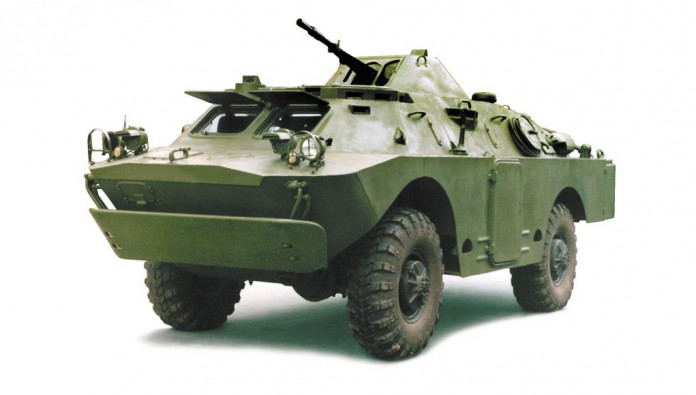
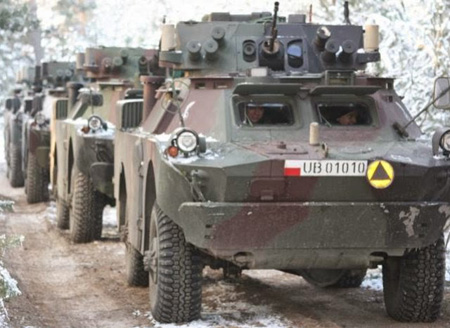
    Addressing the LOHR requirement, the new vehicle will replace the BRDM-2 currently in Polish Army service.
    Addressing the Light Armored Recce (LOTR) requirement, the new vehicle will replace the BRDM-2 currently in Polish Army service.

    Rheinmetall MAN Military Vehicles GmbH (RMMV) is teaming with the Polish defence contractor Polska Grupa Zbrojeniowa SA (PGZ) through its subsidiary Obrum sp. z o.o. to develop a new wheeled vehicle designed to replace hundreds of Russian made BRDM-2 armored vehicles currently in service with the Polish military.

    Currently in the early design phase, the new amphibious 6×6 wheeled armoured vehicle will be tailored to address the Polish Army requirement for light armoured reconnaissance vehicle, as defined by the LOTR procurement programme.

    Fully amphibious, the LOTR will feature a high level of protection and an attractive payload-to-total weight ratio. With a Gross Vehicle Weight of up to 20 tonnes, the new vehicle will have a carrying capacity of 3.5 tonnes, opening up a wide variety of options during reconnaissance missions and other military operations. Design and development of the LOTR will take special account of experience gained in current asymmetric conflicts, the first vehicle of its kind to do so. It is slated to replace the Soviet-era BRDM-2 still in service with the Polish Army.


    The team is positioning the vehicle to meet the future needs of Poland and other nations, for a combat vehicle replacing the obsolete Russian made BRDM-2 which is still widely used with many world armies. Poland is the largest BRDM-2 operator in Eastern Europe, having a fleet of some 460 vehicles of different types; many operational vehicles are now re-engined with Iveco diesel engines, some are also up-armored. RMMV and Obrum plan to market the new vehicle and its derivatives internationally, and are set to establish a joint venture for this purpose.

    “We see this development contract as an important first step in a highly promising cross-border strategic alliance in the field of military wheeled vehicles”, Pietro Borgo, managing director of RMMV and member of the executive board of Rheinmetall Defence, declared. He added that the new vehicle offers the perfect technological base for cooperating with partners around the world. “We also see excellent opportunities for marketing the LOTR outside of Europe”, Borgo noted.

    The Polish holding company PGZ has a stake in several of the country’s defence contractors, including a majority interest in Obrum, a major supplier of the Polish armed forces. “Signing this contract with RMMV makes us an equal partner of a globally leading defence technology enterprise.” PGZ Chairman Wojciech Dabrowski said, “Propelled by the success of the Rosomak armoured transport vehicle, we launched this ambitious project, which will result in a new wheeled armoured vehicle.”

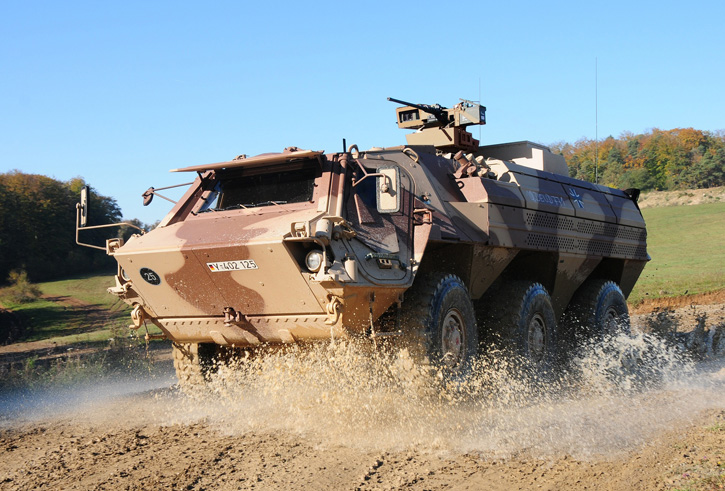
    In 2013 Rheinmetall was awarded a €36 million contract to provide the Bundeswehr new 6x6 Fuchs/Fox 1A8 armored transport vehicles - a new version of the Fuchs fitted with higher level of protection. Photo:
    In 2013 Rheinmetall was awarded a €36 million contract to provide the Bundeswehr new 6×6 Fuchs/Fox 1A8 armored transport vehicles – a new version of the Fuchs fitted with higher level of protection. Photo:

    Skunk Works and XTEND Simplify Multi-Drone Command

    0
    Lockheed Martin Skunk Works® and XTEND have achieved a major milestone in JADC2 by integrating the XOS operating system with the MDCX™ autonomy platform. This technical breakthrough enables a single operator to simultaneously command multiple drone classes, eliminating the friction of mission handoffs. From "marsupial" drone deployments to operating in GPS-denied environments, explore how this collaboration is abbreviating the data-to-decision timeline and redefining autonomous mission execution.

    From Ukraine to Taiwan: The Global Race to Dominate the New Defense Tech Frontier

    0
    As traditional defense primes face mounting competition from agile “neoprimes” such as Anduril, Palantir and Helsing, the balance of innovation is shifting toward software-defined warfare and scalable, dual-use technologies, while global industry consolidation—marked by Boeing’s integration of Spirit AeroSystems and other strategic mergers—signals an intensified race to secure control over the defense technology value chain. Our Defense-Tech weekly report highlights these trends.

    Europe’s “Drone Wall”

    0
    In early October 2025, a coordinated wave of unmanned aerial system (UAS) incursions—widely attributed to Russia—targeted critical infrastructure across at least ten European nations. The unprecedented campaign exposed the fragility of Europe’s air defenses...

    Weekly Defense Update & Global Security Assessment

    0
    Executive Summary The past week (September 18-25, 2025) represents an inflection point where strategic defense concepts have transitioned from doctrine to tangible reality. An analysis of global events reveals four primary, interconnected trends shaping an...

    U.S. Air and Space Forces Push Next-Gen Programs at the AS&C 2025 Conference and...

    0
    At the 2025 Air, Space & Cyber Conference, U.S. Air Force and Space Force leaders unveiled major updates on next-generation fighters, bombers, unmanned systems, and space initiatives, highlighting both rapid innovation and critical readiness challenges as the services race to outpace global competitors. A short version is available here, with a more detailed version for subscribers.

    TADTE 2025: Reflecting Taiwan’s Strategic Themes

    0
    The Taipei Aerospace & Defense Technology Exhibition (TADTE) 2025 crystallized around four dominant strategic themes that collectively illustrate Taiwan's comprehensive approach to defense modernization amid escalating regional tensions. Based on a detailed report by Pleronix (available upon request). Includes a Podcast discussion on TADTE 2025's highlighting Taiwan's four strategic themes beyond the post's coverage.

    Iron Beam 450 Completes Testing, Soon to Join With Operational Air Defense Units

    0
    Israel’s Iron Beam 450 high-power laser system has completed final testing, marking a major leap in air defense. Developed by Rafael, it offers precise, cost-effective interception of rockets, UAVs, and mortars, and is set for IDF deployment by 2025.