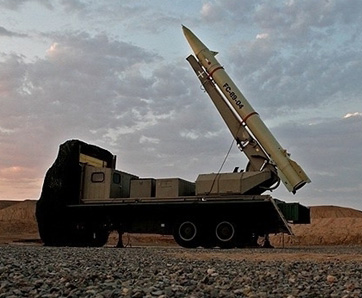
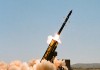
The Patah 110 was originally developed using the SA-2 launcher but has since received a dedicated carriage. The missiles supplied to theHezbollah are believed to be stored and camouflaged in shipping containers, modified into transporter-erector-launcher (TEL) assembly. Photo: IRNA
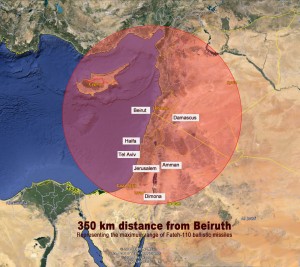
The range of 350km from Beirut, depicting the maximum range of Fatah 110 missiles. Map layer: Google Earth
Israel believes Hezbollah also has acquired a “few dozen” Scud D missiles with a range of 700 kilometers stashed in the northern Bekaa. The Lebanese Daily Star reports.
However, the Scud D is a logistical headache for Hezbollah compared to other rocket systems. Scuds are liquid-fueled which makes for a lengthy, complicated and potentially hazardous launching process compared to solid-fueled alternatives. They also require dedicated truck-sized launch platforms that are harder to smuggle into Lebanon, hide and employ without being spotted. The solid-fueled Fateh A-110s and M600s, on the other hand, are thought to be launched from converted shipping containers mounted on the backs of trucks. The roof of the shipping container flips open allowing the launch rail to be raised and the missile fired.
Most targets in Israel worthy of Hezbollah’s attention are found in the northern half of the country where the bulk of the population lives and where most of Israel’s military facilities, businesses and industries are located. There is relatively little worth striking in Israel south of a line drawn between Ashdod and Jerusalem, a distance of 143 kilometers from the Lebanese border, which puts the main target bank well within reach of the M600s, let alone fourth-generation Fatehs.
The one exception south of the Ashdod-Jerusalem line is Israel’s nuclear reactor at Dimona. If Israel were to launch an attack against Iran’s nuclear facilities, a retaliatory Scud strike by Hezbollah against Dimona may have been suitably reciprocal and possibly worth the logistical challenges posed by the missile. But if Hezbollah really has acquired the fourth-generation Fateh missile, the party would seem to no longer require the cumbersome Scuds for the purpose of attacking Dimona.
You are invited to join our Gold Membership to gain access to the full version of this analysis
Following the forced divestment of its Swedish Kockums acquisition, The German industrial conglomerate ThyssenKrupp is seeking to divest the remaining assets related to submarine construction – under its Marine Systems (TKMS) business group, operating three divisions – submarines (formerly HDW in Kiel), military surface vessels (at Emden and Hamburg) and services (at Kiel and Hamburg). TKMS was founded when ThyssenKrupp acquired HDW in 2005. TKMS focused on the construction of military naval vessels and submarines, after its civilian business line was sold to Abu Dhabi MAR in 2011.
ThyssenKrupp president Heinrich Hiesinger was recently quoted by the German daily Sueddeutsche Zeitung saying the company will be ready to sell the submarine unit if the right proposal will be made. The company recently reported a profit of €210 million after three years of losses.
“The precondition for any talks would be an offer that reflects the value of the business,” the paper quoted Heinrich Hiesinger as saying. “This can’t be based on a purely political decision or merely on another company’s wishes.” Hiesinger added the group was under no pressure to sell because the shipyard was profitable and had an order backlog that would last for the next few years.
Reuters reporting the story noted that ThyssenKrupp had started approaching potential buyers for its submarine unit, including French peer DCNS and German group Rheinmetall, whose main product is submarines.
At the heart of the Islamic State's area, a huge sectarian war is being fought between Sunnis and Shiites, creating a storming gale of terror.
News Analysis – by David Eshel | Contemporary events are violently redrawing the new Mid-East map. Ancient, religious sectarian rivalries and feuds, which laid virtually dormant for centuries have risen to recreate new borders, devoid from the colonial era which had dominated the region for nearly ten decades of orderly defined nation boundaries.
In hindsight however, these borders, drawn by the victorious British and French soldier politicians under the 1921 Sykes Picot agreement divided the Ottoman Empire and forged the map of the Middle East without regard to religion, ethnicity, tribe, family and clan or even geography.
All this proved illusory from the start. New states were created by Britain and France to reward wartime allies, to protect key imperial routes and to assure access to oil. But these new states rarely aligned with the tribal, religious or other realities of the region. The so-called “nation states”, like Iraq, Saudi Arabia, Jordan, Syria, Lebanon and others, have established coherent political spaces. Others were only held together by force.
The old Syria is already breaking at least into three different pieces
The “Arab Spring” became a catalyst for those rapid new changes. Dictators were toppled, leaving a vacuum and lacunas of power. Islamists of every stripe rushed into the vacuum. Thus the Middle East in the 21st Century is no longer a group of nation-states. The new map of the Middle East is based on ethnic groups – Sunnis, Shiites, Kurds, Alawites, Druze and Jews along with various minorities such as Christians and Yazidis.
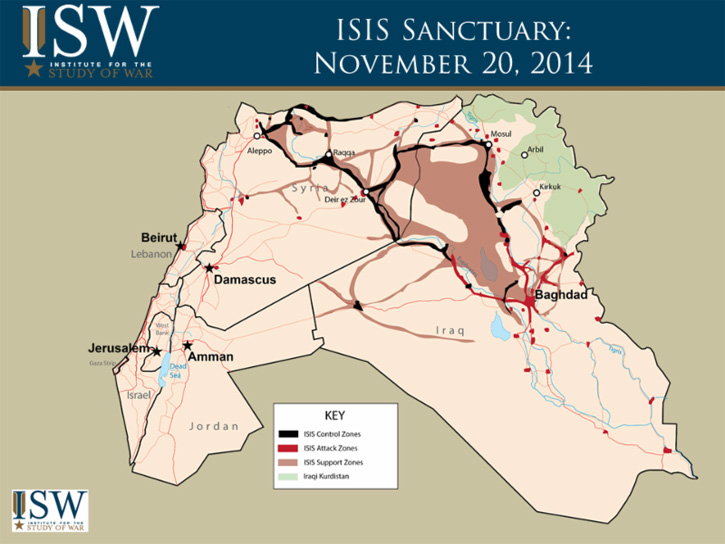
The Institute for the Study of War (ISW) constantly monitors the situation in Iraq and Syria, updating these situation maps on a regular basis. Map: ISW
They come from “time immemorial” says Israeli Professor Uzi Rabi, Director of the esteemed Moshe Dayan Centre for Middle Eastern. “The aftermath of the “Arab Spring”, saw a kind of combustible situation emerge that allowed rival ethnicities, tribes and religions begin to fight for their rights with dictators now absent from the scene”.
And that soon exploded in total turmoil. Syria, of course, lit the match. The old Syria is already breaking at least into three different pieces. And that effect has rippled across borders, challenging traditional boundaries established a century ago. As in Iraq, which is already tearing itself apart into Kurdish north, Shia south and Sunni west, the latter now fully under control of the Islamic State of Iraq and Syria (ISIS), busily reviving the Islamic Caliphate.
“A New Beginning” – June 4, 2009 – U.S. President Barack Obama gives a speech in Cairo, Egypt, outlining his personal commitment to engagement with the Muslim world, based upon mutual interests and mutual respect, and discusses how the United States and Muslim communities around the world can bridge some of the differences that have divided them. – Video source: the White House
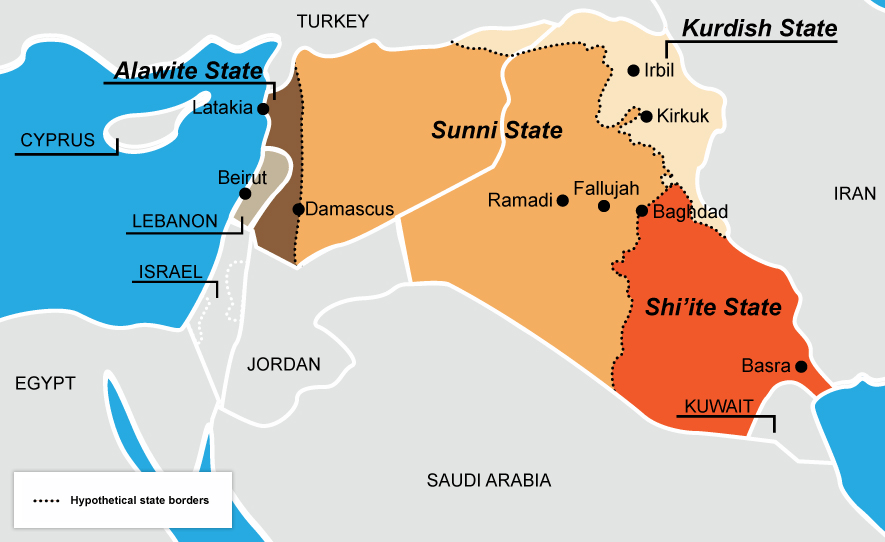
A hypothetical map of the Levant and Iraq following the three main ethnic groups – Sunni, Shiites and Kurds, with a small Alawite state along the Syrian Mediterranean shore, in what were until recently the sovereign states of Syria and Iraq. While the map reflects the traditional borders of Syria and Iraq, the Islamic State’s influence does not stop at those porous borders and could spread to Lebanon, Jordan, Saudi Arabia and the Palestinian territories.
Of all events happening since the outbreak of the “Arab Spring” ISIS is perhaps the most dramatic. What makes it so, is the speed and power play, with which they operate. Over the last year ISIS has captured vast territory in Iraq and Syria raising fear and unrest from Saudi Arabia, Yemen and Sinai to Egypt, Libya and Algeria.
The Islamic State has recently introduced its own currency – coins made of gold, silver and copper that avoid dependence on the international monetary system. Photo: Dabiq (ISIS Magazine)
ISIS is among the fastest-growing and richest terrorist groups of all time. After initially funding its efforts with extortion, smuggling and private donations, it literally struck gold last June, when it seized millions of funds from the Mosul central bank. ISIS is already earning huge sums from captured oil fields, selling the resources on the black market.
In fact, the Islamic State has recently introduced its own currency – coins made of gold, silver and copper that avoid dependence on the international monetary system. Its weapons arsenal has grown from simple guns to sophisticated war fighting systems taken from the US hardware supplied to the Iraqi army. ISIS achievements are not only remarkable feats of arms, but highly challenging to all non Muslims and even Muslims not fully acceptable to ISIS extremist religious doctrine.
Over the last year ISIS has captured vast territory in Iraq and Syria raising fear and unrest from Saudi Arabia, Yemen and Sinai to Egypt, Libya and Algeria
According to Rabi, there is a lot more going on related to ISIS than the beheadings of westerners that have dominated world headlines: “The terror causes people not to stand up and fight ISIS. They caused Iraqi Forces to withdraw because of the horror and fear, leaving their American donated weapons freely to ISIS. They are not just lunatics. They already run a state.
With brutal efficiency, the Sunni extremist group has carved out a large chunk of territory that has effectively erased the border between Iraq and Syria and laid the foundations of its Islamic state. They already have almost ten million people under their control. They tax people, maintain a doctrinal educational system, and possess sovereignty. They strive for an Islamic Caliphate. Their inspiration is the revival of the Abbassids of the 10th and 8th century. They believe that they will be victorious.”
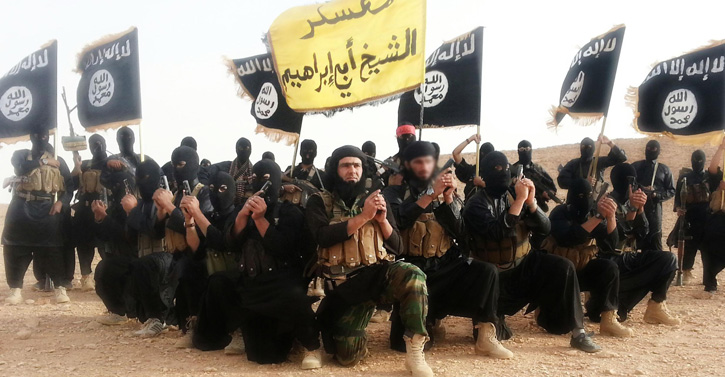
Ancient Religion is brought into the conflict. ISIS does not respect the right of the other to exist, if he is not member of their cult. Abu Bakr al-Baghdadi, as the leader of the new caliphate, or Islamic state, called on Muslims everywhere, not just those in area under the organization’s control, but all over the world, to swear loyalty to him. If not blocked in time, his new Caliphate might well be on the path to fulfilling its own Islamic “prophecies” and, at this point, will not allow anyone to get in its way. Few weeks later, on 13 of November 2014, ISIS officially announced that groups from Saudi Arabia, Yemen, Sinai, Algeria and Libya have joined the state, with smaller Islamic groups in Iran (Khurasan), Chechenia and the Caucasus, Indonesia, Philippines and Nigeria joining as followers of the new Caliphate.
Da’ish advance in Syria has created a safe haven for the terrorist group, based around the Dir e’Zor region along the Euphrates. From here the group moved south to Iraq and north, to the Syrian-Turkish border.
At the heart of the Islamic State’s area, a huge sectarian war is being fought between Sunnis and Shiites, creating a storming gale of terror. It is becoming the key conflict in the Middle East – certainly not the Israeli-Arab conflict – which still persists making those mediocre headlines in backward Europe. In Iraq the violence is genocidal, it is an all out fight over the dominance of the Islamic religion. Ethnic and religious divisions are how one must view the Middle East in the 21st century, not states. War and armed conflict between the sectors is consuming broad swaths of the region. With hundreds of thousands killed, there are already 14 million hope- and helpless displaced people filling unsuitable camps in Lebanon, Jordan and Turkey.
At the heart of the Islamic State’s area, a huge sectarian war is being fought between Sunnis and Shiites, creating a storming gale of terror.
Looking back into recent history, it turns out that America’s biggest error following the 9/11 disaster was to topple Saddam Hussein. He may have been a bloodthirsty tyrant, but also the ardent stabilizer of the secular Middle East – holding Iranian and extremist Islamic threat to this explosive region in check. No doubt the “Arab Spring” would have eventually happen, as the political scene was ripening for it in the authoritarian ruled post colonial region, but the Islamic extremists would not have gained too much power with Saddam’s iron rule in Iraq still intact.
The dramatic arrival of Da’ish (ISIS) on the stage of Iraq has shocked many in the West. Many have been perplexed – and horrified – by its violence and its evident magnetism for Sunni youth. But more than this, they find Saudi Arabia’s ambivalence in the face of this manifestation both troubling and inexplicable, wondering, “Don’t the Saudis understand that ISIS threatens them, too?”
It appears even now, that Saudi Arabia’s ruling elite is divided. Some applaud that ISIS is fighting Iranian Shiite “fire” with Sunni “fire”; that a new Sunni state is taking shape at the very heart of what they regard as a historical Sunni patrimony; and they are drawn by Da’ish’ strict Salafist ideology. But more devout Saudis are deeply disturbed by the radical doctrines of Da’ish (ISIS) – and are beginning to question some aspects of Saudi Arabia’s direction and discourse. Saudi Arabia’s internal discord and tensions over ISIS can only be understood by grasping the inherent (and persisting) duality that lies at the core of the Kingdom’s doctrinal makeup and its historical origins.
It was based on Abd al-Wahhab’s Jacobin-like hatred for the religious decay that he perceived all about him – hence his call to purge Islam of all its heresies and idolatries. ISIS’s project therefore, is to them nothing more than reviving the Wahhabism of the founding generation and this worries the royal House of Sa’ud because, this time, reforming the Wahhabi project comes from outside the Saudi state and undercuts its legitimacy.
The Islamic State might become an increasingly dominant element in Mid Eastern politics
The royal House of Sa’ud noted that a Wahhabi resurgence was launched from outside the border this time, representing the biggest and most dangerous threat faced by the Saudi regime since its inception.
The Saudis fought the religious regimes that emerged after the Arab Spring. They allocated a huge budget to overthrow the Muslim Brotherhood rule in Egypt in order to prevent the emergence of a model of Islamic rule that competes with and undermines the legitimacy of the Saudi regime.
As it currently enfolds, ISIS strategy seems to base on partial conquests, by creating internal unrest in target nations to instill growing influence, with ultimately achieving full domination. For the foreseen time, it seems that they will continue to avoid direct confrontation with strong adversaries, like Iran, Turkey and even the difficult mountain region of Kurdistan and try to gain access to those territories by influence of their Islamic doctrine, acts of terrorism and destabilizing order by subversion.
Using such strategy they will bid time to consolidate their gains, gather military and economic power and experience, relying on those Western educated Muslim youngsters that join their ranks. Some of these certainly received military and technological skill in the host nations, which they abandoned for ISIS. With all this building up into a highly effective military and economic power base, the Islamic State might become an increasingly dominant element in Mid Eastern politics. Using terror and insurgency in Europe and later the US, they might achieve their global aspirations of the Islamic Caliphate by challenging, what they regard as western decadence with Shariya law.
What could stop them seems to be not American “boots on the ground” but active intervention from local and determined, concerted action by moderate Sunni nations. The Kurds are already spearheading this effort, supported by US weapons and supporting airpower. Unfortunately, both seem at the moment insufficient to become game changes in the mortal combat against the determined ISIS fighters.
Much will depend on the attitude of Ankara, Riyadh and foremost the part which Tehran will play, as the Kurds enfold their fighting capabilities against ISIS with more modern weapons. Most and foremost, the fate of the new Middle East now enfolding will depend on a radical change of mind in the White House to enter its global responsibilities into the Middle East turmoil before it will be too late.
Our next article will assess the Kurdish fighting potential and its success or failure to save the Middle East from becoming a highly dangerous and ruthless Islamic Caliphate.
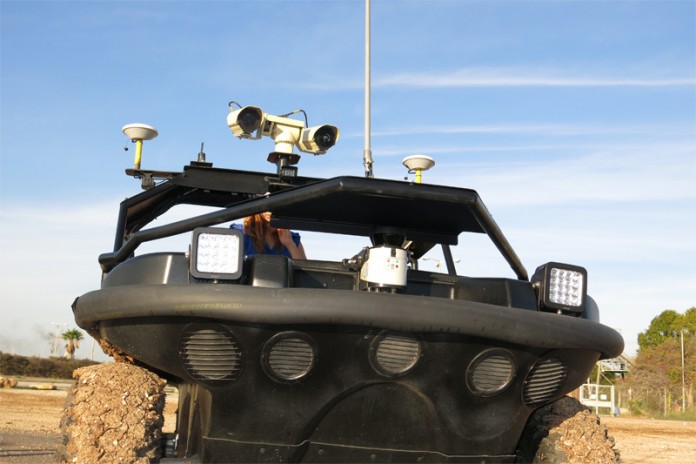
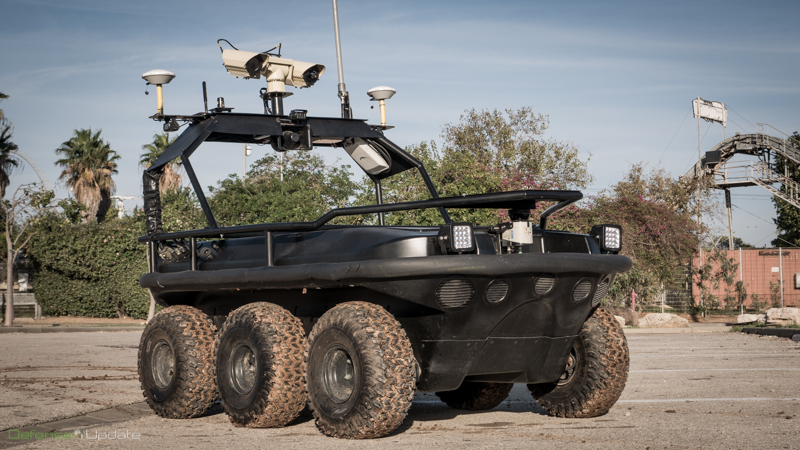
Amstaff 6 robot will perform several demonstration missions, including an amphibious ingress. Photo: Noam Eshel, Defense-Update
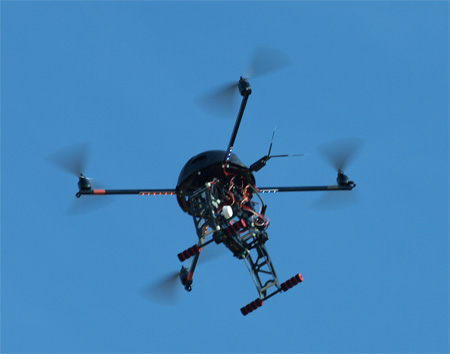
The ERE35 is making its debut at AUS&R 2014. The specially designed quadcopter can lift a payload of one kilogram and stay on a mission for up to 30 minutes. Photo: Noam Eshel, Defense-Update
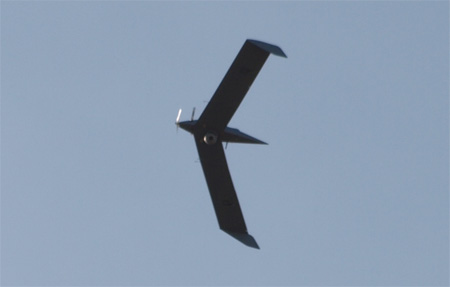
The international conference of autonomous, unmanned systems and robotics (AUS&R) taking place in Israel this week is Israel’s largest unmanned systems event. Held for the second year, AUS&R has become the showcase of Israel’s unmanned systems industry and operators. This year, the event will provide the world debut for several drones, including the Panther, Mini Panther and Birdeye 400 from IAI, the Skystar aerostat from RT, the ERE-35 quadcopter as well a number EOD/IED robots operated by the Israeli police. Another unique live display will be an innovative, autonomous robot designed to scan and detect subterraean activity while moving through sand. Other robots participating in the display include an amphibious variant of the Amstaff, MD4-1000 quad, and the Andros EOD robot and a robotic target from Projeep, designed to provide realistic training for military forces.
As all sensor feeds will be routed to the event’s video center, the audience will have the opportunity to witness an unprecedented live feed from the drone’s payloads, displayed on outdoor large display.
The exhibition will feature over 40 companies also provide the first public display of the Super heron, IAI’s latest drone, an unmanned surface vessel, emergency recovery measures for UAVs, and more.
IAI’s Birdeye 400 micro drone will provide live video feed from its Micro-POP payload. Photo: Noam Eshel, Defense-Update
See the experimental digger robot that can move underground
The presentations at the conference will discuss combat lessons learned from recent military operations, highlighting the role of the IDF Skyrider (Elbit Systems Skylark 1E) in recent combat, preparing air defense to combat drones (following the downing of three drones by Israeli Patriot missiles in recent months). The commander of the IDF Land Forces Command will also address the conference, along with presentations of the IDF robotic roadmap and discussion of new methods of protecting UAVs from EW and cyber threats. Other presentations will cover the use of robotics in subterranean scenarios; more presentations will also be provided representatives of Boeing, Lockheed Martin, Schiebel, IAI, Elbit Systems and more.
The live display and exhibition is open to the public, with registration.
Defense-Update is a media sponsor of AUS&R.
Video: Noam Eshel, Defense-Update
Amstaff 6 robot will perform several demonstration missions, including an amphibious ingress. Photo: Noam Eshel, Defense-Update
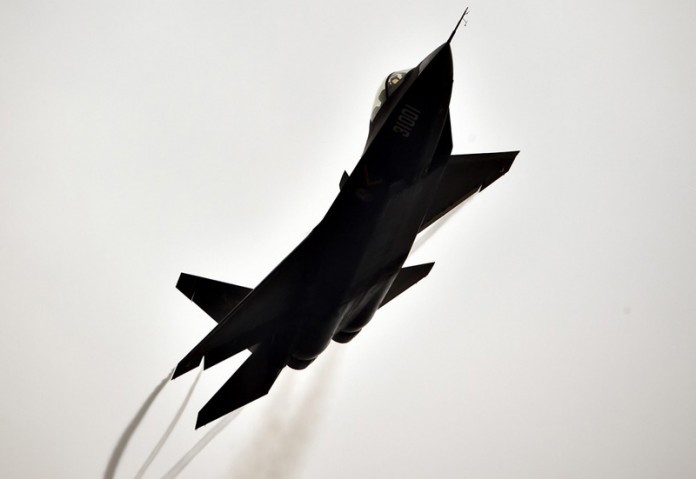
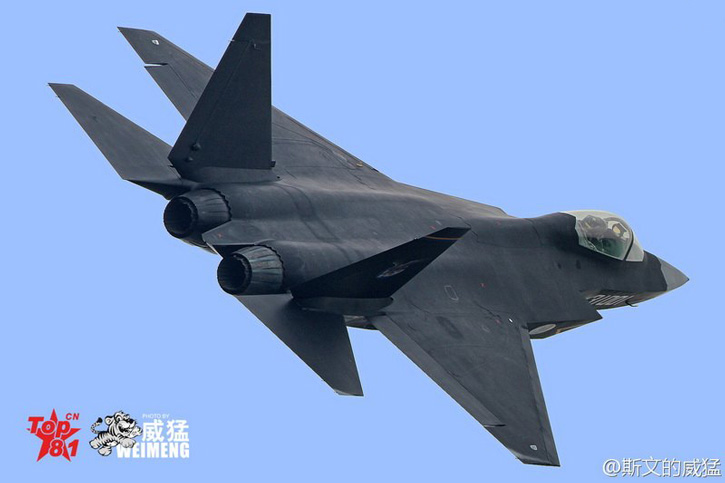
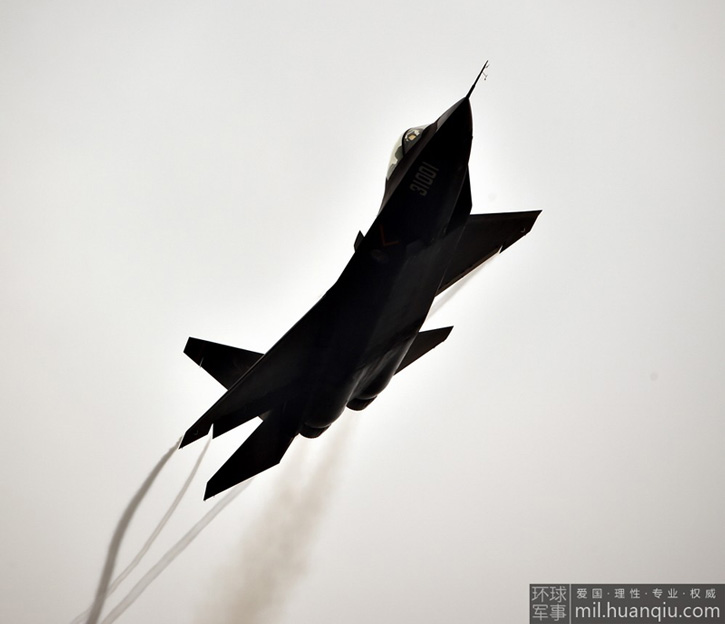
Shenyang FC-31 is positioned as China’s ‘4 generation stealth fighter’. When development is completed, the FC-31 will provide limited stealth capability with 4th generation avionics, at an affordable cost – all are important capabilities enabling air forces to diminish some of the advantages of 5th Generation fighters such as the F-35 and T-50. Photo: Weimeng
Pakistan is interested in acquiring a stealth fighter and has expressed interest in the newly unveiled Chinese FC-31. the Pakistani Dawn publication quoted Minister for Defence Production Rana Tanveer Hussain saying the matter was being discussed with Chinese authorities. According to media reports Pakistan is interested in acquiring 30-40 Shenyang FC-31s, an aircraft developed by China primarily for the export market.
A stealth fighter could provide Pakistan (and China) with limited strike capability within the Indian sub continent, since India currently lacks viable counter stealth radar capability
The export version of the new stealth fighter will be powered by two Russian Klimov RD-93 engines, the same engine that powers the JF-17 Thunder operated by the Pakistani Air Force. Mr Hussain added that Pakistan was also interested in Chinese Z-10 helicopter gunship.
The FC-31 was unveiled at the recent Airshow China 2014. Pakistan is one of several countries interested in the new stealth fighter. photo: Huanqiu
The British Ministry of Defence (MOD) intends to sell the Defense Support Group (DSG) providing life cycle support for British military combat vehicles in the UK and abroad, the MOD announced. The move follows a government directive that followed the Strategic Defense & Security Review (SDSR) published in 2010, that recommended this act as a cost saving measure. The sale is expected to be completed by March 2013.
The sale will also gives DSG access to the investment required to grow and transform the services it provides to the armed forces.
A buyer will continue to provide the front line with DSG ’s capabilities to maintain and repair key military equipment and manage the storage of the land vehicle fleet. And, if necessary, deploy personnel to provide in-theatre support to UK military operations overseas.
DSG’s turnover is in excess of £200m, with a workforce of around 2400 strategically located throughout the UK. DSG’s Head Office is located in Andover with main support sites located in Aldershot, Bicester, Kinnegar, Longmoor and Sennybridge. Additional support teams are permanently embedded in other UK military sites. One of these teams has also been based in Afghanistan at Camp Bastion.
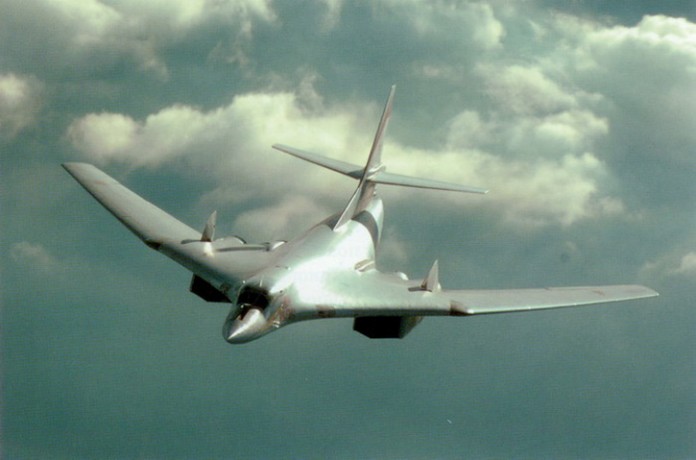
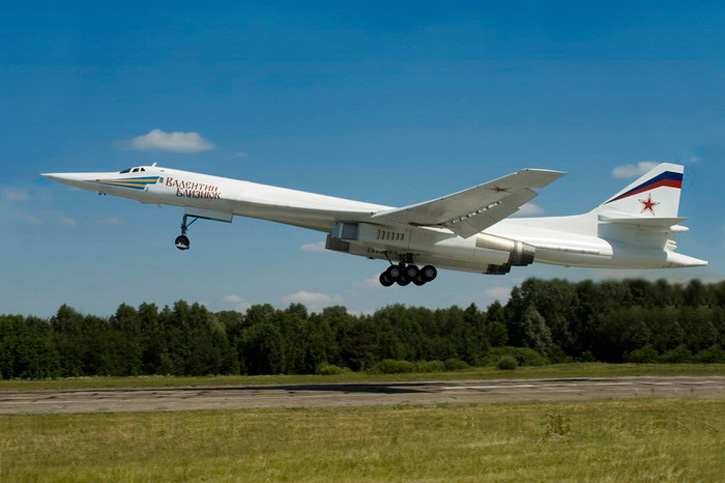
Tu-160 has a lift-generating airframe, which is mostly made of aluminum alloys. Titanium alloys make up to 20% of the airframe mass. The bomber’s airframe has a distinctive appearance, with the wing and fuselage gradually integrated into a single-piece configuration. The variable geometry wings (the sweep angle can be varied from 20 to 65) allow the aircraft to use complex flight profiles from low subsonic speeds to mach 2. Photo: UAC/Tupolev design Bureau
The first Tupolev Tu-160M Blackjack has completed its maiden flight after an avionic modernization that revamped the bombers’ radar and avionic systems in the past two years. The aircraft is one of three undergoing the upgrade, under a contract worth RUR3.4 billion (US$103 million) awarded in 2013.
The flight that lasted two hours and 40 minutes took off from the Kazan airfield, in the Tatarstan Republic, of Russia, where the upgrading work was processed by the aircraft’s builder.
The Blackjack is the Russian strategic bomber designed to match and even exceed the capability of the U.S. B-1B Lancer bomber. The Tu-160 was officially delivered to the Russian Strategic Force (VVS) in 1987 but was accepted into operational service 18 years later, reaching a fleet of 16 in 2008. Eight Tu-160 bombers were delivered to Russia from the Ukraine, these were part of 19 bombers delivered to the Ukraine Air Force before the collapse of the Soviet Union. The remaining Tu-160s were destroyed in 2001 as part of the nuclear disarmament of Ukraine.
Given this renewed strategic importance of the VVS fleet, it is likely that the funding to complete this upgrading plan will be allocated
Part of this fleet went through several upgrades to extend the life of the aircraft. As of 2013 the Russian Air Force had 11 Tu-160M on duty. 10 will receive engine refurbishment as part of another modernization scheduled to begin in 2016, when refurbished NK-32M engines are expected to be ready for delivery.
Tu-160 avionic suit includes a Missile Targeting and Navigation System (MTNS), a communications suite including a multichannel digital satellite communications system, self-defense system, automatic flight control and more. The MTNS provides for the automatic aircraft flight and use of weapons on all latitudes, day, night and in adverse weather conditions..
The NK-32M is a rebuilt, redesigned version of the Kuznetsov NK-321 turbofan engines, four of which will accelerate the Tu-160M to a maximum speed of Mach 2. The engine maker Metallist-Samara JSC has already built and bench tested the rebuilt engines but will be ready to deliver a flight ready engine only in two years.
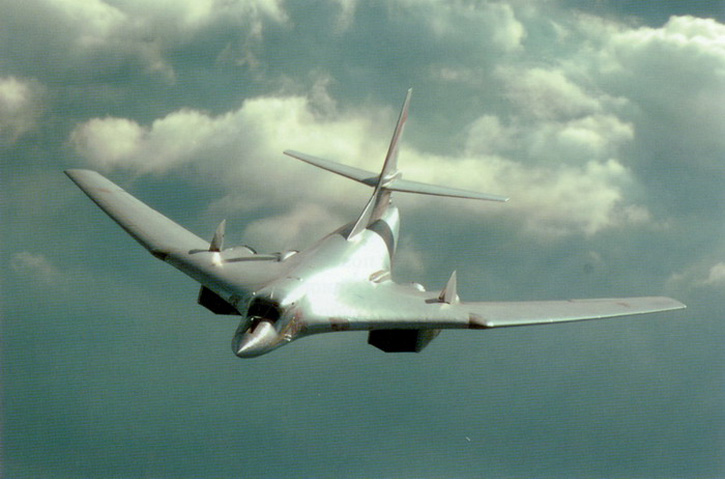
The partially upgraded Tu-160M made its maiden flight in November 2014, 33 years after the first ‘Blackjack’ prototype, the pride of the Soviet Union at the time, took to the airfor the first time in 1981. (Photo: UAC/Tupolev design Bureau)
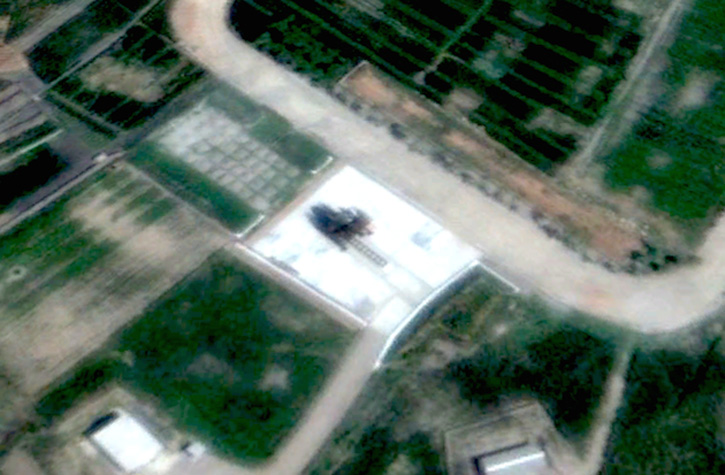
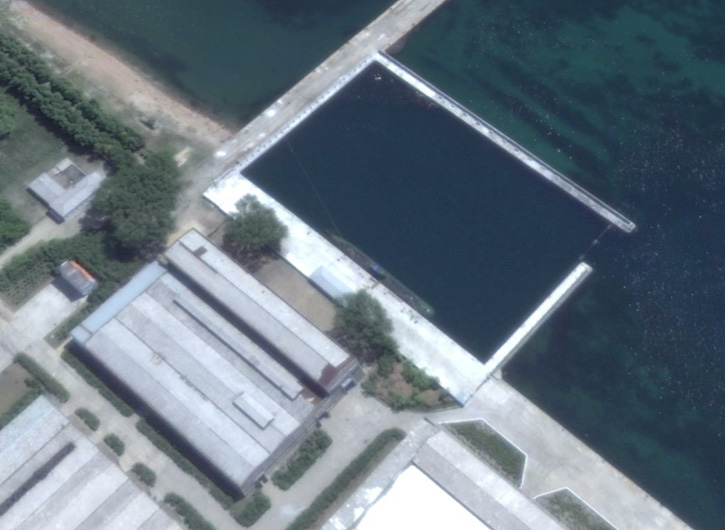
The U.S. publication said that U.S. intelligence agencies observed the land-based test of the ejection launcher in late October at a facility known to be a key development center for the communist state’s submarine-launched ballistic missile (SLBM) program. Photo via Google Earth.
North Korea recently conducted a test of an ejection launcher that U.S. intelligence agencies assess is part of Pyongyang’s recently discovered submarine-launched ballistic missile program – the 38 North website last month.
The U.S. publication said that U.S. intelligence agencies observed the land-based test of the ejection launcher in late October at a facility known to be a key development center for the communist state’s submarine-launched ballistic missile (SLBM) program. The source speculated that the launcher also could be used by North Korea to launch ballistic or cruise missiles from the deck of a freighter or other kinds of surface vessels.
U.S. intelligence agencies several years ago reported that North Korea acquired SS-N-6 SLBM missiles covertly from Russia. That missile was adapted by the North Koreans into a new intermediate-range ballistic missile. The missile was designed to be ejected from a submarine launch tube prior to ignition.
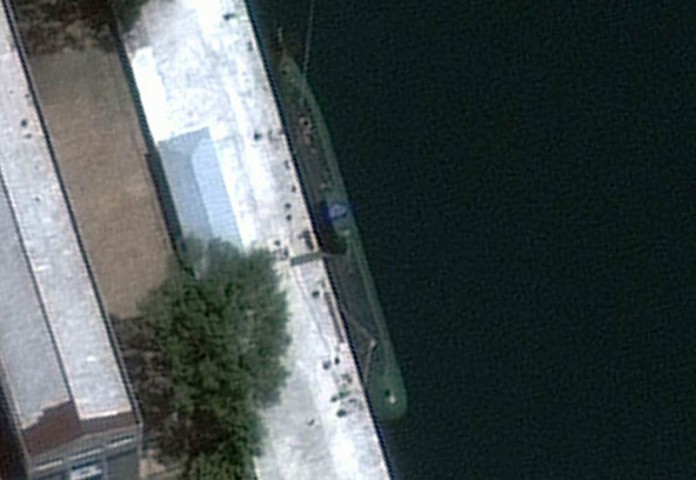
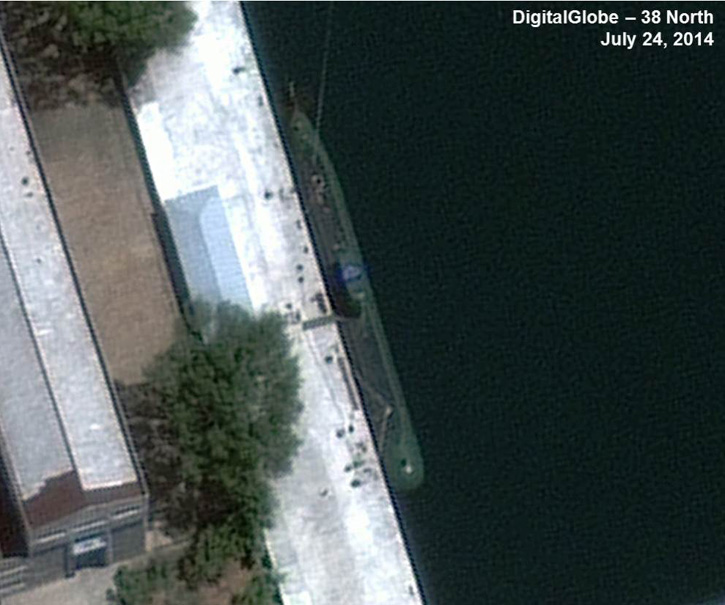
38 North analysis determined that the submarine spotted in this satellite imagery of Sinpo naval base is significantly smaller and bears a close resemblance to the former Yugoslav SAVA and HEROJ-class patrol submarines, neither of which carried ballistic missiles. Photo: Digital Globe via 38 North.
Earlier in November the South Korean publication Yonhap reported that North Korea has launched a new submarine capable of firing ballistic missiles. Yonhap quoted military and government sources in Seoul. “The communist country “is believed to have completed construction of the new submarine after importing a Soviet-era Golf-class diesel submarine and reverse-engineering it,” a government source said on condition of anonymity. The Soviet vessel was built in 1958 and decommissioned in 1990.” Yonhap said. “The new submarine is 67 meters long with a beam of 6.6 meters, and has a dived displacement in the 3,000-ton range,” the source said.
While the initial report has captured headlines, the 38 North site that provided much of the preliminary facts is raising caution about the true capability of the submarine and level of maturity of the North Korean SLBM program.
“The new class of submarine we identified at the Sinpo naval shipyard is not a Cold War-era GOLF II-class Soviet ballistic missile submarine. Our analysis is that the submarine is significantly smaller and bears a close resemblance to the former Yugoslav SAVA and HEROJ-class patrol submarines, neither of which carried ballistic missiles.” 38 North cautioned, adding “We have not identified any hatches, missile launch tubes or other indications that this new class of submarine is configured for the vertical launch of ballistic missiles.”
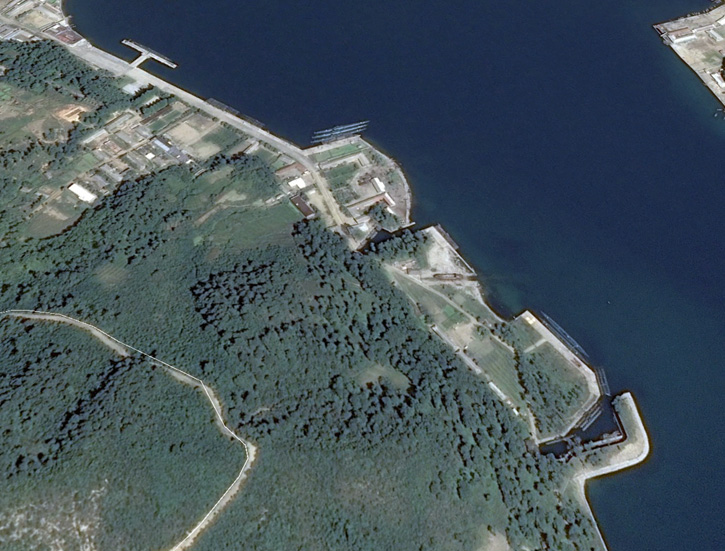
“The new submarine is 67 meters long with a beam of 6.6 meters, and has a dived displacement in the 3,000-ton range” South Korean sources said. Photo via Google earthThe submarine base at Chaho near the coastal town of Iwon, in North Korea, bases some of the DPRK’s operational submarines. The majority are obsolete Whiskey class and Romeo class subs, both diesel electric powered, of Russian origin that are not designed to carry vertical launchers for ballistic missiles. Photo via Google Earth
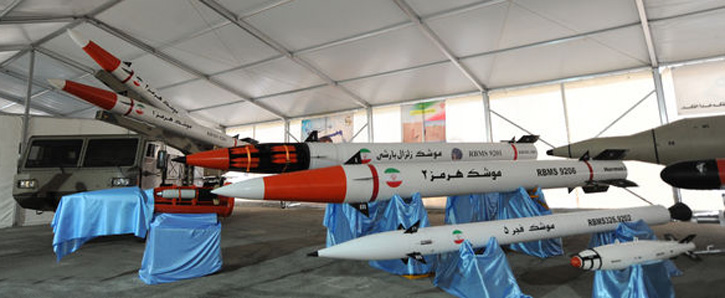
The latest configuration of the anti-ship and anti-radar variants of Fateh-110 missiles were shown in Iran in May 2014. Photo: Iran president website
By the early 1990s the Chinese design evolved into the indigenously developed Zelzal II, under a joint program with Syria. The rocket’s 610mm diameter determined the new designation for the weapon – M600. Using larger propellant tank, the missile’s range was extended to 250km, but at these ranges, its course deviation would render the weapon useless attacking ground targets with any military significance.
Fateh 110 was designed to rectify this problem and turn the free-flight rocket into a ballistic missile that would improve its precision even at maximum range. The missile was fitted with an inertial guidance system (INS) and guidance system controlling four canards correcting the missiles’ trajectory, by nulling deviations caused by atmospheric conditions (wind, pressure) and propulsion irregularities. The missile was first tested in 2010, reached a distance of 200 km carrying a warhead of 650 kg.
Iran is developing a broad range of ballistic guided rockets and missiles, from the JDAM like 250kg GPS guided bombs and 330mm Fajr 5 rockets and the 2000 km range class Sejil. The two Fateh-110 class missiles are Hormoz 1 and Hormoz 2, designed as anti-radiation (radar attack) missiles. The missile shown with black nose carries a load of 30 submunitions. Photo: Iran’s President Website
A fourth generation of the Fateh-110 was tested in 2012, demonstrating increased range (300km), increased payload (650 kg) improved precision and shorter reaction time. These missiles are now available with unitary warhead or cargo bay carrying up to 30 subminutions, each weighing 17 kg.
Iran and Syria attempted several times to supply the the Iranian supported, Lebanese Hezbollah group with the missiles, some of those shipments were struck by Israel Air Force attacks. However, apparently some deliveries reached their destinations, as in November 2014 Hezbollah announced it has in its possession guided missiles with adequate precision and range to attack any target in Israel.
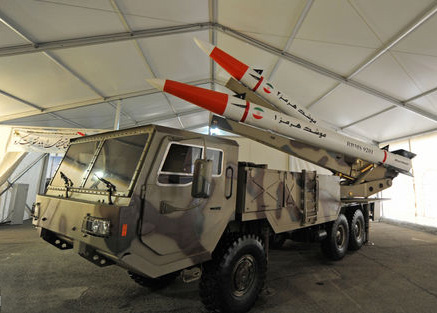
The Fateh 110 was originally developed using the SA-2 launcher but has since received a dedicated carriage. The missiles supplied to theHezbollah are believed to be stored and camouflaged in shipping containers, modified into transporter-erector-launcher (TEL) assembly. Photo: IRNA
In the past Israel’s intelligence uncovered those ‘semi strategic’ threats – in 2006 these were the Zelzal 2 missiles delivered from Iran. All those missiles were destroyed during the first hours of the 2006 Second Lebanon War, as part of Israel’s retaliatory attack after the killing of four and abduction of two soldiers by Hezbollah on the Israel-Lebanon border. Since then it was reported that Hezbollah received several dozens of Scud D missiles from Syria, but, as liquid-propelled missiles, their operation would bee too slow, enabling the Israelis to strike them before they are launched.
Deliveries of advanced, precise solid-propelled missiles has been regarded by Israel as a ‘red line’, triggering preemptive response. In 2013 the Israel Air Force attacked a shipment of similar missiles near the airport in Damascus. In the past year, Israel is said to have attacked six missile-laden convoys, as well as missile storage sites, both in Syria and Lebanon, in a bid to prevent Syria from delivering ballistic missiles, anti-ship and anti-aircraft to Hezbollah.
You are invited to join our Gold Membership to gain access to the full version of this analysis
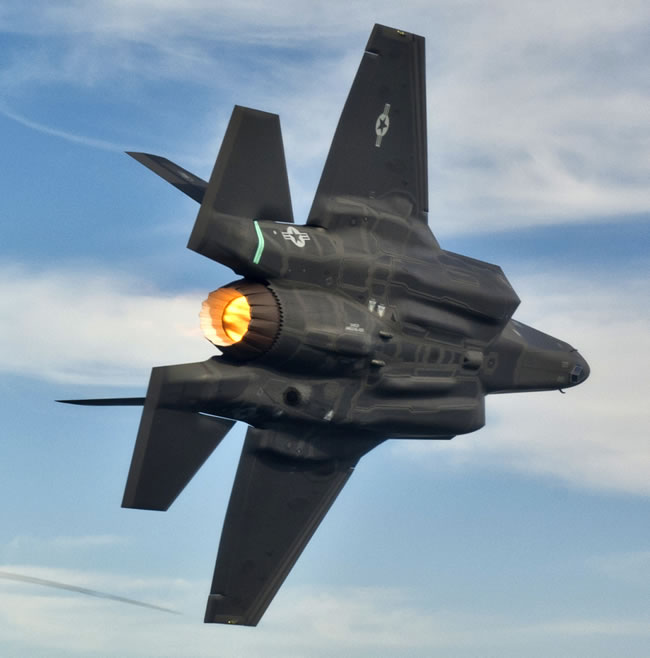
An F-35A aircraft slated for Operational Test at Nellis AFB, Nev., completes a check flight from the Fort Worth, Texas, F-35 factory Oct. 15, 2012 - Photo: Lockheed Martin
Updated November 24, 2014: Lockheed Martin has been awarded additional a $4,123 million contract, as a modification to the F-35 program, for the production of 43 F-35s under the eighth Low Rate Initial Production (LRIP Lot VIII) lot of the F-35 Lightning II aircraft. The acquisition includes 29 F-35A models, 10 Short Take Off/Vertical Landing (STOVL) F-35Bs and four carrier based C models.
The contract combines purchases of 19 F-35A aircraft for the U.S. Air Force ($1.7 billion), 7 for the Marine Corps (F-35B and C for $557 million) and three F-35C for the Navy ($491 million). It also include funds of $788 for the manufacturing of four F-35A for Italy and Norway and four F-35B for the UK. The contract also allocates $557 million for the production of six specially configured F-35As for Japan and Israel.
These amounts are not covering $793 million allocated to the procurement of F135 propulsion systems for those fighters, included in a previous contract awarded to Pratt & Whitney last month. Additional spending were included in long lead contracts worth $333 million awarded to Lockheed Martin last year, which bring the total cost of this lot to about $5.25 billion.
The lowest cost per aircraft will be paid by the US Air Foce, receiving 19 F-35A models, which are the least costly of the series. Despite the effort to reduce the aircraft cost below $100 million, the Air Force is paying no less than $111 per plane (including engines but excluding R&D).
The actual costs of the B and C models are not clearly defined in the Pentagon announcements, due to the mix of the two models’ propulsion and long lead procurements, under the Navy’s share.
The Pentagon claim that the current procurement reflects a cost reduction of 3.6 percent over LRIP VII and that more reductions will come into effect in the next batch of production, eventually bringing the aircraft cost down to around $90 million, which is comparable to current 4.5 generation fighters.
According to prime contractor Lockheed Martin, LRIP 8 contract terms continue to eliminate the government’s exposure to risk by having Lockheed Martin cover 100 percent of any cost overruns. “The government and Lockheed Martin will share returns derived from any underruns in target cost (20 percent for government and 80 percent for Lockheed Martin), the company announced. “The contract also includes a concurrency clause which requires Lockheed Martin to share costs equally with the government (50/50) for known concurrency changes arising from System Development and Demonstration testing and qualification. Newly discovered concurrency changes identified during the LRIP 8 production period will be authorized via engineering change proposals.” company spokesman commented.
The LRIP 8 contract contains performance-based payments, whereby the contractor will receive incremental payment as specified performance criteria are achieved along the production line until government aircraft acceptance.
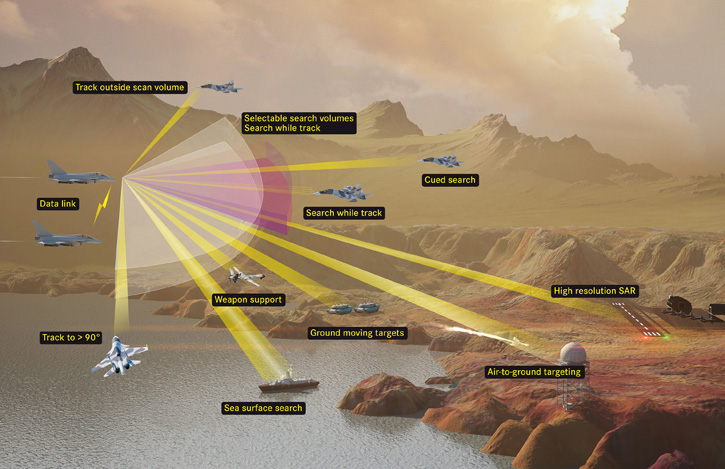
Another new feature is the repositioned antenna offering an extremely wide field of regard (WFoR). With this repositioned function it will maintain a 200 degree field of regard, significantly larger than typical ‘fixed plate’ AESA radars, giving Typhoon a significant tactical advantage in air combat and greater situational awareness.
As an E-scan (AESA) radar, the Captor-E’s simultaneous multi-tasking ability means that the pilot is able to scan a wide area in front of the aircraft or on the ground, while identifying ground targets or tracking individual flying objects at the same time.
The Eurofighter Typhoon will be equipped with Captor E – a new generation of electronically scanned radar to be produced by a consortium of European electronics companies lead by Selex, Indra and Airbus Defense and Space. The new radar’s simultaneous multi-tasking ability means that the pilot is able to scan a wide area in front of the aircraft or on the ground, while identifying ground targets or tracking individual flying objects at the same time.
The contract covering the development of a new, electronically scanned radar , Captor-E to equip the Eurofighter Typhoon in service with four NATO air forces has been approved recently, during a meeting of the defence state secretaries of the Eurofighter nations (Great Britain, Germany, Italy and Spain).
Europe has been lagging behind the USA in the introduction of AESA radar technology; similar radars have already been deployed with US Air Force F-15s, US Navy F/A-18s, and F-16s in the UAE. A smaller AESA radar has also been developed for the Gripen E, and the French Rafale. According to Euroradar, the Captor E will be superior of contemporary AESA radars designed with fixed antennae. The new design enables an increased range in target acquisition and target tracking and, thanks to the rotating antenna, a considerably larger field of view, compared to other state-of-the-art combat aircraft.
In addition to the multi-tasking capability, the new Captor E-Scan radar will offer significant advantages over the mechanical M-Scan, including increased detection and tracking ranges, advanced air-to-surface capability and enhanced electronic protection measures.
Compared to the current radar, Captor E will have a larger antenna size allowing the use of greater number of TRMs (transmitter receiver modules) thus greater power and reception leading to earlier target detection and greater utility across the EW spectrum.
Another new feature is the repositioned antenna offering an extremely wide field of regard (WFoR). With this repositioned function it will maintain a 200 degree field of regard, significantly larger than typical ‘fixed plate’ AESA radars, giving Typhoon a significant tactical advantage in air combat and greater situational awareness.
Another new feature is the repositioned antenna offering an extremely wide field of regard (WFoR). With this repositioned function it will maintain a 200 degree field of regard, significantly larger than typical ‘fixed plate’ AESA radars, giving Typhoon a significant tactical advantage in air combat and greater situational awareness.
The new radar will be designed with significant growth potential. The radar will fit both Tranche 2 and Tranche 3 aircraft offering customers the freedom to retrofit their existing Eurofighter Typhoon aircraft when required. Eurofighter and Euroradar officials stated that existing and new customers will be able to participate in tailoring the radar to meet their individual operational requirements.
The contract worth about 1 billion euro (£800 million) covers the development of the new, multi-tasking radar . The new radar is being developed by Eurofighter Jagdflugzeug GmbH and the Euroradar consortium comprising Selex ES (Great Britain, Italy), Indra (Spain) and Airbus Defence and Space (Germany). The consortium has already developed and produced more than 400 Captor radars for the Typhoons currently deployed with the partners’ air forces and abroad .
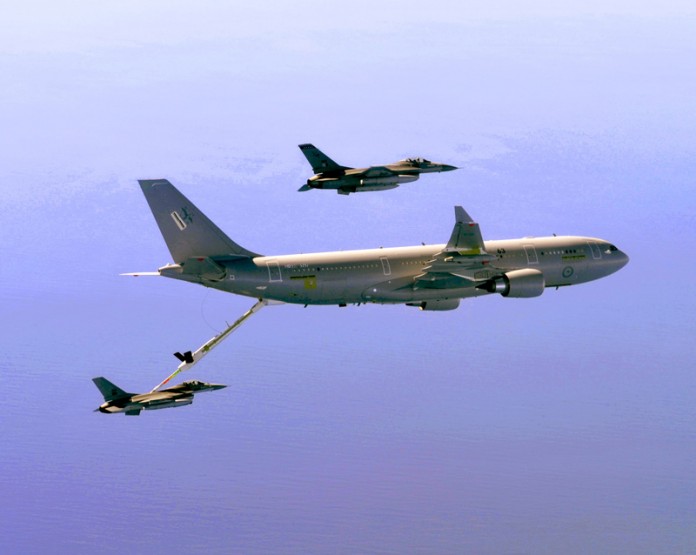
RAAF A330 MRTT (KC-30A) with hoses out. Photo: Airbus
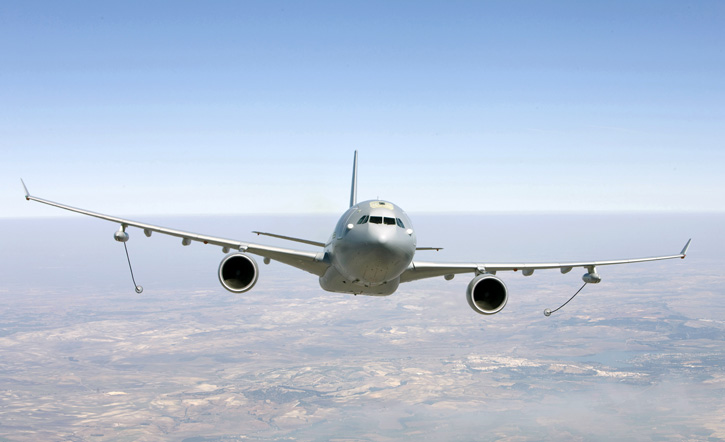
Airbus Defence and Space has been selected by the French Ministry of Defence to supply 12 A330 MRTT new generation air-to-air refuelling aircraft for the French Air Force. The first delivery is foreseen for 2018, followed by the second in 2019, and then at a rate of one or two per year. According to the French ministry of Defense the contract amount is about 3 billion euros. The French Air Force chose to name the new aircraft“Phoenix”.
According to Airbus, the contract agreed between the French procurement agency (DGA) and Airbus Defence and Space is now ready for official award. The contract covers the development and qualification of the specific French configuration as well as the associated support and training systems, such as spares, ground support equipment, training devices and five years of in-service support from first delivery.
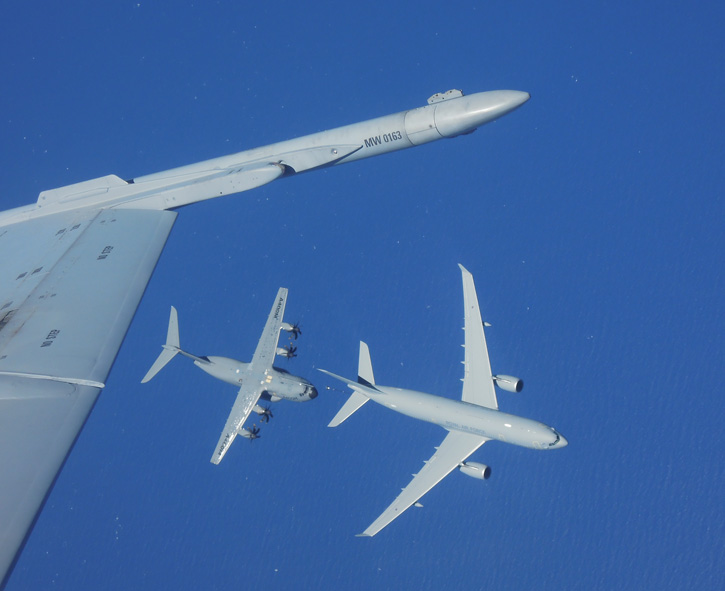
Airbus A330 MRTT tanker aircraft refuels an Airbus A400M transport plane. Photo: Airbus
The A330 MRTT has won every major tanker aircraft procurement competition outside the USA since it has entered the market. France’s choice of the A330 MRTT makes it the sixth nation to order the type following Australia, Saudi Arabia, Singapore, the United Arab Emirates, and the United Kingdom which have ordered a total of 34 aircraft. In addition, India and Qatar have selected the MRTT and are in the final stages of contractual negotiations for six and two aircraft respectively. A total of 22 aircraft are currently in service and the aircraft has been battle-proven in recent coalition actions.
In French service the A330 MRTT will replace the KC-135F currently operated by the French Air Force. The A330 will be powered by Rolls-Royce Trent 700 engines, and be equipped with a combination of the Airbus Refuelling Boom System and underwing hose-and-drogue refuelling pods. It will be configured in a variety of layouts carrying up to 271 passengers or flying MEDEVAC or medical treatment arrangements, including the French MORPHEE intensive care module carrying up to ten patients as well as 88 passengers.
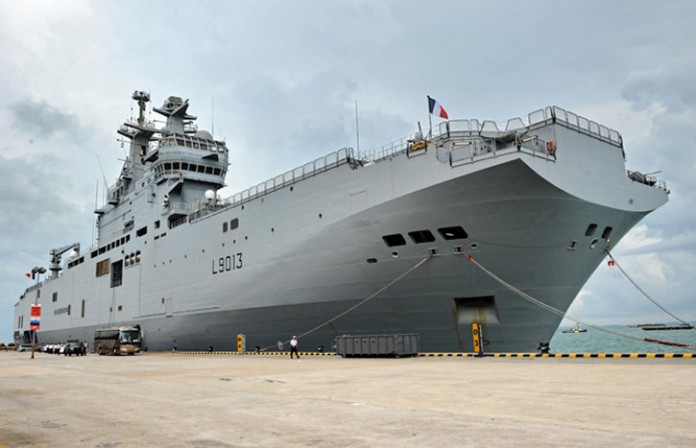
Russia’s envoy to NATO, Alexander Grushko said that Moscow will not rule out legal action against France if it fails to honor its contractual obligation to to deliver the two Mistral-class amphibious assault ships.
Russia and France signed a $1.6 billion deal for two Mistral-class ships in June 2011. The vessels, capable of carrying 16 helicopters, four landing craft, 70 armored vehicles and 450 troops, are expected to join Russia’s Pacific Fleet.
Russian Deputy Navy Commander Vice Admiral Alexander Fedotenkov has been appointed to take command of transferring the first Mistral-class helicopter carrier, the Vladivostok, from France to Russia.
Originally scheduled for November 14, the delivery has been postponed, as the ship has fallen under the sanctions imposed by the west on Russia. In October, French President Francois Hollande threatened to suspend the ship’s delivery. Russia has condemned France’s failure to deliver on its contractual obligations, saying Paris would have to pay a large penalty if the deal was cancelled.
#OpSaveAlAqsa is new cyber-attack campaign against Israel
As tensions between Israelis and the Palestinians have increasingly risen, hactivists AnonGhost called for a new cyber protest against Israel. The new campaign is named #OpSaveAlAqsa, in reference to the Israel blockade of al Aqsa Mosque in Jerusalem. The group was able to hack the homepage of the United Nations and claimed to hack numerous Israeli websites. According to a Hamas affiliated Palestinian Information Center, Anonymous would also have a cyber protest on November 14th targeting stating: “We and other groups decided to get together and attack Israeli government sites, bank sites, and all Israeli Internet users.” Furthermore, the group mentioned it would attack defense establishment websites in order “to punish Israel for keeping Arab worshippers out of their mosque.” Nevertheless, as proven in previous Anonymous attacks, the current protests have done little damage to Israeli cyberspace. The inefficacy of the cyber protests can be attributed to the people behind AnonGhost and Anonymous producing these attacks, as they lack the technological accessibility and intelligence information needed to create an effective and useful cyber-attack against Israeli cyberspace.
Israeli Trojan Horse Scam
Social engineers on Facebook impersonated Israeli cell phone company Cellcom, attempting to get users download a Trojan horse. The hackers used Facebook Paid post claiming to be from Cellcom official Facebook page, linking the paid ad to a program that professed to give users a phone book of all company clients.
USA
Postal service hit by cyber-attack; US suspects China
The United States Postal Service (USPS) stated that it has been the victim of “a cyber-security intrusion” exposing the employment records of more than 800,000 employees. The FBI is investigating the source of the cyber-attack, which appears to have originated from China. Accordingly there has been “no evidence” that any customer credit card information was exposed, but the cyber-attack compromised some call center data and may have swept up names, addresses, telephone numbers, and email addresses. China is suspected to be the primary responsible actor for this cyber-attack against the USA Postal Service. China is among the world’s best players at intruding foreign government computer systems, and the agency was first alerted of suspicious activity in the middle of September. The cyber-attack breached into the office of the Postal Regulatory Commission, the U.S. Postal Inspection Service, and the Postal Service Office of the Inspector General. “We have recently implemented additional security measures designed to improve the security of our information systems, including certain actions this past weekend that caused certain systems to be off-line,” said spokesman of USPS, David Partenheimer.
RUSSIA
Russia needs funds to support domestic software development
Recently, the Minister of Communications of Russia, Nikolai Nikiforov, said that to support domestic software developers asubstantial cash infusion is needed. The general director of Telecom Daily, Kuskov Denis, commented on the statement of the Minister. In an interview published by The Kommersant, he stated that monetary support from the government is not enough to guarantee the creation of competitive Russian software products. According to him, the ministry must understand that in Russia there is no software that can successfully replace the foreign programs. Existing developments are extremely limited and locally characterized, and for the full replacement of corporate software there is a need to create their own analogs of MS Office, Windows, and Linux. With the Russian cyber industry being in a state of deep stagnation, he believes that the development of domestic software will need a creation of a national scale project involving both government and private investments.
MIDDLE-EAST
NATO helps Jordan fend off ISIL cyber threat
Over recent years, NATO has been strengthening its membership of cyber defense capabilities of its countries and partners by creating the NATO Science for Peace and Security (SPS) project. As part of this initiative, NATO is setting up a cyber defense in Jordan’s key infrastructure, such as electricity grids, dams, energy network and more. SPS will assist Jordan’s implementation of its National Cyber Defense Strategy.
CHINA and APAC
Vietnam increasing cyber cooperation
In a recent article, Jessica Woodall, an analyst in ASPI’s International Cyber Policy Centre, describes how and why cyber-security can help Australia take its existing engagement with Vietnam to the next level. Along with other countries, including the US, Japan, Russia, and India, Australia is seeking a stronger relationship with a partner in a geographically important location and a warmer friendship with Association of Southeast Asian Nations (ASEAN) main players. As an indication that cyber issues are important to Vietnam, Microsoft Vietnam and the Vietnam Information Security Association (VNISA) recently signed a Memorandum of Understanding (MoU), aimed at strengthening information security and privacy in Vietnam while addressing increasing security risks in the country.
China, Japan, and Republic of Korea hold cyber security meeting in Beijing
Senior diplomats from China, Japan, and the Republic of Korea met in October, 2014, in Beijing for a cyber-security meeting with the intention of enhancing trust and cooperation. This was the first meeting since the three states established a cyber-security consultation mechanism earlier this year. Each of the participants introduced their own cyber works (i.e. policies, institutions, etc.) and discussed cyberspace norms and procedures for combating cyber-crime and terrorism, as well as Internet emergency response cooperation. Among the issues discussed was the idea of collaboration with other Association of Southeast Asian Nations (ASEAN) regional forum members and BRICS – Brazil, Russia, India, China, and South Africa.
EUROPE
UK signs agreement with Qatar to fight Jihad and cyber threats
The United Kingdom and Qatar recently signed an agreement on Jihad and cyber warfare issues. Emir of Qatar, Sheikh Tamim bin Hamad al-Thani, and the UK Prime Minister, David Cameron, met in London a few days ago to sign the security pact. Both countries agreed to share classified intelligence in order to track and counter jihadists and cyber warfare operations. This agreement includes close cooperation with the UK GCHQ cyber intelligence agency on cyber threats and fighting terrorism. On the top, the UK will sell Qatar cyber security products and services in order to strengthen their security measures. This cooperation arrives at a crucial period for the Middle East as the Islamic State attempts to annihilate the entire Middle East region through terrorist acts. In terms of security and cyber, Qatar could not find a better partner than Great Britain. A month ago in Kuwait, the United States also affirmed its desire to cooperate with Europe and Arabs countries in order to fight the Islamic State, which is currently the most significant terrorist threat to Middle East and West.
Germany is currently developing cyber intelligence capabilities in order to prevent future cyber-attacks. According to Germans, this new development is an “early warning” system which is capable of detecting imminent foreign cyber-attacks. Germany decided to develop such system due to several cyber threats coming from different foreign countries including China, Russia, and Islamic hacking groups. The system will mainly monitor foreign social media. According to the Sueddeutsche Zeitung, the Germany Federal Intelligence Service will invest €28 million into its Strategic Technical Initiative of 2015. Germany began to realize the importance of cyber intelligence as open source intelligence is a powerful strategy, especially to monitor social media and websites, which can help gather valuable intelligence in order to prevent cyber-attacks. Hacktivists often publish on the Internet their cyber-attack campaigns targeting governments and corporations, which makes these social networks a great platform for open source intelligence. Germany is not the only country to adopt this strategy; the US and UK are using such systems to monitor cyber events and prevent future cyber-attacks against their governments.
Was Warsaw Stock Exchange breached by ISIS criminals?
The Poland premier of the Warsaw Stock Exchange (WSE) stated that their website was breached. The website was unavailable for over two hours to investors and brokers, and the WSE confirmed the hack in an email to all members. The hackers attacked the system and stole approximately 30 MB of investor’s details as well as the IP addresses of servers and network infrastructure maps. Through the hackers, leaked data was posted with English-language comments referring to “Allah” and mentioned revenge for attacks on their country. The president of WSE, Donald Tusk, stated: “The Polish government must be strong and effective against cyber-attacks.” As a consequence of the cyber-attack, there have been over 30,000 login and password credentials stolen from Warsaw investors and brokers. Furthermore, the breach was apparently in retaliation for the air strikes campaign against the Islamic State, as hackers responsible for the cyber-attack conveyed sympathy with ISIS. Poland recently announced they will provide political support to the United States on attacks against ISIS insurgents in Iraq and Syria.
About the Cyber Intelligence Report:
This document was prepared by The Institute for National Security Studies (INSS) – Israel and The Cyber Security Forum Initiative (CSFI) – USA to create better cyber situational awareness (Cyber SA) of the nature and scope of threats and hazards to national security worldwide in the domains of cyberspace and open source intelligence. It is provided to Federal, State, Local, Tribal, Territorial and private sector officials to aid in the identification and development of appropriate actions, priorities, and follow-on measures. This product may contain U.S. person information that has been deemed necessary for the intended recipient to understand, assess, or act on the information provided. It should be handled in accordance with the recipient’s intelligence oversight and/or information handling procedures. Some content may be copyrighted. These materials, including copyrighted materials, are intended for “fair use” as permitted under Title 17, Section 107 of the United States Code (“The Copyright Law”). Use of copyrighted material for unauthorized purposes requires permission from the copyright owner. Any feedback regarding this report or requests for changes to the distribution list should be directed to the Open Source Enterprise via unclassified e-mail at: [email protected]. CSFI and the INSS would like to thank the Cyber Intelligence Analysts who worked on collecting and summarizing this report.
Lockheed Martin Skunk Works® and XTEND have achieved a major milestone in JADC2 by integrating the XOS operating system with the MDCX™ autonomy platform. This technical breakthrough enables a single operator to simultaneously command multiple drone classes, eliminating the friction of mission handoffs. From "marsupial" drone deployments to operating in GPS-denied environments, explore how this collaboration is abbreviating the data-to-decision timeline and redefining autonomous mission execution.
As traditional defense primes face mounting competition from agile “neoprimes” such as Anduril, Palantir and Helsing, the balance of innovation is shifting toward software-defined warfare and scalable, dual-use technologies, while global industry consolidation—marked by Boeing’s integration of Spirit AeroSystems and other strategic mergers—signals an intensified race to secure control over the defense technology value chain. Our Defense-Tech weekly report highlights these trends.
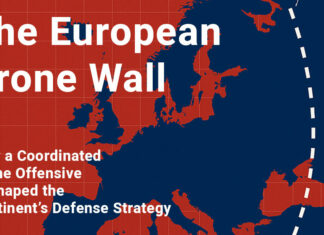
In early October 2025, a coordinated wave of unmanned aerial system (UAS) incursions—widely attributed to Russia—targeted critical infrastructure across at least ten European nations. The unprecedented campaign exposed the fragility of Europe’s air defenses...
Executive Summary
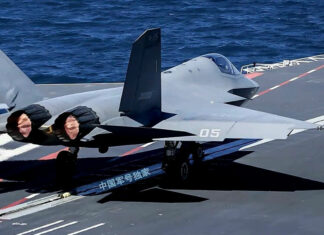
The past week (September 18-25, 2025) represents an inflection point where strategic defense concepts have transitioned from doctrine to tangible reality. An analysis of global events reveals four primary, interconnected trends shaping an...
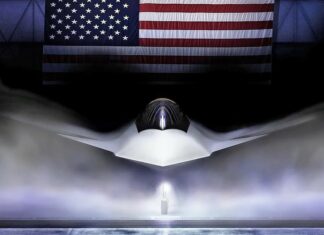
At the 2025 Air, Space & Cyber Conference, U.S. Air Force and Space Force leaders unveiled major updates on next-generation fighters, bombers, unmanned systems, and space initiatives, highlighting both rapid innovation and critical readiness challenges as the services race to outpace global competitors. A short version is available here, with a more detailed version for subscribers.
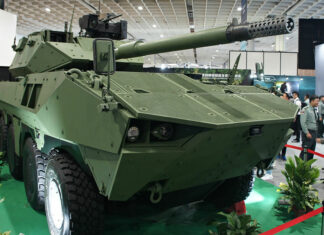
The Taipei Aerospace & Defense Technology Exhibition (TADTE) 2025 crystallized around four dominant strategic themes that collectively illustrate Taiwan's comprehensive approach to defense modernization amid escalating regional tensions. Based on a detailed report by Pleronix (available upon request). Includes a Podcast discussion on TADTE 2025's highlighting Taiwan's four strategic themes beyond the post's coverage.
Israel’s Iron Beam 450 high-power laser system has completed final testing, marking a major leap in air defense. Developed by Rafael, it offers precise, cost-effective interception of rockets, UAVs, and mortars, and is set for IDF deployment by 2025.