
Market Research and Other Other Regional Defense Updates:
Afghanistan | Australia | Brunei | Bangladesh | China | India | Indonesia | Japan | Malaysia | Myanmar |
North Korea | Pakistan | Philippines | Singapore | South Korea | Sri-Lanka | Taiwan | Thailand | Vietnam.
- Skunk Works and XTEND Simplify Multi-Drone Command Dec 18, 2025
 Lockheed Martin Skunk Works® and XTEND have achieved a major milestone in JADC2 by integrating the XOS operating system with the MDCX™ autonomy platform. This technical breakthrough enables a single operator to simultaneously command multiple drone classes, eliminating the friction of mission handoffs. From “marsupial” drone deployments to operating in GPS-denied environments, explore how this collaboration is abbreviating the data-to-decision timeline and redefining autonomous mission execution.
 - From Ukraine to Taiwan: The Global Race to Dominate the New Defense Tech Frontier Oct 17, 2025
 As traditional defense primes face mounting competition from agile “neoprimes” such as Anduril, Palantir and Helsing, the balance of innovation is shifting toward software-defined warfare and scalable, dual-use technologies, while global industry consolidation—marked by Boeing’s integration of Spirit AeroSystems and other strategic mergers—signals an intensified race to secure control over the defense technology value chain. Our Defense-Tech weekly report highlights these trends.
 - Europe’s “Drone Wall” Oct 12, 2025
 In early October 2025, a coordinated wave of unmanned aerial system (UAS) incursions—widely attributed to Russia—targeted critical infrastructure across at least ten European nations. The unprecedented campaign exposed the fragility of Europe’s air defenses and triggered a continent-wide response now known as the “Drone Wall” initiative. The new report, Drone Wall: Europe’s Response to the October 2025 Drone Incursions, offers a detailed account of these events and their far-reaching implications for defense strategy, procurement, and industry dynamics. The report traces the evolution from initial attacks to the rapid formation of a unified European effort to counter the growing drone threat. A Strategic Wake-Up Call The October attacks underscored a new reality of hybrid warfare: adversaries can achieve strategic effects using low-cost drones that overwhelm traditional defenses. Expensive missile systems and fighter aircraft were forced into reactive roles—unsustainable against swarms of expendable aerial threats. The Drone Wall initiative emerged as a direct response. Backed by the European Commission, NATO, and several EU member states, the program aims to establish a multi-layered, networked defense grid across the continent, integrating detection, electronic warfare, and kinetic interception capabilities. Inside the Report The Drone Wall study examines: The chronology and scope of the European drone incursion campaign. The tactics, systems, and motivations behind the attacks. The operational and psychological impact on European states. Identified defense gaps and the architecture of the “Drone Wall” response. The complex procurement framework involves the EU, member states, and NATO. Market opportunities for counter-UAS (C-UAS) systems, radars, and C2 integration. Industry Implications The creation of the Drone Wall represents the most significant market opportunity for C-UAS technology in a generation. Demand is rising for integrated, affordable, and scalable systems capable of delivering the full kill chain—from detection to interception—within networked command-and-control frameworks. Firms that can offer cost-effective, multi-layered, and interoperable solutions, or partner with local European manufacturers, stand to benefit most. The report highlights the ...
 - Weekly Defense Update & Global Security Assessment Sep 25, 2025
 Executive Summary The past week (September 18-25, 2025) represents an inflection point where strategic defense concepts have transitioned from doctrine to tangible reality. An analysis of global events reveals four primary, interconnected trends shaping an increasingly contested international order. #1 – European defense postures are materially hardening, with a strategic shift from deterrence by reinforcement to deterrence by denial, led by Germany’s military expansion and a firmer NATO stance on airspace violations. #2 – the character of future warfare is rapidly maturing, driven by the industrial-scale development of collaborative combat aircraft (CCAs), the democratization of long-range precision strike capabilities, and a doctrinal revolution in armored warfare inspired by the conflict in Ukraine. #3 – The Middle East is undergoing a profound realignment of security partnerships, catalyzed by Israeli technological breakthroughs in laser defense and a crisis of confidence in the U.S. security umbrella, culminating in a historic mutual defense pact between Saudi Arabia and Pakistan. #4 – The Indo-Pacific theater is characterized by a sharpening of strategic competition, with the U.S. and its allies operationalizing new trilateral security structures while China intensifies its multifaceted campaign of coercion against Taiwan. Underpinning these shifts is a renewed global focus on the industrial and organizational foundations of military power, signaling that nations are now making the hard investments and difficult choices required to posture for a more dangerous and uncertain future. You are invited to listen to the overview of this week’s report in the podcast. .
 - U.S. Air and Space Forces Push Next-Gen Programs at the AS&C 2025 Conference and AFA Exhibition Sep 24, 2025
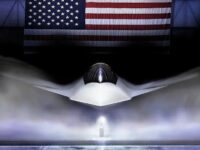 At the 2025 Air, Space & Cyber Conference, U.S. Air Force and Space Force leaders unveiled major updates on next-generation fighters, bombers, unmanned systems, and space initiatives, highlighting both rapid innovation and critical readiness challenges as the services race to outpace global competitors. A short version is available here, with a more detailed version for subscribers.
 - TADTE 2025: Reflecting Taiwan’s Strategic Themes Sep 22, 2025
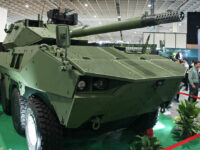 The Taipei Aerospace & Defense Technology Exhibition (TADTE) 2025 crystallized around four dominant strategic themes that collectively illustrate Taiwan’s comprehensive approach to defense modernization amid escalating regional tensions. Based on a detailed report by Pleronix (available upon request). Includes a Podcast discussion on TADTE 2025’s highlighting Taiwan’s four strategic themes beyond the post’s coverage.
 - Iron Beam 450 Completes Testing, Soon to Join With Operational Air Defense Units Sep 17, 2025
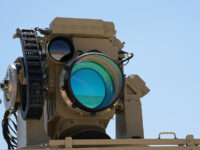 Israel’s Iron Beam 450 high-power laser system has completed final testing, marking a major leap in air defense. Developed by Rafael, it offers precise, cost-effective interception of rockets, UAVs, and mortars, and is set for IDF deployment by 2025.
 - WB Group Unveils Future Task Force Concept at MSPO Sep 4, 2025
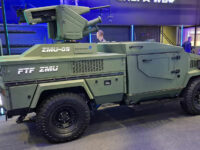 WB Group unveiled its Future Task Force (FTF) at MSPO, a new warfighting concept integrating manned, unmanned, and autonomous systems. Combining hybrid-electric vehicles, loitering munitions, and AI-enabled command tools, the FTF is designed to sustain firepower and autonomy while reducing battalion size and logistical footprint.
 - Poland’s Defense Industrial Revolution Takes Center Stage at MSPO Sep 1, 2025
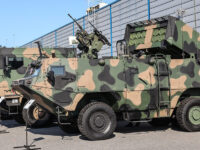 MSPO 2025 in Kielce is the premier showcase of Poland’s historic military expansion. Driven by a defense budget exceeding 4.7% of GDP, the exhibition highlights Warsaw’s ambition to become a leading European military power through its “Polonization” industrial strategy, a pivot to unmanned systems, and diverse global partnerships that are reshaping NATO’s eastern flank.
 - Turkey Forges Military Identity Amidst Regional Power Dynamics Shift Aug 31, 2025
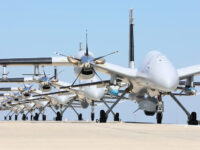 Turkey is reshaping its defense identity with record exports, KAAN fighter milestones, ALTAY tank deliveries, and the multi-layer “Steel Dome” air-defense concept. IDEF 2025 showcased these advances, alongside naval exports and unmanned systems that position Ankara as an increasingly assertive defense actor regionally and globally.
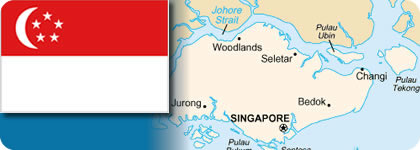
Research Focus: Singapore Defense Market
The Singapore Defense Industry Market Opportunities and Entry Strategies, Analyses and Forecasts to 2016
Singapore has the largest defense expenditure in South East Asia, and, in 2008, the country had the world’s fourth-largest per capita defense expenditure, behind only Israel, the US and Oman. The country’s defense expenditure is high due to the small size of the country’s armed forces and consequent ever-present requirement to upgrade the country’s defense equipment and procure advanced technology in order to compensate for the country’s lack of manpower.
The full 151 page report (dated December 2011) is available from Defense-Update ICD for $1,250.-
Send your request to ICD sales department.
Singapore has the largest defense expenditure in the South East Asian region, and the country’s defense spending is expected to increase substantially by 2016. The country’s defense expenditure is primarily driven by the threat of terrorist organizations such as Jemaah Islamiah, and the country’s focus on the protection of important trade routes, such as the Strait of Singapore and the Strait of Malacca, from the threat of piracy. Singapore’s army is relatively small, resulting in the country using technology as a force multiplier, another factor which increases its defense expenditure. The country’s small size also renders it unable to provide adequate training facilities for its armed forces personnel. As such, the country relocates army training facilities to foreign countries, a decision that creates the need to purchase training stations and detachments overseas.
From 2011 to 2016, (the forecast period), Singapore is expected to invest in advanced technology for its armed forces, including purchases in areas such as such as stealth technology, unmanned technology and precision guided systems. Homeland security expenditure is also expected to increase the demand for CCTV, advanced electronic systems and biometric checking.
As Singapore is investing in advanced technology for its armed forces, it requires technology transfer agreements for all defense procurements in order to ensure future repair and maintenance and to enable the customization of equipment in accordance with the country’s needs. Additionally, Singapore’s FDI (Foreign Direct Investment) policy allows foreign defense companies to establish a fully-owned subsidiary in the country and, in order to further encourage investment, favorable tax laws also exist for foreign companies.
Singapore procures the majority of its defense equipment from foreign companies, with its defense imports driven by the country’s policy of utilizing technology to improve the efficiency of its armed forces. Some of Singapore’s major defense imports include arms, ships, missile systems and armored vehicles. Historically, the largest supplier of arms to Singapore was the US; however, from 2005 to 2010 (the review period), countries such as France and Germany have made substantial inroads into the country’s defense industry.
The Singaporean Government prefers technology transfer agreements for defense equipment acquisitions, and, as a result, this is the most common route for original equipment manufacturers (OEMs) to enter the domestic defense industry. In order to procure spare parts and other common equipment, the government also has an online portal, the Ministry of Defense Internet Procurement System (MIPS), through which registered suppliers are issued with a smart card, and only such companies are allowed to enter the bidding process for defense equipment. Defense suppliers obtain a smart card through registration with the defense ministry. Additionally, Singapore has devised an innovative procurement method through lease-to-own arrangements, a policy that substantially reduces initial capital investment, gives Singapore early access to advanced defense equipment and reduces Foreign Military Sales (FMS) commission. Foreign OEMs can therefore enter Singapore’s defense industry by offering equipment through lease-to-own arrangements.
Singapore is a relatively small country, with a total land mass of 710 square kilometers. The size of the country limits the land available for the establishment of manufacturing facilities, a factor which acts as a barrier for foreign companies considering investing in Singapore. The country’s declining birth rate, small population and resultant labor shortage also act as barriers to entry. The country’s acute land shortage is reflected by the fact that the Singaporean Government trains military personnel at foreign facilities.
For more information on “The Singapore Defense Industry Market Opportunities and Entry Strategies, Analyses and Forecasts to 2016″ (product ID: # Defense-Update DF0074MR Request for Quotation). The report is available in electronic form from ICD. Single User License costs: $1,250.-
To order this report and request more information please contact: Rosezena Pare