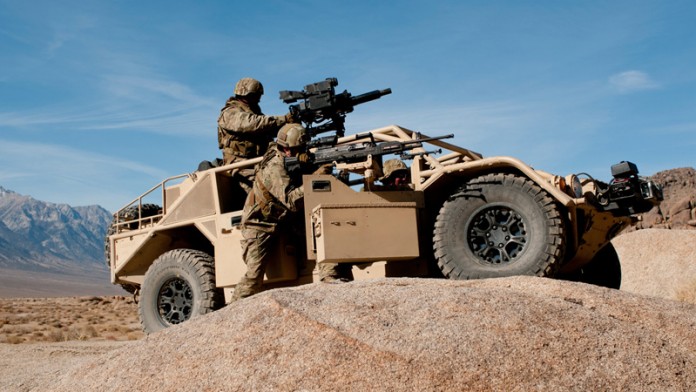
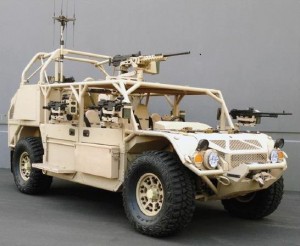
The Flyer 72 specially modified for SOCOM GMV 1.1 specifications has entered low rate initial production for a production series of 72 vehicles. (GD photo)
General Dynamics Ordnance and Tactical Systems (GD OTS) announced it has reached a critical milestone and is moving to low rate initial production (LRIP) with the custom designed Flyer 72 all terrain vehicle it has been selected to produce for the US Special Operations Command (SOCOM).
The Ground Mobility Vehicle 1.1 program after receiving notice that a Milestone C Decision has been reached by U.S. Special Operations Command (USSOCOM). Under the LRIP option, General Dynamics will produce and deliver 72 vehicles to USSOCOM by 2016.
Under the contract was awarded to GD in August 2013, the company redesigned the Flyer 72 to meet GMV 1.1 specifications, demanding an extremely light, highly mobile vehicle, that is weighd and measured to be internally transportable in C/MH-47 helicopters.
Jointly developed by General Dynamics and Flyer Defense, the Flyer 72 has a top-speed of 100 mph, a cruising range of 350 miles and can carry up to nine operators with payload while traversing remote and demanding terrain. With a payload-to-weight ratio greater than 1:1, the Flyer 72 is unique in its ability to carry more than it weighs. It can easily be reconfigured to meet a wide range of specific mission sets without modifying the vehicle’s base design or using any special tools.
AeroVironment, Inc. announced today (NASDAQ:AVAV) the Defense Advanced Research Projects Agency (DARPA) has selected the company and its industry team to follow its successful phase I concept design effort with a phase II preliminary design for the Tactically Exploited Reconnaissance Node (TERN). The 12-month, $19 million phase II effort seeks to conclude with subscale flight demonstrations prior to a planned phase III award decision.
DARPA and the U.S. Office of Naval Research envision a new concept of operations using smaller ships as mobile launch and recovery sites for medium-altitude long-endurance (MALE) UAS. Tern aims to make it much easier, quicker and less expensive for the Navy and Marine Corps to deploy persistent intelligence, surveillance and reconnaissance (ISR) and strike capabilities almost anywhere in the world.
AeroVironment selected industry partners with uniquely relevant experience and capabilities for the Tern program, including large aircraft avionics, ship integration and propulsion expertise. Advanced technologies form the basis of the team’s unique approach to realizing DARPA’s program objectives.
“Our team represents the best combination of relevant expertise and technology leadership to make Tern a reality,” said Roy Minson, AeroVironment senior vice president and general manager of its UAS business segment. “Our innovative approach to achieving DARPA’s objectives for Tern holds the promise of an entirely new category of unmanned aircraft system that could operate more quickly and effectively by deploying from smaller naval vessels for longer, more distant missions. We look forward to demonstrating this new capability to help protect our naval forces and those of our allies affordably and effectively.”
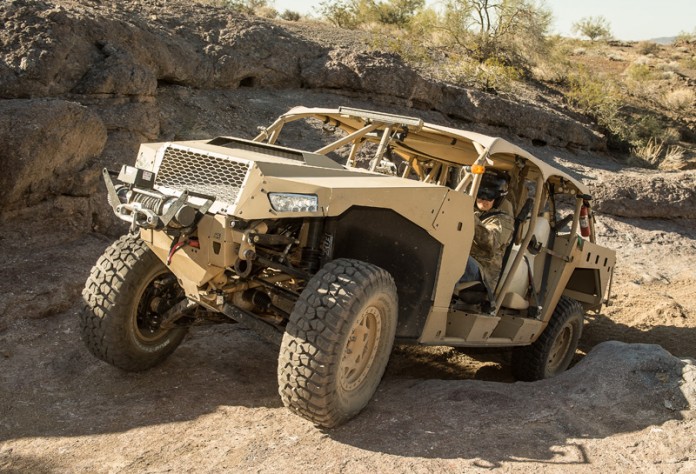
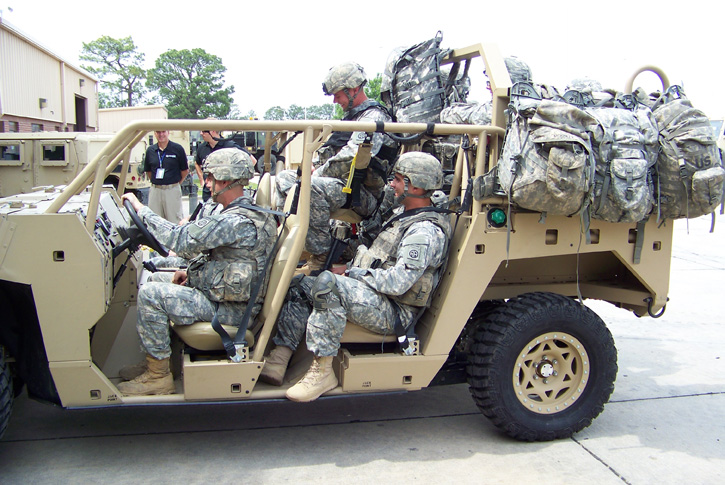
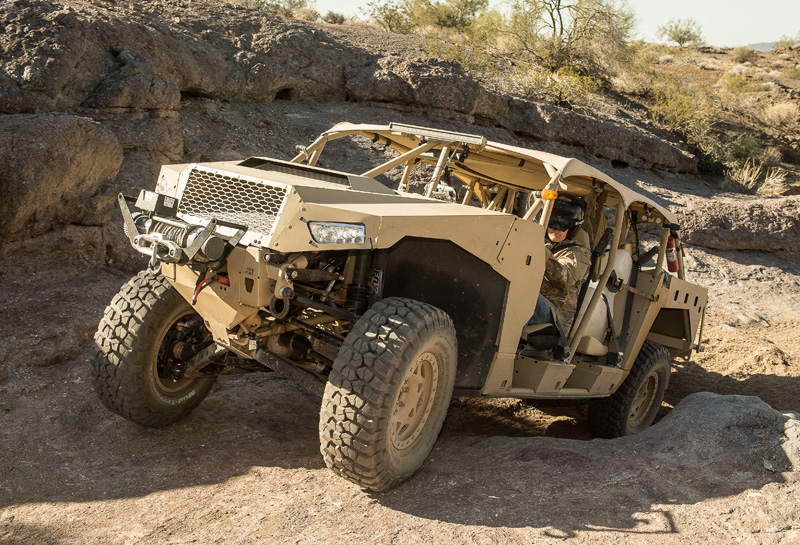
The DAGOR offers extreme off-road terrain at full payload. The vehicle curb weight is less than 4,500lbs to maximize aircraft operational range. Photo: Polaris
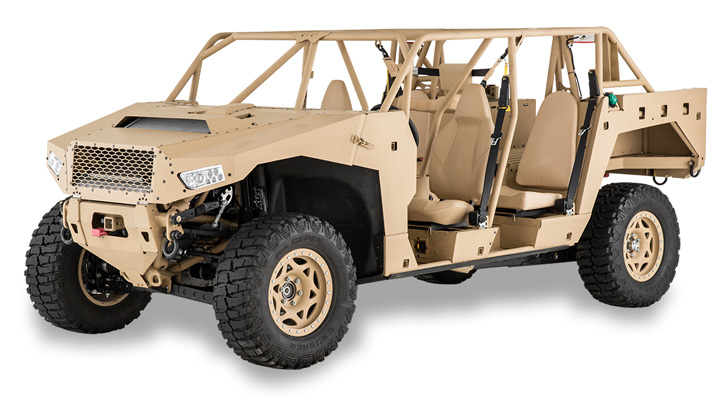
The DAGOR uses a readily available commercial off-the-shelf (COTS) driveline, controls and components streamlining mechanic and operator training. The diesel/JP8 COTS engine was selected for its combination of power, weight and size. The open design of the cargo bed maximizes loading space, flexibility and access for mission-essential equipment. Photo: Polaris Defense
Polaris Defense, is introducing the DAGOR, a new ultra-light, high mobility vehicle at the upcoming AUSA exhibition in Washington next week. According to Polaris, the vehicle is now in production for several Special Operation Forces (SOF) customers, following a contract award. Polaris is also proposing it for the US Army Ultra-Light Combat Vehicle (ULCV) program. The DAGOR was designed, tested and moved to production in less than two years. “DAGOR is under contract with elements of U.S. SOCOM and international SOF customers,” said Rich Haddad, Polaris Defense General Manager. The vehicle has completed government durability testing and is certified for CH-47 Chinook Internal Air Transport (IAT), air drop, and UH-60 Black Hawk Sling Load.
“The DAGOR was engineered to meet a very demanding set of light-mobility needs for our customer,” said Jed Leonard, manager of Advanced Mobility Platforms, and Polaris Defense. “It provides the optimal balance of rapid air transportability, payload and advanced mobility. The design offers our customers a modular, light-weight platform to support a variety of expeditionary missions.”
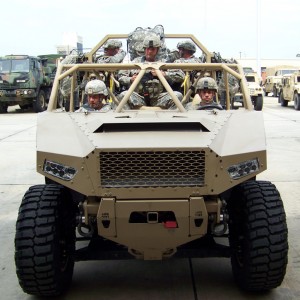
DAGOR can carry 3,250 lbs of payload or a 9-man infantry squad. Photo: PolarisDAGOR can carry a full 9-man infantry squad at a higher rate of speed over terrain usually traveled on foot. Photo: Polaris
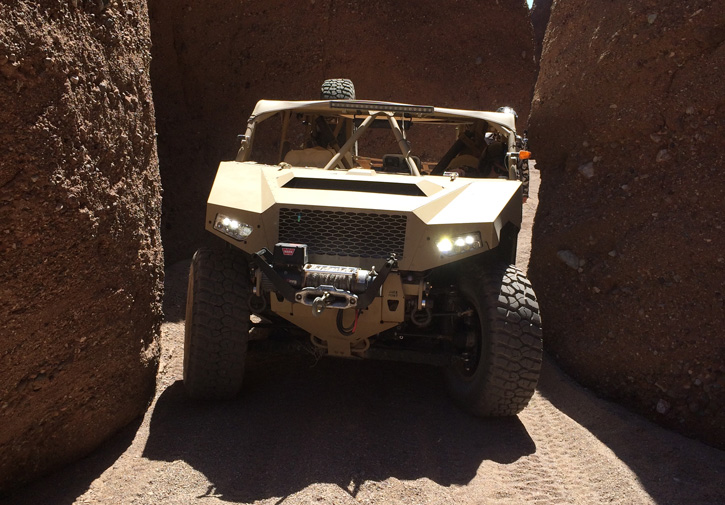
The DAGOR offers extreme off-road terrain at full payload. The vehicle curb weight is less than 4,500lbs to maximize aircraft operational range. The width of DAGOR allows rapid loading into the CH-47 Chinook platform without modification and the weight allows it to be sling loaded under the UH-60 Black Hawk. The vehicle has completed government durability testing and is certified for CH-47 Chinook Internal Air Transport (IAT), air drop, and UH-60 Black Hawk Sling Load.
“DAGOR is larger than our previous offerings like the MRZR and MV850, and represents a step up in size for Polaris and in payload for our customers. DAGOR highlights Polaris Defense’s ability to fill an urgent need, with an affordable purpose-built MILCOTS solution that can be maintained anywhere with a COTS supply chain.”
The purpose-built vehicle is designed with trophy truck-inspired suspension to carry 3,250 lbs of payload or a 9-man infantry squad at a higher rate of speed over terrain usually traveled on foot. This allows the warfighter to move quickly to the objective with mission-critical equipment.
DAGOR’s unique design allows for ease of operation, maintenance and sustainment in support of combat operations. The vehicle uses a readily available commercial off-the-shelf (COTS) driveline, controls and components streamlining mechanic and operator training. The diesel/JP8 COTS engine was selected for its combination of power, weight and size. The open design of the cargo bed maximizes loading space, flexibility and access for mission-essential equipment.
The DAGOR offers extreme off-road terrain at full payload. The vehicle curb weight is less than 4,500lbs to maximize aircraft operational range. Photo: PolarisPolaris designed the DAGOR to accommodate the cargo bays of the most common tactical air transporters, including the CH-47 Chinook helicopter. Photo: Polaris
The FBI is also seeking information about the identity of an English-speaking individual seen in a propaganda video released in September by the group calling itself the Islamic State of Iraq and the Levant, or ISIL.
The threat of U.S. citizens traveling overseas to fight alongside terrorist groups is not new. Two years ago, a Chicago man was imprisoned for planning to travel to Somalia in 2010 to join al Shabaab. Last year, an Albanian man living in Brooklyn was sentenced to 15 years for attempting to travel to Pakistan to engage in violent jihad. Last month, a New York man pled guilty to attempting to travel to Yemen in 2012 to support al Qaeda. On Saturday, a 19-year-old Chicago man was arrested for allegedly attempting to travel overseas to join ISIL.
The outreach campaign also highlighted similarities in foreign traveler recruitment efforts to those employed by gangs
Earlier this year, the FBI’s Minneapolis Division launched a campaign to raise awareness in communities and law enforcement circles about the foreign traveler threat. Minneapolis created a unique tip line and distributed business cards to community leaders asking for information about anyone who might be planning travel—or had already traveled—to a foreign country for armed combat.
The outreach campaign also highlighted similarities in foreign traveler recruitment efforts to those employed by gangs, which adulterate themes like fraternity and a greater purpose to sell themselves to disaffected individuals.
“These homegrown violent extremists are troubled souls who are seeking meaning in some misguided way,” Director Comey said during an interview aired Sunday on the 60 Minutes news program. “And so they come across the propaganda and they become radicalized on their own independent study, and they’re also able to equip themselves with training again on the Internet, and then engage in jihad after emerging from their basement.”
ISIL has released several videos in recent months showing the beheadings of American, French, and English journalists and aid workers. The speaker—and executioner—in those videos has a British accent and authorities have said they now know his identity. The propaganda video highlighted today features a fluent English speaker and appears to be a highly stylized recruitment tool designed to lure Westerners to ISIL’s cause.
The FBI is asking for the public’s help identifying individuals who have traveled – or are planning to travel – overseas to engage in combat alongside terrorist organizations. FBI Director James Comey has said about a dozen Americans are known to be fighting in Syria with ISIL.
“We need the public’s assistance in identifying U.S. persons going to fight overseas with terrorist groups or who are returning home from fighting overseas,” said Michael Steinbach, assistant director of the FBI’s Counterterrorism Division.
More specifically, the FBI is seeking information about the identity of an English-speaking individual and others seen in a propaganda video released last month by the group calling itself the Islamic State of Iraq and the Levant, or ISIL. The bureau released an edited video clip that includes the speaker’s voice with clear pronunciation and accent in English and Arabic.
http://youtu.be/VoQcicRvzCQ
In the video, a man whose face is obscured by a mask alternates seamlessly between English and Arabic in pro-ISIL pronouncements intended to appeal to a Western audience. Dressed in desert camouflage and wearing a shoulder holster, the masked man can be seen standing in front of purported prisoners as they dig their own graves and then later presiding over their executions.
The 55-minute video was released on September 19. In releasing a segment from the video, the FBI hopes someone might recognize the man through his voice and appearance. In the segment, the faces of purported prisoners are obscured and their executions are not shown.
“We’re hoping that someone might recognize this individual and provide us with key pieces of information,” Steinbach said. “No piece of information is too small.” The FBI believe the subject in the video has what is believed to be a North American accent.
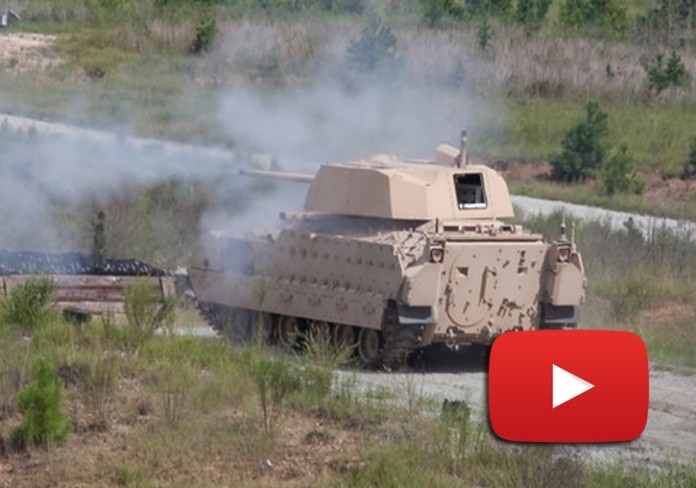
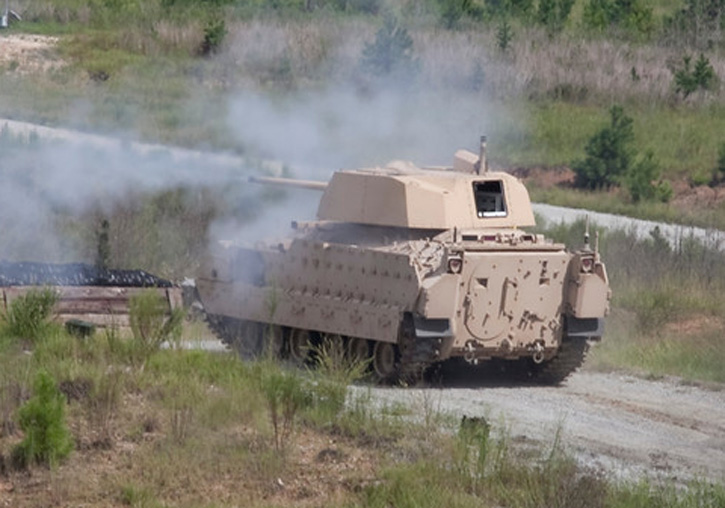
Up-gunned Bradley Fighting Vehicle fires the new XM813 30mm cannon. According to Army testers, “the lethality this provides a fighting vehicle and the dismounted Infantry in a dismounted Infantry support role is dramatic”
A Bradley fighting vehicle up-gunned with ATK XM813 30mm cannon integrated into a Kongsberg MCT-30 Remote Turret was recently demonstrated in fire at Fort Benning, GA. The new 30-mm cannon is intended to replace the 25-mm M242, giving vehicles greater firepower.
The lethality this provides a fighting vehicle and the dismounted Infantry in a dismounted Infantry support role is dramatic
The XM813 is a 30mm medium caliber cannon delivers optimized effects against personnel in the open or behind cover, as well as behind walls. The cannon feeds ammunition with multi-purpose fuse that provides AirBurst effects (AB), Point Detonate Delay (PDD), and Point Detonate (PD) in one warhead. It can also provide optimized effects against light armored vehicles, with the Kinetic Energy (KE) penetrator.
“The lethality this provides a fighting vehicle and the dismounted Infantry in a dismounted Infantry support role is dramatic,” Lt. Col. Scott DeBolt, chief of Mounted Requirements Division’s Heavy Systems Branch, said. The Bradley Fighting Vehicle and fired a series of three engagements at approximately 1,400 to 1,500 meters from the target.
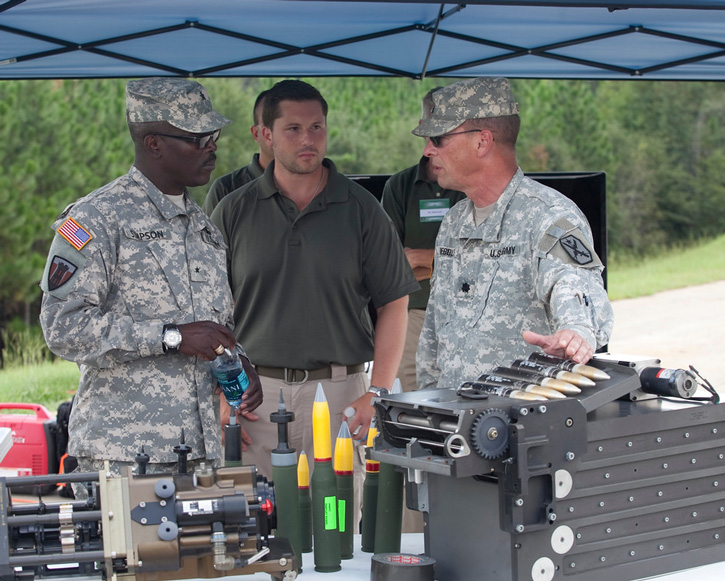
Brigadier General Lester Simpson receives a briefing from Col. about the new cannon’s feeding system.
“The primary game changer is the accuracy of the fire control system,” DeBolt said. “It allows you to kill targets at ranges with shorter bursts. It additionally provides an airburst capability that allows us to engage targets in defilade, targets in the open, and allows us to have more target effect. You actually get kills against targets that we would currently be doing suppression against.” In addition to the increased lethality, the XM813 is also a more accurate weapon, according to ARDEC officials.
As a weapon system the cannon is flexible and can be fitted to a multitude of platforms, both turreted and RWS. The XM813 is an electrically driven, chain operated, dual-feed weapon system. It has first round select capability, and fires a suite of 30mm linkless ammunition.
“Compared to the M242, we have been able to improve the weapon system to the point where we can show a significant decrease in the number of rounds that will be required in order to defeat your target,” said Jeffery Hart, ARDEC’s chief of medium weapons. “We’ve done studies that show that, and that is the reason why we invested in improvements to the barrel and the recoil. In effect, it can fire two or three rounds instead of 10 to meet your requirements.”
The XM813 is an improvement of the 30mm MK 44 gun developed for the Future Combat Systems (FCS) Program, and is a part of the broader Advanced Lethality and Accuracy System for Medium Caliber (ALAS-MC) Program that was developed by the Army’s Armament Research, Development and Engineering Center (ARDEC) in support of Program Management – Ground Combat Vehicle (PM-GCV).
According to the Army, the program’s goals are to are to achieve enhanced lethality in a medium caliber weapon system, meet the GCV IFV Primary Armament Objective requirements, and to support threshold requirements while simultaneously developing a system with growth integrated to meet future threats. Such objective system is likely be a 50mm cannon
While the demonstration featured the XM813 on a Bradley, the potential exists for the system to be mounted on other combat vehicles.
“The lethality and the capabilities lend themselves to integration if the Army decided to upgrade the lethality on the Bradley, move to a future fighting vehicle or upgrade lethality on a Stryker,” DeBolt said. “There’s a lot of opportunity with the potential of a common caliber solution across the fleet of vehicles we currently control at Fort Benning.”
ARDEC is developing the system under the Advanced Lethality and Accuracy System for Medium Caliber program, and the XM813 has letters of endorsement from both Lt. Gen. H. R. McMaster, director of the Army Capabilities and Integration Center and deputy commanding general, Futures, Training and Doctrine Command, and Lt. Gen. Keith Walker, who formerly held the same position.
A similar test held at the same location in February 2014 demonstrated the Stryker fitted with the same turret, mounting the MK44 cannon.
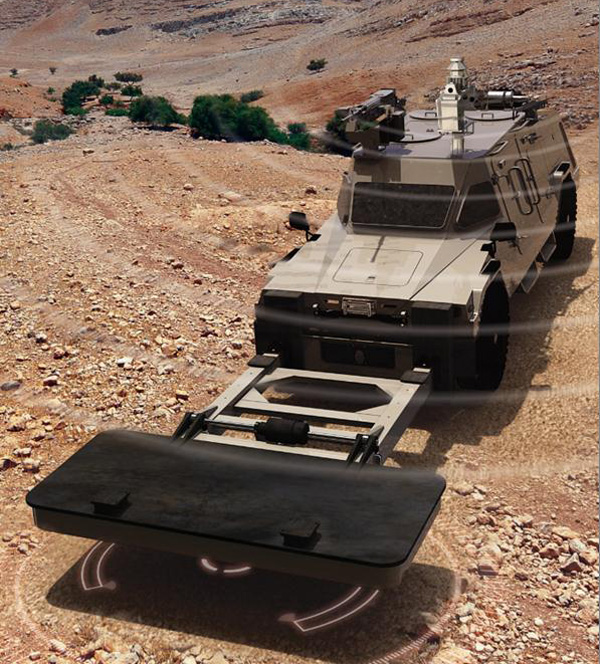
The combination of multiple sensors and integrated management makes CIMS a highly effective mine and IED detection system. ELTA’s CEO Nissim Hadas said.
CIMS, developed by two IAI subsidiaries – ELTA and RAMTA, is comprised of an integrated suite of sensors, processing and decision support tools designed to simplify and assist the combat engineers’ tasks in combat environment. IAI will unveil the CIMS at the 2014 Annual Association of the United States Army (AUSA) Meeting & Exposition in Washington DC next week.
The CIMS suite designated ELI-3375 detects both surface and underground IEDs, mines, and roadside bombs, and consists of an ADS – Above-surface Detection System, and MIDS – underground Mine and IED Detection System. The ADS includes a groundbreaking side-looking SAR radar, high-resolution optical detection system and an infrared multispectral investigation system. MIDS comprises a Ground Penetrating Radar (GPR) and a magnetic detector. The system also performs automatic cueing of sensors and complimentary countermeasure systems, including IED neutralisation as well as hard kill, to autonomously defeat or destroy suspected IEDs from a distance.
“Our combination of unique sensors allows a simple and highly effective mine and IED detection system to be provided to forward forces. We see huge potential for this system and consider it to be a groundbreaking solution.”
The system architecture addresses different threat types with multiple means of detection – thus increasing the probability of detection while reducing false alarm rate. For example, CIMS would seek and detect roadside IED threats using a combination of GigaPix Optical Detection System GPODS – electro-optical sensors, and Surface IED Detection Radar (SIDER), a ground-mobile synthetic aperture radar (SAR) staring in front and to the sides of the vehicle. SIDER utilises a derivative of the ELM-2112 persistent ground surveillance radar family. Using SAR processing, the radar and cameras are covering a sector of 270 degrees around the CIMS vehicle, enabling the operators to detect threats at significant on both sides of the travelling path.
The GPODS camera array is sensitive enough to spot IEDs by their distinctive shape, while the radar can detect IEDs hidden under camouflage. In addition, a medium wave infrared provides a multispectral IED investigator adding further analysis to follow threat detection and identification. Additional sensors such as infrared cameras and laser imaging radar will also be available to augment the CIMS sensor suite.
Ground penetrating sensors, such as magnetic anomaly detection system developed as part of RAMTA’s collaboration with the Ben Gurion University, and ground penetrating radar are also used to detect buried IEDs and mines, using advanced unified detection logic that combines metal detection and GPR. The combination of the two systems enable CIMS to detect magnetic and non magnetic mines and IEDs buried at tactical relevant depth, including those hidden at culverts or under bridges.
Integration of the sensor suite through the Combat Engineering Mission Management System (CEM2S) that combines the processing of inputs from the different sensors through central processing and management, delivering accurate information presented in standard NATO symbology offering the operators simplified, real-time mapping of potential IED threats. The CIMS suite and its subsystems can be adapted to any combat tactical vehicle – either manned or unmanned.
A U.S. Army soldier with the 65th Engineer Battalion installs culvert denial systems along Highway 1 in Helmand province, Afghanistan, March 24, 2014. The system is comprised of two metal-bar grates that are placed at either end of the culvert and held together by tension force cables, with an anti-tampering device secured to the grates. The device can detect any type of disturbance from vibrations to heat and will initiate a camera to record any tampering with the system. An enhanced Culvert Detection System (eCDS) from Primal Innovation combines barrier and sensor technologies to deny access and detect activity in and around culverts. New culvert Photo: US Army by Sgt. Jessica Ostroska.
Primal Innovation has developed the enhanced Culvert Detection System (eCDS) which combines barrier and sensor technologies to deny access and detect activity in and around culverts.
A challenge-based acquisition project launched by the Pentagon’s Joint IED Defeat Organization (JIEDDO) in partnership with the Army Research Lab and the Manoeuvre Center of Excellence’s Manoeuvre Battle Lab at Ft. Benning, is aimed at denying enemy access to implant improvised explosive devices in road culverts. The challenge that began Sept. 29 at Fort Benning, Ga. will run through Oct. 10.
According to Matthew Way, JIEDDO program integrator, the event attracted 20 commercial vendors from industry to demonstrate emerging technologies and systems that could help with the problem. The goal was to seeks technology solutions that would improve the speed of inspection and surveillance confirmation of nefarious activity surrounding road culverts in Afghanistan, where insurgents routinely emplace IEDs.
These solutions included surveillance and inspection tasks – each performed by ten vendors. Surveillance solutions included various unmanned systems, micro-radar technologies, seismic sensors and hyperspectral imaging. “They are monitoring a culvert for an eight-hour period that encompasses day, evening and night hours.” Way explained. “Once we’ve secured a culvert, we wanted technology that can maintain security over that area,” Way said. “The competition really focuses on their ability to distinguish, per the solicitation, between nefarious activity and something that is benign — just regular patterns of life.”
We are really measuring how quickly they can get into a culvert area and tell me if it’s clear or not clear
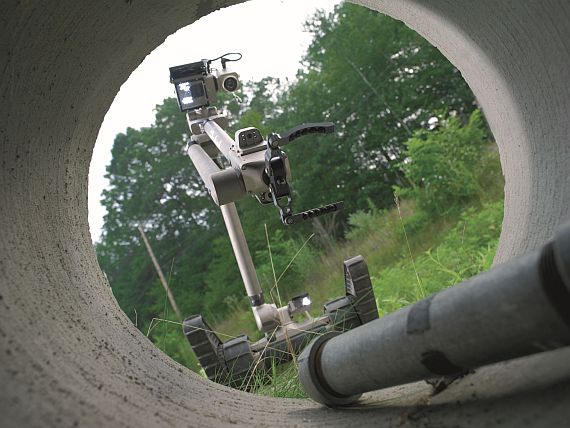
Vendors in the inspection challenge are demonstrating potential solutions using quadcopters, ground robots, canines, and electromagnetic sensors. They are tasked with various scenarios such as difficult terrain, night inspection, and a long culvert that challenges communication links.
“We are really measuring how quickly they can get into a culvert area and tell me if it’s clear or not clear,” he said. “The second component that we are scoring them on is, once they’ve done that, how accurately can they identify particular items that may be threats in the region.”
Following the challenge phase JIEDDO and ARL are expecting to conduct technology development and validation testing. The contract also supports limited quantity procurement for operational evaluation. This challenge-based acquisition project promotes innovation, Way said, as vendors demonstrate their capabilities as they vie to work under an existing $49.5 million contract.
The White House Office of Science and Technology Policy included this project as a case study demonstrating an innovative way to promote sound buying practices—minimizing the investment of major resources up front before a solution has proven itself. JIEDDO’s case study was used because of its successful results, best practices and lessons learned. JIEDDO’s Counter-IED Robotics Challenge in 2012 and its Ultra-Light Reconnaissance Robot Challenge in 2011 were also sighted in the White House’s Innovative Contracting Case Studies document.
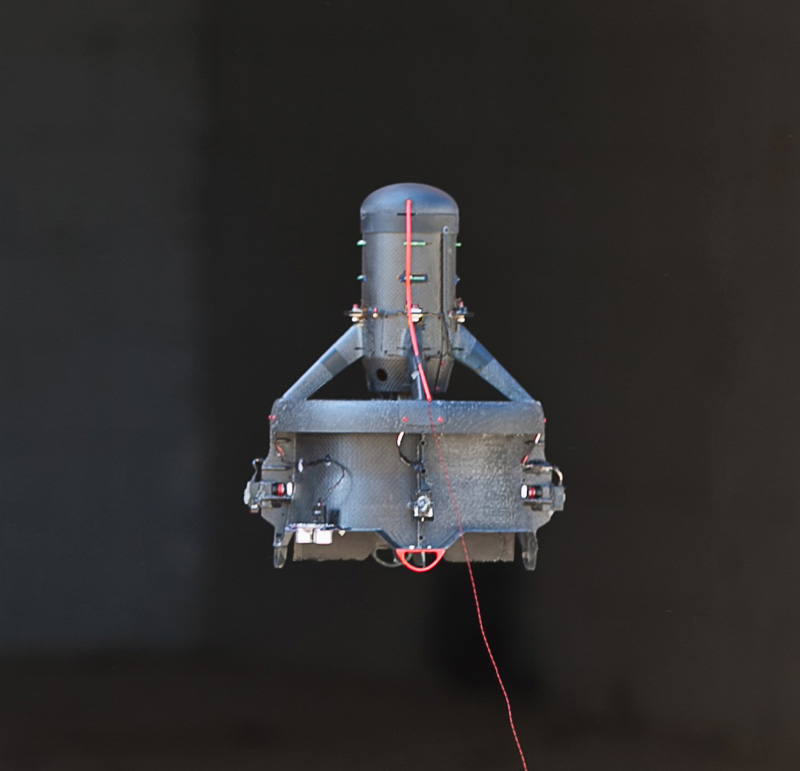
A typical surveillance system evaluated in the challenge was ‘Extreme Access System for Entry’ (EASE) from CyPhy Works. EASE is a small hovering robot designed for inspection and ISR (intelligence, surveillance, and reconnaissance) applications. EASE is intended for operating in close quarters, beyond line of sight, and in GPS denied areas; all of which are critical when performing search and rescue missions, building clearing, or civil infrastructure inspection. Photo: CyPhy Works
Companies providing surveillance solutions included: Advanced Recon Corp, A-T Solutions, CyPhy Works, Elbit Systems EFW, L-3 Communications, Niitek and Primal Innovation. Companies providing inspection systems included: ATSC (Inuktun), iRobot, K2 Solutions, Lockheed Martin, Pearson Engineering and Science & Engineering Services. Applied Research Associates, QinetiQ, Roboteam and Stolar Research provided solutions for both missions.
Challenge-based acquisition takes the government’s guidance on the use of challenges and prizes to promote open government a step further by making it part of the procurement process, bringing the innovation opportunity of a challenge into the procurement framework of the Federal Acquisition Regulation. This allows the government to use challenges as the core of its evaluations, optionally pay vendors for participation, and test and purchase quantities beyond simply prototypes. It is a mechanism to communicate needed capability, encourage innovation in a minimally prescriptive environment, assess candidate offerings, and purchase proven solutions.
To implement challenge-based acquisition successfully, the government allows industry to innovate within a well-defined outcome-based framework. Concurrently, industry takes on a role that more closely mirrors how it normally develops and brings a product to the commercial market by independently developing a solution to address a given capability need.
Italy is acquiring two G550 aircraft equipped with Israeli EL/M-2085 Conformal Early Warning Radar (CAEW), becoming the third operator of this type of aircraft. Photo: Tamir Eshel, Defense-Update
The US Navy announced it plans to acquire a Gulfstream G550 modified to carry the conformal airborne early warning system (CAEW), to be used as ‘range support aircraft’, replacing P-3 and C-130 based radar carrying aircraft. The Navy will take delivery no later than the end of fiscal 2017. The US Navy will become the system’s fourth customer, following orders from the Israeli Air Force, Republic of Singapore Air Force and the Italian Air Force.
The aircraft is designed to host as multiple telemetry links supporting L, S and C bands supporting different telemetry test equipment and command destruct and flight termination system. On board radar would also provide range surveillance and range clearance, Flight Global reports.
Gulfstream, the aircraft manufacturer, has modified the G550 CAEW variant to carry an airborne Active Electronically Scanned Array (AESA) X/S band radar developed by Israel’s IAI/Elta Systems for airborne Aerial Early Warning (AEW) missions. Elta has been positioned as the prime contractor and systems integrator for the G550 CAEW aircraft. It is unclear if the US Navy will utilize the full CAEW configuration or use only the modified G550 ‘shell’, without the radar or with part of the radar, to support telemetry and range control missions.
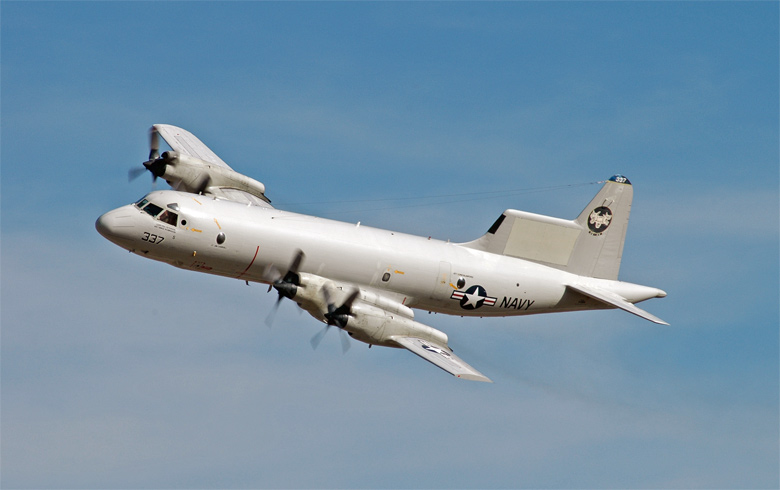
A derivative from the Lockheed P-3C Orion, the NP-3D “Billboard” radar, providing over-the-horizon radar coverage in support of the range’s tests.
Naval Test Wing Pacific and Air and Test and Evaluation Squadron VX-30 Bloodhounds operating at Point Mugu, California are currently flying two NP-3D “Billboard” radar, providing over-the-horizon radar coverage in support of the range’s tests. These aircraft are used in conjunction with the testing on the Sea Test Range for surveillance and clearance, as well as providing Telemetry support for missile testing.
VX-30 unit emblem
These aircraft have accumulated many flight hours over their long service life, and are nearing the end of their useful service life, as maintenance and support costs are increasing, as the types are withdrawn from service elsewhere in the Navy.
While the G550 CAEW is a specially modified version of the commercial GV, it is fully supported by the manufacturer, as part of its business aviation fleet. As such, it has both FAA type classification and supplemental type certificate to meet its military mission. “The G550 aircraft is the only known aircraft that will satisfy the NAWC-WD Sea Range Support requirements without significant engineering, development, modification, test, and certification effort,” the navy said in its justification for sole source selection.”
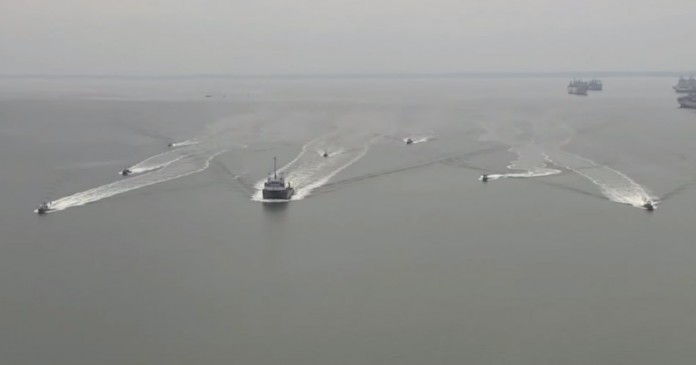
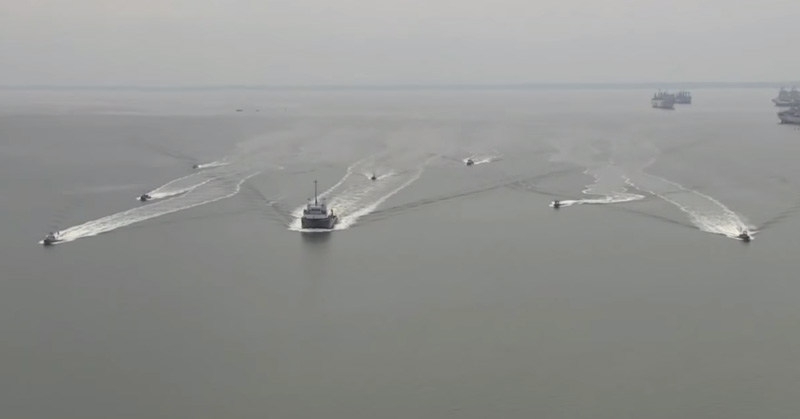
In the demonstrations, as many as 13 Navy boats operated using either autonomous or remote control. During a two week test conducted in August 2014 on the James River in Virginia—allows, multiple USVs demonstrated swarm tactics autonomously, equipped with sensors and software enabling those swarming capability. Photo: US Navy video
As autonomy and unmanned systems grow in importance for naval operations, officials at the Office of Naval Research (ONR) announced a technological breakthrough that will allow any unmanned surface vehicle (USV) to not only protect Navy ships, but also, for the first time, autonomously “swarm” offensively on hostile vessels. The new technology will allow the USVs to detect, deter or destroy attacking adversaries. Any weapons fire from the USVs would need to be initiated by a Sailor supervising the mission. Another US Navy division, Naval Surface Warfare Center, has also used robotic platforms – integrating both unmanned surface and aerial vehicles into a system designed to accelerate the targeting and fire correction of naval gunfire.
Robotic swarms at sea
The technology—called CARACaS (Control Architecture for Robotic Agent Command and Sensing) – originally developed by NASA for the Mars Rover – and modified by ONR to support USVs. The CARACaS software can be put into a transportable kit and installed on almost any boat. It allows boats to operate autonomously, without a Sailor physically needing to be at the controls—including operating in sync with other unmanned vessels; choosing their own routes; swarming to interdict enemy vessels; and escorting/protecting naval assets.
During a two week test conducted in August 2014 on the James River in Virginia—allows, multiple USVs demonstrated swarm tactics autonomously, equipped with sensors and software enabling those swarming capability. “This networking unmanned platforms demonstration was a cost-effective way to integrate many small, cheap, and autonomous capabilities that can significantly improve our warfighting advantage,” said Adm. Jonathan Greenert, chief of naval operations.
In the demonstrations, as many as 13 Navy boats operated using either autonomous or remote control. First they escorted a high-value Navy ship, and then, when a simulated enemy vessel was detected, the boats sped into action, swarming around the threat. In the future, the capability could scale to include even greater numbers of USVs and even to other platforms, including unmanned aerial vehicles (UAVs).
“This multiplies combat power by allowing CARACaS-enabled boats to do some of the dangerous work,” said Dr. Robert Brizzolara, program manager at ONR. “It will remove our Sailors and Marines from many dangerous situations—for instance when they need to approach hostile or suspicious vessels. If an adversary were to fire on the USVs, no humans would be at risk.”
“Our Sailors and Marines can’t fight tomorrow’s battles using yesterday’s technology,” said Chief of Naval Research Rear Adm. Matthew Klunder. “This kind of breakthrough is the result of the Navy’s long-term support for innovative research in science and technology.”
The swarm demo announcement comes near the somber anniversary of the terrorist attack on USS Cole (DDG-67) off the coast of Yemen. In that October 2000 attack, a small boat laden with explosives was able to get near a guided-missile destroyer and detonate, killing 17 Sailors and injuring 39 others. “While the attack on Cole was not the only motivation for developing autonomous swarm capability, it certainly is front and center in our minds, and hearts,” said Klunder. “If Cole had been supported by autonomous USVs, they could have stopped that attack long before it got close to our brave men and women on board.” (More about the experiment in Defense One)
After the USV swarm escorted a high-value Navy ship, they switched tactics, responding to a attack simulated enemy vessel detected by the ships sensors. The boats sped into action, swarming around the threat. In the future, the capability could scale to include even greater numbers of USVs and even to other platforms, including unmanned aerial vehicles (UAVs).
Unmanned systems accelerating gunnery fire from the sea
On another test involving USVs, performed recently at the Naval Surface Warfare Center Dahlgren Division (NSWCDD), Navy engineers used technologies supporting the science of integration to guide live gun fire onto distant targets, demonstrating a new integrated surface warfare capability in a maritime environment. “The ability to send a small, persistent unmanned system down range in hostile territory for real-time gun or missile engagement spotting and targeting is needed by warships,” said NSWCDD Engagement Systems Department Military Deputy Cmdr. Marc Williams. “The technology has the potential to be important for surface ships, especially relating to Aegis weapon system, Naval Surface Fire Support, and surface warfare.”
On the demonstration held on September 29, 2014, an unmanned surface and Scan Eagle unmanned aerial vehicles (UAV) integrated with naval guns and the Aegis combat system, to relay targeting data to operators engaging a simulated threats on the Potomac River Test Range. “This is a major first step in demonstrating an integrated surface warfare capability utilizing unmanned vehicles in support of the key engagement functions of plan, detect, control, engage and assess,” said Neil Baron, Naval Surface Warfare Center Dahlgren Division (NSWCDD) distinguished scientist for combat control.
During the demonstration gun fire engagement was ordered based on identification and targeting data provided by streaming video obtained from the USV. Once targets were acquired, an airborne Scan Eagle unmanned aerial vehicle provided real-time streaming video to spot, precisely target, engage and continually support reengagement through gun targeting corrections to the MK160 gun weapon system operator. The experiment used Visual Automated Scoring System (VASS) to instantly correct the gun targeting. “Scan Eagle has been deployed on guided missile destroyers for years to provide persistent electro-optical and infrared surveillance,” said Williams, adding that, “it has been used for Naval Surface Fire Support spotting to walk gun rounds onto an enemy target, but not in an automated fashion like in this experiment.” The NSWCDD-patented VASS is an automated, computerized method for determining gunfire miss distances using video data. With a non-line of sight weapon system, VASS allows the gunner to adapt gun pointing angle and converge gunfire onto a target without having to risk the lives of forward observers.
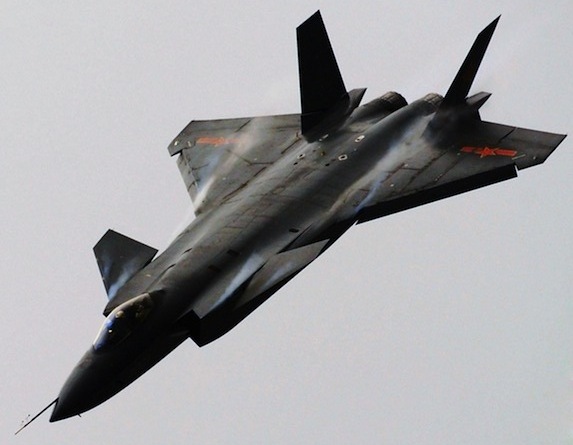
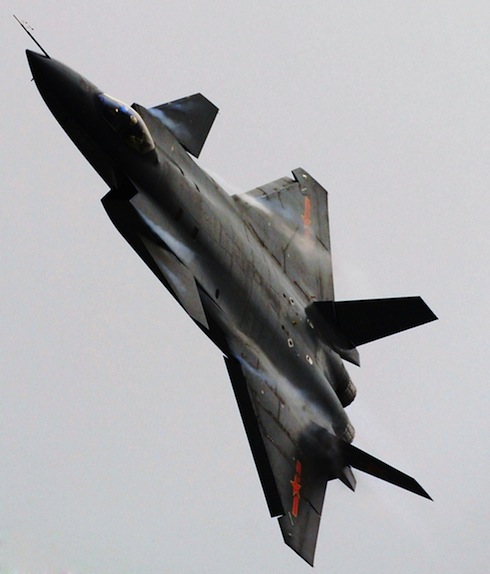
Chengdu J-20 fifth generation fighter from China banks into a high angle turn.
Chengdu J-20 fifth generation fighter from China banks into a high angle turn.
China is likely to complete the construction of its second and third aircraft carriers with the ability to carry J-20 fifth-generation stealth fighters, although a carrier-friendly model may need to be designed first.
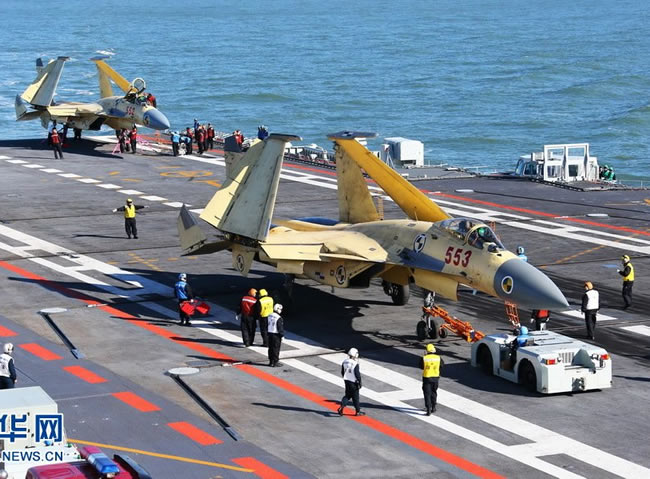
China’s domestic aircraft carriers currently designated ‘Type 001A’ will look very similar to the Liaoning, the country’s first aircraft carrier bought from Ukraine and refitted. They are most likely to be equipped with a ski-jump ramp. The displacement of each vessel is expected to be around 70,000 tons, similar to the Liaoning’s maximum displacement of 67,000 tons. China Shipbuilding Industry Corporation has already received contracts for the construction of two Type 001A carriers, at a projected cost of 50 billion Yuan (about US$9 billion.) Work on the second aircraft carrier has already started at the Dalian shipyard. This carrier, the first to be designed and built in China, is expected to be commissioned by 2020.
The PLA Navy is planning to form two composite air hangar decks, with 50 fighters for each carrier (compared to the Liaoning’s single deck hanger storing 30 J-15 fighter jets). However, the design of the Chengdu J-20 is currently too large to be deployed aboard the Liaoning, according to the report. Domestic carrier versions will have to be larger to accommodate them, putting them at an estimated 80,000 tons. Furthermore, they may use a steam catapult or electromagnetic aircraft launch system.
The current J-20 prototype is not designed for carrier operations, and is not suited to take off or land on a carrier. The length of the first domestically built aircraft carrier may be be longer than the Liaoning by an estimated 20 meters but a new version of the J-20 will have to be redesigned into a more compact size, similar to the current J-15.
Eventually, China’s future carrier air wing may come equipped with 25 stealthy, 5th generation fighters such as the navalized J-20s, which will become the carriers’ first line strike fighter, capable of attacking denied or contested enemy airspace or naval forces, along with 25 J-15B 4th generation fighters, which will provide second line attack, self defense, electronic attack and refuelling support.
Once completed, further carriers will greatly increase China’s force projection capability into the Western Pacific and Indian oceans.
Liaoning (CV-16) escorted by four vessels sets sail to the South China Sea for another training mission.A pair of J-15 jet fighters prepared for flight from the deck of the Chinese aircraft carrier Liaoning. Photo: Xinhua
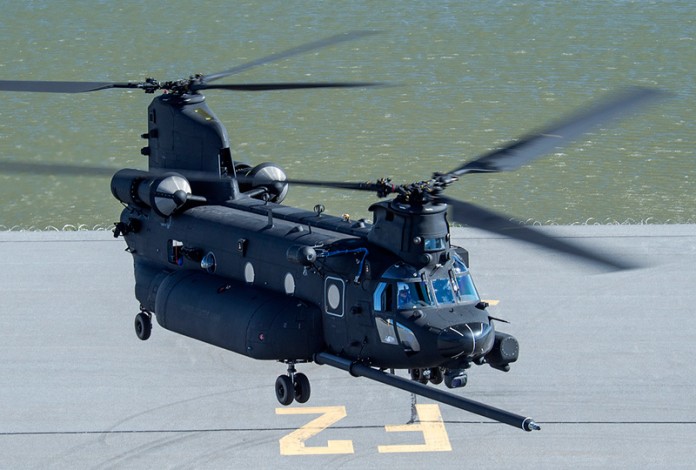
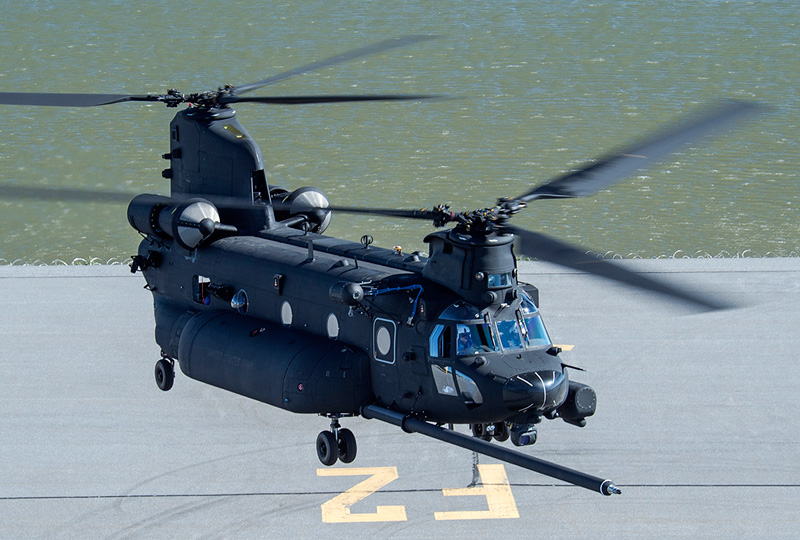
Boeing will soon deliver the first new build MH-47G configuration to the US Special Operations Command. The modernized Chinook incorporates a number of production improvements to include the digital advanced flight control system, more robust, improved monolithic machined-frames, and improved air transportability. Photo: Boeing
Boeing completed initial flight and delivery of the first, new-build MH-47G configured Chinook helicopter to the U.S. Army Special Operations Aviation Command Sept. 29, 2014 – a full month ahead of schedule.
“This delivery also begins a new chapter that will carry the Chinook forward for many more decades and is the latest demonstration of Boeing and the wider Team Chinook’s commitment to delivering upon promises made.” said Steve Parker, vice president, cargo helicopters & H-47 program manager. “The advanced technology inherent in the new-build MH-47G ensures that the users and operators will have the superior mission capability that they require.”
The new build MH-47G configuration incorporates a number of production improvements to include the digital advanced flight control system, more robust, improved monolithic machined-frames, and improved air transportability. The entire program, valued at approximately $300 million, calls for eight aircraft deliveries through 2015.
Boeing will soon deliver the first new build MH-47G configuration to the US Special Operations Command. The modernized Chinook incorporates a number of production improvements to include the digital advanced flight control system, more robust, improved monolithic machined-frames, and improved air transportability. Photo: Boeing
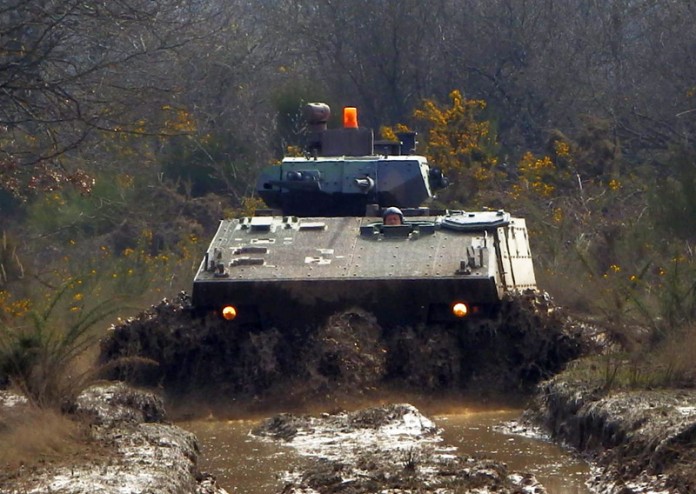
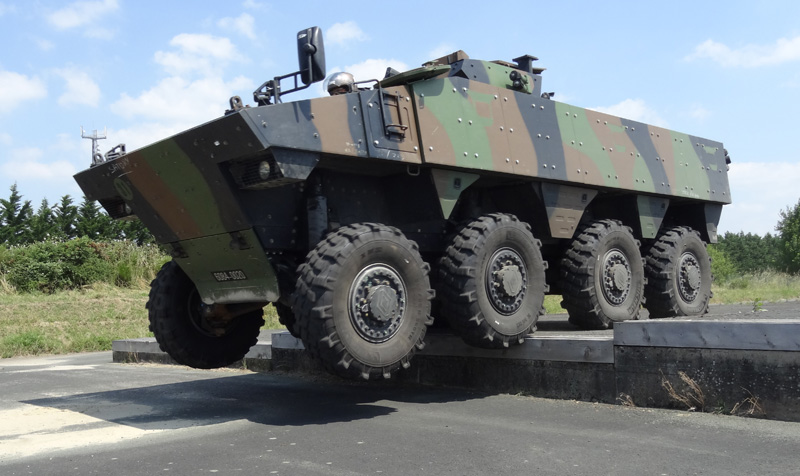
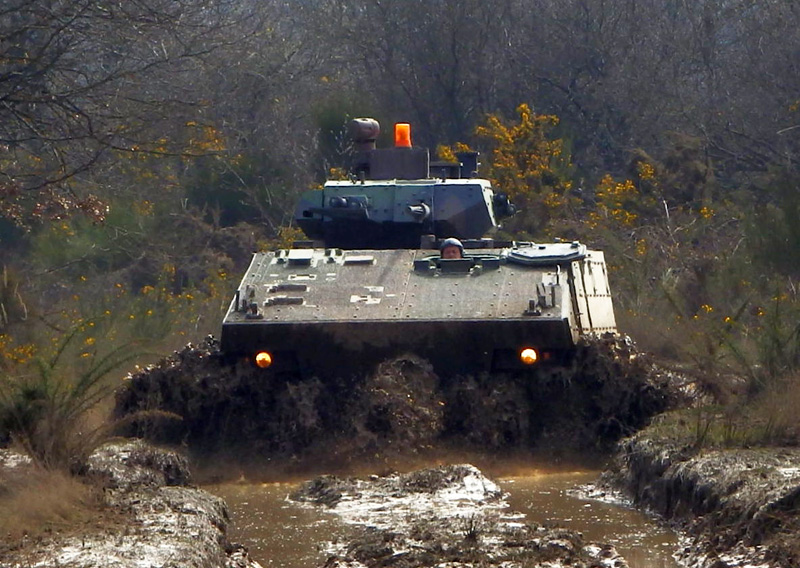
The up-armored variant of the French Army’s VBCI wheeled combat vehicle has improved armored protection and provides better protection against IEDs. Photo: DGA
Nexter has increased the maximum Gross Vehicle Weight (GVW) of the VBCI to 32 tons, addressing the French Army requirement for increased protection and future growth. Applique armor plates are visible on the vehicle sides and belly. Photo: DGA
A heavier, up armoured variant French VBCI armoured infantry combat vehicle has been qualified by the French Armament procurement agency (DGA), increasing the gross vehicle weight (GVW) by three tons to to 32 tons. The increase in the GVW enables the installation of appliqué side and belly armour, better protecting the vehicle against advanced threats such as mines, IEDs, and RPGs. It also provides sufficient growth capacity for future upgrades. The vehicle manufacturer, Nexter is expected to deliver to first 32 ton VBCI versions to the French armed forces beginning next year.
The up-armored variant of the French Army’s VBCI wheeled combat vehicle has improved armored protection and provides better protection against IEDs. Photo: DGAThe current VBCI GVW is 29 tons. Additional three tons will provide for add-on armor protection improvements.
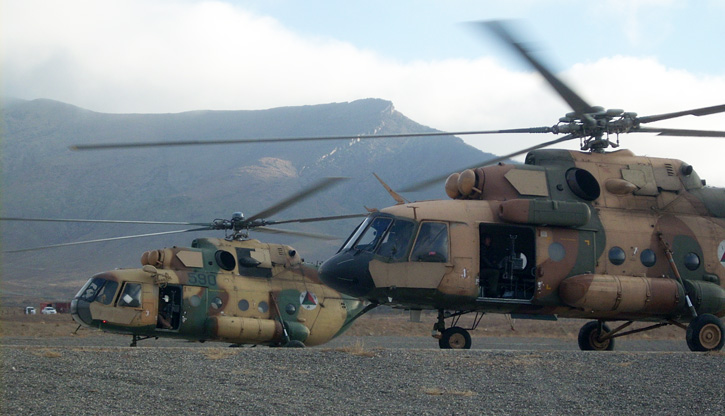
Afghan Air Force Mi-8 and Mi-17 medium utility helicopters depart the helicopter landing zone at FOB Lightning/Thunder in Paktiya province, Afghanistan. Photo: (U.S. Army by Capt Yau-Liong Tsai.
The draw down of coalition forces continues, from the current 40,000 troops to 12.5 by the end of this year. The majority of the remaining force will be US – about 9,800, with the remaining 2,700 include small units from a number of coalition partners.
The draw down has also reduced the number of combat outposts manned and operated by the coalition from 300 to under 30. By January 1, 2015 the remaining coalition forces will be deployed in a pattern of spoke and hub, focused on three sites in the East of Afghanistan – Jalalabad, Gamberi and Bagram. Coalition forces will also remain in Mazar-e-Sharif in the North of the country, Herat in the West and Kandahar in the South.
The biggest gap in the Afghan Air Force is the ability to deliver fire from the air to the enemy on the ground
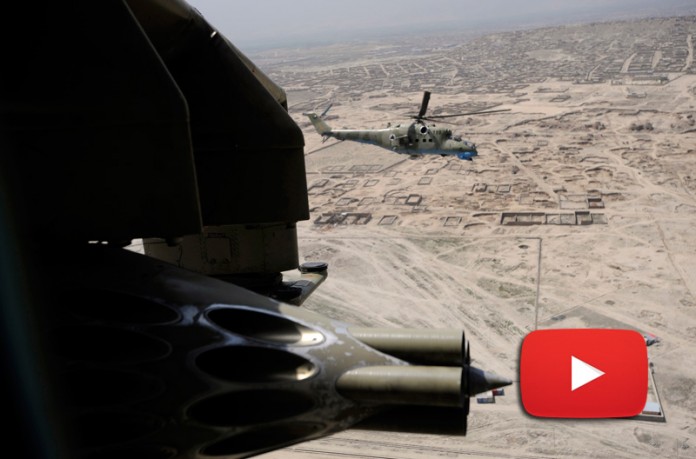
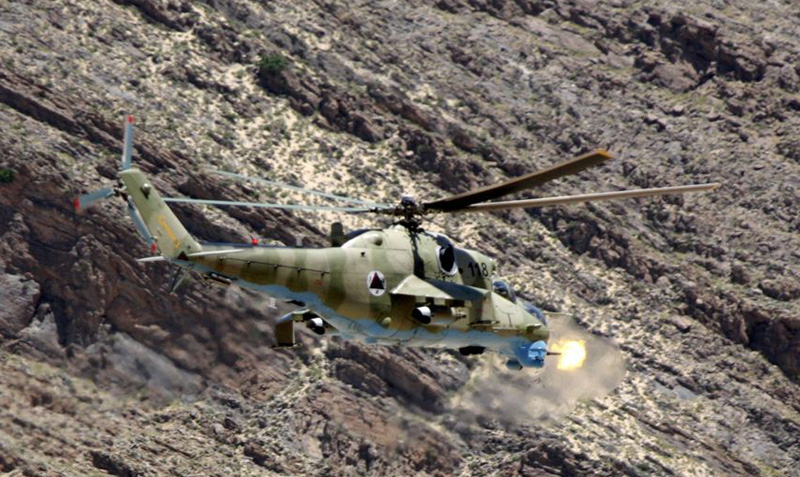
An Mi-35 attack helicopter fires during a gunnery training mission May 27, 2009 over the East River Range Complex near Bagram Air Base. This mission was the first time 57 mm rockets and the 12.7 mm cannon have been fired by the Afghan National Army Air Corps in more than eight years, and will eventually allow the Afghans to provide their own close air support. Photo: Edward Gyokeres
Most of these sites are providing operating bases for Coalition and Afghan air power – unmanned aviation, as well as Afghan helicopters and soon to arrive light close air support fighters. T he Afghan air force and the special mission wing, that support the Afghan special operating forces. 84 Mi-17s helicopters are currently providing the mainstay of the Afghan Air Force. According to Campbell, three additional helicopters will complete the fleet of 87 helicopters. “We’ll work very hard on their aviation, on their intelligence, on their sustainment, those things that are very, very hard for any army, especially hard here in Afghanistan.” Campbell said.
“These Mi-17s have been a force multiplier for the special operating forces.” he added, “for the conventional forces, the army and the police, they’ve been mostly moving forces and then providing resupply; equipped with electro-optical payloads to assist night flying and Intelligence, Surveillance and Reconnaissance missions in addition to assault and fire support for special operations… The issues that we work with on the Mi-17 is making sure we continue to keep in the in the pipeline and then work on the maintenance piece.” Campbell added, raising concern about the availability of spare parts and logistics supplies that could be caused by the ban the US Congress imposed on the Russian defense export conglomerate Rosoboronexport.
The Afghan Air Force also operates 11 Mi-35 attack helicopters designed to be the primary close air support asset for the Afghan National Army, when the coalition forces withdraw from the country. However, these helicopters are based on relatively old airframes that will begin to phase out of service by 2016.
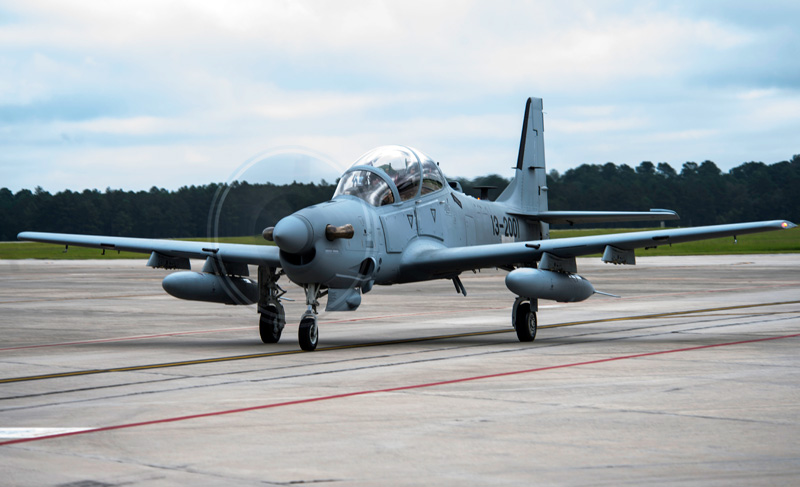
The need for the A-29 comes as the current Afghan Air Force LAS aircraft, the Mi-35 attack helicopter, reaches the end of its service life in January 2016. Photo: U.S. Air Force, by Dillian Bamman
“Clearly the biggest gap in the Afghan Air Force is the ability to deliver fire from the air to the enemy on the ground,”U.S. Air Force Maj. Gen. John McMullen said. “The missing piece that is vital to the [Afghan National Security Force] success is an air to ground platform that can drop precision weapons, that has the speed and the range to [reach] out to all of Afghanistan, and that platform is the A-29. It’s the perfect aircraft for the terrain in Afghanistan, it’s the perfect aircraft for the conflict in Afghanistan, and it’s the perfect aircraft for the Afghanistan Air Force.” Maj. Gen. John McMullen is the 9th Air and Space Expeditionary Task Force- Afghanistan commander Air, U.S. Forces-Afghanistan deputy commander.
The first of those Light Air Support (LAS) – the first of 20 US built A-29 Super Tucano light air support aircraft the Pentagon is planning to send to Afghanistan rolled-out from Sierra Nevada Corporation/Embraer assembly plant in Jacksonville, FL last month. “This delivery represents the birth of an important capability for Afghanistan” said U.S. Air Force Brigadier General Eric Fick. the first aircraft will be delivered to Moody Air Force Base, to provide the basis for the Afghan Air Advisor Training corps. The aircraft will be used to provide light air support, reconnaissance and training capabilities to the Afghanistan military.
“Specifically the mission that we are going to replace is the Mi-35 Helicopter, which is an attack helicopter, so they cover some of the same missions,” Hogan said. “But really this aircraft is a monumental leap in capabilities for the Afghan Air Force. It will allow us to do some overlap of those [Mi-35] missions and will do a lot better; it will also expand some other missions, which they currently cannot execute. “Right now we do not have any type of aircraft that can guard the troops and provide the support. Thank you to everyone that has worked this program. And our friendship will continue to grow and be strong into the future.” Afghan Air Force Maj. Gen. Abdul Wahab Wardak, Afghan Air Force commander said.
The MD530F ‘Little Birds’ will also be converted to armed reconnaissance missions
The Super Tucano is a light air support turboprop aircraft with advanced training capabilities currently used by nine air forces in Africa, Asia Pacific and Latin America. In the past 10 years of operation the 170 Super Tucanos delivered by Embraer have recorded 31,000 combat hours and 230,000 flight hours. gained an excellent performance record: over 230,000 flight hours and 31,000 combat hours. The company has received more than 210 firm orders for the aircraft.
Helicopter pilots are trained on 17 light helicopters delivered by the USA since 2012. These ‘Little Birds’ will soon be converted to armed reconnaissance missions. Photo: US Army PEO Aviation, by Sofia Bledsoe
The first of 20 A-29 Super Tucano aircraft arrived at Moody AFB Sept. 26, 2014. The A-29 is a light air support training aircraft that will be used to train 30 Afghan pilots and 90 Afghan maintainers as part of a requirement from the International Security Assistance Force to conduct training outside of Afghanistan.
Helicopter pilots are trained on 17 light helicopters delivered by the USA since 2012. In September 2014 MD Helicopter was awarded a follow-on order for twelve (12) MD 530F additional helicopters – six will be delivered in 2015. Since the first MD helicopters arrived in Shindand in 2011, Afghan pilots have logged more than 5,700 hours flying the MD 530F in the performance of initial entry rotary wing training. Designed for easy modification in response to changing threat levels, these aircraft will be reconfigured to operate the weapon systems necessary to deliver mission-specific light attack capabilities.
The conversion of those ‘Little Birds’ to armed reconnaissance missions will be done under a separate $44 million contract awarded to MD Helicopters last week, to develop and provide an armament package for the 17 MD-530F helicopters that were already supplied to the Afghan Air Force. The ‘F’ variant of the MD-530F has been modified to function in the ‘hot and high’ environment of Afghanistan, in that it has a more powerful engine (compared with the MD 500E) and longer main and tail rotor blades. The helicopters were delivered under a support package including up to 54 helicopters, approved in 2011.
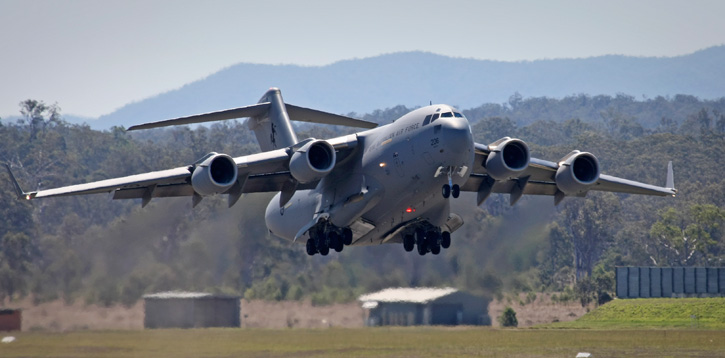
A Royal Australian Air Force (RAAF) C-17A Globemaster strategic transport aircraft departs RAAF Base Amberley, destined for the Middle East-based RAAF Air Task Group. Photo: Australian DOD by Ben Dempster.
“Since the first delivery in 2006, we have seen the Boeing C-17A Globemaster perform exceptionally well at the forefront of Australia’s military operations and humanitarian work,” Senator Johnston said, adding the Government elect to exercise this option the two extra Globemasters would significantly enhance the Royal Australian Air Force’s capacity for operational tasks, disaster relief and humanitarian assistance in our region and around the world. The current fleet of six C-17As was based at RAAF Base Amberley in Queensland, and an additional two would integrate seamlessly into the fleet.
Recent global events have seen Australia’s national capabilities like the C-17A come to the fore to assist our friends and allies
The Government has requested pricing and availability data for two further aircraft through the United States Foreign Military Sales (FMS) program. Decisions on these aircraft are being informed by the force structure review currently under way within Defence as part of the White Paper process.
“Recent global events have seen Australia’s national capabilities like the C-17A come to the fore to assist our friends and allies.” Johnston said, “The ability to rapidly react and move large elements of Australia’s support systems over long distances during these times has highlighted the need for us to have a good sized fleet.” Johnston explained the decision. “The aircraft is also currently supporting Australian and Coalition forces in Afghanistan and the Middle East, providing a military long-range, strategic heavy airlift capability between Australia and the world,” Senator Johnston said.
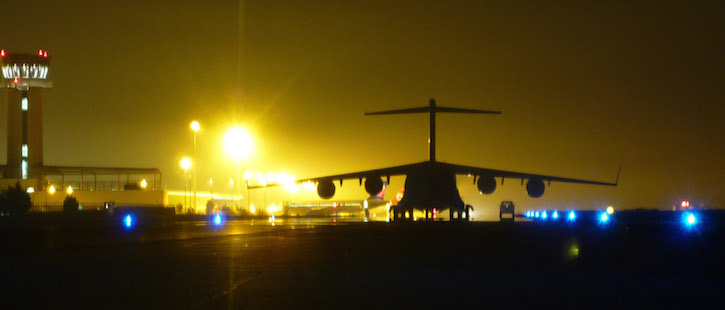
An Australian C-17A Globemaster aircraft has returned to Al Minhad Air Base in the United Arab Emirates (UAE) after delivering military stores to Erbil, Northern Iraq on 2nd September 2014. The aircrew flew from Al Minhad Air Base over the weekend via Tirana, Albania, where the aircraft was loaded. The military stores, consisting of ammunition, was then inspected and cleared by Iraqi officials in Baghdad before moving north to Erbil. The stores will help the people of Iraq to confront the threat posed by Islamic State in Iraq and the Levant (ISIL) extremists. The Australian mission is consistent with similar assistance being provided by the United States, Albania, Canada, Croatia, Denmark, Italy, France, and the United Kingdom. Royal Australian Air Force C-130J Hercules and C-17A Globemaster aircraft remain available to assist the people of Iraq. Photo: Australian DOD.
Lockheed Martin Skunk Works® and XTEND have achieved a major milestone in JADC2 by integrating the XOS operating system with the MDCX™ autonomy platform. This technical breakthrough enables a single operator to simultaneously command multiple drone classes, eliminating the friction of mission handoffs. From "marsupial" drone deployments to operating in GPS-denied environments, explore how this collaboration is abbreviating the data-to-decision timeline and redefining autonomous mission execution.
As traditional defense primes face mounting competition from agile “neoprimes” such as Anduril, Palantir and Helsing, the balance of innovation is shifting toward software-defined warfare and scalable, dual-use technologies, while global industry consolidation—marked by Boeing’s integration of Spirit AeroSystems and other strategic mergers—signals an intensified race to secure control over the defense technology value chain. Our Defense-Tech weekly report highlights these trends.
In early October 2025, a coordinated wave of unmanned aerial system (UAS) incursions—widely attributed to Russia—targeted critical infrastructure across at least ten European nations. The unprecedented campaign exposed the fragility of Europe’s air defenses...
Executive Summary
The past week (September 18-25, 2025) represents an inflection point where strategic defense concepts have transitioned from doctrine to tangible reality. An analysis of global events reveals four primary, interconnected trends shaping an...
At the 2025 Air, Space & Cyber Conference, U.S. Air Force and Space Force leaders unveiled major updates on next-generation fighters, bombers, unmanned systems, and space initiatives, highlighting both rapid innovation and critical readiness challenges as the services race to outpace global competitors. A short version is available here, with a more detailed version for subscribers.
The Taipei Aerospace & Defense Technology Exhibition (TADTE) 2025 crystallized around four dominant strategic themes that collectively illustrate Taiwan's comprehensive approach to defense modernization amid escalating regional tensions. Based on a detailed report by Pleronix (available upon request). Includes a Podcast discussion on TADTE 2025's highlighting Taiwan's four strategic themes beyond the post's coverage.
Israel’s Iron Beam 450 high-power laser system has completed final testing, marking a major leap in air defense. Developed by Rafael, it offers precise, cost-effective interception of rockets, UAVs, and mortars, and is set for IDF deployment by 2025.