Wednesday, December 24, 2025
More
    Home Blog Page 105

    Sikorsky Unveils S-97 RAIDER Helicopter


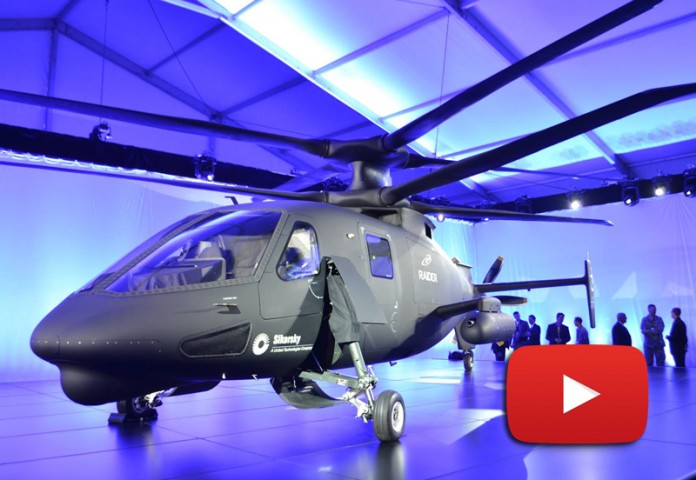
    S-97 Raider multi-role helicopter unveiled by Sikorsky Aircraft yesterday.  Photo: Sikorsky
    S-97 Raider multi-role helicopter unveiled by Sikorsky Aircraft yesterday. Photo: Sikorsky
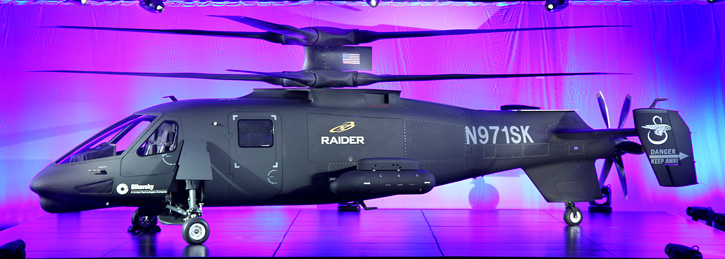
    The Raider prototype was displayed armed with a gun pod and a rocket launcher pod. Photo: SIkorsky
    The Raider prototype was displayed armed with a gun pod and a rocket launcher pod. Photo: SIkorsky

    Based on Sikorsky’s rigid X2 rotor coaxial design, the S-97 RAIDER helicopter features next-generation technologies in a multi-mission configuration (armed aerial scout or light assault), capable of carrying six troops and external weapons. The coaxial counter-rotating main rotors and pusher propeller provide cruise speeds up to 220 knots (253 mph), more than double the speed of conventional helicopters. Sikorsky will offer the RAIDER™ aircraft as a replacement for the U.S. Army’s OH-58D Kiowa Warrior helicopter fleet based on the Army’s future operational and financial priorities, and for the special operations platform.

    “Today, Sikorsky unveiled the next generation of military rotorcraft, with capabilities and performance never seen before in our industry,” said Sikorsky President Mick Maurer. “Just four years ago, we announced plans to build the S-97 RAIDER and teamed with some of the best companies in the industry, understanding the need to ensure aircraft development would not falter as government defense budgets shrank in response to economic pressures. Sikorsky is proud of its leadership in this area, and of the leadership the S-97 RAIDER represents among the world’s military rotorcraft.”

    “Military rotorcraft fleets need maximum performance and increased capabilities to achieve their objectives,” Maurer added. “The RAIDER delivers on that with its greatly improved maneuverability and speed, significantly improved high/hot hover performance, and greater range and endurance.”

    The single-engine RAIDER features a composite airframe and a maximum gross weight of slightly more than 11,000 lbs. The aircraft will be capable of carrying an array of weapons and sensors, necessary for the mission. The cockpit will fit two pilots, seated side-by-side. The flexible cabin space will carry up to six combat-equipped troops, or additional fuel and ammunition for extended missions.

    The airframe is designed and built by Aurora Flight Sciences. Since joining the program in 2011 as the design and build partner for the complete fuselage and empennage, Aurora based its work on Sikorsky’s concept design, conducting preliminary and detail design and analysis culminating in the Critical Design Review in August 2012. Aurora delivered the first fuselage assembly and tested beyond critical flight loads in September 2013 in support of Sikorsky’s aggressive development timeline.

    The S-97 RAIDER airframe, fabricated in Bridgeport, West Virginia, is 70% composite (by weight) and comprised of over 1,000 custom detail components in six major primary and secondary structure assemblies.

    “RAIDER marks the first unveiling of a new relevant rotorcraft configuration in 30 years,” said Mark Miller, Vice President of Research & Engineering. “With the RAIDER program, Sikorsky has brought innovation to every aspect of the process, rethinking the way we design, build, test and support the product. We’ve kept a close eye on lowering development, production and support costs while increasing productivity and quality, and we are confident that the RAIDER is the solution for the future warfighter. We are looking forward to getting air under its tires and expanding the envelope in flight test in the coming months.”

    The RAIDER helicopter program is 100 percent industry funded. Sikorsky provides 75 percent of the investment, and 53 principal suppliers provide the remaining funding.

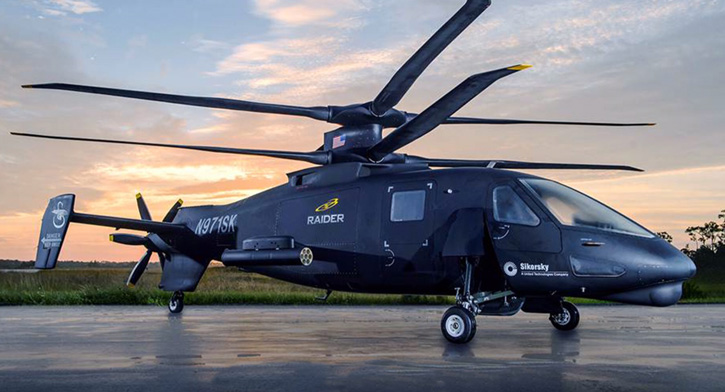
    The first S-97 Raider prototype unveiled by Sikorsky Aircraft yesterday.  Photo: Sikorsky
    The first S-97 Raider prototype unveiled by Sikorsky Aircraft yesterday. Photo: Sikorsky

    Cyber Intelligence Report – October 1, 2014

    cyber_report

    ISRAEL

    Israel establishing new national cyber defense authority

    Prime Minister Netanyahu declared the establishment of a new national cyber defense authority in conjunction with the Israeli National Cyber Bureau (INCB). They will be responsible for proactive protection of Israel civilian cyber space, linking the civilian and security spheres, coordinating between leading experts, and leading long-term strategic defense thinking. Dr. Eviatar Matania, Head of the INCB, was instructed to designate the creation and was asked by the Prime Minister to introduce a proposal for the Israeli Knesset in 60 days.

    More cyber revelations post Operation Protective Edge

    More information has been revealed on cyber-attacks that occurred during Operation Protective Edge. The revelations came from the Israeli Navy. “What we have seen during Operation Protective Edge was an increase in attacks, when you can’t always identify the source,” a source inside the Israeli Navy cyber unit ISPC (Information Systems, Processing, and Computing), stated to news site Mako. The classified source explained there had been attempts to hit the Navy’s C4I systems and disabe them. The source added: “In Protective Edge we have seen a rise of the cyber camping. It is not an army that you can identify. It starts with alone hacker that sees a pro-Palestinian challenge in facing the Israeli Navy or IDF, and it ends with National States. We felt the intensification of the attempts for cyber warfare during the op, but on the other hand, it was contained. We were prepared and knew how to deal with it.”

    USA

    USCYBERCOM to recruit 6,000 cyber professionals and create 133 teams across the country

    The US Cyber Command (USCYBERCOM) intends to recruit 6,000 cyber experts and create 133 teams of soldiers and civilians from military branches to assist the Pentagon in defending the US national infrastructure. Currently, the agency to be charged with protecting the US against cyber threats remains unclear; however, USCYBERCOM hopes to create a more focused authority. Previously, all branches of military performed their own cyber security measures. This comes after House Committee Chairman Mike Rogers (R-Michigan) expressed an interest in having the US adopt an offensive strategy in cyberspace that would require not only the Pentagon, but intelligence agencies and law enforcement to develop protocols for offensive cyber measures. Rogers explained, “We haven’t coordinated that policy. We have disparate levels of cyber offensive capability across the federal government. …Some are fantastic, some not so good, and then [there are] some in the middle.”

    RUSSIA & CIS

    Russia wants to disconnect the “.ru” from interconnected web

    Taking full state control on the “.ru” domain and Internet as a whole on Russian territory is part of the Kremlin’s recent agenda. The Kremlin is considering radical plans to unplug Russia from the global Internet in the event of a serious military confrontation or big anti-government protests on homeland, according to Russian officials. President Vladimir Putin will discuss with the Security Council what steps Moscow might take to disconnect Russian citizens from the web “in an emergency.” The goal would be to strengthen Russia’s sovereignty in cyberspace.

    Middle East

    ISIS and Al-Qaida looking for cyber Caliphate to launch attacks on US

    Middle Eastern jihadists, Islamic State (IS) and al-Qaeda, are planning a joint massive cyber-attack on the US. ISIS publicized openly their plans to establish a “cyber caliphate” protected by jihadist developed encryption software in which they hope to use in creating a catastrophic cyber-attack through hacking and viruses deployed against the US and the West. The jihadists have already developed their own constant developing software to protect their own communications against Western agencies. In addition, they are attempting to add to their numbers to boost their capabilities by using social media for recruitment and calling on militant-minded specialists to join them. The targets are the websites of US government agencies, banks, energy companies, and transport systems. IS’s efforts are led by a British hacker, Junaid Hussein alias Abu Hussain Al Britani, who is a key recruiter calling upon computer experts to join IS. He joined IS over a year ago by arriving into Syria and has previously led a group of teenage British hackers known as Team Poison.

    New Qatari Cyber Law threatens freedom

    Qatar has been urged to revoke sections of a new cybercrime law stating it threatens freedom of expression within the Gulf state. The Committee to Protect Journalists (CPJ) warned that the broad language of the new Anti-Cybercrime Law could be used to restrict freedom of the press and could potentially jail journalists. According to CPJ, “This law is ostensibly to stop cybercrime, but at least two articles will severely restrict freedom of expression, which is not a crime… The Qatari authorities should repeal all articles in this law which curb press freedom.” CPJ is referring to Article 6 that stipulates up to three years’ imprisonment and a fine of 500,000 riyals for setting up or managing a website that spreads “false news aimed at jeopardizing state security.” CPJ also pointed to Article 8 of the law, which adheres to a jail term of up to three years and a fine of 100,000 riyals ($27,500) for any “violation of social values or publishing news, pictures, audio or video recordings that are related to individuals’ private life and family, even if true.”

    CHINA and APAC

    Singapore organized 23rd GovernmentWare infocom security exhibition

    The theme this year of Singapore’s 23rd GovernmentWare infocom security seminar and exhibition was “Strengthening the CyberSecurity Ecosystem.” Public and private sectors convened to learn about the latest challenges in IT security. As large-scale cybersecurity breaches continue to make headlines around the world, Singapore is taking a proactive approach to counter cyberthreats by growing its infocom security talent pool and strengthening its monitoring and incident response capabilities. Minister of Communications and Information, Dr. Yaacob Ibrahim stated a Monitoring and Operations Control Centre (MOCC) will be established to provide the government with a full suite of capabilities to guard against security threats and respond to them in a timely manner. The MOCC will complement the Cyber-Watch Centre (CWC), which will be upgraded by January 2015 to strengthen the government’s detection and analytical capabilities.

    Multinational cyber security drills

    Twelve Asia-Pacific countries participated in performing cyber security incident responses at the 2014 ASEAN Computer Emergency Response Team (CERTS) Incident Drills (ACID) in Hanoi. Cyber security agencies of the countries included Vietnam, Australia, China, Japan, India, and Singapore. The exercise role-played hackers exploiting and attacking a hole in an Indian website’s server, while others were analyzing and identifying intended lessons from cooperation in cyber security incident responses.

    Australia’s Department of Finance drafts cyber security clauses defining service providers’ responsibilities when managing cyber security risks

    The Australian Department of Finance is inviting feedback from the IT industry about the draft of cyber security clauses. Department of Finance Assistant Secretary, Mundi Tomlinson, wrote that the cyber security clauses are designed to dDfine service providers’ and contractors’ responsibilities in order to manage cyber security risks, provide clear contract arrangements for safeguarding government data, and increase the visibility of cyber security incidents.

    The draft clause states the contractor must do all things that a “reasonable and prudent entity” would do to ensure that customer data is protected at all times from unauthorized access or use by a third party. If a data breach occurs, the contractor must notify the customer in writing. It must also contact the Australian Cyber Security Centre, or other cyber security organisation such as AusCERT, as required by the customer.

    EUROPE

    UK to launch real-time cyber threat alert system for banks in 2015

    A new real-time cyber threats system will be deployed in the UK bank industry next year to help  financial institutions fight against cyber security threats, fraud, and financial crime. According to the UK Financial Crime Alerts Service (FCAS), this real-time intelligence system will assist in countering terrorist financing, money laundering, bribery, corruption, online crime, fraud, and other emerging cyber risks for banks. This intelligence information will come from different agencies such as the National Crime Agency, the MI5, etc. This new Intelligence system will be developed by the company BAE systems Applied Intelligence and should be operational for the beginning of 2015. It will provide intelligence to help banks react more efficiently and to be able to handle threats. Moreover, the system should be able to help them to spot emerging threats by performing proactive intelligence. After the major attack of JP Morgan, the UK is strengthening its financial cyber security industry by using intelligence systems to prevent financial systems from cyber-attacks and network infiltrations.

    French Information Systems Security Agency strengthening its cyber defense

    The French Information Systems Security Agency has recently decided to strengthen its cyber defense. From the 30th of September until the 3rd of October, a cyber defense exercise was exercised, which allows the military to test their ability to manage a crisis in a fictional international context. The French General Staff of the Army explained that the DEFNET exercise is the first of its kind and particularly innovative because of its global nature, “It can drive our specialized forces from the lowest level to the highest level. DEFNET 2014 marks the beginning of a new process of operational readiness.” The Ministry of Defence declared that several scenarios would be imagined, such as a defense contractor undergoing cyber-attacks or hacktivists who are threatening military networks, with soldiers acting as fake journalists to test the nerves of those responsible for countering thesecyber-attacks. In Europe, France is one of the biggest countries, yet it is still far behind the UK in terms of cyber defense capabilities. France started to improve its cyber defense and capabilities in 2009 with the creation of the National Agency for the Information Systems Security (ANSSI). Today, the French cyber defense is much stronger but still needs improvement within the private sector, including recruiting more cyber specialist in private high tech companies, banks, telecoms, and defense industries to counter the large scale of cyber-attacks they are facing.

    inss150About the Cyber Intelligence Report:

    This document was prepared by The Institute for National Security Studies (INSS) – Israel and The Cyber Security Forum Initiative (CSFI) – USA to create better cyber situational awareness (Cyber SA) of the nature and scope of threats and hazards to national security worldwide in the domains of cyberspace and open source intelligence. It is provided to Federal, State, Local, Tribal, Territorial and private sector officials to aid in the identification and development of appropriate actions, priorities, and follow-on measures. This product may contain U.S. person information that has been deemed necessary for the intended recipient to understand, assess, or act on the information provided. It should be handled in accordance with the recipient’s intelligence oversight and/or information handling procedures. Some content may be copyrighted. These materials, including copyrighted materials, are intended for “fair use” as permitted under Title 17, Section 107 of the United States Code (“The Copyright Law”). Use of copyrighted material for unauthorized purposes requires permission from the copyright owner. Any feedback regarding this report or requests for changes to the distribution list should be directed to the Open Source Enterprise via unclassified e-mail at: [email protected]. CSFI and the INSS would like to thank the Cyber Intelligence Analysts who worked on collecting and summarizing this report.

    Raytheon to supply RAFAEL Iron Dome components worth $149 million

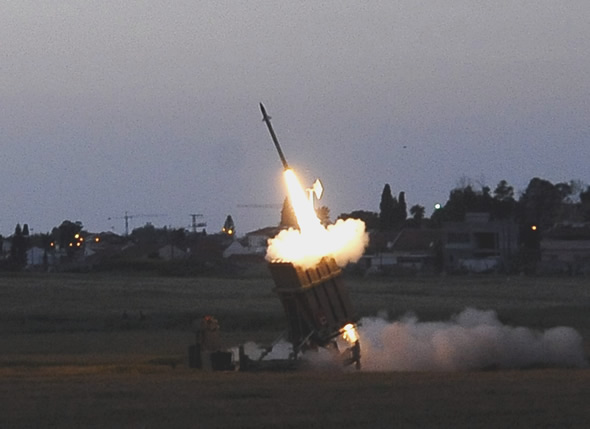
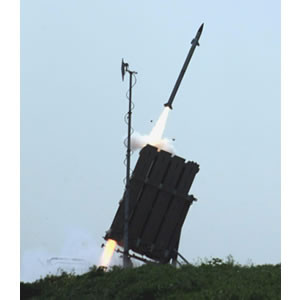
    A Tamir missile fired by an Iron Dome fire unit near Ashkelon, Israel, intercepting a Palestinian 122mm Grad rocket fired at the city. The iron Dome has repeatedly intercepted Palestinian rockets since its first deployment in April 2011, demonstrating impressive score. Photo via RAFAEL
    The first upgraded Iron Dome unit is scheduled for delivery to the Israel Air Force 'within weeks', following a successful series of intercepts where the system demonstrated the enhanced capabilities against advanced threats.
    The first upgraded Iron Dome unit is scheduled for delivery to the Israel Air Force ‘within weeks’, following a successful series of intercepts where the system demonstrated the enhanced capabilities against advanced threats. Photo: Shaul Golan via RAFAEL

    The Raytheon Company has received a contract award from Israel’s Rafael Advanced Defense Systems Ltd. valued at $149.3 million, to provide components for the Tamir interceptor used in the defensive Iron Dome Weapon System. The amount represents about two thirds of the special funding of $225 allocated by the US administration to replenish Israel’s arsenal of Iron Dome interceptors, following Operation “Protective Edge” where Iron Dome systems intercepted over 735 rockets fired at Israel.

    The award builds upon a co-marketing agreement the two companies have had in place for Iron Dome since 2011. “The partnership between the Missile Defense Agency and the Israeli Missile Defense Organization has been extraordinary,” said DiDi Yaari, chief executive officer of Rafael Advanced Defense Systems. “We’re very appreciative of the U.S.’s support for this life-saving system. Maintaining Iron Dome’s supply gives Israelis great peace of mind.”

    “Iron Dome has proven itself time and again by protecting Israel’s population from incoming rockets, artillery and mortars,” said Dr. Taylor W. Lawrence, Raytheon Missile Systems president. “The sourcing of Tamir interceptor components in the U.S. will go a long way to ensuring sufficient volumes of available Tamir missiles for Israel’s defense.”

    With more than 1,000 successful intercepts, Tamir is the only combat proven counter rocket, artillery, and mortar interceptor available for U.S. and coalition partners today.

    UAE is ready to take thousands of used MRAP vehicles

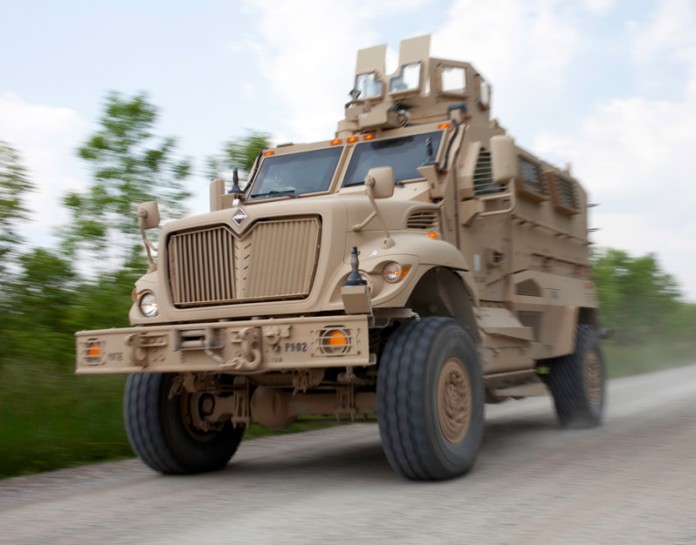
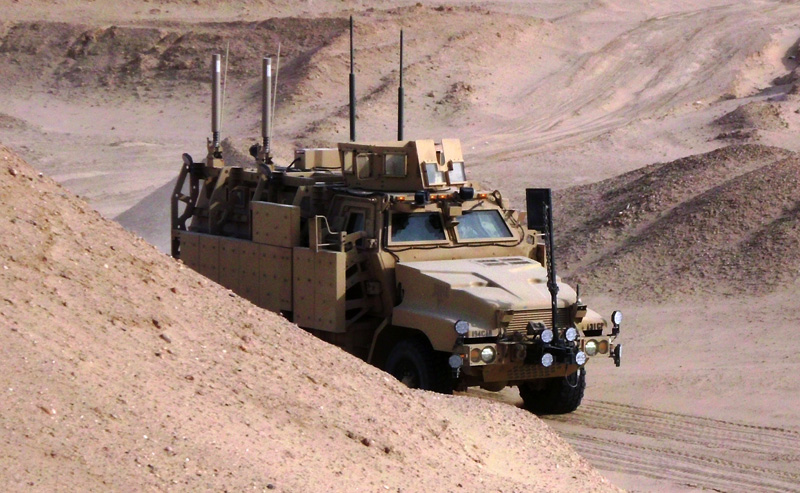
    US soldiers trained in driving MaxxPro MRAPs, 2010. Photo: U.S. Army by David Bruce
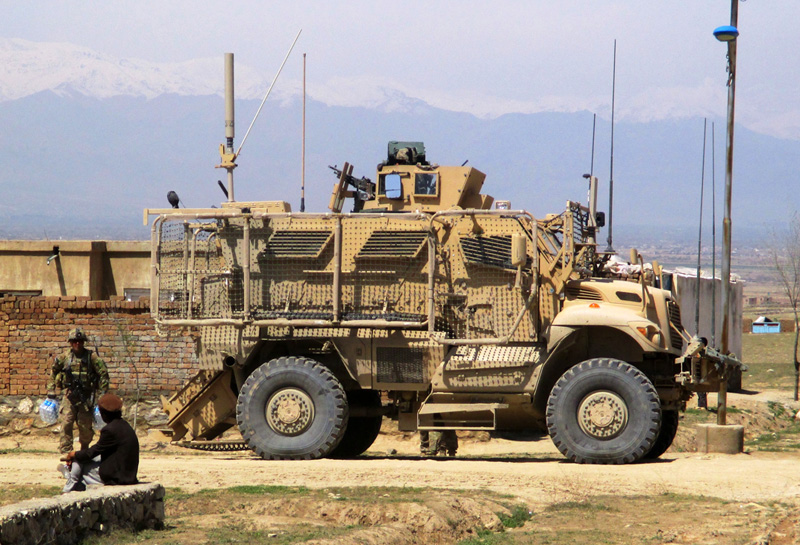
    A MaxxPro MRAP sets up a secure position, allowing Soldiers from White Platoon, Apache Troop to dismount and conduct nearby street-level engagements with local villagers April 4, 2014. photo: U.S. Army by Joseph Krebsbach
    A MaxxPro MRAP sets up a secure position, allowing Soldiers from White Platoon, Apache Troop to dismount and conduct nearby street-level engagements with local villagers April 4, 2014. photo: U.S. Army by Joseph Krebsbach

    In an unprecedented move the the United Arab Emirates (UAE) has approached the US government to some 4,500 used Mine Resistant Ambush Protected (MRAP) Vehicles. Veterans of the Iraq and Afghanistan wars, the vehicles include about 3,360 International MaxxPro of various types and 1,150 BAE Systems Caiman multi-terrain vehicles. 44 MRAP All Terrain Vehicles (M-ATV) are also bundled in the package that is expected to cost over $2.5 billion. Sofar the US Army has donated these vehicles to foreign countries that supported the fight in Iraq and Afghanistan, as well as to domestic police and law enforcement agencies in the USA.

    US soldiers trained in driving MaxxPro MRAPs, 2010. Photo: U.S. Army by David Bruce
    US soldiers trained in driving MaxxPro MRAPs, 2010. Photo: U.S. Army by David Bruce

    According to the US Defense Security Cooperation Agency (DSCA) announcement, the UAE intends to utilize these MRAP vehicles to increase force protection, to conduct humanitarian assistance operations, and to protect vital international commercial trade routes and critical infrastructure. It is also possible that in financing this acquisition the UAE will be able to provide protected mobility to locally established groups that would be orgenized to fight the Islamic State in Syria and Iraq. “These MRAPs will enhance UAE’s burden-sharing capacity and defensive capabilities.” The DSCA announcement said.

    The principal contractors will be Navistar Defense in Lisle, Illinois; BAE Systems in Sealy, Texas; and Oshkosh Defense in Oshkosh, Wisconsin. Since the vehicles are sold as excess inventory, the financial impact of this sale is not expected to be significant for those companies.

    The package could include 4,569 MRAP Vehicles of the following types:

    • 1,085 MaxxPro Long Wheel Base (LWB) chassis
    • 29 MaxxPro LWB
    • 264 MaxxPro Base/MRAP Expedient Armor Program (MEAP – augmented side armor)
    • 729 MaxxPro Bases
    • 283 MaxxPro MEAP without armor
    • 970 MaxxPro Plus (up-armored against IEDs)
    • 1,150 Caiman Multi-Terrain Vehicles (without add-on armor)
    • 44 MRAP All-Terrain Vehicles (M-ATV)
    • 15 MRAP Recovery Vehicles

    The vehicles will be delivered with extra belly protection (Underbody Improvement Kits) and the logistical support packages the US Army has maintained for those vehicles. Since its fielding in 2006 MaxxPro was one of the most popular MRAP vehicle operated by the US Army. The vehicle designed and built by Navistar was delivered in several versions – all implemented an armor and protection suite designed and built by Plasan in Israel. Some armor enhancements associated with the MaxxPro Plus up-armored vehicle were delivered by US manufacturers.

    mrap_caiman_549438_800
    CAIMAN Mine Resistant Ambush Protected vehicle off-road driving in Kuwait, 2012. Photo: Photo: U.S. Army by Kyle Koeberl

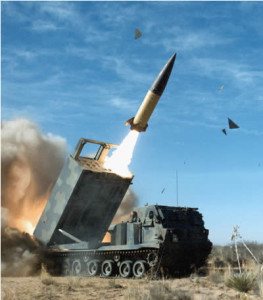
    In addition to the MRAP package the US has also approved the sale of 100 Army Tactical Missile System (ATACMS) medium range ballistic missiles to the UAE. Those missiles comprise the M57 Army Tactical Missile System (ATACMS) rockets with T2K (Block IA Unitary) warheads weighing 500 lb.,

    atacms_1
    US Army/Lockheed Martin ATACMS missiles are fired from MLRS or HIMARS platforms. Photo: Lockheed Martin

    The missiles will be loaded on a battalion of 12 High Mobility Artillery Rocket Systems (HIMARS) launchers, 12 resupply vehicles and 65 unitary pods each comprising six Guided Multiple Launch Rocket Systems (GMLRS). The estimated cost of this missile package is $900 million. The UAE has been operating a regiment equipped with 20 HIMARS launchers carrying ATACMS since 2006. In 2010 the US Government approved the sale of 100 missiles for the UAE, replacing the previously supplied cluster-munitioned versions with new designs using the T2K unitary warhead.

    The ATACMS missile uses GPS guidance to strike targets at high precision, and at nearly vertical angle from ranges of 70 to 270 km. The M57 variant was used successfully in Operation Iraqi Freedom and Operation Enduring Freedom, where deep strike capability was required against high payoff targets. In the recent years ATACMS has been deployed with other Middle-Eastern countries including the UAE, Qatar, Bahrain, Jordan and Turkey.

    British Watchkeeper drones begin combat ISTAR missions over Afghanistan

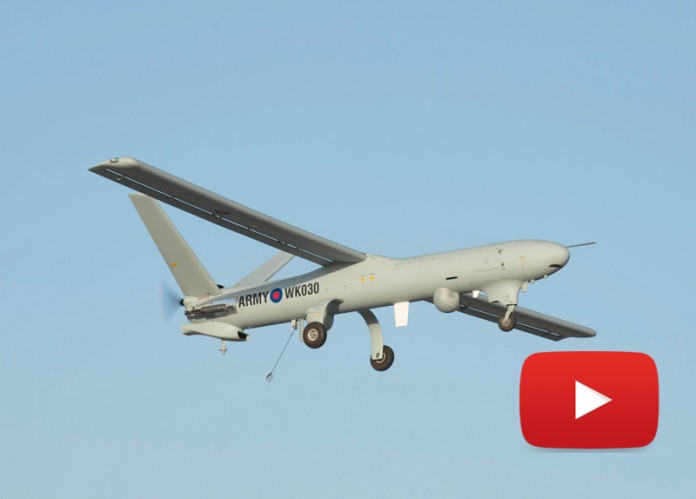
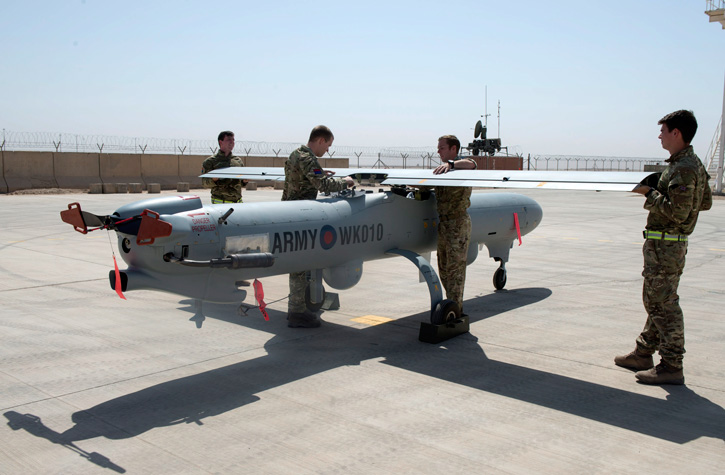
    The Ministry of Defence has announced that the Army’s next generation of Unmanned Air System (UAS), Watchkeeper, is now fully operational in Afghanistan. Photo: MOD, Crown Copyright
    The Ministry of Defence has announced that the Army’s next generation of Unmanned Air System (UAS), Watchkeeper, is now fully operational in Afghanistan. Photo: MOD, Crown Copyright

    The UK Ministry of Defence (MOD) today announced the first operational flights in Afghanistan of Thales’s unmanned air system, Watchkeeper. This new capability is providing force protection for British troops as they prepare to draw down from Afghanistan by the end of this year.

    a 4 man team from 43 Battery, 47 Regiment, Royal Artillery, led by Corporal Si Downey assembling a Watchkeeper Unmanned Aerial Vehicle (UAV) in Camp Bastion, Afghanistan, 23rd September 2014. Photo: MOD, Crown Copyright
    A 4 man team from 43 Battery, 47 Regiment, Royal Artillery, led by Corporal Si Downey unpack a Watchkeeper UAV as it arrives at its new forward operating base in Camp Bastion, Afghanistan, 23rd September 2014. Photo: MOD, Crown Copyright

    The news comes as other countries assess Watchkeeper for their tactical unmanned requirements. Thales is the prime contractor for Watchkeeper. Watchkeeper secured the first Statement of Type Design Assurance from the Military Aviation Authority for an unmanned air system, a critical step to ensure the best in class system. Watchkeeper was given a Release To Service (RTS) in March 2014.

    ltor, Gunner James Bridley and Lance Bombardier Kev Hedeaux from 43 Battery, 47 Regiment, Royal Artillery assembling a Watchkeeper Unmanned Aerial Vehicle (UAV) in Camp Bastion. Photo: MOD, Crown Copyright
    ltor, Gunner James Bridley and Lance Bombardier Kev Hedeaux from 43 Battery, 47 Regiment, Royal Artillery assembling a Watchkeeper Unmanned Aerial Vehicle (UAV) in Camp Bastion. Photo: MOD, Crown Copyright

    Following the handover of Camp Bastion in Afghanistan, the Unmanned Air System will return home to Wiltshire where Royal Artillery troops will continue to train with the system in a restricted airspace over Salisbury Plain. “Watchkeeper carrying out surveillance tasks and gaining situational awareness via its cutting edge cameras and radar capability, a new asset for the UK’s Armed Forces.”

    Chief of the Defence Staff, General Sir Nick Houghton said following a visit in Camp Bastion, Afghanistan, where the Watchkeeper was deployed. Among the new capabilities introduced with the system are ultra high resolution, multi-modal radar and automatic take-off and landing.

    Assembling a Watchkeeper Unmanned Aerial Vehicle (UAV) in Camp Bastion, Afghanistan, 23rd September 2014. Photo: MOD, Crown Copyright
    Assembling a Watchkeeper Unmanned Aerial Vehicle (UAV) in Camp Bastion, Afghanistan, 23rd September 2014. Photo: MOD, Crown Copyright

    “It’s been a real privilege to be the first to fly the Army’s new Watchkeeper Remotely Piloted Air System on operations. It’s an amazing capability and has already provided important information to the troops, enhancing the safety of everyone that lives and works at Bastion. The video and images we provide are a bit like what you might have seen during police chases on TV, the main differences are the videos and pictures are a much higher resolution and we fly the aircraft from a control centre on the ground.” Watchkeeper pilot and payload operator, Sgt Alex Buchanan, said.

    Thales has also delivered a new comprehensive training capability based at MOD Larkhill and Boscombe Down, and has helped to establish Aberporth, West Wales as a leading UAV Testing Centre in Europe.

    The new British drone has a mass of 450 kg and a payload capacity of 150 kg, with a typical endurance of 17 hours. It is based on the Hermes 450 UAV developed by Elbit Systems. The Watchkeeper is built in the UK by a joint venture company, UAV Tactical Systems (U-TacS), set up by the Israeli company Elbit Systems (51% ownership) and French European Thales conglomerate.

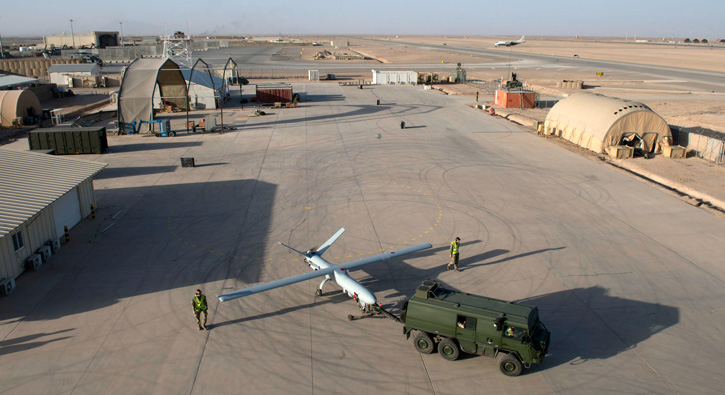
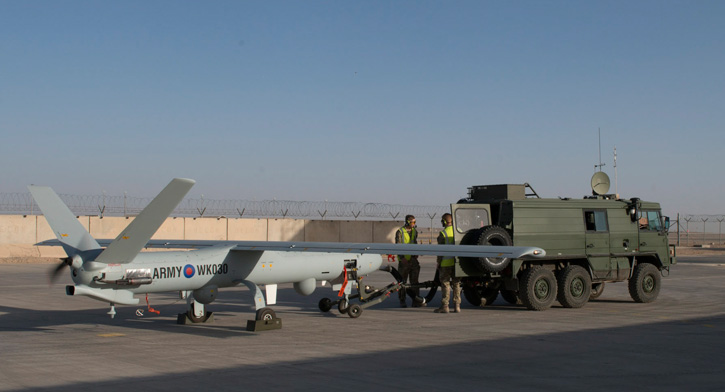
    The Watchkeeper unmanned aerial vehicle (UAV) towed for checking position prior to takeoff at  Camp Bastion, Helmand, Afghanistan
    The Watchkeeper unmanned aerial vehicle (UAV) towed toward the checking position prior to takeoff at Camp Bastion, Helmand, Afghanistan.
    JIAG-2014-063-089_725
    With engine running, and its two payloads ready for mission, a Watchkeeper is prepared for launch at forward operating base Camp Bastion, Afghanistan.

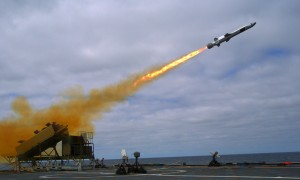
    LCS 4 fires the Norwegian Naval Strike Missile

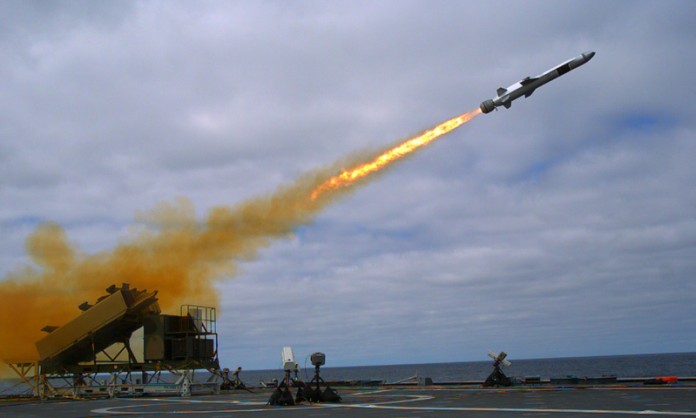
    A Kongsberg Naval Strike Missile (NSM) is launched from the littoral combat ship USS Coronado (LCS 4) during missile testing operations off the coast of Southern California. The missile scored a direct hit on a mobile ship target. Photo: U.S. Navy, by Zachary D. Bell)
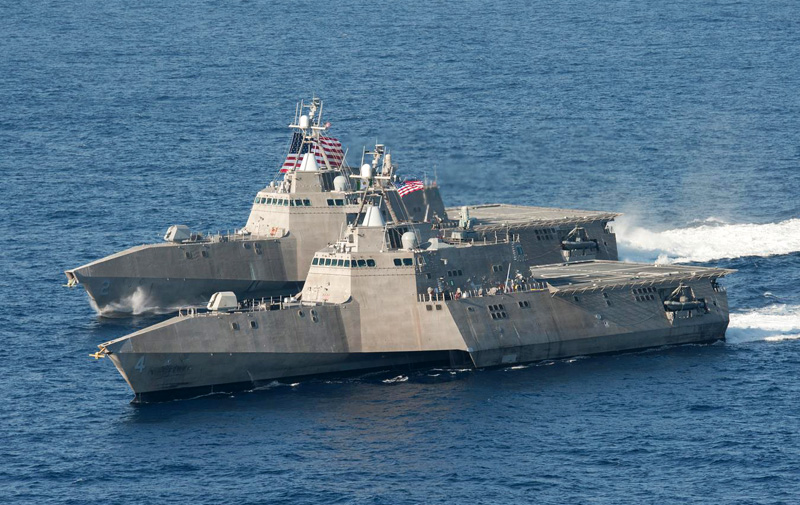
    USS Coronado (LCS 4 in front) and USS Ft Worth (LCS , back) sail in formation.  In August 2014 USS Coronado participated in the
    USS Coronado (LCS 4 in front) and USS Ft Worth (LCS , back) sail in formation. In August 2014 USS Coronado participated in the Combat System Ship Qualification Trial (CSSQT) which included the testing of various weapon systems on board. Photo: US Navy

    The crew of littoral combat ship USS Coronado (LCS 4) successfully performed a live-fire demonstration of a Kongsberg Naval Strike Missile (NSM) during missile testing operations off the coast of Southern California, Sept. 23, 2014. During the test, the Norwegian-made NSM was launched from the deck of Coronado and scored a direct hit on its intended target, a mobile ship target (MST). “We are extremely pleased with the outcome of today’s test on board Coronado,” said Vice Adm. Thomas Rowden, Commander, Naval Surface Forces. “We view this successful missile test as a possible future warfighting capability for the LCS program.” Rowden said the Navy is interested in increasing both quantity of firepower and range across the surface fleet.

    Without the bulky but versatile Mk-41 Vertical Launch System which has been accepted as a standard launch systems for US surface combatants, the baseline configuration of the LCS lacks offensive weapons and, therefore, requires reliance on add-on missile systems such as Harpoon or the NSM to acquire precision offensive capability against surface targets. These could be added in the future to the surface combat mission packages designed for the LCS.

    The demonstration followed a live firing of an NSM from the Royal Norwegian Navy’s Fridtjof Nansen frigate during the recent Rim of the Pacific (Rimpac) exercises. The test fire showed the NSM would function properly in the warmer, more humid conditions near Hawaii, wrote the Aerospace Daily & Defense Report.

    During Rimpac, which concluded August 1, officers on Independence-class ships said the NSM will be the leading weapon to equip the LCS’ surface warfare package, but LCS officials have made it clear the missile still needs to prove itself with more tests. Navy program officials also say the NSM would still have to go through all the normal acquisition procedures to be considered for LCS deployment. [/ismemmber]

    A Kongsberg Naval Strike Missile (NSM) is launched from the littoral combat ship USS Coronado (LCS 4) during missile testing operations off the coast of Southern California. The missile scored a direct hit on a mobile ship target. Photo: U.S. Navy, by Zachary D. Bell)
    A Kongsberg Naval Strike Missile (NSM) is launched from the littoral combat ship USS Coronado (LCS 4) during missile testing operations off the coast of Southern California. The missile scored a direct hit on a mobile ship target. Photo: U.S. Navy, by Zachary D. Bell)

    The NSM is a long range precision strike missile designed to be launched from a variety of ships against a variety of targets. The test conducted under the Pentagon’s Foreign Comparative Testing (FCT) program demonstrated how the LCS can readily accept new weapons systems. “Both classes of the LCS are based on modular design concepts,” said Rowden. “This allows for the integration of weapons and sensors like the Kongsberg NSM technology as part of the LCS warfare suite.” For the test the NSM launcher was installed on the Corodado’s aft deck.

    Since 1980, the FCT program has helped the United States and allies reap substantial savings by avoiding research and development costs, lowering procurement costs, reducing risk for major acquisition programs and accelerating the fielding of equipment critical to the reading and safety of operating forces.

    LCS delivers combat capability from core self-defense systems in concert with interchangeable, modular mission packages and an open architecture command and control system. Modularity mmaximisesthe flexibility of LCS and enables the ship to meet changing warfare needs, while also supporting rapid technological updates. LCS employs advanced tactical networks to share information with aircraft, ships, submarines, and joint and coalition units both at sea and shore.

    57MMSHOT400
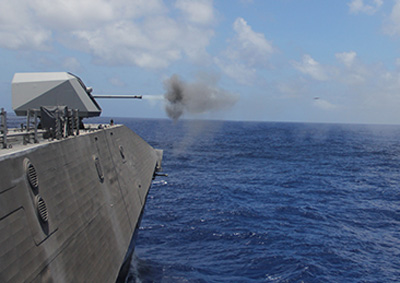
    The exercises marked the first time an Independence variant ship fired its core weapon system (MK 110 57mm gun) against a High Speed Maneuvering Surface Target. Photo: US Navy Navsea

    The recent test follows another firing trial performed by USS Coronado (LCS 4) last month, in conjunction with Combat System Ship Qualification Trial (CSSQT). As part of the developmental testing the ship crew used the vessel’s BAE Systems’ MK 110 57mm gun against representative fast attack craft. The exercises marked the first time an Independence variant ship fired its core weapon system (MK 110 57mm gun) against a High Speed Maneuvering Surface Target. The objective of the test was to measure the accuracy of the ship’s core weapon system against a fast attack craft.

    “The Independence variant has the ability to enter and win the fight.” said Cmdr. Peter Kim, Coronado’s commanding officer. “Our CSSQT performance demonstrates the ship can enter a contested area at high speed, defend herself against missile and surface threats, and execute missions with the embarked mission package plus an enormous array of force options that can be rapidly employed by a Fleet Commander on short notice.”

    This developmental test is part of a larger series of post-delivery test and trial events which will culminate in a full Technical Evaluation and Initial Operational Testing and Evaluation of the surface warfare mission package and sea frame in 2015. Coronado was commissioned in April, and completed Final Contract Trials in June, through which the ship and its major systems were exercised.

    US lead coalition target ISIL power centers in Syria

    U.S. and partner nation forces have begun airstrikes inside Syria Monday Sept 22, 2014, targeting terrorists from the Islamic State of Iraq and the Levant (ISIL), Pentagon Press Secretary Navy Adm. The strikes are being undertaken through a mix of fighter and bomber aircraft, drones and Tomahawk Land Attack missiles. At present, Saudi Arabia, Jordan, the United Arab Emirates and Bahrain have agreed to become ‘full partners’ in support of the operation. Qatar also sent military aircraft to play a supporting role but did not carry out strikes. According to US sources, some of the Tomahawks were set to airburst modes,

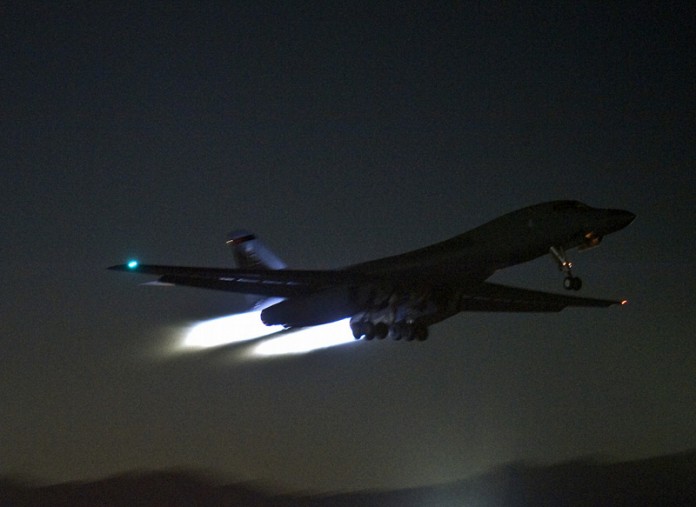
    The U.S. Air Force’s F-22 stealth fighter jets took part in the airstrikes, which marks the first airstrike the fifth generation fighters have taken part in since they entered the service in 2005. Along with the Raptors, U.S. Navy F-18s and U.S. Air Force F-15E and F-16 fighters, and B-1B bombers took part in the mission.

    The air strikes were organized in three waves. The first wave began around midnight in Syria, or 8:30 Eastern time, as two guided missile destroyers – USS Arleigh Burke in the Red Sea and the USS Philippine Sea in the northern Arabian Gulf – launched more than 40 Tomahawk cruise missiles against targets in Ar-Raqqah in eastern and Aleppo, in northern Syria. Most of the Tomahawk land-attack missile strikes were against Khorasan Group compounds, their manufacturing workshops and training camps.

    The second wave consisted of F-22 Raptors in their first combat role, F-15 Strike Eagles, F-16s, B-1 bombers and drones that launched from bases in the region around 9:00 p.m. Eastern time against targets in northern Syria. The two waves were carried out exclusively by US forces. The strike was the first time the F-22 was used in a combat role, delivering GPS-guided precision attack munitions.

    The final wave that occurred just after midnight included F-18s from the USS George H.W. Bush in the northern Arabian Gulf and regionally based U.S. and coalition partners. These fighter jets attacked targets in eastern Syria, including ISIL training camps and combat vehicles near Dayr az-Zawr.

    “Our immediate tasks are to continue the degradation of ISIL in Syria and Iraq [and] to build and strengthen regional partners and to build a regional coalition.” said Army Lt. Gen. William C. Mayville Jr., director of operations for the Joint Staff, Other immediate tasks, Mayville said, are to help place Iraqi security forces and Peshmerga forces on the offensive, to support broader diplomatic efforts in the region, to implement a Syrian train-and-equip program, and to continue working with Iraqi security forces and ministries.

    Coalition partners in the strikes included Jordan, the United Arab Emirates, Bahrain and Saudi Arabia, with Qatar in a supporting role, the admiral said during a press briefing here, adding that all continue to be a critical part of the strategy against ISIL.

    The Washington Post reported that residents of the northeastern Syrian city of Raqqah — the Islamic State’s self-declared capital — reported news of large explosions on Twitter and said repeated passes from military aircraft were clearly audible. US officials said the airstrikes and cruise missiles “destroyed or damaged” ISIL targets spread across Syria near the towns of Ar Raqqah, Dayr az Zawr, Al Hasakah, and Abu Kamal. On a separate strike US forces executed unilateral precision strikes against the Khorasan group, an [al-Qaida]-affiliated terrorist organization located in northwest Syria, General Kirby added. Intelligence reports indicated the Khorasan Group was in the final stages of plans to execute major attacks against Western targets and potentially the United States. “We’ve been watching this group closely for some time.” Pentagon Press Secretary Navy Adm. John Kirby explained, “We know that the Khorasan group has attempted to recruit Westerners to serve as operatives or to infiltrate back into their homelands,… The Khorasan group is clearly not focused on the Assad regime or the Syrian people. They are establishing roots in Syria … to advance attacks against the West and the homeland.” US intelligence believes that a senior Al-Qaeda Operative Muhsin Al-Fadhli has been killed in this strike.

    The United States was planning to attack as many as 20 Islamic State targets in the operation, which would mark the biggest single day of attacks since the military began striking the jihadist group in Iraq on Aug. 8, 2014. Among those targets were buildings occupied by Islamic State leaders, training sites, armed vehicles, supply lines, arsenals and a finance center.

    In previous days U.S. Central Command has conducted a total of 190 airstrikes across Iraq in the battle against ISIL forces. The decision to begin the airstrikes in Syria was made earlier on Monday by Centcom Commander Army Gen. Lloyd Austin. The strikes are being made under authorization granted by the commander in chief, President Barack Obama, as part of the comprehensive strategy to degrade and ultimately destroy ISIL.

    The Pentagon plans to send a dozen A-10 Thunderbolt aircraft and up to 300 airmen to the Middle East in early October, to help in the conflict against the Islamic State group, the Indiana National Guard said.

    The jihadist movement — which the CIA estimates has up to 31,000 fighters at its disposal — controls much of eastern Syria and has used its bases there as a springboard for seizing territory in neighbouring Iraq.

    The coalition air operations over Syria are not coordinated with the Syrian air force, and are therefore considered operations in contested airspace. Moreover, the Syrian air force continues to attack rebel positions and concentrations, primarily in the west. Thus far, there is no indication that Syrian air defenses responded to the U.S. warplanes flying inside Syrian air space. Syria has one of the most formidable air defense networks in the region. However, most of the surface-to-air missile systems are located near Damascus. In 2012, the Syrian military shot down a Turkish RF-4E reconnaissance jet flying over Syrian airspace.

    Syrian air force has also been operating in the South-Western front with Israel, along the Golan Heights. In recent weeks Syrian air strikes were directed against Jihadist group Jabhat al-Nusra, which virtually took over the area along the Syria-Israel border. Two weeks ago Israel shot down a Syrian UAV that penetrated the Israeli airspace in the Golan. Today, a Syrian fighter jet was shot down over that area — the first such downing in decades. Both UAV and fighter jet were intercepted by Israeli Patriot missiles. According to Israeli sources the Syrian Sukhoi Su-24 penetrated 800 meters into the Israeli area, and tried to return to Syrian airspace after the Patriot was shot at it.

    Syrian air attacks in the northern city of Idlib killed at least 42 civilians, the Lebanese Daily Star reported an anti-regime group of activists said. The attacks hit territory in and around the towns of Saraqeb and Ehsim in Idlib province Sunday, the Britain-based Syrian Observatory for Human Rights said. One struck an area outside Saraqeb where people who had fled earlier assaults on the town itself were taking shelter, the Observatory said. One activist in Saraqeb said people had been fleeing to nearby farmland to escape the bombardment, but Sunday warplanes also struck the farms which had been “packed with families… This is what led to the high number of deaths,” the activist said.

    Other attacks by the Syrian Air Force were carried out in the Damascus suburb of Hammourieh killed nine people.

    French jets strike ISIS targets in Mosul, Iraq

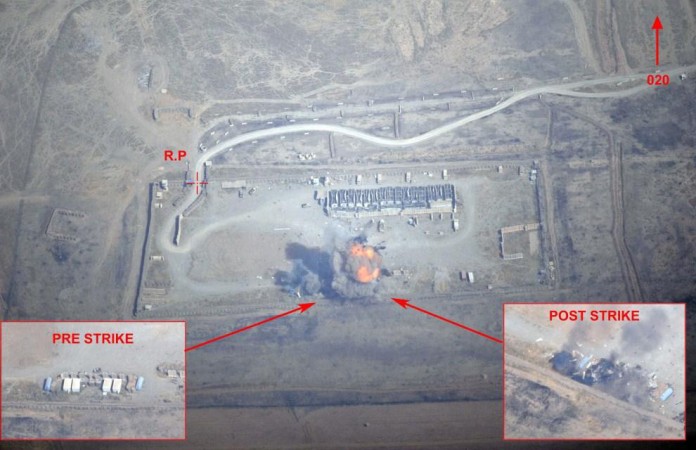
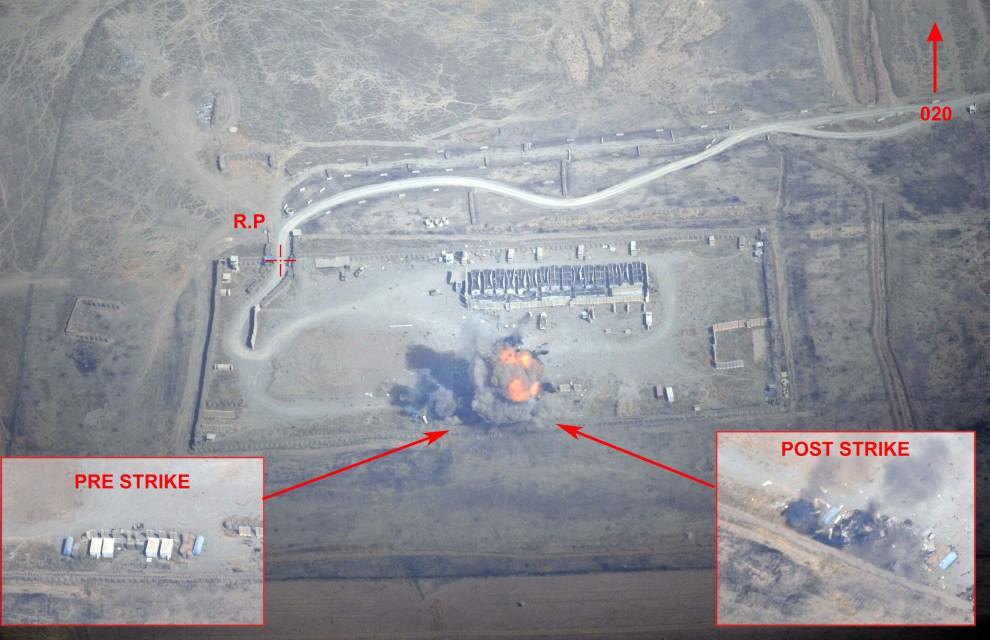
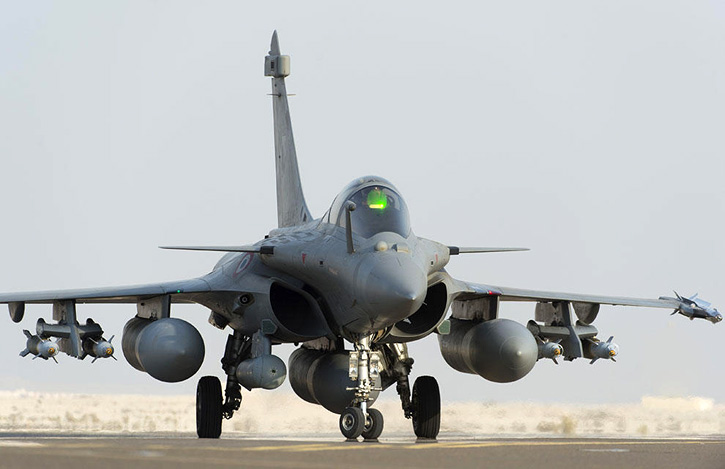
    First French strikes against ISIS in Iraq. French Rafale jet fighters struck ISIS targets near Mosul for the first time yesterday, September 19, 2014. Photo: French MOD SIRPA
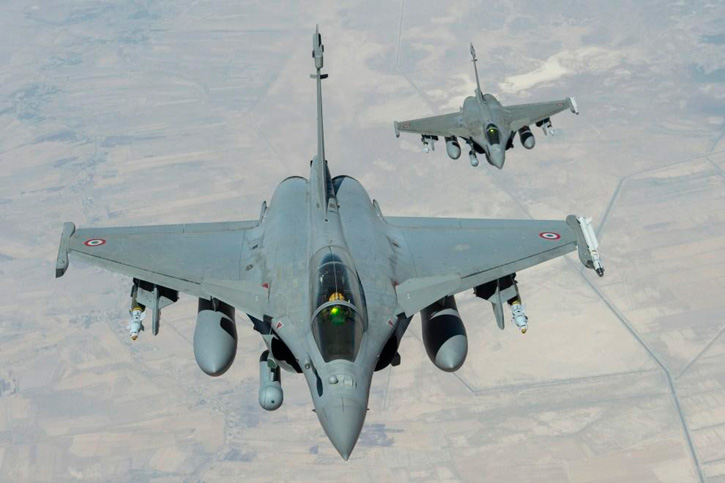
    Two Rafales return from the strike mission at Mosul, 19 September 2014. Note the two missing bombs on each of the fighters. Photo: French Air Force, SIRPA AIR
    Two Rafales return from the strike mission at Mosul, 19 September 2014. Note the two missing bombs on each of the fighters. Photo: French Air Force, SIRPA AIR

    French Rafale jet fighters struck a suspected Islamic State target in Iraq for the first time yesterday, (Friday, Sept. 19, 2014 09:40 ET) expanding a U.S.-led military campaign against ISIS. The French Rafales hit “a logistics depot of the terrorists” near the city of Mosul. The mission lasted five hours, and included three aerial refuelling from KC-135 FR tankers.

    First French strikes against ISIS in Iraq. French Rafale jet fighters struck ISIS targets near Mosul for the first time yesterday, September 19, 2014. Photo: French MOD SIRPA
    First French strikes against ISIS in Iraq. French Rafale jet fighters struck ISIS targets near Mosul for the first time yesterday, September 19, 2014. Four air strikes were carried out in the space of 18 minutes, destroying a storage facility containing vehicles, arms and fuel. Photo: French MOD SIRPA

    A previous mission which took place earlier last week involved The mission involve two Dassault Rafale fighter jets from No 3/30 squadron “Lorrain”, flying intelligence gathering missions carrying the RecoNG recce pod.

    Rafale carrying RECO-NG reconnaissance pod on a mission over Iraq, 2014 Photo: French Air Force SIRPA
    Rafale carrying RECO-NG reconnaissance pod on a mission over Iraq, 2014 Photo: French Air Force SIRPA

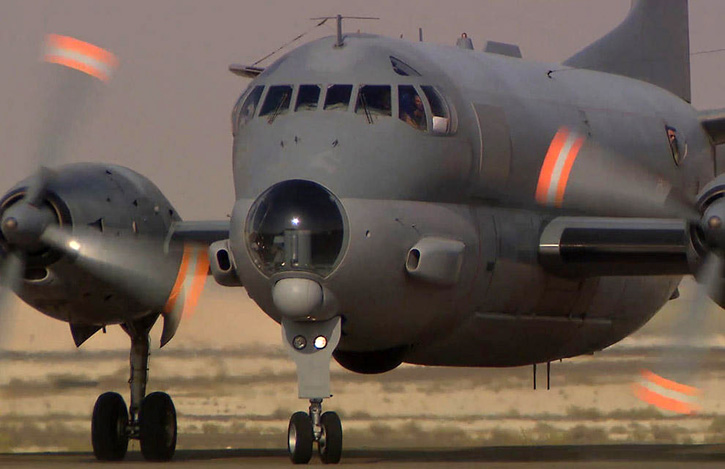
    French Navy Atlantique 2 maritime patrol and Anti Submarine Warfare (ASW) aircraft that was assigned to patrols over the Persian Gulf and Indian Ocean was also diverted to carry out intelligence gathering missions over Northern Iraq. The aircraft carried out 10 hour patrols last week and also supported the French Air Force air attack on Friday.

    Yesterday’s mission also involved two Rafales, each carrying GBU-12 laser guided bombs, a Boeing KC-135 aerial refuelling plane and a Dassault Atlantique 2 Naval reconnaissance plane, which provided  electronic surveillance support for the strike force. The French air an naval contingent operating over Iraq is currently operating from the UAE air base of Al Dhafra.

    On Saturday, French Rafales resumed operations under operation Chammal, flying two-hour air strike readiness mission over the Baghdad area. On those sorties the Rafales flew “dynamic targeting” missions, standing by to deliver strikes in case of identification of targets of opportunity on the ground or calls for close air support by Iraqi ground troops. However, no such calls were required. The management and control of those missions were provided by the Coalition Air Operations Center (CAOC) in El Udeid air base Qatar.

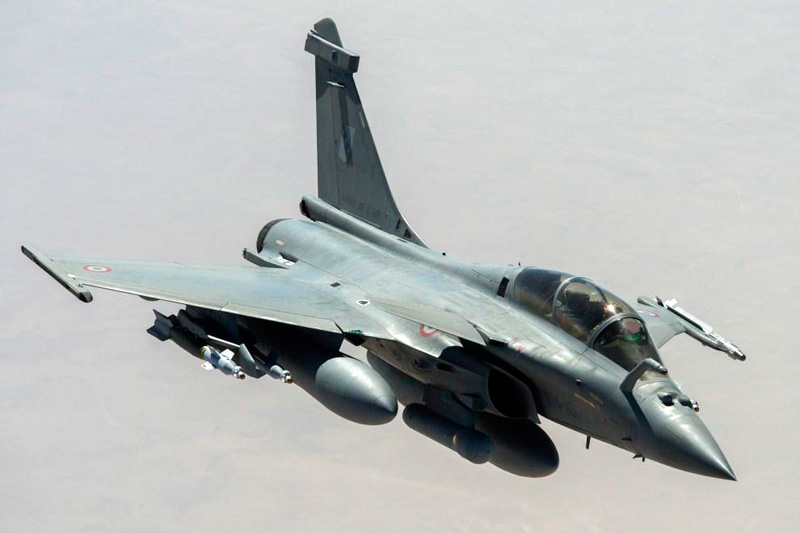
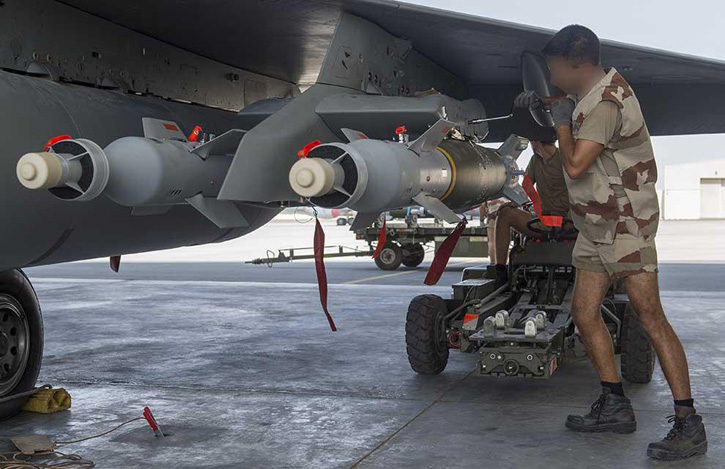
    The French Rafales performed the strike with GBU-12 laser guided, marking their targets with Damocles targeting pods. Photo: French Air Force, SIRPA
    The French Rafales performed the strike each loaded with GBU-12 laser guided bombs, marking their targets with Damocles targeting pods. Photo: French Air Force, SIRPA
    French_strike4_725
    GBU-12 laser guided bombs loaded on a Rafale jet fighter. Photo: French Air Force, SIRPA
    A French Navy Atlantique 2 maritime patrol and anti-submarine warfare aircraft participated in the recent strikes, providing intelligence support and battle damage assessment. Photo: French MOD, SIRPA
    A French Navy Atlantique 2 maritime patrol and anti-submarine warfare aircraft participated in the recent strikes, providing intelligence support and battle damage assessment. Photo: French MOD, SIRPA

    Airstrike kills 40 Islamic State fighters in Iraq

    A U.S. air strike near Mosul on Thursday (Sept. 18, 2014) killed 40 Islamic State militants near a terrorist training camp, according to a senior Defense Department official. The attack involved a single B-1 bomber. Mosul, Iraq’s second-largest city, fell to militants in June.

    Since August US forces conducted 176 air strikes against the group. The recent air strike is part of the widened campaign against the militant group that President Obama ordered last week. The first round of attacks began Monday (Sept 15, 2014)but the most recent strike as the most deadly against the group. “The attack destroyed a large ISIL ground unit,” according to U.S. Central Command, which oversees military operations in the Middle East. The strike also blew up an armed vehicle and two ‘ISIL-occupied buildings.’ US officials indicated.

    ISIS Launches attacks in Baghdad

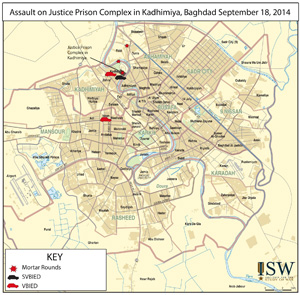
    Baghdad_091814_lowWhile its forces are facing growing pressure in the North, ISIS has increased its attacks on Baghdad last week, rippling mortar fires and suicide bombings at several targets in the Iraqi capital, in a move to relieve the pressure it is facing as a result of the recent U.S. air campaign targeting its positions, comments Ahmed Ali, the Iraq Team Lead at .

    On September 18, the Islamic State of Iraq and al-Sham (ISIS) launched a complex attack likely targeting the Adala (Justice) Prison in Baghdad’s Kadhmiyah neighborhood in northern Baghdad, the ISW reports. The attack was intended to break into the prison but foiled, According to the Baghdad Operations Command. ISIS also launched another attack in Baghdad’s Iskan neighborhood that likely targeted the offices of the Iraqi Shi’a political group and militia, the Badr Organization. The attacks included employment of mortar fire, Vehicle-Borne Improvised Explosive Devices (VBIEDs), and Suicide Borne Improvised Explosive Devices (SVBIEDs). The mortars were likely launched from the areas of the northern Baghdad belt including Taji. The prison suffered 14 mortar bomb attacks, in addition to an SVBIED, resulting in the death of three people and injury of 10. Two attackers who had intended to attack the prison while wearing an explosive vest (SVEST) were arrested. Another VBIED exploded in a restaurant area in Kadhmiyah that resulted in the death of four people and the injury of 11 people. A third VBIED was defused by Iraqi police also in Kadhmiyah. Elsewhere in Baghdad, a VBIED detonated in the Iskan area in western Baghdad. The VBIED targeted the office of the Badr Organization, a Shi’a militia organization that has taken a leading role in directing Iraqi Shi’a militia operations to counter ISIS.

    The government will want to maintain a strong defense of Baghdad by preserving the same posture. More likely, however, the attacks will trigger increased activities of Iraqi Shi’a militia in Baghdad in order to target ISIS sleeper cells and predominantly Iraqi Sunni areas including Adhamiyah, Ali comments.

    Full report is available at the UnderstandingWar website

    Cyber Intelligence Report – September 15, 2014

    cyber_report

    ISRAEL

    Israeli cyber security: a growing market

    Two new reports, one from “Themarker” and “The Time” and a second from “Pitchbook Data,” had marked a big win for Israelicyber. The first shows the Israeli cyber industry had doubled itself in the last three years. The second shows that about 90 Israeli companies are due to make 10 million dollars or more in 2014, fifteen of them with expected revenue of more than 100 million dollars.

    Israeli Start-up uncovers espionage network hitting organizations in Germany, Austria, Switzerland

    The Israeli cyber security firm Cybertinel, which focuses on protecting networks against APT and zero-day attacks, had uncovered a 14 year long cyber espionage campaign. The hackers, which were identified as Germans, had used a Trojan horse to penetrate more than 300 companies in Germany, Austria, and Switzerland. After the hackers accessed the target networks, they transferred data to an external domain. The “security platform automatically uncovers sophisticated cyber-attacks and provides immediate countermeasures,” as stated on the Cybertinel site.

    The hacktivist Anonghost group attacked Israel under banner of #OpIsraelReborn campaign

    On the twelfth of September, the pro-Palestinian hacktivist group Anonghost launched a cyber-attack against Israel as part of its #OpIsraelReborn campaign. The group hacked and defaced the official website of Israel – Russia – Ukraine & CIS Chambers of Commerce and Industry. The Israeli website was defaced with a song and a message in support of Palestine. Anonghost routinely attacks Israeli websites, especially the government. The group is well-known for its website defacement speciality in order to broadcast their messages against the state of Israel and in support to Palestinian people.


    USA

    US Army Cyber Command launching new Cyber Protection Brigade

    On the fifth of September at Fort Gordon in Georgia, the US Army launched its new Cyber Protection Brigade, which is going to be led by Col. Donald Bray. The Lt. Gen. Edward Cardon, commanding general of the US Army Cyber Command recently declared, “This new Army brigade represents a deeper Army investment in its cyberspace capabilities.” The Cyber Protection Brigade will be divided in Cyber Protection Teams, including a mix of soldiers and civilians. The brigade will include 20 of these teams, each one with about 39 people. According to information released from the US Cyber Command, the teams will conduct defensive cyberspace operations in support of joint and Army missions. Moreover, these new teams will be trained to a common joint standard. It was the biggest change in the US Cyber Command since Michael Rogers was appointed head of the US CyberCommand and the NSA.

    RUSSIA

    Russian hackers hacked nearly 5 million Gmail user accounts

    Along with 4.93 million Gmail accounts, more than 1 million Russian account credentials of Yandex and Mail.Ru were leaked. Neither Google, Yandex, nor Mail.Ru services have made any statements yet, but all three recourses immediately recommended its users to change their passwords and use the two-step verification system for their accounts. It seems that 60% of the accounts were active during the attack. At the moment, there is no further information about the technique employed or the motivation of the attack.


    CHINA AND APAC

    China performs large scale cyber espionage operations

    The security company FireEeye has recently highlighted the industrial scale of China’s cyber espionage. The investigation conducted by the American company revealed that two spying groups that use the same hacking tools and techniques despite the fact that they are miles away from each other and having different targets. The company explained that the first group is the Guangdong Province-based Moafee attack group, which targets the US and other countries’ governments’ defense industry and military organisations. The second is the Jiangsu Province-based DragonOK, which targets Asian high-tech and manufacturing companies. According to a report made by the company, both groups are using several overlapping tools, techniques, procedures, backdoors, and remote administration tools to infiltrate and stay on the targeted networks. FireEye added that “they deploy several methods to hide their activities, including checking for the number of core processors  attaching password-protected documents and providing a password in the email contents; and sending large files padded with unnecessary null bites to evade network and host-based AV engines that can’t scan larger files.”


    EUROPE

    NATO strengthen its cyber security policy and cooperation

    On the fifth of September. NATO members from 60 countries met at the International NATO summit in Wales to discuss the strengthening of NATO cyber security policy and cooperation. According to the Times, officials from NATO’s cyber-defence unit have been meeting with the UK electronic spying agency GCHQ and other agencies since July to share intelligence and prepare for this summit. NATO’s members agreed on strengthening the international cyber-security policy and the international cooperation between nations by updating the 2011 cyber-security policy. In this new version, NATO’s leaders are expected to recognise that there is no distinction between physical attacks and cyber-attacks against the organisation. Indeed according to the NATO article, 5 member states will have to help any other member state targeted by an armed attack, including a cyber-attack, in the new NATO cyber-defence policy. According to Jamie Shea, NATO deputy assistant secretary general for emerging security challenges, “The new cyber-policy has already been endorsed by NATO’s 28 member countries, and I have no doubt the heads of state and government will do the same.” However, not all aspects of this new cyber-security policy have been unveiled for security reasons. This new policy recognises that certain cyber-attacks could potentially have the same level of disruption as conventional warfare.  This new cyber security policy highlights the fact that today’s cyber-weapons developed by states or cyber terrorist groups will be officially considered as weapons of war, just as traditional weapons.

    UK government launching free online cyber security course

    The UK Government decided to offer a free online cyber security course. According to the government, this initiative is aiming to provide IT knowledge to everyone in order to train new specialists, improve the skills of current cyber security experts, and make “vibrant, resilient, and more secure cyberspace.” The government is collaborating with the Massive Open Online Course (MOOC), and the content of the course has been developed by the Open University including network security, cryptography, malware, threat landscape, and ways to reduce cyber risks. The course will be available on FutureLearn.com. This website usually hosts free online courses for UK and overseas universities. According to the government, the course would be available 4 times a year over the next 36 months. After the civil cyber security competition launched by the UK Ministry of Defense last month to protect their systems, the UK is now showing its strong desire to strengthen its national cyber security by involving its people and make cyberdefense a national issue. UK seems to adopt a strategy that aims to make every citizen aware of the importance of a good cybersecurity to protect the nation.


    AFRICA

    Tanzania: Cyber-crime talks for Arusha

    Cyber Defence EastAfrica 2014 conference with a theme “Fight Against Financial and Data Privacy Crime in East Africa” is being held nowadays in Arusha (September 16-19). During the sessions, it was revealed that Tanzania have so far lost nearly $10 billion through cyber related fraud crimes, involving mostly card skimming and ATM pumping electronic thefts. Other issues to be discussed or presented in the Arusha conference would be the current cybercrime situation, challenges, opportunities, the way forward, the status of cyber laws in Tanzania and East Africa, computer security incidents, navigating through cyber security landscape, legal aspects of digital forensics, industrial espionage, and the 20 critical security controls governance issues.

    Cybercrime a key issue in new ISS – UNIDIR collaboration

    The Institute for Security Studies (ISS) and the United Nations Institute for Disarmament Research (UNIDIR) will be collaborating to tackle emerging threats in Africa, including cybercrime and cybersecurity. The initiative comes at a time when the threat of cybercrime in Africa, particularly via mobile and web-based technology, is on the rise.

    inss150About the Cyber Intelligence Report:

    This document was prepared by The Institute for National Security Studies (INSS) – Israel and The Cyber Security Forum Initiative (CSFI) – USA to create better cyber situational awareness (Cyber SA) of the nature and scope of threats and hazards to national security worldwide in the domains of cyberspace and open source intelligence. It is provided to Federal, State, Local, Tribal, Territorial and private sector officials to aid in the identification and development of appropriate actions, priorities, and follow-on measures. This product may contain U.S. person information that has been deemed necessary for the intended recipient to understand, assess, or act on the information provided. It should be handled in accordance with the recipient’s intelligence oversight and/or information handling procedures. Some content may be copyrighted. These materials, including copyrighted materials, are intended for “fair use” as permitted under Title 17, Section 107 of the United States Code (“The Copyright Law”). Use of copyrighted material for unauthorized purposes requires permission from the copyright owner. Any feedback regarding this report or requests for changes to the distribution list should be directed to the Open Source Enterprise via unclassified e-mail at: [email protected]. CSFI and the INSS would like to thank the Cyber Intelligence Analysts who worked on collecting and summarizing this report.

    Strategy to defeat ISIS

    Defeating_ISIS-180

    “An intervention in the Middle east fighting and defeating ISIS in its strongholds throughout Iraq and Syria will require a significant commitment of U.S. forces,” analysts at the Institute for the Studies of War say, “perhaps as many as 25,000 ground troops in all in Iraq and Syria”. Although in roles very different from those they played in Iraq between 2003 and 2011, the decisive effort will require primarily teams of Special Forces and special mission units, deployed in a dispersed footprint throughout the Sunni lands, as well as advising the Iraqi Security Forces and the moderate Syrian opposition. “Those forces will likely number in the low thousands.” the analysts said in their recent report “Strategy to Defeat ISIS” edited by the ISW institute experts Kimberly Kagan, Frederick W. Kagan, & Jessica D. Lewis.

    isis_control_areas_11-09-2014_800
    Click to enlarge

    The dispersed footprint from which they will have to operate requires the support of at least a U.S. Army Combat Aviation Brigade (about 3,300 soldiers) to operate transport, reconnaissance, and attack helicopters. “These special operators will be at high risk of locally-overwhelming enemy force, as well as attacks by ISIS operatives infiltrating the tribes and even the security forces among whom they will be living.” the report recommends these forces should have access to a large and responsive quick reaction force (QRF) that can get to threatened units rapidly and with dominating force.

    “We estimate that two battalion-sized QRFs will need to be available at all times, one in Iraq and one in Syria. Sustaining the availability of two battalions requires the deployment of two brigades, perhaps 7,000 soldiers in all.” Additional forces will be required to secure temporary bases, provide MEDEVAC coverage, and support necessary enablers. Flight times and the MEDEVAC requirements to get wounded soldiers to help within the “golden hour” dictate that the U.S. will have to establish temporary bases inside Iraq and Syria. Bases in Kurdistan, Turkey, and Jordan are simply too far away from the core ISIS safe-havens along the Euphrates.

    “The U.S. should adopt this strategy despite its risks”

    Their report outlines only the first phase of the proposed strategy. Subsequent phases depend entirely on validating the assumption that the Sunni Arab communities in Iraq and Syria are both willing and able to fight alongside the U.S. and our partners against ISIS. The details of those phases will depend on which specific tribes and groups step forward and what their capabilities and limitations might be. They will also depend on the speed with which the ISF can be rebuilt and reformed into a non-sectarian and effective security force. The first phase itself will take months. Subsequent phases will take longer.

    Adopting this strategy entails signing up for a prolonged deployment of military forces, including ground forces.

    Even then, this strategy suffers from the high risk of failure and the near-certainty that the U.S. will suffer casualties, including at the hands of supposedly friendly forces. American troops dispersed among the Sunni population are at risk of being kidnapped. The significant anti-aircraft capabilities of ISIS put American helicopters at risk. It may turn out that the Sunni Arabs cannot or will not fight with us, finally, and that the overall strategy proposed here is infeasible. In that case, it will be necessary to abandon this strategy and reconsider our options.

    “The U.S. should adopt this strategy despite these risks.” the ISW analysts recommend, “the consequences of inaction or inadequate action are evident: ISIS will retain control of much of the territory it holds, sectarian war will escalate, more foreign fighters including Americans and Europeans will cycle through the battlefield and get both trained and further radicalized, and al-Qaeda will benefit from the largest and richest safe-haven it has ever known. It is worth accepting the risks of this strategy to avoid this outcome.”

    The Challenge:

    “The Islamic State poses a grave danger to the United States and its allies in the Middle East and around the world due to its location, resources, the skill and determination of its leaders and fighters, and its demonstrated lethality compared to other al Qaeda-like groups.”

    In Syria, the Assad regime has lost control of the majority of the state, and the regime’s atrocities and sectarianism have fuelled violent Islamists, particularly ISIS and Jabhat al-Nusra (JN).

    In Iraq, the government has lost control over large portions of territory that the Iraqi Security Forces and Kurdish Peshmerga are incapable of retaking without significant foreign support.

    The Sunni Arabs of Iraq and Syria are the decisive human terrain. Al-Qaeda and similar groups can only flourish in distressed Sunni communities. Any strategy to counter al-Qaeda requires working with these communities, as the U.S. and the Iraqi government did during the Awakening in 2007.

    Having neglected Iraq and Syria, the U.S. currently lacks the basic intelligence and contextual understanding to build a strategy. The U.S. must adopt an iterative approach that tests assumptions, enriches understanding, builds partnerships with willing Sunni Arabs, and sets conditions for more decisive operations.

    Four Strategic Objectives for the Region:

    • Defeat and destroy ISIS and JN; defeat or reconcile their locally-focused partners.
    • Restore sovereign, legitimate states in Iraq and Syria so they can prevent the reconstitution of al-Qaeda-like groups reject Iranian political control and Iranian military forces on their territory.
    • Prevent Iran from achieving regional hegemony to preserve U.S. allies and lessen regional sectarianism.
    • Ensure the survival of sovereign states currently threatened, especially Jordan and Lebanon.

    Proposed Political-Military Operations:

    • An initial military movement-to-contact phase has the following goals.
    • Find and fix the enemy in order to
    • Prevent ISIS from renewing offensive operations to take the Euphrates River Valley from Haditha to Ramadi, the area south of Samarra along the Tigris River, the Bayji oil refinery, and Baghdad itself.
    • Force ISIS to culminate before taking Aleppo or the key opposition supply lines from Turkey.
    • Establish positions from which to launch subsequent operations.
    • Prevent genocide.
    • Set conditions for subsequent operations.
    • Disrupt the enemy, including its leadership.

    Reconnoiter the human terrain to identify potential acceptable local partners and develop relationships with them. Prevent the ISF from eroding further and understand its command and control, particularly with respect to external actors, including Iran.

    Politically, the U.S. must use its leverage to continue to shape the emerging Iraqi government to be as inclusive and non-sectarian as possible.

    The U.S. must also engage in developing an inclusive government-in-waiting in Syria, unifying the ‘Alawite community with other minority groups that can work with moderate Sunni leaders.

    The full report is available at the UnderstandingWar.org website.

    The Institute for the Study of War (ISW) is a non-partisan, non-profit, public policy research organization. ISW advances an informed understanding of military affairs through reliable research,trusted analysis, and innovative education. ISW is committed to improving the nation’s ability to execute military operations and respond to emerging threats in order to achieve U.S. strategic objectives.

    Indian role in future Indo-Russian stealth fighter remains unclear

    t50_test_fleet
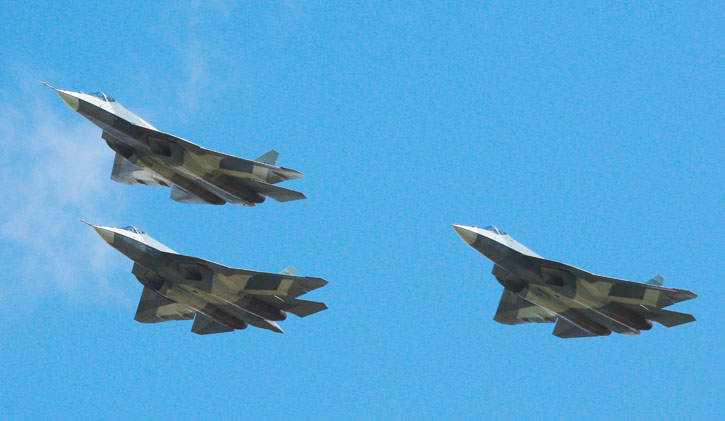
    The PAK-FA test program has been aggressive, and meant to bring the aircraft to maturity by 2016. Three prototypes are currently flying with the flight tests – two are used for flight testing at Zhukovsky, a third prototype has recently been delivered to the Russian Air Force 929th Chkalov State Flight Test Centre in Akhtubinsk for testing.

    Despite Delhi’s concerns over its workshare in the $11 billion developmental engineering phase, India’s Hindustan Aeronautics Limited (HAL) is soon due to increase its investment in the Perspective Multi-Role Fighter (PMF), the next generation stealth fighter for the Indian air force, pursuing the follow-on developmental engineering phase. As part of this investment HAL will be required to establish the production infrastructure to build one of two prototypes and conduct flight testing toward the end of the decade. According to plans, the domestic production is slated to begin in 2020. With the contract signed, this unprecedented cooperative development program will take almost eight years to complete.

    “This is a unique project aiming at long-term cooperation” Alexander Klementyev, Sukhoi deputy director general said, “we have never had such a format of cooperation before. There used to be licensed production in China and in India, but now it will be joint designing and production of a new combat aircraft.”

    t50_damaged_by_fire725
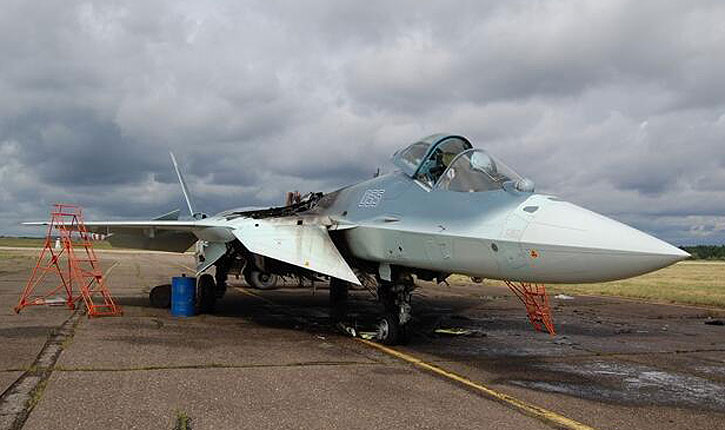
    A fourth FAK-FA prototype was damaged by fire after a demonstration flight arranged for an Indian delegation. The pilot was unharmed and the fire was extinguished quickly, but the aircraft itself was damaged. Photo: Sukhoi

    In contrast to the Russian enthusiasm, the Indians are somewhat sceptical about the future. According to recent articles in the local media, India has complained about lack of transparency from the Russian side, as Moscow is not meeting its obligations of technology sharing in the current pre-developmental phase of the Fifth Generation Fighter Aircraft (FGFA). The preliminary design phase was completed in 2013, under a collaborative investment split between India and Russia. However, Indian officials have complained that although they paid for half of the program the Indians are moderated out of the program.

    Subscribe to get the full version of this article
    Subscribe to get the full version of this article


    As 5th generation aircraft the PAK-FA and PMF will use highly advanced composite materials and special airframe coating to maintain low radar signature and low weight. The powerplant will also get unique shields of exotic materials to reduce infrared observability. The Russians insist that these requirements will demand unique manufacturing capabilities that do not currently exist in India.

    But these advanced technologies are kept close to the chest of the Russians. The Indians suspects the Russians seek to further erode the partnership into a financial partnership rather than a technological collaboration. Circles at the Indian Air Force claim that HAL has not been persistent enough in the negotiations, to secure Indian work share in the program. They claim the Indian contribution through HAL will be minor – tyres, basic navigational instrument VOR-DME, coolant for the radar, laser designation pod and heads-up display. Even within the agreed 13 per cent work share, the actual indigenous items will be in single digits and the rest will be procured from abroad. “The complex negotiations and urgency of deployment means that HAL could settle for much less work than initially agreed upon,” air force officials stated, placing the IAF in precisely the sort of position it is looking to avoid: total dependence on Russia for yet another frontline platform.

    Indian sources claim their engineers are moderated from the program, as Moscow is not keen to share technical details about its next generation stealth fighter, on which the Indian version will be based. Indian pilots are not allowed to fly the aircraft either. The Russians claim foreign pilots are barred from flying in their airspace, although this issue has not prevented Indians to fly MiG-29s and Su-30s in the past…

    In the absence of formal developmental engineering contract, the Russians are keeping the Indians as financial partners but do not provide access to the technological side of the program. To date no PAK-FA has left Russian territory. The Russians don’t allow foreign pilots to come near the aircraft. The first prototype is scheduled to begin testing in India in 2015.

    Prior to the contract negotiations, through the preliminary design discussions the Indian side raised questions about maintenance issues, the engine, stealth features, weapon carriage system, safety and reliability. The Indian Air Force has also expressed concern about the engine of the new fighter – the current design uses the powerplant used on the Sukhoi-30, but India is seeking a more powerful engine. A change has been promised at an additional cost. Sources said there could not be any progress until these issues were resolved.

    Part of the Russian reservation about work sharing in the PAK-FA program is the urgency they view the development, particularly with the Chinese and US competitors. According to the Russian Air Force Commander, Lieutenant General Viktor Bondarev, the first T-50 is scheduled for delivery to the Russian Air Force in 2016, to follow with serial deliveries through the 2020s. According to Bondarev, Air Force pilots have already started flights on the first plane at Akhtubinsk, soon to be joined by a second one soon.

    Five prototypes were currently participating in the test and certification work, which is due to conclude in 2015, ahead of first delivery envisioned for 2016. In parallel with the flight test programme the company is also preparing the final assembly line at the KnAAPO plant in Komsomolsk-on-Amur for serial production.

    Cyber Intelligence Report – September 1, 2014

    cyber_report

    ISRAEL

    Behind Israel’s cyber battle of Operation Protective Edge

    According to an article written by Daniel Cohen and Danielle Levin, researchers from the Institute for National Security Studies,cyber-attacks targeting Israel during Operation Protective Edge demonstrated Israel’s implementation of government policy in the cyber sphere and application of the systematization learned since 2012’s Operation Pillar of Defense. There was a significant improvement in coordination of Israel’s cyber defense organizations, including the functioning of Israel’s security systems and the increased cooperation between the civilian and defense sectors. The objective of the main attack during the Operation was to cause Israeli networks to collapse by overloading the system. Cohen and Levin explain that these attacks focused on distributed denial of service (DDoS) and Domain Name Service (DNS) attacks on communication and Internet companies in an attempt to swamp the Israeli Internet networks. The Shin Bet stated that international hacking groups conducted the attacks during the operation. The Israel Defense Force (IDF) maintained Iran had a large role in the increase of cyber-attacks on civilian infrastructure. An Israeli security firm later confirmed that most of the attacks were from the Middle East origin, and later the IDF confirmed Iran partook in cyber-attacks targeted to Israel. Both the IDF and the Shin Bet were able to foil any damaging attempts to Israeli government networks and critical infrastructure. The Shin Bet confirmed they were able to secure all cyber-attacks targeted towards Israelis government networks and systems. Shin Bet, through its cyber division, acted in coordination with private contractors, the Israeli Ministry of Communications, and the media in taking preemptive measures against these straightforward cyber-attacks. The IDF worked with an integrated communications network of the Military Intelligence and cybercompanies related to the Ministry of Defense, which assisted in recognizing and removing all cyber threats from attackers related to these attacks. The Head of the IDF cyber defense unit revealed that infiltration had also been attempted on IDF networks, but he verified Israel’s high technological capabilities were elevated in order to ensure breaches did not occur.


    USA

    Major cyber-attack against United States banks

    A weak ago, the US financial sector experienced a massive cyber-attack. Several banks, including JP Morgan Chase and others, were targeted by a series of cyber-attacks. According to a vast investigation, the hackers infiltrated the banks networks and stole gigabytes of data, including customers’ details and employees’ information. According to the FBI (who are conducting the investigation in cooperation with the United States Secret Service), the identities and motivation of the hackers have not been yet determined. However, without any certitude, it appears the hackers originated from Russian or Eastern European countries. This is not the first time US banks are experiencing cyber-attacks. US banks have often been victims of hackers targeting credit card numbers and cvv to sell on the Internet. Moreover, iSight Partners, a security company, warned banks about online threats and insisted banks should prepare to face several cyber-attacks from Russia in retaliation for Western economic sanctions. When it comes to financial fraud and banks, Russian hackers are the most organized and powerful cyber-criminals. They are well skilled and very motivated.


    RUSSIA

    Most cyber-attacks targeting Western Europe come from Russia

    According to a study conducted by Alert Logic, a Houston Web Security Company, hackers directly from Russia conducted the vast majority of cyber-attacks targeted at Western Europe. In turn, China has become the leader in the number of hacking attacks against the United States.  Analysis showed that 40% of hackers targeting users in Northern European countries were carried out from Russia. Western European countries subjected to hacking attacks were conducted from China (32%), United States (21%), India (17%), and Russia (9%). 63% of attacks on the countries of the Asia-Pacific region have been carried out from the USA, experts reported. The most frequent were infections caused by the Conficker-A malware.


    MIDDLE EAST

    Iranian cyber offense during Operation Protective Edge

    An analysis of Iran’s cyber activity during Operation Protective Edge indicates growing maturity in the Islamic Republic’s operational capabilities and shows it is capable of conducting an extensive military cyber operation against a range of targets using a wide spectrum of methods, according to an article by Dr. Gabi Siboni and Sami Kronenfeld, researchers from the Institute for National Security Studies. Moreover, Iran’s focus on cyberspace during Operation Protective Edge may indicate the start of a process in which cyberwar replaces classical terrorism as the main tool in Iran’s doctrine of asymmetrical warfare. Cyberwar, which offers the attacker distance and deniability, two features the Iranians consider extremely valuable, enables serious damage to the civilian front of an enemy enjoying military and geostrategic superiority. Thus far, Iran’s cyberspace capabilities remain inferior to Israel’s and to those of the leading technological powerhouses, but it is rapidly and efficiently closing the gap.

    Hackers related to ISIS took down Sony PlayStation’s network

    “Lizard Squad,” a pro ISIS cyber group, claimed responsibility for hacking the Sony PlayStation’s network. Using a distributed denial of service (DDoS) attack, the group managed to overload the SPN server and cause the crash. Other services affected included Xbox LIVE, Battle.net log-ins for Blizzard titles, League of Legends, and Path of Exile. As posted on Twitter, the group is connected with the Islamic State (IS), claiming to be loyal to the Calipha and acting as part of the IS against the greediness of corporations, such as Sony. Nevertheless, many of the hackers from Lizard Squad were traced back to IPs in Europe.

    Qatari technology helps Hamas build sophisticated cyber systems to attack Israel

    Before and during Operation Protective Edge, Hamas was funded by Qatar. Qatar invested hundreds of millions of currency in both defensive and offensive cyber-capabilities for the terrorist organization. According to Aviad Dadon of the Israeli cyber-security firm AdoreGroup: “We have sourced 70% of the cyber-attacks on Israeli government sites in recent weeks to IP addresses associated with Qatar.” According to Dadon, not only is Qatar investing time and money into cyber-attacks, but it is also training Hamas terrorists in how to use sophisticated equipment and systems to manage its extensive terror tunnel system in addition to systems for firing rockets at Israel using automatic, timed launching systems. Qatar has hired hackers to hit Israeli government and infrastructure sites trying to disrupt the operations of electricity, water, and other critical systems during the 50 day operation.


    CHINA and APAC

    Budget cuts increase Australian cyber-security risks

    Australia’s cyber-security-focused Co-Operative Research Centre (CRC) had not been funded for the second time. CRC dates back to 1990 and had provided funds and guidance to encourage research collaboration between universities and the private sector. Once the cuts hit the research institutes, a significant drop in R&D is imminent. However, a plan for the Australian Cyber-Security Research Institute is supposed to be announced later this year. Experts think this may be a little too late.

    Hacker targets info on MH370 probe

    The computers of high-ranking officials in agencies involved in the MH370 investigation were hacked, and classified information was stolen. The stolen information was allegedly being sent to a computer in China before Cybersecurity Malaysia (a Ministry of Science, Technology and Innovation agency in Malaysia) had the transmissions blocked and the infected machines shut down. The national cyber-security specialist agency revealed that sophisticated malware or malicious software, disguised as a news article reporting that the missing Boeing 777 had been found, was e-mailed to the officials on March 9, a day after the Malaysia Airlines plane vanished during its flight from Kuala Lumpur to Beijing.


    LATIN AMERICA

    Ecuador is latest country to face cyber-espionage campaign

    Kaspersky Labs revealed that Ecuador is the latest country faced with a cyber-espionage campaign known as “Machete.” The campaign started in 2010 with hundreds of gigabytes of classified information breached. The campaign began with infected PowerPoints. Once accessed, the attackers intercepted messages from the keyboard, recorded audio from the computer microphone, took screenshots, and stole files from remote serves. Stolen information was also used through a special USB. “The attackers were not interested in money, but in highly classified information of military… basically everything that involves national security of a government,” Dmitry Bestuzhev explained, Director of the Security Team for Latin America at Kaspersky Lab. Latin American countries of Colombia and Venezuela were also affected, in addition to the embassies of Russia, France, China and more.


    EUROPE

    UK Ministry of Defense launching £2 million cyber defense project

    The Uk Ministry of Defense decided to launch a £2 million cyber defense project. This project is a competition aimed at finding a solution to automate cyber response, collect data, and identify cyber-attacks to ensure better protection to the UK MoD computer systems. The competition has been organised by the MoD’s Centre for Defence Enterprise, which explained “once a system is compromised a cyber-attack can quickly escalate, so automated responses are an essential part of cyber defence processes, while recognising that the user may wish to revert to human decision making.” The MoD declared it does not necessarily expect one winner for this competition, and all good ideas will be reviewed. The budget has been split into two parts, £1 million each. The first part will be launched in September at an Innovation Network even in London. Then the secondpart will be awarded on a per-project basis to the most successful bidders. The UK MoD spokesperson explained that “the whole aim is to support people with ideas or small businesses that have ideas that don’t necessarily have the funds to develop them further. If they do prove successful, then there’s the potential to take them forward.” The UK, which is one of the most advanced countries for cyber defense, seems to adopt a participatory strategy involving British civilian companies to get involved in the UK defense. This type of project is a plus for countries that are looking to develop their response capabilities to multiple cyber-attacks.

    Germany working on cyber security law to protect critical infrastructure

    The German interior ministry is thinking of launching a cyber security law to protect its national critical infrastructure. The Interior Minister, Thomas de Maiziere, submitted a draft law imposing stronger cyber security requirements on companies and national agencies in charge of critical infrastructure, such as information technology, telecommunications, energy, transportation, health, water, food supply, finance, and insurance. Part of this new cyber security law is to oblige these companies to report any hacking incidents of which they were victims. According to the Minister, Germany’s critical infrastructure needs to be “the safest in the world.” Moreover, other German federal government departments have been asked to look at the proposals and then the debate will take place. The Ministry also declared that the cyber security draft proposals are part of Germany’s 2014-2017 ‘digital agenda,’ which has been approved by the German federal government. Despite a greatcyber security strategy, Germany still suffers from several cyber-attacks against its critical infrastructure. This new proposal should help to strengthen their critical infrastructure and national security.


    AFRICA

    South Africa has the third highest number of cyber crime victims after Russia and China

    IT Governance’s ISO 27001 package solutions offer world-class cyber security resources, training, and consultancy online to help businesses protect their information assets. In a recent statement from the University of Johannesburg’s Centre for CyberSecurity, Professor Basie von Solms said, “Business is also guilty of not doing enough to tackle cyber crime.” According to the 2013 Norton Report, South Africa has the third highest number of cyber crime victims after Russia and China.

    Kenya urges concerted efforts to fight crime

    Kenya called for concerted efforts in the fight against organized crime in Africa in order to help spur development in the continent.

    Deputy President William Ruto told a regional conference for spy chiefs that working together will eliminate competition and create synergy in the fight against crime, which he said was threatening economic efforts. He also mentioned that there was need for closer collaboration among the police, military officers, national intelligence service, and immigration officers in the fight against crime.

    The spy chiefs will review security challenges in the continent and exchange intelligence to develop a shared understanding of common security problems.

    inss150About the Cyber Intelligence Report:

    This document was prepared by The Institute for National Security Studies (INSS) – Israel and The Cyber Security Forum Initiative (CSFI) – USA to create better cyber situational awareness (Cyber SA) of the nature and scope of threats and hazards to national security worldwide in the domains of cyberspace and open source intelligence. It is provided to Federal, State, Local, Tribal, Territorial and private sector officials to aid in the identification and development of appropriate actions, priorities, and follow-on measures. This product may contain U.S. person information that has been deemed necessary for the intended recipient to understand, assess, or act on the information provided. It should be handled in accordance with the recipient’s intelligence oversight and/or information handling procedures. Some content may be copyrighted. These materials, including copyrighted materials, are intended for “fair use” as permitted under Title 17, Section 107 of the United States Code (“The Copyright Law”). Use of copyrighted material for unauthorized purposes requires permission from the copyright owner. Any feedback regarding this report or requests for changes to the distribution list should be directed to the Open Source Enterprise via unclassified e-mail at: [email protected]. CSFI and the INSS would like to thank the Cyber Intelligence Analysts who worked on collecting and summarizing this report.


    Skunk Works and XTEND Simplify Multi-Drone Command

    0
    Lockheed Martin Skunk Works® and XTEND have achieved a major milestone in JADC2 by integrating the XOS operating system with the MDCX™ autonomy platform. This technical breakthrough enables a single operator to simultaneously command multiple drone classes, eliminating the friction of mission handoffs. From "marsupial" drone deployments to operating in GPS-denied environments, explore how this collaboration is abbreviating the data-to-decision timeline and redefining autonomous mission execution.

    From Ukraine to Taiwan: The Global Race to Dominate the New Defense Tech Frontier

    0
    As traditional defense primes face mounting competition from agile “neoprimes” such as Anduril, Palantir and Helsing, the balance of innovation is shifting toward software-defined warfare and scalable, dual-use technologies, while global industry consolidation—marked by Boeing’s integration of Spirit AeroSystems and other strategic mergers—signals an intensified race to secure control over the defense technology value chain. Our Defense-Tech weekly report highlights these trends.

    Europe’s “Drone Wall”

    0
    In early October 2025, a coordinated wave of unmanned aerial system (UAS) incursions—widely attributed to Russia—targeted critical infrastructure across at least ten European nations. The unprecedented campaign exposed the fragility of Europe’s air defenses...

    Weekly Defense Update & Global Security Assessment

    0
    Executive Summary The past week (September 18-25, 2025) represents an inflection point where strategic defense concepts have transitioned from doctrine to tangible reality. An analysis of global events reveals four primary, interconnected trends shaping an...

    U.S. Air and Space Forces Push Next-Gen Programs at the AS&C 2025 Conference and...

    0
    At the 2025 Air, Space & Cyber Conference, U.S. Air Force and Space Force leaders unveiled major updates on next-generation fighters, bombers, unmanned systems, and space initiatives, highlighting both rapid innovation and critical readiness challenges as the services race to outpace global competitors. A short version is available here, with a more detailed version for subscribers.

    TADTE 2025: Reflecting Taiwan’s Strategic Themes

    0
    The Taipei Aerospace & Defense Technology Exhibition (TADTE) 2025 crystallized around four dominant strategic themes that collectively illustrate Taiwan's comprehensive approach to defense modernization amid escalating regional tensions. Based on a detailed report by Pleronix (available upon request). Includes a Podcast discussion on TADTE 2025's highlighting Taiwan's four strategic themes beyond the post's coverage.

    Iron Beam 450 Completes Testing, Soon to Join With Operational Air Defense Units

    0
    Israel’s Iron Beam 450 high-power laser system has completed final testing, marking a major leap in air defense. Developed by Rafael, it offers precise, cost-effective interception of rockets, UAVs, and mortars, and is set for IDF deployment by 2025.