
Saturday, December 27, 2025
More
    Home Blog Page 141

    Iran Could Reach Critical Capability by 2014

    Fordow_22Jan2012_-_Astrium_annotated1
    The uranium enrichment plant at Fordow, as seen from space on January 22, 2013. All underground facilities are ready, protected under thick layers of earth. Photo: Astrium

    Iran is expected to achieve a critical capability in mid-2014, which is defined as the technical capability to produce sufficient weapon-grade uranium from its safeguarded stocks of low enriched uranium for a nuclear explosive, without being detected. The Institute for Science and International Security (ISIS) reported in its recent analysis last week.

    David Albright and Christina Walrond explain in their report that Iran would achieve this capability principally by implementing its existing, firm plans to install thousands more IR-1 centrifuges, and perhaps a few thousand IR-2m centrifuges, at its declared Natanz and Fordow centrifuge sites. Iran’s criticality date could be achieved a few months earlier, if Iran successfully deploys and operates several thousand advanced centrifuges and continues installing thousands of IR-1 centrifuges. “Preventing Iran from achieving a critical capability through sanctions, increased frequency of international inspections, and negotiations is a priority”. The report understated.
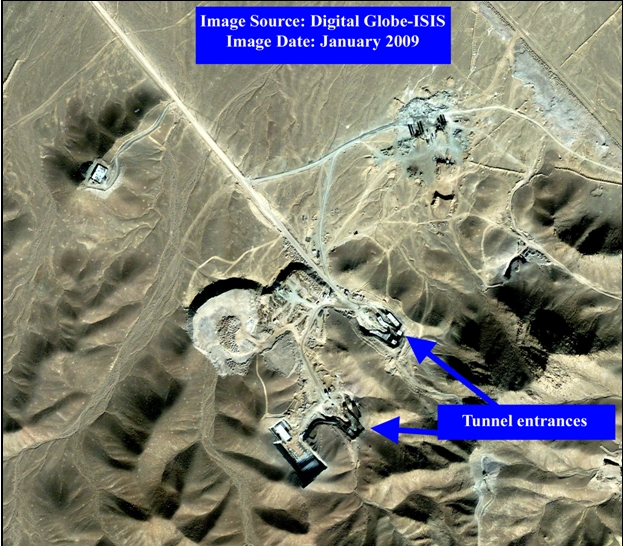
    The same site at Fordow, as seen four years ago - January 2009. The underground facilities are under construction, still exposed. Photo: Digitalglobe.
    The same site at Fordow, as seen four years ago – January 2009. The underground facilities are under construction, still exposed. Photo: Digitalglobe.

    Iran’s nuclear weapons capabilities continue to grow. However, by charting Iran’s possible future paths to obtaining a nuclear weapon, the United States and its allies can identify opportunities to slow this growth. One critical factor affecting Iran’s potential timeline to the bomb is the speed at which its declared centrifuge capacity could reach a level where it could use its existing, safeguarded stockpile of low enriched uranium to “dash,” without timely warning for the international community, to the production of sufficient weapon-grade uranium for a nuclear explosive device. Adequate warning would allow enough time for a response to this action. During the final presidential debate of the 2012 campaign, President Barack Obama characterized such a time as when “we would not be able to intervene in time to stop [Iran’s] nuclear program.” When Iran reaches the technical capability to produce sufficient weapon-grade uranium for a nuclear explosive without being detected, it can be understood to have achieved what is defined here as a “critical capability.”

    ISIS has assessed that in a breakout or dash to nuclear weapons Iran could produce a significant quantity (25 kilograms of uranium enriched to above 90 percent U-235) at its declared centrifuge enrichment plants in as little as a few months. During the next several months of 2013, this minimum timeline could decrease to about one month, depending on the growth of Iran’s stock of near 20 percent low enriched uranium and the number of centrifuges it deploys to enrich uranium.

    The International Atomic Energy Agency (IAEA), which regularly inspects Iran’s declared centrifuge plants and the low enriched uranium these sites have produced, would be able to detect breakout within these time periods.

    AUS&R 650x90b

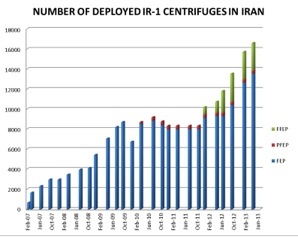
    As Iran continues to expand the numbers of its deployed centrifuges at its declared Natanz and Fordow gas centrifuge sites, its breakout times are expected to further decrease. The number of centrifuges it can build and install in cascades depends, among other factors, on its ability to smuggle key goods in violation of other countries’ national trade control laws and United Nations Security Council sanctions. But current efforts to stop Iranian smuggling are not sufficient. Iran has installed new centrifuges at a very fast rate over the past year, implying that it is still obtaining key supplies from abroad for its IR-1 centrifuges. Nonetheless, the available information is insufficient to conclude Iran has all it needs in hand to deploy thousands more IR-1 centrifuges or predict with certainty how many additional IR-1 centrifuges Iran will deploy in the next year.

    The number of centrifuges deployed in Iran's uranium enrichment facilities 207 - 2013. Source: ISIS report.
    The number of centrifuges deployed in Iran’s uranium enrichment facilities 207 – 2013. Source: ISIS report.

    Another factor that will likely decrease breakout times is Iran’s deployment of the advanced centrifuge, the IR-2m, at the Natanz Fuel Enrichment Plant. Predicting the effect of this deployment remains difficult because Iran has not begun enriching in these centrifuges as of mid-June 2013 and little hard data are available about their performance.

    Given uncertainty over the success of efforts to stop Iranian smuggling efforts to outfit its centrifuge program and its continued deployment of centrifuges, an assessment of future enrichment capabilities and reduced breakout timelines is warranted. This report evaluates Iran’s ability to increase its number of deployed centrifuges beyond current levels and when Iran could produce sufficient weapon-grade uranium without the IAEA being able to provide timely and reliable warning of that breakout, or when Iran is first estimated to reach what is defined here as a critical capability. The report assesses this date by projecting the number of IR-1 and IR-2m centrifuges Iran could deploy in the next year and by estimating the resulting impact on breakout times.

    A central conclusion is that Iran is expected to achieve a critical capability in mid-2014. To delay that date, this report recommends measures to head off significant increases in deployed centrifuges and improve chances of timely detection of a breakout.

    New Home for Indian Navy Searchers

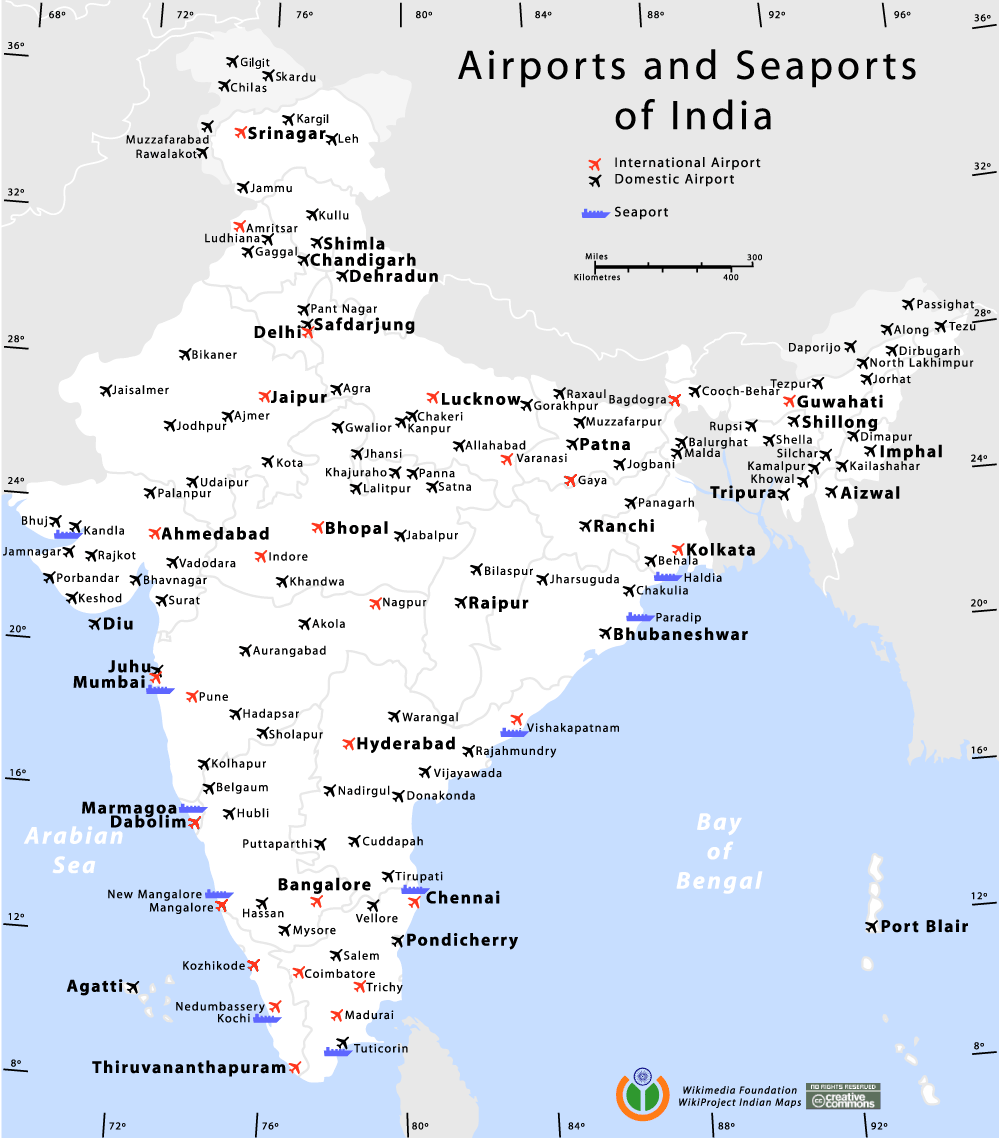
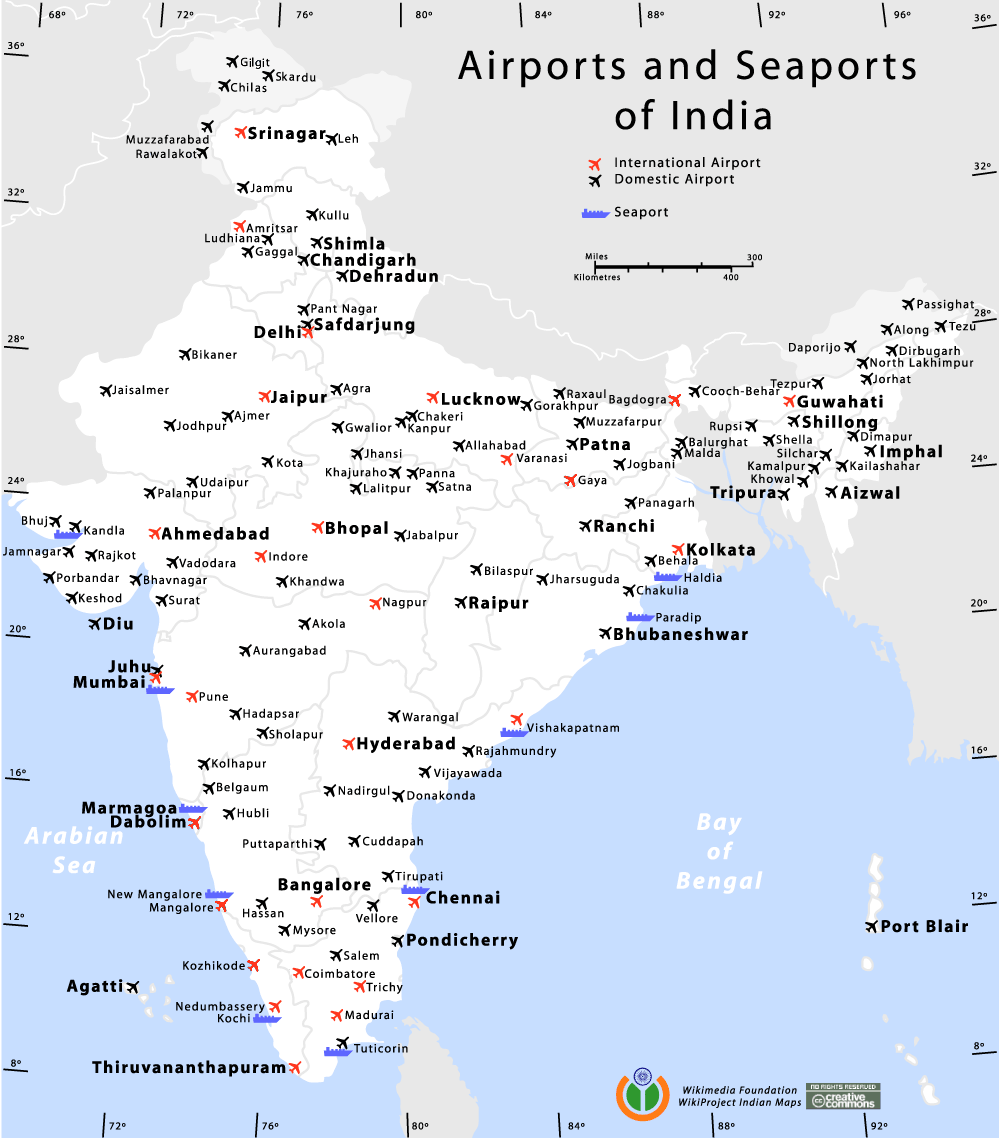
    Airports and seaports in India. (Click to enlarge)
    Airports and seaports in India. (Click to enlarge)

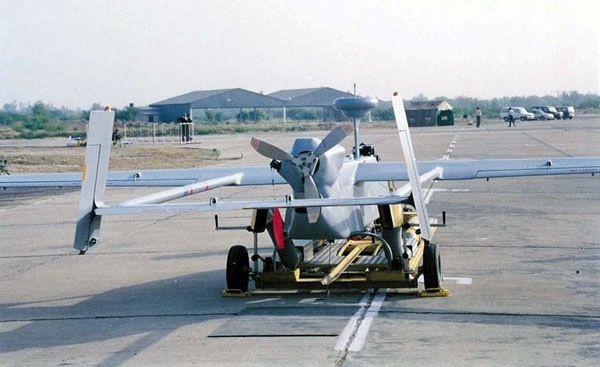
    India’s Behala Airport will become an operating base for Indian Navy Heron and Searcher MK II unmanned aerial vehicles (UAVs). According to officials, discussions between the Navy and the Airports Authority of India (AAI) are at their final stage and work on building necessary infrastructure will start soon. Defense-Update reports.

    The Navy already operates three UAV squadrons, based at Kochi and Porbandar along the country’s west coast, the third squadron was commissioned in Ramanathapuram district of Tamil Nadu, in 2012.

    These UAVs provide the Navy with long range, long endurance patrol capabilities over vast areas of the Indian Ocean, conducting maritime surveillance and search in support of the Indian Navy’s Eastern Naval Command and coastal security.

    AUS&R 2013 - The Unmanned Systems Live Demonstration - Israel - 26 November 2013
    AUS&R 2013 – The Unmanned Systems Live Demonstration – Israel – 26 November 2013

    The Navy has announced its plan to commission the UAV squadron at Behala, in the north eastern region near Kolkata nearly two years ago. The AAI agreed to the proposal on principle and discussions began. The Navy plans to utilize about 15 acres of the airfield that it will obtain from AAI on a 30-year lease. Though the project was announced in 2011, there was some delay due to which doubts began to be raised on whether the Navy has backed out.

    Source: Defense-Update.com

    20130720-234544.jpg

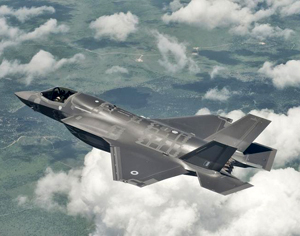
    The ‘Dambusters’ will be the first British unit to receive the F-35B

    617sqnbadge150
    617 Squadron is probably the most famous squadron in the RAF. It was created in 1943 to carry out attacks with a level of accuracy then unprecedented. It gained its epithet “The Dambusters” after its first raid, for which it was initially formed, to destroy dams in the Ruhr valley in Nazi Germany. The Squadron has twice been disbanded and reformed as it has moved from operating the Lancaster to the Vulcan to the Tornado, in a process that is usual for all RAF squadrons.

    The Royal Air Force has announced that 617 Squadron, the famous ‘Dambusters’, will be the first operational squadron using F-35B Lightning II aircraft. According to Chief of the Air Staff, Air Chief Marshal Sir Stephen Dalton, the 617 Squadron is to disband on 1st April next year, as part of the planned drawdown of the Tornado GR4 force. It will then reform in 2016, taking delivery of the highly advanced Lightning II. Dalton made the announcement at a Royal United Services Institute (RUSI) conference on Air Power this week. Later this year 617 Squadron will deploy to Afghanistan for the last time as a Tornado GR4 Squadron to support NATO and Afghan troops.

    Dalton added that the Lightning II shall be operated jointly by the Royal Air Force and Fleet Air Arm pilots, from land or from the Queen Elizabeth Class carrier. Overall, a hugely flexible and futuristic joint capability. When it reforms in 2016, 617 Squadron will have both RAF and Royal Navy personnel. The next squadron will carry a Royal Navy squadron number but be similarly jointly manned.

    “The Lightning’s state of the art stealth and precision target capabilities, together with the battle-proven Typhoon force, will complement each others’ capabilities and set the base-line for UK Combat ISTAR2 air power as a contemporary global force for the 2020s and beyond.” Dalton added. The UK’s Lightning II is the Short Take Off and Vertical Landing (STOVL) variant of the Joint Strike Fighter, which will give the supersonic multi-role stealth aircraft the ability to operate from land or sea.

    India’s Planned Mountain Strike Corps to Cost $13 Billion

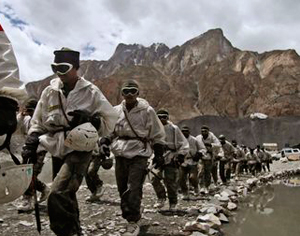
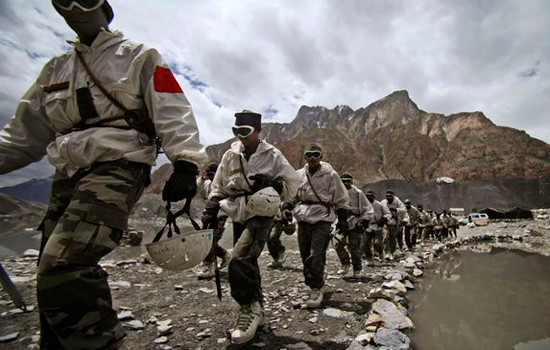
    Indian soldiers at the Siachen base camp. In 2012 the Indian finance ministry killed an Indian Army plan to  raise a mountain strike corps, citing the huge financial commitment involved.
    Indian soldiers at the Siachen base camp. In 2012 the Indian finance ministry killed an Indian Army plan to raise a mountain strike corps, citing the huge financial commitment involved.

    The Indian cabinet committee on security (CCS) gave its approval for raising a mountain strike corps along the China border. This would be India’s fourth strike corps, meant chiefly for offensive operations into enemy land, as well as India’s first dedicated corps for offensive mountain warfare. The corps will take around six years to be raised along the Line of Actual Control (LAC) and new formations would be raised from Jammu and Kashmir to Arunachal Pradesh.

    Subscribe to learn about the planned formation and ORBAT of the new corps

    The main mission of the 45,000-50,000-strong corps will be to beef up the military presence along the Line of Actual Control (LAC), thus deterring further military adventurism by China. While raising a fourth mountain strike corps was on the table for about 10 years, the recent incursion by Chinese troops into the Daulat Beg Oldi (DBO) sector in eastern Ladakh in April 2013 may have acted as ‘a trigger-pulse’ for CCS decision. In 1962 a border dispute along the Himalayan region has evolved into a war between China and India. During this month-long conflict, coinciding with the Cuban Missile Crisis, the Chinese launched simultaneous offensives over the 3,000 km Himalayan border. The Indian army, unprepared for mountain warfare, was defeated in this campaign.

    The new corps will be equipped and trained to launch offensive action beyond the LAC, into the Tibet Autonomous Region, in case of a Chinese offensive. By authorizing the military to raise the new formation the government is committed on additional expenditure of Rs.64,000 crore (US$13.6 billion) – roughly half the defence budget for 2013-14 — over a seven-year period, official sources said. However, in its decision, the CCS was not clear when funding would be made available for implementing the decision. ‘It is a long-awaited, strategically apt decision which will go a long way in contributing to India’s combat potential in diverse operations of war to deter our potential adversaries in the mountainous region along our vast Himalayan borders,’ Lt. Gen. Kamal Davar (retd), the first head of the Defence Intelligence Agency chief told the Indo-Asian News Service (IANS).

    “The Chinese and Indian governments have signed several agreements on safeguarding peace and tranquillity in the border areas and on taking trust-building measures in the field of military”, Chinese Foreign Ministry, said in written response to a query from Press Trust of India (PTI) on China’s reaction to the Indian move. The approval for the formation of the new corps comes as the two countries held advanced negotiations on the Border Defence Cooperation Agreement (BDCA) which figured prominently in Defence Minister A K Antony’s visit here earlier this month. It was also discussed during National Security Advisor Shivshankar Menon’s visit on June 28 when he held the 16th round of talks to resolve the border issue with his counterpart Yang Jiechi. Indian officials here earlier refuted perception that the BDCA which was proposed by China was aimed at containing the development of infrastructure on the Indian side of the border or freezing the troop levels.

    Russia to buy Drones from the UAE

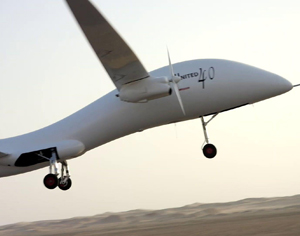
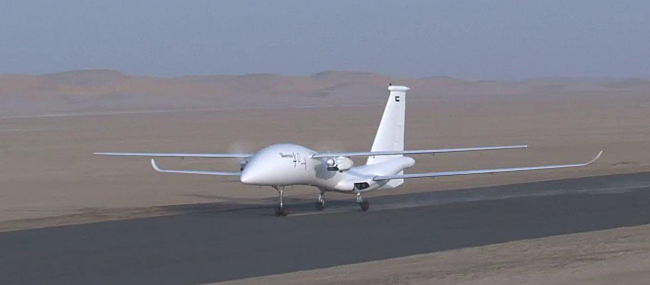
    At IDEX 2012 ADCOM unveiled its newest and largest drone - United 40 Block 5. Few months later the drone made its first flight.
    At IDEX 2012 ADCOM unveiled its newest and largest drone – United 40 Block 5. Few months later the drone made its first flight.

    According to RIA Novosti The Russian military is planning to purchase aerial drones namely unmanned air systems (UAS) in the United Arab Emirates, i-HLS reports.

    “We are talking about at least two United 40 Block 5 models developed by the company ADCOM Systems,” the source, who preferred to remain anonymous, told RIA Novosti. United 40 is a medium-altitude, long-endurance unmanned aerial vehicle (UAV), designed to carry out near real-time combat assessment, special and reconnaissance operations and communications relays. The vehicle can carry up to 10 air-to-ground missiles with a delivery range of 60 kilometers and fly for up to 120 hours, according to the developer.

    The United 40 Block 5 model was unveiled at this year’s IDEX arms show in Abu Dhabi in February, and made its first test light in March (see video below). Its estimated cost is $20-30 million range.

    The Russian military stressed a need for advanced reconnaissance systems in the wake of a brief military conflict with Georgia in August 2008, when the effectiveness of Russian military operations was severely hampered by a lack of reliable intelligence. According to various estimates, the Russian military needs up to 100 UAS;s and at least 10 guidance and control systems to ensure effective battlefield reconnaissance. Immediately after the Georgian campaign Russia turned to Israel for unmanned systems, buying Searcher II and I-View tactical UAVs and Birdeye 400 mini drones from israel Aerospace Industries (IAI). However, Israel’s MOD denied the transfer of the larger, more sophisticated Heron I drone Moscow also needed.

    AUS&R 650x90b

    Russian Defense Minister Sergei Shoigu said in June that aerial drones being developed in Russia for the military were inferior to similar foreign models. Russia has reportedly signed two UAS contracts with Israel. Under the first contract, signed in April 2009, Israel delivered two Bird Eye 400 systems (worth $4 million), eight I View MK150 tactical UAVs ($37 million) and two Searcher Mk II multi-mission UAVs ($12 million). The second contract was for the purchase of 36 UASs, worth a total of $100 million, was due for delivery in 2010. The shipment, however, has not been confirmed by the Russian Defense Ministry.

    ADCOM Systems, a group of firms headquartered in Abu Dhabi, specializes in manufacturing UAS, aerial targets, air traffic control radar systems, and advanced communication systems. It is unclear what are the drivers for the Russian decision to buy the new drone. United 40 is the first large drone developed by ADCM and in its current state the drone is far from operational or relevant for learning lessons the Russians don’t already know.

    Britain is stepping up the Taranis UCAV development

    taranis1The concept demonstrator of the British unmanned air combat vehicle (UCAV)  has been delivered to a flight test site in Australia and is scheduled to make its maiden flight within weeks, according to Defense News
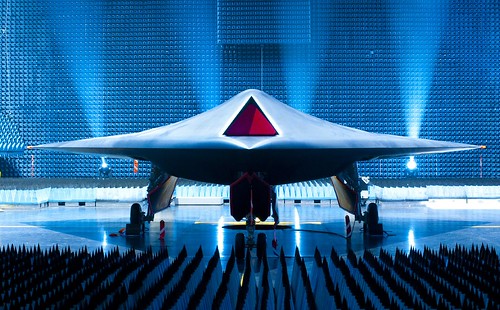
    The concept demonstrator, known as Taranis, is sitting at the remote Woomera test center in South Australia in preparation for a first flight scheduled for September, said the sources, who asked not to be named.

    The first flight follows a three-year delay and more than 55 million pounds (US $83.1 million) in additional costs caused by technical issues, an increase in the list of requirements and extended risk mitigation work on Taranis.

    The original budget when the program was launched in 2005 was 124 million pounds. By 2011, the delays and requirement changes had driven Taranis costs up to 142 million pounds.

    Named after a Celtic god of thunder, Taranis is a BAE Systems-led program aimed at exploring some of the technologies and capabilities that could be incorporated into the Royal Air Force’s first generation of unmanned combat air vehicle (UCAV).

    About the size of a Hawk jet trainer, the 8-ton Taranis will demonstrate autonomous controls, stealth and other technologies for possible inclusion in an operational aircraft. Source: I-HLS.

    AUS&R 650x90b

    US Navy Receives the First MQ-8C VTUAV

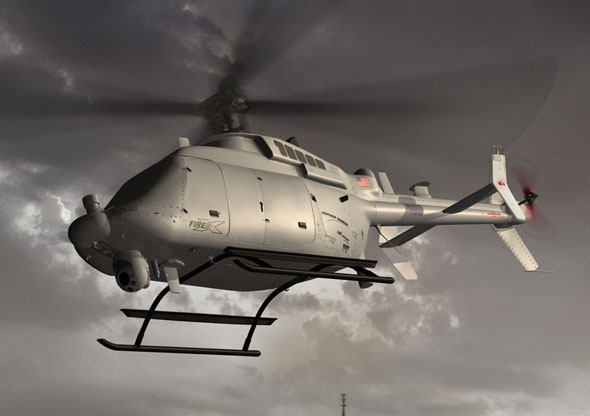
    Northrop Grumman awarded Cubic a $3.7 million development contract for a new multi-band digital datalink for the MQ-8C unmanned helicopter UAS. Photo: Northrop grumman

    Northrop Grumman has delivered the first MQ-8C aircraft to the US Navy in early July, in preparation for ground and flight testing. “The endurance upgrade doubles the time on station of the MQ-8 system and will help reduce the workload for the ship’s crew by cutting the number of times the crew will need to be in flight quarters,” said George Vardoulakis, vice president, medium range tactical systems for Northrop Grumman. “Ground and flight testing are the next steps in meeting the urgent requirement for maritime intelligence, surveillance and reconnaissance. Testing on the Naval Air Systems Command test range provides us with extended air space to conduct and demonstrate long endurance and systems testing in a maritime environment.” Northrop Grumman is the US Navy’s prime contractor for the MQ-8 Fire Scout program of record. The first deployment of the upgraded MQ-8 system with the MQ-8C Fire Scout aircraft will be in 2014.

    AUS&R 650x90b
    Book your place at the AUSR 2013 Expo in Israel – for a special Low Rate – Valid only through July 31, 2013!

    The upcoming tests will be used to validate and mature the upgraded MQ-8 system for operational use. Initial ground testing will ensure that the systems work properly and communicate with the ground control station prior to conducting first flight. The MQ-8 system with the upgraded MQ-8C aircraft will share proven software, avionics, payloads and ship ancillary equipment with the MQ-8B aircraft.

    The upgraded Fire Scout responds to an urgent need to provide the Navy with increased endurance, range and payload. Using a modified, commercially available Bell 407 airframe, the upgraded MQ-8 system can provide commanders with three times the payload and double the endurance at extended ranges compared to the current MQ-8B variant based on the Schweizer 330SP platform. The MQ-8B aircraft currently operates at sea on US Navy frigates and on land in Afghanistan, where it provides intelligence, surveillance and reconnaissance capabilities to maritime and ground commanders.

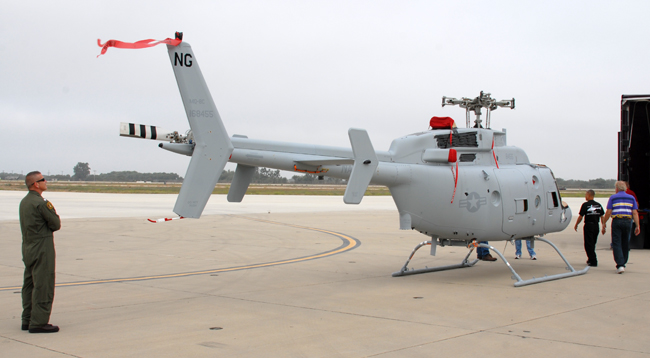
    The first MQ-8C Fire Scout delivered to the Naval Air Systems Command (U.S. Navy photo by Vance Vasquez)
    The first MQ-8C Fire Scout delivered to the Naval Air Systems Command (U.S. Navy photo by Vance Vasquez)

    Defense-Update Paris Airshow VideoReport

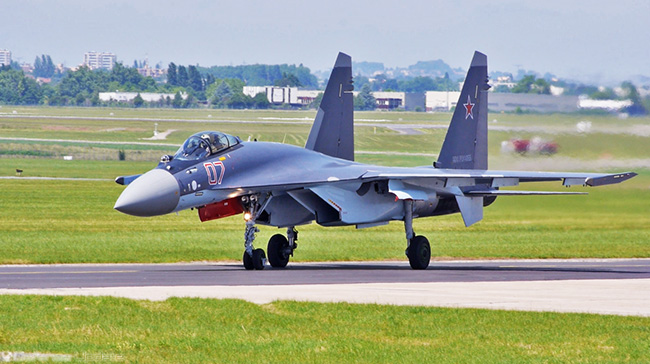
    The 50th Paris Airshow presented a great opportunity for aviation professionals, to explore the new trends in the aerospace market. On the military side, the airshow took a lower key, reflecting reduced spending in Europe and the United States. Nevertheless, the Russian impact is growing, demonstrating Moscow’s claim for a leading position in world defense exports. The Su-35 made its international debut here, along with Yak-130.

    For aerospace professionals the airshow provided an insight into new manufacturing technologies, and innovative concepts. For example, cockpits combining large touch screens, augmented reality and helmet displays, or advanced optronic systems, improving flight safety by increasing the pilot’s situational awareness in marginal flight conditions.

    Systems based on commercial technologies are becoming more affordable, offering new capabilities in computing, communications, security and survivability.

    AUS&R 2013 - The Unmanned Systems Live Demonstration - Israel - 26 November 2013
    AUS&R 2013 – The Unmanned Systems Live Demonstration – Israel – 26 November 2013

    While struggling with budget crunches, European Air Forces are still considering rapid fielding of combat unmanned aircraft. Among the drones presented here are the stealthy NEURON jet powered drone as well as Israeli and US platforms. Other designs are tailored for maritime operations. The airshow also highlights a wide range of miniature drones, designed for security and special operations.

    The versatility and modularity of UAVs was demonstrated here by a growing range of mission payloads, represented by some of the world’s leading manufacturers from the US, France, Italy and Israel.

    Guided weapons were also on the agenda, as Air Forces are re-evaluating operational concepts, based on recent operational experience. Trend setters are those offering light weight, longer range and lower collateral damage, as well as achieving high penetration of protected and buried targets.

    In the air defense domain, new generations of systems are being introduced, extending air defense systems’ capabilities into missile defense systems, designed for naval and surface operations.

    AUS&R 2013 Expo Autonomous, Unmanned Systems & Robotics

    AUSR 980x200

    Live Display Agenda Submit PapersExhibition Partners Venu Register 

    I-HLS and Defense Update are excited to present AUS&R 2013 – a unique opportunity for developers, manufacturers, OEM, service providers and operators of unmanned systems, to display and demonstrate their capabilities to professional audience.

    Policy makers, uniformed service leaders, law enforcement and industry partners will gather here to network, share best practices and explore potential paths for future cooperation.

    UNMANNED SYSTEMS IN ACTION!

    The following systems will be displayed on the static and LIVE display at AUS&R 2013

    [wzslider autoplay=”true” lightbox=”true”]

    live demonstration of unmanned vehicles
    in the air, on land and at sea!

    Reflecting Israel’s leadership in the field of unmanned systems field, AUS&R 2013 will provide the opportunity to display numerous platforms, systems and solutions from Israel and abroad, demonstrated live on site!

    The live display will comprise three sessions, 45 min. each. The sessions will include air, land and naval vehicles. The performance of different mission payloads will be presented to the audience over large video screens. The event will also provide extensive audio-visual support to display demonstrations on videos throughout the day.

    Planned Agenda

    AUS&R conference will focus on the following tracks: Solutions, Platforms and Missions
    Highlighting present and future aspects of unmanned systems, and their use in military, homeland security and civil applications, AUS&R 2013 provides the perfect stage to discuss the prospects and challenges facing autonomous and unmanned systems operations in the air, land and at sea.

    Following is a preliminary program of the event:media_partner_aw

    08:30 – 09:20 Registration & Reception
    08:30 – 16:00 – Exhibition open to visitors & delegates


    Morning Session 09:20 – 11:10

    Keynote Presentation: Future Trends in Unmanned Systems – Looking Beyond the Horizon
    Solutions Track Platforms Track Missions Track
    Briefing Drones & National Security
    The role of unmanned systems providing strategic situational awareness to enabling timely, actionable, response
    Command, Control & Autonomy
    Examining the command and control concepts required for the autonomous operation of multiple unmanned systems
    Persistent Surveillance, Actionable Intelligence
    The evolution of platforms, payloads and operating systems and human elements, toward persistent and actionable operation
    Briefing Unmanned at the Airport
    An examination of the benefits of operating unmanned systems around at airports, and the problems they may cause, when operated irresponsibly
    Manufacturing for High Performance
    Higher performance (endurance), increased survivability (stealth), better efficiencies (lower drag) and reduced cost ($$) are only part of the benefits offered by advanced materials and new manufacturing techniques
    Protecting the Unmanned Systems
    By definition, unmanned systems are exposed to a wide range of threats, from cyber to kinetic. This briefing highlights those threats and suggests potential countermeasures
    11:15 – 12:00 – Live Demonstration: Intelligence, Force Protection Applications


    Mid-Day Session: 12:30 – 14:00

    keynote Presentation: Unmanned Systems – Threat Assessment
    Solutions Track Platforms Track Missions Track
    Briefing Maritime & EEZ Security
    Unmanned systems are introducing new capabilities for maritime security in the littorals, EEZ and open sea
    SATCOM Datalinks for Unmanned Systems
    Extending the range and endurance of unmanned systems also mandates the use of suitable navigation, command,  control and communications links
    Video and Image Processing for Drones
    Advanced image and video processing technologies are introducing enhanced utilities for mission analysts, and new potential for tactical uses
    Briefing Unmanned Systems for Force Protection
    New capabilities provided by unmanned systems are increasing force protection of troops, security personnel and first responders
    Transforming Robots for Emergency Response
    What it takes to transform a robot into an earthmover, firefighter or mine cruncher?
    Improving Robotic Bomb Disposal Capabilities
    Improving the capabilities, efficiencies and operability of C-IED/EOD robotic systems
    Briefing UVS for Border and Perimeter Security
    The role of unmanned systems in securing border lines and perimeters
    ‘Mobility Out of the Box’
    The essence of unmanned systems is the capability to move, but most are employing traditional mobility concepts.
    Remote Sensing for Unmanned Systems
    Advanced applications utilizing radar technology with robotic and unmanned systems
    14:30 – 15:20 – Live Demonstration: Homeland Security, Border & Infrastructure Security, EOD & First Response


    Afternoon Session: 15:20 – 16:40

    Keynote Presentation: Space – The Ultimate Frontier for Autonomous & Robotic Systems
    Solutions Track Platforms Track Missions Track
    Briefing Terrain Dominance
    The integration of persistent, wide area surveillance, with Big Data Fusion and automated intelligence analysis opens new opportunities for ‘Terrain Dominance’
    Power & propulsion for unmanned systems
    As platforms are getting smaller and missions are extended, UVS are requiring increased power densities for operation. This briefing will examine some of these trends
    The human aspects of UVS
    How to manage the human aspect of unmanned systems? What is needed to develop the skills, maintain  proficiency and protect the human operators?
    Briefing Unmanned Warriors Raising Legitimacy Concerns
    Legal, Social and ethical considerations of unmanned systems operations
    EO Payloads for UVS
    Evolutionary trends in EO payloads – smarter, lighter and smaller, yet more capable and affordable…
    MMI – The Next Generation
    How our children will operate the future unmanned systems? A bold look at some of the futuristic man-machine interfaces
    16:50 – 17:35 – Live Demonstration: Night operations, urban, and counter-terror/SWAT

    Book before 1/8/2013 to take advantage of this great Offer!

    Book now for only $70+VAT

    Regular Rate: US$250 + VAT

    Exhibit and Demonstrate your Systems at AUS&R

    Call: +972-52-725-6579 / or Email: [email protected]

    Our Venue:

    yesplanet
    The event is conveniently located at a new venue in Rishon-LeZion, near Tel-Aviv, easily accessible to guests and exhibitors from Israel and abroad. Overlooking an open landscape, our exquisite venue provides the opportunity to demonstrate air, land and naval unmanned vehicles, both in daylight and at night.

    media_partner_aw

    Supporting Media Partners:

    military_technology_logo defense-update ihls
    asdnews150 HW-Logo
    Media Registration:
    Journalist and media personnel interested in covering AUS&R are invited to apply for media access to the conference, exhibition and display.
    Once approved, media personnel will be informed about the terms and conditions covering AUS&R 2013.

    US Intelligence Report a Cut-Paste on Chinese Missiles

    Download the NASIC report 2013 here.
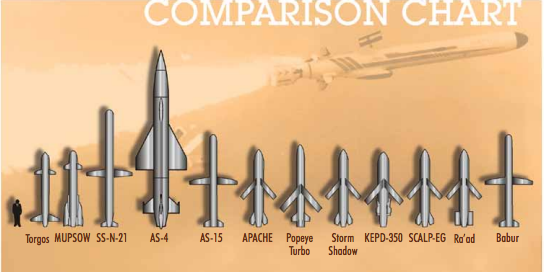
    A list of cruise missiles published in the NASIC report.
    A list of cruise missiles published in the NASIC report.

    College students can be flunked for cut-and-paste reports, think tankers can be embarrassed, Defense News staff writers can be fired, but not, apparently, members of the National Air and Space Intelligence Center (NASIC). Defense News reports.
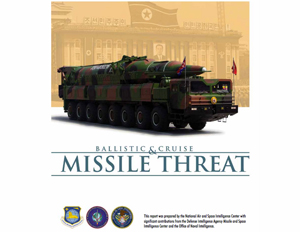
    Most of its so-called “updated” report, 2013 Ballistic and Cruise Missile Threat, which contains contributions from the Defense Intelligence Agency Missile and Space Intelligence Center and the Office of Naval Intelligence, was largely a cut-and-paste job from its 2009 report. Some of the material is identical to the 2006 and 1998 report.

    Download the  NASIC report 2013 here.
    Download the NASIC report 2013 here.

    Though it was reformatted and photographs rearranged with some being enlarged or decreased, the 2013 report appears verbatim from the 2009 report. This clever reordering and reformatting with new color schemes for boxes and graphs is embarrassing since there is more impressive data on Chinese missiles on Wikipedia.

    The best illustration is the sections on Chinese missiles. Media reports have exclaimed that the new report indicated that China’s ballistic missile development program is the “most active and diverse” in the world.

    “China has the most active and diverse ballistic missile development program in the world. It is developing and testing offensive missiles, forming additional missile units, qualitatively upgrading missile systems, and developing methods to counter ballistic missile defenses. The Chinese ballistic missile force is expanding in both size and types of missiles,” the 2013 report stated.

    Actually, it is the exact same paragraph in the 2009 report and a paraphrase from the 2006 report.

    There is a slight emphasis this year in anti-access/area-denial (A2/AD) missile systems such as the DF-21D (CSS-5) anti-ship ballistic missile, which is “specifically designed to prevent adversary military forces’ access to regional conflicts.” This is hardly new information and one wonders why it was left out in the 2009 report. Still interested? You can download the report here or directly from NASIC.

    Read the rest of this article on Defense-News ‘Intercepts’ blog post By Wendell Minnick
    Russian Military Wants More Cruise Missiles

    Radug Kh555 cruise missile loaded onto a Tu-95 bomber.
    Radug Kh555 cruise missile loaded onto a Tu-95 bomber.
    Radug Kh55 cruise missile loaded onto a Tu-95 bomber.

    Russia will increase its number of cruise missiles by 30 times by the end of the current decade, Defense Minister Sergei Shoigu said Friday. “We will boost the number of cruise missiles fivefold in the next three years and by 30 times by 2020,” Shoigu told reporters after a meeting of Russia’s Security Council. Are there new cruise missiles in the Russian pipeline and who will operate them?

    Most of the cruise missiles developed by the Russians during the Cold War were aimed at fixed strategic targets, such as command centers, radars and missile bases. Naval strike missiles were aimed at ‘decapitating’ enemy forces striking at aircraft carrier. Such missiles were heavy, fast and ‘strategic’. For the 21st century the Russian military will need tactical cruise missiles, similar to those the US and European armies are deploying now – conventionally armed weapons capable of striking targets at very long range, with pinpoint accuracy. Weapons such as the tactical Tomahawk, Storm Shadow or SCALP, and Taurus, have been used since 1991 in almost all conflicts, providing countries with extended operational capability the Russians could not easily duplicate with their current assets. The Russians already have several designs offered for export, including variants of the Club cruise missile, developed for submarines and coastal defense. Other weapons are the Kh55 class air-launched cruise missiles, designed for aerial platforms. The newest version is the the Kh101 developed by Raduga OKB.

    In a recent interview published at the Moscow Times Ilya Fyodorov, managing director of jet engine producer NPO Saturn noted “We plan to produce over 1,500 such engines per year”, commenting on a recently signed agreement with Raduga, too manufacture cruise missile engines worth 4 billion rubles ($120 million). Previous engines for strategic nuclear missiles were mostly made by Ukrainian manufacturer Motor Sich. The current contracts cover the period through 2015

    “Strategic air and sea-based missiles should not depend on other countries, even friendly states, for major parts supply. So we are now organizing local engine production,” Fyodorov said. He also said that the price of the new engine will be competitive with the Ukrainian equivalent while having better performance results in terms of fuel consumption and weight, which means missiles equipped with it will be able to travel longer distances.

    Full version of this article is open for members

    The Russian Air Force said last year that it would accept into service in 2013 the new Kh-101 cruise missile, also built by Raduga. This new weapon will be available in two variants – conventional and nuclear armed. Kh-101/102 was developed as a stealthier, more accurate successor of Kh55SM. Unlike its predecessor, the turbojet engine is recessed inside the fuselage, significantly reducing drag and radar signature. The Kh-101 is equipped with a conventional warhead while the Kh-202 carries a nuclear warhead. Its warhead weigh 400 kg (880 pounds) twice the size of the Kh-555. The ranges of Kh-101 is 3,500 – 5,000 km with accuracy of 10 meters. It will employ an inertial navigation system assisted by the Russian satellite based navigation network GLONASS.

    However, additional surface and submarine-launched weapons will be joining the fleet and could be accounted for as ‘cruise weapons’. These include anti-ship weapons like the Moskit / BRAHMOS and Yakhont being fielded with surface and coastal defense systems.

    tu-16010
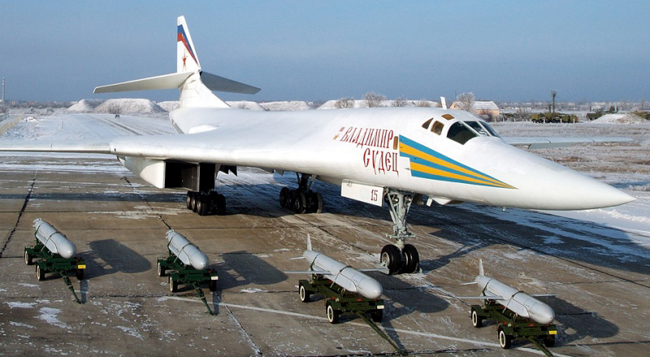
    The Tupolev Tu-160 Blackjack can carry 12 Kh55SM cruise missiles, loaded on two rotary launchers. The Kh55SM is distinguished from previous models by the added conformal fuel tanks.

    French Cruise Missile Successful in First Firing Test

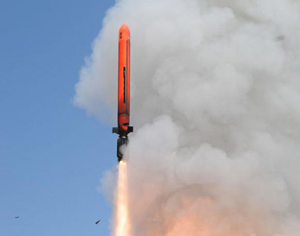
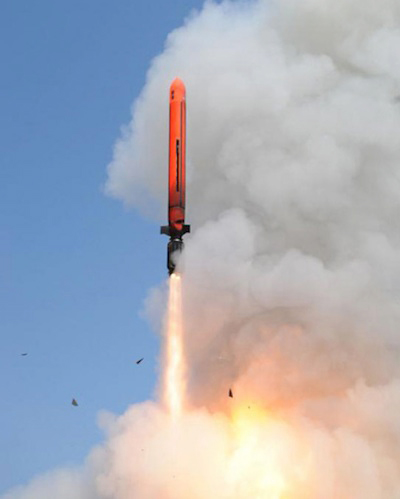
    MdCN missile launched on a test in 2012. Photo: MBDA
    MdCN missile launched on a test in 2012. Photo: MBDA

    The new cruise missile built for the French Navy has completed the first qualification test firing last week. The naval cruise missile (MdCN or Missile de Croisière Naval) is under development by MBDA under contract from the defense armament directorate DGA (Direction Générale de l’Armement) awarded 2006.

    It successfully carried out the firing test on July 1st, 2013. The test, representing a vertical launch from a frigate, took place at the DGA’s Biscarrosse missile test centre. MdCN will eventually equip the French Navy’s multi-mission frigates (FREMM) and its Barracuda submarines.

    Featuring a range of several hundred kilometers, MdCN is intended for strikes against targets deep within enemy territory. It complements the SCALP air-launched cruise missile from which it is derived. MdCN will comprise one of the strategic weapons carried by surface vessels and submarines.

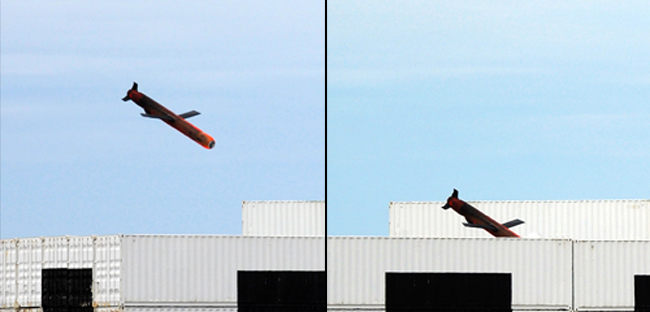
    According to the announcement, the firing scenario was especially demanding as, in addition to meeting range objectives, it also served to validate the missile’s performance with regard to its autonomous terminal navigation using infrared target recognition.

    MdCN demonstrated pinpoint strike on a 2012 flight test. Photos: MBDA
    A submarine-launched MdCN demonstrated pinpoint strike on a 2012 flight test. Photos: MBDA

    Compact Sub Design Revive Russian-Italian Cooperation

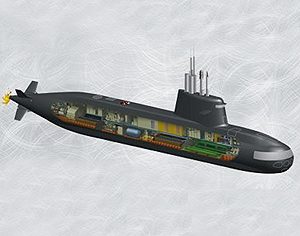
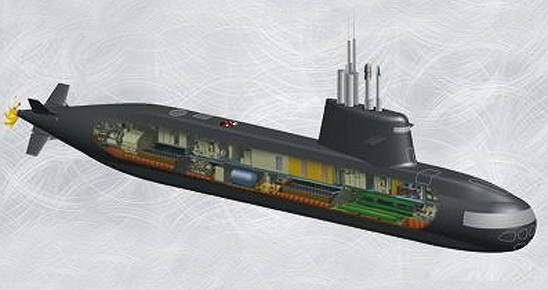
    The S-1000 design maintains all weapon systems at the front and clears the hull for customizing the sub for the customer's requirements. Illustration: Fincantieri.
    The S-1000 design maintains all weapon systems at the front and clears the hull for customizing the sub for the customer’s requirements. Illustration: Fincantieri.

    The Russian shipbuilder Rubin plans to update its S-1000 submarine design introduced in 2004 under cooperation with the Italian shipbuilder Fincantieri. The 1,000 ton diesel-electric powered submarine was positioned to be a ‘compact sub’, smaller than the Project 636 (Kilo) class and Amur 1,650 ton submarines Rubin is already offering.

    The S-1000 was one of the contenders for the Indian Project 75 submarine program, that eventually favored the French Scorpene in 2005. For the Indian bid the S-1000 was positioned against the larger Rubin 1650 project submarine – both have lost to the 1,700 ton French sub design. Amur 1650 is still considered for the second (P75i) segment of the Indian program but the biggest challenge for Rubin is the questionable heritage of this type – the Lada class submarine developed for the Russian Navy but cancelled in 2011. The Russians are hoping that, by resurrecting the cooperation with the Italians, they could turn their designs into more competitive ones, thus compensating for the damage caused by the cancellation of the LADA. While the cooperation promoted by the Italian MoD and Russian export agency Rosoboronexport, the S-1000 is positioned to attract navies in Asia and the Middle East, rather than compete for the procurement contract with Italian or russian navies.

    Originally based on the Russian Amur 950 design from Rubin, S-1000 introduced modern construction techniques mastered by the Italian shipbuilder (that have never built submarines but is well known for its efficient surface vessel constructions). These capabilities have helped reducing the S-1000 cost to around $200 million per boat. Improved efficiency means the sub can be operated by a crew of only 16 able submariners.

    The 56.2 meters long vessel has a top speed of 14 knots and is equipped with a new fuel cell-powered Air Independent Propulsion (AIP) system developed by the Italian firm, that can maintain the boat underwater on a two-week (15 days) mission. The external envelope of the S-1000 remains unchanged, while internally, the designers are introducing changes that better meet customer requirements. Baranov said.

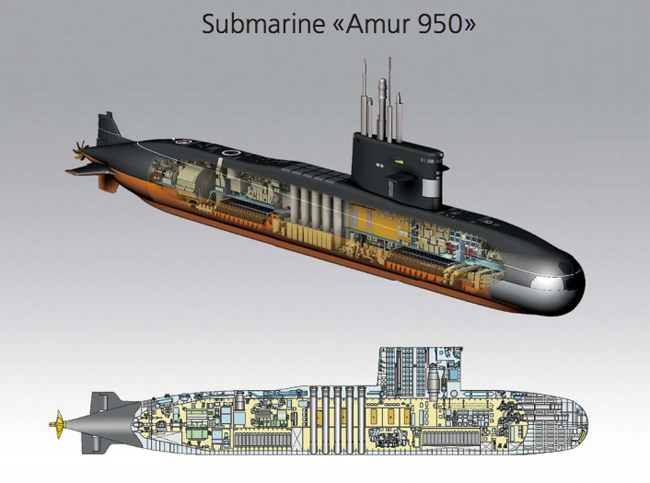
    Designed primarily for exports to third countries, the new submarine will feature an impressive array of weaponry, including Italian heavyweight, wire-guided Black Shark torpedoes or Russian Club-S cruise missile system capable of hitting underwater, surface and land targets. When required the boat can accommodate up to 15 commandos. While Rubin 950 was designed with four torpedo tubes and ten vertical launchers for missiles, the S-100 has six torpedo which can launch 21″ wire guided torpedoes (533mm) or anti-ship/land attack cruise missiles. The submarine has a storage facility for eight torpedoes/missiles. This design made the entire hull area more spacious and better configurable for multiple missions.

    Despite its small size (56 meter long) the sub is designed to include fuel-cell based air-independent propulsion system (AIP) developed by the Italian firm accelerating the submarine to a speed of 14 knots. The submarine was originally designed for anti-submarine and anti-ship warfare, reconnaissance missions, and transportation of up to 12 troops (accommodations arranged in the torpedoes storage area).

    According to Andrei Baranov, deputy head of the Rubin Central Design Bureau, these compact submarines are currently in great demand in the world. “Countries that are actively looking for new submarines are setting some totally unexpected demands for those ships,” Baranov noted.

    Amur 950, the original design the S-100 was based on, could carry four torpedo tubes and ten vertical launch tubes, but left minimal space for living and operating area. This sub could also go faster and deeper than the S-1000. Illustration: Rubin
    Amur 950, the original design the S-100 was based on, could carry four torpedo tubes and ten vertical launch tubes, but left minimal space for living and operating area. This sub could also go faster and deeper than the S-1000. Illustration: Rubin

    Ethiopia Offered the Su-30s

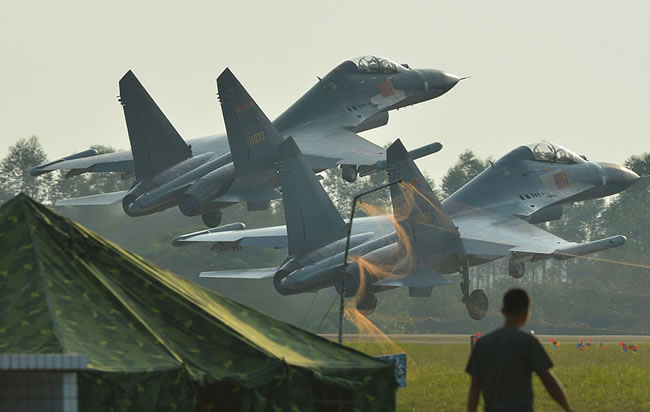
    Russia is offering 18 ex-Indian Air Force Su-30 fighters to Ethiopia. The Ethiopian Air Force already operates 17 Su-27 models, along with earlier models of jet fighters, including ageing MiG-23, MiG-21 and Su-25. “We proposed to modernise them in order to improve their tactical and technical characteristics and equip modern air-to-ground missiles” said the deputy general director of the Russian defense export agency Rosoboronexport, Alexander Mikheyev.

    These 18 early models Su-30 were returned to Russia by India in 2003, after a Sukhoi completed the more advanced ‘MKI’ version currently flying with the Indian Air Force. They consist of ten Su-30MK and eight Su-30K fighters. “If the customer is willing to fund operations, we are ready to make repairs, upgrade and deliver the aircraft within four to six months,” Mikheyev said. At present, four ex-Indian Su-30MKIs are being refurbished.

    India has ordered more than 200 Su-30MKIs in a number of batches. The early models delivered were basic aircraft without features like canards and thrust vector controls, and it is these 18 early model aircraft (ten Su-30MK and eight Su-30K fighters) that were returned to Russia in 2003 and replaced with more advanced Su-30s. Source: Defenseweb

    Skunk Works and XTEND Simplify Multi-Drone Command

    0
    Lockheed Martin Skunk Works® and XTEND have achieved a major milestone in JADC2 by integrating the XOS operating system with the MDCX™ autonomy platform. This technical breakthrough enables a single operator to simultaneously command multiple drone classes, eliminating the friction of mission handoffs. From "marsupial" drone deployments to operating in GPS-denied environments, explore how this collaboration is abbreviating the data-to-decision timeline and redefining autonomous mission execution.

    From Ukraine to Taiwan: The Global Race to Dominate the New Defense Tech Frontier

    0
    As traditional defense primes face mounting competition from agile “neoprimes” such as Anduril, Palantir and Helsing, the balance of innovation is shifting toward software-defined warfare and scalable, dual-use technologies, while global industry consolidation—marked by Boeing’s integration of Spirit AeroSystems and other strategic mergers—signals an intensified race to secure control over the defense technology value chain. Our Defense-Tech weekly report highlights these trends.

    Europe’s “Drone Wall”

    0
    In early October 2025, a coordinated wave of unmanned aerial system (UAS) incursions—widely attributed to Russia—targeted critical infrastructure across at least ten European nations. The unprecedented campaign exposed the fragility of Europe’s air defenses...

    Weekly Defense Update & Global Security Assessment

    0
    Executive Summary The past week (September 18-25, 2025) represents an inflection point where strategic defense concepts have transitioned from doctrine to tangible reality. An analysis of global events reveals four primary, interconnected trends shaping an...

    U.S. Air and Space Forces Push Next-Gen Programs at the AS&C 2025 Conference and...

    0
    At the 2025 Air, Space & Cyber Conference, U.S. Air Force and Space Force leaders unveiled major updates on next-generation fighters, bombers, unmanned systems, and space initiatives, highlighting both rapid innovation and critical readiness challenges as the services race to outpace global competitors. A short version is available here, with a more detailed version for subscribers.

    TADTE 2025: Reflecting Taiwan’s Strategic Themes

    0
    The Taipei Aerospace & Defense Technology Exhibition (TADTE) 2025 crystallized around four dominant strategic themes that collectively illustrate Taiwan's comprehensive approach to defense modernization amid escalating regional tensions. Based on a detailed report by Pleronix (available upon request). Includes a Podcast discussion on TADTE 2025's highlighting Taiwan's four strategic themes beyond the post's coverage.

    Iron Beam 450 Completes Testing, Soon to Join With Operational Air Defense Units

    0
    Israel’s Iron Beam 450 high-power laser system has completed final testing, marking a major leap in air defense. Developed by Rafael, it offers precise, cost-effective interception of rockets, UAVs, and mortars, and is set for IDF deployment by 2025.