Tuesday, December 30, 2025
More
    Home Blog Page 215

    Israel Tested a New ballistic Missile

    Israel has conducted a ballistic missile test from the Palmachim Air & Space test center. Israel’s Ministry of Defense confirmed the test was successful, indicating that the purpose of the launch was the testing of a new advanced propulsion system. (Reuters) Local reports published in the Israeli media indicated the propulsion system employed multiple stages, with limited maneuvering performed at the ascent phase.

    Israel is widely assumed to have such weapons, known as Jerichos. The satellite launcher known as ‘Shavit’, believed to be a derivative of the Jericho II missile is capable of inserting 300kg satellite into low earth orbit, when launched in retrograde (westward) orbit. When launched eastward, its the payload could be significantly larger – the ballistic missile ‘Jericho II’ is believed to be able to lift a payload of one ton, to a range of 1,500 km. For several years Israel has been reportedly developing a three-stage missile known as Jericho III, an intermediate range ballistic missile (IRBM) capable of lifting a payload of 1-1.3 to a maximum range of up to 5,000 km.

    Missiles having a warhead capacity of one tons can potentially carry a crude nuclear warhead and tus are rated ‘nuclear capable’ with nations having access or capability to develop nuclear weapons. WHile both Jericho II and III can carry over one ton of payload, the advantage of the three-stage missile is reach farther but more importantly, its ability to fly into higher ballistic trajectory, thus achieving higher terminal velocity, providing better immunity to missile defenses.

    Jericho III is also believed to carry multiple independent reentry vehicles (MIRV), each carrying thermal protection to withstand the atmosphere reentry phase of the flight and employing terminal guidance to achieve high precision strike. In practical terms, with their high accuracy, MIRV offer the use of low-yield warheads, achieving more effective effect against multiple targets.

    Apache Block III controls a Gray Eagle UAV demonstrating advanced Manned-Unmanned Operations

    Photo: Lockheed Martin

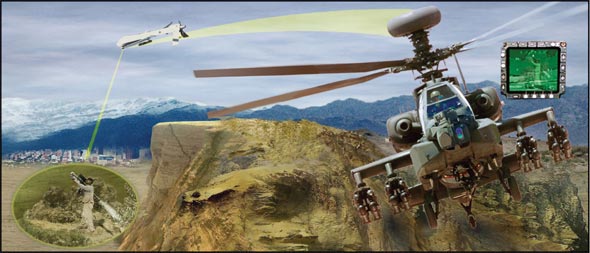
    An aH-64D Apache Block III equipped with the new Unmanned Aerial Systems Tactical Common Data Link Assembly (UTA) recently controlled an unmanned vehicle, while both were in flight. This marks the first time an unmanned vehicle has been controlled from the cockpit of an Apache, a significant accomplishment in manned-unmanned teaming.

    During flight tests, the UTA controlled the payload and flight path of a Gray Eagle (MQ-1C) while both the Apache and unmanned aircraft system (UAS) were airborne.

    Photo: Lockheed Martin

    “This is a true game-changing capability that the Block III will bring to the warfighter.” said Lt. Col. Bailey, U.S. Army Apache Block III product manager. UTA enhances situational awareness between Apache pilots, ground commanders and the UAS to create a true net-centric battlespace.

    Photo: Lockheed Martin

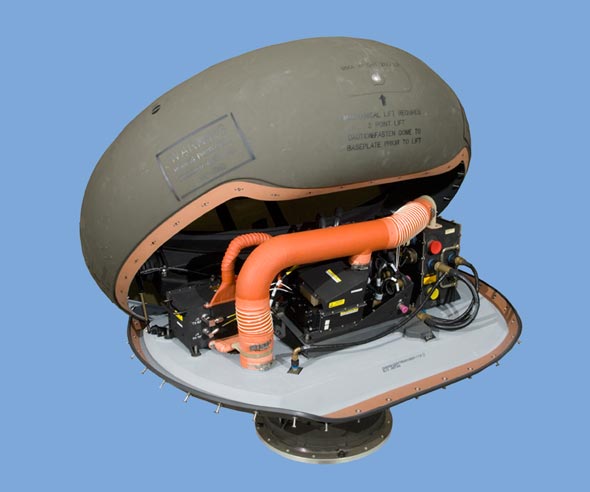
    The LONGBOW UTA is a two-way, high-bandwidth data link for Apache aircrews that allows sensor and flight path control of the UAS. UTA-equipped Apaches enable aircrews to exercise control of UAS at long ranges and receive real-time, high-definition streaming video on their multi-function displays. The UTA is fully integrated into the Block III Apache mission computer. The U.S. Army’s LONGBOW system consists of either a fire control radar or the new UTA, a fire-and-forget radar frequency HELLFIRE millimeter wave-guided missile, and an all-digital M299 launcher for the AH-64D Apache helicopter. The LONGBOW UTA will be fielded on the Apache Block III aircraft beginning in 2012.

    The UTA was developed by Longbow, a joint venture between Lockheed Martin and Northrop Grumman.

    Arming the Fire Scout – U.S. to Arm the MQ-8B with APKWS Guided Rockets

    Photo: Northrop Grumman

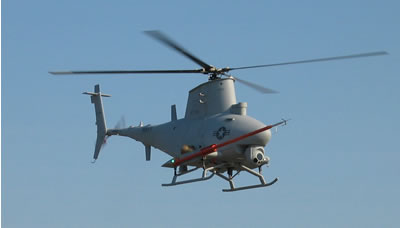
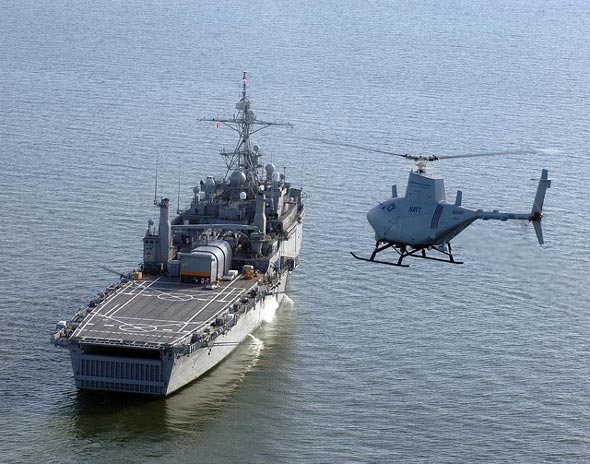
    Northrop Grumman Corporation has started work outfitting the U.S. Navy’s MQ-8B Fire Scout unmanned helicopter with the Advanced Precision Kill Weapons System (APKWS) laser-guided 70mm rocket. Such an armed unmanned platform will provide naval platforms, specifically the Littoral Combat Ship an autonomous engagement capability highly suitable for littoral warfare.

    Photo: U.S. Navy

    This light weight precison guided weapon is in production for the Navy since 2010. Arming the FireScout with the guided rocket will enable the unmanned helicopter flying off Littoral Combat Ships to engage hostile targets independent of air support from carrier groups or shore based aircraft.

    “By arming Fire Scout, the Navy will have a system that can locate and prosecute targets of interest,” said George Vardoulakis, Northrop Grumman’s vice president for tactical unmanned systems. “This capability shortens the kill chain and lessens the need to put our soldiers in harm’s way.”

    Northrop will develop and deliver the equipment needed to control the weapons system under a $17 million contract awarded to the company Sept. 23 by Naval Air Systems Command. Final delivery of an operational system is expected by March 2013. FireScout is already equipped with an EO/IR payload providing the target location and designation for the rockets.

    Once delivered, Fire Scout will be Navy’s first sea-based unmanned system to carry weapons. According to Northrop Grumman, its ability to operate at low ground speeds makes it particularly well suited for supporting littoral missions such as drug interdiction, antipiracy actions, search and rescue, reconnaissance and port security.

    Parralel to its successful participation in the operations in Libya, the Navy also deployed the FireScout to Afghanistan, where the unmanned vehicle gathered over 300 hours per month, supporting Marine Corps in theater. FireScout is expected to continue deployment in theater through 2012.

    Photo: U.S. Navy

    Northrop Grumman will operate and maintain the UAV systems through October 2012 under an $18.65 million contract awarded to the company Sept. 28 by Naval Air Systems Command.

    “We are providing a level of situational awareness many soldiers in the field have never experienced,” said Rick Pagel, Fire Scout’s operations lead for Northrop Grumman. “In the first five months we surpassed 1,500 hours with over 400 flights. Since Fire Scout doesn’t require a runway, we are conveniently nearby and arrive on station quickly.”

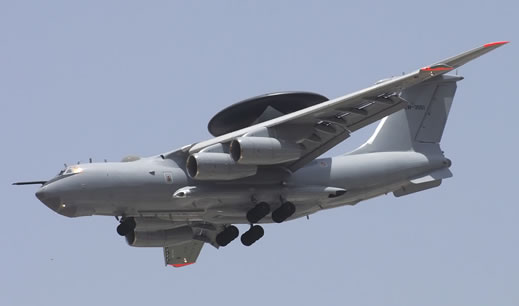
    India Mulls Additional AEW Procurement

    The Indian Air Force is seeking government approval to order two additional Il-76 Phalcon AWACS aircraft at a cost of $800 million, to expand the current fleet of three such aircraft procured by the IAF under the previous US$1.1 billion program. The first aircraft was delivered in 2009 with the second and third scheduled for delivery in the two following years.

    India plans to field a parralel AEW capabilities based on a modified Embraer EMB-145 jet converted by Embraer to accomodate the DRDO developed AESA radar which is expected to fly in 2014. The two platforms are designed for different roles, one offers long endurance, long range coverage and the other used mostly on shorter duration, medium range missions.

    India also considered fielding the Israeli Gulfstream G550 CAEW version, already employed by the Israel and Singapore air forces, but this platform proved to be off the mark the performance/cost range the Indians were aiming for.

    GD Expands Tactical Vehicles Offering With FPI Merger

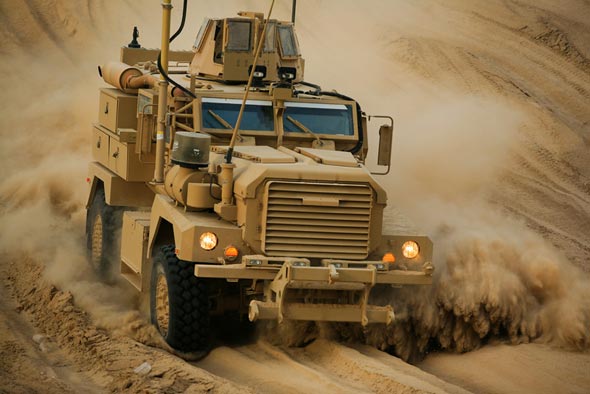
    Cougar 4x4 Medium MRAP Armored Vehicle from Force Protection. Photo: FPI

    General Dynamics Land Systems (GDLS) is widening its tactical armored vehicles portfolio with the acquisition of Force Protection Inc. (FPI). GDLS is a leading U.S. combat vehicles manufacturer but sofar it  has not established a foothold in the IED and mine resistant and armor protected (MRAP) vehicles, leaving this growing market segment to domestic and international competitors such as FPI, Oshkosh, Navistar, Thales and BAE Systems. Of all these companies, FPI offered the best synergy at the right competitive price.

    Cougar 4x4 Medium MRAP Armored Vehicle from Force Protection. Photo: FPI

    General Dynamics (NYSE: GD) plans to merge Force Protection, Inc. (NASDAQ: FRPT) into its Land Systems division. GD will pay $5.52 per share of common stock, or approximately $360 million. The proposed acquisition has been approved by the board of directors of both companies.

    “After careful consideration in the strategic direction of Force Protection, our board decided that a sale to General Dynamics would  maximize the value for our stockholders.” said Michael Moody, chairman and chief executive officer of Force Protection, Inc., “With their armored vehicle business, General Dynamics will be able to pursue opportunities that we could not have achieved as a stand-alone company.”

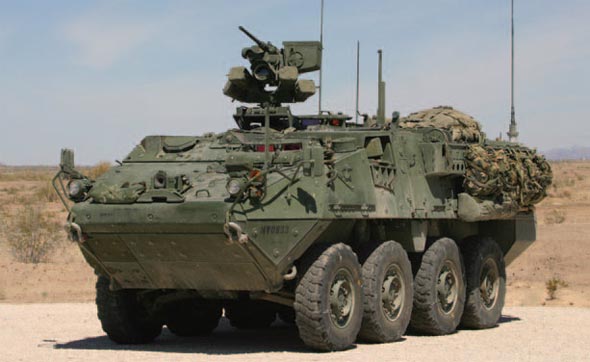
    General Dynamics Stryker Infantry Carrier Vehicle. Photo: GDLS

    FPI Has demonstrated an impressive growth on international markets, with established products like the Cougar and Buffalo and the new Ocelot, selected by the British MOD and becoming  a finalist in the Australian Land 121 program. The company has also been selected among few finalists for the Canadian TAPV.

    “Force Protection complements and strategically expands General Dynamics’ armored vehicle business, adding new products to the expansive portfolio of combat vehicles that we currently manufacture and support,” said Mark C. Roualet, president of General Dynamics Land Systems.

    FPI based in Ladson, South Carolina has 1,100 employees, General Dynamics, based at Stirling Heights, Mi has 8400 employees.

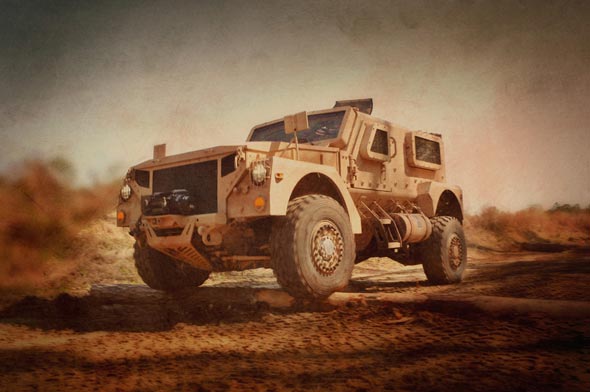
    Cheetah Armored Vehicle from Force Protection. Photo: FPI

    ATK Receives $24 Million Contract Modification to XM25

    Photo Courtesy: U.S. Army

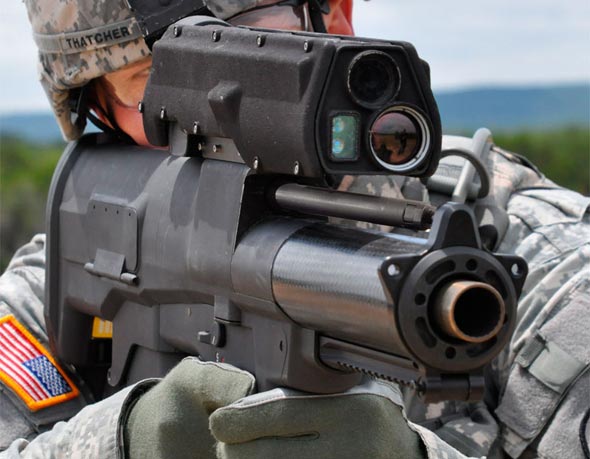
    The U.S. Army’s XM25 Individual Semi-Automatic Airburst System will continue to receive development support from ATK under a contract modification. Under the $24 million modification, the Minnesota company will provide the Army with additional ammunition, hardware, test and analysis support to further user assessments of the XM25.

    The ISAAS consists of a rifle that fires a 25mm airburst round that is programmed by the weapon’s integrated target acquisition and fire control system to detonate directly above an intended target.

    Photo Courtesy: U.S. Army

    The system allows soldiers to quickly and accurately engage targets by displaying an adjusted aim point based on range, environmental factors and user inputs. The weapon’s target acquisition and fire control integrates a thermal capability with direct-view optics, laser rangefinder, compass, fuse-setter, ballistic computer, laser pointer and illuminator.

    The Army began a Forward Operational Assessment of the XM25 last year with soldiers in Afghanistan to determine its capabilities through use in actual combat operations. Based on the weapon’s initial success throughout the FOA, the Army has requested the items necessary to continue further weapon assessments.

    “The XM25 provides the individual soldier with an advanced capability to quickly engage targets hidden behind walls or in defilade,” said Bruce DeWitt, vice president and general manager for ATK Advanced Weapons. “By putting smart technology into the soldiers’ hands, we’re able to provide them with a distinct battlefield advantage by taking away an adversary’s ability to hide behind cover.”

    ATK last March received a $65.8 million Engineering and Manufacturing Development contract from the Army’s Program Executive Office Soldier for the XM25. This 30-month EMD contract provided the necessary funding for the continuing design, integration, production, and testing of full-up systems to ensure the weapon’s final design meets performance requirements and is production-ready prior to Army-wide fielding.

    ATK is the prime contractor and systems integrator for the program. Program management is headquartered at ATK’s Advanced Weapons Division in Plymouth, Minn. Program partners include Heckler and Koch of Sterling, Va., and L-3 Brashear of Pittsburgh. (UPI)

    US F-35 Pitch to India – a Smoke Screen or a Step Toward True Cooperation?

    Few days before what seems to be the final selection between Rafale and Eurofighter for MMRCA, Washington is trying a last minute maneuver to derail the Indian choice, reiterating its offering of the Joint Strike Fighter to New Delhi. This proposal has been on the table for years, but India hasn’t seem to be interested – in 2007, when it first surfaced, it was too far, today, too expensive. India has already made its choice, which seems solid, developing its own derivative of the Russian T-50.

    India has made its political technological and practical decision to select a European platform. By opting for a modern 4.5 Generation fighter, India will also gain access to modern manufacturing technologies, that will help its rather obsolete production lines move into the 21st century, a step in the direction toward even more advanced standards to be implemented through this decade, laying the ground for the next generation fighters and unmanned combat aircraft which will dominate the aviation of the next decades.

    “What’s clear is that the F-35 is something that we would be more than willing to talk to the government of India about,” Robert Scher, deputy assistant secretary of defense for South and Southeast Asia told reporters, when presenting a report on U.S.-India security cooperation the Pentagon prepared for the Congress. The report outlined expanding military exchanges between the two countries, said the U.S. is committed to a broad trade defense relationship “that enables transfers of some of our most advanced technologies.”

    Over the next decades India will need hundreds of new fighters; with stealth fighters already looming in China, South Korea, Japan and Indonesia, India will have to ‘own’ indigenous stealth fighter capability, fielding affordable planes in adequate numbers, and be able to operate them for decades, independent of foreign pressures and limitations. The F-35, bound by complex subcontracting sourcing, with U.S. limiting user access to core functions, will hardly suffice for India’s aspiration for mastering it as indigenous technology.

    If Washington is really serious about moving forward in cooperative development with India, its goal should be partnering and joining the Advanced medium Combat Aircraft (AMCA), a single seat stealthy jet to replace the Jaguar and MiG-27s by the turn of the next decade.

    Update: Decision Time for MMRCA

    The long process of the selection of the future 126 Medium Multi-Role Combat Aircraft (M-MRCA) for the Indian Air Force is reaching a crucial milestone today, with the opening of the two offers, submitted by the European consortium EADS offering the Eurofighter Typhoon and French company Dassault offering the Rafale. The request for proposal (RFP) for the acquisition worth over US$10.4 billion was originally issued in 2007.

    If you are awaiting a clear cut who is the lowest bidder today, you will be disappointed. Opening the financial bids in the presence of the two vendors was only a formal act, with both companies realizing the unit price offered by the competitor. MoD is expected to enter a final price negotiation with both bidders to select the preferred supplier. The decision will count other factors such as the life-cycle cost and transfer of technology will also have to be factored inBased on the full offers, the Indian Ministry of Defense will evaluate the two bids, calculating who the lowest bidder (L1) is based on many parameters laid down in the RFP. After the decision is made, mandatory contract will be awarded to the lowest bidder. Another issue is the offset obligations each bidder will assume.

    How much the preferred vendor will have to ‘reinvest’ (or buy back from India) is unclear. While the initial cost was US$10.4 billion, according to recent estimates, the current cost could be double that – around $20 billion, reflecting current currency exchange and realistic cost estimate of the two finalists, considered to be the most costly options among the original contenders the Financial Times. Since the Indian government has increased the offset obligations on this specific mega-deal from 30% to 50%, the winners’ offset obligations alone could mount to the entire cost of the original program.

    Aircraft flyaway cost are expected to reflect the price charged for the 18 planes to be built by the supplier, and remaining 108 planes to be built by Hindustan Aeronautics (HAL) in India. The final amount should also reflect the induction process, in-country logistics and support sustaining the fighters through their operational life span.

    The “unit flyaway cost” or “direct acquisition cost” of each fighter falls in the $80-$110 million bracket, much costlier than the American, Russian and Swedish jets earlier eliminated after exhaustive technical evaluation by IAF pilots, the Times of India reported, claiming unnamed officials mentioned the Eurofighter price was “higher” than the French fighter…

    ISDEF 2011 Photo Gallery

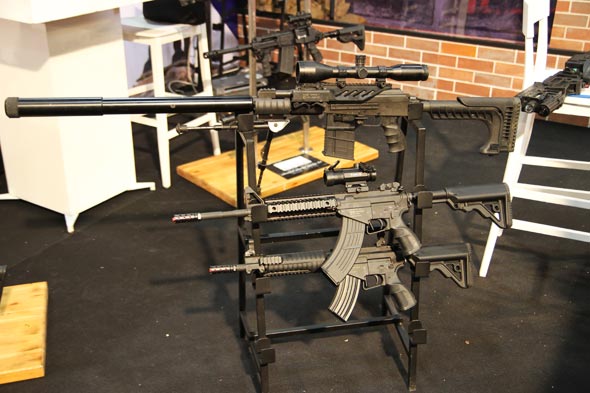
    Following is a gallery of images highlighting the recent ISDEF 2011

    Head of Israel’s ‘Shin Bet’ Outlines Israel’s Joint Countering Terror Strategy

    yuval diskin

    The first decade of the 21st century demonstrated the potential risk of modern terror, and how determined response, led by dedicated personnel, backed by technological and a legal infrastructure, can defeat terror attacks.

    Facing terror for over 60 years, Israel has developed the methods, means and procedures, to effectively combat this dangerous phenomena. During the 1970s most attacks were directed at Israeli-related aviation – airlines flying to and from the country. Palestinian terror activities gradually escalated, through domestic and cross-border attacks, through popular uprisals in the occupied territories, in the 1980s and a guerilla-like campaign in South Lebanon, waged through the 1990s.yuval diskin

    Yet the terror campaign against Israel culminated in the early 2000s, as Palestinian Tanzim, Islamic Jihad and Hamas organizations launched a massive onslaught, employing a new type of weapon – suicide attacks – directed primarily against Israel’s civilian population. This weapon was the most effective the terrorist organizations possessed – less than one percent of the activists were responsible to more than half of the casualties caused to the other side.

    Israel’s security services required time to adjust and develop new and effective countermeasures to combat the new threat of suicide bombers. The results were remarkable: Compared to 452 suicide attacks carried out by the Palestinians in 2003, only two suicide attacks occurred since 2007. (see also: “Suicide Bombers as Weapons“)

    According to Yuval Diskin, Director, Israel Security Agency (ISA – Shin Bet), the winning formula developed by Israel’s security services is based on jointness – the ability of all services to work together, sharing operational concepts (CONOPS), with a clear definition of the combined objective for all the organizations engaged in homeland security and defense. Multidisciplinary intelligence activity, based on advanced technological and human intelligence, tailored and channeled through processing and dissemination, means to turn intelligence from raw data into an operationally valuable, real-time asset. “Operational systems must be adapted and learn to operate as efficiently as possible with such real-time intelligence assets” said Diskin.

    Such adaptation is enabled by introducing technological means to improve connectivity, interoperability and joint operations by combined task forces, composed of elements from different organizations, such as ISA, National Police, Army and Air Force. Under such a cooperation umbrella, different organizations must share common counter-terror techniques, tactics and procedures (TTP), optimizing for rapid response, based on real-time intelligence. According to Diskin, the main advantage of the joint-operating concept is by combining the unique capabilities and characteristics of each of the participating organizations. “The main challenge is not integrating the technologies, but overcoming leadership and human nature obstacles” Diskin added.


    One of the keys to establishing jointness was the setup of inter-service command posts, manned by representatives from all the services and organizations involved in operations.

    Interoperability also requires maintaining real-time common operational pictures among all organizations – a task achieved by implementing common communications interfaces among all organizations, enabling real-time information flow between command centers. These preparations paid dividends in recent years, as Israel’s security services managed to repel multiple Palestinian terror attacks, intercepting suicide bombers before they could reach their targets.

    Diskin considers the legal infrastructure a critical element in the success of Israel’s counter-terror campaign. “It took Israeli lawmakers 14 years to agree on the legal framework for the ISA, until the so-called ‘ISA Law’ was completed in 2002. Once implemented, this legal foundation became instrumental for the success of Israel’s counter-terror campaign.” Said Diskin.

    The absence of terror strikes does not indicate that Israel’s security organizations are remaining idle. On the contrary, during this period the Palestinians in the West Bank continuously and relentlessly prepared and launched attacks. They trained hundreds of potential suicide bombers and managed to launch about 120 attacks, alas, almost all were intercepted and repelled by Israel’s security services. Real-time intelligence and the combined, rapid response capability developed by the ISA, the Special Police Unit, military and air force elements were instrumental factors for thIs remarkable anti-terror success.
    According to Diskin, ISA’ special operations units and the Police Special Unit (yamam) were able to intercept most of these suicide bombers before theise could reach their objectives. “It takes a suicide bomber launched from Nablus about 60 minutes to reach his target in a major Israeli city like Netanya” explains Diskin, “we had to tailor our response to meet this short cycle”. Typically, the ISA would get fragments of information about an imminent terror act before, or when the suicide bomber is launched, immediately triggering an early warning. When such intelligence was accurate enough, pre-emptive action would take place.

    But when the first indication is received after the suicide bomber leaves on its final mission,all the fragmented intelligence must be gathered and updated continuously, developed into a clear understanding of the threat and its potential target, enabling to scramble the rapid-response teams to disrupt the threat’s movement. These action teams are called to establish contact with the target, identify the threat and eliminate it before reaching its target. These operational teams are controlled by the inter-agency operational command and control centers, conducting the entire intercept, feeding on all intelligence sources throughout the event, to maintain a constant situational picture in real-time.

    It took years to prepare all the organizations responsible for homeland security to operate effectively under these short timelines. “These capabilities must be prepared in advance, in order to work effectively in time of crisis” Diskin concludes.

    Future threats are expected to be more complex, as terrorist organizations, operating in the modern, globalized and networked world are less hierarchical, more elusive than ever. In fact, most Islamic terror organizations are ‘state sponsored’, even when they do not have direct geographical access to the host nation. For example, Palestinian terrorist movements in Gaza, like the Islamic Jihad and Hamas get their weapons from sponsoring nations like Iran or North Korea. The military supplies are shipped through a global supply network by sea, with destinations in Yemen or Sudan. From clandestine beachheads the loads are smuggled over-land, entering Gaza through tunnels dug under the Egyptian – Gaza border at Rafah. Palestinian terror activists are also sent to Iran to train in the operation of these weapons. The level and sophistication of weapons accessible by terrorists is becoming unprecedented – ranging from advanced, powerful explosives, to anti-aircraft missiles, guided weapons, unmanned aerial vehicles, long range rockets and missiles.

    Cyber terrorism is also becoming a growing challenge, and, since such activities are performed over cyberspace, the location of the perpetrators is irrelevant to their ability to cause harm, get support or access their targets.

    In fact, the global Internet provides terrorists with many advantages, including recruitment tools – certain social network sites and chat-rooms where potential candidates undergo ‘brainwashing’, with their minds being indoctrinated and ‘tendered’, preparing them for potential suicide attacks. Other sites are used as indoctrination, and training tools, transferring knowledge and developing skills among remotely located recruits, on how to prepare improvised weapons, counter-intelligence actions and terror cells operations.

    Terrorist’s cybernetic capabilities also exploit the information services made available for peaceful purposes, such as GPS and geospatial intelligence, real-time communications via Internet, cellular phones or messaging devices, powerful encryption devices etc. These capabilities are added to the determination and willingness of terrorist organizations to carry out ‘mega-terror’ actions, regardless of the casualties or damage they cause.

    “The world can successfully defeat and win the war against global terror” Diskin stated, ” But to win this war, the nations determined to fight terror, must join forces, develop joint intelligence and effective operational capabilities.”

    According to Diskin, such joint operability must rely on close cooperation among intelligence agencies, establishing an agreeable legal framework among nations that will eliminate potential loopholes to be exploited by terrorists, and formulating cooperation among homeland security and counter-terror organizations from different countries, by developing joint operational capabilities. “The is a growing understanding and openness to these cooperative principles among the countries facing terror threats” Diskin concluded.


    European Defense Update – November 1, 2011

    Italy accepts forst T-346A advanced trainer. Photo: Alenia
    The configuration of the 81mm Cardom is likely to be an open mount, similar to this Mistral mounted on the Spanish VAMTAC.

    Spanish Army to Field Israeli 81mm Cardom Mortars

    October 31, 2011: Elbit Systems will deliver the Spanish Army Cardom recoilless mortar assemblies to mount 81mm mortars on the Spanish VEMTAC 4×4 wheeled armored vehicles. The Cardom system was originally developed for the 120mm tube, but the Spanish Army opted for the smaller caliber to fit with the lighter vehicle. The Israeli company is part of an industry team also including UROVESA, providing the vehicle platform, as well as GMV and Spain’s General Dynamics Santa Barbara. The program will be implemented over a 12-month period.

    Finland Plans Spending Over US$0.5 Billion on New Missiles

    October 31, 2011: Finland has requested the U.S. approval to buy 600 Raytheon FIM-92A Stinger Reprogrammable Micro-Processor (RMP) Block 1 short range anti-aircraft missiles. The value of this procurement with associated logistics and training support is about US$330 million. Finland plans to replace the Russian SA-18 Igla-M currently operated in the Very Short Range Air Defense (VSHORAD) role. Among the alternatives being considered are the Sweden Saab RBS-70/Bolide, LIG Nex1’s Chiron from South Korea, as well as the SA-24 Igla-S and Polish PZR GROM (SA-18 derivative) systems.

    AGM-158 Joint Air-to-Surface Standoff Missile. Photo: Lockheed Martin

    Finland has also renewed its request to buy the Lockheed Martin AGM-158 Joint Air-to-Surface Standoff Missiles (JASSM) for its F/A-18C/D fighter aircraft at an estimated cost of $255 million. Finland has hoped to get the missiles in 2007, as part of a comprehensive upgrade extending the Hornet’s air/ground potential with stand-off attack capability, but the request was rejected by the pentagon at the time.

    M346 from Aermacchi was one of the two candidates for the Polish contract. Photo: Alenia

    Poland Ditches Trainer Tender

    October 27, 2011: Poland has scrapped a $456 million tender for 16 advanced training aircraft which was expected to be finalized soon. The two finalists competing for this bid were Korean Aerospace Industries (KAI) T-50 Italy’s Alenia Aermacchi, offering the M-346, both offering high end advanced trainers. The Ministry said it plans to launch a new tender, reflecting a new focus on training capabilities rather than advanced and combat training, which requires high end platforms. This new tender is likely to attract more companies, providing more affordable life cycle cost for the entire program. The officials did not specify weather the Air Force will focus on procurement of aircraft or a outsourcing military pilot training to commercial contractor under a ‘full service solution’, integrating real-virtual training aircraft and flight simulators. Such services are already entering operation with some of the world’s advanced air forces.

    Past reports:

    European defense Update – October 23, 2011

    European Defense report – September 27, 2011

    European Defense Update – September 2, 2011

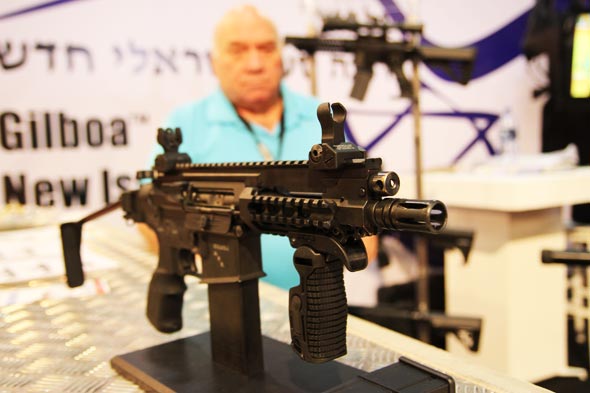
    Silver Shadow Unveils a Production Ready Version of Gilboa Assault Pistol Rifle (APR)

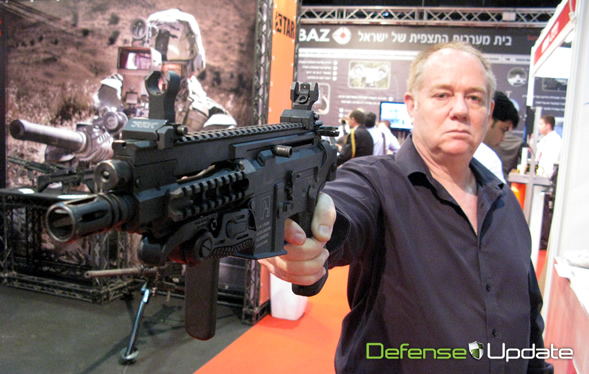
    Amos Golan, Silver Shadow CEO demonstrate the lightweight and compact Gilboa APR. Photo: Tamir Eshel, Defense Update

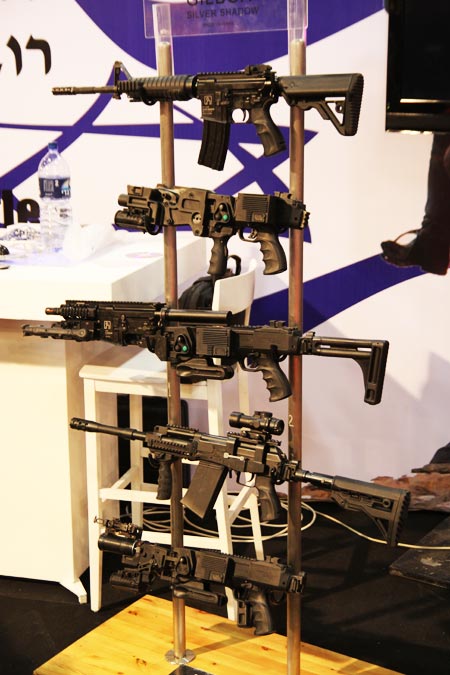
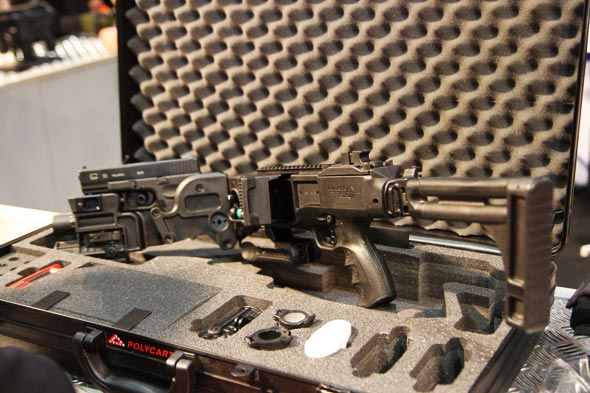
    In our coverage of last year’s event we unveiled the new Gilboa Assault Pistol Rifle (APR). This year, Silver Shadow is displaying a Production ready model APR, an ultra compact weapon designed specifically for close quarter combat, VIP protection and special forces and commanders; the APR will also offer an excellent survival weapon for helicopter aircrews, offering improved range, accuracy and lethality, compared to pistols.

    Amos Golan, Silver Shadow CEO demonstrate the lightweight and compact Gilboa APR. Photo: Tamir Eshel, Defense Update

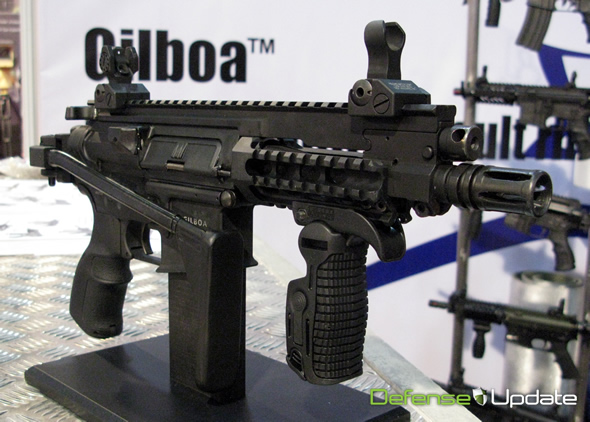
    The overall length of the Gilboa APR is 398mm, (15.6″) and its loaded weight is 2.820 kg (including a full 30 round magazine). The chrome lined barrel is 165mm (6.5″) in length, firing 5.56×45 (M-855/SS-109) rounds. The handgun comes with four Mil-STD 1913 Accessory Rails (Picatiny) providing attachment options for a wide range of accessories.

    The new patented design incorporates a combined gas and recoil spring actuating system integrated in the weapon’s body, a feature enabling the designers to optimize the foldable stock in terms of weight and ergonomics, allowing the shooter to employ the weapon in shoulder firing position. In fact, the APR remains fully operational with the stock completely detached. Compared to Bullpup designs the APR is claimed to offer lighter, smaller and safer performance, as the chamber position is maintained as far as possible from the shooter, contributing to safer operation. Other ergonomic elements include a pistol grip that comes with built-in storage compartment.
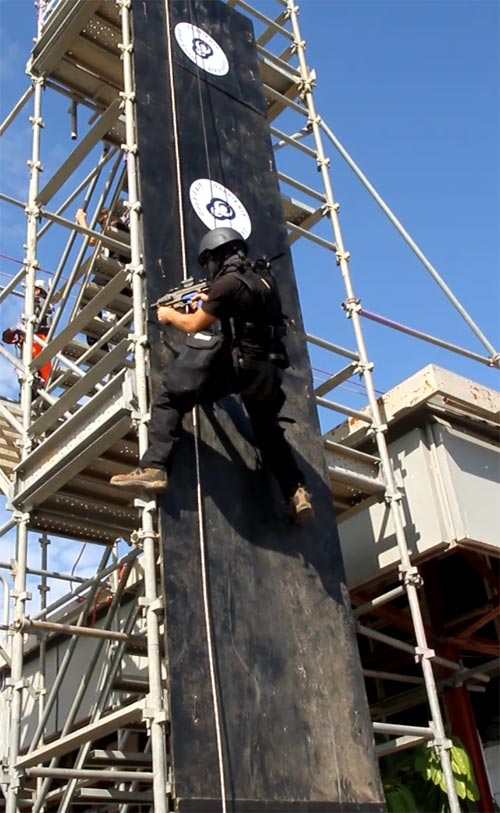
    The overall length of the Gilboa APR is 398 mm (15.6") with 165mm (6.5") barrel. The loaded weight is 2.82 kg (including a full 30 round magazine). The Gilboa APR comes with four Mil-STD 1913 Accessory Rails (Picatiny) providing attachment options for a wide range of accessories. Photo: Tamir Eshel, Defense-Update

    ISDEF 2011 – First Impressions

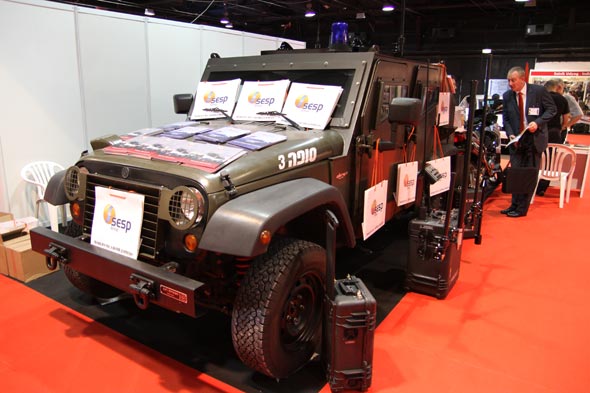
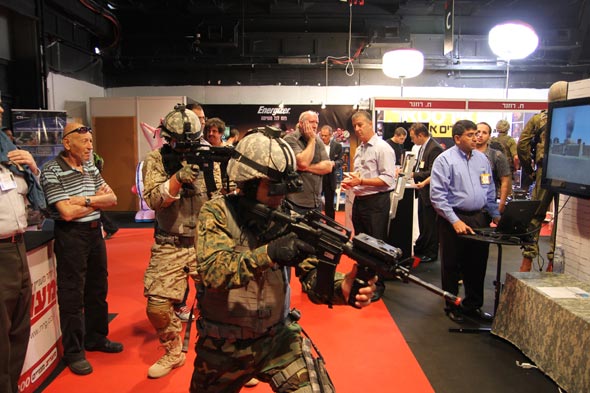
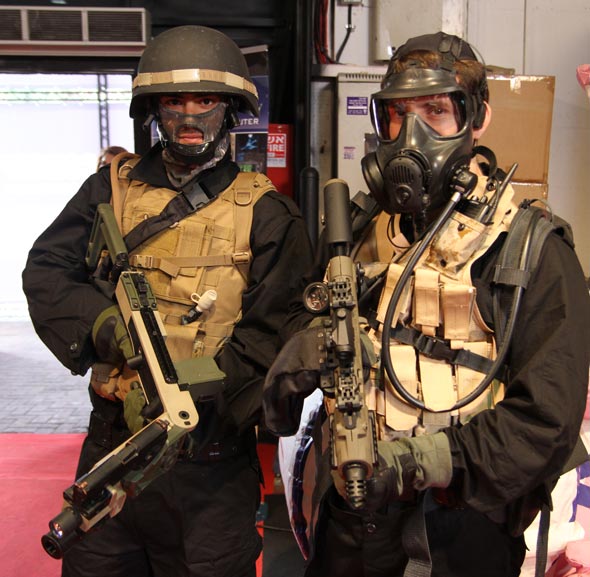
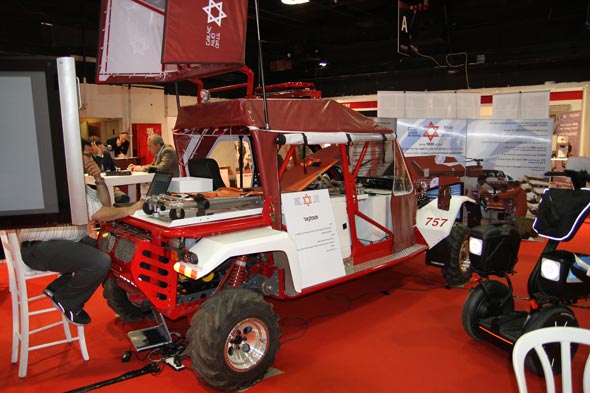
    ISDEF 2011 opened today at the Tel Aviv Exhibition Center highlights new tools and techniques available for emergency response, law enforcement, counter terror and special operations. Today the show also included rescue operations and handling of hazardous materials, demonstrated by rescue teams from Israel’s fire brigades. Defense Update sponsoring the event, is reporting on some of the new systems we spotted at the show.

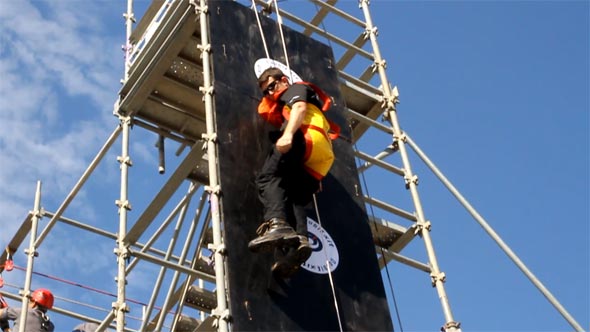
    The Israeli fire brigade's special rescue team trained for rescue operations from high elevations demonstrated the evacuation of casualties and survivors from high elevation. The unit is trained to rappel personnel at a rate of 60 personnel per hour from an altitude of up to 300 meters. Photo: Tamir Eshel, Defense-Update
    Gilboa APR (Silver Shadow)

    Silver Shadow Gilboa APR

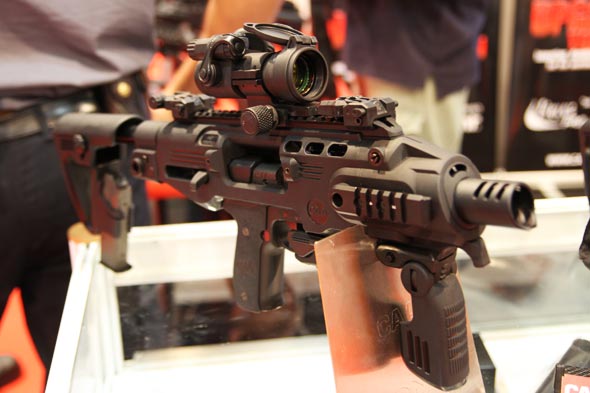
    One of the first items that caught our eyes was the new Gilboa APR, an ultra compact assault pistol we unveiled last year. The manufacturer, Silver Shadow told us they have completed development and engineering, introducing some new features, and the weapon is now ready for production. (read more)

    A Compact Concept Weapon from Cornershot

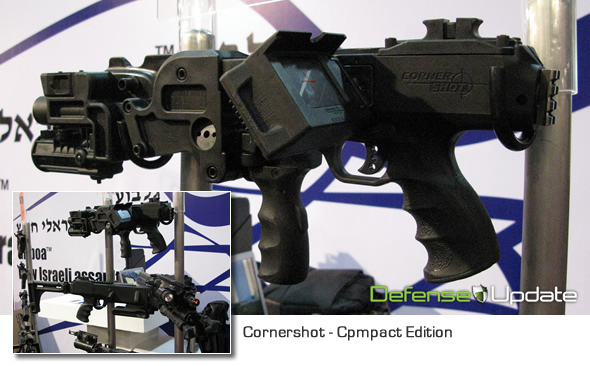
    Silver Shadow is also displaying here a compact version of its famous Cornershot. The new model introduces a super-compact weapon system. As the standard model, the ompact weapon is designed to fit a handgun, video camera and articulated display with the compact version weighing and measuring about half. Silver Shadow personnel emphasized the model displayed here is only an evaluation model. “The classic Cornershot is a balanced system, offering combatants the advantage of ‘around the corner’ vision and effect balanced with ergonomic comfort, and operational safety, the small dimensions of the compact model offer some advantages, but has not matured yet into an operational system.

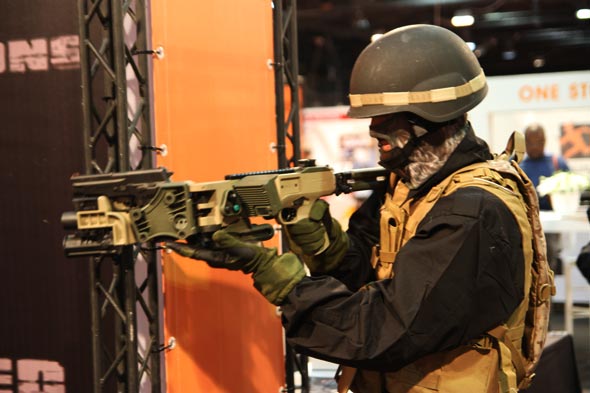
    A new concept model of a 'Cornershot Compact' weapon was on display by Silver Shadow. Photo: Tamir Eshel Defense-Update.

    Magshue 3D – Beefing the Gatekeeper

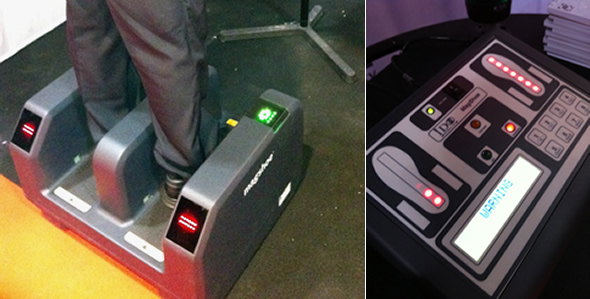
    Magshoe 3D series metal detector from Ido Security is another innovative product shown at ISDEF for the first time. The system first introduced at Milipol 2011 earlier this month, is designed especially for the aviation security applications. The detector is optimized for detection of metal objects concealed at the lower body, where conventional detectors are mostly challenged. According to Avishai Rotshtain, marketing product manager, the Magshoe provides automatic detection of guns, and parts of guns, knives and other concealed metal objects while maintaining low false alarm rate, ignoring metal parts normally found in footwear, like heels, zippers and ornaments. The Magshoe 3G is already operational with several security agencies in Israel.
    Magshoe 3G metal detection system complementing magnetic detector gates detecting weapons concealed in the lower body and footwear, areas where conventional gates are limited in detection capability. Photo: Tamir Eshel, Defense Update.
    Amstaf Combat Support UGV

    Amstaf Tactical Robot

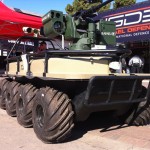
    A new robot at the show is new weaponized version of the Amstaf from Automotive Robotic Industries (ARI). The company has already displayed the security guard version in the past, and the system is currently being evaluated for airport security missions. The combat support vehicle represents ARI’s concept of a vehicle combining the fire support and load carrying platform (mule), supporting dismounted infantry teams. (read more)

    Gunshot Detecting UAVs

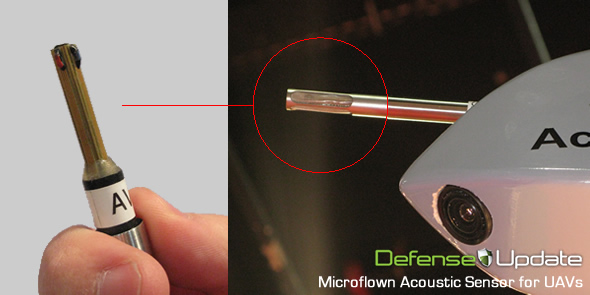
    Microflown Avisa is now offering UAV acoustic sensors to equip miniature UAVs. At ISDEF Microflown highlights the sensor integrated on a Aerovironment Raven, offering effective situational awareness for small units operating the miniature drone. According to John Bremner, business development manager at Microflown, the sensor weighing about 200 grams can be best integrated in the mini UAVs employing pusher propellers, as it offers a clean environment for the system. The sensor can also be integrated on aerostats, typically operated on force protection missions. (read more)

    Microflown Avisa displayed here an acoustic sensor for UAVS, enabling micro drones to detect gunshots from seven kilometers. Photo: Tamir Eshel, Defense Update.
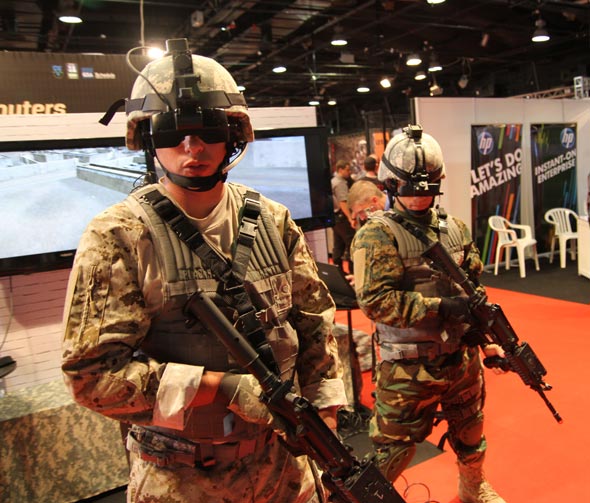
    Israeli trainees are introduced to the Quantum ExpeditionDI at ISDEF 2011. Photo: Tamir Eshel, Defense-Update

    Virtual World to Prepare Soldiers for the Real Fight

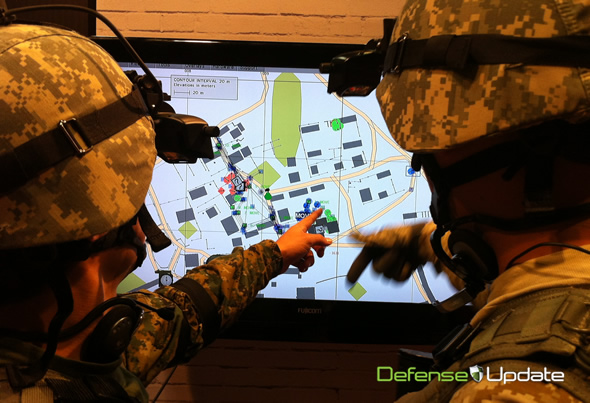
    Quantum 3D displayed here the ExpeditionDI wearable simulator, also known as ‘immersive dismounted infantry training platform’; the system was recently ordered by the U.S. Army to help preparing U.S. forces for missions to foreign theaters. The $50 million contract was awarded to Intelligent Decisions, where Quantum as a subcontractor, is expected to deliver several thousands systems over 18 months. The evaluation of the trial batches is scheduled to begin at Ft. Bennings in January 2012, supporting the Army’s Force Generation (ARFORGEN) cycle. (read more…)

    CTI unveils the Octopus, Wearable Computer for the IDF

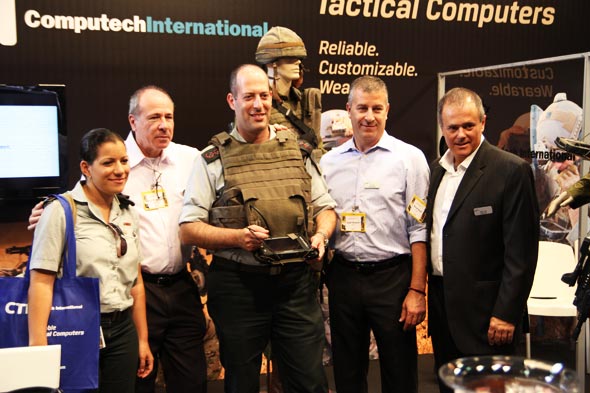
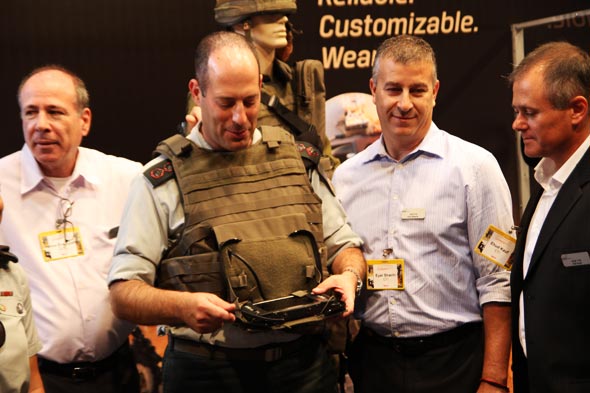
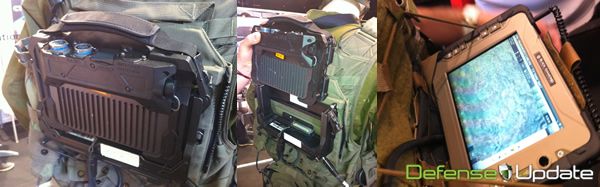
    ComputerTech International (STI) has unveiled several Commercial Off The Shelf (COTS) computers designed for military operations, introducing higher performance yet cost effective computing solutions for military users. The new Tamnun (Octopus in Hebrew) was developed to support the IDF dismounted command and control system. Originally the IDF considered a fully militarized solution, but the Digital Army Computer System (DACS) was proven to deliver more affordable and flexile solution using off the shelf hardware which typically advances faster than military systems. DACS is now being integrated with the IDF Digital Army System (Zayad) army-wide C4I system provided by Elbit Systems. At a weight of 7.76 lbs. (3.52kg) DACS comprises a computer ‘core’ provided by Black Diamond, integrated with GPS receiver and customer specific interface panel mounted on a wearable dock and universal tactical display carried on the soldier’s chest. Both elements are mounted on a load bearing harness. The IDF configuration also comprises an external battery pack supporting almost nine hours of operation for the entire suite. The rugged computer is designed to Mil-Spec 810F standard and sealed to IP67 immersion, enabling continuous use in harsh combat conditions. (read more)

    CTI developed the DACS system based on of the shelf hardware to provide an advanced, yet affordable wearable computer. Photo: Tamir Eshel, Defense-Update

    Rigged for Rough Rides

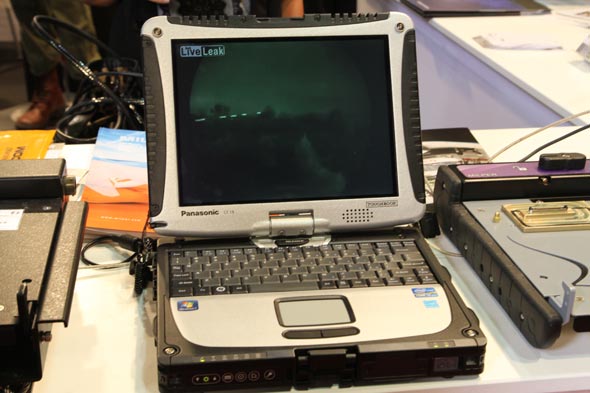
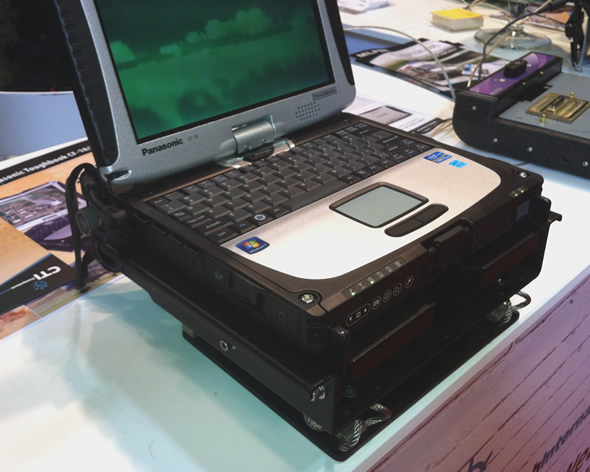
    Offering reliable operation under rugged field condition at relatively low cost, Toughbooks have become popular with the military, however, using the system in vehicular environment requires dedicated vehicular mounts to be designed. While vehicular mounts are already available for the Toughbook, excessive levels of shock and vibrations associated with the gun firing and cross country ride require dedicated mounts offering shock attenuation, sealing and connectors supporting specific architecture associated with combat vehicles. CTI, in cooperation with Milper have developed a special mount configured in size, form and fit to meet existing chassis mounting the full-military Enhanced Tactical Computer in Merkava main battle tanks and M-109 self propelled guns. The same chassis is also being evaluated for teh Namer armored infantry fighting vehicle. According to Eyal Shachi, this COTS replacement offers an alternative to outdated military computers at about one sixth of the original cost.

    While vehicular mounts are already available for the Toughbook, excessive levels of shock and vibrations associated with the gun firing and cross country ride require dedicated mounts offering shock attenuation, sealing and connectors supporting specific architecture associated with combat vehicles. Photo: Tamir Eshel, Defense Update

    New Gunshot Detection Capability Expands the Role of Mini-UAVs in Force Protection

    Microflown Avisa displayed here an acoustic sensor for UAVS, enabling micro drones to detect gunshots from seven kilometers. Photo: Tamir Eshel, Defense Update.

    Detecting gunshots has always challenged the military and law enforcement agencies. Two principal approaches are used – detecting the acoustic signature of the gunshot and spotting the visible signature of the event. A new approach combining a new approach to acoustic detection, developed by the Dutch company Microflown Avisa has now matured and is introduced for use on unmanned aerial vehicles.

    Microflown Avisa displayed here an acoustic sensor for UAVS, enabling micro drones to detect gunshots from seven kilometers. Photo: Tamir Eshel, Defense Update.

    Microflown Avisa is displaying two applications of its gunshot detector at ISDEF 2011, an artillery fire locator capable of detecting artillery and mortars firing events at ranges of 30km and a new airborne gunshot detection system, that can be mounted on a mini UAV and offer detection ranges up to seven kilometers.

    The proprietary Miniature Electro-Mechanical System (MEMS) vector sensor developed by Microflown measures temperature differences in the cross-section of two extremely sensitive heated wires, to determine acoustic particle velocity. Assembling three orthogonally placed sensors in one single point, a very compact acoustic vector sensor is produced. The integrated processor computes these parameters to provide bearing, and elevation at the firing source, at angular accuracy of 0.25-2 degrees. Further algorithms and additional acoustic vector sensor allows distance to be measured (by triangulation).

    Actual performance depends on weather and humidity conditions, but the sensor can operate effectively even under 100% humidity as well as extreme high or low temperatures. The sensors can detect and report multiple sources of fire simultaneously, even in complex acoustic situations such as urban environments or on noisy platforms such as UAVs.

    The company is now offering UAV acoustic sensors to equip miniature UAVs. At ISDEF Microflown highlights the sensor integrated on a Aerovironment Raven, offering effective situational awareness for small units operating the miniature drone. According to John Bremner, business development manager at Microflown, the sensor weighing about 200 grams can be best integrated in the mini UAVs employing pusher propellers, as it offers a clean environment for the system. The sensor can also be integrated on aerostats, typically operated on force protection missions.

    Skunk Works and XTEND Simplify Multi-Drone Command

    0
    Lockheed Martin Skunk Works® and XTEND have achieved a major milestone in JADC2 by integrating the XOS operating system with the MDCX™ autonomy platform. This technical breakthrough enables a single operator to simultaneously command multiple drone classes, eliminating the friction of mission handoffs. From "marsupial" drone deployments to operating in GPS-denied environments, explore how this collaboration is abbreviating the data-to-decision timeline and redefining autonomous mission execution.

    From Ukraine to Taiwan: The Global Race to Dominate the New Defense Tech Frontier

    0
    As traditional defense primes face mounting competition from agile “neoprimes” such as Anduril, Palantir and Helsing, the balance of innovation is shifting toward software-defined warfare and scalable, dual-use technologies, while global industry consolidation—marked by Boeing’s integration of Spirit AeroSystems and other strategic mergers—signals an intensified race to secure control over the defense technology value chain. Our Defense-Tech weekly report highlights these trends.

    Europe’s “Drone Wall”

    0
    In early October 2025, a coordinated wave of unmanned aerial system (UAS) incursions—widely attributed to Russia—targeted critical infrastructure across at least ten European nations. The unprecedented campaign exposed the fragility of Europe’s air defenses...

    Weekly Defense Update & Global Security Assessment

    0
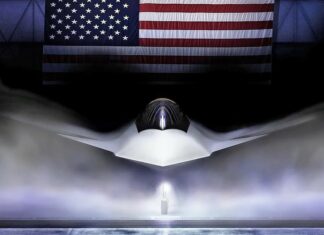
    Executive Summary The past week (September 18-25, 2025) represents an inflection point where strategic defense concepts have transitioned from doctrine to tangible reality. An analysis of global events reveals four primary, interconnected trends shaping an...

    U.S. Air and Space Forces Push Next-Gen Programs at the AS&C 2025 Conference and...

    0
    At the 2025 Air, Space & Cyber Conference, U.S. Air Force and Space Force leaders unveiled major updates on next-generation fighters, bombers, unmanned systems, and space initiatives, highlighting both rapid innovation and critical readiness challenges as the services race to outpace global competitors. A short version is available here, with a more detailed version for subscribers.

    TADTE 2025: Reflecting Taiwan’s Strategic Themes

    0
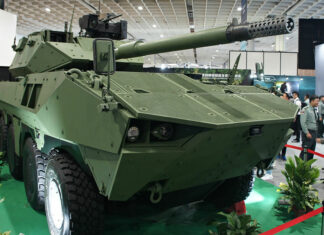
    The Taipei Aerospace & Defense Technology Exhibition (TADTE) 2025 crystallized around four dominant strategic themes that collectively illustrate Taiwan's comprehensive approach to defense modernization amid escalating regional tensions. Based on a detailed report by Pleronix (available upon request). Includes a Podcast discussion on TADTE 2025's highlighting Taiwan's four strategic themes beyond the post's coverage.

    Iron Beam 450 Completes Testing, Soon to Join With Operational Air Defense Units

    0
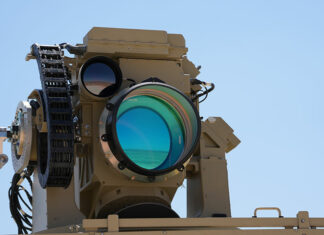
    Israel’s Iron Beam 450 high-power laser system has completed final testing, marking a major leap in air defense. Developed by Rafael, it offers precise, cost-effective interception of rockets, UAVs, and mortars, and is set for IDF deployment by 2025.