
Tuesday, December 30, 2025
More
    Home Blog Page 214

    Middle East Defense Update – Nov. 18, 2011

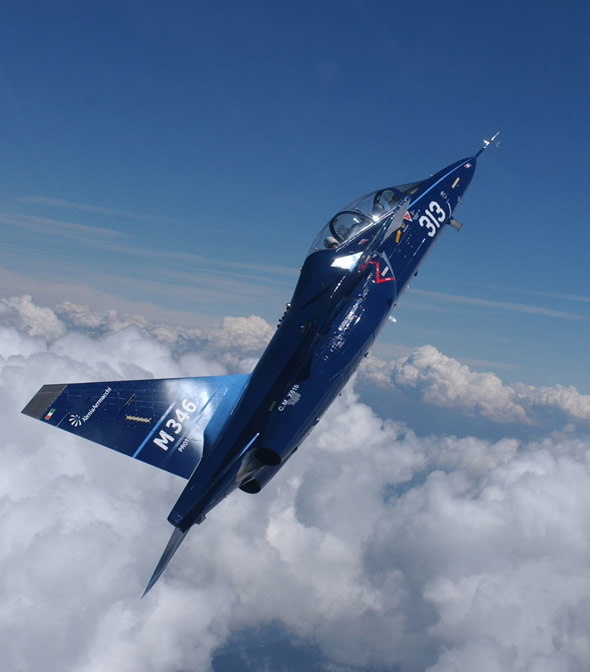
    The prototype of Alenia Aermacchi M346 trainer that participated in the Dubai airshow crashed today on its return flight to Italy. Photo: Alenia Aermacchi
    The prototype of Alenia Aermacchi M346 trainer crashed today off the Dubai coast. Photo: Alenia Aermacchi

    Italian M-346 Crash in Dubai

    November 18: The Italian made M346 advanced trainer crashed this morning in Dubai, just after taking off on its trip return from the Dubai Airshow. The two crewmen on board ejected safely before the aircraft went down. The plane crashed into the sea near the Deira Palm Island.

    “The causes of the accident are currently being investigated and in accordance with company procedures, an internal investigation committee has also been set up,” Alenia spokesman added.

    Disagreements on Commercial Terms Reverses UAE’s Choice of Rafale

    November 17, 2011: The UAE has reversed its choice of Rafale as its future fighter plane and has invited the Eurofighter Typhoon and Boeing F/A-18E/F Super Hornet and F-15SE Silent Eagle to bid on the sale of up to 60 advanced fighter jets to the UAE Air Force. For the past three years Rafale has been considered the favorite option by the UAE. “Thanks to French President Sarkozy, France could not have done more diplomatically or politically to secure the Rafale deal“ Arabian Aerospace quoted the supreme commander of the UAE armed forces and Crown Price of Abu Dhabi, Sheikh Mohammed bin Zayed al Nayhan said, “Regrettably Dassault seems unaware that all the diplomatic and political will in the world cannot overcome uncompetitive and unworkable commercial terms.” Arabian Aerospace quoted.
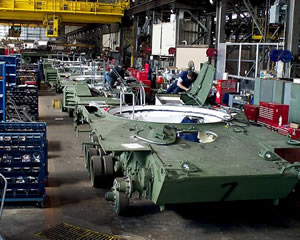
    M1A1 chassis assembly line at Factory 200 in Helwan

    Egypt to receive kits to Produce of 125 M-1A1 Tanks in the Next 3 Years

    November 17, 2011: The U.S. government has awarded General Dynamics Land Systems (GDLS) a contract valued $395 for the production and delivery of 125 M-1A1 Abrams kits co-produced at the Military Factory 200  in Helwan, a Cairo suburb. According to the DSCA announcement in July 2011, the overall cost of the package, including the 125 locally produced tanks and support services could reach $1.329 billion (a whopping +10 million a piece…). The tank co-production program is ongoing since 1992 with a production scope of 1,500 M-1A1 tanks and M-88A2 (Hercules) armored recovery vehicles. This latest increment will increase the number of Egyptian co-production-built tanks to 1,130. Deliveries of these new tanks are expected to begin in July 2013 and continue for 30 months. The contract was awarded by the U.S. TACOM Lifecycle Management Command.
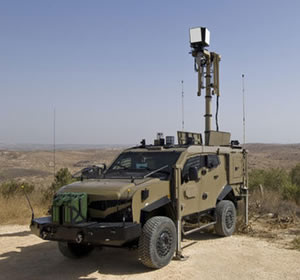
    Elta Systems' ISRV providing the baseline for the Granite

    IDF is Fielding a new Tactical Intelligence Collection Vehicle

    November 16, 2011: Israel Defense Forces’ (IDF) Field Intelligence Corps’s has fielded an advanced reconnaissance vehicle called ‘Granite’, based on IAIs’ EL/I-3302 Intelligence Surveillance & Reconnaissance Vehicle (ISRV) developed by ELTA Systems Ltd. Elta has integrated the mission payload on the SandCat, an armored vehicle based on Commercial Off The Shelf (COTS) Ford 550 model. (Defense-Update)

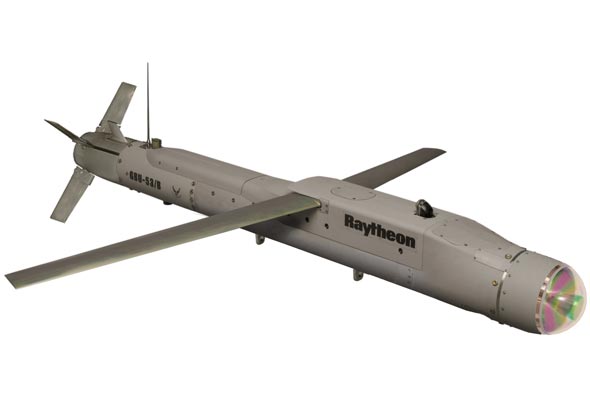
    Talon Guided Rockets Complete Qualification Tests

    November 16, 2011: Raytheon and its UAE based partner, Emirates Advanced Investments (EAI) group are expecting the first order for the Talon laser-guided rocket kit developed jointly by the two companies. The order could include 10,000 Talon guidance kits. Talon recently performed successful test flights, launched from an Apache Longbow helicopter as part of the weapon qualification program. The laser-guided kits converts unguided 2.75 inch/70mm helicopter-borne rockets into guided weapons.

    UAE Considers APG-80 AESA Radar Upgrades

    November 16, 2011: The US government is in discussions with the UAE to upgrade the APG-80 AESA radars installed in the country’s fleet of about 80 F-16 Block 60s. Flight Daily News reports. Other Middle eastern air forces flying F-16s are also considering upgrades of their radars, gaining operational and maintenance benefits provided by AESA technology. Following the Saudi Arabian decision to upgrade their F-15S Eagle with AESA radars, and the UAE’s fielding of the first AESA equipped F-16s block 60, this technology is now available for export to other F-16 operators in the region, including Egypt, Oman, Pakistan, and Jordan. Israel’s radar company Elta Systems has developed an AESA version of its airborne multi-mode fire control radar but the type has not been integrated into the F-16 due to U.S. restrictions. Northrop Grumman and Raytheon both offer AESA radars for the F-16. Northrop Grumman is pitching the Scalable Agile Beam Radar (SABR), a derivative of the APG-80 while Raytheon offers the Raytheon Advanced Combat Radar (RACR).

    Oman to Receive Mica VL Naval & Land Based Air Defense Systems

    November 13, 2011: MBDA has delivered the first VL MICA naval surface-to-air defense systems to the first export customer and is moving the land-based VL MICA land system into production, anticipating first export deliveries starting in 2012. The launch customer for both systems is believed to be Oman.

    Iraq Sets to Field F-16s by 2014-2015

    November 8, 2011: Iraq has deposited the initial payment toward the procurement of 18 F-16C Block 52 fighters in September 2011. The planes are scheduled for delivery in late 2014 or 2015. Along with the fighter aircraft Iraq also purchased various weapons including AIM-9 air-to-air missiles, GBU-12 laser-guided bombs, a logistics package and training. Six Iraqi F-16 candidates have already been selected and moved to the U.S. for different phases of pilot training. These students will form the core of Iraq’s future F-16 force. At present, some are finishing an English language course while others are finishing their initial training in the T-6, a trainer aircraft. One of the pilots is scheduled to begin Introduction to Fighter Fundamentals, a preliminary course to the actual F-16 training program, as early as January.

    Kuwait – Technical/Logistics Support for F/A-18 Aircraft

    November 8, 2011: Washington is offering continued Maintenance, Repair and Overhaul (MRO) support for the fleet of F/A-18 fighters operated by the air force of Kuwait, under a logistical support contract worth $100 million. The package will include continuing logistics support, contractor maintenance, and technical services.

    Israel Tests a New Ballistic Missile

    November 2, 2011: Israel has conducted a ballistic missile test from the Palmachim Air & Space test center. Israel’s Ministry of Defense confirmed the successful test was conducted, indicating that the purpose of the launch was the testing of a new advanced ‘ballistic propulsion system’. Local reports published in the Israeli media indicated the propulsion system employed multiple stages, with some level of maneuvering performed at the ascent phase.
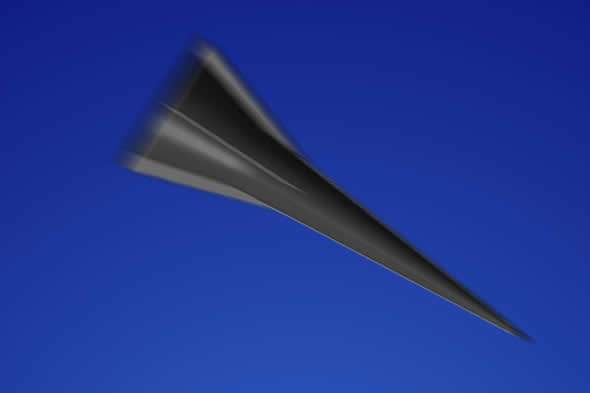
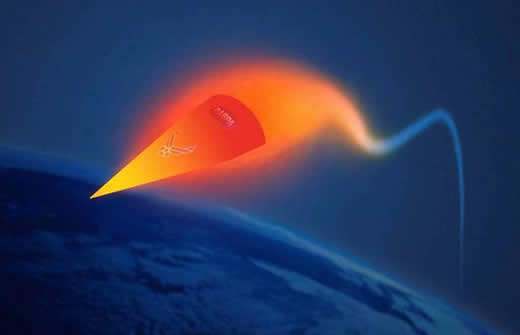
    Successful Test of the U.S. Army Hypersonic Weapon Concept

    Advanced Hypersonic Weapon
    Advanced Hypersonic Weapon

    Today the U.S. Army Space and Missile Defense Command/Army Forces Strategic Command conducted the first test flight of the Advanced Hypersonic Weapon (AHW) concept. Riding on a three-stage Strategic Targets System (STARS) booster stack, the Hypersonic Glide Body (HGB) was accelerated to hypersonic speed of mach 5 (3,728 mp/h), flying a glide trajectory to impact on the Reagan Test Site at Kwajalein Atoll.

    Through the mission the AHW provided telemetry data about flight systems behavior, thermal loads, and other system performance data to verify analytical models, and demonstrating advanced aerodynamic control maturity. The glide vehicle was launched after midnight today, on 1:30 a.m. Hawaii-Aleutian Time (6:30 a.m. EST), from the Pacific Missile Range Facility, Kauai, Hawaii to the Reagan Test Site, U.S. Army Kwajalein Atoll. Shaped as a glide vehicle, the weapon is designed to fly within the earth’s atmosphere at hypersonic speed and long range. This single flight demonstration emphasized aerodynamics; navigation, guidance, and control; and thermal protection technologies.

    The data collected will be used by other DOD programs, to model and develop future hypersonic boost-glide capabilities. The AHW is part of the Pentagon’s US$600 million Conventional Prompt Global Strike (CPGS) program, aimed at providing U.S. military services with conventional attack weapons capable of striking anywhere on earth within less than 60 minutes. As part of the CPGS effort, the Defense Advanced Research Projects Agency conducted two tests of boost-glide flight tests of the Hypersonic Technology Vehicle (HTV-2) in April 2010 and August 2011, results from which were used in planning the AHW flight test. DARPA and the Air Force Space and Missile Systems Center are also developing a parallel hypersonic glide weapon known as the Conventional Strike Missile (CSM), expected to deliver a weaponized demonstration flight in the second quarter of 2012. If proven feasible, CSM could become operational as a land-based missile by 2017. The objective of such an Advanced Hypersonic Weapon is to provide a transformational capability on the order of 6,000-kilometer range with 35 minutes time-of-flight and ten-meter accuracy or better.

    The AHW program is managed and executed by the U.S. Army Space and Missile Defense Command/Army Forces Strategic Command program office in Huntsville, Ala.  The booster system and glide vehicle were developed by Sandia National Laboratories, Albuquerque, N.M. and the thermal protection system by the U.S. Army Aviation and Missile Research Development and Engineering Center, Huntsville, Ala.

    While the smaller AHW is designed to fly at five times the speed of sound (Mach 5), The Falcon HTV-2 hypervelocity vehicle aimed at four times that speed (Mach 20), thus reaching targets 4,000 nautical miles away in 30 minutes. Image: DARPA

    MEADS Air Defense System Progresses Despite Uncertain Future

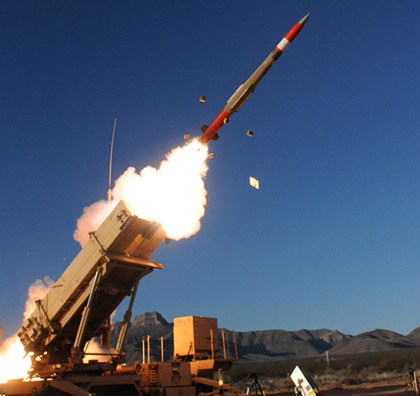
    The first PAC-3 MSE missile launch in Februar, 2010. Photo: Lockheed Martin

    The PAC-3 Missile Segment Enhancement (MSE) performed a successful intercept test today, the first time it was fired from the Medium Extended Air Defense System (MEADS) MEADS lightweight launcher and employed the MEADS system battle manager. The PAC3 MSE interceptor is the certified missile round for the NATO MEADS air defense system. The first test firing of PAC-3 MSE missile was conducted in February 2010.

    The first PAC-3 MSE missile launch in Februar, 2010. Photo: Lockheed Martin

    Two additional intercept flight tests are scheduled to commence in the next two years, including intercepts of an air-breathing threat and a tactical ballistic missile target, preceded by a sensor characterization test. The test series will also demonstrate engage-on-remote, plug-and-fight capabilities, netted/distributed functionality and interoperability through Link 16.

    According to MEADS International President Dave Berganini, the team remains focused on executing the flight tests approved by the National Armaments Directors on time and on budget. “Our goal is to demonstrate the advanced capabilities of MEADS, including its open, network-centric architecture, non-proprietary software and plug-and-fight capabilities.” Berganini added,

    The test scenario simulated a challenging ‘over-the-shoulder’ launch scheme, where the launcher had to fire the missile against a target attacking from behind. It required a unique sideways maneuver, demonstrating a 360-degree capability. The missile executed a planned self-destruct sequence at the end of the mission after successfully engaging the simulated threat. This 360-degree defensive capability, employing the advanced MEADS radars and MSE missile, extends the systems’ defensive footprint by up to eight times the coverage area employing fewer system assets and significantly reduces demand for deployed personnel and equipment, which reduces demand for airlift.

    The test followed a successful simulated engagement against targets representing realistic missile threats, performed earlier this week as part of the ‘plug-and-fight’ testing. This simulation tasked the systems’ battle manager ability to configure flexible combinations of sensors and launchers, organized into single or multiple air and missile defense battle elements employing unique ‘plug-and-fight’ capability. This architecture enables sensors, shooters and Tactical Operations Centers (TOC) to act as nodes on the network, with the battle manager enabling the unit commander to dynamically add or subtract these elements as the situation dictates, without shutting the system down.

    The test series demonstrated successful integration of BMC4I hardware and software by completing essential system functions including attaching and detaching the launcher from the MEADS plug-and-fight network; configuring and initializing the MEADS launcher and simulated sensors; performing track management functions, threat assessment and identification; and transmitting a valid launch command to the launcher. These tests represent an important step toward the integration and test events to be conducted at Pratica di Mare, Italy.

    The tactically mobile lightweight MEADS launcher is easily transportable, and is capable of rapid reload. It carries up to eight Patriot Advanced Capability-3 (PAC-3) Missile Segment Enhancement (MSE) Missiles and achieves launch readiness in minimum time.

    MEADS International, a multinational joint venture headquartered in Orlando, Fla., is the prime contractor for the MEADS system. Major subcontractors and joint venture partners are MBDA in Italy and Germany, and Lockheed Martin in the United States.

    While two of the leading participants in the program, Germany and the U.S. have already withdrawn from acquisition and the next development phase, the National Armaments Directors of Germany, Italy and the United States have approved funding for the continued development, funding two flight intercept tests of the missile, launcher missile and sensor characterization tests, before the MEADS Design and Development contract ends in 2014.

    The MEADS system employ mobile, lightweight launchers, radar and battle management units. Photo: MEADS

    Disagreements on Commercial Terms Reverses UAE’s Choice of Rafale

    The UAE has reversed its choice of Rafale as its future fighter plane and has invited the Eurofighter Typhoon and Boeing F/A-18E/F Super Hornet and F-15SE Silent Eagle to bid on the sale of up to 60 advanced fighter jets to the UAE Air Force. For the past three years Rafale has been considered the favorite option by the UAE. “Thanks to French President Sarkozy, France could not have done more diplomatically or politically to secure the Rafale deal“ Arabian Aerospace quoted the supreme commander of the UAE armed forces and Crown Price of Abu Dhabi, Sheikh Mohammed bin Zayed al Nayhan said, “Regrettably Dassault seems unaware that all the diplomatic and political will in the world cannot overcome uncompetitive and unworkable commercial terms.” Arabian Aerospace

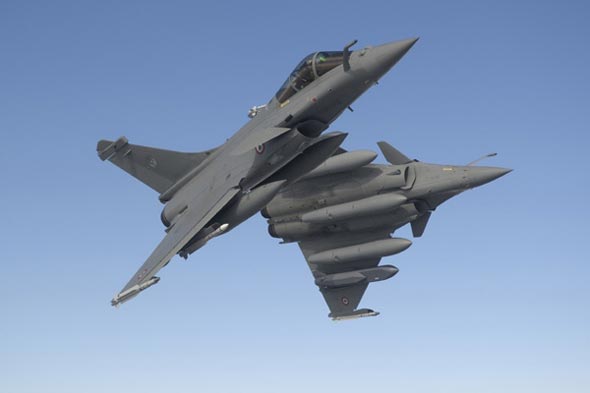
    Rafale fighters in French service.

    Rafale, with its multirole (omnirole) capabilities, was considered a fair balance to the Kingdom’s fleet of 80 Lockheed Martin F-16 Block 60, which was also fielded as a multi-role fighter, and was the first of this type to be equipped with an AESA radar. However, given the ongoing marketing campaigns in Brazil, India, South Korea and japan, where Rafale was marketed aggressively against the Typhoon, Gripen, F-16 and Super Hornet, the UAE felt the price they were requested to pay was just too high. Beside the UAE, Kuwait is also considering the Rafale.

    Moreover, with ‘next generation fighters’ such as the F-35 becoming a potential viable option toward the end of the decade, the UAE may consider a transition phase, opting for buying more F-16 Block 60s, to be traded for F-35s as it becomes available. Alternatively, they could also opt for F-15SE Silent Eagle as an interim solution. At present, the U.S. government hasn’t approved offering the F-35 to the UAE, but this may change after the first planes are supplied to Israel.

    U.S. & Canada Defense Update

    Photo: Boeing

    SDB II Tested With Production Tri-Mode Seeker

    Photo: Rayhteon

    November 16, 2011: The warhead for Raytheon Company’s Small Diameter Bomb II performed at twice what was required during a series of recent tests. This was the first demonstration of an SDB II warhead built on a fully-automated production line. “Using production-ready processes, the SDB II warhead is meeting or exceeding all requirements,” said Tom White, Raytheon’s SDB II program director. The weapon’s tri-mode seeker fuses millimeter-wave (MMW) radar, uncooled imaging infrared (IIR) and semi-active laser sensors on a single gimbal. This seeker enables the weapon to engage fixed or moving targets in day, night or adverse weather from a range of more than 40 nautical miles (74 km).

    Adaptive Optics to Sharpen High Energy Laser Beams

    November 16, 2011: Boeing has received a contract from the U.S. Department of Defense’s High Energy Laser – Joint Technology Office (HEL-JTO) to continue development of a prototype High Power Adaptive Optic system. Adaptive optics, originally developed for astronomical applications, minimize atmospheric distortion thus sharpening the images produced by high power astronomical telescopes. “By minimizing the distortion of a laser beam we can increase the amount of energy on a specific target. This very small, lightweight Adaptive Optic system will enhance both the range and the power of tactical laser weapons,” said Mike Rinn, Boeing Directed Energy Systems vice president and program director. Boeing and its partner team member SAIC recently completed the first phase of the system development. The High Power Adaptive Optic system will employ ultra-high speed processing and advanced sensor technologies coupled to a dedicated beacon illuminator and deformable mirror to deliver the required high-rate atmospheric correction. The team plans to test the system with the High Energy Laser Technology Demonstrator (HEL TD), a cornerstone high-energy laser program for the U.S. Army.

    Lockheed Martin to Maintain PTDS Aerostats 

    PTSD – Photo: Lockheed Martin

    November 15, 2011: The U.S. Army has awarded Lockheed Martin a $383 million contract to maintain, operate and sustain the Persistent Threat Detection Systems (PTDS). The tethered aerostat supports the protection of forward bases in Iraq and Afghanistan, providing real-time situational awareness, threat detection and location at extended range.

    Boeing Receives $1.7B for 7 More US Navy P-8A Poseidon Aircraft


    P-8A production line at the Boeing plant in Seattle. Photo: Boeing

    November 3, 2011: Boeing received a $1.7 billion low-rate initial production (LRIP) award from the U.S. Navy for seven additional P-8A Poseidon maritime surveillance aircraft. LRIP-II is the follow-on to an initial LRIP-I contract awarded in January to provide six Poseidon aircraft. Overall, the Navy plans to purchase 117 Boeing 737-based P-8A anti-submarine warfare, anti-surface warfare, intelligence, surveillance and reconnaissance aircraft to replace its P-3 fleet. As part of the contract, Boeing will provide aircrew and maintenance training for the Navy beginning in 2012, in addition to logistics support, spares, support equipment and tools. The training system will include a full-motion, full-visual Operational Flight Trainer that simulates the flight crew stations, and a Weapons Tactics Trainer for the mission crew stations.

    Russia & CIS Defense Update – November 16, 2011

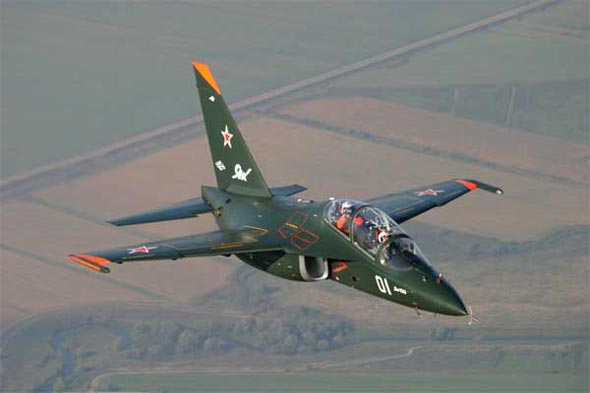
    Yak-130

    Russia to conduct test launch of Bulava missile in November

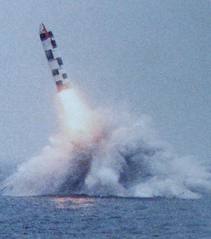
    Bulava missile launched from a submarine

    November 16, 2011: Russia will carry out the last test of the Bulava ballistic missile this year by the end of November, a defense industry source said on Wednesday. The upcoming test will employ a salvo launch of at least two missiles, to be fired from the Yury Dolgoruky, the first Borey class strategic missile submarine.
    The planned test is the 18th in the Bulava program and the fourth this year. The program has recovered this year, after a setback caused by repeated failures in previous years, officially blamed on manufacturing faults, the Russian military has insisted that the Bulava will be the main armament of the next generation of strategic submarines. The missile carries up to 10 multiple independent re-entry vehicles (MIRV) and has a range of over 8,000 kilometers (5,000 miles). The three-stage missile was designed specifically for deployment on Borey-class nuclear submarines. The second Borey class submarine, the Alexander Nevsky, is expected to begin its second stage of sea trials this week. It is scheduled to enter service with the Russian Navy in 2012. Two additional Borey class nuclear submarines, the Vladimir Monomakh and the Svyatitel Nikolai (St. Nicholas) are under construction four additional submarines of this class are to be built by 2015.

    Russia Tests New Version of Iskander SSM

    November 15, 2011: The Russian rocket artillery units will soon be equipped with an improved version of the Iskander guided surface missile designated 9M723 , equipped with terminal image scene matching terminal navigation guidance. According to Russian sources, the missile’s accuracy has been doubled from 10 meter Circular Error Probable (CEP) to five meters. The missile can be armed with different loads, including tactical nuclear warheads. Its estimated maximum range is 280 kilometers. An Iskander launcher can also potentially fire cruise missiles. The first brigade armed with the missiles was formed in October this year. A total of 120 Iskander launchers are to be deployed by Russia by 2020.

    65 Yak-130 Trainers for the Russian Air Force

    Yak-130

    November 14, 2011: The Russian Defense Ministry is expected to sign a contract with Russian aircraft manufacturer Irkut, for the delivery of 65 Yak-130 advanced jet trainers to be produced over the next five years. A jet trainer/light attack, Yak-130 is a subsonic two-seat aircraft developed by the Yakovlev design bureau. The first planes were put into service with the Russian Air Force in 2009. The Yak-130, with a maximum combat load of 3 tons, is able to replicate the characteristics of several 4+ generation fighters.
    In addition to the Russian air force, Yak-130 jet trainers were also ordered by Algeria and Libya. The Libyan contract has been frozen and is currently suspended, following the regime change. The Russian Air Force is also expected to order 28 Sukhoi Su-30SM multirole fighters (a specialized version of the thrust-vectoring Su-30MKI Flanker-H for Russian military) from Irkut in 2012. The first two aircraft of this type are expected to be supplied to the Russian Air Force in 2012.

    The Indian Defense Market

    Market Opportunities, Entry Strategies, Analyses and Forecasts to 2016

    The Indian defense market offers numerous market opportunities to both domestic and foreign manufacturers. As one of the largest defense equipment markets in the world, the country is expected to spend considerably on its military over the forecast period. Due to India’s ageing military systems, the country needs to modernize its equipment, which will lead to an increase in capital expenditure for procuring new defense equipment. The country is also forecast to spend a significant amount of money on homeland security, intelligence and cyber security. This is primarily due to India’s hostile neighbors of China and Pakistan, who have invested heavily in their defense markets, the threat of terrorism and internal security concerns. India is also one of the fastest-growing defense markets globally, with total defense expenditure registering a compound annual growth rate (CAGR) of 12.57% during the review period (2005–2010). Total defense expenditure is expected to achieve a CAGR of 13.08% during the forecast period (2011–2016).

    Increased spending on homeland security

    Government spending on India’s homeland security market has increased significantly as a result of terrorist attacks, the smuggling of arms and explosives, and domestic insurgency. In 2010, the country’s homeland security budget registered an increase of 12.8% over the previous year. Due to the nature of the security threats which the country faces, the main opportunities for growth in homeland security are expected in the aviation, mass transportation, maritime security markets, surveillance technology, global positioning systems, radars and biometric systems.

    India is a large defense importer

    India is one the world’s largest importers of military hardware, and uses imports to fulfill 70% of its defense requirements. While India aims to procure 70% of its defense requirements domestically, the country relies upon imports to procure advanced technology, and, since most of the equipment India is seeking use advanced technology, there will be significant prospects to import defense equipment to India during the forecast period.

    Several foreign companies are entering the Indian defense industry through joint ventures

    Government regulation only allows foreign players a maximum equity holding of 26%. Despite this, the number of foreign companies entering the Indian defense industry through joint ventures has increased over the review period. The main reason for this increase is the awareness that the Indian defense industry is growing strongly, and the expectation that forming a joint venture will bring future benefits as the country looks to procure defense equipment domestically. Furthermore, gaining a domestic market presence will become important in order to take advantage of market opportunities as they emerge in the future.

    About ICD Research

    ICD Research is a full-service market research consultancy providing both online and offline research capabilities. Our areas of expertise include online research, qualitative and quantitative research, custom approaches, and actionable insights. Our capabilities provide a one-stop research and analysis service with full-spectrum consulting, from problem recognition and conducting fieldwork to the delivery of strategic recommendations. We deliver our expertise across a broad range of industry sectors and product lifecycle areas. From product innovation to brand management and CRM, we offer full service research and analysis that drives loyalty and lifetime value.

    Report Information Request

    [box type=”info” style=”rounded”]

    [/box]

    Adcom Unveils Innovative UAV at Dubai Air Show

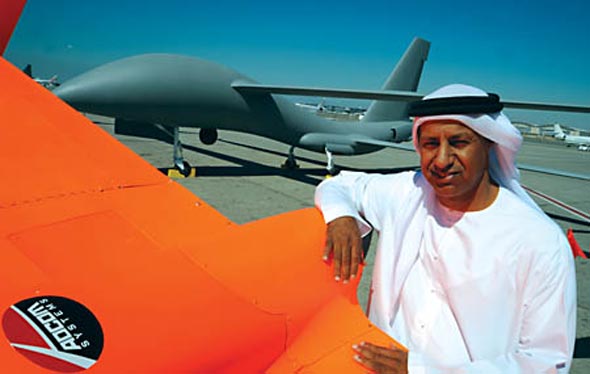
    One of the most noticeable UAVs on the flight line at Dubai is Adcom Systems’ United 40. The Abu Dhabi based company unveiled a full scale model of the United 40 featuring a unique tandem-wing, S-shaped fuselage design. According to Adcom, the concept has been in research and development for about four years, AIN reports.

    The company has began flight trials with scale models of tandem-wing designs two years ago. The final test vehicle was powered by two small tractor engines mounted on the rear wing, and had a span of six meters. Based on these tests Adcom has now built the full-scale aircraft, and it is intended to fly in the next few weeks.

    The tandem wing design offers versatile payload configuration. The incidence of the front wing can be altered to provide pitch control and trim. The wings themselves offer very high lift, resulting in a glide ratio of 1:43. The span is 57 feet 6 inches and the lifting area of the wing is 262 sq ft.

    The design is expected to provide takeoff/landing speed could of 33 mph, with high rate of climb.The vehicle has an expected ceiling of more than 23,000 feet. Maximum takeoff weight is around 2,205 pounds, loaded with up to 211 U.S. gallons of fuel, about third of which is stored in the ‘wet’ wings. Payloads can be carried externally under the fuselage, in an internal bay, or in up to four under-wing pods.

    The aircraft has a hybrid powerplant, comprising a primary 120-hp Rotax 914UL engine driving a pusher propeller in the tail, augmented for takeoff and climbout by an 80-hp electric motor mounted further forward. (AIN Online)


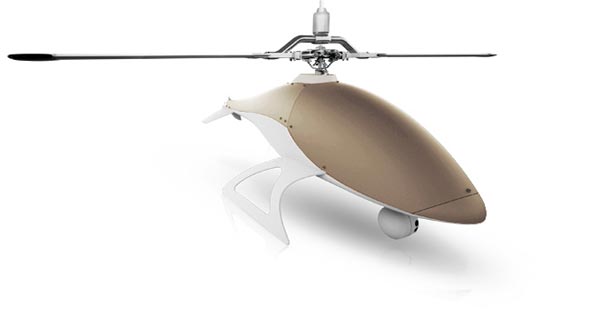
    Unmanned Systems Unveils the Orca Tip-jet UAV at Dubai 2012

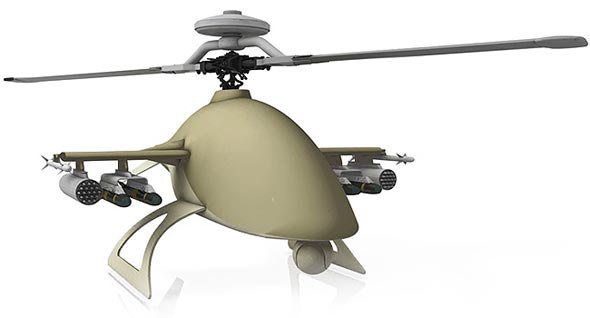
    ORCA-S (STRIKE). Image: Unmanned Systems

    The Swiss company Unmanned Systems is showing a model of its Orca rotary-wing unmanned air vehicle at the Dubai 2011 Airshow. The Orca employs a revolutionary tip-jet propulsion method that not only improves performance in many key areas, but also overcomes many of the operational problems encountered with conventional propulsion methods AIN reports.

    ORCA-I (ISTAR) Image: Unmanned Systems

    Orca’s system employs a turbine engine rated at 215 hp that rotates with the rotor blade. The jet blows air at 700-degrees (C) through flexible ducts to the hollow rotor blades, then blowing through angled tip nozzles to provide thrust. Reactive movement is eliminated so there is no requirement for a tail rotor, and there is no need for clutch, gearbox or transmission, significantly reducing weight.

    According to the Swiss company, this propulsion systems has numerous benefits, not least of which are low running costs and high availability. At  a 772-pound maximum take off weight, the Orca is designed to lift up to 265-pound payload, flying at an altitude of up to an 1,500-foot ceiling. Typical endurance on 33 gallons of fuel is 2.5 hours.

    The company is currently testing the propulsion system on a tower, and expects to conduct the first flight of the Ocra in April next year. Initially the Orca is being developed as an ISR platform, carrying a FLIR Ultra Force 350 EO/IR payload as standard. In Dubai the company highlights the ability of the UAV to operate with great reliability in desert conditions, as its enclosed propulsion system is impervious to dust and sand. Nevertheless, when cold weather operations are concerned, the blowing of hot air through the hollow blades eliminates any icing issues.

    ORCA-S (STRIKE). Image: Unmanned Systems

    Following close behind the ISR version will be a maritime surveillance model. A weaponized version is also being planned, to be ready in 2013. This would be a larger air vehicle with a 2,095- to 2,205-pound mtow, of which about half would be payload. (AIN Online)


    Marine Corps Test Fires APKWS Rockets from UH-1Y Helicopter

    Photo: BAE Systems

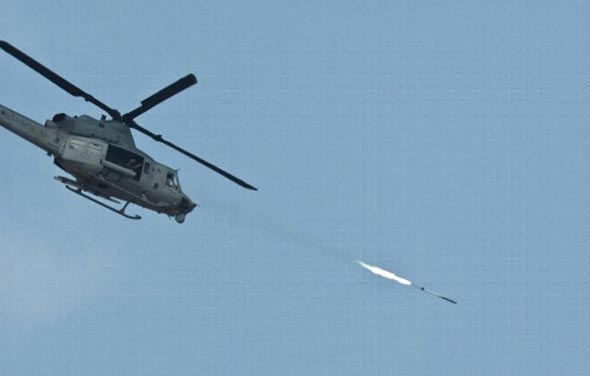
    The U.S. Navy and Marine Corps recently successfully fired the first shots of the Advanced Precision Kill Weapon System II (APKWS) from a UH-1Y helicopter, in preparation for fielding in 2012. The successful shots, which took place at Naval Air Warfare Center Weapons Division in China Lake, California, Sept. 9-13, mark the start of APKWS testing on the UH-1Y, as part of the program’s low-rate initial production phase.

    U.S. Marine Corps UH-1Y fires the APKWS semi active laser guided rocket. Photo: BAE Systems

    Developed by BAE Systems in partnership with the U.S. government, the APKWS semi-active laser guidance section integrates with existing 2.75-inch rocket motors and warheads, giving aviators a highly precise weapon that is effective against soft and lightly armored targets while minimizing collateral damage. BAE Systems designed the system’s laser guidance and control section.

    During the tests, Marine pilots fired a total of six shots from a UH-1Y against stationary targets with ranges varying from 1.5 to 5 kilometers. The initial shots from UH-1Y mark the first time a MK152 warhead has been fired from any aircraft, allowing safer operation aboard ships than the previous M151 warhead.

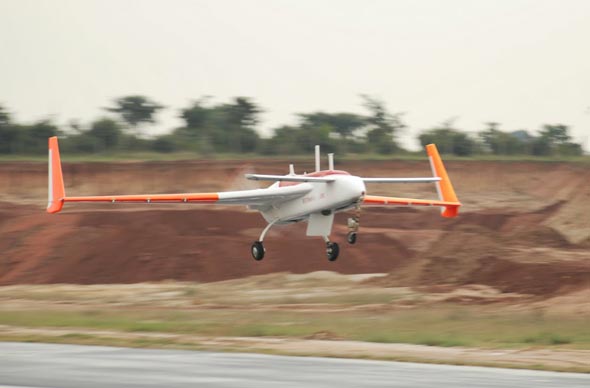
    DRDO’s Rustom-1 UAV makes 5th flight

    Rustom-1, the indigenously designed and developed unmanned air vehicle, made its fifth successful flight on Friday morning, November 11th, 2011. It flew for 25 minutes near Hosur at an altitude of 2,300 ft and at a speed of 100 knots, a DRDO release said.

    The UAV, a “MALE” or medium altitude long endurance type, has been developed by the DRDO with the Aeronautical Development Establishment, Bangalore, as the nodal laboratory. It first flew in 2010. Mr P.S Krishnan, ADE Director, said in total, it was a success as all the modifications worked well and the 661-kg UAV achieved all the parameters. Specifically the objective was to test the modified lift-off scheme, modified altitude and speed hold logics, all of which “worked excellently”.

    When fully developed, it can attain a maximum speed of 150 knots, height of 22,000 ft and fly for 12-15 hours in a range of 250 km.
    The Army is interested in the programme. The release said, “The UAV can do military missions like reconnaissance and surveillance, target acquisition, target designation, communications relay, battle damage assessment and signal intelligence.” (The Hindu)


    U.S. Marine Corps Negotiates Buying Decommissioned British Harriers

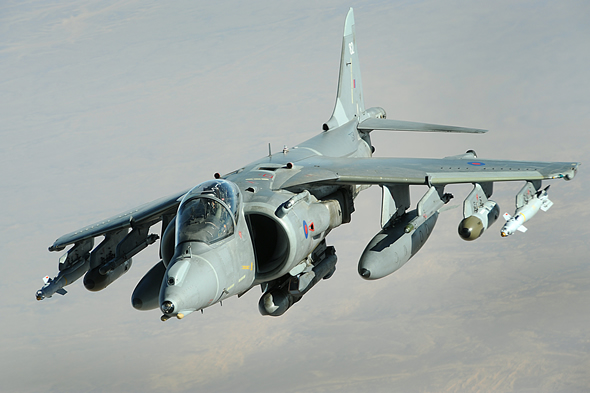
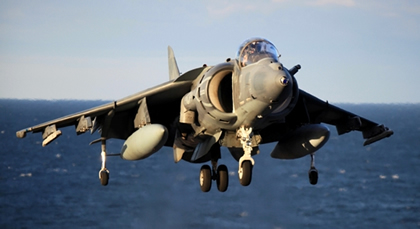
    The British Harrier GR-9A is are similar in configuration to the U.S. Marine Corps’ AV-8B night attack version. Their ground attack capabilities are similar and the two also share a common engine. Photo: UK MOD
    The U.S. Marine corps plans to maintain the AV-8B Harrier in service through the 2020s. Photo: U.S. Marine Corps

    The U.S. Navy and Marine Corps have agreed to buy Britain’s entire decommissioned fleet of 74 Harrier GR-9 and 9A Vertical/Short take off and Landing (V/STOL) fighter jets – a move expected to help the Corps operate Harrier jump jets into the mid-2020s and possibly replace aging two-seat F-18D Hornet strike fighters currently used for night attacks, Navy Times reports. A spokesman for the British Ministry of Defence confirmed the Disposal Services Agency was in talks with the U.S. Navy for the sale of the Harriers, their engines and spare parts. The Corps is planning on phasing out its Harriers by 2025, and the current acquisition could provide an essential stock of spare parts and airframes at bargain price, sustaining the Corps combat air fleet as the service moves through the uncertainty of the current fiscal years.

    The British Harrier GR-9A is are similar in configuration to the U.S. Marine Corps’ AV-8B night attack version. Their ground attack capabilities are similar and the two also share a common engine. Photo: UK MOD

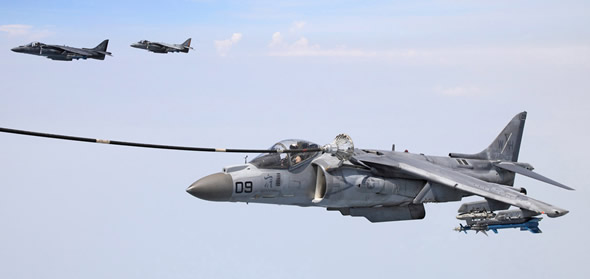
    The Marine Corps currently fly the AV-8B, a U.S. variant of the British V/STOL design built by McDonnell Douglas and British Aerospace. Britain retired its entire Harrier GR-9, 9A and Sea Harrier fleet in 2010 under the controversial Strategic Defense & Security Review (SDSR), that mandated deep cuts through all three services. The retired Harriers are stored at Royal Air Force Base Cottesmore, England where they have been maintained in airworthy status. The U.S. will get the entire Harrier’s spares stocks for $50 million. The cost of the aircraft is still being negotiated.

    According to British Defence Procurement Minister Peter Luff, the Marine Corps use the ex. British Harriers as a source of spares to support the US Marine Corps Harrier AV-8B fleet of aircraft. As such, they will ‘harvest’ the Harriers for their spare parts for the next ten years. The total value of the transfer is $180 million (£110 million), Luff confirmed. A total of 70 Harriers were upgraded in the past 10 years but only 40 were still serviceable to fly when the fleet was axed last year. The latest upgraded model, GR 9A is similar in configuration to the Marines’ AV-8B night attack version. Although the British variants lack the radar carried with the AV-8B, their ground attack capabilities are similar. Furthermore, the 9A shares a common engine with the AV-8B – the Rolls-Royce F402-RR-408.

    2nd Marine Aircraft Wing AV-8Bs refueling on 'Mailed Fist I-11' training mission. Photo: Scott Carlton Youmans, USMC

    Nexter Systems and Renault Trucks Defense Team to Pursue French Army VBMR & International Prospects

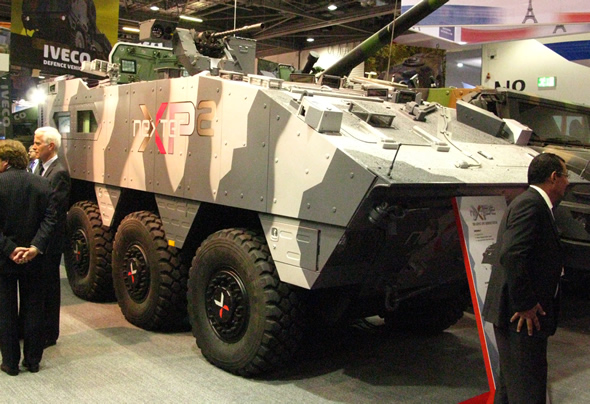
    Nexter XP-2 armored vehicle technology demonstrator offers spacious cabin accommodating nine fully equipped troops, and their equipment for two day mission. The vehicle offers high level blast protection. Photo: Tamir Eshel, Defense Update

    Nexter Systems and Renault Trucks Defense have teamed to respond to the French MOD request for proposal (RFP) for the VBMR programme, designed to provide the French Army with a modern, multirole, 20 ton range 6×6 wheeled armored vehicle.

    Nexter XP-2 armored vehicle technology demonstrator offers spacious cabin accommodating nine fully equipped troops, and their equipment for two day mission. The vehicle offers high level blast protection. Photo: Tamir Eshel, Defense Update
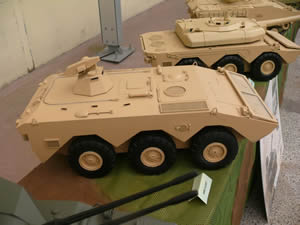
    A model of an armored vehicle designed by Nexter for the XP2 technology demonstrator program. Photo: Noam Eshel, Defense Update

    The teaming extends the cooperation of the two companies on both domestic and international programs. The joint announcement stated the two companies agreed on the leadership of the domestic program but did not state who will be the program lead for VBMR.

    Both companies were awarded R&D contracts and feasibility studies in 2010 to deliver a platform demonstrators with full mobility, as well as conceptual armor protection suits and are expected to deliver the technology demonstrators in the next two years.

    The two companies developed technology demonstrators for quite a while. Nexter explored the XP-2 technology demonstrator and Renault was evaluating its own 6×6 design, called AMC, along with a potential VAB upgrade.

    France intends to spend around one billion euros to deploy about 1,000 VBMR vehicles beginning 2016 to replace about 4,000 véhicule avant blindé (VAB), currently operational, providing the backbone of the French mechanized forces. The two companies were also competing separately on the EBRC armored armed reconnaissance vehicle, in which Panhard is also competing as a third player.

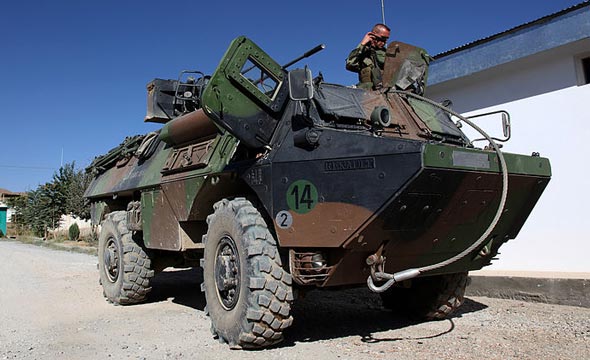
    Renault Defense Trucks VAB armored personnel carrier in service with the French Army in Afghanistan

    This teaming agreement means the two companies will be able to secure parts of the program to sustain their production lines after 2014, as the current production of VBCI comes to an end and the retirement of Renault’s VAB is expected to begin.

    The teaming marks an important milestone in the French armored vehicle market. With the PVP procurement coming to an end, the third French armored vehicle manufacturer Panhard will now be dependent exclusively on winning the EBRC to survive.

    GD To Develop an Underwater Unmanned Vehicle to Support LCS Mine Hunting Capability

    U.S. Navy Sea Systems Command has awards General Dynamics Advanced Informational Systems (GD-AIS) $87 million contract to develop an Unmanned Underwater Mine Countermeasure Vehicle.

    The Surface Mine Countermeasure Unmanned Underwater Vehicle (SMCM UUV) system will initially be a part of the Littoral Combat Ship (LCS) Mine Warfare mission package.

    Under this contract the company will deliver one Engineering Development Model (EDM). The Navy has options low-rate initial production systems under this budget.

    The SMCM UUV will enable the ship’s crew to detect and identify mines in high-clutter underwater environments in a single pass, including mines that are suspended in the ocean, resting on the sea floor or buried. Additionally, it will gather environmental data that can provide intelligence support for other mine warfare systems.

    The system will be based on an open systems architecture approach to ensure flexible integration with the LCS mission package architecture, as well as other ship types. The Navy’s evolving and dynamic mission requirements call for a design that allows “plug and play” integration for ship’s systems and mission modules. These interchangeable packages of specialized equipment allow the Navy to quickly reconfigure a ship for changing mission requirements.

    The General Dynamics Advanced Information Systems team includes Bluefin Robotics, Quincy, Mass.; Ultra Electronics Ocean Systems, Braintree, Mass.; and Oceaneering International, Houston, TX.

    The program office for this contract is the Unmanned Maritime Systems Program Office (PMS 406), one of six program offices within the Navy’s Program Executive Office, Littoral Combat Ship (PEO LCS).

    Skunk Works and XTEND Simplify Multi-Drone Command

    0
    Lockheed Martin Skunk Works® and XTEND have achieved a major milestone in JADC2 by integrating the XOS operating system with the MDCX™ autonomy platform. This technical breakthrough enables a single operator to simultaneously command multiple drone classes, eliminating the friction of mission handoffs. From "marsupial" drone deployments to operating in GPS-denied environments, explore how this collaboration is abbreviating the data-to-decision timeline and redefining autonomous mission execution.

    From Ukraine to Taiwan: The Global Race to Dominate the New Defense Tech Frontier

    0
    As traditional defense primes face mounting competition from agile “neoprimes” such as Anduril, Palantir and Helsing, the balance of innovation is shifting toward software-defined warfare and scalable, dual-use technologies, while global industry consolidation—marked by Boeing’s integration of Spirit AeroSystems and other strategic mergers—signals an intensified race to secure control over the defense technology value chain. Our Defense-Tech weekly report highlights these trends.

    Europe’s “Drone Wall”

    0
    In early October 2025, a coordinated wave of unmanned aerial system (UAS) incursions—widely attributed to Russia—targeted critical infrastructure across at least ten European nations. The unprecedented campaign exposed the fragility of Europe’s air defenses...

    Weekly Defense Update & Global Security Assessment

    0
    Executive Summary The past week (September 18-25, 2025) represents an inflection point where strategic defense concepts have transitioned from doctrine to tangible reality. An analysis of global events reveals four primary, interconnected trends shaping an...

    U.S. Air and Space Forces Push Next-Gen Programs at the AS&C 2025 Conference and...

    0
    At the 2025 Air, Space & Cyber Conference, U.S. Air Force and Space Force leaders unveiled major updates on next-generation fighters, bombers, unmanned systems, and space initiatives, highlighting both rapid innovation and critical readiness challenges as the services race to outpace global competitors. A short version is available here, with a more detailed version for subscribers.

    TADTE 2025: Reflecting Taiwan’s Strategic Themes

    0
    The Taipei Aerospace & Defense Technology Exhibition (TADTE) 2025 crystallized around four dominant strategic themes that collectively illustrate Taiwan's comprehensive approach to defense modernization amid escalating regional tensions. Based on a detailed report by Pleronix (available upon request). Includes a Podcast discussion on TADTE 2025's highlighting Taiwan's four strategic themes beyond the post's coverage.

    Iron Beam 450 Completes Testing, Soon to Join With Operational Air Defense Units

    0
    Israel’s Iron Beam 450 high-power laser system has completed final testing, marking a major leap in air defense. Developed by Rafael, it offers precise, cost-effective interception of rockets, UAVs, and mortars, and is set for IDF deployment by 2025.