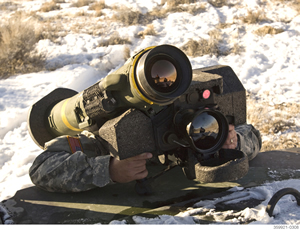
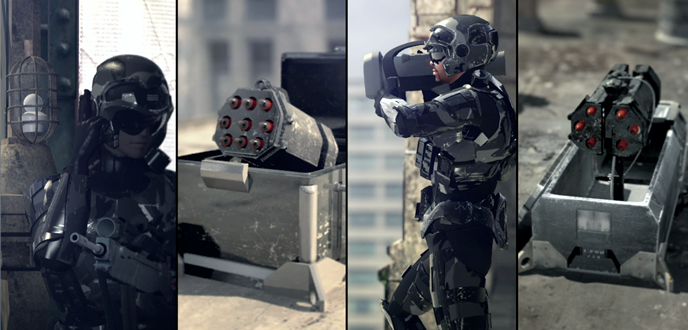
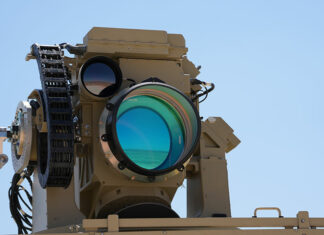
The Javelin missile and the weapon's target acquisition unit use similar IR sensors to acuire the target and guide the missile on the final attack. Photo: Raytheon
New Guided Missiles, Programmable Munitions Enhancing The Infantry Precision Fire Effects
The ‘Smart Weapon’ approach is a more complex, expensive solution that could offer much higher precision – at the disadvantage of weight, complexity and cost. Lightweight weapons employ ‘fire and forget’ systems, enabling the missile to home-in on a designated target. Missiles are packing ‘tandem’ warheads for direct attack or Explosive Formed Projectile warheads for ‘top attack’, both capable of defeating even the world’s heaviest, most protected tanks. These weapons are represented by the Spike MR or LR and Javelin – both represent this weapon class, using ‘fire and forget’ electro-optical guidance. By the early 2000s Spike gained a head start over Javelin, selected by a number of European armies while Javelin was focused mainly on the U.S. military. However, in recent years, Javelin is gaining wider reach worldwide. The two weapons are currently competing head to head in two major markets – France and India both plan large scale acquisitions of thousand of missiles to equip their infantry units. Based on lessons learned and user requirements, both weapons are being enhanced to become effective against wider target sets.
The Javelin missile and the weapon's target acquisition unit use similar IR sensors to acuire the target and guide the missile on the final attack. Photo: Raytheon
For the future, such weapons are promising a combination of ‘fire and forget’ and ‘man in the loop’ capability, features currently supported only by the LR member of the Spike family, offering optimal tactics for different operational situations.
For the smaller weapons electro-optical (EO) guidance has sofar been considered a costly option reserved only for special missions. But state-of-the-art commercial off the shelf technology opens new capabilities for EO seekers. Dual-mode guidance utilizing imaging sensor as laser seekers has the potential to revolutionize laser guidance, by introducing low cost, light-weight yet highly accurate means for target acquisition and weapon guidance. Current laser designators employ pulse lasers to generate high-power laser beams. A new type of laser designator is employing low-power laser diodes to generate Continuous Wave (CW) beams, operating at relatively low power levels and available for much lower cost.
Man portable, light weight missile systems were used extensively in recent years. U.S. Javelin missiles are regularly used in Afghanistan by U.S, and British forces, side by side with the Israeli Spike, used by the Dutch, Italian and Spanish among others. It also provides a valuable weapon in Iraq, used as a short and medium range precision guided weapon against buildings, vehicles or even suspected sniper positions. The Spike also saw an extensive use by Israel Defense Forces (IDF) infantry, during the recent conflicts in Lebanon and Gaza. On the other side, Hezbollah also fired significant numbers of Russian Metis M medium range guided missiles, among other, heavier guided missiles, fired against the Israeli armor, primarily Merkava Mk 3 and Mk4 tanks, during the 2nd Lebanon war in 2006.
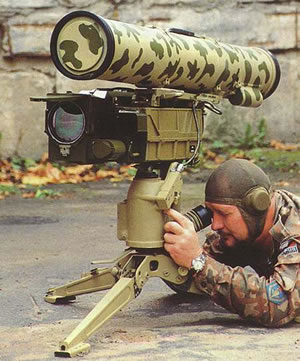
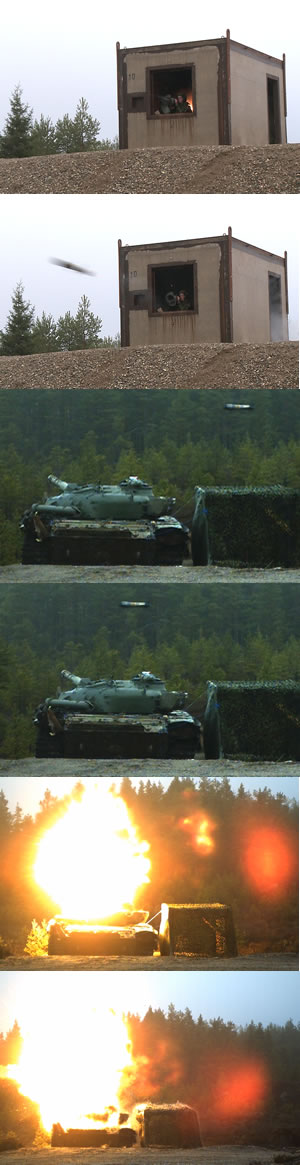
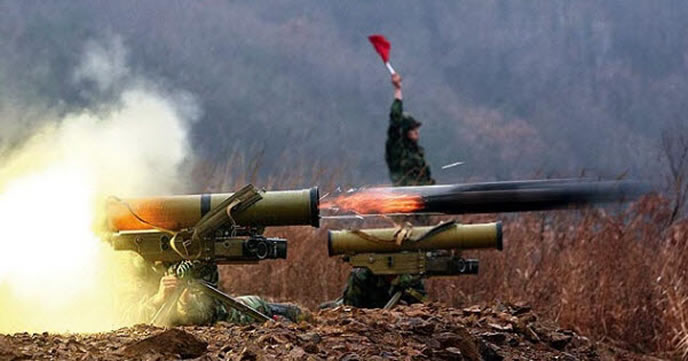
Below: This Metis M guided missile is in operation with the South Korean army. Above, an AT-15 Kornet. The two missiles represent the latest classes of multi-purpose anti-tank guided missiles from Russia – the lightweight Metis designed for light infantry operations and the heavier Kornet optimized mechanized infantry, as well as dismounted units,operated mostly on missions. In today’s hybrid warfare, the roles of the two missiles have changed, with Kornet used primarily in guerilla ambushes, for its capability to engage the enemy at long distance, beyond its capability to identify the source of fire or counter-strike effectively.
The future multi-purpose guided missiles are shaped at MBDA labs under the company’s ‘Concept Vision’ program. The system comprises two lightweight launchers and two guided missiles designed for long and short range attack. The weapons, dubbed ‘Sniper’ and Enforcer’ will offer ‘tunable’ firepower, from non-lethal engagement to high precision, high explosive attack. Photos: MBDA
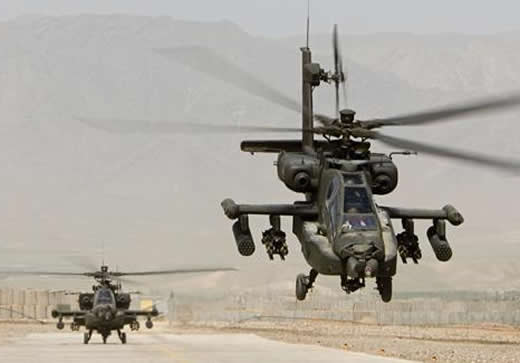
The Pentagon is asking the U.S. to approve a possible sale of 22 Apache Block III Attack Helicopters to India, prior to a possible selection of the Boeing proposal by New Delhi.
Our Sponsor: Rada
India is interested in buying 22 AH-64D Block III APACHE Helicopters from the USA. The Defense Security Cooperation Agency has notified Congress on a possible Foreign Military Sale of these helicopters, as part of a package worth about US$1.4 billion. The Indians are evaluating the Block III Apache among several other options for the Air Forces’ next generation attack helicopter. The Indians are also considering the Russian Mil-28N Havoc as an alternative replacement for the Indian Air Force’s Mi-25s. The domestically developed Light Combat Helicopter (LCH) is not an alternative for this program. The Eurocopter Tiger and AgustaWestland A129 Mangusta have been eliminated from the competition at an earlier stage.
The Pentagon is asking the U.S. to approve a possible sale of 22 Apache Block III Attack Helicopters to India, prior to a possible selection of the Boeing proposal by New Delhi.
Boeing has responded to an Indian Air Force Request for Proposal offering the Apache Block III. The Indian Air Force has already conducted field trials for these helicopters in July 2010. The testing has taken place in the Thar Desert in the northwest and will also happen near the Himalayan town of Ladakh in Indian-controlled Kashmir. Those sites represent the extremes the air force could find itself operating in. The Russian helicopter has not yet been cleared for testing in India. While India has not decided about the type of helicopters they will buy, Boeing and the Pentagon are requesting Congress approval in advance of a potential sale to prevent export limitation issues.
The package will include 12 AN/APG-78 Longbow Fire Control Radars, 12 AN/APR-48A Radar Frequency Interferometers, 812 AGM-114L-3 HELLFIRE LONGBOW missiles, 542 AGM-114R-3 HELLFIRE II missiles, 245 STINGER Block I-92H missiles, and 23 Modernized Target Acquisition Designation Sight/Pilot Night Vision Sensors, rockets.
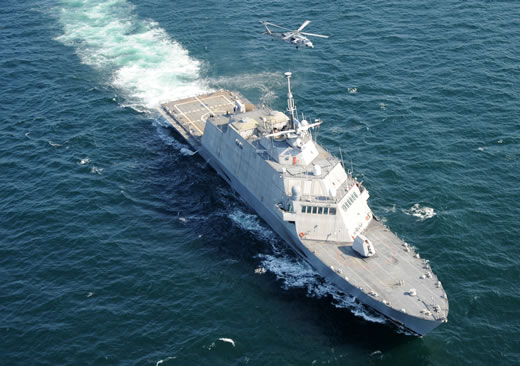
Lockheed Martin received funding for one additional Freedom class LCS and advanced payment for long lead materials for 10 additional vessels. Photo: US Navy
The U.S. Navy has awarded two fixed-price incentive contracts worth over US$460 million each to Lockheed Martin Corp. and Austal USA, for the design and construction of a total of 20 littoral combat ships split equally between the two companies in the next five years. The new contracts give each shipbuilding team one ship to build now, with another in 2011. In 2012, 2013, 2014 and 2015 each team will be funded to build two ships per year. Two vessels are already nearing completion.
Lockheed Martin received funding for one additional Freedom class LCS and advanced payment for long lead materials for 10 vessels. Photo: US Navy
The LCS 3 was launched earlier in December and the LCS 4 is also in construction, aiming at mid 2011 launch. “The awards represent a unique and valuable opportunity to lock in the benefits of competition and provide needed ships to our fleet in a timely and extraordinarily cost effective manner,” said Secretary of the Navy Ray Mabus. The average cost of both variants including government-furnished equipment and margin for potential cost growth across the five year period is $440 million per ship. The pricing for these ships falls well below the escalated average Congressional cost cap of $538 million.
Lockheed Martin received $436,852,639 in fiscal 2010 budget for the Freedom Class LCS while Austal USA received $432,069,883 for Independent Class vessels. Both contracts also include line items for nine additional ships, subject to Congressional appropriation in the Littoral Combat Ship (LCS) Program appropriations in each of the next four years. When all 10 ships of each block buy are awarded, the value of the ship construction portion of the two contracts would be over $3.6 billion for Lockheed Martin Corp., and over $3.5 billion for Austal USA.
Austal USA also received funding close to $490 million, for one Independence class LCS vessel plus funding for long lead materials for a total of 10 ships. Photo: US Navy
The Navy plans to field 55 LCS vessels to fill critical, urgent warfighting requirements gaps that exist today, primarily to establish and maintain dominance in the littorals and sea lanes of communication choke points around the world. Chief of Naval Operations Adm. Gary Roughead praised the Navy’s plan to add both ship designs to the fleet: “The LCS is uniquely designed to win against 21st century threats in coastal waters posed by increasingly capable submarines, mines and swarming small craft. Both designs provide the capabilities our Navy needs, and each offers unique features that will provide fleet commanders with a high level of flexibility in employing these ships.”
The first LCS, USS Freedom successfully completed its first deployment earlier this year and also participated in the world’s largest maritime exercise, the Rim of the Pacific Exercise, known as RIMPAC. LCS 3, the Navy’s future USS Fort Worth and Lockheed Martin’s second LCS, is more than 80 percent complete and was recently christened and launched. The program remains on schedule and budget for delivery to the Navy in 2012. In constructing LCS 3, the team incorporated lessons learned from USS Freedom to reduce costs and improve efficiency.
The Navy considers the restructured program to be a unique opportunity to maximize the buying power on the LCS Program by leveraging the highly effective competition between the bidders. “Each contractor’s 10-ship bids reflect mature designs, investments made to improve performance, stable production, and continuous labor learning at their respective shipyards.” the Navy’s communique explains.
The award followed limited competition between the two teams. The Navy has added one year to the current procurement phase, but required both shipbuilders to deliver a technical data package as part of the dual award, allowing the government to seek alternatives to maximize opportunities for future competition. The Navy claims the new process will save more than $2 billion over the program’s life, enables the Navy to increase production to meet operational requirements sooner than originally planned.
“This dual award strategy exemplifies the Navy’s compliance with Secretary Gates’ and Under Secretary Carter’s direction to improve the buying power of the Defense Department.” said Assistant Secretary of the Navy for Research, Development and Acquisition Sean Stackley. “Both teams have shown cost control on their second ships, and we look forward to the delivery of these capable fleet assets in the future.”
The new contract Increases Austal’s total order book to AUD$1.3 billion. Austal announced it will immediately commence preparation work including a US$140 million facility expansion and workforce development which will take approximately 12 months to complete. Construction of the first LCS vessel will commence in early 2012 and is scheduled for delivery in 2015. The Independence class aluminium warships will be built at Austal’s U.S.
shipyard in Mobile, Alabama, and will more than double Austal’s US workforce to around 3,800 employees.
Lockheed Martin is building the Freedom Class vessels at the Marinette Marine Corporation, a Fincantieri company located in Marinette, Wis., The team also includes naval architect Gibbs & Cox. Fincantieri-Cantieri Navali Italiani SpA is one of the world’s most prominent and diversified shipbuilding groups. World leader in the construction of cruise ships, reference operator in the large ferry sector, the company also boasts a considerable order book in the military sector. In the United States, it operates through its subsidiary Fincantieri Marine Group (FMG), which builds ships for commercial and government customers, including the U.S. Navy and Coast Guard, at four facilities (Marinette Marine, Bay Shipbuilding, Cleveland Ship Repair, ACE Marine), in the Great Lakes region.
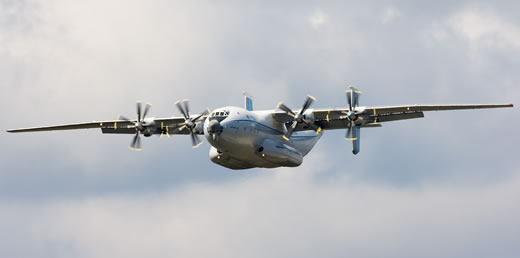
Antonov An-22 is the largest turboprop powered transport aircraft currently flying. The Russian Air Force grounded all operations of the An-22 and Tu-95M bombers, both types are powered by the same engine.
The Russian Air Force command has grounded the entire fleet of its Antonov An-22 transports and Tupolev Tu-95MS bombers after an An-22 crash yesterday killing all twelve crew on board. The grounding of both types of aircraft suggests the Air Force suspects the cause of the problem was in the engine – both aircraft types share the Kuznetsov NK-12 turboprop. The An-22 remains the largest turboprop powered aircraft in the world. Around 45 remain in service with the Russian Air Force and most are over 40 years old.
Antonov An-22 is the largest turboprop powered transport aircraft currently flying. The Russian Air Force grounded all operations of the An-22 and Tu-95M bombers, both types are powered by the same engine.
The An-22 that crashed yesterday departed from Voronezh airport at 21.00 for the Migalovo airport in Tver region. It lost contact few minutes after departure. The remains of the aircraft were found near the village of Krasny Oktyabr in Tula region, about 100 km from Tula.
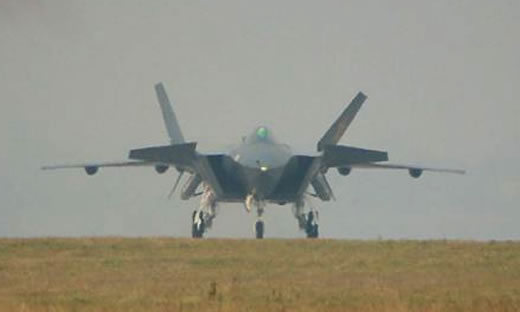
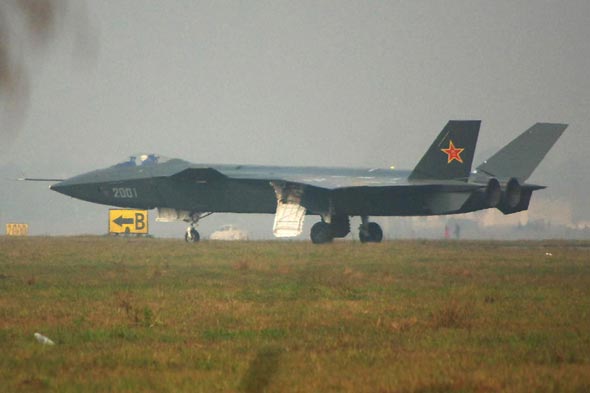
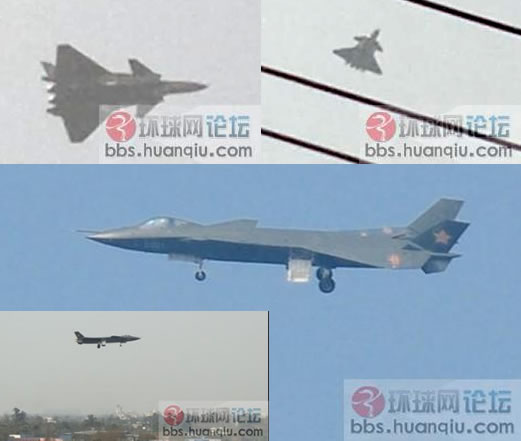
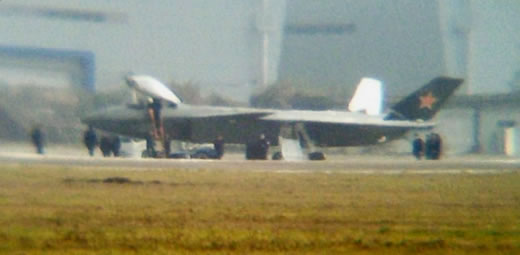
Reports coming form internet sites in China have published images of a large, stealth-like aircraft that, if confirmed, could be the first hard evidence of China’s new 5th Genaration multirole aircraft. The images show the parked aircraft being inspected, and taxiing along a taxiway.
Analysts in the West accepted the images with some doubts, due to the Chinese’ in displaying imaginary ‘facts’ but the photos released today seem genuine. recent reports coming from China mention Chengdu has recently completed two J-20 technology demonstrator aircraft sofar, one model will be used for the test flights and another one will be used for ground testing.
The development of such program was known for some time but has never officially attributed to a specific type or maker. In 2009 deputy commander of the People’s Liberation Army Air Force He Weirong stated in a TV interview that China had multiple such programs underway and that an as-yet-undesignated fifth-generation fighter developed jointly by Chengdu Aircraft Corporation and Shenyang Aircraft Corporation would be in service by 2017-2019. According to U.S. intelligence assessments Chinese 5th generation aircraft could become operational by the turn of the decade.
“The impression here is of a big, long aircraft, 70+ feet from nose to tail, which would make sense for a number of reasons. Rob Hewson at Jane’s has reported that Russia has supplied 32,000-pound thrust 117S engines for the J-20, which would be adequate for an aircraft in the 80,000 pound class – with perhaps lower supercruise performance and agility than an F-22, but with larger weapon bays and more fuel” writes aerospace analyst Bill Sweetman, editor of Aviation Week/DTI. Chinese sources have claimed that production aircraft will be powered by two 13,200kg/WS-10 class high thrust turbofan engines, coupled with Thrust Vector Controlled (TVC) nozzles both made in China. Russian assistance has been speculated with the supply of 14,000kg class Salyut 99M2 turbofan engines powering the prototypes. The Chinese could also get Russian assistance in radar cross section simulation for the new stealth design.
Germany’s Wegmann Group has acquired Siemens AG’s 49-percent stake in armored vehicle manufacturer Krauss-Maffei Wegmann GmbH, establishing Wegmann as the sole shareholder of KMW once the acquisition is approved by the German authorities.
For Siemens, active mostly in the industrial infrastructure and utilities sector, defense manufacturing was not a strategic business. “This step gives us, our products and most importantly our employees a clear and positive outlook of future sustainable success.” Commented Frank Haun, chief executive officer of KMW.
Among ongoing programs at KMW are the FENNEK family of reconnaissance vehicles, the DINGO 2 armored mine protected vehicle, as well as heavy protected transport vehicles, co-production of the PUMA infantry fighting vehicle BOXER armored personnel carrier, both produced under cooperation with other companies. The company is also responsible for maintenance and modernization of the LEOPARD tank, and Panzerhaubitze 2000 tracked self-propelled howitzer, in service with the German Army as well as international military forces
The U.S. Army is establishing an integrated intelligence fusion and analysis capability in Afghanistan, based on Palantir Technologies, Inc. information analysis systems. The work will be completed in 16 months. Palantier provides powerful tools for analysts to fuse unstructured and structured data items from different sources, into enhanced knowledge bases. Among the tools that are likely to be implemented in the new fusion center are described in a video created by the company.
Palantir Technologies is establishing a new intel fusion capability supporting the U.S. Army in Afghanistan. As this video shows, the system supports not only the intelligence analysts but can also be extended via portable mobile Apps on hand held devices, to support the warfighter and commanders on patrols and in the field. The system can integrate with Blue Force Tracking (BFT), and augmented reality to improve situational awareness by providing access to intelligence and the unit’s aggregated information (TIGR) via touch screen.
The system presented in the video below supports information flow from the bottom up, ensuring that the critical knowledge gained on the ground reaches all who need to know. It combines data on insurgent groups and local populations into one common operating picture, enriching traditional intelligence with the insights of ‘human terrain’ knowledge on local leaders, UN and non governmental organization (NGO) operations in the area, provincial reconstruction teams, and civil affairs operations, providing a framework for collaboration in remote and austere environments.
The system supports powerful fusion of intelligence and operations when the ‘Palantir Mobile’ is combined with analysts using Palantir at a tactical operations center. An operations center analyst using Palantir is able to conduct complex analyses in real-time utilizing information coming directly from the Palantir Mobile user in the field in the form of text or geo-tagged images.
Another video presentation developed by Palantir demonstrates how information obtain from open sources could assist military commanders deployed on missions in Afghanistan. The integration of such systems with military information from operations, intelligence, and the unit’s own collection of patrol reports, check-posts, and other security and civil affairs operations can provide an extremely valuable resource as well as effective means for maintaining information continuity by different personnel, analysts, commanders and units.
BAE Systems is strengthening its cyber and intelligence services activities by acquiring the Danish cyber intelligence company ETI A/S. BAE will pay DKK 1.2 billion (approximately US$211 million) for the acquisition.
ETI provides diagnostic and data analysis products supporting Law Enforcement Agencies in data-crime investigations. According to BAE Systems’ Chief Executive BAE Systems Ian King, “The combination of Detica and ETI will create a strong competitor well positioned to offer customers an extensive range of cyber and intelligence services. BAE has acquired Britain’s intelligence systems specialist Detica in 2008 and has recently announced agreements to acquire L1 Identity Solutions, Inc’s Intelligence Services Group in the US and stratsec.net in Australia. ETI generated sales of DKK 347 million ($61 million) in the year ending June 2010. The company has 260 employees. With Headquarters in Denmark the company has operations in the UK, US, and the Asia and the Middle East.
NASA's Shuttle Carrier Aircraft, a modified Boeing 747, carries Boeing's Phantom Ray during a test flight on Dec. 13 in St. Louis. Photo: NASA
The Phantom Ray unmanned combat air vehicle (UCAV) is a fighter-sized technology demonstrator designed as a flying test bed for advanced technologies. Under the Phantom Ray technology demonstration program the unmanned aircraft will conduct 10 flights over a period of approximately six months, supporting missions that may include intelligence, surveillance and reconnaissance, suppression of enemy air defenses, electronic attack, hunter/killer, and autonomous aerial refueling.
NASA's Shuttle Carrier Aircraft, a modified Boeing 747, carries Boeing's Phantom Ray during a test flight on Dec. 13 in St. Louis. Photo: NASA
Following taxi tests at St. Louis the Phantom Ray unmanned aircraft was packed on the Boeing 747 shuttle plane that regularly carries the Space Shuttle, to fly the 1,800 mile journey to Edwards Air Force Base in California, where is is scheduled to go through 10 flight tests over the next six months.
The Phantom Ray demonstration tests are scheduled to complete before the beginning of carrier suitability tests of a parallel Navy program – the X-47B, developed by Northrop Grumman.
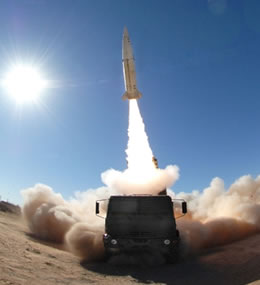
ATACMS missile fired from HIMARS rocket launcher. Such vehicles are currently operational with Bahrain and reportedly have been delivered to the UAE. Photo: Lockheed Martin
On December 20, 2010 the Pentagon awarded Lockheed Martin an order worth over $916 million for the delivery of 226 ‘tactical missiles’ and 24 launcher modification kits, plus logistical support to be delivered under Foreign Military Sale (FMS) to the UAE and Taiwan. Defense Update was informed the acquisition relates to PAC-3 air defense missile systems.
Both countries embarked in 2008 on large scale acquisition of PAC-3 missile systems, investing over US$3 billion each in an air and missile defense system bolstering their preparedness against ballistic missiles threats. The UAE is seeking defense form Iranian missile attacks while Taiwan is bolstering its defenses against potential attack from mainland China.
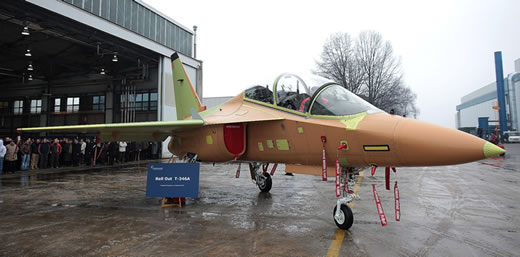
The T-346 that rolled out today is considered among the market leading advanced trainers, designed for training fighter pilots destined to fly the latest 4th and 5th generation fighters. Photo: Alenia Aermacchi
The first two M-346 advanced trainers rolled out today from the Alenia Aermacchi assembly line at the company’s factory at Venegono Superiore near Varese, in North Western Italy. The two are leading planes from the first batch of six aircraft on order for the Italian Air Force. The facility operates a highly automated production line currently processing four additional aircraft for the Italian Air Force aircraft and 12 trainers ordered by the Republic of Singapore Air Force.
The T-346 that rolled out today is considered among the market leading advanced trainers, designed for training fighter pilots destined to fly the latest 4th and 5th generation fighters. Photo: Alenia AermacchiFrom left to right – Mr. Giorgio Brazzelli, Alenia Aeronautica and Alenia Aermacchi Chairmain; Mr. Carmelo Cosentino, Alenia Aermacchi Vice President; Mr. Massimo Lucchesini, Alenia Aermacchi CEO and Alenia Aeronautica CO-General Manager Italian Air Force Brigadier General Enzo Vecciarelli.
After inspection and testing the aircraft are scheduled to be delivered to the Experimental Flying Unit at Pratica di Mare Air Force Base, near Rome, where they will undergo operational evaluation testing. During 2011 the Italian Air Force will receive the other four aircraft, becoming the world’s first air force equipped with the new advanced trainer.
The T-346A, (as the Italian Air Force designate the M-346) is considered among the market leading advanced trainers, designed for training fighter pilots destined to fly the latest 4th and 5th generation fighters.
The UAE has already selected the aircraft for the establishment of a large scale training center in the emirate. The Italian trainer has also been selected as one of two finalists of the next Israel Air Force trainer, and is also bidding for a similar programs in Poland. It is actively promoted by Italy and Germany as the successor of the Alpha-Jet, after the retirement of the Franco-German trainer. M-346 is also being proposed as a new trainer for the U.S. Air Force.
Raytheon Company (NYSE: RTN) announced its plans to acquire Applied Signal Technology, Inc. (Nasdaq: APSG) for about $490 million. Applied Signal technology is a specialist in signals intelligence (SIGINT) communications intelligence and electronic warfare (EW) systems. The agreement has been approved by the boards of directors of both companies. Pending the successful completion of the tender offer, the transaction is expected to close in the first quarter of 2011 subject to customary closing conditions and regulatory approvals. Under the terms of the agreement, Raytheon will commence a tender offer to purchase all of the outstanding shares of Applied Signal Technology, Inc. common stock at a price of $38.00 per share in cash for an aggregate purchase price of approximately $490 million, net of cash acquired.
Raytheon plans to integrate the company into its Space and Airborne Systems (SAS) business. Nearly 90 percent of Applied Signal’s sales are to classified customers. The company’s portfolio includes secure broadband network communications; cyber intelligence systems, software and analytics to address sophisticated cyberspace threats; electronic warfare solutions; and other advanced capabilities that enable customers to detect, evaluate and respond to potential threats. These systems are deployed on a range of strategic platforms worldwide.
“Our history of innovation across a range of strategic and tactical ISR products and services, including significant scale in the fast-growing network intelligence space” explained William B. Van Vleet, Chief Executive Officer, Applied Signal Technology, Inc. “Applied Signal aligns with our strategy of expanding participation in our customers’ principal areas of need, particularly ISR systems,” said Rick Yuse, president, SAS. “Joining Raytheon’s radar, electro-optical/infrared sensors, and communications technologies with Applied Signal’s SIGINT/COMINT systems will enhance our ability to deliver a full spectrum of integrated sensor solutions.”
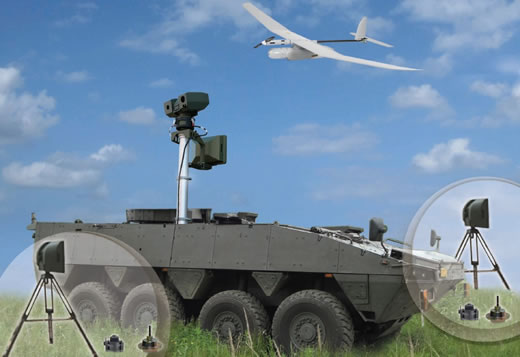
The sensor suite to be integrated on the Rosomak comprises daylight (TV) and thermal vision systems, battlefield surveillance radar, encrypted communications systems and mini-unmanned aircraft system (UAS). Photo: Elbit Systems
By the end of 2011 the Polish Army is expected to equip part of its Rosomak 8×8 armored reconnaissance vehicles with ground surveillance system from Elbit Systems Ltd. (NASDAQ: ESLT). Under the order worth about $16 million, awarded by the Polish Ministry of National Defense, the Israeli company will complete delivering the mobile multi-sensor monitoring and surveillance systems in 2011. Elbit Systems’ Land division will team with the Polish Military Communication Institute, in cooperation with local industries.
Rosomak M1 Infantry Fighting Vehicle variant was modified specifically to support the Polish contingent forces in Afghanistan. Among the additions are add-on steel-composite armor clearly visible in this photo, threat warning sensors attached to the turret sides, and wire cutters in front of driver and commander hatches. The vehicle also received new and upgraded communications, and two display systems and acoustic gunshot location system (Pilar). Photo: Polish Army.
The sensor suite to be integrated on the Rosomak comprises daylight (TV) and thermal vision systems, battlefield surveillance radar, unattended ground sensors, encrypted communications systems and mini-unmanned aircraft system (UAS). The new recce vehicle employ the turretless APC configuration and add to three variants already serving with the Polish Army – the infantry fighting vehicle, infantry personnel carrier and casualty evacuation (CASEVAC) variant. Two Polish infantry brigades have already been equipped with these vehicles.
Polish Army Rosomak M3, configured as an armored personnel carrier on patrol in Afghanistan. The vehicle was fitted an open turret mounting an automatic grenade launcher or 12.7mm machine gun. The vehicle is fitted with an improvised net providing added protection against anti-tank rockets. Photo: Polish ArmyThe casualty evacuation variant (WEP) of the Rosomak has a crew of 3, and is capable of transporting 3 injured soldiers on stretchers and an additional four in sitting position. Photo: Polish Armed Forces Operational Command
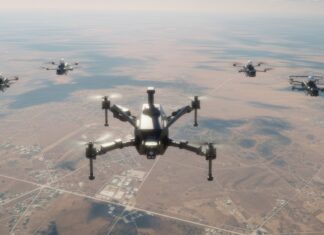
Lockheed Martin Skunk Works® and XTEND have achieved a major milestone in JADC2 by integrating the XOS operating system with the MDCX™ autonomy platform. This technical breakthrough enables a single operator to simultaneously command multiple drone classes, eliminating the friction of mission handoffs. From "marsupial" drone deployments to operating in GPS-denied environments, explore how this collaboration is abbreviating the data-to-decision timeline and redefining autonomous mission execution.
As traditional defense primes face mounting competition from agile “neoprimes” such as Anduril, Palantir and Helsing, the balance of innovation is shifting toward software-defined warfare and scalable, dual-use technologies, while global industry consolidation—marked by Boeing’s integration of Spirit AeroSystems and other strategic mergers—signals an intensified race to secure control over the defense technology value chain. Our Defense-Tech weekly report highlights these trends.
In early October 2025, a coordinated wave of unmanned aerial system (UAS) incursions—widely attributed to Russia—targeted critical infrastructure across at least ten European nations. The unprecedented campaign exposed the fragility of Europe’s air defenses...
Executive Summary
The past week (September 18-25, 2025) represents an inflection point where strategic defense concepts have transitioned from doctrine to tangible reality. An analysis of global events reveals four primary, interconnected trends shaping an...
At the 2025 Air, Space & Cyber Conference, U.S. Air Force and Space Force leaders unveiled major updates on next-generation fighters, bombers, unmanned systems, and space initiatives, highlighting both rapid innovation and critical readiness challenges as the services race to outpace global competitors. A short version is available here, with a more detailed version for subscribers.
The Taipei Aerospace & Defense Technology Exhibition (TADTE) 2025 crystallized around four dominant strategic themes that collectively illustrate Taiwan's comprehensive approach to defense modernization amid escalating regional tensions. Based on a detailed report by Pleronix (available upon request). Includes a Podcast discussion on TADTE 2025's highlighting Taiwan's four strategic themes beyond the post's coverage.
Israel’s Iron Beam 450 high-power laser system has completed final testing, marking a major leap in air defense. Developed by Rafael, it offers precise, cost-effective interception of rockets, UAVs, and mortars, and is set for IDF deployment by 2025.