Vuzix' smart glasses like this M100 are widely used in technical support, providing expert advice, video support, supervision and auditing for technicians. The new applications will likely utilize Vuzix' technologies with cutting-edge augmented reality, introducing wearable avionic devices to be used by the flight crew in the cockpit. Photo: Vuzix
Vuzix Corporation, a supplier of Augmented Reality (AR) display technology for the enterprise applications will develop waveguide-based head-mounted display (HMD) for use in aircraft. Vuzix has signed an agreement with an unnamed ‘global Tier-1 Aerospace firm’ to customize this HMD into a commercial avionic application.
Under the terms of this agreement, Vuzix and its customer have embarked on a multi-stage development program with agreed upon milestones and payments. The first stage of this program is for approximately $250,000 and is expected to be completed this fall. The program calls for the integration of a custom display engine utilizing and modifying the company’s existing waveguide-based wearable display technology.
Subject to a final approval and acceptance from the customer of the first phase, Vuzix expects to receive follow-on orders from this customer, to finalize the product’s development and hard tooling necessary to ultimately deliver commercial volumes of the custom waveguide systems as early as the second of half of 2019 for this customer’s commercial avionics solution. Head-mounted pilot displays are currently available mostly for combat pilots.
“We are excited to enter into this partnership and believe it represents a strong vote of confidence in our capabilities and recognition of our leading position within the waveguide optics technology space,” said Paul Travers, President, and Chief Executive Officer at Vuzix. “Additionally, the agreement demonstrates how Vuzix is able to leverage and partner our industry-leading optics technology with top-tier global partners across a variety of vertical markets including commercial avionics.”
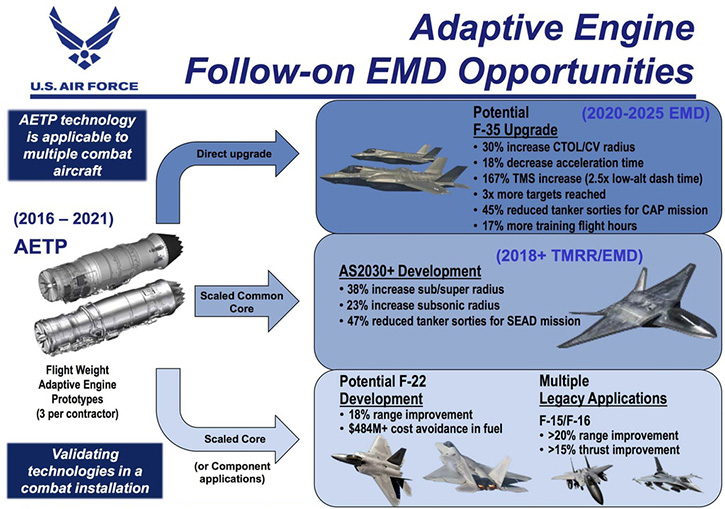
The US Air Force is funding the development of a new class of 45,000 lb thrust-adaptive jet engine, designed to power the future sixth generation fighter in the 2030s. Two contracts were awarded, each to complete three prototype engines in four years.
In June 2018 General Electric Aviation received 437 million dollars for this work; Pratt and Whitney followed last week with an award of a similar amount. The Air Force’s Research Laboratory (AFRL) is expected to invest $1.5 billion dollars in the Adaptive Engine Technology Development (AETD) program through 2022.
The enhanced core is one of the central improvements of the future engine that enables operation at higher temperature and pressure levels. Technologies utilized to manufacture this core include parts made with additive manufacturing, that offer improved efficiency, better heat absorption, reduced weight, and overall increased performance.
triple stream turbine architecture. Illustration: GE
Another breaking technology for the adaptive engine is the triple stream turbine architecture. This architecture adapts well to different mission phases, offering more thrust; better fuel efficiency and longer mission endurance.
The new engine is expected to deliver 25 percent reduction in fuel consumption and improve heat absorption by 60 percent, compared to current engines. Such improvements will increase the fighter range on typical missions by up to 35 percent, while loiter time is expected to extend by 50 percent. The third stream will also provide airflow to generate large amounts of electricity to power high-energy weapons and electronic systems on board.
GE tested the industry’s first and only three-stream adaptive cycle engine in 2014 as part of its AETD program activity. These followed the highly successful Adaptive Versatile Engine Technology (ADVENT) program, where GE reached the highest combined compressor and turbine temperatures in the history of jet engine propulsion. Last year Pratt & Whitney successfully tested an adaptive three-stream fan integrated with an F135 core that validated some of these capabilities.
UK based Effective Space company announced a teaming agreement with Israel Aerospace Industries (IAI), to develop an in-orbit satellite servicing capability. The service will extend the satellites’ lifespan in geostationary orbit.
The service will utilize the Space Drone spacecraft concept to be developed by IAI, based on Effective Space’s patent pending design. Under the agreement, Effective Space appointed IAI as the prime contractor for the spacecraft. IAI will work to complete the necessary approvals for equity investment in the company.
“IAI’s intention to directly invest in Effective Space is a strong endorsement of our Space Drone program,” said Arie Halsband, Founder and CEO, Effective Space.
The agreement follows more than a year of cooperation as teams from the two companies jointly worked to develop the spacecraft design.
The Space Drone Spacecraft
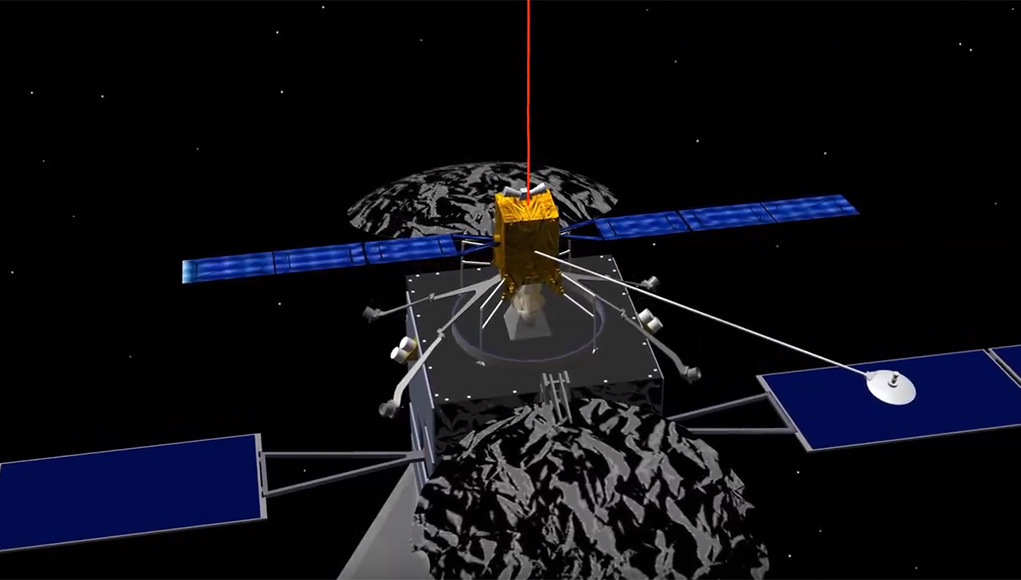
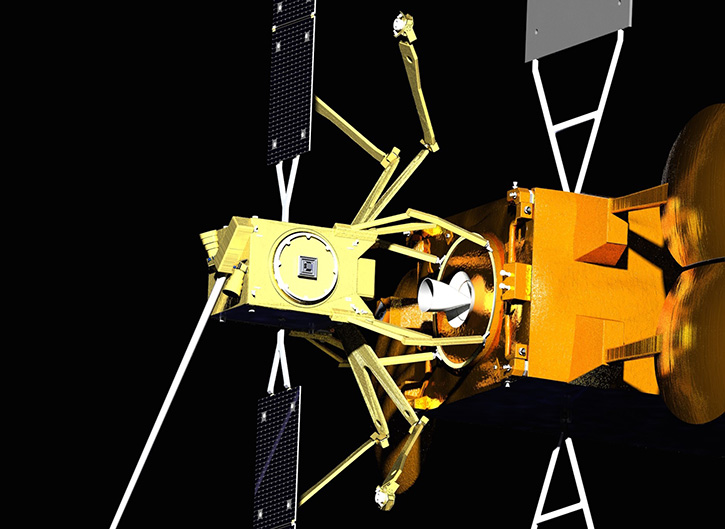
The Space Drone is a small spacecraft that provides propulsion to a satellite just before it runs out of fuel, thus extending its service far beyond its designated lifespan. Unlike the host satellite that uses chemical propulsion such as hydrazine or bi-propellant, the 400 kg Space Drone is propelled by electric propulsion. These thrusters that use Xenon gas, are 10-15 times more energy efficient than chemical propellants. The spider-shaped drone is equipped with ‘thruster arms’ that are flexibly manipulated to achieve the most efficient maneuver much larger satellites.
The spider-shaped Space Drone is equipped with ‘thruster arms’ that are flexibly manipulated to achieve the most efficient maneuver much larger satellites. Illustration photo: Effective Space
The company’s first contract, signed in 2017 with an international satellite operator, will see two Space Drone spacecraft launched in 2020 on a Russian Khrunichev Proton launcher. They will extend the life of two target satellites and are expected to generate revenues of more than US$100 million. The two satellites will ride-share with another customer on that mission. According to Halsband, Effective Space hopes to launch up multiple satellite drones on each mission, deploying dozens of satellites in orbit as the demand for such services grows. Each drone will have a service life of 15 years.
The drone uses non-intrusive docking, employing the same interface used to carry the satellite to orbit. Initial services will see the drone spacecraft dock with existing satellites in Geosynchronous Earth Orbit (GEO) before they reach the end of their normal life expectancy.
Ambitious Future Plans
The first-generation Space Drones to be launched in 2020 will be dedicated to a single satellite and maintain it for years, Halsband said. It will support all functions the original propulsion would perform, including station-keeping and attitude-control, relocation, orbit and inclination correction, de-orbiting and ‘bringing into use’ (BIU). In case of the host satellite malfunction, for reasons other than propulsion, the drone will be able to position it on a self-destruct course or move it to a ‘graveyard orbit’ at a higher altitude.
In the future, the drone spacecraft will assume gradually more complex services. They will support satellites in Medium and Low-Earth Orbits (MEO-LEO) and perform more complex missions. Such missions could include Active Debris Removal (ADR), in-space exploration, and even in space manufacturing and asteroid mining logistics.
Elbit Systems of Australia has been chosen to deliver a Cyber Training range for the Department of Defence under a three-year contract to boost Australia’s cyber security capability.
“The Australian Government is committed to strengthening its cyber capabilities to protect Defence and other critical Government systems from malicious cyber intrusion and disruption,” Minister Pyne said, announcing the selection. “The Cyber Training range will be used by Defence personnel for training on cyber-terrain and associated systems that our cyber workforce is responsible for defending,”
He added. Under this contract, the company will provide an interim cyber range, network design and build, cyber range training, and teaching materials.
49 cyber warfare specialists that graduated from the Australian Defence Force’s (ADF) inaugural Accelerated Defensive Cyber Training program will use the new cyber training range to develop and maintain their skills.
The Cyber Training range is an integral aspect of the cyber training program which is designed to meet the ADF’s immediate requirement to secure its networks and mission systems that are fundamental to current operations in a world where the threat to such systems continues to increase.
The Accelerated Defensive Cyber Training program was created by Defence to meet the 2016 Defence White Paper’s directive for more trained personnel and enhanced capability in the cyber domain well ahead of its planned implementation period.
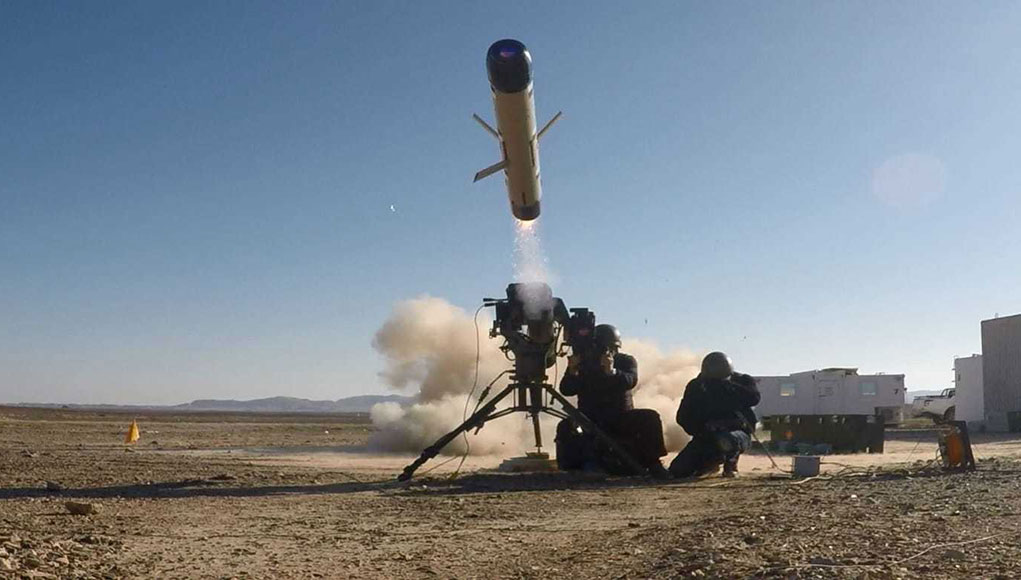
The ground-launched Spike ER2 variant is compatible with all launchers and extends the missile's range by 25 percent to 10 km. An air-launched version extends the range to 16 km. Photo: RAFAEL
Israel’s Rafael Advanced Defense Systems Ltd., is expanding its Spike guided missile family with the introduction of Spike ER2, an extended-range tactical missile the company positions to equip attack helicopters, combat vehicles, and mall boats. The development of the new variant is expected to complete this year.
With a new multi-sensor seeker and datalink, the new ER2 variant enhances the range, agility, and target acquisition capabilities of the Spike-ER, enabling vehicles, boats and, particularly helicopters, to engage targets from longer stand-off ranges utilizing third-party targeting techniques (such as UAVs) previously unavailable for such tactical weapons. The enhanced missile is designed to equip combat vehicles, boats, and combat helicopters currently operating the Spike-ER variant.
Launching the new weapon at the MSPO event in Poland, Rafael aims at a Polish plan to replace the Russian origin weaponry on their Mi24 and Sokol helicopters. Currently, those Mi-24 Hinds do not use any anti-tank guided missiles, as the helicopters’ legacy weapons that were produced in Russia are too short range and put the helicopter in great danger from enemy fire.
Providing the Mi-24 with Spike ER2 would enable this gunship to destroy targets from a safe distance, relying on its own target acquisition equipment or on a third party (such as UAV). The Spike missile is already operational on a Mi-24 platform of another country.
Germany is also a potential customer for the missile, with a possible upgrading of the Tiger UHT. Currently deployed with MBDA’s PARS 3 LR missiles. Both France and Germany consider collaborating in the upgrading of their Tiger helicopters, although the two variants do not share the same weapons and mission systems. Rafael has already established local production and support for the Spike family of missiles in Poland and Germany in support of the current missile acquisitions in those countries.
As a ‘5th Generation’ missile, Spike ER2 features a number of new capabilities. First and foremost, for surface launch applications, the range is extended from eight to ten kilometers. For Spike ER2 missiles fired from helicopters, Rafael now offers an option to replace the optical fiber data link with an RF datalink (similar to the Spike LR2), thus extending the range to 16 km., matching the missile’s energetic potential. To operate at such distances the system now provides Non-Line-of-Sight (NLOS) engagement capabilities such as launch to a specific grid coordinate, where the operator can designate the target. The new missile retains the Spike’s size, weight (<35 kg), and lethality.
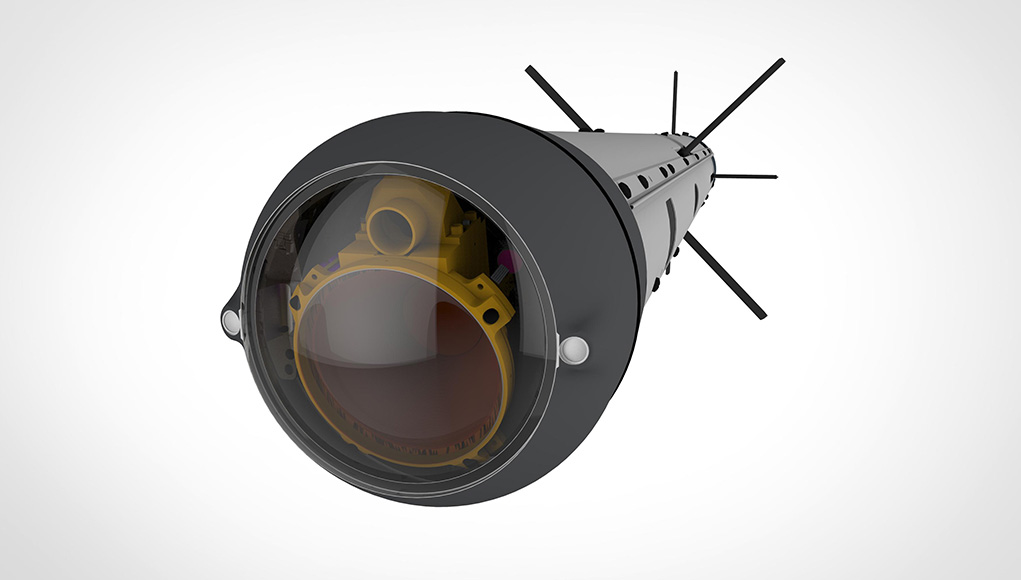
The Spike ER2 seeker has also been improved with the introduction of an advanced multi-sensor imager comprising a high-resolution IR and day sensors, that enable target acquisition at extended range. The target tracker is also multispectral, performing continuous sensory data fusion – an important feature that improves the missile’s performance even in adverse visibility conditions and against extensive obscurants.
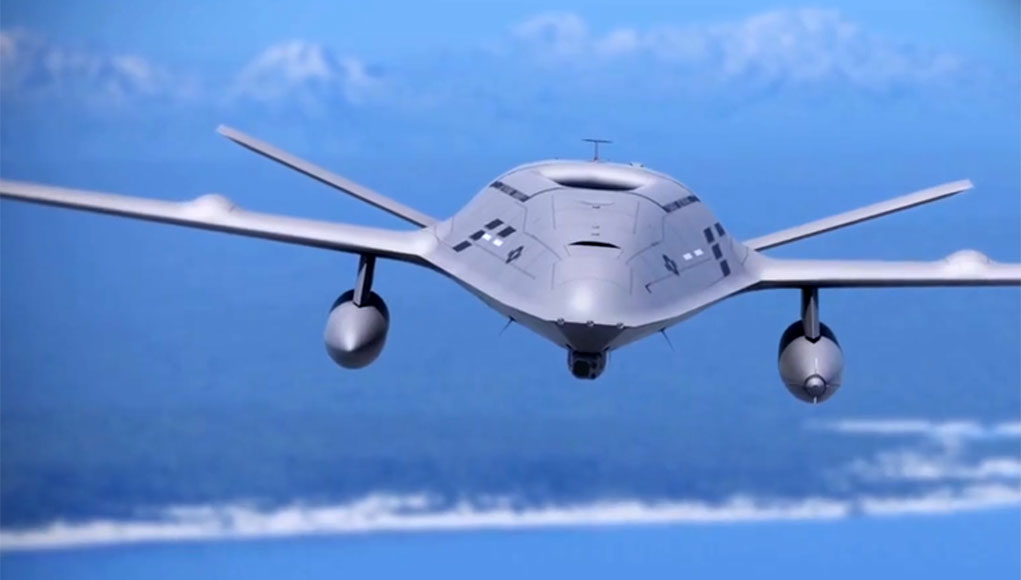
The Boeing Company was selected to develop and build the Stingray MQ-25A, the first unmanned refueling aircraft to be operated by the fleet. The U.S. Navy awarded a US$805.3 million contract to Boeing, for the design, development, fabrication, test, delivery, and support of four MQ-25A unmanned air vehicle prototypes, including integration into the carrier air wing for an initial operational capability by 2024.
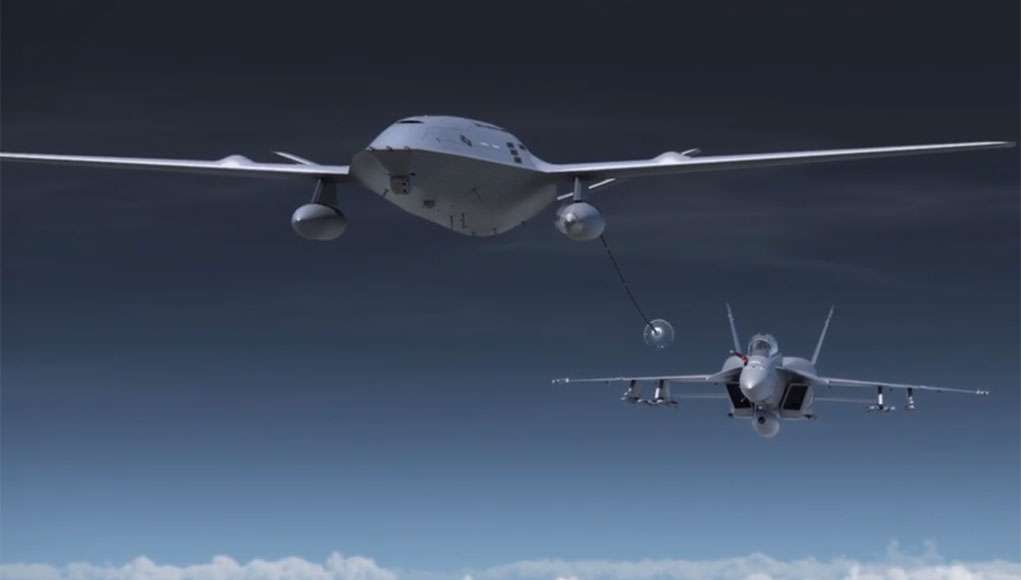
The Navy plans to operate 72 Stingrays. The Navy anticipates delivery of the first MQ-25A developmental aircraft in fiscal 2020, first flight in fiscal 2021, and declaring the aircraft combat-ready as early as 2025. When operational, MQ-25 will be used to refuel F/A-18E/F/G and F-35C aircraft, replacing F/A-18s currently used for this task. As a dedicated refueling asset Stingray will improve the performance, efficiency, and safety of the carrier air wing and provide longer range and greater persistence tanking capability to execute missions that otherwise could not be performed.
The Stingray refueling drone will extend the combat radius of an unrefueled Super Hornet on a typical mission from 830 km (450 nm) to 1,300 km (700 nm). Illustration: Boeing video
The Navy’s goal for the aircraft is to be able to deliver 15,000 lb (6,800 kg) of fuel to refuel four to six airplanes at a range of 930 km from the carrier (500 nautical miles -nm). It will extend the combat radius of an unrefueled Super Hornet on a typical mission from 830 km (450 nm) to 1,300 km (700 nm)
“As a company, we made an investment in both our team and in an unmanned aircraft system that meets the U.S. Navy’s refueling requirements,” said Leanne Caret, president, and CEO, Boeing Defense, Space & Security. ”
Boeing’s MQ-25 prototype was derived from an earlier work the company has done for the US Navy Unmanned Carrier Reconnaissance and Strike system (UCLASS). The company has done significant changes in the design to change the platform to best meet the MQ-25A mission. Boeing said its MQ-25 meets all tanking requirements with a substantial margin. Boeing has beaten two competitors – Lockheed Martin and General Atomics.
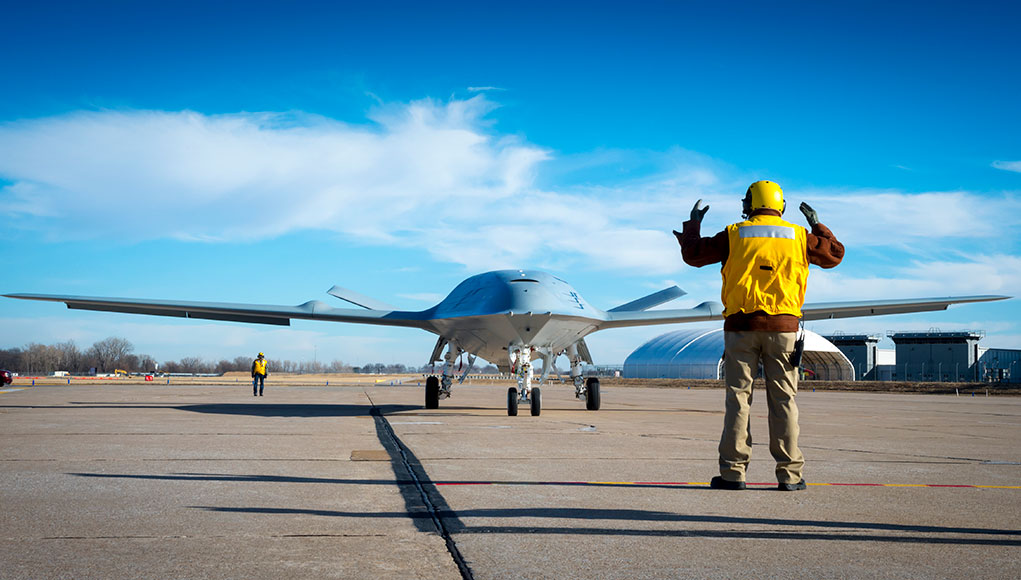
The company began ground testing of an unmanned aircraft designed by Phantom Works. Boeing said this engineering and manufacturing development (EMD)-ready unmanned tanker will be ready for flight shortly after contract award. Boeing plans to perform the MQ-25 work in St. Louis.
The company began ground testing of an unmanned aircraft designed by Phantom Works. Boeing said this engineering and manufacturing development (EMD)-ready unmanned tanker will be ready for flight shortly after contract award. Photo: Boeing video
MQ-25 is an accelerated acquisition program that expedites decisions that will enable rapid actions with less overhead. The intent is to significantly reduce development timelines from contract award to initial operational capability by five to six years. By reducing the number of key performance parameters to mission tanking and carrier suitability, the industry has increased flexibility to rapidly design a system that meets those requirements.
“MQ-25A is a hallmark acquisition program,” said Assistant Secretary of the Navy for Research, Development, and Acquisition James F. Geurts. “This program is a great example of how the acquisition and requirements communities work hand in hand to rapidly deliver capabilities to our Sailors and Marines in the fleet.”
The prototype built by Boeing for the US Navy MQ-25A Stingray program undergoing ground test. Photo: Boeing
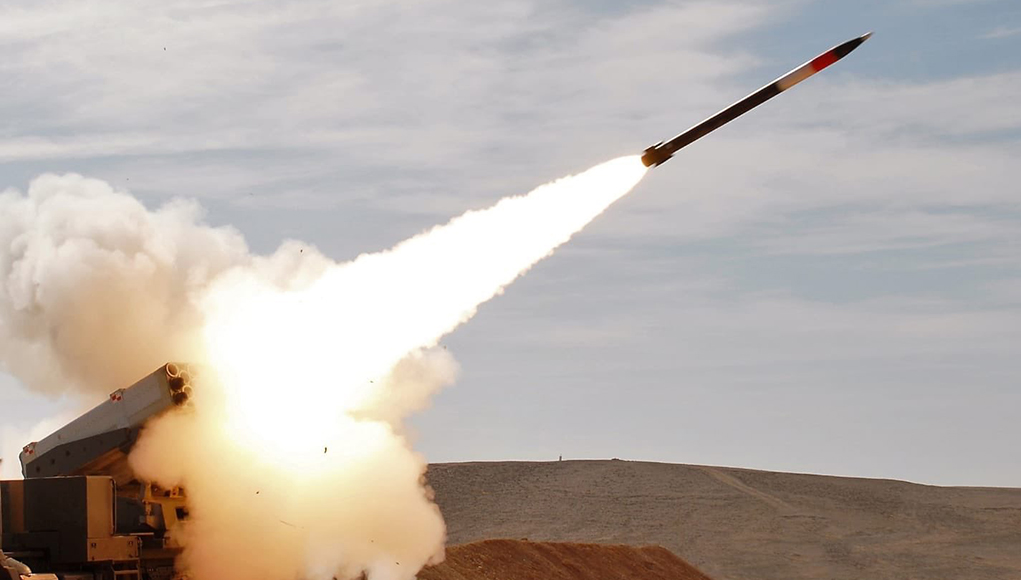
The new rockets acquired by the IDF are the Spear (Romach) designed and manufactured by IMI Systems as the122mm AccuLAR. For the IDF use 18 rockets are packed into a pod designed to fit the M270 MLRS mobile rocket system. Photo: IMI Systems
Israel’s defense ministry has placed a major order for a number of IMI Systems precision-guided rockets and rocket systems to equip the Israel Defense Forces’ (IDF) artillery corps.
Although Israel has faced rocket attacks since 1968, the IDF remained reluctant to field such weapons on a large scale, particularly due to their lack of accuracy, limited range and safety issues when fired at close proximity to friendly forces. Although the IDF fielded the US MLRS rocket system, the Artillery Corps insisted its accuracy be improved, making Israel the first (and only) M270 user to deploy Trajectory Correction Systems with the standard MLRS.
In recent years, precision-guided rockets developed by IMI attracted the IDF attention, In 2017 the IDF approved the acquisition of the first batch of IMI ‘Spear’ (Romach) 122mm GPS guided rockets for its MLRS battalions, enabling the units to deploy much more accurate fires at ranges up to 40 km.
Each Spear-equipped rocket launcher operates independently and can launch a salvo of 18 independently targeted munitions in 60 seconds. Each rocket carries a unitary warhead weighing 20-35kg kg. Two warheads are available – a penetration warhead used against structures and fortifications and blast-fragmentation warhead using controlled fragmentation. Both can hit their targets at an accuracy of higher than 10 meters CEP.
The Spear is based on IMI AccuLAR rockets that were sold worldwide. The current order establishes initial munitions stocks of the 122mm rockets, and also add new systems to the IDF inventory (these are likely the 300 mm Extra rockets, capable of hitting targets at ranges up to 150 km with the AccuLAR precision.
Defense Minister Avigdor Liberman indicated that as part of the current and future quadrennial plan the IDF will establish a missile force that will be able to hold at risk any relevant target in the region. Such capabilities are enabled today only by the Israel Air Force (IAF) whose air bases are within the range of Hamas, Hezbollah, and Iranian missiles and rockets. Precision-guided rockets deployed on vehicular platforms, naval vessels and aircraft could provide a massive, yet flexible response even under enemy attack.
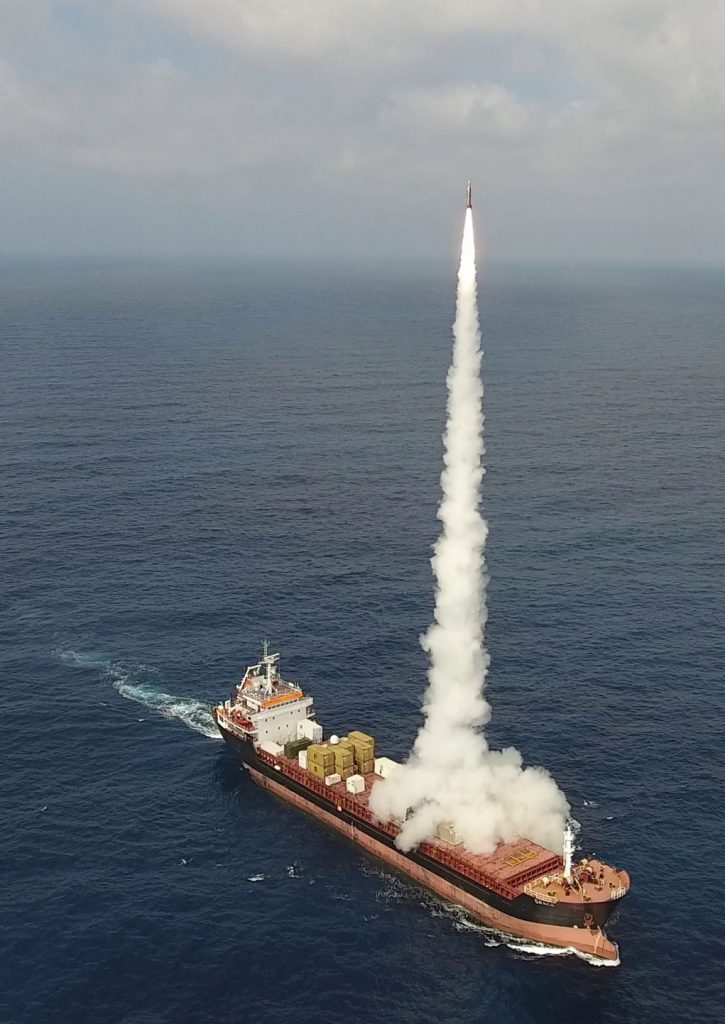
Israel Aerospace Industries (IAI) has successfully completed a firing trial with the Long-Range Artillery weapon system (LORA), marking as part of the demonstration and validation phases of the system, under a number of procurement programs involve the system. On this experiment, the missile was launched from a cargo ship toward a target at sea. Photo: IAI
Three Israeli defense industries are hoping to fulfill orders to equip the new force. IMI, Israel’s largest rocket manufacturer has supplied 300mm EXTRA guided rockets to a number of export customers. The company offers several types of guided rockets in the 160mm, 160mm, 300mm and 600 mm diameters, covering ranges of 30-300 km.
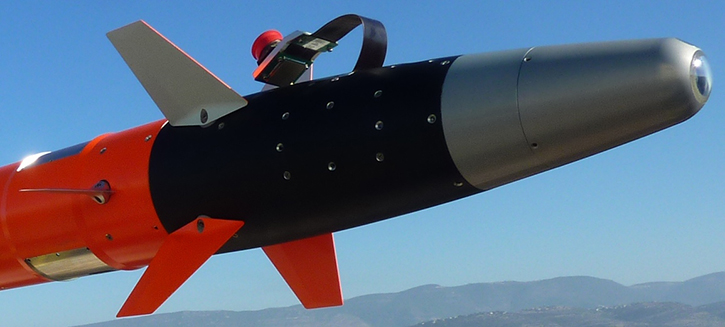
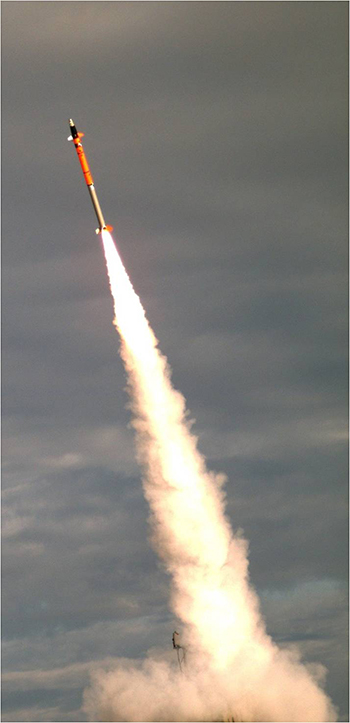
IAI has developed several guidance kits for rockets, including a kit for the popular 122mm GRAD rocket. IAI also developed and exported the Long Range Attack (LORA) ballistic missile, that can deploy a 500 kg warhead at targets at ranges of 400 km. LORA missiles were recently displayed on the national parade in Azerbaijan.
Both IAI and IMI offer guided rockets based on satellite navigation technology that may be compromised by GPS jammers. RAFAEL Advanced Defense Systems, the third manufacturer seeking sales of rockets to the IDF, has developed similar weapons guided by a unique, jam-proof scene matching technique. The company offers the EPIK electro-optical guidance kit derived from the SPICE aerial weapon, enabling a rocket to become a guided weapon with absolute precision, without relying on GPS or other references that may be jammed deceived by the enemy.
RAFAEL’s EPIK adds a scene matching guidance system to a rocket, to provide a fast, highly accurate standoff weapon. Photo: RAFAEL A 122mm rocket equipped with EPIK guidance kit undergoing test. Photo: RAFAEL
In addition to providing absolute precision, EPIK also extends the range of the rocket by 50 percent and enables to set the attack angles and define the hitting point up to a pixel level.
Unlike other precision guidance kits, EPIK uses scene-matching as its primary guidance, enabling the user to overcome GPS jamming, one of today’s major guidance obstacles. To ensure pinpoint accuracy, EPIK is loaded with a reference image (which can be taken by any sensor, even by troops on the ground) comparing it (as the rocket descends) to an onboard mapping database. Multiple different reference images can be loaded to each EPIK-equipped rocket, resulting in a volley of precise guided rockets to multiple different targets, for surgical neutralization of enemy targets.
Following a successful flight testing of Collaborative Miniature Air Launched Decoy (MALD-X) air-launched decoys last week, the US Navy plans to complete the development, transforming the decoy into a navalized, miniature networked ‘EW cruise missile’ designed for platforms such as the Super Hornet and Growler E/A-18G.
Since 2015 the program was managed by the Pentagon’s Strategic Capabilities Office, in cooperation with the Air Force and the Navy. In the past 24 months, Raytheon modified the powered decoy into a quick-change, network-enabled EW payload carrier. The flight tests of the advanced decoys were conducted at the Naval Air Warfare Center Point Mugu, California, on August 20 and 22. The Navy will complete system development and transition to an operational capability. The Navy will pursue enhancements to the system and additional mission sets that will be tested in 2019. Eventually, the Navy plans to introduce the technologies explored in MALD-X into the navalized MALD-N decoy currently being developed for the Navy by Raytheon.
“The rapid development and demonstration were made possible by the cross-service technical collaboration between the Air Force and Navy”, said Chris Shank, SCO Director. “The MALD-X is handing over to the Navy to complete system development and transition to an operational capability. The superb cross-service technical teamwork is an exemplar for future innovative projects.”
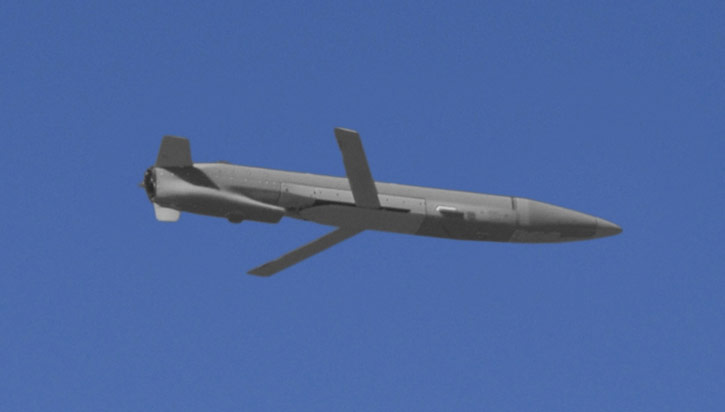
MALD weighs less than 300 pounds and has a range of approximately 500 nautical miles. Photo: Raytheon
The ADM-160 was developed by Raytheon as a decoy, and modified into a ‘stand-in’ flying jammer under the MALD-J program. Weighing less than 300 pounds, the weapon has a range of approximately 500 nautical miles (575 statute miles). After it is launched from its host aircraft, the MALD decoys flies a preprogrammed mission, operating alone or in pairs. As a network enabled platform, MALD-X (and MALD-N) will be able to operate in ‘swarms’ of many decoys, thus overwhelm enemy air defenses and better respond to unexpected threats, it will be able to retask or employ techniques based on parameters they receive over the data link.
“MALD-X gives future warfighters the ability to focus on the nature of the emerging threats rather than being encumbered by the burden associated with making a system interact with mission elements and mission supporting actions,” said Matthew O’Connell, MALD-X Program Manager.
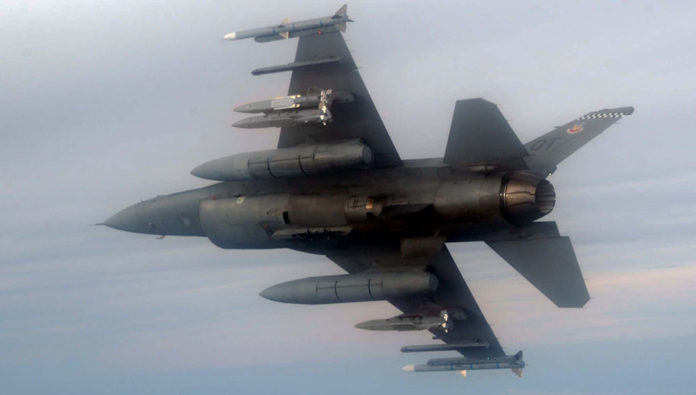
The new decoy builds on the Air Forces’ successful MALD-J program of record. Designed for low-level operation, carrying a data-link and modular payload attachments, MALD-X introduces dramatic tactical advantages derived by the use of collaborative, expendable platforms employing advanced electronic warfare techniques. Last month, the Air Force awarded Raytheon a $96 million contract to produce 250 enhanced MALD-J decoys. The enhanced MALD-J incorporates an improved GPS aided inertial navigation system (GPS/INS) that better cope with GPS denied environment. In the past decade, Raytheon delivered about 2,000 MALD decoys. The MALD-J variant entered production in 2012 and is currently operational with F-16s and B-52. A specialized launch system was also developed for the deployment of multiple MALDs from the ramp of cargo aircraft.
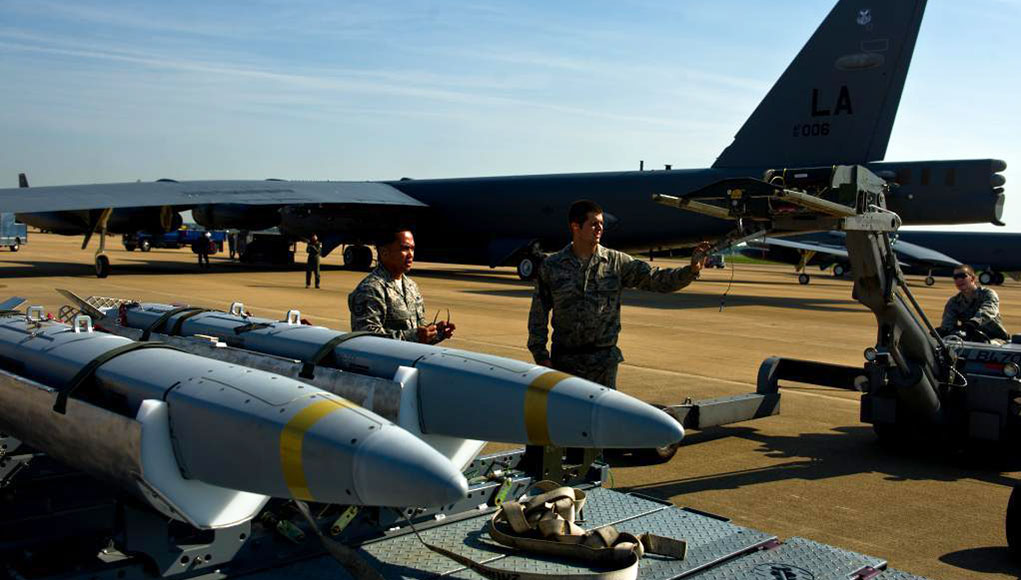
The Miniature air-launched decoy jammer (MALD-J) seen here loaded to a B-52 bomber, is a powered aerial vehicle that mimics real aircraft, luring enemy surface to air missiles to spend their interceptors on false targets while exposing their radars and command nodes to attack. Photo: US Air Force
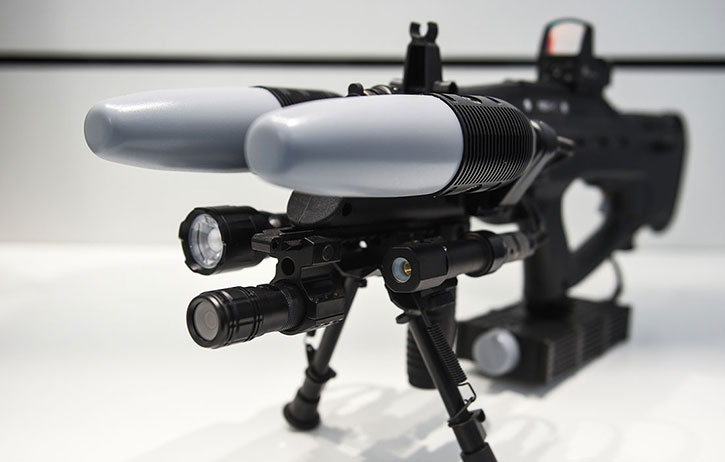
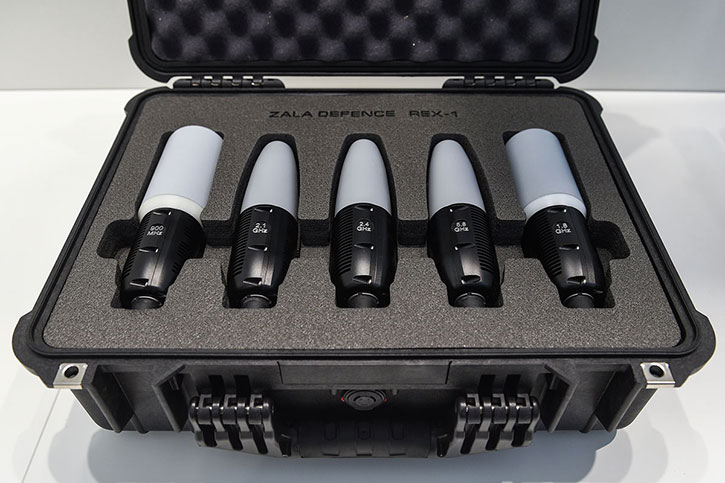
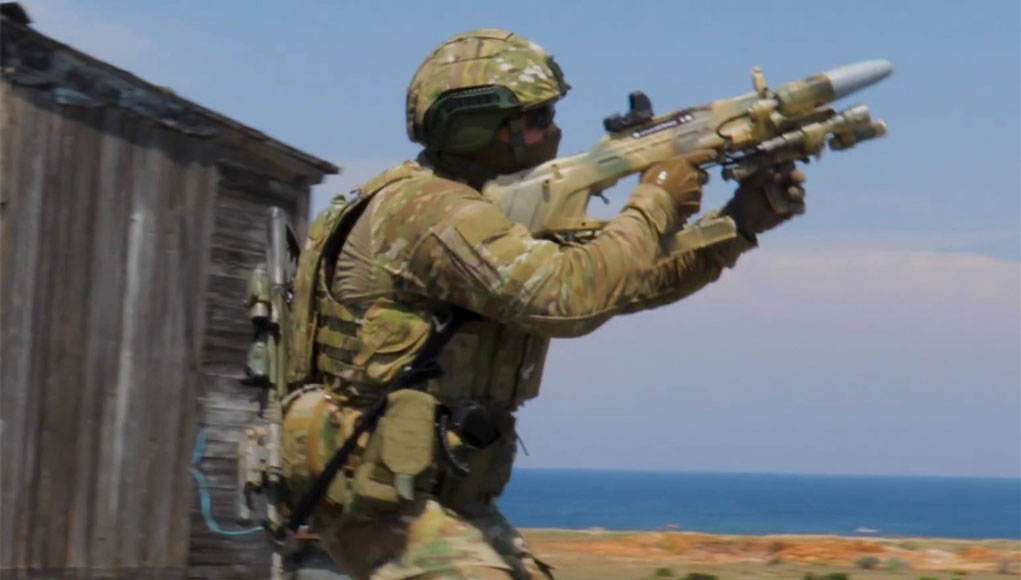
REX-1 from Zala Aero group acts as a UAV and communications inhibitor.
The man-portable REX-1 mounts two frequency jamming modules. It can operate continuously for three hours.
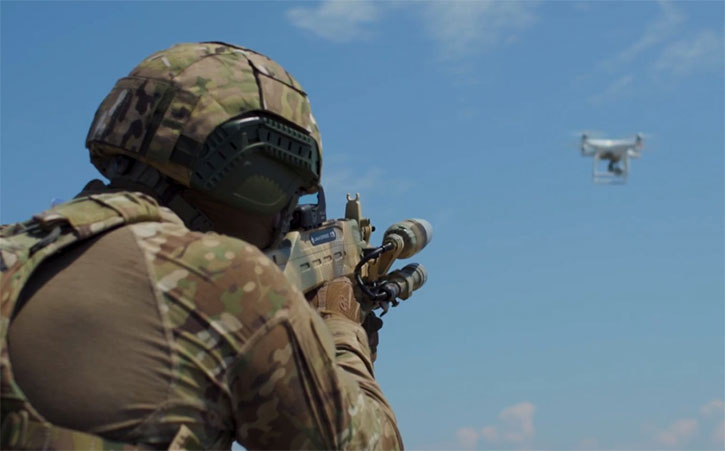
Russia’s Kalashnikov Concern presented the REX-1 counter-UAV rifle. This man-portable jammer provides a non-kinetic drone inhibitor. Utilizing multi-band jammer to defeat small UAS from a relatively short range, it can also be used to disrupt mobile phone communications, for example, securing a suspected IED from remote-controlled activation. REX-1 was developed by Kalashnikov subsidiary, Zala Aero Group.
Five frequency modules are available, covering the 800MHZ to 5.8 GHz bands.
The gun-shaped system weighs 4.2 kg and includes a battery that supports operation for three. The system comprises a collimator sight, interchangeable GPS jamming modules, GLONASS navigation system.
The device is supplied with interchangeable jamming modules covering the 800 MHZ, 1.8, 2.1, 2.4 and 5.8 GHz frequency bands. A strap-on stroboscope, laser sight and audio and video recorders are also available.
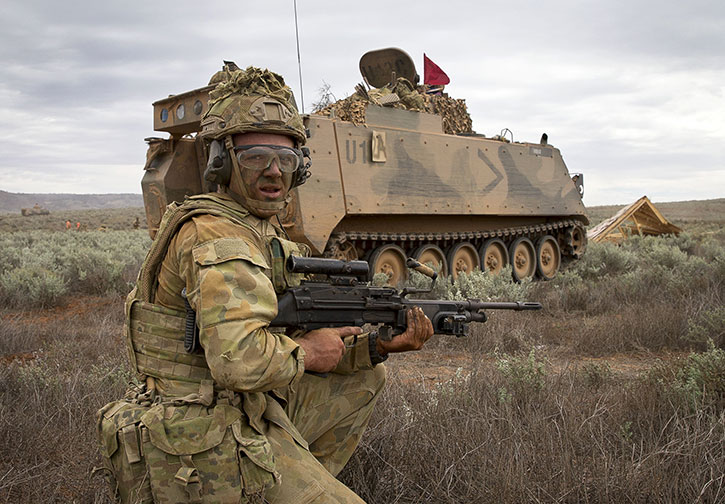
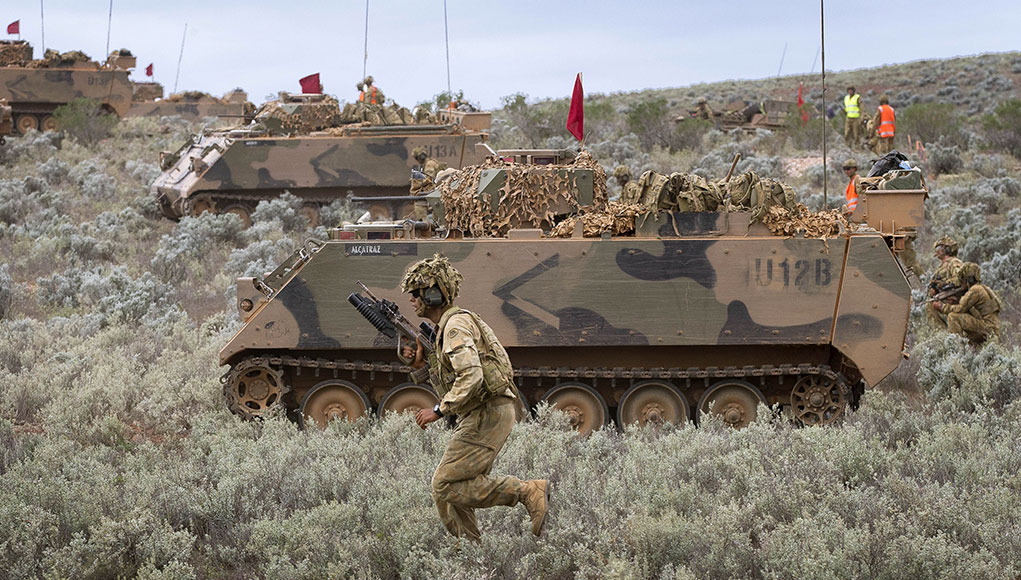
An Australian Army soldier from 5th Battalion, Royal Australian Regiment, moves across the 'battlefield' alongside an M113AS4 armored personnel carrier. Photo: Australian Defence
The Australian government continues its modernization program with the acquisition of new armored personnel carriers to replace 431 M113AS4s currently in service. While Australia has already selected the German Boxer for the CRV program (Land 400 Phase 2), the next and third phase of the Land 400 program is expected to double the number of vehicles bought, providing major opportunities for the winner. Industry briefing sessions are scheduled for September of this year to inform industries that want to be involved in the project. The deadline for submissions is March 1st, 2019. The selection of the preferred tenderer is expected within three years.
The Request for Tender for LAND 400 Phase 3 – ‘Mounted Close Combat Capability’ eyes a procurement of a fleet of up to 450 modern Infantry Fighting Vehicles and 17 Manoeuvre Support Vehicles, at an estimated cost of $10-$15 billion. When fully delivered, the LAND 400 Program will allow the Army to successfully sustain mounted close combat operations against emerging and future threats as part of a joint force.
The Australians did not specify whether the vehicle should be tracked or wheeled. Practically, Rheinmetall Defense has a major advantage in the ongoing infrastructure and teaming they established for the Boxer CRV. In fact, the company has developed a new vehicle platform – Lynx KF41 to address this opportunity, offering commonalities with existing systems and a modular approach that tailors the vehicle for different configurations. Its modular armor system offers protection levels equal or better to the Boxer.
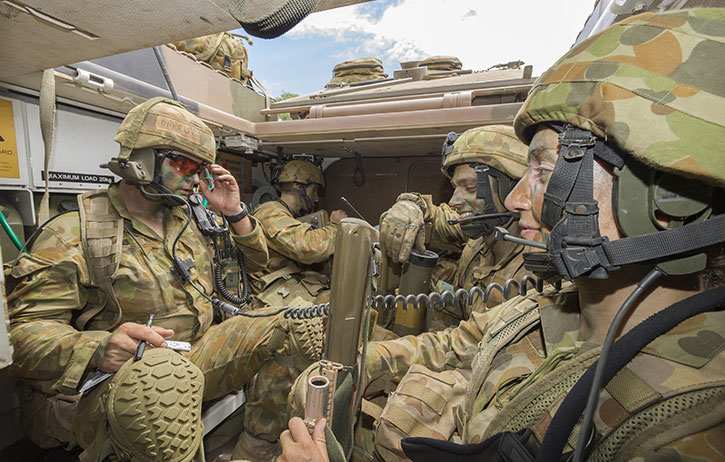
Australian Army officer trainees travel in an M113AS4 armored personnel carrier during the Royal Military College training activity near Townsville, Queensland. Photo: Australian Defence
The Australian Defense ministry is placing greater emphasis on a coordinated and programmatic approach to Army’s biggest project ever. A new Armoured Vehicle Division will be created to consolidate large programs like LAND 400, LAND 907 – Main Battle Tank Replacement and LAND 8160 – Enhanced Gap Crossing Capability into a programmatic ‘mega project’.
“This will be the largest investment in Army’s capability ever undertaken and will provide our troops with a modern close combat capability,” Minister for Defence Industry, The Hon Christopher Pyne MP said. The new vehicles will offer a high level of protection, firepower, and mobility. Minister Pyne added that as with the LAND 400 Phase 2 Combat Reconnaissance Vehicles, Australian industry involvement, and Australian workers will be critically important. He indicated that during this tender process, Defence will work closely with industry to optimize Australian Industry Capability content.
These will replace the upgraded 431 M113 armored personnel carriers in service since the 1960s, and 17 maneuver support vehicles for the Australian Army’s combat brigades.
The current M113AS4 APC has inadequate mobility and protection. The new vehicle should markedly improve those capabilities, but, to fulfill its missions, firepower and mission systems could be less sophisticated than those selected for the Boxer CRV. Photo: Australian Defence
Project LAND 400 project is managing the delivery of the next generation of armored fighting vehicles for the Australian Army. Estimated by the Australian Government to have a total acquisition cost of between $14 and $20 billion, the project is expected to deliver 675 military vehicles over 15 years. Additionally, the vehicles will require maintenance and support for up to 30 years. LAND 400 is the biggest and most expensive acquisition project in the history of the Australian Army.
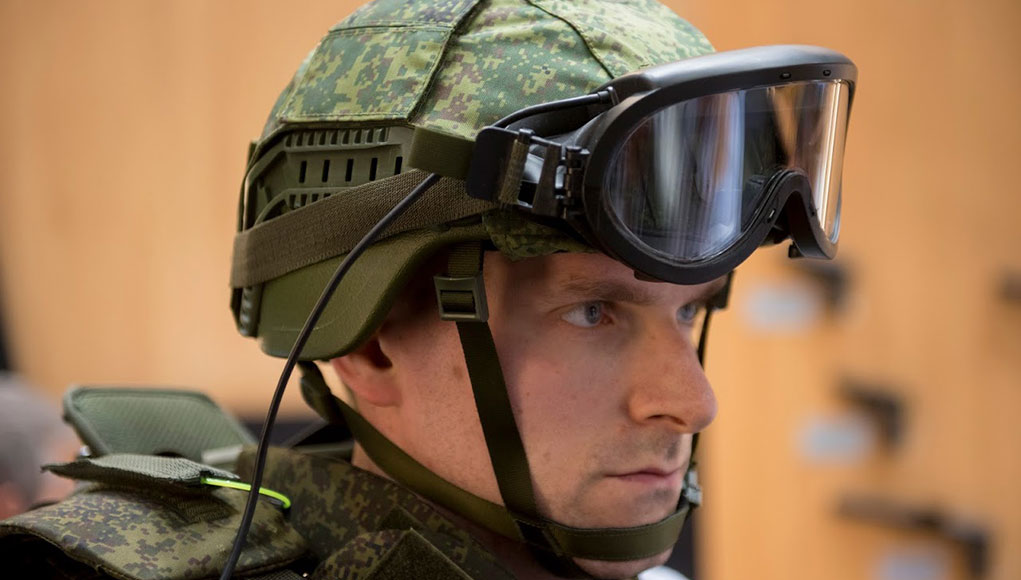
Chameleon helmet camouflage displayed with Ratnik type soldier system. Photo: Rostec
An adaptive camouflage developed in Russia could be used in the future to better blend vehicles and soldiers in the environment. Operating like a Chameleon, the new camouflage is able to mimic the color of the environment. Displayed at the annual Army 2018 forum near Moscow this week the new material was applied to a soldier’s helmet which is part of the advanced, third generation Ratnik infantry combat suite.
The electrically-induced material that covers the helmet prototype is able to change color depending on the color of its surrounding environment. The material can display dynamic changes of color intensity and simulate complex images, for example, the motion of leaves in the wind. The new material was developed by Ruselectronics and TSNIITOCHMASH, the Central Research Institute for Precision Machine Building, both operating within the Rostec conglomerate.
“Existing types of camouflage do not change their masking properties depending on changes in the background. For example, soldiers will not be seen in a forest against greenery, but they will be visible against sand or snow. An innovative coating created by Ruselectronics provides unique opportunities for masking. We are demonstrating how it works using one element of equipment, i.e., a helmet. However, its application is much broader. It can be used in clothing, weapons, and military equipment,” said Industrial Director of the Armament Cluster of Rostec Sergey Abramov.
The coating weights few hundred grams per square meter and is applied like ordinary paint and does not require great accuracy in terms of thickness and uniformity. In particular, this means that repairs can be carried out in the field. The power consumption in continuous adaptation mode is no greater than that of a neon lamp.
As a passive exoskeleton the fully autonomous system significantly increases the physical abilities of a soldier, protects joints and the spine and can be adjusted to the height of a particular soldier. Photo: Rostec
Another part of the future infantry suite on display at Army 2018 is the advanced exoskeleton developed by TSNIITOCHMASH. This fully functional technology demonstrator has been operationally tested by the Russian Army. The exoskeleton is made of lightweight carbon fiber and supports the musculoskeletal system when a person carries weights up to 50 kg (packs, special gear, armaments, and ammunition) during long marches and assaults. It is a mechanical device with levers and swivels in the shape of human joints. Unlike active exoskeletons, the passive exoskeleton has no power sources, servomotors, electronics and various sensors. This makes it lighter and more reliable (4 to 8 kg depending on the configuration). In addition, an active exoskeleton is also being designed, and its working prototype has already been assembled.
As a passive exoskeleton the fully autonomous system significantly increases the physical abilities of a soldier, protects joints and the spine and can be adjusted to the height of a particular soldier. The exoskeletons are developed by TSNIITOCHMASH and GB Engineering.
“This prototype has already been tested during real military operations,” Abramov said. “The exoskeleton was tested by special detachments of the Russian Ministry of Defense and Internal Affairs bodies in years 2017-2018.
A group of U.K. companies has embarked on a development to provide tools that enable military commanders to better assess the risks and potential of cyber and electronic attacks. The JUMP – Joint User Mission Planning for Cyber and Electro-Magnetic Activity (CEMA) project is a concept demonstrator of a toolkit that integrates cyber and physical mission planning. The BMT-led initiative research project is being developed for the Defence Science and Technology Laboratory (Dstl).
For example, JUMP displays a layout of a plant, and explains how systems and devices are connected to each other, what is the state of the services, are servers patched to the correct level and what vulnerabilities or threats exist.
Bringing together all the physical knowledge a commander planning a mission needs, such as mapping, the environment, satellite imagery and 3D buildings, JUMP also provide cyber situational awareness enabling decision makers to better understand risks and make decisions.
JUMP uses visual presentation tools, including dynamic 3D terrain modeling displayed in Augmented Reality (AR) to provide field commanders with an informed visual understanding of their mission and the integration of cyber operations across all domains – something that is currently missing from existing mission planning tools. It will also allow experts in other locations to share a situational report analysis report (SITREP) and input and share their intelligence, insights, and recommendations share the same view using rapidly advancing technology such as VR and AR.
According to Simon Luck, Head of Technology & Innovation, Defence & Security, UK at BMT, the mission planning tools used today do not provide such capabilities and do not inform mission commanders of cyber vulnerabilities and risks to the systems and facilities they are set to protect.
“JUMP helps to bring in new datasets very quickly, and apply autonomy, to develop multiple courses of action. The system will tell you where the risk lies, your vulnerabilities according to the threats, and will help to develop a vision of your possible courses of action. JUMP facilitates the management and visualization of the information supporting this decision-making process.”
Luck also sees its use going beyond battle planning by the UK Ministry of Defence or other military forces. “You can use this application to protect your critical national infrastructure, to have a better understanding of it and where the risks are, and then hardening your security stance to mitigate those risks that the system has identified. JUMP is all about making much better and more informed decisions.”
BMT is an international science, technology, engineering and risk management consultancy, working principally in the defense, security, energy, and environment, marine risk and insurance, maritime transport and ports, and logistics sectors. The company has recently secured a year’s further funding for the next phase of this S&T research project which will involve the team delivering additional functionality to the concept demonstrator to enable a range of cyber modeling capabilities.
Australia selected the Israeli Spike LR2 multi-purpose guided missile to equip the new Boxer Combat Reconnaissance vehicles procured from Rheinmetall Defense under an A$2.1 billion Under project Land 400 Phase 2 contract. Australia is the second user to select the new LR2 version of the missile, following the Israel Defense Forces that placed an order for 2,000 in 2017.
The missiles for the Israeli order are manufactured by Israel’s RAFAEL Advanced Defense Systems company. According to Major General (Ret’d) Yoav Har-Even, Rafael’s President and CEO, Rafael’s strategy is to join with local partners and establish capability in the local markets. For the Australian contract, RAFAEL teamed Varley Aerospace & Defense (VRA) of New South Wales, Australia. “This commitment by Varley Rafael Australia is a great vote of confidence in Australian industry and will bring jobs and high-tech knowledge to Australia’s defense industry,” Hon. Marise Payne, Minister for Defence said.
The JV named Varley Rafael Australia has committed to building the Spike LR2 in Australia, employing up to 70 Australians directly with hundreds more in the supply chain. “VRA aims to maximize the proportion of SPIKE LR2 componentry produced in Australia and deliver through-life in-service support,” VRA’s inaugural CEO, Mr. Jacob Blitman, adding that the JV intends to reach-back to Rafael’s research and development network in Israel to pursue more opportunities. Other fields of activity pursued by VRA include air defense and active protection for combat vehicles and submarines. “The 5th Generation SPIKE LR2 is the first of what we hope will be many opportunities for VRA to deliver Australian sovereign capabilities, drive innovation and jobs, and create export opportunities.” Mr. Jeff Phillips, Managing Director of the Varley Group said.
RAFAEL’s Spike LR II missile. The warhead’s lethality has increased by 30% and the range extended by 35%. The new seeker uses an uncooled IR and color HD sensors. Image: RAFAEL
The Spike was selected after an independent comparative evaluation of potential missile options for the vehicle was conducted by the Defence Science and Technology Group. The missile will offer long range, lightweight, high resistance to countermeasures and higher technical maturity in the anti-tank role. “The Spike missile is the best anti-tank guided missile for the Boxer,” said Christopher Pyne MP, Minister for Defence Industry. “It will give the Boxer the range and lethality it needs to fight and win the land battle”.
Under project Land 400 Phase 2, Defence will acquire 211 Rheinmetall Boxer combat reconnaissance vehicles which will provide vital mobility, lethality, and protection for the Australian Army. The Boxer will be manufactured in Queensland, creating up to 1,450 jobs across the supply chain.
The 5th Generation Spike LR missiles are launched from standard Spike MR/LR launchers. They are lighter, and offer 35 percent range extension over the original LR version. The control unit and seeker uses state of the art multi-sensor modules and updated processors. Photo: RAFAEL
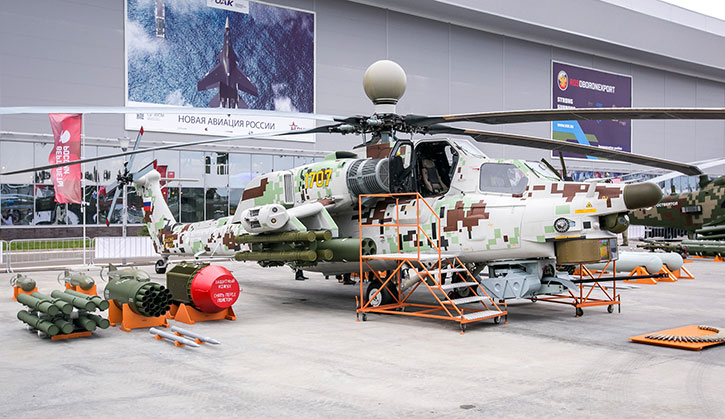
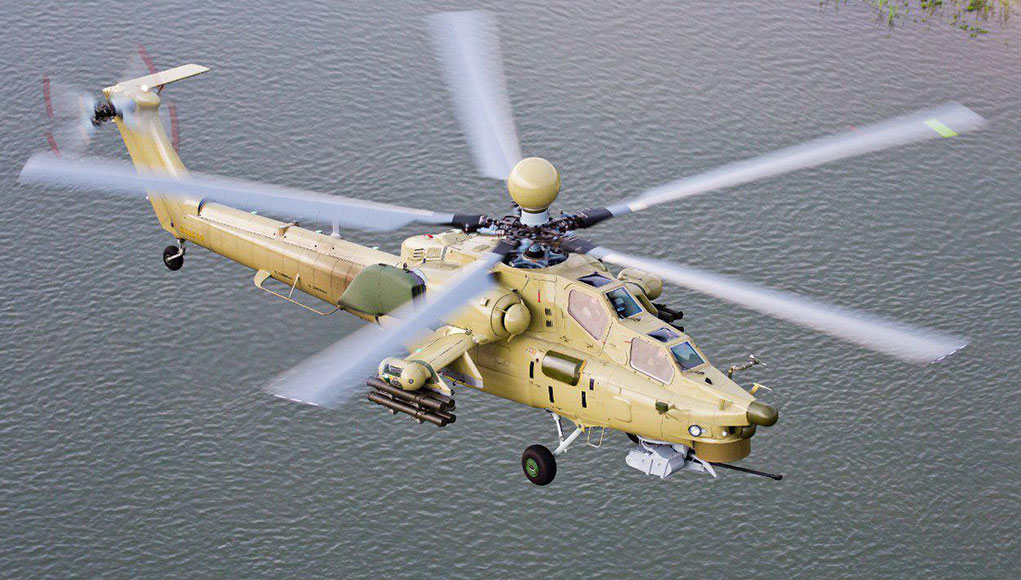
Russian Helicopters presented a new version of the Mi-28N attack helicopter that improves combat survivability and firepower and implements manned-unmanned teaming capability for the first time. The “Night Hunter” was used extensively in the Syrian theater, used both by the Russian and Syrian forces. Some of the improvements address lessons learned from these operations.
“We are constantly improving military helicopters because the requirements of our customers change, and we always aim to meet them. Due to the experience of using Mi-28 machines during military operations, we knew how to further develop this project. The modernization considerably increased the capabilities of Mi-28NE helicopters and offered us new prospects in terms of exports,” noted Andrey Boginsky, CEO of Russian Helicopters.
carries the new Khrizantema-M anti-tank missile that uses a dual guidance system, offering better resistance to enemy countermeasures. The new missile extends the helicopter’s target engagement range to 10 km. The gunship can also carry a modernized version of the Ataka laser-guided missile. Other armament options use aerial bombs weighing up to 500 kg.
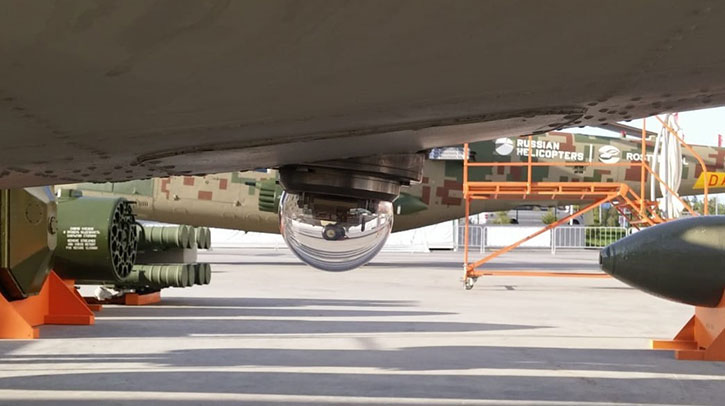
Other improvements include combat survivability. The helicopter has enhanced armor and uses modern directional IR countermeasures (DIRCM) for greater combat survivability against short-range infrared missiles. the design is more tolerant to battle damage. The rotor blades are made of composite materials that can withstand hits by 20-30 mm ammunition and continue to function. and the fuel system is also protected against explosion and fire.
The new Mi-28NE is equipped with a new Directional IR Countermeasure (DIRCM) unit for added protection from heat-seeking missiles. Previous models used flares released from countermeasure dispensers installed at the stub wing tips. Photo: Defense-Update
Modernization involved engine power and blades, which improved aircraft performance in high regions and in hot climates, increased the cruising speed and maneuverability. A larger tailplane improved the controllability of the helicopter. The advantages of the helicopter include resistance to battle damage.
The Mi-28NE was the first Russian military helicopter to get digital avionics. The new version uses a new communications channel that enables the crew to link and control drones.
In 2015 the company unveiled the Mi-28UB, a training variant of the Night Hunter, that uses dual control, enabling the weapon systems operator in the front to control the aircraft in an emergency. The Mi-28UB is also designed for training. Mi-28UB has extended cabin, larger armored windows that improve the view from operator’s cockpit.
The opening week of 2026 has been defined by a singular, paradigmatic shift in modern warfare: the "catastrophic failure" of Venezuela's integrated air defense network during a U.S. special operation. The operation succeeded not through brute force, but by rendering Venezuela's Russian S-300VM and Chinese "anti-stealth" radars effectively blind, validating the supremacy of advanced electronic warfare over legacy kinetic defenses. This failure has sent shockwaves through the global defense market, underscoring why nations like Spain and Germany are rushing to modernize their air defense architectures with Western alternatives, while massive procurement programs exceeding $301 billion signal an accelerated transformation toward unmanned systems, directed energy weapons, and indigenous production capabilities.
Turkey's defense industry transformation extends far beyond its celebrated drones. Now ranking 11th globally in defense exports, Turkey is executing a comprehensive strategy to become a top-tier arms supplier. With 75% of exports flowing to Western markets and five firms in Defense News' Top 100, Turkey is methodically building a complete defense ecosystem through combat-proven systems, integrated defense diplomacy, strategic self-reliance, and real-world R&D in active conflict zones.
Lockheed Martin Skunk Works® and XTEND have achieved a major milestone in JADC2 by integrating the XOS operating system with the MDCX™ autonomy platform. This technical breakthrough enables a single operator to simultaneously command multiple drone classes, eliminating the friction of mission handoffs. From "marsupial" drone deployments to operating in GPS-denied environments, explore how this collaboration is abbreviating the data-to-decision timeline and redefining autonomous mission execution.
As traditional defense primes face mounting competition from agile “neoprimes” such as Anduril, Palantir and Helsing, the balance of innovation is shifting toward software-defined warfare and scalable, dual-use technologies, while global industry consolidation—marked by Boeing’s integration of Spirit AeroSystems and other strategic mergers—signals an intensified race to secure control over the defense technology value chain. Our Defense-Tech weekly report highlights these trends.
In early October 2025, a coordinated wave of unmanned aerial system (UAS) incursions—widely attributed to Russia—targeted critical infrastructure across at least ten European nations. The unprecedented campaign exposed the fragility of Europe’s air defenses...
Executive Summary
The past week (September 18-25, 2025) represents an inflection point where strategic defense concepts have transitioned from doctrine to tangible reality. An analysis of global events reveals four primary, interconnected trends shaping an...
At the 2025 Air, Space & Cyber Conference, U.S. Air Force and Space Force leaders unveiled major updates on next-generation fighters, bombers, unmanned systems, and space initiatives, highlighting both rapid innovation and critical readiness challenges as the services race to outpace global competitors. A short version is available here, with a more detailed version for subscribers.



 This is an excerpt of the 458 word article. Subscribe to read the full story.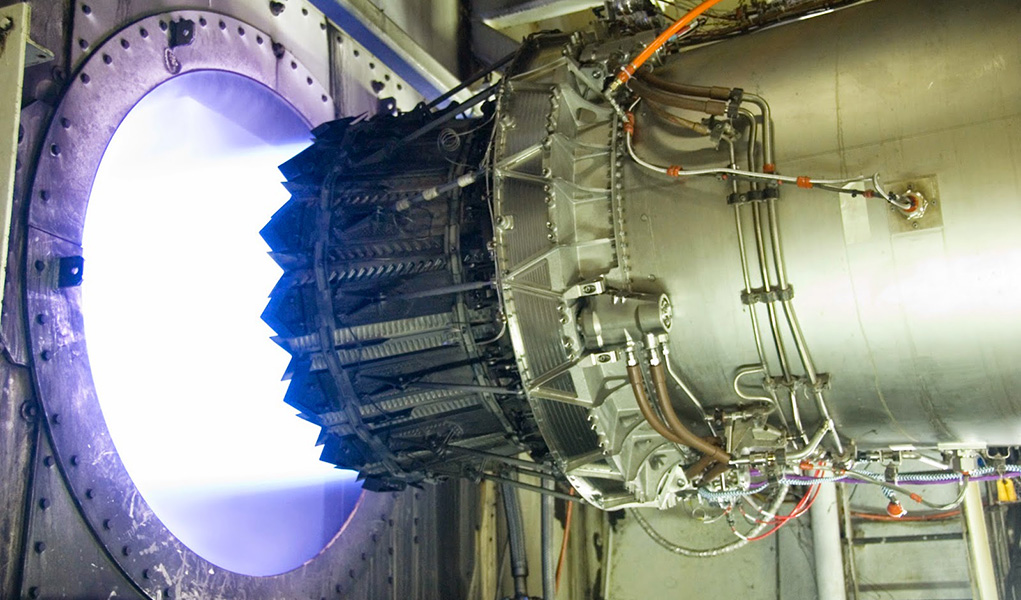


 This is a 440 word excerpt of the 784 words story. Subscribe for the full text.