Sunday, December 21, 2025
More
    Home Blog Page 383

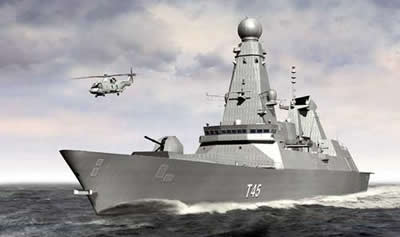
    Second Royal Navy Type 45 Destroyer Launched

    The Royal Navy’s newest warship, the Type 45 Destroyer HMS Dauntless, was launched on the Clyde January 23, 2007 by Lady Burnell-Nugent, wife of the Commander In Chief of the Fleet. HMS Dauntless is the second of the new Type 45 class of Anti-Air Warfare Destroyers.The Royal Navy's newest warship, the Type 45 Destroyer HMS Dauntless, was launched on the Clyde January 23, 2007

    BAE Systems is the prime contractor for the delivery of the first six Type 45 Destroyers under contract worth over £6 Billion. Vosper Thornycroft at Portsmouth and BAE SYSTEMS Surface Fleet Solutions will both build and outfit substantial sections of the ships. The first ship of the class, HMS Daring, will start her sea trials later in 2007 and will enter service in 2009. HMS Dauntless is expected to go into service early next decade. Three further Type 45 ships are under construction and work on the sixth ship is due to start soon.

    The Type 45 is a 152.4 meter long ship, (21.2 meter beam) with maximum displacement of 7,000 tons. The ships are powered by the WR21 gas turbine and will reach a maximum speed of up to 29 knots. Cruising at 18 knots she can travel continuously for up to 7,000 nautical miles. Her complement includes some 190 seamen (with space for 235).


    Weapons and Systems: The Principal Anti Air Missile System (PAAMS) comprising the BAE Insyte SAMPSON Multi-Functional Radar (MFR) providing area surveillance and fire control, Thales S1850M Long Range Radar (LRR) for air/surface search and SYLVER missile container/launcher loaded with a combination of Aster 15 and Aster 30 missiles. These missiles are designed to provide effective defense against multiple attacks by subsonic sea-skimmers and supersonic anti-ship missiles. On-board gun systems include the 4.5″ Mk 8 (Mod 1) Medium caliber gun and 30mm small caliber gun systems.

    Type 45 destroyers are equipped with a helicopter landing pad operating Helicopter the Westland Lynx MHA 3/8 or Merlin EH101 HAS 1. In the offensive anti-submarine role, these helicopters can carry the Stingray torpedoes.

    Northrop Grumman, RADA Team to Offer a Tactical Rocket Shield

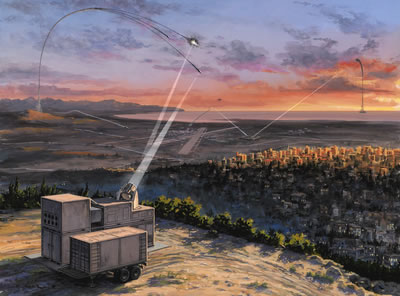
    One month before the planned decision on Israel’s Tactical Rocket Shield, Northrop Grumman (NYSE: NOC) is improving the positioning of its Skyguard High Energy Laser Defensive System toward the Israeli Ministry of defense, by teaming with RADA Electronic Industries Ltd. (NASDAQ: RADI). Under the teaming agreement between the Israeli company and Northrop Grumman’s Space & Mission Systems division, the two companies will cooperate in performing contracts resulting from the procurement of the Skyguard system, in case such system is selected by the State of Israel. The two companies began their cooperation after the end of the 2nd Lebanon War in August 2006. An engineer with Northrop Grumman Space Technology in Redondo Beach, Calif., monitors a solid-state laser as it generates a beam at the company's new Directed Energy Production Facility. The specialized facility is the first of its kind in the U.S. by private industry dedicated to the production of high-energy laser systems for the military services. (Northrop Grumman Photo)

    As sub contractor, RADA will support the US company in securing the prime contract for sale of the Skyguard in Israel, participate in the construction, installation and operation of the system and supply equipment and services to the prime contractor during the program. Maj. Gen. (Ret.) Herzle Bodinger, RADA President and CEO, said that the Skyguard enables installation in the shortest period and at the same time, provides efficient and cost effective defense against these threats. The first Skyguard system could be deployed in Israel within 18 months of date of order.

    Northrop said it obtained US government permission to market the system overseas, and has already proposed the system to Israel. Northrop is one of four to five bidders proposing the Israeli MoD with counter-rocket solutions – the other options include the “Sky Shield” radar guided rapid-fire gun system, proposed by Lockheed Martin, and two rocket/missile based options, proposed by RAFAEL, IAI and IMI.

    USAF Evaluates Non Lethal Beam Weapon for Air Base security

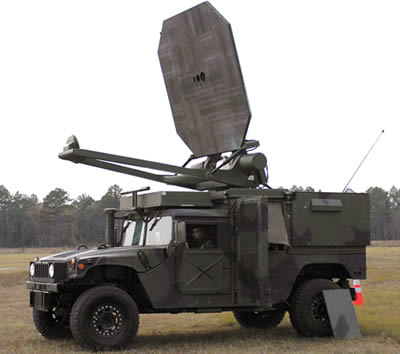
    The Active Denial System (ADS) developed by Raytheon for the US Air Force Research Labs has entered extended user evaluation phase, and is currently deployed with the Air Force’s 820th Security Forces Group (SFG) at Moody air force base in Georgia, USA. 820 is the first unit selected to conduct these tests. The system will be evaluated in assisting troops in securing base perimeters, checkpoints and entry control points during peacekeeping and humanitarian assistance, and crowd dispersal.


    According to Tech. Sgt. John DeLaCerda, the NCO in charge of the 820th SFG advanced technologies section, the new non-lethal weapon will enable the unit to engage potential adversaries at distances beyond the range of small-arms range, thus being able to repel an individual, and determining the target’s intent without the use of lethal force. “Right now, we don’t have a medium between shouting and shooting when determining an adversary’s intent,” says DeLaCerda. “In the long run [such system] can help limit collateral damage, protect the innocent and save the lives of our men and women in combat.” He added. The beam is designed only to affect an individual for a short moment due to safety presets and features, Sergeant DeLaCerda said. “ADS is not developed to engage a target for a long period of time, and we aren’t trained to operate it that way; once we expose an individual and determine their intent, we will no longer engage them with the beam.”

    “The pain is comparable to an intensified version of opening an oven and feeling the initial blast of hot air,” said Staff Sgt. Jason Delacruz, an ADS operator who has also been exposed on several occasions for training purposes. “The effects are extremely sudden, and natural instincts automatically force you to quickly exit the target area.”

    U.S. Plans Deployment of Missile Defense in Eastern Europe

    U.S. Plans Deployment of Missile Defense in Eastern Europe to extend the coverage of its missile defense system, the US opened formal negotiations with Poland and the Czech Republic about basing elements of the U.S. anti-ballistic missile system in Eastern Europe. The purpose of these systems will be to provide for a ‘first line of defense’ against attacks by ‘rogue states’.


    The interceptors will provide protection for both Europe and the continental United States, from single missile firings or small salvos of ballistic missiles launched from Iran or North Korea. However, the steps are causing significant concern in Russia. Russia has been a persistent critic of the proposed European installations. On Monday, Lieutenant-General Vladimir Popovkin, chief of the Space Forces branch of the Russian military, told reporters in Moscow the placement of the U.S. facilities in the two former Warsaw Pact states would create a clear threat to Russia.

    Since their formal acceptance into the North Atlantic Treaty Organization (NATO) in 1999, both Poland and the Czech Republic have become US Allays. Under the new scheme, a number of interceptor missiles would be based in Poland. By 2010 the US plans to have missile-defense radar operational in the neighboring Czech Republic.

    Stennis Strike Group Steam West to Join the U.S. 5th Fleet

    Navy photo by Mass Communication Specialist 3rd Class Gary Prill

    The USS John C. Stennis (CVN 74) Carrier Strike Group (JCSSG) entered the U.S. 7th Fleet’s area of responsibility (AOR) Jan. 31. Stennis and the rest of the strike group, led by Rear Adm. Kevin Quinn, is headed west to provide support for U.S. and coalition forces operating in the 5th Fleet and will support Operations Enduring Freedom and Iraqi Freedom, be prepared to take part in Horn of Africa operations, and conduct maritime security operations (MSO).

    Elements of the USS John C. Stennis (CVN 74) Carrier Strike Group left San Diego, Jan. 20, after picking up Carrier Air Wing (CVW) 9, and began steaming west toward the U.S. 5th Fleet area of operations.

    The nuclear-powered aircraft carrier, which left its Bremerton, Wash., homeport Jan. 16, spent one day in port on-loading the air wing, and departed San Diego with the guided missile cruiser USS Antietam (CG 54) and guided missile destroyer USS Preble (DDG 88).

    The guided missile destroyers USS O’Kane (DDG 77) and USS Paul Hamilton (DDG 60), homeported in Pearl Harbor, Hawaii, will join the group in transit. Stennis and its strike group are scheduled to enter 5th Fleet’s area of operation and provide support to U.S. and coalition forces operating there.

    Navy photo by Mass Communication Specialist 3rd Class Gary Prill

    US Army Continues Bradley RESET Process

    Bradley Combat Systems fulfill five critical mission roles – infantry fighting vehicle, cavalry fighting vehicle, fire support vehicle, battle command vehicle and engineer squad vehicle. Bradleys are operated with the US Army’s Heavy Brigade Combat Teams (HBCTs).

    The Bradley A3 incorporates many enhancements improving the vehicle’s lethality and survivability, including a full fire control solution featuring a hunter / killer configuration with second generation sights. Additionally, the A3 features integrated information technologies with enhanced command and control features, such as color maps and displays, high-density computer memory, increased micro-processing speed and networked communications. These command and control functions are supported by a more accurate navigation and position locating system. All of these features are implemented with a digital architecture and software, which allows modularity and flexibility to support all of the Bradley mission roles in the HBCTs.


    Following the extensive use of Bradley vehicles in Iraq, Bradley vehicles are returned to the USA for ‘remanufacturing’ process, known as “reset’ program. This process is undertaken by a Public Private Partnership between BAE Systems, and Red River Army Depot (RRAD), includes disassembly and subsystem rebuild, performed at RRAD, with final disassembly and structural modifications to be completed by BAE Systems in Fayette County, Pennsylvania. Final assembly, integration and test will be conducted at the company’s facility in York, Pennsylvania.

    BAE Systems has received two US Army contracts supporting the reset of Bradley armored fighting vehicles totaling $412 million. The awards announced last week combined with the $1.16 billion contract for the remanufacture and upgrade of 610 Bradley awarded in November brings the total value of the Bradley upgrading and reset contracts work to $3.5 billion for Fiscal Years 2005 – 2007, representing 620 A3 vehicles out of a US Army requirement for more than 2,000 total Bradley A3s upgrading planned for the fleet. Deliveries are scheduled to begin in December 2007 and continue through July 2008. Work on the vehicles would begin in July 2008 and continue through May 2009.

    The first contract, worth $177.7 million, and funded under the Fiscal Year 2007 defense budget, calls for the reset of 262 Bradley Combat Systems returning from Iraq. The second award, funded at $234.2 million through the Fiscal Year 2007 budget secures long-lead materials for an anticipated award to reset 303 Bradley A3 vehicles and 173 Bradley Operation Desert Storm vehicles under Fiscal Year 2008 funding.

    China Tests Anti-Satellite Weapon

    U. S. intelligence agencies believe China performed the anti-satellite (ASAT) test January 11. During the test, a kinetic kill vehicle, launched by a ballistic missile destroyed a target orbiting earth at an altitude of 537 mi (864 km). The Chinese test was similar to a test of a kinetic energy ASAT weapon carried by the U.S. in 1985, destroyed a U.S. scientific satellite in orbit at 326 mi (525 km) altitude. The destruction of the weather satellite left considerable space debris in a heavily crowded orbit around 900km, used by many commercial, scientific and military satellites.

    The target of the recent Chinese test was identified as the Feng Yun 1C spacecraft, an aging Chinese weather satellite. The exercise signifies a major new Chinese military capability. According to intelligence reports, China tested laser countermeasures to blind US reconnaissance satellites passing over China. It was reported that for the past several months, Chinese lasers have been “illuminating” US spy satellites. This recent demonstration signifies the maturity and breadth of China’s military capabilities in space. According to Aviation Week, which broke the story last Wednesday (Jan. 17, 2007) the current Chinese capability is more of a “policy weapon” at this time, but the test shows that the Chinese military can threaten the imaging reconnaissance satellites operated by the U. S., Japan, Russia, Israel and Europe.


    “The point is that live ASAT weapons testing in space – be it at a low earth orbit (LEO), a medium earth orbit (MEO), or a geostationary earth orbit (GEO) – has a potential to damage or destroy a lot more than merely the intended target,” says Marco Caceres, lead analyst for Teal Group’s World Space Systems Briefing. “The event likely added hundreds of trackable debris objects and tens of thousands of small particles to the growing problem,” he said. According to estimates by the TEAL group, there are about 175-200 LEO commercial satellites currently in operation, in addition to military and scientific satellites and the International Space Station (ISS). David Wright, co-director of the Global Security Program at the Union of Concerned Scientists, adds that the altitude of this test was a particular concern, because of the low atmospheric density at that altitude, half of the debris larger than one centimeter would remain in orbit for a decade or longer.

    This thrust will undoubtedly intensify the US Pentagon and Congressional interest in “space control”. China’s growing military space capability is one major reason the Bush Administration last year formed the nation’s first new National Space Policy in ten years.

    Because kinetic energy ASAT weapons destroy satellites by colliding with them at very high speeds, their use creates large amounts of space debris, which can remain in orbit for very long times and threaten other satellites. The Chinese satellite that was destroyed had a mass of 750 kilograms and was orbiting at an altitude of 850 kilometers. The collision would be expected to completely fragment the satellite into millions of pieces of debris: nearly 800 debris fragments of size ten centimeters or larger, nearly 40,000 debris fragments with size between one and ten centimeters, and some 2 million fragments of size one millimeter or larger. At the very high speeds these debris particles would have, particles as small as one millimeter can be very destructive. While shielding on satellites can help protect against small particles, most satellites do not carry such shielding. Moreover, shielding is not effective against debris larger than about one centimeter in size.

    Boeing to Upgrade Additional 126 AH-64D Apaches

    Boeing [NYSE: BA] will upgrade (remanufacture) 126 AH-64D Apaches for the US Army (96) and the army of the United Arab Emirates (30), under a $1.15 billion contract signed last week. The first helicopter in this Block II production will be delivered in October 2007.

    The contract brings the total number of upgraded U.S. Army AH-64D Apache Longbow helicopters to 597. The U.S. Army has ordered an additional 27 new-build Apaches as war-replacement aircraft. They are produced in addition to the 501 upgraded AH-64D Apache Longbows built between 1997 and 2006 under two five-year, multi-year contracts. The Apache Longbow helicopters feature fully integrated avionics and weapons that can rapidly detect, classify, prioritize and engage stationary and moving targets at standoff ranges in nearly all weather environments. The helicopters are also networked to exchange real-time, secure digitized battlefield information with air and ground forces.

    Three MRAP Producers will Share future Orders Worth $8.2 Billion

    As vehicle manufacturers ramp up production of Mine resistant, Ambush Protected (MRAP) vehicles to address urgent requirement to increase troop protection, DOD is about to eliminate two vendors, and several vehicle variants, in an attempt to streamline the program. The new process is expected to solve conflicting demands for hard-steel supplies, reduce vehicle preparation time, including installation of government supplied equipment (GSE), testing and transportation.

    While the Pentagon has yet to officially announce its decision, only three vendors will receive follow-on orders expected by early December 2007. According to Pentagon officials, the three vendors that already received the current orders will continue to get future business as they could sustain 1,200 vehicles per month. These vendors include International Military & Government (IMG) company and Force protection International (FPI) will both become exclusive providers for Category I (4×4) vehicles, while FPI and BAE Systems will continue to deliver the heavier Category II (mostly 6×6) vehicles. BAE Systems’ Category II (RG-33) vehicles were recently selected through a mini MRAP competition as the preferred design for 400 ambulance variants which the department is now purchasing. Sofar the Pentagon accelerated orders of Category I vehicles but since these vehicles will be more difficult to receive armor upgrades, the current preference is leaning toward heavier Category II platforms.


    Streamlining the Family

    The decision eliminates General Dynamics’ RG-31 Mod 5 from the race, as well as BAE Systems’ Stewart & Stevenson with its Caiman vehicle. Other drop outs earlier in the program included Textron systems (ASV), Oshkosh (Alpha) and Protected Vehicle International (Golan), some of these manufacturers actually delivered some vehicles under low-rate production orders but could not commit to mass production in time.

    While the MRAP has already demonstrated its ability to meet the current threat in theater, the planned introduction of heavier, more effective armor protecting against Explosive Formed Projectile (EFP) IEDs will consume more payload capacity than most current MRAPs can offer. Some of the EFP armor enhancement concepts require significant excess payload capacity of the MRAP, though none of the current designs have as much payload capacity as the Defense Department would prefer. Category II vehicles, such as the RG-33 and Cougar currently offer the largest payload capacity in this class. The MaxxPro and 4×4 Cougar are also provide significant excess payload capacity to accommodate add-on armor but these would probably require more effort to eliminate some of the weight to meet the required threat level. Eventually, EFP enhancements are expected to become available and installed on all MRAP vehicles.

    While the Pentagon tries to maintain MRAP configuration at a reasonable level, the vehicles are evolving and the next batches expected in 2008 (not yet included in current budget allocations), could include some enhancements that could render some of the MRAP II requirements obsolete. More changes are expected to reflect initial combat and operational lessons are provided by the troops using the first MRAPs. In fact, the program office allows the manufacturers of all current MRAP vehicles to bring them up to the MRAP II standard, in parallel to the MRAP II competition.

    The MRAP production surge has already created conflicts in the demand for hardened and ballistic steel between MRAPs and other programs such as Strykers, Bradleys and Frag Kit 6 armor enhancements. A major limitation was the restriction DOD imposed on its suppliers, to buy hardened and ballistic steel only from US manufacturers. The department is currently processing a waiver that will temporarily allow vendors buying hardened and ballistic steel from foreign suppliers.

    Gearing for Mass Production

    During a briefing at the Pentagon, a senior defense official outlined the growing pace for MRAP production and fielding. By October 2007 the Pentagon placed ordered for roughly 8,800 MRAP vehicles. By early December, the Pentagon plans to release more orders for 6,500 additional vehicles, maintaining uninterrupted production through May 2008. If all DOD budget requests for additional $8.2 billion are answered, by the end of 2008 the US military expects to have over 15,274 MRAPs in theater, at an estimated cost of $24.5 billion (Fy-09) – covering acquisition and sustainment. DOD has drafted and is working with the White House to formally request the funds necessary to order those additional vehicles through a budget amendment.

    At present, only 400 are in theater. Production rate has almost caught up with schedule but will have to increase rapidly in the months ahead. In September, only 309 vehicles were delivered, of which only about 101 were actually flown to Iraq. By the end of October 419 more are expected to be produced. The maximum available airlift capacity could deliver 360 vehicles per month. By November and December manufacturers are required to double and even triple production rate to meet the unofficial goal of 1,500 MRAPs in theater by year’s end.

    Expensive Delivery

    Sofar only few hundreds were actually delivered. The reason for the prolonged process is not with production but due to the preparation of the completed vehicles for combat service. As they leave the production lines at the various manufacturers, MRAPs are transported overland to Space and Naval Warfare Systems Center (SPAWAR) at Charleston, SC where they are outfitted with weapon stations, CREW IED jammers, radios and a range of other equipment supplied by DOD through parallel acquisition programs. Each system must be tailored to each of the vehicle types through a particular installation, which requires prolonged evaluation, design and testing process, to ensure the vehicle can perform its intended mission without interference to other systems on board. This process usually takes months, even years but through the high priority MRAP acquisition it was trimmer to about three weeks. Vehicles which already went through this process and are more familiar to the teams at SPAWAR are processed more rapidly, typically within 10 days for a Cougar. The Pentagon expects that by reducing the number of MRAP variants and configurations, it could save significant time in outfitting the MRAPs for combat duty.

    This process takes the MRAP as far as Charleston’s gate. Delivering the combat-ready MRAP to Iraq and Afghanistan already became the biggest challenge of the program, as these vehicles are too high for transportation inside the US Navy cargo ships (this limitation was overlooked in the MRAP preliminary design and is addressed with priority in the follow-on JLTV program). The only alternative is to fly them. The only benefit of this luxury option is the rapid delivery to the user. Each C-17 or C-5 can deliver only two vehicles. The Pentagon considers leasing Russian An-124 aircraft to accelerate delivery as they run out of airlift capacity by November 07.

    American Dynamics Unveils AD-150 for Tier III


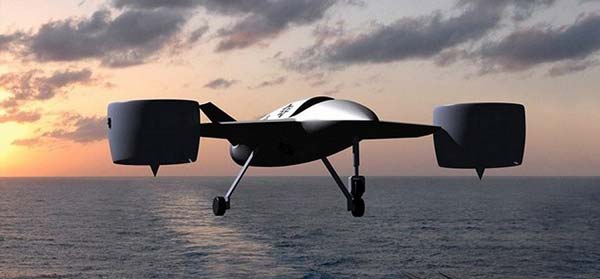
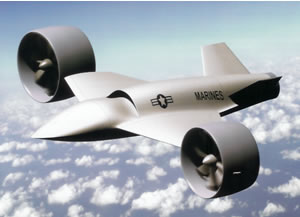
    At AUVSI07 American Dynamics unveiled its plans for the development of an evolved tactical version of BattleHog 100x vertical take-off and landing unmanned air vehicle. The company considers its future vehicle designated AD-150 as a potential contender for future US Navy and Marine Corps requirements beyond Tier II.

    The maritime capable high speed UAV will use two high torque aerial lift (HTAL) ducted fans mounted on the wingtips, providing vertical lift and directional control driven by a turboshaft engine.

    The mockup displayed at AUVSI features a highly streamlined fuselage with low observable features, including internal weapons and payload bays and overhead intake for the engine. However, to maintain effective low observable signature, the HTAL fans will have to be designed with non reflective materials. The vehicle will also have external loads carrying capability. The AD-150 will be based on an all-composite 4.4 meter long fuselage and 5.3m’ span wing. It is designed for maximum speed of 300 kts, and maximum takeoff weigh of 2,250 pounds.

    PackBot Tactical Robot

    PackBot was first used by US ground troops in Afghanistan in 2002 to help clear caves and bunkers, search buildings and cross live anti-personnel minefields. They were used again in 2003 in Iraq in urban warfare scenarios, as well as in vehicle searches. By 2007, more than 800 PackBot robots were delivered to users worldwide and are in operation in Iraq, Afghanistan and around the world.

    PackBot uses a unique propulsion system developing a road speed of up to 14 km/h. The system is characterized by distinctive “flippers” which offer continuous 360 degrees rotation and negotiation of rough terrain and obstacles such as stairs, rocks, logs, rubble and debris. The platform can climb grades up to 60% and survive submersion in water up to two meter deep. It is built to survive drop from two meter height, on a concrete surface, or being thrown through a window or tumbling downstairs. The 18 kg robot can be carried in a backpack, and deployed in a few minutes. The PackBot chassis is integrated with a GPS receiver, electronic compass, orientation and temperature sensors. The robot is controlled by an integral Pentium based computer. It uses a modular payload system offering standard (USB, Ethernet) communications and networking. The control station uses laptop PC or eyepiece displays and hand-held controller. Wide angle (fisheye) or close-up images are displayed for orientation with all operating parameters.
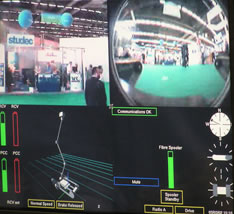
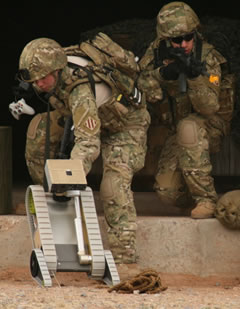
    Pacbot Models

    PackBot is provided in several models and configurations

    PackBot Scout

    the most rugged configuration, 18kg fully loaded vehicle, 20 cm height, Scout can use sensors hull integrated sensors which are suitable especially for operations in places where lightweight and low-profile are required.

    PackBot Explorer

    This version of the PackBot carries an integrated payload in a pan-tilt payload which can be elevated to allow peeking over obstacle or cover. The payload is equipped with multiple cameras, laser pointer, microphone and other sensors.

    PackBot EOD

    is equipped with an OmniReach manipulator system to allow it to extend over two meters, when examining suspicious objects on Explosive Ordnance Disposal (EOD) missions. Typical low profile of this platform allows PackBot to operate effectively under vehicles or inside sewers.

    On January 30, 2007 iRobot and ICx were awarded a $16.58 million order for the delivery of more than 100 explosive-detection robots. Initial shipments are expected to be delivered during the first half of 2007 to U.S. military units deployed in Iraq. The PacBot 500 robots will be equipped with the Fido explosive-detection technology developed by ICx Technologies. These sensors detect explosives’ vapors emanating from Improvised Explosive Devices (IEDs).
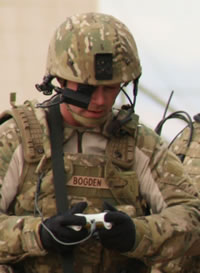
    The latest PacBot 510 EOD Model will be available in April 2007. This second-generation EOD robot was designated to address evolving requirements for a stronger, faster and easier-to-use robot. Equipped with an EOD Kit, PackBot 510 is 30 percent faster, can drag larger objects, lifts twice the weight and has a grip that is three times stronger than its predecessor. the new robot uses a game-style hand controller for faster training and easier operation in the field. This new robot will begin shipping in April 2007. The robot’s new hand controller is modeled after video game controllers, making PackBot 510 easier to use, and resulting in less training time and more rapid operations in the field. In addition, the advanced track technology significantly increases the robot’s performance on rough terrain.

    At AUSA 2008 iRobot introduced new accessories for the Pacbot 510. Among those was the head-aimed remote viewer (HARV) developed by Chatten Associates. By duplicating the operator’s head motions this control mechanism increases the UGV operator’s performance by 300-400% demonstrated in tested conducted under DARA and the Army Research Labs studies. The system comprises of a visor embedded with an OLED display and an electronics and power unit. The system can utilize the vehicle’s existing communications link.
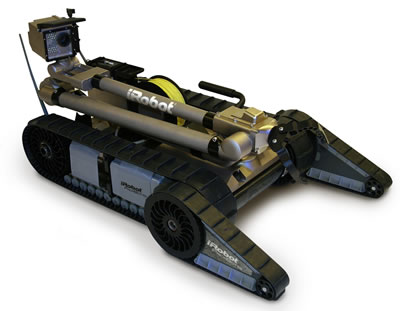
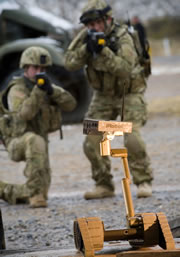


    iRobot will use the same propulsion concept for the 10 kg Small UGV (SUGV) platform for the US Army FCS program, as well as a 150 kg class Warrior (formerly NeoMover) heavy battlefield robot.

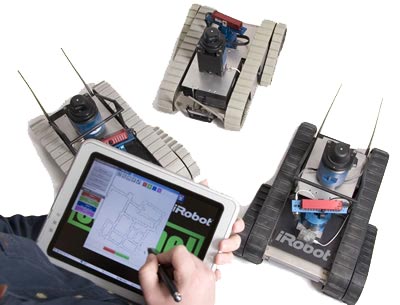
    In October 2006 iRobot launched the Sentinel program, introducing new capabilities to control multiple robots by a single operator. Sentinel will coordinate multiple semi-autonomous robots utilizing intelligent navigation algorithms enabling each of the robots to reach their designated destination independently, overcoming obstacles without intervention from an operator. The program is funded by the U.S. Army’s Small Business Innovation and Research (SBIR) program. The system will enable operators to send PacBots teams on surveillance and mapping missions, rapidly covering a wide area.

    At AUSA 2008 iRobot launched its latest family of small UGVs called SUGV300 family of robots. A member of this new family, the SUGV320 is the robot designated for the future FCS mission (SUGV) while other versions are being produced for near term fielding, as part of the first ‘Spinout’ of the FS program. Among these are the SUGV300 designed as a basic reconnaissance lightweight robot and the SUGV310, designed for dismounted EOD missions. The ‘300 is the basic platform, without payloads, weighing only 25 lbs (11.3 kg). All the SUGV300 family robots fit into the soldier’s backpack (MOLLE) or ALICE packs, and are powered by standard BB-2590/U batteries for more than six hours of operation.

    Production

    iRobot is producing PacBots for US forces under a $43 million Naval Sea Systems Command’s Man Transportable Robotic System (MTRS) program. The company produced over 500 PacBots of different types. On July 28, 2006 iRobot announced an UK MOD order for 30 PacBot EOD robots, for deployment with British Forces in Iraq and Afghanistan. Under another contract announced in August 2006 iRobot will supply 18 PacBots to the German Bundeswehr. The initial 18 EOD systems will be delivered in 2006. The Germans have an option to buy 22 additional robots in 2007.

    British Team to Explore Vehicle Survivability Enhancements

    QinetiQ will develop and demonstrate advanced layered protection concepts, improving the survivability of armored vehicles as part of the UK Ministry of Defense (MOD) Vehicle Technology Integration Demonstrator (VTID) program. The program’s objectives are to evaluate survivability and protection solutions beyond traditional armor. The program will assess a wide range of survivability solutions, from visual awareness and sensor suites, disrupters and interceptors and ‘soft’ solutions like smoke, through to active camouflage and electric armor. Initial trials, using an FV432 vehicle demonstrator are expected in 2009.

    The £9.8 million program will span over three years and involve defense companies such as Thales UK, Ultra Electronics’ – Electrics, SciSys, SVGC, and BAE Systems, the motor racing group WilliamsF1 and teams from the York and Sussex Universities.

    QinetiQ plans to introduce ‘plug-&-play’ approach, implementing solutions that can operate independently to existing systems and improve overall levels of vehicle survivability. The program will address solutions that could be applied to both new and legacy vehicles. The program will investigate existing architectures and use underpinning research, along with previous trials, to ‘fast-track’ systems that will deliver near term benefits.

    Patriot PAC-3 Missiles To Equip Fighter Aircraft?

    Lockheed Martin will experiment with a potential air-launched derivative of the Patriot Advanced Capability – (PAC-3), for Air Launched Hit-To-Kill (ALHTK) application. The Lockheed Martin initiative began as risk assessment, concluded in April 2006 identifying the concept’s feasibility, and is now progressed to a Risk Reduction/Concept Definition Phase funded Missile defense Agency (MDA) US$ 3 million award.

    “PAC-3 Missiles would provide Combat Air Patrols or scrambled interceptor aircraft the ability to defeat cruise missiles and intercept ballistic missiles in asymmetric defense and boost phase applications” says Mike Trotsky, vice president – Air and Missile Defense at Lockheed Martin Missiles and Fire Control. The initial operational concept would fit in with North American Air Defense operational architecture, fielded at first on F-15C fighter aircraft. Future spiral development plans may aim to equip other aircraft with the capability.


    DARPA, BAE System Explore Satcom Uplink Protection

    BAE Systems will lead an industry team developing novel satellite communications (NSC) systems under a Defense Advanced Research Projects Agency (DARPA) program. The agency awarded the team an initial $10 million contract, with options for an additional $4.3 million. The purpose of this research is to exploit new methods to defend the satellite communications uplinks against electronic attack.

    “The Novel Satellite Communications program is exploiting new,” said Dr. Michael Zatman, the DARPA program manager for NSC. The research will demonstrate means to protect the space bound uplink signals against hostile jamming. The uplink is the stream of signals transmitted from the user terminal to the satellite. The means of protection will utilize advanced signal processing techniques, to ensure uninterrupted communications. The effort is expected to be completed in early 2008.

    BAE Systems led the initial effort, sponsored by DARPA, to provide testing and proof of concept of new NSC algorithms and communication techniques. The company also was one of three contractor teams leading the recently completed Phase 2 efforts to progress toward increasingly realistic satellite scenarios and future field demonstrations. Phase 3 will mature the NSC algorithm suite, design a real-time demonstration system, and develop initial technology transition plans. The full system demonstration with existing satellites will be conducted during Phase 4.

    Skunk Works and XTEND Simplify Multi-Drone Command

    0
    Lockheed Martin Skunk Works® and XTEND have achieved a major milestone in JADC2 by integrating the XOS operating system with the MDCX™ autonomy platform. This technical breakthrough enables a single operator to simultaneously command multiple drone classes, eliminating the friction of mission handoffs. From "marsupial" drone deployments to operating in GPS-denied environments, explore how this collaboration is abbreviating the data-to-decision timeline and redefining autonomous mission execution.

    From Ukraine to Taiwan: The Global Race to Dominate the New Defense Tech Frontier

    0
    As traditional defense primes face mounting competition from agile “neoprimes” such as Anduril, Palantir and Helsing, the balance of innovation is shifting toward software-defined warfare and scalable, dual-use technologies, while global industry consolidation—marked by Boeing’s integration of Spirit AeroSystems and other strategic mergers—signals an intensified race to secure control over the defense technology value chain. Our Defense-Tech weekly report highlights these trends.

    Europe’s “Drone Wall”

    0
    In early October 2025, a coordinated wave of unmanned aerial system (UAS) incursions—widely attributed to Russia—targeted critical infrastructure across at least ten European nations. The unprecedented campaign exposed the fragility of Europe’s air defenses...

    Weekly Defense Update & Global Security Assessment

    0
    Executive Summary The past week (September 18-25, 2025) represents an inflection point where strategic defense concepts have transitioned from doctrine to tangible reality. An analysis of global events reveals four primary, interconnected trends shaping an...

    U.S. Air and Space Forces Push Next-Gen Programs at the AS&C 2025 Conference and...

    0
    At the 2025 Air, Space & Cyber Conference, U.S. Air Force and Space Force leaders unveiled major updates on next-generation fighters, bombers, unmanned systems, and space initiatives, highlighting both rapid innovation and critical readiness challenges as the services race to outpace global competitors. A short version is available here, with a more detailed version for subscribers.

    TADTE 2025: Reflecting Taiwan’s Strategic Themes

    0
    The Taipei Aerospace & Defense Technology Exhibition (TADTE) 2025 crystallized around four dominant strategic themes that collectively illustrate Taiwan's comprehensive approach to defense modernization amid escalating regional tensions. Based on a detailed report by Pleronix (available upon request). Includes a Podcast discussion on TADTE 2025's highlighting Taiwan's four strategic themes beyond the post's coverage.

    Iron Beam 450 Completes Testing, Soon to Join With Operational Air Defense Units

    0
    Israel’s Iron Beam 450 high-power laser system has completed final testing, marking a major leap in air defense. Developed by Rafael, it offers precise, cost-effective interception of rockets, UAVs, and mortars, and is set for IDF deployment by 2025.