Sunday, December 21, 2025
More
    Home Blog Page 382

    Bomb-Sniffing PackBot UGVs to be fitted with Fido Sensors

    The Fido sensor detects explosives’ vapors emanating from Improvised Explosive Devices (IEDs). These sensors were tested in Iraq in 2006 and will soon be deployed on some 100 new PackBot 500 unmanned ground vehicle (UGV) robots ordered by the US Navy, managing the servcies’ robotics programs.


    The PackBot is equipped with a highly dexterous, 7-foot arm carrying the Fido sensor head and a communications interface sending explosive detection results to the Packbot Operator Control Unit (OCU). This integration model allows the Fido detector to be removed and utilized for general handheld operations in addition to the remote applications made possible by the Packbot. The manipulator arm allows the robot to place the explosive sensor close to suspicious packages and other objects, reach through car windows and under vehicles. When an explosive is detected, PackBot can use its on-board capabilities to destroy IEDs, while warfighters remain out of harm’s way.

    “The sensitivity of the Fido explosives ‘sniffer’ is comparable to that of highly trained bomb dogs, and integrating this advanced detection capability with the versatile iRobot PackBot robots will help keep soldiers out of harm’s way,” said Colin Cumming, chief technology officer of ICx Technologies.

    Inspired by the ability of bomb sniffing dogs to detect explosives, the ICx Fido Explosives Detector has the advantage of being both ultra-sensitive and capable of quickly screening packages, facilities, people and vehicles for traces of explosives. The breakthrough sensing technology behind the Fido detector supports both particle and vapor detection and allows operators the versatility and portability necessary for diverse detection and screening scenarios.

    Bulgarian MOD Terminates Helicopter Upgrade Contract with Elbit

    The Bulgarian Ministry of Defense terminated a contract for the upgrading of attack and assault helicopters awarded to Elbit Systems in 2004. Elbit Systems won the contract to modernize 12 Russian-built Mi-24 attack helicopters and six Mi-17 transport helicopters offering €57 million (about US$74 million) beating competition from BAE Systems, Sagem and IAI.


    The program faced serious obstacles immediately after the selection was announced as the Russian manufacturers of the helicopters and engines protested that the program withheld permit to authorize the work and refused to support their engines. The Bulgarian Ministry of Defense reluctantly pursued with the program under a Bulgarian court order.

    The issue was resolved during recent meetings between Bulgarian Minister of Defence Vesselin Bliznakov and Elbit chief executive Josef Ackerman. Bliznakov and Ackerman agreed that the deal was scuppered by circumstances of international dimensions beyond their control. According to Elbit Systems, the cancellation discussions with the Bulgarian Ministry of Defense have been based on appropriate compensation to Elbit. The contract will most probably go to the local defense firm Terem.

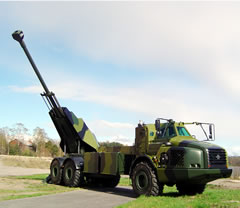
    Archer Self-Propelled 155 mm artillery gun

    Archer is a self-propelled 155 mm artillery gun system based on a commercial off-the-shelf chassis – originally made for construction equipment – that is both easy and economical to maintain. The gun can be operated by a three-man crew. Due to the rapid rate of fire and autonomy, an Archer gun will provide the same lethality as four to six traditional guns. The gun is designed to fire intelligent ammunition, striking at targets range of up to 60 kilometers with high accuracy.

    In September 2006 BAE Systems Bofors has received a contract worth SEK 40 million (US$5.5 million) from the Swedish Defence Materiel Administration for detailed design work on the Archer self propelled, truck based 155mm artillery gun program. The contract includes an additional option worth up to SEK 50 million (US$6.8 million). BAE Systems Bofors previously delivered two demonstrator guns that are now undergoing testing by the Swedish Armed Forces. Order of the final development of a series of 24 guns, to equip two artillery battalions is planned for 2007-2008 with the first delivery in 2009. Final delivery is scheduled for two years later.

    In January 2007 BAE Systems received a SEK 100 million (US$ 14 million) contract from the Swedish Defence Materiel Administration for the next phase of the Archer program, supporting continued development of the gun system and the product definition phase on ammunition supply vehicle and modular charges.

    Airborne Laser Mine Detection System (ALMDS)

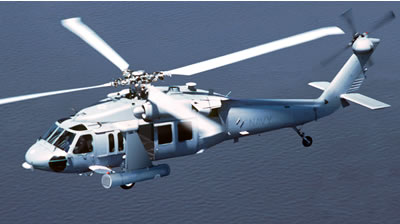
    The U.S. Navy took delivery of the first Airborne Laser Mine Detection System (ALMDS) pod developed and produced by Northrop Grumman Corporation (NYSE: NOC). The ALMDS system is designed to operate from the MH-60S helicopter, using a Laser Imaging Detection and Ranging blue-green laser to detect, localize and classify near surface, moored and floating sea mines. The U.S. Navy plans to field up to 45 ALMDS systems between 2009 and 2018.


    The ALMDS system is designed to operate from the MH-60S helicopter, using a Laser Imaging Detection and Ranging blue-green laser to detect, localize and classify near surface, moored and floating sea mines.

    According to A. Humes, U.S. Navy’s mine warfare program manager, ALMDS has no in-water components, contributing to faster sweeps, shortening detection timeline and maximizing the helicopter’s time on station.

    ALMDS is an important element of the mine warfare mission package designed for the Littoral Combat Ship (LCS). LCS will host five airborne mine countermeasures systems, developed to provide aircraft carrier battle strike groups and expeditionary strike groups with full-spectrum organic mine hunting and reconnaissance capability.

    Northrop Grumman produced ALMDS under a $35.7 million contract awarded in April 2006 for a low-rate initial production (LRIP) of two AN/AES-1 ALMDS pods. Within few months (spring 2007) the company plans to start producing two more pods following developmental testing. The third LRIP contract and full rate production are planned in 2009 and 2010 respectively for an additional eleven pods. The Navy plans to buy 45 ALMDS pods between now and 2018.

    US Air Force’s KC-X Aerial Tanker Replacement Program

    The U.S. Air Force released yesterday (Jan. 30, 2007) the Request for Proposal for the KC-X Aerial Refueling Aircraft, officially launching the Air Force’s highest priority acquisition program in recent years. According to Sue C. Payton, the Air Force’s senior acquisition executive, the RFP reflects the Air Force effort to minimize development risk among differing aircraft manufacturers and types. The KC-X program is the first of three acquisition programs the Air Force will need to replace the entire fleet of aging KC-135 Stratotankers, which have been in service for more than 50 years. The KC-X program will be worth $30-40 billion. The projected life cycle cost of the new tankers has been estimated at $200 billion. The Air Force plans spending about $8.2 billion until 2010 on development and testing, and expects the first squadron of 16 aircraft to become operational by 2013. Two teams are running for the program, one led by Boeing, offering the KC-767 and the other, led by Northrop Grumman teamed with EADS offering a militarized version of the Airbus A330 designated KC-30.

    Boeing formally announced it will offer an advanced tanker based on the KC-767-200 Long Range Freighter for the USAF KC-X program. Boeing’s Global Tanker Team producing the KC-767 Advanced Tanker includes Smiths Aerospace, Rockwell Collins, Vought Aircraft Industries, Honeywell and the newest member – Spirit AeroSystems. AMong the innovations included in the aircraft are advanced fly-by-wire boom, new wing refueling pods, a centerline hose drum refueling unit, and advanced 777 commercial digital flight deck and a third-generation remote vision refueling system.

    KC-767 demonstrates refueling of a USAF B-52 Bomber  during flight test. The aircraft is one of four KC-767s ordered  by  Italy. Image: Boeing media

    The primary mission of the KC-X will be to provide aerial refueling to United States military and coalition aircraft in the war on terrorism and other missions. However, the Air Force also intends to take full advantage of the other capabilities inherent in the platform, and make it an integral part of the Defense Transportation System.

    An artist impression of a KC-30 refueling  F/A-18 Hornets. Image: Northrop Grumman

    “The Air Force aerial tanker is essential to all Air Force and joint global operations,” said Lt. Gen. Donald Hoffman, the military deputy for acquisition. “It allows the joint force to project mobility, strike and surveillance forces anywhere and anytime without relying on intermediate bases for refueling.” The RFP identified nine primary key performance parameters: addressing air refueling capabilities, including fuel, receiving fuel by aerial refueling from other platforms, and range at least equal to those of the existing KC-135. A new capability addressing joint operations will be the provisioning for a multi-point refueling system, to support Navy and allied aircraft. “Tankers put the ‘global’ in global power” Said General Hoffman. In addition to its primary refueling capability, KC-X will be able to provide airlift capability and have the means to network into the information available in the battle space. The aircraft will be equipped with advanced avionics suite, compliant to Communication, Navigation, Surveillance/Air Traffic Management (CNS/ATM); self protection and force protection means will include defensive systems and electro-magnetic pulse hardening and chemical/biological protection measures.

    The EADS CASA’s A310 Boom Demonstrator Aircraft has done, on January 30, 2007, its 12th test flight and the boom has been successfully deployed for the first time.Boeing is currently building four KC-767 tankers each for Italy and Japan. The aircraft has logged more than 200 flights and 600 hours during its flight test program. It is equipped with two wing mounted aerial refueling pod systems and an advanced boom system, derived from existing designs. The new boom can transfer 900 U.S. gallons (3,400 liters) of fuel per minute. Providing more precise and responsive controls to the operator, the boom automatically corrects its position to reduce potential damage to the receiver aircraft.

    The KC-30 is expected to use the new Air Refueling Boom System (ARBS) developed by EADS. It also will soon equip the fleet of five EADS KC-30B tanker aircraft ordered by the Royal Australian Air Force. With a maximum nominal fuel flow rate of 1,200 U.S. gallons per minute, the ARBS utilizes fly-by-wire controls and features an automatic load alleviation system that provides a larger refueling envelope and enhanced controllability. The system’s all electric design significantly reduces traditional failure rates and subsequent down times. Using a 3D-vision surveillance system, the boom operator can remotely control ARBS operations from the cockpit during air-to-air refueling.

    The Royal Australian Air Force’s first KC-30B Multi-Role Tanker Transport currently is undergoing its outfitting process, during which the aircraft will be equipped with a centerline ARBS, a pair of under-wing pods with hose and drogue refueling systems (the same fourth-generation model series as currently in operational service on the U.S. Air Force MC-130 and the EADS A310 tankers flown by Canada and Germany), and an electronic warfare self-protection suite for defense against surface-to-air missiles.


    Mobile Obliteration Platform (MOP)

    The Mobile Obliteration Platform, (MOP) was designed by SRI to combat Improvised Explosive Devices (IEDs). The system uses a low cost wirelessly controlled platform mounting SRI’s Engineered Neutralization and Dispersion Source (ENDS), combines a fragmentation panel placed on an explosive sheet made of low-pressure explosive, backed by a tampering plate. MOP can be controlled from a distance of up to 875 yards (800 meters), utilizing low-cost video camera and radio control. The device is guided to the suspicious object and explodes in a directional pattern, rendering the IED safe without initiating the charge. The effect is localized to a distance of versus tens, sometime hundreds of meters of safe withdrawal distance necessary for conventional techniques that involve in-place IED detonation. MOP is designed as an affordable, expendable system, expected to cost around US$1,000 per unit when ordered in large numbers.

    Navy Set to Test new MRAP Armored Vehicles from Nine Contractors

    (This item is dated January 2007, Click here for a more update version)
    Update: Three MRAP Producers will Share future Orders Worth $8.2 Billion

    The Pentagon plans to phase out its armored Humvees in Iraq and Afghanistan and send in vehicles that better withstand roadside bomb blasts, Defense Secretary Robert Gates said Wednesday (May 10, 2007).

    The U.S. Navy evaluated nine suppliers for the procurement of Mine Resistant Ambush Protected (MRAP) trucks, destined to augment and later replace up-armored HMMWVs currently operating in Iraq and Afghanistan. The new vehicles provides much improved protection , specifically against Improvised Explosive Devices (IEDs), which cause 70% of all U.S. casualties in Iraq.
    Golan armored vehicle, designed by PVI. in cooperation with RAFAEL, is proposed for the USMC MRAP program as well as the Israeli Army future heavy wheeled armored vehicleThe initial phase of the joint services program, expected to cost over US$2 billion is being managed by the US Marine Corps. However, given the poor performance of light armored vehicles in Iraq and AFghanistan, the realistic requirement for MRAP is currently estimated by the Marines to be in excess of 7,700 vehicles, worth an approximate $8.4 billion. Some 3,700 MRAPS will go to the USMC while the Army plans to buy 2,500. The Army is expected to get more than what it currently plans, if priorities are changed. MRAP is the “highest priority Department of Defense acquisition program,” Gates wrote in a memo send in early May 2007 to the secretaries of the Army and Navy.

    Previous MRAP models (including Cougar JERRV and Buffalo mine protected trucks) are currently in service in Iraq and AFghanistan. These armored vehicles have a proven record of saving lives by augmenting the current level of mine, rocket propelled grenades and improvised explosive devices (IED) protection with a V-shaped hull and raised chassis.

    Of the total 4,100 vehicles, 1500 will be Category I Mine Resistant Utility Vehicle (MRUV) (designed for the US Marines and U.S. Navy use) while 2,600 will be Category II Joint Explosive Ordnance Disposal Rapid Response Vehicle (JERRV) destined mostly for U.S. Army units. In total, the Army will get 2,500 vehicles, the USMC: 1,022 and Navy: 538. MRAP, considered to be better protected against IEDs, mines and, if required — RPGs, is expected to significantly improve the protection of troops deployed in Iraq and Afghanistan. The vehicle will use bullet-proof armor and are designed with V shaped hull, deflecting the blast effect created by mines or IED explosions.

    This design was proposed by GPV for the MRAP program. the company was one of nine selected to provide vehicles for testing.Textron Marine is proposing the battle proven ASV for tboth MRAP classes, one carrying a crew of six and the larger version, carrying ten warfighters.


    The U.S. Navy program office has allocated over US$34.5 million for the initial evaluation phase of 36 vehicles. Nine contracts have been awarded last week to most producers of armored vehicles, excluding AM General, (AMG) the producers of the HMMWV, which will continue production of the lighter, Up Armored vehicle under existing programs. The joint venture between AMG and AMG Each company will deliver four test vehicles (two per category), within 60 days. Among the contractors are some of the well established names, such as BAE Systems, GDLS and Force protection, and truck producers Oshkosh, International and Stewart & Stevenson (Armor Holdings) but also smaller producers of special armored vehicles, such as New Haven, Michigan based GPV and PVI, based in North Charleston, S.C. The full list of MRAP contractors include:

    • BAE Systems, Ground Systems Division –RG-31RG-32RG-33
    • Oshkosh Truck Corporation
    • Protected Vehicles, Inc. (PVI) – Golan
    • General Dynamics Land Systems – Canada Corporation, Canada
    • Force Protection Industries, Inc., Ladson, S.C. – Cougar
    • Armor Holdings, Inc.
    • Textron Marine & Land Systems, New Orleans, La. – ASV
    • General Purpose Vehicles, LLC. (GPV)
    • International Military and Government LLC (APC)

    An armored cab installed on an FMTV truck is proposed by Armor Holdings for teh MRAP program
    Due to the tight procurement schedule, only commercially available designs were considered. The vehicle should be designed for off-road and highway mobility, and be configured for personnel, cargo and litter transportation. The larger (JERRV) vehicle should have a payload capacity of 5,000 lbs, and will be able to carry 6 – 10 troops. The vehicle will be configured to carry existing gunner protected turrets or remotely controlled weapon stations, enabling the gunner to load, operate and engage targets from fully protected positions. To improve recovery after mine damage, the vehicle will be built of modular components that could break away from the vehicle in the case of a blast. Its energy absorbing seats should be capable of withstanding the accelerative effects of mine blasts.

    The armor protection of the vehicle include mine protection and ballistic protection of the full, roof protection from overhead airburst and side protection against fragmentation and blast. The transparent armor windows will have protection level equal to or greater than that of the ballistic armor on the vehicle, and will have built-in gun-ports. RPG protection could also be an option.

    This Armor Protected Vehicle design proposed by International,.utilizes the V shaped hull, installed on a conventional truck chassis.

    Electrically Fired Munition Launcher

    The Metal Strom launcher is packed with electronically initiated, stacked projectiles, eliminating the mechanisms required to fire a conventional weapon. Effectively, the only parts that move in this system are the projectiles contained within the barrels.

    Each projectile has its own propellant load, such that the leading propellant can be reliably ignited to fire the projectile, without the resulting high pressure and temperature causing unplanned blow-by ignition of the following propellant load, and without collapse of the projectile column in the barrel.

    The barrel is electronically programmable rates of fire from single shots to ultra-rapid rates. Barrels are practically serviceable weapons; they can be grouped in multiple configurations for different applications. For example, different projectiles can be loaded on a single package, offering a single platform and a single gun multiple calibers and multiple lethalities, adaptable to specific situation.

    Commercial Chassis, Modular Hulls Proposed for MRAP

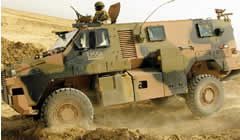
    Two truck manufacturers Oshkosh and International were selected among nine companies proposing vehicles for the Mine Resistant Ambush Protected (MRAP) program, each providing two Category I and two Category II vehicles for testing. The Category I vehicle is the smaller of the two vehicles, intended for urban operations and referred to as the Mine Resistant Utility Vehicle (MRUV). The Category II vehicle is a larger platform, designated as the Joint Explosive Ordnance Disposal Rapid Response Vehicle (JERRV), and is designed to carry up to 10 passengers on multiple types of missions. Oshkosh is submitting the Australian combat proven Bushmaster armored vehicle as its proposed vehicle for MRAP. The vehicle is currently operated by the Australian Army in Iraq.

    International Trucks and Engines has teamed with the Israeli armor expert Plasan Sasa to provide MRAP vehicles. The two companies have already completed another armoring design, fitting add-on armor cab to the MXT-MV utility vehicle.

    An up-armored truck designed by International for the MRAP program produced by International


    International’s trucks will utilize a modular concept to armor its trucks for the MRAP bid. The design maintains the standard chassis to ensure commonality and enable worldwide support, while assembling the modular, V-shaped crew compartment hull on top. The V-shaped hull helps to deflect any blasts from underneath the truck to dissipate around the crew area, minimizing damage. The chassis types selected for the bid include commercial trucks built to carry heavy loads, therefore accommodating the weight of protective armor built into the truck design. This design maintains the vehicle’s maneuverability even under full loads.

    International’s has an armor integration center in Mississippi, and is teamed with Israeli armor expert Plasan Sasa to design and produce the protection suit for International’s MRAP model. In March 2007 the company will deliver to the U.S. Marines four vehicles for testing.

    Armor Holdings is designing an armored hull to be installed on the FMTV truck chassis, produced by its subsidiary Stewart Stevenson. (below)

    Armor Holdings is proposing the up-armored FMTV for MRAP

    Israel to order more JDAMs

    The Israel air force plans to spend about US $100 million to replenish stocks of precision guided weapons used during the month long conflict with Hezbollah in Lebanon. This procurement will exercise options to buy JDAM weapon under a 2004 contract for the procurement of up to 5,000 Joint Direct Attack Munition (JDAM) of different types.

    In the past, the IAF used JDAM kits with locally used 2,000 pound warheads, including MK-84 (200 pound), BLU-109 penetration warheads, MK-83 1000 pound and MK-82 500 pound bombs. The IAF was the first international customer to receive JDAMs in the year 2000. Since then, 12 additional international customers have purchased JDAM. As a result of heavy usage during Operation Enduring Freedom (Afghanistan), production numbers were extensively increased. As of January 2006, Boeing has delivered more than 145,000 JDAM tail kits. In 2006 Boeing produced 3,000 JDAMs every month, responding to requirements of about 230,000 JDAM kits in several configurations to fit the various warheads.

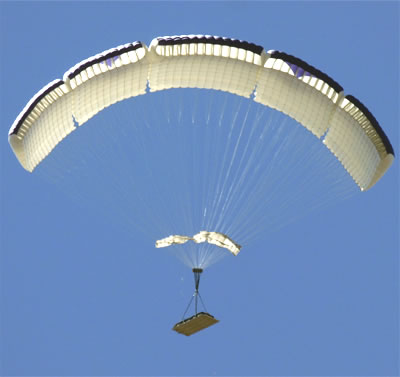
    Mega-Fly – Autonomously Guided Parafoil Based Heavy Load Delivery System

    The MegaFly, developed by Para-Flite to meet these requirements was first tested in October 2006, demonstrating the delivery of 25,000 pound (11.3 ton) cargo from an altitude of 25,000 feet. The system uses a 9,000 square foot, fully elliptical, gliding parachute, with a 170 feet span, approximately 20 feet less than the wingspan of a Boeing 747. It can fly autonomously via GPS guidance for distances up to 40 kilometers to a designated point on the ground. The MegaFly is composed of five modular segments which can be separated after the drop to facilitate recovery on the drop zone. In most wind conditions, the Para-Flite JPADS systems can land on a roadway 200 meters long by 40 meters wide. This equates to a 75% reduction in Landing Zone required area when compared to Circular Error Probable (CEP). This type of landing strategy also increases the total number of suitable Landing Zones and decreases recovery time.

    Small, Tactical UAS (Tier II) Pursued by US Navy and Marines

    The U.S. Navy UAS program office PMA-263 is planning to expand the family of unmanned aerial systems (UAS) operated by the Navy and Marine Corps. Currently the services use the Pioneer Tactical UAV (known as Tier III) which will be sustained in service until 2009, when the new Vertical Takeoff UAV (VTUAV) is expected to mature. The USMC also operates the miniature Dragon Eye (Tier I). The Marine corps are also provided with Intelligence, Surveillance and Reconnaissance (ISR) services performed by Boeing, with its ScanEagle UAS.


    PMA-263 intends select a Small Tactical UAS (known as STUAS or Tier II UAS) in a competition to be opened by fall 2007. The required system would deliver persistent intelligence, surveillance, and reconnaissance support for tactical level decisions and unit level defense, as well as protecting Navy ships and Marine Corps land forces.

    The STUAS / Tier II is scheduled to reach initial operational capability in FY 10. The Marine Corps Warfighting Lab in Quantico, Virginia, has begun a Tier II UAS concept demonstration effort utilizing MTC’s SpyHawk UAS. This system will serve as a test bed for developing concepts of operation; techniques, training and procedures (TTPs); new technologies; and advanced payloads. SpyHawk is capable of flying missions of up to 12 hours endurance in day and or night. The payload provides accurate geo-referenced imagery with target tracking capability and laser illuminator.

    During the three year evaluation program, the Warfighting lab plans to employ the Spyhawk to evaluate both electric motor and heavy fuel engine propulsion. Various sensors will be tested, including advanced electro-optical/Infrared as well as multi- and hyper-spectral imaging sensors, laser designator, miniature Synthetic Aperture Radar (SAR) sensors. Other payloads to be tested include communications and data relays and signals intelligence (SIGINT).

    US Navy Invests $1.6m. to Test Smart Armor for the US Marine Corps

    Solidica, Inc. will demonstrate a ‘smart armor’ concept under a US Marine Corps program funded by US$1.6 million award. The program will demonstrate how an armor, embedded with special sensors can perform damage assessment immediately after being effected by hostile fire and alert the vehicle’s health management system about the level of damage suffered in combat. The program is focused on the development of retrofit ‘smart armor’ kits for Light Armored Vehicles.


    Solidica will embed its proprietary Gradient-Modulus Energy Absorbing Material (GMEAM) technology into ceramic armor tiles. The sensors are being integrated into the armor tile during production, through a unique material embedding process called “Ultrasonic Consolidation”, which produces compound materials (ceramics and metals) tailoring the specific product characteristics (weight, reinforcement, impact absorption etc). This low-heat, low-impact formation process enables the embedding of Micro-Electronic and Mechanical Systems (MEMS) directly onto a metal substrate.

    According to John McGinnis, Solidica’s Director of Military Programs, each of the new armor tiles will have an embedded “Pantheon” sensing, diagnostic and telematic sensor integrated with wireless communications, creating a wireless grid which enables smart sensor nodes embedded throughout the armor. This award follows an earlier program launched in 2005, which demonstrated the feasibility of embedding fiberoptics sensors directly within the armor components.

    PSDS2 – Persistent Surveillance and Dissemination of Systems

    Persistent Surveillance and Dissemination of Systems (PSDS2) was established to address an urgent requirement for time sensitive targets engagement capability. The system was developed and fielded by Raytheon in 110 days. PSDS2 integrates various sensors, including artillery and mortar spotting radars, acoustic sensors, aerostat born RAID and PTDS systems and airborne UAVs. Automatic detection, cross cueing and correlation of sensors and fire units are employed. PSDS2 facilitates a centralized collection and storage of imagery and intelligence, supporting near-real-time and offline forensics and look-back for up to 24 hours. Sensor data is embedded on a terrain model enabling the commander to see enemy actions in perspective to sensor location and orientation.

    Skunk Works and XTEND Simplify Multi-Drone Command

    0
    Lockheed Martin Skunk Works® and XTEND have achieved a major milestone in JADC2 by integrating the XOS operating system with the MDCX™ autonomy platform. This technical breakthrough enables a single operator to simultaneously command multiple drone classes, eliminating the friction of mission handoffs. From "marsupial" drone deployments to operating in GPS-denied environments, explore how this collaboration is abbreviating the data-to-decision timeline and redefining autonomous mission execution.

    From Ukraine to Taiwan: The Global Race to Dominate the New Defense Tech Frontier

    0
    As traditional defense primes face mounting competition from agile “neoprimes” such as Anduril, Palantir and Helsing, the balance of innovation is shifting toward software-defined warfare and scalable, dual-use technologies, while global industry consolidation—marked by Boeing’s integration of Spirit AeroSystems and other strategic mergers—signals an intensified race to secure control over the defense technology value chain. Our Defense-Tech weekly report highlights these trends.

    Europe’s “Drone Wall”

    0
    In early October 2025, a coordinated wave of unmanned aerial system (UAS) incursions—widely attributed to Russia—targeted critical infrastructure across at least ten European nations. The unprecedented campaign exposed the fragility of Europe’s air defenses...

    Weekly Defense Update & Global Security Assessment

    0
    Executive Summary The past week (September 18-25, 2025) represents an inflection point where strategic defense concepts have transitioned from doctrine to tangible reality. An analysis of global events reveals four primary, interconnected trends shaping an...

    U.S. Air and Space Forces Push Next-Gen Programs at the AS&C 2025 Conference and...

    0
    At the 2025 Air, Space & Cyber Conference, U.S. Air Force and Space Force leaders unveiled major updates on next-generation fighters, bombers, unmanned systems, and space initiatives, highlighting both rapid innovation and critical readiness challenges as the services race to outpace global competitors. A short version is available here, with a more detailed version for subscribers.

    TADTE 2025: Reflecting Taiwan’s Strategic Themes

    0
    The Taipei Aerospace & Defense Technology Exhibition (TADTE) 2025 crystallized around four dominant strategic themes that collectively illustrate Taiwan's comprehensive approach to defense modernization amid escalating regional tensions. Based on a detailed report by Pleronix (available upon request). Includes a Podcast discussion on TADTE 2025's highlighting Taiwan's four strategic themes beyond the post's coverage.

    Iron Beam 450 Completes Testing, Soon to Join With Operational Air Defense Units

    0
    Israel’s Iron Beam 450 high-power laser system has completed final testing, marking a major leap in air defense. Developed by Rafael, it offers precise, cost-effective interception of rockets, UAVs, and mortars, and is set for IDF deployment by 2025.