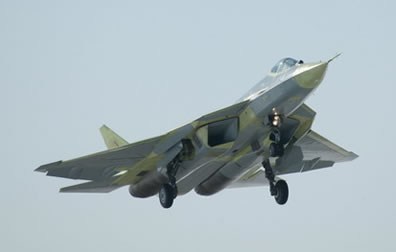
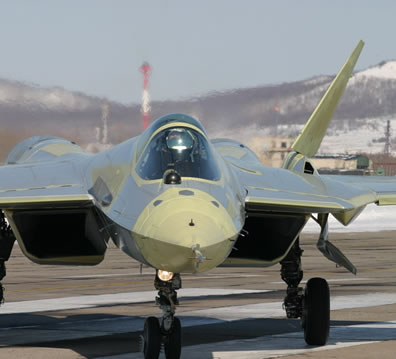
Sukhoi T-50 (PAK FA) is to provide the baseline for India's 5th generation fighter aircraft (FGFA) program, to be developed under cooperation between India and Russia. Photo: Irkut.
The head of the Indian Air Force, Air Chief Marshal Pradeep Vasant Naik attended a flight demonstration of the newest Russian fighter aircraft, the Sukhoi T-50 (PKA FA) at Gromov Flight Research Institute at the city of Zhukovsky near Moscow. The demonstration also included a flight of the modernized MiG-29UPG, an upgraded version destined for teh Indian Air Force, to introduce an avionics suite common with the MiG29K/KUB carrier-based fighters India is buying for its aircraft carriers. The Indian Air Force commander was hosted by Mikhail Pogosyan, President of the United Aircraft Corporation, General Director of Sukhoi and RSK MiG, and representatives of the Russian arms export conglomerate Rosoboronexport.
The second prototype of the Sukhoi T-50 takes off on its maiden flight, March 3, 2011 at Komsomolsk - on - Amur. Photo: Sukhoi.
India and Russia are cooperating in the development of a 5th generation fighter under the ‘Fifth Generation Fighter Aircraft’ (FGFA) program, to be based on the T-50, to be the largest cooperative project undertaken by the two countries. The cooperation agreement was signed on 18 October 2007 in Moscow and reiterated in December 2010, during the visit of Russian President Dmitry Medvedev to India. Under the FGFA program, Rosoboronexport company, Hindustan Aeronautics Limited (HAL) and Sukhoi signed the development agreement, covering the design, development, and necessary production engineering preparing for manufacturing of the aircraft in both countries.
The modernization of MiK-29 for the Indian Air Force is ongoing since March 2008. The first 6 aircraft are undergoing overhaul and modernization at the RSK MiG facilities. “More than 90% of aircraft will be finalized in India on one of the Indian Air Force repair facilities, using kits supplied from Russia” Pogosian said. These modernized MiG-29 will be equipped with an advanced avionics, common with the avionics provided for the naval version MiG-29K/KUB ordered by the Indian Navy.
The modernized MiG-29UPG avionics suite selected for the indian upgrade includes a unique cllection of systems provided by Russian, Indian French and probably Israeli suppliers, enabling the new aircraft to integrate with the Indian air defense command and control network and operate specific weapon systems. The Indian avionics suppliers mentioned by the official announcement include HAL and Bharat Electronics Ltd. Names of the French suppliers or identity of Russian or Israeli companies was not available. Delivery of the first upgraded aircraft to the customer in 2011.
The visit was first high level interaction between Russian and Indian officials after Russia lost the race for the IAF’s Medium Multi-Role Combat Aircraft (MMRCA) last month.
Sukhoi T-50 (PAK FA) is to provide the baseline for India's 5th generation fighter aircraft (FGFA) program, to be developed under cooperation between India and Russia. Photo: Irkut.
Benjamin S. Lambeth’s study of the 2nd Lebanon War and, particularly the role of the Israel Air Force, is highlighted in a new report published by the Rand Corporation Project AIR FORCE. The 388 page study covers the campaign in details, pointing to the roots of some of the flaws demonstrated by Israel’s military during the campaign. Lambeth determines that Israel’s disappointing performance in its 34 day war against Hezbollah in Lebanon in 2006 did not reflect a “failure of air power,” but rather a failure of Israel’s political and military leaders to properly assess the enemy, set achievable goals, apply an effective strategy and adequately manage public expectations.
While these facts have already been recognized by critics in Israel and abroad, Lambeth goes deeper in his analysis, assessing the validity of Israel’s leadership preference on stand-off attack in the first phase of the conflict. According to Lambeth, this strategy or any other military alternative could not meet the ambitious targets goals set by the Israeli Government at the first day of the War, when Prime Minister Olmert insisted on the unconditional return of the two kidnapped soldiers and a permanent removal of Hezbollah as a viable fighting force in southern Lebanon. These unrealistic goals further contributed to derailing further efforts in the following days, that only led to the escalation of the conflict.
“For the most part, in those mission areas in which it naturally excelled, the Israeli Air Force performed to its usual high standards of competence throughout the engagement,” Lambeth said. “The government’s greatest misstep was taking an overly unreflective view of what military power of any kind, unaided by a coherent and effective strategy, could accomplish when the declared goals were so ambitious and the Israeli Defense Forces’ ground troops were so unready. That misstep had nothing to do with the strengths or limitations of air power.”
When the conflict ended following a mutually agreed cease-fire, those unrealistic goals remained unmet, and the Israeli Defense Forces proved unable at any time to stem the daily barrage of rockets that Hezbollah fired into civilian population centers in northern Israel, according to the study.
In this study Lambeth covers in details the overall campaign, IAF air oprrations planning and execution, including stand-off attacks, ISR operations, air operation coordination, ground support and the unsuccessful ‘Katyusha Hunt’, pressing time-sensitive-target (TST) engagement to the absolute limit of what the most advanced technology of the 2000’s could offer.
MetalStorm has developed the FireStorm as a scalable, modular platform adaptable for manned or unmanned operations, mounting up to 40 barrels, each containing six ready to fire projectiles. The system seen here is configured with the 'Redback' 4 barrel weapon station mounted on an iRobot Warrior heavy UGV. Photo: MetalStorm
Metal Storm has introduced today the ‘Fury’, a new member of the ‘FireStorm’ weapon system family. Defined by the company as a ‘High Intensity Multi-Barrel Weapon Systems’ Fury is designed as a modular scalable system, mounting up to 30 barrels. Each barrel is loaded with up to 6 rounds, delivering a maximum burst fire-rates of up to 20,000 rounds per minute with 40mm grenades.
This iRobot Warrior heavy UGV carries a FireStorm prototype is configured with four barrel launchers, each carrying up to six grenades, mounted on the 'Redback' 4 barrel weapon station. Photo: MetalStormA model of the new Firestorm Fury, mounting 24 barrels (12x40mm, 12x18mm) stacked on remotely controlled pedestal, along with FireStrom's standard electro-optical payload and operating system. Photo: MetalStorm
The barrels are grouped into ‘pods’, mounted on pedestals providing elevation and traverse control. The system is typically carried on remotely operated vehicles or manned vehicles. FireStorm Fury weapons are currently configured for 40mm and 18mm calibre payloads, though other calibres up to 60mm can be accommodated if required. Metal Storm has been demonstrating its FireStorm products to military forces and is planning several more demonstrations in the second half of 2011.
FireStorm Fury was designed as a compact, high firepower weapon system that operating in either non-lethal or lethal modes. The Fury uses the modular Metal Storm weapons technology, Metal Storm can configure FireStorm Fury weapons to meet specific user requirements in terms of barrel numbers, calibres, total payload and mount control systems. According to Mr. Peter Faulkner, Metal Storm Inc. President, the business strategy behind the FireStorm family of products was to create a configurable multi-purpose weapon system that embodies the best of Metal Storm’s advanced technologies. “A single purpose weapon system can address only a small market segment“, he said. “The FireStorm Fury system is designed to readily adapt to varying needs through re-configuration, allowing Metal Storm to deliver products faster and to a broader market.”
The new system design is derived from feedback from the company’s FireStorm four barrel 40mm weapon system, and assessments of user requirements, as evolved from Metal Strom’s work with the US Marines Corps’ Mission Payload Module (MPM) Program. This feedback indicated a clear opportunity in the market for a Metal Storm weapon with a much higher payload capacity. “What we have learned is that customers really like the capabilities of FireStorm but they also want the capacity for greater forceful effects on threat targets, and more sustained firepower in an engagement before having to reload” explained Metal Storm CEO, Dr Lee Finniear. “With the increase in civil unrest around the world we expect strong demand for its non-lethal capabilities, while for combat operations its lethal firepower will be a significant force multiplier for any armed light vehicle compared to existing weapon systems”.
Metal Storm's electronic firing systems were recently tested as part of the U.S. Marine Corps' Multi-Purpose Munition system, firing lethal and non lethal 40mm munitions. Photo: Metal Storm
“A vehicle mounted FireStorm Fury will be a game changer in offensive military operations” said Faulkner, outlining some of the possible uses of the new system. As a lethal weapon firing salvos of 40mm High Explosive or Enhanced Blast grenades, the new weapon system offers a compact package fitted in addition to a primary weapon system thus multiplying the firepower available for the operator. “As a non-lethal weapon it arguably provides an even greater capability improvement,” Faulkner added, explaining the system’s non-lethal firepower could enhance military forces’ capabilities to engage threats within civilian crowds. “With FireStorm Fury loaded with non-lethal ammunition, patrols can return fire causing temporary flash blindness and temporary hearing loss. This disabling effect prevents further attack and gives time to accurately neutralize the enemy fighters, minimizing deaths or permanent injuries to the civilian population.” He explained. Other missions could employ a mix of non-lethal and lethal ammunition, providing high flexibility in dealing with escalation of force in missions such as base protection and patrols. Metal Storm has recently completed the technology development of the MPM – Non Lethal Weapons System for the US Marine Corps.
MetalStorm has developed the FireStorm as a scalable, modular platform adaptable for manned or unmanned operations, mounting up to 40 barrels, each containing six ready to fire projectiles. The system seen here is configured with the 'Redback' 4 barrel weapon station mounted on an iRobot Warrior heavy UGV. Photo: MetalStorm
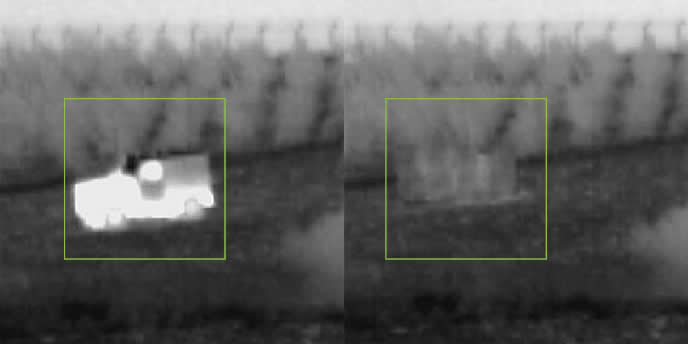
Israel’s thermal stealth innovator Eltics unveiled today a short video depicting the results of recent tests where large thermal panels installed on a Land Rover Defender vehicle managed to eliminate the vehicle’s thermal signature, totally masking the vehicle from the thermal sight’s display. Photos: Eltics
Israel’s thermal stealth innovator Eltics unveiled today a short video depicting the results of recent tests where large thermal panels installed on a Land Rover Defender vehicle managed to eliminate the vehicle’s signature, totally masking the vehicle from the thermal sight’s display.
Following a recent investment refuelling the start-up company, Eltics embarked on the development and testing of a full scale prototype of the Black-Fox active – adaptive – multi-spectral stealth system, to be able to mask a complete vehicle (both sides, front and rear). The system employs a thermal camera that samples the background view and a system processor and controller that recreates the necessary effects on the panels, blending the protected object into the background.
The company already raised 2.5 million in funding and plans to attract additional 5 million in the near future, enabling it to pursue the next stage – building and testing a full scale thermal suite in an operational test of the stealth technology. The compamy has embarked on a cooperative development with IMI, with the two companies joining forces in offering thermal adaptive signature management technology with IMI’s hybrid-reactive armor modules. The new combined module designated ‘Invisible Reactive Armor Protection’ (IRAP) will be designed to match a wide range of armored fighting vehicles.
Eltics has modified a Land Rover Defender vehicle installing multiple Black Fox panels and the signature management system (modules are shown on the hood). The system can eliminate the entire vehicle from the view of thermal sensors, or be used to depict a fake image, 'converting' the tank to look like a Jeep, and vice versa. Photos: Noam Eshel, Defense Update
By managing the heat distribution of the panels, the Black Fox system depicts a displayed across the panels, deceiving enemy sensors, therefore, making target identification, acquisition and tracking virtually impossible.
According to Ronen Meir Eltics CEO, the current system is capable of supporting an area 80 square meters of panels. This area will be sufficient to cover a large vehicle, on all sides. This installation will also employ specially designed windows that also minimize noticeable changes in thermal emissions, caused by the cooler transparent areas. The current system covers the entire infrared range, addressing thermal sensors operating in the both 3-5 and 8-12 micron wavelengths.
According to Meir, the company has also tested another function of the system – its ability to change pattern, depicting a different thermal silhouette. This function enables a ‘Black Fox’ equipped tank to ‘look like’ a truck, jeep or APC, or an air defense vehicle or missile launcher to look like an ordinary truck. These functions have significant implications in denying intelligence gathering by the enemy, by totally eliminating potential targets or misleading the enemy to regard such targets as ‘lower priority’ objects. In addition to denying enemy identification by thermal observation, Black Fox is also capable of deceiving or disrupting defending forces from being tracked or engaged by heat or Imaging Infra-red seekers.
Israel’s thermal stealth innovator Eltics has demonstrated the ability of a large, multi-element Black Fox thermal, adaptive multi-spectral camouflage suite to 'eliminate' a Land Rover Defender vehicle from the view of thermal sights. Photos: Eltics
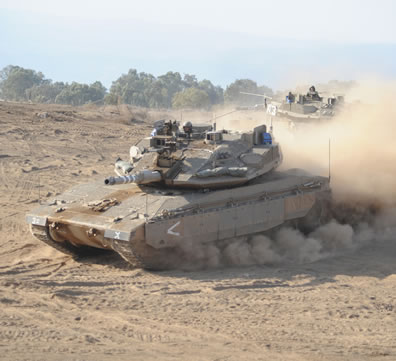
Aspro A (Trophy) mounted on Merkava Mk4M. Photo: Rafael
Israel’s involvement in the field of Active Protection Systems (APS) span over two decades, as the Merkava Program Office, managed by the Ministry of Defense and IDF Ordnance Corps, realizing that the Israeli tank, heavy as it was, could not continue adding more passive or reactive protection to match evolving threats, particularly in an asymmetric scenarios, where threats could be coming in 360 degrees. These investments are bearing fruits today. Israel’s first APS – Rafael’s Trophy has entered operational deployment last year, and has already proved itself in combat. A more versatile system, IMI’s Iron Fist, recently demonstrated impressive capabilities in intercepting anti-tank missiles and kinetic penetrators in live firing tests in Israel and overseas.
The introduction of the ‘modular armor system’ first employed in the Merkava Mk 3, and radically improved in the Mk 4, provided the first step in this direction. The system employs basic structural shell armor, applied with modular protection elements designed to meet specific threat levels. Unlike add-on protection that mounts on existing armor, adding significantly to the vehicle’s weight, the new elements replace existing armor modules, therefore maintaining minimal weight increase. A similar concept has also been developed for the Merkava-based Infantry Fighting Vehicle ‘Namer’. ‘Trophy’ was integrated into the Merkava armor shield without significantly changing the tank’s silhouette, or exceeding the turret’s contour. Providing hemispheric coverage, the system is contained in two modules, on both sides of the turret.
While the APS dramatically enhance the survivability of the tank, particularly against the modern, tandem anti-tank rockets and missiles, it also offers major advantage in terms of situational awareness and battle management. For the first time a major land-weapon system is equipped with an integral sensor, augmenting the capability of the crew to detect and localize threats – a capability fighter planes and combat vessels obtained half a century ago…
Aspro A (Trophy) mounted on Merkava Mk4M. Photo: Rafael
The RG-35 RPU's protection module is centered around a proven "crew citadel" protection approach against mine, IED's and gunfire
BAE Systems is submitting a revised version of its RG-35 for the Canadian Tactical Armored Patrol Vehicle (TAP-V). The company has released some details about the new 4×4 design – known as RG-35 RPU, designed as a mine protected reconnaissance, patrol and utility vehicle. The TAP-V is positioned as a replacement for the RG31 and Coyote reconnaissance vehicles operated by the Canadian forces. An award for up to 600 TAP-V vehicles is expected by early next year. The Canadian Defense Department has issued the Request for proposal in March and the deadline for industry proposals is July 14, 2011.
With a gross vehicle mass of 21,000kg and a payload capacity of 3,000kg, the RPU seats a driver plus 9 crew members offering MRAP protection level. Photo: BAE Systems.The RG-35 RPU's protection module is centered around a proven "crew citadel" protection approach against mine, IED's and gunfire
Designed to offer very high survivability for the crew, the protection module is centered around a proven “crew citadel” protection approach against mine, IED’s and gunfire, through a compact design optimized for reconnaissance roles. Based on the RG35’s open architecture design, the RPU is built for multiple missions. The vehicle can be modified to transport cargo, conduct routine patrols or be outfitted with cameras and other electronic for surveillance missions. With a gross vehicle mass of 21,000kg and a payload capacity of 3,000kg, the RPU seats a driver plus 9 crew members.
Force protection International has joined Canada’s aerospace and defense contractor CAE in a bid for the TAP-V. Force Protection, selected earlier by Canada as a qualified bidder, is offering the Canadian military variants of Cougar wheeled combat vehicles to meet TAPV requirements. As its main Canadian partner, CAE would have overall responsibility for the in-service support solution, including vehicle operator and mission training systems; engineering information environment; fleet management services; systems engineering support; and, lifecycle and integrated logistics support services. CAE would also be responsible for assembling a pan-Canadian team of companies to develop and support any country-specific requirements for Canada’s replacement fleet of tactical armored patrol vehicles.
The RPU is configured as a 4x4 vehicle, although the modular design of the RG-35 can be configured for a 6x6 as well. Photo: BAE Systems
Earlirt in 2011 Oshkosh Defense unveiled its prototype for Canada’s Tactical Armoured Patrol Vehicle (TAPV) program, as well as the company’s plans to work with its subsidiary, London Machinery, Inc. (LMI), to leverage that company’s new facility in London, Ontario, in pursuit of Canadian Department of National Defence (DND) vehicle programs.
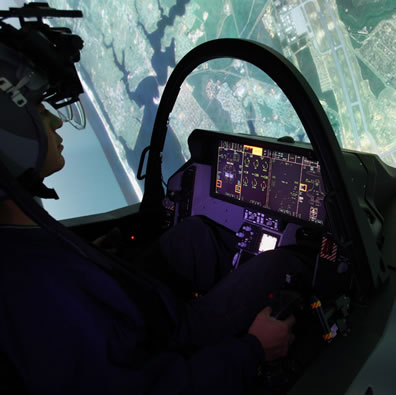
The Joint Strike Fighter FMS includes a high-fidelity 360-degree visual display system and a reconfigurable cockpit that simulates all three aircraft variants for U.S. and international partner services. Photo: Lockheed Martin
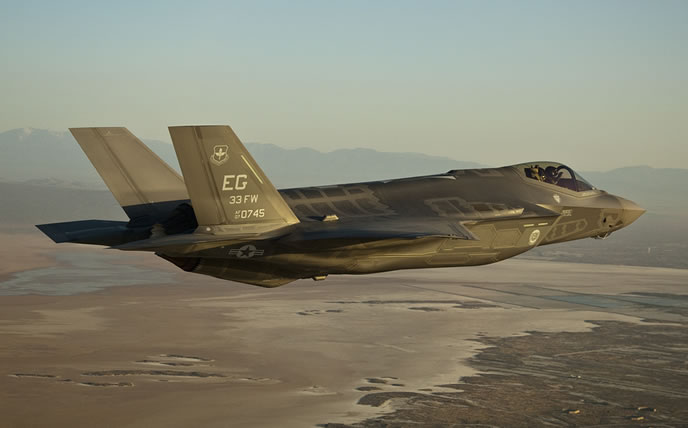
The U.S. Air Force has accepted into its fleet the first of a planned 1,763 production-model Lockheed Martin F-35 Lightning II stealth fighters. Following the official acceptance ceremony, May 5th, the F-35A jet known as ‘AF-7’ flew to Edwards Air Force Base, Calif., on Friday to begin its flight testing program. F-35s have completed more than 865 flights since flight-testing began in late 2006. In addition to AF-7, eight more production-model F-35s have rolled out and are being prepared for delivery. “This first aircraft is the beginning of the modernization of U.S. Air Force, Marine and Naval Air power and for our coalition partners around the world,” said Larry Lawson, Lockheed Martin executive vice president and F-35 program general manager. The F-35 program recorded the 300th System Development and Demonstration flight of 2011 on May 6, bringing the total number of flights for the year to 331.
The F-35 Lightning II jet known as AF-7 arrives at Edwards Air Force Base, Calif., on Friday to begin its flight testing program. Flown by Maj. Scott “Shark” McLaren, U.S. Air Force Pilot with the 461st FLTS at Edwards AFB. Photo: Lockheed MartinThe Joint Strike Fighter FMS includes a high-fidelity 360-degree visual display system and a reconfigurable cockpit that simulates all three aircraft variants for U.S. and international partner services. Photo: Lockheed Martin
Preparing for the Lightnings
At Eglin Air Force Base, preparation and assembly is underway at the base’s F-35 Integrated Training Center (ITC) for training to commence this fall. This facility will train F-35 pilots and maintainers for all partner nations and customers worldwide. On May 6, the first F-35A production aircraft destined for the Air Forces’ first operational unit at Eglin took off on its first flight. The aircraft – AF-8 will be used for pilot and maintainer training. AF-8 is the first aircraft to fly from Low Rate Initial Production lot two. Last month Lockheed Martin also delivery of the first F-35 Lightning II Full Mission Simulator (FMS) system to Eglin Air Force Base’s 33rd Fighter Wing. The simulator utilizes high-fidelity 360-degree visual display system and a reconfigurable cockpit that simulates all three aircraft variants for U.S. and international partner services.
While activity at Eglin is already beginning this year, operationally capable units are not expected to stand up before 2018. This milestone has been delayed several years from the original scheduled set after the original contract award ten years ago, as costly redesigns have slowed flight testing from the early stages, causing major delays, the latest was announced in February 2011. The recent shift has slipped the planned initial operational capability of the Air Forces’ first F-35A squadron by more than a year. With this delay, the Lightning II is also becoming more expensive. The estimated cost of the first three Low-Rate Initial Production (LRIP) lots will increase by 15 percent.
The delays are likely to affect U.S. and international customers, and reopen arguments and debates over possible alternatives. Israel, already committed to buy 20 aircraft, remains strongly supportive of the program. Last year the Israeli defense ministry allocated $2.75 billion to the acquisition of the first squadron of 20 aircraft, originally scheduled for delivery in 2016 or 2017. With the first aircraft to be delivered not earlier than 2018, the Israel Air Force and Ministry of defense remain confident the planes will become operational soon after, and the rest of the squadron’s fighters could arrive in Israel sooner than planned, as production of the aircraft will ramp up. The MOD is also hopeful that rescheduling and cost cutting measures could open new opportunities for integrating Israeli products in the aircraft. At present, only IAI and Elbit Systems are included in the F-35 program, with Elbit Systems developing the helmet display and IAI to provide Lockheed Martin with up to 900 wing sets, under a multi-year contract awarded under the industrial co-operational agreement that followed the Israeli order.
Another new development in the program was the official termination of the General Electric Rolls-Royce F-136 alternate engine for the F-35, a decision long expected, following the Pentagon’s opposition to the development of two engines for the fighters. Following the Air Forces’ announcement GE and Rolls Royce announced they will fund the program for the next 12 months, pursuing the development to the end, despite losing an important support in Congress. “Instead of being part of the problem, they have decided to be part of the solution.“ Chairman of the House Armed Services Committee, Buck McKeon, (California Rep. ) praised the team’s decision. “Instead of lobbying for the final twenty percent needed to finish the engine, the GE team has committed to funding the engine for fiscal year 12 on their own dime. I will accept and support their approach. They believe in their engine and they believe in competition. Thanks to their willingness to compromise, we’ll break up a monopoly; potentially harvest billions in savings, while fielding a more capable, more robust fighter jet – all at zero cost to the American taxpayer.”
Three distinct variants of the F-35 will replace the A-10 and F-16 for the U.S. Air Force, the F/A-18 for the U.S. Navy, the F/A-18 and AV-8B Harrier for the U.S. Marine Corps, and a variety of fighters for at least nine other countries. The world’s newest fifth generation fighter, F-35 Lightning II combines Very Low Observable stealth with high speed and agility, fully fused sensor information, network-enabled operations and reduced sustainment costs. The F-35 is capable of supersonic launch of internal weapons, including maximum-speed (Mach 1.6) launch of internal air-to-air missiles.
A Stryker technology demonstrator displayed at the 2010 AUSA defense expo shows possible enhancements, including improved suspensions and larger tires, a large unmanned turret mounting a 40mm canon, LEDS 150 active protection systems, double V shaped hull, blast attenuating seats and more. Photo: Tamir Eshel, Defense Update.
What began as an ambitious vision in the minds of Army leaders in 1999 – to build a medium-class armored vehicle able to deploy quickly, transport troops safely, and bring agility and lethality across multiple platforms – has evolved into the battle-tested Stryker vehicle now celebrating its 10-year anniversary.
288 Strykers from the 1st Stryker Brigade Combat Team, 25th Infantry Division arrive at Anniston Army Depot March 10. Photo Credit: Mark Cleghorn, U.S. Army Photographer
“Stryker really filled an interesting niche because the heavy forces were too difficult to deploy in certain austere environments,” Scott Davis, program executive officer, Ground Combat Systems, said. “But it wasn’t just the vehicles. The Army benefited greatly from the concept of putting multiple mission packages on a common platform.” Davis, who previously served as a deputy project manager with the Stryker program, said the Stryker’s mobility gives the warfighter an advantage. “The wheeled system is cheaper to operate and its sheer speed down the main supply routes has allowed it to perform escort roles and some patrolling roles that would have been very difficult to do with a tracked ground vehicle,” Davis said.
A Stryker technology demonstrator displayed at the 2010 AUSA defense expo shows possible enhancements, including improved suspensions and larger tires, a large unmanned turret mounting a 40mm canon, LEDS 150 active protection systems, double V shaped hull, blast attenuating seats and more. Photo: Tamir Eshel, Defense Update.
“Modularity was really the Army’s vision that Secretary Shinseki championed, ” said Maj. Gen. Robert Brown, commanding general, Maneuver Center of Excellence, Fort Benning, Ga. “The Army needed a force that was versatile, flexible, digitally capable and networked. The force needed to be packaged on a platform that increased mobility and could be rapidly deployed. The end result of this vision was the Army’s Stryker Brigade Combat Team,” Brown told an enthusiastic crowd. “This vision saved hundreds of my Soldiers’ lives in combat,” Brown added, referring to his years as a Stryker Brigade Combat Team commander. Brown said the Stryker vehicles under his command withstood a full range of enemy attacks to include rockets, small arms fire and improvised explosive devices.
The Stryker vehicle, combat proven in Iraq and Afghanistan, has now logged more than 27 million combat miles with operational readiness rates greater than 96 percent, said Col. Robert Schumitz, Stryker project manager.
Northrop Grumman has officially introduced its latest optionally unmanned aircraft, the Firebird. The new aircraft is positioned to deliver multi-intelligence products to military users on the ground, providing real-time high-definition full-motion video (FMV), electro-optical infrared (EOIR) and synthetic aperture radar (SAR) imagery, monitor communications signals (COMINT). Firebird is set for an operational demonstration in an optionally-piloted configuration from May 23 – June 3, 2011, during Empire Challenge 2011, a military exercise run by U.S. Joint Forces Command.
While U.S. services already operate a number of unmanned platforms for these roles, the new FireBird, Northrop Grumman has not yet been able to tap this market, as it lacked a true medium-altitude long-endurance platform of its own. “Firebird addresses future budgetary constraints by combining the best of our piloted and unmanned ISR systems into a single solution ready for a variety of ISR missions” Said Paul Meyer, vice president and general manager of advanced programs and technology for Northrop Grumman Aerospace Systems. “We’ve harnessed the innovative techniques of Northrop Grumman and Scaled Composites to deliver an unprecedented information-gathering capability.” Meyer said. As lead for the Firebird program, Northrop Grumman developed the unmanned systems architecture, control and mission systems. The company chose Scaled Composites to design, build and test the aircraft – with first flight occurring just 12 months after the initial concept discussions.
Unlike most of the competing unmanned MALE platforms, FireBird is designed to be flown as a manned or unmanned aircraft. This capability enables operations in unrestricted areas, supporting transition flights as well as supporting training exercises. From inception, Firebird was designed to be flown as a manned or unmanned aircraft and can be quickly modified for either option. Northrop Grumman refers to this as being ‘self-deployable.’ Other systems, such as Predator and Reaper, are broken down and reassembled once they arrive on station.
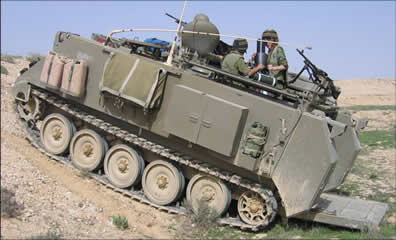
The Israeli Keshet 'automated mortar' introduces full and network-centric practices to the battalion fire support teams. Photo: IDFautomation to
Precision munitions are used in situations where accurate target coordinates can be obtained, and the type of target can be pinpointed for the attack. Furthermore, the trajectory correction maneuvers and increased drag reduce the effective range of guided munitions below the maximum range of unguided bombs. Therefore, for different combat situations, unguided mortar bombs still offer an advantage, in covering a larger area, deploying smoke or illumination, or use suppressive fire in support of friendly forces. Dramatically accelerating the rate of fire, both first-round and volleys, Elbit Systems has developed an ‘automated version’ of the advanced mortar system known as Cardom, developed by Soltam, one of the recent acquisitions of Elbit Systems.
The Cardom mortar system displayed at the Ares stand in LAAD 2011 exhibition in Brazil last month. Two types of mortar bombs provided by the company are also displayed, a standard 120mm bomb and the LG2MK laser guided kit for 120mm mortar bombs. The Cardom is providing the centerpiece of the IDF Keshet self propelled system, as well as the Stryker mortar carrier, employed by the U.S. Army. Photo: Tamir Eshel, defense Update
Cardom provides the baseline weapon-kit for the fire support vehicles of the U.S. Army Stryker Brigades. In the Israeli Army, Cardom was utilized with a new, self-propelled mortar carrier based on the BAE Systems M-113A3 platform. The system, known by its IDF designation ‘Keshet’, has been integrated with a fully automatic mortar, aiming and fire control system, reducing the mortar CEP below 33 meters, while increasing the effective range beyond 7,000 meters.
Associated with advanced fire support and target acquisition systems, both linked to the IDF digital Army system ‘Zayad’ the ‘Keshet’ is now fielded with IDF infantry brigades and will soon deploy with the IDF reserve component. The effectiveness and accuracy of the system was praised by members of the IDF experienced with the system, although the deployment was not bug free, since the association of automated targeting and indirect fire, while dramatically reducing response rate, and increasing hit accuracy, thus enabling mortars to aim closer to the supported troops.
On the far end, reducing safety margins increases the risk of fratricide, due to navigation or orientation errors by the supported unit, or other errors associated with faulty position reporting, as reflected in a fatal fratricide event earlier this year.
The Israeli Keshet 'automated mortar' introduces full and network-centric practices to the battalion fire support teams. Photo: IDFautomation to
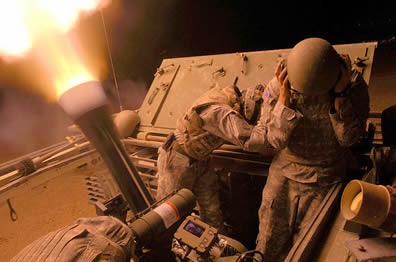
U.S. Army Stryker crew fires the Cardom 120mm mortar. Photo: U.S. Army
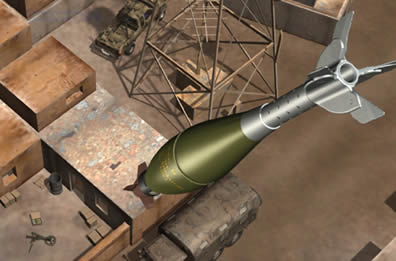
The U.S. Army is gaining more experience with precision mortars. The latest addition to its arsenal, the XM395 Precision Guided Mortar Munition (PGMM) is being employed by the 506th Infantry battalion in Afghanistan. Initial lessons with the new bomb are positive; the new guided weapons offer precision-fire capabilities, hitherto unavailable to tactical units at this level. This highly accurate bomb enables mortar teams to fire with high precision at targets, in closer proximity to friendly forces, without risking collateral damage or danger of fratricide.
The U.S. Army developed the new capability under the ‘Accelerated Precision Mortar Initiative (APMI). ATK developed the Mortar Guidance Kits (MGK) and delivered the first units in November 2010, following an extensive qualification process, achieved in less than 12 months. With the Army clearing of the new weapon for fielding, ATK received a $50 million order to deliver the kits and associated support equipment to equip all eight U.S. Army Infantry Brigade Combat Teams (IBCTs) fighting in Afghanistan, within six months.
The new guided mkortar bomb will be used alongside existing unguided mortar bombs, employed in situations where the enemy can be targeted with high accuracy, or in conditions mandating high-precision, firing in close proximity to friendly forces, or to avoid collateral damage. Prior to firing, operators input the mission data, such as target coordinates, range, altitude and fuse setting. The weapon can be programmed to explode in the air (airburst mode), on impact with a hard surface, or with a short delay, enabling it to penetrate a building roof.
PGMM provides manned outposts in Afghanistan’s with precision effects sofar available only by higher echelons, enabling Forward Operating Bases (FOB) at the remotest posts to pursue enemy targets and employ counterfire with precision, effective fire, alleviating reliance on slower, more complex fire support directed remotely by brigade or division level. Unlike the Excalibur artillery round, deployed at brigade level, guided mortar bombs are now being deployed at battalion levels and support the mission and respond to fire-support calls from the battalion’s sub-units. With the greater accuracy, precision mortar bombs can provide first round ‘fire-for-effect’, therefore helping to reduce the number of rounds required to successfully defeat high value targets.
“The 120mm precision guided munitions will allow Task Force Red Currahee to provide even more effective fires with increased lethality,” said Lt. Col. David Womack, commander of the 1st Bn., 506th Inf., commenting on his fire support company’s new capability, “The accuracy of the 120mm PGMM also reduces the potential risk of any collateral damage, (and) as a commander I have another tool available to fight the enemy.”
Elbit Systems has developed the HighWay S-band wireless broadband network to provide high speed data communications over short ranges, supporting tactical wireless data networks. Photo: Noam Eshel, Defense Update
The IDF has begun integrating high capacity IP data networking in Merkava armored battalions operating Battle Management Systems (BMS) systems. Both systems were developed by Elbit Systems. The new wirelsess communications channel employs a low-power, ‘stand-alone’ encrypted radio operating in the S-band range defined as ‘Industrial, Scientific and Medical (ISM)’. The tactical radio is designed for short ranges communications. The new unit augments the tactical network radios operating in the tank, which remains the primary voice channel.
Elbit Systems is offering the a broadband data communications channel dubbed 'HighWay', supporting tactical battle management systems (BMS). Photo: Elbit Systems
The new data channel supports the BMS with higher capacity data transfer, accelerating the transfer of commands, reports, and accelerating the refresh rate of situational updates from minutes to seconds. In the future, the IDF plans to introduce the new SDR-7200 Software Defined Radio which supports both broadband data and voice communications waveforms, along with other types of communications.
Elbit Systems’ WIN BMS is designed to support tactical units at battalion level and below, supporting all the operational tasks, including managing direct fire engagement & maneuver, management of indirect fire support, operational planning, intelligence and logistics. Elbit Systems was selected by the Israel Ministry of Defense to serve as prime contractor for the IDF program of Battle Management Systems for Battalion Combat Teams.
Elbit Systems has developed the HighWay S-band wireless broadband network to provide high speed data communications over short ranges, supporting tactical wireless data networks. Photo: Noam Eshel, Defense Update
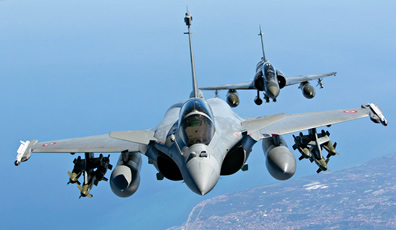
A French Air Force Rafale carries six AASM guided weapons on a mission over Libya. Photo: French Air Force
This is a page 3 of a three page article: 1 – 2 – 3
The Libyan campaign has emphasized unique advantages of the French AASM-250 autonomous guided weapons. Previously criticized in the media as an excessively expensive weapon, AASM proved its worth offering operational flexibility, in providing small fighting formations the effects achied by much larger strike forces. The weapon was developed to meet a wide range of offensive air missions, including Counter Air Defense/(Suppression of Enemy Air Defense – SEAD), Air Interdiction and Deep Strikes, and anti-ship missions, as well as Close Air Support (CAS) including precision attacks in urban environments.
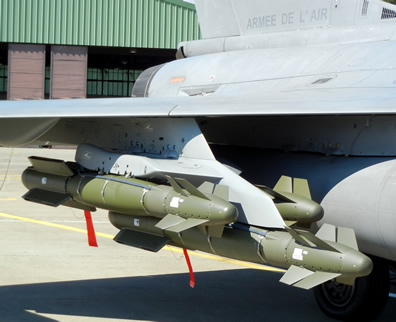
The Rafale carries up to three AASM-250 weapons on a specially designed pylon conformed to carry the new weapon, as well as GBU-12/49 or GBU-22 laser guided bombs. Photo: Sagem
Relying on the AASM extended stand-off range, the French Rafales were tasked to suppress and destroy Libyan SA-3 air defense sites during the initial phases of the conflict. During these strikes, Rafaeles utilized on-board sensor fusion, to integrate data obtained from on-board sensors and external sources, delivered over Link-16. This capability enabled pilots to generate strike coordinates based on real-time data, and feed it to the weapon in flight. The French fighters succeeded to hit the active sites with AASM, launching the weapons from long distance, outside the SA-3 launch envelope. Since each individual weapon is programmed with specific target coordinates, multiple weapons can be employed from the attacking aircraft, against different targets. Each weapon can be reprogrammed before launch, enabling it to engage several targets simultaneously.
A significant advantage of the AASM is the ability to retarget the weapon from the cockpit, just before launch. A Rafale carrying six weapons, each loaded with six different targets prior to takeoff. The pilot can select different targets for each weapon, or decide to engage the same target twice, in case the targets is not destroyed by the first strike. Such re-attack option increases mission success, by avoiding the high risk and costs involved with repeat missions, following battle damage assessment. Overall, Sagem claims a mission success rate of over 90%, compared to 70%, achieved by unpowered (gliding) laser guided or geo-targeted weapons. The later are have inherent limitations in mission planning, restricted by gliding envelope and laser designation ‘basket’ effecting flight envelope, trajectory, impact angle and penetration.
When employed against air defense assets, the combination of the weapon’s stand-off range and re-attack capability means an air defense site would be taken out of operation for longer periods, delivering higher success rate in SEAD operations and precision attacks of high value targets. Another important capability, particularly in today’s hybrid warfare, is the weapon’s flexibility in striking ‘time critical targets’. During the recent attacks in Libya, a Rafale pilot clearly demonstrated such method, when spotting a Libyan Soko G2 Galeb aircraft flying near Misrata. As the Libyan plane landed at the base, the Rafale pilot acquired its coordinates as a ‘target of opportunity’, fed the data to the weapon and launched the GPS/INS guided AASM against the target. As the weapon dropped, it homed in on the exact spot and destroyed the Libyan aircraft on the tarmac.
A French Air Force Rafale carries six AASM guided weapons on a mission over Libya. Photo: French Air Force
Operational with the French Air Force, and French Naval Aviation, AASM is produced made by Safran subsidiary Sagem DS. The weapon was first deployed in Afghanistan with the French Rafale in 2008. The baseline AASM kit comprises of the INS/GPS guidance system, designed for standard 250 kg (500 pounds) bombs. The AASM family will eventually include 125, 500 and 1,000 kg (250, 1000, and 2000 pounds) versions. Since the French forces have received only the initial deliveries of 3,500 weapons ordered, chances are that the used inventory could be replenished by extending current production runs. It is assumed that new weapons could be delivered at considerably lower costs than the original ones, as the manufacturer has stepped up the learning curve. Nevertheless, the cost of a basic AASM is still expected to remain around $300,000 a piece (€200,000).
The weapon uses a booster/sustainer rocket engine accelerating it to the designated cruising speed and altitude, from where it is designed to continue through an autonomous operation, in day or night and in all weather conditions. It can be released at low altitude, and can also be fired up to 180 degrees off-axis in relation to the aircraft’s flight path, (‘backwards’) attacking targets from any direction, from standoff distance exceeding 50 km.
AASM-250 weapons are currently fitted with inertial/GPS guidance. The addition of semi-active laser seeker, and algorithms to track fixed or mobile targets during the terminal phase, will enhance the operational flexibility of the AASM family. Two versions are currently available and undergoing qualification for firing by the Rafale multirole fighter – the inertial/GPS and soon to be fielded inertial/GPS/infrared. These optional terminal guidance kits are designed as ‘add-on’.
Currently under development, will increase attack precision and enable engagement of fast moving targets. The infra-red seeker enables the weapon to hit small targets with distinctive signature, overcoming target location errors y undertaking a terminal correction just before impact. The semi-active laser seeker, along with associated moving target algorithms enable engagement of any surface target (stationary or moving) illuminated by a target designator, even targets travelling at high speed. The laser terminal guidance version of the AASM is expected to enter volume production for the French air force and navy starting at the end of 2012.
The AASM-125 was successfully tested in February 2009 on a Mirage 2000. The AASM-1000 is under development, as are new features such as airburst and data link. The AASM has also been selected to equip the Moroccan Mirage F-1s and are considered a likely choice for Air Forces considering the French Rafale (India, Brazil). Sagem is also addressing other platforms as well, including opportunities to arm Mirage 2000s in foreign service.
This is a page 3 of a three page article: 1 – 2 – 3
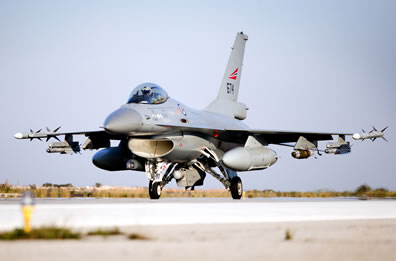
A Norwegian Air Force F-16A ready for takeoff on a patrol mission over Libya. the aircraft is equipped to respond to all types of missions, carrying two 330 galon external fuel tanks, a single GBU-31 JDAM for ground attack, two AIM-120C AMRAAM and two IRIS-T heat-seeking missiles for air defense, a Sniper advanced targeting pod and ALQ-131 self-protection EW pod. Photo: NATO
This is a page 2 of a three page article: 1 – 2 – 3
Laser Focused Strike
Laser guided bombs employ guidance kits enabling the weapon to home in on laser spots illuminating the target, designated by the launching aircraft, another platform or ground designator. The laser guided bombs are highly suitable for the North African, Afghan and Middle-Eastern environments, given the cloudless sky, good visibility and clear night sky over the desert. Laser guided weapons are often more accurate than geo-targeted weapons, typically achieving circular error points (CEP) of thee to one meters, depending on the type of guidance used.
Each Mirage 2000D carries two GBU-12 laser guided bombs with a Damocles target acquisition and designation pod. Photo: French Air Force
Several companies are offering various types of laser guidance kits for aerial bombs. The most common is the Paveway system, originated in the 1970s, now at its fourth generation. Paveway II is the common, low cost system, employed mostly with medium weight bombs (500 1and 1000 pounds).
The high accuracy and relatively low cost of laser guided weapons make them attractive for many users. Yet, low cost comes at a price – mission effectiveness and versatility. On the down side, the employment of laser guided weapons requires complex coordination. Since the weapon itself has no communications link, every element in this complex setup has to be in place prior to launch, for the weapon to hit the right target. Exclusive reliance on laser homing also restricts the weapon’s operations under adverse weather conditions and exposes its vulnerability to smoke and countermeasures.
Overall, the complex coordination and other vulnerabilities reduce the mission effectiveness to around 70% (despite the high accuracy of the guidance method). Other limitations are derived from the unpowered flight characteristics – dictating shorter attack distance, limited maneuverability, and flat angle of approach and impact.
Various means are available as enhancement of the basic laser guided weapon. Improved seekers, better gimbal assemblies, gliding wings for range extension and more. A typical improved LGB is the Paveway III – a more accurate, versatile version that overcomes some of the weaknesses of the basic version is optimized for 1000 and 2000 pound warheads. The Paveway III is also available with an add-on GPS guidance, extending the weapon’s capabilities under adverse weather conditions.
Israel Aerospace industries is offering the ‘Enhanced LGB’ (ELGB) designed to overcome some of the laser’s inherent weaknesses. This guidance kit employs means to control the impact angle, enabling better flexibility in achieving target penetration, and minimize collateral damage. Elbit Systems from israel also offers the Wizard line of laser guided weapon kits, including laser, enhanced laser/GPS and IR guidance.
A Norwegian Air Force F-16A ready for takeoff on a patrol mission over Libya. the aircraft is equipped to respond to all types of missions, carrying two 330 galon external fuel tanks, a single GBU-31 JDAM for ground attack, two AIM-120C AMRAAM and two IRIS-T heat-seeking missiles for air defense, a Sniper advanced targeting pod and ALQ-131 self-protection EW pod. Photo: NATO
Geo Targeted Weapons
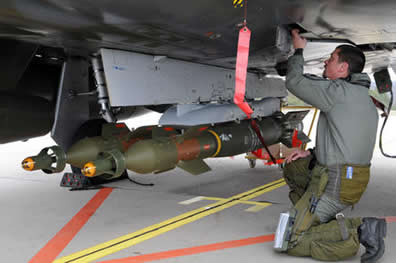
The U.S. forces, as well as several European Air Forces are also employing GPS guided weapons such as the GBU-31 Joint Direct Attack Munition (JDAM), offering low-cost alternatives to laser guided bombs. The Raytheon AGM-154 JSOW is also being used by some NATO air forces. JDAM is considered the standard geo-targeted (‘home on coordinates’) weapon in production in large numbers for the U.S. forces and international customers. Among the European NATO members, the JDAM was acquired by Belgium, Denmark, Greece, Germany, Italy, Netherlands, Norway, Poland, Portugal, and Turkey. Greece, Poland and Turkey have also acquired the AGM-154 JSOW gliding weapon capable of attacking targets from greater stand-off range, employing less restrictive flight profile – a major deficiency of current LGB and unpowered J-class weapons.
JDAM offers a relatively low-cost guidance kit that converts existing unguided free-fall bombs into near precision-guided weapons. The basic weapon is enhanced with terminal homing devices (laser) or range extension, to enhance precision and operational flexibility. JDAM Extended Range configuration (JDAM-ER) – currently in demonstration with an international customer – is designed to increase the stand-off range to approximately 40 miles.
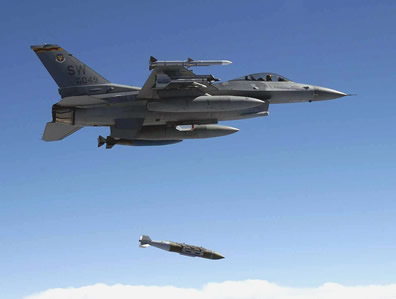
GBU-31 JDAM dropped from an F-16 during a test flight at the Eglin Air Force base. Photo: U.S. Air Force
Combining the Best of Both Worlds
Laser JDAM has already proved itself an effective combination, since 2008, as it entered combat operations in Iraq. The maturation of the solution was extremely quick. In 2007 Laser JDAM was identified as an urgent operational need by warfighters. Boeing completed the weapon’s development and testing cycle in less than 17 months. Boeing delivered the first production Laser JDAM kits to the U.S. Air Force in May 2008. Laser JDAM was successfully employed by the Air Force in combat in Iraq in August 2008. The Navy’s first Laser JDAMs were delivered in October 2008. In March 2010, the U.S. Navy selected Laser JDAM to satisfy its direct attack moving target capability mission requirement.
“Adding the laser sensor to the conventional JDAM kit allows warfighters to attack mobile land and maritime targets with precision and reliability,” said Dan Jaspering, Boeing director for Direct Attack Weapons. “Laser JDAM is an affordable option that’s easy for ordnance crews to install, and very straightforward for conventional JDAM users to adopt.”
The Air Force continues to use Laser JDAM in Afghanistan and it remains the highest-priority weapon sought by Air Forces Central Command. On Feb. 23, less than a month after receiving the production contract, Boeing delivered the first 189 of 550 Air Force low-rate initial production Laser JDAMs to warfighters in theater, in response to an urgent operational need for replenishment assets. In early 2011 the U.S. Navy awarded Boeing $8 million for 700 laser guidance kits, augmenting JDAM weapons for the U.S. Navy.
This is a page 2 of a three page article: 1 – 2 – 3
Lockheed Martin Skunk Works® and XTEND have achieved a major milestone in JADC2 by integrating the XOS operating system with the MDCX™ autonomy platform. This technical breakthrough enables a single operator to simultaneously command multiple drone classes, eliminating the friction of mission handoffs. From "marsupial" drone deployments to operating in GPS-denied environments, explore how this collaboration is abbreviating the data-to-decision timeline and redefining autonomous mission execution.
As traditional defense primes face mounting competition from agile “neoprimes” such as Anduril, Palantir and Helsing, the balance of innovation is shifting toward software-defined warfare and scalable, dual-use technologies, while global industry consolidation—marked by Boeing’s integration of Spirit AeroSystems and other strategic mergers—signals an intensified race to secure control over the defense technology value chain. Our Defense-Tech weekly report highlights these trends.
In early October 2025, a coordinated wave of unmanned aerial system (UAS) incursions—widely attributed to Russia—targeted critical infrastructure across at least ten European nations. The unprecedented campaign exposed the fragility of Europe’s air defenses...
Executive Summary
The past week (September 18-25, 2025) represents an inflection point where strategic defense concepts have transitioned from doctrine to tangible reality. An analysis of global events reveals four primary, interconnected trends shaping an...
At the 2025 Air, Space & Cyber Conference, U.S. Air Force and Space Force leaders unveiled major updates on next-generation fighters, bombers, unmanned systems, and space initiatives, highlighting both rapid innovation and critical readiness challenges as the services race to outpace global competitors. A short version is available here, with a more detailed version for subscribers.
The Taipei Aerospace & Defense Technology Exhibition (TADTE) 2025 crystallized around four dominant strategic themes that collectively illustrate Taiwan's comprehensive approach to defense modernization amid escalating regional tensions. Based on a detailed report by Pleronix (available upon request). Includes a Podcast discussion on TADTE 2025's highlighting Taiwan's four strategic themes beyond the post's coverage.
Israel’s Iron Beam 450 high-power laser system has completed final testing, marking a major leap in air defense. Developed by Rafael, it offers precise, cost-effective interception of rockets, UAVs, and mortars, and is set for IDF deployment by 2025.