Sunday, December 21, 2025
More
    Home Blog Page 377

    Micro-Magnetometer To Detect Weapons at Standoff Range

    mPhase Technologies (OTC:XDSL) is developing two nano-based technologies including a MEMS micro-magnetometer and nano-battery, promising dramatic improvements in defense and homeland security applications, contributing to improving size, sensitivity and low cost. mPhase’s new micro magnetometer is based on a Micro-Electrical Mechanical System containing hair like silicon microstructures, that can rotate in the presence of magnetic objects. These prototype magnetometers detected an ordinary crowbar from a range of 10 meters. An array of these sensors will be able to detect a rifle from a stand-off distance of 30 meters. Networks of sensors will be able to deploy at sporting events or high traffic entrances eliminating the need for costly bag searches.

    mPhase is also developing a nano-Battery, utilizing the features a radically new technology to implement a power source that can be embedded into microcircuits. The new design uses the super hydrophobic characteristic of nano textured surface to control the batteries’ internal reaction. The nano surface holds the electrolyte away from the reactive metal when no power is needed, then releases it when it’s time for the battery to turn on. Because this smart battery has no electrolyte-electrode contact until activated, the nano battery has an extraordinarily long shelf life, as long as 15 – 20 years.

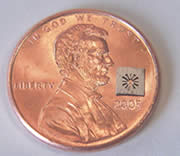
    A close-up view of mPhase's micro-Magnetometer

    Rheinmetall Gains Control in Armor Specialist Chempro

    The German Rheinmetall group is taking up a majority interest of 51% in Chempro, a privately held company specializing in advanced armor protection. The company is also increasing its holdings at the Düsseldorf-based ADS Gesellschaft für aktive Schutzsysteme of Lohmar, developing active protection systems. Both companies were founded by the Deisenroth family. Chempro provides advanced passive protection materials for modern armored vehicles, including the MEXAS, used to protect the latest Leopard 2 tanks and AMAP, fitted into the various armored vehicles.

    ADS is currently developing a new generation of active protection systems, and is engaged in several cooperation in Sweden and France. The company develops the AMAP-ADS, an active defense measure that detects and analyses threats in the immediate vicinity of the vehicle, actively engaging them with appropriate countermeasures. Currently undergoing testing by customers in a number of nations, the product is scheduled to go into serial production by 2008. Rheinmetall announced its intention to increase its stake in ADS in order to obtain a majority interest in the company.

    Oshkosh Truck will deliver 100 armored vehicles for the USMC (MRAP) Program

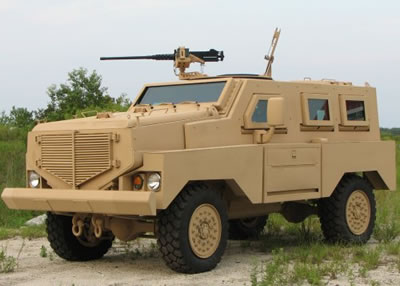
    Oshkosh Truck Corporation [NYSE:OSK] received a $30.6 million contract award from the U.S. Marine Corps Systems Command, to deliver 100 Mine Resistant Ambush Protected (MRAP) vehicle program within four months. The vehicles are categorized as “Category I” intended for urban operations and referred to as the Mine Resistant Utility Vehicle (MRUV).


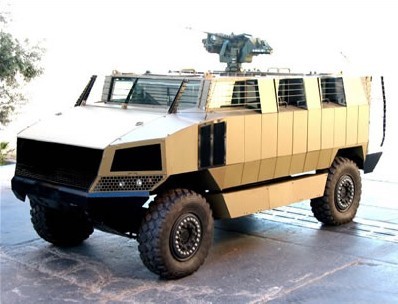
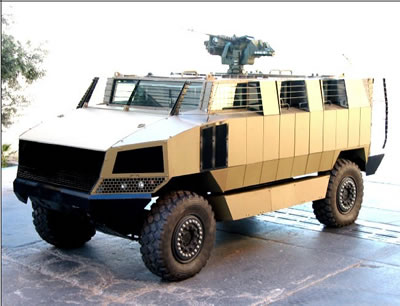
    The vehicle proposed by Oshkosh Truck is the Alpha, designed by Protected Vehicles, Inc. (PVI) of North Charleston, South Carolina. Oshkosh and PVI have forged a relationship in the past year to pursue business opportunities related to armored vehicles. PVI will produce the armored hulls, outfitted with their advanced armor technology, while Oshkosh will provide the production capability and engineering expertise to provide completed vehicles with the performance, reliability, and quality standards to meet tactical operations requirements. Oshkosh and PVI are also cooperating on a parallel MRAP contract, teaming with Israeli armor specialist, RAFAEL, for the production of MRAP Category II variant, called Golan.

    The ALPHA is a 13 ton 4×4 vehicle designed to be an economical path to superior blast and ballistic protection for the US Military. When coupled with PVI’s ShieldAll armoring solution (developed under cooperation with Battelle) the vehicle exceeds highly desired protection levels with minimal impact to payload and performance capabilities. Standalone, ShieldAll has multi-hit protection capability against 7.62AP threats at one-third the weight of armored steel. Alpha has can accomodate eight occupants. It has a v-shaped hull and is designed to meet or exceed all ballistic and mine protection capabilities specified under the MRAP requirement. The vehicle is also fully air-transportable, making it simpler to re-deploy once in theater.

    Suspended Mine Blast Resistant Seat

    Plasan Sasa offers the Suspended Mine Blast Resistant Seat (Patent Pending) as an optional component rather than collapsible seats. The Mine Blast Resistant Seat is comprised of a suspended crew seat supported by a high strength, high tension fiber rope connected to multiple points on the roof and floor (or sides) of a vehicle in order to isolate the seat and create tension to stabilize it.

    The seat is equipped with a foot rest that is extended from the seat itself and not mounted on the floor. In a blast event, acceleration forces will not be transmitted to the soldier because the seat and the soldier in it are isolated from the floor because the soldier’s feet do not rest on the floor. The seat restraint system is of four-point design.

    The Plasan Suspended Seat will manage accelerative load forces so that these forces will be below injury inducing loads as specified in the Load Injury Assessment Criteria established by Walter Reed Army Institute of Research and the US Army Aerospace Research Laboratory. The Plasan Suspended Seat demonstrates significant advantages over any known seat fixed to the floor with a collapsible base. Additionally, compared to other suspended seat solutions, the Plasan continuous rope system allows multiple attachment points to the vehicle roof, sides or floor, and enables ease of adjustment and tension.

    Lightlink – Datalink for Urban Area

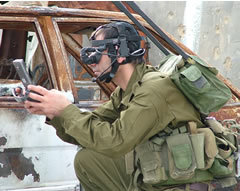
    One of the greatest problems facing a successful deployment of an unmanned vehicle is associated with the reliability and survivability of the communication system for video, telemetry and command transmission. Legacy communication systems for UV’s, which relied on analog transmission techniques, are limited by Line-of-Sight (LOS), thus eliminating the possibility of transmitter or receiver to be located behind obstacles, buildings or in urban terrains. Furthermore, the use of the analog video transmission is sensitive in terms of its encryption/scrambling capabilities, allowing an unauthorized receiver to decode the transmitted information. Lightlink datalink communication system, developed by RAFAEL, is optimized to deliver robust performance in areas saturated with interference, clutter and multipath, such as in or over an urban area, forest or jungle. The Lightlink datalink supports the transmission of multiple video sensors over a single RF frequency, and operates in Non-Line-of-Sight (NLOS) environments. The system is designed to co-exist with simultaneous links which operate in the same coverage area. This is achieved via appropriate allocation of time and frequency resources among the multiple links via the C4I network. In addition, the scheme includes certain anti-jam resistance mechanisms that offer robust performance in the presence of hostile electromagnetic interference sources.

    Lightlink exploits advanced digital video compression and transmission / reception techniques to overcome the clutter and obstacles, transferring video and command data reliably, at compressed, low latency, high rate, high quality video – a critical capability for real-time weapons and reconnaissance applications.

    The system uses Coded Orthogonal Frequency Multiplexing (COFDM) modulation with multi-antenna technology which reduces the required fade margin using spatial-temporal processing algorithms and is well suited to support fast moving platforms. The system also provides essential Interoperability between target acquisition and weapon systems (sensor and shooters).

    Designed to support lightweight, man portable and small, unmanned systems, Lightlink is designed with small form-factor, is lightweight and has low power consumption. The system has already been deployed in combat during the 2nd Lebanon War, and is employed on RAFAEL’s multiple Aerial, Ground and Surface platforms.

    The low-power (1 – 20 watt) system can be implemented in the S, L band or UHF, using bandwidth of 6 – 8 MHz.

    ScanEagle – Unmanned Aerial System

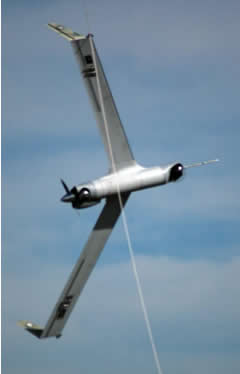
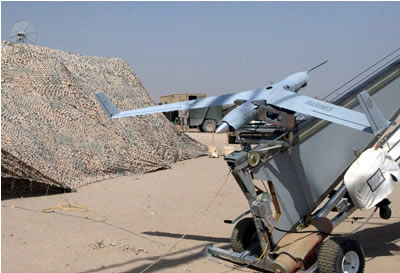
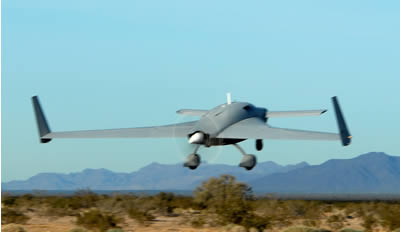
    The ScanEagle Unmanned Aerial Vehicle (UAV) is a 40 lbs (18 kg) UAV designed for continuous mission of 15+ hours, cruising at speed of 50 kt at an altitude of 5,000m’. The system was designed for autonomous field operation. ScanEagle carries a payload of 6 kg, operating at a ceiling of 5,000 m’. It can be launched and retrieved over any terrain, including naval operations.

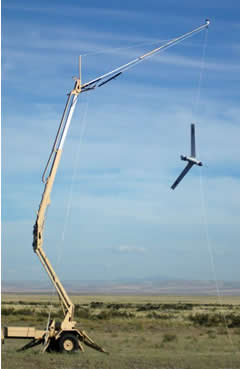
    The system includes a UAV, a Sky Wedge hydraulic launcher, Sky Hook retrieving system, and mobile ground control element. The UAV is equipped with nose-mounted inertial-stabilized camera turret, designed to track an object of interest for extended periods of time. The gimbal carries either zoom CCD or IR sensor. Maximum level sped is 70 kt. ScanEagle is currently deployed with the US Marine Corps in Iraq, where the system flew over 4000 hours this by July 2005.

    ScanEagle was designed with removable avionics bay and two expansion slots allowing seamless payload integration. An enhanced ScanEagle was introduced by Insitu in August 2006, incorporating a redesigned camera turret, enhanced infrared camera, and Mode C transponder. The camera turret, utilizes the inertially stabilized turret introduced in 2003, but will not require electronic stabilization by software at the ground station. This will enable utilization of images via Rover type systems. The new turret will be able to house larger cameras, which provides more options on payload camera integration.

    In August 2006 Insitu has incorporated various new systems under the These changes are currently included in the Block D upgrades program These include the DRS Technologies E6000 infrared camera, improving the UAV’s capabilities from a 320×240 pixel resolution fixed camera with an 18-degree field of view to a 640×480 camera, with an increased resolution that supports a digital zoom view of 7.5 degrees. A new inertially stabilized turret, offering a factor of 5 improvement in disturbance rejection has also been introduced. Custom designed, ultra-light Mode C Transponder, is also becoming a standard issue on the ScanEagle. THis transponder is programmable during flight and, as such, allows the vehicle to become stealthy as necessary even at low altitudes. This capability will help with aircraft deconfliction within Operation Iraqi Freedom but will also enable easier integration of the system into applications within the National Airspace or civilian applications. Other changes include the introduction of video transmitter system, Rover interoperability and in-flight fuel measurement systems as well as a number of improvements for reliability and modularity.

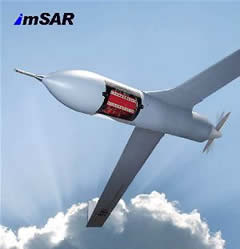
    A Block D prototype was recently tested in a basic configuration, flying on a continuous, 22 hour mission. The company also announced cooperation with ImSAR, for the development of a new micro SAR prototype which could be introduced with the ScanEagle in the future.

    The Block D changes incorporate multiple product enhancements including a new improved IR (infrared) camera with a factor of 3 improvement in the resolution; a new inertially stabilized turret with a factor of 5 improvement in disturbance rejection; a custom, ultra-light, Mode C transponder to facilitate airspace deconfliction; new video transmitter system; Rover interoperability; in-flight fuel measurement systems; and numerous improvements for reliability and modularity.

    In early January 2007 Boeing Australia Limited announced it has been awarded a contract to provide reconnaissance and surveillance services to the Australian Army using the ScanEagle autonomous unmanned aerial vehicle (UAV). The services provided by ScanEagle are currently being used in southern Iraq by Australian soldiers operating with the Overwatch Battle Group (West)-2 in Operation Catalyst. By June 2007, the operation was expanded for six months, to support te Australian troops deployed in Afghanistan under a A$20 million program.

    In February 2007 the ScanEagle UAV system has been qualified to comply with NATO mandated unmanned aerial vehicle (UAV) interoperability standard (known as STANAG 4586), establishing common specifications employed in ground station system operating all UAVs used by NATO military forces. STANAG compliance will enable existing and future deployed ScanEagles to be operated with operational ground control stations such as Army One as well as other STANAG qualified systems operated by NATO member nations. The ScanEagle Vehicle Specific Module and Multiple UAV Software Environment ground station were integrated with the Common UAV Control Software package developed by CDL Systems Ltd. employed with the “Army One” ground control station. During the three hour test flight, the ScanEagle team achieved Level 2 for the UAV and sensor system; Level 3 for the onboard electro-optical camera and sensor system; and Level 4 for the UAV and payload control. Further tests employing multiple ScanEagles and ground control stations are scheduled to validate various autonomous functions.

    USMC Awards $79 million for foreign MRAP designs

    The second batch of orders worth of a total US$79 million for low-rate initial production MRAP vehicles were issued this week. The vehicles include the South African designed RG-31, the Australian Bushmaster and the new Golan vehicle, designed under a joint Israeli-US cooperation. Three manufacturers received orders for a total of 180 vehicles. Oshkosh Truck Corporation received $30 million to deliver 30 PVI designed Alpha armored vehicles, (defined as Category I, to be used as urban combat vehicles). Protected Vehicles, Inc. also received $37.4 million to deliver another 60 Golan heavy armored vehicles, produced under cooperation with Israel’s RAFAEL and Oshkosh Truck. These vehicles will comply with MRAP Category II – the Joint Explosive Ordnance Disposal (EOD) Rapid Response Vehicle JERRV) requirement, expected to be used for operations such as convoy lead, troop transport, ambulance, explosive ordnance disposal and combat engineering. General Dynamics Land Systems Canada received $11 million, for RG-31 armored vehicles, designed for Category I and Category II roles. The company will deliver 10 vehicles of each class. Deliveries of all vehicles is expected to complete within four months (by June 2007). Previous orders worthe $122 million for 200 vehicles were issued to BAE Systems and Force Dynamics. Both are based on South African designed vehicles, producted in the USA.

    Is America Losing its Strategic Hold on Central Asia?

    Over the past two years, US relations with former Soviet Central Asia nations have collapsed, with Uzbekistan removing US Air Force air bases in 2005. For the United States be able to rapidly deploy troops to Middle East and Asian contingency locations, or have Air Force theater strike capability in the future, the US will need new Central Asian allies soon. One of these potential allies could perhaps become Turkmenistan. There are indications, that following two decades of isolationist policies of Saparmurat Niyazov’s iron rule, a new era may start in this former Soviet republic. With the death of Niyazov, last December, the new Turkmenistan President, Gurbanguli Berdymukhamedov, has already signaled his openness for liberalization.

    Although it might be too early to assess what this means to his view on relations with the United States and the West, analysts already contemplate this nation, based strategically along the Caspian, Afghanistan and Iran, becoming a potential ally. But not only the US has interest in Turkmenistan; its huge large untapped natural gas reserves (estimated at 2 trillion cubic meters) are of substantial interest to Russia and Europe. Until now, Turkmenistan is selling the bulk of its natural gas to Gazprom, the dominating Russian oil cartel, for processing so that the Russians can sell Turkmenistan natural gas to other countries. It would be much of advantage for the Turkmen to have an alternative shipping route for its natural gas via a pipeline through the Caspian Sea and tap into a new pipeline that could end up in Europe, thereby freeing Eastern Europe of the tyranny of Gazprom. Its geopolitical status as a stable neutral country bordering Iran and Afghanistan also offers considerable strategic advantages.

    But there are other important assets at stake. The former Soviet Republic used Turkmen air bases as springboard for its 1979 invasion into Afghanistan. Some of these were extended into strategic air bases and could be used by US Air Force deployments in the region. Mary air base (also sometimes referred to by its pre-Soviet name of Merv is located just 60 kilometers north of the Afghan border in the Murgab river valley and is the largest airbase in Central Asia. Other bases could become available at Ashgabat, Nebit-dag and Serdar. To win over the government, Washington could offer financial incentives in the form of loans, foreign investment and increased access to the IMF and the World Bank. America could also ease Turkmenistan’s security concerns by strengthening military ties in return for the use of Turkmen airspace airbases.

    US Transport Command C-17 and KC-135s parked at Manas airfield in Kyrgyzstan

    In July 2005, after the war in Afghanistan and Iraq saw an indefinite troop presence of U.S. forces in Uzbekistan, Tajikistan and Kyrgyzstan, the Shanghai Cooperation Organization (SCO) meeting at its summit in Astana, Kazakhstan, urged them to set a timetable for withdrawing their troops from member states. The SCO incorporates the Peoples Republic of China, Russia, Kazakhstan, Kyrgyzstan, Tajikistan and Uzbekistan. Since then, Uzbekistan has asked the U.S. to leave the important Karshi-Kanabad (K2) Airbase. Accordingly, the Pentagon has expressed growing reservations over the future of US air and military bases in central Asia.

    Even the US major strategic air base at Manas Kyrgyzstan is coming under pressure. The landlocked, but strategically located Kyrgyzstan has emerged as Washington’s sole front-line state for confronting terrorism in Afghanistan and Manas airbase, located strategically close to the Chinese border of Xinjiang, is being critical to U.S. counter-terrorism strategy in Central and South Asia and has been a major asset for US forces in the region. But last December a serious incident at Manas, when a U.S. serviceman, from the base, fatally shot a Kyrgyz civilian at a checkpoint near the base, now threatens Washington’s sole remaining military facility in the former Soviet Union.

    Lines of USAF C-130 tactical airlifters parked at K-2 airfield in Uzbekistan.

    K-2 air base closure seems not to have had a drastic impact on US operations in southern Central Asia. The Afghan Bagram airbase near Kabul started receiving greater traffic, although not always fully secure for sustained operations. But the US aims to shift its logistical workload carried by K-2 eastwards to the Caspian region. Reports circulate already that the US will replace K-2 activities with a new airbase situated either at Nasosnaya near Baku, or Ganca in western Azerbaijan, which may indicate a clear shift in focus to the Caspianm environment. Perhaps significantly, Azerbaijani Foreign Minister Elmar Mamedyarov visited Washington soon after the K-2 eviction notice was served. US re-engagement in the Caspian would constitute a reversion to its pre-11 September regional policy. This prioritized the Caucasian states, firstly as a means to counter Russia’s tendency to view the region as its exclusive domain, and, secondly, to secure East–West hydrocarbon extraction and transit corridors that usefully avoided both Russia and Iran. A further move into Turkmenistan could complete this strategic deployment.


    Refocusing on the Caspian basin would make sense in the context of the maturation of its major hydrocarbon extraction and transit projects. The giant offshore Kashagan oilfield in Kazakhstan will be on stream by 2007, and should be able to link with the newly completed Baku-Tbilisi-Ceyhan pipeline soon afterwards. Moreover, the South Caucasus Pipeline project, currently under construction, is intended to link the vast Central Asian and Caspian natural gas reservoirs with the growing markets of Central and Eastern Europe. Although the Caspian basin’s significance as a global supplier of oil and gas should not be overstated, a strengthened US and Euro-Atlantic geopolitical presence in the region will provide additional security functions to combat terrorist activity directed at offshore oil facilities, strengthen commercial ties and offset China’s rapid emergence as a major commercial player in the Caspian basin.

    Indeed, China has become a major player in this region. In a successful bid to tap Kazakhstan’s oil, China’s state owned CITIC Group has recently won approval from the Kazakhstani government to buy the Karazhambas oil field (owned by Nations Energy of Canada) located near Aqtua on the Caspian Sea. This deal, worth US2$ billion, follows another bid, when Kazakhstan’s president, Nursultan Nazarbayev, approved the sale of Petrokazakhstan to China National Petroleum (CNOOC) in 2005. China is aware, as does the Anglo-American axis that energy is the key to its own national security, and China’s power elite is willing to resort to dramatic measures for every drop of oil and every watt of electricity.

    Moreover, barely acknowledged by the Western media, both China and Russia have conducted war games in Central Asia, in collaboration with their own coalition partners. Of special interest are these activities in Central Asia, under which military exercises involving the participation of Russia, Kazakhstan, Kyrgyzstan and Tajikistan are conducted under the Collective Security Treaty Organization, (CSTO). The Peoples Republic of China and Kazakhstan have also initiated war games last August. A similar operation was conducted last year by the PRC and Tajikistan, under the code-named “Cooperation-2006”. The fact is that in recent years, China has sought to make it presence felt in Central Asia to secure its strategic, economic and geo-political interests. Geographically, China is contiguous to three Central Asian countries – Kazakhstan, Kyrgyzstan and Tajikistan – and its Turkic Muslim population in the north-western region of Xinjiang shares common history, tradition and culture with all the five former Soviet, central Asian republics.

    Russia is also stepping up its military presence in this region. In late September, Russia conducted air war exercises over a large part of its territory, extending from the the Saratov Air Base in the Volga region, to the very frontiers of Alaska and North America. These war games already prompted the scrambling of NORAD fighter planes. Last October 2006, in the latest round of Central Asian war games under CSTO auspices, joint Russian-Kyrgyz war exercises were held at Russia’s Kant airbase located some 30 km. from the Kyrgyz capital. Officially described as an “anti-terror drill”, these high profile exercises involved the deployment of Russian and Kyrgyz special forces units.

    Russia’s top brass and defense minister Sergei Ivanov were in attendance for the launching of the event. Reports indicate, that Russia’s 201st motorized infantry division in Tajikistan planned to redeploy its helicopters and planes, sofar using parts of Dushanbe airport, to the newly reconstructed Aini airbase, sharing its facilities with the Indian air forceMiG-29 stationed there.

    There is a consistent pattern to this recent development. These war games are not isolated events. They are part of a carefully coordinated endeavor, in response to the US-NATO military build-up in the region and should also be considered as acts of deterrence, intended to display military capabilities in deterring military action by a US led coalition.

    What is of growing concern to the Pentagon seems to be Russia’s recent upsurge in military activities in sensitive regions and Central Asia seems to be Russia’s high priority strategic objective. Three star general Michael Maples, director of the Pentagon’s Defense Intelligence Agency, warned that the Russian Army’s combat and theater-level training is now at its highest since the break-up of the Soviet Union. The United States is concerned because the Russian Defense Ministry is focusing on rearmament, modernization of available weapons and efforts to revive the defense industry. On February 7, Russia’s Deputy Prime Minister and Defense Minister Sergei Ivanov addressed the State Duma, the lower house of parliament, at the Government Hour and said his Ministry would receive 821 billion rubles ($30.98 billion, or Euro 23.87 billion) in 2007, of which over 144 billion rubles ($5.43 billion, or Euro 4.19 billion) will be spent on the acquisition of new weapons. It is obvious that Russia’s theoretical opponents are worried about its enhanced defense capability, which seems to confirm the fact that Sergei Ivanov’s statements are not a mere rhetoric. Central Asia will no doubt remain high in focus during the next few months.


    IDEX 2007

    IDEX 2007 which is closing today (Feb. 22, 2007) has attracted 862 exhibitors, who have filled a record total of more than 32,000 square metres of both indoor and outdoor space. 50 countries are officially represented and there are 33 national pavilions. The exhibition has a high technology theme this year and is expected to host more than 90 official government and military delegations.

    This year Turkey was the largest national pavilion, in terms of overall booked space. Turkey has chosen IDEX 2007 to reinforce its strong and make its established position in the Middle East defense market. Other national pavilions increased in 2007 were the US, Taiwan, South Korea and Italy. IDEX 2007 has a new venue at the nearby Free Port of Mina Zayed. A fleet of 15 ships from seven countries are berthed at the Naval Berthing area of the Exhibition.

    This year many of these ships have been scheduled to visit Abu Dhabi as part of their ongoing deployment in the Arabian Gulf. Among them are two American mine countermeasures ships (MCM) along with mine hunting helicopter operated by the US Navy. Pakistan sent four four ships, including a missile boat, fast patrol boat, coastal tanker and submarine. Australia sent an ANZAC class frigate. Also represented were frigates from France and Germany a Italian corvette and a Sauro class submarine. Four UAE ships will also participate in the naval berthing display.


    Except for the static displays and the national pavilions, live demonstrations are always a popular focal point of IDEX. This year the mobility venue has attracted 29 displays from 10 countries of armored trucks, personnel carriers, mobile missile launchers, heavy armor and more. Marine and Amphibious Demonstration will once again take place in front of the Grandstand, fronting the exhibition.

    Yesterday’s highlight was the live fire demonstration in front of 150 military weapon experts featured small arms and counter terrorism weapons. where 150 top military weapons experts witnessed the Live Firing Demonstration held at IDEX 2007. Represented weapons included firearms from Russia, France, Switzerland, Finland, South Africa and the UAE, including pistols, rifles to machine guns.

    During the show, the UAE Armed Forces announced that it has signed deals with worth over 1,340 million Dirhams (Dhs.) – about US$360 million -with local and international companies participating at IDEX 2007. According to Major General Obaid Al Ketbi, Chief of Logistics at the UAE Armed Forces, a Memorandum of Understanding was signed with EADS, to purchase three air tankers. General Al Ketbi also told reporters that the army was in talks with American communications supplier Harris to purchase telecommunication equipment worth Dhs 240 million ($65 million). Other orders were made with local companies. the services is procuring 12 fast patrol boats worth Dhs.127 million ($34.5 million) with the Abu Dhabi Ship Building Company (ADSB). International Golden Group, won a contract from the Armed Forces worth Dhs 390 million ($106 million) to supply 120mm mortars, The general also announced an Dhs18 million ($5 million) order of 10,000 pistols procured from the local arms producer Caracal.

    Other deals announced by El-Ketbi on Thursday (Feb 22, 2007) include Dhs. 228 million ($62 million) contract with DynCorp International for supporting UAE’s new F-16 Block 60 fighter planes, and Dhs. 343 million ($93.5 million) awarded to Abu Dhabi-based Gulf Aircraft Maintenance Co. (GAMCO) for the maintenance of BAE Systems Hawk MK 102, MK63 & MK61Advanced Jet Trainer aircraft.

    It was announced that the UAE has shortlisted BAE Systems’ proposed Hawk128 Advanced Jet Trainer, Aermacchi’s M-346 and Korean Aerospace’s T-50 for a future advanced trainer for its air force.

    IMI Develops Hybrid Armor to Defeat Sophisticated RSIEDs

    IMI is developing a new hybrid armor (passive) designed to withstand commonly used types of RoadSide IEDs (RSIED), including the sophisticated Explosively Formed Projectiles (EFP) and Self Formed Fragmentation (SFF) charges. The unique combination of the new hybrid armor is the result of extensive study conducted at IMI, in an attempt to protect warfighters at levels beyond those offered by conventional armor, with cost effective armor suite that can defeat both prevailing and future threats.

    The new hybrid armor will be applied as add-on modules for wheeled or tracked light armored vehicles. The new hybrid armor (passive) combines various materials designed to absorb the kinetic energy, mechanical deformation and ballistic damage created by the threat by mitigating and dissipating blast energy, and absorbing the kinetic energy of projectiles, fragments and EFP slugs, stopping multiple hits (according to STANAG) from small and medium caliber projectiles which is equal to 45-up to 60 mm of Rolled Homogenous Armor (RHA) while weighing half the weight of comparable steel. The armor kit is designed for field installation and removal. Damaged modules are designed for rapid replacement by field maintenance teams, without using special tools.

    In the future, IMI plans to integrate reactive components to this hybrid armor, offering comprehensive protection from more threats, including RPG’s.

    USAF Battlelab To Evaluate Cooperative UAV Operations

    The United States Air Force will evaluate cooperative flight of several unmanned aircraft flying in constellation formation, while simultaneously distributing sensor control and viewing capability among multiple end users. The test will utilize the SkyForce Distributed Management System (DMS) developed by Proxy Aviation, controlling SkyWatcher and SkyRaider UAVs, also produced by Proxy.


    The first phase of demonstrations took place early February 2007 at Eglin Air Force Base, Fla., where a single SkyWatcher successfully demonstrated cooperative flight with three simulated UAVs. SkyForce DMS is designed to control up to 12 fully autonomous air vehicles engaging in concurrent, cooperative flight. The system enables each vehicle to make fully independent decisions during flight, contributing to the group tactical goal, without any human intervention.

    In the first flight phase conducted at Eglin Test Range , a single SkyWatcher UAV successfully demonstrated cooperative flight with three simulated SkyWatchers, each UAV performing a different role and operating a unique sensor package. The cooperative constellation demonstrated adaptive autonomy using SkyForce DMS and the Virtual Pilot capability that are key software components of the SkyForce system. The single SkyWatcher flew four simulated constellation maneuvers and autonomously operated an onboard FLIR sensor, a thermal imaging and infrared camera, while simultaneously maneuvering with the other three UAVs through several operational scenarios.

    IMI Develops Hybrid Armor to Defeat Sophisticated RSIEDs

    IMI is developing a new hybrid armor (passive) designed to withstand commonly used types of RoadSide IEDs (RSIED), including the sophisticated Explosively Formed Projectiles (EFP) and Self Formed Fragmentation (SFF) charges. The unique combination of the new hybrid armor is the result of extensive study conducted at IMI, in an attempt to protect warfighters at levels beyond those offered by conventional armor, with cost effective armor suite that can defeat both prevailing and future threats.

    The new hybrid armor will be applied as add-on modules for wheeled or tracked light armored vehicles. The new hybrid armor (passive) combines various materials designed to absorb the kinetic energy, mechanical deformation and ballistic damage created by the threat by mitigating and dissipating blast energy, and absorbing the kinetic energy of projectiles, fragments and EFP slugs, stopping multiple hits (according to STANAG) from small and medium caliber projectiles which is equal to 45-up to 60 mm of Rolled Homogenous Armor (RHA) while weighing half the weight of comparable steel. The armor kit is designed for field installation and removal. Damaged modules are designed for rapid replacement by field maintenance teams, without using special tools.

    In the future, IMI plans to integrate reactive components to this hybrid armor, offering comprehensive protection from more threats, including RPG’s.

    Lightweight Prime Mover to Tow USMC’s M777 Guns

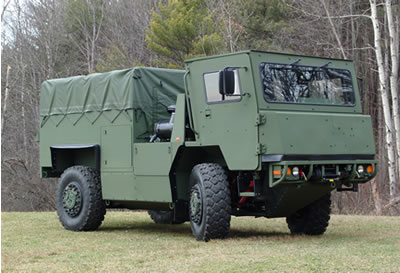
    The U.S. Marine Corps have received the initial four Lightweight Prime Mover (LWPM) vehicles from Lockheed Martin’s [NYSE: LMT] Tactical Wheeled Vehicle (TWV) program. The LWPM will tow the new M777 lightweight 155-mm artillery howitzer. After undergoing a production qualification test at the Nevada Automotive Test Center, the LWPM will undergo an operational field user’s evaluation. Under the current contract, the Marine Corps has the option for full-rate production of 120 LWPM vehicles.


    The LWPM rides on a height-adjustable chassis and central tire inflation system that automatically adjusts air pressure to enhance all-terrain mobility. Future production vehicles will accept appliqué armor. The vehicle is designed for improved rollover protection.

    The vehicle is based on the LM4x4 truck, built on the proven High Mobility Transport design which excells with its unique weight-to-payload ratio, enabling the less than 10,000-pound vehicle to easily tow the 10,000-pound M777 howitzer. The LM4x4 is air-transportable inside the C-130 Hercules tactical transport aircraft. The vehicle also can be externally carried by the CH-53E helicopter and the MV-22 tilt-rotor aircraft.

    In addition to the LWPM contract, Lockheed Martin also delivered a technology demonstration utility vehicle to the U.S. Army for its Future Tactical Truck System Advanced Concept Technology Demonstration program. The vehicle will be used to help refine the requirements for the Joint Light Tactical Vehicle.

    Raytheon Offers More Efficient Ground Control for the Predator

    Raytheon Company has developed an advanced common ground control system (CGCS), and is proposing the system as ‘unsolicited proposal’ for use by the U.S. Air Force’s Predator UAV units, promising a ‘dramatic improvement’ in the efficiency of man-machine interface, related to the operation of unmanned aircraft systems.

    According to Mark Bigham, business development director for Raytheon’s Intelligence and Information Systems business, “Our unsolicited bid for the Predator ground control system will address significant decreases in required aircrew manpower, faster training and greatly reduce mishap rates previously attributed to human-machine interface or pilot error.

    It also enables more aircraft to be controlled by the same number of operators, increasing more unmanned aircraft systems in operation.” Raytheon has been working with combat-tested UAS operators and trainers for more than two years to develop a CGCS that puts the human operator into the UAS ‘cockpit’ – said Bigham. He indicated that the proposed system is also compatible with improved Predator operations centers currently being fielded to the U.S. Air National Guard. “The CGCS will help the current Predator contractor maximize the number of unmanned aircraft systems operators can fly, ultimately helping to meet Secretary of Defense Gates’ goal of ‘more ISR now.'” said Bigham.

    Raytheon says it can produce the first CGCS system in less than 12 months with data support from platform primes and adequate funding support for the Department of Defense. Raytheon predicts that during the next 10 years, it can save the Air Force more than $500 million. The five cost savings benefits are:

    • Reduce manpower requirements by 20 percent
    • Reduce ground control segment requirements by 20 percent
    • Reduce training time and costs by 30 percent
    • Reduce aircraft losses by 50 percent

    Skunk Works and XTEND Simplify Multi-Drone Command

    0
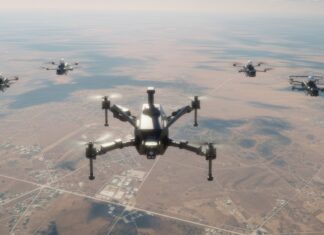
    Lockheed Martin Skunk Works® and XTEND have achieved a major milestone in JADC2 by integrating the XOS operating system with the MDCX™ autonomy platform. This technical breakthrough enables a single operator to simultaneously command multiple drone classes, eliminating the friction of mission handoffs. From "marsupial" drone deployments to operating in GPS-denied environments, explore how this collaboration is abbreviating the data-to-decision timeline and redefining autonomous mission execution.

    From Ukraine to Taiwan: The Global Race to Dominate the New Defense Tech Frontier

    0
    As traditional defense primes face mounting competition from agile “neoprimes” such as Anduril, Palantir and Helsing, the balance of innovation is shifting toward software-defined warfare and scalable, dual-use technologies, while global industry consolidation—marked by Boeing’s integration of Spirit AeroSystems and other strategic mergers—signals an intensified race to secure control over the defense technology value chain. Our Defense-Tech weekly report highlights these trends.

    Europe’s “Drone Wall”

    0
    In early October 2025, a coordinated wave of unmanned aerial system (UAS) incursions—widely attributed to Russia—targeted critical infrastructure across at least ten European nations. The unprecedented campaign exposed the fragility of Europe’s air defenses...

    Weekly Defense Update & Global Security Assessment

    0
    Executive Summary The past week (September 18-25, 2025) represents an inflection point where strategic defense concepts have transitioned from doctrine to tangible reality. An analysis of global events reveals four primary, interconnected trends shaping an...

    U.S. Air and Space Forces Push Next-Gen Programs at the AS&C 2025 Conference and...

    0
    At the 2025 Air, Space & Cyber Conference, U.S. Air Force and Space Force leaders unveiled major updates on next-generation fighters, bombers, unmanned systems, and space initiatives, highlighting both rapid innovation and critical readiness challenges as the services race to outpace global competitors. A short version is available here, with a more detailed version for subscribers.

    TADTE 2025: Reflecting Taiwan’s Strategic Themes

    0
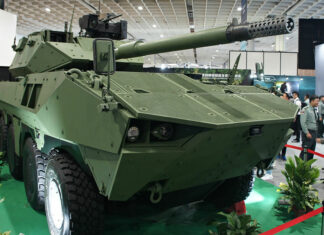
    The Taipei Aerospace & Defense Technology Exhibition (TADTE) 2025 crystallized around four dominant strategic themes that collectively illustrate Taiwan's comprehensive approach to defense modernization amid escalating regional tensions. Based on a detailed report by Pleronix (available upon request). Includes a Podcast discussion on TADTE 2025's highlighting Taiwan's four strategic themes beyond the post's coverage.

    Iron Beam 450 Completes Testing, Soon to Join With Operational Air Defense Units

    0
    Israel’s Iron Beam 450 high-power laser system has completed final testing, marking a major leap in air defense. Developed by Rafael, it offers precise, cost-effective interception of rockets, UAVs, and mortars, and is set for IDF deployment by 2025.