Sunday, December 21, 2025
More
    Home Blog Page 381

    DragonSkin Body Armor

    Dragon Skin lightweight ergonomic armor developed by Pinnacle Armor is used for concealed and body armor vests such as the SOV 2000 or 3000 suite. DragonSkin utilizes flexible armor made up of bullet proof ceramic ‘leaves’, creating a flexible layer shaped like fish scales. This thin, lightweight armor flexes and molds to the contours of the body and allows for about 44% greater coverage than a rigid 10″ x 12″ ESAPI plate which is the typical coverage offered in teh IBA.

    The increasing threat to US warfighters in Iraq and Afghanistan, and the commercial availability of personal armor protection systems on the open market, increased the demand for such products in the US market, raising the concern of the US Army to the vulnerability of deployed troops trusting their lives in such ‘private initiatives’.

    One system that caught the most attention, particularly after a recent NBC investigative report, is the ‘Dragon Skin’ armor, developed by Pinnacle Armor, which, according to the US Army, was used by some soldiers in lieu of their issued Interceptor Body Armor (IBA).

    Although being involved in the development of the Dragon Skin and the different technology it employs, the Army indicated that in its current state of development, its capabilities do not meet their requirements and therefore demanded the removal of all unauthorized body armor.

    While the US Army flatly rejected the new system, DragonSkin SOV body armor is currently in use with US Special Forces, Police Tactical Teams and is apporved by foreign militaries. The latest version, SOV 2000 is offered in Level III, IV and even Level V protection, defeating most types of 7.62 and 5.56 AP ammunition. Pinnacle Armor is offering the SOV 2000 Dragon Skin in various configurations, tailored for specific requirements, including modular pocket systems or modular pouches attached with common “alice style” clips for vests utilizing the alice web system.

    In this series Defense Update covers the following topics:

    Up-Armored HUMVEE (UAH)

    Start < Page 3 of 4 >
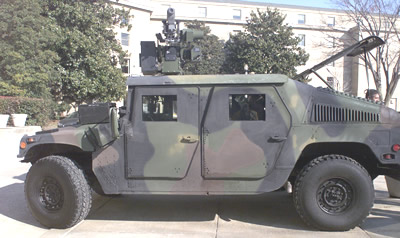
    As the most popular tactical vehicle today, the M998 HUMMWV (dubbed Humvee) is currently used with many armies. However, only few except for the Israelis and US Army and US Special Forces are operating protected Humners.
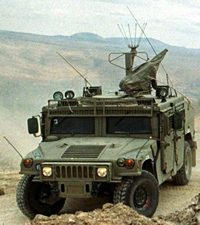
    The M998 High Mobility Multipurpose Wheeled Vehicle (HMMWV, pronounced “Humvee”, also dubbed Hummer) is the most commonly deployed tactical vehicle used by the Armed forces of the USA and its allies. The original vehicle offers excellent road and cross-country mobility. It was designed in a variety of configurations; primarily for utility, logistical and scout missions. Where active combat role was considered, the Humvee was selected for its excellent cross country and road, air and helicopter mobility and load capacity. It was never intended to perform as armored combat vehicles. Such specification precluded armor protection, in order to maintain its low empty weight and thus high mobility standard.
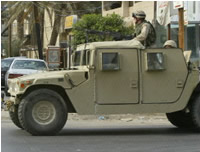
    During and after the Kosovo conflict, the US Army decided to protect a small part of its Humvee fleet. The armored version would be heavier – resulting in reduced deployment flexibility. The US Marine Corps, requiring operational speed for its forces, opted not to protect its Humvees. Thus, in Iraq, they are currently forced to use some up-armored vehicles loaned from the US Army. The design of the up-armored M1114 Humvee matured around a standard protection kit adding about 2,000 pounds weight to the standard Humvee. The first up-armored version came off the production line in 1996. In addition to steel plating and ballistic-resistant windows around the cab of the vehicle offering improved protection against small arms fire and shrapnel, the steel plating underneath is design to survive up to eight pounds of explosive beneath the engine to four pounds in the cargo area.

    Unlike the US army that considering the vehicle mainly for utility and cross-country transportation, the Israeli Army planned more tactical roles for the Humvee, which required higher level of protection. The heavier armor protection required further automotive and structural modifications stretching these M-1113 ECV designated vehicles to their limits. However, during the Lebanon conflict and fighting urban guerilla warfare in the occupied territories, the up-armored IDF Humvees, demonstrated their capability to withstand most types of attacks successfully.

    During the security and stability operations that followed operations Enduring Freedom (Afghanistan) and Iraqi Freedom (OIF), a limited number of up-armored Hummers were available in theater, but as of May 2004, most vehicles remain unprotected. As a result, many Hummers are often falling prey to repeated attacks that causing heavy casualties to coalition forces. Soldiers traveling in these soft skinned vehicles become highly vulnerable to every type of attack, even stone throwing and fire bombs. Highest lethality attacks are by small-arms fire, grenades, mines and RPGs.
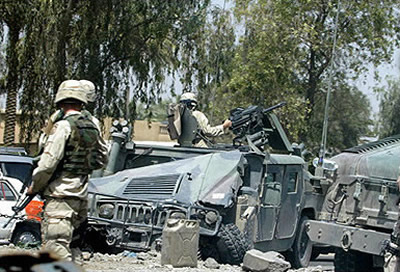
    Among the most dangerous are the IED ambush and roadside bombs. In autumn 2003, responding to urgent calls from the field, requesting armor suits for the soft vehicles, the US Army launched a crash program to protect many of Humvees. The program proceeded in two parallel directions – accelerated delivery of highly protected up-armored vehicle, and implementation of improvised near-term solutions adding some protection levels to the crews. Makeshift armoring of vehicles, and ad-hoc in-the-field solutions became temporary measures by the forces in situ.
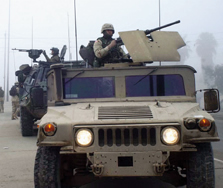
    On May 2004 the US Senate approved US$618 million funding for the production of 300 M1114s per month from May through October, and 450 per month, from October 2004 till March 2006. $610 million were also allocated for armor kits for existing tactical vehicles. According to Major General John Sattler, Director of Operations for CENTCOM, the US Army initial assessments were that

    1,000 up-armored Humvees will be sufficient for patrol, convoy protection and transportation in Iraq and Afghanistan. However, as opposition forces in both countries changed their ambush tactics and IED techniques, the numbers where updated, calling up for 2,500 more M-1114 up-armored Humvees. Currently, production of 2,000 more vehicles are on contract, and expected to be delivered in theater by December 2004, with approximately 4,500 up-armored humvees scheduled to be operational in the theater. In addition, 8,000 up-armored kits are on ordered and being installed to protect windshields and doors for additional vehicles, including trucked and soft skinned Humvees. In September 2006 Armor Holdings announced it will provide the US Army M1114 Up-Armored HMMWV with supplemental armor components to increase the vehicle’s IED protection levels. According to company sources, the contract worth is $183 million. The armor components will be delivered in 2007.
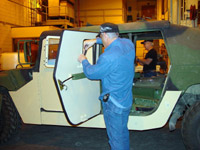
    As of May 2004, the US Army currently operates several versions of up-armored Humvees – the production model fitted to new vehicles, field modified vehicles, up-armored with the Armor Survivability Kit (ASK)developed by the US Army to improve the protection for Soldiers traveling with standard Humvee. Six Army depots are producing ASK, are scheduled to ship up to 5,000 kits by the end of 2004. In parallel, production of new up-armored Humvees is accelerated. In April 2004, a $110 million contract was awarded to O’Gara, (now called Centigon) for the supply of up-armored Humvees. By July 2004 the company is planning to increase production rate to 300 vehicles per month, up from the current 220. Another contract worth $30 million was awarded to ArmorWorks, for additional armoring kits for Humvees. By December 2004 the company delivered 1,000 Humvee Armor Kits to the US Army. Many of the remaining vehicles are fitted with steel plates and sandbags, improvised in theater. Battelle has also developed a lightweight armor kit for HMMVWs, The kit weighs around 750 pounds, (about a third of the weight of standard Humvee’s armor). By September 2004, 75 initial kits were delivered to special operations units and 400 more are on order.

    The latest addition to the HMMWV is the fragmentation (FRAG) protection kit #5. The kit provides added protection to the vehicle by replacing the doors and much of the side armor. The actual kit weighs about 2,200 lbs., but the overall vehicle weight is only increased by 760 lbs. Current production Humvees are sent fully armored from the factory. FRAG 5 kits are sent to the field where install teams remove the existing doors and side armor and replace them with the new kit.

    Future protection enhancements considered for Up-Armored HMMWVs include several safety improvements, enhancing crew survivability from vehicle accidents and rollovers. These enhancements range from improved seat belts, gunner’s restraints, vehicle intercom systems and vehicle fire suppression system designed to mitigate the fire effects of an IED attack.

    Additional parts of this article:

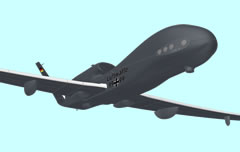
    German MOD Launches a € 430 million Euro Hawk

    The German Ministry of Defence (MoD) has awarded a € 430 million ($559 million) contract to EuroHawk GmbH, a joint-venture company formed by Northrop Grumman Corporation (NYSE: NOC) and EADS, for the development, test and support of the Euro Hawk unmanned signals intelligence (SIGINT) surveillance and reconnaissance system. The joint team will conduct integration and flight test activity in Germany in late 2009. Delivery of the first demonstrator is scheduled for 2010, with the following four systems scheduled tentatively between 2011 and 2014.
    The Euro Hawk unmanned aerial system will serve as the German Air Force’s high altitude long endurance (HALE) SIGINT system. It will be based on the current RQ-4 Block 20 Global Hawk platform, built by Northrop Grumman. The unmanned aircraft will be equipped with a new SIGINT mission system developed by EADS and will be able to maintain mission endurance of up to 30 hours. The SIGINT system will comprise electronic intelligence (ELINT) targeting enemy radar emitters and communications intelligence emitters.

    The EuroHawk Ground segment, to be provided by EADS will receive and analyze the data from the airborne sensors, process them on the ground and support expert analysis, and rapid compilation of an electronic order of battle.

    EADS and Northrop Grumman established their cooperative effort in August 2000, addressing the German Ministry of Defense requirement for airborne wide-area surveillance and reconnaissance to replace the aging fleet of Breguet Atlantic aircraft, which have been in service since 1972. This move was followed by a bilateral project agreement between the U.S. Air Force and the German MoD, signed in October 2001. The first phase of the project included the operation of the HALE UAV concept, the mission system integration, culminating in six flight demonstrations of ELINT equipped Global Hawk, deployed to Nordholz in October 2003. It was the first successful operation of a UAV in the heavily crowded, tightly controlled European airspace.

    SmartShirt Could Monitor Soldier’s Vital Signs in The Field

    Sensatex, Inc. announced today that it would shortly begin field trials of its patented SmartShirt System, a seamless shirt designed to monitor an individual’s heart rate, respiration and movement wirelessly and remotely. The field tests are the final step before the product will be commercially available. The new garment is based on patents licensed from Georgia Tech University and additional patents filed by Sensatex.

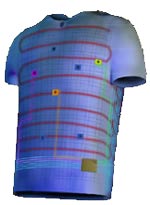
    The garment collects physiological signals from the wearer’s body which are converted to digital signals by a built-in controller and sent wirelessly to a base station through either Bluetooth or ZigBee wireless technology. The company is seeking to establish cooperation with other companies to examine test applications for the new garment. Among those are first responders and military. The SmartShirt will be tested in a variety of environments including indoors, outdoors, and underwater, as well as in very dry and very humid settings. Based on the data collected during the test, Sensatex plans to complete the product’s commercialization, proceed for the first FDA application using a smart textile system. Early research for the SmartShirt System was funded by the Defense Advanced Research Projects Agency (DARPA) and the Technical Support Working Group (TSWG). Beta testing for the system was announced last year.

    The SmartShirt is a seamless light, breathable, nylon fabric with fully integrated conductive fibers, creating connectivity to acquire and transfer physiological signals to a small controller where the signals are digitized and sent wirelessly to a remote location. The SmartShirt is fully washable, greatly expanding the fabric’s future applications. In 2006, the system was named “Product Innovation of the Year” by a leading global analyst firm.

    In this series Defense Update covers the following topics:

    Explosively Formed Projectiles are Taking Heavy Toll in Iraq

    A new breed of weapons employed by insurgents in Iraq is causing heavy casualties to U.S. troops in Iraq. “Explosively Formed Projectiles” (EFPs) are far more lethal than more traditional improvised explosive devices (IEDs)” said U.S. Defense Secretary Robert M. Gates told reporters today during a Pentagon news conference.

    Such EFPs, believed to be produced in Iraq and infiltrated into Iraq to support insurgent groups are capable of taking out armored vehicles including, in certain aspects, an M1-A2 Abrams tank. Gates said that the U.S. military effort is aimed at uprooting the networks that are providing these EFPS, as well as IEDs, to al Qaeda and other groups, noting that such weapons account for about 70 percent of coalition casualties in Iraq.

    In our upcoming issue, Defense Update will survey advanced means of ballistic protection, including new types of armor developed in Israel to defend against IEDs and EFP, resulting from the experience the Israel Defense Forces gathered through many encounters with RSIED/EFP and Explosive Formed Fragmentation charges (EFF) employed by Hezbollah and Palestinian guerillas in South Lebanon and Gaza.

    Israel Embarks on a Third Ballistic Defense System

    In an attempt to address continuous Palestinian rocket attacks, Israel is embarking on an ambitious development program to develop a missile system capable of intercepting short range rockets in flight, protecting population centers and sensitive installations currently subjected to repeated and deadly attacks by Katyusha or improvised Qassam or rockets. In recent years Israel suffered over 6,000 rocket attacks, most of them short range rockets fired fired by Iranian and Syrian backed Hezbollah and Palestinians terror groups.

    Israel has suffered Katyusha attacks since the mid 1970s, as Palestinian guerillas, based in South Lebanon used short range 107mm rockets to bypass the border obstacle (‘electronic fence”) established along the Lebanese border, to prevent terrorist infiltrations.

    For 30 years Israel avoided the decision and commitment to establish adequate defenses against such threats. Israel willingly left this capability gap open, despite spending tens of millions of dollars on a joint program with the US to develop laser defenses to counter rocket threats. The prevailing argument was that the risks of rocket attacks did not justify diverting the huge funding from other, higher priority programs.

    The recent war in Lebanon, and the IDF failure to put a stop to the continuous attacks of improvised Qassam rockets from the Gaza strip, despite unchallenged domination from the air. Political pressure which mounted after the 2nd Lebanon war, drove the Minister of defense, Amir Perez to demand adequate answers without further delay.

    A committee, headed by former Director General of the MoD, and future Chief of Staff Major General Gabi Ashkenazi, evaluated several options proposed by four companies, and today recommended to select a system proposed by RAFAEL, as offering an all-weather capable solution, at the lowest risk, within relatively a short development cycle. The development and procurement cost of the entire system is estimated at about US$ 0.5 billion, spent over three to five years.

    On February 1, 2007 the Israeli Ministry of Defense (MoD) selected RAFAEL to develop the system that could mitigate the rocket threat. Called “Iron Cap” the system will address the threat of short range rockets, including Qassam improvised rockets and Katyushas fired by Palestinian and Hezbollah guerillas from Gaza and South Lebanon. The mobile Iron Cap system will most probably will consist of mobile radar systems, battle management center and missile firing units employing a version of a yet unspecified number of missiles, to be modified into rocket interceptor. The system will utilize a new radar developed at IAI’s Elta, capable of tracking multiple targets and discriminate between benign threats and those threatening the protected targets.

    The system should have a sophisticated battle management capability, track multiple targets from rocket salvos, plotting the trajectories of each rocket, identifying those which pose a most critical threat and engaging them effectively, over neutral area, therefore reducing collateral damage on the ground. The system’s radar and battle management elements will integrate two types of interceptors – one designed to defeat ultra-short-range rockets flying at low rajectories and another, designed to intercept long medium and range rockets, developed for the”Magic Wand” system.

    RAFAEL has already embarked on another missile defense program known as Magic Wand, which will use the new Stunner missile. “Iron Cap” is expected to use a different, much smaller interceptor, which will cost about about $30,000 each. Although the MoD selected the system to be developed, an agreement on the funding is yet to be reached with the Ministry of Treasury and approved by Prime Minister, Ehud Olmert. And this could prove to be quite a challenge. Although Israel’s defense budget for 2007 was increased, most of the additional money will support procurement for replenishment of stores used during the recent conflict, acquisition of high priority systems and increased training activities. Allocating the resources for the “Iron Cap” could face a significant challenge.

    Once all programs are completed, Israel will have a three-tier missile and rocket defensive systems in place. The operational Arrow system, capable of defeating ballistic missiles at high altitude, within or above the earth atmosphere, at ranges of hundred kilometers from the Israeli border. Development and production for Arrow were funded jointly by the U.S. and Israel.

    “Magic Wand”, currently in development under cooperation between Israel and the USA, as a joint venture between RAFAEL and Raytheon, will address short range missiles and long range rockets (ranges of 40 – 200km), such as the Iranian made Zilzal 2 and Fajr 5, deployed by Hezbollah in Lebanon. From their positions in Lebanon and Syria, such weapons can target most of the Israeli population centers and strategic sites.

    “Iron Cap”, selected today will offer defense against short range threats, including Qassam and Katyusha, such as the 107mm rockets, which present the most irritating and continuous threat to cities and settlements along the Israeli Northern and Western borders. Iron Cap will address threats at ranges of ‘tens of kilometers’, overlapping the Magic Curtain’s capabilities at the lower end. The system will share the same radar and battle management system of the “Magic Wand”.

    GAO: Army Unable to Confirm US$ 38 Billion Spent on Equipment Reset

    A US Government Accountability Office (GAO) released today the preliminary observations on the U.S. Army’s implementation of its equipment reset strategies. According to the preliminary report, due to reporting and tracking inadequacy, the Army is unable to confirm that the $38 billion that Congress has appropriated since fiscal year 2002 for equipment reset has actually been obligated and expended for this purpose. Lacking sufficient monitoring of actual reset spending, the report forewarns the Army cannot be assured its reset strategies will sustain equipment availability for deployed as well as non-deployed units while meeting ongoing operational requirements.

    The Army’s primary objective for equipment reset is to equip units preparing for deployment. However, the Army’s reset strategy does not specifically target low levels of equipment on hand among units preparing for deployment.

    The Army has recently begun to track the equipment readiness of returning units and units approaching deployment in an effort to assess the effectiveness of their reset efforts. However, these readiness indicators are of limited value in assessing the effectiveness of reset because they do not measure the equipment on hand levels against the equipment that the units actually require to accomplish their directed missions in Iraq and Afghanistan.


    According to the Army’s fiscal year 2007 framework for reset and the Army’s force generation model implementation strategy, the goal of reset is to prepare units for deployment and to improve next-to-deploy unit’s equipment on hand levels. However, since the Army’s current reset planning process is based on resetting equipment that it expects will be returning to the United States in a given fiscal year, and not based on an aggregate equipment requirement to improve the equipment on hand levels of deploying units, the Army cannot be assured that its reset programs will provide sufficient equipment to train and equip deploying units for ongoing and future requirements for the Global War on Terrorism.

    What is RESET?

    The Army defines reset as the repair, recapitalization, and replacement of equipment.

    Repairs can be made at the field level or national (depot) level. Army field level maintenance is intended to bring equipment back to the 10/20 series Technical Manual standard, is done by soldiers augmented by contractors, as required, and is usually performed at installations where the equipment is stationed.

    Recapitalization includes rebuilding of equipment which could include: extending service life, reducing operating and support costs, enhancing capability, and improving system reliability. The Army recapitalizes equipment either at Army Materiel Command depots or arsenals, the original equipment manufacturer, or a partnership of the two.

    Replacement includes buying new equipment to replace confirmed battle losses, washouts, obsolete equipment, and critical equipment deployed and left in theater but needed by reserve components for homeland defense/homeland security missions.

    Reset and Equipment Modernization

    In addition to meeting these short term requirements, the Army’s reset strategy has included funding requests for certain items to accelerate achieving longer-term strategic goals under the Army’s modularity initiative.

    For example, in addition to the planned fiscal year 2007 national level reset of almost 500 tanks and more than 300 Bradleys expected to return from the OIF theater, the Army also intends to spend approximately $2.4 billion in fiscal year 2007 reset funds to take more than 400 Abrams tanks and more than 500 Bradley Fighting Vehicles from long-term storage or from units that have already received modernized Bradleys for depot level upgrades. These recapitalizations will allow the Army to accelerate their progress in achieving a modular force structure by providing modernized Abrams and Bradley vehicles to several major combat units 1 or 2 years ahead of schedule. The Army believes achieving these modularity milestones for Abrams tanks and Bradley Fighting Vehicles will achieve greater commonality in platforms that will enable force generation efforts and reduce overall logistical and financial requirements by reducing the number of variants that must be supported.

    New JVs are Gearing for MRAP

    General Dynamics Land Systems-Canada is teaming with BAE Systems Ground Systems Division, to offer vehicles to the Mine Resistant Ambush Protected (MRAP) program. GDLS Canada will provide the program management and logistic support while South African based BAE Systems Land Systems OMC will manufacture the vehicles in BAE Systems’ facilities in York, Pennsylvania. For the MRAP program the team is offering the RG- 31 Mk5, the latest version of the highly successful RG-31 vehicle family, offering significant increase in power and payload while enhancing mine blast resistance and protection against both improvised explosive devices and ballistic threats. General Dynamics Land Systems-Canada is providing vehicles for both Category I and Category II requirements of the MRAP program under this contract.

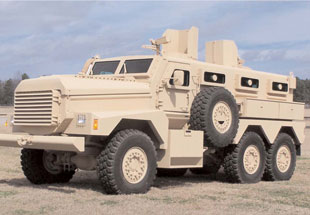
    Force Protection, Inc. and General Dynamics Land Systems are forming a joint venture to offer the Cougar 4×4 and 6×6 armored vehicles for the Mine Resistant Ambush Protected (MRAP) vehicle program, a U.S. joint services program being managed by the U.S. Marine Corps. The joint venture was formed to offer Force Protection’s Cougar 4×4 and 6×6 armored vehicles as an MRAP solution. The joint venture called Force Dynamics will include an experienced team in program management, systems engineering, production and service support from both Force Protection and General Dynamics. The companies are already cooperating in the fabrication of the armored capsule for the Cougar.

    A 4x4 configuration of the Cougar is proposed for Class I MRAP  vehicle.The 1st Marine Expeditionary Force requested 1,169 MRAP vehicles. The program calls for a commercially available off-road and highway capable armor and mine protected vehicle, configured for personnel, cargo and litter transportation. The vehicle should have a payload capacity of 5000 lbs, and will be able to carry 6 – 10 troops. The vehicle will be configured to carry existing gunner protected turrets or remotely controlled weapon stations, enabling the gunner to load, operate and engage targets from fully protected positions. To improve recovery after mine damage, the vehicle will be built of modular components that could break away from the vehicle in the case of a blast. Its energy absorbing seats should be capable of withstanding the accelerative effects of mine blasts.
    The armor protection of the vehicle include mine protection and ballistic protection of the full, roof protection from overhead airburst and side protection against fragmentation and blast. The transparent armor windows will have protection level equal to or greater than that of the ballistic armor on the vehicle, and will have built-in gun-ports. RPG protection could also be an option.

    FAST Waveform to be Integrated into MIDS

    FAST provides network-centric operation for situational awareness and rapid decision-making in an airborne tactical environment using MANET interoperable with Internet Protocol and Link 16 networks.

    FAST supports missions that require dynamic network management without pre-mission planning, improves tactical communications, and adds mobile ad hoc networking (MANET) to existing Link 16 terminals prior to introduction of emerging future technologies. “The ability to send and receive data in real time reduces the chance of fratricide, duplicate assignments, and missed targets.” said Steve DiNome, BAE Systems’ program manager for FAST.

    FAST, developed by BAE Systems with a team of engineers from SRA and MITRE, completed the first spiral with a flight test in 2006 at Eglin Air Force Base, Florida. The flights demonstrated the ability to add high-speed Internet Protocol connectivity to the MIDS Fighter Data Link. The demonstrations were performed with a four-node network using an Air Force F-15E, a Beechcraft King Air, and two ground stations.

    The U.S. Air Force has selected BAE Systems and SRA International to develop the second spiral of the Flexible Access Secure Transfer (FAST) waveform into the Multifunction Information Distribution System Low Volume Terminal 1 (MIDS LVT1). The $7 million contract will enable the MIDS LVT1 to simultaneously transmit and receive both standard Link 16 and FAST waveform messages.

    Mk47 Mod 0 Striker40 Automatic Grenade Launcher (AGL)

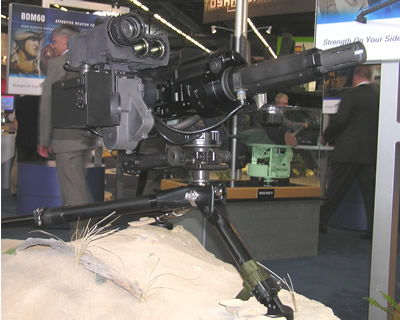
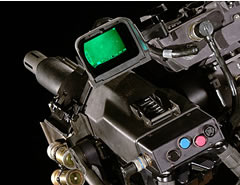
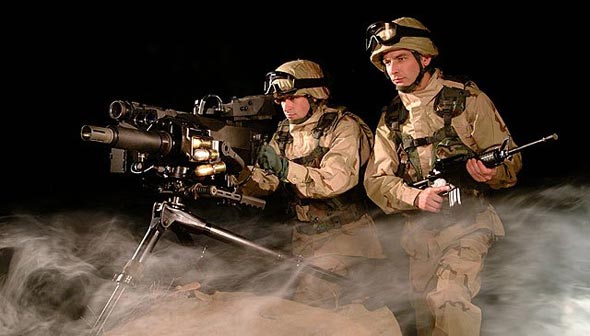
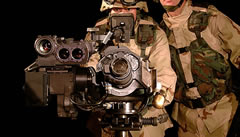
    MK47 MOD 0 weapon system, also called “STRIKER40,” is a lightweight 40mm grenade launcher equipped with an integrated fire control system capable of firing 40mm programmable air-bursting ammunition as well as conventional high velocity 40mm ammunition. The weapon system is produced by General Dynamics while Raytheon is responsible for the Lightweight Video System (LVS) fire control. In 2004 GDATP received an initial $16 million firm-fixed-price contract from the U.S. government for production of the M47.

    On January 30, 2007 GDATP was awarded an $8.6 million option from the U.S. Government for production of the MK47 MOD 0 Weapon System. The award is part of a five-year Indefinite Delivery Indefinite Quantity contract awarded in June 2006 and brings the total contract value to $32.5 million.

    US Air Force’s KC-X Aerial Tanker Replacement Program


    The U.S. Air Force released yesterday (Jan. 30, 2007) the Request for Proposal for the KC-X Aerial Refueling Aircraft, officially launching the Air Force’s highest priority acquisition program in recent years. According to Sue C. Payton, the Air Force’s senior acquisition executive, the RFP reflects the Air Force effort to minimize development risk among differing aircraft manufacturers and types. The KC-X program is the first of three acquisition programs the Air Force will need to replace the entire fleet of aging KC-135 Stratotankers, which have been in service for more than 50 years. The KC-X program will be worth $30-40 billion. The projected life cycle cost of the new tankers has been estimated at $200 billion. The Air Force plans spending about $8.2 billion until 2010 on development and testing, and expects the first squadron of 16 aircraft to become operational by 2013. Two teams are running for the program, one led by Boeing, offering the KC-767 and the other, led by Northrop Grumman teamed with EADS offering a militarized version of the Airbus A330 designated KC-30.

    Boeing formally announced it will offer an advanced tanker based on the KC-767-200 Long Range Freighter for the USAF KC-X program. Boeing’s Global Tanker Team producing the KC-767 Advanced Tanker includes Smiths Aerospace, Rockwell Collins, Vought Aircraft Industries, Honeywell and the newest member – Spirit AeroSystems. AMong the innovations included in the aircraft are advanced fly-by-wire boom, new wing refueling pods, a centerline hose drum refueling unit, and advanced 777 commercial digital flight deck and a third-generation remote vision refueling system.

    KC-767 demonstrates refueling of a USAF B-52 Bomber  during flight test. The aircraft is one of four KC-767s ordered  by  Italy. Image: Boeing media

    An artist impression of a KC-30 refueling  F/A-18 Hornets. Image: Northrop GrummanThe primary mission of the KC-X will be to provide aerial refueling to United States military and coalition aircraft in the war on terrorism and other missions. However, the Air Force also intends to take full advantage of the other capabilities inherent in the platform, and make it an integral part of the Defense Transportation System.
    “The Air Force aerial tanker is essential to all Air Force and joint global operations,” said Lt. Gen. Donald Hoffman, the military deputy for acquisition. “It allows the joint force to project mobility, strike and surveillance forces anywhere and anytime without relying on intermediate bases for refueling.” The RFP identified nine primary key performance parameters: addressing air refueling capabilities, including fuel, receiving fuel by aerial refueling from other platforms, and range at least equal to those of the existing KC-135. A new capability addressing joint operations will be the provisioning for a multi-point refueling system, to support Navy and allied aircraft. “Tankers put the ‘global’ in global power” Said General Hoffman. In addition to its primary refueling capability, KC-X will be able to provide airlift capability and have the means to network into the information available in the battle space. The aircraft will be equipped with advanced avionics suite, compliant to Communication, Navigation, Surveillance/Air Traffic Management (CNS/ATM); self protection and force protection means will include defensive systems and electro-magnetic pulse hardening and chemical/biological protection measures.The EADS CASA’s A310 Boom Demonstrator Aircraft has done, on January 30, 2007, its 12th test flight and the boom has been successfully deployed for the first time.

    Boeing is currently building four KC-767 tankers each for Italy and Japan. The aircraft has logged more than 200 flights and 600 hours during its flight test program. It is equipped with two wing mounted aerial refueling pod systems and an advanced boom system, derived from existing designs. The new boom can transfer 900 U.S. gallons (3,400 liters) of fuel per minute. Providing more precise and responsive controls to the operator, the boom automatically corrects its position to reduce potential damage to the receiver aircraft.

    The KC-30 is expected to use the new Air Refueling Boom System (ARBS) developed by EADS. It also will soon equip the fleet of five EADS KC-30B tanker aircraft ordered by the Royal Australian Air Force. With a maximum nominal fuel flow rate of 1,200 U.S. gallons per minute, the ARBS utilizes fly-by-wire controls and features an automatic load alleviation system that provides a larger refueling envelope and enhanced controllability. The system’s all electric design significantly reduces traditional failure rates and subsequent down times. Using a 3D-vision surveillance system, the boom operator can remotely control ARBS operations from the cockpit during air-to-air refueling.

    The Royal Australian Air Force’s first KC-30B Multi-Role Tanker Transport currently is undergoing its outfitting process, during which the aircraft will be equipped with a centerline ARBS, a pair of under-wing pods with hose and drogue refueling systems (the same fourth-generation model series as currently in operational service on the U.S. Air Force MC-130 and the EADS A310 tankers flown by Canada and Germany), and an electronic warfare self-protection suite for defense against surface-to-air missiles.

    DDG-1000 Zumwalt Class Destroyer


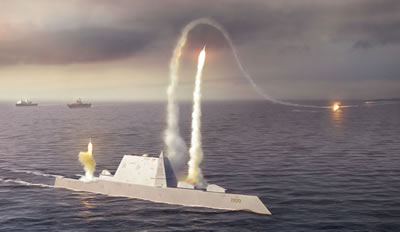
    The U.S. Navy awarded yesterday over half billion US$ for continued detailes design of the Zumwalt class destroyer, DDG-1000. Northrop Grumman Corporation (NYSE: NOC) was awarded US$268 million and General Dynamics’ Bath Iron Works was awarded $257 million, bringing the total value spent on the new class’ design to $644 million.

    The contract funds further DDG 1000 detail design and procurement of vendor-furnished information and long-lead materials and runs through 2013.

    DDG 1000 is the first in a class of the U.S. Navy’s multi-mission surface combatants tailored for land attack and littoral dominance. The ship’s mission is to provide affordable, credible, independent forward presence and deterrence and to operate as an integral part of naval, joint or combined maritime forces. DDG 1000 will provide advanced land attack capability in support of ground campaigns and will contribute naval, joint or combined battlespace dominance in littoral operations. DDG 1000 is in an advanced state of development and will influence ship design worldwide for the remainder of the century.

    Joint Intelligence Operations Center Opens at ISAF HQ in Kabul

    A Joint Intelligence Operations Center (JIOC) supporting both Afghan and Pakistani forces monitoring the Afghan-Pakistani border was opened at ISAF headquarters at Kabul, Afghanistan January 25, 2007.

    At the new center, Afghan and Pakistani military officers are working side by side in one facility to support joint campaign planning for operations, intelligence, technical exchange of counter improvised explosive device information and information operations. The JIOC is manned by six Pakistani and six Afghan liaison officers, as well as 12 ISAF staff officers. As members cooperate and collaborate on matters related to border security, the team will produce intelligence reports and distribute them to the intelligence community and as necessary, to other organizations also concerned with border security.

    “The JIOC will facilitate critical and timely information needed by the Afghan National Army and Pakistan army units operating along the border to prevent and disrupt insurgent activity common in the eastern and southern areas of Afghanistan,” said Maj. Andrew Zeigler, ISAF’s Government of Afghanistan intelligence representative and facilitator for intelligence sharing between the JIOC, ISAF and the Afghanistan-Pakistan entities. ISAF is currently composed of more than 35,000 troops from 37 NATO countries and non-NATO nations. Its primary role is to support and assist the government of Afghanistan in providing and maintaining a secure environment in order to help in the rebuilding of Afghanistan.

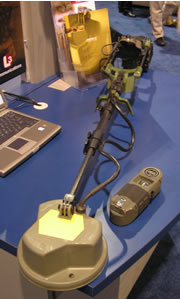
    Handheld Standoff Mine Detection System (HSTAMIDS)

    CyTerra, a L-3 Communications (NYSE: LLL) subsidiary received a U.S. Army follow-on order worth about US$40 million to provide several thousand AN/PSS-14 advanced mine detection systems. The purchase is the second order placed by the U.S. Army under a ten year, full rate production contract for up to 17,000 units with an anticipated value in excess of $300 million. To date, L-3 CyTerra has delivered more than 3,000 AN/PSS-14 mine detecting sets to the U.S. Army and U.S. Marine Corps under this and other contracts. The initial order, announced in August 2006, was for more than $24 million of systems.

    AN/PSS-14 was developed under the U.S. Army Handheld Standoff Mine Detection System (HSTAMIDS) program. Unlike earlier generations of mine detectors, that relied on metal detection alone, the new device combines highly sensitive metal detection with ground-penetrating radar and advanced data fusion algorithms, all in a rugged, compact system. This unique combination of technologies represents a major advancement in detection capabilities and enables the AN/PSS-14 to accurately differentiate deadly landmines from harmless metal debris. The AN/PSS-14 significantly improves the speed and safety of mine clearance operations, and dramatically enhances the ability to readily locate both metallic and low-metallic anti-personnel and anti-tank mines buried in all types of soil and terrain.

    Skunk Works and XTEND Simplify Multi-Drone Command

    0
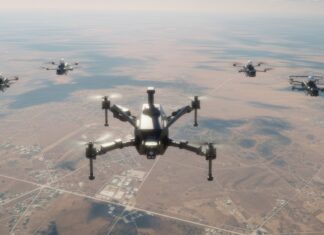
    Lockheed Martin Skunk Works® and XTEND have achieved a major milestone in JADC2 by integrating the XOS operating system with the MDCX™ autonomy platform. This technical breakthrough enables a single operator to simultaneously command multiple drone classes, eliminating the friction of mission handoffs. From "marsupial" drone deployments to operating in GPS-denied environments, explore how this collaboration is abbreviating the data-to-decision timeline and redefining autonomous mission execution.

    From Ukraine to Taiwan: The Global Race to Dominate the New Defense Tech Frontier

    0
    As traditional defense primes face mounting competition from agile “neoprimes” such as Anduril, Palantir and Helsing, the balance of innovation is shifting toward software-defined warfare and scalable, dual-use technologies, while global industry consolidation—marked by Boeing’s integration of Spirit AeroSystems and other strategic mergers—signals an intensified race to secure control over the defense technology value chain. Our Defense-Tech weekly report highlights these trends.

    Europe’s “Drone Wall”

    0
    In early October 2025, a coordinated wave of unmanned aerial system (UAS) incursions—widely attributed to Russia—targeted critical infrastructure across at least ten European nations. The unprecedented campaign exposed the fragility of Europe’s air defenses...

    Weekly Defense Update & Global Security Assessment

    0
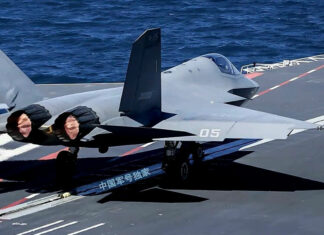
    Executive Summary The past week (September 18-25, 2025) represents an inflection point where strategic defense concepts have transitioned from doctrine to tangible reality. An analysis of global events reveals four primary, interconnected trends shaping an...

    U.S. Air and Space Forces Push Next-Gen Programs at the AS&C 2025 Conference and...

    0
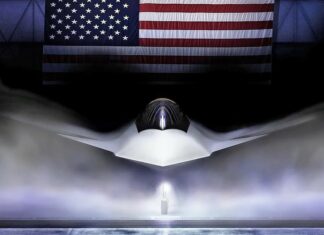
    At the 2025 Air, Space & Cyber Conference, U.S. Air Force and Space Force leaders unveiled major updates on next-generation fighters, bombers, unmanned systems, and space initiatives, highlighting both rapid innovation and critical readiness challenges as the services race to outpace global competitors. A short version is available here, with a more detailed version for subscribers.

    TADTE 2025: Reflecting Taiwan’s Strategic Themes

    0
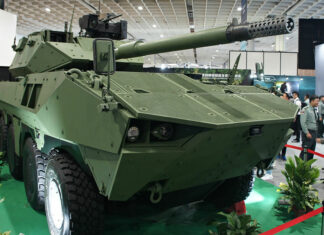
    The Taipei Aerospace & Defense Technology Exhibition (TADTE) 2025 crystallized around four dominant strategic themes that collectively illustrate Taiwan's comprehensive approach to defense modernization amid escalating regional tensions. Based on a detailed report by Pleronix (available upon request). Includes a Podcast discussion on TADTE 2025's highlighting Taiwan's four strategic themes beyond the post's coverage.

    Iron Beam 450 Completes Testing, Soon to Join With Operational Air Defense Units

    0
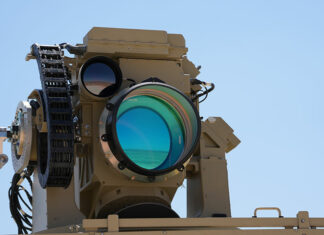
    Israel’s Iron Beam 450 high-power laser system has completed final testing, marking a major leap in air defense. Developed by Rafael, it offers precise, cost-effective interception of rockets, UAVs, and mortars, and is set for IDF deployment by 2025.