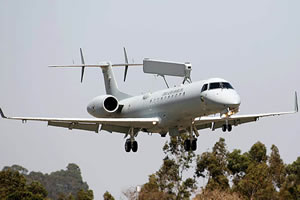
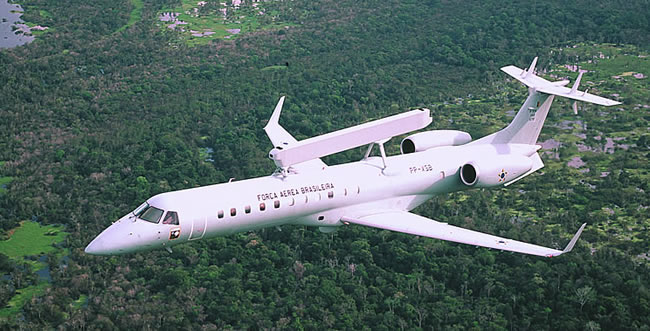
The Brazilian Air Force is upgrading its E-99 Airborne Early Warning & Control (AEW&C) aircraft. Saab Defence and security company announced today it has received an order from the Brazilian company Embraer Defense and Security, for the upgrade of the Erieye AEW&C Mission System. The total order amounts to about US$60 million (380 MSEK.)
The contract part of the modernization programme for the Embraer 145 AEW&C, named E-99 (formerly designated R-99A) in the Brazilian Air Force, slated for delivered from 2014 until 2017. The first system for Brazil on the Embraer 145 became operational 2002. Erieye is also operational on ERJ-145 in Mexico and Greece. India has also selected a specially modified configuration of the ERJ-145 platform for its indigenous AEW&C program.
The procurement of three AEW&C aircraft was part of the SIVAM (Sistema de Vigilância da Amazônia) program, deploying AEW&C and remote sensing aircraft over the Amazon region, in an effort to establish law enforcement, environmental protection and fight drug trafficking in the area.
Five Embraer 145 (R-99A) Airborne Early Warning & Control (AEW&C) aircraft plus three aerial surveillance (R-99) aircraft were part of the SIVAM special mission fleet deployed by the Brazilian government to secure the Amazon basin.
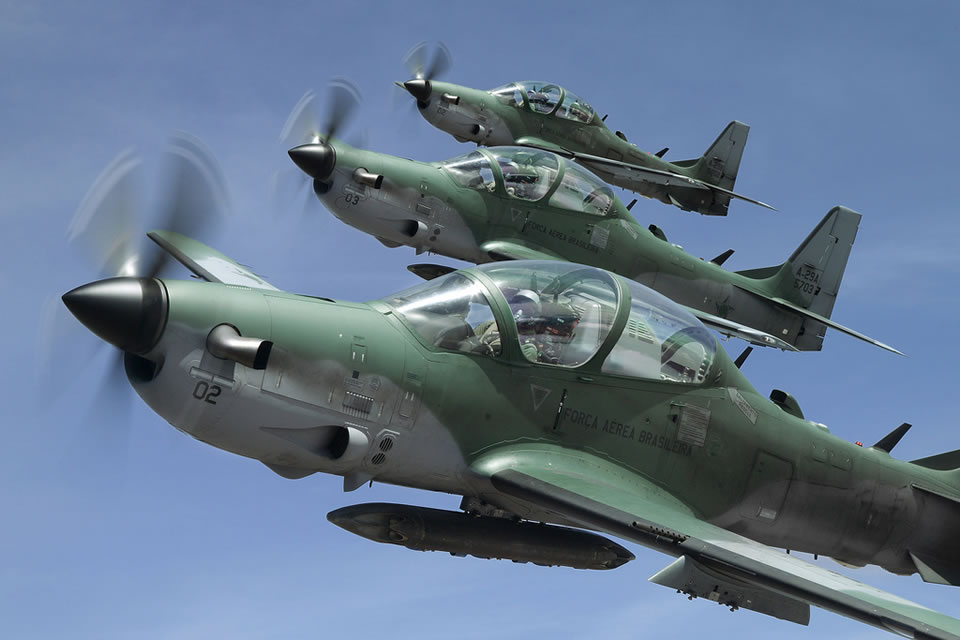
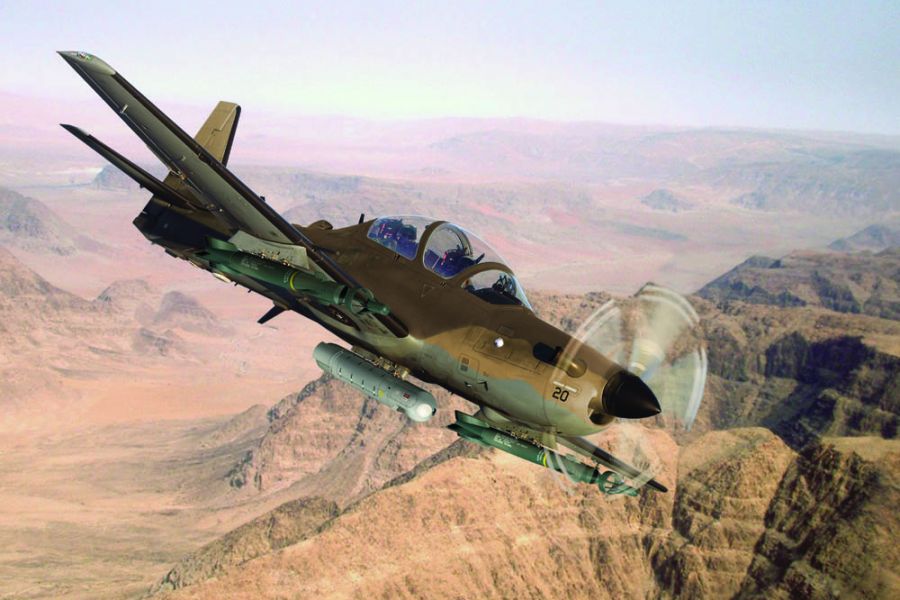
Embraer delivered today to the Indonesian Air Force the first four A-29 Super Tucano aircraft. The photo shows the same model aircraft, in service with the Brazilian Air Force (FAB)
A-29 Super Tucano has won again the USAF LAS contract to supply 20 light attack aircraft to the Afghan Air Force.
US based Sierra Nevada Corp. and Brazilian Embraer Defense and Security will deliver 20 A-29 Super Tucano turboprop powered light air support aircraft to the Afghan Afghan Air Force, under a contract worth US$427 million awarded yesterday by the USAF. The contract also covers associated maintenance and training for the Afghan air force.
Under this contract, 20 aircraft are scheduled to be delivered to operational air bases in Afghanistan beginning in the summer of 2014. Deliveries will continue through 2015 at a rate of two aircraft per month. The A-29 will be equipped for light attack missions, to conduct advanced flight training, surveillance, close air support and air interdiction missions.
The contract requirements called for a known, predominantly stable design due to austere conditions, the possibility for immediate combat needs and the substantial learning curve of the potential partner nation pilots. Only two aircraft models were considered – the A-29 Super Tucano and AT-6 from Hawker Beechcraft.
In December 2011 the USAF awarded this contract worth over $355 to Sierra Nevada Corp; however, the Air Force issued a stop-work order in February 2012 and terminated the contract in March 2012 during the Hawker Beechcraft Court of Federal Claims protest and after an internal Air Force investigation turned up documentation deficiencies in the source selection paperwork. As part of the Air Force’s corrective action, a new LAS source selection team was appointed, source selection training was reinforced across the Air Force acquisition community, and oversight alignment and effectiveness was improved. This action has cost the taxpayer extra $72 million. (DEW line has more analysis here)
The Air Force restarted the LAS acquisition as quickly as possible in order to be responsive to the Afghan requirement and issued an amended request for proposals in May 2012. Apparently, with competitor Hawker Beechcraft crippled under Chapter 11 (from which it emerged earlier this month), Sierra Nevada could have a better understanding of the competitor’s offer thus it could safely up its offer without risking loosing the bid.
One of the stronger points for Hawker Beechcraft in promoting the AT6 was the positioning of their product as US made. The Brazilian designed aircraft will be built in Jacksonville, Florida. The LAS contract will support more than 1,400 American jobs, reflecting both the large U.S. supplier base – more than 100 companies will supply parts and services for the A-29 Super Tucano – and new jobs that will be created by SNC and Embraer. Embraer will create new high-tech jobs at its production facility in Jacksonville, adding to the 1,200 people Embraer currently employs in the United States, and new jobs at SNC will add to its U.S. workforce of 2,500 people.
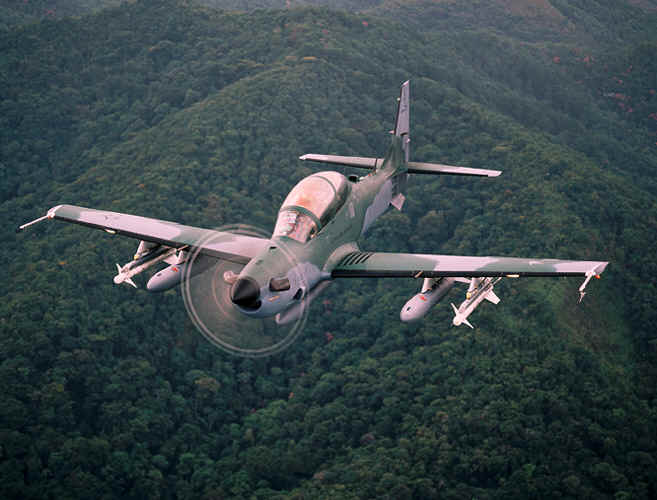
A-29 LAS carrying typical ordnance load for a strike mission, including two 500 lb laser guided bombs and a targeting pod.
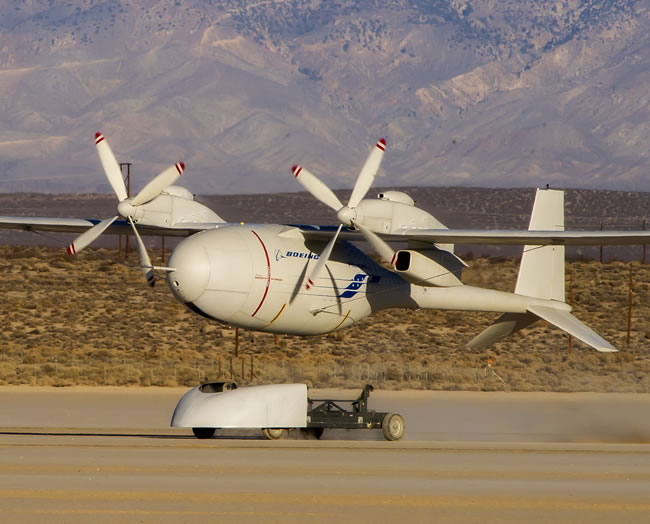
Boeing’s liquid hydrogen-powered Phantom Eye unmanned airborne system completed its second flight Feb. 25, 2013
Boeing’s liquid hydrogen-powered Phantom Eye unmanned airborne system completed its second flight Feb. 25. Photo: Boeing
Boeing’s liquid hydrogen-powered Phantom Eye unmanned airborne system (UAS) completed its second flight Feb. 25. On its second flight the modified drone achieved more than twice the flight duration and altitude, compared to the first flight which lasted only 28 minutes.
During the flight, at NASA’s Dryden Flight Research Center at Edwards Air Force Base, Calif., Phantom Eye climbed above an altitude of 8,000 feet and remained aloft for 66 minutes at a cruising speed of 62 knots before landing. On its first flight the drone, designed for high altitude missions, reached only an altitude of 4,080 feet. Following the first flight, Boeing upgraded the aircraft’s software and hardware, including the landing gear which was damaged on the first landing. On its second flight the modified drone achieved more than twice the flight duration and altitude, compared to the first flight which lasted only 28 minutes. According to the company, the upgrades paid off in the form of a picture-perfect landing. “This flight, in a more demanding high-altitude flight envelope, successfully demonstrated Phantom Eye’s maneuverability, endurance and landing capabilities,” said Drew Mallow, Phantom Eye program manager.
The Phantom Eye demonstrator is capable of carrying a 450-pound payload while operating for up to four days at altitudes of up to 65,000 feet. The drone is designed to perform intelligence, surveillance and reconnaissance (ISR) missions for up to four days without refueling. “Today’s combination of geopolitical and economic issues makes Phantom Eye’s capabilities, affordability and flexibility very attractive to our global customers,” said Darryl Davis, Boeing Phantom Works president. “No other system holds the promise of offering on-demand, persistent ISR and communications to any region in the world, rapidly responding to natural disasters and national security issues.”
Boeing is self-funding development of the environmentally responsible Phantom Eye, which generates only water as a byproduct of its propulsion system.
Following the first flight, Boeing upgraded the aircraft’s software and hardware, including the landing gear. The upgrades paid off in the form of a picture-perfect landing its second flight Feb. 25, 2013
Arrow-3 launched on its first exoatmospheric test flight today. Photo: IMOD
Arrow-3 launched on its first exoatmospheric test flight today. Photo: IMOD
Israel’s Ministry of Defense (IMOD) announced it carried out a successful flight test of the Arrow 3 missile interceptor, the test was conducted under the ‘Arrow’ development program in cooperation with the U.S. Missile Defense Agency. The interceptor was launched into space at around 05:52 (GMT), from a coastal military launching pad in central Israel. The missile flew for more than six minutes, testing Arrow 3’s fly-out capabilities at altitudes well over 100 km (considered the lower boundary of space). The test plan did not include an actual intercept therefore, no target was used. The test, originally planned for summer 2012 was postponed for about six months, due to unspecified technical issues.
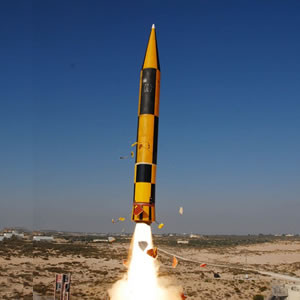
IAI’s Arrow-3 ballistic missile interceptor was launched today on its first exoatmospheric flight. This image shows a previous test in 2011 that cleared the missile’s launcher ejection sequence.
The successful test is a major milestone in the development of the Arrow 3 Weapon System and provides further confidence in future Israeli defense capabilities to defeat the developing ballistic missile threat – the IMOD announcement said.
Arrow 3, the newest addition to the Arrow Weapon System, is the upper tier in the Arrow family of weapons that incorporates the latest technology to combat a continually advancing threat. As it becomes operational, around 2016 Arrow 3 will be able to intercept ballistic missiles with longer ranges than the ones that Arrow 2 can bring down, and it will do so at higher altitudes.
The Arrow system uses the two-stage Arrow II interceptor to destroy an incoming target with a fragmentation warhead. Arrow 3, also a two-stage interceptor, will be able to destroy an incoming target with an exo-atmospheric kill vehicle providing additional defense capability for evolving threats. Using ‘hit-to-kill’, rather than fragmenting warhead enables the new interceptor to become lighter and more agile platform. Arrow 3 weighs less than half the Arrow-2 weight.
The test flight successfully demonstrated several new technologies utilized in the Arrow-3 including the two stage rocket engine, a flexible skirt augmenting the stability of the missile in the upper atmosphere, a method that enabled designers to increase the speed of the second stage. The flight also evaluated the new dual pulse propelled kill vehicle and its uniquely designed kill vehicle that allows 90 to 180 degrees tracking of the incoming ballistic missile warhead. According to Riki Ellison, Chairman & Founder of the US Missile Defense Advocacy Alliance, these technologies will contribute to lighter, faster interceptor, offering exponential increase in divert capability for a missile defense interceptor applications.
Both interceptors will be operated from common launch systems, thus reducing the infrastructure and support required for new systems. The new system will require major upgrades of Super Green Pine radar, battle management systems, launchers and communications systems are currently underway as part of the Arrow Mission System 4.1 block upgrade.
The introduction of Arrow-3 is required as a response to the evolution of the threat of more sophisticated missiles, including those carrying weapons of mass destruction, requires a multi-tier approach to achieve a zero leakage rate. Arrow 2 and 3 are part of the Israeli multi-layer defense system currently being established, to protect the state of Israel against all ballistic threats.
Israel’s Missile Defense Organization and the U.S. Missile Defense Agency officials conducted the flight test. The main contractor for the integration and development of the Arrow Weapon System is MLM of the Israel Aerospace Industries (IAI) in conjunction with Boeing.
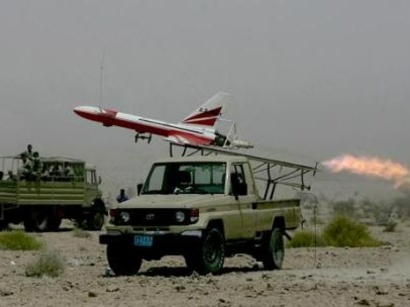
Iran is producing the Hazem drone, capable of recce, cargo delivery and attack missions.
Iran is producing the Hazem drone, capable of recce, cargo delivery and attack missions.
Iran’s authorities announced today that Iran’s Revolutionary Guards Corps (IRGC) have intercepted and downed an ‘alien’ drone during the first day of the ‘Great Prophet 8’ exercise taking place in Southern Iran this week. It is not clear from the announcement whether the event is part of the training program or an actual intercept involving a foreign unmanned system has taken place.
In the past two years Iran intercepted several US drones, among them a CIA Lockheed Martin RQ-170 and Boeing/InSitu Scan-Eagle, supporting the US Navy, both were captured virtually intact. Apparently, the Iranian exercise planners have included these scenarios in their plan. “During the opening phase of the ‘Great Prophet 8’ exercise IRGC’s electronic warfare systems detected signals showing that alien drones were trying to enter the country (airspace),” Spokesman of the Wargames General Hamid Sarkheili told reporters on Saturday evening. Sarkheili said the IRGC is now in possession of the pictures taken by the drone and will release them if Okayed by the country’s senior commanders. While the Fars news agency refers to the incident as an actual intercept of a foreign UAS, another agency, PressTV has translated the same news item with a different tone, referring to the drone as a ‘mock spy drone’, understood to be part of the exercise scenario.
According to Sarkheili drones are extensively used throughout the exercise, he noted that in addition to reconnaissance, UAVs will also be used in attack missions, as ‘suicide drones’, capable of attacking targets in positions difficult for targeting by other weapon systems. Deputy Defense Minister for Industrial and Research Affairs Mohammad Eslami recently confirmed that Iran is developing a ‘strategic UAV’ designed for long-range missions. “We hope to soon unveil new strategic drones which can fly up to 30,000 feet in altitude and 24 hours of nonstop flight.” Eslami said. noting that Iran is already involved in the production and development of 20 different UAS. The new drone could be unveiled in May this year. Sarkheili also confirmed that a new anti-helicopter weapon system, utilizing a shoulder-launched 20mm missile will also be tested. The new weapon can engage helicopters from a distance of 1,400 meters.
Referring to the operational capabilities of Iranian UAVs, IRGC Air Force Brigadier General Amir Ali Hajizadeh, referred to a recent mission of a UAV known as ‘Ayub’ over southern Israel, where the Iranian drone operated by the Iranian-supported, Lebanese-based insurgent organization Hezbollah was sent on a reconnaissance mission over Israel.
While Israeli authorities acknowledged the UAV had penetrated 60-70 km into their airspace, According to Hajizadeh the drone actually had a 400 km flight in Israeli controlled airspace (probably referring to the route the drone passed from the point it crossed the Israeli Lebanese border over the Mediterranean to the point where it crossed the Israeli coastal line north of the Gaza strip.)
According to Hajizadeh this was not the first occasion an Iranian drone has flown over Israel, as the drone is equipped with the means to enable it to fly over Israel unnoticed, conduct its mission and return home. Hajizadeh said that on a specific mission in October 2012, code named ‘Operation Hussein Ayub’ the drone was eventually detected and shot down by Israeli F-16s was directed at aerostats deployed in that area. Iran claimed the drone that was shot down in that mission has reached the Dimona Nuclear Research Center in the North Eastern Negev Desert.
Referring to the operational capabilities of Iranian UAVs, IRGC Air Force Brigadier General Amir Ali Hajizadeh, referred to a recent mission of a UAV known as ‘Ayub’ over southern Israel, where the Iranian drone operated by the Iranian-supported, Lebanese-based insurgent organization Hezbollah was sent on a reconnaissance mission over Israel.
While Israeli authorities acknowledged the UAV had penetrated 60-70 km into their airspace, According to Hajizadeh the drone actually had a 400 km flight in Israeli controlled airspace (probably referring to the route the drone passed from the point it crossed the Israeli Lebanese border over the Mediterranean to the point where it crossed the Israeli coastal line north of the Gaza strip.)
According to Hajizadeh this was not the first occasion an Iranian drone has flown over Israel, as the drone is equipped with the means to enable it to fly over Israel unnoticed, conduct its mission and return home. Hajizadeh said that on a specific mission in October 2012, code named ‘Operation Hussein Ayub’ the drone was eventually detected and shot down by Israeli F-16s was directed at aerostats deployed in that area. Iran claimed the drone that was shot down in that mission has reached the Dimona Nuclear Research Center in the North Eastern Negev Desert.
In an interview in December 2012 the Israel Air Force commander Maj. General Amir Eshel acknowledged the IAF is making preparations to intercept larger and smaller drones, which are even harder to identify, than the UAV intercepted over the Negev in October. “It’s not new that we are readying ourselves against this threat,” Eshel said, referring to Hezbollah. “This field is developing and already now it requires us to come up with comprehensive answers.” However, Eshel was short of promising airtight protection. “In defense there is never a rock-hard wall that nothing can breach. The goal is to be prepared for the main and significant [threat] and to disregard the less important. Eshel told the Israeli newspaper Haaretz.
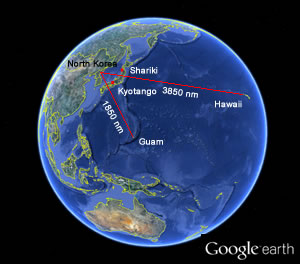
The Pacific Ocean theater, showing the two radar stations in Japan, the ballistic trajectories and distances (in Nautical miles) from North Korea to the nearest US territories. Photo based on Google Earth map view.
The Pacific Ocean theater, showing the two radar stations in Japan, the ballistic trajectories and distances (in Nautical miles) from North Korea to the nearest US territories. Photo based on Google Earth map view.
Tokyo and Washington are reportedly planning to install a US early-warning radar system at a coastal base near Kyoto, in Central Japan to bolster defences against the North Korean missile threat. The new site will be the second US X-band radar system to be installed in Japan, after another was set up at the Shariki Japan Air Self Defense Force (JASDF) base, in the Aomori prefecture in northern Japan. Japanese sources have indicated the new Homeland Defense Radar Site will be built in tha Kyogamisaki Air Self-Defence Force base in Kyotango, northwest of Kyoto, on the coast of the Sea of Japan (the East Sea). The location was picked as it was likely that a North Korean missile targeting Guam or Hawaii would fly over western or central parts of Japan. The station in Northern Japan is likely to covers potential North Korean attacks targeting the West Coast of the Continental USA. Japanese Prime Minister Shinzo Abe and US President Barack Obama confirmed in their Washington meeting on Friday that the two countries would work together on the radar installation.
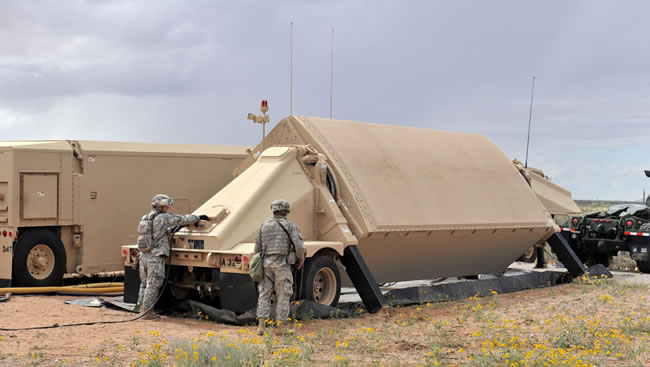
The X-band radar, apparently Raytheon TPY-2 which has been used as a Forward Based X-Band (FBX) Radar and the primary sensor and battle management radar for the Terminal High Altitude Area Defense System (THAADS). The AN/TPY-2 is capable of tracking all classes of ballistic missiles and identifying small objects at long distances. In the forward-based mode, this radar plays a vital role in the Ballistic Missile Defense System (BMDS) by acting as a forward based sensor for the system, detecting ballistic missiles early in their flight and providing precise tracking information for use by the system. Use of multiple sensors provides overlapping sensor coverage, expands the BMDS battle space, and complicates an enemy’s ability to penetrate the defense system. Acquiring targets from extremely long range, the TPY-2 allow US and allied missile-defenses to intercept such missiles from the ground based (THAAD) or sea-based (AEGIS) systems once a ballistic missile has been detected.
In the terminal mode, the same radar provides surveillance, track, discrimination and fire control support for the Terminal High Altitude Area Defense (THAAD) weapon system.
The US Missile defense Agency (MDA) has already produced eight of eleven TPY-2 radras funded. Four are currently forward deployed worldwide. FBX are currently deployed in Turkey, Israel and Japan. A new site was reportedly established last year in Qatar in the persian Gulf. The Japanese site will improve the coverage of the north-eastern pacific which, until now, has been covered by a US-based or sea-based systems.
The Army Navy/ Transportable Radar Surveillance and Control, or AN/TPY-2, is a transportable X-band, high-resolution, phasedarray radar designed specifically for ballistic missile defense. In the terminal mode, the same radar provides surveillance, track, discrimination and fire control support for the Terminal High Altitude Area Defense (THAAD) weapon system. Photo: MDA
This Analysis is written by Daniel Goure, Ph.D. Early Warning Blog, Lexington Institute
The market for military goods and services appears to have entered a prolonged downturn. Although the earnings of defense contractors remain strong, revenues have begun to weaken. If demand continues on its current vector, then eventually the softness at the top line will begin impacting the bottom line — meaning earnings.
The biggest defense companies have adopted a number of strategies to delay that day such as buying back shares, but they can’t do that forever. Thus, if past downturns are any indication, the defense industry is entering a rationalization phase in which the number of players adjusts to reflect a secular decline in demand.
That raises the question of who will lead sector rationalization — usually referred to as “consolidation.” There are two ways of leading consolidation — by buying and by selling. Companies can’t get bigger through acquisitions unless other companies are willing to get smaller, or disappear entirely. But which company will go first? It certainly isn’t going to be industry-leader Lockheed Martin, which came into being largely because of management’s willingness to go first in the last round of consolidation. That process worked so well that Lockheed Martin is now the best-positioned player in the sector, and thus has the least incentive to entertain major strategic moves. It will continue trimming and shaping its portfolio, but not in big ways.
The second-ranked Pentagon contractor, Boeing, is similarly lacking in incentives to buy or sell in a big way. Boeing gets 60% of its revenues from commercial transports and 40% from defense, a mix that insulates it from downturns in either market. But right now the opportunities for growth on the commercial side are much bigger than those on the defense side, so senior management probably doesn’t want to spend billions on becoming even bigger in defense. It would make a lot of sense for Boeing to buy the military-aircraft operations of Northrop Grumman if they become available, but CEO Jim McNerney probably has his sights set on definitively beating Airbus in the jetliner business before upstarts like China become major competitors.
Raytheon isn’t going to lead sector consolidation because, like Lockheed Martin, it is already well-positioned in the defense marketplace. Its products — radars, missiles, networks — will do well regardless of whether the Pentagon buys new combat systems or upgrades old ones. With CEO Bill Swanson approaching retirement, there is little reason to consider an eleventh-hour course correction in what looks like an unstoppable corporate juggernaut.
BAE Systems is also unlikely to lead consolidation in the U.S. market because the British-based company is seeking growth in other countries, and its high dividend — a crucial discriminator for investors — soaks up most of the cash that could be used for acquisitions.
So that leaves two companies in the sector’s first tier that might be candidates to lead consolidation — General Dynamics and Northrop Grumman.
Those are the companies I think are most likely to make big strategic moves over the next two years. General Dynamics has a history of bold strokes, and newly-minted CEO Phebe Novakovic used her first earnings call to signal that the main focus of her tenure at the top will be shareholder value. That means GD might be a buyer or a seller, depending on which strategy gets shareholders the best results fastest. If Novakovic sees an opportunity to make a killing that can benefit shareholders in a big way, she’ll do it.
As for Northrop Grumman, CEO Wes Bush has done wonders with the company since taking the helm three years ago. It’s actually performing better in the downturn than it was when demand was headed up. But Bush has to be asking himself where the company goes from here. Each of his three main business units — aerospace, electronics, information — is world class, but they’re locked in competition with similarly-endowed peers. That’s a tough situation in which to sustain the company’s margins, which right now are pretty impressive.
So Wes Bush might be thinking big about how to reposition his enterprise. The irony is that General Dynamics and Northrop Grumman are headquartered across the street from each other in the same Northern Virginia office park. If I had to guess where defense-sector consolidation was going to kick into high gear first, that’s the zip-code I’d pick.
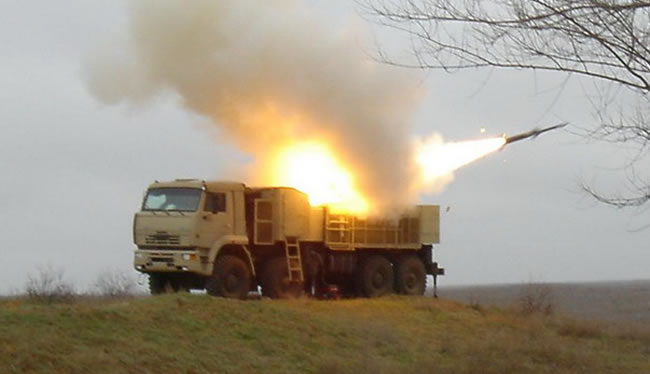
Pantsir S1 (SA-22) firing the 57E6 air-defense missile
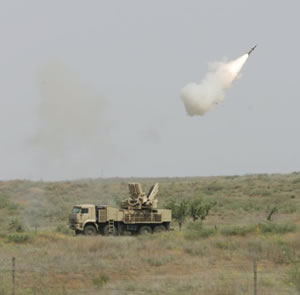
Pantsir S1 firing of the 57E6 missile on a test launch
The Brazilian Ministry of Defense will commence negotiations for the procurement of Pantsir-S1 (SA-22) and Igla (SA-18) Very Short Range Air-Defense missiles (VSHORAD). The authorization followed a meeting between the Brazilian Republic president Dilma Rousseff, and Russian Prime Minister Dmitri Medvedev. Brazil plans to buy three Pantsir-S1 batteries (typically 15 units) and two batteries of short-range Igla missiles. Russia has formally presented the systems for the first time during the Brazilian presidential visit in Moscow in December 2012. First deliveries are expected to arrive in Brazil 18 months after the formal contract signature, expected within 3-4 months. Timely delivery of the systems is critical to provide Brazil with the necessary air-defense assets it required to place for the Rio 2016 Olympic games.
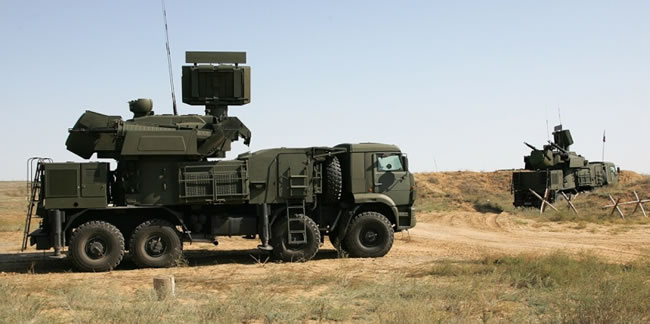
Pantsir-S1 systems produced by the Russian KBP Instrument Design Bureu are known to be in service with the military forces of Russia, Syria and the UAE, which was the launch customer for the system. Few systems have also shown up in Iran. Pantsir-S1 can be employed as a truck-mounted (mobile) short range air defense system or in stationary positions, where the air defense complex is removed from its truck. Each unit is deployed is self-sufficient, with an integral radar, passive electro-optical targeting system, twelve 57E6 short-range air defense missiles and twin-barrel 30mm 2A38M cannon. The missiles have a maximum range of 20 km while the guns can reach 4,000 meters and reach an altitude of 3,000 meters. The system can effectively engage fast and slow aircraft, helicopters, as well as unmanned aerial vehicles (UAV) and some types of guided weapons. Pantsir-S1 systems currently supplied to the UAE are employed with 8×8 MAN trucks, while the versions to be delivered to Brazil are likely to be mounted on locally built trucks.
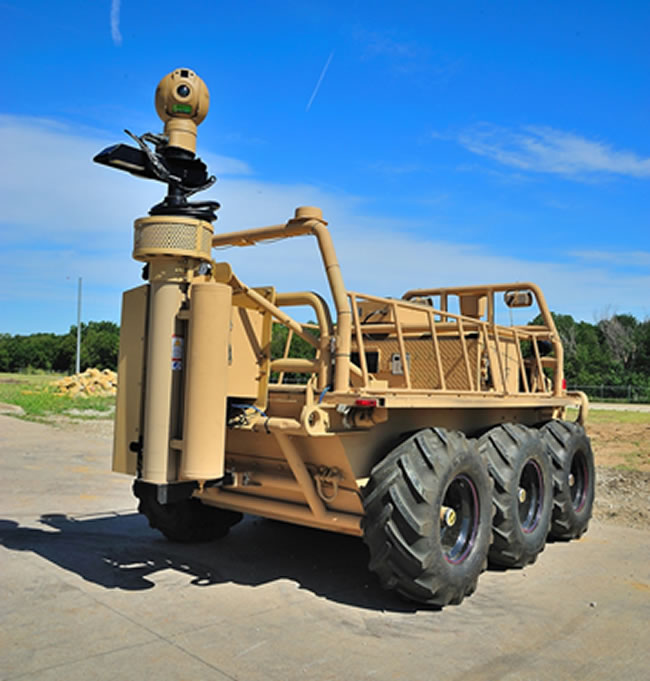
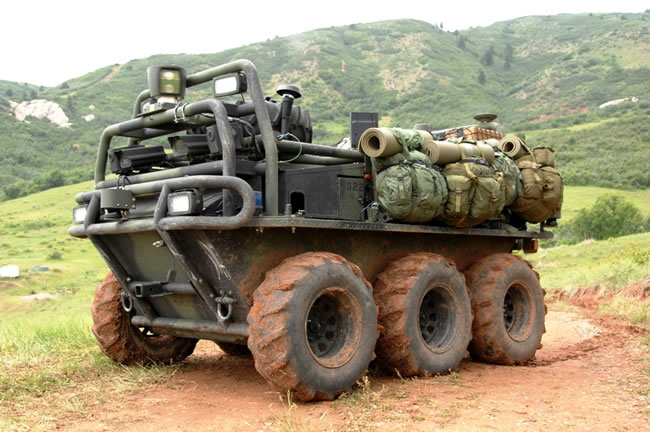
Gyrocam M9 stabilized EO sensor mounted on a telescopic mast carried on the SMSS robotic platform. Photo: Lockheed Martin
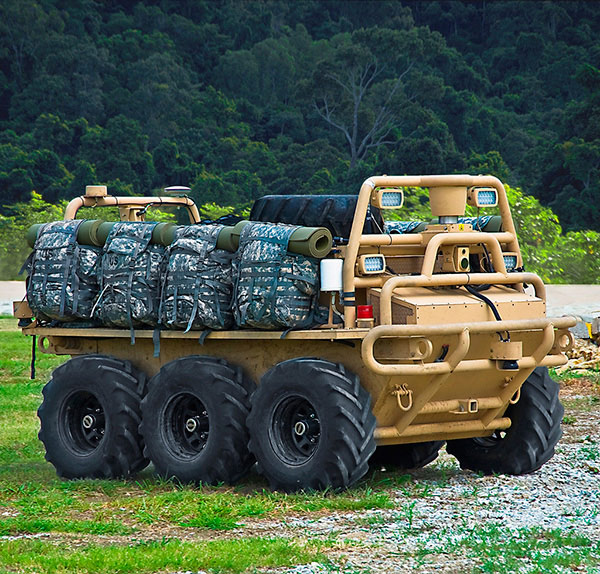
SMSS load carrying mule undergoing field testing. Photo: Lockheed martin
Lockheed Martin completed demonstrated the capability to control the Squad Mission Support System (SMSS) robotic vehicle beyond line of sight. The demonstration took place at Camp Grayling, Mich.where the SMSS was controlled via satellite link 200 miles away. The robotic vehicle conducted several battlefield surveillance operations while being controlled via satellite from the U.S. Army’s Tank Automotive Research, Development and Engineering Center in Warren, Mich., over 200 miles away.
The demonstration proved that the combination of autonomy, vehicle mobility, surveillance sensors and satellite communications can provide a means of battlefield situational awareness while keeping soldiers out of harm’s way. During the demonstration, SMSS was equipped with a Gyrocam 9M Tactical Surveillance Sensor and a General Dynamics SATCOM Technologies “SATCOM-On-the-Move” system.
“These demonstrations allow the Army development communities to better understand capabilities available to them with SMSS right now,” said Joe Zinecker, director of combat maneuver systems at Lockheed Martin Missiles and Fire Control. “We are showing our customers innovative ways to employ SMSS vehicles in missions while demonstrating that we are ready to move from technology development to fielding these valuable and mature new capabilities.”
Gyrocam M9 stabilized EO sensor mounted on a telescopic mast carried on the SMSS robotic platform. Photo: Lockheed Martin
SMSS incorporated a telescopic mast carrying the Gyrocam 9M stabilized EO payload, acquiring on-the-move, high-resolution electro-optical and thermal video. Through the tests, SMSS movements and sensor functions were controlled and monitored from the remote station via tele-operation, demonstrating control of the vehicle through the satellite. In another simulated mission, the operator defined a pre-planned route with the SMSS employing autonomy to navigate the course with minimal operator intervention, performing various autonomous functions, such as ‘follow-me’, ‘go-to-point’ and ‘retro-traverse’.
Lockheed Martin conducted several demonstrations of the SMSS for the U.S. Army during 2012, outfitting the vehicle with different mission equipment packages to conduct logistics, counter-IED, mobility, dismounted-soldier support, and reconnaissance, surveillance and target acquisition. Four SMSS vehicles were successfully tested by soldiers in Afghanistan in 2012 as transport and logistics vehicles to lighten the load for soldiers in combat operations.
“The concept of an affordable common mobility platform coupled with specialized mission equipment packages is the right answer for UGVs to reduce development, production and sustainment costs, while providing maximum flexibility for commanders,” Zinecker said. “SMSS continues to demonstrate its readiness to enter into an engineering and manufacturing development program.”
Lockheed’s SMSS Unmanned Autonomous Vehicle. Photo: Lockheed Martin
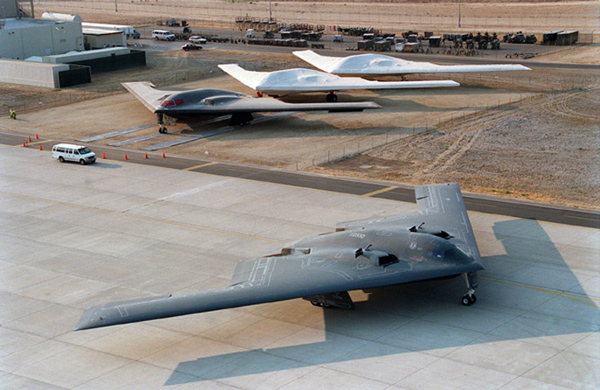
B-2 on runway preparing for takeoff. Photo: Northrop Grumman
Northrop Grumman will help drive down costs and speed the availability of new hardware and software upgrades for the B-2 stealth bomber under a recently awarded contract from the U.S. Air Force.
The contract covers Technology Development (TD) Phase 2 of a multiyear effort by Northrop Grumman to modernize the B-2’s defensive management system (DMS). TD Phase 2 is expected to last approximately three years.
DMS is an electronic warfare system that includes various antennas and display processors. Northrop Grumman is the Air Force’s prime contractor for the B-2, the flagship of the nation’s long-range strike arsenal.
B-2 on runway preparing for takeoff. Photo: Northrop Grumman
“TD Phase 2 is the cornerstone of a rapid acquisition initiative that Northrop Grumman and the government developed to reduce B-2 DMS modernization costs and accelerate the availability of the latest technologies for the aircraft,” said Lauren Stevens, director of the company’s B-2 DMS modernization integrated product team. “Instead of relying on new hardware and software development, our initiative takes advantage of mature, proven technologies. It minimizes nonrecurring costs, and reduces the time and technology risks associated with fielding new capabilities.”
DMS modernization includes a new avionics graphics processor being developed by Lockheed Martin Mission Systems and Training, Owego, N.Y.; and new antennas, which are being developed by L3 Randtron, Menlo, Park, Calif., and Ball Aerospace, Boulder, Colo.
Northrop Grumman serves as the B-2 system integrator and developer of the architecture that determines how the aircraft responds to threat environments. In this role, the company will integrate all new DMS hardware and requisite software onto the jet.
“The DMS upgrades demonstrate how Northrop Grumman is using innovation and thoughtful engineering to address and fulfill key affordability goals of the Department of Defense,” explained Ron Naylor, director of B-2 Modernization and Transformation for Northrop Grumman Aerospace Systems. “They also help ensure that the B-2 will remain the nation’s most survivable and most effective long-range strike system for dealing with sophisticated enemy threats.”
TD Phase 2 of the DMS modernization program will include continued development and testing of the hardware and software for the new systems; evaluation, down-select and awarding of the contract for the new DMS antennas; and preparation by Northrop Grumman and its suppliers for the next phase of DMS modernization, known as engineering, manufacturing and development (EMD).
As part of its plan to reduce costs and fielding schedules, Northrop Grumman accelerated forward into TD Phase 2 many significant engineering tasks normally conducted during EMD. EMD is expected to begin in late 2014.
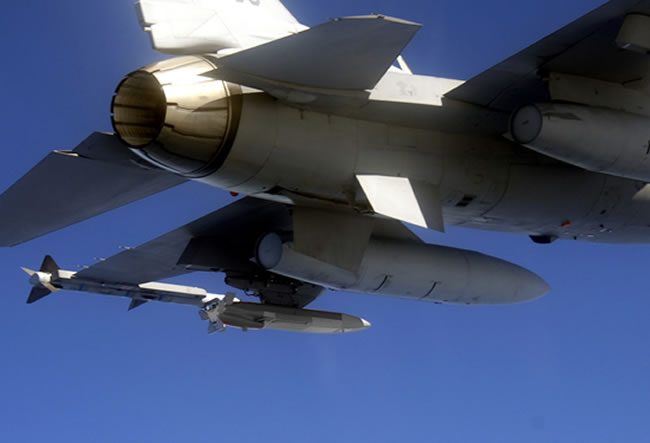
Raytheon and General Atomics Aeronautical Systems (GA-ASI) are working together to equip GA-ASI’s Predator B/MQ-9 Reaper Remotely Piloted Aircraft (RPA) with Raytheon’s ADM-160A Miniature Air Launched Decoy (MALD), developing unmanned, autonomous launch platform for electronic warfare decoys employed in Suppression of Enemy Air Defense (SEAD) missions.
The team has completed ground verification test phase in November 2012, loading MALDs on Reapers at GA-ASI’s Gray Butte Flight Operations Facility in Palmdale, Calif., The integration of MALD on the aircraft is estimated to conclude in 2013.
“This new offering provides unprecedented electronic warfare capability enabling remote, unmanned suppression of enemy air defenses,” said Harry Schulte, vice president of Air Warfare Systems for Raytheon Missile Systems. “Integrating MALD weaponry on remotely piloted aircraft systems is integral to maintaining air superiority in today’s and tomorrow’s conflicts.”
When employed, MALD confuses the target integrated air defense system (IADS), and then kinetic weaponry is selectively employed to permanently disable IADS nodes, dramatically increasing electronic attack persistence in the battlespace.
MALD weighs less than 300 pounds and has a range of approximately 500 nautical miles. Various types of MALD are in service, including the passive decoy, programmed to mimic the signature of various aircraft and jammer-equipped decoys (MALD-J), loaded with jammers to carry out stand-in jamming of enemy radars. This version was first delivered to the US Air Force in September 2012; operational testing of this decoy are currently underway.
It is currently deployed with manned aircraft, primarily B-52, and F-16. Integration of MALD with the US Navy F/A-18E/F Super Hornet is currently underway. In 2011 Raytheon also demonstrated how MALDs can be deployed from the C-130, using the MALD Cargo Aircraft Launch System (MCALS).
Boeing and Abu Dhabi Autonomous Systems Investments Company (ADASI) have signed a teaming agreement pursuing opportunities for marketing unmanned systems in the Middle East. The teaming agreement expands on a previous agreement between ADASI and Insitu, a wholly owned Boeing subsidiary that makes the ScanEagle and Integrator. That collaboration allowed for support and sustainment of Insitu’s unmanned ISR products and services.
The new teaming agreement will expand ADASI’s support of Boeing/InSitu ScanEagle and Integrator UAS, offering training, support and marketing services, initially in the United Arab Emirates (UAE), with prospects to expand into the Middle East and North Africa.
Photo: Boeing
“This agreement advances Boeing’s strategy of partnering with best-in-industry companies such as ADASI,” said Debbie Rub, a vice president and general manager in Boeing Military Aircraft. “We plan to continue investing and growing in the UAE and the broader Middle East region in order to support U.S. allies’ enduring need for affordable intelligence, surveillance and reconnaissance (ISR) solutions, such as ScanEagle and Integrator.” The agreement also supports the ongoing drive to develop UAE national capabilities within ADASI.
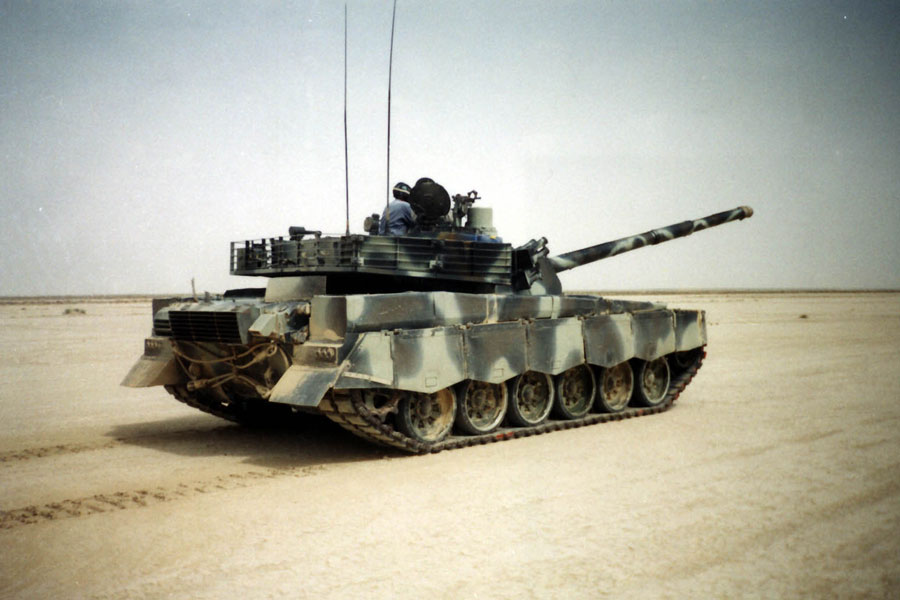
Al-Khalid (Type 90-IIM / MBT-2000) Main Battle Tank
Ukraine state-run arms exporter Ukrspetsstroi will deliver 110 tank powerplants, engines and related parts to Pakistan, under a $50 million contract. Kharkov-based Malyshev Plant, a state-run enterprise specializing in armored vehicles and their components, will produce the engines under a four-year contract that was signed recently.
According to Russian news agency Novosti, Ukraine has already delivered more than 300 powerplants to power Pakistan’s al-Khalid main battle tank. According to Vadim Kozhevnikov, Ukrspetsstroi’s acting deputy general director, the company’s engines are also powering modern Chinese made tanks. Kozhevnikov also said the Ukraine company is well positioned to compete with western engine manufacturers, particularly German producers. “We are direct competitors of German engine manufacturers. Our models are every bit as good as theirs in terms of technical characteristics but are significantly cheaper,” Kozhevnikov said.
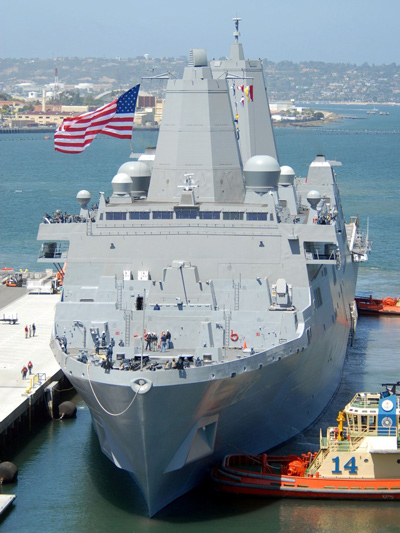
The San Antonio-class amphibious transport dock ship USS San Diego (LPD 22). U.S. Navy photo by Mass Communication Specialist 1st Class Denny Cantrell
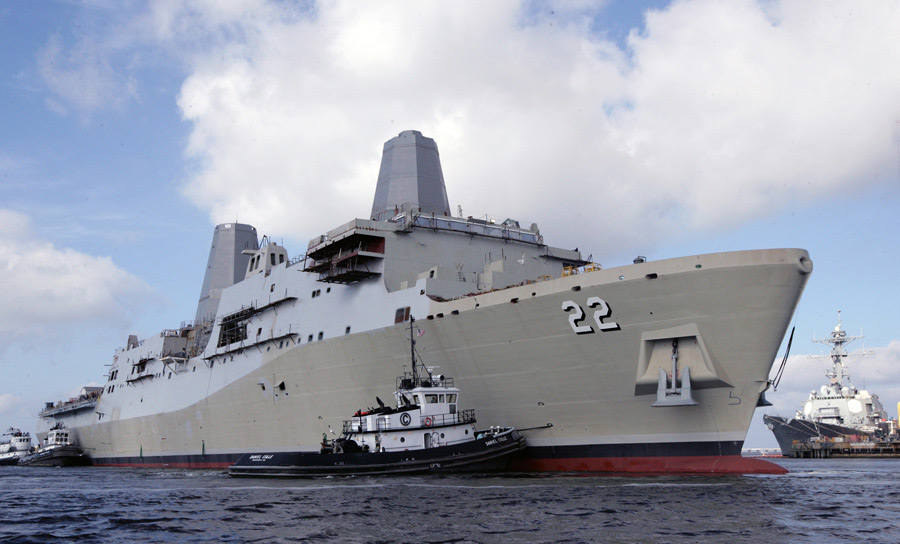
The US Navy’s sixth San Antonio-class amphibious landing platform dock (LPD), USS San Diego (LPD 22), has been declared ready for combat operations following the successful completion of final contract trials (FCT).
The San Antonio-class amphibious transport dock ship USS San Diego (LPD 22). U.S. Navy photo by Mass Communication Specialist 1st Class Denny Cantrell
Conducted by the US Navy Board of Inspection and Survey (INSURV), the FCT helps ensure that the USS San Diego ship meets all standards and requirements expected by the service. The final in-depth examination involved identification and fixing any potential problems, while the ship will remain under warranty for one year.
Following delivery to the US Navy in December 2011, USS San Diego has passed INSURV tests prior to post-shakedown availability (PSA).
San Diego commanding officer captain William Grotewold said that the PMS 317, Huntington Ingalls Industries, NASSCO shipyard and the regional maintenance centre crew worked together to identify and fix the major issues.
“We’re the first in the San Antonio-class to conduct final contract trials prior to PSA,” Grotewold said. Currently undergoing PSA, USS San Diego is expected to begin basic training phase in 2014 in preparation of its maiden deployment, scheduled for the same year.
The 684ft-long, 105ft-wide ship has a displacement capacity of 24,900t, can accommodate a landing force of up to 800 marines and cruises at a speed of 22k.
Officially christened in June 2011, USS San Diego will also provide support for a range of amphibious assault, special operations and expeditionary warfare missions through the first half of the 21st century.
A total of 11 ships are being procured by the US Navy under the LPD 17 programme to replace its ageing LST 1179 Newport-class tank landing ships, LKA 113 Charleston-class amphibious cargo vessels, Anchorage-class dock landing ships (LSD 36), and Austin-class vessels (LPD 4).
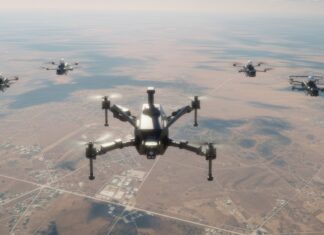
Lockheed Martin Skunk Works® and XTEND have achieved a major milestone in JADC2 by integrating the XOS operating system with the MDCX™ autonomy platform. This technical breakthrough enables a single operator to simultaneously command multiple drone classes, eliminating the friction of mission handoffs. From "marsupial" drone deployments to operating in GPS-denied environments, explore how this collaboration is abbreviating the data-to-decision timeline and redefining autonomous mission execution.
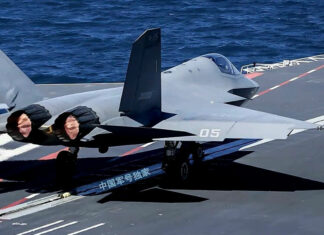
As traditional defense primes face mounting competition from agile “neoprimes” such as Anduril, Palantir and Helsing, the balance of innovation is shifting toward software-defined warfare and scalable, dual-use technologies, while global industry consolidation—marked by Boeing’s integration of Spirit AeroSystems and other strategic mergers—signals an intensified race to secure control over the defense technology value chain. Our Defense-Tech weekly report highlights these trends.
In early October 2025, a coordinated wave of unmanned aerial system (UAS) incursions—widely attributed to Russia—targeted critical infrastructure across at least ten European nations. The unprecedented campaign exposed the fragility of Europe’s air defenses...
Executive Summary
The past week (September 18-25, 2025) represents an inflection point where strategic defense concepts have transitioned from doctrine to tangible reality. An analysis of global events reveals four primary, interconnected trends shaping an...
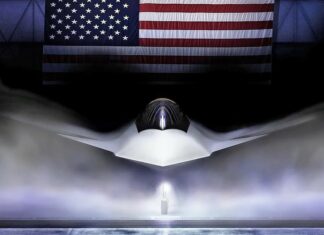
At the 2025 Air, Space & Cyber Conference, U.S. Air Force and Space Force leaders unveiled major updates on next-generation fighters, bombers, unmanned systems, and space initiatives, highlighting both rapid innovation and critical readiness challenges as the services race to outpace global competitors. A short version is available here, with a more detailed version for subscribers.
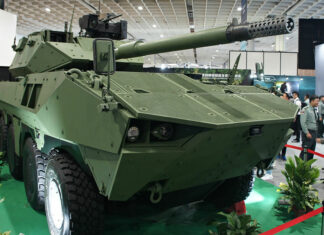
The Taipei Aerospace & Defense Technology Exhibition (TADTE) 2025 crystallized around four dominant strategic themes that collectively illustrate Taiwan's comprehensive approach to defense modernization amid escalating regional tensions. Based on a detailed report by Pleronix (available upon request). Includes a Podcast discussion on TADTE 2025's highlighting Taiwan's four strategic themes beyond the post's coverage.
Israel’s Iron Beam 450 high-power laser system has completed final testing, marking a major leap in air defense. Developed by Rafael, it offers precise, cost-effective interception of rockets, UAVs, and mortars, and is set for IDF deployment by 2025.