Tuesday, December 23, 2025
More
    Home Blog Page 408

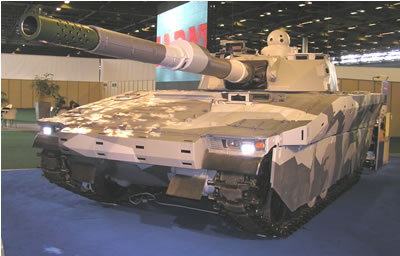
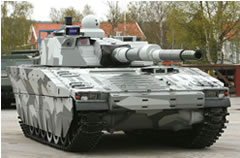
    CV90120 Light Tank

    BAE Systems Hagglunds introduced a 32 ton CV90 version armed with low-recoil 120mm gun. For the first time, the CV90120 was shown equipped with an active protection system, which makes this compact platform equivalent in survivability, firepower and mobility to modern 60 ton tanks.

    The Active Armor Concept (AAC) utilized with this tank is based on an active protection system developed by IBD and integrated by Akers Krutbruk in Sweden. Currently at technology demonstrator phase, the system will be evaluated by the Swedish MOD R&D (FMV) and could be adopted by other armies operating the CV family of vehicles. The system is comprised of a series of 26 independent modules surrounding the vehicle and providing overlap protection to ensure multi-hit protection. Each of the overlapping modules includes two sensors providing threat warning, identification and ranging (radar?) each covering a 45 degrees arc, protecting the hull and turret. When an imminent threat is detected and identified (KE or SC), a single countermeasure is activated to defeat the threat. The intercept takes place at very close distance of 1 – 3 meters from the vehicle.

    Akers has already developed a demonstrator AAC for the FV9040 vehicle. The systems’ weight range from 400 to 800 kg, depending n the density of the modules. CV90120 also uses a “soft kill” protection utilizing the “water mist” system, surrounding the vehicle with water vapours which absorb the tank’s infrared signature, effectively protecting it from top attacks by sensor-fuzed weapons and guided missiles. The tank is equipped with multi-sensor UV, laser and radar threat warning systems and smoke/countermeasures launchers.

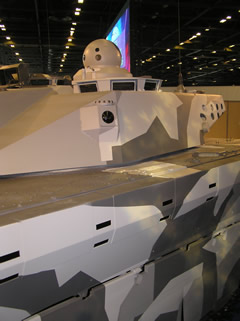
    SWARM Remotely Controlled Weapon Station

    SWARM multi-weapon station produced by Thales is the latest remotely weapon system to enter service with tracked vehicles of the British Army. Weighing 125kg, excluding the weapon and 200 – 600 rounds of ammunition, SWARM can be configured with M249/M240 7.62mm and M2HB machine guns. The system is capable of fast 45 deg/sec rotation, through an unlimited 360 deg. Rotation, and -20 to +45 deg. Elevation (30 degrees of elevation/sec).

    Thales Introduce Tactical, Multi Purpose Robots, UGVs

    Photo: Thales

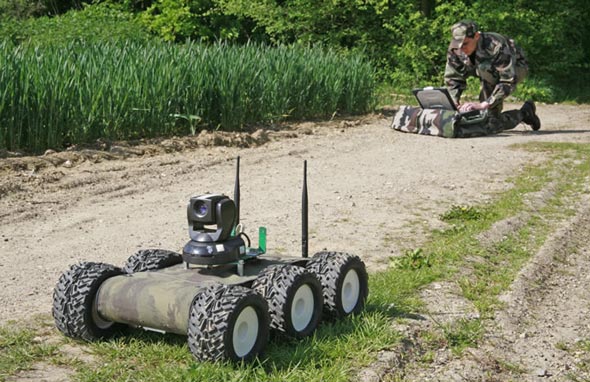
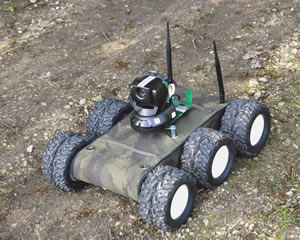
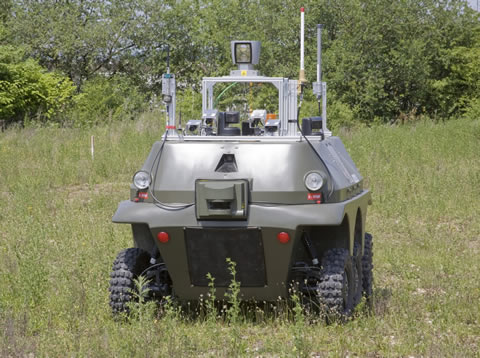
    Thales is introducing three new unmanned systems at Eurosatory 2010 – the Spy Arrow mini-UAV, an autonomous, affordable and backpackable surveillance system comprising a delta-winded miniature aircraft; The company is also displaying the μTrooper Unmanned Ground Vehicle – a multi-role six-wheeled platform carrying a small EO payload, that can operate independently or as part of a pack. Thales is also developing a larger, electrically powered UGV called R-Trooper, equipped with a full UGV sensor suite as well as deploy smaller robots on specific missions.

    Photo: Thales

    Thales is introducing three new unmanned systems at Eurosatory 2010 – the Spy Arrow mini-UAV, an autonomous, affordable and backpackable surveillance system comprising a delta-winded miniature aircraft, carrying an EO payload and associated avionics to perform a short, autonomous mission over a pre-planned or user guided path. The Spy Arrow transmits real-time video with geo-location points to provide the warfighter with ad-hoc surveillance and recce of an area of operation. Additional payloads considered for the robot are Chemical Biological, Radiological, Nuclear (CBRN) detectors.

    The Spy Arrow micro UAV from Thales. Photo: Bernard Rousseau , Thales
    The μTrooper from Thales, can carry a small EO payload or a CBRN sensor operating in an open or built-up area, it can move through obstacles, and even climb stairs up to 18 cm high. Photos: Bernard Rousseau, Thales

    The company is also displaying the μTrooper Unmanned Ground Vehicle – a multi-role six-wheeled platform that can operate independently or as part of a pack. The μTrooper is equipped with radio transmitters capable of sending real time video in an urban environment. It employs an open architecture to easily integrate new payloads or systems. The μTrooper uses articulated chassis a six-wheel drive moving it on rough terrain, and even climb steps of 18 cm high.

    Thales is also developing a larger UGV caller R-Trooper, equipped with a full UGV sensor suite, including cameras, radar, 2D and 3D laser scanners etc.). The R-Trooper runs on an electric motor and is virtually noiseless. It can also carry smaller sub-robots for reconnaissance on emplacement of communication relays in an indoor setting. R-Trooper can be used for missions such as observation and reconnaissance, area control and perimeter surveillance, forward logistics, countermine and general force protection including counter IED operations.

    The R-Trooper, electrically powered Unmanned Ground Vehicle (UGV). Photos: Bernard Rousseau, Thales

    Trajectory Correction System for Artillery Rockets

    Developed to address user requirements for improved accuracy, IMI has developed and successfully deployed a Trajectory Correction System (TCS) that enhances the accuracy of free flight artillery rockets to exceed that of tube artillery. TCS is an operational solution currently available for IMI’s LAR160 mm rockets and 227 mm MLRS rockets, the TCS can also be tailored for use with other rocket systems. Developed under cooperation with Elisra, TCS has successfully demonstrated its full system’s capability during an operational test firing conducted by the IDF Field Artillery Corps. During the test, the system’s capability to handle multiple targets simultaneously by 12 rockets was demonstrated. The system simultaneously controls 12 rockets in the air, increasing engagement potential while reducing the number of rockets required per target. IMI is also developing a simpler GPS/INS guidance system applicable for artillery rockets, artillery shells and mortar bombs. This system will be utilizing IMI’s Pure-Heart Differential GPS (DGPS) guidance system, enabling the engagement of targets with very high precision.

    Technological improvements are being applied to the launch platform, enabling higher levels of mobility, autonomy and precision. IMI’s new Lynx multiple rocket launcher can be configured to carry a variety of artillery rockets, including GRAD, LAR, and EXTRA rockets as well as Delilah-GL precision attack missile. The vehicle carries 20 rockets in sealed canister/launchers which automatically identified by the vehicle’s fire control, to set firing properties accordingly. The high mobility vehicle can easily mobilize over road or rough terrain. The vehicle uses an accurate navigation system enabling rapid set-up of firing position and position change, to minimize the risk of counter-battery fire. On-board communications and computing equipment enable the vehicle to operate autonomously, or as an element in a net-centric scheme, either passively or as an integrated element within larger artillery formations.

    IC4U Soldier System

    Orlikon Contraves IC4U (Interconnected C4 Unit) is a soldier system which can integrate into BMC4I networks, sensors and weapon systems. The system delivers situational and context awareness in a transparent fashion, using Orlikon Contraves Tactical Military Internet (TMI) and BMS software. The system displays a common operating picture, indicating the positions of friendly forces, enemy, and terrain features, depicted on a tactical map, and navigational cues, based on positioning information derived from the soldier’s GPS and inertial system. Navigational delivers live video, voice and data exchanged by soldiers and commanders over the TMI using the Soldier Data Radios.

    The system performs automatic network awareness enabling ad-hoc networking with as self-organizing and self-healing capabilities, thus requiring no operator intervention. Physiological sensors can be added to monitor the soldier’s physical condition (pulse, respiration, oxygen consumption etc.) The IC4U system is based on open commercial standards, including Linux operating systems and internet protocol (IP), 2.4 GHz wi-fi compatible wireless LAN communications. The system uses a day/night camera, and SVGA sun readable eyepiece display with a wide field of view. Voice communications is voice operated, utilizing voice recognition commands, (eliminating the keypad). Located at the lower back, a wearable computer driven by a 400MHz processor is used, powered by a side mounted rechargeable li-ion battery pouch.

    Israeli Infantry to be Modernization with New Weapons, Combat Suits

    As Future Infantry programs are becoming popular with many armies, developers are becoming aware of the costs, over expectations and shortfalls of initial plans. Programs are currently underway with many armies, including almost all NATO members, as well as Singapore, Australia, and Israel, to name only a few. Some programs are more advanced than others. Germany and France are considered the most mature; the German IDZ program is partly fielded already while the French Felin is expected to follow in 2007.

    One of the biggest gaps encountered in current programs is the gap between vision and reality – the pace of technology development exceeds the warfighter’s human capability. Due to lack of experience, junior commanders, those who will benefit the most from such system, find it difficult to grasp the new potential opened by such system of systems. Furthermore, existing communications gaps, particularly concerning data and video transfer between individual systems, limits their usability at a larger scale.

    Most armies consider their future infantry program as pilot experiments, to be followed by future acquisitions of more mature systems. Some opt to test the systems with standard suits for every warrior; others prefer tailor made systems provided for every warrior, team leader or commander. Others limit the use of such systems by commanders only. Yet, the common denominator of all experiments is the lack of experience with system of systems i.e. unit level formations (platoon, company level), which leave most of the debate to theoretical discussions.

    ITL’s Infantry Combat Suits Ready for Operation

    Based on 30 years of experience in development of advanced electronic and optronic equipment for dismounted infantry, Israel’s ITL Optronics Company is offering a complete line of infantry combat suits, ready for deployment. In recent months, ITL sold several systems to armies in Europe, Middle East and Africa (EMEA), with more systems sent for evaluations by a number of armies in Europe. According to Col. (res) Alon Eshkol, director, advanced infantry warfare systems at ITL, the company is now preparing the first integrated system to equip a full company and infantry platoon. “These mature systems are available for operational deployment. For special operations units, where new technologies are introduced more effectively, our systems can be integrated and deployed immediately”.


    Yet, according to Eshkol, deploying infantry combat suits with regular or even elite infantry units is more of a challenge. “Loading the soldier with non relevant information is just as bad as carrying excessive weight.” He explains, it is important to provide every user at every level with the suitable set of information to support their tasks. “Such systems can mature from operational experience, after extensive testing, evaluation and training with the units. Such systems cannot be imposed on the soldiers”. Eshkol hopes that the flexible systems offered by ITL could be used to define future requirements and concepts of operations (CONOPS), and help define procurement plans based on actual field experience. “Such company level exercises will provide a real-life ‘play ground’ where users can employ the system during routine operations, training and combat operations, assess new concepts of operation, providing a ‘safe path’ toward the maturation of larger scale programs in the future.

    ITL’s plan to accommodate the full set of capabilities in every system, including rifle mounted sight and pointing system, wearable computer fitted into a load bearing vest, integrated with navigation system and communications, helmet mounted viewer, target acquisition binocular, and a wearable computer. This computer is configured in two modules, a Central Processing Unit (CPU) and communications controller. The CPU performs data and graphics handling, and runs the C2 applications. The computer drives various display systems; including helmet mounted display, hand held PDA size display. According to Eshkol, the generic system offers the maximum set of capabilities, and can be programmed to reduce the functionality of specific systems to the requirements of the individual user, according to their position, tasks and skill level. The system is operated as an open system, providing for future integration of additional assets such as external sensors (for example robotics, UAVs etc.)

    The system accommodates sophisticated weapons’ sights, such as the TOP-MARS, integrating a reflex sight, infrared and visible target markers, the VIPER an integrated weapon based fire control system, command and control system, which can run on laptop computers and ITL’s new wearable computer, to support battle planning, tactical movement, target acquisition, task allocation, situational awareness, and post mission debriefing. Hundreds of such units, controlled under computer based command and control systems are operational with the IDF, where they support border security and patrol missions. After evaluating several options and fielding an initial XP based system, ITL decided opted to use the power saving Windows CE to drive their computer, taking advantage of its efficiency and modest power consumption. “We realized that the weight penalty associated the Windows XP is unacceptable, when you measure every gram of extra weight” says Eshkol. Our CE based computer consumes only 8 watts, managing all sensors, controlling graphics, displays, communications, and navigation supports the full scope of command and control services. According to Eshkol, the new CE based wearable computer will be ready for deployment within few months.

    Tavor Enters into Operational Service

    Infantry modernization is also reflected in the fielding of new assault weapons for elite and special operations units. In this field, Tavor, the new Israeli assault rifle is positioned to take the world market by storm. This new, lightweight and compact weapon rapidly becomes an ‘organic’ part of the warfighter. It has already been chosen to arm the Israeli (IDF), the first unit is expected to be equipped with the new weapon by August 2006. Indian elite and regular troops are also expected to use the weapon, which will be locally produced in India by the Indian Ordnance factory Board (OFB). Tavor was selected by the IDF in 2003, following an extensive competition against the M-4. The first shipments of hundreds of Tavors were already delivered to the IDF and production is continuing at high rate at IWI’s facility, to supply current orders.

    India Adapts Tavor, Micro Tavor Designs

    A different version, based on the Tavor system is the Micro Tavor, designed to address the needs of special operations forces and counter terrorist units. According to Mark Shachar, IWI marketing manager, with its compact dimensions Micro Tavor (MTAR 21) also makes a perfect match for drivers and tank crews. MTAR was developed in close cooperation with special operations units and is tailored to their specific requirements and needs. Based on its strategic cooperation with IAI, OFB is also offering a Micro Tavor derivative called Zittara, available in three versions – 5.56 assault rifle, 0.40 Cal carbine and 9mm submachine-gun.

    MPRS Gears for IDF Service

    The Multi-Purpose Rifle System (MPRS) weapon system, developed by IMI is expected to complete type classification by the IDF, prior for its service entry. MPRS will become a squad level weapon system, replacing M-203 40 mm grenades in some units. IMI is offering the system with the new ORION customized sight, designed to provide a ready to use, improved lethality system combining a standard assault rifle, such as Tavor, M4, SA80, INSAS, FAMAS or any other weapon using a standard Picatiny rail. The system utilizes advanced 40mm air-burst grenades and standard 5.56mm ammunition. MPRS uses the new ORION customized fire control and sighting system providing navigation, target acquisition, ranging, ballistic computation, ammunition interface as well as day and night capability in a single, compact 600 gr. system.


    Israeli Systems Extend the Reach of Rocket Artillery

    Several new systems, recently developed in Israel, reflect a potential change and could lead to re-allocation of responsibilities between the Israel Air Force (IAF) and Land Forces. Since the 1950s, the IAF was exclusively responsible for air supremacy and attack operations deep inside enemy area. The remaining assets were devoted to the ground attack and close air support, assisting ground operations. Since the 1980s, the IAF assumed additional responsibilities, for strike operations at very long range (attacking the Iraqi nuclear reactor was one such example). Within this wide scope of mission tasking, sharing some of the shorter range tactical operation missions with ground elements could free air assets to focus more on strategic long-distance missions.

    IAI/MLM entry to the long range artillery market is backed by the extensive know-how gained from other aerospace and defense programs, where technologies required for such precision attack systems were matured, including guidance and navigation systems, based on unique and advanced algorithms, enabling the delivery of a missile to an accurate impact point.

    These characteristics transform artillery capabilities, beyond the feasibility of current systems. In the past, artillery relied on unadjusted ballistic trajectory and was considered inaccurate due to the “statistical error”, increasing with the range. The new systems, which include surface attack missiles, guided rockets, and trajectory correction systems are demonstrating high accuracy levels at ranges beyond 100 km. For example, the LORA rocket, developed by IAI/MLM has already demonstrated that warheads can be delivered accurately, within less than 10 meters CEP from a designated target, regardless of the range. The missile’s range and warhead’s weight are limited in order to meet MTCR restrictions and criteria. Other systems, some of which are highlighted in the Israeli industries’ displays at Eurosatory 2006 are outlined below:

    In the modern warfare, land, naval and air arms are becoming more integrated, as they gear into “joint” operations, each arm contributing its most suitable and available capabilities in achieving the required effect. Traditionally, airpower was responsible for rapid deployment, naval forces, tasked with force projection and land forces, to fight on the ground, in a specific theater of operations. Ground forces are usually relying on air support to cover activities in deep operations, beyond the range of the current artillery. New systems, including short range missiles, extended range rockets and ground launched precision attack missiles will extend the reach and coverage of the division and corps battle, far beyond their current capabilities. As these extended range weapons mature into fully operational systems, they will require near-real-time intelligence and precise targeting, far beyond the level available today at corps and division level.

    Low Intensity Warfare At the Limelight of RAFAEL’s R&D

    In an interview to Defense Update, RAFAEL’s VP R&D, Dr. Avi Ginsburg outlined the trends RAFAEL is following in its pursuit for the development of systems for modern asymmetric warfare and low intensity conflict.

    As the primary R&D center in Israel, RAFAEL, in cooperation with Israel’s Ministry of defense and Directorate of Defense R&D (DDR&D), is always challenged with the development of new means to equip the Israeli forces with the best, most innovative means and weapon systems. However, the ongoing “Low Intensity Conflict” (LIC) fought between the Palestinian and Israel’s military and security forces poses new aspects of asymmetric warfare, which reflects on the requirements for new systems, and requests for ad-hoc solutions.


    “In the recent years RAFAEL was repeatedly requested to provide such ad hoc solutions for unique issues” Dr. Ginsburg told Defense Update, “When Palestinians improvised rockets were first launched at Israeli towns and villages, RAFAEL was requested to deploy a highly accurate artillery locating system which was under development at our labs. We deployed this system, now known as “Red Dawn”, which provides selective early warning to every villages endangered by improvised rockets launched fro the Gaza strip. These warnings enable the civilian population to take cover, thus minimizing the risk of such attacks. “Unlike previous acoustic-based systems, RAFAEL’s ‘Red Dawn’ is very accurate, to enable accurate prediction of impact point or launch point, therefore, providing the Israeli population with selective, and localized early warning while enabling the military to localize and counteract against the launch sites.”

    Another challenge was the risk of subterranean warfare, also faced by the IDF along the border with Gaza. Under cooperation with a Hadas, the two companies are developing acoustic systems that are able to detect and localize subterranean activity. According to Ginsburg, this requirement posed a significant technological challenge that’ once solved, could be used for many commercial uses, including protection of gas and oil pipelines.

    Another “quick fix” solution is the use of laser gun to neutralize improvised explosives. A prototype system designed by RAFAEL will soon be deployed to Iraq. Dr. Ginsburg told Defense Update  that the system could be installed on a weapon station, side by side to a machine gun, and be activated against suspicious objects. If an explosive charge is encountered, it will be neutralized (burned) by the laser beam, rather than explode, thus eliminating the risk to troops or innocent bystanders.

    Dr. Ginsburg considers RAFAEL’s strength in its multi-disciplinary technological base, and advanced technology capabilities. Advanced computing is only one of these factors, driven by the general market growth. Other capabilities are nourished in- house, as well as subsidiaries where RAFAEL share unique technologies with other partners. Of these Ginsburg mentioned the Semiconductor Devices (SCD) EO/IR detectors center operated under cooperation with Elbit Systems and a fab for micromechanics (MEMS) established under cooperation with IAI/Elta.

    Israel to Pursue Active Protection for Tanks, Light AFVs

    Israel’s MOD (IMOD) is pursuing two parallel Active Protection Systems (APS) to satisfy the Israel Defense Forces (IDF) heavy and light armor protection requirements. Both systems, based on different concepts of operation, are funded by the IMOD are scheduled to mature for initial operation within 18 months will be able to provide full protection from advanced RPG and ATGW attacks, including those with tandem warheads. Israel’s investments in the two programs totaled well over $120 millions.

    RAFAEL Wins with Trophy

    Trophy Active Defense System (ADS) was developed in Israel, under domestic and international industrial collaboration. RAFAEL, the prime developer of the system is teamed with IAI/Elta to providing the target acquisition radar. As the system matured through hundreds of tests firings, a General Dynamics (GD) joined the program, lead the system’s marketing activities in North America. Further cooperation with other countries is also likely to mature as there is tremendous interest in the system, which is the first western system to mature, offering effective protection from conventional and advanced (tandem) shaped charges.


    In 2005 GD offered the system to protect US armor in Iraq, among them M-1A2 tanks and Strykers APCs. The system has matured through hundreds of live test with the Israel Defense Forces and demonstrated effective neutralization of anti-tank rockets and guided missiles, demonstrating high safety levels, insignificant residual penetration and minimal collateral damage. The system entered full scale engineering phase launched in March 2005 and is scheduled to be ready for service entry with IDF Merkava Mk 4 tanks by 2007. On March 30, 2006 General Dynamics announced the successful completion of a firing test, conducted at the request of the Office of the Secretary of Defense’s Office of Force Transformation (OFT), to validate the Israeli Army’s tests that demonstrated Trophy’s ability to detect, track and destroy incoming rocket propelled grenades (RPG) at safe distances from the host vehicle. Trophy was selected in 2005 to be active protection system to be used by the Full-Spectrum Effects Platform (FSEP), a vehicle mounting a range of lethal and non-lethal technologies. The Trophy system is designed to provide effective protection for the FSEP Stryker, when negotiating complex situations with lethal or non lethal means. By creating a hemispheric protected zone around the vehicle, the crew can develop a full situational picture of potential threats and engage relevant threats with non lethal or lethal force. Incoming threats which cannot be engaged by other means, such as RPGs and missiles, will be effectively intercepted and defeated by the Trophy’s interceptors. If procurement is funded, initial Trophy systems could be delivered to Iraq this year. In total, the US Army and USMC have requirements for a minimum of 14 FSEP prototype vehicles.

    IMI Introduce the Iron Fist

    In Eurosatory 2006 IMI is unveiling its new Active Defense System (ADS) called – Iron Fist. Until recently, the development of Iron Fist was shrouded in secrecy, as it was developed in parallel to a different Israeli developed ADS system – RAFAEL’s Trophy, which entered full scale development in 2005. However, due to rapid development pace and successful testing, IMI expects to deliver the systems for IDF testing and qualifications by mid 2007. Unlike competing systems, IMI’s Iron Fist can be installed on light vehicles, including trucks and even Humvees, offering effective protection from RPGs. IMI conducted extensive testing against a full spectrum of threats, engaging various types of threats from stationary and moving armored personnel carriers. The system already demonstrated effective protection of light vehicles and heavy armored vehicles, from small rocket propelled grenades, anti-tank missiles and tank rounds equipped with shaped charge warheads as well as advanced kinetic threats (armor piercing tank rounds).

    One of the main advantages of the Iron Fist is its integration into routine operations. Its sensor is providing essential input to situational awareness systems, based on ground radar surveillance, moving target detection, classification and tracking and motion detection. Furthermore, by loading other types of projectiles, such ass non lethal, anti-personnel, smoke or illumination, the system can be used in support of routine operation.

    Iron Fist is supported by Israel’s MOD Directorate for Defense Research & Development (DDR&D). The program is designed to protect medium and light vehicles, but based on its performance, has the potential to be used for the protection of fixed positions or heavy armor. In future configurations, the system has a growth potential to protect sensitive elements of fixed installations or patrol boats, protecting from RPG attacks, frequently encountered in counter insurgency operations.

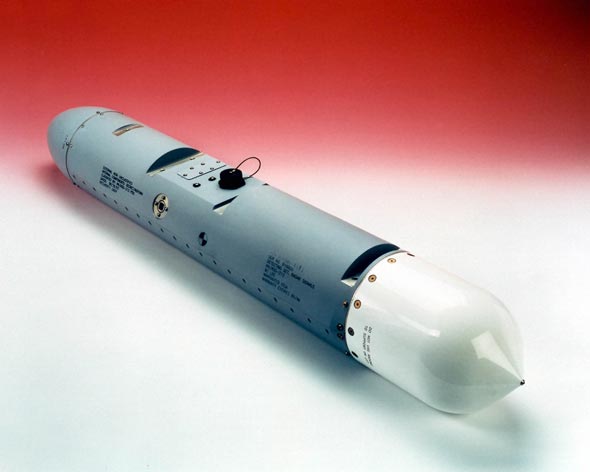
    HARM Targeting Pod (HTM) – AN/ASQ-213A

    The High speed Anti-Radiation Missile (HARM) Targeting Pod (HTS) enables F-16 Block 50/52 pilots to engage targets faster, and more accurately when tasked with Suppression of Enemy Air Defense (SEAD) missions.

    The HTS pod is mounted to the side of F-16 aircraft. It provides essential combat identification capabilities for fighter aircraft on air patrols over the battlefield.

    The HTS is able to detect, locate and identify ground-based emitters. The R7 incorporates a precision geolocation capability to target Precision Guided Munitions (PGMs) into the AN/ASQ 213 Pod. F-16 Block 50/52 are cleared to carry both an AN/ASQ-213 HTS R7 Pod and an Advanced Targeting Pod (ATP), by relocating HTS R7 pod to the aircraft’s left inlet hard point.

    The system uses an integral GPS receiver, a digital receiver, and a new power supply and incorporate new software to enable users to pinpoint the location of hostile emitters using multi-ship techniques.

    The pod is compatible with the latest currently fielded M3.4+ F-16 operational flight program (OFP) software. The same pod will enable pilots to utilize target location data and employ precision guided munitions to destroy hostile emitters once employed with the upcoming M4.2+ OFP release. HTS R7 will target HARM and other PGMs to destroy fixed and mobile enemy air defense elements. HTS R7 precision coordinates will be available to all Joint Forces via Link-16.

    Raytheon received the contract for the development of R7 HTS in 2001 and delivered the first pod in September 2006.  All current Air Force HTS pod inventory will be retrofitted to R7 over the next two years. HTS R7 will target HARM and other PGMs to destroy fixed and mobile enemy air defense elements. HTS R7 precision coordinates will be available to all Joint Forces via Link-16.

    HMS Clyde, a New Offshore Patrol Vessel (Helicopter) for the Royal Navy

    HMS Clyde, the first ship to be built in Portsmouth Naval Base for nearly 40 years, was named on Thursday 7 September 2006. The new OPV(H) will be officially accepted by the British MOD in October 2006. The vessel is destined to be the patrol ship for the Falkland Islands. She is expected to deploy to the South Atlantic next Spring – around the time of the 25th anniversary of the Falklands conflict.

    One of the unique features of the ship is that she is owned by VT Group and chartered to the Ministry of Defence for a period of five years. At the end of that period, the MOD can either extend the charter, return the ship or purchase her outright. Similar River Class vessels already in service and built by VT. They are used for fishery protection work around the UK coast.

    Among the ship’s enhanced features compared to the River Class is a flight deck capable of accepting helicopters up to the size of the new Merlin aircraft. Other enhancements include increased accommodation to cater for an embarked force, a 30mm gun, higher levels of survivability and air surveillance radar.

    HMS Clyde will accommodate a crew of 36 (six officers, nine senior rates and 21 junior rates), berthed in single or twin berth cabins with en suite facilities. There will be additional accommodation for up to 20 extra personnel, which could be an embarked military force, trainees or headquarters staff.

    Modular Expandable Armor System (MEXAS)

    Modular Expandable Armor System (MEXAS) protection,  which has provided basic protection suite for over 12,500 combat vehicles worldwide, including the US Army 4×4 ASV armored security vehicle where MEXAS is used in an armor protection kit developed by Simula. Other MEXAS users include Renault 6×6 VAB and German Fuchs APCs, the new German-Dutch GTK/MARV (also known as Boxer) and the Dingo all protected vehicle. Mexas is also utilized as add-on armor for Leopard 2 tanks, Canadian Leopard I family of armored vehicles and Norwegian M-113 APCs operating in Kosovo (KFOR). As with other MEXAS applications, the M-113 protection can be applied in different levels to protect against threats from 14.5mm AP up-to 30mm AP, while surviving heavy AT mine blasts (TMRP 6 EFP, TMA 1-5 and TM46). A follow on to the MEXAS protection system proposed by IBD is the AMAP.

    Enhancing Survivability and Protection

    Start < Page 4 of 4 >

    Another area that received special attention from DDR&D is the field of advanced armor, including passivereactive and Active Protection Systems (APS). To improve protection and survivability of current and future forces the Israeli Ministry of Defense invested in several systems as part of the Israeli thrust to improve protection and survivability of current and future forces. Israel pursued APS solutions, under two parallel paths which matured under different schedules, following different concepts developed against different threat assessments. Both programs are currently under advanced development, protecting various types of platforms from threats of shaped charge warheads, including RPGs and anti-tank missiles. Passive and reactive armor systems, developed under other DDR&D programs, are currently used by many armies around the world, for example, US Army Bradleys operating in Iraq are protected by RAFAEL’s reactive armor systems.

    DDR&D and the IDF Corps of Engineers launched a joint effort to develop countermeasures and means to defeat IEDs. “Due to our continuous exposure to ever more sophisticated and illusive threats, we developed and fielded some of the most advanced counter IED technologies available in the market today” concludes Nagel. This joint effort encompasses a complete methodology, including detection, neutralization and protection, and is based on the lessons gained through many years of combating IEDs and ambushes in Lebanon, the West Bank and Gaza. The resulted is reflected in the development of several generations of RF jammers and a stand-off laser disruptors, some are on display at Eurosatory 2006.

    Additional parts of this article:

    Robotics and Autonomous Systems

    Start < Page 3 of 4 >

    Budget constraints dictate a pragmatic approach as far as autonomous combat robots are concerned. It considered the contributions of such autonomously navigated vehicles in rather limited, mission-specific tasks. These will initially include perimeter security and border patrols but could later be enhanced to specific roles in force protection. The Directorate of Defense Research & development (DDR&D) is the IMOD authority on advanced technologies R&D. The directorate defined unmanned systems and particularly, their security application of Unmanned Ground Vehicles (UGV) as one of the focus areas for future developments, primarily in specific technologies such as navigation, obstacle handling, object investigation and communications. “Our vision is to keep the humans out of danger but within the loop” says DDR&D deputy director, Brig. Gen. (ret) Yakov Nagel, “With full capability to patrol, detect an incident and identify a threat, the robot will be able to alert the command post and engage the target with the most appropriate effect”. These technologies will not be limited to the security application alone, but could be used in various manned or unmanned platforms and systems.

    Research and development is invested in the modernization and evolution of command and control systems, particularly those designed for the lower combat echelons. Such systems are providing better, more integrated environment, creating an up-to-the-minute situational picture, based on fresh intelligence and live imagery, enabling rapid target engagement. “The Israeli Battle Management Systems (BMS) are unique in their capability to integrate weapons and effectors empowering commanders at all levels with flexible means and effects” says Nagel. “This capability can be demonstrated throughout the combat level elements, from the tank to the individual soldier upward”. Many of the IDF’s C4ISR activities initiated from DDR&D programs, including the Digital Army Program (designated ‘Zayad’), theWeapon Integrated Battle Management System, and future software based combat net radio and the infantry combat suit.

    Additional parts of this article:

    Skunk Works and XTEND Simplify Multi-Drone Command

    0
    Lockheed Martin Skunk Works® and XTEND have achieved a major milestone in JADC2 by integrating the XOS operating system with the MDCX™ autonomy platform. This technical breakthrough enables a single operator to simultaneously command multiple drone classes, eliminating the friction of mission handoffs. From "marsupial" drone deployments to operating in GPS-denied environments, explore how this collaboration is abbreviating the data-to-decision timeline and redefining autonomous mission execution.

    From Ukraine to Taiwan: The Global Race to Dominate the New Defense Tech Frontier

    0
    As traditional defense primes face mounting competition from agile “neoprimes” such as Anduril, Palantir and Helsing, the balance of innovation is shifting toward software-defined warfare and scalable, dual-use technologies, while global industry consolidation—marked by Boeing’s integration of Spirit AeroSystems and other strategic mergers—signals an intensified race to secure control over the defense technology value chain. Our Defense-Tech weekly report highlights these trends.

    Europe’s “Drone Wall”

    0
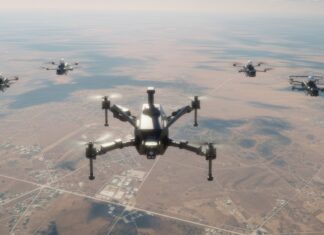
    In early October 2025, a coordinated wave of unmanned aerial system (UAS) incursions—widely attributed to Russia—targeted critical infrastructure across at least ten European nations. The unprecedented campaign exposed the fragility of Europe’s air defenses...

    Weekly Defense Update & Global Security Assessment

    0
    Executive Summary The past week (September 18-25, 2025) represents an inflection point where strategic defense concepts have transitioned from doctrine to tangible reality. An analysis of global events reveals four primary, interconnected trends shaping an...

    U.S. Air and Space Forces Push Next-Gen Programs at the AS&C 2025 Conference and...

    0
    At the 2025 Air, Space & Cyber Conference, U.S. Air Force and Space Force leaders unveiled major updates on next-generation fighters, bombers, unmanned systems, and space initiatives, highlighting both rapid innovation and critical readiness challenges as the services race to outpace global competitors. A short version is available here, with a more detailed version for subscribers.

    TADTE 2025: Reflecting Taiwan’s Strategic Themes

    0
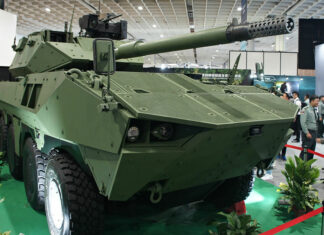
    The Taipei Aerospace & Defense Technology Exhibition (TADTE) 2025 crystallized around four dominant strategic themes that collectively illustrate Taiwan's comprehensive approach to defense modernization amid escalating regional tensions. Based on a detailed report by Pleronix (available upon request). Includes a Podcast discussion on TADTE 2025's highlighting Taiwan's four strategic themes beyond the post's coverage.

    Iron Beam 450 Completes Testing, Soon to Join With Operational Air Defense Units

    0
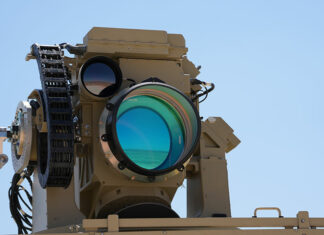
    Israel’s Iron Beam 450 high-power laser system has completed final testing, marking a major leap in air defense. Developed by Rafael, it offers precise, cost-effective interception of rockets, UAVs, and mortars, and is set for IDF deployment by 2025.