Tuesday, December 23, 2025
More
    Home Blog Page 407

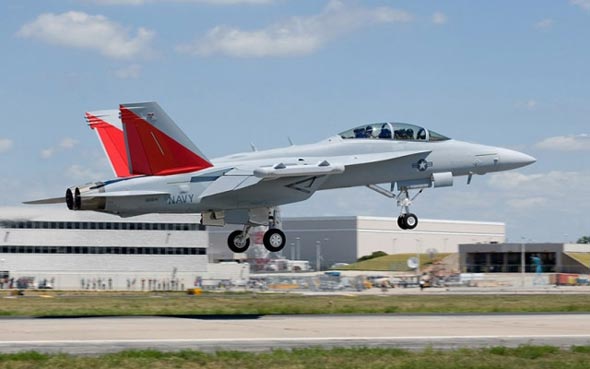
    EA-18G Growler – Electronic Attack Aircraft

    A derivative of the two-seat F/A-18F Super Hornet, the EA-18G’s highly flexible design enables warfighters to perform an array of AEA missions, operating from either the deck of an aircraft carrier or land-based airfields. The EA-18G will replace the Navy’s current aircraft carrier based AEA platform, the EA-6B Prowler, that has been in service since 1971. The first production Growler will join the Navy’s aircraft fleet in 2008.

    Boeing, acting as the weapon system integrator and prime contractor, leads the EA-18G Growler industry team. Northrop Grumman is the principal subcontractor and airborne electronic attack subsystem integrator. The Hornet Industry Team will divide EA-18G production across Boeing, Northrop Grumman, General Electric and Raytheon manufacturing facilities. The SDD program concludes with an Initial Operational Capability in 2009. Naval Air Systems Command PMA-265 is the U.S. Navy acquisition office for the EA-18G.

    The first EA-18G, known as aircraft EA-1, successfully completed its maiden flight from Lambert International Airport in St. Louis on
    August 16, 2006. EA-1 is the first of two test aircraft built under a System Development and Demonstration (SDD) contract Boeing signed with the Navy on Dec. 29, 2003.The aircraft will fly to Naval Air Station Patuxent River, Md., later this year. In addition to flight testing, it will undergo extensive ground testing in the Patuxent River anechoic chamber to assess on-board radar, receiver and jammer compatibility and performance.

    V-RAMBO Man Portable Video Transmission & Receiving System

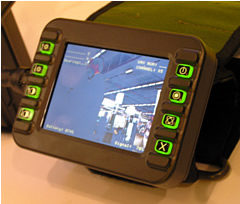
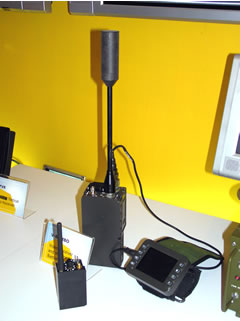
    V-RAMBO is a man-portable, remote video terminal which receives TV broadcast quality live video and telemetry data, captured and transmitted by directly from aerial, surface and ground platforms. The compact system is comprised of a lightweight portable receiver, carried in a pocket or pouch, and a rugged, wrist-wearable display and control unit. The system can be coupled with PDAs, laptop PCs and goggles which can display standard video signals. Live video images provided by the Battlespace VideoNet (BVN) are used to establish an ad-hoc common language between units engaged in joint operations, such as Special Forces and air support.

    By exchanging real-time target views through the Tactical Video Transmitter (TVT), verbal coordination and guidance can be minimized and better precision and situational picture can be delivered.

    A new addition to the Rambo ensemble is the miniature Tactical Ruggedized Video Transmitter (TARGET), weighing only 140 gram, it can transmit video from a source (sniper’s weapon sight for example) to a distance of two kilometers, it is transmitting up to 0.5 watt, using analog, FM modulation, transmitted on the S band. (TARGET can be seen on the lower left side of the photo shown on the top of this page)

    Safety Seat System

    Suspended by straps anchored to several points on the roof and sides, Autoflug seats protect the crew from side and bottom mine and IED blasts. The ergonomically optimized seats provide an optimized working position, which reduces fatigue and stress during long operations. The seats protect the crew by eliminating the direct effect of a blast’s shock wave because they are not rigidly connected to the hull. The system also includes special restraint screens on the sides, limiting the movement of the head during side blast. These seats are already in use in 20 types of AFVs including the Leopard 2, Wiesel 2 and Puma armored personnel carriers. Seats were also tested with Israeli Merkava Mk4. (driver seat photo is shown below, right. Passenger seat with IED side-blast protection restraint mesh shown on left.,

    Active Protection System Developments in the U.S. Army

    The Armed Services Committee of the U.S. Congress received today (Sept 21, 2006) a series of briefings by representatives from the Office of the Secretary of Defense and U.S. Army. The purpose of the hearings was to provide the subcommittee of tactical air and land forces an insight into the need, availability and requirements of active protection systems with the current and future force.

    Dr. Robert Buhrkuhl, Director, Joint Rapid Acquisition Cell, Office of the Secretary of Defense briefed the committee about the Full Spectrum Effects Platform (FSEP) known as “Project Sheriff”. After evaluating a number of potential systems, the Office of Force Transformation estimated that the General Dynamics/RAFAEL Trophy system could be fielded on one vehicle in the first half of 2007. Army and OSD’s Joint Rapid Acquisition Cell recommended against continued testing of Trophy because of technical and collateral damage issues, and that the Central Command urgent requirement could not be met until, at the earliest, the 2011 fielding of the active protection system being developed for the Army’s Future Combat Systems Program. He alluded to the fact that two of the key systems required for FSEP Spiral 1, the Active Protection Systems (APS) and Active Denial System (ADS), both millimeter-wave emitting systems, originally scheduled for fielding by the first half of 2007, were not mature enough.
    Adequate Defense Against RPGs
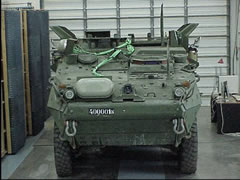
    Major General Jeff Sorenson, Deputy Assistant Secretary of the Army (Acquisition, Logistics and Technology) told the committee that the Army has been working on threat countermeasure systems for the past 40 years. He argued that the army’s heavy combat systems continue to be effective against RPG attacks thanks to the effectiveness of the force protection capabilities already deployed. “To date, the Army has fielded to theater 950 sets of Bradley Reactive Armor Tiles, 1097 sets of M113 Slat Armor Kits, and two brigades of Stryker Slat Armor Kits. The first sets of Stryker Reactive Armor Tiles will be available for fielding in October 2006 and the first sets of Abrams Reactive Armor Tiles will be available for fielding to theater in June 2007. As evidenced by the low casualty rate of Soldiers using our combat systems, General Sorenson claimed only 10 of the 148 killed in action since 2003 by RPG attacks could have been avoided, if active protection systems were deployed. According to General Sorenson, the Trophy system, which starred in media coverage, is merely an engineering development model, and is not yet mature for deployment. Even if such system was deployed it could be used only with the heavily armored vehicles, such as Abrams, Bradley and Stryker.

    Survivability – A Long Term Approach
    General Sorenson explained the Army’s assessment of the future threat and the role of a holistic future full spectrum protection approach towards survivability. The Army is leveraging the network for improved situational awareness, reducing signature management, improving ballistic protection, modifying operational tactics, and pursuing hit avoidance. APS is considered as a central element of hit avoidance, comprising technologies that enable defeat of the threat prior to its impact with the vehicle. “The hit avoidance requirement for our future force is a 360-degree hemispherical “bubble” of protection to our combat platforms.” explains General Sorenson.


    APS development efforts of the Science and Technology community, Ground Combat Systems program office, and FCS Brigade Combat Team (BCT) program are tightly aligned to ensure that the Army will have near-term close-in active protection for the current force, (Abrams, Bradley, and Stryker) while pursuing full-spectrum survivability and hit avoidance capabilities for the future family of manned ground vehicles as part of the Future Combat systems (FCS) program. Currently, the FCS program is developing a full-spectrum solution to counter short- and long-range threats, which include a wide range of ballistic projectiles: RPGs, mortars, antitank guided missiles, tank-KE/HEAT, top attack/precision guided missiles, and large caliber cannon.

    Operational Aspects
    Collateral damage against Soldiers and non-combatants is a major, especially when forces are deployed in confined urban environments. The tactics, techniques, and procedures to safely and effectively employ of APS are yet to be developed. For example, rules of engagement always provide for self defense. However, those same rules of engagement direct forces to limit or prevent noncombatant casualties and injuries. Employment of an APS system creates a challenge to solve these two fundamental rules simultaneously. “We are seeking answers to questions of use of APS systems in urban settings with civilian crowds. We are considering the implications of employing dismounted soldiers around or near vehicles with an APS to prevent fratricide.” General Sorenson told the Committee.

    APS Systems Availability
    “The number of systems that are suitable, reliable, safe and able to be integrated in the near future into our current combat systems is a very small subset of the worldwide APS development continuum.” Says General Sorenson. There are roughly 20 U.S. and foreign-based active protection systems under various stages of development, differing from each other in terms of concept of operation and the resulting collateral damage geometry. Each system must be addressed with its unique space, weight and power for vehicle integration. Additionally, each system has a unique collateral damage geometry that must be minimized in order to ensure the safety of our Soldiers, non combatants and the system.

    One of these systems is the Quick Kill, developed by Raytheon and selected by the FCS integrator to provide a future solution for the FCS program. “Quick Kill, with its vertical launch and fire control capabilities, is best suited to support current force active protection ground combat system requirements and concurrently support the Future Combat Systems hit avoidance suite and full spectrum survivability requirements.” Said General Sorenson. The system provides 360-degree all-aspect protection, from multiple simultaneous threats. To date, the Quick Kill system has demonstrated successful warhead, compound maneuver, radar integration and RPG intercept tests using an advanced detection and tracking capability that incorporates precision fire-control algorithms and vertical launch interception. Currently the Army plans to provide prototypes and conduct a Limited User Test in 2010.


    AKASH – Air Defense System

    The design of the Akash (Sky) surface to air missile, which demonstrated its performance during live fire tests on January 30, 2006, is based on the Russian Kub / Kvadrat (NATO code name SA-6 Gainful) missile, but the AKASH and its subsystems were developed, and are being produced by India’s Defense Research and Development Organization (DRDO). The 700 kg missile is equipped with a 55kg warhead and is designed to intercept multiple targets at ranges up to 27 km and altitudes from tree top level to 18 kilometers. An integral element of the Akash system is Rajendra, which consists of a multi-function, phased array radar and a battery command and control center. Rajendra provides air surveillance, target tracking, missile acquisition, missile guidance and launcher control. The AKASH / Rajendra system is designed especially for multi-mission performance and has extensive ECCM capability.

    Skeldar 150 VTOL UAV from SAAB Aerosystems

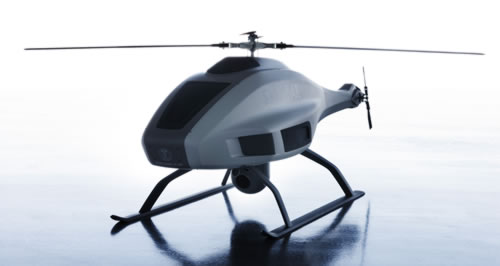
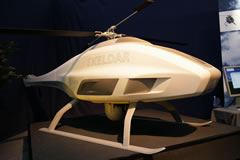
    Saab launched at Eurosatory 2006 the Skeldar V-150 lightweight unmanned helicopter, designed for military and commercial applications. The Skeldar is currently in final testing and is expected to be ready for operational use by mid 2007. The maximum takeoff weight of the Skeldar is 150kg, including 55 kg of fuel and payload. It can fly a 4 – 5 hour mission, up to a range of 100 km, dashing at maximum speed of 100 km/h. The basic system includes two unmanned helicopters, EO/IR payloads and a control station. The platform can accommodate an optronic, stabilized payload, or a SAR or various electronic sensors (ELINT, EW etc.) Saab is working with the Swedish Airworthiness Authorities to establish the necessary procedures and regulations to certify Skeldar UAVs to operate in civilian airspace.

    The Skeldar is designed to take off and land vertically, and maneuver precisely even in tight airspace. The system uses a water cooled two cylinder, two stroke fuel injected gasoline engine located in the front of the fuselage. The rotor system uses a Bell-Hiller configuration, with stabilizer bar and paddles. Navigation is performed by redundant GPS and IMU system, air data and magnetic heading indicator enabling autonomous operation while maintaining total radio silence.

    Iskander M/E (SS-21 / SS-26)

    Iskander E (SS-26 Stone)

    The Iskander Tactical Missile System is considered to be among the most advanced surface / surface missiles available today.

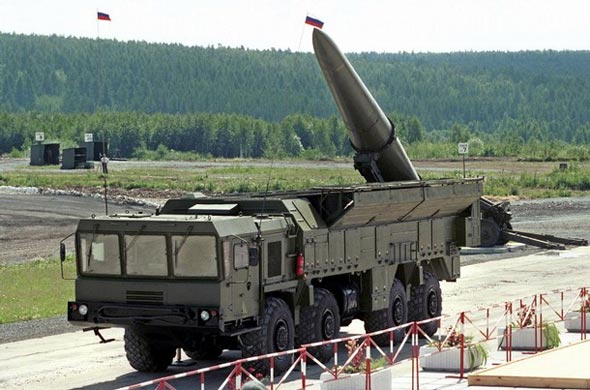
    Iskander-E is the export version of the Iskander M (9M72) short-range ballistic missile currently in service with the Russian Armed Forces (known by NATO designation SS-26). An earlier version is the SS-21 Tochka/Scarab, which was extensively used by the russian Army during the 2nd Chechnya war and during the conflict between Russia and Georgia in August 2008. The missile is designed for mobile, autonomous operation and is capable of striking point and area targets at ranges of 50 – 280 km. (The M version is believed to have a range of 400 km). Typical missions include the engagement of enemy fire support, such as MLRS and long range artillery, air defenses and missile defense assets, airfields, command, control and communications nodes and infrastructure targets.


    The Iskander-E missile is a single stage, solid fuel missile weighing 3.8 tons, carrying a payload of 480 kg. it can be loaded with cluster, blast-fragmentation or penetration warheads. A Thermobaric warhead is also believed to be part of the missile’s warhead options. An unconventional warhead could also be an option, including a tactical nuclear warhead.

    The missile uses on-board navigation and flight control to shape its ballistic trajectory at the boost and terminal phases of its trajectory. Boost phase maneuvering enable the missile to correct the ballistic trajectory to best match the flight plan and mission (for example, to minimize detection range by enemy missile defenses). It also contributes to optimize the trajectory based on in-flight data. Terminal maneuvering is used to avoid missile defenses and further improve the hit accuracy, utilizing terminal sensor. According to Russian sources, the missile uses special composite materials to reduce the radar signature of the missile (or TEL?) to evade targeting radars employed by enemy surveillance sensors, UAVs and smart weapons.

    The missile is equipped with an autonomous inertial guidance system and is reported to use an optical seeker for terminal guidance. The Iskander-E system is combined of six types of vehicles. The Transporter-Erector-Launcher (TEL) is based on the new BAZ6909 eight wheeler truck chassis. Fully loaded with two missiles, a TEL weighs 40 tons. The transporter loader also carries two missile reloads. The mission preparation station is equipped to process intelligence data, converting it to target data fed to the missile’s navigation system. Command and staff vehicle, maintenance and life support vehicles complete the Iskander’s unit. The TELs will remain in concealed position throughout the mission preparation, and require only a brief exposure to an open area to erect and fire one or two missiles. After launching, the vehicle immediately leaves the area seeking the safety of another concealed area.

    In May 2007 Russia conducted a test firing of an Iskander M missile in response to heightening tension due to continued U.S. plans to deploy missile shield elements in Europe, and the opening of a missile defense interceptor bases on the Baltic coast in Poland and establishment of an ABM radar station in the Czech Republic. Monitoring data show that last week’s tests of the Russia’s new Iskander-M (SS-26 Stone) missile were successful. According to, Sergei Ivanov, former defense minister, and current first deputy to the Russian prime minister, monitoring data, including photographic evidence, determined that the deviation of the missile from the target point was one meter. The missile was reported to be able to carry multiple warheads.

    In August 2008 Russian Ambassador to Belarus Alexander Surikovinformed about Russian plans to deploy Iskander missiles and/or bombers (most probably Tu-22) to Belarus, in response to the planned deployment of the U.S. missile defense shield in the Czech Republic and Poland. About one week later, Russia used Iskander missiles against Georgia as part of the conflict between which broke up between the two countries. By November 2008 Russia again employed its ‘Iskander strategy’, publicly assessing the deployment of the missiles in the Kaliningrad region, near its Western border with Poland, in an effort to deter the Polish government decision to deploy American missile defense systems on its land. From these positions, Iskander missile systems with a range of 500 km (310 miles) could target the entire territory of Poland and also parts of Germany and the Czech Republic.

    The R-500 is a new cruise missile adapted for the Iskander launcher. This missile was previously used only with tactical ballistic missiles. It is designed to operate at ranges of up to 280 km (170 miles), flying a radar-evading trajectory, and, reportedly, achieve an accuracy of three meters CEP.

    Nemo Mobile Mortar System

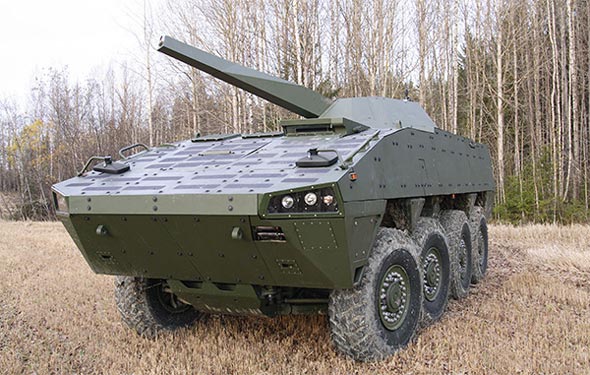
    NEMO, a single barrel self propelled smoothbore 120mm mortar system, developed by Patria is augmenting the twin-barrel AMOS system currently in service. NEMO uses an unmanned turret suitable for most current wheeled APCs as well as lightweight, high speed vessels. Weighing 1.5 ton, The system offers high accuracy and can be operated autonomously, without complex fire preparations. NEMO can fire a first round within 30 seconds from vehicle stop and could immediately exit from firing position after the last shot, minimizing the risk of enemy counter-fire. The mortar can be aimed for indirect or direct fire, and, by employing MRSI fire, can engage a target with six bombs simultaneously. Precision fire will also be realized in the future, with new precision guided mortar munitions (PGMM) Patria is developing for its 120mm mortars. the turret is designed with advanced signature management techniques and armor protection.

    Sherpa 2 / 3A High Mobility/Protected Utility Vehicle

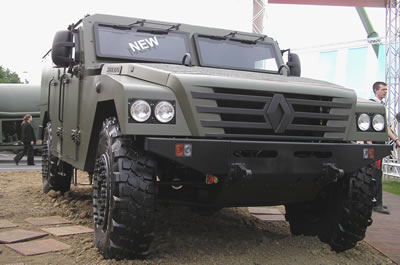
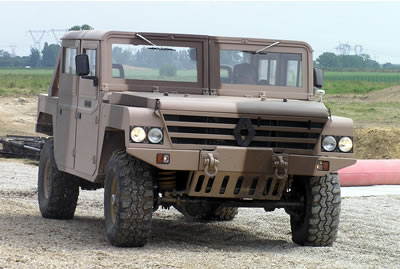
    Renault Trucks Defense launched at Eurosatory new members of the Sherpa family of trucks, including a tactical vehicle, armored vehicle and light truck. The Sherpa 2 and the Sherpa 3A are 4×4 vehicles configured as light tactical troop carriers. They have a remarkably low silhouette and reduced total weight, to suite air-transport and air-drop requirements. All vehicles use a four cylinder diesel engine, developing 215HP at 2,500 RPM and an automatic five speed gearbox, four disc brakes with anti-lock braking system (ABS), air compressor and pneumatic control. With a 9.3 ton Gross Total Weight (GTW) Sherpa 2 is designed to be used as a tactical troop carrier, accommodating four fully equipped troops and additional 2.5 tons of payload, supporting a total payload of 3.5 tons. The armored version, designated Sherpa 3A is based on the Sherpa 3 all-terrain platform, with a gross total weight of 12.5 tons. It is equipped with a fully protected hull, conforming to N2 ballistic protection level and N1 mine protection. The utility truck version called Sherpa 3 (12.5 Ton GTW) can carry a total load of 4.5 tons, including a driver and passenger.

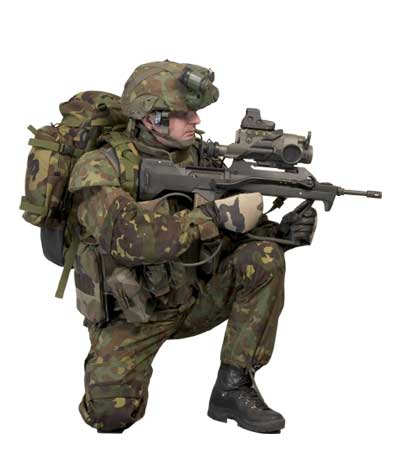
    Portable Electronic Platform – A Digital Brain Integrates with FELIN

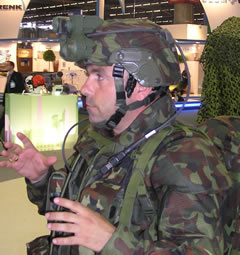
    The FELIN warfighter’s clothing is fitted with a portable and robust digital communications and navigation system (radio/GPS). The unit’s network will utilize the RIF (Infantryman Information Network), a voice/data network utilizing the commercial DECT standard, offering voice, data, image, video and GPS positioning services. The network will connect each warfighter to other members of his section and, through his commander, to the SITEL (Elementary Terminal Information System) installed on the vehicle from which they disembarked.

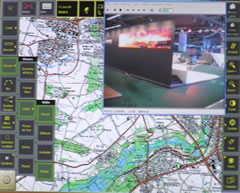
    Specialized sections and group leaders will also be equipped with a portable terminal information system for dismounted soldiers. The systems designated SIT COMDE, will function as an equivalent to the vehicle mounted SIT system, but this version will be optimized for operation on a compact personal computer. Integration into the SIT situational display and C4 networking will provide the dismounted infantry commander with tactical situation picture and exchange of encrypted information throughout the tactical levels of command, supporting exchange of map data, e-mail and symbols).

    The “Portable Electronic Platform” uses a wearable computer powered by a high performance electrical energy source sustaining continuous 24 hours operation; both are integrated into the infantryman’s clothing, and forms the core of the system, including a computer and the fast open bus (USB 2.0 architecture) used with a communication and navigation assembly. The main application software is installed in the computer that controls the head and weapon electronic assembly, and also provides general control over the system. There are two wired networks in the clothing, one is the power transmission network, transferring electrical power to all systems and the other provides digital networking connectivity, carrying data, video, GPS and RF feeds to and from the radios and antennas. Target endurance times are of the order of 72 hours, by using Li-ion batteries and rapid recharge by a fuel cell specially developed at Sagem.

    Polyana D4M1 C4 system

    The Polyana Air Defense Automated Command and Control Post, developed and produced by the Russian company Radiozavod, is a system for controlling operations at the air defense brigade level. It is designed to provide Automated Command and Control Processing (ACCP) in support of mission planning and operational control in a single air defense zone. The system gathers target data, creates situational pictures and feeds combat control information and commands in standardized format to associated elements and firing units. Polyana can track up to 500 objects simultaneously, displaying 255 at any given time (120 airplanes/helicopters and 20 ballistic missiles). Automatic real time processing creates the situational display based on inputs as many as 14 separate sources. Connections are available for 3 radars, 6 control units (battery CPs of Air Defense Missile Systems), four cooperating CPs and 1 superior CP. The system is operated from 12 Autonomous, Automated Work Stations (AAWS), which are designed to handle six simultaneous targets and up to 200 tracks each. The Polyana system itself is ordinarily made up of 2 transport vehicles, 2 trailers and 2 mobile power-generating plants.

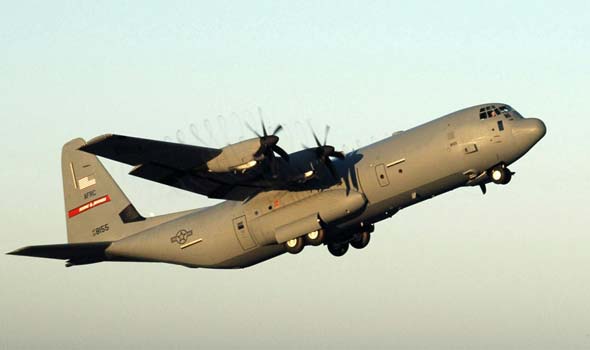
    C-130J Super Hercules

    The C-130J is the newest tactical inter-theater transport aircraft fielded with the US Air Force and several international air forces. capable of flying higher, farther and faster than previous C-130 models while carrying more cargo.


    C-130Js are currently deployed in two combat theaters and are operating at a very high tempo efficiently and reliably. C-130Js are being used daily for troop and equipment resupply via ground delivery and airdrop, for air-to-air refueling, ground refueling and humanitarian relief. The worldwide fleet of C-130Js has now exceeded 350,000 flight hours. In the United States, Air Mobility Command, Air Education and Training Command, Air Force Reserve Command and Air National Guard units fly C-130Js, WC-130Js and EC-130Js. The Marine Corps operates KC 130J tankers and the Coast Guard flies the HC-130J. International C-130J operators include the Royal Air Force, Royal Australian Air Force, Italian Air Force and the Royal Danish Air Force.

    In October 2006 AMC declared Initial Operational Capability for the C-130J. This approval followed successful demonstration of specific requirements for the C-130J, including completion of Qualification Operational Test and Evaluation (QOT&E), equipping the first combat delivery squadron to its full Primary Aircraft Authorized (PAA) limit with the ability to perform operational air-land missions, and manning one squadron of trained aircrews and maintenance members to support the mission. The Maryland Air National Guard’s 135th Airlift Group was the first combat delivery squadron to reach full PAA and also fulfilled the IOC manning requirement. Along with other C-130J units, the 135th AG has deployed to U.S. Central Command’s area of responsibility, performing airland and airdrop missions.

    Lockheed Martin will upgrade the avionics and capabilities of C-130J Super Hercules transports flown by United Kingdom, Australia, Italy and Denmark. Focusing on avionics hardware upgrades, the package will include integration of communications, navigation, surveillance and air traffic management and identification (IFF) systems, terrain awareness warning system, providing both visual and audible cues, integration of a common flight management system, with improved data monitoring during takeoff and landing and installation of a robust, PC-based Data Transfer and Diagnostic System (DTADS) to enhance the aircraft diagnostics and health management. The aircraft will also receive an improved loading ramp and enhanced door hydraulics to support high altitude airdrops.

    Known as Block 6.1 upgrade, the US$ 110 million program will enable these air-forces to collaboratively acquire enhanced capabilities for their aircraft while sharing the cost of development, design, test and integration.

    The Canadian Ministry of Defense selected the C-130J as the future transport aircraft of the Canadian Air Force. Contract negotiations began last year after the selection was announced in November 2006. Canadian Defense Minister Peter MacKay announced the US$1.4 billion (C$1.428 billion) contract award on January 16, 2008, for the supply of of 17 tactical transport planes by Lockheed Martin. Earlier reports mentioned much higher costs for the program, assuming C$3.2 billion to be spent on procurement and additional C$1.7 billion for life cycle support. The C-130J will replace C-130 Hercules aircraft currently in service. Initial deliveries are expected within 24 months, by 2010.

    Norway has requested to buy four C-130J aircraft, for a US$520 million. These aircraft will be equipped with teh standard fit of AAR-47 missile warning systems, ALR-56M advanced radar warning system, and ALE-47 CMDS. Communications systems will comprise ARC-210 and AAR-222 encrypted SINCGARS sets.

    The Hercules will soon be augmented by the C-27J Spartan Light Transport Aircraft recently selected by the U.S. Army and the U.S. Air Force for the Joint Cargo Aircraft (JCA) program. The aircraft was designed by the Italian company Alenia Aeronautica (from the Finmeccanica group). The aircraft will be built and supported in the US by a team led by the L-3 Communications group, with team members Boeing Integrated Defense Systems (IDS), and Global Military Aircraft Systems (GMAS). The aircraft is a medium range, multifunctional transport aircraft, designed for logistical resupply missions, medical evacuation, troops transport and airdrop operations. The aircraft will support U.S. Army and U.S. Air Force operations, including force projection, humanitarian assistance and homeland security. The Spartan will replace the Shorts C-23 Sherpas, C-12 and C-26 aircraft.

    European 6×6 APC

    The French Giat Industries and German KMW announced in May they will jointly develop a Medium Size Multi-role Armored Fighting Vehicle. This cooperation positions the two companies in a lead position to address future European requirements addressed in a NATO Common Staff Target for a medium size multi-role armored fighting vehicle.

    The cooperation will cover commonly funded activities to develop a 20 ton 6×6 vehicle demonstrator by 2010. The vehicle will offer crew protection and mobility beyond the standards of existing vehicles in this weight class. The new platform will provide a common basis for a range of military mission variants including fighting vehicles, air defense-, engineering- and fire support-systems, other mission fields such as ambulance, recovery, repairs, mortar, anti-tank, NBC, command & control and reconnaissance.

    RPG-29V Anti-Tank Weapon

    Basalt, the Russian manufacturer of the RPG-29N two munitions designed for this modern weapon – the PG-29V tandem rocket, and TBG-29V thermobaric rounds. PG-29V is designed to defeat tanks using advanced armor, including those fitted with explosive reactive armor (ERA). The round can penetrate 750mm of homogeneous armor or 600 mm of the same armor, fitted with add-on ERA. The PG-29V has a diameter of 105mm, and 1.1 meter length. It weighs 6.1 kg, containing a warhead of 1.4 kg high explosive charge, conformed to produce shaped charge (SC) action.

    Penetrating over 1,500 mm of reinforced concrete, PG-29V can also be effective against bunkers and log-and-earth structures (3,700 mm deep) and brick walls (penetrating 2,000 mm of brickwork). Direct fire effective range is 300 meters. The 105mm TBG-29V round uses thermobaric composition. Utilized in urban warfare applications, this weapon has a devastating effect when fired into a building, affecting a maximum internal volume of 300 cubic meters. When fired at a distance of one meter from a window or doorway, the weapon affects a volume of 50 cubic meters inside the building, or when deployed in an open area, at a distance of 10 meters from the center of the explosion. The warhead is also effective against soft skinned material, and light armored vehicles. It can be fired at 50 – 2000 (maximum range with ballistic trajectory).

    Skunk Works and XTEND Simplify Multi-Drone Command

    0
    Lockheed Martin Skunk Works® and XTEND have achieved a major milestone in JADC2 by integrating the XOS operating system with the MDCX™ autonomy platform. This technical breakthrough enables a single operator to simultaneously command multiple drone classes, eliminating the friction of mission handoffs. From "marsupial" drone deployments to operating in GPS-denied environments, explore how this collaboration is abbreviating the data-to-decision timeline and redefining autonomous mission execution.

    From Ukraine to Taiwan: The Global Race to Dominate the New Defense Tech Frontier

    0
    As traditional defense primes face mounting competition from agile “neoprimes” such as Anduril, Palantir and Helsing, the balance of innovation is shifting toward software-defined warfare and scalable, dual-use technologies, while global industry consolidation—marked by Boeing’s integration of Spirit AeroSystems and other strategic mergers—signals an intensified race to secure control over the defense technology value chain. Our Defense-Tech weekly report highlights these trends.

    Europe’s “Drone Wall”

    0
    In early October 2025, a coordinated wave of unmanned aerial system (UAS) incursions—widely attributed to Russia—targeted critical infrastructure across at least ten European nations. The unprecedented campaign exposed the fragility of Europe’s air defenses...

    Weekly Defense Update & Global Security Assessment

    0
    Executive Summary The past week (September 18-25, 2025) represents an inflection point where strategic defense concepts have transitioned from doctrine to tangible reality. An analysis of global events reveals four primary, interconnected trends shaping an...

    U.S. Air and Space Forces Push Next-Gen Programs at the AS&C 2025 Conference and...

    0
    At the 2025 Air, Space & Cyber Conference, U.S. Air Force and Space Force leaders unveiled major updates on next-generation fighters, bombers, unmanned systems, and space initiatives, highlighting both rapid innovation and critical readiness challenges as the services race to outpace global competitors. A short version is available here, with a more detailed version for subscribers.

    TADTE 2025: Reflecting Taiwan’s Strategic Themes

    0
    The Taipei Aerospace & Defense Technology Exhibition (TADTE) 2025 crystallized around four dominant strategic themes that collectively illustrate Taiwan's comprehensive approach to defense modernization amid escalating regional tensions. Based on a detailed report by Pleronix (available upon request). Includes a Podcast discussion on TADTE 2025's highlighting Taiwan's four strategic themes beyond the post's coverage.

    Iron Beam 450 Completes Testing, Soon to Join With Operational Air Defense Units

    0
    Israel’s Iron Beam 450 high-power laser system has completed final testing, marking a major leap in air defense. Developed by Rafael, it offers precise, cost-effective interception of rockets, UAVs, and mortars, and is set for IDF deployment by 2025.