
Wednesday, December 24, 2025
More
    Home Blog Page 417

    Harpy Air Defense Suppression System

    Dedicated for the Suppression of Air Defense (SEAD) mission, Harpy is an operational loitering attack weapon. The current version of Harpy is deployed as a fire and forget weapon. It patrols the assigned area, and will attack any hostile radar activated in its vicinity. When used in appropriate numbers, Harpy can be launched into a target area to support continuous operations, or time limited strike packages. Unlike anti-radar missiles such as HARM, whose speed, range and direction of approach are predictable, the killer drone deployment is more flexible and unpredictable, and therefore, conventional countermeasures techniques are not useful against it. In fact, Harpy is holding enemy radars at risk throughout its mission. Harpy system is designed to operate multiple munitions simultaneously over a specific area, to effectively cover the target. Each drone is deployed autonomously, without interference and overlapping the other drones.


    The Harpy mission is planned and programmed in the battery ground control center, as an independent mission, or planned in accordance with other manned or unmanned systems. Prior to launch, individual weapons are programmed and tested, to verify their operational readiness. After the rocket-assisted launch, the drone flies autonomously enroute to its patrol area, predefined by a set of navigational waypoints. Due to its low speed and economical fuel consumption, the drone can sustain a mission of several hours over the target area. Its radar seeker head constantly search for hostile radars, both along and across the flight track. Once suspicious radar is acquired, Harpy compares the signal to the library of hostile emitters, and prioritizes the threat. If the target is verified, the drone enters an attack mode, as it transitions into a near vertical dive, homing on the signal. The drone is set to detonate its warhead just above the target, to generate the highest damage to the antennae, and surrounding facilities. If the radar is turned off before Harpy strikes, the drone can abort the attack and continue loitering. If no radar was spotted during the mission, the drone is programmed to self destruct over a designated area. Follow-on systems which are already proposed to foreign clients, are calling for a combination of seeker and killer drones that will enable visual identification and attack of targets even after they turn off their emitters.

    The drone weighs 135 kg, and is 2.1 meter long with a 2.7 meter span. It is sealed in its sealed launcher/container, to endure harsh battlefield conditions. It can be fueled or defueled in the launcher, therefore retaining its readiness at all time. The system uses periodical built-in test to maintain full readiness. In order to verify the drone’s operational capability, its seeker head is being tested by a special radar simulator just before launch, to ensure that all systems are working.

    The radar killer drone is launched from a canister which is also used as a launcher. Current Harpy modules are installed on trucks, and can be carried by C-130 transport aircraft. Each truck carries 18 weapon launchers. Each battery of Harpy is composed of three trucks, capable of deploying up to 54 drones for simultaneous, coordinated attack. The battery also has a ground control station and logistical support element. The system can also be deployed from the decks of assault landing ships, in support of marine or amphibious operations.

    Harpy is currently operational with the Turkish, Korean, Chinese and Indian Armies, in addition to the Israel Air Force. In December 2004 China was reported to be interested in an upgrade of its systems to a more advanced version. Part of this work, conducted at IAI in 2005 caused severe friction between Jerusalem and Washington, as the Pentagon blamed Israel of assisting China in modernizing its weapon in breach of its agreements with the USA. In October 2005 a derivative of Harpy presented by MBDA in cooperation with IAI/MBT Division was selected as one of the finalists for the UK Loitering Munition Capability Demonstration (LMCD) program.
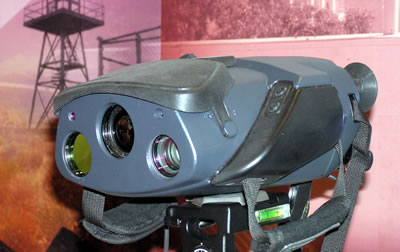
    Explorer – Observation and Target Acquisition Multi-Sensor System

    EXPLORER is an observation and target acquisition system designed as an “All in one” system, offering accurate target acquisition, observation and measuring system optimized for dismounted operations. This lightweight system is designed for Special Forces, forward observers, reconnaissance patrols and any other units engaged in day/night operations. Explorer has a day/night binocular combining a 3rd GEN 320×240 InSb focal plane array thermal imager operating at the 3-5 µm and 1280X1024 CMOS for the day only channel, laser range finder, GPS, Compass, elevation measurement and IR illuminator. The system uses dual, miniature SVGA Color OLED displays and is operated on battery power for five hours. The system weights less than 3.2 kg and replaces much heavier, multiple loads carried by troops operating on extended day and night missions.

    Explorer target acquisition kit form ITL

    New Armored Humvees

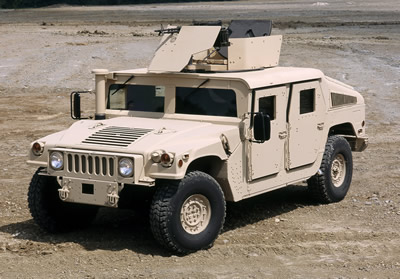
    The Humvee popularity continues despite the vulnerability of the basic vehicle, as demonstrated in recent conflicts. Therefore, armoring solutions to better protect the vehicle and crew are proposed by many companies. The original vehicle manufacturer AM General is offering an improved, heavier versions capable of taking increased payload capacity, with stronger engine, suspension and factory assembled armoring. The armor can be removed when the vehicle is not used in combat situations (saving fuel, maintenance and transportation costs). The new versions are M1151P1 armored troop carrier and M1152P1 armored utility truck. Both are based on the Humvee Expanded Capacity Vehicle (ECV) chassis and equipped with the Optimizer 6500 V8 6.5 liter turbocharged diesel engine, offering 36% increase in power and 69% increase in torque, over previous diesels used in the Humvee. Developing 190HP at 3,400 RPM and 308 lbs (515Nm) torque at 1,700 RPM, the new engine designed as a “drop-in” replacement for the original Detroit Diesel engine used in older Humvees. The vehicle is equipped with an automatic, electrically controlled 4 speed transmission. The ECV uses reinforced front body mounts and heavy duty variable rate rear springs to withstand the additional loads of the armor. The new versions almost doubled the payload from 1,043kg (2,300lbs) available for the up-armored M1114 to 1,904kg (4,200lbs) of the M-1151P1 which has a maximum gross weight of 5,487kg (12,100 lbs.) The M1151P1 is fitted with an armored hull, underbody armor and energy absorbing seats for the driver and crew. It also has rocker armor, protected roof and bullet proof transparent windscreen. As sufficient power is now available, a dual air-conditioning system has been provided for greater crew comfort. The M1152P1 uses similar features, plus an armor protected cabin, cargo and troop enclosures. This vehicle is optimized for use as an armored utility truck, designed for communications, C3 and combat service support functions. The first lot of 500 M1151P1 vehicles was shipped to US Forces in Southwest Asia in March 2006. Further deliveries will gradually replace aging M1052 and M1097 Humvees which are in service since the early 1980s.

    Secure Communicating Optical Ultra-Small Transponder (SCOUT)

    The U.S. Army is funding the development of a new combat identification device that will be able to warn dismounted soldiers, pilots, tank gunners or missile operators as they aim their weapons on friendly troops. The new system will identify between Friend and Foe (IFF) utilizing a low-power active optical device that can be patched on the uniform, helmet or around the vehicle’s sides.

    The patches will respond to an incoming coded infrared aiming laser system, modulating the reflected beam with their unique IFF code. Slightly larger than a matchbox the ultra-low power transponder will be located on the IFF patch and will establish reliable battlefield identification between friendly ground forces at all ranges where lasers are effective (up to 10kilometers). The device will also enable secure and covert ground- and air-based communication among soldiers and vehicles. SCOUT technology is under development at the MEMS specialist Boston Micromachines Corporation and research partner Boston University, under a first phase US$100,000 Small Business Technology Transfer Program. The program is scheduled to mature over the next 12 months and be ready for implementation in within two years.


    The device, known as “Secure Communicating Optical Ultra-small Transponder” (SCOUT) will utilize Micro-Electro-Mechanical System (MEMS) based modulated “active mirror”, which will be activated by a coded incoming laser and reflect the beam back to the source, modulated with its unique identification code. SCOUT compatible lasers will be implemented as upgrades for current laser rangefinders and designators, thus offering seamless integration to existing systems. SCOUT technology promises to extend beyond Identify Friend or Foe (IFF), to include situational awareness, covert communication and reading from remote sensors such as bio-weapon detector and motion trackers.

    The device has several inherent advantages. First, unlike RF transmitters, SCOUT does not send an omni-directional signal but instead directs an optical signal along a narrow path which is not spotted by conventional laser detection systems, increasing security and stealth with minimal power consumption. Second, since all optical energy comes from the source, SCOUT requires no on-board transmission power.

    The Active Mirror technology uses a deformable mirror surface to modulate and reflect light through a simple optic, returning the beam to its point of origin. The heart of the system is a wavefront control device, which consists of a mirror membrane supported by an underlying actuator array. Each actuator in the array can be individually deflected by electrostatic actuation to achieve the desired pattern of deformation. SCOUT will implement standard bulk micromachining (CMOS) production technologies to reduce production and acquisition costs. More news – September 6, 2006

    Barak-8 /MR-SAM Program

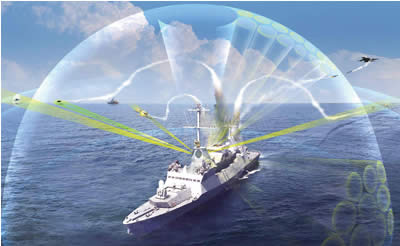
    MF-STAR operating scenario showing multiple engagements of vertically launched Barak/Barak NG missiles simultaneous with firing offensive weapons (image by IAI).

    India and Israel agreed to jointly develop a new long range, land-based air defense system to replace the aging Pechora (SA-3 GOA) missiles currently in service with the Indian Air Force. Covering a range of 70 km, the new missile will almost double the range of the 60km vertically launched Barak 8 shipborne missile (also known as Barak NG) currently being developed for the Indian and Israeli Navies under a US$480 million five year program launched in early 2006.

    The new missile system will be based on the medium-range naval air defense missile currently under development for the Indian and Israeli Navies. The naval application of the missile will be integrated with the MF-STAR phased array shipborne radar, which Elta claims to be superior to the SPY-1 AEGIS radar. Overall, the MF-STAR / Barak 8 combination is claimed to be superior to the leading US made systems such as AEGIS or Patriot PAC-3 missile systems.

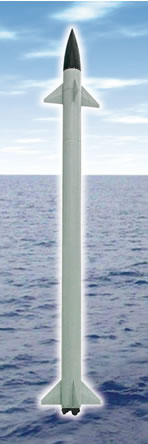
    A view of the Barak 8, developed for shipborne defense as well as ground based air defense applications. Photo: IAI

    Barak 8 missile utilizes a fully active seeker, the missile is not dependent on the launcher for targeting and guidance, and can perform at much longer ranges, offering effective protection from aerial threats, manned, unmanned as well as guided weapons. Covering both low and high altitudes, the missile is designed for operation on-board ships as well as for terrestrial applications. Barak 8 system is designed to engage multiple targets simultaneously with deadly effectiveness. The missile uses vertical launched missile is designed to offer 360 degrees protection, utilizing an advanced active radar seeker. The missile is equipped with a two-way datalink, supporting mid-course updating and terminal updating and validation. To extend its datalink and C3 coverage over a wide area, the system will integrate surface based radars and communications elements with airborne manned and unmanned elements, maximizing its operability and range over all types of terrain.

    MR-SAM is expected to streamline with the original Barak 8 schedule, adding about $300 million to the program development cost. In its decision last week the Indian Government earmarked a total funding of about Rs10,000 crore (about US$2.5 billion) for the medium range surface-to-air missiles (MR-SAM) project. The program will include the deployment of up to nine air defense squadrons. The MR-SAM development will be conducted under the bilateral agreement signed between the two countries, which will guide the scope of collaboration formulating between DRDO and IAI defined in a memorandum of agreement signed in New Delhi, June 2007.

    The Indian Air Force plans to re-equip nine air defense squadrons with the new missile, each including two batteries comprising a multi-mission radar system performing target acquisition and guidance, command-and-control element and three container-launchers each mounting eight missiles.

    Prime contractor for the program will be the Indian DRDO, with IAI missile and space group acting as leading subcontractor with IAI’s Elta Systems providing the radar and Israel’s RAFAEL producing the interceptor missiles. According to the bilateral agreement, the Indians will be able to locally produce and support the systems.

    Barak 8 is expected to be part of a new offensive and defensive system suite under development at IAI’s Missiles and Space division. This new family of weapons will also comprise the latest generation Gabriel 5 anti-ship missile, an integrated combat management system and multi-function EL/M-2248 MF-STAR shipborne phased array radar system.

    MF-STAR operating scenario showing multiple engagements of vertically launched Barak/Barak NG missiles simultaneous with firing offensive weapons (image by IAI).


    Modular Airborne Sensor (MAS)

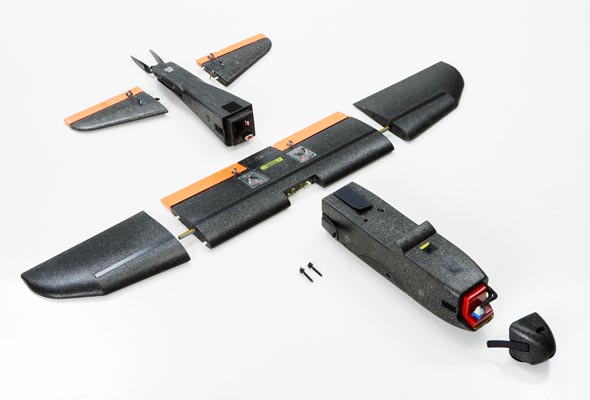
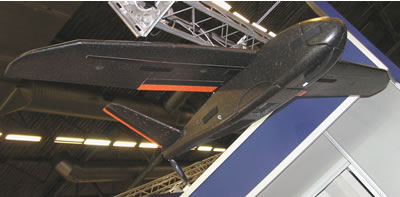
    The miniature, modular airborne sensor system uses a mini UAV developed by Patria, equipped with an EO payload mounted on remotely controlled a pan-tilt platform. A system includes 1-3 vehicles which can be fitted with EO or IR payloads. Unique features used in this compact system include fixed, see-and-avoid camera an on-board sensor and data recording capability to support autonomous operation. The ground system uses a ruggedized laptop PC and communications segment, equipped with telescopic mast mounted datalink antenna. The overall system’s weight is less than 30 kg.

    The battery powered vehicle weighs only 3 kg and has a payload capacity of 0.5kg. The wing span is 1.5 meters and length: 1.05 m’. MAS can operate on a mission for 60-75 minutes at an altitude of 50 – 150 meters covering ranges of 10- 20 km at a cruising speed of 60 km/h. (Maximum dash speed is 120 km/h.) The system can operate on autonomous mission or manually, by a single operator. Deployment, turn-around and packing is performed within 8 minutes.

    Tokeh lightweight Air-Mobile vehicle

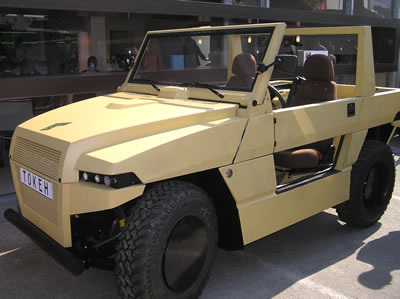
    Rheinmetall Defense introduced its version for lightweight heliborne vehicle – TOKEH, a company initiative currently at feasibility study phase. This light tactical mission vehicle is optimized for internal carriage by an NH-90 helicopters, in support of special operations. It will have accommodations for a driver and commander, with an optional third seat. TOKEH high mobility vehicle weighs 2.4 ton Maximum Gross Total Weight (MGTW), including a payload of up to 600 kg. The 4×4 vehicle was measured to fit the confined space of the new transport helicopter.

    TOKEH will offer operations at extended range, and high off-road mobility, supported by adjustable height suspension and run-flat tyres and central inflation system. The vehicle will have an integral forward protection, by an armored bulkhead and bulletproof, two piece transparent windscreen. The blast protected bottom provides protection against hand grenades. TOKEH will be powered by an Iveco F1A 2.3 liter diesel engine developing 85.5 kW (@3,900 RPM) coupled to a manual 5 gears transmission, developing a maximum speed of 120 km/h. TOKEH has a total length of 3.4 meters, width of 1.6 meters and height of 1.4 meter. The track width is 1.365 m’ and wheel base is 2.28 m’.

    Pechora (SA-3) – Surface/Air System Upgrade Program

    Upgrades for India’s Pechora 2A (SA-3 OSA) missiles were also promoted at Defexpo 2006 by the Russian company Almaz-Antey. Under the upgrade program the system’s engagement range and kill zone will be extended (currently 3.5 to 28 km range, 60 – 60,000 feet altitude, engaging targets with speeds up to 700 m/sec) and efficiency in handling current technology threats will be increased. Electronic counter-countermeasures (ECCM) will also be improved by increasing operating power to 2000 W/MHz. An additional EO/TV tracking channel will be integrated as a backup. Up to 50% of the analog systems in the missiles will be replaced by new and more reliable digital systems in order to improve reliability and performance while decreasing power consumption. The upgraded system will be capable of detecting and engaging targets with typical radar cross-sections as small as 0.3 square meters.

    Coalition Joint Spectrum Management and Planning Tool (CJSMPT)

    CJSMPT visualization and planning tool enables communications planners to automate and accelerate spectrum planning, making it easier for troops to communicate while avoiding interference from jamming operations.

    CJSMPT will enable planners to better manage the spectrum by displaying a real-time, three-dimensional view of frequency use in the battlespace for land, air, and space emitters. For the long term, the system will automate the planning and efficiently manage battlefield spectrum. A key feature of CJSMPT is its faster-than-real-time simulation capability that can predict and visualize potential interference from on-the-move forces. Prior to this tool, military planners predicted interference based on static analysis, which tended to cause overly pessimistic solutions and loss of opportunity for spectrum reuse. By coordinating all emitters and knowing their locations in a region, spectrum planners will now be able to boost reuse and significantly increase communication bandwidth to coalition forces.

    The CJSMPT program is managed by the U.S. Army Communications- Electronics Research and Development Engineering Center (CERDEC), and is developed by Lockheed Martin under a $5.2 million contract awarded September 2006. For the first phase a semi-automated de-confliction tool will be deployed to the theater in Southwest Asia within 11 months, to address urgent requirements to de-conflict the effects of jamming and other critical communications. In the subsequent phase a fully automated, networked de-confliction capability will be deployed to all coalition forces in 11 months.

    Joint Helmet-Mounted Cueing System (JHMCS)

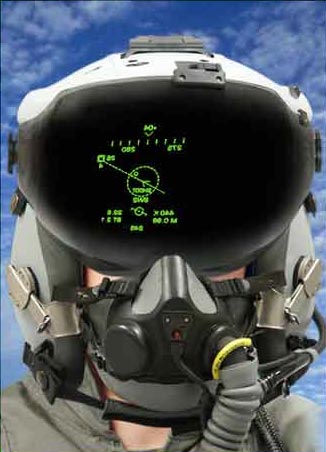
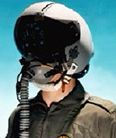
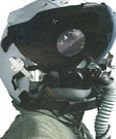
    The Joint Helmet-Mounted Cueing System (JHMCS) gives flight crew members the ability to rapidly acquire and designate a target simply by looking at it. By placing an aiming cross, projected on the helmet visor, over the desired target and pressing a button, pilots can quickly and easily aim weapons and sensors to designate and attack airborne or ground targets. JHMCS also displays aircraft altitude, airspeed, gravitational pull, angle of attack and tactical information on the visor to increase crew members’ situational awareness.

    Since 2000, Boeing has contracted for more than 2,000 systems. The company is the prime contractor and integrator for JHMCS. Vision Systems International, a joint venture of Rockwell Collins and Elbit Systems, based in San Jose, Calif., is the major subcontractor.


    By August 2006, Boeing received orders from 10 international customers The company announced today the first deliveries of the advanced helmet sights to equip Royal Australian Air Force F/A-18s. JHMCS is developed by Vision Systems International, a joint venture between Rockwell Collins and Elbit Systems.

    The Royal Australian Air Force is equipping its F/A-18 strike fighters with Joint Helmet-Mounted Cueing System (JHMCS). The first fleet aircraft delivery of JHMCS to the Royal Australian Air Force occurred May 23 in Williamtown, New South Wales, Australia. Boeing Australia and the Hornet Industry Coalition, a collaborative arrangement between Boeing, BAE Systems and L-3 Communications of Canada, will equip 71 Australian F/A-18s with JHMCS by 2008.

    The system completed first flights with the Swiss and Finnish air forces’ F/A-18 Hornets. First flights took place in Swiss F/A-18Cs on May 30 and Finnish F/A-18C/Ds on June 2 and 7. Switzerland and Finland operate 35 and 63 systems, respectively. First flights in Canadian CF-18s are scheduled for September. According to Phil King, Boeing JHMCS program manager. “The proven success of JHMCS in the field has resulted in a steady increase in customer demand.” Pilots first used the JHMCS operationally in Operation Iraqi Freedom.

    In April 2009 Vision Systems International, LLC (VSI) announced it has received several new contracts with a total value of more than $120 million. Part of these orders relate to an ongoing contract awarded by Boeing, for the delivery of more than additional 550 (Lot 5) Joint Helmet Mounted Cueing Systems (JHMCS). The company has also won direct orders from the US Air Force and navy, for systems support. The new helmet systems will provide for the U.S. Air Force F-15E and F-16, Air National Guard F-15, U.S. Navy F/A-18C/D/E/F/G single seat and dual seat platforms, as well as foreign military sales production and spares commitments including: Australia (F/A-18), Belgium (F-16), Turkey (F-16), and other countries. Deliveries under FRP-5 will commence this year and continue through 2010. To date VSI delivered more than 3,000 systems.

    LAHAT Laser Guided Missile

    LAHAT was designed by IAI subsidiary MBT to meet the requirements of the armoured corps. Utilizing the semi-active laser homing guidance method, LAHAT can be designated by the firing tank or by an indirect designation, by another tank, helicopter or forward observers. Firing the LAHAT requires minimal exposure in the firing position, (commander’s sight only) as the designating tank (not necessarily the firing tank) has to maintain line of sight to the target throughout the flight of the missile.

    With a low launch signature (flash and dust), the firing position is very difficult to detect, from all ranges. The missile’s trajectory can be set to match either tank (top attack) or helicopter (direct attack) engagements. Flight time is longer than kinetic ammunition (14 seconds at 4,000 meter range) but since target designation is required only for the final phase of the flight, the tank can fire the LAHAT from hidden position or use remote designation for maximum protection. Finally, the missile uses a tandem warhead which can defeat all modern armor, including add-on reactive armor. The main warhead has a high penetration capability of 800mm, defeating all known armored vehicles at high impact angles typical of top attack trajectories. The introduction of LAHAT to conventional tanks requires minimal modifications, replacing the laser rangefinder with LRF/laser designator module, and inclusion of LAHAT programming in the fire control computer. The LAHAT is stowed like other rounds in the ammunition rack, and handled just like any other type of ammunition.

    The LAHAT missile has a range of 8 km when launched from a ground platform, and up to 13 km, when deployed from high elevation. The missile hits the target at an accuracy of 0.7meter CEP and an angle of over 30 degrees, providing effective penetration of up to 800mm of armor steel by the high performance warhead. The missile weighs 13kg, and a quad launcher which can be carried by ground or aerial platforms, weighs 75kg, including four missiles. A variant of the Lahat guidance system is also designed as an upgrade kit for 2.75″ rockets offering high precision and minimizing collateral damage when such weapons are used low-intensity conflicts and urban warfare.

    LAHAT is designed to match all types of 105 and 120mm guns, including low recoil guns. It fits well with the 105mm Low Weight guns, designed for arming light attack vehicles such as Centauro, AMX-10RC or LAV-III. Unlike other tank rounds, LAHAT does not need a tank gun for operation, in fact, LAHAT modifications are already considered with 106mm recoilless rifles, BMP-2 APCs, Humvee all terrain utility vehicles and as self protection for air defense elements, on the M-163 Vulcans. According to Aviation Week, Employing LAHAT missiles from Hunter UAVs was also planned by the US Army.

    IAI has recently completed a successful series of test firing on the Arjun tank in India, and is negotiating local production if a planned procurement of Lahat for the entire Arjun fleet planned for the Indian Armor will materialize.

    Integrated C4ISR Building Blocks

    Elbit Systems Integrated Component-based exploitation framework (ICE) system is providing the baseline for the company’s approach to the Battle Management System. Based on a common network protocol, it offers total integration of sensors, such as observation posts, airborne surveillance, UAVs, satellite imagery and aerial photography, synthetic aperture radar imagery, and mapping, even gun sights of tanks can be linked to the system. The system combines commercial off the shelf (COTS) hardware and software packages, with tactical building blocks designed by Elbit, to link various applications and levels of command. All elements share a common communications network that can transfer images and data. The information gathered from these sources is collected, processed, analyzed and shared by multiple levels, from the highest command level down to the field units and basic combat elements.

    All supported elements are also sharing the C4I network, therefore enabling seamless access to information. Every authorized element can gain access to information, regardless to location, or level in the system hierarchy or type of console used. This open architecture enables maximum flexibility and future enhancements, while maintaining high security across the network. The Ground C4 systems include tactical computers, digital maps, advanced communications controllers and modems, message handling systems etc. Specific applications derived from these systems include artillery C4I systems, currently deployed in 15 countries, brigade level tactical C4I system managing all information required for operations, intelligence, fire support and logistics teams, and border surveillance and control. Such system is currently under construction to integrate, register and secure all of Israel’s air, land and sea gateways.

    Operating units include dedicated computer stations, and compact consoles designed to fit in the fighting compartments of tanks and APCs, enabling the system to link directly to the lowest tactical elements.

    Among the systems developed by Elbit for the BMS is the Enhanced Tactical Computer (ETC), adaptable to a wide range of armored vehicles, howitzers and mortars, MLRS launchers, APCs and attack helicopters. A triple Modem PCMCIA communication controller is also available from Elbit as a common building block for combat networks. The modem is designed to support combat net radios with analog or digital interfaces. Elbit is also integrating the Tactical MapCore system, developed by its subsidiary Mitam, it is a combat situation awareness system with moving map 3D terrain analysis and mission planning package, designed for C4I systems.

    Anti-Ship Missile Defense System & Decoys

    RAFAEL Systems

    The LRCR system is a long range rocket used as a “first line of defense” against missile attack. The rocket creates a ship size decoy at a range of 14 kilometers from the ship. The rockets can be integrate with anti-submarine SRBOC Mk-36 rocket launchers and decoys. These countermeasures can be augmented by other defensive measures, such as the MRCR decoys, BT-4 short range rockets and Heatrap IR decoys as well as the Barak anti-missile system.

    Ship launched decoys can accommodate various electronic warfare equipment and payloads, including chaff, to provide missile deception. LRCR rocket can implement such deception tactics, as they generate a ship size target some 14 kilometers from the real ship. According to Rafael, the system is combat proven, as it succeeded to attract a high percentage of enemy missiles fired at the protected ships.

    Distraction is used to prevent engagement by enemy missiles that are searching for targets. The missile detects the medium-range decoys as legitimate targets, causing its seeker to “lock on” them instead of the ship. MRCR medium range decoys are used for distraction defense. These lightweight chaff rockets are equipped with a programmable electronic timer to generate realistic targets, a few thousand of square meters in size, at ranges between 500 and 2000 meters from the ship.

    Seduction is used when the missile has achieved radar lock-on the ship. These decoys use rapid blooming chaff, which, when deployed at optimum locations, create huge “targets” that should attract the missile seeker and deflect it away from the ship. The BT-4 short range rockets generate huge targets, many thousands of square meters in size, almost instantaneously. To become realistic and effective against heat seeking missiles, such targets should also include heat sources, which are provided by the Heatrap decoys, operating at very short ranges, from 50 to 600 meters.

    Helmet Mounted Display and Sight Systems

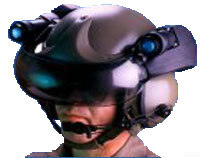
    Helmet Display and Sight technologies developed by Elbit Systems has become a necessity in modern air warfare. With over 5,500 systems delivered to customers worldwide, Elbit is now positioned as the world leader in this market.

    DASH was the company’s first integrated helmet mounted display and sight system, already operating with over 500 aircraft such as F-15, F-18, F-5 and MiG-21. DASH is measuring the pilot’s line of sight (LOS), slaving missiles and sensors to the target, DASH also brings displays to the pilot’s eye-level and informs the pilot of target location, while integrating all modes of operation with Hands On Throttle And Stick (HOTAS) controls.

    Elbit Systems’ fixed wing Helmet Mounted Display (HMD) technology provides the basis for the U.S. Joint Helmet Mounted Cueing System (JHMCS) program. Through the joint venture with Kaiser Electronics, Vision Systems International Inc (VSI) is equipping all frontline U.S. fighters (F-16, F/A-18, F-15 and F-22) with the advanced helmet mounted display and sight. Additionally, VSI was selected by Lockheed Martin Aeronautics Company to be its HMD source for the Joint Strike Fighter (JSF).

    For helicopter pilots, Elbit offers several HMD Systems. Following its recent purchase of the IHADSS (helmet sights used with AH-64 Apache attack helicopter) line of business from Honeywell, Elbit Systems has established a substantial position in the Attack Rotorcraft HMD market.

    ANVIS/HUD is used extensively with utility rotorcraft platforms enabling head-out flight by displaying critical flight information collimated with the outside world on the pilot’s NVG.

    MiDASH (Modular Integrated Display And Sight Helmet) allows helicopter pilots to fly head out day and night while receiving flight mission information and weapon targeting symbology using the pilot’s line of sight tracking system.

    HeliDASH, a modular day/night HMD provides attack, assault and utility helicopter pilots with wide fields of view (FOV), see-through binocular night imagery, flight information and LOS cueing for day and night operation.

    Skunk Works and XTEND Simplify Multi-Drone Command

    0
    Lockheed Martin Skunk Works® and XTEND have achieved a major milestone in JADC2 by integrating the XOS operating system with the MDCX™ autonomy platform. This technical breakthrough enables a single operator to simultaneously command multiple drone classes, eliminating the friction of mission handoffs. From "marsupial" drone deployments to operating in GPS-denied environments, explore how this collaboration is abbreviating the data-to-decision timeline and redefining autonomous mission execution.

    From Ukraine to Taiwan: The Global Race to Dominate the New Defense Tech Frontier

    0
    As traditional defense primes face mounting competition from agile “neoprimes” such as Anduril, Palantir and Helsing, the balance of innovation is shifting toward software-defined warfare and scalable, dual-use technologies, while global industry consolidation—marked by Boeing’s integration of Spirit AeroSystems and other strategic mergers—signals an intensified race to secure control over the defense technology value chain. Our Defense-Tech weekly report highlights these trends.

    Europe’s “Drone Wall”

    0
    In early October 2025, a coordinated wave of unmanned aerial system (UAS) incursions—widely attributed to Russia—targeted critical infrastructure across at least ten European nations. The unprecedented campaign exposed the fragility of Europe’s air defenses...

    Weekly Defense Update & Global Security Assessment

    0
    Executive Summary The past week (September 18-25, 2025) represents an inflection point where strategic defense concepts have transitioned from doctrine to tangible reality. An analysis of global events reveals four primary, interconnected trends shaping an...

    U.S. Air and Space Forces Push Next-Gen Programs at the AS&C 2025 Conference and...

    0
    At the 2025 Air, Space & Cyber Conference, U.S. Air Force and Space Force leaders unveiled major updates on next-generation fighters, bombers, unmanned systems, and space initiatives, highlighting both rapid innovation and critical readiness challenges as the services race to outpace global competitors. A short version is available here, with a more detailed version for subscribers.

    TADTE 2025: Reflecting Taiwan’s Strategic Themes

    0
    The Taipei Aerospace & Defense Technology Exhibition (TADTE) 2025 crystallized around four dominant strategic themes that collectively illustrate Taiwan's comprehensive approach to defense modernization amid escalating regional tensions. Based on a detailed report by Pleronix (available upon request). Includes a Podcast discussion on TADTE 2025's highlighting Taiwan's four strategic themes beyond the post's coverage.

    Iron Beam 450 Completes Testing, Soon to Join With Operational Air Defense Units

    0
    Israel’s Iron Beam 450 high-power laser system has completed final testing, marking a major leap in air defense. Developed by Rafael, it offers precise, cost-effective interception of rockets, UAVs, and mortars, and is set for IDF deployment by 2025.