Tuesday, December 23, 2025
More
    Home Blog Page 411

    ITV-1

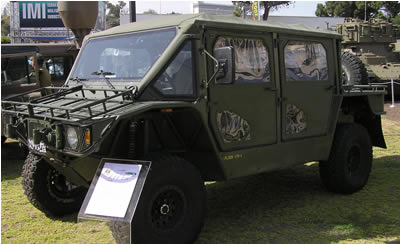
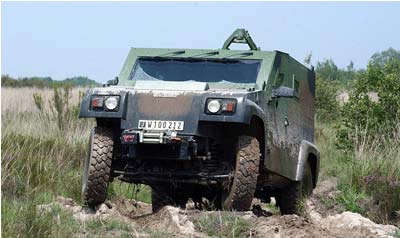
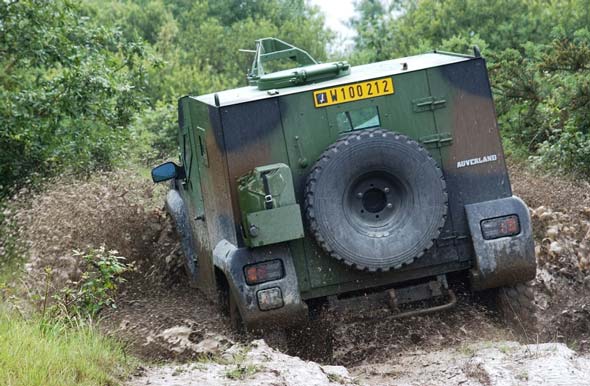
    Flyer Defense ITV-1 all terrain vehicle has been deployed with the US Special Forces and the Singapore Army. The vehicle which is currently under production in Singapore, (known there as LCV) is designed to provide high tactical mobility for light forces. The ITV-1 weighs only 1,700 kg and can carry up to two tons of loads, (including five to seven fully equipped troops and over one ton of extra load, which can also comprise of a protection suite).

    The vehicle offers excellent mobility and high flexibility in modeling, to suite customer requirements. The lightweight platform can be lifted internally in a C-130 or V-22 or sling loaded under a heavy lift helicopter. Two ITVs can be stacked together in an airlift, a load configuration which can be utilized for rapid deployment of Special Forces. The company is currently developing a similar vehicle for the Marine Corps Internally Loaded Vehicle program. The Flyer ITV may also be configured with add-on armor and still be internally transported in the new Special Operations aircraft, the V-22 Osprey.

    In May 2006 Ceradyne and Flyer Defense announced the cooperation and teaming for the development of an armored cab for the ITV made of FlexKit ceramic armor system. Ceradyne is displaying the kit at the Special Operations Command Exhibition next month in Tampa, Florida.

    Ceramic Armor Materials

    Start < Page 3 of 5 >

    Current design trends indicate wider use of ceramics, for vehicle armoring as they lower the overall weight, while enhancing abilities to defeat ballistic threats. Composite ceramics can be used in layered formations, matrixes of different materials or monolithic elements. Typical materials used for this application are Alumina, silicon carbide (SiC), boron carbide (B4C) and titanium carbide and titanium diboride, these are lighter than most metals, including titanium, by a factor of 2 – 3. While monolithic ceramic elements can be used, most vehicle protection applications are utilizing composites of several materials, which offer improved endurance tenacity, imperative for advanced protection and survivability.

    The physical properties of ceramic materials have been recognized for many years. However, manufacturing techniques limited their utilization to relatively small parts and simple shapes. Recent advances in manufacturing process offer lower cost production techniques of larger, more complex structures. Some of these cutting edge procedures are also employing exotic technologies which dramatically improve the physical characteristics of the end product. Among these are the Fibrous Monoliths (FM) and Displacive Compensation of Porosity (DCP) ceramic materials manufacturing technologies, the use of nanoparticles in raw material powders and coating, and deposition new concepts for treatments of metallic structures – such as metal matrix composites (MMC), and liquidmetal.

    Additional parts of this article:

    Macro-Composite Protection System (MAPS)

    The Macro-Composite Protection System (MAPS) armor, developed by Lockheed Martin provides protection against multiple hits of armor-piercing rifle bullets and high-speed fragments from improvised explosive devices (IEDs). Other applications to be pursued by MAPS’ developers include protection against hand grenades, mines and other battlefield threats.

    MAPS is designed as an “armor-as-a-system”, developed in an attempt to counter several threat effects often encountered in today’s urban tactical environments, such as a bomb blast followed by a swarm of projectiles or armor-piercing sniper fire. MAPS armor is made out of a Lockheed Martin-developed macro-composite material encased in shock-absorbing polymers with a metallic strike face and spall plate. In recent testing, MAPS successfully stopped four successive shots of 7.62mm armor-piercing bullets striking at high velocity within a four-inch diameter circle.

    According to David Hunn, director – Mechanical Engineering at Lockheed Martin Missiles and Fire Control, “MAPS armor promises to provide an entirely new level of vehicle and personal protection to our forces that could save lives. And it should prove much less expensive than current ceramic armors once in production.” The new material is undergoing ballistic testing and has successfully shown protection against realistic armor piercing and fragmentation threats with no penetration, at a weight approximately 50 percent less than its equivalent in steel armor protection. Typical composites weigh about 60% of an equivalent steel armor. MAPS armor samples have already been delivered to U.S. armed services for independent testing. Results of those tests should be available later this year.

    Future Force Warrior (FFW) Technology Demonstration

    U.S. Army Natick Soldier CenterLead integrator: General Dynamics C4

    According to Carol Fitzgerald, program manager for the FFW Advanced Technology Demonstration, FFW is spiraling mature components to enhance the Program Executive Office Soldier’s Land Warrior system, designed for Stryker and current force interoperability.

    “FFW will transition to the PEO Soldier in fiscal year 2008 to support the Army Requirements Oversight Council-approved Ground Soldier System – the next version of Land Warrior, which supports Future Combat Systems and future force interoperability,” she said.


    FFW Systems participated in the experimentation of the C4ISR On-the-Move (OTM) program, run by the U.S. Army Communications – Electronics Research, Development and Engineering Center (CERDEC) leveraging an important Army field experimentation venue to assess multiple developmental technologies addressing future force network integration, including FFW.

    “The primary objective for FFW in this year’s C4ISR OTM event was to demonstrate and confirm Soldier/SCU interoperability with the Army’s Future Force communication network and the integration of the Soldier Radio Waveform into our FFW system.” says Fitzgerald “We were able to accomplish this goal, while also running our system alongside the Future Force prototype and surrogate systems, fully integrated into the battle network of the exercise. This network interoperability allows soldiers to transmit voice and data, both with each other and with other units, greatly enhancing the situational awareness and combat effectiveness of our soldiers at a time when it is most needed.”

    “FFW participation in this major Army experimentation venue helps the Future Combat Systems program address their risks of dismounted Soldier integration into FCS,” said Fitzgerald. “The FFW ATD is scheduled to conclude at the end of 2007, with participation in C4ISR OTM 07 and Air Assault Expeditionary Force/Spiral D serving as the culminating events.”

    At the C4ISR OTM held in August 2006 at Ft. Dix, the FFW program successfully demonstrated network interoperability of the Soldier/small combat unit with the future force network. The FFW Technology Program Office delivered early prototypes of the “Increment 2” design, enabling risk reduction of the system that will continue to be enhanced throughout the remainder of the program.

    The FFW Increment 1 capabilities demonstrated included: Small Combat Unit integration into the future force network via the Soldier Radio Waveform; demonstration of the Soldier Protective Individual Equipment System, an advanced body armor and load carriage system; demonstration of cooperative engagement/networked fires using digital target handoff and Non Line of Sight fire; demonstration of headgear thermal and Image-Intensification sensor fusion; demonstration of system voice control; and simulation of physiological status monitoring.

    FFW Subsystems Demonstrated
    As part of the test, the FFW lethality system was tested, utilizing a modified XM-104 fire control system that allows the SCU to conduct a “cooperative engagement” by sending target information from other soldiers to the grenadiers in near-real time and by using this information to ensure accurate aiming of the weapon. Also demonstrated was the FFW integrated combat ensemble, integrating the LW computer, navigation, power and soldier controls along with multiple software applications critical to advancing combat effectiveness. The combat ensemble also includes the new FFW integrated headgear system, which provides ballistic protection, integrated communications, sensor fusion and an advanced drop down eyepiece display providing the soldiers with maps, soldier and enemy positions, targets, mission plans and memory joggers.

    Continued Development Outlined
    FFW early Increment 2 capabilities were also demonstrated at the OTM program. These included: demonstration of Leader level Command and Control via FalconView (leveraged from the Air Force), system voice control, integrated Class I Unmanned Aerial Vehicle imagery, look-down display integrated into combat goggles, and advanced power management devices to extend mission duration; demonstration of Soldier level Situational Awareness leveraged from CERDEC’s Command and Control Mobile Intelligent Net-Centric Computing System program; Warrior Physiological Status Monitoring; and deeper integration of electronics into the FFW combat ensemble. Increment 2 is now underway with continued integration of advanced Soldier/SCU capabilities and will be demonstrated via combat exercises at the Air Assault Expeditionary Force (AAEF) Spiral C venue at Ft. Benning, Ga., this fall.

    LEKTROX Non-Lethal Wireless Electro-Muscular Disruption Technology (W-EMDT) Ammunition

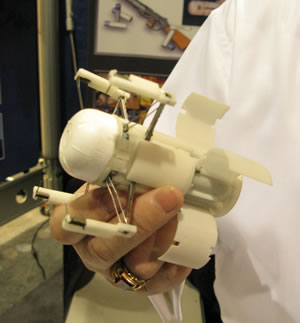
    The patent-pending LEKTROX family of Wireless Electric Bullets is currently at the final stages of development before production. Each LEKTROX munition is fitted with built-in Wireless Electro-Muscular Disruption Technology (W-EMDT) that incapacitates the target instantly without causing serious injury or lethality. LEKTROX is promissing to provide supperior range and will be compatible with standard firearms, offering security and military forces non-lethal options currently unavailable with specialized weapons. R&D is being conducted in Israel by Elad Engineering Ltd. The developments was supported wireless and medical experts from Israel.


    The weapon has been proved effective up to a range of 60 yards. The company expects that the LEKTROX 37/38mm and 40mm Wireless Electric Bullets will be ready in early 2007, with a 12-guage version available later in the year. LEXTOR is evolved from patented systems developed by Israeli-based Elad Engineering, and is supported by scientific and medical know-how.

    When contact occurs, LEKTROX transfers kinetic energy to release its Multiple Mini-Harpoon mechanism and activate its built-in electrical system. These mini-harpoons fix the bullet irremovably to the target while it releases a W-EMDT charge that imitates the body’s own electro-neural impulses. Sending control signals to the muscles, a high voltage low current pulse safely overrides the target’s nervous system inducing a harmless muscle spasm that causes them to fall helplessly to the ground. To deliver enhanced target protection, the LEKTROX electric output has been designed in line with stringent medical equipment standards that protect patients from permanent injury, and operates at lower than critical cardio-fibrillation levels. Enabling full recovery with no clinical after effects, LEKTROX helps decreases liability for wrongful injury or death. Additional mechanisms and the use of collapsible materials further reduce the projectile’s kinetic energy.

    SDI’s new ammunition incorporates a number of patent-pending W-EMDT and advanced engineering solutions, employed to ensure effectiveness and safety of the new ammunition against potential targets. According to SDI, LEKTROX ammunition remains safe during all stages of storage, transportation, handling and loading, by keeping it locked in safe mode until it is activated by contact with the target.

    The LEKTROX ammunition is currently undergoing evaluation with military and law enforcement forces in the U.S. and elsewhere, anticipating a procurement decision in 2010.

    HoverEye VTOL Mini-UAV

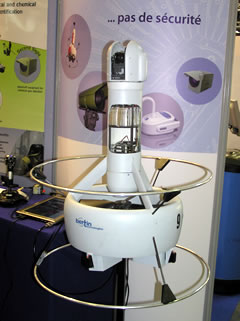
    The Hovereye family of VTOL UAVs includes two platform configurations – light and heavy versions. The 0.5 m diameter, 70 cm high “HEasy” model is the light (4.0kg) vehicle, carrying a payload weight of 0.3 kg on a 10 minute mission, up to a distance of 1,000 meters (limited to 500 meters without line of sight). It is capable of flying at wind speed of 20 km/h.

    The heavier (10 kg) vehicle measuring 70 cm in diameter and 110 cm high, is capable of carrying a 1.0 kg payload on a 20 minute sortie, up to a range of 5 km (1 km beyond line of sight) withstanding winds up to 30 knots. Both platforms use electric propulsion.

    Hovereye support various automatic and semi-automatic flight modes, auto-pilot, including auto-hovering and obstacle avoidance. The system is equipped with day/night imaging sensors as well as mission specific payloads, such as bio-chemical sniffers, communications gear and IED detection sensors.

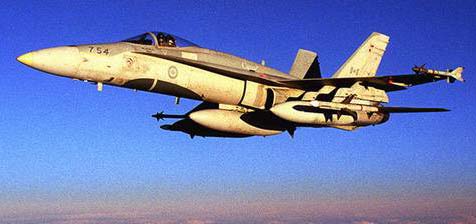
    CF-18 Hornet Modernization

    The Canadian Air Force is modernizing 80 CF-18 Hornets fighter aircraft. The program, conducted by Boeing International is pursued in two phases. In August 2006 Boeing completed phase I with the delivery of the 80th aircraft.


    Phase I is considered the cornerstone CF-18 modernization project, providing the fleet with secure communications interoperability. The aircraft were equipped with an improved radar, compatible with air/air AMRAAM missiles, HAVE-QUICK jam-resistant radios, a combined interrogator-transponder (IFF), stores management systems, mission computers, and embedded global positioning and inertial navigation systems (GPS/INS). Phase I modernizations are enabling Canadian Hornets to become fully interoperable with coalition forces.

    Phase II began prototype modification in January 2006. This package will outfit baseline CF-18s Phase I aircraft with Link 16 datalinks, provided by the US based Datalink Systems Company. The system will enable the aircraft to share information with other jets, ground stations and airborne warning and control systems (AWACS). Information will be displayed on new colour display panels, providing pilots with improved access to flight data and communications.

    The pilots will gain improved situational awareness by large color multifunction displays and helmet mounted cueing and sight system (JHMCS). First flights in Canadian F/A-18s are scheduled for September 2006.  A new ejection seat will be installed, in support of the new helmet display system. The aircraft will also be outfitted with a new missile countermeasures chaff/flare dispenser. Two prototypes are currently being modified at the Naval Air Warfare Center, in China Lake, California. Production is planned to begin in October 2006 at the L3 Communications MAS facilities in Mirabel, Quebec.

    To date the program consumed about C$2.3-billion. It is scheduled to span over eight years.

    AVL – Light Armored Multi-Purpose Vehicle

    A5 AVL offers a compact, lightweight armored command vehicle and transporter fitted with steel and aluminum armored hull providing STANAG 4569 Level 2 protection comprising of high hardness plates with exterior aluminum metal sheets panels. The vehicle is protected against small arms fire, splinters and anti-personnel mines and run-flat tire utilizing Hutchinson’s VFI inserts. Optional Level 3 protection is also available. The vehicle is equipped with an Iveco turbo diesel engine developing 167 HP at 3,500 RPM (410 Nm torque at 1,250 RPM). AVL has a gross total weight of 7 tons, carrying a payload of 2.23 tons.

    The French Army is buying 900 ALV vehicles and could extend the procurement to 1500. The German Army is buying the Gavial, a special configuration of the AVL fitted with Iveco 8140.43N Turbo diesel-pneumatic suspension which can lower the height of the vehicle for transport in a CH-53 helicopter. The vehicle can also be transported in the C-130, C-160 and A-400 transport aircraft. Gavial is produced under cooperation between Rheinmetall Landsysteme and Panhard General Defense. In the configuration preferred by the German Army, Gavial will be equipped with the WS 609L weapon Station, coproduced by Rheinmetall and Kongsberg.

    Artemis – Passive Staring Infrared Search Track (IRST)

    Thales at Euronaval 2006 two members of a new family of staring, passive infra-red search and track (IRST) sensors designed for the Anti-Air Warfare frigates of the new generation.

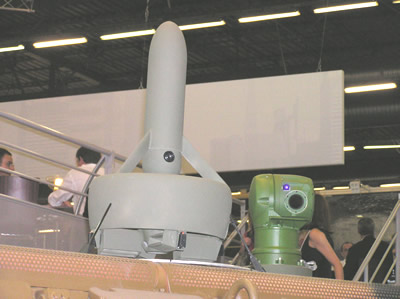
    The systems include Artemis Medium Wave Infrared (MWIR) and Gatekeeper, Long Wave Infrared (LWIR) staring sensor arrays, designed to improve situational awareness obtained by the surface combatants, in anti-air, missile defense and anti-submarine warfare. Unlike traditional IRSTs (Infra-Red Search & Track), which mechanically scan through 360°, the system utilizes multiple static (staring) sensor heads incorporating large IR focal plane arrays, an advanced optical design and dedicated processing algorithms on COTS processing hardware to provide enhanced ship self-protection, particularly in the littoral environment.

    Armaris, the prime contractor of the Franco-Italian multi-role frigate (FREMM) program contracted Thales to equip the ARTEMIS with the 17 FREMMs to be produced for the French Navy. The systems are integrated and complement existing sensor suites, such as radar and ESM, and are fully interoperable with on-board electronic warfare and self protection systems to provide a balanced sensor suite.

    APLET – Tactical Engagement Planning Tool

    APLET is a tactical engagement planning tool intended for integration in French Army motorized and armored brigades. APLET is interoperable with the French Forces’ SICF C3 system.

    The system assists the Brigade commander and his staff in the decision process, providing automated simulation tools including precise definition and examination of operational requirements, and rapid simulation and modeling of operational plans. The system simulates the operations and structure of French Army Battalions, and enables the Brigade staff to simulate a 24 hour operation over an accelerated time period (around 10 minutes).

    Version 2 of the system was delivered to the French DGA in February 2006 for trials. The operational version (APLET V.3) will become operational with French Army brigades. The system will also be integrated into the Technical-Operational Laboratory (LTO) Battlelab for use in doctrine analysis and evaluation of new equipment, and deploy as part of the Franco-US joint “C4ISR on the move” trials.

    Infantry Combat Suits – Survivability & Protection

    Start < Page 2 of 5 >

    The soldier’s survivability can be improved with superior bullet-proof ballistic protection, mobility and firepower, employed at extended standoff range. Modern, light weight body armor and helmets are currently available, offering more protection against multiple hits from small arms and shrapnel.

    Helmets constructed from advanced bullet proof composite materials have become much lighter and offer improved protection and comfort. Advanced features include integrated headgear such as osteo-phone, helmet mounted displays and vision systems. As head mounted gear becomes lighter, more instruments are placed on the helmet, offering unrestricted hemispherical view for visual sensors, GPS receivers and RF (radio) communications. While helmet mounted electronics require power, which ads significant weight to the headgear. Use of system miniaturization, power management and wireless networking (Bluetooth) enables designers to optimally distribute weight on the helmet and upper body adding to the wearer’s personal comfort.


    Modern body armor is designed as flexible mission adaptable suit. The flexible vest is relatively lightweight, made of composite bullet proof materials such as the Kevlar body armor, providing basic protection from shrapnel and low-speed small-arms threats, to the upper body. The vest is fitted with pockets where inserts made of harder, heavier ceramic materials can be inserted as armor tiles. These inserts provide higher levels of protection, as required by the expected threat level. (7.62AP, 9mm etc). Apart from protection, ergonomics present significant factors in bulletproof vest design. The bullet-proof vest adds substantial weight to the soldier’s load.

    A vital element in the soldier’s survivability is camouflage. Uniform design patterns are currently designed to merge with various environments. Offered in basic families of European, Arctic (snow), desert and urban designs, camouflage patterns enable effective blending with surrounding environments. Camouflage suits are also provided for snipers and special-forces requiring higher performance. As operations are shifting to night time, patterns must match requirements for night combat maintaining effective camouflage in darkness, under visibility by Imaging Infrared or thermal equipment. Signature reduction is also considered essential for concealment of body heat, as it is viewed by thermal sensors and sights.

    Due to technological limitations, dedicated protection suits are developed and used for specific operational conditions. For example, add-on Chemical Bacteriological Radiological (CBR) protection suits are worn when potential threats are expected. These suits considerably limit the soldier’s mobility and comfort and are only used temporarily. Ballistic shields and bullet proof vests are common add-on elements to infantry suits; however, they are not yet integrated with load bearing vests (combat webbing) due to ergonomic, logistical and cost considerations. While such integration is technologically feasible and could save some weight, it turns the load bearing vest from a relatively simple lightweight textile product into a composite-made protection system with a proportional price tag.

    Additional parts of this article:

    Power Sources and Batteries for Hybrid Electric Drive (HED) Vehicles

    Start < Page 6 of 6 >

    While the electrical and mechanical components of hybrid vehicles are reasonably mature, the main obstacle for full Hybrid Electric Drive (HED) maturation with the military are the batteries. The main drawbacks of current batteries are their sensitivity to extreme environmental conditions (heat, freeze, humidity). To prevent freezing the batteries are contained in an environmental chamber, which maintains the temperature at operational conditions. This method enables the vehicle to operate from -40C to +65C degree temperature range.


    Battery cost is another aspect causing slow adaptation of HED. Current designs are using lead-acid, which are widely available and lower-cost batteries. Nickel Metal Hydride (NiMH) batteries provide twice the energy storage of lead-acid, but only half the power surge, therefore, they can drive a vehicle twice as far but not as fast. Lithium-Ion cells are delivering the highest performance but their cost is still prohibitive for mass-production. Fuel cells are also considered, but such technology is still far from maturation for large scale applications.

    Lithium-ion batteries would give a vehicle four times the energy capacity with power density equal to lead acid. They could also power a command and control shelter for 12 hours. The cost of such batteries is still too high and current battery research is examining issues such as the cost of raw materials, materials processing, cell packaging, and module packaging in an effort to make the process more economical. R&D is also addressing lithium-based battery performance limitations, which include the reduction in discharge pulse power at low temperatures and the loss of power over time. Lithium Technology Corporation and T/J Technologies are developing such large format rechargeable Lithium batteries, under a $5.1M U.S. Army TACOM Life Cycle Management Command contract.

    Another aspect of the new hybrid and electrically powered vehicles will be the power management. Although these vehicles will pack significantly more power than current vehicles, they will also consume more power – by employing more sensors, radios, computers, active suspension systems, electric gun turrets, nuclear/biological/chemical protective systems and other mission equipment. Future vehicles could also mount electrical armor protection, which will significantly increase power demands. These future vehicles will require an automatic load management, matching power demands with resources, drawing available power from generators, batteries and other sources.

    HED Providing Mobile Power

    The use of HED powered vehicles in power generation role is evaluated by the ONR under a 3 year program focusing on 20, 30, and 60 kW power generation provided by modified Humvee and MTVR vehicles. The biggest generator typically towed by a Humvee provides 15 kW. In contrast, the hybrid Humvee demonstrator can produce 75 kW. When supplemented by common lead-acid batteries the vehicle can provide 500 to 600 kW. This capacity opens new opportunities for the employment of power-hungry weapon systems – such as a mobile solid-state 100 kW laser currently under development. Another program will evaluate the RST-V capability to convert as a 60 kW mobile power generator, thus reducing battlefield logistical tail.

    Additional parts of this article:


    Hybrid Electric Vehicles (HED) Powered Trucks

    Start < Page 4 of 6 >

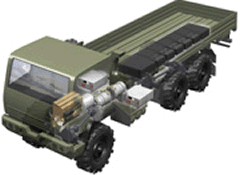
    Among the leaders in Serial Hybrid truck application is Oshkosh Truck Corp., which implemented the design in its new Heavy Expanded Mobility Tactical Truck (HEMTT) A3 third-generation prototype. HEMTT A3 unveiled in February 2005 was the first production-ready tactical defense vehicle to feature a diesel-electric drive system known as ProPulse Hybrid Electric Drive system. The same technology is implemented in the FMTV versions proposed by Oshkosh for the US Army.

    The prototype HEMTT A3 is also equipped with an enhanced load handling system, an independent suspension and collision avoidance system. According to Oshkosh, all the technologies used for the prototype are matured and once approved for production, the vehicle roll out of the assembly lines is scheduled within two years.

    Oshkosh uses a proprietary technology called ProPulse, which uses a diesel engine to power a large electric generator, which provides direct power to the wheels, eliminating the torque converter, automatic transmission, transfer case, and drive shafts. The system has no batteries, using ultracapacitors for energy storage instead. Designed for service life of 10 – 20 years, the ultracapacitors are less sensitive to extreme cold than batteries. A regenerative braking function stores engine energy and then uses it to assist in the next braking operation, reducing wear and tear on the brake system. According to Oshkosh, this mechanism increases fuel economy by up to 20 percent over conventional power trains.

    When stationary, the HEMTT A3 becomes a power station, generating 200 kW of exportable power with the current 450 hp engine. If uprated to a 505 hp engine, it could generate 400 kW. The vehicle is 3,000 pounds lighter than its predecessor while maintaining a 13-ton payload capacity and improving reliability through the use of lightweight, high-strength materials. This allows the new truck to carry cargo while in transit on a C-130 aircraft, a first for the HEMTT line. An integral armored cab can field-installed in less than eight hours allowing commanders to respond to changing threat levels rapidly.

    Several companies are competing for a future Army program to demonstrate “plug-in” version of the US Army FMTV truck. BAE Systems built a two-wheel drive hybrid FMTV truck, under contract to the FMTV manufacturer Stewart and Stevenson back in 1999. BAE also developed a six-wheel-drive hybrid prototype as part of a technology demonstration under the FCS program. This truck already demonstrated improved fuel economy, compared to conventionally driven FMTV truck. The vehicle can also produce 200 kW of continuous exportable power.

    A future replacement for today’s military trucks could be the Future Tactical Truck System (FTTS), Advanced Concept Technology Demonstration (ACTD) managed by The National Automotive Center (NAC), which reports to the Army Tank-Automotive and Armaments Command. NAC is sponsoring demonstrations for light, medium (utility) and heavy (maneuver sustainment) hybrid-electric trucks and specific technology developments for motor, generator, and energy storage and power control technologies.

    The British MOD is also looking at the potential benefits of HED, under a program led by QinetiQ. The British HED 6×6 demonstrator vehicle will incorporate a serial HED system employing ‘in-hub’ electric drive systems. The QinetiQ team includes Magnetic Systems Technology, Multidrive and BAE Systems Land Systems (formerly Vickers Defence Systems).

    Additional parts of this article:

    Plug-in Hybrid Electric Vehicles (HED) the Humvee example

    Start < Page 3 of 6 >

    The US Army is testing several versions of HED powered AM General Humvee. Some are configures similar toi commercial hybrid vehicles, while others feature more advanced ‘electrical propulsion’ capability.

    Hybrid Humvees recently went through field testing with the 101st Airborne Division (Air Assault) at Ft. Campbell, Ky. where they were using hybrid (diesel and electrical) power in convoy movements and driven in “stealth” mode on battery power only, for distances of 10km. Further testing is planned for November 2005 at Ft. Benning, Ga, as part of the Air Assault Expeditionary Force Experiment. While no procurement plans are in place yet, when matured, the US Army could use between 5,000 to 20,000 HED Humvees, used for tactical support applications such as command vehicles, air-defense and artillery.

    The vehicle uses a 2.2 liter diesel engine and a 75kW brushless DC generator to provide electric power for the wheel drive motors. The vehicle can also generate 10kW clean power from the battery. With engine on, up to 75kW continuous power can be provided, with peaks of up to 250kW.

    Two versions of HED are tested with the Humvee – with a four-motor drive and a two axel drive configurations. The four-motor configuration provides the highest possible performance, and excellent cross-country mobility, especially in sand and mud, because it enables the wheels to maintain optimal traction when the wheels are controlled individually, rather than going through a mechanical differential. The utility version uses two electrical motors powering the front and rear axels. This vehicle has better performance compared to a standard Humvee but not as good as the four-motor version. Some of the HED Humvees were built by DRS Technologies, using UQM Technologies permanent magnet motor/generator. A single 100kw generator is spun by the vehicle’s diesel engine and providing electric power to both propel the hybrid electric vehicle as well as to meet on-board stationary electric power requirements. The vehicle also incorporates two 100Kw UQM propulsion motors, one per axle. On-board electrical generation capacity is sufficient to power all electrically based weapons, as well as operate adjacent facilities such as field hospitals, telecommunications centers, auxiliary radar equipment etc. This design has demonstrated fuel efficiency improvement in excess of 30%, depending on the vehicle driving cycle.

    The four-motor Humvee can accelerate from 0 to 50 miles per hour in 7 seconds, compared to 15 to 16 seconds in a standard Humvee. A conventional Humvee can achieve a 60-percent grade at a speed of about 5.5 miles per hour, while the hybrid can take it at 17 miles per hour. A standard Humvee gets eight miles per gallon driving on hard surface roads at convoy speeds, a hybrid vehicle would get up to 16 miles per gallon. For quiet operations, the vehicle can operate with electric power only. It can run 20 to 25 miles on electric power before it has to be recharged. The 24 kilowatt-hour lead-acid battery pack delivers enough power for driving 20 to 25 mile distance.
    When matured, HED will be provided as a “plug-in kit” for standard Humvees, installed by the manufacturer on in Army depots. While the Army cancelled funding for HED Humvees production qualifications in fiscal years 2005 and 2006, the existing vehicles continue testing and evaluation by several US Army units.

    Additional parts of this article:

    Skunk Works and XTEND Simplify Multi-Drone Command

    0
    Lockheed Martin Skunk Works® and XTEND have achieved a major milestone in JADC2 by integrating the XOS operating system with the MDCX™ autonomy platform. This technical breakthrough enables a single operator to simultaneously command multiple drone classes, eliminating the friction of mission handoffs. From "marsupial" drone deployments to operating in GPS-denied environments, explore how this collaboration is abbreviating the data-to-decision timeline and redefining autonomous mission execution.

    From Ukraine to Taiwan: The Global Race to Dominate the New Defense Tech Frontier

    0
    As traditional defense primes face mounting competition from agile “neoprimes” such as Anduril, Palantir and Helsing, the balance of innovation is shifting toward software-defined warfare and scalable, dual-use technologies, while global industry consolidation—marked by Boeing’s integration of Spirit AeroSystems and other strategic mergers—signals an intensified race to secure control over the defense technology value chain. Our Defense-Tech weekly report highlights these trends.

    Europe’s “Drone Wall”

    0
    In early October 2025, a coordinated wave of unmanned aerial system (UAS) incursions—widely attributed to Russia—targeted critical infrastructure across at least ten European nations. The unprecedented campaign exposed the fragility of Europe’s air defenses...

    Weekly Defense Update & Global Security Assessment

    0
    Executive Summary The past week (September 18-25, 2025) represents an inflection point where strategic defense concepts have transitioned from doctrine to tangible reality. An analysis of global events reveals four primary, interconnected trends shaping an...

    U.S. Air and Space Forces Push Next-Gen Programs at the AS&C 2025 Conference and...

    0
    At the 2025 Air, Space & Cyber Conference, U.S. Air Force and Space Force leaders unveiled major updates on next-generation fighters, bombers, unmanned systems, and space initiatives, highlighting both rapid innovation and critical readiness challenges as the services race to outpace global competitors. A short version is available here, with a more detailed version for subscribers.

    TADTE 2025: Reflecting Taiwan’s Strategic Themes

    0
    The Taipei Aerospace & Defense Technology Exhibition (TADTE) 2025 crystallized around four dominant strategic themes that collectively illustrate Taiwan's comprehensive approach to defense modernization amid escalating regional tensions. Based on a detailed report by Pleronix (available upon request). Includes a Podcast discussion on TADTE 2025's highlighting Taiwan's four strategic themes beyond the post's coverage.

    Iron Beam 450 Completes Testing, Soon to Join With Operational Air Defense Units

    0
    Israel’s Iron Beam 450 high-power laser system has completed final testing, marking a major leap in air defense. Developed by Rafael, it offers precise, cost-effective interception of rockets, UAVs, and mortars, and is set for IDF deployment by 2025.