Rebel fighter holds an SA7 missile captured from Pro-Gaddafi arsenals in Benghazi. Photo: Asmaa Waguih, Reuters.
Rebel fighter holds an SA7 missile captured from Pro-Gaddafi arsenals in Benghazi. Photo: Asmaa Waguih, Reuters.
Libyan and American bomb disposal teams have secured thousands of shoulder-held man portable air defense missile systems (shoulder fired missiles) originally owned by the Libyan military, however, about 15,000 such missiles are still at large. While some are believed to have been destroyed by NATO bombings, the majority of weapons, considered extremely valuable by terrorist and criminal groups, are believed to have reached terrorists organizations in the region.
According to Andrew J. Shapiro, assistant secretary of state for political and military affairs, over 5,000 MANPADS (Man-Portable Air Defense Systems) were identified, disbanded and secured, and later were blown up at sea near the village of Sidi Bin Nur, east of Tripoli. Thousands more have been destroyed during NATO bombing, he added.
MANPADS missiles are considered a major threat when used by terrorists and during the collapse of the Libyan regime, many are believed to have reached terrorists groups in the region. Following the ending of the hostilities, the U.S. has sent a team of bomb disposal experts to seek, find and destroy such weapons before they fall into the wrong hands. This team has been working with Libyan groups for months. The numbers of MANPADS missiles owned by the Gadhafi ground and air forces is believed to be in the range of 20,000.
Securing and neutralizing conventional and unconventional weapon caches possessed by the Gaddafi regime are one of the main concerns of NATO after the end of the hostilities. While main weapon systems, such as tanks, armored personnel vehicles and artillery guns operated primarily by Gaddafi supporters were deliberately destroyed by NATO attacks through the months of the conflict, MANPADS, rockets and chemical warfare stockpiles maintained intact and mostly unaccounted for.
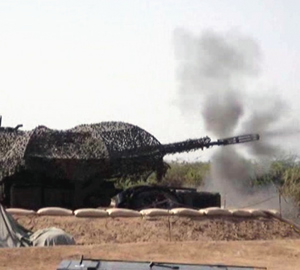
Pakistan operates a large number of Oerlikon 35mm air defense cannons. Photo via Pakistan Defense forum
Pakistan operates a large number of Oerlikon 35mm air defense cannons. Photo via Pakistan Defense forum
In a step further deteriorating relations between Pakistan and NATO, Islamabad announced today its air defense forces will shoot down any aircraft, manned or unmanned, penetrating its borders. Pakistan’s tougher stand regarding foreign operations within its airspace has changed dramatically after U.S. helicopters fired at Pakistani troops along the border with Afghanistan November 26, 2011, killing 24 soldiers. “Any object entering into our airspace, including US drones, will be treated as hostile and be shot down,” a senior unnamed Pakistani military official was quoted as saying by NBC News. Following the incident Pakistan has shut down all NATO supply routes crossing its borders and directed the U.S. to leave the Shamsi airfield in Balochistan operated by the CIA in support of drone attacks in the area. All US have left the base by Saturday December 10, Pakistani sources confirmed.
Following the air strike, army chief Gen Ashfaq Parvez Kayani issued a communique that gave troops in the field full liberty to respond to any future attacks without consulting their superiors. Kayani issued multiple directives since the November 26 attack, including orders to shoot down US drones, senior military officials said.
US sources confirmed that drones have performed over 300 attacks inside Pakistan in recent years, in pursuit of Al Qaeda and Taliban supporters. Pakistani air defense units have deployed along the Afghan border and upgraded their alert. These attacks culminated in 2011, with the attack on Osama Bin Laden hiding place in Abbottabad Pakistan that followed by an extensive campaign against suspected terror supporters and operatives in Pakistan north-west frontier – Waziristan.
The Pakistani Air Force maintains mixed assets of air defense from European and Chinese origin. AMong these are Chinese HQ-9 and HQ-2 (Chinese versions, roughly equivalents to S-300 and SA-2 ), Medium and short range missiles include the Crotale and Spada 2000. These air defense systems are normally deployed in defense of strategic sites like air bases, military ports and nuclear facilities. These sites are normally protected by air defense artillery, including Oerlikon GDF-005 35mm twin-cannons (partly enhanced with AHEAD systems) and Bofors 40mm guns.
Very Short Range Air defense (VSHORAD) assets are presumably the systems newly deployed in the Afghan border area, include various types of locally built SA-7 derivatives called Anza and French Mistral, both covering ranges up to six kilometers, as well as the U.S. Stinger and Swedish RBS-70 laser-beam-riding missiles effective at up to 8 km range. Given the autonomous nature of these systems, small teams operating the missiles can be deployed with many units throughout the area, to rapidly fill the perceived air defense capability gap.
While the US have faced VSHORAD missile threats by missiles obtained by Afghanistan’s Taliban, given early warning and potential threat of more sophisticated sensors and other air defense assets, including the Erieye Airborne Early Warning systems, JF-7 and F-16 air defense fighters, turning the airspace over Waziristan and Southern Afghanistan into a ‘contested access’ airspace for aircraft, helicopters and UAVs.
We are happy to announce the deployment of new and improved search service implemented across Defense-Update. Unlike the search we have used since our last upgrade in July, the new search indexes the entire site, including the ‘legacy’ pages of our past versions that were omitted from recent searches.
The new search engine is powered by Google Search, and employs sophisticated algorithms to retrieve the most relevant results. In the coming weeks we are planning to improve this service, adding refined search tabs reflecting the various channels and topics, bringing you even faster, ever more relevant results.
A new edition is image search, indexing all the images published by Defense Update since 2002. The first Images displayed are usually the most relevant.
Other improvements implemented recently include switching to new, more powerful server, optimized to deliver the content as quickly and efficiently as possible. Through these expansions we had to deactivate the server for few hours at a time.
We hope you’ll make use and benefit from the new and improved services
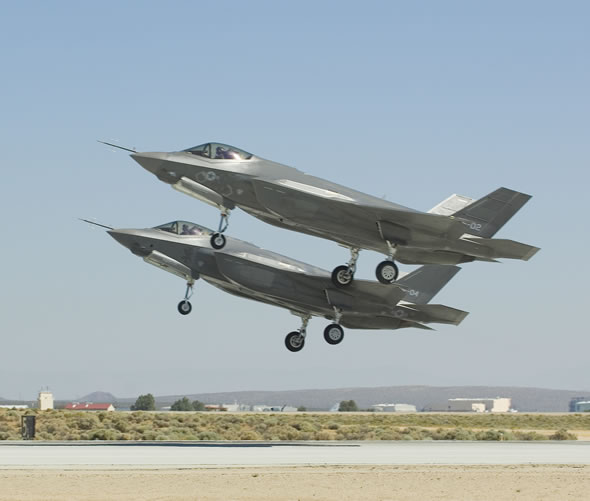
F-35 Formation Flight 'Touch and Go'. Photo: Lockheed Martin
F-35 Formation Flight 'Touch and Go'. Photo: Lockheed Martin
The US Department of Defense awarded Lockheed Martin four billion US$ for the procurement of 30 F-35s as part of the fifth F-35 Low Rate Initial Production batch. The Air Force will get 21 F-35As for US$2.644 billion ($126 million per aircraft), the Navy will pay $937 million to receive six F-35Cs (over $156 million per aircraft) and the Marine Corps will shelve 426 million to get 3 Short Take Off Vertical Landing (STOVL) F-35Bs at a cost of $142 million per aircraft.
The original LRIP V plan was for 47 aircraft but the Australians have pushed back their orders, with the Pentagon reducing the lot to 35 aircraft back in April 2011. The current level of 30 aircraft reflects a further of five aircraft, saving over $770 million to pay for cost overruns incurred through program delays and design changes. For the first time in the program, LRIP V represents a slow down in the F-35 production plan, compared to LRIP IV which included 32 aircraft.
According to Stephen Trimble at Flight Global the next LRIP-VI order, scheduled for award in few months, will also be slashed by more than half from the 80 aircraft originally planned only two years ago, to 38 aircraft.
Army Gen. Martin Dempsey, chairman of the Joint Chiefs of Staff, said today the F-35 may have to be stretched out. Apart from escalating costs pressure on the F-35 is also coming from Europe’s financial troubles that might undercut those partners on the eastern side of the Atlantic. The Air Force chief of staff, Gen. Norton Schwartz, said his service would do everything it can to protect the F-35, the Long Range Strike bomber and the KC-46 tanker program. “There are three programs which we will sustain, and that is the F-35 at an appropriate level, the new bomber will certainly begin development, and then we will bring the tanker on,” Schwartz said. (Navy Times)
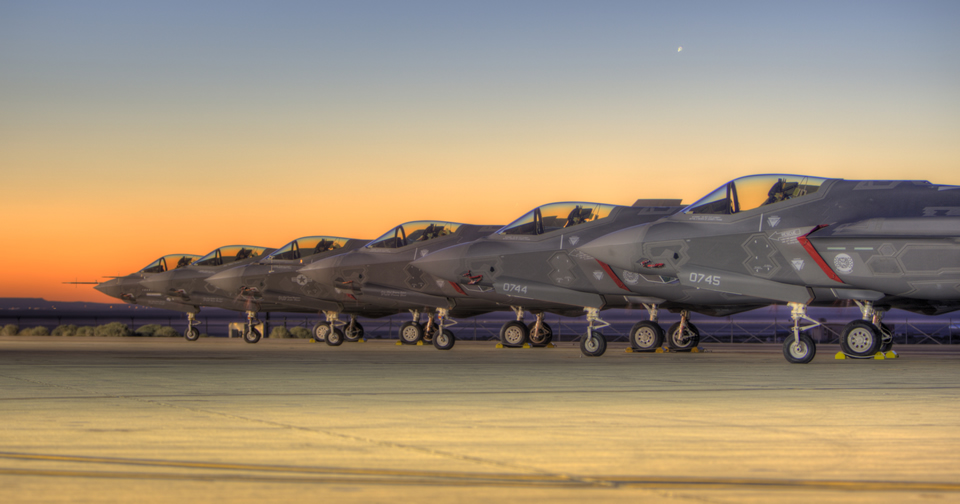
All six F-35s currently at Edwards AFB, Calif. for flight test: AF-1, AF-2, AF-3, AF-4, AF-6 and AF-7 Photo: Lockheed Martin
Russian Airborne Forces to Receive Austrian Sniper Rifles
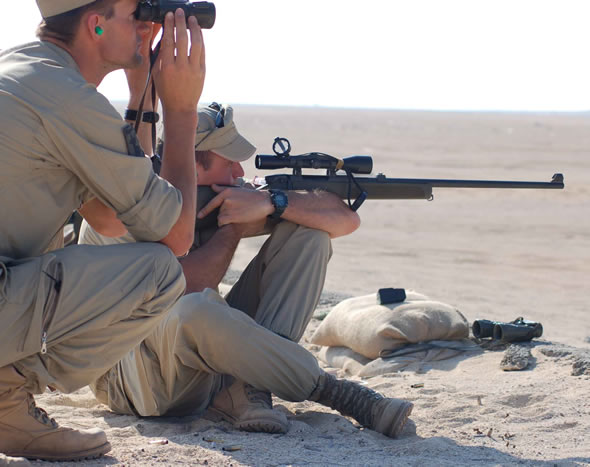
Austrian snipers train with the SSG69 rifle. Photo: Austrian Army
December 8, 2011: While Russian sniper rifles are well known for their accuracy and firepower, the airborne forces have taken an initial delivery of 30 Austrian-manufactured sniper rifles. The Novosti news agency assume these are the 7.62mm Steyr-Mannlicher SSG-69 rifles that have been adopted for service with Russia’s Airborne Forces special task units, Defense Ministry spokesman Col. Alexander Kucherenko said on Friday. These are the first foreign made rifles to be officially used by this branch of service. (Novosti)
Russian Military Spending to top $30 Billion in 2012
December 7, 2011: Russia plans a 17% increase in arms procurement next year, spending over 1 trillion rubles (US$30 billion) in 2012. According to Deputy Prime Minister Sergei Ivanov Russia will further increase spending over the next three years, reaching a total of 4 trillion rubles earmarked for military procurement by 2015.
IRKUT to Deliver 55 YAK-130 Trainers to the Russian Air Force
Yak-130
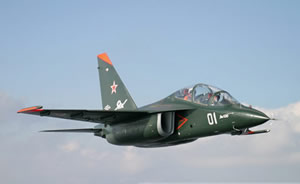
December 7, 2011:The Russian Ministry of defense awarded aircraft manufacturer IRKUT a production contract for supplying Yak-130 advanced trainers to the Russian Air Force. Under the contract, IRKUT Corporation will supply 55 Yak-130 aircraft to the Russian Air Force by 2015. The company was expecting orders for 65 aircraft. The new trainer is considered instrumental for the development of pilot skills for modern (4.5 – 5 generation) fighters including Su-30 and T-50.
Beriev Aircraft Company completes major overhaul of Indian Tu-142ME long haul ASW aircraft
Tu-142ME
December 5, 2011: Beriev Aircraft Company in Russia completed the overhaul and modernization of the first Indian Tupolev Tu-142ME long range anti-submarine warfare (ASW) aircraft. Eight aircraft were delivered to the Indian Navy in the late 1980s and are expected to remain in service until at least 2020, to be supported by Maintenance, Repair and Overhaul (MRO) services from Beriev.
Russian Navy to Add a Second Missile Cruiser after 2012
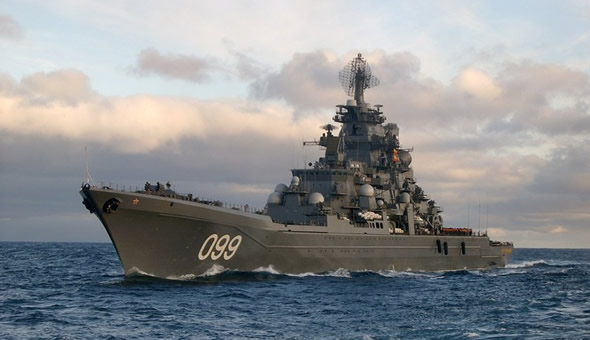
December 3, 2011: Russia plans to reactivate the mothballed missile cruiser Admiral Nakhimov (formerly the Kalinin) Kirov class nuclear powered missile cruiser. Beginning in 2012, the cruiser’s original SS-N-19 Shipwreck missiles will be replaced with modern P-800 Yakhont and new air defense missiles, based on the S-400 weapon system as well as a new point defense system.
The Russian Navy Plans to reactivate Admiral Nakhimov (formerly Kalinin), a second Kirov Class missile cruiser, in addition to the Pyotr Veliky currently in service with the Northern Fleet.
The cruiser was commissioned in 1988 and mothballed in 1999, docked at the Sevmash shipyard. The vessel has been undergoing repairs since 2005. Russia built four Kirov class nuclear-powered cruisers in 1974-1998. The Pyotr Veliky is still in active service as the flagship of the Northern Fleet. The other cruisers are Admiral Nakhimov, Admiral Lazarev and Admiral Ushakov. While all four were considered for reactivation by the year 2020, at present only the Admiral Nakhimov is undergoing the necessary upgrades.
Sevmash shipyard Expects New Orders for Seven Nuclear Submarines
Severodvinsk at the Sevmash shipyard
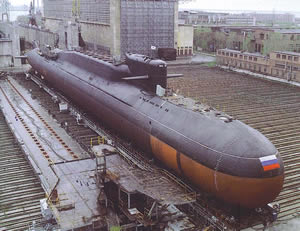
December 3, 2011: 2012 seems to be a year of change for the Sevmash shipyard in Severodvinsk, Russia. With the expected completion of some programs, the shipyard is awaiting seven new orders from the Russian Ministry of Defense, for the construction of five Graney M class nuclear powered attack submarines and two Borey A class ballistic missile submarines carrying the RSM-56 Bulava submarine launched ballistic missile.
Almaz-Antey Expand Production Facility to Meet Demand for S-500
While the induction of S-500 air defense missiles is delayed, developer Almaz-Antey concern is set to open two production facilities to prepare for full scale production in 30 months, Chief of the General Staff Gen. Nikolai Makarov said. The new missile will extend the defensive range beyond the current S-400 and S-300, reaching up to 600km and engaging up to 10 targets simultaneously, including ‘ballistic and hypersonic cruise missiles’. The Russian air defense forces plan to field at least ten S-500 battalions. First deliveries are likely to begin in 2017, while prototypes could be ready by 2015, the Russian Izvestia daily newspaper said.
BrahMos Successful in a Test in the Baltic Sea
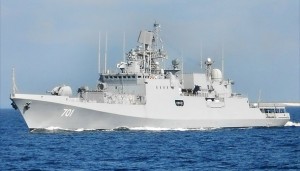
Project 11356 frigate undergoing sea trials. September 2011. Photo: yandex.ru
November 30, 2011: The BrahMos ship launched supersonic missile was tested successfully today in the Baltic Sea, fired from the Indian Navy Ship (INS) Teg, the first of three new 4,000 ton Project 11356 Talwar class frigates built for the Indian Navy by the Yantar shipyard in Kaliningrad. INS Teg, along with sister ship INS Tarkash, are scheduled for delivery to the Indian navy by April 2012 with the sixth Talwar class frigate Trikand to follow in early 2013. The BrahMos missile replaces the 3M-54E Klub-N anti-ship missiles carried by the first three ships of this class. The new frigates will also be equipped with a 100-mm gun, a Shtil air defense system, two Kashtan air defense gun/missile systems, two twin 533-mm torpedo tubes, and an anti-submarine warfare helicopter.
Russia Taps German Expertise to Train Brigade Combat Teams
Rheinmetall operates the main training facility for the Bundeswehr
November 24, 2011: The German Rheinmetall group will establish a large military training center in Mulino, in the Volga region in Russia, under a cooperation with the local company JSCo Oboronservis. The Russian partner will serve as general contractor and subsequently operate the facility on behalf of the Russian armed forces.
The center is expected to become operational in 2014, and will be able to train 30,000 troops a year. integrate simulative and live training. Combining real exercises with virtual training can save significant operating costs while improving training realism and quality. The Russian military expects the new training centre to pay for itself within the space of a few years.
The new facility will be modeled after a similar facility known as ‘Bundeswehr’s Gefechtsübungszentrum Heer’, or GÜZ Rheinmetall established for the German Army in 2001. In 2009 the company received a contract to construct a similar training center for an export customer in the Middle East.
For the Rheinmetall Group, this EUR 100 million contract represents a strategic move into the Russian market. The company expects more opportunities to unfold as the Russian military continue its modernization.
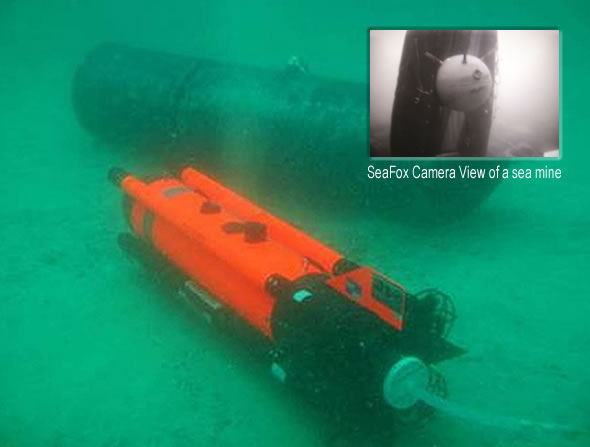
The SeaFox mine hunting system developed by Atlas Elektronik incorporates a remotely controlled surveillance system and autonomous ‘hunter’. The SeaFox I underwater surveillance vehicle is used for target identification and mine hunting. The system was employed recently to clear sea mines along the Libyan coast during the naval blockade on Libya.
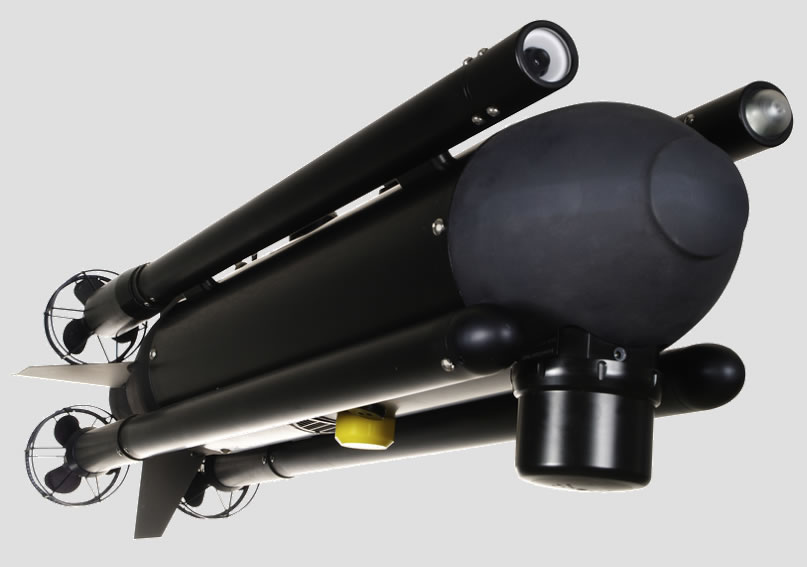
The ‘mobile SeaFox’ (SeaFox C), an expendable fiber-optic guided vehicle that autonomously guides itself to predesignated targets, destroying sea mines by activating a large shaped charge. The system can fit on any ship, with minimal configuration.
SeaFox C Sea Mine Hunter. Photo: Atlas Elektronik
SeaFox mine hunter in service with the Belgian Navy
This fibre-optic guided, one shot mine disposal vehicle SeaFox C is used for semi-autonomous disposal of naval mines and other ordnance found at sea. It is able to automatically relocate previously acquired positions of underwater objects within minutes with the integrated homing sonar. After relocating, these objects can be identified using the onboard CCTV camera and destroyed by the use of a built-in, large caliber shaped charge. SeaFox I is a reusable vehicle for identification and training in the application field of mine hunting. In this vehicle the SeaFox C warhead is replaced by ballast weight. It is deployable from a wide range of carrier platforms, including dedicated MCM vessels, surface combatants, craft of opportunity, rubber boats and helicopters. Ten navies have now decided to operate the SeaFox, making it the most successful mine disposal system in the world.
The US Department of Defense awarded Lockheed Martin four billion US$ for the procurement of 30 F-35s as part of the fifth F-35 Low Rate Initial Production (LRIP V) batch.
LRIP V represents a drop the F-35 production program, compared to LRIP IV which included 32 aircraft, including two export variants. The next production batch, LRIP VI is expected to introduce even deeper cuts, down from 80 to 38. (Defense-Update)
Elbit Systems, L3 seek New Business Opportunities in Canada
December 9, 2011: L-3 Electronic Systems (L-3 ES) and Elbit Systems Land and C4I (ESL Land) have announced a plan to establish local operations in Nova Scotia, Canada supporting future defense programs. If the team wins part of the the Canadian Tactical Armored Patrol Vehicle (TAPV) and/or and the Integrated Soldier System Program (ISSP) work share, the two companies will be working together as ‘Canterra Solutions’, a Nova Scotia based partnership. For these programs the team plans to produce ESL’s Dual Remote Weapon Station and Dominator soldier systems. (Otawa Citizen)
December 6, 2011: December 6, 2011: A recent technology demonstration conducted by the U.S. Air Force and Defense Information Systems Agency (DISA) validated the use of commercial off the shelf (COTS) aero-mobile low-profile Ka-band terminal over DOD Wideband Global Satcom (WGS) system. Test criteria included an airborne bi-directional video teleconferencing session while simultaneously running IP file transfer applications. (Defense-Update)
Fire Scout Demonstrates Support for Manned-Unmanned Naval Operations
December 5, 2011: After the U.S. Army demonstrated the use and advantages of collaboration between manned and unmanned platforms, The U.S. Navy has recently demonstrated how such operations can also enhance naval operations, relaying video images captured by an unmanned MQ-8B Fire Scout to the cockpit of an MH-60 SeaHawk helicopter. During the demonstration held in October 2011, crew members aboard a nearby U.S. Coast Guard boat also viewed Fire Scout’s sensor data in real time using a remote terminal. (Defense-Update)
December 5, 2011: The Naval Research Laboratory (NRL) successfully completed flight tests demonstrating how miniature, disposable aerial vehicles can be used to emplace covert sensors on the ground. The ‘Autonomous Deployment Demonstration’ (ADD) conducted in September 2011 at the Yuma Proving Grounds in Arizona spanned over a series of eight balloon-drops at altitudes of up to 57,000 ft, delivering an unmanned ‘mothership’ UAV carrying two Close-In Covert Autonomous Disposable Aircraft (CICADA) vehicles on sensor-emplacement missions. The sensors were deployed across a distance of 30 nautical miles (55km) dispersing to assigned locations within 3 meter (15 feet) of their intended landing locations. (Defense-Update)
Cooperative Engagement to Enhance Naval Anti-Air Capability
Raytheon to Continue Support Cooperative Engagement Raytheon Network Centric Systems has been awarded a $67 million contract modification to continue the modification of the Cooperative Engagement Capabilities (CEC) Program for the U.S. Navy. CEC is a sensor netting system that significantly improves battle force anti-air warfare capability, improving overall situational awareness, enabling longer range, cooperative, multiple, or layered engagement strategies. CEC provides this by extracting and distributing sensor-derived information such that the superset of this data is available to all participating CEC units.
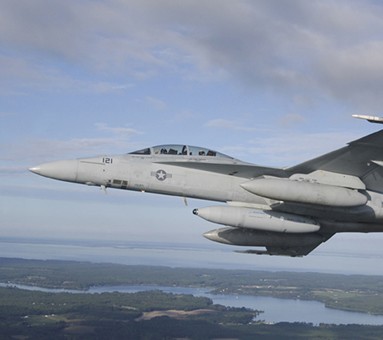
November 22, 2011 — Lockheed Martin will develop the Infrared Search and Track (IRST) sensor system for the U.S. Navy F/A-18E/F, enhancing the fighter plane’ air-to-air combat potential, providing a ‘first to see, first to strike’ capability. The IRST is a passive, long-range sensor that simultaneously tracks multiple targets over a large area and is unaffected by electronic attack or radar jamming. It works with the aircraft’s radar to enhance the overall weapon system performance, even in a jamming environment. The IRST system’s high-angle accuracy also provides the ability to track closely-spaced targets at maximum ranges. This information can be combined with other on-board sensor data or used alone to further enhance the pilot’s situational awareness. Boeing, the prime contractor for the F/A-18E/F IRST was awarded a $135 million contract for this program, scheduled to achieve Initial Operating Capability in 2016. Lockheed Martin is the subcontractor in the program, currently producing the Tiger Eyes IRST for the South Korean F-15K Slam Eagle. A similar system is in development with Boeing, for the U.S. Air Force F-15C. (Defense-Update)
Riverine Group Evaluates Using USVs in Littoral, Riverine Operations
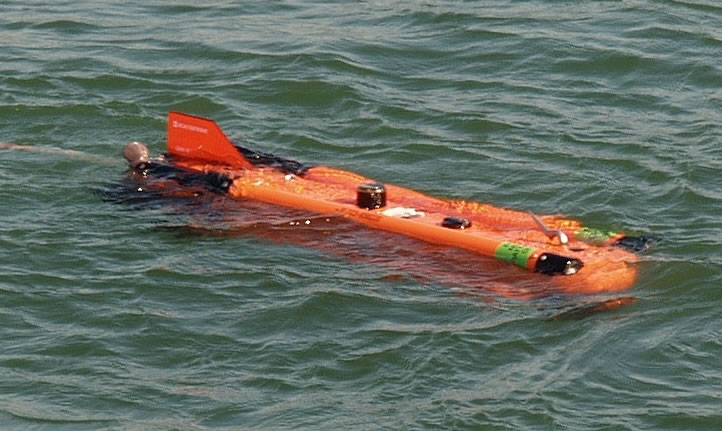
Three small unmanned surface vessels (USV) delivered last month for operational evaluation of unmanned vessels as part of littoral reconnaissance and surveillance tasks. Testing will be conducted by the Navy’s Riverine Group 1. The new assets are part of the Modular Unmanned Surface Craft Littoral (MUSCL) a small (X-class) USV designed to perform tedious, repetitive or dangerous surveillance tasks otherwise done by manned boats. The X-class boat is a two-man portable craft equipped with intelligence, surveillance, and reconnaissance (ISR) surveillance sensors and communications package providing real-time monitoring of suspicious vessels, personnel, and activity along waterways, shorelines, under bridges or piers. The units can be employed from Navy riverine assault or patrol boats.
Laying the keel for DDG1000 Zumwalt
November 17, 2011: The U.S. Navy laid the keel for its first Zumwalt-class destroyer (DDG 1000) at General Dynamics-Bath Iron Works shipyard in Bath, Maine. While significant modules of the vessel are already under construction since 209, the keel laying continues to symbolically recognize the joining of the ship’s components and the ceremonial beginning of the ship. Zumwalt is currently more than 60 percent complete and scheduled to deliver in fiscal year 2014. Construction on the second ship of the class, Michael Moonsoor (DDG 1001), began March 2010.
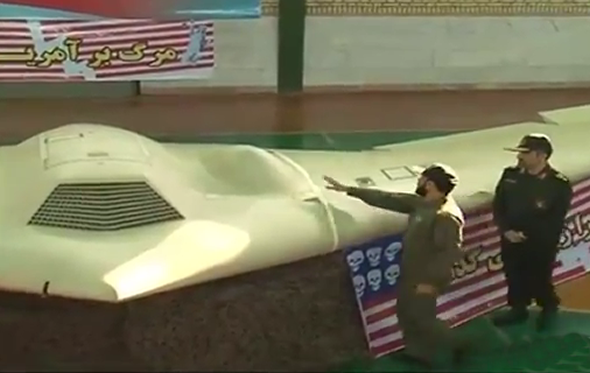
On December 8 Tehran came out open displaying footage of the captured RQ-170 drone which seems in pristine condition. Islamic Revolutionary Guard Corps’ Aerospace Forces Brigadier General Amir Ali Hajizadeh inspecting his newly gained trophy. The drone shown on Iran television appears to be in remarkably good condition ‘inconsistent with an uncontrolled landing’, the New York Times said. In fact, Danger Room suggest the drone shown by the Iranians may be a fake. Iran explains the were able to capture the drone almost intact as it was lured into a ‘trap’ set by their electronic combat forces.
Although the drone was reportedly shot down by Iran’s air defense, its upper surface seems to be intact except for few dents to the leading edge. More extensive damage may be at the bottom. As it is covered by propaganda billboards and camouflage nets, it may hint about more extensive damage caused by hard landing. Iranian sources claim that their electronic combat units took part in the incident, assumingly intercepting, ‘hijacking’ or otherwise disrupting the drone’s control link in a way that denied it from returning to Afghanistan.
Noteworthy details in this video are the air intake grill, designed to mask radar echoes from the turbine surface. Also notable are the masking tape used to cover seams wing-body blending, and various locations on the top of the wing. Aerodynamic surfaces are placed throughout the wing trailing edge, with more elements extracted from the surface (spoilers?). The strange bulges over the wings are sealed, and may have access from below. According to Iranian published data, the drones wing span is 25 meter, 4.5 m’ long and two meters high.
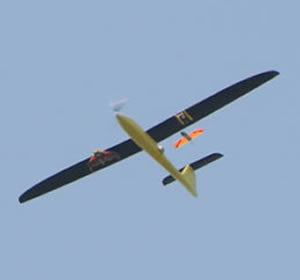
Tempest mothership carries two CICADA Mk3 micro drones. Photo: NRL
Tempest mothership carries two CICADA Mk3 micro drones. Photo: NRL
CICADA is a concept for a low-cost, GPS-guided, micro disposable air vehicle that can be deployed in large numbers to “seed” an area with miniature electronic payloads. These payloads could be interconnected to form an ad-hoc, self-configuring network. Communication nodes, sensors, or effectors can then be placed in a programmable geometric pattern in hostile territory without directly over-flying those regions or exposing human agents on the ground.
In September 2011 the Naval Research Laboratory (NRL) successfully completed flight tests demonstrating how these miniature, disposable aerial vehicles can be used to emplace covert sensors on the ground. The ‘Autonomous Deployment Demonstration’ (ADD) conducted in September 2011 at the Yuma Proving Grounds in Arizona spanned over a series of eight balloon-drops at altitudes of up to 57,000 ft, delivering an unmanned ‘mothership’ UAV carrying two Close-In Covert Autonomous Disposable Aircraft (CICADA) vehicles on sensor-emplacement missions. The sensors were deployed across a distance of 30 nautical miles (55km) dispersing to assigned locations within 3 meter (15 feet) of their intended landing locations.
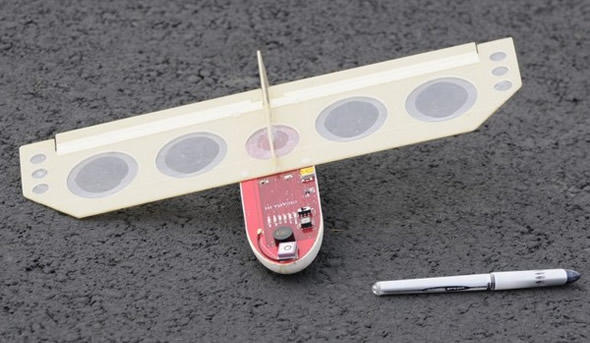
The airframe of CICADA Mark III is the printed circuit board serving the autopilot. This novel construction method significantly reduces assembly time, minimizes wiring requirements, and enables the manufacture of low-cost and rugged micro air vehicles. The airframe shape is easily scaled to accommodate various payload sizes and potential acoustic, magnetic, chemical/biological and SIGINT sensors. Photo: NRL
CICADA is a small, disposable unmanned air vehicles launched from aircraft, balloons or precision-guided munitions. On a surveillance mission these mini drones are equipped with sensor payloads and dispersed in selectable patterns around designated areas. Essentially a flying circuit board, CICADA has an extremely high packing factor and a very low per-unit cost. Eighteen vehicles can be contained in a six-inch cube. The vehicle is inherently stable in glide, with a glide ratio of 3.5
“The CICADA is dropped from another airborne platform, flies to a single waypoint, and then enters an orbit. It descends in that orbit until it reaches the ground.” says Chris Bovais, aeronautical engineer and flight test coordinator, NRL Vehicle Research Section. “Many remote sensors are currently hand emplaced,” said Bovais. “The CICADA allows for the low-cost delivery of multiple precision-located sensors without placing the warfighter in harm’s way.”
The NRL developed CICADA Mark III UAV is a glider generating no acoustic or radar signature in flight. The airframe is basically the printed circuit board serving the autopilot. This novel construction method significantly reduces assembly time, minimizes wiring requirements, and enables the manufacture of low-cost and rugged micro air vehicles. The airframe shape is easily scaled to accommodate various payload sizes and potential acoustic, magnetic, chemical/biological and SIGINT sensors. Unique to this construction technique, additional electronic payloads can be inserted into the system by updating the printed circuit board artwork and ‘re-winging’ the aircraft. CICADA uses a custom autopilot and a two-axis gyro developed at the NRL Vehicle Research Section. The flight controller also included a custom NRL algorithm that accurately estimated wind speed and magnitude, despite having no air data sensors onboard, delivering accurate navigation with minimal sensors and control surfaces.
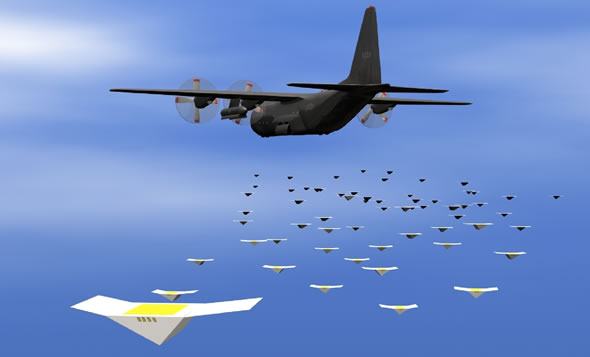
In development since 2006, CICADA offers a new method of deploying covert surveillance sensors from aircraft, unmanned vehicles, balloons or precision-guided munitions. An example of such dispersion concept shows scattering of disposable micro-UAV sensors from underwing pods carried by a C-130 hercules. Illustration: NRL
December 7, 2011: Elbit Systems reported today receiving a contract valued approximately $10 million for the supply of 12.7mm LWS to an unnamed European army. The stations are to be installed onboard Pandur 6×6 vehicles and will be supplied over a period of one year. Pandur 6×6 vehicles are currently operational with Austria, Belgium and Slovenia. (Defense-Update)
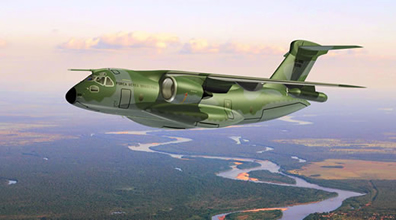
Embraer KC-390
Cobham to Develop an Aerial Refueling System for KC-390
December 7, 2011: Cobham has been selected by Embraer Defense and Security to design and supply the aerial refueling probe for the KC-390 Tactical Military Transport and Tanker Aircraft. Cobham will also develop and supply of the KC-390 wing-mounted aerial refueling pods. Cobham said its light weight yet robust fixed probe solution which matches the high fuel rate delivery demands of the KC-390.
NATO Upgrades BMD C2 System
December 2, 2011: NATO Air Command and Control System Management Agency has awarded ThalesRaytheonSystems a contract to further enhance the Active Layered Theatre Ballistic Missile Defence (ALTBMD) command and control system, upgrading the operational hardware and software of the ALTBMD Interim Theatre Missile Defence (TMD) Capability (InCa). Part of the system to be upgraded is the Air Command and Control System Level of Operational Capability 1 (ACCS LOC1). A fully integrated C2 system for planning, tasking and execution of air operations, NATO ACCS replaces multiple aging air C2 systems in the NATO nations. The current award complements the InCa Step 2 contract awarded to TRS in June 2010. The system has already participated in an operational exercises following its initial fielding in August 2011. Further upgrades meeting operator identified requirements will be included in the latest ACCS configuration.
Norwegian Navy Receives a New Naval Helicopter
November 30, 2011: The first of 14 NH90 NFN multi-mission naval helicopters ordered for the Norwegian Navy was delivered today. The new model will gradually replace the Lynx helicopters currently supporting the Norwegian Coast Guards missions. It will also operate aboard the new Nansen class frigates. The Norwegian NH90s will be based at Bardufoss Air Station. A total of 111 NH90 NFH helicopters have been ordered so far. The NH90 NFH variant is primarily designed for autonomous and joint Anti-Submarine Warfare (ASW) and Anti Surface Warfare (ASuW) missions. Norway is one of five nations selecting the NFH variant together with The Netherlands, France, Italy and Belgium.
KONGSBERG to Upgrade Norwegian NASAMS Air defense Systems
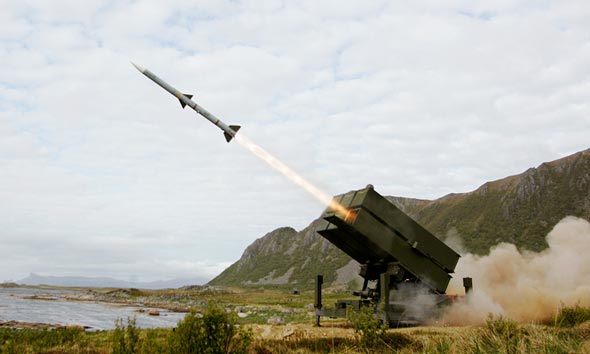
NASAMS air defense system
November 29, 2011: Kongsberg will upgrade the Royal Norwegian Air Force NASAMS air defense system through the next two years under a newly awarded 360 MNOK contract. The upgrade provides for new High Mobility Launchers, modernization of existing FDC Command & Control centers and associated training facilities.
French Senate Caps UAV Spending to Favor Reaper Procurement
November 29, 2011: The French selection about the next interim strategic drone for the French Air Force is still not final, with the defense department’s choice to buy the Heron TP offered by a French-Israeli consortium facing stiff political opposition. Last week the French senate capped the funding allocated for UAV acquisition in the 2012 budget program €209, down from €318 million requested by the ministry of defense. This amount was set to meet the procurement of seven IAI Heron TP systems, according to a proposal made to the French defense ministry by Dassault Systems back in May 2011. General Atomics proposed seven ‘off the shelf’ (unmodified) MQ-9 Reaper, along with two ground stations and maintenance for 10 years for a total amount of €209 million. At that time, General Atomics and EADS have also offered the Reaper modified to meet the full French requirements. The Heron TP modified by Dassault to the same standard, would cost €370 million. Following the senate recommendation further debate is expected at the National Assembly defense committee, before a final decision is made.
November 23, 2011: The decision to scrap the Sentinel spy plane under defense cuts is to be reviewed. According RAF Air Chief Marshal Sir Stephen Dalton, during the six month Libyan campaign the aircraft has played a ‘pivotal’ role in spotting and identifying Colonel Gaddafi’s forces. Dalton insists the Sentinel R1 should be retained within his air forces’ force structure. Under the Strategic Defence and Security Review (SDSR), all five Sentinels have been listed for withdrawal from service by 2015. (Defense-Update)
Roll Out of the First F-35 for the UK
November 22, 2011: The UK will receive its first F-35B Joint Strike Fighter next year. The aircraft, the first to be delivered to an international customer, rolled off the production line and will join the test flights after final inspection. The UK plans to operate the F-35 from both the land bases the new Queen Elizabeth Class aircraft carrier. Originally the UK planned to use the F-35B STOVL variant however, following delays and cost increases, London opted to buy the Carrier Variant F-35C instead.
Swedish Army Gets its first Kodiak
November 21, 2011: The Swedish armed forces procurement agency (FMV) has received the first “Kodiak” armored engineering vehicle AEV 3 S delivered by the German company Rheinmetall Landsysteme. Based on a mine protected Leopard II chassis, powered by a 1,100 kW diesel engine, AEV 3 S is a heavy-duty combat engineering system that falls into the military weight category MLC 70. The Kodiak is equipped with a powerful hinged-arm excavator with different excavator tools, a dozer system featuring cutting and tilt angle settings, or a mine breaching plough. The vehicle also uses a double-winch system consisting of two 9-ton capstan winches. For self-protection, the vehicle is equipped with a remote control weapon station and a smoke grenade launcher system. The vehicle is operated by a crew of 3, all systems can be employed from the inside, utilizing six monitoring cameras.
Rheinmetall manufactures and markets the Kodiak worldwide as part of a consortium with RUAG Defence, the strategic technology partner of the Swiss armed forces. Netherlands and Sweden placed an order worth about €100 million for 16 vehicles in 2008, six destined for Sweden and ten for the Dutch Army.
EU short on anti-piracy ships due to budget cuts
Protecting merchant ships in the western Indian Ocean, off the coast of Somalia and along the Red Sea is facing a shortage of ships as budget cuts are limiting the availability of naval vessels. According to General Hakan Syren, chairman of the EU Military Committee, the alliance is required to sustain a minimum of four to six warships to patrol the coast but in December 2011 the number of ships available for the mission will drop below that. The situation may be getting better by March next year, Syren added. Spain, France and Germany are the main contributors to the mission, with Italy, The Netherlands and Belgium also taking part in the operation which has been extended until the end of next year.
The operation could count on around 10 warships when it was launched in 2008, but the average has come down to around six or seven vessels to patrol the area. The actual requirement for naval escort also depends on weather conditions, as during the monsoon season pirate activity may drop.
Sweden Delivers BvS10 to France
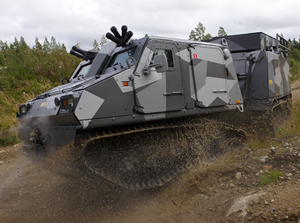
The latest BvS10 MkII ordered for the French Rapid Intervention Forces.
Swedish company Hägglunds AB (a subsidiary of the BAE Systems group) delivered the first batch BvS10 all terrain vehicles amphibious (VHM) to the French Army. The Swedish company has partnered with French armored vehicle manufacturer Panhard to deliver all 53 vehicles by the end of 2012. After receiving the vehicles Panhard proceeds with the integration of mission systems equipment including weapons, radios and information systems. The delivery followed the completion of the vehicle’s qualification through eight months of intensive testing by the French military
Visualization Display - Daden
BAE Systems Fund Invests in Data Visualisation
BAE Systems Investment In Innovation is investing in a technology that allows participants from across the globe to collaborate in analyzing and visualizing shared data. To facilitate such network the company is investing in new 3D immersive visual analytics tools developed by Daden Limited of Birmingham, The program will be managed under BAE Systems Investment In Innovation (I3) program.
Trying to derive meaning from this unstructured data is difficult and requires both analytical processes and intuitive human understanding. The new system will bridge between experts in different locations, combine diverse data sources, formatting it into meaningful presentation. Allowing users to view data from different perspectives in a 3D immersive environment, the system will use aiding retention and recall whilst supporting decision and sense-making. The new application will import historic or real-time information from different sources ranging from databases and web feeds, through social network and computer network data, to real-world sensors, GPS trackers and CCTV cameras. Daden’s application will support real-time operations, security and emergency planning, as well as collaborative learning and training and simulation exercises, providing a highly cost-effective method for effective collaboration.
Terma is launching an upgrade for the AN/ALQ-213 Electronic Countermeasure system, offering a modern version of the Countermeasures Management System Processor otherwise known as the Electronic Warfare Management System (EWMS). The enhanced processor will support new capabilities including Radio Frequency sensor integration, sensor fusion, geo-location capabilities, networking, and situational awareness improvements. (Defense-Update)
Night Attack The Royal Danish Air Force has validated the use of Night Vision Cueing and Display/ Aviator’s Night Vision Imaging System (NVCD/ ANVIS) on its F-16s, offering a night vision enhancement for the daylight functionality provided by standard Joint Helmet Mounted Cueing System (JHMCS). The system was flown for more than 300 hours as part of Operation Unified Protector during the summer of 2011. (Defense-Update)
MAMBA (SAMP/T) Scores First Hit in an Operational Test
Aster 30 launch
November 14, 2011: The French air force conducted a successful firing of an Aster 30 missile fired from a SAMP/T system, intercepting a Rafael Black Sparrow target, representing a theater ballistic missile-type threat. This was the second, successful, ATBM firing with a SAMP/T system. The first was conducted on 18 October 2010. This test followed the first operational training firing conducted two months ago, where an Air Force training unit intercepted an aerial target (aircraft). Designated as ‘Mamba’ in French Air Force service, the new capability is expected to become operational by the summer of 2012, assuming full responsibility for the air defense of French forces deployed overseas and defending high-value targets on French territory. Mamba was declared operational by French Air Force, on 12 October 2011, with France operating seven systems and Italy operating three. SAMP/T is to become the cornerstone of Italy and France’s contributions to the North Atlantic Alliance tactical ballistic missile defense capability.
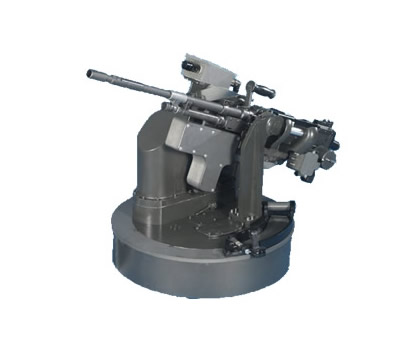
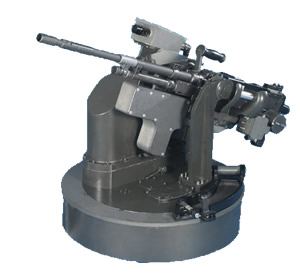
Elbit unveiled the original LWS bask in 2005, when it was proposed to equip light armored vehicles. Photo: Tamir Eshel, Defense-Update
Elbit Systems will deliver Lightweight Weapons Stations (LWS) under two contracts worth US$21 million, from the Israel Ministry of Defense (IMOD) and to a European Army. Today the company reported an award of a contract valued at approximately $11 million by the Israel Ministry of Defense, for development and initial procurement, as part of an upgrade process of the Israel Defense Forces’ (IDF) lightweight weapons arsenal. These LWS will be delivered over a period of 18-month.
Elbit Systems will develop the Light Weapon Station (LWS) to meet the IDF requirement for an affordable and compact light weapon station, mounting 7.62, 12.7mm machine guns or 40mm automatic grenade launchers. The LWS will eventually replace the current version of IDF weapon stations based on the heavier Samson RCWS. Photo: Elbit Systems
The IDF currently employ the ‘Katlanit’ based on Rafael’s Samson. Initially, the IDF required a lightweight RWS to augment the Merkava main battle tank, but this initiative was shelved for other priorities. Under the follow on initiative, the IDF was looking for a low weight, lower cost system to fit on a wider range of armored vehicles, including Armored Personnel Carriers (APCs) and Armored Fighting Vehicles (AFVs) such as the new Namer, all currently fitted with the Samson. A more compact and light mount will also be suitable for use on a wider range of armor protected vehicles, including patrol vehicles such as the Wolf (Zeev) used for security missions, armored HMMWV and even unmanned ground vehicles. Such a system will be able to improve the crew’s ability to perform area surveillance, observation, target acquisition and employ firepower in accurate and effective way, all under the vehicle’s armor protection. Elbit Systems and IMI, offering its new, lightweight Wave 400 design, both competed for this contract but Rafael preferred not to bid, despite having the ‘Samson Junior’ in hand.
The system developed at Elbit Systems was designed in a compact assembly, mounting light weapons from the 7.62mm machine gun, up to the 12.7mm heavy machine gun and 40mm automatic grenade launcher (AGL), an associated electro-optical payload and remote controls. As an overhead weapon system, the LWS can be fitted anywhere on the upper deck without penetrating the armor plates. Operated remotely with full control of aiming, firing, cocking and jam clearing, it can operate in stand alone mode or be integrated into the vehicle’s electronics and battle management systems, a potential advantage offering future opportunities for the company.
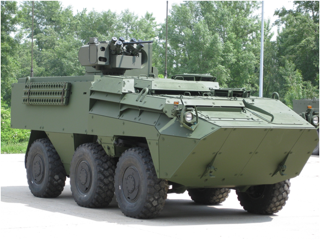
Elbit Systems Overhead Remotely Controlled Weapon Station (ORCWS) mounted the Austrian Pandur 6x6 built by Styer.
Elbit Systems also reported today receiving a contract valued approximately $10 million for the supply of 12.7mm LWS to an unnamed European army. The stations are to be installed onboard Pandur 6×6 vehicles and will be supplied over a period of one year. Pandur 6×6 vehicles are currently operational with Austria, Belgium and Slovenia. The later has taken the first 30 vehicles (local designation ‘Valuk’), out of 85 ordered. The Valuk family of vehicles include these infantry carriers, mortar vehicles (to be fitted with Elbit Systems’ Cardom 120mm mortars), ambulances and scout vehicles, fitted with a Samson 25mm overhead weapon station and Toplite observation system, both provided by another Israeli company – Rafael. Elbit Systems has provided a similar system for Pandur 6×6 of the Belgian Army, and has also delivered LWS armed with 12.7mm HMG. The Austrian Army has also selected Elbit Systems’ LWS for its Light Armored Vehicles (LMV) made by Iveco.
Our new writer Tomasz Basarabowicz from Poland assisted in the preparation of this article.
On November 29, 2011, The United States House of Representatives announced a bill to “provide for the sharing of certain cyber threat intelligence and cyber threat information between the intelligence community and cybersecurity entities, and for other purposes”. The Bill, if it becomes law, will allow the director of National Intelligence to establish procedures to allow elements of the intelligence community to share cyber threat intelligence with private-sector entities and to encourage the sharing of such intelligence.
This bill covers unclassified as well as classified information and will enable these private agencies to use such information to identify cyber threats in order to protect its property and relate the information back to the federal agencies or to other entities. The Bill also allows cyber security service or goods providers to use the information to protect the property of entities. There will be certain restrictions placed on the use of the information but the Bill leaves these open-ended. In addition, the Federal agencies may require a type of security clearance on an entity or persons within the entity.
‘Cyber threat intelligence’ is defined as follows: The term ‘cyber threat intelligence’ means information in the possession of an element of the intelligence community directly pertaining to a vulnerability of, or threat to, a system or network of a government or private entity, including information pertaining to the protection of a system or network from — (A) efforts to degrade, disrupt, or destroy such system or network; or (B) theft or misappropriation of private or government information, intellectual property, or personally identifiable information. Under the Bill the private entities shall be exempt from legal liability if the information is used in accordance with the law. The term information is similarly defined.
A few major organizations and major players in private industry wrote letters of support for this bill. While there are several federal agencies already cooperating on combatting cyber-security threats, the Bill would allow ease in the sharing of information on a timely basis and therefore reduce the regulatory burden, with an eye on the public goal of cyber security.
While on one hand, it is certainly applaudable that the United States government is taking a flexible view in allowing the ease of information sharing to protect public sector industry, there seems to be little direction in the way of guidelines.
The draft states: ” (2) USE AND PROTECTION OF INFORMATION. Cyber threat information shared in accordance with paragraph (1) —
(A) shall only be shared in accordance with any restrictions placed on the sharing of such information by the protected entity or self-protected entity authorizing such sharing, including, if requested, appropriate anonymization or minimization of such information;
(B) may not be used by an entity to gain an unfair competitive advantage to the detriment of the protected entity or the self-protected entity authorizing the sharing of information; and
(C) if shared with the Federal Government — i – shall be exempt from disclosure under section 552 of title 5, United States Code; ii – shall be considered proprietary information and shall not be disclosed to an entity outside of the Federal Govern- ment except as authorized by the entity sharing such information; and
(3) EXEMPTION FROM LIABILITY. – No civil or 12 criminal cause of action shall lie or be maintained in Federal or State court against a protected entity, self-protected entity, cybersecurity provider, or an officer, employee, or agent of a protected entity, self protected entity, or cybersecurity provider, acting in good faith — (A) for using cybersecurity systems or sharing information in accordance with this section; or (B) for not acting on information obtained or shared in accordance with this section.”
Since many of the private sector companies that would be certified under the law to obtain classified information are also multinational companies, it is prudent to adopt a policy whereby the individual or individuals who are entitled under the law to receive information, are also charged with the safeguarding of the information and the administration of legal framework guidelines. These individuals should be subject to legal liability and penalty for failure to comply in all cases and not free from liability if they acted under good faith.
“Good faith” is a subjective term under general commercial law. Being that compliance for classified as well as unclassified information is left to the private sector company, there should be more “meat” to the definitions. The damage that could be caused by the possible misuse of the information to gain an unfair competitive advantage against foreign worldwide competitors, may be great. In fact the use of the words, “self protecting” as opposed to “self-policing” in the Bill, degrades the integrity of the law and the U.S. lead for world cooperation in the war against cyber threats.
These legal terms bring forth a myriad of legal, contractual, and social issues. A law that clarifies set requirements of compliance and permits self-policing under threat of penalty would be in line with the export laws of the United States and similar regimes. A law that so greatly affects the internal operations of multinational entities should also protect worldwide competition and worldwide export obligations. Failure to do so, may inhibit the integrity of global information sharing.
“The best way to protect your own freedom is to watch everybody else’s back. That’s the essence of community.” — ski racer Bode Miller
Former deputy general counsel of Rafael Advanced Defense Systems (international), Lori Solberg provides customized general and business advice to advanced technology and defense companies. She specializes in business market expansion in the defense and HLS fields worldwide as well as representation before international export control authorities.
A recent technology demonstration conducted by the U.S. Air Force and Defense Information Systems Agency (DISA) validated the use of commercial off the shelf (COTS) aero-mobile low-profile Ka-band terminal over DOD Wideband Global Satcom (WGS) system. Test criteria included an airborne bi-directional video teleconferencing session while simultaneously running IP file transfer applications.
The system being demonstrated employed the Advanced Multiband Communications Antenna System (AMACS) terminal provided by iDirect Government Technologies (iGT). The test demonstrated the system’s capability to transmit and receive high-speed information, employing the iGT’s Evolution platform, which uses a Current-Force-Modem on multiple satellite bands, and the AMCAS low-profile antenna.
“This demonstration of the Aero- Mobility features over WGS using Commercial-Off-The-Shelf (COTS) Technology is an extremely important step towards providing viable aero-mobile communications by using a mixture of the readily available commercial solutions and DoD assets” Shaum Mittal, Chief Engineer, PEO-COMMS, DISA, explained.
iGT demonstrated its next-generation transmission standard (DVB-S2) with Adaptive Coding and Modulation outbound technology with a Multi-Frequency Time Division Multiple Access inbound IP-based platform. The demonstration also included successful evaluations of iGT’s latest AES-256 based Transmission Security software. “With proven on-the-move satcom systems, airborne capabilities can be used on both manned and unmanned airborne military platforms including intelligence, surveillance and reconnaissance missions and to boost emergency disaster response,” said John Ratigan, President of iGT.
Norwegian Vingtags II Optronic Systems for Malaysian AV8s
December 2, 2011: Rheinmetall Nordic AS (formerly Simrad Optronics) has received an order worth €36 million from Malaysia to supply Vingtaqs II long-range surveillance, observation and reconnaissance to be integrated in Turkish designed AV8 all-terrain vehicles. The vehicles will be delivered during the period 2014 to 2018. The order was placed by DRB-Hicom Defence Technologies on behalf of the Malaysian armed forces.
Singapore Navy Commissions The First Archer Submarine
December 2, 2011: The first Archer-class submarine was inducted into Singapore navy service with the formal commissioning of the new submarine. Two Archer class submarines were acquired from the Royal Swedish Navy in 2005. RSS Archer (formerly HMS Hälsingland) was launched on 16 June 2009 in Karlskrona, Sweden. The second submarine, RSS Swordsman (ex-HMS Västergötland) was launched a year later and is currently undergoing sea trials in Sweded. The Archer submarine arrived in Singapore on 17 August 2011. Under the command of Lieutenant-Colonel (LTC) Jack Nyeo the Archer successfully conducted system verifications and sea trials in local conditions, prior to the official commissioning. With the enhanced capabilities and combat system such as the Air Independent Propulsion and advanced sonar systems. The diesel electric submarines were built by the Kokhums Swedish shipyard in 1986-1987. Both submarines employ Stirling AIP engines, enabling the submarines to have longer submerged endurance and lower noise signature, enhancing the stealth capability of the submarines.
Australian Aerospace Delivers Final Tiger To Australian Defense Force
December 2, 2011: Australian Aerospace delivered the last of 22 Tiger ARH helicopter gunships acquired under Project Air 87. Operating with two squadrons of the Army’s 1st Aviation Regiment in Darwin, the new Tigers are replacing the Bell 206B-1 (Kiowa) reconnaissance and UH1-H (Iroquois) gunship helicopters. Australian Aerospace has manufactured the 22 helicopters and will be responsible for the overall program management and Through-Life-Support (TLS) of the helicopters throughout their service life.
China Pledges to Increase Military Assistance to Seychelles
December 2, 2011: Dring an official visit to the Seychelles Chinese Minister for National Defense and State councillor, General Liang Guanglie discussed bilateral security issues with the President of the Republic of Seychelles, James Michel. The visit followed discussions held by President Michel with the Chinese Vice-President Xi Jiling in October in Beijing, which addressed the threat of piracy in the Indian Ocean. Defense cooperation between Seychelles and China has steadily increased since the signing of a Memorandum of Understanding on Defense Cooperation in October 2004. Seychelles is counting on Chinese military assistance through training and equipment to protect the country against pirate attacks. Earlier in 2011 China donated two Y-11E light transport planes to be used for maritime surveillance. “Together, we need to increase our surveillance capacity in the Indian Ocean, and as Seychelles has a strategic position between Asia and Africa, and we are the recognized centre for the coordinated efforts to combat piracy, and develop peace and stability in the region” Michel said.
Sri-Lanka, Indonesia Order More Bell-412 Helicopters
December 1, 2011: Bell Helicopter has delivered two Bell 412s to the Sri Lanka Air Force. The Sri Lanka Air Force currently has eight Bell 412EP helicopters in its fleet in addition to ten Bell 212s 18 and five Bell2 206 Jet Rangers. Bell Helicopter also announced it received five firm orders with two potential follow-on orders for Bell 412s from PT Dirgantara Indonesia (PTDI) for delivery to government agencies in Indonesia. The five helicopters will be delivered to PTDI by the end of the year.
China’s Aircraft Carrier Begins Second Sea Trial
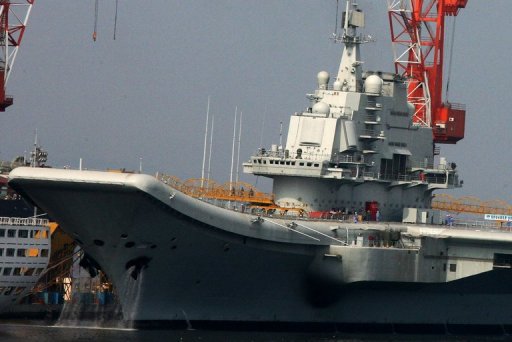
Photo: AFP
November 29, 2011: China’s first aircraft carrier began its second sea trial after undergoing refurbishments and testing. The 300-metre (990-foot) ship, a refitted former Soviet carrier called the Varyag, underwent five days of trials in August that sparked international concern about China’s widening naval reach. “After successfully completing its first sea trial in August China’s aircraft carrier platform returned to the shipyard as planned for further refitting and testing,” the defence ministry said in a brief statement. “The work has been carried out and it set sail again on November 29 to carry out relevant scientific and research experiments.”
Lockheed Martin UK offers Vigilance AEW system to Malaysia
November 28, 2011: Lockheed Martin is offering a helicopter pod-mounted Airborne Early Warning radar to Malaysia. The ‘Vigilance’ AEW system combines mission equipment developed for the UK Royal Navy’s AgustaWestland AW101 Merlin HM2 multi-role helicopter upgrade employing an active electronically scanned array (AESA) radar technology provided by Northrop Grumman. The system will be mounted in self-contained pods and be capable of supporting tasks such as AEW, fighter control, and maritime and border surveillance. The pods are designed as self contained systems, requiring only power for their operation. The radar can integrate with on-board systems or operate as a stand-alone sensor. Two pods carried on both sides of the helicopter will provide 360° radar coverage. Potential usable platforms include the EH-101, Mil Mi-17, CN-235 medium transport or C-130 Hercules transport plane. Larger platforms could employ up to four operator stations while helicopters could use one, relaying data to ground based operator stations via datalink.
Eurocopter Delivers Six EC145s to Kazakhstan
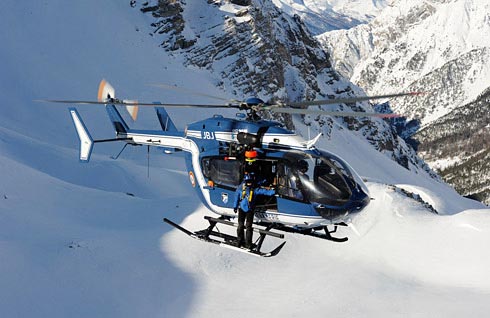
Photo: Eurocopter
November 25, 2011: Eurocopter delivered the first of six EC145s ordered to date by the Kazakh Ministries of Defense and Emergencies. The helicopters will be used for search and rescue and medical evacuation missions. A total of 45 of the helicopters are to be purchased, and will be assembled by the new joint venture Eurocopter Kazakhstan Engineering, in which Eurocopter and Kazakhstan Engineering have a 50/50 share. The new JV, Eurocopter Kazakhstan Engineering, will be assembling and customizing EC145s at its facilities near the Astana International Airport in Kazakhstan. The company will also enable Eurocopter to provide its customers in Kazakhstan and Central Asia with better local services for helicopter maintenance as well as training for pilots and technicians. The initial delivery of the first six EC145s to the Kazakh Ministry of Defense and the Ministry of Emergencies is expected before the end of the year. The remaining helicopters are to be delivered by the end of 2016.
Indonesia to Spend over 1.5 Billion Shopping for Surplus Weapons
November 25, 2011: Indonesia intends to buy surplus weapons from NATO countries that have reduced their military forces in recent months. Among the equipment being considered are Leopard 2A6 main battle tanks to be procured from German Army surplus, and Apache attack helicopters which could be acquired from the Netherlands, Defense Minister Purnomo Yusgiantoro has confirmed in Jakarta. Other countries considered as used arms suppliers include France, Spain and Italy. The Army chief of staff, Gen. Pramono Edhie Wibowo, said previously that the Indonesian Army was given a special allocation of about US$1.53 billion (14 trillion Rupiah) to buy weapons, including 100 2A6 Leopard tanks and eight Apache helicopters. The Indonesian Army also expects to be able to get multiple rocket launching systems and 155mm howitzers, possibly from France. Several Bell 214 helicopters are also on the Jakarta’s shopping list.
Second Air Surveillance radar Deployed in Eastern Indonesia
November 15, 2011: ThalesRaytheonSystems has delivered a second air defense radar station to Indonesia. Tentara Nasional Indonesia Angkatan Udara (TNI-AU) The first radar station was successfully commissioned by Tentara Nasional Indonesia Angkatan Udara (TNI-AU) in March 2011. Located in the Eastern part of Indonesia, the new radars will feed air surveillance data to TNI-AU’s command and control center in Jakarta, where airspace surveillance, interceptor tasking and control are performed. The system provides air space protection over the country’s 17,000 islands and across 33 provinces.
Lockheed Martin Skunk Works® and XTEND have achieved a major milestone in JADC2 by integrating the XOS operating system with the MDCX™ autonomy platform. This technical breakthrough enables a single operator to simultaneously command multiple drone classes, eliminating the friction of mission handoffs. From "marsupial" drone deployments to operating in GPS-denied environments, explore how this collaboration is abbreviating the data-to-decision timeline and redefining autonomous mission execution.
As traditional defense primes face mounting competition from agile “neoprimes” such as Anduril, Palantir and Helsing, the balance of innovation is shifting toward software-defined warfare and scalable, dual-use technologies, while global industry consolidation—marked by Boeing’s integration of Spirit AeroSystems and other strategic mergers—signals an intensified race to secure control over the defense technology value chain. Our Defense-Tech weekly report highlights these trends.
In early October 2025, a coordinated wave of unmanned aerial system (UAS) incursions—widely attributed to Russia—targeted critical infrastructure across at least ten European nations. The unprecedented campaign exposed the fragility of Europe’s air defenses...
Executive Summary
The past week (September 18-25, 2025) represents an inflection point where strategic defense concepts have transitioned from doctrine to tangible reality. An analysis of global events reveals four primary, interconnected trends shaping an...
At the 2025 Air, Space & Cyber Conference, U.S. Air Force and Space Force leaders unveiled major updates on next-generation fighters, bombers, unmanned systems, and space initiatives, highlighting both rapid innovation and critical readiness challenges as the services race to outpace global competitors. A short version is available here, with a more detailed version for subscribers.
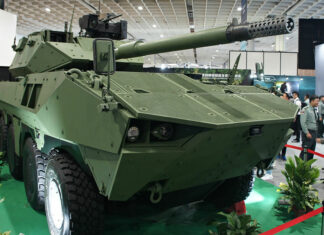
The Taipei Aerospace & Defense Technology Exhibition (TADTE) 2025 crystallized around four dominant strategic themes that collectively illustrate Taiwan's comprehensive approach to defense modernization amid escalating regional tensions. Based on a detailed report by Pleronix (available upon request). Includes a Podcast discussion on TADTE 2025's highlighting Taiwan's four strategic themes beyond the post's coverage.
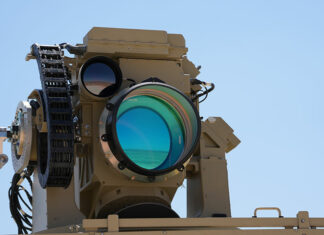
Israel’s Iron Beam 450 high-power laser system has completed final testing, marking a major leap in air defense. Developed by Rafael, it offers precise, cost-effective interception of rockets, UAVs, and mortars, and is set for IDF deployment by 2025.