

Thursday, January 1, 2026
More
    Home Blog Page 199

    New US ITAR Regulations Formulate Favored Defense Partners

    ITAR Certification
    ITAR Certification

    New cooperations which were approved by the United States Congress, favor international defense trade between the US and its allies the United Kingdom and Australia, by establishing an internal market of ”Approved” or “Trusted” defense traders. New treaties signed on September 29, 2010, formed virtually closed cooperations between the US and Australia and separately between the US and the UK. These treaties are now being implemented into the law of the three countries.

    In the US, these Treaties will advance the trade of certain defense articles controlled pursuant to the United States International Traffic in Arms Regulations (“ITAR”) (Title III of the Security Cooperation Act of 2010) between the countries.

    Currently, the ITAR and the regulatory procedures are very cumbersome and restrictive. These Treaties remove the requirement for individual export licenses and allow for the license-free movement of eligible defense articles, including those that are ITAR-controlled, within the approved Australian, UK and USA communities. These changes, among others, are reflected in changes currently being made to the ITAR.

    The Treaties between the United States, the UK and Australia allows these countries to gain a commercial advantage in the global defense market. Local pre-approved defense companies will join the “Approved Communities” or “Trusted Nations” market and will become eligible for free trade movement of defense items. Before such treaties were in place, cross-border defense trading between these countries were complex, to say the least. Even at the initial stages of an export deal, country compliance involves costly and time consuming bureaucratic procedures. Considering that such deals take a long time to mature, the regulatory cost added to the presale phase mount to a significant barrier to all but only the biggest or well financed companies.

    It gets more complicated, as companies share technologies and information which may result in the unintentional mixing or deliberate integration of local defense information, forcing companies to deal with multiple regulations of the export regimes of the different countries. These new post-treaty laws, regulations and rules essentially give the US more control over “mixed” technology defense items which are composed of US ITAR controlled defense items in part, transferred under preferred trade status within an approved community of defense players.

    Implications for Australia

    The Australian Defense Ministry has redrafted the defense laws to incorporate the new treaty. On 2 November 2011, the Australian Minister for Defense Materiel, the Hon Jason Clare MP, introduced the Defense Trade Controls Bill 2011, into the Australian House of Representatives. The purpose of this Bill is to implement the Australia-United States Defense Trade Cooperation Treaty which is meant to strengthen Australia’s export controls for defense and dual-use goods. Mr. Clare stated that the Bill has the potential to improve business opportunities for Australian companies to participate in US contracts. The Minister has now released the exposure draft of the defense Trade Controls Regulations 2012 (the draft Regulations) for public and industry consultation until Friday 17 February 2012.

    From first impression, the Treaties should adopt a more practical approach which conforms to actual international commercial conduct, allowing companies of all sizes to participate. In the explanatory notes of the Main Bill, it states as follows, ”Since Australia introduced controls to regulate the export of goods and technology, the environment has changed and there is now a stronger emphasis on the technology rather than goods. These changes mean that Australia’s existing export controls are less effective in meeting Australia’s international commitments.” The statement added: “The Bill will also strengthen Australia’s export controls to align them with international best practice.” The new Bill will undoubtedly form a commercial block that will surely benefit defense sales for the countries’ largest defense companies but may not effectively control the dissemination of defense know-how

    It can be expected that the new law will meet its goal of stronger technology control and control for defense transfers in general. However, there are also gaps in the Bill as it relates to intangible transfers of technology. Especially those related to the transfer of know-how and technology unrelated to goods. As the global defense market is changing toward information operations (cyber warfare etc.) and technology transfers dominate cross-border defense programs, intangible properties should be regulated as well. Take for example the Israel defense control system, which recognizes know-how as a separate category for control. The Australian proposed regulations lack controls that fully emphasize threats related to technology. First, there is no clear definition of know-how. In the Main Bill, technology is tied to technology for goods but what if there are no goods and only know-how? A plausible explanation may be that the ITAR definitions in the US, as they relate to know-how and technology transfers, are themselves undergoing major revisal in the US. The only services that the Australian Bill controls are services that are provided together with Australian goods.

    The Bill also is very concentrated on defining Trusted Nation Status for US cooperation, along with record-keeping and reporting which seems to mean that Australia is forsaking sales with other countries to promote the Treaty preferred status with the US.

    Another important aspect is the control system. The Bill, as seen as a holistic export control system, sees every person or entity attempting to export defense goods as ‘guilty’. Exceptions to this rule include registered exporters and brokers in general. The well-defined strict record-keeping regulations flow smoothly along the line of supply. That, together with sanctions with the addition of destruction of illegally exported goods, forces companies to act responsibly. This system is stricter than other international systems, but also more complete and easier to understand. The Bill clearly delineates the requirements for record keeping between exporters and brokers, regarding the ultimate end-user of the product, as well as their ultimate responsibilities. These provisions of the Bill control the distribution of the product along the supply line to the end-user. Provisions for seizure and destruction ensure that exporters think before they chance illegal export and destruction. This augments the idea requirement of self-compliance. Although the Bill places such a regulatory burden that small and medium companies and certainly foreign companies will be limited in their ability to sell their products without proper legal advice. I believe, however, that international systems that lack strict record keeping along the supply chain miss an important part of control schemes. It will be interesting to see the next draft of the Bill since Australia is an important and trusted ally to many countries and much can be learned from their new regulations and implementation methods.

    Implications for Israel

    Another important step towards easing regulations related to group country is Israel. Under the new ITAR changes, while Israeli defense companies will not receive similar benefits as those of the Australian Bill, the proposed ITAR regulations would give Israel a status in the US law similar to that of a NATO country or Australia, Japan, New Zealand, and South Korea, with respect to Congressional certification requirements and re-export rules. First, the dollar threshold for defense sales to Israel that trigger Congressional certification requirements prior to export licensing was raised from US$14 million to $25 million for sales of major defense equipment from the US to Israel. For other contracts, for other defense articles and services, the threshold was raised from $50,000 to $100,000. In addition, Israel would become an eligible destination for re-exports without prior written authorization from the U.S. State Department for U.S.-origin defense articles incorporated into foreign defense articles, pursuant to ITAR § 123.9(e). This would solve a problem that has plagued Israeli companies for the last few years which scared Israeli companies away from US components. The change would also shorten from thirty (30) to fifteen (15) calendar days the certification time period during which approval may not be granted. This would ease a major regulatory burden.

    Hopefully, the new ITAR regulations will not close trade to smaller companies hoping to share their ideas in the global market with trusted partners.

    About the author: Lori Solberg (MBA, Adv.)

    Former deputy general counsel of Rafael Advanced Defense Systems (international) Lori is a subject expert specializing in global business market expansion and export and has a solid track record dealing with a wide range of innovative technologies in the hi-tech, defense, HLS and maritime fields. Lori is a recognized exporter by the Israeli Ministry of Defense and she represents small, medium and large business worldwide providing customized general business and strategy advice to advanced technology and defense companies. Lori is also our senior columnist in the field of cyber-security (IO). For any additional information relating to this article, please contact her through her website or this website. This article and other articles by Lori are published in defense-update.com or on her at website: www.sol-legal.com.

    Copyright, 2012 – all rights reserved, Lori Solberg
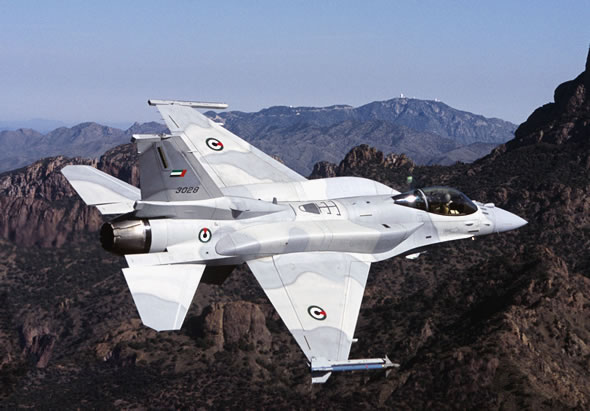
    F-16V – Falcons turn into Vipers

    The F-16 Block 60 delivered to the UAE are the most advanced Fighting Falcons currently in service. Lockheed Martin offered the same level of sophistication to the Indian MMRCA but was not selected. Taiwan and Korea also consider similar configurations, currently packed into the F-16V variant. Photo: Lockheed Martin
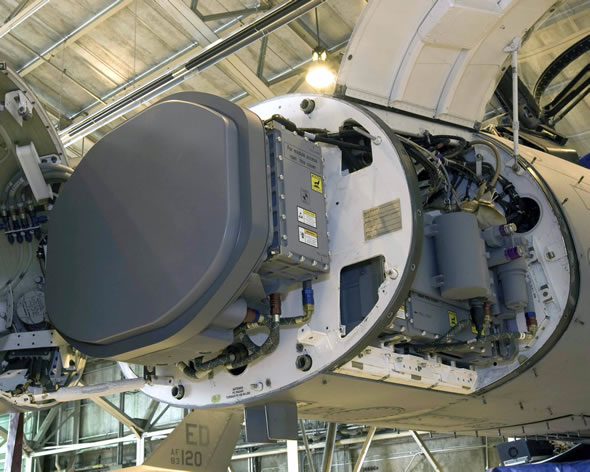
    Lockheed Martin unveiled the new version of the F-16 at the Singapore Airshow. The F-16V will feature enhancements including an active electronically scanned array (AESA) radar, an upgraded mission computer, communications capabilities and improved cockpit – all capabilities identified by the U.S. Air Force and several international customers for future improvements. AESA radars offer significant operational capability improvements. Two AESA radar models – Northrop Grumman’s SABR and Raytheon’s RACR are currently available for the F-16V.

    RACR radar was fiorst flight tested on an F-16 in 2010
    Raytheon's RACR AESA radar is positioned as one of two AESA radars configured for the F-16. Photo: Raytheon

    According to Lockheed Martin aeronautics VP business development, George Standridge, at present only U.S. made radars are cleared for the package, while insertion of foreign AESA radar is feasible, customers requiring such feature will have to request approval form the Department of Defense.

    The F-16V configuration is an option for new production jets and elements of the upgrade are available to most earlier-model F-16s. The “V” designation is derived from Viper, the name fighter pilots have called the F-16 from its beginnings.

    “We believe this F-16V will satisfy our customers’ emerging requirements and prepare them to better inter-operate with the fifth generation fighters, the F-35 and F-22,” says Standridge. “Air forces that operate F-16 today will continue to operate the platform for many years to come,” he added “The V upgrade “just means your F-16s can now operate alongside your F-35s”.

    SABR radar on catbird.
    Northrop Grumman has been flying the Scalable Agile Beam Radar (SABR) Since 2009 on a specially configured Saberliner bizjet. Photo: Northrop Grumman

    With nearly 4,500 F-16s delivered, the F-16V seems a natural step in the evolution of the F-16 ‘Fighting Falcon’. The program has continually evolved as it began with the F-16 A/B as the lightweight fighter then transitioned to F-16 C/D and Block 60 versions as customers’ requirements changed.

    In recent years the F-16 has won new orders in Morocco, Egypt, Oman and Iraq carrying the production line through 2015. Lockheed Martin is looking for new opportunities that would carry the line through 2016-17. An upgrading program for 300 aircraft is currently considered by the U.S. Air Force; parallel programs currently underway in several Asian countries, including Singapore, Indonesia, Taiwan and South Korea.

    The F-16 Block 60 delivered to the UAE are the most advanced Fighting Falcons currently in service. Lockheed Martin offered the same level of sophistication to the Indian MMRCA but was not selected. Taiwan and Korea also consider similar configurations, currently packed into the F-16V variant. Photo: Lockheed Martin

    Counter Terror Expo Professional Briefings Invitation

    DSEi Briefings in Partnership with Counter Terror Expo 2012

    Register today at www.counterterrorexpo.com

    Following the success of the security briefings at DSEi 2011 we are pleased to present four individual and highly specialised security sessions held in partnership with Counter Terror Expo 2012 on Wednesday 25th April 2012. As a valued participant at DSEi you can take advantage of these invitation-only briefings for no cost. Simply click on your preferred briefing listed below. You can choose to attend more than one of the sessions.Delivered by a forum of experts in the field of counter terrorism, these briefings will ensure a targeted approach to the issues at the forefront of the international counter terrorism community. They have been put on exclusively for the participants of DSEi, the world leading defence and security event.Each briefing will include a detailed overview presented by a leading authority followed by a panel discussion and Q&A session.

    09.30-11.00
    Electronic Conflict & Cyber Security Briefing
    11.30-13.00
    Transnational Counter Terrorism Briefing
    14.00-15.30
    Middle East Security Briefing
    16.00-17.30
    National Security Strategy Briefing


    09.30-11.00 Electronic Conflict & Cyber Security Briefing

    The US predicts that close to $55 billion will be invested in cyber-security over the next 3 years. There is no better occasion to analyse and discuss the extent of the threats from cyber sabotage and consider how your products and services will address the evolving nature of cyber conflict.Speakers include: Greg Day, EMEA Security CTO and Director of Security Strategy, Symantec

    Register your interest to attend the Electronic Conflict & Cyber Security Briefing here


    11.30-13.00
    Transnational Counter Terrorism Briefing

    Cooperation and coordination between key partners and capacity building donors is fundamental to the stability and growth of any trans-Atlantic agreements. DSEi’s partnership with CTX will bring together an unrivalled international audience allowing you to network in one dedicated forum, to drive forward your initiatives and plans for the future.Speakers include: Jamie Shea, Deputy ASG, Emerging Security Challenges Division, NATO

    Register your interest to attend the Transnational Counter Terrorism Briefing here


    14.00-15.30
    Middle East Security Briefing
    Triggered by events in Tunisia, Iraq and Afghanistan from the Arab Spring to the aftermath of Osama bin Laden’s death, there has never been a more appropriate time to reflect and review the implications on global terrorism today.Speakers include: Kasper Ege, Counter Terrorism Implementation Task Force (CTITF) and CTIFT Office, United NationsRegister your interest to attend the Middle East Security Briefing here


    16.00-17.30
    National Security Strategy Briefing
    The UK threat level in the last few years has been consistently set at “severe”, suggesting that a national terrorist attack is “highly likely”. Engage with our expert panel of speakers to ensure your counter terror technology and equipment is capable of meeting these rising challenges.Speakers include: Dr Dave Sloggett, Centre for Defence Studies, Department of War Studies, Kings College London

    Register your interest to attend the National Security Strategy Briefing here


    With only 100 places available for each briefing – register now to book your FREE place today.The DSEi Team
    DSEi 10-13 September 2013
    London, ExCeLP.S. Your ticket will also gain you access without charge to Counter Terror Expo. CTX is a two day global event held on 25-26th April 2012 at Olympia, London , dedicated to showcasing innovative equipment from over 400 suppliers that serve governments, militaries, security services, law enforcement and academia against the threat of terrorism, worldwide.


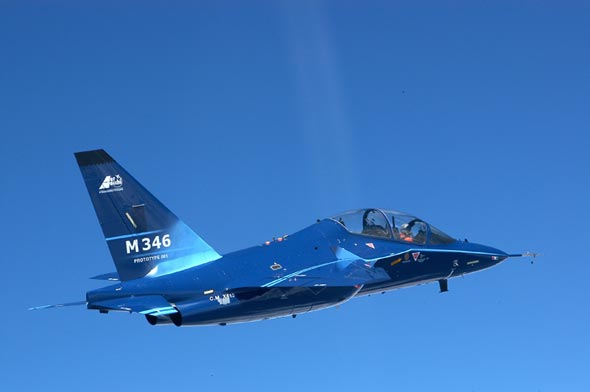
    Israel to buy 30 M346 jet trainers from Italy for $1B

    Photo: Alenia Aermacchi

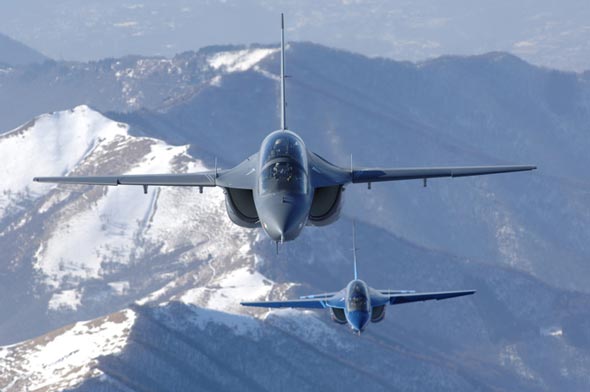
    Israels Ministry of Defense (IMOD) has reached a preliminary agreement with Italy for the procurement of 30 M346 military training jets, built by the Italian company Alenia Aermacchi. The value of the package is one billion US$. Pending formal government approval, the agreement marks the end of a long competition between Italy and South Korea over the lucrative sale.

    The Italian jet has already won two international orders from Singapore and the UAE while the T-50 won one international order, from Indonesia. Both trainers are competing for a similar order in Poland and a huge opportunity in the USA. Winning the Israeli order would have given the Koreans an important endorsement, promoting prospects in additional international markets.

    Photo: Alenia Aermacchi
    Photo: Alenia Aermacchi

    The M346 will replace the A-4N/TA-4N Skyhawks, serving as advanced trainers since the mid-1980s. The Israel Air Force plans to phase out the Skyhawks  after more than four decades of service. The IAF received the first Skyhawks from US surplus in 1968.

    Italy will reciprocate the Israeli purchase by buying $1 billion in Israeli defense equipment, Israel’s Defense Ministry said. The IMOD director general, Udi Shani, said the offset deal enabled Israel to make the large purchase in a “harsh budgetary reality.”

    Italy has already been equipped with Israeli defense products, including guided weapons, intelligence, surveillance and reconnaissance (ISR) equipment, electronic warfare systems and self protection systems for combat helicopters and transport planes. Israeli companies have also cooperated with Italian firms on a number of international aircraft upgrading programs. Further opportunities being discussed in relation with the current package include the transfer of two airborne early warning aircraft, developed by Elta Systems. Italy could potentially be a candidate for the ISR package originally ordered by Turkey, whose transfer was refused by the Israel MOD few months ago. This package is well aligned with the priorities set by the Italian Air Force following the Libyan campaign, accelerating the acquisition, processing and dissemination of intelligence into targeting data.

    South Korea has hoped to sell its T-50 aircraft to Israel and had issued a $1.6 billion counteroffer, including buying the Iron Dome counter-rocket system, defense officials said. Seoul have recently acquired a number of defense systems from Israel, including the Spike NLOS missiles, advanced fire control radars for its indigenous fighters and the ‘Green Pine’, a large anti-missile radar.

    The Israel Air Force favored the Italian plane based on a technical evaluation. Not said it will accept the IMOD recommendation. This left little room for maneuver for the IMOD. Despite the fact the Korean offer was backed by Lockheed Martin, with the potential benefit of being funneled through the U.S. Foreign Military Sales channel, the Koreans often complained about lack of transparency in the process, long before the IMOD selected the Italian proposal.

    Facing a Growing Missile Threat, Israel revamps Air defense Command

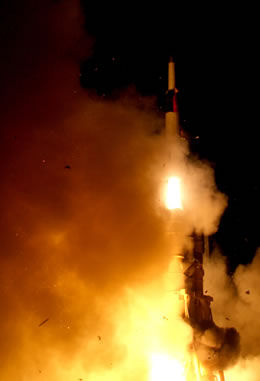
    Facing a growing threat of ballistic missiles and rockets capable of hitting any point in the country from distances of four, up to 2,000km, Israel has grouped its air defense forces into the ‘Air Defense Command’, integrating all active defense elements into an multi-layered defensive system. Israel’s missile defense wing currently maintains two principal assets, the ‘Sword Shield’ unit operating the IAI Arrow-2 ASIP (improved versions) since 1998, and the new ‘Iron Dome’ unit, equipped with three Rafael Counter-Rocket, Artillery & Missile (C-RAM) missile systems. The two systems were developed in Israel to meet specific requirements, peculiar to Israel at the time. The Arrow was designed to intercept Scud type medium range ballistic missiles, acquired by Iraq and Syria, while the Iron Dome was developed to defend from terrorist rocket attacks Israel has endured since 1968.

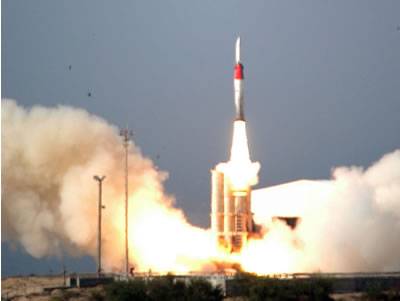
    Arrow-2 ASIP ballistic missile interceptor launched from Pt. Mugu, February 22, 2011

    Arrow 2 is designed to intercept ballistic missiles at their terminal phase, as they re-enter the atmosphere. Unlike the modern air defense missiles, employing ‘hit to kill’ interceptors, Arrow 2 uses an advanced ‘aimable’ warhead to increase hit probability when passing the target at extremely high closing speed. Arrow 2 ASIP represents the latest evolution of the Arrow system, capable of intercepting faster targets, fired from longer ranges. The next step in its evolution is the Arrow 3 Exo-Atmospheric missile interceptor, currently in development. With thrust vectoring kill vehicle designed for hit-to-kill intercept, Arrow 3 will provide the ‘upper tier’ for the Israeli missile defense system, engaging hostile missiles in space, through their midcourse phase. The proliferation of ballistic missiles throughout Asia has triggered missile defense programs in the region, and the Israelis are hopeful that the newly expanded cooperation with the Boeing Company will open new opportunities for export of Arrow systems.

    A most significant change will take place in 2013, as the new David’s Sling missile system, currently in final developmental testing at Rafael, will reach initial operational capability. Unlike the task specific Arrow 2 and Iron Dome, David’s Sling was developed as a flexible, multi-purpose weapon system capable of engaging aircraft, cruise missiles, ballistic and guided missiles as well as long range ballistic rockets. The missile is designed for land based, maritime and airborne applications. Providing a common missile known as ‘Stunner’, it is fitted with a dual seeker (IIR+RF) and a powerful multi-stage rocket motor enabling all weather operation and powerful kinematics including effective endgame maneuverability at extended ranges. David’s Sling will initially deploy with the IAF ‘Air Defense’ wing, replacing the Hawk missiles.

    The system’s primary role will be to intercept medium and long-range ballistic and guided rockets, such as the Fajr-5 and M-600 (a Syrian copy of the Iranian Fateh-110), carrying half-ton warhead, these threats have a range of about 300 kilometers.

    A different threat expected from the sea is the Russian supersonic Yakhont anti-ship missile recently delivered to Syria. This threat would be challenged by another air-defense system developed in Israel – IAI’s Barak 8. The missile, developed by IAI is designed to replace the existing Barak I point defense missile system deployed on the Israeli Saar V corvettes, providing extended ‘networked’ air defense protecting naval forces or offshore installations over a large area. Unlike the Arrow and David’s Sling, Barak-8 was developed without U.S. support, as it was designed primarily for the export market. Developed primarily as a naval air defense missile, Barak 8 is the cornerstone of the Indian Medium and Long Range Surface to Air Missile (MR-SAM/LR-SAM). The missile made the first flight test in 2010 and the entire system is scheduled to enter developmental testing in Israel and India in early 2012.

    Iron Dome represents the world’s first combat proven C-RAM missile system. The IAF is planning to deploy a fourth Iron Dome battery in the coming months and is mulling the possibility of stationing it in Haifa Bay to protect Israel’s strategic industrial hub located there. The Defense Ministry has allocated a budget to manufacture three additional batteries by the end of 2012. IAF operational requirements call for the deployment of about a dozen batteries along Israel’s northern and southern borders. Future evolution of Iron Dome foresee the use of the system as a mobile asset, providing mobile land forces with protective C-RAM coverage, countering UAVs and defeating precision guided weapon attacks. Rafael is also evaluating a short-range complement for the current system, utilizing a guided projectile to be developed with the Italian group Oto-Melara.

    A test launch of the Arrow missile defense system.

    IAI Establishes the UAS Academy, Offering Training Solution for UAS Operators

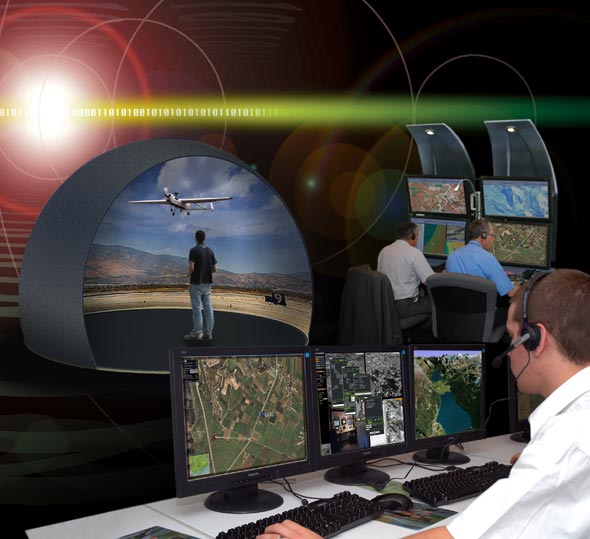
    Image: IAI

    Israel Aerospace Industries (IAI) has established a training and certification facility preparing UAS operators and technicians to support Unmanned Aerial Systems (UAS). The UAS Academy leverages the extensive experience gained by IAI experts through more than 40 years of UAS design, development, operations and training of UAS operators and technicians.

    In addition to providing a variety of training services to IAI customers within IAI premises and in other planned locations, the UAS academy redefines the training concept. It provides solutions to the growing need for trained and skilled UAS operation, maintenance and mission crews in various military, paramilitary and civilian facilities.

    IAI’s UAS academy addresses all UAS personnel – Internal Pilots, External Pilots, payload operators of all types, technicians, mission-commanders and instructors. The curriculum includes the wide spectrum of courses required for training and qualification of UAS operators and technicians: Practical flight training, simulations with Semi-Simulators and high fidelity UAS Mission Trainer (UMT) as well as theoretical training. In addition to reducing costs of operating UAS, training with the academy facilitates the availability of aerial platforms and airspace.

    “IAI’s Academy sets the new standard of training in the UAS field” Tommy Silberring, general manager of IAI’s Malat division “In today’s world where the need for UAS has become essential for every county, training by IAI’s team of experts will enhance the safety and operational capabilities of UAS operation and mission crews around the world and will become a key element of their success”.

    According to Silberring, the academy’s training is applicable to a wide range of customers with different experience, knowledge and background – from customers who are establishing basic UAS abilities – to well-experienced customers interested in optimizing their training abilities as well as those who intend to shift to the qualification and endorsement model, customary in flight schools worldwide.

    The academy places special emphasis on the operational mission training experience and offers a generic and “cross platform” training services in new facilities. Basic and advanced courses are provided as well as recurrent training courses and workshops, special payloads operation courses, seminars for mission commanders and instructors, and qualification maintenance programs.

    Image: IAI

    IAI’s Advanced 767 MMTT Will Also Carry Boom Refueling System

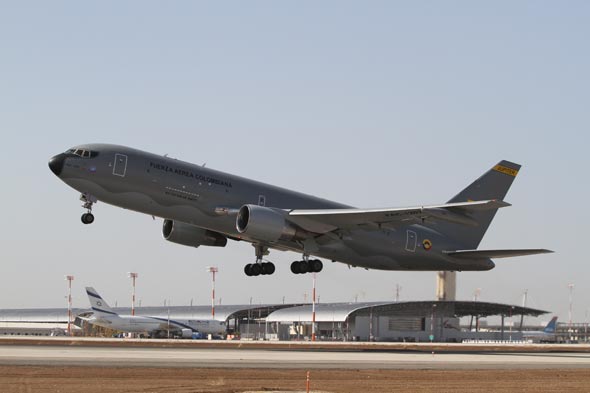
    767 MMTT delivered to the Colombian Air Force. Photo: IAI/Bedek

    Israel Aerospace Industries’ Bedek Aircraft Division is developing a new version of the 767 Multi Mission Tanker Transport (MMTT), with a Boom refueling system.

    Moshe Scharf, Senior Director of Marketing & Business Development of Bedek Aviation Group said that Bedek Division has finalized the design and tests of certain new systems developed specifically for the new aircraft. “Three years ago we began developing the new generation of 767 MMTT. We are expecting the supply of this type of aircraft to certain European air forces in the coming months”.

    767 MMTT delivered to the Colombian Air Force. Photo: IAI/Bedek

    The Boeing 767 MMTT is a new version of the 767 Multi Mission Tanker Transport aircraft, which was delivered to a South American air force. It could be used for refueling missions as well as soldiers and equipment transportation, and other missions. The new version will be equipped with a new Boom refueling system, in addition to the Hose & Drogue system. The new system will be able to refuel advanced fighters as well as other types of aircraft.

    The IAI 767 MMTT will have multi refueling systems- two, three or more, Boom or hose-and-drogue systems. The new boom refueling system will be of Fly-by-Wire design, with a Remote Aerial Refueling Operator (RARO) station and day or night viewing systems.

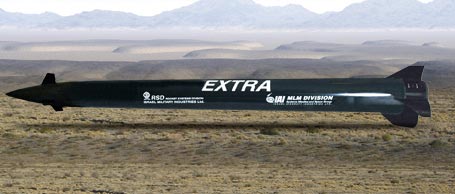
    IMI Explores an Air-launched Derivative of the Extra Rocket

    Israel Military Industries (IMI) is exploring a new air launched application of the 300mm Extra guided ballistic surface launched rocket, enabling air forces to perform autonomous, precision standoff attack, at extended ranges, well outside the effective protected range of even the most advanced air defense systems. The Extra rocket was developed by IMI and IAI MLM division as a surface launched guided rocket, capable of attacking fixed or relocatable targets from distances of 160 km, using an aerodynamically guided, roll stabilized rocket.

    EXTRA - Extended range Rocket System. Photo: IMI

    The Extra guidance system enables rocket artillery units to attack land targets with ‘less than 10 meter’ precision, regardless of the distance they are fired at – according to IMI. The weapon’s guidance uses an inertial measuring unit (IMU) coupled to a Global Positioning Satellite (GPS), forming a range-independent navigation system providing high immunity to GPS spoofing and countermeasures. The Air-launched Extra will be able to receive target coordinates from the cockpit during flight, or programmed before takeoff, via direct download of mission data.

    The rocket will be a derivative of the existing airframe; with a length of around 4.3 meters and a weight of 500 kg. According to IMI, the weapon will carry a warhead weighing about 100 kg. Given the proven capabilities demonstrated by the MPR-500 warhead, and the proven capability of the Extra rocket to hit targets with high precision; IMI is confident that the 100kg warhead of the Air-Launched Extra could offer unmatched mission efficiency in terms of lethality, attack precision and collateral damage risk, when compared to other air-launched, standoff guided weapons. The actual range of the air-launched version has not been released yet.

    The Extra rocket was developed by IMI and IAI MLM division as a surface launched guided rocket, capable of attacking fixed or relocatable targets from distances of 160 km, using an aerodynamically guided, roll stabilized rocket. Photo: IMI

    According to IMI the new weapon could be carried directly on an underwing pylon capable of carrying a Mk83 bomb, with typically four rockets per platform. However, since the Extra is not confirming to existing aerial weapons, IMI will have to clear the flight envelope for every platform it hopes to offer the new weapon for. IMI considers the air launched Extra as an optional weapon for upgraded fighter (F-5, AMX, Su-25 or F-16 could be
    considered), as well as for indigenous fighters of the type of the F/A-50 or LCA class, where such weapons may offer an affordable, supersonic precision attack potential, from standoff distance – capabilities that are hardly achieved even with the most advanced and costliest platforms.

    New Fighter Acquisition Uncertainty Revving Up F-15 Prospects

    Photo: Tamir Eshel, Defense-Update

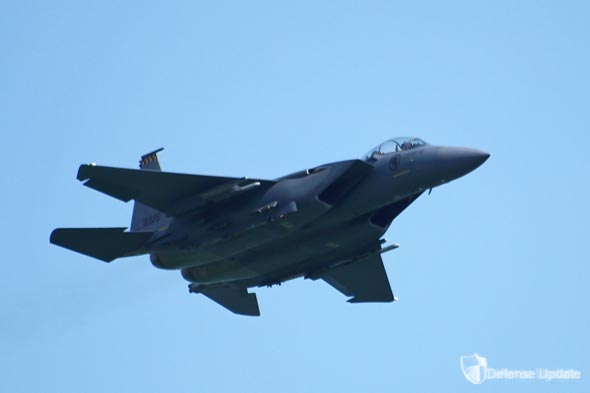
    Recent orders for F-15 fighters from Saudi Arabia are securing the future for the Boeing F-15 production line at least until the year 2018. Beside the Saudi mega deal, South Korea has an ongoing tender for the third phase of the FX, while the US Air Force is looking into possible upgrades to keep its F-15C/Es at least through the decade. The USAF is expected to begin evaluating life extensions for the Eagle soon. Such programs could address avionics, radar and survivability enhancements.

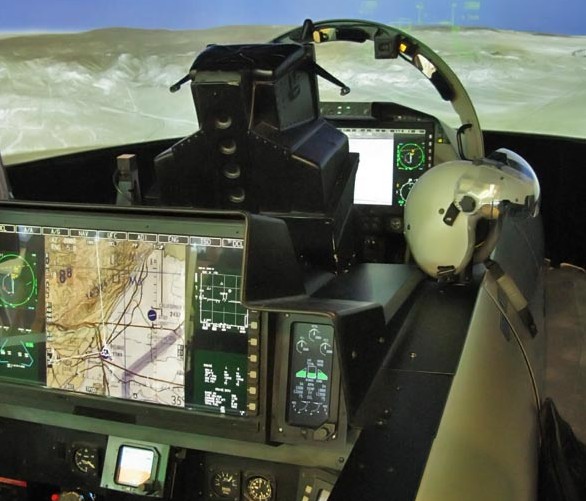
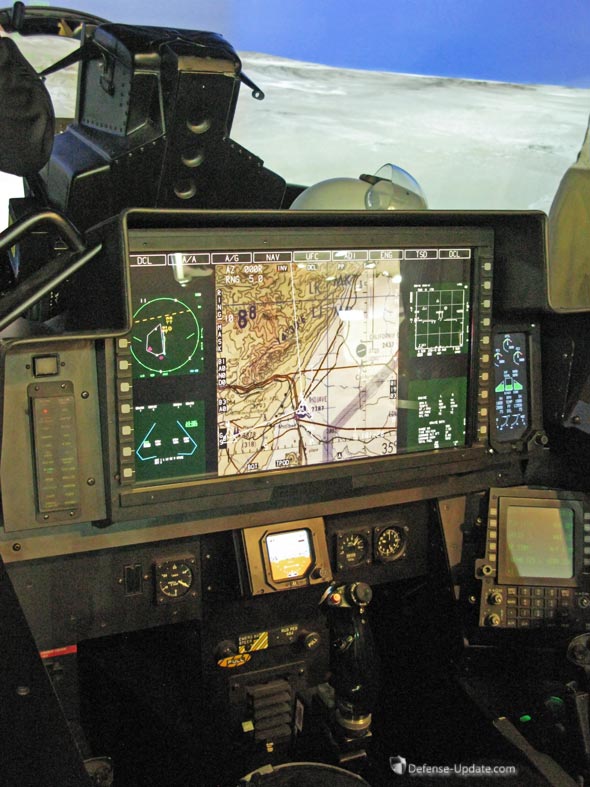
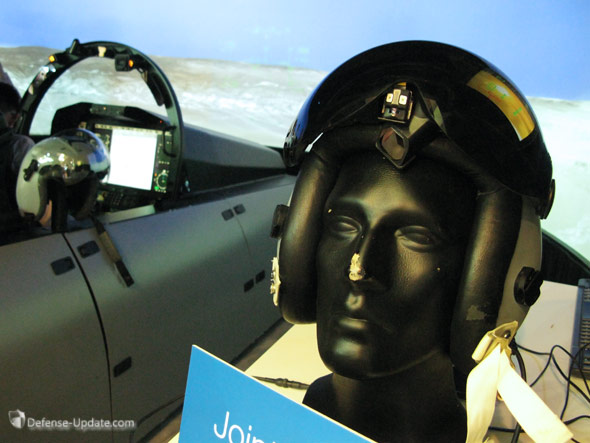
    Boeing is offering an advanced cockpit configuration for future F-15 new builds and upgrades, including the F-15SE. The main feature is the 11x19 inch color, large area multifunction display. Each fighter will have two, in the front and aft cockpit. The view in this picture shows the back seat view of the system. Photo: Tamir Eshel, Defense-Update
    Photo: Tamir Eshel, Defense-Update

    According to Roger Besancenez, Vice President F-15 program at the Boeing Defense company, more prospects for new orders and modernization of existing fighters would keep the line busy beyond 2018. Besancenez presented the Eagle roadmap to the media at the Singapore Airshow 2012 yesterday. He said such prospects are not limited to the FX-3 program in South Korea. Boeing currently support the first two phases of the Korean Slam Eagle (F-15K) program. The last batch of aircraft delivered last month in St. Louis were flown by South Korean crews directly to Nellis, to take part in the Red Flag exercise in Nevada.

    The most prominent feature of the F-15 offering in Korea is the Silent Eagle program, converting the F-15 into a balanced stealth platform, retaining the high performance and combat versatility of the F-15 with signature reduction techniques. This stealth capability will be introduced through a range of optional elements, including a conformal weapons bay, canted vertical tails, radar and the use of thermal absorbing materials, Singapore is also expecting to receive its next batch of F-15SG toward the end of this year, completing the delivery of 24 aircraft, currently representing the most advanced configuration and the first  international Eagle to fly an AESA radar. To maximize the benefits of the new sensors and stealth capabilities the advanced Eagle is offered with an optional, advanced cockpit utilizing large area 11×19 inch color displays, enabling the two crew member to understand a situational picture, plan, manage and execute game plans and communicate with other airborne, ground based or naval elements.

    The advanced cockpit is expected to be ready for production by 2015. This new cockpit is likely to include the JHMCS II helmet mounted cueing sight system. Boeing is already discussing the roadmap for the follow-on JHMCS with the subcontractor Vision Systems Inc., (VSI). This next generation system will employ much of the technology developed at Elbit Systems for the new Targo all-digital EO tracked helmet sight system. Accordingly, the next version of JHMCS IIT reflects this association, as the new system will employ all the Targo capabilities, including color displays, built-in simulation, embedded INS and more. JHMCS IIH will also employ Targo technology but to a lesser degree. Introduced as an upgrade for existing electromagnetically tracked JHMCS systems, supporting current tracking techniques, interfaces, etc.

    Photo: Tamir Eshel, Defense-Update

    Saudi Arabia has committed to buy 84 new build fighters, to be produced at St. Louis, MI, while modernizing existing F-15S Eagles to the same standard of the SA in Saudi Arabia. In addition to the low-risk integration of the Raytheon APG -63 V3 AESA radar, derived from the F-15SG, the F-15SA will also feature the digital fly-by-wire flight control system for the first time, and include the all digital electronic countermeasures (DEWS). The aircraft will also support the two outboard weapon stations (1 and 9), which have been provisioned but not been activated so far by other Eagle operators. The added stations will enable the aircraft to carry more weapons loads in more versatile configurations. Another new feature of the F-15SA will be the new wing, which require no programmed Depot Maintenance (PDM), as current aerostructures do.

    As the Singaporean and Saudi orders are breathing new life into the Eagle program,encouraging the development of new enhancements. Beyond the AESA radar which is currently operational, production versions of DEWS and digital fly-by-wire are scheduled to begin flight testing by the end of 2012.

    Elements of the Silent Eagle are expected to be flown and ready for insertion into production or retrofitted aircraft by 2015, including the RCS signature reduction techniques, canted vertical tails and conformal weapon bay. The aircraft was developed with the Korean FX-2 competition in mind. Therefore, Boeing often highlights the fact that Seoul will share a large part of the aircraft production, with Korean Aerospace slated to produce the conformal weapons bays, and the entire SE maintaining 85% commonality with the current F-15K, claiming a significant advantage in life cycle cost and maintaining high readiness levels of the entire Slam Eagle fleet.

    The F-15 office also integrates the JHMCS helmet mounted cueing system. As part of the advanced cockpit concept Boeing is offering the JHMCS IIH/T for upgraded or new build aircraft. Photo: Tamir Eshel, Defense-Update

    Airbus Military signs contract with Indonesia for nine C295 aircraft

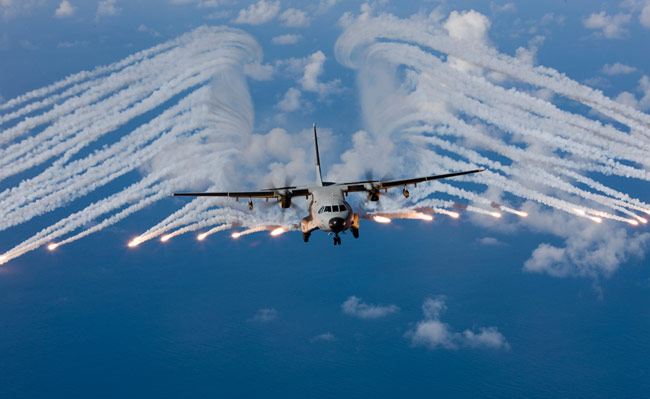
    Airbus C-295. Photo: Airbus Military

    Airbus Military has signed today a firm contract with  PT Dirgantara Indonesia (PT DI) to supply nine C295 military transport aircraft for delivery to the Indonesian Ministry of Defense.

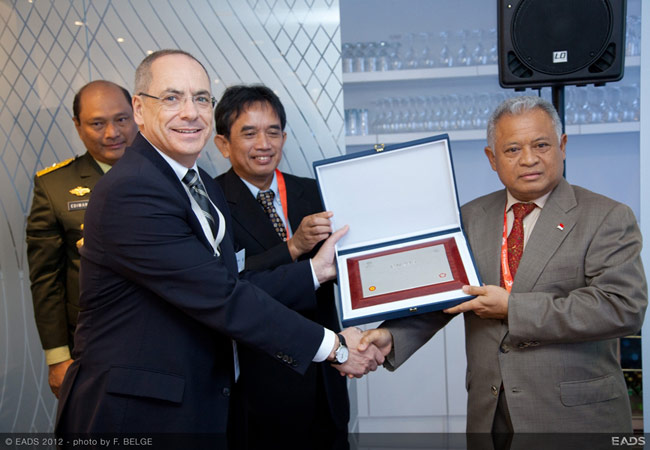
    The contract between  PT DI and the Ministry of Defense of Indonesia was signed simultaneously, witnessed by Minister of Defense, Prof. Dr. Purnomo Yusgiantoro, and the Chief of Armed Forces, Admiral Agus Suhartono, at a ceremony at the Singapore Airshow.

    Airbus C-295. Photo: Airbus Military

    The Indonesian designation of the aircraft will be CN295. The  aircraft will be operated by the  Indonesian Air Force throughout the vast territory of Indonesia, which includes around 17.000 islands. The aircraft will perform a variety of roles including military, logistical, humanitarian and medical evacuation missions. The first delivery is foreseen in 2012 and by summer 2014 all aircraft will have been delivered.

    Additionally, the industrial plan covers a substantial collaboration between PT DI and Airbus Military for the C295 program, including the manufacturing  of the tail empennage, rear fuselage and fuselage panels, as well as work packages for the development of Computer Based Training systems and the  creation of a  service and delivery center and  a  final assembly line (FAL) in Indonesia.

    “This is a proud moment for our country as well as for the Indonesian aerospace industry. The C295 provides the ideal  capacity to respond to Indonesia´s current and future military and humanitarian transport needs and does so very cost-efficiently, with full participation of the Indonesian aerospace industry, creating high skilled jobs and technology transfer,” said Prof. Dr. Purnomo Yusgiantoro, Minister of Defense of the Republic of Indonesia.

    Domingo Ureña, President and CEO of Airbus Military; Dr. Budi Santoso, President and CEO of PTDI and Minister of Defense, Purnomo Yusgiantoro (left to right). In the back Major General Ediwan Prabowo. Photo: EADS

    Singapore Airshow 2012 Live Reporting – Flight Display

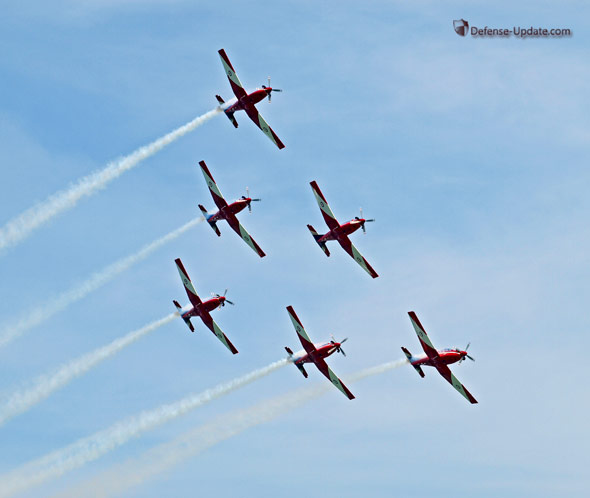
    A perfect delta formation flown by the Roulettes.

    Flight display collection singapore Airshow 15/2/2012

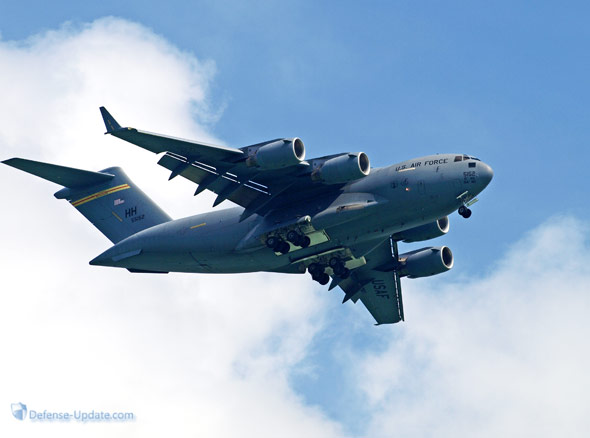
    USAF Boeing C-17A Globemaster III on display at the Singapore Airshow 2012. Photo: Tamir Eshel, Defense-Update


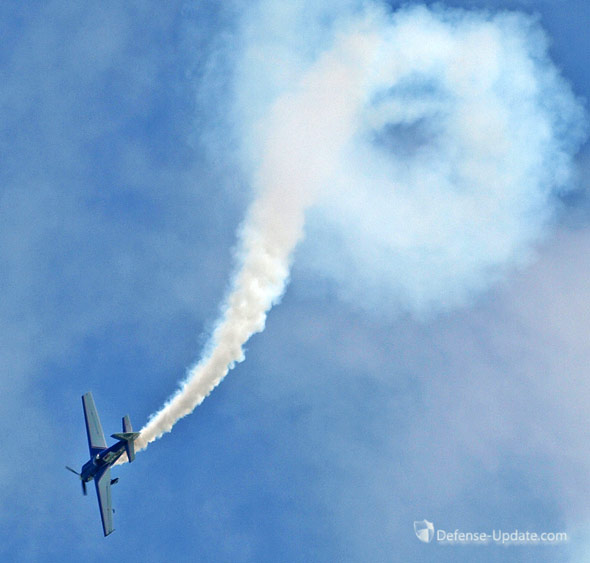
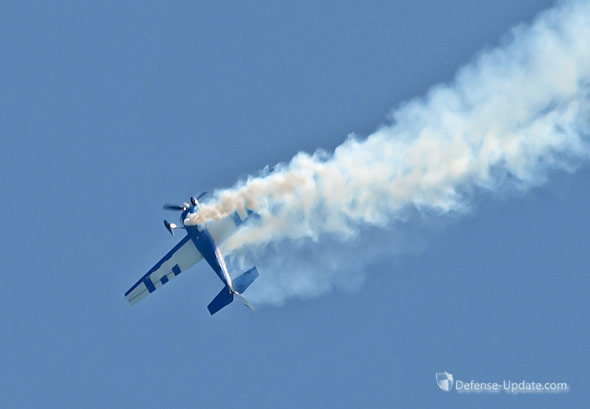
    Tony Blair flying his Rebel-300 to the limits at the Singapore Airshow 2012. Photo: Tamir Eshel, Defense-Update

    Another take of Blair's Aerial Stunts. Photo: Tamir Eshel, Defense-Update


    A perfect delta formation flown by the Roulettes. Photo: Tamir Eshel, Defense-Update

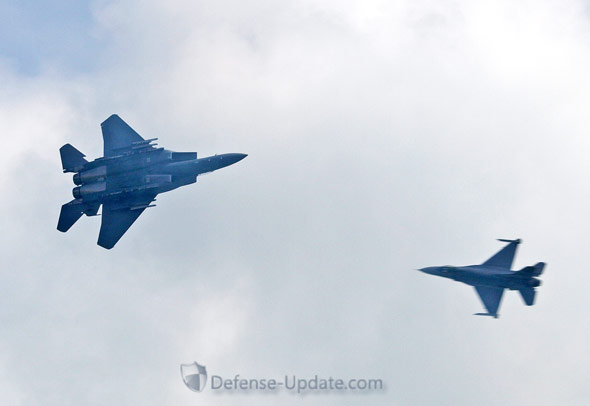
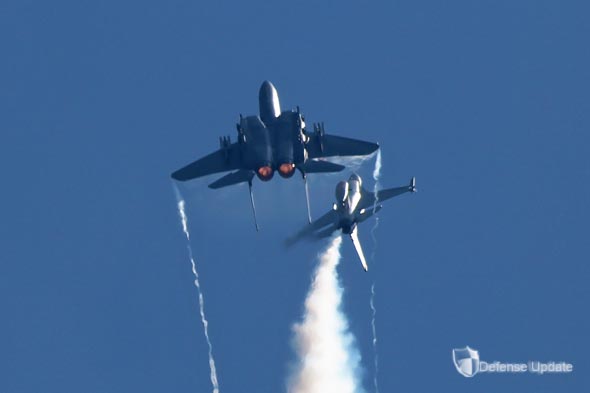
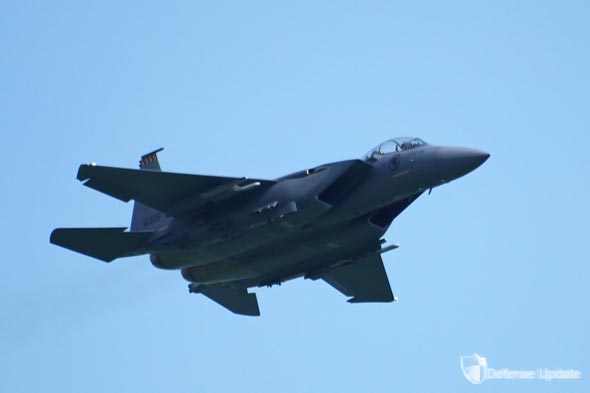
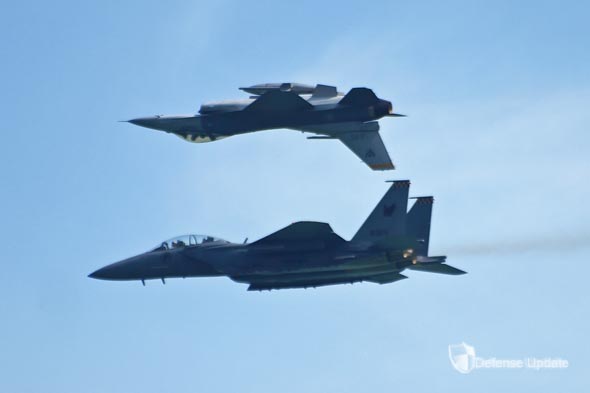
    Republic of Singapore Air Force F-15SG and F-16C Combined display. Photo: Tamir Eshel, Defense-Update


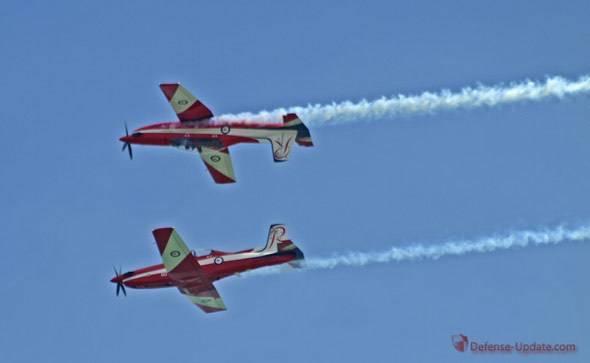
    Two Roulettes flying the Upside Down stunt. Photo: Tamir Eshel, Defense-Update

    The Royal Australian Air Force PC-9 Aerial demonstration team at the Singapore Airshow 2012. Photo: Tamir Eshel, Defense-Update


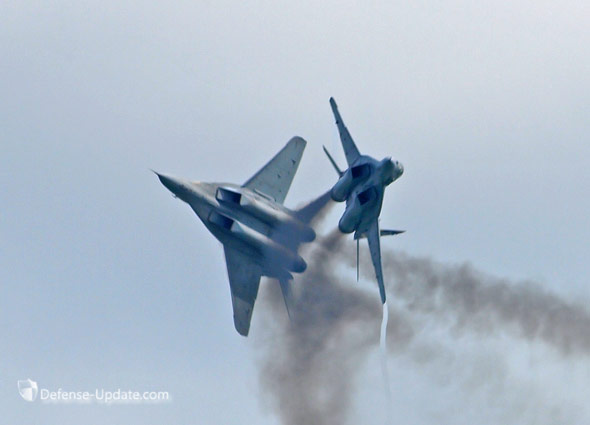
    Royal Malaysian Air Force (RMAF) Mig-29N 'Smokey Bandits' aerobatic team on display at the Singapore Airshow 2012. Photo: Tamir Eshel, Defense-Update


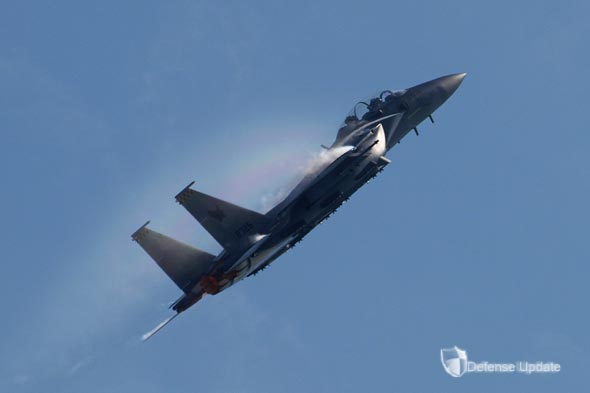
    Photo: Tamir Eshel, Defense-Update


    Photo: Tamir Eshel, Defense-Update

    Photo: Tamir Eshel, Defense-Update


    Photo: Tamir Eshel, Defense-Update

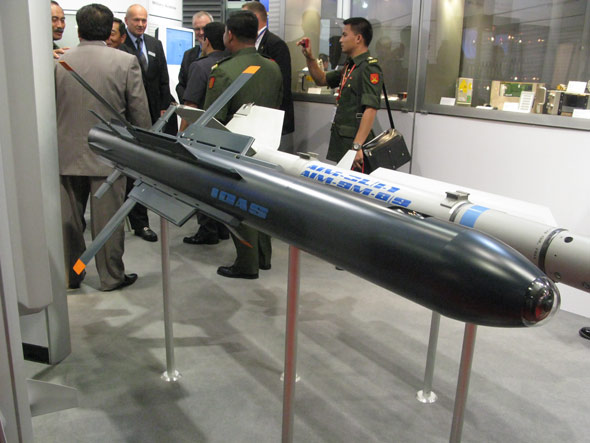
    IDAS Submarine Launched Surface to Air Missile System

    Diehl Defense from Germany is back at the Singapore Airshow promoting a number of defense systems which are of high value to customers in Asia. Particularly interesting is the IDAS (Interactive Defence and Attack System for Submarines). This unique submarine launched anti-helicopter weapon is designed to protect attack submarines from anti-submarine helicopters, as they become vulnerable hovering low above water, dipping their sonar in search of enemy submarines. This subsonic missile is optimized to seek out such slow targets, which pose significant risk to a submarine operating at littoral, ‘brown’ waters.
    Four missiles will be stored in a magazine that fits into a standard 21″ torpedo tube. The missiles are ejected from the magazine into the water, extract their wings and separate quietly from the submarine, where they ignite the rocket and transition to airborne flight, propelled by the weapon’s rocket motor.
    One of the development challenges was the propulsion system. The same rocket was required to provide thrust for both underwater and airborne flight. The rocket was designed to sustain the missile’s at optimal velocity in submerged flight, and accelerate to subsonic flight while airborne, reaching effective range of 20 km. Another concern was sustaining the optical-fiber through the transit below and above water. Diehl’s engineers were concerned how the fiberoptic bobbins will behave in the different environments (below and above water) the test provided clear evidence this will not be an issue.
    Diehl initially considered using the IRST seeker for IDAS, however, this high performance and all aspect  seeker may not be the only option, and other seekers might be considered to pick up the target, provided with passive cuing from by the submarine sonar. The submarine can acquire ASW helicopter when submerged, by localizing the ripple effect created by the rotor downwash. According to Diehl, the accuracy of such cuing system is adequate to provide bearing and range, bringing the missile seeker to autonomously acquire the target with high level of confidence. The fiber optical link would then be used by the crew to verify the target, confirm the intercept and perform battle damage assessment.
    IDAS was originally developed for the German Type 212 submarines but the program has since frozen due to German defense budget cuts. Originally the missile was planned to become operational in 2014 but this timetable is now unlikely as the German Navy acquisition programs have stalled recently due to lack of funding. Diehl is currently talking to international partners seeking bridging funding for the program, to sustain the development through the next stage.In few years, Diehl is confident the high interest in the program will turn into formal endorsement by foreign navies that have already expressed much interest in the program.
    For the missile development Diehl has teamed with Submarine builder HDW, which is now part of the Thyssen-Krupp Marine Systems (TKMS). Originally the weapon was designed to be integrated in the HDW Type 212 submarine but, according to Diehl, it can be integrated with other HDW types.
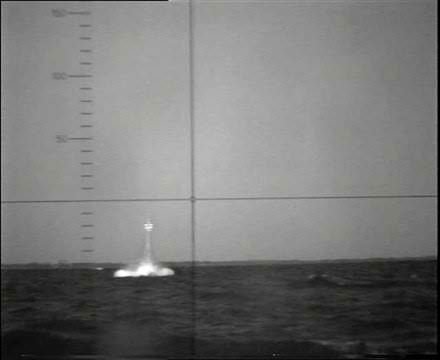
    IDAS is formally still in the proof of concept phase, which culminated four years ago in a submarine launch performed by the German Navy U33 Type 212 submarine in 2008. This test examined the underwater launch system, with the missile ejected from the torpedo tube, igniting the rocket under water, separating from the submarine without leaving significant signature (avoiding exposure of the submarine location). Following this maneuver IDAS performed a course change under the water, streaking vertically into the air. Back in 2008 the test focused on this transition phase, with future tests, to be performed when funding is available, would continue with full flight, target acquisition, guidance and battle damage assessment.

    ST Kinetics Unveils the TEREX RSTA Technology Demonstrator

    ST Kinetics is displaying the Reconnaissance, Surveillance and Target Acquisition (RSTA) variant of the Terrex at the land systems pavilion of the Singapore Airshow 2012. The vehicle is based on the operational Terrex, fitted with a number of new systems supporting intelligence gathering and target acquisition missions.

    Photo: Tamir Eshel, Defense-Update

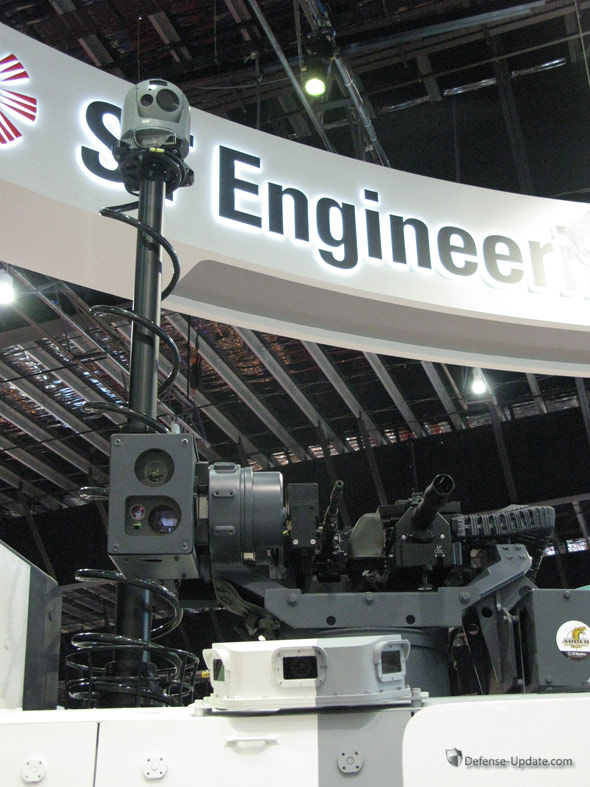
    Most notable is the MINI-T, a stabilised electro-optical payload provided by STELOP. The payload is mounted on a telescopic mast, providing the vehicle an efficient capability to observe the area from concealed positions. The system is particularly suitable for operations in tropical environment, with the telescopic mast enabling the crew a look over the canopy and thermal imagers supporting operations in high humidity. The MINI-T packs a day camera, cooled thermal imager, a laser rangefinder and laser pointer in a stabilized 22kg payload, which includes all the supporting electronic equipment. The same ball can also accommodate a laser designator. These sensors enable the detection of human targets at a range of nine kilometers in daylight conditions or three kilometers at night.

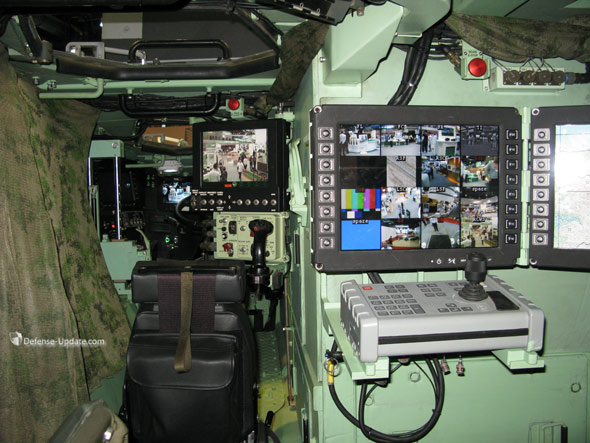
    The vehicle will be equipped with the Skyblade 3 mini-unmanned aerial vehicle, providing top-down view of an extended area under surveillance. The imagery from the UAV is fed through the datalink and mission control system to the TERREX RSTA mission system, with imagery from the UAV payload, mast mounted sensors, remote weapon systems and panoramic vision systems all displayed and shared by the crew on multiple displays via the C4I supporting system. Other devices integrated on this technology demonstrator include panoramic cameras (viewed below) as well as threat warning sensors, providing missile and laser warning sensors for the crew.

    This image of the TERREX RSTA shows an internal view of the system, depicting the driver (far forward), gunner (forward left) and observer positions. The tactical situation operated by the commander is located to the right. Photo: Tamir Eshel, Defense-Update

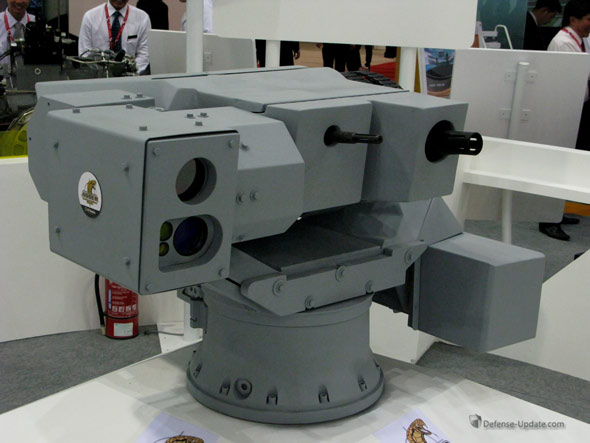
    Another prominent feature is the ADDER remote weapon system. ADDER Represents a family of remotely controlled weapon systems developed by ST Kinetics, ranging from systems accommodating light and medium caliber weapons. A dual weapon station of this type has been integrated on the TERREX infantry carrier and a different variant is shown here on the RSTA variant.

    Another version of the ADDER RWS, depicting a more protected dual-weapon mount for naval use. Photo: Tamir Eshel, Defense-Update

    Royal Australian Air Force Super Hornets to Receive New Air Combat Training System

    Cubic Defense Applications has received a new contract valued at more than $11 million to provide the P5 Tactical Combat Training System (P5TCTS) to the Royal Australian Air Force for use in training F/A-18F Super Hornet crews.

    “This new system represents a step forward for the RAAF,” said Michael Rodriguez, Senior Program Manager, Air Ranges. “Australia currently operates a fourth generation Cubic air combat training system at RAAF Base Williamtown for training on its F/A-18 Hornet aircraft. The RAAF decided to purchase the fifth generation P5TCTS for use on its newest F/A-18F aircraft operating at RAAF Base Amberley. This new system will allow for interoperability with the F-35 Lightning II Joint Strike Fighter aircraft that the RAAF is planning to purchase in the near future. All F-35 Joint Strike Fighters for Australia will be delivered with an on-board, internal P5 airborne subsystem.”

    Photo: Cubic Defense Systems

    P5TCTS for the Super Hornet will be delivered in late 2012 to RAAF Base Amberley near Brisbane, Queensland. Amberley was previously home to the RAAF’s F-111 aircraft, which were recently retired from service and were replaced with two squadrons of F/A-18F Super Hornets. The RAAF’s new P5TCTS will be very similar to the current U.S. Navy TCTS system and will include airborne instrumentation pods built by principal subcontractor DRS, transportable ground systems with live monitor, and portable ground subsystems, which includes Cubic’s Individual Combat Aircrew Display System (ICADS) software for debriefing. For this effort Cubic, has also been contracted to provide software and hardware to ensure that the legacy Cubic-developed Air Combat Maneuvering Instrumentation (ACMI) system operating at Williamtown will be able to “merge data ” to allow for post mission debriefing between the Classic Hornet and Super Hornet aircrews.

    Amberley squadrons will also receive live monitoring (LM) capability. The LM enables real-time monitor and uplink control of P5TCTS-podded aircraft via Cubic’s ground stations.

    Skunk Works and XTEND Simplify Multi-Drone Command

    0
    Lockheed Martin Skunk Works® and XTEND have achieved a major milestone in JADC2 by integrating the XOS operating system with the MDCX™ autonomy platform. This technical breakthrough enables a single operator to simultaneously command multiple drone classes, eliminating the friction of mission handoffs. From "marsupial" drone deployments to operating in GPS-denied environments, explore how this collaboration is abbreviating the data-to-decision timeline and redefining autonomous mission execution.

    From Ukraine to Taiwan: The Global Race to Dominate the New Defense Tech Frontier

    0
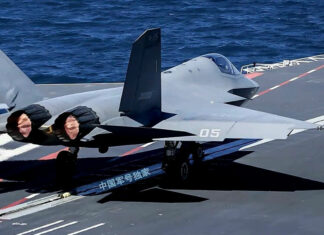
    As traditional defense primes face mounting competition from agile “neoprimes” such as Anduril, Palantir and Helsing, the balance of innovation is shifting toward software-defined warfare and scalable, dual-use technologies, while global industry consolidation—marked by Boeing’s integration of Spirit AeroSystems and other strategic mergers—signals an intensified race to secure control over the defense technology value chain. Our Defense-Tech weekly report highlights these trends.

    Europe’s “Drone Wall”

    0
    In early October 2025, a coordinated wave of unmanned aerial system (UAS) incursions—widely attributed to Russia—targeted critical infrastructure across at least ten European nations. The unprecedented campaign exposed the fragility of Europe’s air defenses...

    Weekly Defense Update & Global Security Assessment

    0
    Executive Summary The past week (September 18-25, 2025) represents an inflection point where strategic defense concepts have transitioned from doctrine to tangible reality. An analysis of global events reveals four primary, interconnected trends shaping an...

    U.S. Air and Space Forces Push Next-Gen Programs at the AS&C 2025 Conference and...

    0
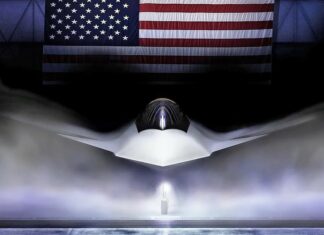
    At the 2025 Air, Space & Cyber Conference, U.S. Air Force and Space Force leaders unveiled major updates on next-generation fighters, bombers, unmanned systems, and space initiatives, highlighting both rapid innovation and critical readiness challenges as the services race to outpace global competitors. A short version is available here, with a more detailed version for subscribers.

    TADTE 2025: Reflecting Taiwan’s Strategic Themes

    0
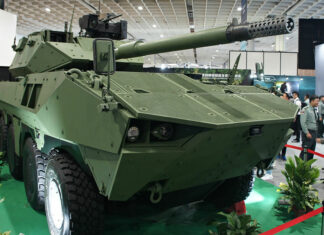
    The Taipei Aerospace & Defense Technology Exhibition (TADTE) 2025 crystallized around four dominant strategic themes that collectively illustrate Taiwan's comprehensive approach to defense modernization amid escalating regional tensions. Based on a detailed report by Pleronix (available upon request). Includes a Podcast discussion on TADTE 2025's highlighting Taiwan's four strategic themes beyond the post's coverage.

    Iron Beam 450 Completes Testing, Soon to Join With Operational Air Defense Units

    0
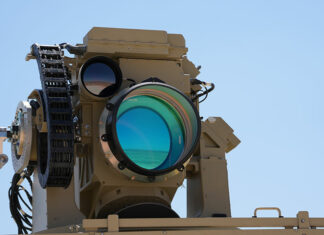
    Israel’s Iron Beam 450 high-power laser system has completed final testing, marking a major leap in air defense. Developed by Rafael, it offers precise, cost-effective interception of rockets, UAVs, and mortars, and is set for IDF deployment by 2025.