

 Boeing Defense, Space & Security is a division of the Boeing Company focused on the military market. Its activities combine manned and unmanned airborne capabilities, intelligence and security systems, communications architectures and extensive large-scale integration expertise across several diverse business areas. As of 2010 Defense, Space & Security is a $34 billion business employing 68,000 personnel worldwide.
Boeing Defense, Space & Security
SAIC (Science Applications International Corporation)
 SAIC is a FORTUNE 500 scientific, engineering, and technology applications company focused on national security, energy and the environment, critical infrastructure, and health. The company’s approximately 45,000 employees serve customers in the U.S. Department of Defense, the intelligence community, the U.S. Department of Homeland Security, other U.S. Government civil agencies and selected commercial markets. Headquartered in McLean, Va., SAIC had annual revenues of $10.8 billion for its fiscal year ended January 31, 2010.
Hindustan Aeronautics Limited (HAL)
 Hindustan Aeronautics Limited (HAL) was established in 1964 as a merger between ‘Hindustan Aircraft Limited’, ‘Aeronautics India Limited’ and ‘Aircraft Manufacturing Depot’, Kanpur. Today, HAL has 19 Production Units and nine Research and Design Centers in seven locations in India. The company has produced 12 types of aircraft, and produced 14 types under license. In total, HAL has manufactured over 3550 aircraft, 3600 engines and overhauled over 8150 aircraft and 27300 engines.
Among the current programs underway at HAL are the development and production of the Advanced Dhruv Light Helicopter (ALH), and its derivative Light Combat Helicopter (LCH), development and production of the first indigenous Indian fighter aircraft Tejas – Light Combat Aircraft (LCA), development of an Intermediate Jet Trainer (IJT), production under license of Sukhoi Su30MKI, and Various military and civil aircraft upgrades. Two programs under development embarked in 2010 are the development of 5th Generation Fighter Aircraft – a joint Indo-Russian program, and the development of the Multi-Role Transport Aircraft, also under JV between India and Russia.
HAL also supports India’s space program with the manufacturing of structures for satellite launch vehicles including the Polar Satellite Launch Vehicle (PSLV), and indigenous Indian spacecraft including the Geo-synchronous Satellite Launch Vehicle (GSLV), Indian Remote Satellite (IRS) and Indian National Satellite (INSAT).HAL’s main operating units include the aerospace, aircraft and helicopter, engines, MRO, foundry and forge divisions at Bangalore, the Nasik based Aircraft division, avionics divisions in Hyderabad, Korwa, the engine division at Koraput, transport aircraft division at Kanpur and accessories operations at Lucknow.
Apart from these main operating divisions HAL also established joint ventures with domestic and foreign companies as part of its growth strategy and entry into new technological fields. HAL established such JV with BAE Systems in 1993 (BAeHAL Software Limited) to develop and support avionic and defense IT. Engine production and support with Snecma (Snecma HAL Aerospace Pvt Ltd). Maintenance, upgrading and support of Russian aircraft (Indo-Russian Aviation Limited – IRAL), Avionic displays with Samtel (Samtel HAL Display System Limited – SHDS). HAL has also established two JVs specialized in avionics, a development, production and support center for advanced avionics, established with Israel’s Elbit Systems (HALBIT) and Avionics design and development center established with U.S. Edgewood Ventures, an ‘Indian-based accelerator’ operating in the U.S. and Indian market, specialized in semiconductor, satellite based systems, telecommunications, aerospace and defense. HAL also established a n engineering design services joint venture company with IT provider Infotech (INFOTECH HAL) offering engineering services for the aerospace sector.
Aerovironment, Textron Systems, IAT to Deliver Lethal Mini-Drone Prototypes in Four Months
The U.S. Air Force Rapid Acquisition Cell launched a urgent procurement program for lethal mini-drones, aiming to field such weapons with Special Operations command units in 2012. The weapons to be delivered under the Lethal Miniature Aerial Munition System (LMAMS), will offer the warfighter a portable, non-line-of-sight precision strike capability against individual stationary or moving individuals, ensuring high precision effect from covert positions, with a very low risk of collateral damage.
In December 2010 the air force selected three contractors to provide provide weaponized systems for a test series, planned for April 2011. The companies are Aerovironment, IAT and Textron Defense Systems. The Air Force plans to begin procurement of such weapons as early as 2012. Two representative systems in this category are a new ‘Point and Toss’ mini-drone from IAT and the Switchblade developed by Aerovironment, presumably under ‘Project Anubis‘.
The Air Force expects the new weapon to weigh around 3 lbs (1.36 kg). The user will also carry the integrated operating console and communications unit, weighing additional 3 pounds. The entire system could deploy and be ready to fire within 30 seconds. Once launched, the system should be capable to acquire a man-size target at the system’s combat range, in less than 20 seconds, flying at an altitude of 100 meter above ground. If conditions for attack are not met, the MAV will be able to loiter over the target for up to 30 minutes. For the terminal phase, the MAV is designed to hit target within 3.28 ft (1 meter) radius, at maximum speed of 80 – 100 mph (35-44m/sec). This accuracy matches the warhead’s effectiveness to kill or incapacitate personnel in the open or on soft skinned vehicles, within a two meter radius from the point of detonation.
Suicide Micro-Drons
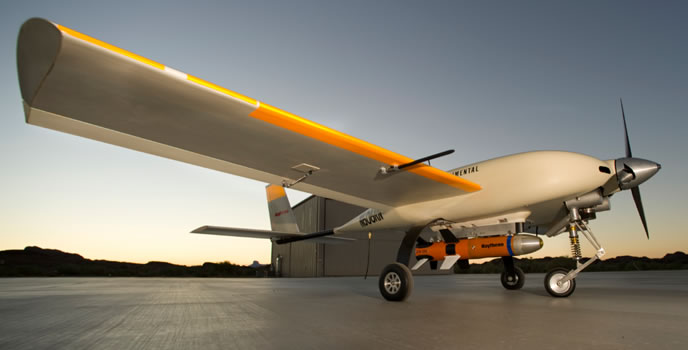
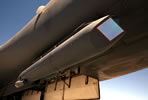
Above: Miniature missiles developed for use with small UAVs such as this Raytheon Small Tactical Missile (STM) shown above, under a Cobra experimental UAV are providing warfighters the means to execute precision attacks with minimal risk of collateral dagmage. For special missions, even these small missiles are too big, and then, the whole micro UAV becomes the weapon itself. Photo: Raytheon
The use of UAVs as combat weapons is growing rapidly in recent conflicts, highlighted by operations in the Middle East and Central Asia. The commonly used platforms are Predator and Reapors – MQ-9, MQ-1A and MQ-1C, equipped for long endurance, and capable of persistent endurance of several hours over the battlefield. Yet, for many applications, users require smaller, covert weapon systems to create localized, yet highly accurate and effective kinetic effect. For these applications, the UAV platform becomes the weapon, in the form of miniature ‘suicide’ Mini-UAVs. Several programs pursuing such capabilities are currently underway addressing the growing interest in this weapon caregory, among special forces and the military.
Paving the way for Weaponized Micro-Drones
DARPA has recently concluded a study called Close Combat Lethal Recon (CCLR), developing enabling technologies for a remotely operated airborne sensor, that could be converted in the field into a precision guided weapon. Such a weapon will provide the warfighter the ability to engage hidden targets in non-line-of-sight (NLOS) conditions, in complex (urban) environments. DRAPA called it ‘hand-launched loitering cruise munition’.
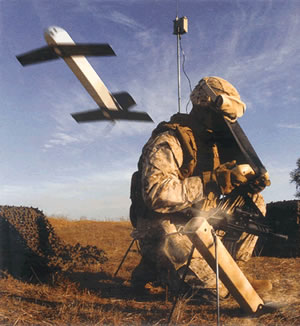
Photo at left shows the Switchblade, from Aerovironment.
Photo: Aerovironment
The idea was to field a guided weapon, controlled intuitively from wearable interface (like smartphone app). Linking between the air vehicle and control unit would be done by fiber-optical links, providing high-bandwidth communications for ultra-high resolution imaging. Such a weapon could fly effectively to seek targets over and around buildings, onto rooftops, and into open building portals.
DARPA identified the major challenges for the program as the development of man – portable airframe that can achieve the required terminal accuracy, and by carrying sufficient warhead to defeat the target set. The development of a lightweight and compact portable launcher is to be used with the soldier’s standard equipment. Development of simple, yet effective human interface utilizing PDA-sized map-based graphical user interface, displaying streaming video throughout the mission, from planning to execution presents another challenge.
US Air Force Embarks on LMAMS Program for SOCOM
Following the conclusion of DARPA’s CCLR project the U.S. Air Force has embarked on a rapid acquisition program for a Lethal Miniature Aerial Munition System (LMAMS), offering the warfighter portable, non-line-of-sight precision strike capability against individual targets, ensuring high precision effect with a very low risk of collateral damage.
LMAMS will employ a tube-launch or hand-tossed expendable weapon, electro-optically guided system, fitted with a small warhead. The weapon will be able to loiter quietly over the target for limited time, waiting for optimal conditions to attack, while maintaining constant communications with the operator, transferring live video of the target below. Once attack permission is granted by the user, the drone’s mission-control becomes a guidance system, employing automatic-target tracking to lock on target, descending through a fast, controlled diving guiding itself to hit the target with the highest precision.
In November 2010 several companies have submitted inert ‘suicide MAV’ to demonstrate mature technologies. Although none was specifically attributed to CCLR program it is believed that at least some of the elements, including the electro-optical sensor and its operating algorithms provided by the government were derived from the program. Following these tests three contractors were selected to continue and provide weaponized systems for a test series, planned for April 2011 – Aerovironment, IAT and Textron Defense Systems. The Air Force plans to begin procurement of such weapons as early as 2012. Two representative systems in this category are a new ‘Point and Toss’ mini-drone from IAT and the Switchblade developed by Aerovironment, presumably under ‘Project Anubis’.
Read the other parts in this series:
Arming the Shadows
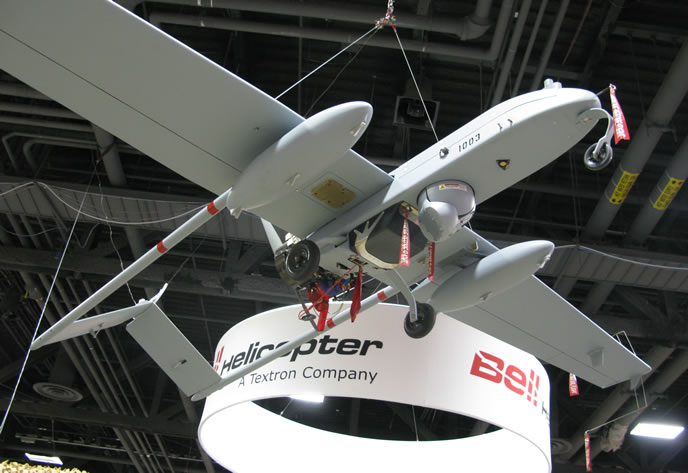
The UAV weaponization trend does not stop at the Predator and Reaper. After the CIA, the U.S. Air Force and Army, as the U.S. Marine Corps, all wish to arm its unmanned aircraft to carry weapons. However, the Marines own only small UAVs that currently are not equipped to carry weapons.
The FireScout unmanned helicopter will be able to carry missiles and rockets, but it lacks stealth, characterizing smaller UAS. The first system considered for such role is the RQ-7 Shadow, which will soon be modified to perform armed missions. As part of the recent upgrade, its wings were strengthened and extended, matched with an engine running on heavy fuel, providing the Shadow more endurance and payload. The EO payload was enhanced with the introduction of IAI/Tamam POP300D Multi-sensor payload carrying day-and-night sensors with an integral laser designator, enabling the Shadow to designate targets for other platforms and, more specifically, ‘self designate’ targets for the missiles carried on-board.
The new payload was visible with multiple Shadow UAVs displayed at the recent AUSA event. The new designators are provided as part of a $70 million contract awarded to the Shadow manufacturer AAI to equip the Army and Marine Corps fleet of Shadows with 142 laser designation kits.
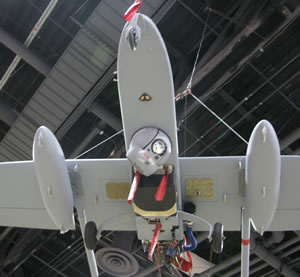
A typical weapon-load for the Shadow will take only two missiles – one under each wing. Available weapons include the ‘Griffin’ Small Tactical Munition (STM), developed by Raytheon or the Viper Strike from Northrop Grumman. The Israeli Lahat missile, developed by IAI could also be considered for such application. Other options for unpowered weapons are guided mortar bombs. Few months ago General Dynamics demonstrated how such a weapon can be dropped from a UAV, using a new, lightweight ejector rack developed by the company.
Other weapons being matured for UAVs are 68mm guided rockets, although due to the weight of the launcher and auxiliary controls, these rockets are not suitable for small drones, but could be carried by the MQ-8B FireScout, as they are more suitable for manned helicopters or light aircraft. These are already designed to carry unguided rockets – primarily light armed scout and attack helicopters like the Apache, Kiowa warrior and new AH6i. Laser guided rockets are currently offered by several manufacturers, including Raytheon, BAE systems, Lockheed Martin and ATK.
Flying armed reconnaissance missions with a small unmanned platform like the Shadow presents quite a challenge. Even when the UAV has enough payload capacity for the missiles, additional issues to be considered, include communications delays. These would hardly go unnoticed by ISR analysts, but could lead to bitter failures, or even cause unacceptable collateral damage.
Laser designating payloads that draw considerable power from the generator are normally operated on larger drones, but on a small platform they draw much of the reserve power on board. Furthermore, additional payload-control modules are required to manage the expendable payload. Larger UAVs commonly use a distributed payload controllers as part of their avionic architecture, but a small UAV lacking such system would require the integration of dedicated avionic interfaces and wiring for each weapons rack.
A weapon management system (WMS) system developed by the U.S. The Naval Air Warfare Center Weapons Division (NAWCWD) provides such integration on RQ-7B Shadow class UAVs for the miniature Spike missile developed at the center. The system comprises a Weapon Management System, rack launcher, with the missile being tested on a small UAV. The second generation WMS weighs about 2 pounds (less than 1 kg). It can control four stores points, two video streams, a digital recorder and a link to other avionic system through a MiL1553 bus interface.
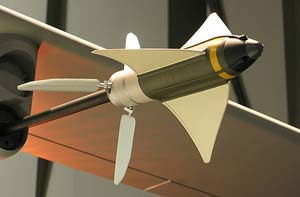
believed to be Lased Beside the Spike, NAWCWD is planning to expand the system to support the new Scan Eagle Guided Munition (SEGM) and the Miniature GPS-Guided Munition (G2M), both undergoing development at China Lake Naval Weapons Center. Employment of GPS-guided weaponry can reduce the complexity of target acquisition, as they do not require continuous target designation. The weapon relies on accurate target coordinates, guiding itself to the precise location through autonomous or ‘man in the loop’ engagement. This capability could be further assisted by semi-active laser homing, where ground elements are available to designate the target from the ground.
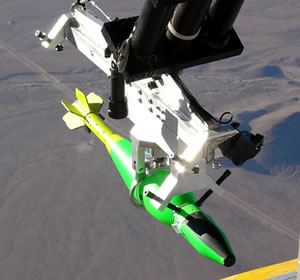
Information about the G2M is vague, but a glimpse of what such a weapon could look like was provided during the recent AUSA exhibition in Washington last October by ATK. The company displayed a new, unpowered light-weight guided weapon designed specifically for small UAVs, or as a submunition payload carried by larger UAVs, or ‘cargo’ type weapons. In 2012 ATK disclosed the weapons’ name as ‘Hatchet’.
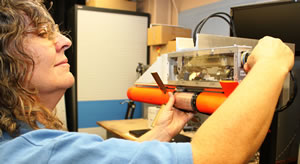
Four such GPS/laser-guided weapons are carried in two streamlined fairings, attached under the wing of a Shadow. Each weapon weighs about 6 lbs (2.7kg) and packs the seeker, warhead and electronics, weighing a total of 4 pounds (1.8 kg); the remaining weight is reserved for the electronics, airframe and flight control surfaces. The launch signature is minimal, as the weapon does not use any propellant when released into the airstream. Diving silently along a glide slope determined to acquire the laser signal reflected from the designated target, the weapon can develop substantial offset from the flight path, reaching targets at significant standoff distance from the UAV, to achieve maximum surprise.
The Shadow is positioned to be the first platform to carry the small weapon, but ATK plans to offer the new miniature weapon for other platforms, providing persistent close air – support on demand. Typical load on a Predator UAV could be 72 units, while the Reaper could carry 270 such weapons.
For some applications, even a miniature weapon like the Spike could be too large for the job. Such missions could employ miniature ‘suicide’ drones. Several programs pursuing such capabilities are currently underway.
Read the other parts in this series:
- Miniaturizing the Aerial Weapons
- New Language for Air-Ground Collaboration
- UAVs as Multi-Mission Warfighters
- Arming the Shadows
- Suicide Micro-UAVs
| Small UAV-Launched Weapons | ||
| Type | Weight Lb (kg) | Range in Miles (km) |
| Viper Strike | 44 (20) | 7.5 (+12) |
| Griffin | 33 (15) | +7.5 (+12.5) |
| G2M | 6? (2.7?) | NA |
| Spike | 5 (2.26) | 1.9 (+3) |
| Switchblade | 3 (1.36) | +3 (+5) |
UAVs as Multi-Mission Warfighters
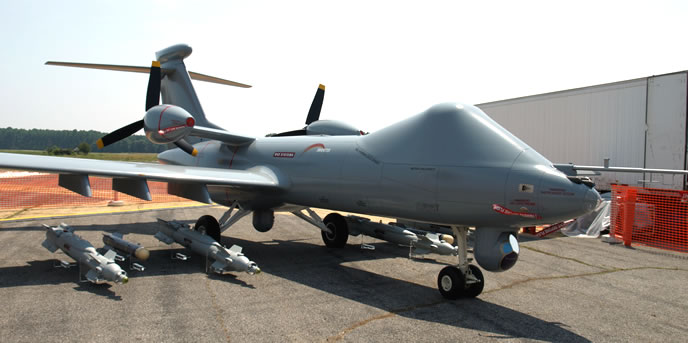
Two new versions of the Predator – the U.S. Army MQ-1C ‘Gray Eagle’ and the Air Forces’ MQ-9′ Reaper, both from General Atomics, are changing the way the U.S. military addresses drone warfare. Both aircraft are designed from baseline for armed missions and capable in carrying more than the Predator’s two weapons. They can also carry multiple sensors, enabling the weapon’s operation to take place in parallel to other tasks.
The Reaper is configured as a true multi-mission aircraft. In addition to a load of multiple Hellfire missiles, the Reaper can also carry three types of ‘free fall’ guided weapons – homing in on their target at high precision by laser guidance Global Positioning Satellite (GPS). These include the Joint Direct Attack Munition (JDAM) used by the larger drones, or the Small Diameter Bomb (SDB).
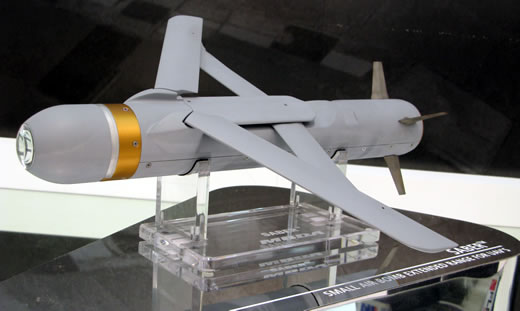
Even smaller weapons can be employed by the Predator and Gray Eagle, including the Viper Strike from Northrop Grumman or Small Air Bomb Extended Range (SABER) from MBDA. Both employ GPS-assisted laser-homing capability, turning it into a ‘glide weapon’, thus eliminating the signature of the weapon being launched. SABER can also be configured with rocket propulsion to cover even longer ranges. Both weapons employ dual-mode warhead, using blast-fragmentation or anti-armor shaped charge, for reduced risk in collateral damage. The GPS/INS segment is used for mid-course navigation, enabling the weapon to perform ‘off-axis’ turns, regardless to the direction it is launched at. When active laser designation is available, by remote element or the platform’s EO payload, semi-active laser seeking can also be used for the terminal phase, further increasing attack precision and effect. An alternative seeker employing TV/IR sensor with data-link communications enabling ‘man in the loop’ control is currently under development.
The Gray Eagle can carry four Hellfire missiles, optimized with minimal rocket signature and a wider launch envelope. The typical range of such weapons and their all-aspect attack mode make them particularly suitable for use on UAVs, eliminating the need to preposition the UAV in a straight line with the target for launching.
The new version of the Hellfire designated AGM-114R was developed by Lockheed Martin to meet specific requirements for unmanned operations. The new missile incorporates a ‘multi-purpose’ warhead, enabling a single missile to engage target sets, currently covered by four different types of laser-guided Hellfire variants. Utilizing an integral inertial measurement unit, the AGM-114R can be launched at high aspect ratio, considerably shortening the firing preparation process. Other modifications have dealt with the weapon’s obsolescence, by replacing hardware circuits with software controlled functions, thus reducing the missile’s weight and improving its reliability.
While laser guidance provides weapons with precision and lethality, it also has inherent limitations, being susceptible to interference, countermeasures or error under certain operational conditions. Furthermore, target designation by laser is far from being a trivial task. The process requires considerable and continues coordination, with the entire process constantly prone to human and technical error.
The use of a dual-mode seeker, combining electro-optical (EO) and laser/GPS can overcome such limitations, at a price. In the US, two teams are competing for the future production of such missiles, known as Joint air to Ground Missile (JAGM), which are already in development, but these are expected to be fielded primarily with manned platforms – Apache helicopters, and Super Hornets.
For the smaller weapons electro-optical (EO) guidance has sofar been considered a costly option reserved only for special missions. But state-of-the-art commercial off the shelf technology opens new capabilities for EO seekers. Dual-mode guidance utilizing imaging sensor as laser seekers has the potential to revolutionize laser guidance, by introducing low cost, light-weight yet highly accurate means for target acquisition and weapon guidance. Current laser designators employ pulse lasers to generate high-power laser beams.
A new type of laser designator is employing low-power laser diodes to generate Continuous Wave (CW) beams, operating at relatively low power levels and available for much lower cost.
The new method, patented by an Israeli start-up company Shilat Optronics employs ultra-small components that can be used at the lower echelon, for target acquisition and designation. On the weapon’s end, enhanced imaging sensors are used instead of the standard four quadrant laser detectors. These cameras are modified to detect and identify targets marked by specific CW or pulsed lasers. Employing variable gain to compensate for over exposure to specific frequencies, the new seeker overcomes the inherent limitation of current laser-homing seekers being saturated at the terminal phase of their flight. The new designator/seeker combination offered by Shilat is packable into a small form factor, embedded into standard thermal, or optical binoculars used by the warfighter and into small guided weapons supporting the lowest echelons.
Weaponization of small UAVs is discussed in the next part in this series.
Read the other parts in this series:
- Miniaturizing the Aerial Weapons
- New Language for Air-Ground Collaboration
- UAVs as Multi-Mission Warfighters
- Arming the Shadows
- Suicide Micro-UAVs
New Language for Air-Ground Collaboration
Early strike missions employed laser-guided weapons exclusively, and required the launching platform, or advanced target designation parties on the ground, to maintain constant line-of-sight, to designate the target by laser from relatively short range. What made such attack mission even more effective, was the ability to share imagery from the UAV with ground forces, coordinating an attack through a ‘short cycle’, rather than through a central command, control and coordination facility. This generally slows the process by guiding it through target-location ‘mensurating’ procedure, verifying that the target coordinate are at the highest accuracy, and that friendly forces, or non combatants are not at risk. This process is critical when UAVs are operating alone over hostile territory. However, when operating in support of ground forces, drones are normaly employed as part of the ground force and should be subject to the same checks and balances guiding the use of other weapons.
A key element in the air-ground employment of drones, is the video datalink, streaming live video from the airborne EO payload on drone, to the supported unit on the ground below. While early versions supported ‘one way’ communications, more advanced models currently offer full duplex, providing the commander on the ground full control of the payload. Geo-referenced video images establish a common language, offering ground commanders an elevated view of their surroundings, gaining better situational understanding and clear view of evolving situations, potential opportunities or imminent new threats. Geo-referenced images also provide for simpler and intuitive orientation, enabling the user to rapidly ‘hand off’ the target to the UAV operator, who then ‘takes control’ to pursue the final strike immediately, once attack permission is granted. Such a language is also effective in resolving potential fratricide situations or identification errors that might appear, when pilots or UAV payload operators ‘walk through’ radio communications, to orientate, locate, identify and verify a target requested by the ground element. A two-way datalink capable in transferring coordinates and images between terminals saves time and errors, thus dramatically shortening ‘sensor to shooter’ cycles.
Although unmanned aircraft are performing well on armed reconnaissance missions, none of these were actually designed for such missions from the start. Therefore, compromises have been made in mission-performance, flight altitude, mission endurance and area coverage, to provide for such missions.
Read the other parts in this series:
- Miniaturizing the Aerial Weapons
- New Language for Air-Ground Collaboration
- UAVs as Multi-Mission Warfighters
- Arming the Shadows
- Suicide Micro-UAVs
Miniaturizing the Aerial Weapons
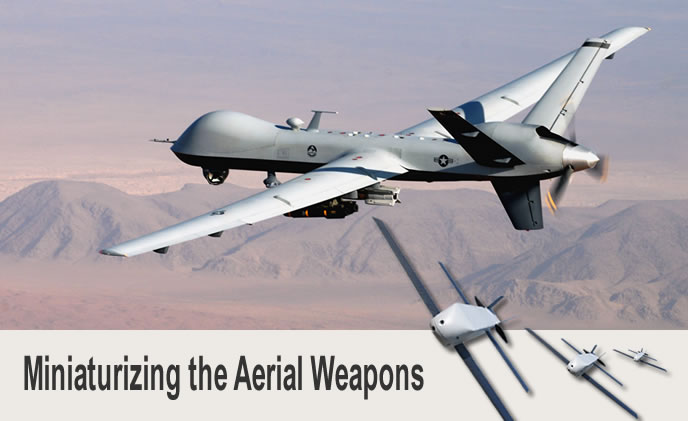
The capability of armed forces to employ ‘Kinetic effects’ by unmanned aircraft systems (UAS) have evolved in the past decade from science fiction into reality. Soon after the first Hellfire was launched from a Predator UAV on a test in February 2001, Central Intelligence Agency (CIA) operated drones were sent to Afghanistan to hunt Osama Bin-Laden and his accomplices. Since then, armed Predators became synonyms for the ‘Global War Against terror’, taking part in continuous warfare throughout Central Asia- from Somalia, Yemen and Iraq, to Afghanistan and Waziristan, in North-Eastern Pakistan. Today, more ‘Killer Drones’ are employed by a number of U.S. government services – taking part in covert operations, as well as by the regular military.
Given the minimal ‘signature’ they generate before, during and after the attack, killer drones have become indispensable “tools” in covert anti-terror operations. Effective coordination and communications between sensors to ‘shooters’ become imperative, as operators on the ground continuously track the target through the drone’s ‘eyes’, assess potential collateral damage in real time, and finally approve action against suspected targets with minimal delay, thus minimizing the target’s ability in taking evasive actions.
Drones armed with Hellfire missiles could be sent on specific ‘hunting’ missions, acting upon prior intelligence gathered by human intelligence (HUMINT) sources, or electronic intercepts of enemy communications activities (COMINT), or even by mere presence of covert electronic equipment ( unconfirmed rumors circulate, that U.S. intelligence has been using beacons known as RF tags in its attacks in North-Eastern Pakistan for some time).
Over time, as drone attacks became more frequent, insurgents learned to deal with the new threat, by minimizing the use of wireless and electronic communications, seek cover by using ‘human shields’ and better blending into the local population. They established lookouts, warning on drones being spotted in the area, or when missile launches are indicated. Since these drones had to operate at relatively low altitude to launch their missiles, Hellfire attacks could be spotted quite effectively providing insurgents the few seconds necessary to ditch the vehicles and run for cover.
Another aspect challenging armed drone operations was retrieving the drone after a routine mission. When landing an armed drone was considered too risky, the expensive missiles had to be fired off the aircraft, before landing pattern begins.
The first weapons used by UAS were derived from military off the shelf ordnance, hence, the choices of platforms was limited to those capable of carrying several hundreds of pounds of payload. Typical loads comprised of one or more missiles, Multi-Spectral Targeting System (MTS) stabilized electro-optical payload, communications segment and other mission-systems, bringing to a total weight of about 450 lbs (204 kg).
However, as the weight of two Hellfire missiles reaches nearly 100 lbs (50 kg), not much is left for other mission systems, thus the choice of potential weaponized platforms was limited at the time, to aircraft capable of carrying 440 – 660 lb. (200 – 300 kg) payload, including the US General Atomics’ MQ-1 Predator, or the IAI Heron UAV, (proposed for the U.S. services by Northrop Grumman).
Three other platforms – the French Sperwer B from Sagem, the Israeli Hermes 450 by Elbit Systems and the MQ-5B developed by IAI and Northrop Grumman, all had payload capacity ranging from 200 – 350 lbs (90 to 158 kg), and thus incapable of carrying the only missile openly available for UAVs at the time Hellfire. Several attempts to introduce lighter missiles on UAVs were publicized at the time, such as the integration of Rafael’s Spike LR on the French Sperwer.
The Hermes 450 was demonstrated at airshows, carrying external stores, but its capability to carry weapons was never confirmed. Nor was the potential use of the Israeli IAI Heron, as a weaponized platform. The Hunter has also been adapted for weapon carrying missions, with the integration of two Viper Strike attached to underwing pylons. IAI has also developed the Lahat, a lightweight laser guided missile. A launcher carrying four Lahat missiles weighs below 150 lbs (68 kg), enabling light helicopters or larger UAVs to carry multiple weapons loads.
Read the other parts in this series:
- Miniaturizing the Aerial Weapons
- New Language for Air-Ground Collaboration
- UAVs as Multi-Mission Warfighters
- Arming the Shadows
- Suicide Micro-UAVs
| Small UAV-Launched Weapons | ||
| Type | Weight Lb (kg) | Range in Miles (km) |
| Viper Strike | 44 (20) | 7.5 (+12) |
| Griffin | 33 (15) | +7.5 (+12.5) |
| G2M | 6? (2.7?) | NA |
| Spike | 5 (2.26) | 1.9 (+3) |
| Switchblade | 3 (1.36) | +3 (+5) |
MBDA’s Concept Vision – Addressing The Warfighter’s Wishlist
 MBDA embarked on ‘Concept Vision’ program as a long-term initiative to ‘unlock creativity and innovation among the company’s personnel’. The project is aiming to introduce a ‘concept weapon’, much like ‘concept cars’ are presented by leading auto manufacturers. The process involved examination of different ideas presented by MBDA employees, to meet the projected needs and requirements of the future warfighter, based on forward looking technological forecast for the next 20 years.
The teams interviewed European soldiers to identify issues encountered with current capabilities. Different systems were explored on virtual test beds and interface models allowing functionality and operator interactions to be explored. The process enabled MBDA’s designers to leap over current obstacles, exploiting new and emerging technologies from MBDA’s extensive internal and collaborative R&D Base. Part of these designs went through rapid prototyping into the conceptual models presented at MBDA’s pavilion at the Farnborough Airshow 2010.
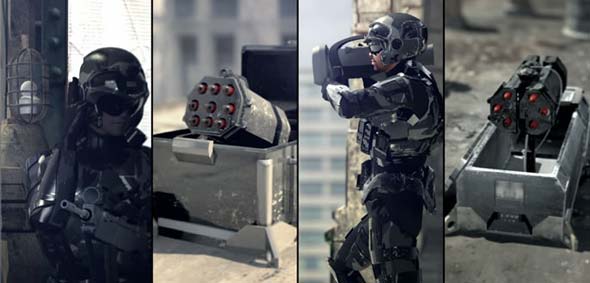
MBDA ‘Concept Vision’ team designed these new weapons to be operated as ‘stand alone’ systems or as part of a coherent, integrated network dubbed ‘CVS101’, empowering future fighting units with advanced capabilities. The entire system was designed for dismounted operations, increasing lethality, accuracy and operational flexibility by introducing indirect (non line of sight) engagement capability.
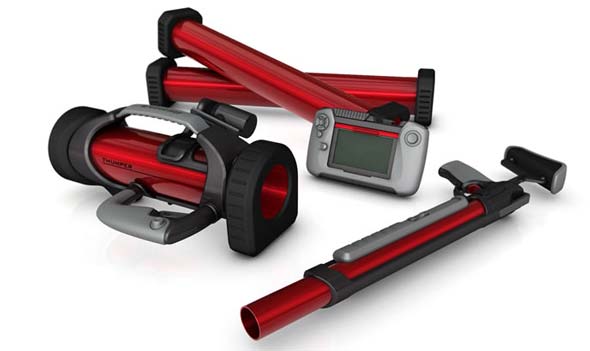
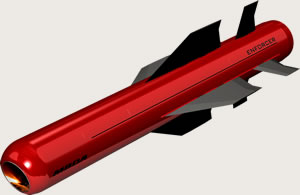
The system comprises two lightweight launchers and two guided missiles designed for long and short range attack. The weapons, dubbed ‘Sniper’ and Enforcer’ will offer ‘tunable’ firepower, from non-lethal engagement to high precision, high explosive attack.
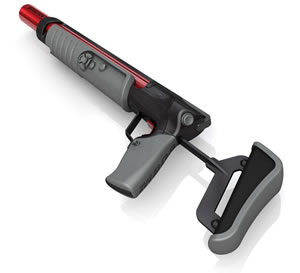
Sniper could become the future 40mm diameter squad weapon. With a weight of 900 gram and length of 38 cm, the new missile will be about three times longer than today’s 40mm projectiles. It will be much more accurate and fast, flying at a speed of 450 m/sec – faster than today’s missiles. Maneuvering will be performed by a unique, miniature thrust vector method developed at MBDA. The missile will be effective at ranges of 30 – 1500 meters. The 200 gram warhead will feature ‘selectable lethality’ affecting a larger volume with fragmentation or focused lethality, minimizing collateral risk. MBDA teams are planning to equip the missile with automatic target recognition, enabling the weapon to rapidly lock on targets in sight, thus minimizing the operator’s exposure to counterfire. The weapon operating the ‘Sniper’ is called ‘Shooter’ – a launcher weighing only two kilograms, optimized for low recoil, and operation in confined space, it will be provided as stand-alone weapon, attached to assault rifles or to vehicle mounted remotely operated weapon stations, as a coaxial weapon, adding precision fire capability to automatic weapons.
The larger Enforcer is measured around today’s unguided shoulder launched rockets such as the SMAW, LAW or Matador. At a 80 mm diameter and 680mm in length, Enforcer will have a combat range of 2,500 m’ in direct attack or 5,500 m’ in ‘ballistic’ (mortar trajectory) mode. Similar to current shoulder fired weapons it will be designed to defeat armored vehicles, bunkers or buildings. Enforcer will have all the Sniper’s operating modes, plus several advanced features, including non-line-of-sight target engagement, steep ballistic (‘mortar’ like) trajectory, optimized for urban or woodland operations. Operating in complex scenarios, it will also offer ‘retargeting’ capability, enabling the operator to redirect the missile anytime during its flight, thus avoiding excessive collateral damage. It will also be able to pursue geo-located targets without the use of GPS. The ‘multi-effect’ warhead will weigh about 1 kg.
‘Thumper’, a 3kg launcher will be used as the launcher for Enforcer missile. The basic model will be designed to comply with different applications – man portable weapon launcher, fired from the shoulder, standing or prone; it will be designed for safe operation in confined space (indoor). Other variants will be optimized for base protection and vehicle mounted launcher. All launchers will have common operating controls implemented across all CVS101 components
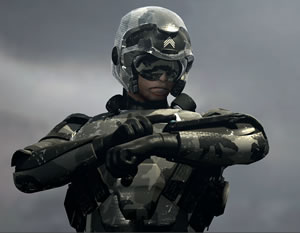 The teams operating CVS101 weapons will be equipped with ‘Spotter’ unattended sensors covering 360 degrees with infrared imagers, and acoustic sensors. The spotters will be able to operate continuously day and night, simultaneously tracking 500 objects whilst independently identifying and designating targets for the team. Spotters will enable teams to observe the scene from covert positions, while these sensors monitor their surroundings, transmitting the view to the team via datalink. Team commanders will also be equipped with a similar sensor, packed into a hand held ‘videocam’ like ‘viewer’. The Viewer will also be matched with the Thumper, providing a thermal weapon sight for the Enforcer missile. The use of the Viewer as stand-alone sensor will provide the team with organic target acquisition capability in situations where network support is not available.
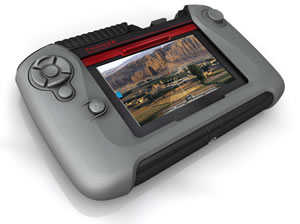
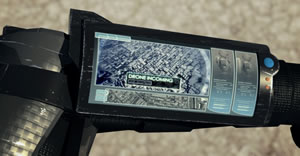
Targeting and battle management will be provided by the ‘Thinker’ – a flexible mission controller that will provide enhanced situational awareness and understanding, as well as targeting data, fusing data and images from multiple sources. This device will be a critical enabler in employing guided weapons from remote locations, engaging targets well before they get close enough for direct contact with the warfighter.
EXACTO – Effective Sniper Fire at 2500 m’
New Guided Projectiles To Enhance The Sniper’s Effective Range
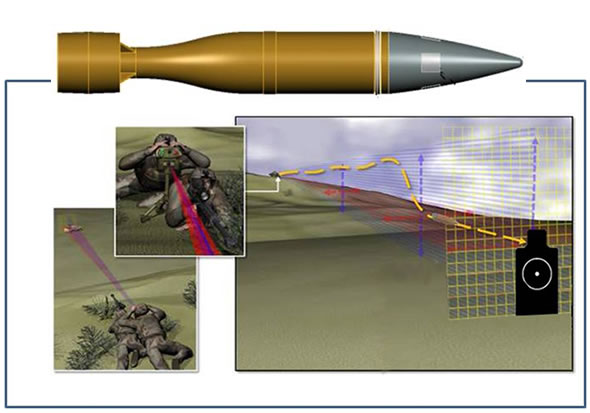
‘Exacto’ for ‘ Extreme Accuracy Tactical Ordnance ‘ is a guided 12.7mm (0.5″) projectile under development by DARPA. The program objective is to demonstrate how rifle accuracy and range can be extended by using guided small caliber projectiles. The program focuses on the .50 caliber round, fired by current ‘anti material’ rifles (like the Barret), equipped with an optical sight and control systems that will more than double the range over current sniper systems, while allowing the sniper to prosecute moving targets even in high wind conditions – a capability unavailable with today’s weapons.
The system will be able to guide a maneuverable projectile through its flight, as the shooter continues to track the target, delivering guidance corrections to the projectile. Once such capability is matured, Exacto will not be limited to sniper rifles, but could also be employed with vehicle or ship mounted weapon stations, as well as airborne automatic cannons, including 0.5 machine guns or 20mm cannons, that, for the first time, could yield extremely accurate fire from long distance.
The program recently completed its first phase by achieving a successful proof of concept with a high fidelity hardware-in-the-loop (HITL) simulation. Currently at Phase II, under a $25 million contract, Teledyne Scientific & Imaging will build and test a complete system, including the optical sight, guidance system and guided .50 caliber projectiles, to be tested in actual firing by 2012.
Related topics:
Switchblade – Miniature Killer Drone

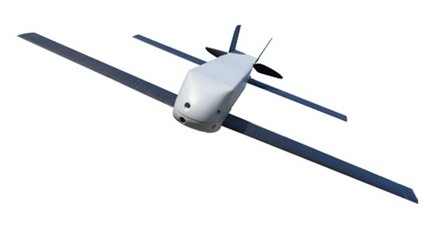
The objective of Project Anubis was the development of a prototype, Non Line of Sight (NLOS) munition enabling engagement of time-sensitive fleeting, high value targets with an armed, tactical miniature aerial system (MAV), operated with ‘man-in-the-loop’ control for identification, targeting, and attack. The system employs innovative seeker/tracking sensor algorithms that enable engagement of stationary or maneuvering targets ensuring high kill probability. Relying on the weapon’s target identificationand, close range imaging and precision attack capability, the weapon utilizes a small warhead resulting in ‘very low collateral damage’. In fact, Anubis will be able to perform what special operations snipers are doing today – but offer operators more opportunities to strike, perform more complex missions at longer range and ensure maximum safety for the shooter.
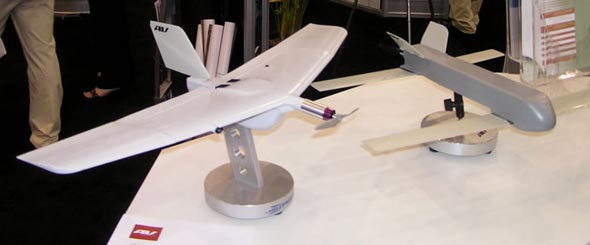
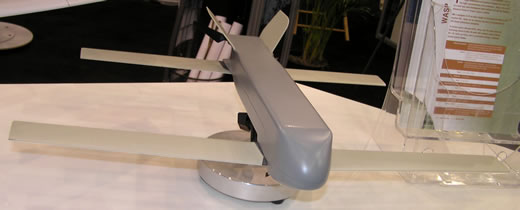 The project has already demonstrated such capabilities in 2008, as it achieved the range, accuracy, flight time and lethality to defeat target sets beyond the range of current squad level weapons. In January 2010 small UAV specialist Aerovironment has been awarded the final increment of $1.18 million for the third phase of development. According to the Air Force, Anubis will be able to track-down high-value maneuvering targets flying in ‘non-line-of-sight’ conditions (hinting at urban warfare). Aerovironment is not relating officially to the Anubis program but has unveiled a similar weapon system called Switchblade. If Anubis is in fact the Switchblade Aerovironment is already offering, it will also have a potential to become an aerial munition offering new capabilities for small UAVs sofar unable to carry out such missions.
AeroVironment describes the Switchblade as the warfighter’s “magic bullet”. It can rapidly provide a powerful, but expendable miniature flying Intelligence, Surveillance and Reconnaissance (ISR) package on a Beyond Line-of-Sight (BLOS) target within minutes. This miniature, remotely-piloted or autonomous platform can either glide or propel itself via quiet electric propulsion, providing real-time GPS coordinates and video for information gathering, targeting, or feature/object recognition. The vehicle’s small size and quiet motor make it difficult to detect, recognize, and track even at very close range.
The Switchblade is fully scalable and can be launched from a variety of air and ground platforms. The Switchblade’s payload and launcher, weighing less than six pounds total, can be carried in a backpack by a single soldier. The mini UAV, which sends streaming video and GPS coordinates back to its operator, can be transformed from an intelligence, surveillance and reconnaissance UAV into a mini bomb striking a target beyond the line of sight. The battery-powered vehicle has a very low visual, acoustic and thermal signature.
AeroVironment says the the weapon can also be deployed from submarines, ground vehicles and a manned, as well as unmanned, aircraft. The company already produces the Wasp III micro-UAV for the U.S. Special forces and Marine Corps and in 2008 has been awarded a development project for the “Stealthy, Persistent, Perch and Stare (SP2S) UAS”, based on a modified WASP design.
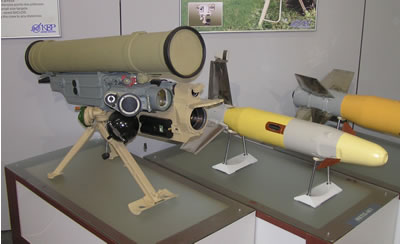
KBP Metis M/ M1 Anti-Tank Guided Missile
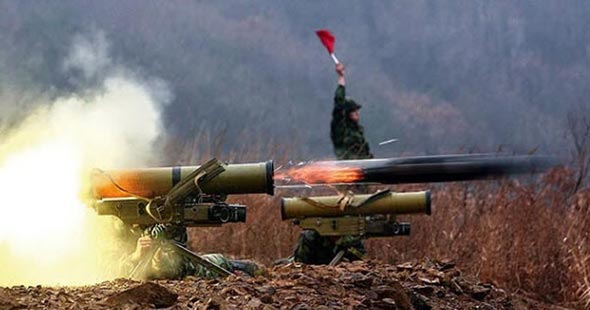
Above: Metis M fired by Sout h Korean troops during infantry unit exercises.
The Russian 9K115-2 Metis M1 (NATO reporting name AT-13 Saxhorn-2) was designed to augment Russian motorized infantry companies offering improved anti-tank capability at combat effective ranges of up to two kilometers. (This is the maximum effective range of the latest version – Metis M1 has an effective range of 1,500 m’).
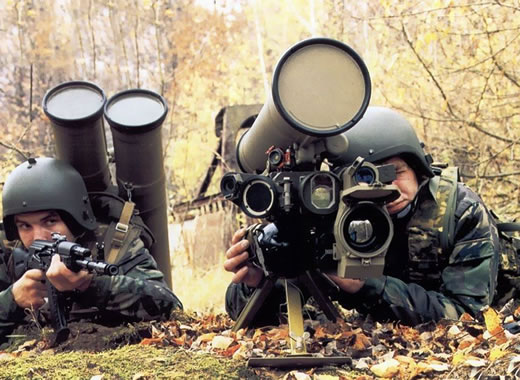

The wire-guided missile uses semi-automatic command-to-line-of sight (SACLOS) guidance system – an effective, yet somewhat outdated method, by current western standards. Metis M (AT-7) introduced in 1992 has a tandem shaped charge warhead that can defeat reactive armor and penetrate steel armor up to 950mm deep. It is also effective against light armored vehicles or fortifications. KBP is also offering the missile with a thermobaric warhead. The missile is in operational service since 1992. Metis M is currently in service with the Russian infantry, as well as former CIS states Ukraine, and Georgia. Other armies operating the missiles include Hungary, Croatia, Malaysia, Iran, Syria, Morocco and South Korea. The M1 version offers a lighter firing unit, through the use of lighter materials and modern thermal imager. Other improvements include better armor penetration capability.
KBP is currently producing the upgraded version designated Metis-M1, comprising of the 9M131M missile and the 9P151M launcher, reduced weight 10.5 to 9.5 kg and featuring increased jamming immunity.
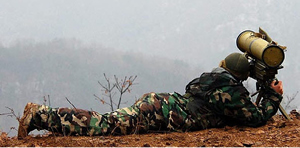
The Metis M1 ATGW element is operating in teams of three personnel. The shooter is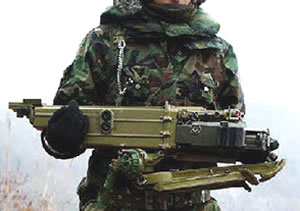 carrying one missiles contained in canister/launchers, command and launch unit and thermal sight – a system weighing about 30 kg. The other two crew members carry two missiles each, at a weight of 13.8 kg per missile.
ERYX – Personal Anti-Tank Weapon from MBDA
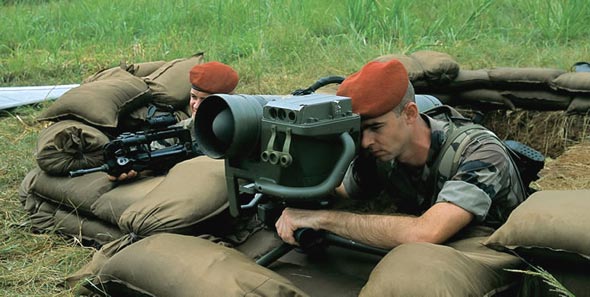
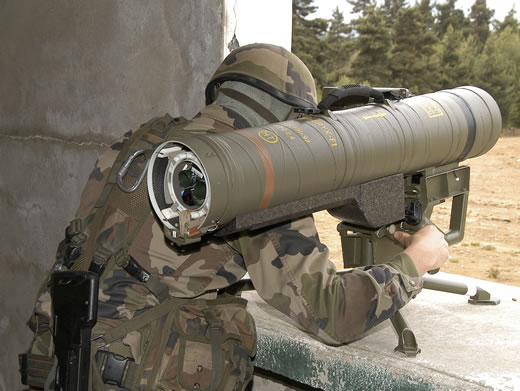
Above: Eryx was designed for operation by a single soldier. Photo: MBDA by Yves Debay
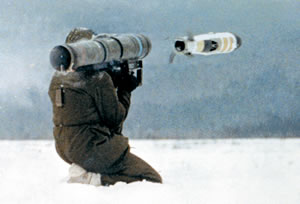
ERYX is a short-range anti-tank weapon developed by MBDA to address specific French Army requirements for a highly portable lightweight, single operator anti-tank weapon that could be used by special forces, paratroops and rapid deployment forces. ERYX employs wire guidance, making it useful against stationary or mobile targets at ranges between 50m to 600m. As an infantry weapon ERYX is more versatile than the Milan, as it can be fired from the shoulder or with a tripod. Yet the weapon is relatively heavy, weighing 17.5 kg including the missile, and firing post (sight). A key advantage provided by the weapon is the ‘soft-launch’ characteristics, enabling firing from confined spaces in urban combat.

The weapon was recently enhanced with the integration of a new uncooled thermal sight providing augmented range for detection, reconnaissance and identification, at ranges which significantly exceed the combat range of the missile itself. The enhanced version has already obtained its first customer – an unnamed Middle Eastern army was scheduled to get the new system in 2010. According to MBDA more than 57,000 ERYX missiles have been ordered by eight countries including the French Armed Forces.

Skunk Works and XTEND Simplify Multi-Drone Command
Lockheed Martin Skunk Works® and XTEND have achieved a major milestone in JADC2 by integrating the XOS operating system with the MDCX™ autonomy platform. This technical breakthrough enables a single operator to simultaneously command multiple drone classes, eliminating the friction of mission handoffs. From "marsupial" drone deployments to operating in GPS-denied environments, explore how this collaboration is abbreviating the data-to-decision timeline and redefining autonomous mission execution.

From Ukraine to Taiwan: The Global Race to Dominate the New Defense Tech Frontier
As traditional defense primes face mounting competition from agile “neoprimes” such as Anduril, Palantir and Helsing, the balance of innovation is shifting toward software-defined warfare and scalable, dual-use technologies, while global industry consolidation—marked by Boeing’s integration of Spirit AeroSystems and other strategic mergers—signals an intensified race to secure control over the defense technology value chain. Our Defense-Tech weekly report highlights these trends.

Europe’s “Drone Wall”
In early October 2025, a coordinated wave of unmanned aerial system (UAS) incursions—widely attributed to Russia—targeted critical infrastructure across at least ten European nations. The unprecedented campaign exposed the fragility of Europe’s air defenses...
Weekly Defense Update & Global Security Assessment
Executive Summary
The past week (September 18-25, 2025) represents an inflection point where strategic defense concepts have transitioned from doctrine to tangible reality. An analysis of global events reveals four primary, interconnected trends shaping an...

U.S. Air and Space Forces Push Next-Gen Programs at the AS&C 2025 Conference and...
At the 2025 Air, Space & Cyber Conference, U.S. Air Force and Space Force leaders unveiled major updates on next-generation fighters, bombers, unmanned systems, and space initiatives, highlighting both rapid innovation and critical readiness challenges as the services race to outpace global competitors. A short version is available here, with a more detailed version for subscribers.
TADTE 2025: Reflecting Taiwan’s Strategic Themes
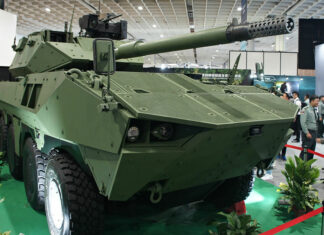
The Taipei Aerospace & Defense Technology Exhibition (TADTE) 2025 crystallized around four dominant strategic themes that collectively illustrate Taiwan's comprehensive approach to defense modernization amid escalating regional tensions. Based on a detailed report by Pleronix (available upon request). Includes a Podcast discussion on TADTE 2025's highlighting Taiwan's four strategic themes beyond the post's coverage.
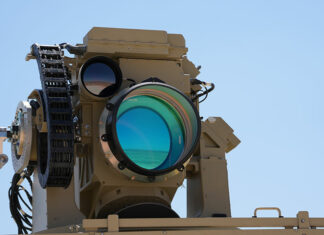
Iron Beam 450 Completes Testing, Soon to Join With Operational Air Defense Units
Israel’s Iron Beam 450 high-power laser system has completed final testing, marking a major leap in air defense. Developed by Rafael, it offers precise, cost-effective interception of rockets, UAVs, and mortars, and is set for IDF deployment by 2025.