
Monday, December 22, 2025
More
    Home Blog Page 398

    SPERWER Tactical UAV System

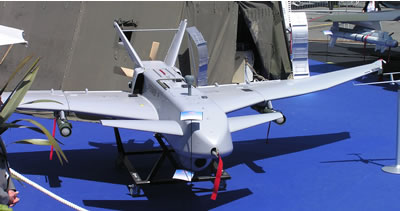
    Sperwer unmanned aerial system (UAS) is designed to support Intelligence, Surveillance, Target Acquisition and reconnaissance (ISTAR) at the battlegroup level (brigade to division).

    The Sperwer system comprises three aerial vehicles, ground control station (GCS), transportable hydraulic catapult and ground data terminal (GDT) housed in the communications shelter carried on high mobility vehicles. The entire system can be transported in two C-130 aircraft and operate from unprepared sites using catapult launch, and parachute and airbags recovery.

    The system supports simultaneous control of two aircraft, from a single GCS. Furthermore, several GCSs can control multiple missions, and can hand-over UAVs between each other. The ground station is provided with advanced mission planning tools, including 3D terrain modeling and flight path presentation on a geographical data system, image processing, interpretation and connection to C4I networks and compatibility with NATO datalinks and communications networks. To improve survivability and stealth, the GCS can be located up to 2 kilometers from the GDT.


    The aerial vehicles are available in various models, including the basic design, long endurance (Sperwer B) and a Slow-Fast penetrator, a new tactical drone concept designed in cooperation with Dassault Aviation. Sperwer B currently under development, will use larger wings, which will store more fuel, doubling the aircraft endurance and payload capability. All air vehicles share common system architecture, advanced digital avionics suit, datalinks, ground stations and catapult. Sperwer is qualified to operate in harsh weather conditions, including temperature, wind, rain, icing etc. Sperwer B is also capable to operate at higher elevations of up to 18,000 feet.

    Sperwer is designed to carry the Sagem OLOSP FLIR payload, providing high resolution day and night imagery and target geolocation with an accuracy of 20 meters. Other payloads designed for Sperwer include ELINT, COMINT, communications relay and SAR. The aircraft is equipped with a digital J band datalink (15GHz) and transponder/IFF (Mode 3C) and VHF relay for easy integration in controlled airspace. Sperwer B will be able to carry multiple payloads (EO/IR and SAR or EO/IR and relay etc.) It will also be equipped with two underwing hardpoints, to carry external loads of up to 30kg each. Sagem has already demonstrated the integration of Sperwer B with the SPIKE LR missile and is cooperating with GIAT, to test a new smart munition delivery system, based on the Bonus submunition. According to Sagem, the armed configuration requires the reduction of up to 20 kg of fuel, thus limiting the endurance of the armed Sperwer.

    Sperwer Operators:

    The system is currently in use with the Canadian, which deployed the system in Afghanistan. It is also used by the Swedish (dubbed UGGLAN), Dutch forces, and was recently acquired by the Greek Army. A derivative of the Sperwer – System de Drone Tactique Intermediare (SDTI) is also in operation with the French Army. It entered service in 2003 as a replacement for Sagem’s Crecerelle system. According to some reports, Pakistan and Saudi-Arabia are also interested in this system. The Sperwer was first deployed to Afghanistan in 2003 as part of the ISAF. Since March 2006 the UAV is back in Afghanistan for operations in the Kandahar region.

    Canada Order More Sperwers

    Canada procured SPERWER TUAVs in 2003 to meet requirements for Operation ATHENA, Canada’s contribution to the International Security Assistance Force (ISAF) in Afghanistan. In in Decembert 2005 Canada announced the procurement of five additional Sperwers at a cost of C$15 million covering attrition, maintaining system availability throughout the vehicle’s repair and turn-around time. The UAVs were delivered in early 2006 by Oerlikon-Contraves Canada, acting as Canadian prime contractor for France’s SAGEM. Following the deactivation of the Danish Army Sperwer unit, Canada acquired the Danish systems, which will reinforce its UAV fleet. The Danish systems will be standardized by Sagem to the Canadian configuration (ground station and aerial vehicles).
    Integrated tactical logistics Management Benefit Defense Forces Transformation, Readiness

    A new Enterprise Resource Planning (ERP) Information Technology  solution designed by SAP is providing end-to-end management of logistics aspects by modern military forces. The new suite of applications support the  management and monitoring of units, personnel and equipment readiness, from mobilization through deployment, on a local or global basis. The system also provides readiness status of such assets to other command and control information systems where it is integrated into the planning and operational decisions.

    According to Major General (USAF Ret) John Barry, VP Defense & Security at SAP, the new system provides horizontal integration of logistics management which boosts the capability and availability of the entire organization. By applying such technology, units gain more flexibility and better visibility of their available assets. By improved maintenance, training and inventory management, the become better prepared, their planning process is more efficient and the entire response is more flexible – as they become better equipped for modern asymmetric war against terror. With the total visibility to every unit and combat element provided by the system, military commanders can monitor the status and readiness of units and combat related assets, “from foxhole to factory”.


    An important addition introduced in the Defense & Security system is the support of mobile infrastructure technology, which was added as a component of the SAP NetWeave software integration platform. This component enables the execution of field operations, independent of a direct connection to a central SAP system. The system can be deployed in the field, and will synchronize with geographically distributed resources once communicating is established, over satellite links, combat net radio networks as well as line or wireless links. The mobile functionality of the system provides all command levels an end-to-end  management and monitoring of units, personnel and equipment throughout their contingency. The system operates with standard laptops, PDAs and PCs. The system supports modern, advanced information gathering and tracking  utilities, such as barcodes, RF ID tags and other automated tracking and reporting systems, for improved performance and information delivery.

    In the US Army, the Global Combat Support System planned for initial deployment in FY 2006, will replace 14 major logistical applications built specifically for military use. The SAP system is utilizing commercially off the shelf (COTS) software tools, widely used by the industry, commercial sectors and governments worldwide. SAP already supports more than 14 NATO member country governments currently running SAP solutions. SAP for defense & Security is being integrated with several armed forces, including the US Army, Norway, Denmark, German Army (the Bundeswehr), the U.S. Navy which uses SAP for managing its shore based logistical activity, and the Israeli Navy which uses the SAP portal for integrated information and decision support for the navy command level.

    Utilizing the SAP NetWeaver application infrastructure, the new system can be integrated into an existing environment of legacy systems. By transforming data from multiple independent systems the SAP system eliminates “islands” of data, contributing to improved visibility, usability, accuracy and security of valuable information resources. Integration of external business, financials, human resources, supply chain and logistics is also handled by NetWeaver.

    Two features derived from the business sector are are promising to improve savings and safety in military activities, especially during training and routine operations. One such benefit is the mapping of assets against liabilities, ensuring that effectiveness is not compromised. Identifying ineffective assets and simulating potential alternatives can save significant resources, when budget cuts are required. The system also provides total asset visibility which contributes to reduction in inventories, procurement and warehousing costs, while allowing for better concentration of limited resources, especially where the military user is handling logistics and support. When outsourcing such services, the system can easily link with commercial service providers, by data exchange among partners such as government agencies, coalition forces and suppliers. Another aspect of this application is the management of operations with consideration of specific procedures and guidelines, which improves the performance of supply chains, suppliers relations and coordination between supporting forces. While such limitations could be binding for the management of combat operations, they are very important at peacetime and during training exercises, to ensure safety levels and maintain operations within a set budget.

    Fast Patrol Boats from Israel

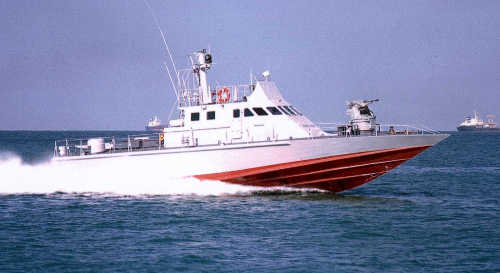
    Shaldag Mk II Fast Patrol Boat

    Two designs are offered by Israel Shipyards and IAI/Ramta. Both are under production for the Israel Navy, as part of the coast guard modernization program. Super Dvora Mk III, developed by Israel Aircraft Industries’ RAMTA division is a stretched version of the Super Dvora Mk II design. The 26 m’ boat has a displacement of 70 tons and is capable of operations at extended range and durations (96 hours), 700 – 1,000 nm range depending on mission profile. The boat is offered with two diesel engine types – developing 1,120 kW or 1,680 kW, each powering the articulating ASD system. Super Dvora can develop top speed in excess of 43 knots at full displacement. At a normal load, the boat has a draft of 0.9 m, and displacement of 53 tons.

    Super Dvora Mk III fast patrol boat.

    RAMTA is currently working a number of new configurations for the Super Dvora platform, among them a “Littoral Warrior” strike version, equipped with a variety of advanced precision weapons systems. Shaldag Mk-II class Fast Patrol Boat is the latest version of the Shaldag, designed by Israel Shipyards, which is already in service in Sri-Lanka. The boat is constructed of marine aluminum structure, 24.80 m. In the Israel Navy configuration, the living quarters were moved below deck, and locating the open bridge aft to the command center. This configuration reduces the silhouette of the vessel, thus improving its survivability in close encounters. Designed for very high accelerations, the boat can reach its top speed of 45–50 knots in one minute. Maneuverability is also impressive, performing full 360 degree turn at maximum speed, it in a 100 yard diameter. The boat is designed for low draft, for operation in coastal area, estuaries and rivers, where shallow water, natural and man made obstacles such as fishing nets, floating ropes and vegetation restrict operations of patrol boats propelled with articulated drives. The Shaldag Mk II is powered by two Deutz/MWM TBO 604 BV16 diesels or MTU 12V 396 TE diesels powering Ka Me Wa water-jets. It’s main armament is the Typhoon stabilized gun station, mounting a 30 mm gun, controlled from the wheelhouse. An additional 20 mm gun is located at the aft, and two additional 0.5mm machine guns are mounted on pedestals.

    Shaldag Mk II Fast Patrol Boat

    September 2006: The Israeli Navy (IN) ordered seven new Fast Patrol Boats from IAI/Ramta and Israel Shipyards, to replace its obsolete Dvora and Dabur FPBs. The new order includes Super Dvora Mk III and Shaldag II FPBs, types which are scheduled to become operational within the next two years. Both types are operational with the IN since 2003.

    Additional Parts of this article :

    Net Centric Data Recorder

    The NCDR is a rugged network centric digital unit (NCDU) with a detachable solid-state memory cartridge. Originally developed for airborne applications, this tough 3.2 kg recorder-processor can monitor and record video and audio directly from their sources, while monitoring up to three data channels (via MuxBus). The system manages data transfer and mass storage functions to enable efficient playback while recording. The system uses a standard USB interface and can store up to 128 gigabytes of data. In parallel with its digital recording ability, NCDR can be used as a file server, flexibly augmenting on-board digital systems by providing increased memory capacity. RADA is also offering the NCDR in a land-based application, dubbed ‘Mission Witness‘.

    DVIS / AVSR / DMVR Digital Video & Data Recorder

    The Smiths Digital Video Information System (DVIS) provides a digital recording system designed for easy retrofit of existing video recorder tape decks. DVIS is expandable from 1 to 4 video channels and can interface with data transfer, terrain avoidance and other functions. With support for ACMI systems, DVIS enables the recreation of complex, realistic training debriefings depicting multiple aircraft, multiple display ACMI presentations in a 3-D display. The system supports MPEG-2 compression and uses removable storage units with a capacity of up to 120 GB.


    A typical video recorder used with F-16 fighters is the Airborne Video Solid-State Recorder (AVSR), a 4-channel video recorder with audio and operational debrief systems. This digital recorder is a drop in replacement for single and triple tape deck recorders with the capability to record 4 video channels. The system supports four RS-170 video inputs and one MIL STD 1553 data-bus interface. Memory capacity of up to 24GB is supported with standard USAF data cartridges. Video is compressed using the MPEG compression algorithm prior to storage. An enhanced version, designated AVSR PA (Precision Attack), which is used on Lockheed Martin’s advanced F-16s Fighting Falcon, upgrades the baseline AVSRT with high-resolution video recording and playback supporting enhanced Bomb Damage Assessment through the use of high quality Joint Photographic Expert Group (JPEG) algorithm video compression prior to storage.

    Advanced digital flight recorders combine the functionalities of digital video recording, data transfer and file server. Smith’s DMVR integrates these capabilities in a compact, cockpit mounted unit for monitoring four channels of video using solid state media for storage. DMVR utilizes data cartridges with capacities of up to 30 Gigabytes. The system also contains a PCMCIA flash card for file storage and management of avionics mission and maintenance data.

    Additional functionalities are provided by the Digital Video Data Management Unit with File Server Systems – DVRFS as used on the USAF F-22 Raptor. This system supports up to five channels of video with two audio channels. The system is capable of hosting terrain avoidance, moving map systems, and other application specific software solutions. The remote mass storage unit accommodates up to three data cartridges with growth potential to over a TeraByte of online solid-state data storage. The system is complemented by Smith’s Operational Debrief System, which provides integrated debriefing and playback.

    Compact Portable DVR

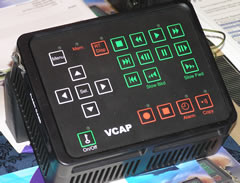
    The Israeli Army is currently using several different digital recorders, both imported and locally made. Two new digital video recorders were recently unveiled by Goldtech Technologies. The first is the ultra compact VCAP, which connects to a video source such as a video camera, ground sensor, weapon sight, etc. VCAP compresses video to the MPEG-2 standard, which preserves details better than MPEG 4. The data is recorded on either a hard disk or solid state memory. This system supports a single video channel, with up to 25 hours of high-resolution video on an internal 2.5″ IDE hard disk drive. The hard drive can be replaced by a flash drive to allow tougher field operation, or extended operation using battery power. To display the recorded material the system can be connected to any PC. VCAP provides simultaneous recording and playback and instant replay features.

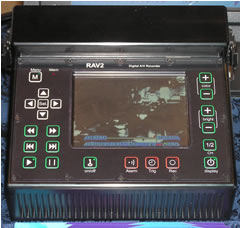
    A larger system is the RAV-2, a dual-channel digital recorder with a storage capacity of 100GB, sufficient for 24 hours of operation. RAV2 has a built-in mini display enabling instant playback or monitoring. It is equipped with a remote control unit for convenient field operation. The system uses USB2 connections to link to any digital display device or PC. It can also play back a video stream to any standard video or TV monitor.

    Black Knight – Armed Robotic Armored Vehicle

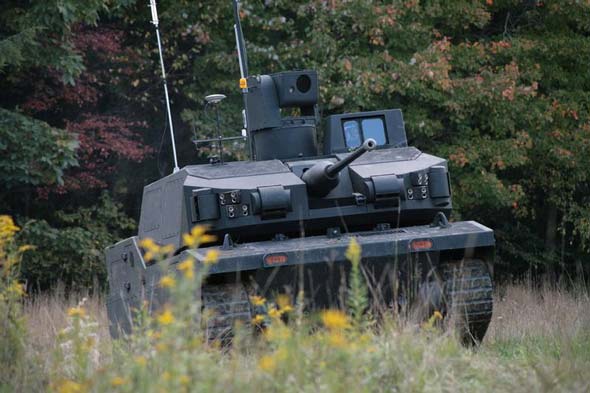
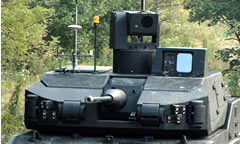
    BAE Systems is currently testing a remotely controlled, semi-autonomous armored vehicle known as “Black Knight”, designed as an early prototype of an Unmanned Armed Combat Vehicle. This robotic armored vehicle is equipped with a turret mounting a 30mm gun, and coaxial machine gun, derived from the Bradley combat vehicle.

    The Black Knight Unmanned Combat Vehicle can be controlled from the commander’s station of a Bradley. Gun and turret position, as well as information from the Black Knight’s Commander’s Independent Viewer (CIV), and the Improved Bradley Acquisition System (IBAS) can be seen on a the commander’s display. Limited autonomous functions are applied to the turret systems, including the ability for the turret slewing to a cue from the Commander’s Independent Viewer. When dismounted operation is required, soldiers can continue and operate the robotic vehicle through the Dismounted Control Device (DCD). Mobility enhancements completed in 2006 include advanced robotic technology for autonomous mobility. This capability allows the Black Knight to plan routes, maneuver on the planned route, and avoid obstacles – all without operator intervention.

    Teal Group UAV market Survey

    “UAV Market to Reach $54 Billion, Over the Next Decade”
     According to a Teal Group UAV market Survey

    Unmanned Aerial Vehicles (UAVs) will continue to be the most dynamic growth sector of the world aerospace industry. A forthcoming Teal Group market study, previewed today during this week’s AUVSI Unmanned Systems North America 2006, estimates that UAV spending will more than triple over the next decade from current worldwide UAV expenditures of $2.7 billion annually to $8.3 billion within a decade, totaling close to $55 billion in the next ten years.

    “The most significant catalyst to this market has been the enormous growth of interest in UAVs by the US military, tied to the general trend toward information warfare and net-centric systems,” said Teal senior analyst Steve Zaloga, one of the authors of the new study.

    The study suggests that the US will account for 77% of the worldwide RDT&E spending on UAV technology over the next decade, and about 64% of the procurement. These US expenditures represent higher shares of the aerospace market than for worldwide defense spending in general, with the US accounting for about 67% of total worldwide defense RDT&E spending and 37% of procurement spending, according to forecasts in International Defense Briefing, another Teal Group competitive intelligence service. “These discrepancies are due to the heavier US investment in cutting-edge technologies, and the marked lag time in such research and procurement elsewhere, especially major aerospace centers such as Europe,” said Zaloga.

    Teal Group expects that the sales of UAVs will follow recent patterns of arms procurement worldwide, with Europe representing the second largest market and the second most significant center for high-tech research, about 20% of the worldwide total. The Asia-Pacific region is expected to be the principal market for UAVs outside the US and Europe, followed by the Mid-East.

    Teal Group anticipates that a civil UAV market will slowly emerge over the next decade, starting first with government organizations requiring surveillance systems similar to military UAVs such as coast guards, border patrol organizations and similar national security organizations.
    “A commercial, non-governmental UAV market is unlikely to emerge except in some niche markets, such as Japan, until the airspace access issue is fully resolved,” said Zaloga.

    The Teal Group is an aerospace and defense market analysis firm based in Fairfax, Virginia USA. It provides competitive intelligence to industry and government worldwide.


    NanoSAR Miniature SAR System for Small UAVs

    In August 2006 ImSAR and Insitu announced the completion of a prototype development of a one-pound synthetic aperture radar (SAR) system called NanoSAR. The system could enable all-weather reconnaissance and geolocation capabilities of Synthetic Aperture Radar to almost all airborne platforms, including lightweight Unmanned Aerial Systems such as Insitu’s ScanEagle.

    According to the partners, the partnership between ImSAR and Insitu ensured the technology is smoothly and successfully integrated into Insitu’s UASs without interoperability or other technical issues.

    The new SAR operates on the X band, mapping an area in a “stripmap” mode at a range of one kilometer, at resolution of 35cm (14×14″). The system will support broad area reconnaissance and Search and rescue operations in its basic configuration and offer optional expansions including Geolocation mode, cueing GPS guided munitions, and automatic detection of ground targets, utilizing Ground Motion Target Indication (GMTI) functions.

    Litening 4 Targeting Pod

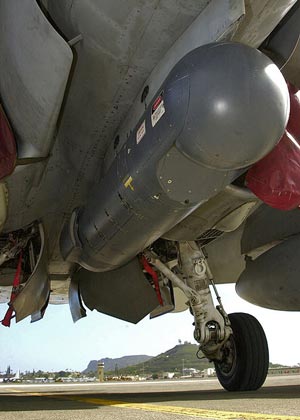
    Northrop Grumman is planning to offer a fourth generation enhancements to its LITENING AT precision targeting and sensor system, currently deployed with the U.S. Air Force Reserve Command, U.S. Air National Guard, U.S. Marine Corps and U.S. Air Force Air Combat Command.

    Currently in development, the fourth generation version of LITENING will feature an advanced 1024 x 1024 pixels (1k x 1k) forward-looking infrared (FLIR) sensor for improved target detection and recognition ranges under day/night conditions; new two-way data links and other networking capabilities to enable improved communications between ground-based and airborne forces; new sensors for improved target identification (ID); and other advanced target recognition and identification features. Other product improvements already incorporated into LITENING as part of the fourth generation version include a new 1k charge-coupled device sensor, which provides improved target detection and recognition ranges under daylight conditions.

    Northrop Grumman has already begun flight testing of a new target ID sensor, and later this year will test a second ID sensor that features an advanced laser. In addition, the new 1k FLIR sensor will undergo preliminary system tests by year’s end as a precursor to flight testing in 2007.

    Northrop Grumman’s LITENING AT system is a self-contained, multi-sensor laser target-designating and navigation system that enables aircrews to detect, acquire, track and identify ground targets for highly accurate delivery of both conventional and precision-guided weapons. To date, over 400 pods have been ordered with over 360 fielded, the largest number of any advanced targeting and sensor system. It is currently deployed on AV-8B, A-10, B-52, F-15E, F-16 and F/A-18 aircraft. Since the introduction of LITENING in 1999, the system has undergone numerous major upgrades to ensure continued combat relevance in an ever-changing battlespace, with the fourth generation version the next step in that evolution.

    IM-E500 – Spread Spectrum, Board Level radio for Unmanned Systems

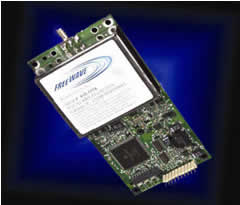
    FreeWave Technologies is introducing a new, board-level, wireless spread spectrum radio designed specifically for military applications. The module weighs 74.4 gram. The IM-E500 enables manufacturers of military systems to incorporate wireless communications into a wide variety of applications, such as unmanned vehicles, robotics and UAVs. The new radio uses spread spectrum frequencies between 2.372 to 2.4 GHz, with a 230 Khz. bandwidth, communicating over distances up to 20 miles. Each radio provides both repeater and slave functions, effectively bridging communications over longer ranges. The radio offers effective (true) throughput of 115.2 Kbps, (188 Kbps over the air). It uses frequency hopping (15 per band, 105 total user selectable patterns over 75 – 80 selectabnle channels) and 32 CRC bit to enable high reliability and secure data transfer. The radio can operate in transmit, receive idle or sleep mode, to conserve power. A unit in sleep mode will wake up, synchronize with the network, and accept data in less than 150 milliseconds.

    Proxy Aviation to Offer More Autonomous and Responsive, Tactical Armed UAV Capabilities

    A demonstration of cooperative mission performed by multiple aerial vehicles controlled by a small team from a single ground station represents a major achievement and technological leap for unmanned aerial systems. This achievement is even more impressive as it was accomplished by the privately owned and financed company, Proxy Aviation, who’s CEO Don Ryan is a great believer in the future of autonomous, tactical uamanned aerial systems.

    “We identified the operational need for tactical, armed unmanned systems operating autonomously and collaboratively on the future battlefield. We decided to develop the critical elements fulfilling those needs based on our own funding, to ensure we keep the intellectual property for those technologies.” said Ryan in an interview with Defense Update.

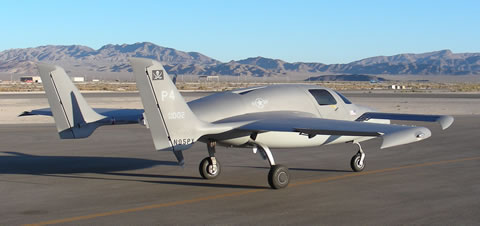
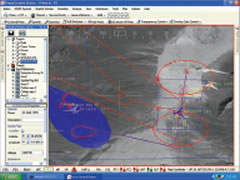
    These systems began with the modification of a ‘home built’ experimental aircraft, and led to a specially designed platform known as SkyRaider, which already proved itself in test flights. During the tests, SkyWatcher and SkyRaider unmanned aerial vehicles demonstrated cooperative flight capabilities, managed the SkyForce Distributed Management System (DMS). The Cooperative Rules Based Reconnaissance Unmanned System (CRBRUS) demonstration was held for ten days in early July 2007 at Creech Air Force Base, Indian Springs, Nevada, where SkyRaider and Skywatcher, joined by two simulated aircraft were sent on an ‘IED hunt’, operated by a single SkyForce DMS. Through several hours, the UAVs succeeded to locate all five IEDs hidden along the roads.

    The cooperating UAV constellation, which carried FLIR Star Saphire III sensors on the live UAVs, successfully performed nine missions in nine days logging 49 flight hours in record-breaking temperatures. The USAF established the cooperative flight objectives, testing Proxy’s UAS in a series of complex and dynamic intelligence, surveillance and reconnaissance (ISR) and hunter-killer scenarios. Test criteria included target-search, simulated weapons and multiple sensor employment, dynamic mission re-tasking, formation flying, collision avoidance and automatic take-off and landing. Notably, these demonstrations marked the first operational display of SkyRaider, which features retractable gear, a 1000-lb payload and the capacity to operate in high-density altitudes, among other advanced performance features.

    “The CRBRUS program demonstrated the advantage of having complementary sensor types operating in concert from their ‘sweet spot’ altitude and flight pattern, merging the derived information. The combined effect was enhanced target validation and reduced kill-chain timeline. The demonstration results provide clear-cut evidence for both the effectiveness of this approach and the far-reaching potential it holds,” said Don Ryan, CEO, Proxy Aviation.

    “A flight of four SkyRaiders, controlled from a single ground station can carry the same ordnance carried by a single Reaper (Predator B), but cover much larger area, maintain longer time over targets and offer higher redundancy, all that at the same cost.” Says Ryan, Proxy Aviation CEO. Although the Reaper can climb to an altitude of 45,000 ft, when fully loaded with weapons it will descend to lower altitudes, “When fully armed with a payload of 800 kg, the SkyRaider’s ceiling is 20,000 – 22,000 ft, similar to the ceiling of the armed Reaper. ” Ryan told Defense Update.

    One of the main advantages offered by the Proxy Aviation system is the SkyForce ground control system, designed from baseline to operate multiple aircraft. This system can operate as many as 12 airborne UAVs and 20 ground nodes concurrently. Therefore, a flight of four SkyRaiders can be launched on a patrol, covering a large area assigned with complex flight patterns and missions, while controlled seamlessly from a single control unit, thus limiting the manpower and logistical footprint to the minimum. The SkyRaider aircraft is designed as a robust platform, capable of operating from forward, semi-prepared airstrips. At AUVSI the aircraft was demonstrated with a mockup of FLIR System’s Safire HD payload.

    Each aircraft will be able to carry four Hellfire missiles or an equivalent payload of precision guided ordnance, such as the Viper Strike munitions. Hardpoints for the weapon’s pylons are installed in the wing strakes, which are strengthened to carry the extra load.

    The Merits of a Four-Tank Platoon in Urban Combat

    Start < Page 6 of 6 >

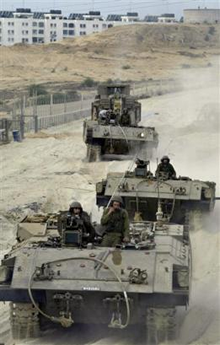
    In most modern armies, the standard post WWII five tank platoon organization has been changed to either four or three vehicles per platoon/troop. The original concept behind the five tank platoon was to have two separate fire and movement sections, with the platoon leader joining one at will, as required by the combat situation. Postwar developments envisaged not only a shortage of tank crews, but also a significant reduction in funding, both requiring restructuring of tactical sub-units. Moreover, the technological advances made in modern battle tank design have allowed a reduction in the number of vehicles, while maintaining the same, or even superior battlefield performance.

    The Israeli army, which has had substantial experience with tank warfare in the post WWII period, has shifted from five to four and finally three tanks per basic platoon, in order to increase the number of gun tubes deployed per tank company. The original IDF tank unit structure, which was developed for open desert tank warfare, was an 11 tank company (3 tanks x 3 platoons + 2 HQ tanks) allowing IDF tank units to have 8 gun tubes firing and three tanks moving at all times. This structure proved particularly suitable for high attrition tank versus tank engagements. Under the current IDF reorganization program, there have been some thoughts of reducing the Merkava Mk4 companies to seven vehicles. (1 HQ vehicle) This structure, made possible by these tank’s advanced technology and enhanced capabilities, is being considered because it would allow two tank sections to operate autonomously.
    The US Army has adopted the four tank platoon, rejecting the three-tank solution in order to maintain the two sections of two tanks support mode.

    The German Bundeswehr has shifted from four tanks in its platoons and 13 Leopard 2A4 tanks (4 tanks x 3 platoons + 1 command tank) per company used under Army Structure 3, to its new 13 Leopard 2A6 company with only three tanks in each platoon (3 tanks x 4 platoons + 1 command tank) in its latest organization (Army Structure 5N).

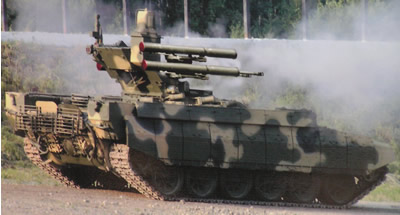
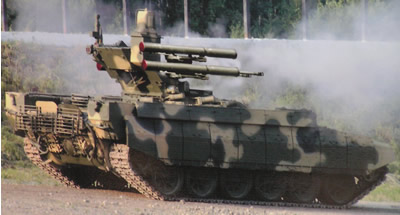
    The basic Russian T-72/80/90 tank platoon is still their traditional three vehicle formation, however, there are reports of a new concept being examined, under which a five AFV platoon will be established, with four tanks and a BMPT as the fifth vehicle. The BMPT is an entirely new class of vehicle known as a Tank Assistance Combat Vehicle. The Russians claim that this vehicle, by supporting the MBTs, increases their combat efficiency by 30%. The BMPT deals with all secondary targets, allowing the MBTs to focus on engaging the ‘heavy’ targets, which their main armament is designed for. The BMPT, based on T-72/-90 hulls, mounts an array of advanced anti-tank and anti-personnel weapons. These weapons systems include eight launchers mounting a combination of AT-9 Ataka guided anti-tank missiles or Igla short range air defense missiles, 30mm automatic cannon, multiple 30mm automatic grenade launchers and 7.62 machine guns.


    Combat experience in urban fighting has clearly demonstrated the advantages of the four tank platoon. Fighting through narrow alleys, where tanks operate in two tank sections supporting infantry, a three tank platoon would not only be inadequate, but also uneconomical, as the remaining single vehicle would in most cases be left behind, or not effectively used by the infantry commander, making it highly vulnerable to enemy tank killer teams. The alternative would be to use all three tanks of the platoon together, which would probably provide more firepower and more control problems than necessary. In addition, although the infantry commander may have the best intentions, his true function, and the one he has spent the most time training for, is controlling his own troops, not a tank or group of tanks temporarily assigned to his unit.
    From a purely economical viewpoint, reverting to the four tank platoon and 13 tanks per company would eliminate the second HQ tank, leaving a single tank for the company commander. The second HQ vehicle could be replaced by an APC or AIFV, capable of fighting and moving with the company, but with superior C4I facilities on board.

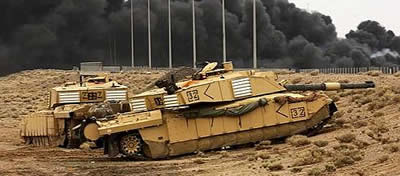
    The British army tank squadron has a 14 tank structure with four troops (platoons) of 3 Challenger II tanks and two tanks in the HQ section. These four troop squadrons give the squadron leaders the choice of forming two-tank sections, although in some cases with the two tanks coming from different platoons, without creating too much degradation in the squadron command structure, or leaving single tanks vulnerable, as might happen with a three-tank by three platoon company.

    The US Army has several basic scenarios for task organizing a small unit combined task force for urban combat.

    The Tank Platoon as a Maneuver Element

    In this scenario, the tank platoon leader is responsible for coordinating the maneuvering of his tanks. Using this task organization, likely missions for the tanks would be to provide fire support or overwatch for the movement of infantry units. This is also the most difficult of these methods to control because of the effort required to coordinate the movements of the two types of units. The tank platoon leader may choose to maneuver his platoon in sections. (Two tanks each from a four tank platoon) This provides greater flexibility in supporting the infantry during combat, but places greater responsibility on the NCO commander of the ‘light’ tank section when operating independently with the infantry commander. (The advantage of an experienced NCO in this situation is clear. The availability of tank commanders with the required level of experience in mandatory short-service armies can present a problem.)

    Tank Sections Under Infantry Platoon Control

    In this scenario, tanks platoons are broken down into two sections, each section being placed under the operational control of an Infantry platoon leader. While this technique is very effective in maintaining the same rate of progress for the tanks and infantry, it requires pre-mission training in tank combat control for the infantry platoon leaders. Normally, tank crewmen resent this kind of control, as the infantry commander will, in some cases, prefer to assign single tanks (not co located with the infantry) to provide close support. This endangers the tanks because they are vulnerable to tank killer teams in any kind of terrain that is not open.

    Infantry Squads Under Tank Platoon Control

    In this scenario, the company team commander places one or more infantry squads under the operational control of a tank platoon leader. This technique is very effective in relatively open urban terrain where a tank platoon can operate as a unit, with the infantry providing close-in protection against enemy tank-killer teams. This is the tank commander’s preferred option as it allows the tanks to operate under the most ideal conditions available to them in urban combat, where they are especially vulnerable to close range attacks. This technique requires that junior tank unit commanders be pre-trained in tank-infantry cooperation down to the section-squad level. The platoon commander co-ordinates the unit’s firepower using various methods, the best of which is via the infantry coordination phone mounted on the rear of the tanks. These external phones connect the infantry leader into the tank’s communication system allowing them to communicate directly with the tank crew, or the tank platoon commander even if he is in different tank.

    Additional parts of the article:

    Tank Support Combat Vehicle (BMP-T) (Modified T-72)

    The Tank Support Combat Vehicle is designed to provide support for armored formations, by engaging anti-tank teams, demolishing obstacles, engaging fortified targets in bunkers, buildings or under cover. The vehicle utilizes the T-72 chassis, mounted with turret mounted multi-purpose weapon system, comprising of twin barrel 2A42 30mm gun, machine gun and four missile launchers. Each weapon can be aimed separately, providing multi-target engagement capability. The weapons systems are operated by a commander and gunner. Both are equipped with day/night sights.

    Skunk Works and XTEND Simplify Multi-Drone Command

    0
    Lockheed Martin Skunk Works® and XTEND have achieved a major milestone in JADC2 by integrating the XOS operating system with the MDCX™ autonomy platform. This technical breakthrough enables a single operator to simultaneously command multiple drone classes, eliminating the friction of mission handoffs. From "marsupial" drone deployments to operating in GPS-denied environments, explore how this collaboration is abbreviating the data-to-decision timeline and redefining autonomous mission execution.

    From Ukraine to Taiwan: The Global Race to Dominate the New Defense Tech Frontier

    0
    As traditional defense primes face mounting competition from agile “neoprimes” such as Anduril, Palantir and Helsing, the balance of innovation is shifting toward software-defined warfare and scalable, dual-use technologies, while global industry consolidation—marked by Boeing’s integration of Spirit AeroSystems and other strategic mergers—signals an intensified race to secure control over the defense technology value chain. Our Defense-Tech weekly report highlights these trends.

    Europe’s “Drone Wall”

    0
    In early October 2025, a coordinated wave of unmanned aerial system (UAS) incursions—widely attributed to Russia—targeted critical infrastructure across at least ten European nations. The unprecedented campaign exposed the fragility of Europe’s air defenses...

    Weekly Defense Update & Global Security Assessment

    0
    Executive Summary The past week (September 18-25, 2025) represents an inflection point where strategic defense concepts have transitioned from doctrine to tangible reality. An analysis of global events reveals four primary, interconnected trends shaping an...

    U.S. Air and Space Forces Push Next-Gen Programs at the AS&C 2025 Conference and...

    0
    At the 2025 Air, Space & Cyber Conference, U.S. Air Force and Space Force leaders unveiled major updates on next-generation fighters, bombers, unmanned systems, and space initiatives, highlighting both rapid innovation and critical readiness challenges as the services race to outpace global competitors. A short version is available here, with a more detailed version for subscribers.

    TADTE 2025: Reflecting Taiwan’s Strategic Themes

    0
    The Taipei Aerospace & Defense Technology Exhibition (TADTE) 2025 crystallized around four dominant strategic themes that collectively illustrate Taiwan's comprehensive approach to defense modernization amid escalating regional tensions. Based on a detailed report by Pleronix (available upon request). Includes a Podcast discussion on TADTE 2025's highlighting Taiwan's four strategic themes beyond the post's coverage.

    Iron Beam 450 Completes Testing, Soon to Join With Operational Air Defense Units

    0
    Israel’s Iron Beam 450 high-power laser system has completed final testing, marking a major leap in air defense. Developed by Rafael, it offers precise, cost-effective interception of rockets, UAVs, and mortars, and is set for IDF deployment by 2025.