Wednesday, December 24, 2025
More
    Home Blog Page 426

    Urban Tactical Planner (UTP)

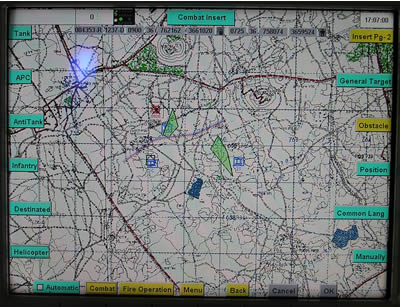
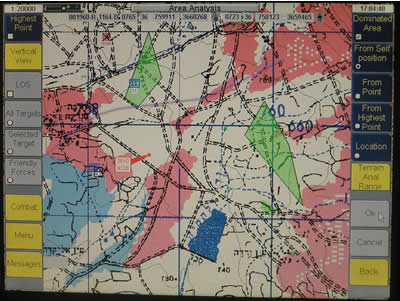
    An operational planning tool, intended to support Military Operations on Urban terrain (MOUT), was developed by General Dynamics for the / US Army Topographic Engineering Center. Dubbed Urban Tactical Planner (UTP) it provides decision support tools for planning of complex operations in urban terrain, and Military Operations Other Than War (MOOTW). The system enables clear visualization of the terrain and assessment of threat capabilities based on advanced visualization, modeling and terrain analysis. UTP can be operated at all levels, from highest command levels down to the squad.

    The tools loaded to UTP facilitate rapid visualization of key aspects of the urban environment, including buildings, roads, railroads, streams, forests, marshes, water bodies and vertical obstructions. The system groups the urban features by forming Builtup Area Terrain Zones, (BTZ)s, which can be superimposed on high-resolution terrain images, raster maps, elevation and vector data layers.

    UTP provides 2D map, 2D imagery, 3D visualization of key aspects of urban environment, based on elevation data and perspective views. Information can be presented in multiple layers in any combination. Tabular data can be attached to show building data, vertical obstruction heights, road types, bridge data etc, intelligence photos, video clips etc. Such information can be presented by clicking on the object of interest. Planning products can be distributed in Arcview Geographic Information System (GIS) format over CDs and DVDs, or other wireless broadband communications formats.

    TouchTable – Collaboration & Presentation Display

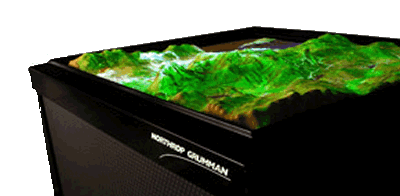
    TouchTables uses intuitive presentation to display location and movement of forces in real time. The display is controlled by hand movement – surface movement pans the display, two fingers moving apart zooms it out, and two fingers moving together zooms it in. This simple interface allows users to easily change a view from miles above the Earth to a detailed layout of a single city block. Touching a single point on the surface brings up detailed information about that point.

    The display is designed to ease collaboration by multiple users, as users can stand around the TouchTtable’s large, horizontal surface manipulating the presentation and information to best assess complex situations. Multiple TouchTables and other computing devices can be connected to one another over great distances, allowing synchronized navigation by geographically distributed groups.

    Current TouchTables products are available in 84″ (horizontal) and 45″ (horizontal or articulating) diagonal high resolution displays to support group collaboration. Pressure sensitive surface allows multiple methods of information interaction.

    Running on standard PC hardware, TouchTable software applications contains extensions to ESRI’s ArcView geographical information system’s software. Using open architecture, supporting navigation tools including zoom, pan, rotate, history recall, network-based collaboration and drawing and annotation tools.

    The TT45 product is designed for smaller groups, intercommunication, decision-making and teamwork. The 45” diagonally dimensioned display can shift from seated, around-the-table collaboration to draft mode to vertical conference room or wall use.

    View the  TouchTable video presentation

    DualHead2Go Multi-Display Device

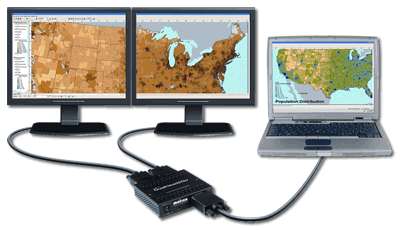
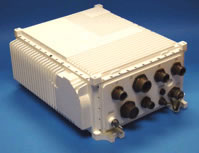
    DualHead2Go, a multi-display device developed and produced by Matrox, connects to the monitor connector of a computer and adds support for an extra monitor. The operating system treats DualHead2Go device like a monitor, thus supporting resolutions twice as wide as standard resolutions.

    This multi-display solution uses a computer’s existing graphics hardware and software for 2D, 3D, and video acceleration. By helping to manage more information, Matrox multi-display technology can improve productivity and reduce errors.

    DualHead2Go uses Matrox patent-pending technology to divide the monitor output from the computer into 2 separate displays, one showing the left half of this “monitor” and the other showing the right half.

    As an external add-on, the new device is suitable for enhancing closed, already validated, mission-critical system or to computers with no available expansion slots, including laptops, ultra-small form factor PCs, thin clients, and embedded systems. Unlike installing a new graphics card, the DualHead2Go setup doesn’t require opening a computer, inserting parts into it, or replacing any hardware or software.

    Tactical Operations Center – US Army

    SECNET Tactical Aids

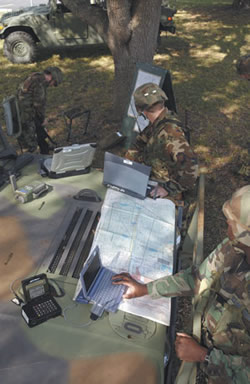
    Tactical Operations Centers (TOCs) employed by the US Army and Joint Operations Center, designed to command and control joint operations at theater level, consists of an integrated group of tents and wheeled and/or tracked vehicles with shelters from which a commander and staff plans, monitors, and directs the tactical operations of assigned forces in any military operation. The TOCs provide facilities for planning, communication, and visualization tools where commanders and their staffs can access information resources from tactical through national levels to render an integrated, comprehensive view of the battlespace.

    A Tactical Operations Center (TOC) consists of multiple platforms (vehicles or tents) comprising of integrated communications combining data, video, and voice communications networks, information management, and computing equipment designed for the tactical environment. Information management applications provide access to, and display of situational awareness information to the commander and his staff. TOC systems are include legacy systems such as the Army Battle Command System (ABCS), SINCGARS radios, and Common Hardware Systems (CHS), including video displays, tactical faxes, and commercial-off-the-shelf network equipment. Interoperability between Combat Information Centers (CICs) of different services was demonstrated during Force XXI through the fielding of the 1st and 2nd digitized Divisions, and is again being called on during the Army’s Unit of Action/Unit of Employment (UA/UE) restructure.

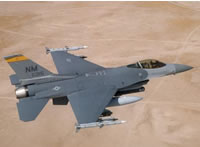
    Modernization of the F-16 Fleet

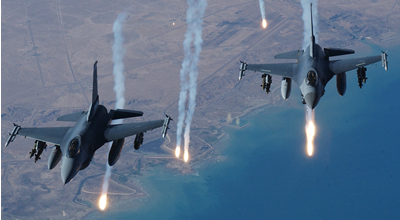
    Romania is buying a squadron of F-16s from Portugal. These aircraft will replace its existing MiG-21 Lancer by 2017.

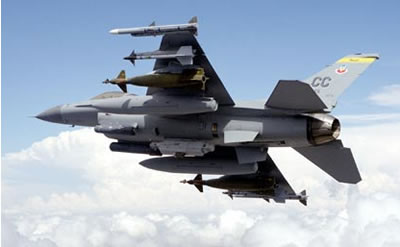
    To keep the F-16 family of fighters running at top performance, operating air forces worldwide are implementing various upgrading programs. The Common Configuration Implementation Program (CCIP) provides a high degree of commonality in hardware and software, thus improving operational flexibility, logistics support and reducing life cycle costs, training. After receiving the F-16 CCIP upgrade, and the M3/3+ software enhancement, USAF Block 40/42s and 50/52s and NATO’s F-16s will have common core avionics and software. With the recent software upgrade, these aircraft will have the capability to deploy support smart weapons with inertial, GPS and laser guidance systems, supporting advanced weapons such as the GBU-31 Joint Direct Attack Munition (JDAM), AGM-154 Joint Stand-Off Weapon (JSOW), CBU-103/104/105 Wind-Corrected Munitions Dispenser (WCMD) and EGBU-27 enhanced laser-guided bomb.


    Up to 650 Block 40/42 aircraft of the USAF and US Air National Guard are being upgraded under this program. The upgrades also provide a high degree of commonality and convergence of existing fleets with new production F-16s built for international customers, and with the F-16 Mid-Life Update being performed on 400 F-16A/Bs operated by five European NATO partners. The program is divided into phases: Phase I and IA for the initial systems to Block 50/52 aircraft; Phase II for the full modification to Block 50/52 aircraft; and Phase III for the full modification to Block 40/42 aircraft.

    European MLU Upgrades
    Another upgrade is the F-16A/B Mid-Life Update (MLU) implemented in various phases by NATO air forces operating the F-16 – Belgium, Denmark, the Netherlands, Norway and Portugal. The latest MLU upgrade is focusing primarily in avionic modernization, and include Block 50 F-16C/D-style cockpit with color multifunction displays, modular mission computer, APG-66(V)2 radar update, integration of a digital terrain system, global positioning system (GPS), advanced identification friend or foe (IFF), improved data modem data link, installation of an electronic warfare management system, and provisions for a reconnaissance pod and a helmet-mounted display. A upgrade of the Portuguese Air Force F-16A/B aircraft included this MLU Phase II also included the Falcon UP/Falcon STAR structural upgrades, and F100-PW-220E engine upgrades. Further upgrades to the Portuguese aircraft included a night identification light, dedicated electronic warfare MUX bus, additional chaff/flare dispensers and provisions for an internal missile warning system and a flight analyzer/air combat evaluation/voice and data recorder.

    Israeli F-16 Upgrades
    Most of Israel’s F-16s have already undergone the Falcon-UP service life extension program, performed both by the IAF support center and IAI. Other modernizations included the installation of internal ACMI systems (in F-16As) associated with ground debriefing systems (similar but less sophisticated as the F-16I SIMNET). Also implemented are adaptations for Israeli weapons and systems, such as the EW systems, Python 4 missiles carrying capability, communications, data-links, etc. Another upgrade program called ACE program is proposed by a consortium of Israeli companies for early models Block 10 – 30 aircraft. ACE integrates a new multi-mission radar from Elta (EL/M-2032), improved core avionics, a modern color glass cockpit and helmet mounted sight, introduction of new weapons capabilities, advanced EW systems, fuel increase options and other avionic upgrades.

    Preparing for Future Upgrades
    With the recent acquisitions of F-16s, Lockheed Martin plans to sustain production on the F-16 line at Ft. Worth beyond 2010. Major upgrades for all F-16 versions are being incorporated to keep the fleet modern and fully supportable over the aircraft’s long service life. As all F-16 blocks, recent production blocks of the F-16 such as Block 50, 52 and 60 are also designed, from the ground up, with enough growth potential in weight growth, cabling, data connectivity and capacity, electrical power, and physical space, to enable growth throughout a life span of 40 years and beyond. Utilization of standard interfaces such as 1760, 1553 and the new FiberChannel five channels, Gigabit rate databus, enable rapid interfacing and data sharing throughout the aircraft systems. In addition to the production programs, Lockheed Martin has incorporated a “roadmap of convergence” for F-16 upgrades and production aircraft, consisting of an integrated plan that will result in maximum commonality throughout the fleet.

    Additional Parts of this article :


    F-16 Software Upgrade

    The F-16 fleet began receiving the M3+ (M3 is the designation for  European Air Forces) software version upgrade in the summer of 2004. The joint software development was carried out by the USAF and European Air Forces since 2000. The follow-on release (M4/M4+) is scheduled for 2007 and 2009 (M5/5+).

    Software upgrades are being implemented in the field, on 200 USAF Block 50 F-16C/D‘s already equipped with Common Configuration Implementation Program (CCIP) modifications. Software upgrades for some 400 Block 40 F-16C/Ds is scheduled to begin in 2006 during depot maintenance cycles. The M3 software will be installed on approximately 350 EPAF F-16A/Bs that have already undergone the F-16A/B Mid-Life Update modification and are now receiving hardware changes associated with the M3 upgrade. The M3 modification will take place at depot facilities in each country.

    A major new capability offered with the M3+ are Link 16 data link and the helmet-mounted cueing system (HMCS). The USAF F-16s also will be receiving a capability to deliver the Lockheed Martin AGM-158 Joint Air-to-Surface Standoff Missile (JASSM). The software is also compatible with the Lockheed Martin Sniper XR targeting pod recently certified on the F-16 for the USAF and Norway. The European F-16s will gain the capability to deliver the Joint Direct Attack Munition (JDAM).

    Additional Parts of this article :

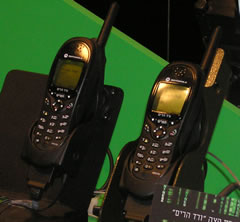
    Mountain Rose IDF Mobile Communications Network (TETRA)

    Based on networks already deployed worldwide with Security and Public Safety services , Motorola has expanded its offerings to military cellular \wide area communications, based on its Tetra IP network. The ETSI, standards based platform is modified to suite the specific requirements of the client provide a full communications suite for logistic and support units, it can be configured to cover a specific area, support mobile operations at extended range, connect between several dispersed locations over satellite link or provide nation-wide cellular coverage, in support of military operations in peacetime or at war.

    The first military implementation of the TetraIP was the creation of a new, terrestrial nationwide military cellular network for the Israel Defense Forces providing dependable, deployable voice and data services to military commanders. Code name Vered Harim (Moutain Rose), the system became operational in mid 2004, after almost four years of development and installation. This network will become part of the IDF future “Digital Army Program”. Vered Harim revolutionizes the IDF communications networks, transforming from hierarchical networking model to spatial connectivity infrastructure. The system replaced outdated means of communications, including terrestrial communications, wireless radio-telephone (RT) links and some combat net radio networks. For the first time Israeli commanders can utilize highly secure communications on the move, anywhere they operate. The system also support data transfer. Currently transfer of images and messages is facilitated with planned enhancements including video services. Data support of up to 28.8 kbps is currently available to support forces deployed throughout the theater of operation. This bandwidth is sufficient to transfer live video, utilizing compressed  video transfer services provided by Visual Defense (Emblaze) systems. These networks can link to terrestrial networks or satellite communications systems, to facilitate direct and seamless connectivity from the lowest echelon up to the national command level.

    As a cellular communications infrastructure, the network maintains all technical elements at the infrastructure level. This military network is maintained by the operator and therefore, enables services which have so-far been maintained only by commercial providers. These include end-to-end high level of security, assured coverage and capacity, based on operational planning (not only by actual demand) and the ability to “kill” a unit which is interfering, lost or captured by the enemy.

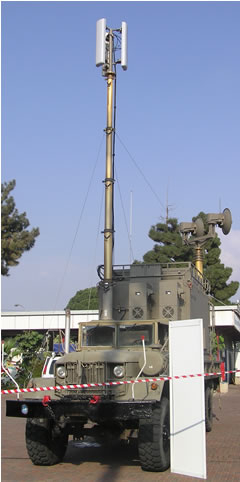
    Unlike other commercial cellular networks which rely mainly on fixed sites, Motorola’s solution uses fixed and transportable sites, which deploy with the military units, positioned at vantage points where they provide optimal coverage and redundancy to maintain effective connectivity and communications capacity for the operating forces. Since the system is not dependent in the commercial infrastructure, communications can be sustained even under critical loads and in emergencies, where other forms of communications fail. When communications is not available for any reason, each subscriber unit (handset) is configured to communicate directly with nearby handsets therefore maintaining a minimum level of communications.

    Handsets are provided with a SIM card and personal unique ID for duplex communications at a high level of security. Handsets are also integrated into robust vehicular mounts, including militarized mounts for AFV installations.

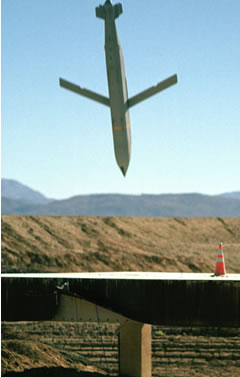
    Precision Strike Weapons

    Start < Page 1 of 9 >

    Over the past decade, modern air forces are transforming their operational concepts from platform and weapons dependent to effects oriented planning. In other words, shifting from focusing on the number of airplanes it takes to destroy a single target, to the number of targets which can be destroyed with a single aircraft and the aggregated effect such attacks could yield.

    Investment in precision guided munitions following the lessons from the Kosovo campaign was fully vindicated during Operation Iraqi Freedom (OIF). Around 66% of US munitions and up to 85% of RAF munitions used during OIF were precision guided, either by Global Positioning Systems (GPS) or by laser or both. This demonstrates a huge leap forward in capability since the 1991 conflict, when the proportion of precision guided munitions was around 30% of US and 18% of RAF weapons were guided.

    The US Forces flew 37,000 missions during OIF, dropping 23,000 precision guided weapons (over 66% of the total ordnance dropped) and launching 750 cruise missiles. During OIF, new tactics were developed to find, fix, track, engage, and assess fleeting targets, enabling the coalition to effectively process 156 time sensitive targets, and more than 680 highly mobile dynamic targets. Coalition forces command and control structures at the Combined Air Operations Center were also modified to far better integrate space operations into operational planning and mission control.

    Additional parts of this article:

    Battle Command Information System (SICF)

    The system supports the command and control at divisional, corps and army levels, as well as projection forces. The system can be deployed in fixed, sheltered or mobile elements. The system was developed with support of projection and coalition operations, to support such missions SICF provides an integrated common situational picture to optimize forces management at an area of crisis, reduce the cycle of planning, decision while supporting multi-lingual operation. SICF provides planning, preparation of orders and operational management functions. The system facilitates optimization of the use of available resources.
    SICF provides means for preparation, filing, formatting, authenticating and sending of reports, messages and orders distribute and update procedures, alerts and other time critical messages. The system supports various information layers, including planning and monitoring of tactical maneuver, intelligence, ORBAT, maneuver, combat support, logistics, chemical defense, and other aspects, all presentable as map-based and 3D medium.

    Basic services the system provides include collaboration and workflow automation of routine processes including planning, preparation and distribution of orders, the management and monitoring of order of battle, monitoring of status of combat unit and reinforcements etc. The system support vector and raster graphics of maps and imagery, including orthophotos and satellite imagery.

    Area analysis, including mobility analysis, route conditions, affecting transportation capacity are monitored and displayed as part of the system’s resources. Maneuver planning and monitoring is fully supported, deriving information from manual and automated reports gathered from battle management systems and other resources. The system stores information with timestamp and location information, enabling users to view historical information related to specific tasks or points of interest and evaluate several options when choosing an optimal course of action.

    The system provides tools for logistics planning, with typical consumption per unit, by type, and characteristic behavior for peacetime, emergency and wartime conditions. Full support is provided for fire support planning, including objectives fire support planning as part of divisional operations and effects objectives, management of fire support request, coordination and safety. Procedures supporting Chemical, Nuclear and Biological defenses are provided by include observation reports, automated calculations of contaminated zone, based on meteorological information, wind direction etc. The system issues automatic alerts to the affected units. The system interfaces with air-force units to support air traffic management and air defense coordination at low-altitude. Corridors and light aviation of the Army (ALAT) reserved zones are marked and requests for air-to-ground support are processed.

    The system uses tactical communications including h RITA, PR4G VHF, communications infrastructure incl. Socrate R&T and Sat-com (Mil) incl. Syracuse, INMARSAT etc.

    The system standard IP connectivity uses Windows 2000 operating systems and COTS office automation applications. Interoperability is designed with ful integration into SIR and higher echelon French inter-arms SOCCA, SYCOM and SICA systems, and inteworking with other NATO systems via NATO standard protocols such as AdatP-3 transport standard, APP6-A symbology standard and ATCCIS data interoperability. MIP is also supported to facilitate database replication and messaging exchange.

    SICF is developed by Thales Communications and is based on COTS PCs running Windows 2000 systems. SICF was first deployed in 1999 and when fully deployed it is expected to run over 2000 workstations and 50 command posts at corps, EMF, independent brigades and specialized brigades headquarters, the Franco-German force etc. Similar systems are also designed for Canadian and Belgian forces.


    Weapon Integrated Battle Management System – WINBMS

    Weapon Integrated Battle Management System (WINBMS) is designed for the joint battalion combat team, it accelerates mission planning, establishes a common and clear language across all combat elements, distributes and enforces areas of responsibility, separation lines, safety margins etc; it automatically updates and distributes intelligence, target information and alerts throughout the battle group and enables flexible planning and operation. Integrated with on-board networked BMS computers, every platform becomes a networked sensor and a shooter. Weapons can be slaved by remote users, to remote sensors, therefore empowering the system with more flexibility, faster op-tempo, effective closed–hatches combat and employment of distributed and dispersed firepower without risking fratricide. WINBMS integrates built-in navigation, communications functions, fully integrated with the platform, on-board sensors and weapons.

    WINBMS systems are embedded with simulation and debriefing capabilities as part of Elbit’s Battlefield Enhanced Smart Training (BEST) architecture. At the WINBMS level BEST supports each of the combat systems, integrated at company level. This approach enables combined training of live, simulated and virtual forces, at multiple locations and different levels (battalion, brigade and other units). The IDF plans to deploy the first trainer for battalion combat team in November 2005. An on-board trainer for the Merkava Mk4 main battle tank  is already operational, providing full simulation environment for commander and gunner, supporting training from the individual team up to the company level.

    Rechargeable Power Battery Chemistries

    Energy density is the most significant factor in secondary (rechargeable) battery consideration, but other important attributes are service life, load characteristics, maintenance requirements, self-discharge and operational costs.

    Nickel-cadmium – (NiCd) mature but has moderate energy density. Nickel-cadmium is used where long life, high discharge rate and extended temperature range is important. Main applications are two-way radios, biomedical equipment and power tools. Environmental considerations are also important in this category, as nickel-cadmium contains toxic metals that must be disposed of properly.

    -Nickel-metal-hydride
     (NiMH)- has a higher energy density compared to nickel-cadmium at the expense of reduced cycle life. There are no toxic metals. Applications include mobile phones and laptop computers.

    -Lithium-ion – (Li-ion) fastest growing battery system; offers high-energy density and low weight. Protection circuits are needed to limit voltage and current for safety reasons. Applications include notebook computers and cell phones. New nanotech processed electrode provide x5 more power and x10 longer cycle life at 20% of the weight.

    -Lithium-ion-polymer
     – Similar to lithium-ion, this system enables slim geometry and simple packaging at the expense of higher cost per watt/hours. Main applications are cell phones.

    RITA Valo

    RITA Valo – developed and produced by Thales Communications, is the French Army tactical communications system, The Asynchronous Transfer Mode (ATM) based network provides voice and data communications between theater deployed headquarters supported terrestrial, satellite and wireless communications, both military, civil networks.

    The infrastructure supports high security (SD/SO) call and data routing, stationary and mobile subscribers and interfaces with external networks (military, civil and allies). RITA Valo will also support interconnectivity withexisting RITA (1G) and PR4G combat net radios.

    The ATM based infrastructure supports phone, fax, data, image and video transfer at high speed communications. The system’s basic capacity supports up to 7,000 subscribers and 2,500 mobile subscribers. Command post access via ISDN, BIS and PRI are provided. The system’s modules are designed for air transportation, and deployment with light trucks (2 or 4 ton or VAB APCs).

    The system consists of the ATS 2000/CMX tactical ATM switches, and TRC 7450 routers, Farmhouse 2000 multi-media switches, supporting LAN and headquarters, PR4G VHF/FM CNRs, and mobile technical support shelters (S/ATM).

    RITA Valo is developed under cooperation between France and Belgium. Both countries selected the system to equip their armies. Up to 200 systems are planned for production.

    Scorpion RBM Rugged Portable Notebook Computer

    DRS Lightweight Scorpion rugged portable notebook computers are designed to operate under extreme conditions. Sealed in a rugged case and keyboard withstanding MIL-SPEC-810, the Scorpion can operate in a temperature range from -20o to +50o C. These computers use internal Commercial Off-The-Shelf (COTS) architecture powered by Pentium III 700 MHz processors, and 128MB DRAM, expandable to 512 MB, and removable hard drive to provide economical upgrading and support. The Scorpion can be expanded utilizing dedicated hardware expansion cards, using two type I/II or one type III PCMCIA ports. The notebook computer uses 12.1″ TFT displaying SVGA (800×600) on a daylight readable screen. The Scorpion can be powered by an AC adapter, standard 28VDC vehicle battery or hot swappable lithium ion batteries. The Scorpion RBM uses standard Windows operating system. The system uses standard interfaces for integration with peripherals and communications devices, including RS-232 serial port, RS-422/RS-485 serial port, two USB ports, parallel port and RJ11 10/100 Ethernet port.

    A different configuration of Scorpion is the Rugged Vehicle Terminal (RVT) is a touch-screen tablet computer with external keyboard capability. The device can be mounted inside a combat vehicle and operate on the move. The RVT can operate from vehicle power or independently, using its internal rechargeable batteries. The RVT can be driven by the Platform Digitization Processor Unit (PDPU), vehicle mounted computer. The PDPU can be used to process navigational and positional data, based on input from various sensors, such as GPS/INS position location, digital compass, north finding devices, inclinometer and heading sensors. Position data can be fused with weapon system sensor information and passed electronically over an embedded MilCAN bus.

    The DRS Platform Digitization Processor Unit (PDPU) can be vehicle mounted and is designed to operate in and survive the harshest of environments, offering the user maximum flexibility and versatility. The PDPU allows accurate positional and heading data to be fused with weapon system sensor information and passed electronically over an embedded MilCAN bus.

    Tactical Intranet Geographic Dissemination in Real Time (TIGER)

    Tiger uses interest and location-based information dissemination protocol, supporting Automatic Geographical Publish and Subscribe (AGPS) information broker and secure tactical messaging services, to ensure the delivery of the information at the right time to the right user, down to the single vehicle level. Subscribers receive all, yet only relevant information, according to their geographic location, defined topics of interest, including subject related and geographic related interest.

    The network’s AGPS brokers rely on broadband connections to receive and distribute information, thus reducing the overall demand for networking resources. Routing is determined by dynamically weighing various criteria including shortest path, hierarchy, classification, priorities, connectivity and channel capabilities. Each broker gathers subscriber’s topics and areas of interest and disseminates this information when required. Each broker is responsible for a group of stations and servers as works as their mediator to the rest of the network. Placed at strategic nodes, some brokers are enhanced to perform as “gateways”, supporting the network with inter-network connectivity functions. Such gateways are dividing the network into clusters thus reducing message flow while improving delivery time.

    Another element of TIGER is the Tactical Message Oriented Middleware (TMOM), providing seamless transfer of messages between C4I applications over different communications channels. Messages are dispatched by “store and forward” techniques routed through optimal, secured and economical dynamic paths. The system automatically retransmits undelivered messages and sends acknowledgements to assure delivery. Messages are automatically be routed around or within any sub-net which has been temporarily disconnected from the tactical intranet to overcome intentional or unintentional service disruptions.

    Tiger supports thousands of independent user, empowering every user station to operate as a router, thus establishing an add-hoc routing paths throughout battlespace. The network follows automatic, dynamic and adaptive learning of optimal network topology to support self-forming and self-healing functions, enabling effective and reliable communications coverage for highly dynamic operations. The TIGER architecture supports the coexistence of legacy and modern systems by using media adapters interfacing the applications and communications networks. These proprietary communications controllers enable the integration of hierarchical networks into the unified, dynamic, homogeneous, self-manageable network. TIGER support wireless communications including VHF/HF tactical radios, high capacity data radios, satellite links, wide area networks, wireless LANs and cellular communications. The system is protected by multilayer security levels.

    Skunk Works and XTEND Simplify Multi-Drone Command

    0
    Lockheed Martin Skunk Works® and XTEND have achieved a major milestone in JADC2 by integrating the XOS operating system with the MDCX™ autonomy platform. This technical breakthrough enables a single operator to simultaneously command multiple drone classes, eliminating the friction of mission handoffs. From "marsupial" drone deployments to operating in GPS-denied environments, explore how this collaboration is abbreviating the data-to-decision timeline and redefining autonomous mission execution.

    From Ukraine to Taiwan: The Global Race to Dominate the New Defense Tech Frontier

    0
    As traditional defense primes face mounting competition from agile “neoprimes” such as Anduril, Palantir and Helsing, the balance of innovation is shifting toward software-defined warfare and scalable, dual-use technologies, while global industry consolidation—marked by Boeing’s integration of Spirit AeroSystems and other strategic mergers—signals an intensified race to secure control over the defense technology value chain. Our Defense-Tech weekly report highlights these trends.

    Europe’s “Drone Wall”

    0
    In early October 2025, a coordinated wave of unmanned aerial system (UAS) incursions—widely attributed to Russia—targeted critical infrastructure across at least ten European nations. The unprecedented campaign exposed the fragility of Europe’s air defenses...

    Weekly Defense Update & Global Security Assessment

    0
    Executive Summary The past week (September 18-25, 2025) represents an inflection point where strategic defense concepts have transitioned from doctrine to tangible reality. An analysis of global events reveals four primary, interconnected trends shaping an...

    U.S. Air and Space Forces Push Next-Gen Programs at the AS&C 2025 Conference and...

    0
    At the 2025 Air, Space & Cyber Conference, U.S. Air Force and Space Force leaders unveiled major updates on next-generation fighters, bombers, unmanned systems, and space initiatives, highlighting both rapid innovation and critical readiness challenges as the services race to outpace global competitors. A short version is available here, with a more detailed version for subscribers.

    TADTE 2025: Reflecting Taiwan’s Strategic Themes

    0
    The Taipei Aerospace & Defense Technology Exhibition (TADTE) 2025 crystallized around four dominant strategic themes that collectively illustrate Taiwan's comprehensive approach to defense modernization amid escalating regional tensions. Based on a detailed report by Pleronix (available upon request). Includes a Podcast discussion on TADTE 2025's highlighting Taiwan's four strategic themes beyond the post's coverage.

    Iron Beam 450 Completes Testing, Soon to Join With Operational Air Defense Units

    0
    Israel’s Iron Beam 450 high-power laser system has completed final testing, marking a major leap in air defense. Developed by Rafael, it offers precise, cost-effective interception of rockets, UAVs, and mortars, and is set for IDF deployment by 2025.