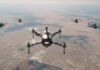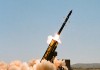

An autonomous ground-based electronic surveillance (SIGINT) monitor and jammer, Wolfpack is designed to cooperatively network with other sensors and friendly communications assets, to avoid disruption of friendly military and protected commercial radio communications and radars. The program, under development at DARPA examines ways to maximize EW effect of by low-power jamming, deployment of units at RF vantage points, including airborne and deep-launch deliveries, for distributed Suppression of Enemy Air Defense (SEAD) roles, littoral warfare and force protection roles.
Specter DR Dual Field Weapon’s Sight
Specter, built by ELCAN Optical Technologies. The range of Specter products includes daylight optical sights (red dot and optical sights), night sights and thermal sights. Elcan has added to the Specter range the Specter DR dual field of view sight (1x/4x). The sight lets combatants move safely through buildings or confined areas using red-dot mode and then instantly switch to 4x to accurately engage targets at extended range without changing sights. Situational awareness in both magnifications is improved with ultra-wide viewing angles.
XM8 Lightweight Assault Rifle
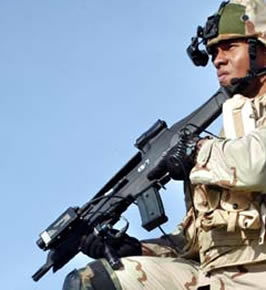
The XM8 lightweight Modular Weapon System is based on the Heckler & Koch G36. In its current version, it is derived from the XM29 OICW program. The weapon fires 5.56mm ammunition and its planned weight will be only 5.7 pounds, considerably less than current carbines. The weapon is under development since October 2002 and is expected to be ready for fielding by 2005. The new weapon will provide lethality performance comparable to the currently fielded M4 carbine rifle, at considerably lower weight. The XM8 is designed as a modular weapon, which can be fitted with different barrels and other modules which can be swapped quickly to meet changing mission requirements. The basic version uses an integrated sight with infrared laser and illuminator, red dot reflex sight and integrated mount. Variants include the baseline carbine, a sub-machine gun-like personal defense weapon, a sharpshooter’s configuration and a variant for use as a heavy-duty machine gun for sustained rapid-fire applications. An optional add-on 40mm grenade launcher is also available. A comparable M4 configuration weighs 8.85 pounds. The sight is powered by battery and is controlled by a wireless switch which can be mounted anywhere on the weapon. The weapon also has an integral accessories attachment rail which can also mount standard 1913 adapters to carry accessories which are not integrated on the weapon.
The XM8 Light Weight Modular Weapon System has been proposed as a replacement for the current M16 rifle and M4 carbine, the standard infantry weapons in today’s U.S. military. In anticipation of such future contracts, General Dynamics European Land Combat Systems, (a business unit of General Dynamics) and Heckler & Koch GmbH of Oberndorf, Germany, have announced on January 3rd 2005 the creation of a U.S.-based joint venture company to manufacture and deliver the 5.56mm XM8 Light Weight Modular Carbine System to U.S. government customers.
However, after temporarily suspending the RFP for a new family of weapons for which XM8 was considered a strong candidate, on October 31, 2005, the program has formally suspended, “pending further US Army reevaluations of its priorities for small caliber weapons, and to incorporate emerging requirements identified during Operation Enduring Freedom and Operation Iraqi Freedom. The Government will also incorporate studies looking into current capability gaps during said reevaluation.”
Maneuver Control System (MCS)
The MCS system provides the primary tactical planning tool for the brigade. Supported by graphics decision support tools, which including digital maps, aerial or satellite photos, dynamic 3D “flyover” view of the battlespace, and mobility analysis of the terrain, map overlays with intelligence and battle resources by unit. Commanders can quickly and clearly analyze different courses of action and take decisions based on thorough analysis of up-to-date situational assessment, various maneuver schemes, doctrine, and changes encountered during the course of action. Once detailed plan is determined, the MCS prepare and send warning, operations orders, and related annexes. During the mission, the system provides automatic updates of friendly/enemy unit movement locations and battlefield geometry. As all information is maintained on the database, re-tasking of units is rapid and flexible. As an integrated part of the battle command systems, MCS receives information from external sources and updates those sources within predetermined operational plans. Such sources include intelligence, fire support, supply status and air operations requests. To simplify its operation, the system uses commercial office applications to generate reports, and display images, charts and graphs.
Advanced configuration MCS (Block III and IV) support Command Post Of the Future (CPOF), including interactive whiteboard planning, and wargames simulation, for planning assessment and course of action analysis, audio and video annotation for selected map “snapshots”, can be used during briefing and situational reports.
VIPER Sight – ITL
A multi-purpose, day and night capable target acquisition sight and fire control unit, Viper is designed for light infantry weapons and rocket launchers. The system is based on the MPRS unit, developed for the IMI Refaim program.
Viper weighs about one kilogram and is attached to the weapon over a standard Picatinny rail integrates an x1 optical (red dot) sight with data and symbols overlay, laser rangefinder, tilt and roll sensor (inclinometer) and a powerful processor. The basic Viper facilitates accurate aiming and firing of direct or indirect fire (airburst munitions for example) by the use of accurate range measuring and processing of aim-point ballistic compensation.
Supporting bi-directional communications with the detonation fuse and automatic fuse programming of intelligent munitions, Viper facilitates various detonation modes including airburst, through window (detonation delay) or point impact. Scores of optional devices including dual wavelength laser pointer, digital compass and GPS, integrated video CCD camera, wireless data and video communications, communications relay, dual wavelength laser pointer, and more. Such add-ons enable “around the corner” viewing capability, using an eyepiece or PDA to project the line of sight view. Wireless communications enables C4I features such as orientation and guidance towards targets, and video relay within the squad and further back.
Multipurpose Aiming Reflex Sight – MARS
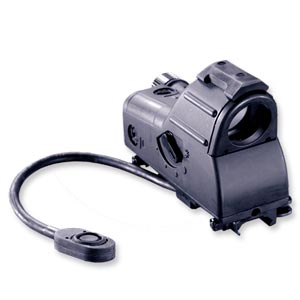
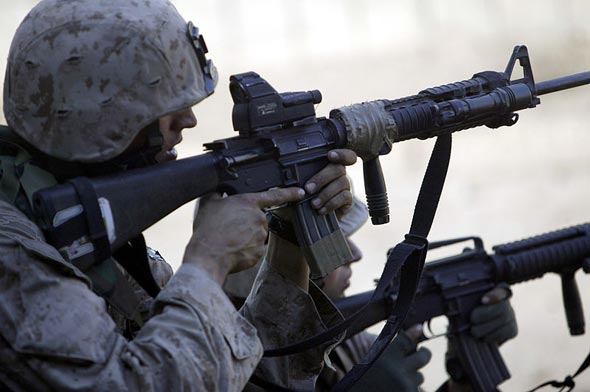
Multipurpose Aiming Reflex Sight (MARS) is used as a standard sight on the IDF Tavor assault rifle. MARS projects a circular 0.3 mrad reticle at the line of fire. The dot brightness is adjusted automatically over a wide dynamic range (1:10,000). In addition, MARS uses a red-dot laser aiming light. Both can be seen with both eyes open, through the large eye-box designed for optimal visibility under difficult day or night conditions.
ITL also introduced the Raptor, a small form factor, low-silhouette mini-reflex sight. Raptor is equipped with a motion activated “always ready to fire” mechanism that eliminates the need for manual turn-on and off operation while minimizing energy consumption. The day and night capable sight is mounted on a standard Picatinny rail, and can be augmented with x3 telescope, without zeroing, for extended range operations. The sight is powered by a single 1.5V AA battery.
Military application of OLED micro-display technology
Start < Page 1 of 4 >
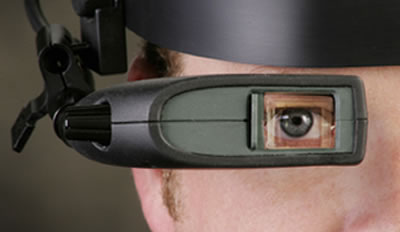
Low-power Organic Light Emitting Diode (OLED) displays are used in a growing numbers of applications supporting dismounted soldiers and commanders in situational awareness, thermal imaging, simulation and training. Two types of OLED applications are currently under various phases of maturation – the near-eye microdisplays, developed by eMagin and Flexible OLED developed by Universal Display Corp. (UDC).
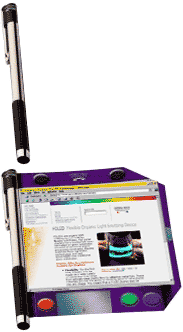 OLED technology promises to revolutionize everything known about information display, from video walls, to dynamic pricing in supermarkets. For the military, Top-emitting OLED (TOLED) applications could include wrist-mounted, featherweight, rugged PDAs and wearable electronic displays such as “display sleeves” Other applications could be conformed, high-contrast automotive instrument panels, windshield displays and visor mounted displays to be used by for pilots, drivers and divers, etc. More futuristic applications could be utilized in camouflage systems, “smart” light emitting windows/shades etc.
Until 2005, OLEDs were used primarily for testing. Yet, in 2004 and mostly by 2005, this technology is being integrated in more military systems and on the long run is expected to replace most small form-factor LCD displays. Among the applications where OLED technology is already maturing are near-eye displays of “virtual images” When projected on a head mounted, helmet mounted or visor (see-through) display, such image appears like an image in a movie theater or on a computer monitor, but is created using magnifying optics from a very small display near to the eye. Such an image displayed with very high resolution, can appear solid and real, or made see-through depending on the type optics used.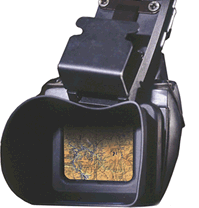
Military and industrial customers are moving from the testing and evaluation phase into deployment. According to Kenneth Geyer, vice president of development at Liteye Systems Inc, the company has ordered OLEDs in production quantities, to supply orders received from military users in the USA, Europe and Australia. Several systems have also been deployed to warfighters in Iraq. “We anticipate additional programs moving into deployment phases in 2006 – 2007” said Geyer. Other users of OLED displays include SaabTech, integrating eMagin’s OLED into the prototype Soldier Head-Mounted Device (HMD).
Additional parts of this article:
- Military application of OLED micro-display technology
- Applications Using OLED Microdisplays
- Wearable, Wrappable Displays
- How OLED Works?
Up-Armored Humvee – Protection Kit
The armor kits for Humvees produced by Zeroline are compatible with both M1114 and M1116 versions. The Zeroline suit protects the passenger compartment with an armored cage mounted on an integral titanium frame that also provides roll over protection. The kit is designed to meet STANAG Level 2 threats, as well as enhanced penetration ammunition, such as APM2 and B32 cartridges fired from high power SVD rifles.
The engine compartment is also protected, retaining mobility under attack. The kit also includes mine protection (5kg contact detonation under each wheel). The complete 11 part kit weighs 1,907kg. The armor is based on SiTx-OP composites, combining glass plate with a mosaic of ceramic face tiles, mounted on aramid woven fabric spall liner. This composition is designed to defeat multiple hits of standard and enhanced penetration rounds as well as fragmentation and high explosive charges.
The kit also includes a two piece, 53mm thick armored windshield and side windows. The aerial density of the transparent armor is 140Kg/m2 – three times higher than opaque armor. It is composed of two types of glasses – the outer surface is super hardened, designed to break hardened steel core penetrators. The inner glass layer uses high strength glass, optimized for absorbing the kinetic energy of the residual fragments. The floor is fitted with an external blast attenuation layer, constructed from TABRE composites. This material is also applied to the wheel arches and the base of the passenger compartment, to minimize the explosion effect of land mines. Similar measures were also installed on Land Rover Defender.
In order to sustain the additional load, the vehicle is refitted with heavy duty springs, adjustable heavy duty coil over shock absorbers, new anti-roll bars and composite brake pads. The vehicle is also fitted with fire resistant fuel tank and run flat tires.
HMMWV Armor Kit from Battelle
Battelle – Equipment Development and Mechanical Systems Group
Customized, Light Weight Armor Kit was developed by Battelle for the Humvee. The protection kit weighs around 750 pounds, and therefore lessen the strain on a vehicle’s suspension system and transmission which is typically associated with heavier armor. The new kit comprises standard bolt-on panels to protect critical areas as well as armor-hardened replacement parts — such as Materials used include add-on bolt-on steel plates and hardened replacement doors, seats, windshields, and replacement titanium skid plates — that reduce the additional weight. The basic kits is adapted for multiple HMMWV models as well as trucks, and small watercraft. The components can be easily installed, removed and folded, allowing for easy transport and rapid response to changing requirements. Battelle already fielded 75 kits with US Special Operations Forces and more than 400 kits are on order.
IDF Up-Armored M-1113 ECV
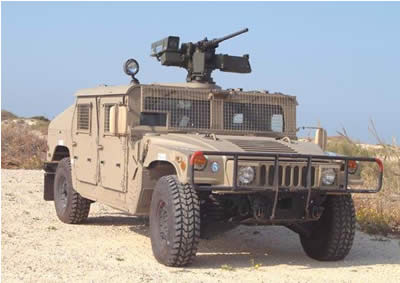
The IDF up-armored Humvee, outfitted by Plasan Sasa, is designed to IDF specs for enhanced protection. With the added armor kit, the vehicle weighs 5.216 tons. Its protection level is classified but has repeatedly proven itself against small arms, IED and other threats in Lebanon and I operations in the occupied territories. Due to budgetary constraints, the IDF shifted procurement of the M1113 to the USA, to be produced by O’Gara Inc. However, due to the surge in domestic demand for urgent supplies of up-armored vehicles to the US Army, the production of the Israeli batch was cancelled. It is yet unclear who will produce these vehicles for the IDF requirement. In 2004 the IDF ordered 200 remote controlled weapon stations, mounting 5.56mm Negev machine guns or 7.62 MAG machine guns, to equip up-armored Humvees currently in service with the IDF.

MALE UAV Systems – Persistent UAS Platforms
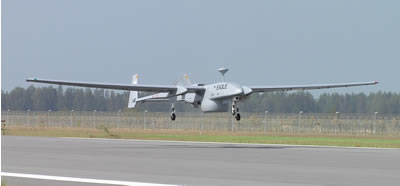
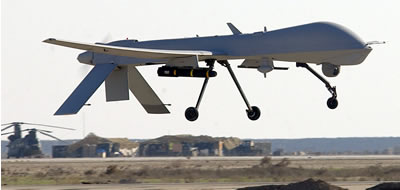
Persistent assets are employed to assist ground units and provide real-time, high resolution imagery. Medium Altitude Long Endurance (MALE) platforms, such as the General Atomics Predator, Northrop Grumman/ IAI Hunter and EADS/IAI Eagle operating at medium altitudes, from 15-25,000′ are designed to use multiple sensors on a single mission. Usually these assets will support operations in a specific region, Tasked with Imagery Intelligence (IMINT) missions include, round-the clock gathering of electronic and communications intelligence (ELINT/ COMINT), as well as, providing communications support. Since MALE drones are operating at lower altitudes, they transmit more detailed imagery of targets. As a theater asset they are also more responsive for retasking, changing their flight routes to support evolving needs. At their cruising altitude, MALE platforms can evade most adverse weather conditions. Introduction of deicing systems, such as those used on EADS/IAI Eagle-1 and Thales/Elbit Systems WK-450 enable mission planners to launch and retrieve UAVs through adverse weather and icing conditions, which usually hinder UAV activities at lower altitudes.
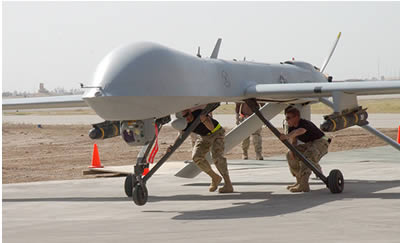
Some MALE platforms have evolved into armed Hunter-Killer platforms. Representing this trend is the USAF Predator B system. As a Hunter Killer platform these systems integrate on board everything required to detect, identify, localize, designate and strike a target. These elements include wide area covering radar and narrow-field of view EO/IR sensors covering wide area, with the capability to “Spot” on a specific target for closer identification.
These sensors are used for target detection, identification and tracking. Some system elements are employed at the ground segment, particularly image processing and automation. Such process can detect suspicious traces leading the operators to a potential target. The platform also has designation means, including laser designator and geo-location capability, which can be fed to an on-board weapon.
When deployed in the hunter-killer role, Predator B maintains a low profile at high altitude, orbiting and striking targets from relatively long distance, few minutes after they are detected. Use of low signature weapons, such as JDAM, laser guided bombs or Viper Strike means that the UAV can attack without emitting a visual flash or smoke “puffs” missile launch signatures.
This feature covers the following chapters:
- Unmanned Systems (UAV) Persistent Surveillance
- HALE UAV Systems – UAS High Flyers
- MALE UAV Systems – Persistent UAS Platforms
- Tactical UAVs
- Miniature/micro uav Systems
- Turning raw data into actionable intelligence
- Enhanced Vision
- Electro Optical Stabilized Payloads
- SAR systems
- Target Geolocation
- Computer Mapping & Modeling
- Automatic Change Detection Applications
- UAVs role in Convoy protection and IED patrols
Battle Command on-the-Move – Operation Iraqi Freedom C4ISR Lessons Learned part VIII
US forces fully expected that movement of combat formations from the Kuwaiti border to the city of Baghdad would be swift. This speed of maneuver produced distances that exceeded the capability of today’s tactical radio systems normally assigned to these formations and hindered effective communications between tactical headquarters. The Army, in response to this requirement, fielded Blue Force Tracking (BFT), a Force XXI Battle Command Brigade and Below (FBCB2) system that would allow V Corps to execute “battle command on the move” utilizing commercial L-band satellites. L-band connectivity was chosen because it could quickly be leveraged to provide a data connectivity path to 3rd Infantry Division given the compressed time constraints and exigent requirements of Operation Iraqi Freedom.
Blue Force Tracking permits low bandwidth connectivity over greater distances than had been doctrinally perceived to be within the realm of the possible. This connectivity allows the BFT equipped units to be visible on the Common Operational Picture (COP), which makes their location visible, in near real- time, at all levels. This provides the combat forces with a high degree of situational awareness, letting the units fight digitally enabled. This also produced the positive aspect of friendly force identification on the battlefield, which drastically reduced the possibility of fratricide in this non-linear fight. The Blue Force Tracking capability was critical to the success of 3rd Infantry Division and V Corps as they moved to Baghdad.
Additional parts of this article:
- Operation Iraqi Freedom C4ISR Lessons Learned
- Combat Implementation of the NCW Doctrine part I
- Combat Implementation of the NCW Doctrine part II
- Tactical C3 Performance
- Mobile Command Post Operation
- Tactical Operations Center Performance
- Beyond Line-of-Sight Communications
- Battle Command on-the-Move
Beyond Line-of-Sight Communications – Operation Iraqi Freedom C4ISR Lessons Learned part VII
The current family of US Army communications systems was designed to support the Cold War scenario. These systems were created to operate in a European theater and based on a maneuver scheme to defeat the Soviet Military. As such, the Mobile Subscriber Equipment (MSE) system, which is currently fielded to Army forces, relies on a grid network of line-of-sight connected node centers to link command posts at all levels.
As the Army conducted an analysis of its planned scheme of maneuver, it was determined that the existing tactical communications systems would not be able to keep up with the expected speed of advance and dispersion of the combat forces. Thus, the Army developed a commercial satellite solution that could be installed on critical command and control vehicles that would give the tactical commanders the connectivity and bandwidth required while dispersed, beyond line of sight, and on the move To ensure consistent connectivity during OIF, senior commanders utilized single channel (25 KHz UHF) tactical satellite (TACSAT) assets while on the move and fell back on military X-band and commercial Ku-band TACSAT on the halt. This hybrid solution, though heavily dependent on commercial assets, proved invaluable in providing the robust, available on demand, communications data and voice links required by the Corps Commander down to his Division and Brigade TOCs.
Additional parts of this article:
- Operation Iraqi Freedom C4ISR Lessons Learned
- Combat Implementation of the NCW Doctrine part I
- Combat Implementation of the NCW Doctrine part II
- Tactical C3 Performance
- Mobile Command Post Operation
- Tactical Operations Center Performance
- Beyond Line-of-Sight Communications
- Battle Command on-the-Move
Tactical Operations Center Performance – Operation Iraqi Freedom C4ISR Lessons Learned part VI
One of the apparent reasons, was the anticipated ‘information overload’ at TOCs. Well, according to a US Marine officer fresh out of OIF describing his workload in combat:
“Members of my force often had to use a helmet headset, four radios and two laptop computers- all crammed into a light armored vehicle-all at once!” adding that” we were overwhelmed with communications systems for every eventuality, but these did not really integrate with each other. For example, a Marine commander riding aboard a LAV had to use a headset to use the intercom to talk to his driver and gunner, answer his squad leaders by grabbing hand-held radio and speak to accompanying infantry by another radio, all this while monitoring two laptop positions of friendly and hostile forces!”
(This is a clear evidence of the risk of overloading a command vehicle with excessive systems. Usually a rapid flick through an intercom button should allow frequency changes without removing the harness!)
To make matters worse, one had to have a closer look at tactical command vehicles. Here the clutter was beyond all imagination: every single shelf was occupied by a radio and seat spaces loaded with open computers. Any single system compatible to share information could have solved this acute problem, which made the workload under combat conditions nearly impossible on the move.
Reports indicate that sharing messages was often solved only by the new Blue Force Tracking system. But not all units had this facility, working through the Mobile Data Automated Communications Terminal (MDACT), offering the same functions, as Blue Force Tracking (BFT), but unable to talk to each other!
BFT is a marvelous system. Derived from the FBCB2 program, it provides unprecedented vertical and horizontal information integration. Featuring a large mission data base, the information is displayed on maps, overlays of individual unit platforms. Positioning information gathered from GPS and data provided by users are automatically sent via L-band satellite to data fusion centers at command centers. The map displays not only combat messages, but using geo-referenced satellite imagery it provides updated information on terrain features etc.
The trend is to reduce the size of the BFT equipment to handheld versions for lower tactical commanders. There is already a mini model available, used sofar by some SOF units, developed by General Dynamics Mission Systems, as Individual Combat Identification System. The pocket sized version sends coded signals every five to 10 minutes relaying their GPS coordinates to TOCs.
How impressive BFT performed during OIF could be highlighted by an incident south of Baghdad. On April 1 Alpha Company of 69th Armor, was advanced vanguard east of Karbala, when the commander was about to order “Red Free” (meaning ‘ shoot at everything that moves in front’). What he had not been told was that a US infantry force, was moving across his front, a situation ‘ripe for fratricide’. The tank officer identified the move displayed as blue icon on his BFT screen and immediately ordered “Hold!”, preventing a serious blue-on-blue incident.
Here is how it worked: about every five minutes, or 800 yards movement, the platoon leaders BFT computer automatically sends position data changes through satellite to internet servers. The server updates every BFT equipped platform within reach, so that all commanders receive constantly updated situational awareness.
A major problem, repeatedly mentioned by lower command levels, which has to be solved quickly, is available bandwidth. A senior commander mentions this in his report, demanding solutions to cope with this deficiency: “No matter how perfect a future network and CP we build, it won’t do us much good until we fix the overarching problem of bandwidth management.” Limited bandwidth was a major issue during OIF. While fixed command and control installations reliably use high-bandwidth communications, the communications architecture for mobile or semi-mobile CPs at the tactical level is too fragile and not robust enough to support our needs. It negatively affected collaboration, information sharing and in some cases, the Commander’s ability to command. Satellite based communication works; but we need more bandwidth to push the synergy of network enhanced operations down to the tactical level.
In an environment where competition for limited bandwidth is fierce, we must seek efficiencies through a more sophisticated management solution. The time to fix bandwidth problems is now, before we deploy to the next fight!
Once the Army overcomes satellite bandwidth constraints, we can aggressively address the “Digital Divide” that exists between the operational and the tactical levels of war. We can extend the power of the network down to the tactical level. Despite our efforts to realize network enhanced warfare since Desert Storm, the trigger puller on the ground still can’t tap into the network and realize its benefits. In OIF, this was most pronounced in dissemination of intelligence information”.
Additional parts of this article:
- Operation Iraqi Freedom C4ISR Lessons Learned
- Combat Implementation of the NCW Doctrine part I
- Combat Implementation of the NCW Doctrine part II
- Tactical C3 Performance
- Mobile Command Post Operation
- Tactical Operations Center Performance
- Beyond Line-of-Sight Communications
- Battle Command on-the-Move
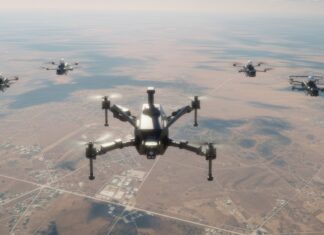
Skunk Works and XTEND Simplify Multi-Drone Command
Lockheed Martin Skunk Works® and XTEND have achieved a major milestone in JADC2 by integrating the XOS operating system with the MDCX™ autonomy platform. This technical breakthrough enables a single operator to simultaneously command multiple drone classes, eliminating the friction of mission handoffs. From "marsupial" drone deployments to operating in GPS-denied environments, explore how this collaboration is abbreviating the data-to-decision timeline and redefining autonomous mission execution.

From Ukraine to Taiwan: The Global Race to Dominate the New Defense Tech Frontier
As traditional defense primes face mounting competition from agile “neoprimes” such as Anduril, Palantir and Helsing, the balance of innovation is shifting toward software-defined warfare and scalable, dual-use technologies, while global industry consolidation—marked by Boeing’s integration of Spirit AeroSystems and other strategic mergers—signals an intensified race to secure control over the defense technology value chain. Our Defense-Tech weekly report highlights these trends.

Europe’s “Drone Wall”
In early October 2025, a coordinated wave of unmanned aerial system (UAS) incursions—widely attributed to Russia—targeted critical infrastructure across at least ten European nations. The unprecedented campaign exposed the fragility of Europe’s air defenses...
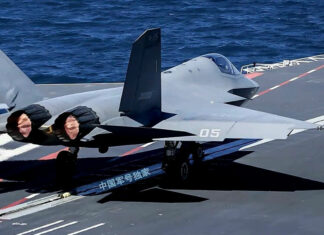
Weekly Defense Update & Global Security Assessment
Executive Summary
The past week (September 18-25, 2025) represents an inflection point where strategic defense concepts have transitioned from doctrine to tangible reality. An analysis of global events reveals four primary, interconnected trends shaping an...

U.S. Air and Space Forces Push Next-Gen Programs at the AS&C 2025 Conference and...
At the 2025 Air, Space & Cyber Conference, U.S. Air Force and Space Force leaders unveiled major updates on next-generation fighters, bombers, unmanned systems, and space initiatives, highlighting both rapid innovation and critical readiness challenges as the services race to outpace global competitors. A short version is available here, with a more detailed version for subscribers.
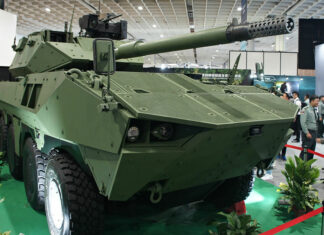
TADTE 2025: Reflecting Taiwan’s Strategic Themes
The Taipei Aerospace & Defense Technology Exhibition (TADTE) 2025 crystallized around four dominant strategic themes that collectively illustrate Taiwan's comprehensive approach to defense modernization amid escalating regional tensions. Based on a detailed report by Pleronix (available upon request). Includes a Podcast discussion on TADTE 2025's highlighting Taiwan's four strategic themes beyond the post's coverage.
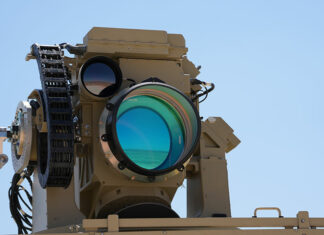
Iron Beam 450 Completes Testing, Soon to Join With Operational Air Defense Units
Israel’s Iron Beam 450 high-power laser system has completed final testing, marking a major leap in air defense. Developed by Rafael, it offers precise, cost-effective interception of rockets, UAVs, and mortars, and is set for IDF deployment by 2025.