
Wednesday, December 24, 2025
More
    Home Blog Page 429

    Mobile Command Post Operation – Operation Iraqi Freedom C4ISR Lessons Learned part V

    Start < Page 5 of 8 >

    There is one important item in communications, which was overlooked for some time, due to fast developing technologies- the ability to monitor, simultaneously, several communications channels by the same commander, in popular parlance “eavesdropping”. The advantage of FM radios afforded this through auxiliary receivers in regular AFVs. However, according to reports coming out of Iraq, the current ABCS do not provide this ‘luxury’. As a division commander mentioned in his after action report:


    “I saw more of the fight than I expected to be able to see from my Command and Control Vehicle (C2V). Enabled with satellite based communications my assault command post was mobile, responsive, connected, and allowed me to be where I could best influence the fight anywhere on the battlefield. In the digital environment of my headquarters, the Common Operational Picture provided exceptional situational awareness because of our joint interoperability with higher headquarters.

    For example, through the eyes of the Unmanned Aerial Vehicle (UAV), transmitted by Global Broadcasting System, we could observe an enemy artillery battery firing on our troops, and then coordinate over Tactical Voice and single channel TACSAT for its subsequent destruction by Air Force, Marine, or Naval aircraft in close support of the ground campaign”.
    At corps level the warfighting picture was sometimes remarkably clear, however lower command echelons complained that subordinate leaders on the tactical level were struggling with the limitations of their static, terrestrial based networks. Despite the introduction of Battle Command On the Move (BCOTM) capabilities that higher command levels enjoyed in assault command post (CP), the vast majority of tactical leaders and CPs were still allocated too few on- the- move capabilities. Most were tethered to a larger CP and mostly dependant upon line of sight (LOS) communications.

    Case in point: At the corps level the G2 could see individual fighting positions defending a critical bridge because they had a UAV leading the vanguard formations. But this valuable real-time could not get down to the unit which was taking the objective because all the CP’s were moving. It was a deliberate attack at the corps level, but a movement to contact at the battalion level.

    Additional parts of this article:

    Tactical C3 Performance – Operation Iraqi Freedom C4ISR Lessons Learned part IV

    Start < Page 4 of 8 >

    Operation Iraqi Freedom was characterized by rapid task re-organization across all echelons to enable exploitation of enemy vulnerabilities, and execution of branch, sequel, and follow-on operations. We made aggressive road marches and maneuvers at distances and tempos unheard of in previous campaigns, separating lower echelon combat units beyond Line of Sight (LOS) connectivity to their higher HQs. From specially created mobile command groups, even higher commanders accomplished joint, operational, and tactical collaboration and coordination at the battle’s forward edge.


    A major lesson, emphasized by many combat commanders, is controlling mobile operations ‘from the move’. This required smaller, more mobile, but adequately protected command posts, a command system, not sufficiently covered by US operational doctrine. C4ISR techniques adopted new command procedures under the new doctrine such as Battle Command on the Move (BCOTM), Common Operational Picture (COP), Blue Force Tracking (BFT), joint fires integration, integrated air picture, combat service support; clear voice command net, and collaborative tools.

    In its after-action report, 3rd Mechanized Infantry Division described the ad-hoc solutions by creating ‘Assault Command Posts’ (ACP), allowing continuous control during tactical moves. These smaller command posts incorporated enhanced command and control nodes, such as FBCB2 and BFT, wideband tactical satellite (TACSAT) and iridium satellite phones. An even more flexible model, saw two identical tactical operation centers (TOC) one working as a “hot” ACP, closely following the moving vanguard, and a “cold” ACP moving to the rear, or if the force was operating along a wide front, along a secondary route, allowing the commander to shift to the focal point with adequate C4ISR equipment always available to control the battle.

    The situational awareness of commanders at every level during OIF exceeded that of any modern war. Satellite-based Blue and Log Force Tracking with email exchange capabilities enabled synchronization of command and staff tasks at theater, operational, and tactical levels.

    Single channel tactical satellite (TACSAT) at the Corps and divisional levels enabled broadcast C2 without regard to terrain or distance. Some would say the ground war was won on TACSAT. Using satellite-based Blue Force Tracking, leaders on the ground were able to successfully control the furious fight, receive changes to missions, achieve situational awareness, and navigate unfamiliar terrain using digitized map sheets that displayed Blue Force locations in near-real time.

    However, There were never enough UHF single-channel TACSAT frequencies to go around supporting all of the needs of the Central Command (CentCom) forces. These UHF TacSat frequencies were a scarce commodity. Not only did you need a satellite in the area near your operations, you needed one that would provide the necessary takeoff angles for your equipment to work properly. The OS–302 omni-directional antenna is just one example that any old frequency will not do. This antenna was on one of the I MEF commander’s vehicles and worked best only with a frequency that used a takeoff angle of at least 20 degrees.

    Additional parts of this article:

    Combat Implementation of the NCW Doctrine – Operation Iraqi Freedom C4ISR Lessons Learned part III

    Start < Page 3 of 8 >

    A marked exception are the US Special Forces , which are already outpacing the Army by moving a new family of tactical radios. Their AN/PRC-117 is a multiprocessor-based, fully digital software-controlled, voice and data transceiver. Manpack or vehicular, the radio operates in multi-band, multi-mode tri-Service environment.
    Whether this equipment was already available on that fateful incident last April could not be established by the author, but it goes to show that ‘where there is will there is solution’!


    In general, during Operation Iraqi Freedom, there were ‘pockets of net-centric operations, but it was not a fully operational paradigm’, according to US defense officials. Indeed, not everyone in the armed forces is convinced yet. Retired Marine Corps general Paul Van Riper was so blunt that he and many of his colleagues in DOD “still have no clue what (NCW) is“, adding ” There’s a significant communications problem at the tactical units were out of contact in parts of Iraq, except for satellites, because there is not enough bandwidth to carry traffic on other systems”.

    Tactical OIF commanders have also reported serious deficiencies in bandwidth problems, during critical operations. Significant time was devoted developing contingency plans for frequently encountered communications breaks. These were due mostly to overloads and lack of bandwidth. In the words of a Marine commander “We had minimal bandwidth and everybody wanted it at the same time” adding “I had one channel available to me, but if someone else was using it, I had to wait until they were finished“. That was certainly not the idea of the NCW concept!

    Indeed, many of the frontline commanders in their after action reports claim, that there is not enough technology available for those warfighters, who need it desperately in high-risk combat environment. Although network-centric principles have been integrated into operations, the most essential command level, the joint task force commander and actual warfighter, the company and troop commanders, are yet to come into the game. But it is those combat levels, that need it most, as more and more fighting is in urban environment, where junior commanders have to take instant decisions, which can frequently impact on the entire warfighting scenario. Thus the next step would have to be “network-centric warfare for the warfighter”.

    Additional parts of this article:

    Combat Implementation of the NCW Doctrine – Operation Iraqi Freedom C4ISR Lessons Learned part II

    Start < Page 2 of 8 >

    Even with the most advanced technology in C4ISR available in OIF, the surprisingly ultra-rapid advance of US led coalition ground forces, often left division, corps headquarters out of the communications loop. In part, the higher command level had anticipated this trend, based on experience in 1991 Desert Storm. As a lesson, tactical commanders were trained to think and act independently making decisions during the ever changing combat situation. The German Auftragstaktik (Mission control), leaving the tactical commander sufficient leeway to act on his own initiative within the general mission framework, has long proved its effectiveness in fast moving mobile combat operations. The Israeli army has near perfected this doctrine in two of the Arab-Israeli lightning wars, in 1956 and 1967.


    The concept of Net Centric Warfare has tremendous potential in placing the right tools for seamless mission control in the hands of future military commanders. NCW can link disparate portions of the shifting battlefield in constant “live feed” commentary both up and down the command ‘Grapevine’. In principle, NCW integrates a wide array of sophisticated elements, developed on the latest hi-tech state-of-the-art technologies.

    While the Global Command and Control System-Army ( GCCS-A) is designed for communications interoperability at the higher command echelons, the new, mobile, Force XXI Battle Command Brigade and Below (FBCB2) and Blue Force Tracking (BFT) network provides interoperability at tactical command level. The FBCB2 system integrates location data from a position locating guidance radio (PLGR) into a computer housed digital terrain map display monitor. To facilitate message handling, the system uses a messaging format and delivery database as well as graphic display of important tactical information. A brand new system, so-far operated solely by 4th US Mechanized Infantry Div uses a data radio Enhanced Position Locations Reporting (EPLRS) system. Based on synchronized radio transmissions, EPLRS provides near real- time secure data communications, identification, navigation, automatically monitoring of friendly forces movements and locations.

    In theory, the NCW system should have enabled hitherto unavailable combat control and rapid information sharing process at all levels of command through its: ” ability to move ‘real-time’ intelligence rapidly from ‘sensor’ to either analytical decision levels or directly to the ‘shooter’, in the words of Brigadier Dennis C. Moran director J-6 US Army CENTCOM. Indeed, CENTCOM headquarters did have a common operating picture of both ‘blue’ and ‘red’ forces most of the time during OIF, but the system was not free of flaws after all.

    First of all, the age old principle in the notorious ‘Murphy’s Law’ still applied in OIF: “it is not if the technology will fail but when it will fail” that caused commanders headaches. According to after action reports, problems were still encountered integrating the Army Battle Command System (ABCS). In spite of the sophisticated technology, not all radios could ‘talk to each other’. The US Marine Corps has its own set of digital command and control devices, all different from the US Army.

    Two examples could indicate this clearly:

    • The serious fratricide in northern Iraq when US Navy jets mistakenly attacked a Kurdish convoy led by US Special Operation Forces (SOF) revealed that: “A following investigation revealed that the mistake was caused by a simple mix-up: the radios carried by the SOF were compatible only with USAF aircraft but not with US Navy jets which had attacked them!

    • The mistaken artillery barrage, which hit the US marines at Nasiriya bridge: “On March 27 another ground B+B incident caused 37 casualties among the US marines of 2nd Battalion 8th Marines. Although the Marines had some of the most sophisticated equipment to prevent such a tragic accident, including thermal imaging, night vision gear and computers, to keep track of each other’s movements, even this hi-tech equipment failed to prevent such a tragic event. The 2nd Battalion command post called for artillery support near An Nasiriyah bridge, but the shots fell short, exploding among the Marines with devastating results. Just then a communication break happened, while radio operators were frantically trying to call off the fire in vain. In the midth of the chaos, shells kept exploding for 90(!) minutes, until finally contact was re-established, but the damage was already done.

    Unfortunately, this goes even further. For example, many of the current generation tactical radios are still not fully compatible, or adaptive enough to support the advanced reporting systems. Cross-band digital communication communications is difficult and requires different radio equipment for frequency bands used. This becomes extremely problematic in fast moving operations, where mobile tactical command groups normally, restricted in space, are already overloaded to capacity with critical equipment.

    Additional parts of this article:

    Operation Iraqi Freedom C4ISR Lessons Learned

    Start < Page 1 of 8 >

    Operation Iraqi Freedom was the first major military operation conducted under the newly introduced US Army Net-Centric Warfare (NCW) doctrine. It was also the first, in which the all involved ground forces, US Army, Marines and coalition forces shared, to a large extent, a computer-automated common operations site.

    This achievement did not come out of nothing. During Operation Desert Storm in 1991, serious shortcomings were encountered in command, control and intelligence performance, especially inter-service communications “interoperability”, not to mention, inter-coalition control, which frequently caused serious “blue-on-blue” incidents, as well as dense “fog of war”, which prevented real-time intelligence dissemination from sensors to shooters. For example, the “normal” lead time between air reconnaissance and target implementation, could take from 12 to more than 48 hours (!) totally useless for the conduct of rapid mobile desert operations.

    During the last decade, tremendous progress in advanced technology, especially in the field of micro-electronics and computer science, has afforded hitherto unknown capabilities in military communications, which ten years ago, would have remained within the exotic science fiction realm for combat commanders.

    The United States have prepared its XXI warfighting doctrine with greatest care and technological ingenuity. Between September 2002 and the start of operations in Iraq, a new command and control network had been initiated and fielded to major combat units earmarked for battle. The groundwork for the new information network, which was to mature in Iraq, was laid by Operation Enduring Freedom in Afghanistan 2002. Lessons were learnt quickly and improvements in the system absorbed in the field, through close co-operation, never achieved between Military and Industry. The result was that less than one year later, the US armed forces went to war against Iraq with technical superiority for conventional combat, bringing to bear against Saddam Hussein’s forces its full “power of megabits and gigabytes”, enabling a “blitzkrieg” maneuver victory unequaled in modern military history.

    Operation Iraqi Freedom also introduced and implemented a brand new “communications architecture” which is the topic of this first article trying to analyze the first lessons of this newly applied method in XXI century warfare.

    Additional parts of this article:

    Battlefield Applications of Wireless Networks

    Traditionally, land forces combat and service support units rely on voice communications for operations, coordination and control. Units or subunits operating under specific command (such as companies in a battalion) share a common frequency, or – as typical with modern radio systems – a series of frequencies which enable rapid frequency hopping, for improved security, immunity from interference and spectrum utilization. Unlike commercial systems which are based on industry standards, military radios do not have to adhere to standard protocols. Each network can implement the unique technology developed by the manufacturer specifically for its systems, limited only by the distribution of compatible systems. (That’s why when armies decide to replace their combat net radios they have to do it in a relatively short time, to take advantage of the advanced features provided by those systems.) As these radios become more sophisticated, their interconnectivity with external systems is degraded, causing a severe limitation to coalition and joint operations.

    Current combat net radios (CNR) are providing voice and data connectivity and form the basic layer for tactical command and control from division to battalion and company level. Modern systems offer sophisticated communications security (encryption) and frequency hopping for efficient spectrum utilization and electronic counter-countermeasures (ECCM). Modern digital radios are most flexible, as voice and data are transferred digitally. Unlike commercial radios, military wireless systems rely on unique voice coding and decoding systems (codec). Digital software defined radios can be programmed to provide backward compatibility with older systems, by defining appropriate waveforms. Digital radios usually support voice and data communications and offer data transfer rates ranging from 19.2 up to 115 kbps. Representative systems of this class are the ITT SINCGARS, Harris RF5800, Tadiran’s CNR-9000, and Thales Communications’ PRG4 or data-driven EPLRS system. Each system has unique features and protocols offering specific advantages but also denies interoperability with other systems. Other radios are designed to operate in the HF band (such as the Harris Falcon and Tadiran HF6000), which is more immune to interference, and enables long range communications. UHF systems are used primarily for very short range communications and ground/air communications. Some systems (primarily manpacks operated by special operations units) are also offering HF/VHF or VHF/UHF (multiband) capability to enabling more flexible utilization of a single package.

    Dismounted & Mobile Command and Control (C2) Systems

    Start < Page 7 of 7 >

    Command and Control On The Move (C2OTM) applications enable commanders to receive data-intensive information via satellite-downlinked feeds, on the move. Utilizing new generation satellite antennae, designed for mobile platforms, C2OTM introduces tactical commanders with new capabilities to deploy their command elements to the most critical points, without loosing contact with their tactical operations center (TOC). Initial C2OTM elements were already deployed in Iraq at the beginning of Operation Iraqi Freedom, and more systems and variants are expected to be fielded by 2005.

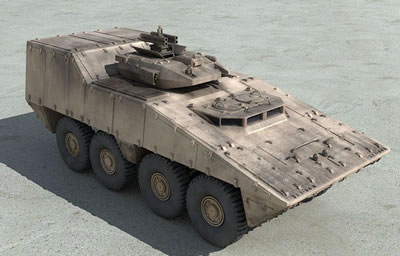
    Mounted Battle Command On The Move (MBCOTM) is another new concept enabling the commander to perform all command and control tasks while on the move. Although Command Vehicles which can operate independent of CPs are well established in many armies, until recently these elements were not equipped with mobile data communications and therefore, could not fully support modern C4I services. These systems are currently designed as “commander centric”, rather than “post centric” systems, and enable the presentation of situational awareness of maneuver, effects, intelligence, mobility, counter-mobility and survivability, NBC and air defense. Other tasks include monitoring and execution of fire support plans, tasking and re-tasking organization etc.

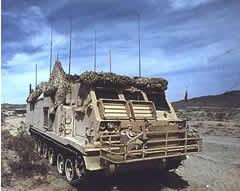
    While the commander is deployed with his forward elements, the main CP is responsible to maintain the entire information system, with the processing of tactical information, intelligence, effects, support and logistical data, creation and analysis of detailed plans, issue and dispatch warning orders, execute liaisons etc. MBCOTM are currently designed for Humvee, Stryker and Bradley Fighting Vehicle families, which are used as standardized platforms, contributing to operational security for the commander. Earlier command vehicles were designed on special purpose vehicles (C2V) designated M-4 (based on the MLRS chasis). Only 25 M4s were produced before the program was terminated. In October 2002, these vehicles were fielded with the Fifth Corps command, Third Infantry Division, First Cavalry Division, Third Armored Cavalry Regiment and the First Armored Division. Some of the C2Vs were deployed to Iraq and participated in the combat operations there, demonstrating the importance of delivering critical C4I information on the move.

    Dismounted C2 Systems
    Dedicated C2 equipment currently available, or under development is also supporting infantry commanders on dismounted operations. These systems are currently under development at DARPA, as technology demonstrators. Designed for battalion, company commanders, and below, these systems will interface with current brigade and higher C2 systems, enabling efficient joint forces operations and integration into the Future Combat Systems Unit of Action operations. Systems considered for these applications include mobile advanced hands-free human-computer interfaces, knowledge based situational awareness analysis and displays, distributed, collective battle planning, integral mission rehearsal and distance based training, as well as briefing and post action debriefing aids. Systems will utilize mobile computing and personal wireless networking, and advanced power generation and conservation techniques to optimizing dismounted portable operation. Various elements of the Land Warrior and JTRS programs will be integrated into the system. Dismounted C2 applications are expected to be integrated with Agile Commander systems, and Global-Mobile networking, focusing on the mobile command post applications.

    Additional parts of this article:

    Command and Control (C2) Systems for the Tactical Echelon

    Start < Page 6 of 7 >

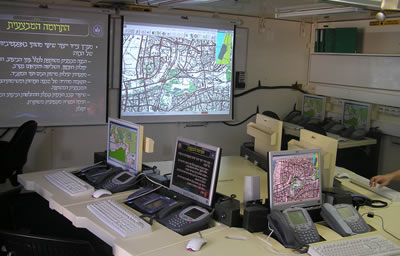
    Modern C4I systems are feeding huge amounts of information into the tactical operating center (TOC) where such information is processed, interpreted and displayed on maps and status reports. Such situational presentations are generated by computers, and displayed at the Command Posts (CP) on large screens or relayed to remote subscribers, via high speed networks. Unfortunately, such connectivity is not provided with existing tactical radios. Therefore, tactical commanders are usually disconnected from these vital information feeds when leaving the TOC to deploy with their command vehicles.

    This becomes most critical at brigade and division levels, where many different operations are executed simultaneously over a large area. To support commanders on the move and at forward deployments, modern command vehicles are being upgraded designed to field integrated data-communications and display systems, utilizing wireless data networks and mobile satellite terminals, which facilitate on-the-move communications, and enable the commander and part of his staff to continue and exercise effective command and control over the entire force under their command.

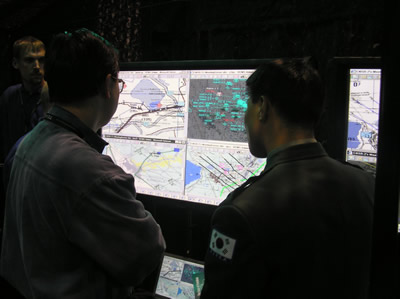
    The latest trend in C2 tech is Command Post Of the Future (COPF), a system currently deployed at the division level, enabling division and brigade commanders to discuss and collaborate when processing information, share ideas, and attend virtual meetings without being at one place. Commanders attending the virtual meeting don’t have to be in the same room, or even the same country, to discuss and draw on the same map. CPOF was developed as a technology demonstration by DARPA. The prototype was deployed with the 1st Cavalry division and is currently operating in Baghdad, connecting the division HQ and five brigades. DARPA is expanded the system with the introduction of advanced visualization tools that let brigade commanders communicate, collaborate and share information. The first unit scheduled to receive the enhanced CPOF is the 3rd Infantry Division.

    Additional parts of this article:

    Tactical Mobile Broadband Networks

    Start < Page 4 of 7 >

    To support the brigade level and above, these services rely on dedicated trunks for broadband connectivity. Such radios offer wireless connectivity at rates from 1 MB to 16MB. Where transfer of images or video is required, higher data rates become imperative, links are being implemented with modern high speed digital networks. These services are provided by modern commercial networking systems, derived from commercial Wireless Local Area Networks (WLAN), cellular networks or broadband satellite links. Advanced, secured SDH connections provide an ultra-wideband channel for up to 155mb. Such broadband satellite links and fiber-optics are widely used to link stationary or fixed command posts with terrestrial networks, but high-speed connectivity of mobile elements is still restricted.


    Current high capacity data networks rely on a framework of terrestrial stationary nodes which are deployed at elevated positions throughout the battlefield, to maintaining optimal coverage over the entire theater. Unlike comparable commercial cellular systems, these networks do not support mobile users. Parallel to the rapid development of cellular networks and commercial 3G internet connectivity during the 1990s, the US military is promoting the research of military applications of such systems, in programs such as GloMo and Mobile Ad-hoc Network (MANET), resulting in demonstrated capability of voice/data services up to few mb to dismounted users, and 10 – 100mbps for vehicular/airborne users.

    To enable the “mobile battlefield Network”, DARPA is developing the Multifunctional On-the-Move Secure Adaptive Integrated Communications (MOSAIC). This  “ad-hoc network” can automatically adapt to topography and interference, maintaining optimal Quality of Service (QOS) of data messages. MOSAIC can also be linked to terrestrial and SATCOM networks for global connectivity. MOSAIC and similar systems promise to revolutionize future tactical communications, but as they rely on wireless access, and use of internet like protocols, they have similar vulnerabilities of enterprise-class systems. The most severe cyber threat is expected to be worms with arbitrary payload that can infect and saturate entire MANET-based networks in seconds. A significant part of the development of MANET and MOSAIC is focusing on securing and protecting the network, and introduce self healing and recovery of its elements under attack.

    Other commercial technologies are utilized to establish satellite communications on-the-move. Stabilized SATCOM antennas are used for commercial TV and data communications on the move, for aircraft, trains and private use are being adopted by military users for tactical on the move applications. Utilizing ruggedized or military grade systems, mobile SATCOM terminals are deployed on tanks or APCs serving as mobile command posts, reconnaissance teams, missile and artillery units, etc.

    Additional parts of this article:

    Military Wireless Data Networks

    Start < Page 3 of 7 >

    High speed wireless data networks are integrating communications between different command levels down to the divisions and brigades. To enable modern image-rich multimedia connectivity, substantial infrastructure enhancement is required, primarily in the introduction of computing and high-speed networking at the lower echelons, with the deployment of high speed, wireless data-communications backbone (such as the future WIN-T) spanning throughout the theater of operation. Such extensions can now reach battalions, with deployed line-of-sight terminals high-speed links. Data communications is required for all facets of military activities, including transfer of reports.

    Modern C2 systems rely on Geographical Information Systems (GIS) which process and create map-based displays of information such as unit status, target information, intelligence reports, operational plans and logistics activities. The fusion and spatial presentations of information from multiple sources contribute to clear situational understanding (SU) of complex situations and contribute to effective distribution of information to the relevant users throughout the battlespace. One example of such a system is the introduction of blue-force tracking service, which relies on advanced voice/data and position-location reporting radio systems, which are an integral part of the Force XXI Battle Command Brigade and Below (FBCB2) system.

    With the introduction of faster transfer rates, and availability of data-driven systems below the brigade level, modern armies are beginning to deploy integrated Battle Management Computing (BMC) system environments to handle and process multi-dimensional information flows (reports, maps, images, videos), and process them into these situational pictures that are shared and relayed back to the fighting elements and up to the highest level of command. The network backbone provided for such applications relies on high capacity High Capacity Digital Radios or Wideband Network radios (WNR) such as the NTDR used by the US Army “digital divisions” and the HCDR utilized for the British Bowman system. These systems can transfer data at rates of few hundred kbps up to megabit rate, depending on the station’s position, mobility and bandwidth utilization.

    Despite their clear advantages, Radio links utilizing VHF/UHF voice and data networks, such as CNR, SINCGARS, EPLRS and future JTRS are limited by terrain and range. Typical division area of responsibility usually extends far beyond the reach of such systems. To gain full theater coverage, satellite communications, ground and aerial radio relays are used, including such deployed on aircraft and UAVs.

    Additional parts of this article:

    Vehicle Armor Protection

    Start < Page 5 of 5 >

    Vehicle protection suits are designed according to the type of threat they should encounter. Different concepts of protection are utilized when direct fire is the main threat, where the armor suit is tailored to meet the specific threat level. Lighter protection, based on composite materials can also be tailored against fragments from artillery, mortars and shrapnel. Protection against high explosives, especially IEDs which also produce significant blast, fragmentation and sometime shaped charges effect, requires more complex solutions, using designs of metallic and composite components. A different issue is the protection of commercial and civilian vehicles, which, unlike military vehicles, are usually fitted with concealed armor.

    Additional parts of this article:

    For vehicle specific information please check the following references to specific light armored vehicles, which are currently listed in Defense-Update:

    AM General M998 / M-1114 Humvee:
    Up-Armored designs by:
    O’GaraZerolineLabock Intl.Plasan SasaMowagBattelle

    Panhard:
    VBRPVPVBL

    Alvis/Vickers:
    MLVFCLVSACRABRG-31RG-32M

    Mowag:
    Eagle

    Krauss-Maffei Wegmann:
    DingoTerrierFennek,

    Technical Solutions Group (TSG):
    BuffaloCougarTyphoonTempest

    RAFAEL/Hatechof:
    Wolf

    Israel Aircraft Industries/RAMTA:
    RAM-2000

    Indian Ordnance Factories:
    Mine protected vehicle

    Mahindra:
    Rakshak

    Ceramic & Composite Armor Protection Principles

    Start < Page 4 of 5 >

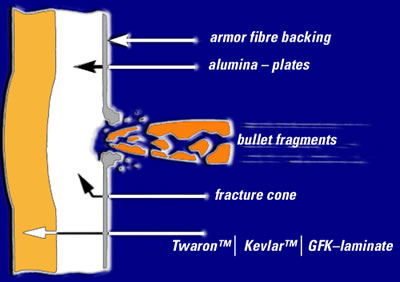
    Conventional steel armor defeats an incoming projectile by reducing its kinetic energy through ductile deformation. In a composite, ceramic based armor, a different process is employed. Firstly, the hit-on the strike (top) surface causes significant deformation to the projectile, increasing its cross section. Its kinetic energy is reduced as the bullet is fragmentized on shattering the tile’s hard surface. The residual energy of the smaller fragments is absorbed by plastic or elastic deformation within the backing of the armor tile. A typical composite protection tile weighs half the weight of steel plate that would provide the same level of protection. In spite of its weight advantage significant drawbacks of the composite armor remains in its limited capability to protect against multiple hits (as the ceramic element does not retain the same physical properties after disintegration). To improve the armor performance in multi-hit scenarios, smaller ceramic elements are used. In a mosaic or matrix modules, special cylindrical or ball shaped ceramic pellets are used, reducing the affected area to few centimeters, small enough to protect against repeated impact on adjacent surface.

    The mosaic of small tiles or pellets is embedded in a matrix of epoxy; additional layers of composite materials or rubber (RAMTECH) are used, to seal the armor tile from both sides. As the tile is attached to the ballistic steel or aluminum armor of the vehicle’s hull, the overall protection of the vehicle is increased dramatically. Future applications of advanced composite structures configurations are currently in research phase and include ceramic-ceramic, ceramic – metal and ceramic – carbon elements.

    Additional parts of this article:

    Advanced Armor for Future Combat Systems

    Start < Page 2 of 5 >

    Current developments of armor for vehicles and personnel protection are aimed at lightweight, mass-efficient armor solutions. Future designs are expected to reduce the basic armor weight by 67%, compared to steel armor, and offering additional applications – for example, signature reduction, improved chemical agent resistance, damage detection and fire, smoke and toxicity protection built into the armor package. Integral armor structures built from advanced composites will form the basic structure for vehicle’s hulls of the US Army future combat system’s (FCS) program. The FCS armor will be designed to defeat side, top and rear ballistic threats. All FCS systems, manned and unmanned, will have an inherent, lightweight, small arms protection, capable to withstand a first hit from a 0.5″ cal fire.

    Each of the FCS manned systems will also be protected against penetration, blast, shock, over-pressure, fire and thermobaric effects. These systems must provide full structural or add-on protection against 14.5mm rounds. The FCS protection suite must also maintain a 60 degrees frontal arc where it should defeat incoming 30mm threats, including APFSDS and 45mm automatic cannon shots, fired from different ranges. To meet the stringent weight margins, developers are considering using large structural sections built from large ceramic parts including structural and hull sections and components made of composites material. Such parts cannot be produced using existing ceramics manufacturing technologies. New processes are currently under development, to produce large parts with complex geometries, rendering strength and durability for multi-hit contingencies.

    Additional parts of this article:

    Lightweight Armor Protection for Combat Vehicles

    Start < Page 1 of 5 >

    For many years, homogenous rolled steel (RHA) provides the basic most commonly used armored hull structure. High Hardness Steel Armor (HHS) is employed primarily with light weight AFVs. Among other materials used for lightweight protection of AFVs is the aluminum armor, originally used with the M113 vehicles and the USMC’s Advanced Amphibious Assault Vehicle (AAAV). In some variants, primarily with add-on and up-armor suits, aluminum armor is combined with outer layers of hard steel or perforated steel (as implemented on Israeli M-113 APCs in 1982). Other versions of lightweight protection are the use of titanium armor, are used on Canadian M-113. Metal plate armor provides effective defense against kinetic energy penetration, when applied in adequate strength (effective armor mass). The major advantages of steel, aluminum or titanium armor are its low cost and the fact that the basic protection level does not deteriorate even after multiple hits. However, its main deficiencies remain their heavy weight and vulnerability to shaped charges penetration.

    To reduce the total weight of an armor protection suites, and improving survivability against all types of threats, designers are introducing add-on “alternatives” to part of the basic plating of the armor suit. Add-ons versions include Explosive Reactive Armor (ERA) blocks, and composite elements made of ceramic-faced layer, applied on top of the base (steel) armor. For example, a combination of ceramic tiles with aluminum armor can be as effective as HSS at considerably lower weight. However, a major drawback is the fact that the ceramic material disintegrates on a projectile impact and therefore, loses its effect when facing multiple hits. Therefore, the most common application in ceramic armor is the use of ceramic tiles, composed of cylindrical pellets or mosaics of small cubes, embedded in energy absorbing matrix, which provide effective protection against multiple hits.

    Despite the high level of protection provided by composite armor, it is effective primarily against small and medium caliber, kinetic energy threats, but is less efficient against anti-tank weapons using shaped charges (such as RPGs and HEAT mounting Tnti-Tank Guided Missiles – ATGM). The most effective countermeasure against these weapons is the modern ERA, which provides effective protection for heavy or light armored vehicles (excluding soft-skinned vehicles). While most modern versions of anti-tank weapons are using tandem warheads, capable of defeating basic ERA, the new protection modules use layered explosive as well as non-explosive reactive armor (NERA), which are initiated in sequence, to defeat the tandem warheads.

    Additional parts of this article:

    Skunk Works and XTEND Simplify Multi-Drone Command

    0
    Lockheed Martin Skunk Works® and XTEND have achieved a major milestone in JADC2 by integrating the XOS operating system with the MDCX™ autonomy platform. This technical breakthrough enables a single operator to simultaneously command multiple drone classes, eliminating the friction of mission handoffs. From "marsupial" drone deployments to operating in GPS-denied environments, explore how this collaboration is abbreviating the data-to-decision timeline and redefining autonomous mission execution.

    From Ukraine to Taiwan: The Global Race to Dominate the New Defense Tech Frontier

    0
    As traditional defense primes face mounting competition from agile “neoprimes” such as Anduril, Palantir and Helsing, the balance of innovation is shifting toward software-defined warfare and scalable, dual-use technologies, while global industry consolidation—marked by Boeing’s integration of Spirit AeroSystems and other strategic mergers—signals an intensified race to secure control over the defense technology value chain. Our Defense-Tech weekly report highlights these trends.

    Europe’s “Drone Wall”

    0
    In early October 2025, a coordinated wave of unmanned aerial system (UAS) incursions—widely attributed to Russia—targeted critical infrastructure across at least ten European nations. The unprecedented campaign exposed the fragility of Europe’s air defenses...

    Weekly Defense Update & Global Security Assessment

    0
    Executive Summary The past week (September 18-25, 2025) represents an inflection point where strategic defense concepts have transitioned from doctrine to tangible reality. An analysis of global events reveals four primary, interconnected trends shaping an...

    U.S. Air and Space Forces Push Next-Gen Programs at the AS&C 2025 Conference and...

    0
    At the 2025 Air, Space & Cyber Conference, U.S. Air Force and Space Force leaders unveiled major updates on next-generation fighters, bombers, unmanned systems, and space initiatives, highlighting both rapid innovation and critical readiness challenges as the services race to outpace global competitors. A short version is available here, with a more detailed version for subscribers.

    TADTE 2025: Reflecting Taiwan’s Strategic Themes

    0
    The Taipei Aerospace & Defense Technology Exhibition (TADTE) 2025 crystallized around four dominant strategic themes that collectively illustrate Taiwan's comprehensive approach to defense modernization amid escalating regional tensions. Based on a detailed report by Pleronix (available upon request). Includes a Podcast discussion on TADTE 2025's highlighting Taiwan's four strategic themes beyond the post's coverage.

    Iron Beam 450 Completes Testing, Soon to Join With Operational Air Defense Units

    0
    Israel’s Iron Beam 450 high-power laser system has completed final testing, marking a major leap in air defense. Developed by Rafael, it offers precise, cost-effective interception of rockets, UAVs, and mortars, and is set for IDF deployment by 2025.