
Monday, December 22, 2025
More
    Home Blog Page 401

    Tiger Seeks new Claws – Eurosatory 2006 Exhibition Review

    The Tiger armed reconnaissance and attack helicopter received lots of attention at Eurosatory 2006, marking the completion of one armament programs (Australia) and the beginning of at least two others (Germany and Spain). The Tiger is currently operational with the German and French forces. The helicopter was designed from the start to address the specific requirements of two nations, but since Australia and Spain decided to procure the helicopter, things are changing dramatically, primarily with the helicopter’s armament suite.

    The German Tiger was designed as an integrated weapon system, optimized as a tank killer and able to rapidly engage multiple tanks at a range of 6 kilometers from safe, concealed positions. To provide these capabilities the helicopter was equipped with a mast-mounted sight and eight PARS-3 (Trigat LR) missiles, which were originally being considered both by Germany and France. However, since France withdrew from the TRIGAT program, the Germans also reconsidered their choice and began to look for alternatives. The Australians selected the Tiger for their new Armed Reconnaissance Helicopter (ARH) and opted to equip it with the Hellfire missile. The four years integration program was completed in June 2006 validating the integration of the M299 “smart launcher” and demonstrating the missile’s performance through six months of flight and firing tests, employing the weapon in both Lock On Before Launch (LOBL) and Lock On After Launch (LOAL) using self and remote designation. Lockheed Martin and MBDA are aggressively marketing the Hellfire as a possible solution for the French and Spanish Tigers, which might also mount the German PARS 3. Unlike Australia, which has already made its decision, the other countries are also consider a third candidate – the Israeli Spike ER.
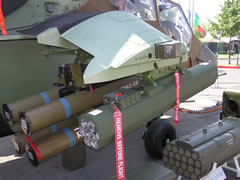
    RAFAEL has been promoting the Spike ER missile for helicopters for some time. The missile is already operational with the Israeli Army and has been integrated with the Romanian Puma multi-mission helicopter. Turkey is also believed to be interested in the missile. The first evidence that the Spike ER option is real was demonstrated at Eurosatory 2006 show, when Eurocopter presented the Spike ER on the Tiger. However, shortly after, the EADS’ subsidiary hastily replaced the missile with their parent company’s PARS 3 LR launcher pod. The Spike-ER missile has been cleared for use with the Tiger attack helicopter following the successful conclusion of firing trials during which all four missiles launched hit their targets with remarkable precision. The pilot can launch a missile and immediately drop down out of sight of the target, but can still view the target through the missile’s fiber-optic guidance link. Spike ER has a range of 8 kilometers and is available in Anti-Tank (HEAT Tandem) or Blast Fragmentation warhead versions.

    Start < Page 1 of 1 >
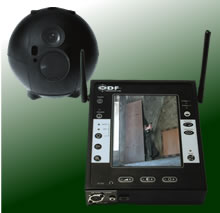
    EyeBall R1 Surveillance Ball

    The EyeBall R1, developed by ODF can be used in counter terrorism operations, where it is thrown into a building, tunnel, or cave, in placements out of sight or potentially dangerous. Eyeball R1 gradually scans the scene to cover 360 degrees, transmitting the image and audio from the scene, in real-time, via wireless communication to remote and mobile display unit. Each sensor is packed in a hand-held durable ball, which is designed to be thrown to remote and potentially dangerous location, without exposing the operators to the danger. The Eye Ball can sustain shocks and vibrations as will as other harsh environmental conditions. A remote display unit enables display of the image received from the EyeBall, as well as control of the rotation direction of the sensor. Advanced versions of the EyeBall include automatic video motion detection on the monitor.

    Tactical Command Information System – (SIT)


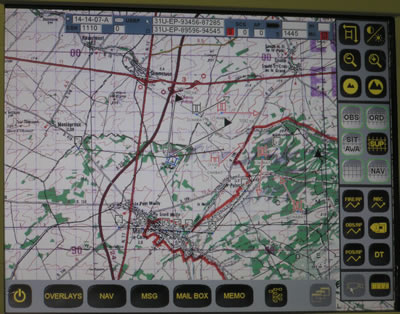
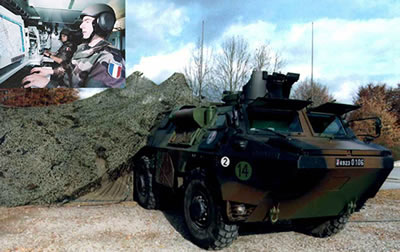
    SIT, also known in its export configuration “Finders”, is a battle management system, developed by GIAT industries as part of a comprehensive combat vehicle digitization program, deployed with French Army AMX-10P and Leclerc tanks, and is expected to be fielded with the future VBCI armored infantry carriers. Some 500 SIT units are currently deployed with the French and UAE armies. The system is designed to support units up to battalion level.

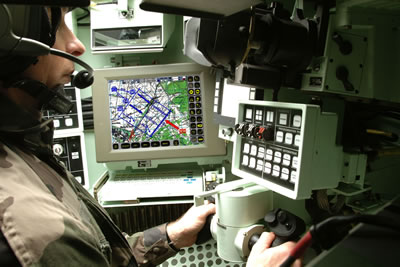
    The system runs on militarized or ruggedized PC workstations operating under Window OS. Each unit uses common software modules shared by all systems, and role- specific modules developed for every type of application or vehicle including reconnaissance, armor, armored infantry carrier, light armored vehicle, command post vehicle, platoon leader vehicle etc. These specific modules enable the system to integrate with the vehicle’s navigation, communications, optronics, and weapon systems. All systems use common tactical terminals and graphical displays.

    The graphical display depicts a cartographic (map) display of the area of operation, with situational picture showing the location of friendly elements, and identified or suspected targets. Selectable overlays are showing operational plans, enemy formation enemy movements, generated by intelligence analysis. Other templates show technical and logistical status and reports. The display becomes a centerpiece of information management through the combat engagement, as it provides the commander with full situational display, an effective tool for orientation and observation, identification and reporting about potential targets and threats, as well as timely activation of countermeasures. The system also enables control of communications equipment, management of on-board radio sets etc. SIT/Finders systems are interoperable with NATO standards including ADat-P3 and ATCCIS (Army Tactical Command and Control System).

    The improvements introduced in the new SIT-V1 version support PR4G VS4 IP radio technology, standard based operational messaging supporting next generation SICAT NCi, replacing previous V1 standard, the new system also supports vector and 3D formatted maps. A version of the system is currently converted to support Windows based systems. SIT-V1 will be introduced into all VBCI armored infantry fighting vehicles, upgraded AMX-10RCs and VBL scouts, as well as the VB2L command vehicles. Operational evaluations of the system were performed in 2005 with a squadron of AMX-10RC, VBLs and VB2Ls from the 1st Foreign Cavalry Regiment with further qualification of the systems expected through 2006. The ICONE derivative of the SIT-V1 has aleady been integrated into production Leclerc tanks, and will be delivered as an upgrade for all tanks in French Army service starting 2007.

    Another enhancement is the “Off vehicle SIT V1” – loaded onto a small hand-held computer, the off-vehicle SIT-V1 system is designed for dismounted operation offering operation continuity for dismounted troops. The system is compatible with the recently fielded SIT-V1 TTA software updates, which offer enhanced flexibility and compatibility with more platforms.

    SIR (Regimental Information System)

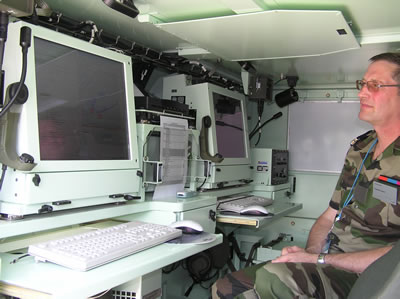
    SIR (Regimental Information System) is the French Army’s tactical C2 system, designed to support joint air/land operations. The heart of the battlefield digitization, SIR supports command and control functions at the battle-group, battalion, and squadron and company level. Two versions of the system are available – shelter-based module and vehicular version, installed in command vehicles (VAB) for deployed and on-the-move operations.

    Implementation of SIR is expected to add a force multiplier to current army formations, improve response time, through optimized planning and rapid execution of combined arms air/land operations, with improved logistics and support.

    The system is supported by integrated communications suite, based on the standard French Army radios – Thales PR4G tactical communications sets. Command and Control applications developed for SIR utilize map-based situational displays, integrated mission planning tools; order preparation templates, coordination and synchronization tools. SIR is designed for multinational operation, through interoperability with other NATO C4 systems through the Multilateral Interoperability Program (MIP) standard. Subsets of SIR were designed for unique uses, including order of battle administration, NBC, meteorology. Other branch specific derivatives were adapted for armor, infantry army aviation, engineering corps and logistics units.

    Situated at the Brigade/Regimental level, SIR is integrated with higher command levels through the SICF information systems, while connectivity to the lower combat formations is routed through the SIT (Finders) battle management systems, used at battalion level and below. SIR shares information and connectivity with branch specific C2 systems including Atlas divisional artillery C2, Martha army aviation C2, SEGA and RITA area communications systems.

    The vehicular command posts (VPC) are based on three main subsystems – communications – including radios, communications servers and routers. The processing platform includes the local area network and workstations, with associated software. The third element is the interfaces that integrate the two modules into the vehicular system. In a common deployment, two VPCs are combined to operate a regimental command post. Up to six vehicles can be integrated to support more complex task force. At present, SIR uses the data communications services provided by standard VHF PR4G Combat Net Radios. Data over HF can also be supported via gateway to the Carthage HF radio set. Future links will support PR4G VS4 as well as over the next generation IP based 4th Generation RITA military wide area subscriber communications network.

    Excalibur XM982

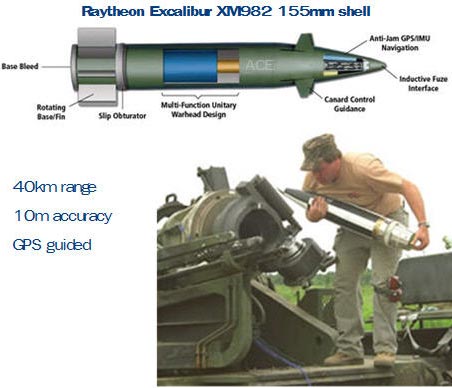
    Excalibur XM982 is a smart 155mm ammunition, developed by Raytheon BAE Systems and Bofors Defense.

    Excalibur is fired for high elevation and then glides from its apogee to the assigned target. The shell has a specially designed rotating fin for roll stabilization, and integrated base bleed which facilitates maximum range of 40km with conventional (155mm/39 Caliber) howitzers and up to 50km, when fired from future tubes. The Excalibur uses inertial and satellite based GPS guidance to execute course corrections through the flight, to achieve pinpoint targeting with an accuracy of 20m’ CEP. Four canard fins are used for guidance and control. Excalibur is actually a cargo shell, which can be loaded with unitary warhead or Submunitions such as the Bonus. Excalibur is considered to be part of the Non-Line-Of-Sight Cannon (NLOS-C) system, part of the US Army interim and objective forces’ FCS.

    Excalibur guided projectile

    In June 2006 the U.S. Army awarded Raytheon Company a $42.7 million production contract for tactical and test projectiles. The contract followed a series of tests where the weapon demonstrated an accuracy of 4.5 meters (about 14.8 feet) in 12 successful guided flights. The tests successfully demonstrated the three fuzing modes (delay, height-of-burst, and point detonate) and warhead lethality. Lethality has been proven against wheeled and tracked lightly armored military systems, simulated personnel targets and a steel reinforced concrete structure. (In the initial versions Excalibur will be using a unitary warhead.) Against the concrete structure, Excalibur successfully penetrated the roof, detonating inside the structure and causing impressive damage to the simulated target array.

    The US Army is considering a different version of precision artillery projectile as a future upgrade for Excalibur. For the Block 1B the Army is evaluating Saber system, developed by ATK. Saber, an advanced 155mm precision projectile will give artillery batteries a precision-fire capability with significantly more stand-off range than current 155mm artillery. It is designed for compatibility with all existing and future 155mm cannons.

    The first successful test firing of the Saber was conducted in June 2006. The advanced projectile was fired to a range of 48 km from a 155mm cannon, using a Zone-5 charge, the most powerful charge configuration used by U.S. forces. The increased range of Saber’s boosted, ballistic trajectory flight path reduces the time from gun-launch to impact and supports the expanded responsibilities of Brigade Combat Teams.

    Countering the RPG Threat

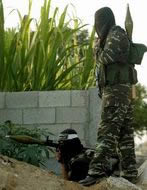
    M-1A1 destroyed by RPG ambush. Successful attacks are scored at stationary targets, primarily from side or rear attacks, at the less protected parts of the tanks. Below - Palestinian militants equipped with RPGs.

    RPG-7 / RPG-7VR / RPG-18 / RPG-26

    Below: M-1A1 destroyed by RPG ambush. Successful attacks are scored at stationary targets, primarily from side or rear attacks, at the less protected parts of the tanks. Below – Palestinian militants equipped with RPGs.

    In the continuing conflict in Iraq, shoulder fired rocket propelled grenades anti-tank (RPG) were once again proven a potent weapon. RPGs performed impressively in all post WWII conflicts, especially in Vietnam, Afghanistan and Chechnya. In the 1982 war in Lebanon, Israeli soldiers were confronted on by many RPGs. Palestinian militants are also using in the occupied territories, but Israeli heavy fighting vehicles are well protected to sustain such attacks while effective tactics are used to avoid exposure of softer vehicles to such threats. Inexperienced RPG operators could engage a stationary target effectively from 150 – 300 meters, while experienced users could kill a target at up to 500 meters, and moving targets at 300 meters. Casualties and losses suffered during the Yom Kippur War, from RPGs and anti-tank missiles, caused the IDF to deploy add-on reactive armor

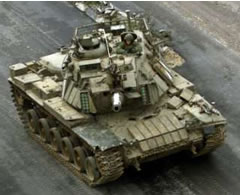
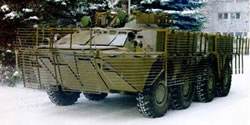
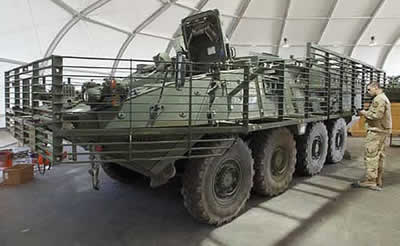
    The Israelis have used various types of add-on armor protection for their tanks and APCs. The most modern add-on hybrid armor package for M-113 and LAV is the L-VAS, designed under collaboration between IMI and RAFAEL. The Russian Army followed the same course as a result of its experience in Afghanistan and Chechnya. The Russians have also used cage armour, to protect against RPGs in Chechnya. In post war Iraq, RPGs have caused over fifty percent of U.S. soldiers killed in action. In Iraq, the US Army is using reactive armor to protect the Bradley M2, while the new Stryker APC is using an interim  Slat Armor until the new add-on plate armor will be delivered in 2005. Placement of sand bags and supplies boxes outside the turret and hull are also creating a gap between the RPG and the steel armor, that could degrade and even defeat the HEAT warhead of the RPG.

    Designed specifically for close combat operations, this reliable, simple and affordable weapon poses a serious threat to even the heaviest tanks, when used by determined fighters, in urban and guerrilla warfare. In Guerilla warfare, the RPG-7 is an effective tool against convoys, isolated checkpoints, and observation posts, where it is frequently used in volleys, coordination with other shooters. RPGs are also used in certain conditions against low, slow flying or hovering helicopters, where the weapon is fired from maximum range (920 meters) utilizing the self destruct mechanism as a makeshift proximity fuze. The weapon scored few successes in hitting helicopters Afghanistan and Iraq. Recent improvements of the basic weapon include the V1 tandem warhead rocket and RPG-29, available in tandem-HEAT and thermobaric versions.

    Up-Armored Humvee M1114

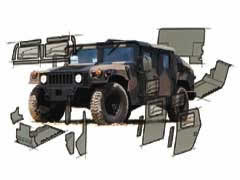
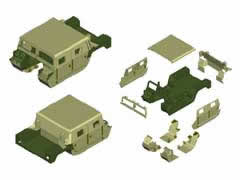
    The protection suit, designed by O’Gara-Hess Eisenhardt (now called Centigon) of the Armor Holdings group provides a complete perimeter ballistic protection shell for the crew. The armor suit is based on the use of composite and ceramic materials, as well as transparent armor, providing high protection while meeting strict weight limitations. The armor is effective against small arms fire and fragments, as well as against anti-tank mine blasts under the front or rear wheels. The armor shell provides overhead protection against airburst and shrapnel. The total vehicle’s weight is 5,489 lbs.

    O’Gara also offers an add-on armor protection kit which can be used as an interchangeable armor system, suitable for most derivatives of the M998 A2 Humvee. This field installed HArD-Kit provides protection from small-arms fire (5.56 and 7.62mm) and shrapnel, as well as overhead protection and floor protection, from exploding grenades or airburst ammunition. These kits weigh between 1,500 to 2,200 lbs and enable the vehicle to carry a payload of between 2,200 to 2,900 lbs, depending on the configuration.

    LORA Surface Attack Missile

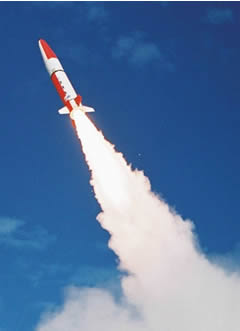
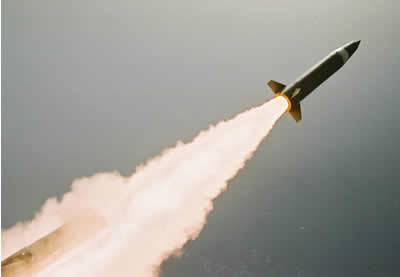
    LORA follows a relatively simple three elements design, comprising a warhead in the fore section, propulsion unit, including the solid fuel rocket motor with a nozzle. The nozzle is encircled by the navigation, flight control and guidance unit, which includes the integrated avionic guidance and flight control section, cruciform tail control surfaces, actuators, related antennas and connectors. This simple and modular design contributes to very reliable operation and simple logistics, since all necessary activities can be handled by the avionic unit. The missile’s weighs 1.6-1.8 tons, depending on warhead used. Its length is about 5 m’. and the diameter is 610 mm. LORA is stored in a dedicated sealed canister with shelf life of seven years without maintenance. Since it’s dimensions are larger than the MLRS it requires a special infrastructure. The missile uses an integrated GPS/INS system, used to rapidly establish launch position, without preliminary ground survey and site preparation. The system also determines the exact position of the missile, relative to the target, throughout the flight, enabling flexible maneuvering, maintaining optimal flight path and shaping the terminal effect according to the mission requirements.

    While IAI is exposing LORA at Eurosatory 2006 exhibition, the system has already been proven in several tests, including a launch from a ship deck. The program is funded by several customers and IAI is expecting more clients to join the program as it picks momentum. IAI is offering the missile as a weapon system capable of engaging strategic targets deep in the enemy’s territory, from mobile or maritime platforms. Typical targets are fixed or transportable including infrastructure assets (communications, power stations) and surface to air missiles (SAM) batteries, particularly those that cannot rapidly change location. With an accuracy of less than 10 meters, equal or better to that of an aerial guided weapon (such as a 1,000 pound JDAM), LORA can eliminate such targets without warning and without risking an expensive aircraft. The missile can be equipped with a 400 kilogram high explosive warhead or with a 600 kg penetration warhead, to hit hardened targets. The missile can be programmed to hit the target at high angle of attack, of up to 70 degrees, which, together with the high impact speed, maximizes the penetration effect and damage. The missile can perform pre-programmed manoeuvres after launch and after re-entry, to conceal its launch point and intended target, thus preventing the enemy from taking defensive measures or attempting to intercept the missile or launcher.

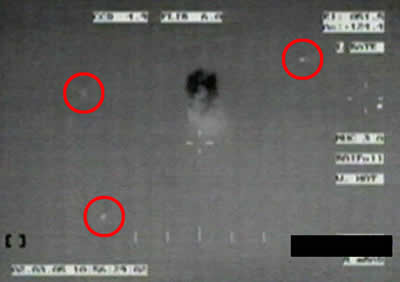
    The impact point of one of the LORA missiles fired into the Mediterranean sea, showing the accurate hit, within 10 meters from the designated aimpoint. The floating circled points are location markers designated the target's triangle.

    These capabilities make LORA a weapon of deterrence, which can be susceptible to enemy pre-emptive strike. To survive such threat, LORA has several “built-in” advantages. The missile can be used in two configurations – transportable and maritime. Each concept of operation has its advantages. The transportable version has a minimal visual and electromagnetic signature and a small footprint. It can be easily transported and hidden in areas out of enemy reach. The missile can be launched within few minutes, from unprepared positions. In fact, any target whose location is known within the range of the missile can be attacked within less than ten minutes from the launch decision. As for the maritime version – the LORA can be launched from “blue water”, well beyond the reach of enemy’s coastal defenses. The LORA uses a shaped trajectory flight mode. This feature also contributes to LORA’s immunity to most enemy defenses, including Anti Tactical Ballistic Missile defense systems designed to hit subsonic missiles. It is also immune to electronic warfare (EW) and GPS countermeasures.

    A ship borne version of the LORA will include: missiles stored in sealed canisters and a missile control center, located at the combat information center (CIC) of the ship. The missiles are launched in an oblique trajectory, which directs the hot gases to the side of the ship, eliminating damage to systems located on the deck.

    Caesar self propelled gun

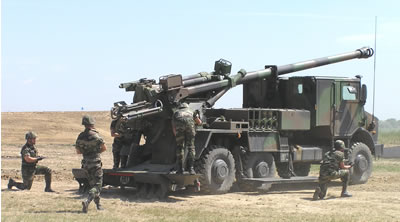
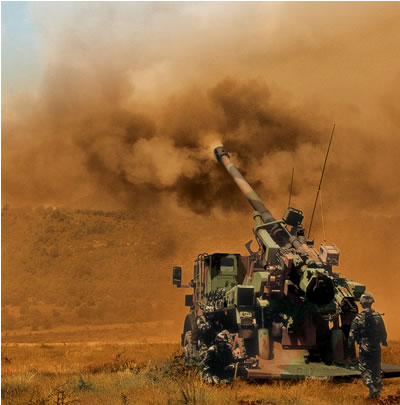
    Caesar (Camion Equipe dún Syste’me dÁrtillerie) gun uses the Giat 155mm/52Cal. gun mounted on a 6×6 all terrain a vehicle, equipped with integral navigation, fire control and gun laying systems and networked over tactical information systems to facilitate accurate and timely engagement of time critical targets. Five pre-production models were already produced and used for evaluations by the French Army, mounted on Mercedes-Benz Unimog chassis.


    The French Army plans to procure 72 Caesar guns, utilizing 6×6 Renault Trucks Defense chassis. The Thai Army also ordered six Caesar vehicles in May 2006. An order of 76 units was reported on July 2006, presumably destined for Saudi-Arabia.

    The vehicle with its integral gun weighs 18 tons and is designed for air transportation as a single load in a C-130 aircraft. Caesar is capable of rapid mobility – up to 100 km/h on road, at ranges up to 600km, twice as fast as tracked SP artillery. The gun is qualified to fire modular charges (zones 1 to 6 MTLS) enabling maximum firing ranges of up to 41km. The vehicle is equipped with an integral fire control computer, navigation and positioning and gun laying system enabling independent employment and automatic aiming possible.

    A protected compartment accommodates the six men crew and the fire control computer. An additional data display console is located at the rear of the gun. Ammunition stowage is also located on the truck, ready for firing. The gun can be deployed in position and fire six rounds in two minutes, and escape to another position evading counterfire. Caesar is currently in evaluation for British Army Lightweight Mobile Artillery Weapon System (LIMAWS) program calling for an air transportable artillery. It is also offered to potential clients in Australia, the Middle East and Malaysia. In the US, Caesar is promoted by United Defense which also works on the US Army Non Line of Sight Cannon (NLOS-C) element of the Future Combat Systems.

    As part of the advanced CAESAR system, GIAT also demonstrated the TOP – (acronym for Gun Operational Terminal), an interface linking a modern artillery tube to the artillery C3 system. TOP consists of a computer system, providing ballistic computation, handling of all navigation and positioning functions, handling of advanced trajectory correction fuses such as the SPADICO, muzzle velocity computation (based on muzzle velocity radar data) call for fire management and management of firing sequences and ammunition supplies.

    Low Cost Autonomous Attack System

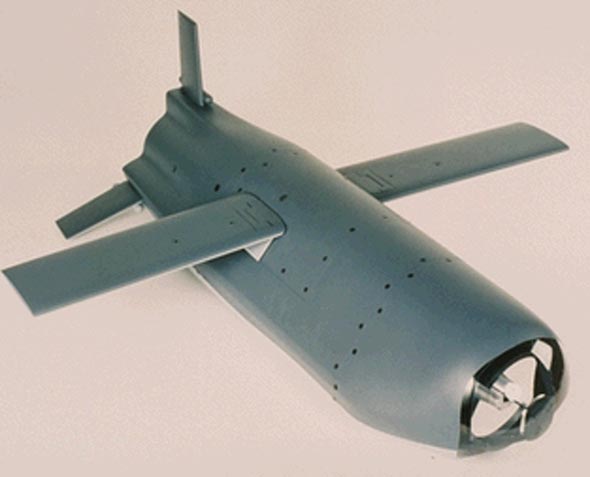
    The Low Cost Autonomous Attack System (LOCAAS) is currently in a final system development phase, as part of the US Air Force Wide Area Search Munition Program. LOCAAS is designed as an un-powered or powered, brilliant submunitions. The 36 inch long powered system weighs about 90 pounds, has a miniature 30 pound thrust turbo-jet engine, and a range beyond 100 nautical miles. It is equipped with a laser radar sensor, sophisticated image processing electronics, full authority flight control system and multi-mode warhead.

    LOCAAS is designed to attack high priority mobile or relocateable targets, armored or soft targets with high precision. The weapon can loiter at an altitude of 750 feet over the battlefield, flying at a speed of 200 knots for about 30 minutes, covering a footprint of 25 square nautical miles, and take out high-priority targets such as mobile air defenses, mobile surface/surface missile launchers and long range rocket systems. This weapon is particularly useful at the early stages of a conflict, when the exact locations of such targets is unknown and when operations of manned aircraft and unmanned combat aerial vehicles (UCAV) is too dangerous or too costly. LOCAS is equipped with a multimode, explosively-formed penetrator warhead and programmable fuse to engage the target according to its protection level. The warhead can be configured to explode into an armor piercing long rod penetrator, an aerostable slug against softer targets, or as fragments when engage exposed personnel and unprotected targets. The exact aimpoint and warhead mode are automatically determined by the LADAR fire control system.

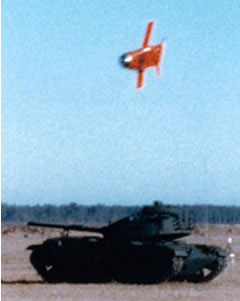
    LOCAAS’ LADAR sensor can be used to guide smart munitions, as well as providing targeting and fire control for associated systems. Prior to the mission, the flight plan and general search area assigned for patrol are uploaded to the weapons. LADAR enables the weapon to find, track, identifies and engage specific target vehicles while ignoring other targets which are defined as “low priority” or “non-combatant”. In tests, LOCAS searched a large area for SA-8 and Scud-B targets, detected but ignored T-72 tanks, which were defined as “low priority” targets, and finally located, identified and engaged the SA-8 mobile SAM targets. Four LOCAAS weapons can be carried as submunitions by standard SUU-64 tactical munitions dispenser, with or without Wind Corrected Munitions Dispenser (WCMD), Four such bombs can be carried by F-16s, with a total load of 16 submunitions per aircraft. 20 LOCAAS weapons can be carried internally by F-22 Raptor and F-35 Joint Strike Fighters. Internal carriage can also be provided by B-1 Lancer, and B-2 Spirit bombers as well as by various land based systems, including advanced versions of Multiple Launch Rocket System (MLRS) rocket Army Tactical Missile System (ATACMS) missile.

    Other applications are considered for naval use, as part of the Lockheed Martin/US Navy VLAAS concept. As LOCAAS are released over the area of operation, they use Global Positioning System (GPS)/Inertial Navigation System (GPS/INS) to navigate through several waypoints enroute to the assigned target area. LOCAAS can operate singularly or in coordinated “swarms”, where they maintain open communications with each other and with the mission control. Swarms are providing real-time intelligence and live target information from a wide area of operation. When targets of opportunity or priority targets are located, when assigned an autonomous mission over enemy area, the swarm will “vote” about the best weapon positioned to engage it. Collaborative targeting is also provided by the use of beyond line of sight data Link, which communicates between the LOCAAS and remote operator, to sustain “man-in-the-loop” capability especially against moving targets.

    Petit Vehicule Protégé (PVP)

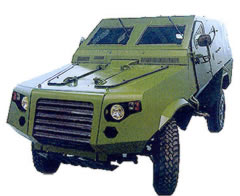
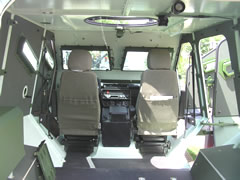
    Panhard P.V.P: Panhard, in cooperation with Daimler Chrysler has developed the Petit Vehicule Protégé (PVP), combining the protection of an armored vehicle and the ease of use and maintenance of a 4×4 vehicle. The PVP is designed for a maximum gross weight of 4.4 tons, operating as an infantry carrier and commander’s vehicle. The vehicle is constructed with a integral armored steel hull, A Daimler Chrysler five cylinder 156HP engine is used.

    Case Telescopic Automatic Canon

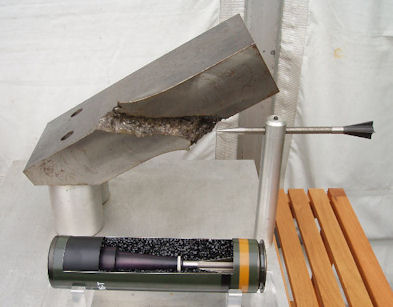
    The electrically powered Case Telescopic Automatic Canon operates in a unique fashion packing maximum energy in a small space. With a length of 3.428 meter, the 40mmx255 caliber gun fires specially designed cartridges in a unique “Push Through” concept which extracts the projectile from the case into the chamber just before firing. The APFSDS-T cartridge can perforate 1500mm of steel at a range of 1,500m. Its muzzle velocity is 1,500m/s. The HE fragmentation (GPR-T) cartridge weighs 1 kg (of which 120gr are HE charge); it can be set to use either point detonation or time fuse for airburst effect.

    CTWS technologies could be utilized in the British FRES and French Amry EBRC future combat system programs.

    CTI 40mm Tele-Operated/Manned Turret

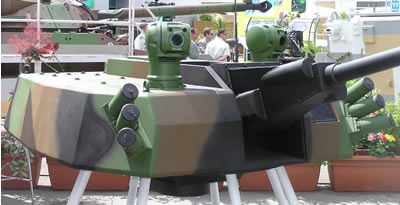
    This design provides a low profile turret operating the automatic CTI 40mm cannon, firing telescopic ammunition. Since the unmanned turret is less vulnerable, its armor protection is aimed mainly to protect the sensitive systems and ammunition, from splinters, small arms fire etc. (level 3). This feature provides significant weight savings, resulting in a total weight of less than 1.5 tons. The turret has an internal ready-to-fire storage of 60 rounds of two types, and an integral remote controlled machine gun unit attached to the side of the turret, also equipped with ready to fire 1600 round belt.

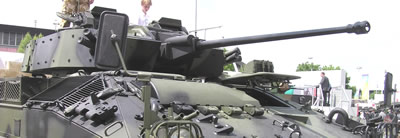
    Installation requires a ring with a diameter of 1 meter, compared to 1.4 meters required for the manned version used on the British Warrior. In the manned configuration, CTI 40mm turret is operated by a commander and gunner. Space is provided for 42 ready to fire rounds (two types), plus 110 in stowage. A conventional coaxial machine-gun is used, equipped with 800 rounds (plus 800 rounds for reload). The turret has level 4 protection and weighs around four tons. A different configuration proposed by CTI for the VBCI – blends the qualities of both types, with 70 ready to fire rounds (plus 120 in stowage), remote controlled side-mounted machine-gun and level 5 protection.

    BAE Systems Land Systems selected the 40mm Case Telescoped Weapon System (CTWS) from CTA International to compete for the UK MoD’s warrior Lethality Improvement Program (WLIP). The Warrior Infantry Fighting Vehicle will require a new turret and weapon system, to address continued lethality requirements for the next 30 years of service. Currently at early developmental stage, 40mm CTWS promises considerable growth potential for WLIP, particularly in reduction of ammunition stowage space by 30%.

    US Army Active Defense Program

    A derivative of IAAPS developmental countermeasures system, was optimized for close-in defense, was developed by United Defense in 2004, as a near-term countermeasure against RPG threats encountered in Iraq. The  Close-In Counter-Measures (CICM) System uses passive cueing sensors (flash detector) and low-cost tracking radar to detect and acquire potential threats at close ranges. Once an incoming threat is identified, the system points to its direction, and launches a barrage of 55 pellets, forming a “wall” of steel in the direction of the threat, 10 meters from the protected vehicle. Since the pellets are designed to loose energy rapidly, collateral damage to nearby troops, or bystanders is minimized, and self-inflicted damage to the protected platform is avoided. The system traverses over 180 degrees, and is loaded with two bi-directional units for full hemispherical coverage., allowing for two shots in each 180 sector.  The system can be manually reloaded immediately after the attack. The weight of the operational system is expected to be at the range of 200 kg, and due to its low recoil, it could be used on light vehicles including medium trucks and even Humvees. (although it will not leave much room for other mission payloads). A derivative of the system, considered for use on helicopters,  will use a 360 degrees traversing platform and a uni-directional charge.  CICM was successfully tested in the past year (Q4/2003 – Q3/2004), against RPG type threats, where it automatically detected launched RPGs, tracked incoming rockets, launched its countermeasures and defeated RPGs before they reached the protected system.

    The Army is also testing the Close-In Active Protection System (CIAPS) which could actually be a predecessor of CICM. The system consists of a radar staring in all directions that can detect an incoming threat at very short range and launch one of an array of pre-positioned interceptors to intercept and destroy the threat shaped charge warhead before it hits the protected vehicle. It is effective against anti-tank guided missiles (ATGMs) as well as rocket-propelled grenades (RPGs) and can defeat threats launched from very short range.

    Skunk Works and XTEND Simplify Multi-Drone Command

    0
    Lockheed Martin Skunk Works® and XTEND have achieved a major milestone in JADC2 by integrating the XOS operating system with the MDCX™ autonomy platform. This technical breakthrough enables a single operator to simultaneously command multiple drone classes, eliminating the friction of mission handoffs. From "marsupial" drone deployments to operating in GPS-denied environments, explore how this collaboration is abbreviating the data-to-decision timeline and redefining autonomous mission execution.

    From Ukraine to Taiwan: The Global Race to Dominate the New Defense Tech Frontier

    0
    As traditional defense primes face mounting competition from agile “neoprimes” such as Anduril, Palantir and Helsing, the balance of innovation is shifting toward software-defined warfare and scalable, dual-use technologies, while global industry consolidation—marked by Boeing’s integration of Spirit AeroSystems and other strategic mergers—signals an intensified race to secure control over the defense technology value chain. Our Defense-Tech weekly report highlights these trends.

    Europe’s “Drone Wall”

    0
    In early October 2025, a coordinated wave of unmanned aerial system (UAS) incursions—widely attributed to Russia—targeted critical infrastructure across at least ten European nations. The unprecedented campaign exposed the fragility of Europe’s air defenses...

    Weekly Defense Update & Global Security Assessment

    0
    Executive Summary The past week (September 18-25, 2025) represents an inflection point where strategic defense concepts have transitioned from doctrine to tangible reality. An analysis of global events reveals four primary, interconnected trends shaping an...

    U.S. Air and Space Forces Push Next-Gen Programs at the AS&C 2025 Conference and...

    0
    At the 2025 Air, Space & Cyber Conference, U.S. Air Force and Space Force leaders unveiled major updates on next-generation fighters, bombers, unmanned systems, and space initiatives, highlighting both rapid innovation and critical readiness challenges as the services race to outpace global competitors. A short version is available here, with a more detailed version for subscribers.

    TADTE 2025: Reflecting Taiwan’s Strategic Themes

    0
    The Taipei Aerospace & Defense Technology Exhibition (TADTE) 2025 crystallized around four dominant strategic themes that collectively illustrate Taiwan's comprehensive approach to defense modernization amid escalating regional tensions. Based on a detailed report by Pleronix (available upon request). Includes a Podcast discussion on TADTE 2025's highlighting Taiwan's four strategic themes beyond the post's coverage.

    Iron Beam 450 Completes Testing, Soon to Join With Operational Air Defense Units

    0
    Israel’s Iron Beam 450 high-power laser system has completed final testing, marking a major leap in air defense. Developed by Rafael, it offers precise, cost-effective interception of rockets, UAVs, and mortars, and is set for IDF deployment by 2025.