
Monday, December 22, 2025
More
    Home Blog Page 400

    Defexpo 2006 – Command, Control & Communications

    India has become a big consumer of defense electronics, which, like some of their major military systems, are based on foreign systems but developed indigenously and locally produced. The largest defense electronics exhibitor at Defexpo 06 was Bharat Electronics (BEL), which displayed a wide range of electronic equipment including battlefield surveillance radars; SIGINT; electro-optical systems for upgrading tanks and air defense systems; and communications gear for land, air and naval use. The planned expansion of India’s recently fielded military communications networks to address mobile access capabilities (Tactical Communications Systems – TCS program) attracted considerable interest. The TCS program envisions extending a division’s communications infrastructure from the base and office to the field. Thales and Tadiran, both traditional suppliers of communications equipment to India, responded to the challenge at Defexpo 06.


    France’s Thales Land & Joint Systems Division demonstrated its DI@NE IP based voice and data networking solution for the Indian TCS program. The system is comprised of TRC-4000 microwave links and integrated tactical radios, secure battlefield WiFi terminals (BattleLan), and Cisco routers, all controlled by a central network management system. They also displayed their TRC-400 high capacity Line Of Sight (LOS) radio equipment operating on Band 4 (4.4-5GHz), and supporting up to 34 Mbps data transfer rates. They also promoted the tactical satellite communications capability of the SATMOVE QUICK HALT terminal which operates in the X-band (7.9 – 8.4 GHz and 7.25 – 7.75GHz) using a low profile foldable 1.8 meter antenna, and supports full duplex voice communications and data rates of up to 2 Mbps. The system can be set up and ready for operation in less than 10 minutes.

    Tadiran Communications from Israel introduced its comprehensive TCS concept, which is based on combat proven systems such as the GRC-408 and GRC-2000 LOS radio systems, both of which operate in Band 4. The GRC-408 provides a high capacity network backbone with up to 34Mbps data transfer rate links. The GRC-2000 delivers 2Mbps (E!) data rates, and supports fast frequency hopping (FFH) over TDMA combined with FDMA regime to deliver reliable communications even when subjected to severe electromagnetic interference and countermeasures. Tadiran’s TCS supports a variety of protocols, including EUROCOM, ATM, LAN/WN IP, PCM and Radio over IP/Voice over IP telephony (RoIP/VoIP).

    A new command and control system, designed specifically for small infantry units and special operations forces, was displayed for the first time by IMI and IAI/MLM. The system, known as MPRS C3I, integrates several new devices, including the Tavor assault rifle and its Multi-Purpose Rifle Sight (MPRS) system, the Reconnaissance Rifle Grenade (RRG), radio location reporting, and rugged PDAs, in order to enable commanders to plan and debrief operations without having to rely on external support (intelligence, geographical files, images etc). Real-time reporting and video feeds enable commanders to develop a better situational picture at all levels. MPRS and WACT, which are subsets of this system, were covered in previous reports. The new element unveiled at Defexpo 06 was the commander’s display, which supports situational display and automatic, dynamic views of targets from different directions based on processed image metadata. The system uses images that can be collected by the unit from video or still images taken live by UAVs, RRG, MPRS sights or ground observations and maintained independently in a local database.

    Several jamming systems were displayed indicating India’s interest in this field. Among the systems on display was the Liman airborne datalink jammer from the Ukraine firm CARI, and the Granat RF jammer, which can be used to neutralize some radio controlled IEDs. These devices have been field tested by Ukrainian Army units deployed for peacekeeping missions in the Middle East. The jammer operates over a wide frequency range. (20-2000 MHz)

    Start < Page 5 of 6 >

    Defexpo 2006 – Armored Vehicles & Armor Protection

    As at past shows exhibitors at Defexpo 2006 focused on new or upgraded systems and modernization programs for improving current systems instead of new construction main battle tanks. As in the previous show, the new T-90 was absent, and the only MBTs on display were the indigenous Arjun and Experimental EX developed by the Defense Research and Development Organization (DRDO). The Indian Ordnance Factory Board (OFB) unveiled several new programs, including the Tarmour, which based on T-55 chassis that have been extensively modified for use as armored personnel carriers. IMI chose Defexpo to launch its new hard-kill protection system, Iron Fist, which competes with RAFAEL’s Trophy. Two additional active protection systems on display were the Ukrainian Zaslon, and the South-African High Speed Directed Launcher (HSDL) from Saab-Aviatronics. The F-3 LRF Deceptor was also on display. The F-3 generates false ranging return signals to laser rangefinders causing enemy tanks to fire with incorrect range data.

    Several other types of armored vehicles were displayed. Trojan, a mine protected armored vehicle developed and produced by OFB, is in series production for the Indian Army and for export. OFB is offering this heavily armored vehicle, which is designed to withstand small arms, IEDs and anti-tank mines, as a rapid intervention and counter-insurgency vehicle. According to OFB sources, the Trojan production line has had to be expanded to accommodate new orders from the Indian Army and from the new Iraqi Army.

    Another vehicle on display was the RG-31 from South Africa. This vehicle has become popular since its procurement and successful operations by the US Marine Corps in Iraq. A new face at Defexpo was the Indian company Vectra Engineering Materials, which displayed the Vectra, a Humvee sized, light armored, multi-purpose vehicle. At a gross loaded weight of 6 tons, this 4×4 vehicle has full protection against 7.62 armor piercing ammunition, a 360 degree rotating cupola, bulletproof windshield or and firing and observation ports at the sides and rear. The vehicle is powered by a 235 HP Cummins B 235 turbo diesel engine, and has a 5 speed automatic transmission. The Vectra can travel at 125 km/h on roads, 40 km/h cross country, and has a maximum range of 1,000 km.

    Several new designs for the protection of Humvee vehicles were on display at the US Army pavilion. The up-armored M-1114 Humvee was displayed by Armor Holdings. Battelle displayed another armor kit for the vehicle, demonstrated by armored door replacement sections, which are part of a field installable kit for protecting the vehicle from mines and projectiles. The panels are a combination of composites and titanium plates. Armor-Works demonstrated the Ballistic Advantage lightweight armor kit for a Humvee based, two-door assault truck. This kit included underbody mine protection, protected doors, bed side and blast protection and a gun mount. During combat tests at Fallujah in Iraq actual IEDs were only able to cause minor damage to the vehicle.

    Start < Page 3 of 6 >

    Defexpo 2006 – Artillery Modernization in India

    Several artillery modernization programs are underway in India with progress at different stages. Modification of 180 Russian made M46 guns by installation of 155mm/45 Cal barrels, provided by Israel’s Soltam, is in progress. A parallel program for the modernization of 360 Bofors FH77B 155/39 mm guns that are currently in service is being considered. Three companies, including Elbit Systems, Tata and BAE are competing for this program. The modifications will consist of replacing the barrel and breechblock and strengthening the under carriage. These programs will be followed by the acquisition of up to 1,400 new 155mm/52 Cal guns, including both towed and motorized versions. The final selection process for suppliers is in progress. Two candidates are short listed for the motorized version – SWS from Sweden and Soltam from Israel.

    For the mobile (truck mounted) gun, India is still evaluating proposals from Sweden, France and Israel. Further acquisitions are currently being considered, especially truck mounted mobile guns and self-propelled howitzers to support armor formations equipped with T-90 and Arjun tanks. The SP gun will probably be mounted on a tracked chassis in order to allow the guns to keep pace with armored units.

    Further improvements are planned for the Pinaka truck mounted multi-barrel rocket system. Although this system is in production, only one regiment has been fielded to date. For this program Israel’s IMI is proposing to upgrade Pinaka systems with their Trajectory Correction System (TCS), which has recently entered service with the MLRS operated by the Israel Defense Forces. The TCS can now handle trajectory correction for multiple rockets, improving the effectiveness, accuracy and survivability of rocket artillery units. India is also reported to be interested in the Russian 300mm Smerch long-range multi-barrel rocket system. At least one example of this system was sent to India to undergo a series of field tests in 2002 but no details on a formal order have been released so far.

    Under a different program the Russian defense export agency Rosoboronexport and the Indian Defense Ministry have signed a contract to deliver modernized extended range Grad rockets for the Indian army. The new rocket increases the Grad’s effective range from 20 km to 40 km.

    Start < Page 2 of 6 >

    Konkurs M Wire Guided Anti-Tank Missile

    Konkurs-M anti-tank missile which is locally produced in India. Iran began producing the missile in 2000. It is carried on small platforms or APCs and can be rapidly dismounted for man portable land based operation. The missile can fly over water and at heights above 3,000 meters. Minimum range is 75 meters, and maximum engagement range is 4,000 meters (daytime) and 2,500 meters (night). The missile can penetrate steel armor up to 800 mm thick. Konkurs M is also designated 9M113, NATO code name AT-5 Spandrel.

    Long Range Acoustic Device – LRAD

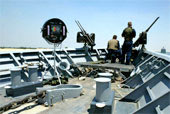
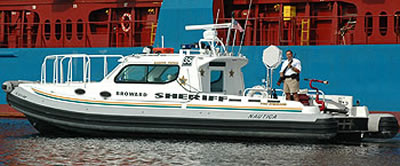
    LRAD – is a long-range hailing and warning, directed acoustic device designed to communicate with authority and exceptionally high intelligibility in a 15-30 degree beam. LRAD can issue a verbal challenge with instructions in excess of 500 meters and has the capability of following up with a warning tone to influence behavior or determine intent. The “hailing and warning” application for commercial shipping is similar to the successful LRAD deployments by the U.S. Navy on patrol craft in and around the port of Basra, Iraq to communicate with vessels in shipping lanes and around oil terminals, where the device was reported to be effective even at a distance of 1,000 meters.  LRAD was originally conceived to support the protection and exclusion zones around U.S. Navy warships. The challenge of interdicting small boats approaching commercial maritime assets is quite similar. LRAD’s warning tones command attention at ranges in excess of 500 meters while its directional and highly intelligible voice instructions can unquestionably be heard. LRAD’s ability to positively communicate with authority on land or at sea is proving highly effective in creating safe situations out of uncertain ones.

    On November 7, 2005 LRAD was first used to foil a pirate attack on a Seabourn Cruise Line luxury cruise. The system was installed as a part of the ship’s defense systems, and was activated when pirates attacked the ship with RPGs 160 kilometers off the Somali coast . The pirates failed to board the cruiser. LRAD’s maritime application was realized after the 2000 attack on the USS Cole off Yemen, as a way to keep operators of small boats from approaching US warships. The system was evaluated by commercial ship operators, as a non lethal way to ward off pirate attacks. Other applications include armed unmanned surface vehicles, as international maritime law does not allow commercial vessels to carry heavy armament.

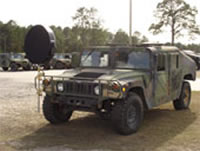
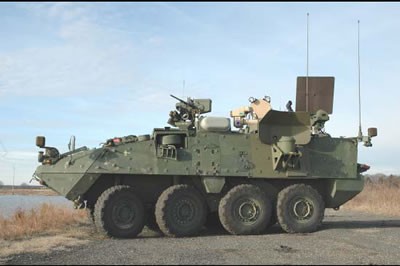
    LRADs and its scale-down Medium Range Acoustic Device (MRAD) (shown above), are currently deployed with the coast guard, U.S. Marine Corps, U.S. Army, and U.S. Navy in Operation Iraqi Freedom in and around Fallujah, Mosul, and the port of Basra. Most recently, over $600,000 worth of products were procured for the Army’s 3rd Armored Cavalry Regiment. Recent deliveries were made to the 44th Engineering Battalion, deployed in central Iraq and the 3rd Infantry Division will be utilizing LRADs in Iraq for crowd control, area denial and clearing buildings. The smaller MRAD is optimized for land and vehicle-based operations. It can be employed from armored vehicles, for urban warfare, shorter-range checkpoints and security. A larger, more powerful Extended Range Acoustic Device (ERAD), can also be used to supports very long distance communications for the critical infrastructure, including border security.

    LARD can be integrated with the Phraselator, a hand-held voice translation device, which is a key tool to store and immediately retrieve thousands of messages recorded by the Defense Language Institute for transmission through LRAD at extended ranges in the host nation language. This capability is being implemented with each LRAD delivered in this order and augments ATC’s hardened MP3 player used for messaging and instantly-available aversive warning tones.

    According to Defense Update reader Michael Frank of Phodio Ltd. an international LRAD distributor from the UK, LRAD has been in use for years, for military purposes and to avoid maritime piracy and to control and give information to big crowds, riots and demonstrations. “You should see the LRAD as a kind of megaphone rather than a non-lethal weapon” says Frank. “It gives normal acoustic messages, however good engineering work have made it possible to narrow the sound beam. It is also a fact it can make an ear-splitting noise that nobody can stand.” Nevertheless, it is mainly used is to communicate and to give information in long distance in high ambient noise environment.”  The system is effective for vocal communications at distances of several hundreds meter distance, a capability which can also be used in disaster area.

    Merkava Mk-4 Detailed

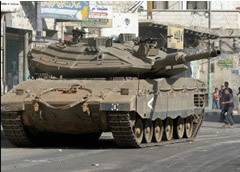
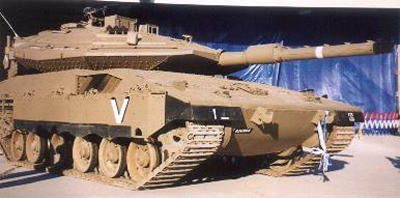
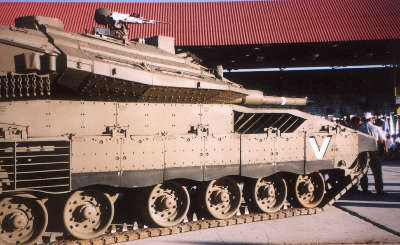
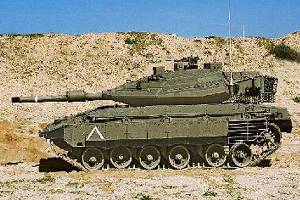
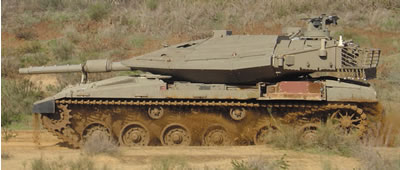
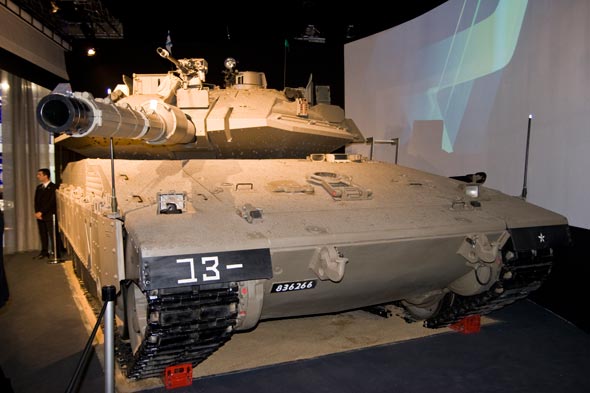
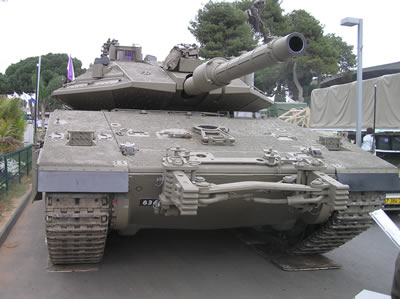
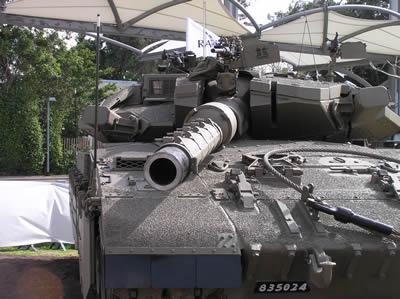
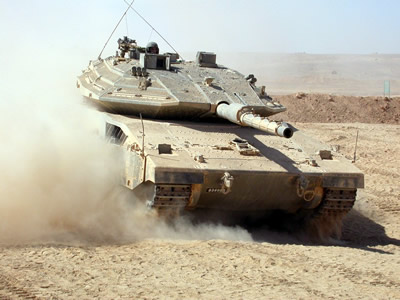
    Merkava Mk4 represents the third evolutionary phase of the Merkava program. The Mk-4 is equipped with a 120 mm gun but the new gun is designed to sustain higher pressures, generating higher muzzle velocities which are an essential feature for advanced kinetic energy ammunition. The Merkava Mk4 can accomodate various 120mm ammunition types, including 120mm APFSDS-FS (kinetic) rounds, and their training derivatives, HEAT (hollow-charge) types and anti-personnel/anti-material ammunition which have already been used in combat operations with previous Merkava types. The tank will also be able to accommodate the Lahat missile as it becomes operational. The loader can load the gun from a fully automated, fire-proof magazine which accommodates up to 10 ready rounds and deliver up to four types of ammunition types to the loader.


    The tank is equipped with a modern fire control and sighting system which includes computerized ballistic calculations and compensations, a dual axes stabilized gunner sight and a dual axis stabilized commander panoramic sight, both equipped with an advanced FLIR and TV channels for day and night operation. The system is equipped with an improved tracking system which enables tracking of moving targets, such as tanks, helicopters,  vehicles or soldiers. It also enables locking the sight and gun on targets when the tank is on the move, utilizing the ultra-fast gun stabilization and electrical turret drive system. Merkava Mk-4 is believed to be protected by a new type of hybrid armour, which can be conformed from modular elements, to match specific threats. The Mk-4 retains the hull design of the previous Merkava versions.

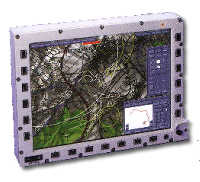
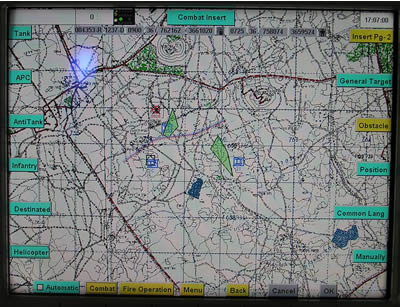
    The tank also utilize the Battle Management System (BMS) designed by Elbit Systems’ ElOp – the system is providing fast communication networking between the commander and subordinate units, and enables the crew to plan missions, navigate and continuously update their situation awareness. The system also enables recording and debriefing the operation, by utilizing the tank’s digital recorder. The Merkava Mk4 is equipped with the new VDS-60 digital data recorder produced by Vectop, it records and restores the sight images and observation data collected during the mission. The capture of such images can also be shared by other elements, which are networked with the Weapon Integrated BMS (WINBMS), to enable reporting of enemy targets.

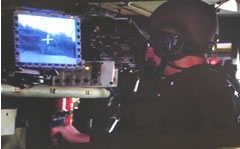
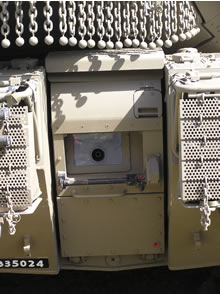
    This concept is rapidly becoming an essential part of the “digitized land forces” integrated battlefield concept, combining tanks, anti-tank and combat helicopters in a combined task force at various levels. Each crew member has an individual flat-panel color displays showing the status of systems each member is responsible for. The gunner and commander can also see the sight images on their individual screens. The commander can use his display for map navigate, orientation and reporting. For example, the driver can see a rear and side view of the tank from the closed compartment. This capability is derived from a new, and unique system called Tank Sight System, developed by Vectop. The system provides video coverage the tank’s surroundings in day and night. It improves safety, especially when traveling backwards and in conditions where the driver’s visibility is impaired. Merkava Mk 4 uses four cameras installed in hardened cases embedded outside the tank. These cameras are providing full peripheral view displayed on high resolution monitors installed at the driver’s position and in the fighting compartment.Another feature provided by the “computerization” of the Merkava Mk4 is the introduction of “integrated training capability”, providing the crew and unit a sophisticated training environment based on their tanks and readily available in the field. This capability will be integrated with the “virtual scenario” a set of virtual terrain features, friendly and enemy elements, and “intelligent” behaviors based on pre-set maneuvers, doctrinal concepts etc. All will be presented to the tank crew, and unit members, through their observation systems, sights and sensors, to support a comprehensive training scene in the field.

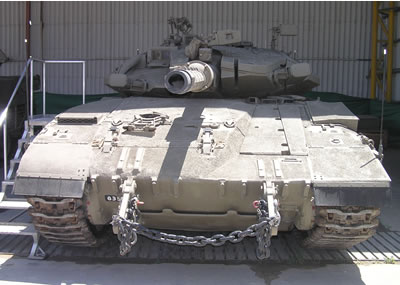
    Unique among the main battle tanks of the world, the Merkava design features a front-mounted power pack, which presents a heavy mass in the forward area, which protects the crew from enemy attack. This configuration also cleared room at the rear section for a safe exit and enough space to carry a few fully armed infantrymen, in addition to the crew. The rear access hatch allows for the quick and safe exit of injured crewmen or pickup of wounded soldiers for evacuation.

    The engine pack is easily replaced. The tank is powered by the new General Dynamics GD833 1,500-horsepower direct injection, liquid cooled diesel engine, (co-produced in the USA by General Dynamics and MTU). This type is also powering the French Leclerc MBT. This powerful weighs 1.9 tons net, and 4.9 tons with its entire power-pack. This powerful engine affords the tank greater mobility than the previous versions, which had the 900 and 1,200-horsepower engines. The tank utilizes an electric turret and gun control system, designed by Elbit Systems, which comprises two electrical brushless motors, produced by Bental Industries.

    Merkava 4 is expected to be equipped with an active full perimeter defense, which utilizes, among other capabilities, warning against laser-guided threats. Further improvements include the Trophy active protection system, which is currently under advanced engineering phase. The Mk-4 like its predecessors, is also equipped with a central filtering system designed by Kinetics, which maintains positive air pressure at the fighting compartment, for protection in a chemical biological  and radiological (CBR) environment. The system also provides air conditioning for individual crew members (micro-cooling) and for the entire cabin, as well as auxiliary power when positioned at “silent watch” for battery recharging. Special modifications installed on Merkava Mk4 are preparing the tank to operate in urban environment of the Low Intensity Conflict. The merkava Mk 4 could soon mount a new Remotely controlled weapon station, mounting an 7.62mm machinegun, replacing the commander’s weapon station. Several designs have already been tested. An example of the ORCWS was shown by Elbit Systems. (below)

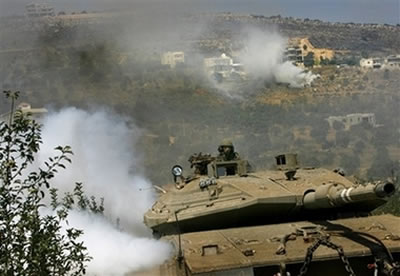
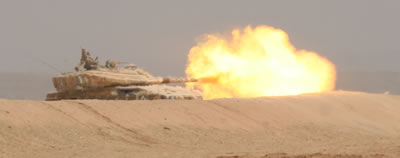
    Picture on this page: Top: AFP, Defense-update. Below: IDF Spokesman.

    Defense-Update Merkava 4 Updated Gallery:

    Merkava 4 in Action – Lebanon

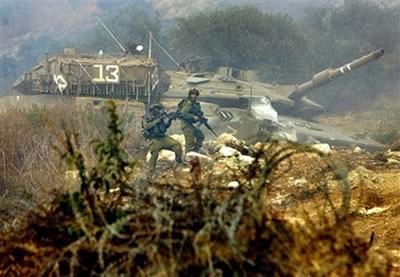
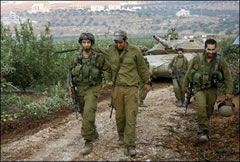
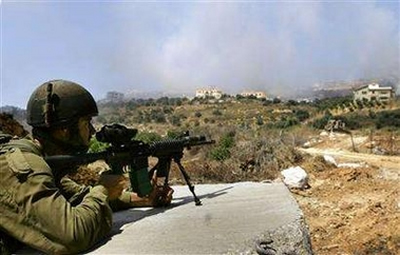
    A record of one combat action in Lebanon, on July 31st, 2006 tells the story of a joint task force which included elite infantry teams from the Nahal (900) infantry brigade, Merkava Mk4 tanks from the 401st Armor Brigade, and combat engineers.

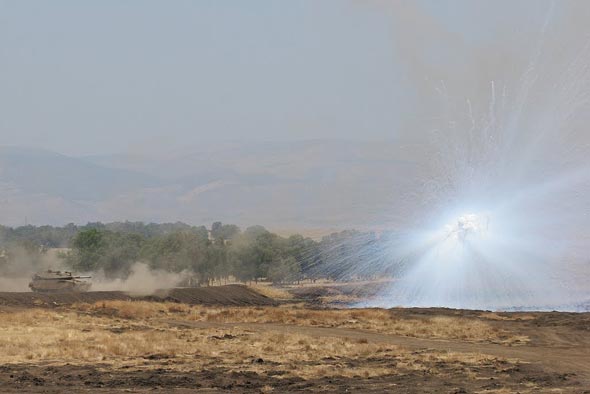
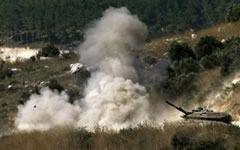
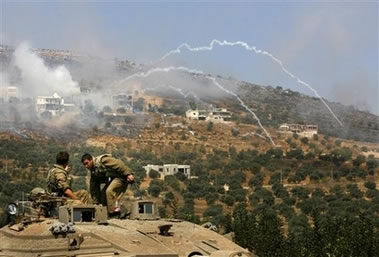
    During the activity, a Puma Combat Engineers armored fighting vehicle carrying Carpet counter-mine systems rolled over and overturned into a ravine wounding three crewmen. The tanks rushed in to cover the evacuation and recovery, facing Hezbullah anti-tank fire. The tanks and infantry returned fire, while calling artillery support to create a smoke screen while the tanks deployed their own smoke to mask the forces from enemy missiles. Although damaged, all forces returned safely. The vehicles and tanks were sent for repairs at the IDF tank depot, which has already completed the repairs of Merkava tanks damaged during the first days of the fighting.

    For a video record of this incident click here, as recorded by Israel’s Channel 10 news.

    Photos: AP & AFR.

    Additional parts of this article:

    Read more:

    Extending the F-16 range

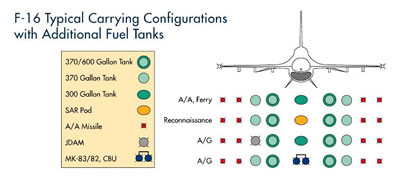
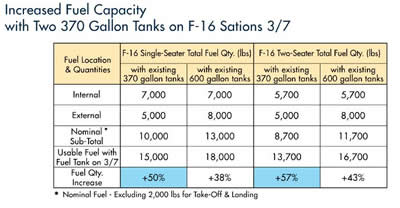
    A new concept, developed by FAR Technologies can apply to  various military aircraft, fighters and trainers, adapting existing fuel tanks to be carried under weapon stations. Under the patent pending design, an installation of fuel lines, flowing fuel from the outboard weapon stations (3 and 7 on the F-16) to fuel tanks pylons, (stations 4 and 6 on the F-16). In Israel, IAI/Lahav is promoting the implementation on the F-16 and is working on the necessary adaptations. The installation can be applied in only two hours, and enable the Falcon to carry a total of up to five external fuel tanks, reduce the need of air refueling, extend ferry range by 40% and add 25% to the mission radius (on attack and reconnaissance missions, for example),  and up to doubling endurance on combat air patrol missions.

    Israel’s IMI is also offering a higher capacity external fuel tanks (600 Gallon) for the F16, which can significantly extend the F-16 range, These tanks can replace the 370 gallon tanks or carried in addition to other tanks, especially on long haul ferry missions. However, the 600 Gal version cannot be dropped when the aircraft enters a dogfight and therefore, can be carried when the aircraft is armed for all aspect combat (when maneuvering relative to the target is not required), or maintained in relatively safe flight pattern (such as various mission support roles) or being escorted by other fighters.

    Israeli Study Recommends Revolutionary Air-Borne Re-Arming Concept for strike aircraft and UCAVs

    FAR Technologies

    With the use of massive aerial refueling, sophisticated target acquisition systems, and smart, precision weapons, modern air powers are capable of engaging targets anywhere and anytime. Yet, ordnance release requires terminating the aircraft’s mission to re-arm for the following mission. Flying to and from a distant battlespace poses a “bottleneck” for massive airpower operations.

    According to Nir Padan, CEO of the Israeli company FAR Technologies, the Air-Borne Re-Arming concept is real and could dramatically enhance operational tempo of combat aircraft and particularly UCAVs. Israel Aircraft Industries (IAI) and FAR Technologies performed a successful technological feasibility study anddesign of the Air-Borne Re-Arming (ABRA) system. Padansays that airborne rearming could increase the yield from any fleet of strike aircraft, particularly in long range and extended duration missions, typical to those carried out by UCAVs. Padan adds that on the long term, this mode of operation will  require less missions, fewer takeoff/landing cycles, resulting in lower maintenance costs. A side benefit will be the improved safety and survivability of the operating bases and carriers.


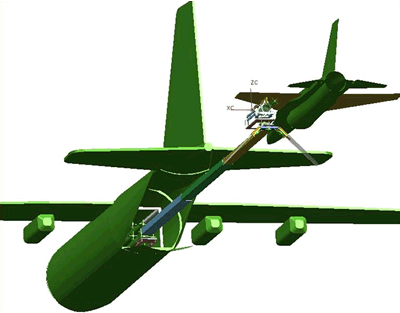
    The system consists of a bomb storage and loading device , attached to a boom at carried by the cargo plane and a smart pylon carried by the attack aircraft, which obtains the weapon from the robotic arm, attaching it to the weapon’s bay or external weapon carrying pylons. An aerial rearming aircraft such as a C-130C, can carry up to 16 MK-84 guided or unguided bombs or considerably more smaller weapons (C-17/5 may potentially carry 4-6 times more). Bombs can be stored in an external or internal bay. The robotic uses an extendable boom, operating from the cargo plane. Controlled by an automatic engagement control (AEC) and supported aerodynamic lift surfaces, the robotic weapon loader will transfer the ordnance from the cargo plane to the attack aircraft. The smart pylon may include sensors and a camera for day and night use. It will interface with the automatic engagement control (AEC) system to automatically activate ordnance on the pneumatic multi-action ejection mechanism and an active sway brace for mid-air operation.

    Based on the concept and technology, Professor Asher Tishler, from Faculty of Management, Tel Aviv University, conducted an analysis of the potential contribution of airborne rearming on 3 – 9 hours bombing missions at ranges of 250 to 1,000 nautical miles from the operating base. For UCAVs, 12 – 30 hour mission durations were analyzed.

    The analysis demonstrated a dramatic improvement and increase of operational tempo, resulting in the number of attacks executed and target killed without increasing the aircraft fleet. Improvement of up to 100% was demonstrated for short range attacks and over 200% for extended range operations. Since aircraft do not have to return to base to rearm, the density of the attacks could be increased, resulting in faster target neutralization (time required to drop a set number of bombs on target could be reduced by up to 70%). Fielding Airborne Rearming systems could introduce new economies for air forces, where fewer resources can perform more missions, resulting in lower acquisition and maintenance costs. Other attributes of airborne rearming are more flexible use of forward operational bases, (as aircraft can takeoff without loads) and higher survivability of the home base and strike aircraft (reducing pressure from operating bases).

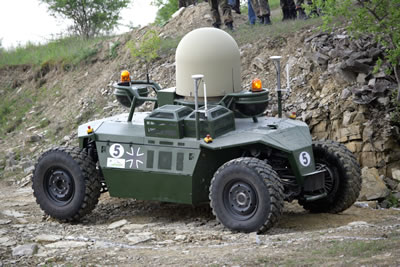
    ELROB 2006 – An European Challenge for Robots and UGVs

    Frank E. Schneider

    The spectrum of classical defense and security missions is being expanded today, to include conflict prevention and crisis management tasks, and fighting against international terrorism. As robotic technology matures, military robotics applications are offering more technological advantages.

    In its military and security applications, robotic systems are offering an intelligent substitution of personnel, to carry out highly dangerous and tedious operations. Unmanned systems can keep human warfighters safer, by maintaining safe standoff distance from the scene of operation.

    Traditionally the area of field robotics has been strong in Europe with a significant, but diverse portfolio of R&D efforts. It is, however, characteristic that there has been little coordination across the European countries. This results in a lack of joint strategic partners such as unified security and defense programs, and lack of European industrial players. It is thus essential to have strong efforts to push these technologies across the European arena.

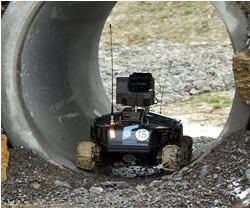
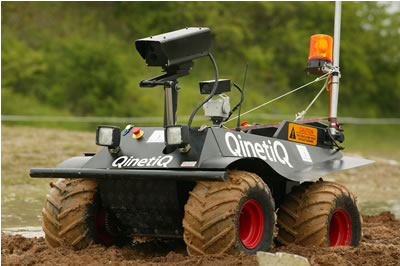
    Facing this reorientation, and cost cuts in R&D activities, the European Robotics Group is organizing the “European Land-Robot Trial (ELROB)” in order to provide an overview of the European state-of-the-art in the field of UGVs with focus on short-term realizable robot systems. ELROB is explicitly designed to assess current technology to solve problems at hand. This event stimulates the development and promotion of innovative technical approaches that benefit the entire community of unmanned ground vehicles (UGV) developers.

    So far limited efforts have been made on comparison of systems for such applications. In many cases tests have been performed nationally, if at all. ELROB is thus an important event in many respects. First of all it is the first successful initiative to compare the technologies across the major European actors. In addition it is an opportunity to bring together users, researchers and industry to build a community. It also provides benchmarking for identification of key problems to be addressed as part of future R&D efforts.

    ELROB is a field test of UGVs on realistic terrain in urban and non urban environments. Entrants should be motivated to overcome the obstacles to the realization of truly robust UGVs. The event challenges the most capable and innovative companies, institutions, and entrepreneurs from Europe to produce breakthroughs in capability and performance.

    The first ELROB competition, held in May 2006 in Hammelburg, Germany has drawn widespread attention. 20 participants from five European countries gave an impressive performance for over 600 spectators coming from 19 countries all over the world. Representatives of military, border patrol, Special Forces, police, fire brigades, and civil protection agencies from the major European countries attended. ELROB 06 was accompanied by a technical exhibition covering a wide variety of robotics aspects. The event is professionally counseled by the Research Establishment for Applied Science and the NATO Research Task Group on “Military Applications for Multi-Robot Systems (IST-058/RTG-024)”.

    A UK participant summarized: “We are all committed to demonstrating at ELROB cutting edge robotics technology, applied to real world applications, which can save lives now and shape the direction of research for the short and medium term. ELROB will enable Europe to re-engage in the benefits robotics can deliver now and the future.”
    Motivated through the great success and the positive feedback from users, researchers and industry ELROB will carry on. Every even year it will focus on military domains while the Civilian ELROB (C-ELROB) every odd year will have its focus on the areas security and disaster control.

    LIC Modeled Merkava Mk-3 Baz / Mk 4

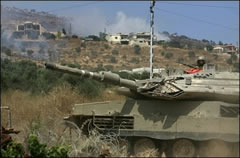
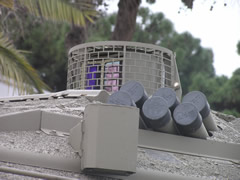
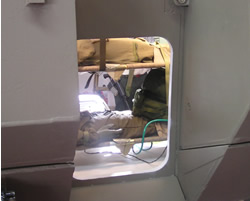
    The IDF performed various modifications to its Merkava Mk 3 tanks, specially designed for MOUT combat. The tank was fitted with marking poles, which assist the commander and driver in movement in narrow streets, minimizing damages to surrounding structures. To eliminate the chance of individuals planting explosive charges into the air intakes, wire meshes were added to close such openings, as well as protecting the optic  sights. A redesigned commander’s cupola was also installed, offering supperior visibility at higher elevation. The external 0.5″ machine gun, mounted on top of the main gun was linked to the fire control system and can now be fired by electrical actuation under armor. The IDF realized that the 0.5″ is more effective in urban warfare. A firing hatch and observation window was also opened in the rear access door, where a sniper or sharpshooter can operate, from a protected position. The tank can use less than lethal stun cartridge, designed for effect at a range of up 30 meters. Another system demonstrated for the first time at LIC-2004 is a 360 degrees omni-directional panoramic camera  alerting the crew, when closed down, on any suspicious activity around the tank. The system can be utilized in combat situations, securing tanks in positions as well as protecting armor in parking area.

    More LIC modifications were demonstrated on Merkava Mk 4 during LIC-2005. These modifications included the protection of optronics, including the commander’s panoramic sight, and the installation of a rammer in the front of the tank. Installation of an add-on belly armor protection is also optional, when required.
    Additional modifications transforming the Merkava into an armored  medical evacuation vehicle were provided for several Merkava Mk 3 tanks operating in the Gaza strip. The modification includes permanent attachments installed in the rear compartment, for two stretchers, lighting equipment and mountings for intensive care equipment, including controlled ventilation, oxygen, suction, IV and monitoring gear. The ambulance-tank enables the evacuation of two wounded soldiers on field stretchers, accompanied by two medical personnel. The modifications do not effect the combat performance of the modified tank.

    Russian RPG Dominates the World’s Man-Portable Anti-Armor Weapon Market

    As the role of a man-portable anti-armor weapon continues to morph from a dedicated anti-tank weapon to a general-purpose fire support asset for light and medium forces, the international market for man-portable anti-armor and bunker buster weapons remains robust. In its annual analysis, “The World Market for Man-Portable Anti-Armor and Bunker Buster Weapons,” the Forecast International Weapons Group expects the market will produce nearly 1.9 million weapons, worth $5.33 billion, through 2014.


    Dean Lockwood, a weapons systems analyst at Forecast International, notes the Russian RPG (Ruchnoy Protivotankoviy Granatomet) line of weapons continues to dominate this market. Under the auspices of the Rosoboronexport organization, the combined output of Russian defense contractors will account for over 68 percent of man-portable anti-armor and bunker buster weapon production, worth over 51 percent of the total market value, through 2014. The most significant production will involve the Russian RPG-26 and RPG-27. According to Lockwood, “Combined production of these two weapons will account for over 54 percent of all new production, worth over 31 percent of the total market value, through 2014.” Nevertheless, the ubiquitous RPG-7 remains the man-portable anti-armor weapon of choice worldwide. Through 2014, the RPG-7 (and the follow-on RPG-16) – as well as various licensed and unlicensed copies – will account for nearly 8 percent of all new production, worth 5.63 percent of the total market value.

    Despite the domination of the Russian RPG line, plenty of opportunities exist in this evolving market. According to Lockwood, “The combined output of the leading European players will provide only 13.96 percent of all man-portable anti-armor and bunker buster weapons production. However, these high-end European products will account for over 33 percent of the total market value through 2014.” Talley Defense Systems, the sole U.S. player to have any discernable impact on this market, will account for 5.14 percent of all production, worth 5.26 percent of the total market value, through 2014. Lockwood also notes that, unlike many other defense markets, the People’s Republic of China has virtually no impact on the international market for man-portable anti-armor and bunker buster weapons. The Chinese State Arsenals system, under the auspices of the China North Industries Corporation (NORINCO), will contribute less than 1 percent of total production and market value with its Type 69 line.

    Despite the uncertainties of a post-Cold War world and the glut of available weapons, the international market for man‑portable anti-armor and bunker buster weapons remains a vibrant, dynamic environment. Evolving threat scenarios and force structures are creating a whole new field of opportunity, as the man-portable anti-armor weapon evolves into a general-purpose fire support asset for light and medium forces in the age of asymmetrical warfare.

    Armor Protection at Eurosatory 2004

    Modern armor protection was well represented at Eurosatory. These included advanced add-on elements based on passive – composite armor, advanced reactive armor, soft kill and active protection systems. Advanced passive armor was displayed by Simula, included the introduction of the Lightweight Armor-Piercing Multi-Hit Insert (LAPMI), a follow-on to the combat proven Small Arms Protective Insert (SAPI) currently produced by the company.


    Another insert offering Level IV protection was introduced by Roulunds from Denmark. This insert is designed to endure multi-hits of 7.62×51 AP rounds and weighs approx 3kg. Ares has also demonstrated high level individual protection by for inserts made of LIBA Armor. This unique application can be tailored to meet specific threat levels by adapting the depth of the cylindrical pellets composing the LIBA module. IBD unveiled their new Advanced Modular Armor Protection (AMAP) composite armor concept, follow-on to their combat proven MEXAS. A different protection concept was demonstrated by Verseidag Indutex. The company showed Ultrax based plates, capable of stopping multiple hits of armor-piercing round up to 30mm. The specific weight of such armor is 70km/m2. The CLARA non-metallic explosive reactive armor system was also unveiled by Dynamit Nobel, this product uses Ultrax base passive armor layers and cases made of copmposites, to contain the explosive elements of the ERA.

    Active protection systems:
    Among the active protection systems on display at Eurosatory were several new systems, including the first release of information about the Active Defense System (ADS) designed by IBD. Diehl demonstrated its own active protection system – the AWiSS, proposed for the future German Army Puma tracked IFV. The soft kill countermeasure suite MUSS was displayed by both Krauss Maffei and EADS. The system was recently tested by the German Army as part of its advanced AFV protection modernization programs considered for the protection for its current and future AFVs, such as Leopard 2A5, Boxer, Fennek and Puma. A different protection concept is CARD, developed by RUAG – an enhancement of standard smoke grenade launchers into an active protection system’s element.

    Concealment & Camouflage
    As modern sensor technology is developing into new levels of sophistication, so does the art of camouflage, which now covers both visual, thermal, UV and radar wavelengths. Eurosatory 2004 provided the stage for several companies to show their current products, including MCS and Special Forces Camouflage Suite from Saab Baracuda, Flexible modular signature reduction system from Fibrotex and personal camouflage concept presented by Texplorer.

    Start – Previous – Next

    IDF Continues Merkava Mk 4 Evolution

    Heavyweights are Adapting to LIC

    Start < Page 1 of 5 >

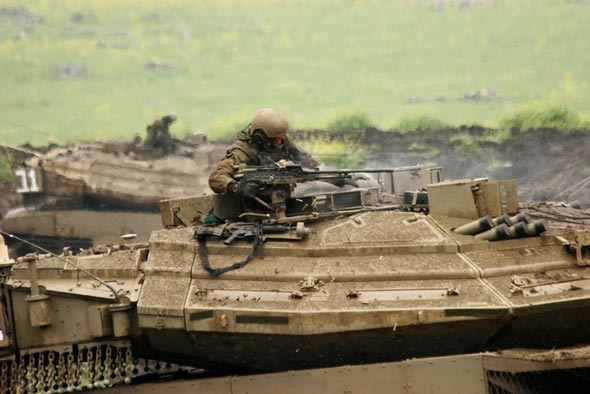
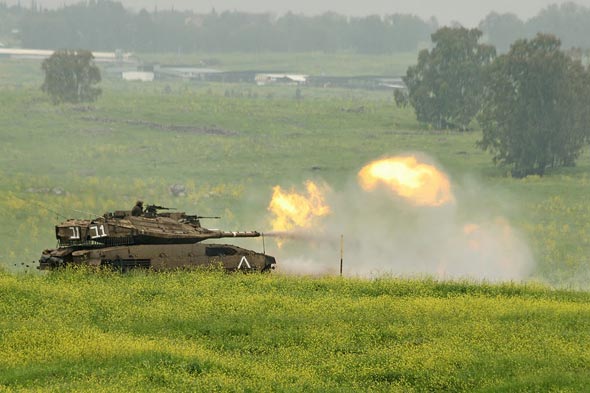
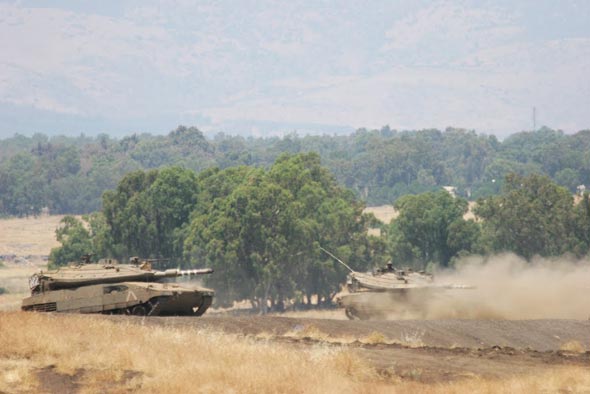
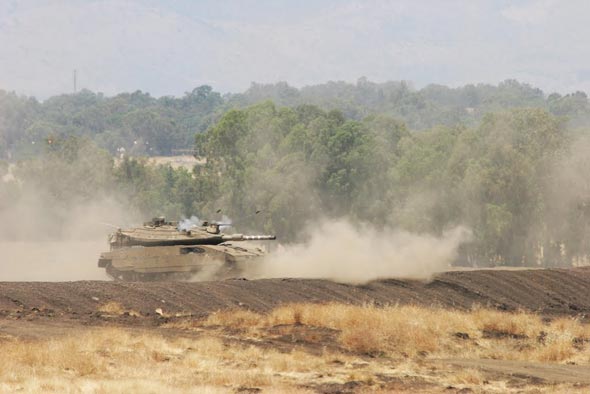
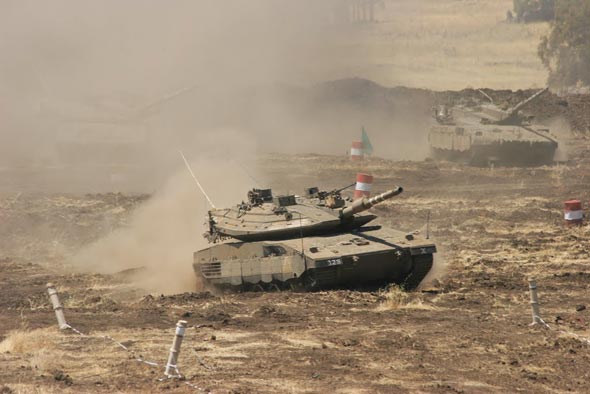
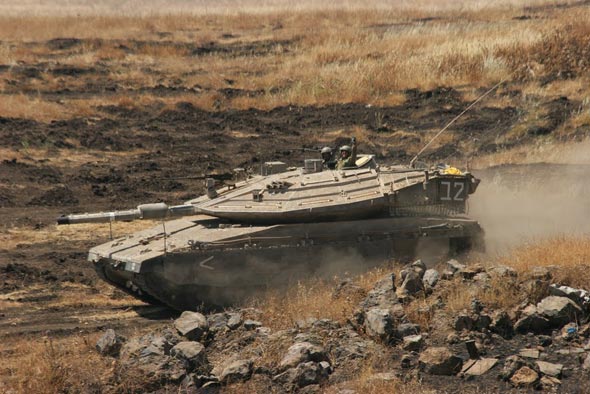
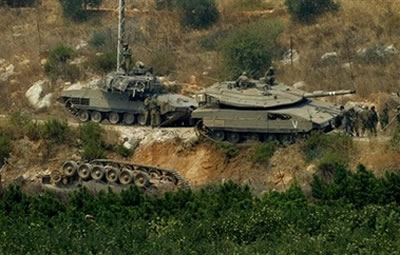
    Merkava tanks of all types, and particularly the new Merkava Mk4 are facing a serious challenge in the recent war between Israel and Lebanese Hezbolla. The tanks are operating in rocky and mountainous terrain, facing advanced anti-tank weapons, from improvised IEDs and heavy belly charges and RPGs to the latest generations ATGWs, including the Russian Metis-M and Kornet E. Some 10 tanks have been hit in the two weeks of fighting, most of them are expected to be repaired soon and return to operational status. While the prolonged and escalating asymmetric conflict took a significant toll from these tanks, in general, the Merkava clearly demonstrated its effectiveness and flexibility in carrying out various combat and support missions, while maintaining effective protection for the crew, even under extensive enemy fire.

    As a product of the late 20th century, the Merkava tank was designed for the high intensity battlefield, where tanks are confronted by enemy tanks and long range anti-tank missile mostly in frontal engagements and at long ranges. During recent asymmetric conflicts, tanks are facing new threats characterized by RPGs, missiles, land mines and IEDs as well as small arms and sniper fire. These threats can appear at extreme close ranges and from any direction, including the rear, top and sides. Operating with open hatches in this type of combat becomes highly dangerous to crews, especially to vehicle commanders who must maintain situational awareness for safety as well as operational effectiveness.

    Utilizing its highly adaptable, modular design and ‘telescopic evolution’ the Merkava is transforming from a Main Battle Tank (MBT) into a Multi-Purpose Fighting Vehicle (MPFV), characterized by a dynamically balanced blend of protection, mobility, firepower and information systems. Utilizing modular armor design, the armor protective suite of the Merkava tank has been continuously upgraded to face evolving threats. Design changes have included the addition of armored belly plates to protect the bottom and lower sides of the hull against heavy improvised ground mines after three Merkavas suffered fatal attacks by this type of mine. The hull armor has also been augmented with advanced materials, and the modular design allows quick optimization to protect against specific newly perceived threats.

    Many Merkavas have suffered repeated hits in combat engagements with Hezbolla and Palestinian forces with no casualties to the crew. All tanks were rapidly repaired and sent back into service, including one Merkava Mk 2 tank that was hit by seven different missiles in one attack (Ghajar, November 2005). In the near future, active protection systems are expected to be integrated into the tank’s armor, offering improved protection against shaped charge threats and, potentially, kinetic threats.

    Additional parts of this article:

    Read more:

    Skunk Works and XTEND Simplify Multi-Drone Command

    0
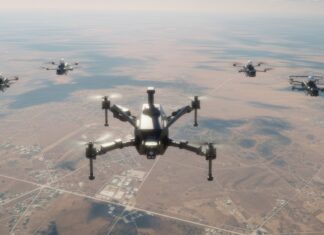
    Lockheed Martin Skunk Works® and XTEND have achieved a major milestone in JADC2 by integrating the XOS operating system with the MDCX™ autonomy platform. This technical breakthrough enables a single operator to simultaneously command multiple drone classes, eliminating the friction of mission handoffs. From "marsupial" drone deployments to operating in GPS-denied environments, explore how this collaboration is abbreviating the data-to-decision timeline and redefining autonomous mission execution.

    From Ukraine to Taiwan: The Global Race to Dominate the New Defense Tech Frontier

    0
    As traditional defense primes face mounting competition from agile “neoprimes” such as Anduril, Palantir and Helsing, the balance of innovation is shifting toward software-defined warfare and scalable, dual-use technologies, while global industry consolidation—marked by Boeing’s integration of Spirit AeroSystems and other strategic mergers—signals an intensified race to secure control over the defense technology value chain. Our Defense-Tech weekly report highlights these trends.

    Europe’s “Drone Wall”

    0
    In early October 2025, a coordinated wave of unmanned aerial system (UAS) incursions—widely attributed to Russia—targeted critical infrastructure across at least ten European nations. The unprecedented campaign exposed the fragility of Europe’s air defenses...

    Weekly Defense Update & Global Security Assessment

    0
    Executive Summary The past week (September 18-25, 2025) represents an inflection point where strategic defense concepts have transitioned from doctrine to tangible reality. An analysis of global events reveals four primary, interconnected trends shaping an...

    U.S. Air and Space Forces Push Next-Gen Programs at the AS&C 2025 Conference and...

    0
    At the 2025 Air, Space & Cyber Conference, U.S. Air Force and Space Force leaders unveiled major updates on next-generation fighters, bombers, unmanned systems, and space initiatives, highlighting both rapid innovation and critical readiness challenges as the services race to outpace global competitors. A short version is available here, with a more detailed version for subscribers.

    TADTE 2025: Reflecting Taiwan’s Strategic Themes

    0
    The Taipei Aerospace & Defense Technology Exhibition (TADTE) 2025 crystallized around four dominant strategic themes that collectively illustrate Taiwan's comprehensive approach to defense modernization amid escalating regional tensions. Based on a detailed report by Pleronix (available upon request). Includes a Podcast discussion on TADTE 2025's highlighting Taiwan's four strategic themes beyond the post's coverage.

    Iron Beam 450 Completes Testing, Soon to Join With Operational Air Defense Units

    0
    Israel’s Iron Beam 450 high-power laser system has completed final testing, marking a major leap in air defense. Developed by Rafael, it offers precise, cost-effective interception of rockets, UAVs, and mortars, and is set for IDF deployment by 2025.