
Wednesday, December 24, 2025
More
    Home Blog Page 431

    Land Warrior Infantry Combat Suite Stryker Vehicle Integration

    Start < Page 3 of 6 >

    Following evaluation of the Land warrior system over several years, the US Army decided to drastically simplify the system, making it less complex, more durable and suitable for realistic combat conditions. The resulting system is the Land warrior Stryker, or “Mounted Warrior”, now scheduled for completion and deployment by 2006. New features provide dismounted soldiers combat identification for enroute situational awareness and power recharge to reduce “friendly fire” incidents; CDA leader planning tool, weight and power reduction, scalable and tailored for operational missions, enables transition to Army Future Combat Systems interoperability, and path for technology insertions from Objective Force Warrior (OFW – currently designated Future Force Warrior  or FFW) and other sources.
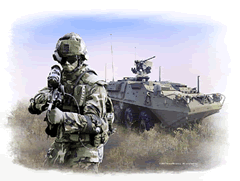
    Mounted Warrior equips Army crew members assigned to Stryker vehicles and requires the use of a helmet mounted display for hands-free viewing and increased situational awareness. Following a competitive evaluation of various helmet mounted displays, held in August 2005, the Army selected the ProView S035 monocular helmet mounted display provided by Rockwell Collins. The same design has been qualified for use in the Army’s Land Warrior program.

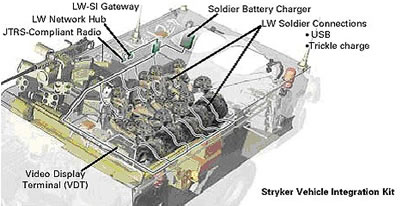
    Key capability of the system is its interoperability with the Stryker family of combat vehicles, attained through a Stryker Vehicle Integration Kit (VIK). When mounted on the vehicle, VIK provides voice intercome and radio communications, data communications and electrical power recharging connectivity through an umbilical connection. Voice and data connections are provided through an extension of the individual soldier’s personal Area Network system, providing intranetworking between team members as well as radio and data connectivity with external sources, carried through the vehicle’s intercom system. On dismounted operations, soldiers will have full communications via the vehicle’s radios and data systems, as long as they remain within wireless network’s effective range. When mounted, each soldier will also have seamless synchronization of tactical information, via data connection with the Army Battle Command System (ABCS) through the vehicle’s FBCB2 system. Prior to dismounting, the system will provide an update position of all associated elements, as received from the vehicle’s GPS system. The VIK will have battery recharging racks to replenish batteries drained during dismounted operations.
    Additional parts of this article:

    AN/MPQ-64 Sentinel Air Defense radar

    The Sentinel radar is deployed with forward area air defense units of the US Army and USMC. The radar uses an X-band range-gated, pulse-Doppler system. The antenna uses phase-frequency electronic scanning technology, forming sharp 3D pencil beams covering large surveillance and track volume. The radar automatically detects, tracks, classifies, identifies and reports targets, including cruise missiles, unmanned aerial vehicles, rotary and fixed-wing aircraft. It uses a high scan rate (30 RPM) and offers effective coverage of 40 km. The radar is designed with high resistance to electronic countermeasures (ECM) performs target acquisition, tracking and identification. Mounted on a towed platform, it can be positioned remotely from the rest of the unit, operated autonomously and communicate with the Fire Distribution Center (FDC) via wideband fiber-optic link. Under an ongoing product modernization program, Sentinel is expected operating range to 75 km and offer improved on-board target classification capability.

    Organic Air Vehicle (OAV)

    Start < Page 3 of 7 >

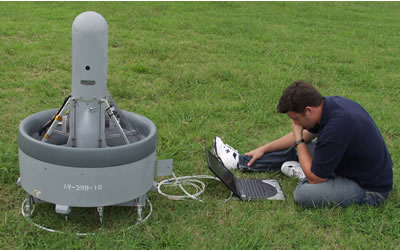
    The Future Combat System (FCS) Unmanned Air Vehicle (UAV) plan consists of a family of several types of airborne vehicles, including the Organic Air Vehicle (OAV). The OAV will be designed to operate from the battlefield, by the field troops, and provide small combat teams and individual soldiers with the capability to detect the enemy forces concealed in forests or hills, around buildings in urban areas, or in places where the shooter does not have a direct line-of-sight. OAVs can perch and stare, and essentially become sentinels for maneuvering troops. Rather than sending a soldier into harm’s way to scout a particularly potential high-risk area, the unit will be able to use the OAV instead. Typical OAV missions include reconnaissance and surveillance, path finding for friendly ground vehicles (both robotics and manned), maneuver force protection, and targeting for non-line-of-sight fire operations.

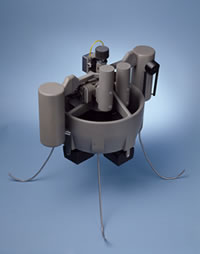
    The OAV is designed for the platoon level of the Unit of Action (UA) of the FCS equipped combat formation. The OAV is excepted to weigh +35 kg and have mission endurance of 25 minutes. It will dash at speeds of 80 km/h and higher, up to a range of up to 2,000 m, The platform will carry payloads of 3 – 3.5kg comprising of EO, IR, SIGINT, acoustic, mine detectors and communications relays. It will operate from a vehicle platform, either a Hummer or autonomous (robotic) transporter launcher. An example of the OAV is the iSTAR system.

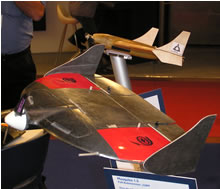
    OAVs are currently under development in two groups – a larger, Class II version and a backpackable Class I version. Three teams were awarded development contracts for Class II OAVs: GoldenEye industry team, led by Aurora Flight Sciences, also includes Northrop Grumman and General Dynamics Robotic Systems. The Honeywell led team, with team members AAI, AVID and Techsburg Inc. The third team is led by BAE Systems. The program will develop a Class-II UAV prototype for the Army’s Future Combat Systems (FCS). Combined, the three phases of the program have the potential to last 48 months and have a total program value in excess of $30 million. During the initial phase, the teams will develop a preliminary design for the OAV-II system and demonstrate the critical elements of the collision avoidance subsystem. A Phase II award decision is expected during the summer of 2005, shortly after the completion of Phase I.

    The OAV II will be fully integrated with manned and unmanned ground combat vehicles as a net-centric battlefield assets. The GoldenEye proposed system consists of the VTOL unmanned platform, that uses thrust vectoring and torsionally disconnected wings that was originally developed for an earlier DARPA program. GoldenEye will maintain range and endurance to cover the entire forward edge of battle area, and will feature advanced collision avoidance capability that will allow it to operate in dense urban areas. The aircraft will have the capability to detect targets with visual or infrared sensors and laser designate the targets. In spite of these robust capabilities, GoldenEye will not require runways or helipads to operate. Its small logistical footprint will enable it to move with the FCS small combat unit. The Honeywell version for the OAV-II is based on the 29-inch-diameter iSTAR ducted fan vehicle developed for DARPA. The UAV is controlled with Honeywell’s micro-electric mechanical systems (MEMS) technology. The vehicle is equipped with forward and downward looking video cameras that relay information to a remote ground station video terminal. Variants of these air vehicles also can be equipped with a variety of sensors, including those for biological hazard and mine detection. No details are available at present on the BAE proposal.

    A smaller version of the OAV is the class-I vehicle, considered to be soldier transportable system, able to take off and land vertically or from a very short strip. Man portable OAV-I versions are under development by the GoldenEye and Honeywell teams to provide “hover and stare” battlefield surveillance and forward scout missions. These vehicles should weigh up to 10 Kg, including 0.5 kg payload. Powered by a diesel fuel engine, it will be required to perform relatively short missions, of up to 15 minutes with a range of 1,000 meters. Operational ceiling will be 2,400m’ above sea level. The system should have a low acoustic signature of less than 75 db from a distance of 7 m’.

    Additional parts of this article:

    Miniature Aerial vehicles Research

    Start < Page 2 of 7 >

    In 1996 – 2000 DARPA initiated the Micro Air Vehicle (MAV) Program initiative, seeking to develop and test emerging technologies that could evolve into a mission capable flight system for military surveillance and reconnaissance applications. The only requirement was that the dimension of the vehicle should not exceed 15 cm. There were no other restrictions on the design. Inspired by the elegant aerodynamics of flying insects, University of California (Berkeley) engineers responded with the development of a flying robot that weighs less than a paper clip. The micromechanical flying insect (MFI), which is funded by ONR and DARPA, could be used in future search, rescue, monitoring, and reconnaissance.

    Another program is the Robofly, a stealth robotic flyer that is about the size of a fly. Squads of roboflies may one day be sent to seek out targets, collect and provide information on damage assessment, or search for chemical and biological warfare agents.

    Many variations of fixed wing, rotary wing and flapping flight concepts have all been explored. Various systems evolved from the MAV program, but none of the miniature (<15cm) vehicles devolved sofar into a full scale program. Among the systems DARPA tested were the Black Widow MAV – a 50 gr. circular platform that could loiter on a mission for half hour, and the Hoverfly VTOL 180 gr. vehicle, three axis stabilized miniature vehicle that could cruise for 13 minutes and hover for 7 minutes.

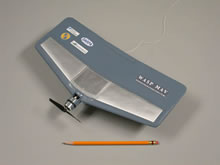
    Another platform which was recently tested by DARPA was the Wasp micro UAV – a 32 cm “flying wing” made of a plastic lithium-ion battery material that provides both electrical power and wing structure. The wing utilized the Telcordia synthetic battery material, that generates an average output of more than nine watts during flight – enough power to propel the miniature aircraft for one hour 47 minutes, a world record for MAVs – more than three times the previous record of 30 minutes set in the year 2000. Anoter design tested was the 180gr. The US Special Forces are already using micro UAV known as TACMAV, weighing 340gr.

    In 2003 Israel also entered the development of micro UAVs, with the first flight of the Mosquito 1 micro UAV. The 205 gr. MAV flew several 40 minute missions, equipped with a basic video camera. The design was improved since and an enhanced system is scheduled for testing later this year, equipped with autonomous flight capability and improved sensors. Another design – MicroStar, was developed by Sanders (currently BAE), demonstrated endurance of 30 minutes, at a mission range of up to 3 km, flying at altitudes of 50 – 300 feet. MicroStar was tested with both electric engine powered by Lithium ion batteries, as well as a 9″ diameter micro turbine jet.

    Possible missions suggested for MAVs were squad-level combat, battle damage assessment, air or artillery spotting, sensor dispersal, communications relay, and detection of mines and hazardous substances. MAVs could also be equipped with small jamming systems to confuse radar or communications equipment at very short range. MAVs capable of hovering and vertical flight would be used to scout out buildings for urban combat and counter terrorist operations. A MAV could also be included in a airman’s survival kit, used by a downed pilot to keep track of approaching enemy search parties, or relay communications to search and rescue units. Follow-on to the DARPA MAV program are the OAV.

    The current phase of the DARPA MAV program is the Advanced Concept Technology Demonstration (ACTD), ongoing in 2004 – 2005. Its goal program is to further develop and integrate MAV technologies into militarily useful and affordable backpackable systems suitable for dismounted soldier, marine, and special-forces missions. It will focus on the development of MAVs to accomplish unique military missions, particularly with regard to flight operations in restricted environments. The system will provide the small unit with militarily useful, real-time combat information of difficult to observe and/or distant areas or objects in complex topographies such as mountainous terrain with caves, heavily forested areas with dense foliage and triple canopy jungle, confined spaces (often internal to buildings) and high concentrations of civilians. The initial MAV technology development program focused on the technologies and components required to enable flight at small scales, including flight control, power and propulsion, navigation and communications. The MAV ACTD program has broadened the technology development efforts, including multi-purpose structures, advanced communications and information systems, high performance computer technology, Micro-electro-mechanical Systems (MEMS), advanced sensors, advanced electronic packaging technologies, and lightweight, efficient high-density power sources.

    Additional parts of this article:

    Miniature Aerial vehicles

    Start < Page 1 of 7 >

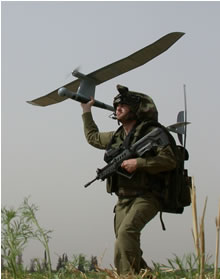
    In recent conflicts the use of Unmanned Aerial Vehicles (UAV) proliferated, in support of all types of combat missions. Today, UAVs are offering various services, including intelligence gathering for tactical, theater and national level, maintaining patrols on homeland security and maritime surveillance missions, providing various force protection coverage, in support of deployed forces in the West bank and Gaza, Iraq, Afghanistan and Iraq. On the strategic level, large UAVs are performing these missions with dedicated payloads. However, smaller, tactical UAVs are being developed to support tactical units with very short range “over the hill” and “around the corner” intelligence, and assist in force protection. While each mission requires a different profile and capabilities, the man portable Miniature Aerial Vehicles (MAV) are designed to provide reasonably good performance at an affordable price.

    To effectively support the field troops, smaller UAVs are designed, ranging from backpackable systems to insect-sized “mesicopters”, and miniature “smart dust” sensors. They can be launched by hand, deployed by larger UAVs, or ejected from artillery or mortar projectiles, as expendable sensors. These systems are broadly designated as Miniature Aerial Vehicles (MAV). Current systems are relatively large for a “micro” designation. However, new electro-opto-mechanical integrated microSYSTEMs currently in research and development will enable these systems to be much smaller, and operate autonomously in concert, to monitor and sense the battlefield, and further than that engage and defeat a wide variety of hostile forces across the entire spectrum of conflict.

    Additional parts of this article:

    SST Step-Stare EO Payload

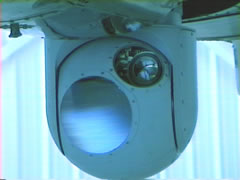
    A lightweight EO payload, WESCAM 11SST (Step-Stare Turret) offers a unique capability to rapidly cover a large area with is its “step-stare” function. The payload is equipped with gimbaled, tri-sensor stabilized bench designed for high speed step-stare functioning (>120deg./sec slew rate). The sensor captures seven video frames per second, images are compressed and streamed to the control station, where they are tiled together to create a hi-resolution digital image of a large area. 11SST covers up to 300sq kilometers per hour, from an altitude or distance of 4,000meters. 
    The payload can accommodate an optional geo-positioning and image processing package for flexible automatic positioning and automatic target tracking. The payload is equipped with 3rd generation 3-5nm InSb FLIR, a color daylight CCD sensor with x14 zoom lens (2.2-28.5mm) and an eyesafe laser rangefinder.

    Dynamic Quarantine Program

    Countermeasures against computer worms

    The dynamic quarantine program, managed by DARPA, is developing new capabilities for automatic detection and respond to worm-based protecting enterprise networks. As the protection system studies the threat, it will determine the worm’s propagation and epidemiology, and provide off-line rapid response forensic analysis of malicious code to identify its capabilities, modalities, and future behavior.

    Surveilling Miniature Attack Cruise Missile (SMACM)

    SMACM is a long range, long endurance, expendable unmanned air vehicle (UAV) that can be used in a reconnaissance role or in an armed version to attack moving or stationary targets. SMACM will be launched from outside the range of enemy air defenses from attack aircraft. The weapon incorporates a J45G turbojet engine, two-way datalink, multimode warhead and an all weather seeker.

    The weapon is loaded with four powered LOCAAS weapons configured for the size and shape of a Small Diameter Bomb (line 3), will be carried internally under a BRU-61/B weapon’s rack to be used with F/A-22 and F-35 aircraft as well as JUCAS unmanned combat aircraft. The six foot long, 142 pound weapon will be equipped with larger wings to extend its range to 250 nm. It will be operable from all types of combat aircraft and UAVs. The SMACM vehicle offers a choice of two seekers – a Tri-Mode seeker combining milimeter wave RF radar, an Imaging Infrared (IIR) and semi-active laser (SAL) – similar to the seeker used for the JCM program. The three modes provide an all weather capability, and when seeker data is fused, it can categorize a target.

    The second seeker, known as “Tri-Star Seeker” is a combination of MMW, active LADAR and SAL.When coupled with its automatic target recognition algorithms, Tri-Star technology provides a high probability of detection of tactical military vehicles and reliable combat ID. 3D images give the LADAR an effective capability to identify targets in cluttered environments, including detection of targets under camouflage or tree cover.

    FV-432 Modernization

    An armor upgrade for the British Army FV432 armored personnel carrier was developed by RAFAEL. While the Warrior has replaced it in the troop carrying role in the late 80s, many FV432 series vehicles remained in service operated as ambulances, command posts, mortar carriers and support vehicles. Recent extension of the FV432 service phase-out date from 2014 to 2020 required significant modernization of the vehicle. Modernization of 500 is currently planned, including automotive and protection improvements.

    At DSEi 05 RAFAEL displayed an FV432 installed with appliqué reactive armor, RCWS-30 weapon station and thermal beacon for blue-force identification. The armor suit proposed by RAFAEL utilizes new-generation insensitive reactive armor, which is already produced for the US Army Bradley AFV and Israeli Army M113 series APC. The new insensitive reactive armor is optimized to provide all-round protection against shaped charge warheads including PG-7 rockets, as well as kinetic (KE) armor-piercing projectiles and high speed fragments delivered by explosions of artillery, mortars or roadside bombs and IED. The explosive element uses low-burning rate material that behaves like inert material during transportation, storage and maintenance but releases its full energy when hit by shaped charge warhead. The US Ministry of Transportation has classified the explosives in RAFAEL’s reactive armor as an “Extremely Insensitive Detonating Substance – EIDS).

    For improved firepower, the FV432 is provided with the latest-generation Rafael Remote Controlled Weapon Station 30 (RCWS 30) armed with a stabilised US ATK Gun Systems Company 30mm MK 44 cannon. A 7.62mm MG is mounted co-axial, and installed on the left side is a two-round Spike LR missile launcher to engage tanks and other targets at long range.

    Joint Land Attack Cruise Missile Defense Elevated Netted Sensor System

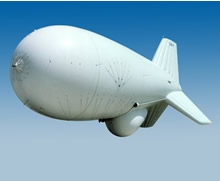
    Joint Land Attack Cruise Missile Defense Elevated Netted Sensors System (JLENS) utilizes a tethered early warning and surveillance sensor installed in an aerostat, positioned at medium altitude. Such system provides over-the-horizon detection and tracking of aircraft, helicopters, UAVs and primarily – the most illusive cruise missiles. JLENS will be positioned at an altitude of up to 15,000 feet for extended periods, to elevate radar, ESM and communication systems and networking assets which will offer wide-area surveillance and tracking of land attack cruise missiles. Such targets may go undetected by surface-based sensors because of terrain masking and line-of-sight locations of targets. Other sensors on board will also detect and tracking of surface moving targets. The system will effectively cover and track targets over 360-degree, providing an integrated air picture via multiple sensors and command, control, communications and intelligence (C3I) networks. The sensor suite consists of a surveillance radar (SR) and a precision track and illumination radar (PTIR). The SR provides a long-range air picture enhanced by identification friend or foe. The PTIR is a steerable, lightweight array capable of tracking multiple targets in a sector. The JLENS prioritizes remote and local tracks autonomously or accepts external requests for precision tracking and engagement support. An elevated sensor such as JLENS can support ground based air defense units, such as Patriot, Aegis/Standard Missile and SLAMRAAM. The large area coverage and multiple target tracking capability enable such system to support both surface-to-air and air-to-air missile engagements, by relaying updated intercept solutions to airborne missiles or via their launchers, in engage-on-remote and forward pass operating modes. In late November 2003, the Army announced its intention to redeploy the Rapid Aerostat Initial Deployment (RAID) force protection aerostat from Afghanistan to Iraq. A different concept of an untethered airship is pursued by Lockheed Martin. The program cost is estimated at US $149 million with completion expected by November 2010.

    DTACT – Mission Planning & Rehearsal Tool

    DTACT provides mission planning and rehearsal tools designed specifically to illustrate urban terrain. The system utilizes an integrated network of wireless communications units attached to each member of the combat team, computer terminals and PDAs at leaders and command levels, and integrated visualization and battle management tools designed to control, evaluate and debrief training exercises and operations.

    The system uses an integrated tactical presentation showing the tactical plan and positions of each team member on aerial photos or maps, a tree-shaped ORBAT chart showing the status of each combatant, a reference map showing the combat zone relative to the surrounding area, and the battle time progress shown in gant  graph view, which compares planning to actual execution of operations.

    Software 3D visualization features include multiple angle visualization, line of sight calculation, location optimization for observation posts, firing positions and sensor, planning axis of advance generating video simulation of selected routes. Other features include determination of boundary lines, safety limits etc. A comprehensive Exercise Manager capable to plan, monitor and control any exercise. DTACT Exercise Manager supports the blue and red forces with cellular based communications, wireless LAN or any other form of communications capable of high data rate for transferring images and video. All participants use PDAs with GPS which monitor the exercise and track force location, status and actions. After Action review (AAR) are continuously recorded, with all messages, audio and video used. The system can interface with helicopters and ground sensors as well as other training aids such as MILES systems

    PR 4G Combat Net Radio & F@stnet IP Networking Applications

    New generation tactical radios have a central role in the creation of central Information Dominance. Deploying multi-mission software programmable CNR radios provide the core system for the new digital battlefield networks. Tactical Internet radios are required to maximize data throughput whilst maintaining range, connectivity and resistance to jamming in a highly disrupted environment.

    Current versions of PR4G are provided with F@stnet protocol, supporting up to 64 kbps data transfer waveform, retaining the system’s frequency hopping and anti jamming modes. The system also supports a proprietary frequency hopping Multiplex mode (called SIVD) offering the capability of simultaneously and independently transferring secure Voice and Data communications in the same radio (without prioritizing voice over data or vice versa). The radio also supports standard IP/Ethernet interface makes through the F@stnet a tactical internet protocol. Thales has also enabled other information services with PR4G F@stnet including Short Messages Service (SMS), Situational Awareness and Ad Hoc Networking capabilities.

    Condition Based Maintenance to Support US Army Combat Vehicle Fleet

    The US Army will field a comprehensive “enterprise level” maintenance information system for its ground combat vehicle fleet. The system will integrate existing test and diagnostic equipment to develop fleet wide logistic and situational awareness, implementing modern Condition Based Maintenance service that will enhance the operation and effectiveness of the tactical and combat vehicles of the current force.

    DRS is developing the Condition Based Maintenance Information system under a US$10 million contract awarded by the for the U.S. Army Tank Automotive and Armaments Command Life Cycle Management Command (TACOM LCMC). The system will enable monitoring, recording and dissemination of operating parameters from individual vehicles to enterprise logistics network that can react to real or anticipated failures in a timely manner. Subsequently apply a set of decision-support tools to conduct logistics maintenance analyses for various combat vehicles, including Bradley Fighting Vehicles, Abrams Main Battle Tanks and Family of Medium Tactical Vehicles (FMTV).

    DRS already produces automatic test equipment (ATE) and integral diagnostic systems designed to diagnose and repair electronic components on Army M1A1, M1A2 and M1A2 System Enhancement Program (SEP) Abrams Main Battle Tanks, Bradley M2/M3 Fighting Vehicle Systems, and USMC’s Abrams tanks and Light Armored Vehicles (LAVs).

    B-52H Stratofortress

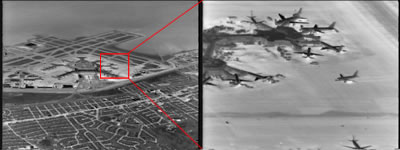
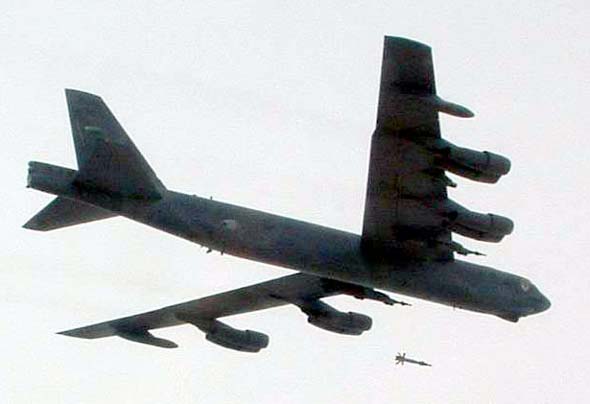
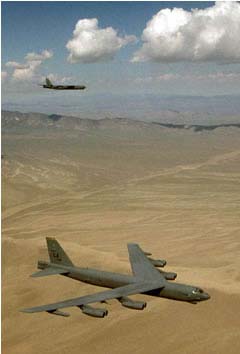
    The B-52 also has a significant standoff capability but like the B-1B, it is usually operated after total air superiority has been established. B-52 bombers are becoming a valuable assets for close air support operations. This old workhorse can maintain position high over the battlefield, loaded with precision guided weapons which are employed against individual targets designated by special forces teams on the ground.

    Targets can be designated by laser for pinpoint attack by laser guided weapons or by GPS coordinates, which are used to guide JDAM or JSOW weapons. B-52s can also carry target designation equipment, such as the Litening II targeting pod, for self-designation of targets for autonomous engagement. The B-52H is currently undergoing a mid-life update program which focuses mainly in avionics improvements.

    December 8, 2006: Boeing will provide Alternate Mission Equipment (AME) avionics for existing B-52s, to support the introduction of new systems to support the AGM-142 Have Nap missile and other guided weapons on board. The AME doubles the size of the current display, which is associated exclusively with the AGM-142. It provides a color monitor, compared to the current black and white, and will enable the B-52 to utilize laser guided weapons in a way that is not available today.

    B-52H are receiving regular updates to maintain its effectiveness at war. Of particular importance is the replacement of outdated avionics with new systems. These programs replace very expensive systems that are no longer available with advanced avionics, based on off-the-shelf elements. Sometime these new boxes are derived from other systems, yielding dramatic savings in costs and maintenance while improving performance. Among the recent modernizations was the introduction of new defensive system, which saved valuable space and power, clearing space for new systems in the rear cockpit.

    Provided with virtually unlimited carrying capacity and space, the bomber is considered as a useful platform to host a range of intelligence collection ‘non-traditional ISR’ (NTISR) systems, and communications support offering direct access to supported elements on the ground. While the bomber itself is not considered for penetrating missions, its ability to remain on station for extended missions, carry massive loads of weapons, precision attack sensors (targeting pods) and support systems make it an indispensable support asset for asymmetric operations worldwide.

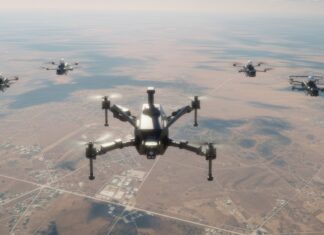
    Skunk Works and XTEND Simplify Multi-Drone Command

    0
    Lockheed Martin Skunk Works® and XTEND have achieved a major milestone in JADC2 by integrating the XOS operating system with the MDCX™ autonomy platform. This technical breakthrough enables a single operator to simultaneously command multiple drone classes, eliminating the friction of mission handoffs. From "marsupial" drone deployments to operating in GPS-denied environments, explore how this collaboration is abbreviating the data-to-decision timeline and redefining autonomous mission execution.

    From Ukraine to Taiwan: The Global Race to Dominate the New Defense Tech Frontier

    0
    As traditional defense primes face mounting competition from agile “neoprimes” such as Anduril, Palantir and Helsing, the balance of innovation is shifting toward software-defined warfare and scalable, dual-use technologies, while global industry consolidation—marked by Boeing’s integration of Spirit AeroSystems and other strategic mergers—signals an intensified race to secure control over the defense technology value chain. Our Defense-Tech weekly report highlights these trends.

    Europe’s “Drone Wall”

    0
    In early October 2025, a coordinated wave of unmanned aerial system (UAS) incursions—widely attributed to Russia—targeted critical infrastructure across at least ten European nations. The unprecedented campaign exposed the fragility of Europe’s air defenses...

    Weekly Defense Update & Global Security Assessment

    0
    Executive Summary The past week (September 18-25, 2025) represents an inflection point where strategic defense concepts have transitioned from doctrine to tangible reality. An analysis of global events reveals four primary, interconnected trends shaping an...

    U.S. Air and Space Forces Push Next-Gen Programs at the AS&C 2025 Conference and...

    0
    At the 2025 Air, Space & Cyber Conference, U.S. Air Force and Space Force leaders unveiled major updates on next-generation fighters, bombers, unmanned systems, and space initiatives, highlighting both rapid innovation and critical readiness challenges as the services race to outpace global competitors. A short version is available here, with a more detailed version for subscribers.

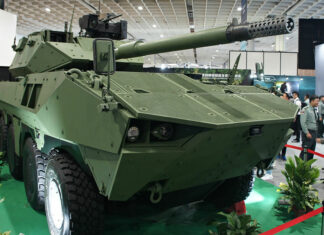
    TADTE 2025: Reflecting Taiwan’s Strategic Themes

    0
    The Taipei Aerospace & Defense Technology Exhibition (TADTE) 2025 crystallized around four dominant strategic themes that collectively illustrate Taiwan's comprehensive approach to defense modernization amid escalating regional tensions. Based on a detailed report by Pleronix (available upon request). Includes a Podcast discussion on TADTE 2025's highlighting Taiwan's four strategic themes beyond the post's coverage.

    Iron Beam 450 Completes Testing, Soon to Join With Operational Air Defense Units

    0
    Israel’s Iron Beam 450 high-power laser system has completed final testing, marking a major leap in air defense. Developed by Rafael, it offers precise, cost-effective interception of rockets, UAVs, and mortars, and is set for IDF deployment by 2025.