

Wednesday, December 31, 2025
More
    Home Blog Page 208

    Australia Defense Update


    Other Regional Defense Updates:
    Afghanistan | Australia | Brunei | Bangladesh | China | India | Indonesia | Japan | Malaysia | Myanmar |
    North Korea | Pakistan | PhilippinesSingapore | South Korea | Sri-Lanka | Taiwan | Thailand | Vietnam.


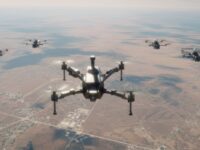
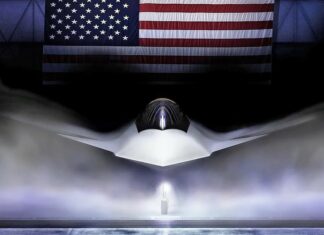
    • Skunk Works and XTEND Simplify Multi-Drone Command Dec 18, 2025Skunk Works and XTEND Simplify Multi-Drone Command
      Lockheed Martin Skunk Works® and XTEND have achieved a major milestone in JADC2 by integrating the XOS operating system with the MDCX™ autonomy platform. This technical breakthrough enables a single operator to simultaneously command multiple drone classes, eliminating the friction of mission handoffs. From “marsupial” drone deployments to operating in GPS-denied environments, explore how this collaboration is abbreviating the data-to-decision timeline and redefining autonomous mission execution.
    • From Ukraine to Taiwan: The Global Race to Dominate the New Defense Tech Frontier Oct 17, 2025From Ukraine to Taiwan: The Global Race to Dominate the New Defense Tech Frontier
      As traditional defense primes face mounting competition from agile “neoprimes” such as Anduril, Palantir and Helsing, the balance of innovation is shifting toward software-defined warfare and scalable, dual-use technologies, while global industry consolidation—marked by Boeing’s integration of Spirit AeroSystems and other strategic mergers—signals an intensified race to secure control over the defense technology value chain. Our Defense-Tech weekly report highlights these trends.
    • Europe’s “Drone Wall” Oct 12, 2025Europe’s “Drone Wall”
      In early October 2025, a coordinated wave of unmanned aerial system (UAS) incursions—widely attributed to Russia—targeted critical infrastructure across at least ten European nations. The unprecedented campaign exposed the fragility of Europe’s air defenses and triggered a continent-wide response now known as the “Drone Wall” initiative. The new report, Drone Wall: Europe’s Response to the October 2025 Drone Incursions, offers a detailed account of these events and their far-reaching implications for defense strategy, procurement, and industry dynamics. The report traces the evolution from initial attacks to the rapid formation of a unified European effort to counter the growing drone threat. A Strategic Wake-Up Call The October attacks underscored a new reality of hybrid warfare: adversaries can achieve strategic effects using low-cost drones that overwhelm traditional defenses. Expensive missile systems and fighter aircraft were forced into reactive roles—unsustainable against swarms of expendable aerial threats. The Drone Wall initiative emerged as a direct response. Backed by the European Commission, NATO, and several EU member states, the program aims to establish a multi-layered, networked defense grid across the continent, integrating detection, electronic warfare, and kinetic interception capabilities. Inside the Report The Drone Wall study examines: The chronology and scope of the European drone incursion campaign. The tactics, systems, and motivations behind the attacks. The operational and psychological impact on European states. Identified defense gaps and the architecture of the “Drone Wall” response. The complex procurement framework involves the EU, member states, and NATO. Market opportunities for counter-UAS (C-UAS) systems, radars, and C2 integration. Industry Implications The creation of the Drone Wall represents the most significant market opportunity for C-UAS technology in a generation. Demand is rising for integrated, affordable, and scalable systems capable of delivering the full kill chain—from detection to interception—within networked command-and-control frameworks. Firms that can offer cost-effective, multi-layered, and interoperable solutions, or partner with local European manufacturers, stand to benefit most. The report highlights the ...
    • Weekly Defense Update & Global Security Assessment Sep 25, 2025Weekly Defense Update & Global Security Assessment
      Executive Summary The past week (September 18-25, 2025) represents an inflection point where strategic defense concepts have transitioned from doctrine to tangible reality. An analysis of global events reveals four primary, interconnected trends shaping an increasingly contested international order. #1 – European defense postures are materially hardening, with a strategic shift from deterrence by reinforcement to deterrence by denial, led by Germany’s military expansion and a firmer NATO stance on airspace violations. #2 – the character of future warfare is rapidly maturing, driven by the industrial-scale development of collaborative combat aircraft (CCAs), the democratization of long-range precision strike capabilities, and a doctrinal revolution in armored warfare inspired by the conflict in Ukraine. #3 – The Middle East is undergoing a profound realignment of security partnerships, catalyzed by Israeli technological breakthroughs in laser defense and a crisis of confidence in the U.S. security umbrella, culminating in a historic mutual defense pact between Saudi Arabia and Pakistan. #4 – The Indo-Pacific theater is characterized by a sharpening of strategic competition, with the U.S. and its allies operationalizing new trilateral security structures while China intensifies its multifaceted campaign of coercion against Taiwan. Underpinning these shifts is a renewed global focus on the industrial and organizational foundations of military power, signaling that nations are now making the hard investments and difficult choices required to posture for a more dangerous and uncertain future. You are invited to listen to the overview of this week’s report in the podcast. .
    • U.S. Air and Space Forces Push Next-Gen Programs at the AS&C 2025 Conference and AFA Exhibition Sep 24, 2025U.S. Air and Space Forces Push Next-Gen Programs at the AS&C 2025 Conference and AFA Exhibition
      At the 2025 Air, Space & Cyber Conference, U.S. Air Force and Space Force leaders unveiled major updates on next-generation fighters, bombers, unmanned systems, and space initiatives, highlighting both rapid innovation and critical readiness challenges as the services race to outpace global competitors. A short version is available here, with a more detailed version for subscribers.
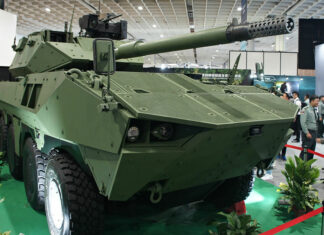
    • TADTE 2025: Reflecting Taiwan’s Strategic Themes Sep 22, 2025TADTE 2025: Reflecting Taiwan's Strategic Themes
      The Taipei Aerospace & Defense Technology Exhibition (TADTE) 2025 crystallized around four dominant strategic themes that collectively illustrate Taiwan’s comprehensive approach to defense modernization amid escalating regional tensions. Based on a detailed report by Pleronix (available upon request). Includes a Podcast discussion on TADTE 2025’s highlighting Taiwan’s four strategic themes beyond the post’s coverage.
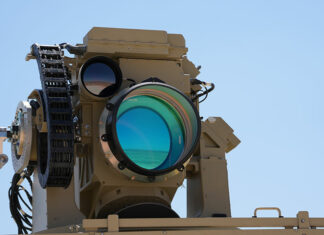
    • Iron Beam 450 Completes Testing, Soon to Join With Operational Air Defense Units Sep 17, 2025Iron Beam 450 Completes Testing, Soon to Join With Operational Air Defense Units
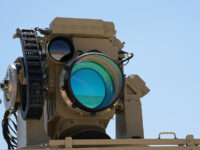
      Israel’s Iron Beam 450 high-power laser system has completed final testing, marking a major leap in air defense. Developed by Rafael, it offers precise, cost-effective interception of rockets, UAVs, and mortars, and is set for IDF deployment by 2025.
    • WB Group Unveils Future Task Force Concept at MSPO Sep 4, 2025WB Group Unveils Future Task Force Concept at MSPO
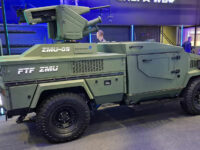
      WB Group unveiled its Future Task Force (FTF) at MSPO, a new warfighting concept integrating manned, unmanned, and autonomous systems. Combining hybrid-electric vehicles, loitering munitions, and AI-enabled command tools, the FTF is designed to sustain firepower and autonomy while reducing battalion size and logistical footprint.
    • Poland’s Defense Industrial Revolution Takes Center Stage at MSPO Sep 1, 2025Poland's Defense Industrial Revolution Takes Center Stage at MSPO
      MSPO 2025 in Kielce is the premier showcase of Poland’s historic military expansion. Driven by a defense budget exceeding 4.7% of GDP, the exhibition highlights Warsaw’s ambition to become a leading European military power through its “Polonization” industrial strategy, a pivot to unmanned systems, and diverse global partnerships that are reshaping NATO’s eastern flank.
    • Turkey Forges Military Identity Amidst Regional Power Dynamics Shift Aug 31, 2025Turkey Forges Military Identity Amidst Regional Power Dynamics Shift
      Turkey is reshaping its defense identity with record exports, KAAN fighter milestones, ALTAY tank deliveries, and the multi-layer “Steel Dome” air-defense concept. IDEF 2025 showcased these advances, alongside naval exports and unmanned systems that position Ankara as an increasingly assertive defense actor regionally and globally.
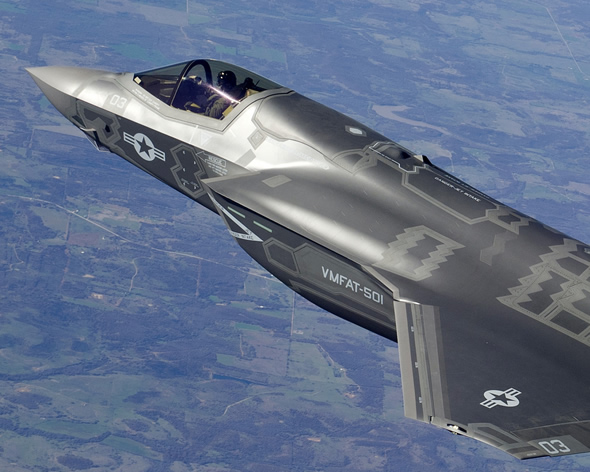
    US Affirms Commitment to the F-35 Joint Strike Fighter

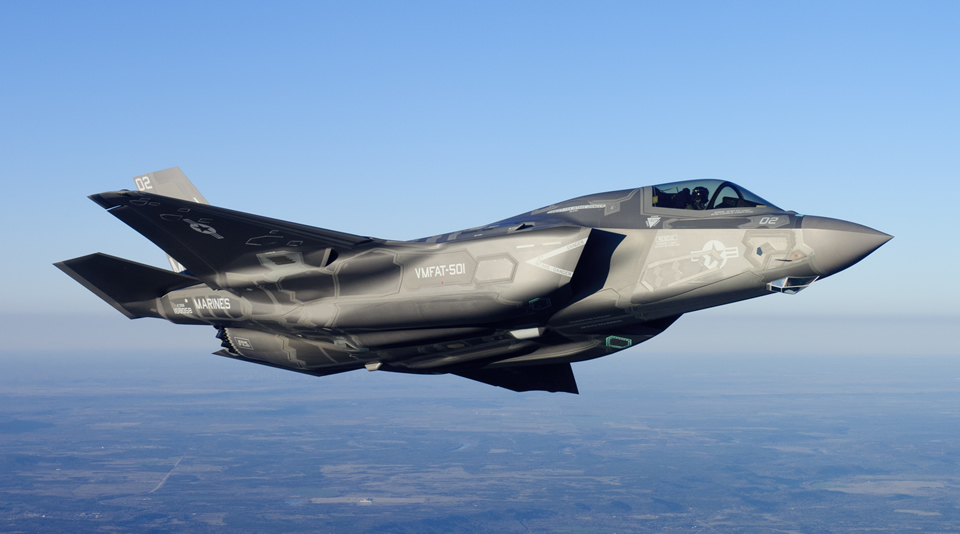
    F-35B7
    Lockheed Martin test pilot Bill Gigliotti flies F-35B production aircraft BF-7 on its first flight Dec. 21, 2011. The short takeoff/vertical landing aircraft will be delivered to the U.S. Marine Corps after completing initial checkout flights at Lockheed Martin’s facility in Fort Worth, Texas. Photo: Lockheed Martin

    US Secretary of Defense Leon Panetta announced Friday that the United States remains committed to the further development of the Marine Corps’ version of the F-35 Joint Strike Fighter.  In an address at Naval Air Station Patuxent River, Maryland, Mr. Panetta stated his belief that the F-35 is a vital and integral element in the US strategy to maintain and enhance the level of air superiority the nation now enjoys.


    Mr. Panetta’s support for the F-35 hinges on his belief that the problems that have plagued the highly advanced fifth-generation stealth aircraft in the past can be overcome and resolved satisfactorily.  The secretary declared in his comments that the US military would continue to dedicate resources to the future development of “cutting-edge” weapons and weapon systems. He also made it clear that the F-35 was not yet completely safe from future changes.
    During his visit to Patuxent River, Mr. Panetta took the controls of the aircraft in a flight simulator and was briefed on the present status of progress being made in correcting the technical difficulties encountered in the Navy and Marine Corps models of the aircraft.

    Production and development delays, cost overruns, and technical glitches have plagued the F-35 almost from the day of its inception. During the ten years the aircraft has been in development, the overall cost has risen sharply from $233 billion to an estimated $385 billion. It is now the US military’s most expensive weapon’s program in operation. Some analysts fear the F-35 may eventually cost the government more than $1 trillion in its expected 50-year lifespan.

    Secretary Panetta is widely expected to formally confirm that the F-35 is a “high-priority” program sometime next week. It remains possible, given the high cost and fiscal constraints, that Mr. Panetta may direct that F-35 production be slowed down to save money while still remaining committed to purchasing the total number of aircraft initially envisioned.

    Lockheed Martin is contracted to build three variants of the F-35 – one variant each for the Navy, the Marines, and the Air Force. The three variants are planned to replace the older F-16 Falcons, F/A-18 Hornets, EA-6B Prowlers, and the AV-8B Harriers.  Several key American allies are also expected to buy multiple copies of the fighter.

    F-35 is Effectively Off Probation

    One year ago, the Marine variant of the F-35 was placed on “probation” as a result of the multiple technical problems developers were experiencing.  Mr. Panetta’s address of Friday effectively removed that probation and any immediate threat that the aircraft would be cancelled.

    Lifting the probation is of no real practical importance in the F-35 program, but it does give the program an official “go-ahead” of some real political importance.

    The Marine variant of the aircraft has been troubled by technical difficulties fitting a set of doors on the upper surfaces of the aircraft designed to increase the flow of air into the engines. Tail hook problems impacting both Navy and Marine variants have also vexed engineers. It seems that these problems have been solved, but corrective action has not been fully implemented yet.

    Praise for lifting the probation was quickly forthcoming from Commandant of the Marine Corps, General James Amos, and from the manufacturer of the Marine variant’s engines, Rolls-Royce.

    General Amos also announced on Friday that the Marine Corps would introduce the new aircraft into operating squadrons in a responsible manner and only when the aircraft is deemed fit for duty.  The first production F-35’s for the Marine Corps were delivered to a training unit based at Eglin Air Force Base in Florida earlier in January.


    While it is evident the F-35 is not quite ready for “primetime” it is now getting some badly needed official backing that is likely to also ease some misgivings expressed by those of America’s allies most anxious to acquire a fifth-generation stealth aircraft that currently has no equal in the world.  Only time will tell what will happen in the future.

    Cassidian, Rheinmetall form Unmanned systems’ JV

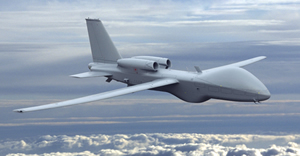
    Talarion MALE UAS from Cassidian.
    Talarion MALE UAS from Cassidian.

    Rheinmetall and Cassidian are pooling their Unmanned Aerial Systems (UAS) activities in tactical, Medium-Altitude Long Endurance (MALE) UAS and cargo loading systems. The two companies have agreed form a joint venture (JV) where EADS’ military division Cassidian will hold 51 percent and Rheinmetall own the remaining 49 percent of the shares. Both companies are active in the UAS business for many years, research, development, production and support of technologies and systems addressing German military requirements. In recent years the two companies have spent significant R&D efforts in new systems developments, but eventually opted to offer their customers platforms and systems provided by other equipment manufacturers (OEM). The newly announced cooperation will consolidate the offering of the two companies to gain customer support.

    Getting its UAS business right will be critical for Cassidian, as it expend the potential of manned fighters (namely Eurofighter Typhoon). With alternative programs including the Talarion and Barracuda stalling to gain European government support, Cassidian needs new programs and marketing traction to secure its future. The JV will also give Rheinmetall’s Airborne Systems product unit access to broader development resources and international market access opportunities that had not so far existed to any comparable extent.

    According to Stefan Zoller, Cassidian Chief Exceutive Officer, the JV will establish the company’s offering “a full product range of customized solutions, including tactical UAS and UAS for medium- and high-altitude.” He said the JV is now positioned as “Europe’s leading provider of Unmanned Aerial Systems”. Klaus Eberhardt, Chairman of the Executive Board of Rheinmetall AG, emphasized the Bremen location of the JV will be securing about 160 positions of Rheinmetall’s employees, to continue supporting the company’s unmanned reconnaissance system KZO (Kleinfluggerät Zielortung) for the German Armed Forces. The site also supports the Heron UAS operated as part of the SAATEG aerial recce system for the German Bundeswehr.

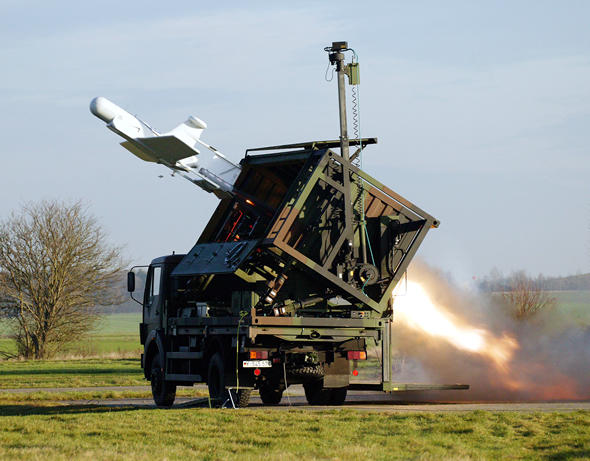
    KZO is a ground launched, tactical UAV equipped with high-performance sensors used for target acquisition. Harop, a loitering attack drone developed by IAI offers the actionable segment of the WABEP system, through precision engagement. Photo: Rheinmetall defence

    America’s Misguided Foreign Policy Encourages Iran’s Quest for Hegemony

    “We cannot live in a situation where Iran has nuclear weapons and we don’t. It’s as simple as that,” a Saudi kingdom official told the British ‘Guardian’ newspaper. Saudi Arabia would then be forced to seek atomic weapons if Iran became nuclear-armed.”

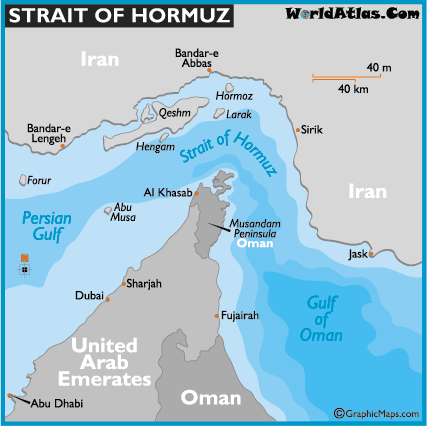
    The biggest American error was in ousting Saddam Hussein, who may have been a bloodthirsty tyrant, but also the ardent stabilizer of the secular middle east- holding Iranian threat to the Gulf states in check. The “Arab spring” could eventually happen, but the Islamic extremists would not have gained too much power with Saddam’s iron rule in Iraq still intact. The US has now withdrawn from Iraq, allowing for internal sectarian violence manipulated by Tehran and a developing all-out armed conflict between the Saudi Arabia/Sunni and Iran/Shia world. While the west is keeping Iran at bay through economic sanctions imposed on trade and oil export, Tehran threaten to close the Straits of Hurmoz, therefore escalating the crisis beyond control.

     
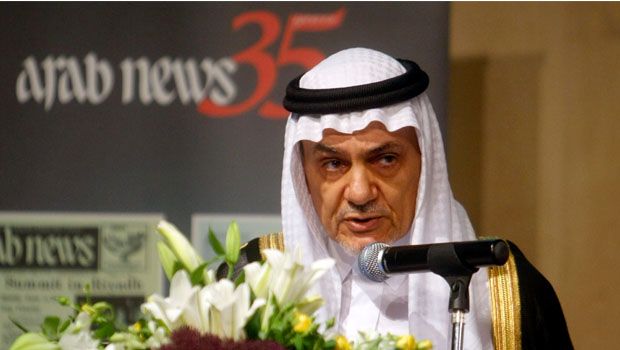
    Prince Turki Al-Faisal

    Prince Turki al-Faisal, a US-educated former Saudi intelligence chief and former Saudi envoy to the US, has yesterday issued a stern warning to Iran. According to him, the Iranian escalation will lead to “misadventure”, stressing the readiness of the Arab Gulf States to use all options available to defend their interests.


    Misled by intentionally feeding disinformation to US intelligence by Iraqi dissidents, the Washington administration emerged on a needlessly wasteful campaign, not only causing internal havoc, with unforeseeable ethnic results, but eventually creating a highly dangerous situation in one of America’s most strategic regions, the Persian Gulf, resuscitating Iranian ambitions for Shi’ite hegemony on the Sunni Middle East. The scar that remains etched on American public opinion in the wake of the war, which was started on the basis of lies and deceit has also left some 5,000 coalition troops dead, with tens of thousands wounded.

    An inevitable aftermath, resulting from America’s misguided foreign policy is the current domino effect on the Arab revolt, which further fosters Iran’s effrontery in the Gulf, any such brazen insolence the Tehran Mullah’s never dared to attempt before, in face of US overwhelming military supremacy in this highly strategic and sensitive region.

    In fact, Iran had actually stopped its nuclear ambitions in its tracks, as soon as Operation Iraqi Freedom started, with its massive demonstration of “Shock and Awe” severely reverberating in Tehran. Almost ten years later, American troops have left Iraq to its unsecure future, virtually at mercy of Tehran Mullahs. Moreover, President Obama’s premature announcement of US withdrawal from Afghanistan has eliminated two massive threats, which haunted Iran’s Ayatollahs for decades and will now encourage them toward further audacious attempts in the Gulf.

    Judging by the turbulence that engulfed the Middle East since January 2011, President  Obama may have ‘opened the floodgates of hell’ in the Middle East.  An inter Islamic Shi’ite-Sunni war, which has been in the offing for over 800 years, will most probably come next onto the scene, with  Jewish Israel, although non-relevant in this inter-ethnic struggle, drawn unwillingly into an ultimate nuclear catastrophe.

    Inevitably, sensing a war situation with Iran has already created high fever pitch in Israel. Receiving top priority in the political agenda, regarding a nuclear attack from Tehran existential is driving the demand for an increased defense budget to the limit of national capabilities. President Mahmoud Ahmadinejad’s repeated rhetoric, warning to eradicate Israel from the map has contributed to an already nervous public attitude, with memories of the holocaust still alive with many Israelis.

    Unfortunately, as history teaches us, keeping a nation on its toes, in face of existential threat to survival, was and is common practice, manipulated by politicians under economic stress – it diverts public demands and averts from serious mishaps in leadership. Israel in 2012 is no exception in that case.

    There is little doubt left, when considering Israel’s strategic situation, that another armed conflict, causing serious consequences, cannot be ruled out and the nation needs all its faculties to be prepared. But whatever the threat – it will not be existential, or endangering its very survival. A report, published early November by the Washington based  Center for Strategic and International Studies (CSIS) stated: “Even if Iran will achieve its ambitious goal, it will be limited to relatively low yield, non-boosted fission weapons for some years into the future while Israel already has high yield boosted and thermonuclear weapons.” The report also highlights Iran’s vulnerability to a nuclear attack, despite the country’s large area: “The greater metropolitan area of Tehran is home to some 15 million people, which constitute 20% of Iran’s population”.

    Moreover, senior defense and oriental experts offer quite a different approach to the reasons, which guide the Iranian nuclear program. Efraim Halevi, former Mossad chief said, “Iran is no threat to Israel’s existence. All Middle East nations, and first and foremost Iran know Israel cannot be destroyed”. Apart from its massive military superiority, Israel’s multi-layer missile defense system “Homa” enables it to successfully intercept and destroy any ballistic missile, including nuclear capable, potentially fired by Iran, says  Arieh Herzog, who headed the Defense Ministry’s Missile Defense Agency.

    Assessing Iran’s strategic ambitions, reveals that Tehran’s interests chiefly focus on exploiting Sunni-Shiite rivalries in the Arab world for political hegemony, in which the Jewish State is virtually no category at all.  ‘Israel hatred’ is cleverly manipulated by the Tehran in gaining support in the Arab world. It serves them well in disguising the real objective – to implement their aspiration in restoring their ancient glory by returning to the days of the dominating Persian empire – in other words, establish a Shiite hegemony over the Sunnis in the Middle East. It is little known that while the Shia is only 15% of the entire Muslim world, in the Middle East they are reaching nearly 50%!

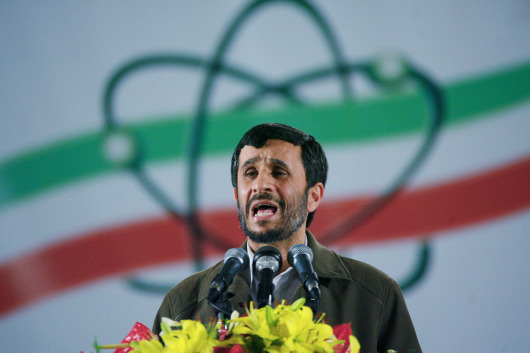
    President Mahmoud Ahmadinejad, the master of illusions, promises that he has no intention of using nuclear power for anything but peaceful purposes. While he misleads the world, the Iranian nuclear potential turns into a loaded gun pointed at the Gulf Sunni Arab sheikhdoms, having near 45% of world oil reserves, but all extremely  vulnerable to nuclear blackmailing, if not total dominance by a Shiite regime.

    Iran is a major security concern of the Gulf States. “We have a shared interest in preventing Iran from becoming a nuclear power,” said Mustafa Alani, research director at the Gulf Research Centre in Dubai Sami Alfaraj, President of the Kuwaiti Center for Strategic Studies. “With a single atomic bomb in its arsenal, Iran would become an insurmountable regional power, a fact that could totally destabilize the security of our region,” he warned.

    Inevitably this would not end with a nuclear armed Iran either. As it moves ahead with its nuclear ambitions other countries in the Gulf will be pushing forward with their own plans to go nuclear. Qatar, Bahrain, Oman, Kuwait, the United Arab Emirates (UAE) and Saudi Arabia, all oil rich nation, with huge excessive funds at disposal, have  indicated substantial interest in developing nuclear programs. In the 1990s Saudi Arabia has also obtained CSS-2 ballistic missiles from China, capable of carrying nuclear warheads across the gulf. Riyadh has quietly discussed obtaining more modern missiles from China, armed with ‘dual key’ nuclear weapons from Pakistan, to deter a potential Iranian nuclear threat.

    A future nuclear Middle East, at loggerheads between Shia and Sunni, could become the doomsday Armageddon prophesy. With this, the hopes of  the “Arab  Spring” would ultimately disintegrate into the Shiite-Sunni “nuclear Winter”. Whether this catastrophe can be averted will depend entirely on Washington’s firm determination to restore its resolve in maintaining “Pax Americana” in the Gulf and entire Middle East.


    U.S. & Canada Defense Update

    ‘National Team’ to Provides Command and Control for the U.S. Missile defense System

    January 17th, 2012: A team headed by Lockheed Martin as prime contractor has won a US$980 million follow-on contract for continued work on Command, Control, Battle Management and Communications (C2BMC) for the Missile Defense Agency (MDA). The five company consortium contractors, known as the ‘Missile Defense National Team’ is involved with this program since 2002. The consortium is developing and supporting the U.S. Ballistic Missile Defense system integration, linking the various sensors and weapon systems. The majority of the work is conducted in Arlington, Va., Huntsville, Ala., and Colorado Springs, Colorado.


    AN/TPY-2
    AN/TPY-2 field deployable, multi mission missile defense radar from Raytheon

    +$900 Million for AN/TPY-2 Radars

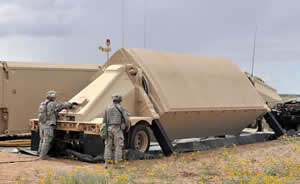
    Raytheon has received two orders worth over $940 million for a number of AN/TPY-2 radars complementing procurement orders for Terminal High Altitude Area Defense (THAAD) missile defense systems for the U.S. Army and the UAE. The AN/TPY-2 multi-functional radar searches, detects, tracks and discriminates ballistic missile threats, seamlessly integrating with a variety of ballistic defense systems. In addition to supporting the U.S. Army in a terminal defense role as part of a THAAD Battery, AN/TPY-2 radars are deployed around the world providing continuous forward-based ballistic missile defense as a key component of the global Ballistic Missile Defense Architecture. The recent sale to the UAE represents the first export sale of the THAAD missile system. The program is managed through the Missile Defense Agency (MDA) as a Foreign Military Sale project. The AN/TPY-2 has also been deployed to the Middle East, operating in Southern Israel as part of the U.S. missile early warning system in the area.

    Missile Warning Radar Station in Turkey is Online

    NATO has deployed the AN/TPY-2 Ballistic Missile Defense radar in a new location near Malatya in south-central Turkey, where the early warning radar provides the forward most lookout detecting missiles launched from Iran. The station is manned by U.S. teams and is supported by Turkish personnel. Turkey, along with Portugal, Poland, Romania and Spain are the five countries that agreed to host elements of a U.S.-European missile defense shield. This deployment represents a major milestone in achieving the U.S. Administration’s European Phased Adaptive Approach (EPAA), which provides a limited anti-missile umbrella, protecting Europe from missile attacks from rough states like Iran. The AN/TPY-2 is the critical sensor component of the EPAA.

    GMD C3 Center
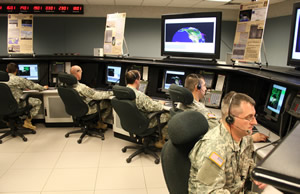
    The command and control center of the GMD missile defense system. Photo: MDA

    Boeing Selected to Continue Ground-Based Ballistic Missile Defense System Support

    Boeing and team member Northrop Grumman will continue to support the Ground-Based Midcourse Defense (GMD) element of the U.S. Ballistic Missile defense System. Boeing was selected by the Missile defense Agency over a competing team headed by Lockheed Martin and Raytheon. GMD uses radars, other sensors, command-and-control facilities, communications terminals and a 20,000-mile fiber optic communications network. There are more than 20 operational interceptors at Vandenberg Air Force Base, Calif., and Fort Greely, Alaska, to defend the United States against long-range ballistic missile threats. Boeing has been supporting the GMD program as a prime contractor under MDA contract since 2001. The Boeing-led team currently operates and sustains the deployed GMD weapon system while developing and testing new technologies to provide increased reliability and to meet evolving customer needs and requirements. Northrop Grumman has been part of the team since 1998, responsible for designing and deploying the command-and-control systems that form the backbone of the GMD ground system.

    Past reports:

    Russia & CIS Defense Update

    Russian submrine Yekaterinburg
    Yekaterinburg at Murmansk (Photo: RIA)
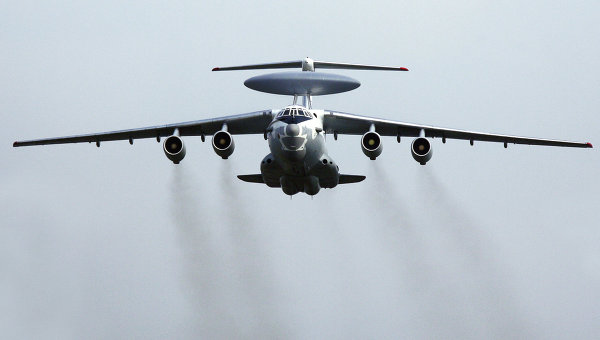
    A-50U Early Warning Plane
    A-50U Early Warning Plane

    New AWACS Plane Enters Russian Air Force Service

    January 17, 2012: The Russian Air Force began flight testing of a modernized version of the A-50U airborne warning and control system (AWACS) aircraft. The aircraft was improved with new on-board computers, satellite communications, and an improved radar system installed in its rotodome. In addition to its conventional role detecting and tracking fighter aircraft in subsonic and supersonic flight, the system was enhanced with new algorithms enabling the A-50U to effectively detect and track helicopters, cruise missiles. The A-50 can track up to 10 fighter aircraft for either air-to-air interception or air-to-ground attack missions. The Beriev A-50, based on the Ilyushin Il-76 transport, first flew in 1978. It entered service in 1984, with about 40 produced by 1992. The aircraft was delivered to the Air Force in October.


    vikramaditya
    Ex Russian carrier Admiral Gorshkov turned into Vikramaditya by year's end

    India to get Russian aircraft carrier by December

    January 16, 2012: Russian is planning to begin sea trials with aircraft carrier Admiral Gorshkov in May 2012, anticipating the vessel be ready for delivery by the end of this year. Entering service with the Indian Navy the ship will be renamed INS Vikramaditya. The Gorshkov was refurbished for the Indian Navy since 2004 by the Sevmash shipyard. The original delivery was scheduled for 2008 but the refurbishment was repeatedly delayed due to lack of material and escalating costs. The final price more than doubled from US$947 million to $2.3 billion.

    Vietnam Receives Su-30 Fighters

    January 10, 2012: Russia has recently delivered a second batch of four Su-30 fighters to Vietnam, in addition to the four planes supplied to Hanoi in June 2011. Vietnam is scheduled to receive the final batch of four planes this year, completing the 12 aircraft originally ordered as part of the one billion US$ arms package. Vietnam is the fourth Asian country operating the Su-30, along with India, Malaysia and Indonesia.

    Russia Upgrades RS-18 With a New Warhead

    December 31, 2011: During the recent test launch of the RS-18 Stilet (Stiletto) intercontinental ballistic missile (ICBM) Russia has successfully tested a new reentry vehicle planned for the upgrade of its strategic nuclear force. The missile was launched on Tuesday, December 27, 2011 from the Baiknonur cosmodrome in Kazakhstan, and successfully hit its target on the Kamchatka Peninsula in the Pacific region. The new warhead uses a reentry vehicle designed for higher speed, thus overcoming missile defense systems. Operational since 1982, Russia maintains 136 such missiles (designated UR-100N) at four bases – Deraznja, Kozelsk, Pervomajsk and Tatiscevo. The recent upgrade is believed to extend their lifespan until at least 2030. Carrying up to six independent reentry vehicles (MIRV), the two-stage Stilet has an operational range of 10,000 km.

    The Afghan Air Force will receive all 21 Russian Mi-17 by summer 2012
    The Afghan Air Force will receive all 21 Russian Mi-17 by summer 2012. Photo: US DOD

    Russia to complete delivery of 21 helicopters to Afghanistan by July

    January 10, 2012: Russia is expecting to compete delivering 21 Mi-17V5 helicopters to Afghanistan in the first half of 2012, under a contract worth $367.5 million signed with the U.S. Government awarded in June last year. Nine of the helicopters were delivered within six months, and the remaining are expected to be in Afghanistan soon. The Mi-17 is an export version of the Mi-8 Hip helicopter.

    Nuclear Submarine Damaged by Fire while Undergoing Repairs at Murmansk

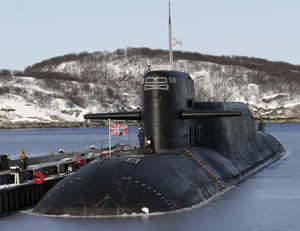
    December 31, 2011: Repairing the Russian Delta class nuclear submarine Yekaterinburg could take at least a year. a The submarine was damaged by a fire on December 29, 2011 while docked near Murmansk. The outer hull of the nuclear sub caught fire during repair work, as fuel and lubricants were set on fire by welding on the submarine’s nose section. Delta-class submarines have an outer skin of anechoic rubber, designed to absorb sound from sonars to make the boat harder to detect, that can burn in a dry environment. The boat has a double hull of thick steel, however, which would protect its interior from external fire. Zvezdochka shipyards officials cited fire safety violations during routine maintenance work as the most likely cause. The sub’s hydro acoustic system was wrecked during the fire and will likely have to be replaced before it is back in service. The overall cost of the repairs could mount to 900 million rubles ($30 million). The submarine is expected to return to operational status by summer 2014.

    Mexico Orders Three Mi-17V-5 Transport Helicopters

    December 31, 2011: Mexico has ordered three Russian Mi-17V-5 tactical transport helicopters for the Mexican navy. The Mexican Navy plans to use the new helicopters in its war against drug trafficking. The Mi-17V-5 made by Kazan is the export version of the modernized Mi-8MTV-5 military utility transport helicopter. It can carry up to 36 passengers or four tons of cargo and features advanced multifunction cockpit displays and upgraded TV3-117VM engines. The Mi-8/17 is a popular model In Latin America, accounting for about 20% of the military helicopter market in the continent.

    Past Reports:

    Asia Pacific Defense Update

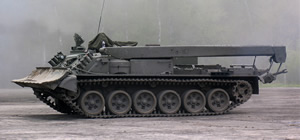
    Poland to Supply Additional 204 Armored Recovery Vehicles to India

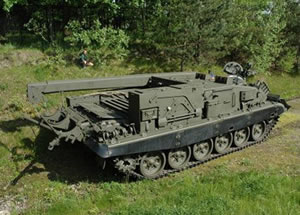
    January 19, 2012: The Polish largest arms producer Bumar will deliver 204 WZT-3M Armored Recovery Vehicles under a US$275 million signed earlier this week in New Delhi, Tomasz Basarabowicz reports. According to the agreement the vehicle production will be done primarily in India, by BELM, which has already produced 362 WZT-3 supplied for the Indian Army so far.

    Polish WZT-3M from Bumar
    India has ordered 204 WZT-3M ARVs from Poland. Photo: Bumar

    Poland will supply with sub assemblies, kits and components.

    Since 1999 India has ordered 556 WZT-3M ARVs, to support the armored units equipped with T-90 and T-72 armor units deployed with the Indian Army. The WZT-3 is based on the PT-91 chassis, the Polish derivative of the T-72M.

    RAN-40L radar from Selex Sistemi Integrati
    RAN-40L radar

    Selex Sistemi Integrati New Contracts In India

    January 16, 2012: India has selected the Italian company Selex Sistemi Integrati to deliver an air surveillance naval radar RAN 40L and an IFF radar for the indigenous aircraft carrier built by the Coching Shipyard. The Italian company reported signing a contract with the Indian shipyard for the delivery of the radar. The RAN-40L is a 3D long range early warning radar with fully solid state active phased array antenna able to assure the detection of aircrafts up to 400 kilometers. The radar is derivative of the proven land based 3D RAT-31DL operated by several NATO air forces. The Indian Navy is operating Selex Sistemi Integrati radars since 1984, on the Godivari and Bramaputra class frigates.

    vikramaditya
    Ex Russian carrier Admiral Gorshkov turned into Vikramaditya by year's end

    India to get Russian aircraft carrier by December

    January 15, 2012: Russian is planning to begin sea trials with aircraft carrier Admiral Gorshkov in May 2012, anticipating the vessel be ready for delivery by the end of this year. Entering service with the Indian Navy the ship will be renamed INS Vikramaditya. The Gorshkov was refurbished for the Indian Navy since 2004 by the Sevmash shipyard. The original delivery was scheduled for 2008 but the refurbishment was repeatedly delayed due to lack of material and escalating costs. The final price more than doubled from US$947 million to $2.3 billion.


    MICA IR and EM missiles from MBDA
    MICA IR and EM missiles from MBDA

    New Missiles to Upgrade Indian Mirage 2000s

    India will buy 500 MICA air-to-air missiles from European guided weapons manufacturer MBDA for its Mirage 2000 aircraft in a contract worth around $1.2 billion. Deliveries will span over 10 years. The deal was cleared last week by the Indian government’s Cabinet Committee on Security at a meeting led by Prime Minister Manmohan Singh. This procurement is part of the midlife upgrade of 51 of the Indian air force’s Mirage 2000 aircraft to be conducted under a $1.87 billion agreement signed with Dassault Aviation last year. This upgrade package will modernize the aircraft navigation systems, mission computers, electronic warfare and radar systems. French aerospace giant Dassault will upgrade first four Mirage-2000H fighter jets to Mirage-2000-5 MK-II level in France while remaining Mirages will be upgraded in India with French help at the Hindustan Aeronautics Ltd. (HAL).

    North Korea Tests Short Range Ballistic missiles

    January 11, 2012: Unnamed South Korean and Japanese sources are reporting that North Korea conducted a test launch of three missiles on January 11.  The missiles were fired from the east coast of North Korea out over the Sea of Japan.  The missiles are believed to be the short-range KN-02 missiles capable of reaching a range of approximately 75 miles. Japanese and South Korean sources have expressed their belief that these latest launches are merely routine and not worthy of any major concern.  As always, both nations will complete a thorough analysis of all data they have been able to accumulate. Similar launches were reported to have been conducted on December 19, the same day the North announced the death of Kim Jong il. (Richard Dudley)

    The Afghan Air Force will receive all 21 Russian Mi-17 by summer 2012
    The Afghan Air Force will receive all 21 Russian Mi-17 by summer 2012. Photo: US DOD

    Russia to complete delivery of 21 helicopters to Afghanistan by July

    January 11, 2012: Russia is expecting to compete delivering 21 Mi-17V5 helicopters to Afghanistan in the first half of 2012, under a contract worth $367.5 million signed with the U.S. Government awarded in June last year. Nine of the helicopters were delivered within six months, and the remaining are expected to be in Afghanistan soon. The Mi-17 is an export version of the Mi-8 Hip helicopter.

    India’s Indigenous Carrier Floats, but Not for the Right Reasons

    January 11, 2012: The first Indigenous Aircraft Carrier (IAC) of the Indian Navy was floated out at the Cochin Shipyard Limited (CSL). The 40,000 ton carrier to be named after the INS Vikrant will become the main air defense platform of the fleet. Despite the important milestone, the floating of the huge vessel does not represent an advanced level of maturity, but rather due to the need of the dry dock for other work at the shipyard. The construction of the vessel extended beyond the original schedule due to delays in delivering steel plates, and key subsystems, including the gearbox. According to the Times of India, the gearbox, made by Elecon Engineering is already and undergoing trials, the underwater package is all lined up. But other equipment has yet to be identified and tested is now ready and undergoing trials, at last.

    Stinger Missiles Cleared for Indian Apaches

    January 11, 2012: The U.S. is offering the Indian Air Force the air/air version of the MIM-92A Stinger missile, to equip the AH-64D Apache Block III attack helicopters the Indian Air Force is expected to buy. Raytheon is also seeking to get Pentagon clearance to offer the missiles for other types flown by the Indian military, including the Indigenous Light Combat Helicopter (LCH) and Dhruv Advanced Light Helicopter developed by HAL.

    Vietnam Receives Su-30 Fighters

    January 11, 2012: Russia has recently delivered a second batch of four Su-30 fighters to Vietnam, in addition to the four planes supplied to Hanoi in June 2011. Vietnam is scheduled to receive the final batch of four planes this year, completing the 12 aircraft originally ordered as part of the one billion US$ arms package. Vietnam is the fourth Asian country operating the Su-30, along with India, Malaysia and Indonesia.

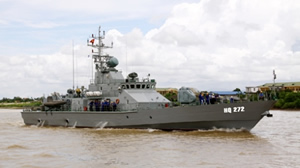
    Vietnamese Navy new gunboat TT400TP
    Vietnamese Navy new gunboat TT400TP

    Vietnam’s Navy Inducts First Locally Built TT400TP Gunboat

    Vietnam’s navy has taken delivery of its first locally-built 54 meter TT400TP, built by the Hong Ha shipyard in Haiphong. Hong Ha launched the project in 2009, based on a foreign design. The vessel was completed in 2010 and went through sea trials since.

    The new gunboat has can cruise at a speed of 32 knots, operate unsupported for 30 days and has an operational range of 2,000 nautical miles. Vietnam has said that it intends to build more warships in the future. The current Vietnamese fleet of gunboats and corvettes rely on Russian vessels and older gunboats received from the former Soviet Union.

    Vietnam is expanding its fleet in response to growing concerns about protecting its territorial waters and Economical Exclusion Zone, amid rising tensions in the South China Sea, primarily tension with China over maritime territorial disputes.

    Past reports:

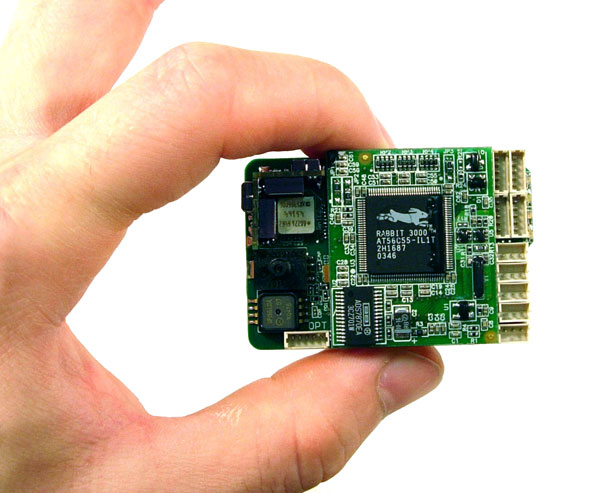
    Lockheed Martin Acquires Procerus Technologies

    Kestrel micro autopilot from Procerus
    Kestrel micro autopilot from Procerus

    Lockheed Martin Mission Systems and Sensors (MS2), operating under the Corporation’s Electronic Systems business will manage the new business. MS2 also manages other small UAS activities including Desert Hawk, Persistent Threat Detection System aerostats, K-MAX unmanned helicopter system, and high altitude airship programs. Procerus was founded in 2004 and based in Orem, Utah, Procerus is a privately held company that provides autopilot, targeting and payload technologies for micro UAS to domestic and international governments, as well as industry and academic institutions. “Small unmanned aerial vehicles are low-cost, highly effective tools for our military, and the expertise Procerus brings will enhance the value we offer to our customers.” Said “This acquisition is consistent with our focus on acquiring capabilities that enhance our product” Bob Stevens, Lockheed Martin Chairman and CEO commented.

    ‘Government Technology Allied Group’ (GTAG) to promote Israel’s Defense Sector SMEs

    The recently launched Israeli based Government Technology Allied Group (GTAG) will hold its first meeting next week in Tel Aviv (23 January 2012). “When dealing with complex legal and technical export control issues and limited international opportunities, GTAG provides one clear voice for Israel’s small and medium defense companies”.

    “GTAG’s operating model has been tried and tested in several countries and proved highly beneficial for small and medium defense enterprises.” said Lori Solberg, the group founder. Our mission is to advocate and advice members on government issues and strategic business opportunities and introduce specific business services required for the management of international defense related businesses, requiring highly specialized know- how in procedural, bureaucratic and international marketing goals. We can also increase international opportunities by acting as one voice.”

    “Our mission is to advocate and advice members on government issues and strategic business opportunities”

    According to Solberg, GTAG has already succeeded in ensuring the legal rights of small and medium companies seeking to better manage their export control procedures and has a proven record in teaching companies methods to win international contracts. Based on the collective experience and know how of members, the group is offering legal, lobbying, financial and marketing understanding tailored for small and medium defense exporting enterprises and the opportunity to benefit from the experience of member companies.” Through these activities we intend to increase business “wins”, open new insight for chief executives and business developers and promote specific value added solutions offered by our members to government decision makers” Solberg added. “This model is not just for networking, it is a serious venture for the benefit of the entire defense community.”

    Israel, U.S. Postpone Massive Missile-Defense Exercise to Avoid Possible Escalation with Iran

    EUCOM commander, Adm. James Stavridis
    EUCOM commander, Adm. James Stavridis

    The US military European Command and the Israeli Ministry of Defense decided to reschedule a large missile defense exercise originally planned to take place in Israel in April 2012. The exercise will be held at a later date, in the second half of this year.

    The exercise called “Austere Challenge” was supposed to see the deployment of about 5,000 US troops, and the deployment of advanced US missile defense systems in Israel. EUCOM commander, Adm. James Stavridis, was planning to participate in the exercise. In the event of war, the EUCOM commander will be responsible for approving Israeli requests to deploy US missile defense systems in Israel.


    Israel and the U.S. did not provide an explanation to this delay, yet according to local media reports the cause is the concern such a deployment could further escalate the tension with Iran in the coming months.

    Talks about postponing the drill took the Israel Air Force’s Active Defense Division, responsible for missile defense, by surprise. The drill was supposed to include the simulation of various missile defense scenarios with the objective of creating a high level of interoperability so that, if needed, US missile defense systems would be able to deploy in Israel and work with local defense systems during a future conflict.

    A New Strategy for the U.S.Military

    Leon E. Panetta, U.S. Secretary of Defense
    Leon E. Panetta, U.S. Secretary of Defense

    The new defense strategy announced by President Barack Obama on January 5, 2012 as part of the administration’s economic austerity sets the stage for dramatic cuts in the defense budget, reducing $487 billion in defense spending over the next decade. While maintaining the indisputable leadership as the prominent world power, the new strategy also sets the guidelines for the nation’s armed services preparing to face new challenges in the next decade.

    The new strategy reflects America’s shifting priorities from the Middle East and Central Asia to Iran, North Korea, and eventually China, evolving as the dominant power in the Asia-Pacific domain. With the draw down of direct involvement in Afghanistan after 2014,


    Washington hopes that newly established and long-term alliances would suffice in maintaining Washington’s regional interests. This shift should pertain predominantly to Pakistan and the Central Asia republics, hitherto being critical assets for supporting operations the war in Afghanistan.

    Viewing the potential threat from Iran, the U.S. is expected to maintain its military presence and capabilities in the Middle East, prevailing in the Arabian Sea area, despite the withdrawal from Iraq, to remain capable in deterring and defeating Iranian aggression while supporting political progress and reform.

    New Regional Focus

    Timing the announcement of the new strategic plan soon after the withdrawal from Iraq, and during the relatively quiet Afghan winter season, presented no coincidence. The administration can already foresee the gradual withdrawal from Afghanistan, allowing the military to regroup and focus on broader contingencies. Other regions, including Central Asia and North Africa will eventually shift to a second priority, where conflicts and stability should expected to be maintained by its allies, rather than with direct involvement of U.S. forces. The U.S. will seek “innovative ways to sustain presence elsewhere”, pursuing new security partnerships, developing low-cost and small-footprint approaches, rotational deployments and periodical joint exercises with allies.

    This approach was successfully implemented in Libya, where the U.S. quickly withdrew from its leading position, yet continued supporting the operations primarily with logistical and ISR assets by manned and unmanned facilities. The U.S. in its campaign against Islamic extremists and Al-Qaeda factions in Somalia and the Central African Republic of Congo also employs this modus operandi, using unmanned aircraft operating from bases in Ethiopia.

    The President believes that at the end of the long-term nation-building process in Afghanistan, the U.S. will be able to ensure its security with smaller conventional ground forces. Therefore, the strategic review recommending part of the $487 billion in savings should come from decommissioning outdated Cold War-era systems, thus saving expensive maintenance and support costs, while investing in new capabilities, better suited for future requirements. Not surprisingly, these include intelligence, surveillance and reconnaissance (ISR), counterterrorism, countering weapons of mass destruction and the ability to operate in environments where adversaries are trying to deny access.

    “We will protect our investments in special operations forces, new technologies like ISR and unmanned systems, space and cyberspace capabilities,“ Defense Secretary Leon E.  Panetta said. Today’s ISR, unmanned and networked warfare capabilities are employed primarily in uncontested airspace environment, supporting counter-terror and counter insurgency (COIN) activities, as part of low intensity operations. Hence, the fourth priority defined in the plan is to provide the U.S. with the capability to operate in denied access environment, employing ISR and precision effects against modern and sophisticated foes.

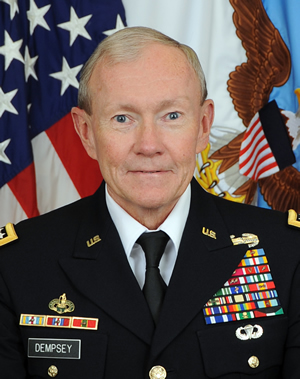
    General Martin E. Dempsey CJCS
    General Martin E. Dempsey Chairman, Joint Chiefs of Staff

    Force Structure and Force generation

    With the end of U.S. military commitment in Iraq, and the drawdown already underway in Afghanistan, the Army and Marine Corps will no longer need to be sized supporting the large scale, long-term stability operations that dominated military priorities and force generation over the past decade.

    A smaller force may change the U.S. military capability, in order to fight, win and sustain two major operational contingencies simultaneously. “Fundamentally, our strategy has always been about our ability to respond to global contingencies wherever and whenever they happen. This concept does not change.” Army Gen. Martin E. Dempsey, chairman of the Joint Chiefs of Staff said. “Because we will be somewhat smaller, these risks will be measured in time and capacity. However, we have to be honest — we could face even greater risks if we did not change from our current approach… It prepares us for what we anticipate needing in 2020.”

    Addressing this concern, Secretary Panetta added: “We are confronting the threats of the 21st century and that demands greater flexibility to shift and deploy forces to fight and defeat any enemy anywhere. How we defeat that enemy may vary across conflicts. But make no mistake — we will have the capability to confront and defeat more than one adversary at a time.”

    Another important capability to be preserved is the services’ ability in maintaining the critical skills gained through over two decades of wars, the these skills and know-how should be maintained in the force structure and support the services’ future force generation potential, most probably, in a modified reserve component, ensuring the services’ capacity to mobilize sizeable forces at relatively short time. Secretary Panetta added that the new plan should structure and pace the reductions in the nation’s ground forces in such a way that they can surge, regenerate, and mobilize capabilities required for future contingency. “Building in reversibility and the ability to quickly mobilize will be key.” Panetta said, explaining the mix of elements in the active and reserve components will be reexamined, as well as maintaining a strong National Guard and Reserve, retaining a healthy cadre of experienced NCOs and midgrade officers, and preserving the health and viability of the nation’s defense industrial base.

    Toward a ‘Joint Force 2020’

    As described by Gen. Dempsey describes the new strategy as a waypoint in a continuous and deliberate process in developing the joint force foreseen in 2020. “There are four budget cycles between now and then, each of these cycles presents an opportunity to adjust how and what we do to achieve this strategy in the face of new envisaged threats … and in the context of a changing security environment.”

    General Dempsey welcomes the change even if it responding already to the new fiscal environment, “even if we didn’t have fewer resources, we would be expected to change.” Dempsey added the new shift mandates new ways of operating and partnering, rebalancing focus by region and mission, and redirecting important investments to meet emerging and proven capabilities like cyber and special operations. Secretary Panetta agreed, mentioning his department would need to make a strategic shift regardless of the nation’s fiscal situation. “That is the reality of the world we live in.” Panetta concluded.

    Seoul Orders 20 FA-50 Attack Aircraft In a $600 Million Deal

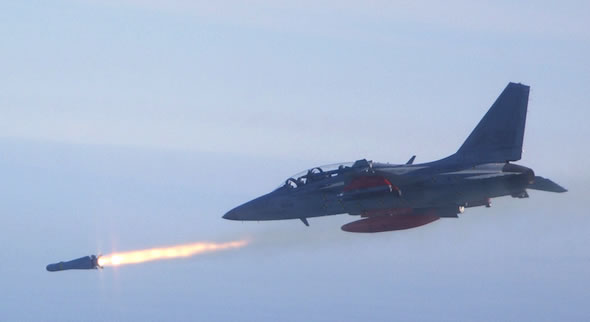
    TA-50 launches an AGM-56 Maverick missile
    TA-50 launching a Maverick air-to-ground missile. Photo: KAI
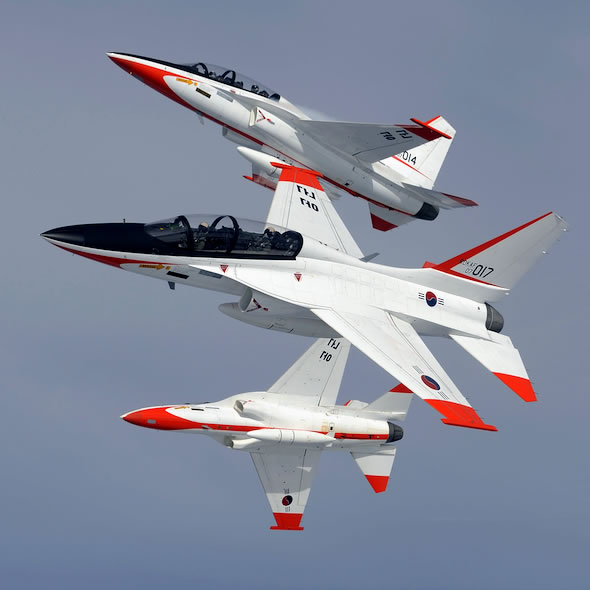
    TA-50 breaking formation. Photo: KAI
    TA-50

    With the New Year barely underway, South Korea is once again demonstrating a determination to build a formidable military force capable of dealing with potential enemies. The government has signed a $600 million deal with Korea Aerospace Industries (KIA) for 20 FA-50 fighter/attack aircraft based on the highly regarded T-50 advanced jet trainer.

    KAI is reporting that the aircraft will be delivered between 2013 and 2014. The FA-50 is a lightweight fighter/attack aircraft incorporating the most advanced technology available in the T-50 Golden Eagle family of aircraft.

    KAI also believes that South Korea may increase the order to as many as 60 aircraft for use as replacements for the aging 150 Northrop F-5 aircraft currently being operated.

    The FA-50 aircraft ordered are expected to be equipped with the Link 16 tactical link, Elta Systems EL/M-2032 pulse Doppler radar, radar warning systems and a night vision imagery system. Northrop Grumman and Raytheon previously selected the FA-50 as a prime candidate for being outfitted with the same version of active electronically scanned array (AESA) radar slated for use in a United States Air Force F-16 upgrade.

    The FA-50 is built to carry a weapon’s payload of 9,920 pounds that includes Boeing’s Joint Direct Attack Munitions and Textron’s CBU-97 Sensor Fused Weapon. In addition, the FA-50 is also fitted with a 20mm cannon and is configured to carry air-to-air missiles.

    KAI has also included in the Golden Eagle family, along with the T-50 and the FA-50, a T-50B aerobatic aircraft and an armed TA-50. All versions of the Golden Eagle family feature a single General Electric F404 engine.

    South Korea is expected to issue a call for bids for its F-X III project in February to select a replacement for its F-4 Phantom jets. The candidates competing for this lucrative contract include the Boeing F-15 Silent Eagle, Lockheed Martin F-35, Sukhoi PAK FA, and the Eurofighter Typhoon.

    South Korea Buy Two Dassault Surveillance Jets

    Dassault Falcon 2000LX
    Dassault Falcon 2000LX
    Dassault Falcon 2000LX
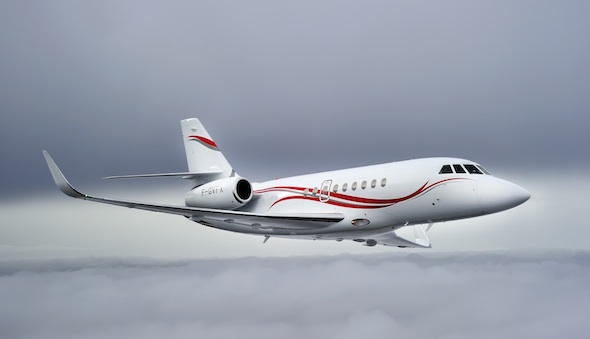
    Dassault Falcon2000LX. South Korea will be the first to use it for ELINT missions. Photo: Dassault

    The South Korean Defense Acquisition and Program Administration (DAPA) announced plans to acquire two French Dassault Aviation Falcon-2000 jets on December 26, 2011 to further strengthen the nation’s intelligence, surveillance, and reconnaissance (ISR) capabilities. South Korean news sources reported that the new aircraft are expected to be placed in service sometime in 2017. The acquisition cost was not announced, but is likely to exceed $32 million per aircraft – the estimated cost of a conventionally-equipped Falcon-2000. Dassault is offering two versions of ‘Multi Mission Falcon” utilizing modified 900 and 2000 platforms, both fitted for maritime surveillance and patrol. The configuration and design of the new ELINT platform has yet to be designed.

    South Korean military and intelligence leaders have been subjected to severe domestic criticism for failing to learn of Kim Jong il’s death before a formal North Korean announcement was broadcast among other missed intelligence opportunities.

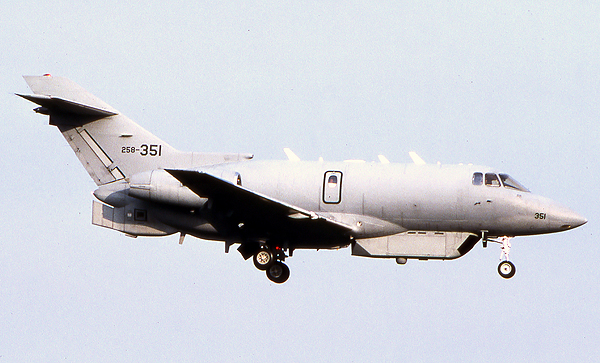
    ROKAF Hawker 800 ELINT Aircraft
    The Falcon 2000 will replace the Hawker 800 ELINT planes currently in ROKAF service.

    Many of South Korea’s current aircraft employed in the ISR role are beginning to show their technological weaknesses as more modern and advanced aircraft are appearing in the market. The Falcon-2000’s are likely to be employed as replacements for some of the Raytheon RC-800’s currently in service with South Korean commanders. When compared to the RC-800, the Falcon-2000 carries a larger payload, features technologically-advanced sensors, and has a significantly longer range.

    South Korea is expecting the Falcons to provide them with enhanced capabilities to intercept radio signals in the North and to deliver a marked improvement in detecting missile launches.

    The Falcon-2000’s will be a welcome addition to four E-737 Airborne Early Warning and Control (AEW&C) aircraft recently purchased from Boeing. The first E-737 “Peace Eye” was delivered to South Korea in August 2011 for testing and acceptance. The second aircraft was delivered in December 2011 after modifications were completed by Korea Aerospace Industries. The E-737 is a state-of-the-art surveillance and command aircraft equipped with advanced MESA radar capable of 360 degree coverage and the ability to vector combat aircraft and ships to engage detected targets at distances of up to 500 kilometers.

    The Falcon-2000 buy represents a continuation of South Korea’s military modernization program focused on meeting and defeating threats from the North and other potential belligerents in the Asia-Pacific region.

    Turkish Decision Paves the F-35’s Way to Ankara

    Turkey to buy F-35
    The Turkish administration has cleared the procurement of two F-35As fighters. Photo: Lockheed Martin

    The Turkish government has approved in principal the placement of an order for two Lockheed Martin F-35A 5th Generation stealth fighters, formally ending the debate on whether the country should enter the program without gaining access to fully control the aircraft operating software. Turkey has become one of the world’s largest producer of F-16 fighters and is expected to become a major operator of the F-35, which will precede a somewhat larger, domestically developed multi-role fighter (TFX), to become operational in the mid-2020. Both fighters are expected to replace the F-16 and F-4s currently operational with the Turkish Air Force (TuAF).


    Following a meeting of the Defense Industry Executive Committee (SSİK), meeting at the at the Undersecretariat for the Defense Industry (SSM) in Ankara, the Turkish defense authorities cleared the planned order of two F-35 fighter jets, as part of a larger acquisition that could cost up to $16 billion over the life of the program.

    In 2002 Turkey has joined the F-35 team as a ‘Level 3 partner’, investing $195 million upfront – more than Canada, Australia, Norway and Denmark. Canada and Australia have already committed to support the program, although the two countries did not place a firm order for the Low Rate Initial Production (LRIP) lots. Denmark and Norway have not yet made their decision whether to buy the F-35 or opt for another fighter plane. The Turkish aerospace industries are expecting to benefit from the country’s partnership in the program. In 2007 they were expecting to gain a work share in excess of $5 billion.

    Turkey’s decision comes at a critical time for the program, working out a recovery from delay and cost increases that have spiraled the plane’s cost and lead some of the early supporters to reconsider their plans. Turkey is expected to pay $16 billion for its fleet of +100 F-35s, although due to the current cost fluctuation, the actual number of planes has yet to be determined. Originally Ankara planned to acquire about 116 such planes, and receive its first stealth fighters in 2015, but this delivery date is also questionable due to the program’s delays.

    Turkey, like other European program members insisted on receiving access to the new fighter’s source codes, seeking to maintain operational and support independence. However, Lockheed Martin and the Pentagon refused to share these codes, claiming that this ‘independence’ can be gained by interfacing at the application level, rather than lower level source code which would be too costly to manage and would have negative effect on flight safety. Foreign nations are not buying this explanation, fearing the aircraft may be ‘rigged’ with a ‘backdoor’ that would deny them using their fighters on missions that conflict with Washington’s policy.

    The recent Japanese and Israeli decisions to buy the aircraft, despite not gaining such access to its operating codes may have convinced other would-be operators that the solution is manageable.

    Skunk Works and XTEND Simplify Multi-Drone Command

    0
    Lockheed Martin Skunk Works® and XTEND have achieved a major milestone in JADC2 by integrating the XOS operating system with the MDCX™ autonomy platform. This technical breakthrough enables a single operator to simultaneously command multiple drone classes, eliminating the friction of mission handoffs. From "marsupial" drone deployments to operating in GPS-denied environments, explore how this collaboration is abbreviating the data-to-decision timeline and redefining autonomous mission execution.

    From Ukraine to Taiwan: The Global Race to Dominate the New Defense Tech Frontier

    0
    As traditional defense primes face mounting competition from agile “neoprimes” such as Anduril, Palantir and Helsing, the balance of innovation is shifting toward software-defined warfare and scalable, dual-use technologies, while global industry consolidation—marked by Boeing’s integration of Spirit AeroSystems and other strategic mergers—signals an intensified race to secure control over the defense technology value chain. Our Defense-Tech weekly report highlights these trends.

    Europe’s “Drone Wall”

    0
    In early October 2025, a coordinated wave of unmanned aerial system (UAS) incursions—widely attributed to Russia—targeted critical infrastructure across at least ten European nations. The unprecedented campaign exposed the fragility of Europe’s air defenses...

    Weekly Defense Update & Global Security Assessment

    0
    Executive Summary The past week (September 18-25, 2025) represents an inflection point where strategic defense concepts have transitioned from doctrine to tangible reality. An analysis of global events reveals four primary, interconnected trends shaping an...

    U.S. Air and Space Forces Push Next-Gen Programs at the AS&C 2025 Conference and...

    0
    At the 2025 Air, Space & Cyber Conference, U.S. Air Force and Space Force leaders unveiled major updates on next-generation fighters, bombers, unmanned systems, and space initiatives, highlighting both rapid innovation and critical readiness challenges as the services race to outpace global competitors. A short version is available here, with a more detailed version for subscribers.

    TADTE 2025: Reflecting Taiwan’s Strategic Themes

    0
    The Taipei Aerospace & Defense Technology Exhibition (TADTE) 2025 crystallized around four dominant strategic themes that collectively illustrate Taiwan's comprehensive approach to defense modernization amid escalating regional tensions. Based on a detailed report by Pleronix (available upon request). Includes a Podcast discussion on TADTE 2025's highlighting Taiwan's four strategic themes beyond the post's coverage.

    Iron Beam 450 Completes Testing, Soon to Join With Operational Air Defense Units

    0
    Israel’s Iron Beam 450 high-power laser system has completed final testing, marking a major leap in air defense. Developed by Rafael, it offers precise, cost-effective interception of rockets, UAVs, and mortars, and is set for IDF deployment by 2025.