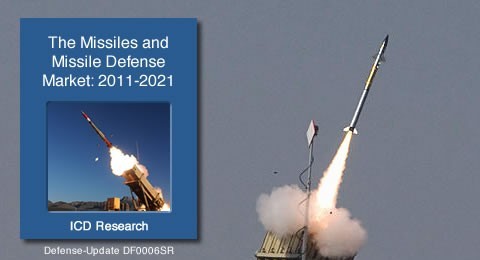
The global missiles and missile defense systems market, estimated to be worth US$15.2 billion in 2011, is projected to grow at a CAGR of 2.71% in the next decade to a value of US$19.8 billion in 2021. Cumulatively, the market for missiles and missile defense systems in the next 10 years is expected to value US$1873.8 billion.
Demand for missiles is anticipated to be driven by internal as well external security threats, territorial disputes and modernization initiatives undertaken by armed forces across the world. The global missile and missile defense systems market is likely to be dominated by the US throughout the forecast period, followed closely by the Asia-Pacific region. Europe’s share of the global market is projected to decrease, largely due to the economic crisis and consequent budget cuts faced by many European nations.
Submarines form an essential core of today’s naval fleets as a result of their flexible mission capabilities and ability to complement other strategic resources. Worldwide, 41 countries possess submarine capability and together operate 450 submarines. Most of these nations are modernizing their fleets or increasing them as a result of changing security situations. A total of 154 submarines are to be procured over the forecast period, costing US$186.3 billion.
The market, which currently stands at US$16.4 billion, is set to rise by a CAGR of 1.02 % to US$18.2 billion by 2021. North America is expected to constitute 47% of the market during the forecast period, a total of US$87.3 billion. The US, as the largest defense spender in North America, accounts for almost the entire amount. European nations are expected to cumulatively spend US$46.3 billion across the forecast period and constitute 25% of the total submarine market. Regional hostility prevailing among Asian states is driving the submarine market, which is expected to cumulatively be worth US$44 billion across the forecast period, 23.6% of the total market. Brazil and Argentina are the main spenders in the submarine sector in Latin America, totaling US$8.6 billion, 4.61% of the total market.
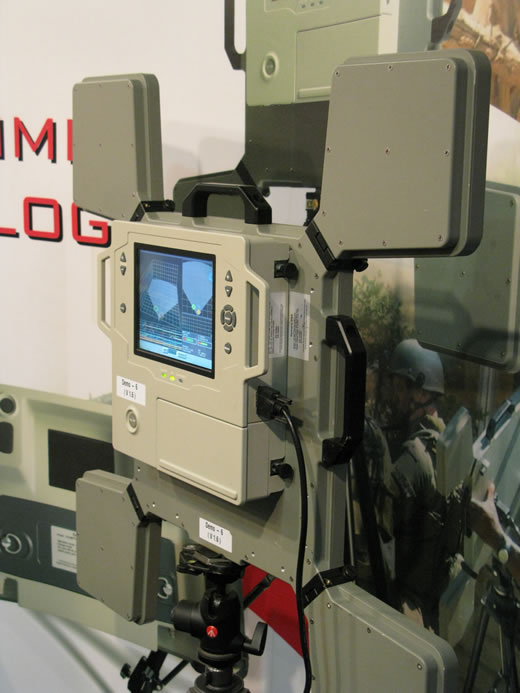
Camero is offering the Xaver 800 for through the wall sensing, the radar can identify, track and measure distance to occupants behind walls, alerting assault teams before entering the room. Photo: Noam Eshel, defense-Update
The Israeli SK Group is broadening its defense technology companies portfolio with the acquisition of Camero-Tech Ltd., a world pioneer in Sense-Through-The-Wall (STTW) solutions. Camero will continue to operate under its original name. Amir Beeri, CEO of Camero-Tech welcome the acquisition: “cooperation with the other SK Group companies combined with the groups’ proven capabilities, will undoubtedly contribute towards Camero’s continued growth and consolidation as a world leader in its field.“ he said.
Camero is offering the Xaver 800 for through the wall sensing, the radar can identify, track and measure distance to occupants behind walls, alerting assault teams before entering the room. Photo: Noam Eshel, defense-UpdateFounded in 2004, Camero has developed the Xaver line of portable and hand-held STTW systems, for law enforcement, SWAT and special operations applications. Xaver Utilizes advanced micropower radar technology, providing assault teams with real-time situational awareness for urban operations, enabling users to observe multiple stationary and moving objects concealed behind walls or barriers.
The SK Group includes a number of Israel based defense companies. The largest one is Israel Shipyards, builder of the Shaldag fast patrol boat and Saar IV missile boat. The other companies are all focused on small arms for military, law enforcement and special operations, including the small arms manufacturer Israel Weapons Industries (IWI), weapon sight manufacturer Meprolight (1990) Ltd. laser rangefinder and night vision specialist Pulse Inteco Systems Ltd. and Uni-Scope, providing vehicle-mounted episcopes and hand held and periscopes. Camero-Tech is expected to fit well within the group, given significant market reach already provided by IWI and Meprolight.
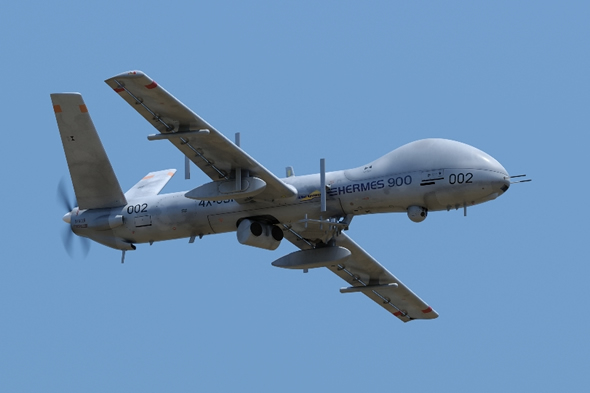
Elbit has won the third customer for its new Hermes 900 MALE UAS system. Photo: Elbit Systems
Elbit Systems has recently won the third customer for its Hermes 900 Unmanned Aircraft Systems (UAS). The contract worth about $50 million was awarded by a governmental agency in the ‘American continent’, for use in ‘perimeter security’. The contract includes the Medium Altitude Long Endurance (MALE) UAS platform, along with Universal Ground Control Stations (UGCS), and highly advanced DCoMPASS multi-sensor Electro-Optical payload systems, and satellite communication (SATCOM) systems. The UAS will be operated in a variety of perimeter security missions.
Elbit has won the third customer for its new Hermes 900 MALE UAS system. Photo: Elbit Systems
According to Elad Aharonson, General Manager – Elbit Systems UAS Division, the Hermes 900 is establishing its position as perimeter and security missions in addition to its role as an intelligence gathering asset. “The added value is the unique advantage of the common ground control station for both the Hermes 900 and the Hermes 450 array, allowing enhanced operational flexibility and cost effectiveness” Aharonson added.
The Hermes 900 UAS builds on the vast operational experience accumulated by the Hermes 450, the backbone of the Israel Defense Forces’ UAS operations. Hermes 900 offers a range of enhanced capabilities, from higher flight altitude (up to 30,000 ft) to longer endurance and larger payload capacity. The system’s unique structure enables it to carry a variety of payloads in different shapes and sizes for quick “conversion” between payload configurations.
SATCOM integration opens new capabilities for Hermes systems operators, beyond conventional Line of Sight (LoS) used in current systems. Supported by SATCOm links, a UAV like the Hermes 900 can deploy from a main operating hub, to patrol areas at ranges limited only by the fuel it carries. According to ELbit Systems, the Hermes900 with flight endurance of more than 30 hours, can, with the use of SATCOM, drastically extend its flight range from 300 km (conventional line of sight) to 2000 km via Satellite. Another benefit is the ability to deploy the Hermes 900 from forward bases in theater, while maintaining the mission control center in a remote and convenient location. In theater, reliance on SATCOM link to and from the mission control station enables the UAV to descend to very low altitude (thus gaining higher resolution images), without the limitation of LoS obstruction caused by topography.
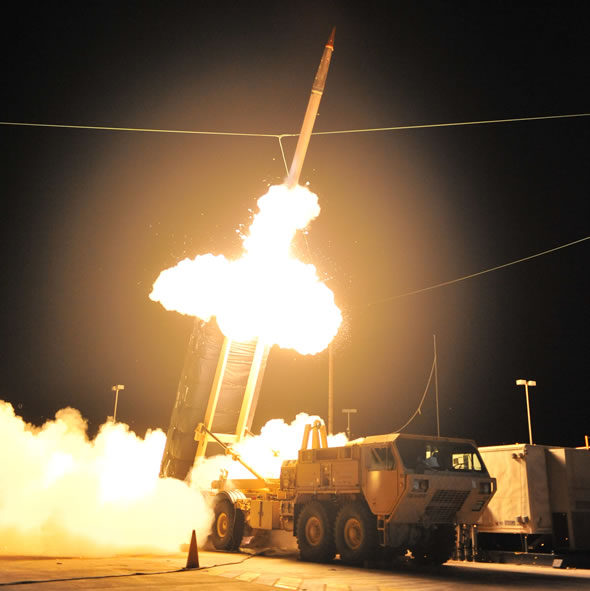
The U.S. Army Terminal High Altitude Area Defense (THAAD) missile system performed a successful intercept October 5, 2011, scoring simultaneous kills of two targets. Photo: Lockheed Martin
An American arms sale to the United Arab Emirates (UAE) valued at $3.48 billion, first proposed in September of 2008, was finally signed on December 25 amid growing concerns about Iran’s nuclear weapon’s program and Iranian threats to stop oil shipments from transiting the Strait of Hormuz.
The Christmas Day agreement calls for the United States to deliver two Terminal High Altitude Area Defense (THAAD) batteries to the UAE. The deal is the first foreign sale of the THAAD system and will equip UAE forces with an advanced antimissile defense capability.
The U.S. Army Terminal High Altitude Area Defense (THAAD) missile system performed a successful intercept October 5, 2011, scoring simultaneous kills of two targets. The system has now been ordered by the UAE, as part of a +3 billion order. Photo: Lockheed Martin
As part of the overall package, Lockheed Martin has been awarded an initial contract valued at $1.96 billion to begin production of two THAAD batteries. Included in this deal is a $582.5 million contract awarded to Raytheon to produce two AN/TPY-2 radars and a related Pentagon deal to produce two additional AN/TPY radars valued at up to $363.9 million.
In this government-to-government agreement, the United States will deliver 96 missiles, two Raytheon AN/TPY-2 radars, replacement parts, training, and logistical support to the UAE. No delivery schedule was announced, but the work is tentatively projected to continue through June of 2016.
When first submitted for congressional approval in 2008, the sale was initially valued at $6.9 billion for 144 interceptors and four Raytheon AN/TPY-2 radar sets. The UAE purchase request was cut to 96 interceptors and two radars in 2010.
THAAD is currently the only antimissile system proven successful in intercepting and destroying ballistic missiles of short to intermediate range during their terminal flight phase within and just outside the Earth’s atmosphere. Some sources believe the system may also have limited success against ICBMs as well.
A highly mobile missile defense system proven capable of rapid deployment, the THAAD system is capable of accepting input from a variety of other sources including satellites and Aegis and also offers functional interoperability with the Patriot/PAC-3.
The UAE sale is part of a much larger US plan to strengthen and enhance the defense capabilities of her allies in the Persian Gulf as a counter to Iranian military expansion in the region.
The Japanese government has announced that the nation will ease some of its self-imposed restrictions governing the export of military technology and weapons. This decision represents the first major revision to the government’s ban since it was implemented in 1967 and strengthened in 1976.
Japan’s ban was formulated during the Cold War-era to prevent Communist Bloc nations from acquiring advanced military technology and was believed by Japanese politicians of the time to be fully in line with the nation’s declaration of pacifism. The Japanese ban also extended to nations subject to a United Nations arms embargo. According to the government’s formal announcement, the ban will remain in effect for those nations engaged in protracted international conflicts and those subject to UN arm’s embargoes.
For many years, Japanese industrial interests, lobbyists, and the United States have tried to convince Japanese leaders to rescind the ban. The United States has long encouraged Japan to share jointly-developed military technology with other US allies.
Japan’s announcement follows on the heels of the government’s decision to buy 42 Lockheed Martin F-35 Joint Strike Fighters as replacements for many older aircraft still in service. The F-35 buy included the very likely prospect that Japanese companies would be included in the further development and production of the stealth fighter. Mitsubishi Heavy Industries, the IHI Corporation, Mitsubishi Electric, Toray Industries, and Kawasaki Heavy Industries are all expected to participate in the F-35 project.
The Japanese government has indicated that it expects to spend as much as $20.8 billion on F-35 production and development during the next 20 years. Although it is still not clear what F-35 components will be manufactured in Japan or to what extent production will be assigned to Japanese companies, Japanese leaders consider the F-35 deal to be an opportunity to reduce their procurement costs with the export of key components to other international F-35 buyers.
No decision on production assignments is expected until later this year, although Mitsubishi Heavy Industries and the IHI Corporation have tentatively been tapped to participate in the production of F-35 engines slated for delivery to Japan and may also be included in the manufacture of F-35 airframes. It is unknown at this time to what extent the US will be willing to share production of the sophisticated military technology embodied in the F-35.
Easing export restrictions is also expected to afford Japanese manufacturers a unique opportunity to compete in foreign markets thus lowering production costs and opening a revenue flow that doesn’t presently exist in the realm of military sales.
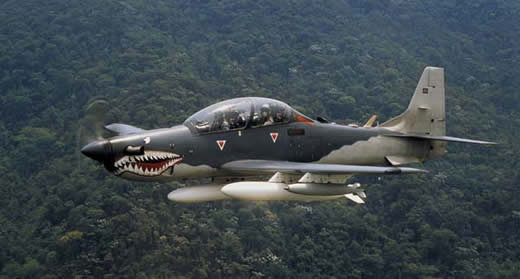
The U.S. Air Force selects A-29 Super Tucano for the Light Attack Aircraft Program. Photo: Embraer
The U.S. Air Force announced that it has selected the Embraer A-29 Super Tucano for the Light Air Support (LAS) program. The aircraft will be supplied in partnership with Sierra Nevada Corporation (SNC) as the prime contractor. Other major subcontractors are FLIR Systems and Elbit Systems of America. The air force awarded SNC a firm-fixed price delivery order contract in the amount of $355 million for the initial 20 aircraft and associated support destined to equip the new Afghan Air Force. The aircraft will be used to conduct advanced flight training, aerial reconnaissance and light air support operations by partner nations including Afghanistan. The amount also covers training devices for pilot and maintenance training, as well as support equipment.
Following the Air Force decision, Hawker Beechcraft, which lost the bid with its AT-6 moved to block the Air Force contract process, filing a lawsuit at the Court of Federal Claims over its exclusion from the bidding process. The court ruling for a temporary restraining order is expected next week (Jan. 11, 2012), leading the U.S. Air Force to issue a stop-work order on January 4, 2011.
The U.S. Air Force selects A-29 Super Tucano for the Light Attack Aircraft Program. Photo: Embraer
Planning to field the first LAS aircraft in 2013, before the planned withdrawal from Afghanistan, the Air Force was seeking a non-developmental solution for the LAS mission, one that provides the versatility, engagement, and persistence that the warfighter needs in a counterinsurgency environment, at a significantly lower cost than fighter jets. The A-29 Super Tucano built specifically for counterinsurgency missions is already operating with five air forces. Over 150 A-29s are now in operation around the world have logged over 130,000 flight hours, including more than 18,000 combat hours without any combat loss.
The aircraft is built to operate from and operate in extremely rugged terrain and austere conditions, providing intelligence, surveillance, and reconnaissance (ISR) support in addition to the light attack role, delivering a wide variety of munitions including precision guided weapons.
The A-29 Super Tucano will be built in the new production facility in Jacksonville FL. The company will also supply the ground training devices (GTD) – simulators and planning stations; and spare parts. Training operations will be provided in Clovis, NM. SNC will provide in-field logistic support and pilot and maintenance training. More than 70 U.S. suppliers in 21 states will supply parts or services for this contract.
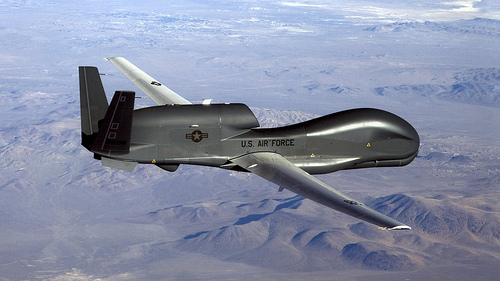
Japan plans to acquire three Northrop Grumman RQ-4 Global Hawk, to bolster its offshore surveillance capability over the disputed areas in the East China Sea.
A major multi-million deal to sell South Korea four Northrop Grumman RQ-4 Global Hawk UAVs has been placed on hold, possibly for another year. South Korea’s Yonhap News Agency filed a report stating that the deal will be delayed, and might even be cancelled, due to a disagreement over costs and delays in getting formal US government approval for the sale.
The Yonhap report indicates that South Korean leaders are dissatisfied with cost increases and now want to consider other options. Originally, the cited cost was approximately $379 million, but later cost estimates placed the price much closer to a total of $800 million. The price included replacement parts, ground systems, and other necessary equipment.
RQ-4 Global hawk - Seoul is delaying procurement decision
South Korean leaders recognize a critical need to equip their field commanders with an effective unmanned recon and surveillance vehicle, but budget restraints are a crucial factor in any decision on which vehicle to buy. The Yonhap report indicates that South Korea will be looking at alternatives including the AeroVironment Global Observer and Boeing’s Phantom Eye as part of a revised acquisition plan.
Although the South Korean deal may not become reality, Japan and Australia, among other Pacific nations, have expressed significant interest in procuring the Global Hawk. Northrop Grumman is also completing negotiations with NATO representatives to make the Global Hawk the featured UAV in NATO’s Ground Surveillance project.
As fiscal constraints become increasingly important in future defense expenditures, defense contractors worldwide need to seek out and lock up procurement deals on an expanded and extremely competitive international stage to increase profits.
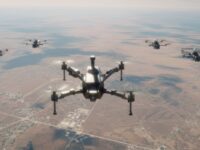
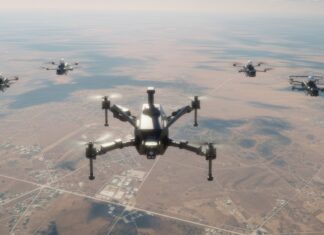
Lockheed Martin Skunk Works® and XTEND have achieved a major milestone in JADC2 by integrating the XOS operating system with the MDCX™ autonomy platform. This technical breakthrough enables a single operator to simultaneously command multiple drone classes, eliminating the friction of mission handoffs. From “marsupial” drone deployments to operating in GPS-denied environments, explore how this collaboration is abbreviating the data-to-decision timeline and redefining autonomous mission execution.
As traditional defense primes face mounting competition from agile “neoprimes” such as Anduril, Palantir and Helsing, the balance of innovation is shifting toward software-defined warfare and scalable, dual-use technologies, while global industry consolidation—marked by Boeing’s integration of Spirit AeroSystems and other strategic mergers—signals an intensified race to secure control over the defense technology value chain. Our Defense-Tech weekly report highlights these trends.
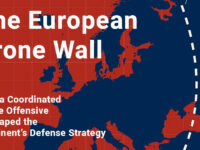
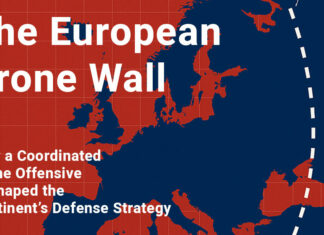
In early October 2025, a coordinated wave of unmanned aerial system (UAS) incursions—widely attributed to Russia—targeted critical infrastructure across at least ten European nations. The unprecedented campaign exposed the fragility of Europe’s air defenses and triggered a continent-wide response now known as the “Drone Wall” initiative.
The new report, Drone Wall: Europe’s Response to the October 2025 Drone Incursions, offers a detailed account of these events and their far-reaching implications for defense strategy, procurement, and industry dynamics. The report traces the evolution from initial attacks to the rapid formation of a unified European effort to counter the growing drone threat.
A Strategic Wake-Up Call
The October attacks underscored a new reality of hybrid warfare: adversaries can achieve strategic effects using low-cost drones that overwhelm traditional defenses. Expensive missile systems and fighter aircraft were forced into reactive roles—unsustainable against swarms of expendable aerial threats.
The Drone Wall initiative emerged as a direct response. Backed by the European Commission, NATO, and several EU member states, the program aims to establish a multi-layered, networked defense grid across the continent, integrating detection, electronic warfare, and kinetic interception capabilities.
Inside the Report
The Drone Wall study examines:
The chronology and scope of the European drone incursion campaign.
The tactics, systems, and motivations behind the attacks.
The operational and psychological impact on European states.
Identified defense gaps and the architecture of the “Drone Wall” response.
The complex procurement framework involves the EU, member states, and NATO.
Market opportunities for counter-UAS (C-UAS) systems, radars, and C2 integration.
Industry Implications
The creation of the Drone Wall represents the most significant market opportunity for C-UAS technology in a generation. Demand is rising for integrated, affordable, and scalable systems capable of delivering the full kill chain—from detection to interception—within networked command-and-control frameworks.
Firms that can offer cost-effective, multi-layered, and interoperable solutions, or partner with local European manufacturers, stand to benefit most. The report highlights the ...
Executive Summary
The past week (September 18-25, 2025) represents an inflection point where strategic defense concepts have transitioned from doctrine to tangible reality. An analysis of global events reveals four primary, interconnected trends shaping an increasingly contested international order.
#1 – European defense postures are materially hardening, with a strategic shift from deterrence by reinforcement to deterrence by denial, led by Germany’s military expansion and a firmer NATO stance on airspace violations.
#2 – the character of future warfare is rapidly maturing, driven by the industrial-scale development of collaborative combat aircraft (CCAs), the democratization of long-range precision strike capabilities, and a doctrinal revolution in armored warfare inspired by the conflict in Ukraine.
#3 – The Middle East is undergoing a profound realignment of security partnerships, catalyzed by Israeli technological breakthroughs in laser defense and a crisis of confidence in the U.S. security umbrella, culminating in a historic mutual defense pact between Saudi Arabia and Pakistan.
#4 – The Indo-Pacific theater is characterized by a sharpening of strategic competition, with the U.S. and its allies operationalizing new trilateral security structures while China intensifies its multifaceted campaign of coercion against Taiwan. Underpinning these shifts is a renewed global focus on the industrial and organizational foundations of military power, signaling that nations are now making the hard investments and difficult choices required to posture for a more dangerous and uncertain future.
You are invited to listen to the overview of this week’s report in the podcast.
.
At the 2025 Air, Space & Cyber Conference, U.S. Air Force and Space Force leaders unveiled major updates on next-generation fighters, bombers, unmanned systems, and space initiatives, highlighting both rapid innovation and critical readiness challenges as the services race to outpace global competitors. A short version is available here, with a more detailed version for subscribers.
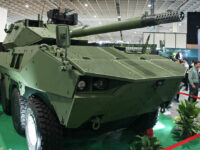
The Taipei Aerospace & Defense Technology Exhibition (TADTE) 2025 crystallized around four dominant strategic themes that collectively illustrate Taiwan’s comprehensive approach to defense modernization amid escalating regional tensions. Based on a detailed report by Pleronix (available upon request). Includes a Podcast discussion on TADTE 2025’s highlighting Taiwan’s four strategic themes beyond the post’s coverage.
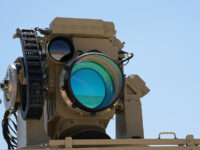
Israel’s Iron Beam 450 high-power laser system has completed final testing, marking a major leap in air defense. Developed by Rafael, it offers precise, cost-effective interception of rockets, UAVs, and mortars, and is set for IDF deployment by 2025.
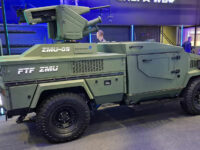
WB Group unveiled its Future Task Force (FTF) at MSPO, a new warfighting concept integrating manned, unmanned, and autonomous systems. Combining hybrid-electric vehicles, loitering munitions, and AI-enabled command tools, the FTF is designed to sustain firepower and autonomy while reducing battalion size and logistical footprint.
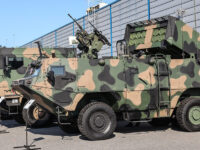
MSPO 2025 in Kielce is the premier showcase of Poland’s historic military expansion. Driven by a defense budget exceeding 4.7% of GDP, the exhibition highlights Warsaw’s ambition to become a leading European military power through its “Polonization” industrial strategy, a pivot to unmanned systems, and diverse global partnerships that are reshaping NATO’s eastern flank.
Turkey is reshaping its defense identity with record exports, KAAN fighter milestones, ALTAY tank deliveries, and the multi-layer “Steel Dome” air-defense concept. IDEF 2025 showcased these advances, alongside naval exports and unmanned systems that position Ankara as an increasingly assertive defense actor regionally and globally.
Other European Defense Updates:
Austria | Belgium | Bulgaria | Croatia | Czech Republic | Denmark | Estonia | Finland | France | Germany |
Greece | Hungary | Ireland | Italy | Latvia | Lithuania | Netherlands | NATO | Norway | Poland | Portugal |
Romania | Serbia | Slovenia | Spain | Sweden | Switzerland. For an insight into each of the countries,
click on the country name for a detailed report listing the 10 recent news items for that specific country.
Other European Defense Updates:
Austria | Belgium | Bulgaria | Croatia | Czech Republic | Denmark | Estonia | Finland | France | Germany | Hungary | Ireland | Italy | Latvia | Lithuania | Netherlands | NATO | Norway | Poland | Portugal | Romania | Serbia | Slovenia | Spain | Sweden | Switzerland.
For an insight into each of the countries, click on the country name for a detailed report listing the 10 recent news items for that specific country.
Other European Defense Updates:
Austria | Belgium | Bulgaria | Croatia | Czech Republic | Denmark | Estonia | Finland | France | Germany | Hungary | Ireland | Italy | Latvia | Lithuania | Netherlands | NATO | Norway | Poland | Portugal | Romania | Serbia | Slovenia | Sweden | Switzerland.
For an insight into each of the countries, click on the country name for a detailed report listing the 10 recent news items for that specific country.
Other European Defense Updates:
Austria | Belgium | Bulgaria | Croatia | Czech Republic | Denmark | Estonia | Finland | France | Germany | Hungary | Ireland | Italy | Latvia | Lithuania | Netherlands | NATO | Norway | Poland | Portugal | Romania | Serbia | Slovenia | Sweden | Switzerland.
For an insight into each of the countries, click on the country name for a detailed report listing the 10 recent news items for that specific country.
Other European Defense Updates:
Austria | Belgium | Bulgaria | Croatia | Czech Republic | Denmark | Estonia | Finland | France | Germany | Hungary | Ireland | Italy | Latvia | Lithuania | Netherlands | NATO | Norway | Poland | Portugal | Romania | Serbia | Slovenia | Sweden | Switzerland.
For an insight into each of the countries, click on the country name for a detailed report listing the 10 recent news items for that specific country.
Other European Defense Updates:
Austria | Belgium | Bulgaria | Croatia | Czech Republic | Denmark | Estonia | Finland | France | Germany | Hungary | Ireland | Italy | Latvia | Lithuania | Netherlands | NATO | Norway | Poland | Portugal | Romania | Serbia | Slovenia | Sweden | Switzerland.
For an insight into each of the countries, click on the country name for a detailed report listing the 10 recent news items for that specific country.
Other European Defense Updates:
Austria | Belgium | Bulgaria | Croatia | Czech Republic | Denmark | Estonia | Finland | France | Germany | Hungary | Ireland | Italy | Latvia | Lithuania | Netherlands | NATO | Norway | Poland | Portugal | Romania | Serbia | Slovenia | Sweden | Switzerland.
For an insight into each of the countries, click on the country name for a detailed report listing the 10 recent news items for that specific country.
Other European Defense Updates:
Austria | Belgium | Bulgaria | Croatia | Czech Republic | Denmark | Estonia | Finland | France | Germany | Hungary | Ireland | Italy | Latvia | Lithuania | Netherlands | NATO | Norway | Poland | Portugal | Romania | Serbia | Slovenia | Sweden | Switzerland.
For an insight into each of the countries, click on the country name for a detailed report listing the 10 recent news items for that specific country.
Other European Defense Updates:
Austria | Belgium | Bulgaria | Croatia | Czech Republic | Denmark | Estonia | Finland | France | Germany | Hungary | Ireland | Italy | Latvia | Lithuania | Netherlands | NATO | Norway | Poland | Portugal | Romania | Serbia | Slovenia | Sweden | Switzerland.
For an insight into each of the countries, click on the country name for a detailed report listing the 10 recent news items for that specific country.
Other European Defense Updates:
Austria | Belgium | Bulgaria | Croatia | Czech Republic | Denmark | Estonia | Finland | France | Germany | Hungary | Ireland | Italy | Latvia | Lithuania | Netherlands | NATO | Norway | Poland | Portugal | Romania | Serbia | Slovenia | Sweden | Switzerland.
For an insight into each of the countries, click on the country name for a detailed report listing the 10 recent news items for that specific country.
Other European Defense Updates:
Austria | Belgium | Bulgaria | Croatia | Czech Republic | Denmark | Estonia | Finland | France | Germany |
Greece | Hungary | Ireland | Italy | Latvia | Lithuania | Netherlands | NATO | Norway | Poland | Portugal |
Romania | Serbia | Slovenia | Spain | Sweden | Switzerland. For an insight into each of the countries,
click on the country name for a detailed report listing the 10 recent news items for that specific country.
Other European Defense Updates:
Austria | Belgium | Bulgaria | Croatia | Czech Republic | Denmark | Estonia | Finland | France | Germany | Hungary | Ireland | Italy | Latvia | Lithuania | Netherlands | NATO | Norway | Poland | Portugal | Romania | Serbia | Slovenia | Spain | Sweden | Switzerland.
For an insight into each of the countries, click on the country name for a detailed report listing the 10 recent news items for that specific country.
Other European Defense Updates:
Austria | Belgium | Bulgaria | Croatia | Czech Republic | Denmark | Estonia | Finland | France | Germany | Hungary | Ireland | Italy | Latvia | Lithuania | Netherlands | NATO | Norway | Poland | Portugal | Romania | Serbia | Slovenia | Sweden | Switzerland.
For an insight into each of the countries, click on the country name for a detailed report listing the 10 recent news items for that specific country.
Other European Defense Updates:
Austria | Belgium | Bulgaria | Croatia | Czech Republic | Denmark | Estonia | Finland | France | Germany | Hungary | Ireland | Italy | Latvia | Lithuania | Netherlands | NATO | Norway | Poland | Portugal | Romania | Serbia | Slovenia | Sweden | Switzerland.
For an insight into each of the countries, click on the country name for a detailed report listing the 10 recent news items for that specific country.
Other European Defense Updates:
Austria | Belgium | Bulgaria | Croatia | Czech Republic | Denmark | Estonia | Finland | France | Germany | Hungary | Ireland | Italy | Latvia | Lithuania | Netherlands | NATO | Norway | Poland | Portugal | Romania | Serbia | Slovenia | Sweden | Switzerland.
For an insight into each of the countries, click on the country name for a detailed report listing the 10 recent news items for that specific country.
Other European Defense Updates:
Austria | Belgium | Bulgaria | Croatia | Czech Republic | Denmark | Estonia | Finland | France | Germany | Hungary | Ireland | Italy | Latvia | Lithuania | Netherlands | NATO | Norway | Poland | Portugal | Romania | Serbia | Slovenia | Sweden | Switzerland.
For an insight into each of the countries, click on the country name for a detailed report listing the 10 recent news items for that specific country.
Other European Defense Updates:
Austria | Belgium | Bulgaria | Croatia | Czech Republic | Denmark | Estonia | Finland | France | Germany | Hungary | Ireland | Italy | Latvia | Lithuania | Netherlands | NATO | Norway | Poland | Portugal | Romania | Serbia | Slovenia | Sweden | Switzerland.
For an insight into each of the countries, click on the country name for a detailed report listing the 10 recent news items for that specific country.
Other European Defense Updates:
Austria | Belgium | Bulgaria | Croatia | Czech Republic | Denmark | Estonia | Finland | France | Germany | Hungary | Ireland | Italy | Latvia | Lithuania | Netherlands | NATO | Norway | Poland | Portugal | Romania | Serbia | Slovenia | Sweden | Switzerland.
For an insight into each of the countries, click on the country name for a detailed report listing the 10 recent news items for that specific country.
Other European Defense Updates:
Austria | Belgium | Bulgaria | Croatia | Czech Republic | Denmark | Estonia | Finland | France | Germany | Hungary | Ireland | Italy | Latvia | Lithuania | Netherlands | NATO | Norway | Poland | Portugal | Romania | Serbia | Slovenia | Sweden | Switzerland.
For an insight into each of the countries, click on the country name for a detailed report listing the 10 recent news items for that specific country.
Other European Defense Updates:
Austria | Belgium | Bulgaria | Croatia | Czech Republic | Denmark | Estonia | Finland | France | Germany | Hungary | Ireland | Italy | Latvia | Lithuania | Netherlands | NATO | Norway | Poland | Portugal | Romania | Serbia | Slovenia | Sweden | Switzerland.
For an insight into each of the countries, click on the country name for a detailed report listing the 10 recent news items for that specific country.
Lockheed Martin Skunk Works® and XTEND have achieved a major milestone in JADC2 by integrating the XOS operating system with the MDCX™ autonomy platform. This technical breakthrough enables a single operator to simultaneously command multiple drone classes, eliminating the friction of mission handoffs. From “marsupial” drone deployments to operating in GPS-denied environments, explore how this collaboration is abbreviating the data-to-decision timeline and redefining autonomous mission execution.
As traditional defense primes face mounting competition from agile “neoprimes” such as Anduril, Palantir and Helsing, the balance of innovation is shifting toward software-defined warfare and scalable, dual-use technologies, while global industry consolidation—marked by Boeing’s integration of Spirit AeroSystems and other strategic mergers—signals an intensified race to secure control over the defense technology value chain. Our Defense-Tech weekly report highlights these trends.
In early October 2025, a coordinated wave of unmanned aerial system (UAS) incursions—widely attributed to Russia—targeted critical infrastructure across at least ten European nations. The unprecedented campaign exposed the fragility of Europe’s air defenses and triggered a continent-wide response now known as the “Drone Wall” initiative.
The new report, Drone Wall: Europe’s Response to the October 2025 Drone Incursions, offers a detailed account of these events and their far-reaching implications for defense strategy, procurement, and industry dynamics. The report traces the evolution from initial attacks to the rapid formation of a unified European effort to counter the growing drone threat.
A Strategic Wake-Up Call
The October attacks underscored a new reality of hybrid warfare: adversaries can achieve strategic effects using low-cost drones that overwhelm traditional defenses. Expensive missile systems and fighter aircraft were forced into reactive roles—unsustainable against swarms of expendable aerial threats.
The Drone Wall initiative emerged as a direct response. Backed by the European Commission, NATO, and several EU member states, the program aims to establish a multi-layered, networked defense grid across the continent, integrating detection, electronic warfare, and kinetic interception capabilities.
Inside the Report
The Drone Wall study examines:
The chronology and scope of the European drone incursion campaign.
The tactics, systems, and motivations behind the attacks.
The operational and psychological impact on European states.
Identified defense gaps and the architecture of the “Drone Wall” response.
The complex procurement framework involves the EU, member states, and NATO.
Market opportunities for counter-UAS (C-UAS) systems, radars, and C2 integration.
Industry Implications
The creation of the Drone Wall represents the most significant market opportunity for C-UAS technology in a generation. Demand is rising for integrated, affordable, and scalable systems capable of delivering the full kill chain—from detection to interception—within networked command-and-control frameworks.
Firms that can offer cost-effective, multi-layered, and interoperable solutions, or partner with local European manufacturers, stand to benefit most. The report highlights the ...
Executive Summary
The past week (September 18-25, 2025) represents an inflection point where strategic defense concepts have transitioned from doctrine to tangible reality. An analysis of global events reveals four primary, interconnected trends shaping an increasingly contested international order.
#1 – European defense postures are materially hardening, with a strategic shift from deterrence by reinforcement to deterrence by denial, led by Germany’s military expansion and a firmer NATO stance on airspace violations.
#2 – the character of future warfare is rapidly maturing, driven by the industrial-scale development of collaborative combat aircraft (CCAs), the democratization of long-range precision strike capabilities, and a doctrinal revolution in armored warfare inspired by the conflict in Ukraine.
#3 – The Middle East is undergoing a profound realignment of security partnerships, catalyzed by Israeli technological breakthroughs in laser defense and a crisis of confidence in the U.S. security umbrella, culminating in a historic mutual defense pact between Saudi Arabia and Pakistan.
#4 – The Indo-Pacific theater is characterized by a sharpening of strategic competition, with the U.S. and its allies operationalizing new trilateral security structures while China intensifies its multifaceted campaign of coercion against Taiwan. Underpinning these shifts is a renewed global focus on the industrial and organizational foundations of military power, signaling that nations are now making the hard investments and difficult choices required to posture for a more dangerous and uncertain future.
You are invited to listen to the overview of this week’s report in the podcast.
.
At the 2025 Air, Space & Cyber Conference, U.S. Air Force and Space Force leaders unveiled major updates on next-generation fighters, bombers, unmanned systems, and space initiatives, highlighting both rapid innovation and critical readiness challenges as the services race to outpace global competitors. A short version is available here, with a more detailed version for subscribers.
The Taipei Aerospace & Defense Technology Exhibition (TADTE) 2025 crystallized around four dominant strategic themes that collectively illustrate Taiwan’s comprehensive approach to defense modernization amid escalating regional tensions. Based on a detailed report by Pleronix (available upon request). Includes a Podcast discussion on TADTE 2025’s highlighting Taiwan’s four strategic themes beyond the post’s coverage.
Israel’s Iron Beam 450 high-power laser system has completed final testing, marking a major leap in air defense. Developed by Rafael, it offers precise, cost-effective interception of rockets, UAVs, and mortars, and is set for IDF deployment by 2025.
WB Group unveiled its Future Task Force (FTF) at MSPO, a new warfighting concept integrating manned, unmanned, and autonomous systems. Combining hybrid-electric vehicles, loitering munitions, and AI-enabled command tools, the FTF is designed to sustain firepower and autonomy while reducing battalion size and logistical footprint.
MSPO 2025 in Kielce is the premier showcase of Poland’s historic military expansion. Driven by a defense budget exceeding 4.7% of GDP, the exhibition highlights Warsaw’s ambition to become a leading European military power through its “Polonization” industrial strategy, a pivot to unmanned systems, and diverse global partnerships that are reshaping NATO’s eastern flank.
Turkey is reshaping its defense identity with record exports, KAAN fighter milestones, ALTAY tank deliveries, and the multi-layer “Steel Dome” air-defense concept. IDEF 2025 showcased these advances, alongside naval exports and unmanned systems that position Ankara as an increasingly assertive defense actor regionally and globally.
Lockheed Martin Skunk Works® and XTEND have achieved a major milestone in JADC2 by integrating the XOS operating system with the MDCX™ autonomy platform. This technical breakthrough enables a single operator to simultaneously command multiple drone classes, eliminating the friction of mission handoffs. From “marsupial” drone deployments to operating in GPS-denied environments, explore how this collaboration is abbreviating the data-to-decision timeline and redefining autonomous mission execution.
As traditional defense primes face mounting competition from agile “neoprimes” such as Anduril, Palantir and Helsing, the balance of innovation is shifting toward software-defined warfare and scalable, dual-use technologies, while global industry consolidation—marked by Boeing’s integration of Spirit AeroSystems and other strategic mergers—signals an intensified race to secure control over the defense technology value chain. Our Defense-Tech weekly report highlights these trends.
In early October 2025, a coordinated wave of unmanned aerial system (UAS) incursions—widely attributed to Russia—targeted critical infrastructure across at least ten European nations. The unprecedented campaign exposed the fragility of Europe’s air defenses and triggered a continent-wide response now known as the “Drone Wall” initiative.
The new report, Drone Wall: Europe’s Response to the October 2025 Drone Incursions, offers a detailed account of these events and their far-reaching implications for defense strategy, procurement, and industry dynamics. The report traces the evolution from initial attacks to the rapid formation of a unified European effort to counter the growing drone threat.
A Strategic Wake-Up Call
The October attacks underscored a new reality of hybrid warfare: adversaries can achieve strategic effects using low-cost drones that overwhelm traditional defenses. Expensive missile systems and fighter aircraft were forced into reactive roles—unsustainable against swarms of expendable aerial threats.
The Drone Wall initiative emerged as a direct response. Backed by the European Commission, NATO, and several EU member states, the program aims to establish a multi-layered, networked defense grid across the continent, integrating detection, electronic warfare, and kinetic interception capabilities.
Inside the Report
The Drone Wall study examines:
The chronology and scope of the European drone incursion campaign.
The tactics, systems, and motivations behind the attacks.
The operational and psychological impact on European states.
Identified defense gaps and the architecture of the “Drone Wall” response.
The complex procurement framework involves the EU, member states, and NATO.
Market opportunities for counter-UAS (C-UAS) systems, radars, and C2 integration.
Industry Implications
The creation of the Drone Wall represents the most significant market opportunity for C-UAS technology in a generation. Demand is rising for integrated, affordable, and scalable systems capable of delivering the full kill chain—from detection to interception—within networked command-and-control frameworks.
Firms that can offer cost-effective, multi-layered, and interoperable solutions, or partner with local European manufacturers, stand to benefit most. The report highlights the ...
Executive Summary
The past week (September 18-25, 2025) represents an inflection point where strategic defense concepts have transitioned from doctrine to tangible reality. An analysis of global events reveals four primary, interconnected trends shaping an increasingly contested international order.
#1 – European defense postures are materially hardening, with a strategic shift from deterrence by reinforcement to deterrence by denial, led by Germany’s military expansion and a firmer NATO stance on airspace violations.
#2 – the character of future warfare is rapidly maturing, driven by the industrial-scale development of collaborative combat aircraft (CCAs), the democratization of long-range precision strike capabilities, and a doctrinal revolution in armored warfare inspired by the conflict in Ukraine.
#3 – The Middle East is undergoing a profound realignment of security partnerships, catalyzed by Israeli technological breakthroughs in laser defense and a crisis of confidence in the U.S. security umbrella, culminating in a historic mutual defense pact between Saudi Arabia and Pakistan.
#4 – The Indo-Pacific theater is characterized by a sharpening of strategic competition, with the U.S. and its allies operationalizing new trilateral security structures while China intensifies its multifaceted campaign of coercion against Taiwan. Underpinning these shifts is a renewed global focus on the industrial and organizational foundations of military power, signaling that nations are now making the hard investments and difficult choices required to posture for a more dangerous and uncertain future.
You are invited to listen to the overview of this week’s report in the podcast.
.
At the 2025 Air, Space & Cyber Conference, U.S. Air Force and Space Force leaders unveiled major updates on next-generation fighters, bombers, unmanned systems, and space initiatives, highlighting both rapid innovation and critical readiness challenges as the services race to outpace global competitors. A short version is available here, with a more detailed version for subscribers.
The Taipei Aerospace & Defense Technology Exhibition (TADTE) 2025 crystallized around four dominant strategic themes that collectively illustrate Taiwan’s comprehensive approach to defense modernization amid escalating regional tensions. Based on a detailed report by Pleronix (available upon request). Includes a Podcast discussion on TADTE 2025’s highlighting Taiwan’s four strategic themes beyond the post’s coverage.
Israel’s Iron Beam 450 high-power laser system has completed final testing, marking a major leap in air defense. Developed by Rafael, it offers precise, cost-effective interception of rockets, UAVs, and mortars, and is set for IDF deployment by 2025.
WB Group unveiled its Future Task Force (FTF) at MSPO, a new warfighting concept integrating manned, unmanned, and autonomous systems. Combining hybrid-electric vehicles, loitering munitions, and AI-enabled command tools, the FTF is designed to sustain firepower and autonomy while reducing battalion size and logistical footprint.
MSPO 2025 in Kielce is the premier showcase of Poland’s historic military expansion. Driven by a defense budget exceeding 4.7% of GDP, the exhibition highlights Warsaw’s ambition to become a leading European military power through its “Polonization” industrial strategy, a pivot to unmanned systems, and diverse global partnerships that are reshaping NATO’s eastern flank.
Turkey is reshaping its defense identity with record exports, KAAN fighter milestones, ALTAY tank deliveries, and the multi-layer “Steel Dome” air-defense concept. IDEF 2025 showcased these advances, alongside naval exports and unmanned systems that position Ankara as an increasingly assertive defense actor regionally and globally.
Lockheed Martin Skunk Works® and XTEND have achieved a major milestone in JADC2 by integrating the XOS operating system with the MDCX™ autonomy platform. This technical breakthrough enables a single operator to simultaneously command multiple drone classes, eliminating the friction of mission handoffs. From “marsupial” drone deployments to operating in GPS-denied environments, explore how this collaboration is abbreviating the data-to-decision timeline and redefining autonomous mission execution.
As traditional defense primes face mounting competition from agile “neoprimes” such as Anduril, Palantir and Helsing, the balance of innovation is shifting toward software-defined warfare and scalable, dual-use technologies, while global industry consolidation—marked by Boeing’s integration of Spirit AeroSystems and other strategic mergers—signals an intensified race to secure control over the defense technology value chain. Our Defense-Tech weekly report highlights these trends.
In early October 2025, a coordinated wave of unmanned aerial system (UAS) incursions—widely attributed to Russia—targeted critical infrastructure across at least ten European nations. The unprecedented campaign exposed the fragility of Europe’s air defenses and triggered a continent-wide response now known as the “Drone Wall” initiative.
The new report, Drone Wall: Europe’s Response to the October 2025 Drone Incursions, offers a detailed account of these events and their far-reaching implications for defense strategy, procurement, and industry dynamics. The report traces the evolution from initial attacks to the rapid formation of a unified European effort to counter the growing drone threat.
A Strategic Wake-Up Call
The October attacks underscored a new reality of hybrid warfare: adversaries can achieve strategic effects using low-cost drones that overwhelm traditional defenses. Expensive missile systems and fighter aircraft were forced into reactive roles—unsustainable against swarms of expendable aerial threats.
The Drone Wall initiative emerged as a direct response. Backed by the European Commission, NATO, and several EU member states, the program aims to establish a multi-layered, networked defense grid across the continent, integrating detection, electronic warfare, and kinetic interception capabilities.
Inside the Report
The Drone Wall study examines:
The chronology and scope of the European drone incursion campaign.
The tactics, systems, and motivations behind the attacks.
The operational and psychological impact on European states.
Identified defense gaps and the architecture of the “Drone Wall” response.
The complex procurement framework involves the EU, member states, and NATO.
Market opportunities for counter-UAS (C-UAS) systems, radars, and C2 integration.
Industry Implications
The creation of the Drone Wall represents the most significant market opportunity for C-UAS technology in a generation. Demand is rising for integrated, affordable, and scalable systems capable of delivering the full kill chain—from detection to interception—within networked command-and-control frameworks.
Firms that can offer cost-effective, multi-layered, and interoperable solutions, or partner with local European manufacturers, stand to benefit most. The report highlights the ...
Executive Summary
The past week (September 18-25, 2025) represents an inflection point where strategic defense concepts have transitioned from doctrine to tangible reality. An analysis of global events reveals four primary, interconnected trends shaping an increasingly contested international order.
#1 – European defense postures are materially hardening, with a strategic shift from deterrence by reinforcement to deterrence by denial, led by Germany’s military expansion and a firmer NATO stance on airspace violations.
#2 – the character of future warfare is rapidly maturing, driven by the industrial-scale development of collaborative combat aircraft (CCAs), the democratization of long-range precision strike capabilities, and a doctrinal revolution in armored warfare inspired by the conflict in Ukraine.
#3 – The Middle East is undergoing a profound realignment of security partnerships, catalyzed by Israeli technological breakthroughs in laser defense and a crisis of confidence in the U.S. security umbrella, culminating in a historic mutual defense pact between Saudi Arabia and Pakistan.
#4 – The Indo-Pacific theater is characterized by a sharpening of strategic competition, with the U.S. and its allies operationalizing new trilateral security structures while China intensifies its multifaceted campaign of coercion against Taiwan. Underpinning these shifts is a renewed global focus on the industrial and organizational foundations of military power, signaling that nations are now making the hard investments and difficult choices required to posture for a more dangerous and uncertain future.
You are invited to listen to the overview of this week’s report in the podcast.
.
At the 2025 Air, Space & Cyber Conference, U.S. Air Force and Space Force leaders unveiled major updates on next-generation fighters, bombers, unmanned systems, and space initiatives, highlighting both rapid innovation and critical readiness challenges as the services race to outpace global competitors. A short version is available here, with a more detailed version for subscribers.
The Taipei Aerospace & Defense Technology Exhibition (TADTE) 2025 crystallized around four dominant strategic themes that collectively illustrate Taiwan’s comprehensive approach to defense modernization amid escalating regional tensions. Based on a detailed report by Pleronix (available upon request). Includes a Podcast discussion on TADTE 2025’s highlighting Taiwan’s four strategic themes beyond the post’s coverage.
Israel’s Iron Beam 450 high-power laser system has completed final testing, marking a major leap in air defense. Developed by Rafael, it offers precise, cost-effective interception of rockets, UAVs, and mortars, and is set for IDF deployment by 2025.
WB Group unveiled its Future Task Force (FTF) at MSPO, a new warfighting concept integrating manned, unmanned, and autonomous systems. Combining hybrid-electric vehicles, loitering munitions, and AI-enabled command tools, the FTF is designed to sustain firepower and autonomy while reducing battalion size and logistical footprint.
MSPO 2025 in Kielce is the premier showcase of Poland’s historic military expansion. Driven by a defense budget exceeding 4.7% of GDP, the exhibition highlights Warsaw’s ambition to become a leading European military power through its “Polonization” industrial strategy, a pivot to unmanned systems, and diverse global partnerships that are reshaping NATO’s eastern flank.
Turkey is reshaping its defense identity with record exports, KAAN fighter milestones, ALTAY tank deliveries, and the multi-layer “Steel Dome” air-defense concept. IDEF 2025 showcased these advances, alongside naval exports and unmanned systems that position Ankara as an increasingly assertive defense actor regionally and globally.
Lockheed Martin Skunk Works® and XTEND have achieved a major milestone in JADC2 by integrating the XOS operating system with the MDCX™ autonomy platform. This technical breakthrough enables a single operator to simultaneously command multiple drone classes, eliminating the friction of mission handoffs. From "marsupial" drone deployments to operating in GPS-denied environments, explore how this collaboration is abbreviating the data-to-decision timeline and redefining autonomous mission execution.
As traditional defense primes face mounting competition from agile “neoprimes” such as Anduril, Palantir and Helsing, the balance of innovation is shifting toward software-defined warfare and scalable, dual-use technologies, while global industry consolidation—marked by Boeing’s integration of Spirit AeroSystems and other strategic mergers—signals an intensified race to secure control over the defense technology value chain. Our Defense-Tech weekly report highlights these trends.
In early October 2025, a coordinated wave of unmanned aerial system (UAS) incursions—widely attributed to Russia—targeted critical infrastructure across at least ten European nations. The unprecedented campaign exposed the fragility of Europe’s air defenses...
Executive Summary
The past week (September 18-25, 2025) represents an inflection point where strategic defense concepts have transitioned from doctrine to tangible reality. An analysis of global events reveals four primary, interconnected trends shaping an...
At the 2025 Air, Space & Cyber Conference, U.S. Air Force and Space Force leaders unveiled major updates on next-generation fighters, bombers, unmanned systems, and space initiatives, highlighting both rapid innovation and critical readiness challenges as the services race to outpace global competitors. A short version is available here, with a more detailed version for subscribers.
The Taipei Aerospace & Defense Technology Exhibition (TADTE) 2025 crystallized around four dominant strategic themes that collectively illustrate Taiwan's comprehensive approach to defense modernization amid escalating regional tensions. Based on a detailed report by Pleronix (available upon request). Includes a Podcast discussion on TADTE 2025's highlighting Taiwan's four strategic themes beyond the post's coverage.
Israel’s Iron Beam 450 high-power laser system has completed final testing, marking a major leap in air defense. Developed by Rafael, it offers precise, cost-effective interception of rockets, UAVs, and mortars, and is set for IDF deployment by 2025.