Tuesday, December 23, 2025
More
    Home Blog Page 405

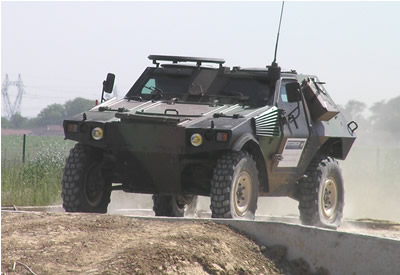
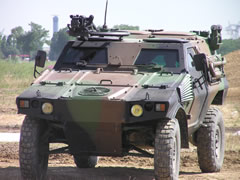
    Light Multi-Role Vehicle (LMV)

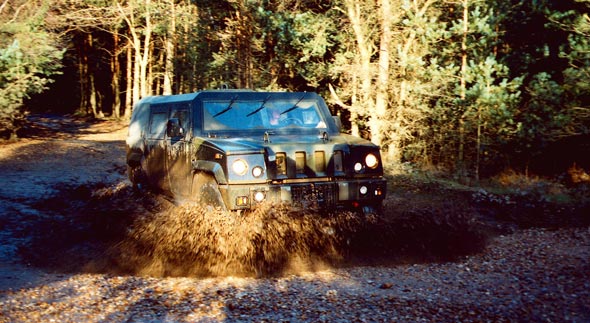
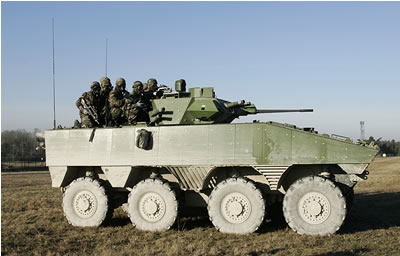
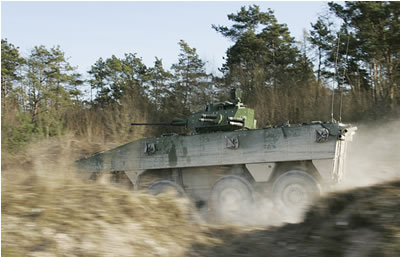
    The Iveco LMV.

    The new family of light armored 4×4 vehicles developed by Iveco for the Italian Army is available in soft-skinned or armored versions. 2,500 are in production for the Italian Army. Further orders for LMV derivatives are in production for the UK (MLV) and Belgian armies.

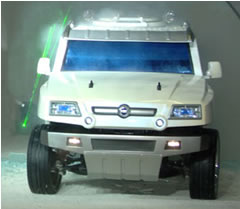
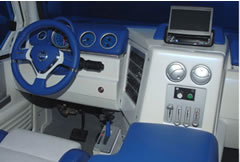
    In December 2005, FIAT introduced a commercial derivative of the LMV named “FIAT Oltre”. Yet described as a “show car”, the new vehicle is positioned as a promising candidate for off-road rallies, and is considered to enter the market next year, competing with premium off-road vehicles such as the Hummer H-2, H-3.

    While maintaining the basic structure and external design of the military vehicle, the front section and interior are radically redesigned to match the luxury vehicle class comfort. The Fiat Oltre’s is designed with tubular structure, providing four roll-bars for improved cross-country driving safety.

    Traveling at speeds of over 130 km/hr, Oltre uses the Iveco Common Rail diesel engine, a 6-speed automatic gearbox, permanent 4×4 transmission, and extra load tyres. With accommodation for five passengers, the fully loaded seven ton vehicle carries up to three tons of payload.

    Austria is buying 150 Light Multi-role Vehicles (LMV) from Iveco. According to an announcement by Iveco, the company will deliver the vehicles in seven configurations. The vehicles will be equipped with a new remotely operated weapon station model developed by Elbit System. LMV is currently operated by the armies of Italy, Norway, Spain and Belgium. The UK, Spain has also taken deliveries of a version of the LMV known as Panther. This vehicle has recently completed operational testing and is scheduled to enter operational activity soon. Croatia, the Czech Republic have also received small quantities of the LMV vehicles for evaluation, supporting their peacekeeping forces.

    VBR – Panhard

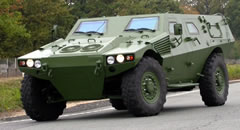
    The latest wheeled armored vehicle from Panhard is the VBR, an all-protected high mobility platform.  This vehicle is a 10 ton class 4×4 wheeled APC with a combat weight of 7.5 tons, and a payload of 2.2 ton payload capability. The VBR is well protected against small arms, anti-tank mines and CBR threats. The vehicle will be equipped with an overhead remote control weapon station. It can be equipped with a variety of weapon systems, including a 40mm automatic gun or multi-purpose/air-defense missile turret. Panhard expects VBR to address the requirements of the French Army for a future close-contact battle. Also in development is the AVXL, a fully protected command vehicle, which can be configured to carry up to eight fully equipped troops.

    VBL – Panhard

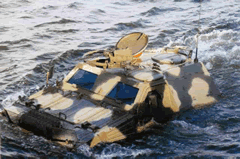
    VBL is a 4 ton class 4×4 armored vehicle offered in short or long versions, offered in various configurations including infantry carrier, scout, intelligence and EW, liaison, security, command, anti-tank and anti-aircraft roles. Over 2,400 are operational or on order with 15 world armies. The vehicle offers high mobility on land, and has full amphibious capability. It is also deployable on helicopters and transport aircraft, such as C-160 and C-130. The VBL has an integral steel armored hull, providing protection against 7.62mm and fragmentation, and anti-personnel mines. It has a payload of 1 ton, including crew and armament.

    Modern Infantry Systems at the 2006 Eurosatory Exhibition

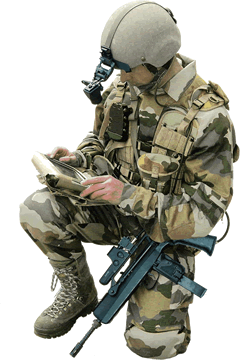
    Several companies displayed the results of infantry combat systems development programs, as well as generic upgrades for infantry weapons, protection, sensors, communications etc. At Eurosatory, the most prominent was undoubtedly FELIN. Displayed in public for the first time by Sagem, FELIN is currently in full scale development, in preparation for scheduled delivery to the French Army next year.

    Other European systems displayed here included EADS’ German Army Infantry of the Future (idZ) Program launched in 2004; the Italian Soldato Futuro program developed by Finmeccanica and systems designed for the Canadian Future Infantry Program, currently under development at Oerlikon Contraves. Several Israeli programs were represented, including the AISS developed by ITL and the IDF Future Infantry Suite, currently under development at Elbit Systems. IAI/MLM and IMI jointly demonstrated the MPRS DTACT weapon integrated sensor and C3 system. Thales demonstrated the FIST infantry combat suite, under development for the British Army.

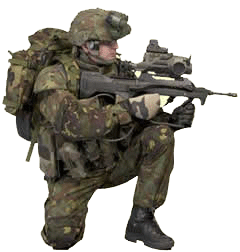
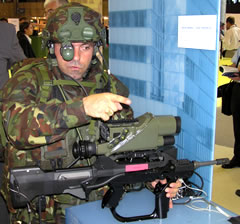
    An operational FELIN demonstration was presented in public for the first time during Eurosatory 2006. The system on display included equipment suites for a dismounted grenadier and commander as well as the associated vehicular components, which would be carried on a VAB armored troop carrier. The soldier’s systems included operational helmet mounted cameras and displays, wearable computers and weapon’s mounted cameras and sighting systems. In a typical grenadier configuration, the entire FELIN ensemble will weigh 24 kg, including the modified FAMAS rifle, electronic and optronic devices, communications gear, day and night vision devices as well as supplies including ammunition, food and water required to sustain troops for 24 hours of operation.

    Felin will be deployed in two configurations. The near term FELIN V1 program calls for the delivery of 22,600 units for 20 infantry regiments and 9,000 systems for soldiers in armored units, beginning with 358 pre-series units to be delivered by February 2007 for a year long French Army trial. Mass production is scheduled to start in 2008. This phase will focus on the delivery of optronic systems, and will be followed by the delivery of advanced versions, known as FELIN V2 planned for production by 2015.

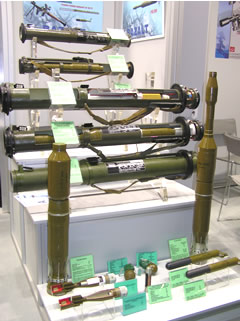
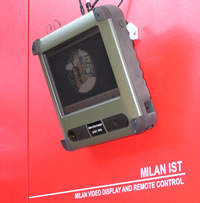
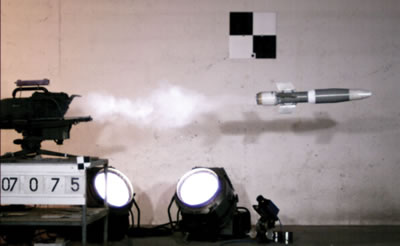
    Several new Multi-Purpose Anti-tank weapons designed for dismounted operations were displayed. Among these were the new Milan ER, and the latest version of the RPG-29, equipped with tandem HEAT warhead, which can penetrate explosive reactive armor, and a thermobaric warhead effective against buildings and enclosures.

    Start < Page 1 of 3 >

    VBCI Armored Personnel Carrier

    GIAT demonstrated the latest VBCI prototype at Eurosatory 2006. The 8×8 VBCI infantry combat vehicle developed by GIAT will replace the AMX-10P in French Army service and will operate as part of the medium weight force with other wheeled vehicles, such as the VBL and AMX-10RC. The VBCI will equip heavy forces, accompanying the Leclerc tanks. By 2008, GIAT is scheduled to deliver the first batch of 85 vehicles. The complete program calls for the production of 700 vehicles (550 VCIs and 150 VPCs).

    Two versions of the vehicle are currently under production – the VCI Infantry Fighting vehicle, equipped with a manned turret with a GIAT 25mm M811dual feed cannon and 7.62mm coaxial machine gun. The VPC will be armed with an FN Herstal Arrows-300 class remote controlled weapon station mounting a 12.7mm machine gun and the SIR regimental information system. Also installed are a gunner’s thermal sight provided by Thales and a panoramic sight for the commander, delivered by Sagem and Galileo.

    The command vehicle is the second version of VBCI. It is fitted with SIT-V1information consoles, linked to the Army Tactical Information Network and Regimental Battle Management System (BMS) manufactured by EADS and Thales. The vehicle is equipped with an Arrows-300 remote controlled MG turret operated from within the vehicle. A consortium set by GIAT and Renault, which also provides the engines, is producing the first 85 from planned 700 vehicles on order for the French Army. The first five vehicles (four IFVs and one command vehicle)  is undergoing qualification trials since March 2005, the process is scheduled to complete by the end of 2007. Three versions are produced for these trials. In 2004 the VCI Rank infantry carrier was completed and in 2005, the VPC command vehicle and VCI ERYX/Milan anti-tank and mortar vehicle variants. The vehicles are currently undergoing tests in urban and cross country environments. Production will start in 2007 and peak with 100 vehicles per year. The VBCI is equipped with Michelen tires with run-flat systems.

    Other versions of the VBCI are also considered by GIAT, including an anti-tank missile carrier, mobile gun system (armed with a 120mm smoothbore gun and autoloader), and a 40mm CTA International cannon, firing the 40mm Case telescope Weapon System which is also considered the weapon of choice for the futuristic EBRC electric-drive wheeled vehicle.

    In April 2009 the Spanish engineering company GTD has teamed with the French company Nexter to modify the French VBCI, proposed a future replacement for the BMR-600 currently in service with the Spanish Army. The Spanish Army plans to phase out the 6×6 BMRswith a new 8×8 platform. The BMR was built by Enasa (currently owned by Iveco) since 1979. The vehicle will be designed for a basic gross vehicle weight of 28 tons. It will be able to carry 11 soldiers including the crew. The vehicle has also been offered to Greece, during a visit of a high ranking French delegation in April 2009.

    Lightweight Machine Gun & Ammunition (LMGA)

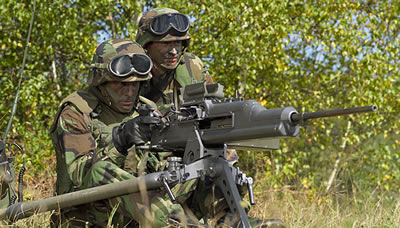
    The LMGA program aims to reduce weapon weight by 35 percent and ammunition weight carried by the infantryman by over 40 percent, while taking up less volume. The program also aims to improve ergonomics, reduce training and maintenance time, and ensure compatibility with the Future Force Warrior (FFW) Soldier System. (GDATP previously proposed its design for the XM312 Lightweight .50 Caliber Machine Gun).

    General Dynamics Advanced Technology Products and AAI Corp have been awarded in 2004 with competitive Phase I design contracts of the Lightweight Machine Gun and Ammunition (LMGA). The program is managed by the US Army Joint Service Small Arms Program office (JSSAP). The nine months competitive design will result in the selection of a single system contractor for Phase 2 fabrication and testing, and Phase 3 final testing, a total development value estimated at $24 – 32 million for all phases.

    Modern Infantry Weapons at the 2006 Eurosatory Exhibition

    New infantry weapons and modified/modernized versions of existing assault rifles were on display. Among these were the new version of FAMAS, modified for integration with FELIN, as well as the SCAR from F.N. Herstal USA, which was developed for the US Special Operations Forces. Three SCARs were displayed: the SCAR L light version, a SCAR L rifle equipped with 40 mm Enhanced Grenade Launcher Module (EGLM) and the SCAR H sharpshooter version. Other weapons designed for the integrated infantry suite include the Israeli Tavor which will be modified to fit a dedicated MPRS fire control/sight and a 40mm grenade launcher firing programmable airburst munitions, developed by IMI. The company also displayed the grenade launcher with a stand-alone system, coupled with an EOTech hollographic sight

    AAI provided a first glance at one possible future of small arms, which is under development as part of the Lightweight Small Arms Technologies (LAST) program. The new weapon is designed to replace light machine guns, such as M249 and M240, with a new lightweight machine gun firing case telescopic or caseless ammunition, and weighing 38% – 50% less than the current M249 with normal ammunition load. LSAT with 600 rounds of ammunition will weigh 23.8 pounds, representing 38% reduction from the current 38.3 pounds. AAI is leading an industry team developing the new prototype weapon under a 28 month program. The new weapon is scheduled to complete development by 2010.

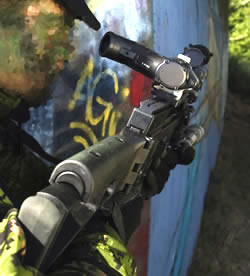
    One of the unique advantages of these new weapons is their ability to engage targets around a corner or behind an obstacle. Some systems are purpose-built for this specific role, such as the CornerShot, which displayed its new Cornershot APR weapon. Others use the weapon’s mounted camera and eyepiece or special display to provide such performance. A simple Concealed Engagement Unit (CEU) accessory from Aimpoint, introduced at Eurosatory, enables such function in a snap, for every weapon equipped with an Aimpoint sight.

    Start < Page 2 of 3 >

    FanTail VTOL Miniature UAV

    Photo: ST Aero

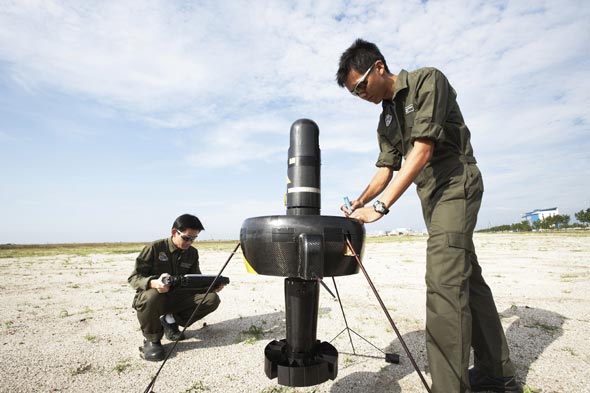
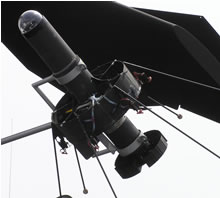
    Fantail, developed by ST Aero is a miniature “tail sitter”, capable of vertical takeoff and landing (VTOL) and hovering, even under severe weather conditions, such as strong winds and gusts. When positioned in a vertical orientation, the FanTail maintains a stable, low speed flight while the horizontal orientation enable high speed dashes (70 knots) from one position to another.

    Photo: ST Aero

    The FanTail is designed for operation in difficult terrain, especially in urban area, where it can fly along narrow streets and position itself precisely on roofs, between trees or at other vantage positions. The ducts help protecting the spinning propeller from strikes against obstacles. The FanTail will be able to perform various missions such as “around the corner, over the hill” surveillance, as well as detect and track chemical and biological hazards.

    The vehicle’s body is constructed from modular carbon-fiber composites and weighs only 3 kg, of which 30% are payload. Rotor diameter is 29 cm, and overall length is 76cm (excluding landing gear). Flight control and stability are provided by control surfaces positioned below the rotor, providing high effective hover control and withstanding strong winds and gusts. It is controlled by an autopilot system, and is equipped with powered with an internal combustion engine. It is controlled from a compact ground station.

    FanTail can be operated in direct (line of sight) mode, or in cooperation with communications relay UAVs, such as the MAV-1, also developed by ST Aero.

    A Brief History of the Merkava Tank

    The development of an indigenous Israeli tank began in 1970, after plans to locally produce the British Chieftain tank were cancelled by the UK, which preferred selling the tanks to Arab countries (Chieftains and Challengers were eventually sold to Jordan, Iran and several Gulf states). At the time, Israel was using British Centurions and US made M-48 and M-60 tanks, most of them modified with 105mm tank guns while the Syrian and Egyptian armies received the first T-62s from the Soviet Union, equipped with more powerful 115mm guns. Israel required two different types of platforms to better cope with the different terrains – the Centurions were slower, but their automotive system, primarily the track and suspension, was more suitable for the rough, volcanic, rocky terrain of the Golan heights while the wider padded tracks of the American M- series tanks was suitable for the soft, sandy plains of the Sinai desert.

    At that time, Israel was preparing for the next phase of the conflict. The requirement for an up-gunned, better protected platform was clear, in face of the T-62s and evolving anti-tank missiles, which was yet to be experienced, three years later.

    Faced with the demise of the British tank option, experienced with similar fate of other arms procurements, from France (the French embargo on the delivery of Mirage V fighters and Missile boats already paid for by Israel) Israel decided to base its armored force on a totally new platform, designed to perfectly match and reflect its unique priorities and requirements. The basic requirement, clearly defined by General Israel Tal, the “father” of the Merkava tank, was protection. While most tanks designed for the 1980s were already equipped with 120mm gun, the first two generations of the Merkava retained the 105mm. This was the result of the priorities and tradeoffs considered by the designers. All tanks, from the prototype to the Mk 4 share a similar chassis, automotive system and turret design. The differences are reflected in the details, and balances between mobility and firepower. Following General Tal’s guidelines, protection remained the highest priority for the Merkava and was never compromised. The initial design, reflected in the Merkava Mk 1 already determines the basic design envelope, with a triangular, flat turret, fitted with typical armor protection cells installed on both sides of the gun. The forward mounted engine, clearing the rear area for an access hatch, stores, and flexible reconfiguration options which are currently taking shape. Merkava has been the longest production program in the history of Israel’s defense industry. The tank has been in production for more than 30 years. In fact, this year the first Merkava Mk 1 tanks which entered service 25 years ago, are scheduled to be withdrawn from service, as they are replaced by latest Merkava Mk 4. For nine years, (1970 to 1979) the program went through development, prototyping and field testing, culminating in the delivery of the first Merkava tank to the IDF in 1979. A parallel process was the establishment of the local tank manufacturing industry, which required the expansion of steel casting facilities at Urdan, and expansion of IMI’s tank gun manufacturing facility, where the new 120mm gun was developed. Hundreds of additional facilities, most of them privately owned small businesses; many located at disadvantaged and remote peripheral cities joined the program, to establish the industrial base for the new program.
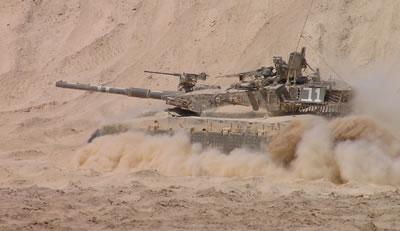
    Only three years later, immediately after the Lebanon War in 1982, the next generation, Merkava Mk 2 was delivered. In fact, this tank was the more mature version of the basic Maerkava 1, a result of the “telescopic development” process, which envisaged continued development based on lessons and feedback from users, rather than a slow and linear operational testing process.

    The Mk 2 introduced new, clearly distinctive ‘special armor’ modules installed on the turret’s sides and skirts. The tank retained the 105mm gun with the benefit of ammunition availability and commonality, yet, the tank was equipped with improved fire control and optronic equipment, bringing it to the same level of the IDF fully upgraded M-60s (with the Merkava offering superior protection).

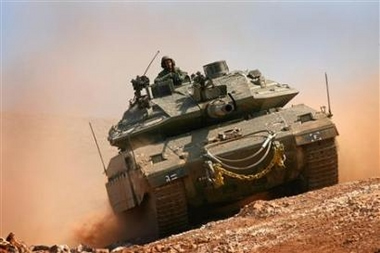
    Seven years later, by 1989 Merkava Mk-3 introduced a more dramatic leap, fielding a new, modular armor concept, enabling a rapid and frequent process of adaptation of armor to operational requirements and evolving threats. The tank was equipped with a new 120mm gun, produced by IMI and a new 900 hp diesel engine developed by the German firm MTU. Through an evolutionary process, the Merkava Mk 3 was upgraded with at least four versions, equipped with different armor configurations, and various types of fire control and optronic system, which, for the first time, was superior to the systems used in the M0-60s. Many of the changes were based on feedback and lessons learned through operational and combat experience in Lebanon and Gaza. As a result, the IDF decided to gradually phase out the Centurion and M-60s, and moved toward an armored force based entirely on Merkava platforms. This process culminated in 2005, when the last regular unit, equipped with M-60s replaced the aging American tanks with the latest Merkava Mk 4 tanks. At the same time, the developer’s team was already working on the Merkava 4, primarily the new engine, which was under development in Germany.
    Additional parts of this article:

    Read more:

    Metis M Anti-Tank Guided Missile

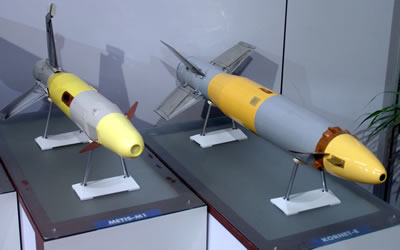
    Metis M (also designated AT-13 Saxhorn) is an enhanced version of the Metis (AT-7), first introduced in 1992. It is a light, man portable anti-tank guided missile, similar to the European Milan. This wire-guided system uses semi-automatic command to Line of Sight  (SACLOS) missile is effective at ranges of 80 – 1,500 (standard M missile) or 2,000 meters (enhanced M1 system), day or night. The missile utilizes a tandem shaped charge anti-tank warhead, which, according to the manufacturer, has the penetration of 800 mm (M version) up to 950 mm of steel armor (M1 version). KBP is also offering the missile with a thermobaric warhead. KBP is currently producing the upgraded version designated  Metis-M1, comprising of the 9M131M missile and the 9P151M launcher, reduced weight 10.5 to 9.5 kg and featuring increased jamming immunity.
    A firing unit consisting of launcher, thermal sight and a single missile container weigh 29.80 kg.

    GEFAS – Modular Multi-Purpose Protected Vehicle

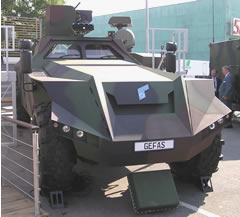
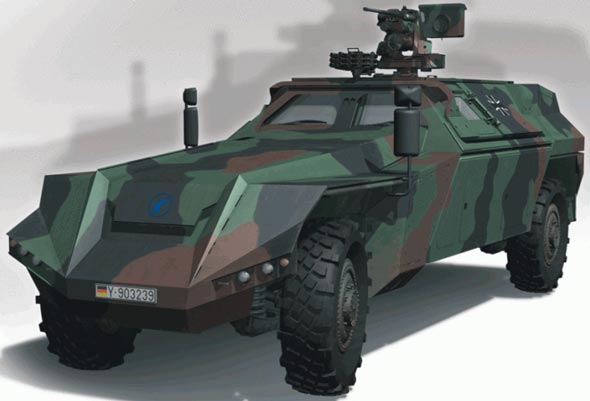
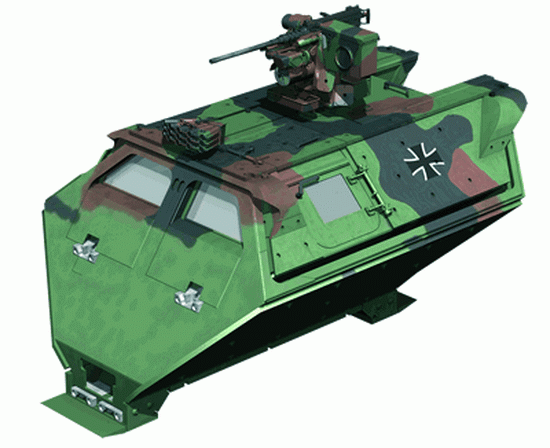
    First unveiled by Rheinmetall Defense at Eurosatory 2006, as a wooden mock-up, GEFAS demonstrates a distinctive shape, impressive protection level and innovative, modular design. GEFAS stands for “Geschuetztes Fahrzeug System” or “Advanced Protected Vehicle System”. It is designed to provide high level of protection and will be easily reconfigureable to accommodate various mission specific modules.

    The modular design enables mission-optimized configuration of the complete vehicle, Measuring 2.55 meters in width, as wide as a standard commercial truck, Gefas can be transported in military airlift aircraft like the C-130 and A-400M. It will also be able to travel over bridges and on roads, as any commercial vehicle. Gefas will include 4×4, 6×6 and 8×8 variants covering a wide weight spectrum from 12.5 to 20 tons, and up to 25 tons with a trailer.

    The basic protected vehicle displayed at Eurosatory is configured for convoy protection, patrol and escort missions, accommodating a crew of four. It is armed with remotely operated weapon station and fitted with high level of protection, which comprises the basic armor for the crew compartment, protecting against small arms, fragments, IEDs and mines. Rheinmetall plans to have the first vehicle ready for field demonstrations by the end of 2007.

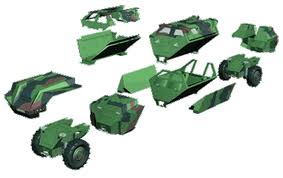
    The vehicle is configured of several modules which can be arranged to address specific mission requirements. The basic configuration consists of a main module, a power module and two axel modules. Forward and rear modules carry the lighting devices. In this version, the power module is located behind the main module, opening a spacious space for transport and payload. The modules are interconnected by common mechanical, electrical and electronic interfaces, to enable rapid reconfiguration of the vehicle. Gefas uses hybrid-electric “drive by wire” system, replacing conventional steering, braking and drive train. The electric drive function control developed by Renk company regulates the vehicle’s driving dynamics. The vehicle uses separate drives for each axel, ensuring residual mobility even when one of the axels is damaged. The fact that the axel modules are identical and interchangeable between vehicles improves logistics and maintenance in forward area. Additional battery pack is used to provide emergency power for residual mobility in the power pack module is inoperable.

    The Axel Module module contains the drive unit consisting of two STW electric motors, and associated controls, housed in sealed compartment for additional protection. Each module can be used for front and rear axels, providing all-wheel steering, and efficient, narrow turning radius. Timoney double-wishbone axels are used for independent wheel suspension. Wheels are using run-flat inserts and are connected to a central tire inflation system to ensure optimal mobility over all types of terrain.

    The Power Module contains all power generation equipment, including the diesel engine, cooling, filtration and electrical generation and power management units, fuel and exhaust. The power module is designed as a stand-alone replaceable unit. When an engine develops a problem, the whole module is replaced, thus eliminating the time-consuming and complex task of power-pack replacement. MTU and ESW are developing the power module, based on the MTU 4R890 diesel engine, a 10 cylinder version of this engine already powers the Puma infantry fighting vehicle.

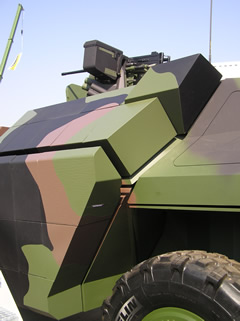
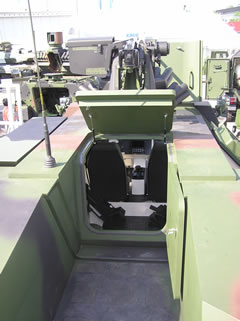
    The Crew Module is designed to accommodate a crew of two or four combatants. It uses a V shaped structure suspended from the roof of the vehicle to improve safety from mine and IED blasts. The large sloped surfaces at the base and sides are designed to deflect blast wave caused by roadside bombs and mine blasts. Steel and composite armor, developed by IBD provides bulletproof and shrapnel protection. When exposed to high threat levels, appliqué explosive reactive armor (ERA) can also be used. The main module has side doors, rear access ramp, and roof hatches.

    Mission Specific Modules include a guided missile platform, made up of two axel modules, a protected, two-man cabin module, mission specific mobile launcher module and rear-mounted power module. A different version is a radar carrier, utilizing a 6×6 platform. The forward section of the vehicle will be similar to the missile carrier but is version will use two axel modules and rear-mounted power module, to provide a 12m flatbed to mount the 12 meter radar mast. An 8×8 configuration is considered for an air defense missile carrier, mounting guns or missile launchers.

    Advanced Mortar System (AMOS)

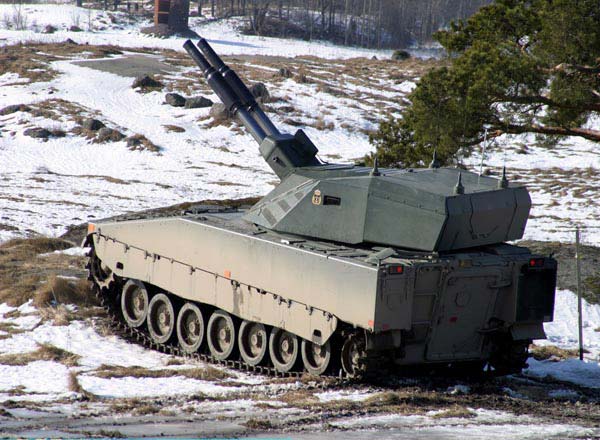
    Developed as a joint venture between Patria Vammas (Finland) and Hagglunds (Sweden), is a twin barrel 120mm, breech loaded mortar turret mounted on wheeled or tracked chassis (tracked CV-90 and wheeled Pasi/AMV) carriers. The two mortars are mounted on a common cradle with equilibrator and a leading device. The system is designed for ultra-rapid fire rate, reaching a claimed 26 rpm burst, with multiple rounds simultaneous impact (MRSI) at 14 to 13,000m range.


    The first complete Pasi-mounted unit (low-profile turret with autoloader and fire-control system) was delivered to the Finnish Army in October 2000. In 2003, 24 additional AMV based AMOS systems were ordered for the Finnish Defense Forces. The first two prototypes of the AMV/AMOS were delivered in March 2006.
    One added advantage of the Amos is that the barrels can be lowered to deliver direct fire during urban warfare or other scenarios. An interesting derivative is the AMOS naval version. Designated Naval Application Demonstrator (NAD). A prototype has been tested on a Combat Boat 90 by the Swedish Navy. The ability to fire a mortar from a moving vessel at sea, should open new perspective for future in-shore naval combat support. Although an excellent technical design, the AMOS nevertheless seems to have an inhibitive price tag, which limits potential customer interest. It is believed that a shorter, muzzle-loaded variant has been proposed, to reduce the price.
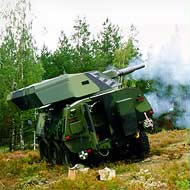
    In July 2006 the Swedish Defence Materiel Administration (FMV) has awarded a contract for the development and production of two prototype armored advanced mortar systems (AMOS) to BAE Systems Hagglunds AB. The two prototypes will be based on CV90 platforms and scheduled for delivery to the customer in early 2011. The CV90/AMOS configuration was recently shipped to Saudi-Arabia for field demonstrations. A single-barrel configuration of the mortar, named NEMO, was introduced in 2006 and have already won its first customer – the Slovenian Army.

    The SEK 500 million order (approx US$70 million) includes options for maintenance systems, ammunition and preparations for a new battlefield management system. The Swedish prototype will be designed to be suitable for future installation on the SEP platform, the next-generation Swedish armored vehicle system.

    WifiBot Miniature Robot

    A smaller robot is the Wifibot 4G, a miniature 28x30x20 cm robot weighing only 4.5 kg, running on 9.6V NiMH batteries for 1.5 – 3 hours. The Wifibot uses four independent motors to control its movement. This robot employs various networking capabilities to support advanced operational capabilities, including autonomous or tele-operated functions, relay (utilizing client or mesh networking and routers) or swarm, deploying ad-hoc or mesh networking.

    Fitted with an integral 32 bit PowerPC 405EP processor running Linux operating system, WifiBot uses embedded Ethernet, USB, I2C bus and RS232 interfaces. Built-in networking support include WiFi 802.11b/g link with seamless roaming capability, mesh network support, wireless LAN client, and router.

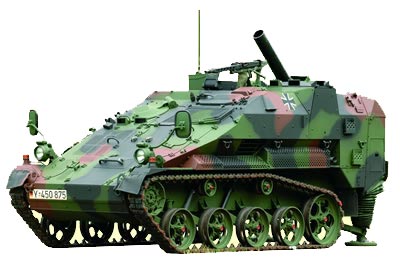
    Wiesel-2 SP Mortar – Air Transportable Fire Support Mortar System

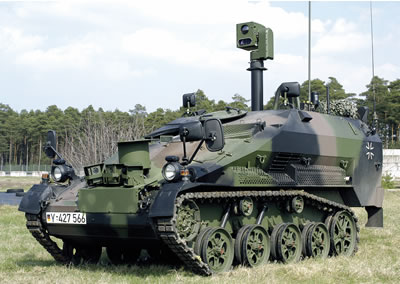
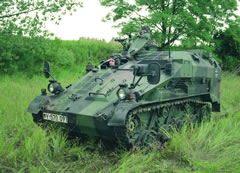
    The new airmobile mortar combat system based on the Rheinmetall Defense Wiesel 2 tracked weapons carrier was shown for the first time at Eurosatory 2006. The complete system, including mortar carrier, reconnaissance and command vehicles were on display. The system is air transportable as a sling load underneath a CH-53 or in a C-130 or C-160 aircraft. The mortar carrier is equipped with externally mounted mortar firing standard or specially developed ammunition reaching a range of up to 8 km. The armored, NBC protected vehicle has accommodation for a crew of three. It has a three-dimensional positioning and heading system enabling autonomous operation.

    The mortar barrel laying system uses automatic compensation to correct barrel laying after each shot. Up to three rounds can be fired within 20 seconds of receiving the firing order. The unit operates a two-vehicle command and control element called Joint Fire Support Team, (JFST), equipped with an extendable surveillance system, comprising a high-resolution CCD camera, a 3rd generation FLIR, laser pointer and rangefinder for tactical reconnaissance operations.

    The system uses Wiesel 2 platforms, configured as combined reconnaissance / fire support elements to support the air-mobile mortar units. The target acquires target locations and imagery by employing on-board sensors, elevated on a telescopic mast, which will be augmented in the future by a range of unmanned air and ground sensors. Target data is constantly relayed to the company HQ, platoon leaders and the JFST via wireless datalinks, also used for the exchange of information with higher sources. The Wiesel 2 reconnaissance vehicle is also equipped with a laser designator, enabling it to operate as a forward observer and forward air controller, illuminating targets for laser guided munitions.

    Skunk Works and XTEND Simplify Multi-Drone Command

    0
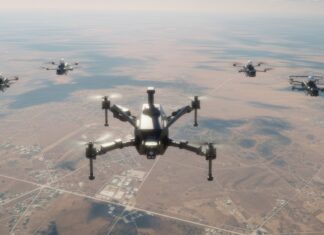
    Lockheed Martin Skunk Works® and XTEND have achieved a major milestone in JADC2 by integrating the XOS operating system with the MDCX™ autonomy platform. This technical breakthrough enables a single operator to simultaneously command multiple drone classes, eliminating the friction of mission handoffs. From "marsupial" drone deployments to operating in GPS-denied environments, explore how this collaboration is abbreviating the data-to-decision timeline and redefining autonomous mission execution.

    From Ukraine to Taiwan: The Global Race to Dominate the New Defense Tech Frontier

    0
    As traditional defense primes face mounting competition from agile “neoprimes” such as Anduril, Palantir and Helsing, the balance of innovation is shifting toward software-defined warfare and scalable, dual-use technologies, while global industry consolidation—marked by Boeing’s integration of Spirit AeroSystems and other strategic mergers—signals an intensified race to secure control over the defense technology value chain. Our Defense-Tech weekly report highlights these trends.

    Europe’s “Drone Wall”

    0
    In early October 2025, a coordinated wave of unmanned aerial system (UAS) incursions—widely attributed to Russia—targeted critical infrastructure across at least ten European nations. The unprecedented campaign exposed the fragility of Europe’s air defenses...

    Weekly Defense Update & Global Security Assessment

    0
    Executive Summary The past week (September 18-25, 2025) represents an inflection point where strategic defense concepts have transitioned from doctrine to tangible reality. An analysis of global events reveals four primary, interconnected trends shaping an...

    U.S. Air and Space Forces Push Next-Gen Programs at the AS&C 2025 Conference and...

    0
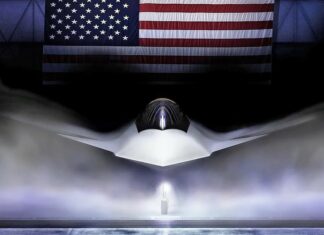
    At the 2025 Air, Space & Cyber Conference, U.S. Air Force and Space Force leaders unveiled major updates on next-generation fighters, bombers, unmanned systems, and space initiatives, highlighting both rapid innovation and critical readiness challenges as the services race to outpace global competitors. A short version is available here, with a more detailed version for subscribers.

    TADTE 2025: Reflecting Taiwan’s Strategic Themes

    0
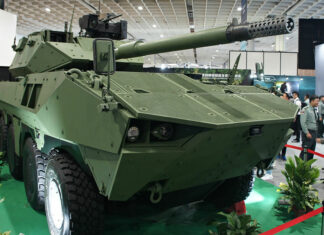
    The Taipei Aerospace & Defense Technology Exhibition (TADTE) 2025 crystallized around four dominant strategic themes that collectively illustrate Taiwan's comprehensive approach to defense modernization amid escalating regional tensions. Based on a detailed report by Pleronix (available upon request). Includes a Podcast discussion on TADTE 2025's highlighting Taiwan's four strategic themes beyond the post's coverage.

    Iron Beam 450 Completes Testing, Soon to Join With Operational Air Defense Units

    0
    Israel’s Iron Beam 450 high-power laser system has completed final testing, marking a major leap in air defense. Developed by Rafael, it offers precise, cost-effective interception of rockets, UAVs, and mortars, and is set for IDF deployment by 2025.