
Wednesday, December 24, 2025
More
    Home Blog Page 419

    Israeli Army Tests New ISR Systems for Urban Warfare

    Start < Page 8 of 9 >

    IDF Infantry units, from the platoon level upward, are already equipped with a multitude of sensors providing real-time imagery. The need for such organic intelligence gathering capabilities, to provide “extended eyes and ears” for field commanders operating in cluttered terrain in and around urban area was raised by the IDF and answered by Israel’s defense industries. Many companies responded with innovative products some of which are already being fielded or tested in operational use.
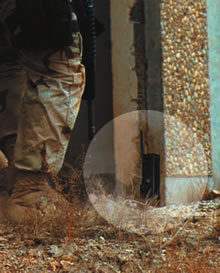
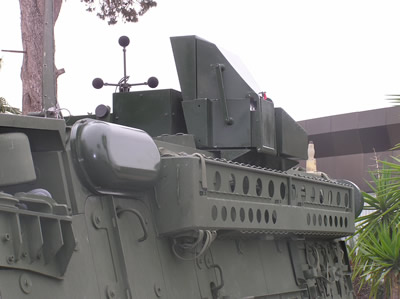
    Among the latest systems fielded in 2005 are the Eyeball-1 and GateKeeper systems remotely controlled video surveillance devices from ODF. Eyeball-1 enables troops to gather valuable intelligence by viewing images and listening to voices in a target area prior to an assault into a room or entering subterranean spaces, such as cellars, wells or tunnels. Gatekeeper uses covert cameras, triggered by passive infrared signals, to secure access routes, or a building, room or floor, validating that it has not been recaptured by hostile elements. 
    A miniature Unattended Ground Sensor, developed by Seraphim, provides covert persistent visual surveillance of a target with periscopic EO, NIR and IR imaging devices. The device is fitted with internal pan, tilt and zoom, thus having no external movement. It can remain in the field, delivering up to 10 days of imaging without battery replacement.

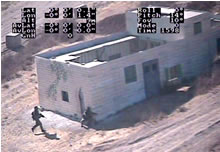
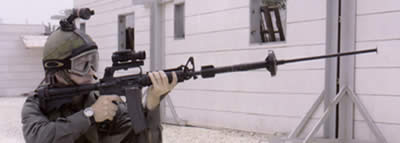
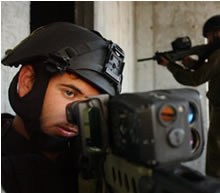
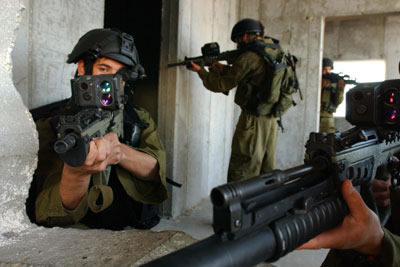
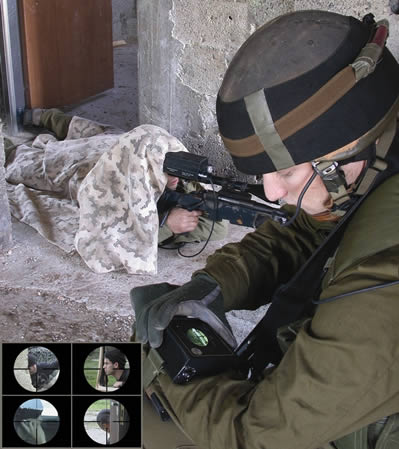
    Other systems for collection of images provided by lower level Infantry combat units are under development at Elbit and ITL, and components of these suits are already being tested and evaluated by IDF LIC specialized units. These systems provide “round the corner” vision and firing capability and efficient orientation and maneuvering of the individual, team or squad. A new generation of organic sensors is under development for infantry units. These include the Firefly and MPRS 38mm video cartridges, fired from an M-203. Both offer a “snapshot” view of an objective area, just prior to the attack, and are being developed by RAFAEL and IMI. The latter is also developing a family of 40mm munitions for the MPRS system, including non-lethal ammunition and an airburst cartridge. 
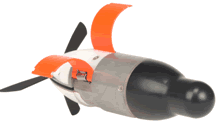
    ODF is taking a different approach offering persistent video surveillance of targets. The Smart Arrow, currently in advanced development, is fired at a position overlooking the target area, using a bullet-trap mechanism. Once stuck to a wall, an integral video camera is activated, sending live images from the target for up to seven hours.
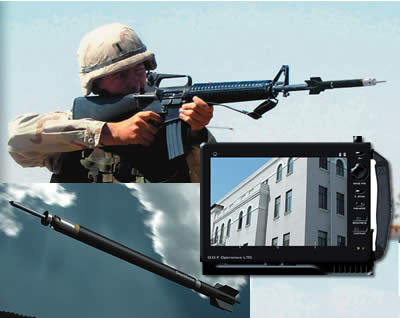

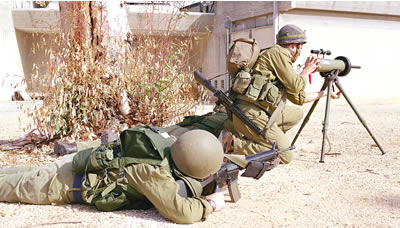
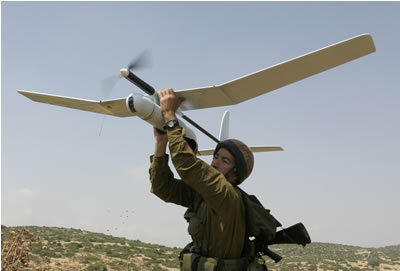
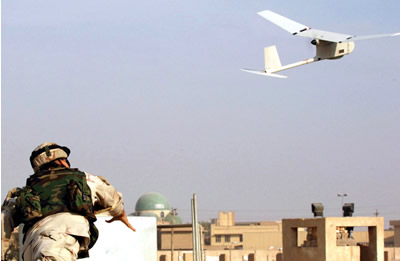
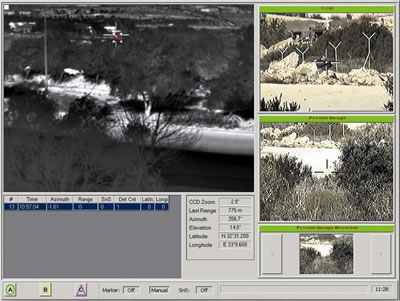
    Elbit Systems / Skylark miniature UAVs, which have already been fielded, have been augmented by a new miniature payload. The stabilized system has also been tested on lightweight masts and new man-portable aerostats. Another EO system is the RAFAEL Spotlite system, which enables rapid sniper detection and countermeasures. The system is providing snipers with organic small-arms fire spotting capability, used to rapidly locate, identify and assign counter-fire by snipers or other elements.

    Preparing and controlling an operation involving such a complex array of sensors, effectors and combat systems requires extensive preparation, and flexible command and control that can keep pace with the dynamic situation and take advantage of quickly developing opportunities.
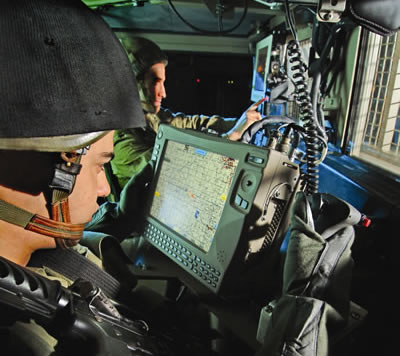
    IAI/MLM is developing a new approach to multi-mission C4, dubbed “Twister“. The system integrates advanced simulation and mission planning systems, multiple sensor access, monitoring and control (UAVs, ground sensors etc), interfaces to C4 systems, situational awareness and understanding, and command and control aids. All can be rapidly configured to support dynamic configurations, in a mission-focused approach.

    Much simpler yet essential devices for this type of warfare are the foldable periscope, and lightweight assault ladder carried in a backpack. The assault ladder enables troops to deal with many of the vertical obstacles encountered in urban terrain.

    Additional parts of this article:

    IDF Fields New C4 Equipment Optimized for urban Combat

    Start < Page 7 of 9 >

    The current trend in the IDF calls for the development of tactical units designed specifically for Urban-LIC. These units are scheduled to field much expanded C4ISR systems enabling autonomous control of multiple sensors and effectors. The units are expected to field advanced Battlefield Command Systems (BMS) and a new command and control network, known as TORC2H, both produced by Elbit. Such integration will provide units with a clear picture of the battlefield, enhanced situational awareness and will enable tactical units to share pieces of the situational picture that are relevant to their activity. 

    Sharing C4 means these tactical elements will also be able to share data, images and even live video from their weapon’s cameras, as well as organic sensors. Visual Defense is providing this connectivity over irregular narrow-band communications, including commercial cellular devices and combat net radios. To support communications within the urban area, RAFAEL’s Lightlink has been demonstrated to provide wideband data networking over and within large and cluttered urban area. These capabilities are required to feeds images, reports and voice communications from war fighters to the platoon and company commanders and to battalion command posts, where fusion of the situational picture is done.

    Much simpler yet essential devices for this type of warfare are the foldable periscope, and lightweight assault ladder carried in a backpack. The assault ladder enables troops to deal with many of the vertical obstacles encountered in urban terrain.

    Additional parts of this article:

    ERMP – Extended-Range Multi-Purpose UAV

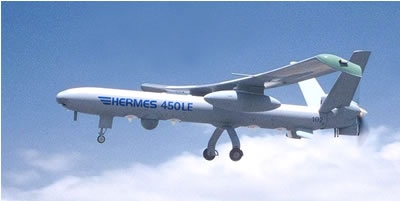
    By 2009 the us Army will be able to operate A Medium Altitude Long Endurance (MALE) system, called Extended Range Multi-Purpose (ER/MP), which will provide persistent intelligence gathering capability, offering surveillance and reconnaissance (ISR) in addition to limited direct attack capabilities (by means of weapons such as the Viper Strike or Hellfire). Warrior, a derivative of the US Air Force Predator UAV, will augment and later replace existing systems including MQ-5B Hunter and IGnat. The ERMP will support Army units at division and corps levels. The selection of General Atomics Warrior UAV for the $1 billion program was announced by the US Army in August 2005. The new UAVs is scheduled to become operational by 2009. Unlike the current Hunter, the Army plans to field up to 132 General Atomics Warrior UAVs at the division level. Each of the 11 units will contain five ground stations and up to 12 aerial vehicles.


    The Warrior will be operating in Reconnaissance, Surveillance and Target Acquisition (RSTA) and command, control, communications and intelligence (C31) system. The new UAV will operate at ranges of 200 nautical miles and an altitude of 25,000 feet, carry a payload of 800 pounds and will be able to remain in position for up to 36 hours. The US Army is planning to field an advanced UAV which will assume some of the roles currently performed by the Air Force’s Predator.

    Similar to the Predator, Warrior will be equipped with an MTS class multi-system E/O payload for day and night observation, and Synthetic Aperture Radar (SAR) with Ground Moving Target Indication (GMTI) capability to spot moving targets. Apart from intelligence gathering missions, Warrior will provide an airborne communications node, providing essential radio and data relay for the Warfighter Information Network – Tactical (WIN-T) battlefield network. JTRS radios to be included in the system’s standard equipment package will enable the Warrior to provide communications relay to EPLRS or SINCGARS networks to support forward and isolated units located ahead of the main forces, out of ground communications reach. This service will be critical to support “blue force tracking” – a service which monitors locations and status of friendly forces. By operating as “pseudo satellite”, Warrior will be able to carry out such mission without affecting its primary reconnaissance and intelligence gathering role.

    The UAV will have wing hardpoints for external stores including expendable sensors and weapons. Up to four Hellfire / Viper-Strike weapons could be carried. (Testing Viper Strike weapons with Predator UAVs are planned for 2006). While the aerial platform will be new, the Army is trying to minimize the logistical burden by standardizing the ground support systems. Therefore, Warrior will utilize the AAI’s ‘One System’, ground control station which is already used with other UAVs, and is expected to be used by all the Army’s unmanned systems, including future rotorcraft (Class IV UAV), to become an integral part of the Future Combat Systems (FCS). The goal is to be able to move operators from one system to another with few weeks – rather than many months of training.

    Israel, Palestinians Practice New Operational Concepts in Urban Warfare

    Subterranean Combat

    Start < Page 5 of 9 >

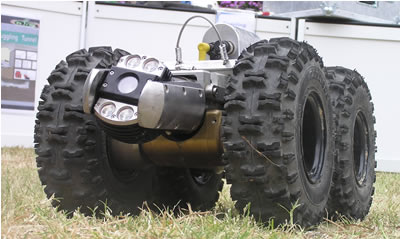
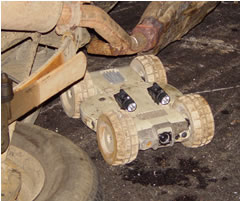
    The IDF has also been forced to take action to counter subterranean threats. Sophisticated seismic and acoustic equipment is employed to detect Palestinian tunnels, but the extensive system of tunnels, used for both smuggling and attack, left many tunnels undetected. Most tunnels began under existing buildings hidden from Israeli observation. Some led straight to the Egyptian border, and were used for transferring arms and smuggling of contraband. Others served as access routes to Israeli fortifications, which could then be destroyed by explosives. Realizing the potential threat of such tunnels, the IDF attempted to destroy tunnels by attacking them through ventilation ports with explosives. At least one such attack was made with a precision-guided JDAM bomb. To explore and map the tunnels, a new remotely controlled robotic vehicle is used by IDF combat tunnel warfare teams. The vehicle is lowered vertically into a tunnel, and moves independently inside, charting the internal passages, and sending video images back to the operators.

    Subterranean Combat

    Rocket and Mortar Attacks

    In 2003 and particularly 2004, the IDF repeatedly operated in the Gaza strip, primarily in pursuit of mortar and rocket launcher teams, and in search raids seeking to destroy weapons production facilities. While many raids proved successful, Rocket Artillery and mortar (RAM) attacks continued and even intensified, culminating in October 2004 in Operation Yemei Teshuva (Days of Atonement) when the IDF launched a massive two-week action to stop RAM attacks. The significance of this operation was in its method of implementation.

    Extending the Brigades

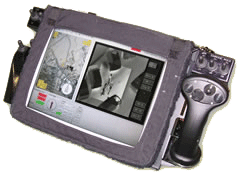
    The Givati brigade was given total responsibility for the operation, with direct command and control of all assets assigned to the operation. Many forces had already received advanced communications equipment, including remote video terminals, and hand held terminals, which enabled helicopter pilots and gunners, and commanders of lead infantry units to view real-time pictures as seen from UAVs and remote observation platforms. Tight integration with ISA operatives enabled rapid dissemination of intelligence information, at all levels, followed by immediate implementation of operational activities.

    Tactics were also refined. Improved integration between armor, infantry and airborne forces enabled better coordinated activities, taking advantage of the dense urban area to achieve initial surprise, confuse the enemy and dominate the area for an extended period, without risk to the civilian population. Key to such operations was the brigade’s reconnaissance company, which was strengthened to battalion size and trained to execute rapid maneuvers deep inside the refugee camps’ narrow streets.

    Additional parts of this article:

    New Equipment for Urban Warfare fielded by the Israeli Army

    Start < Page 4 of 9 >

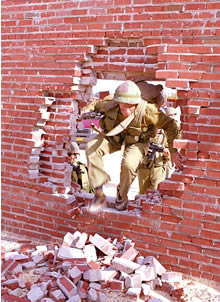
    Operation Homat Magen provided the first lessons in large-scale operations in Urban-LIC. These lessons were incorporated into the development and adaptation of intelligence gathering, command and control and combat support systems. One of the many results of these lessons was the fielding of new door and wall breeching equipment, originally developed for special operations, but now issued as standard equipment to the infantry units. These systems include the ‘Simon’ door breeching grenade, which has since been fielded by a number of western military organizations, including the US Marine Corps, and US and British Armies.

    Israel is sharing experience and R&D on urban warfare related systems. “What began as a cooperative research and ‘lessons learned’ cooperation effort between the US and Israeli governments evolved into industrial teaming for major development programs, involving RAFAEL and General Dynamics”. Col (Res.) Nimrod Ran, RAFAEL’s Urban Warfare Program Director told Defense Update. RAFAEL (teamed with General Dynamics) and IMI (teaming with Lockheed Martin) have submitted competing proposals for the USMC Follow-On to SMAW (FOTS) and future US Army Bunker Defeat Munition (BDM) programs and are expected to follow with similar programs for future Army programs.

    Operation Homat Magen also overwhelmed the terrorist organizations in the West Bank, buying essential time for the creation of the security fence, which is expected to reduce the vulnerability of Israel’s population centers to Palestinian suicide attacks.


    A different situation developed on the Southern front. To bypass the terrestrial barriers erected by the IDF along the perimeter of the Gaza strip, the Palestinians adopted new tactics using ballistic weapons firing improvised Rockets and Mortars (RAM) at civilian Israeli targets within range of their operational area. These attacks increased to intolerable levels, forcing the IDF to enter the segregated Gaza strip area in search of rocket/mortar firing teams and their support structure. The Palestinians quickly retreated into the cities and camps, where they tried to trap IDF armor in deadly ambushes. The weapons used were improvised landmines and IEDs, which scored several deadly hits, even against the Merkava, Israel’s heaviest tank. The flat, sandy terrain enabled extensive underground activity, facilitating covert movement between buildings. Tunnels also provided logistical supply channels for military equipment, as well as subterranean approach routes for attacks against Israeli outposts.

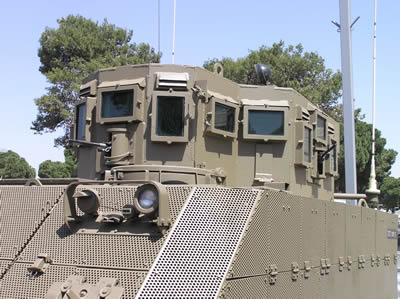
    Security operations in the Gaza strip involved continuous conflict with insurgents. Palestinian attacks were directed at fortified outposts, installations, patrols and supplies, as well as civilian settlements. Escalating through a continuous pattern of attack and response, the IDF implemented layer upon layer of defenses to its vehicles. They added armor to tanks after several attacks against tanks. They also added protected armored fighting compartments to armored personnel carriers, and peripheral cameras, to enable improved situational awareness and responsive fighting capability by mechanized infantry.

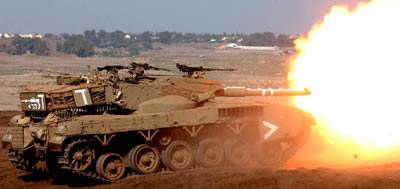
    Novel tactical approaches were introduced for armor. Merkava tanks are equipped with a window and firing hatch in the rear door, enabling snipers to guard the rear section of the tank. Another modification to the Merkava was the installation of a medical kit, for use during evacuation of wounded soldiers under fire. Belly armor was added to tanks, protecting against buried shaped charge IEDs weighing over 100 pounds. Following the destruction of two explosive loaded M-113s operated by Combat Engineer troops, the IDF improved the protection of its M-113s, introducing an enhanced composite armor suite utilizing reactive and passive protection. The new Trophy active protection system developed for IDF Merkava tanks was modified to fit medium and light armored vehicles, and has now been re-designed to protect the Stryker Armored Fighting Vehicle (AFV).

    Additional parts of this article:

    Urban Combat Operations in Samaria (cont.)

    Start < Page 3 of 9 >

    An exception to this strategy was Operation Homat Magen (Defensive Shield) in April 2002, which followed a series of deadly Palestinian suicide attacks launched from the West Bank. The IDF entered the West Bank urban centers simultaneously in order to defeat the terrorist networks in their ‘backyards’. 

    Two actions demonstrate the different approaches – The operation in Nablus, considered to be the toughest stronghold, went surprisingly smoothly, as elite paratroop units broke into the dense dwellings of the Qasba, (the ancient inner city), suffering minimum casualties. Specially trained for such operations, the paratroops used new breeching equipment to open gateways into the dense Qasba and between walls of neighboring houses This enabled them to move inside the buildings, well protected by the massive walls, and allowed bypassing of the IED ambushes prepared by the Palestinians. Two of the most challenging aspects of this operation were maintaining situational awareness and avoidance of “blue on Blue” fratricide incidents.

    Operations in the Palestinian refugee camp of Jenin demonstrated a different approach. Publicized for the high casualties suffered by both sides and the massive devastation to civilian property, this operation was executed under pressure, following conventional urban combat methods. To minimize casualties among non-combatants, the IDF tried to evacuate civilians from the area before the attack. These measures delayed operations and enabled terrorists to prepare their defenses. In retrospect, this approach has proven to be unsuitable for Urban-LIC. Jenin also demonstrated the high lethality potential of urban combat. The IDF suffered most of its casualties as dismounted troops entered ‘kill zones’ and were engaged by multiple IEDs and small arms fire. Large armored vehicles could not enter the narrow streets of the refugee camp, which necessitated the employment of heavy armored engineering equipment to destroy infrastructure in order to open fields of fire and allow necessary mobility, an action that created criticism in Israel and abroad.

    Tactics adopted following these campaigns improved urban fighting capability of the IDF and prepared troops for situations where innocent civilians are present. The new tactics allow IDF forces to minimize collateral damage while denying the terrorists the use of civilians as human shields.

    Stealth Operations

    The topography of the West Bank enables Israeli forces to completely cover the target area with surveillance, effectively blocking escape routes. Continuous activity dramatically reduces the number of insurgent activities in the area.

    Among the Special Operations units created for urban warfare in the West Bank is Duvdevan (Cherry), an undercover infantry unit, trained to blend into the Arab population. The role of Duvdevan teams is to apprehend suspects when possible or, if apprehension is not possible, to neutralize these hostile targets. When performed successfully, these stealth operations end without any territorial gains, but result in the capture of live terrorists, key members of the “IDF most wanted list”, who provide valuable intelligence for follow-on operations.

    Additional parts of this article:

    Urban Combat – The Israeli Experience

    Start < Page 1 of 9 >

    Recent conflicts are challenging the world’s military powers with Urban Low-Intensity Conflict (Urban-LIC) warfare. This type of operation requires new strategies and operations that are significantly different from classic Military Operations in Urban Terrain (MOUT), which considered the urban area as one of many topographic terrain models, but rarely addressed the unique human factors of a live city. In recent years, insurgents around the world realized the benefits of operations from and within friendly populations: Efficient concealment for personnel, infrastructure and communications, contributing to pervasive close-encounters by small groups. Using hand guns, improvised explosives and suicide bombings with high precision and devastating effect have become common in recent years in Western Asia – from Chechnya through the Gaza strip to Iraq.

    “A basic lesson we learned is the importance of preemption. We cannot wait until suicide bombers or terrorists make their way to the target, or rockets are launched at our cities,” – Brig. General Ido Nehushtan, Chief of Staff and Deputy Commander, IAF told Defense Update. “When pursued where commanders and planners are lurking at their hideouts in the cities, we dramatically reduced the number of terror attacks in our population centers.”

    After years of continuous fighting, the IDF has adopted three practical modes of operation. Two are adapted to ground operations in the West Bank and the Gaza Strip. The third evolved into “aerial domination” of an urban area, and is currently practiced with considerable success by the Israeli forces over the Gaza strip.

    Additional parts of this article:

    Helmet Mounted Organic Light Emitting Diode (OLED) – Military Applications

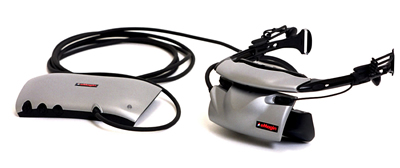
    OLED displays are rapidly maturing into operational systems, as part of infantry combat suits, dismounted command, control  and situational awareness displays, integrated virtual training systems, and other applications.  eMagin and Kaiser electro-optics are already cooperating on the development of full-color OS-35 monocular viewer which is coupled with the Dual Aperture Visible Sensor DAVS 100 used with land warrior suits.

    DVAS 100 uses two cameras mounted on the weapon, providing wide and narrow field of views with x1.5 and x6 magnifications. Each is provided with x12 digital zoom. DVAS camera image is viewed on the OS-35 display image, overlaid on computer generated cues or images, when required. Another OLED application is the Liteye 450 helmet mounted display. Weighing in at less than 100 gr., the monocular display houses all the electronics inside the pod for simple ‘plug and play’ mobile computing operation. The device can be used on left or right eye and is compatible with the PVS-14 military helmet mount, where it snaps into the place of the NVG tube.


    The Z800 3D visor offers immersion-capable 3D computing experience, enabling the soldier or analyst to be surrounded with visual data they need to conduct realistic training. The viewer comprises two Organic LED (OLED) micro-displays providing full-motion stereo video in 16.7 million colors. The unit has built-in head tracker providing 360 degrees angle of view.

    Israel Practice New Concepts for Airborne, Urban Area Domination
    Start < Page 9 of 9 >

    The latest trend is the introduction of the IAF as a significant element in area domination. For years, IAF helicopters and UAVs continuously patrolled trouble spots but airpower has proved even more effective since mid 2003 when the IAF implemented measures to control the signature and effect of its missions in the urban area while also assuming more responsibility within the joint operations field. Adaptations were made to most platforms and weapons, preparing them for superior performance in the new mission profiles. 

    “We should be able to choose our means, weapons and effect from a pound to a ton,” says Brig. General Ido Nehushtan, Chief of Staff and Deputy Commander, IAF. At the beginning of this conflict the IAF did not have suitable ordnance that could strike with the required pinpoint precision in restricted terrain conditions. This shortfall, according to Nehushtan has been eliminated. “We modified our systems, originally built for full scale wars, introducing necessary changes and adaptations which now enable improved performance and capabilities in both high intensity and low intensity warfare scenarios”.

    Urban warfare and area domination activities have little to do with the IAF’s original role. Nehushtan explains that the target characteristics of urban warfare, especially for air warfare, are very challenging. “This is one of the most complex conflicts we have fought in.” he says, “Unlike general perceptions of ‘low tech’ threat, we face stealthy and evasive targets far more complex than conventional military targets. Threats are not restricted to surface-to-air missiles and gunfire, but include risks caused by inadvertent collateral damage, which could have strategic implications as well as leading to negative local and international reactions.
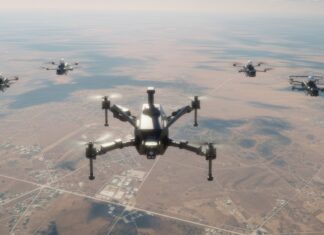
    Complex operational restrictions and self-imposed rules of engagement are implemented to safeguard sensitive areas such as schools, hospitals, holy places etc. In return, terrorists, who rarely abide by any ethics in war, tend to exploit such restrictions to establish “human shield” situations, as they operate in the immediate vicinity of civilian occupied buildings. “One can hardly define a clear ‘terrorist infrastructure target’ that can be easily attacked from the air,” says Nehushtan. Such targets may reside in a specific room, which must be attacked from specific angles with highly accurate weapons, developing limited effect, devastating the target itself, but without causing damage beyond it.

    These engagements require very precise and actionable intelligence, clear proof of the target’s intent, and surgical response with the measured effect necessary to neutralize the target, without causing collateral damage. Full integration between intelligence, ground, air forces and Special Forces, are necessary to ensure that the most effective means are used to engage time critical targets. In some cases, targets are visible only for a few tens of seconds. To enable such rapid decisions, the IDF has established “short decision cycles” employing highly skilled and experienced representatives from all relevant entities, who are familiar with the area, and understand the implications of each mission. They can choose the physical means, location and time where and when action is necessary to create an effect without unnecessary damages.

    Such operations depend on actionable intelligence, both HUMINT and intelligence coming from real-time sensors, providing persistence and fast response to emerging opportunities. “Intelligence is not sufficient in itself. Target behavior is an issue that must also be considered. Those under constant pursuit adapt evasive behavior and only expose themselves for very short periods of time. The ‘window of opportunity’ to strike such targets may last only a few seconds, far below anything the military organization was prepared for in the past.” Nehushtan considers several key capabilities necessary for effective air operations in urban area. “Since modern terrorism resides and operates in urban surroundings, one must face them in such environments. Persistence is a key for effective engagement, keeping the enemy constantly on the defensive.”

    Additional parts of this article:

    I.D.F Urban Warfare Battalion – Yata

    Start < Page 6 of 9 >

    Based on the successful performance of Givati in Yemei Teshuva, the IDF land forces command further improved the concept by creating a more flexible, tactical LIC (Hebrew acronym YATA) oriented operational unit at the battalion level. A major test demonstrated the capabilities of the new formation in March 2005. Designed as a “Swiss Army Knife”, Yata will continue to receive more versatile and advanced weapon systems and technologies, with the capability to “plug in” other elements and capabilities ranging from specially trained dogs to tanks and helicopters, similar to Special Operations teams.

    “Although the Yata is a battalion-sized combat formation it will be equipped with C4ISR assets comparable to what is currently available at brigade and division levels, providing it with greater freedom of operation and autonomy” explains Col. Giora Segal, Director of the IDF Combat Studies Institute. “Sensors and warfighters will be the principal effectors employed by Yata formations. Network enabled dismounted warfighters, AFVs, and precision engagement systems, including snipers and helicopters, will be tasked with missions against time critical targets in complex engagements. Such elements will be controlled by forward command elements, where real-time intelligence, live video feeds and a constantly updated situational picture enable and empower authorized commanders to take decisive actions in real time. Lacking such a sophisticated situational view, such decisions were previously taken at the highest command level, a time consuming process that often extended beyond the life span of the target therefore missing many tactical opportunities.”

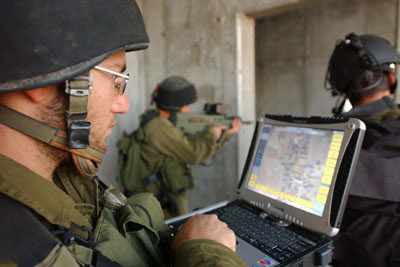
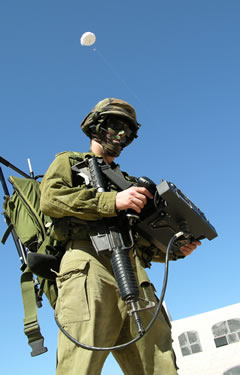
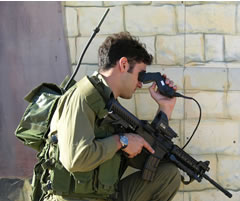
    Among the basic elements already tested with the new unit are infantry combat suites, comprising the Tavor assault rifle, with an integrated sight camera, wearable computer and Global Positioning System (GPS) equipment and rugged Personal Digital Assistants (PDA), which allow sharing images, messaging, automatic reporting and augment warfighter situational awareness. Operations in urban terrain and inside buildings also require new wireless networking facilities, which have also been demonstrated. YATA units have already tested the new Skylark mini UAVs recently procured by the IDF from Elbit Systems.

    Additional parts of this article:

    Israeli LIC Operations in Samaria

    Start < Page 2 of 9 >

    The population centers of the West Bank are large, yet separated from each other. Starting out with major conventional military operations, IDF efforts have developed into more selective, yet intensive campaigns, often led by Special Operations forces. The IDF prefers to “envelop” specific objectives by making use of extensive intelligence and surveillance coordinated with small operational “stings”. These operations maintain momentum as well as pressure on the enemy, yielding valuable intelligence, which is used to support continued activity. As operational success has improved the IDF has been able to pull most of its heavy armor back from West Bank cities.

    Intelligence gathering is performed by all means available, tapping the potential of Human Intelligence (HUMINT) in ways never before practiced by Israel. This has involved close integration of field assets of the Shabak (Israel Securities Authority ISA) with the IDF at the tactical level. Advanced surveillance gathering methods have also been introduced. Some, like the RAFAEL Stalker, rely on organic Reconnaissance, Surveillance and Target Acquisition (RSTA) equipment, while the Air Force’s unmanned aerial vehicles (UAVs) and Elbit/Ness Technologies’ Advanced Multi-sensor Payload System (AMPS) operate in support of ground based Urban-LIC activities. These assets are integrated at the tactical level in order to monitor targets from a long distance, in day and night.

    ‘Stings’ are performed by Special Forces units, primarily at night. Night operations increase stealth, and concealment. Precision and coordination are provided by advanced night vision technology. Local infantry units provide operational support.

    These continued activities yield valuable intelligence, which leads to further operations aimed specifically at the terrorist’s operational framework and command structures, logistics, and support. The continued pressure applied directly on the terrorists, forcing them to run and hide, reduces terrorist activity in the affected areas. This in return, enables the IDF to lift road blockades and ease the pressure on the urban centers of the West Bank.

    Additional parts of this article:

    Backing the Vigilant Eyes ISR Networking for Urban Combat

    Start < Page 6 of 7 >

    Tactical aids are extremely important for Command, Control, and Coordination of urban combat operations. While maps may be sufficient to coordinate operations in an open area where targets such as tanks, enemy troops, or prepared positions can be clearly defined by distinctive shapes and coordinates on a map, typical urban targets look different depending on viewpoint. The details of the information delivered to the combat units must therefore match the unique requirements of each situation.

    Intelligence with this level of detail may not always be available in advance. Therefore, tactical units tasked with UC must develop and maintain internal intelligence collection capabilities. Ground observations, pre-planted Unattended Ground Sensors (UGS)Unmanned Aerial Vehicles (UAV), and Unmanned Ground Vehicles (UGV) are some of the systems available for data collection. Thanks to advances in communications technologies, sensors do not necessarily have to be “owned” or even controlled by the supported unit in order to provide it with usable information.

    Operations conducted by Special Operations (SO) forces usually require extensive intelligence support, including long range airborne and ground based observations, electronic intelligence and signal intelligence support by special mission aircraft and UAVs, etc. SO forces are also equipped with the means of receiving data from, and exercising control over these systems, as part of their C4ISR capabilities. When operated and coordinated as integral parts of the operation, these C4ISR elements play a critical role in the security of the ground forces and the success of their missions. While maintaining a clear and constantly updated visual situational picture of friendly and hostile forces, these intelligence-gathering systems are also locating and reporting the target’s status and activity. When integrated with weapon systems, these elements can also be used to engage the enemy.

    Unmanned assets will become an integral part of the arsenal of the new Unit of Action, the basic maneuver element that will be equipped with the Future Combat System, which the US Army is expected to field by in the next decade. These unmanned assets will include four different UAV systems, at least two UGVs, remotely deployed UGS systems, and other sensors not organic to combat units.

    These sensors are not ‘futuristic’. Forces are already using some of these systems, including the Aerovironment Raven, Elbit Systems Skylark mini-UAV, the i-Robot Pacbot ground surveillance mini-robot, and the Dragon Runner, which is operated by the US Marine Corps. Unattended Ground Sensors (UGS) designed to mimic rocks or tree trunks, can operate covertly tens of kilometers deep in enemy territory for months without any kind of direct support. UGS have been used operationally since the Vietnam War, but in recent years, they have become smarter, evolving into highly capable area surveillance systems. These autonomous or unattended systems can also be equipped with weapons for rapid closure of the ‘hunter-killer loop’. Similar methods are used for the control and integration of snipers, operating as covert observation and attack elements.

    Remote Video Terminals (RVT) enable tapping into available video streams to retrieve analog video data in real time. More advanced net-centric systems, such as Northrop Grumman’s (NG) Advanced Information Architecture (AIA) enable the warfighter to retrieve information from databases that store feeds from multiple remote sensors and intelligence services, providing access to huge archives of imagery and intelligence in real time. Users can find items through information searches, just as they do on the Internet. NG has recently conducted a demonstration of this system for the US Marine Corps and has integrated elements of it into the Global Hawk system in support of the forces currently deployed in Iraq.
    Real-time imagery is becoming a critical element for the modern warfighter, but bandwidth resources available for the transfer of these video streams are limited. Therefore, the networking systems serving the combatants are being modernized. These new networks will provide much wider bandwidth, enabling multiple networks to coexist in the same geographical area, without interference or degradation of Quality Of Service (QOS). These wireless networks must employ robust, highly secure communications in order to protect this critical asset from hostile information warfare (IW) attack. Hostile attack activities can range from probing and intelligence gathering, to causing service degradation, and exploitation (deception). Other UGS might include snake or caterpillar shaped robots equipped with imaging sensors for scouting subterranean environments, and even an expendable dragonfly shaped “creature.” Several of these ‘dragonflies’ can be rolled into a cigarette pack sized container. When released, they will be capable of flying around inside a building for several minutes, while sending valuable real time information to the operating unit.

    Unattended sensors are another class of ISR assets currently under development that will be particularly effective in urban warfare. UGS are now providing secure outer perimeters for force protection and ambushes as well as providing persistent surveillance of suspected insurgent locations. Advanced UGS currently under development include unattended, remotely controlled, multi-sensor devices that can detect nearby movement by seismic, magnetic or thermal sensors, then activate an un-cooled FLIR or a color camera to send a compressed snapshot of the event via secure, low-probability of detection communication.

    Other new devices are designed specifically for urban warfare. Planted in cleared or deserted buildings, these sensors can continuously verify that the area has not been recaptured by hostile troops, or can provide security at entries to areas where friendly forces are located. Other urban UGS include electromagnetic sensors that can “see through walls.” Video/acoustic “eyeballs” used by SWAT teams can be rolled into a room to report on the status inside before troops are committed. A new rifle-launched arrow-shaped camera can be fired at a specific point subsequently delivering a remotely controlled video feed for several hours. Other disposable sensors can be fired from grenade launchers, shoulder fired weapons or can be dropped by parachute over the target, to provide an aerial view of it just before an assault.

    Additional parts of this article:

    Situational Assessment (SA) in urban Combat

    Start < Page 5 of 7 >

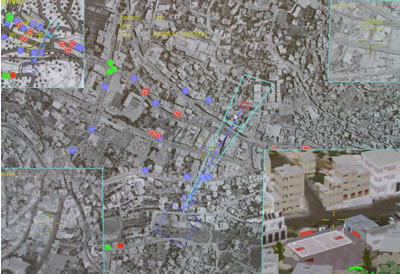
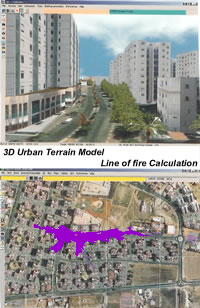
    Planning and preparation of military operations in urban terrain can benefit from modern 3D modeling tools. These tools assist planners in evaluating various options, assessing advantages and risks, and producing tactical decision aids that improve situational awareness for the warfighters and commanders.

    Modeling of urban terrain begins with mapping of the entire area. This process can use existing photogrammetric material from satellite images or aerial photos, or up-to-date information gathered during reconnaissance missions by aircraft or UAVs. Special high-resolution cameras and laser 3D terrain mapping payloads are used to collect the necessary images. During these airborne surveys, relative heights and details of features, such as windows and doors of buildings and other structures, are accurately depicted in order to enable accurate reconstruction of the buildings and surrounding terrain features in 3D perspectives. Building plans can also be used to provide interior and structural details when available.

    The most common method of 3D viewing uses stereoscopic image pairs, which provide an illusion of depth to allow structure height assessment. A much more realistic model can be created by computer generated 3D imaging, which can be used with “immersive virtual reality” to provide realistic views of objects from every angle.

    While providing a realistic view of an area, 3D terrain models also facilitate other important functions of area analysis: automatic plotting of safe access routes, determination of visibility coverage for potential positions, options for locations of vantage points for observation or snipers, as well as allowing assessment of threats from possible enemy positions. These 3D models enable mission simulation rehearsals, detailed mission planning, effective situational assessment during the operation and detailed post mission debriefing.


    Additional parts of this article:

    Effects Based Operations (EBO) in Urban Combat

    Start < Page 4 of 7 >

    Because the use of heavy weapons is restricted in urban environments, the employment of Effects Based Operations (EBO) has become more desirable for many operations. EBO provides commanders with a methodology, and planning and prediction tools to assess the effects of different types of operations, including employment of forceful activities by lethal weapons of all types.

    The operation of tanks in urban areas is a good example of the use of EBO. With their inherent protection and massive firepower, tanks are an important deterrent even without opening fire. However, several adverse effects can occur as a result of the employment of tanks in urban areas.

    First, tanks are a lucrative target for guerillas and damaging or destroying a tank is a “morale booster” for them. Contributing to this problem is the fact that, as stated above, tanks are more vulnerable to guerrilla attacks when employed in urban areas.

    Second, excessive damage caused by tank weapons can have long lasting negative effects and can lead to restriction of commanders’ freedom to use tanks in their operational areas. This is why, in several instances, the US Army in Iraq has restricted firing of 120mm tank guns without the specific approval of battalion level operational commanders. The problem is that, when tanks are using their HEAT or KE main gun ammunition against an urban target, they frequently cause far more damage than is required to eliminate the target. These ammunition types can completely penetrate buildings, pass through multiple walls and endanger non-combatants and friendly forces over a wide area. 

    Third, intensive activity by heavy tracked vehicles causes severe damage to roads, leaving deep permanent scars on paved surfaces, and ruts in unpaved surfaces. Urban guerrillas can then use these damaged road surfaces to conceal IEDs and mines.

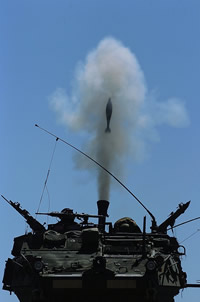
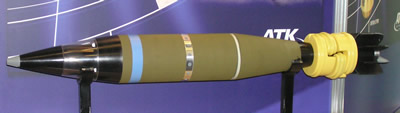
    The use of artillery and mortar fire, with associated explosive and fragmentation effects, can also cause a lot more damage than is necessary to accomplish the mission. The ballistic trajectory and rapid response of these weapons are perfectly suited for engaging urban targets since they can attack protected targets from above, however, the inherent inaccuracy of these area fire weapons, and the large amount of fragmentation caused by surface impact, limits their use in UC. An artillery shell or mortar bomb usually explodes on impact, rarely penetrating hard surfaces. This causes disproportionate collateral damage. When terrain allows line of sight aiming, artillery can be used in direct fire mode to engage specific point targets with high precision, but opportunities for direct fire are rare in urban combat. Mortars have no direct fire capability, so employing them safely in urban terrain requires the use of guided munitions, which are currently under development.

    One of the preferred methods of employment of EBO are the “networked snipers” and  precision-guided weapons, based on detailed intelligence. Suitable weapons include guided missiles of different types: laser homing weapons, electro-optically guided weapons with “man in the loop” control, and, to a limited extent “fire and forget” autonomously guided weapons. Precision weapons are employed when targets are positively identified and confirmed by intelligence sources. The weapons can engage specific targets, such as positively identified armed personnel, vehicles known to be involved in weapons trafficking, an assembly of enemy commanders etc., in real-time. Here, one strike by a single weapon can cause more devastating long term effects than a massive air or ground attack while eliminating much of the risk of collateral damage.

    Effects Based Operations are not limited to the use of lethal force. Employment of non-lethal measures has fewer long-term consequences and can actually be more effective and than lethal weapons when these techniques are employed in SASO and urban environments. A wide range of non-lethal and less-than lethal means are already available for use by military forces, from active and area denial systems, through various deterrents and means of forcible response used with standard military weapons, to advanced standoff means for restraining suspects. New less-than lethal munitions are currently under development for tanks, grenade launchers, remotely controlled and autonomous land mines, and perimeter defense systems.

    Additional parts of this article:

    Skunk Works and XTEND Simplify Multi-Drone Command

    0
    Lockheed Martin Skunk Works® and XTEND have achieved a major milestone in JADC2 by integrating the XOS operating system with the MDCX™ autonomy platform. This technical breakthrough enables a single operator to simultaneously command multiple drone classes, eliminating the friction of mission handoffs. From "marsupial" drone deployments to operating in GPS-denied environments, explore how this collaboration is abbreviating the data-to-decision timeline and redefining autonomous mission execution.

    From Ukraine to Taiwan: The Global Race to Dominate the New Defense Tech Frontier

    0
    As traditional defense primes face mounting competition from agile “neoprimes” such as Anduril, Palantir and Helsing, the balance of innovation is shifting toward software-defined warfare and scalable, dual-use technologies, while global industry consolidation—marked by Boeing’s integration of Spirit AeroSystems and other strategic mergers—signals an intensified race to secure control over the defense technology value chain. Our Defense-Tech weekly report highlights these trends.

    Europe’s “Drone Wall”

    0
    In early October 2025, a coordinated wave of unmanned aerial system (UAS) incursions—widely attributed to Russia—targeted critical infrastructure across at least ten European nations. The unprecedented campaign exposed the fragility of Europe’s air defenses...

    Weekly Defense Update & Global Security Assessment

    0
    Executive Summary The past week (September 18-25, 2025) represents an inflection point where strategic defense concepts have transitioned from doctrine to tangible reality. An analysis of global events reveals four primary, interconnected trends shaping an...

    U.S. Air and Space Forces Push Next-Gen Programs at the AS&C 2025 Conference and...

    0
    At the 2025 Air, Space & Cyber Conference, U.S. Air Force and Space Force leaders unveiled major updates on next-generation fighters, bombers, unmanned systems, and space initiatives, highlighting both rapid innovation and critical readiness challenges as the services race to outpace global competitors. A short version is available here, with a more detailed version for subscribers.

    TADTE 2025: Reflecting Taiwan’s Strategic Themes

    0
    The Taipei Aerospace & Defense Technology Exhibition (TADTE) 2025 crystallized around four dominant strategic themes that collectively illustrate Taiwan's comprehensive approach to defense modernization amid escalating regional tensions. Based on a detailed report by Pleronix (available upon request). Includes a Podcast discussion on TADTE 2025's highlighting Taiwan's four strategic themes beyond the post's coverage.

    Iron Beam 450 Completes Testing, Soon to Join With Operational Air Defense Units

    0
    Israel’s Iron Beam 450 high-power laser system has completed final testing, marking a major leap in air defense. Developed by Rafael, it offers precise, cost-effective interception of rockets, UAVs, and mortars, and is set for IDF deployment by 2025.