
Wednesday, December 24, 2025
More
    Home Blog Page 420

    Information Warfare in Urban Combat

    Start < Page 3 of 7 >

    Urban guerillas have also learned to make use of the benefits of network centric communications, using modern technologies such as wireless phones, cellular networks, and the Internet. Their communications merge with normal commercial traffic as the guerillas try to evade Signal Intelligence (SIGINT) monitoring. With careful preparation (including legal approval) and persistent surveillance by SIGINT specialists, commercial communications can be monitored in order to provide valuable operational intelligence. Commercial communications targeted SIGINT requires special equipment that mimics a cellular communications cell, diverting subscriber communications traffic from the commercial cell without the subscriber’s knowledge, and then analyzing it and passing the transmissions back to the commercial network. This process enables monitoring, identifying, and tracing specific subscribers and even tapping selected calls.
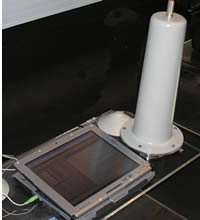
    Other means are available for tapping into central cellular and Telephone Company (TELCO) switchboards, allowing intelligence agencies to screen thousands of calls and intercept communications between suspects based on voice signature, or usage of specific words, names, or locations. Similar activities performed over the Internet include ‘data mining’ e-mail and Internet traffic for valuable intelligence. In order to be considered ‘valuable’, information does not have to include words such as “bomb” or “IED.” Data mining can be accomplished using criteria that are more general, including usage patterns, communication with known or suspected IP addresses and traffic to and from specific locations.
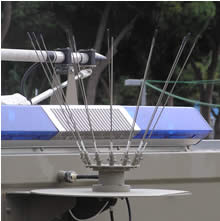
    Remote activation of explosive devices is another capability of commercial communications used by urban guerillas. Wireless phones, remote control equipment, and infrared remote controls are some of the activation devices that have been used by insurgents in the Middle East for the past few decades. Military forces are countering this threat with a wide range of countermeasures, constantly improved to attempt to stay ahead of evolving threats. Consequently, unlike common Information Warfare operations, where jammers are only employed by specialist Electronic Warfare units, Urban Combat (UC) and SASO require the use of IED Jammers by every combat vehicle, EOD team and even by dismounted patrols. This trend has led to the development of reliable, effective, “switch on and forget” jammers that can effectively combat remote triggering of IEDs without degradation of the vehicle’s or individual’s communications system. This type of electronic warfare has created many electronic engineering challenges.

    Additional parts of this article:

    The Urban Electromagnetic Environment

    Start < Page 2 of 7 >

    The urban environment creates many unique difficulties for modern military operations. Communications become limited and unreliable due to multi-path reflections from walls, and electromagnetic masking by thick concrete and steel structures. These effects cause degradation in the Quality Of Service (QOS) for both voice and data networks, even at very short ranges. In addition to multi-path effects, multiple networks and large numbers of wireless devices operating over a wide frequency spectrum and in a confined area, cause severe interference. GPS coverage is often limited to open areas, resulting in lack of coordination between forces and insufficient situational awareness, especially for operations in densely populated areas.

    Furthermore, since urban guerillas are usually “non-uniformed,” and often operate with non-combatants as human shields, hostile actions can occur anywhere, from any direction, and without warning. Serious incidents can develop due to mutual suspicion and poor communications, causing loss of innocent lives. Controlling troops in such an environment requires extraordinary command skills, and constant situational awareness even for experienced combat leaders, and especially at the junior tactical command levels, for operations ranging from routine patrols and road-blocks to non-tactical movements and supply convoys. Without reliable communications, though, even the best leader will find that controlling urban operations is extremely difficult

    In support of urban operations, Command, Control, and Communications (C3) can involve the use of many different systems, from satellite links, wireless networks, and data-links to short-range, low power communicators. Broadband wireless networks provide the framework for net-enabled operations, allowing dissemination of a Common Operations Picture (COP) among all participating forces. Combat Net Radio (CNR) sets, now increasingly integrated into current combat vehicles, already support integrated voice and data communications, facilitating direct links to databases and automatic reporting to battalion, brigade and division levels.


    Maintaining effective Command and Control in urban combat requires the use of efficient and effective networks supporting all combatants throughout the area, regardless of their location. These capabilities are not easily provided because electromagnetic propagation is severely degraded in such cluttered terrain, frequently limiting communications to short range, or even line of sight. Communications between neighboring forces, sometimes even on parallel roads, can be limited and sporadically scattered. Significant improvement in coverage can be gained by operating relay stations from airborne platforms or on high ground. Maturing aerostat technology, including miniature, man-portable systems, has established these simple and reliable platforms as effective providers of communications relay services. An aerostat is more reliable than a UAV, especially under adverse weather conditions when a UAV cannot operate. Anchored to the ground, an aerostat maintains its position for long periods without requiring human control or support.

    Ground combat communications networks are usually operated in the VHF frequency band. This frequency band is relatively narrow and military radio networks do not use the available bandwidth as efficiently as current commercial systems. Consequent lack of available frequencies can limit the use of radio relays to overcome masking and interference.

    One solution to the problem is the use of Commercial Off The Shelf (COTS) based communications systems. Unlike legacy military radios or even the newer frequency hoppers which require dedicated frequency resources for each network, COTS systems dynamically share a wide frequency band for optimal use of scarce resources. Employing the TETRATETRAPOL, or APCO-25 commercial standards, COTS systems are designed to provide deployable, reliable, and secure communications even under peak loads.

    Mobile subscriber networks, such as the TETRA based emergency communications network fielded by Motorola Communications, provide automatic relaying of communications and data. Emergency communications networks utilize ad-hoc communications to establish bypasses between two points when direct communications are not possible. The network automatically establishes paths through other elements to regain the flow of information between all points and the central command post.

    Modern military networks are following a similar pattern. These include relatively simple wireless networks utilizing “wi-fi” protocols, as well as advanced mesh networks, which utilize advanced methods designed specifically to cope with the adverse effects of urban terrain. Operating multiple high capacity links supporting video transmissions and control of remote systems requires the fielding of special data-links. Relying on industry standards, such as the commercial COFDM protocol, which was originally developed to support mass distribution of digital broadcasts; modern data-links are designed to deliver compressed video and command signals with very low latency and high quality.

    At the lower tactical level, Personal Role Radio communicators (PRR) are used to link squad members. Only Special Operations forces previously used this type of communication system. The use of such communicators enables more effective control of all personnel due to constant reporting and tracking of troops and automatic transmission of emergency calls (by pressing the “panic button”). These devices enable the flow of information to and from the dismounted unit without dependence on a vehicular platform for Command and Control. PRRs can interface with weapon sights, hand held computers, and navigation equipment to form an integrated combat suite for the warfighter. While PRRs are very effective when operations are conducted in open areas, their coverage and range degrades dramatically in confined spaces. Most systems can only work through one or two floors or walls, therefore limiting communications when operating inside buildings, or subterranean passages.

    Additional parts of this article:

    The Challenges of Command and Control in Urban Operations

    Start < Page 1 of 7 >

    Much has been written about the difficulties and challenges of urban warfare, especially combat methods used in security and stabilization operations (SASO), where high sensitivity to collateral damage and concerns for the welfare of non combatants require limited use of force and tight control at all combat levels.

    In past conflicts, offensive military operations have usually been conducted in urban environments only when unavoidable. Leaders of armies preferred to bypass areas posing significant threats or obstacles to their forces. In most cases, military action in urban areas would only occur when military units were forced to pass through villages or urban terrain due to the co-location of river crossings, strategic junctions, etc., with these population centers.

    In the post cold-war era, however, conflicts are shifting from the wastelands, deserts, and jungles into the cities, where terrorists, insurgents, or guerillas (1)  find safe havens in environments that also provide a rich target environment.

    Characteristics of urban warfare

    For regular armies, operations in urban terrain pose significant challenges. Compared to rural areas, or open desert, maneuverability in a city is restricted to fixed routes, which are frequently dominated by elevated firing positions (such as rooftops, towers, etc). These restricted movement axes limit maneuverability and require deployment of forces into long columns, reducing their ability to employ concentrated firepower and provide mutual support. Since the routes are predictable, enemy ambushes can be pre-planned or executed spontaneously as the battle progresses.

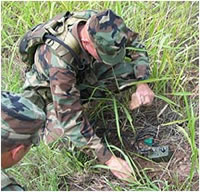
    Improvised Explosive Devices (IEDs) can be pre-positioned, some buried under the pavement, some blended into walls and covered with mortar and paint. These devices make passing targets, such as foot patrols or inadequately protected vehicles, highly vulnerable.

    IEDs and mines are only two of the threats that military units can encounter in urban settings. Other popular attack methods include car-bombs, suicide bombers, weapons fired from passing cars, sniper fire, mortar and rocket attacks, and even direct assaults on vulnerable elements. Locations of these ambushes can be selected based on availability of observation points, ingress routes and especially escape routes that allow urban guerillas to blend into the local population immediately following an attack.

    Subterranean networks, such as sewer or cistern systems, or purpose built tunnels, offer covert movement to local elements familiar with the terrain and add to the guerilla’s mobility. Attacks in urban environments are often carefully planned, but their purpose is not always to kill people. Sometimes attacks are performed as deceptions, or as part of “battlefield shaping” by the attackers.


    1 regardless of their cause or justification for the fight, the enemy will be collectively addressed here as “urban guerillas”

    Additional parts of this article:

    Armor Formations and Maneuver in Urban Terrain

    Start < Page 5 of 6 >

    One of the most common armor formations utilized in urban combat is the box, or diamond, where several tanks and armored vehicles are grouped together to create a mutually supporting combat element. Vehicles positioned at the four points of the formation operate using slow, coordinated, forward movements, allowing time to scan areas that may be dominated by enemy forces This tactic allows them to draw enemy fire, and engage resulting targets as they are detected. When movement is halted, vehicles usually take up positions in crossroads in order to provide better observation and coverage.

    Dispersion of forces is maintained by employing several box formations moving in parallel through blocks or streets and coordinating their advance and firing sectors in order to reduce the chance of fratricide. The lateral dispersion of forces canalizes the movement into well defined lines and enhances lateral security for the advancing forces. The best protected elements (tanks or armored bulldozers) are positioned in the vanguard, to engage targets in the forward sector and low elevation targets on the flanks. Armored Infantry Fighting Vehicles (AIFV) cover the flanks, high and low, and the rear. High angle fire from machine guns and automatic cannon can be used to engage threats on rooftops and in dead zones. Where AIFVs are not available, self propelled air defense guns can be used (such as M-163 Vulcan, Gepard, or ZSU-23/4).

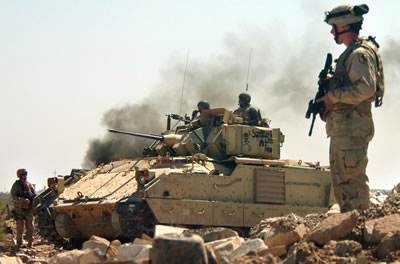
    Combined formations of tanks and AIFVs have superior maneuverability and mutual coverage, partly because of the additional capabilities of the smaller, and more maneuverable Bradleys. The ‘heavy vehicles leading’ formation enables the box to absorb enemy fire and IEDs while exposing enemy positions and engaging them with effective and accurate firepower. If one of the vehicles is disabled, the remaining vehicles close up around it, establishing a wall of steel that allows CASualties EVACuation (CASEVAC), recovery or repair. Care must be taken to ensure that the covering vehicles do not close up to the point where they present a lucrative point target.

    Additional parts of the article:

    Tank Firepower Adapted for Urban Warfare

    Start < Page 4 of 6 >

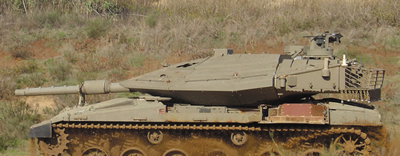
    The tank’s most powerful weapon is its main armament, the 120mm HV gun, but a high velocity cannon is not a very effective weapon for close-in urban combat. Current low-profile tank hulls, and especially turrets, restrict main gun elevation and depression angles, making it impossible to use the main gun to engage targets in tall buildings or low lying cellar bunkers at close range. Moreover, the high velocity gun has a long barrel, which restricts traverse in narrow streets, and makes it virtually impossible to engage targets on the flanks or to the rear once the barrel is pointed forward. These so-called ‘blind spots’ are the tank’s most vulnerable areas.


    In the area of ammunition, the rounds most often carried by current tanks, APFSDS and HEAT, were designed for use against other tanks or AFVs in open areas, and suffer from severely limited effectiveness when used against short-range targets in urban terrain. Consequently, a change of deployment zone from open area to urban environment would require a pre-mission change of main gun rounds. This is a strenuous and time consuming process and exposes the crew to unnecessary risks from area fire weapons. Another ammunition change would be necessary when moving from the urban environment back to an open area.

    For several years, the standard NATO tank main gun has had a bore size of 120mm. Only two types of cartridges are commonly used in these 120mm guns – Kinetic Energy (KE), such as APFSDS, and Chemical Energy (CE) such as High Explosive cartridges optimized for Anti-Tank use (HEAT). As KE ammunition is not normally suitable for urban use, tank crews have been forced to make greater use of CE rounds, previously regarded as ‘secondary munitions’. Neither CE nor KE rounds, however, are optimized for use in urban environments, where any of several types of multi-purpose munitions would be more effective.

    Multi-purpose tank round designs are based on various combinations of fragmenting high-explosive charges, with limited penetration capability, and are optimized for defeating concrete structures, bunkers, walls, and light armored vehicles. Most of the available multi-purpose rounds were designed for use by the NATO standard 105mm guns, such as the British L-30 or by the Russian 105, 115 and 125mm tank guns. The German firm Rheinmetall is developing a 120mm HE projectile that is considered to be a balanced combination of AT and MP. A similar goals is being pursued by General Dynamics with the M830A1, a HEAT round fitted with fragmentation case, providing additional “MP” effect.

    Some of these multi-purpose munitions are equipped with time fuses for producing airburst effects. An example is the famous flechette round, which can be used to engage several types of soft targets at various ranges with devastating effect. A modern replacement for the flechette is the XM1028 round, which can be used against hostiles attempting to climb onto buttoned-up friendly tanks and APCs. The advantage of the XM1028 is that it can be fired at buttoned-up friendly vehicles, that are in danger of arms-length attacks by hostile forces, without risking damage to the vehicle, crew, antennas or optics. In situations where restrictive rules of engagement limit the use of lethal ammunition, flashbangs or tear-gas (CS) canisters can be used.

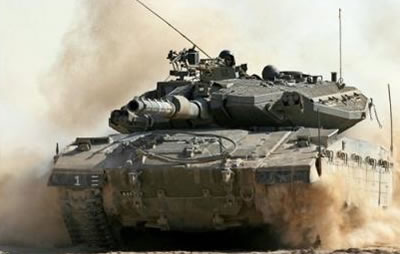
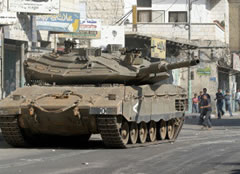
    Integral mortars (60mm under-armor mortars are built into the IDF Merkava) can also improve the tank’s ability to engage targets at high elevations and short ranges, where the main gun cannot be brought to bear.

    Additional parts of the article:

    Enhancing Tank Survivability in Urban Combat

    Start < Page 3 of 6 >

    Improving a tank’s survivability has usually been achieved by upgrading its armor. Normally the best protected part is an approximately 60 degree frontal arc. This area is where hits would be most likely in a tank vs. tank engagement. In urban combat, however, threats can come from any direction. Especially vulnerable are the vehicle’s top, rear, flanks, and bottom.

    The tank bottom is thin compared to most parts of the hull. Although designed to withstand a ‘normal’ AT mine explosion, the hull bottom has proven to be vulnerable to very large charges set to detonate under the tank. Examples include the destruction of Merkava Mk3s tanks by large mines in Gaza, and the highly publicized attack on a 4th ID M1A2 SEP Abrams tank near Balad, Iraq. The latest incident was near Baghdad on Christmas Day 2005, when a 64th Armor Battalion M1A1 Abrams was destroyed by a very large mine. In order to counter these new battlefield threats, the US Army is developing the Tank Urban Survivability Kit (TUSK), which modifies the M1A2 SEP tank to enhance urban combat effectiveness.

    As a result of recent experiences with urban combat, the IDF has developed an urban warfare protection kit for the Merkava Mk3. This kit provides an all-round add-on armor suit, including heavier bottom plate. This kit also includes:

    • Fitting of marking poles to the outer points of the fenders. (These markers are used to assist the commander and driver in movement through narrow confines)
    • Installation of steel mesh protection on all air intakes, exhausts and openings in the hull for optics
    • Addition of a redesigned commander’s cupola, which improves visibility when the cupola mounted machine gun is at high elevations
    • Addition of a remotely activated external 0.5″ machinegun above the main gun
    • Installation of a sniper-firing hatch in the rear door to increase protection of the tank’s previously highly vulnerable rear

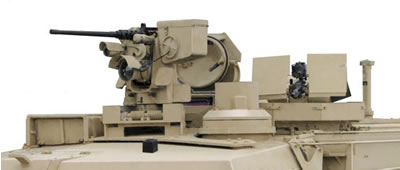
    A different urban warfare kit developed for the Merkava Mk 4 includes a hull mounted ram, and an overhead, remotely controlled weapon station, which can be operated by the loader.

    When modular armor upgrades are available, tanks can be modified to counter typical urban threats without reshaping their outer envelope. Otherwise, appliqué armor is used, adding additional passive (ceramic) layers to strengthen weak spots. This is much more effective, and tidier, than the addition of track blocks, sand bags, concrete blocks and chicken wire, as seen in the past.

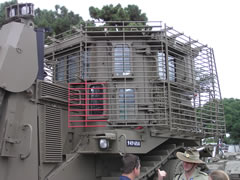
    The installation of lower flank skirts to protect the suspension, installation of reactive armor to counter HEAT threats, and the addition of cages of slat armor to protect the vulnerable areas at the rear are some of the newer implementations of close-in protection.

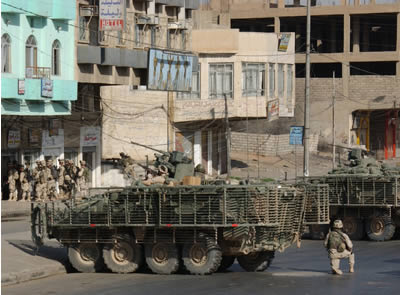
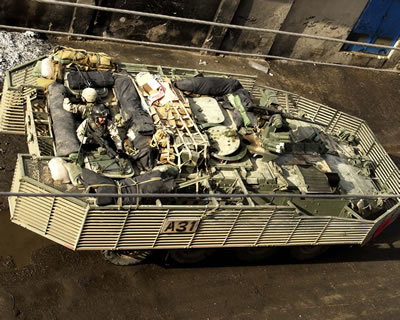
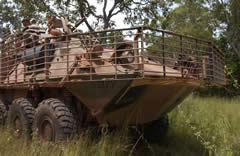
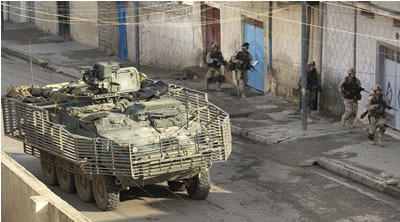
    Slat cages have already proved to be highly effective on Strykers in Iraq, and are widely used there by the US, British, and Australian forces. The same concept is also used by the Israeli Army operating around Gaza for the protection of AIFVs, armored bulldozers, and heavy troop carriers.

    Other upgrades in protection that are expected to be fielded within the next 12 to 24 months are various Active Protection Systems (APS). The Russians pioneered this technology with the development of Drozd and Arena-E “hard kill” systems, but western technologies seem even more promising. 

    Among the most mature of the APS systems are the Israeli Trophy and US FCLAS systems, which use focused fragmentation to neutralize incoming projectiles. The Active Defense Systems (ADS) from IBD, and similar Israeli systems, use focused blast effects to defeat similar threats. The latter are considered more suitable for urban warfare, as they can be employed safely near troops and innocent bystanders. Use of APS and/or ADS is considered imperative for all future combat vehicles, and these systems will be included in the design of all projected developments of manned armored vehicles, including FCS, FRESEBRC, and future German and Israeli armored vehicles.

    Additional parts of the article:

    Improving Visibility in “Buttoned Up” Tanks

    Start < Page 2 of 6 >

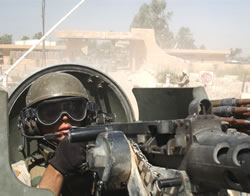
    While tanks are relatively well protected against most common threats, their crews are only safe as long as they remain inside their vehicles. Since the coaxial machine gun has the same limited elevation and depression as the main armament, it is necessary to traverse the entire turret in order to aim at close-in targets and high elevation targets cannot be engaged at all in some situations. Consequently, use of external turret mounted machine guns and hand grenades by the commander and loader are frequently required for self-defense. Exposure of tank crewmen outside the armor of their vehicles provides firing opportunities that can be exploited by snipers. Effective for this type of situation include the use of overwatch and mutual coverage tactics. Obviously, the employment of under-armor remotely controlled weapon systems dramatically improves the effectiveness and survival expectancy of tank and APC crews.

    Tanks are designed for fast-moving battle in open terrain, where their mobility, firepower, and survivability make them ideal weapons platforms for high intensity combat. Urban battlefields reduce the value of these attributes. If a tank cannot be operated properly in urban conditions, it can become a steel trap for its crew and a liability to the forces operating with it. Some of the limitations inherent in existing tank designs can be overcome by relatively simple modifications that enable improved survivability and enhanced application of urban combat tactics.

    LIC modified tanks are equipped with larger vision blocks to improve observation capabilities that are restricted by the older style vision blocks. Even more useful are new independent sights provided for vehicle commanders. Examples include the Commander’s Independent Thermal Viewer (CITV) included in the M-1A2 System Enhancement Package (SEP), and the M-2 Bradley Commander’s Independent Viewer (CIV). These additional sights enable commander and gunner to simultaneously cover different sectors with observation and firepower, and allow observation of high elevation targets.

    Urban modification kits developed for modern tanks also include video cameras for viewing ‘blind spots’ around the tank, especially at the flanks and rear. When a tank is maneuvering in close quarters, trying to avoid damage to the vehicle and its surroundings, guidance is absolutely essential but also exposes the guides to the risk of hostile fire. Voice control over radio has been tried as an alternative to a dismounted guide, but has proven to be less effective. A benefit of the new video system is that it enables the driver to reverse and turn without such external guidance. A 360 degree omni-directional panoramic video camera has been tested on the Merkava Mk4. These video systems are equipped with automatic motion detection capability to automatically detect and warn of approaching threats, or hostiles climbing onto vehicles when they are stationary.

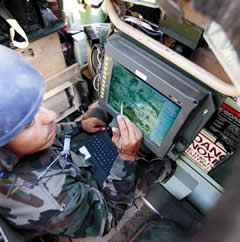
    Battle Management Systems (BMS) such as the net-centric US FBCB2, the Bowman Tank Digitization Program, implemented in the British Challenger II, SIT, installed in the French Leclerc or Israeli WIN BMS can dramatically improve the situational awareness of the tank commander, especially when “buttoned up” for maximum protection. BMS also enables firing at much closer ranges and with smaller safety margins. It improves the allocation of areas of responsibility, simplifies the establishment of compartmental sectors, and reduces cross fire and the risk of fratricide.

    Additional parts of the article:

    REMBASS II – Remotely Monitored Battlefield Sensor System

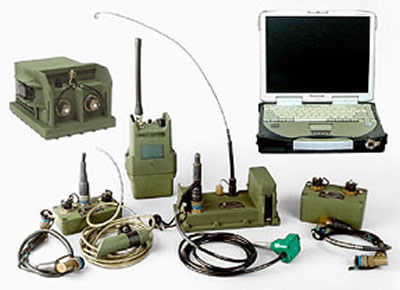
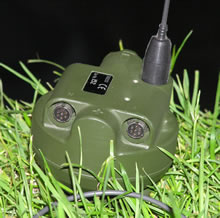
    The principal UGS system used by the US military is the AN/GSR-8 Remotely Monitored Battlefield Sensor System (REMBASS II), which detects, classifies and determines the direction of movement of intruding personnel and vehicles. The system uses three basic sensor transducers, including a basic seismic/acoustic multi-sensor, which can be fitted with passive infrared (PIR) or magnetic plug-in modules. Each unit has a different coverage – the seismic/acoustic detects personnel at a range of 75 meters, the PIR provides directional cues of the target’s direction of movement, with coverage of 30 meters. The magnetic sensor provides a localized indication, detection targets containing ferrous metals at a distance of only 3 meters.

    The system uses an open interface which can integrate new types of sensors, including CBRN, meteorological, RF sensors etc. The sensors communicate the target data messages up to 15 kilometers using Low Probability of Intercept/Low Probability of detection (LPI/LPD) VHF communications. Optional repeaters can extend the REMBASS II range up to 150 km. Such sensors are not limited to manual hand emplacement.

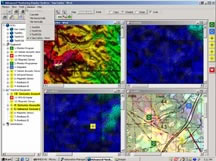
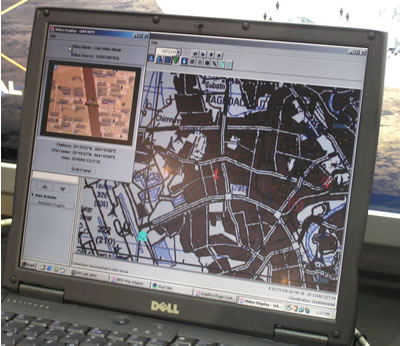
    REMBASS II based Air Deliverable Remote Sensor System (ADRSS) is currently in development at L3 Communications. When matured, sensors could be deployed by rotary UAVs, Tactical UAVs, or even high speed aircraft. REMBASS II sensors are monitored by an Advanced Monitoring Display System (AMDS) which enables operators to plan missions and depict sensor locations and activities on a graphical display. Sensor data collection can also be performed by a UAV, which also provides users to send data queries to the sensors, over very long distances. The system is also used to control the AN/PPS-5D Ground Surveillance Radar. The system is currently fielded by Stryker Brigade Combat Teams and Special Forces. A subset of the system is the Platoon Early Warning Device (PWED II) system, which uses the basic seismic/acoustic sensor, offering unattended physical security for defensive positions set up by the infantry platoon.

    The role of Armor in Urban Combat

    Start < Page 1 of 6 >

    A basic lesson learnt by US and coalition troops engaged in counter-insurgency operations in Iraq, as well as the Israelis in their Low Intensity Conflict with the Palestinians, is that a fully integrated combat team is crucial in any urban warfighting environment. Across the spectrum of combat action in urban warfare, a mutually supporting combined arms (armor-infantry) tactical element can achieve success while keeping casualties, as well as collateral damage to a minimum.

    Due to its nature, fighting in urban environments rapidly decentralizes and is extremely difficult to control even at the lowest tactical fighting level. At small-unit tactical levels, (squad and platoon) light infantry forces (not adequately armored) face serious disadvantages. While moving exposed in an urban environment, dismounted infantry troops may be subjected to intense hostile fire, sources of which are difficult to locate. Normal small unit weapons lack adequate firepower for subduing well protected enemy bunkers and, especially, carefully camouflaged positions in buildings. Decentralized tactical movements through built-up areas results in severe difficulties in maintaining control and mutual identification. In this type of situation, the danger of fratricide casualties also becomes acute. This inferiority can be compensated for by using armored vehicles like the ones available in mechanized infantry units, provided that the vehicles are adequately protected by add-on armor or other protective suites capable of withstanding Rocket Propelled Grenades (RPG) and heavy Improvised Explosive Devices (IED) attacks. 

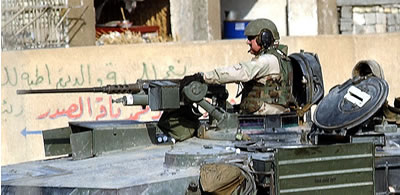
    Even though armored, tanks and mechanized infantry units also face dangers in confined urban areas due to limited all-round observation and restrictions to maneuver capabilities. This places them at an especially severe disadvantage when operating alone. During urban encounters by US armored elements in Iraq, troops reported several effective tactics used by insurgents, including sniping and dropping grenades from rooftops or upper floor windows, in an attempt to attack vehicle crews and commanders through open hatches. Other tactics included simultaneous attacks on both flanks from alleys, allowing the insurgents to fire RPGs from close range at these relatively weak areas of the tank’s armor.

    Tanks and other armored vehicles are not invincible, especially in urban terrain, where they are vulnerable to attacks from close range by man-portable anti-tank weapons such as RPGs. Since the urban scenario has no “frontline”, attacks can come not only from the front, where the tanks are heavily protected, but also from above, and from the flanks or the rear, aiming at the vehicle’s weak spots. Attacks by IEDs and mines can also come from below the surface.

    Although urban warfare is not exactly the tanker’s dream, a significant number of future battles will inevitably take place in this environment. The value of tank support cannot be underestimated in this high-risk environment, in which a commander wishes to use all available combat elements in order to reduce casualties. Modifications to tanks for use in urban combat conditions will continue to make them indispensable partners in the future warfighting team.

    Additional parts of the article:

    Urban/MOUT Advanced Sensor Systems

    Start < Page 4 of 5 >

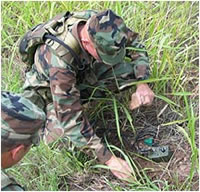
    Urban UGS systems will include networks of leave-behind sensors that provide localized surveillance supporting Military Operations in Urban Terrain (MOUT). They can be hand-employed by Soldiers or robotic vehicles either inside or outside buildings and structures. The Urban UGS include various Sense Through The Wall (STTW) systems, developed to address current urban warfare requirements. (STTW) Systems will detect, locate and “see” personnel hidden behind non-metallic walls, doors and other visible obstructions. Future capabilities will include detection of concealed weapons and explosives. Among such systems is the Enhanced Motion And Ranging System (EMARS) developed by Raytheon. This sensor uses low frequency radar designed to detect motion behind walls. The system calculates the range of motion of up to 16 targets detected in front arc of the sensor. The hand held unit comprises separate sensor and control unit, enabling remote monitoring of multiple sensors. A different system is developed by BAE Systems. This sensor uses a 920MHz CW radar, detecting motion through walls up to 30 cm thick. Such motion triggers an alarm sent directly to a pager or PDA. The sensor uses a directional Yagi antenna or omni-directional whip, used as “leave behind” Urban/MOUT Advanced Sensor System (UMASS).

    Additional parts of this article:

    Miniature Intrusion Sensors (MIS) Classic 2000 UGS

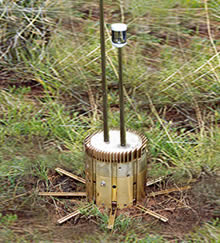
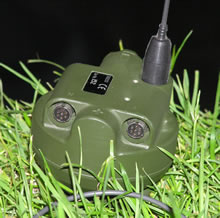
    Thales is offering a range of Miniature Intrusion Sensors (MIS) comprising a range of seismic, magnetic and PIR wireless linked sensors used for perimeter protection. These sensors are equipped with wireless links operating over a distance of 500 meters. The sensors can be integrated into the Classic 2000 family of UGS providing local data processing, fusion and transmission of filtered alerts over standard VHF communications, SATCOM or other communications media.

    Surveillance Collection Observation Unit (SCOUT)

    Lockheed Martin is developing a network of ground sensor that will provide real time intelligence collection, detection and identification of an array of threats. The modular Surveillance Collection Observation Unit (SCOUT) system will include air- and hand placed sensors, integrating an all-weather capable sensor set.

    Comprised of acoustic, seismic and visual sensors, SCOUT’s sensors will feed their signals to an integral processor, reducing false alarms by signal fusion. The sensors will be able to analyze and classify a threat by acoustic and seismic signature, a 360-degree EO/IR camera will validate and provide positive visual identification. Each sensor will be equipped with a cognitive non line of sight data link employing anti-jam techniques. The data link ensures clear two-way communications between each sensor unit and a designated ground station up to 20 km.

    The sensor unit could be interrogated via datalink immediately upon a detection of a potential threat to verify the situation and determine the direction of movement. Another member of the SCOUT family will be the UAV deployed Air Deployable Expendable Sensory System (AD/EXSEN). To enable operations over extended range, this sensor will have a communications relay data link, eliminating the requirement for satellite communications. These sensors will be distributed in clusters of small sensor systems (acoustic, seismic, electro-optical, infrared, nuclear, biological and chemical etc.) deployed in a single deliverable package, providing the military with real time advanced battlefield threat warnings.

    Ground Surveillance Sensors – Augmenting the UGS

    Start < Page 2 of 5 >

    Area scanning sensors are used to augment the covert Unattended Ground Sensors, (UGS) wide area coverage and automatic spotting of moving objects over a wide area. These visible sensors are having important deterrent effect on hostile infiltrators. In use are elevated sensors, covering a wider area with observation through electro-optical and radar surveillance means. One such system is the Persistent Threat Detection System (PTDS), already deployed under a Quick Reaction Capability (QRC) to Iraq in September 2004. The system uses a tethered aerostat, equipped with a high-resolution Electro-Optic/Infrared (EO/IR) payload. It integrates IR and radar sensors cueing the aerostat camera to provide near-real-time “eyes on target.” PTDS utilizes the Inter-Brigade Communication System (IBCS), which provides the communication backbone and networking capabilities of the system and will be integrated into the Persistent Surveillance Dissemination System of Systems (PSDS2) once fielded.

    A different category of unattended sensors employs scanning sensors, including EO/IR and ground surveillance radars. Such sensors are scanning a larger area, automatically detecting moving targets. The coverage and distances of such sensors depend on the technology used such as, FLIR sensitivity, radar transmitted power and sensitivity, signal processing etc. These sensors are commonly used for perimeter protection, border security and battlefield surveillance. When operated individually, EO/IR systems could suffer from sensitivity degradation under certain conditions, while radar has its own weak spots, particularly in the rejection of false alarms and low velocity targets. Imaging and radar sensors can be integrated with very high probability of detection under all weather conditions. Scanning sensors can be used to cue adjacent remotely operated weapon stations, therefore rapidly closing a sensor-shooter loop engaging time sensitive targets. When a more flexible response is called for, such systems can be integrated with autonomous patrol vehicles, or manned patrols, to establish an effective rapid-response.

    Additional parts of this article:

    Unattended Ground Sensors

    Start < Page 1 of 5 >

    After several decades of rather obscure awareness in military operations, the use of passive sensors for remote battlefield applications is becoming more popular. Driven by modern Digital Signal Processing (DSP), sensors are become smaller, yet much more accurate and sophisticated. These technological advances have made the development of advanced, multi-sensor Unattended Ground Sensors (UGS) possible. Existing in various sizes and forms, UGS contain several sensor technologies, deploWyed at the area of operation, detecting, classifying and reporting target information via wireless links to a remote control center. UGS systems use small, low cost and robust sensors expected to last in the field for weeks or even months. Other systems are providing communications, processing, as well as target verification and identification services.

    UGS systems utilize a combination of detectors, including seismic detectors (geophones), used to identify ground vibration caused by vehicles or pedestrians. Magnetic detectors monitor movement of metal objects such as weapons or vehicles. Acoustic sensors are used to detect targets by specific acoustic signatures (noise of engine, tracks etc) while passive infrared (PIR) sensors detect movements of objects in a narrow field of view. Input from all these detectors is collected by the gateway, processed by its on-board signal processors. When signatures are correlated into verified target detection, an alarm is triggered and transmitted automatically by radio to a central monitoring point in order to alert reaction forces on the suspect area.

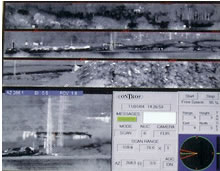
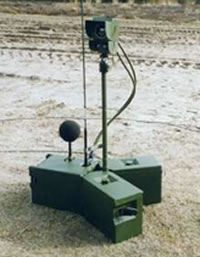
    In certain situations, other sensors are required to verify an alarm triggered by non-imaging sensors. Such verification will most commonly utilize an imaging sensor. A typical configuration of such system is the Rheinmetall Defense BSA. A similar function can be provided by the Covert Unattended Ground Imager, (UGI-C). This man portable, persistent all-weather system is comprised of a thermal camera triggered by PIR, taking snapshots of nearby motion events. The captured images are compressed and sent as short 3.5 animation movies over non-line-of-sight RF communications link. Other systems currently available include Terrain Commander, which can be operated autonomously or by remote control.

    Additional parts of this article:

    Skunk Works and XTEND Simplify Multi-Drone Command

    0
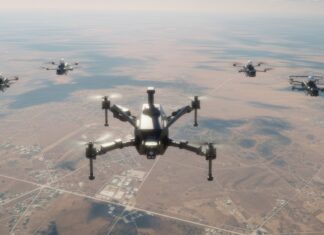
    Lockheed Martin Skunk Works® and XTEND have achieved a major milestone in JADC2 by integrating the XOS operating system with the MDCX™ autonomy platform. This technical breakthrough enables a single operator to simultaneously command multiple drone classes, eliminating the friction of mission handoffs. From "marsupial" drone deployments to operating in GPS-denied environments, explore how this collaboration is abbreviating the data-to-decision timeline and redefining autonomous mission execution.

    From Ukraine to Taiwan: The Global Race to Dominate the New Defense Tech Frontier

    0
    As traditional defense primes face mounting competition from agile “neoprimes” such as Anduril, Palantir and Helsing, the balance of innovation is shifting toward software-defined warfare and scalable, dual-use technologies, while global industry consolidation—marked by Boeing’s integration of Spirit AeroSystems and other strategic mergers—signals an intensified race to secure control over the defense technology value chain. Our Defense-Tech weekly report highlights these trends.

    Europe’s “Drone Wall”

    0
    In early October 2025, a coordinated wave of unmanned aerial system (UAS) incursions—widely attributed to Russia—targeted critical infrastructure across at least ten European nations. The unprecedented campaign exposed the fragility of Europe’s air defenses...

    Weekly Defense Update & Global Security Assessment

    0
    Executive Summary The past week (September 18-25, 2025) represents an inflection point where strategic defense concepts have transitioned from doctrine to tangible reality. An analysis of global events reveals four primary, interconnected trends shaping an...

    U.S. Air and Space Forces Push Next-Gen Programs at the AS&C 2025 Conference and...

    0
    At the 2025 Air, Space & Cyber Conference, U.S. Air Force and Space Force leaders unveiled major updates on next-generation fighters, bombers, unmanned systems, and space initiatives, highlighting both rapid innovation and critical readiness challenges as the services race to outpace global competitors. A short version is available here, with a more detailed version for subscribers.

    TADTE 2025: Reflecting Taiwan’s Strategic Themes

    0
    The Taipei Aerospace & Defense Technology Exhibition (TADTE) 2025 crystallized around four dominant strategic themes that collectively illustrate Taiwan's comprehensive approach to defense modernization amid escalating regional tensions. Based on a detailed report by Pleronix (available upon request). Includes a Podcast discussion on TADTE 2025's highlighting Taiwan's four strategic themes beyond the post's coverage.

    Iron Beam 450 Completes Testing, Soon to Join With Operational Air Defense Units

    0
    Israel’s Iron Beam 450 high-power laser system has completed final testing, marking a major leap in air defense. Developed by Rafael, it offers precise, cost-effective interception of rockets, UAVs, and mortars, and is set for IDF deployment by 2025.