
Sunday, December 21, 2025
More
    Home Blog Page 379

    An Eastern Mediterranean Oil War?

    Prime Minister Ehud Olmert’s overnight visit to Turkey has focused attention to the strategic dialogue between the two democratic nations in the Eastern Mediterranean. Turkey is a powerful, pro-Western, not Arab but definitely Muslim country and Israelis had hoped for years that its expanding relations would break the impression that the Muslim world opposed the Jewish state.

    The Turks were initially cautious, but came round about a decade ago when they reassessed their policies. They felt that dangerous neighbors and hotspots of instability were across their borders, and believed that Israel’s influence in the United States could help especially in countering Greek and Armenian lobbies in Washington. The Turkish army’s Deputy Chief of Staff Gen. Ergin Saygun was in Israel late last year discussing plans and more such visits are expected following Olmert’s visit. But there seems to be much more at stake than mere diplomatic photo opportunity exchanges between Turkey and Israel.

    Virtually unnoticed, the inauguration of the Ceyhan-Tiblisi-Baku (BTC) oil pipeline, which links the Caspian Sea to the Eastern Mediterranean took place on the 13th July 2006, at the very outset of the Second Lebanon War. The official reception took place in Istanbul, hosted by Turkey’s President Ahmet Necdet Sezer in the Çýraðan Palace. Many dignitaries among them, British Petroleum’s CEO Lord Brown and BP leading the BTC pipeline consortium of western oil companies and senior government officials, top oil ministers and leaders of western oil companies, from Britain, the US, Israel and Turkey were all present at the ceremony.

    The 1,770 km Baku Tbilisi Ceyhan pipeline, simply known by the acronym BTC, is one of the world’s longest and cost US$4 billion to build. It snakes its way from the Sangachal oil and gas terminal south of the Azeri capital of Baku on the Caspian Sea through neighboring Georgia and some of the most mountainous regions of the Caucasus to finally reach the Turkish port of Ceyhan on the Mediterranean.

    The BTC pipeline totally bypasses the territory of the Russian Federation. as it transits through the former Soviet republics of Azerbaijan and Georgia, both of which have become US ‘protectorates’, firmly integrated into a military alliance with the US and NATO. Moreover, both Azerbaijan and Georgia have longstanding military cooperation with Israel. Israel has a stake in the Azeri oil fields, from which it imports some 20% of its oil.


    In April 2006, Israel and Turkey announced plans for four underwater pipelines, transporting water, electricity, natural gas and oil to Israel, by-passing Syrian and Lebanese territory. The pipeline is aimed bringing water to Israel, by pumping water from upstream resources of the Tigris and Euphrates river system in Anatoli has been a long-run strategic objective of Israel to the detriment of Syria and Iraq.

    In its context, the BTC pipeline dominated by British Petroleum and American interest, has dramatically changed the geopolitics of the Eastern Mediterranean, which is now linked , through an energy corridor, to the strategic Caspian sea basin. But there is more at stage here.

    The geographical fact is that Ceyhan and the Mediterranean port of Ashkelon are situated only 400 km apart. Oil can be transported to that port in tankers or through a specially constructed under-water pipeline. From Ashkelon the oil can be pumped through already existing pipeline to the port of Eilat at the Red Sea, which had been very active during betters days between the Shah’s Iran and Israel during the Sixties. From Eilat oil it can be transported to India and Far Eastern countries in tankers, thus outflanking the vulnerable Hurmoz straits.

    Last May, the Jerusalem Post published an article that Turkey and Israel are negotiating the construction of a multi-million-dollar energy and water project that will transport water, electricity, natural gas and oil by pipelines to Israel, with the oil to be sent onward from Israel to the Far East. Antalya Mayor Menderes Turel mentioned this in a press conference. The project, which would likely receive foreign economic backing, is currently undergoing a feasibility study sponsored by the Luxembourg-based European Investment Bank.

    The United States’ ultimate strategic design is intended primarily to weaken Russia’s role in Central Asia and the Eastern Mediterranean, while isolating Iran from this important energy source.

    Iran being not only a major oil producing country is also a direct stepping stone between the Caspian region and the Persian Gulf. As such, it would certainly like to see Caspian oil flowing through its territory rather than through Turkey. Moreover, having full control over the Persian Gulf shipping lanes, through its military control on the strategic Hormuz strait, Iran could virtually strangle, at will, all international oil supplies, if political pressure on its nuclear program intensifies.

    Iran’s claim to Caspian oil dates back to the last century when the Russian Empire and Persia, later Iran signed agreements in 1921 and 1940 recognizing the Caspian Sea as a lake belonging to and divided between them. Following the dissolution of the Soviet Union, Iran wanted this agreement to continue despite assertions of independence by the breakaway states of Kazakhstan, Azerbaijan and Turkmenistan.

    Five years ago, the official Iranian news agency IRNA quoted a statement of the Iranian Oil Ministry as saying that it protests prospecting by foreign companies in Iran’s claimed 20 percent sector of the Caspian Sea. The warning came a day after Iran summoned Azerbaijan’s charge d’affaires in Tehran to protest plans by the state-run oil company of Azerbaijan, Socar, to carry out oil exploration studies with foreign companies at the Alborz oil field “in Iran’s sector of the Caspian Sea.” Iran even threatened with military action if its warnings would remain unheeded and indeed, on July 23, 2001 in blatant violation of international law, an Iranian warship and two fighter jets forced a research vessel working on behalf of British Petroleum (BP)-Amoco in the Araz-Alov-Sharg field out of that sector.

    In fact, the BTC pipeline is far from secure by itself. Western intelligence reports indicate that Iran republican guards (IRGC) are carefully expanding support for subversive elements in Armenia, a country which is still technically at war with Azerbaijan. It is well known, that in the Armenian enclave of Nagorno-Karabakh the conflict between Armenian and Azeris is still going on. Armenian nationalists might decide to attack the BTC in order to hurt Azerbaijan, which derives most of its income from oil sales. The pipeline route passes through or near seven different war-zones. Its route passes just 10 miles from Nagorno-Karabakh, the area of Azerbaijan occupied by Armenia, where a bloody conflict killed at least 25,000 people It passes through Georgia, which remains unstable, with separatist movements in Abkhazia and South Ossetia – movements which the Georgian government tried to violently suppress during the 1990s. Just across the border into Russia, and still only 70 miles from the BTC pipeline route, the horrific conflict in Chechnya continues. The region also saw related conflict in neighboring Dagestan in 1999, and fighting between the Russian republics of North Ossetia and Ingushetia in 1992. In Turkey, the BTC route passes through the edge of the area of the conflict between the Turkish state and the Kurdistan Workers Party (PKK), now known as Kongra-Gel. And Russia, by all means, is unlikely to view this new American strategic move without adequate response.

    Moscow defense ministry sources pointed out recently, that the planned Russian naval base in Tartus will enable Russia to solidify its positions in the Middle East under the pretext to ensure security of Syria. Moscow intends to deploy an air defense system around the base – to provide air cover for the base itself and a substantial part of Syrian territory. It could also conduct underwater activities to sabotage submerged pipelines, or at least threaten to do so, if its demand will not be adhered to. A dangerous situation could emerge, if Israeli and Russian activities in the Eastern mediterranean could clash with each other on matters of highly strategic interests.
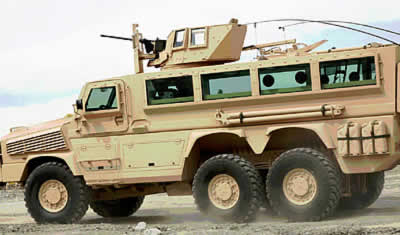
    Orders worth US$122 Million Launch Series Production of 215 MRAPs for U.S. Forces

    BAE Systems' RG-33L 6x6 MRAP vehicle. the company will also supply a 4x4 version of this vehicle.

    The first orders for large volume production MRAP vehicles were issued this week to BAE Systems and Force Dynamics. The two contracts, totaling over US$122 million are funding the production of the first 215 vehicles, representing approximately five percent of the expected total of all orders to be issued under the MRAP contracts. The vehicles will be delivered to U.S. services within the next four months. According to the U.S. Navy, which issued the orders, these Limited Rate Initial Production (LRIP) orders are being issued to accelerate the production of lower risk proposed vehicle material solutions in advance of testing and production orders.


    BAE Systems (BA.L) has received an initial $55.4 million delivery order for 90 advanced tactical wheeled vehicles under the under the Mine Resistant Ambush Protected (MRAP) vehicle program. All vehicles will be based on the RG33 design. 75 will be 6×6 vehicles Joint Explosive Ordnance Disposal (EOD) Rapid Response Vehicle (JERRV) class II vehicle, designed for multi-mission operations such as convoy lead, troop transport, ambulance, explosive ordnance disposal and combat engineering. The remaining 4×4 vehicles compatible with the Mine Resistant Utility Vehicle (MRUV) urban combat vehicle requirement (Class I). The company will deliver the vehicles over four months, beginning March 2007.

    Under a parallel award, Force Dynamics, the recently established joint venture between Force Protection, Inc. (NASDAQ: FRPT) and General Dynamics Land Systems, (NYSE:GD) received a $67.4 million contract to produce 125 MRAP vehicles. Of these vehicles, 65 will be Category I and 60 Category II vehicles, to be delivered within four months. “This joint venture was formed precisely for this purpose: to mobilize quickly on any action item announced by the Marines as the MRAP program moves forward.” Said Force Protection COO Raymond Pollard. “With advanced proprietary vehicle designs and significant manufacturing capacity, Force Dynamics has the capability to make an immediate and strategically important impact on the war on terror while establishing itself as a leader in the U.S. defense industry. We look forward to further supporting this program as it issues future contracts.”

    Iridium Extends its SATCOM offering to Military Users

    The Iridium constellation consists of 66 Low Earth Orbit (LEO), cross-linked satellites and has multiple in-orbit spares. The constellation operates as a fully meshed network and is the largest commercial satellite constellation in the world. The Iridium service began as a commercial network but soon became a critical service for government and military users worldwide.


    In April 2006 the U.S. DoD Defense Information Systems Agency (DISA) awarded Iridium a contract for commercial mobile satellite services for voice, data, and pager services utilizing the Iridium satellite constellation. Through this DISA contract, Iridium was also approved to provide the 9601 data modem to the US DoD, and other government users. The 9601 meet broad requirements among users in defense, and homeland security implementing the standard in support of logistics, force tracking, remote sensing and other data exchange applications. Another application established over-the-horizon ‘push-to-talk’ voice and data communications service demonstrated in “Netted Iridium” test conducted by U.S. Marine Corps (USMC) Warfighting Lab, in 2006.

    Iridium plans to deploy its next generation ‘Iridium Next’ satellite constellation within the next 7 years. The new network will extend the capacity and availability of the current system by offering high capacity and short messaging data communications for mission critical applications. The company expects the new constellation will be fully operational in the next decade. Through NEXT, Iridium plans to extend its current voice communications services to offer high bandwidth data, voice and short messaging services based on modern IP- based architecture. The company is planning to spend more than US$2 billion to construct and deploy the new network. The company plans to finance the expansion from its established and growing cash flow, from strategic partners and from the capital markets.

    DRS to deliver Infrared Sights for U.S. Army Combat Vehicles

    DRS Technologies, Inc. (NYSE: DRS) was awarded a $124 million contract to provide Horizontal Technology Integration Second Generation Forward Looking Infrared (HTI SGF) sighting systems to the U.S. Army. These systems are used on the M1A2 Abrams Main Battle Tank System Enhancement Package (SEP) and M2A3 Bradley Fighting Vehicles.
    The contract was awarded to DRS by the Network Centric Systems business of Raytheon Company (NYSE: RTN) in McKinney, Texas. For this award, DRS will provide the Abrams Thermal Receiver Units (TRU) with the Block 1 B-Kit, as well as Block 1 B-Kits for Improved Bradley Acquisition Systems (IBAS) and Circuit Card Assembly (CCA) sets for the Abrams Commander’s Independent Thermal Viewer (CITV) and Long Range Advanced Scout Surveillance System (LRAS3) supporting the Army’s HTI initiatives.

    HTI SGF utilizes second generation FLIR allowing ground vehicles to detect, identify and engage tactical targets during the day or night. Compared to first generation FLIRs, HTI SGF Block 1 B-Kit doubles the distance at which soldiers can identify a target, greatly increasing crew survivability and reducing fratricide. The HTI SGF is comprised of a common electronics unit and opto-mechanical assemblies known as the B-Kit. The B-Kit is incorporated in the Improved Bradley Acquisition System (IBAS) sight of the M2A3 Bradley Fighting Vehicle System. The M1A2 Abrams SEP utilizes the same B-Kit within a thermal receiving unit and a biocular image control unit for the upgraded Thermal Imaging System (TIS), which is mounted in the gunner’s sight. DRS-produced HTI components also are used for the Commander’s Independent Thermal Viewer on the M1A2, the Commander’s Independent Viewer on the Bradley A3 and the LRAS3.

    Modern Combat Protective Eyewear

    A review of some of the popular protective eyewear brands

    One of the leading suppliers of military protective eyewear is Canadian based Revision Eyewear. The company was awarded a $5.8 million contract for 178,000 sets of its Sawfly eyeglasses and a $3.7 million contract for 85,000 sets of Desert Locust goggles. In 2006 the company supplied over 100,000 Sawfly ballistic spectacles to US Army units and is expected to complete the delivery of 300,000 sets of these protective spectacles this year (2007). Among these, 175,000 Sawfly spectacles will be used in US Army Training Bases, as part of the ongoing Eye Protection Program, equipping new recruits with protective eyewear during their basic training and familiarizing them with the importance of routinely wearing protective eyewear in combat. According to Revision, soldier feedback on these products has been universally positive on the eyewear performance, especially in combat situations where these glasses have demonstrably saved soldiers’ eyesight.

    Revision Eyewear has developed advanced military eyewear known as ‘desert Locust’. In 2007, following the conclusion of extensive testing, the US Army placed an initial order for 85,000 goggles to equip troops in Iraq and Afghanistan. The goggles are exceeding military standards for ballistic resistance and performance. Among its advantages is the low-profile design, compatible with weapons’ sights, binoculars or night vision devices. The Desert Locust uses one-piece protective high-impact, optically correct polycarbonate shield Tough enough to withstand a shotgun blast from 16 feet. During testing, the transparent shield demonstrated withstanding a 12-gauge shotgun blast from 15 feet, using No. 6 lead shot – with no penetration. It also offers unobstructed field-of view, optical efficiency and Revision’s OcuMax permanent anti-fog coating ensuring the lenses remain fog-free under strenuous operating conditions. The shield is interchangeable to accommodate various filters corresponding to specific environmental conditions (clear for day or night use and solar for high-intensity sunlight) and offer protection from harmful UV-A, UV-B, UV-C rays of the sun. Alternative high-impact specialty and laser-protective lenses are available by special order if required. A High-Contrast Yellow Specialty Lens is also available but it is not approved for military use by the US Army. For vision correction, the Desert Locust can hold an Rx Carrier that also clips into the Revision Sawfly Spectacle so that one Rx Carrier can be used with both types of protective eyewear.

    Protective Eyewear from ESS

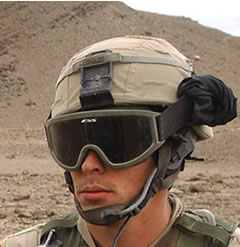
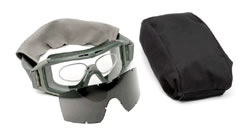
    ESS’s goggles are designed to provide comfortable fit with all standard helmets wit Low profile design, suitable for NVG. Their design offers an extra-wide field of view with distortion-free vision, provided by the transparent, ballistic shield made of thick (2.2mm to 2.8mm), and optically corrected high-impact polycarbonate lenses. The system offers 100% UVA/UVB protection, and premium Clear Zone anti-fog / anti-scratch coatings. Impact requirements for these systems is defined by ANSI Z87.1 standard and MIL STD 662F. Clear and Smoke Gray lenses included with all military product. The goggles are fitted with anti-fog speed blowing fresh air in through the bottom edge of the goggle frame and exhausts humid air out the top at fan speeds of up to 15,000 RPM. A unique feature is the tear off lens covers – thin, optically clear films that stack on the outside of the goggle lens. As the goggle’s shield is covered with dirt, mud or dusts that impairs clear vision, the wearer tears off the top-most film to instantly restore clear vision. Goggles are offered with a lense exchange feature, enabling users to place the lense most suitable for their environmental condition and mission requirement.

    ESS offers several military grade products, including the Profile Thermal – a compact, low-profile frame designed specifically for improved functionality with helmets, night vision equipment, and weapons sighting. Even in extreme temperatures, closed-cell face padding provides extra comfort while the extra-thick, ArcticZone dual-thermal lens ensures maximum resistance to impacts and lens fogging. In addition to clear and daylight lenses, a Laser Protective Lenses (LPLs) is also available for all Profile series models.

    Combat Eye Protection (CEP) was rapidly fielded with the troops sent to the combat zones in Afghanistan and Iraq, Deployment was accelerated under the Army’s Rapid Fielding Initiative (RFI), providing soldiers with state-of-the-art individual weapons, clothing, and equipment to include protective eyewear or combat eye protection. Among the models issued by PEO Soldier soldiers had a choice of several designs, including Oakley’s SI M Frame or UVEX XC. Among the goggles, ESS’ low profile NVG or Land Ops Ballistic Protective, Sun, Wind, Dust Goggles (SWDG) were supplied. Soldiers requiring prescription eyewear were issued the ESS Land Ops goggles and UVEX XC, both fitted with Rx prescription carrier insert.

    Oakley Standard Issue (SI)

    Oakley’s SI Line (Standard Issue) is not available at retail stores, as it was designed specifically for government and military applications. The protective lenses Oakley are exceeding the US Government ANSI Z87.1 standards for impact resistance, optical clarity and UV protection. Prescription versions are available on all eyewear except the Half Wires and the goggles. The SI M Frame surpasses ANSI Industrial Standards for high-mass and high-velocity impact protection. All lenses are made of pure Plutonite, a proprietary material that offers the highest level of optical clarity available in eyewear.

    EPS-21 from Shalon

    Shalon Chemical Industries from Israel developed another version of eye protection goggles designated EPS-21 which looks much more attractive than the old plastic goggles it replaced, which ‘protected’ only from wind and dust. EPS-21 was designed to offer ‘one size fits all’ product, accommodating all the most common sizes. The new Israeli goggles can be worn directly or over a helmet, thus integrating comfortably with the combat gear and accessories, such as binoculars, sights and night vision devices. Ventilation ports placed throughout the frame use labyrinth design to provide efficient ventilation without the need for filtration elements. EPS-21 uses an improved format offering improved peripheral vision while optimizing dust, wind and protection from low-velocity particles and fragments. The goggles accommodate replaceable polycarbonate visor offering the ballistic protection and an integral adaptor for prescription lenses frame, and add-on secondary lenses protects against solar or laser radiation, when required.

    In this series Defense Update covers the following topics:

    Integrated Digital Soldier System (IDSS)

    Integrated Digital Soldier System (IDSS) developed by Cobham Defence Communications (CDC) provides a fully integrated Combat Management System (CMS) for dismounted infantry units to gain full Situational Awareness (SA), digital mapping navigation and integrated command and control. The system is provided in three basic configurations – a commander system, a soldier system and a tracking system. All systems can be upgraded or downgraded in the field; a common battery type is used for all three system variants, ensuring accessibility to power, commonality of spares and increased availability during prolonged operations. The system is designed to offer mission capability of 24hrs on a single system battery charge.


    The soldier data terminal (SDT) designed for the infantry unit commander weighs about 5 kg, including radios and batteries, providing navigation functions, support for blue force tracking and situational awareness features, displaying the locations of friendly and known enemy forces. The SDT also provides target identification, reporting and messaging. The Soldier Interface Unit (SIU) provides interfaces to the various sensors, power management for all peripherals and operates the GPS and Digital Magnetic Compass (DMC) subsystems. IDSS also includes the lightweight integrated harness, which can be worn as a stand alone harness or worn in conjunction with legacy load carriage equipment and body armor. The lightweight harness includes load carriage for the SDT and SIU units and communications gear, all linked through a screened cable system, electromagnetically compatible to enable the operation of multiple systems in the same location (co-siting). The system also offers a docking station for the SDT.

    IDSS communications equipment supports two types of radios – including Short Range Radio (SRR) transmitting location and data to friendly users within a short range, and Long Range Radio, supporting the functionality traditionally provided with Combat Net Radio (CNR), carrying voice, and data on command and control communications. IDSS is designed to support two radio systems operating simultaneously.

    In the downgraded version designed for the individual soldier weighs about 3.5 kg, including radios and batteries. Essentially it is similar to the commander’s system, but with the commander’s SDT replaced with a small wrist terminal, supporting a preselected set of functions such as navigation, reporting and target acquisition functions. Further degraded version is the tracking system, which has no visual display for the user, but still provides location information to other users within range.

    New versions of Cobham’s Integrated Digital Soldier System (IDSS) were displayed at Soldier Technology 07. Cobham designed its system to work with a wide range of radio sets, both combat net and IP based communicators. The kit also includes the hand-held soldier data terminal (SDT) running the Battlehawk situational awareness and communications software, and an optional wrist worn miniature data terminal. BattleHawk provides standardized combat management features supporting units from the section leaders up to the battlegroup level. This application integrates Blue Force tracking and situational awareness features on a geographical map display, navigation planning and monitoring, report distribution, including pre-formatted, emergency messages and free format. The display is operated by touch screen menus and programmable buttons.

    The system is configured to work with a number of external devices and sensors to improve combat efficiency through direct input to the system. Sensor types that can be interfaced into IDSS include laser rangefinders, unattended ground sensors (UGS), video cameras, battlefield surveillance radars, day and night sights, target designators and additional display systems. The MDT is a small wrist watch size device, displaying selective information on a small display. In addition to standard time display (watch), the MDT can also display a plan position indicator with two range scales, showing relative locations of team members and targets. The device can also show incoming text messages, or heading indication (compass rose).

    In this series Defense Update covers the following topics:

    Interceptor Body Armor

    The Interceptor Body Armor (IBA) is the current body armor provided to U.S. combatants. IBA uses a modular design, enabling periodical enhancements of subsystems and inserts. In the current version IBA consists of the Outer Tactical vest (OTV), made of a combination of cordura, Kevlar or Twaron. Pockets built into the fore and back of the OTV contain ergonomically designed kevlar backed composite ceramic panels (Small Arms Protective Insert (SAPI) / Enhanced SAPI (ESAPI) and other elements protecting the sides, shoulders and bicep.

    Mounting casualties from IEDs required the enhancement of the IBA which in its basic form, provided torso protection from the fragmentary effects of IEDs, leaving the upper arm and underarm areas vulnerable. New components were introduced to cover these areas included the Enhanced Side Ballistic Insert (ESBI) and Deltoid (upper arm) and Axilliary (under arm) Protector (DAP) are used for arms and shoulder protection. DAP is worn under the OTV, protecting the vulnerable armsye (arm hole area). A fully loaded Medium size suite could weigh up to 24 pounds, depending on the configuration. The system is produced in eight OTV sizes and five sizes of front and back, ergonomically designed SAPI/ESAPI ballistic plates.

    The basic IBA represents nine pounds weight saving, compared to the previously used Personal Armor System Ground Troops (PAGST)/ Interim Small Arms Protective Overvest (ISAPO) combination. ESAPI represents the latest protection insert available for the IBA, stopping multiple small arms hits. With additional protection for the throat and groin the system provides effective protection to the most critical body mass.

    One of the leading producers of IBA components is Armor Holdings. At AUSA 06 the company introduced the LIMBS system, Lightweight Integrated Mobility Body Armor System. LIMBS provides enhanced protection to the shoulders, Bicep and Thigh while offering 25% less weight compared to existing systems. Its ergonomical design improves mobility, comfort and performance. The suite combines a shoulder-Bicep system.

    In this series Defense Update covers the following topics:

    Unmanned Systems at Aero India – 2007

    The Advanced Ground Control System (AGCS) developed for the Indian UAV Program Nishant.Despite the extensive use of UAVs by the Indian armed forces, at Bangalore, unmanned aircraft were shadowed by the MRCA fighter program. Only two systems were displayed in the static park – the Indian Nishant and British Herti with few more were displayed inside the exhibition halls, particularly at the Israeli pavilion.

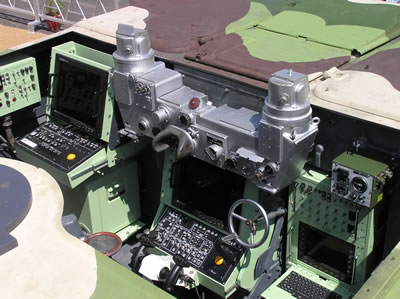
    The DRDO displayed the Nishant with its new Advanced Ground Control System (AGCS), configured to meet current and future UAV programs. The system uses four ergonomically designed consoles for the piot, mission commander, payload operator and image exploitation functions. Each console comprises a 21.3″ high resolution TFT display supporting picture-in-picture capability, supporting the presentation of payload imagery, electronic maps (in raster and vector modes).

    BAE Systems’ HERTI fully autonomous unmanned air vehicle (UAV) was making its international public debut at the exhibition. HERTI, is one of a new generation of UAVs suitable for both military and civil operations. It has been designed to perform to perform maritime, coastline and border surveillance through Medium Altitude Long Endurance (MALE) missions, equipped with the Imagery Collection & Exploitation (ICE) system also developed by BAE Systems. The company demonstrated the production configuration vehicle with operational ground station providing replays of missions carried out during HERTI’s recently completed flight test program which took place at the Woomera range in southern Australia. Another UAV, the Sperwer, was displayed in model form by the French company Sagem.

    Indian UAV System Nishant

    Three Israeli companies displayed UAVs in anticipation for a Small UAV program, expected to be launched by the Indian Army. At Aero-India 2007, Elbit Systems displayed its Skylark II while IAI brought two versions of the I-View, the lightweight I-View 50 and heavier I-View 250, recently selected by the Australian Army. The RAFAEL’s Skylite B mini-UAV was also present. Among the mini-UAVs, EADS displayed the Tracker, developed under a French Army contract. Aero-India 07 provided the debut for a new UAV specialist, the Indian company Speck, which introduced an impressive capability for designing and operating unmanned systems, as well as providing image collection, interpretation and mapping services. The company displayed models of several mini UAVs, including the small Baaz, which is slated to undergo Indian Army trials.

    BAE Systems displayed the Hertie UAV, which recently concluded a series of flight tests in Australia.

    Our Aero-India 2007 report will cover the following topics:

    New developments in Air Defense

    Aero India – 2007

    India has not remained unaware to the growing threat of missiles and weapons of mass destruction possessed by its neighbors. The country is investing significant effort in the development and acquisition a\of missile defense systems. Among these systems, India acquired the Green pine radar systems from Israel, and is working on indigenous missile defense program, based on the Prithvi ballistic missile. A first intercept performed by this missile was demonstrated in November 2006. On a parallel path, India is also interested in acquiring missile defense systems from Israel (Arrow) or Russia (S-300) and could also seek other systems, such as the US made THAAD, when it becomes available for export.The Akash air defense system is expected to complete testing and begin deliveries tto the Indian Army in 2007.

    India continues its indigenously developed Akash air-defense missile system, in anticipation for induction into the armed forces in the near term. As the new missile is fielded, older missiles such as the SA-3 (Pechora) are expected to be retired. Other systems are being upgraded. India will also field the Israeli Spyder missile system, comprised of the Derby and Python 5 missiles operated from a single platform. Other upgrades are provided for older Russian made systems such as the ZSU-23/4 Shilka self propelled anti-aircraft gun. Under a modernization program unveiled at Aero-India, this system is receiving new propulsion, and fire control system, based on an integrated multi-sensor system developed under cooperation between Israel’s IAI/MBT and the Indian company Bharat Dynamics.
     

    Our Aero-India 2007 report will cover the following topics:

    India Set to Enhance Military Transport Fleet

    Aero India – 2007

    India has a large fleet of transport aircraft, but most of these aircraft have become obsolete and need replacement. On January 2007 HAL of India signed an agreement with Russian Irkut and Rosoboronexport companies, to participate in the development and production of the Multirole Transport Aircraft, (MTA). The twin engine aircraft will have a load capacity of 20 tons and will be designed for the transportation of military and commercial cargo. The aircraft will be designed to operate from most basic runways, including high mountainous areas.

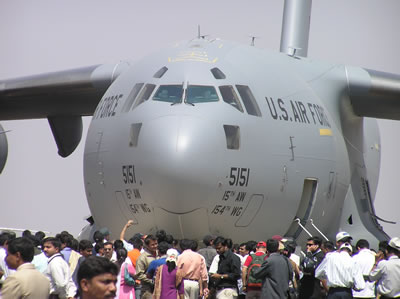
    While India is already pursuing joint development with Russia, of a transport aircraft, US companies are realizing the opportunity to offer modern transport planes for the near term. Lockheed Martin brought the C-130J Super Hercules to Bangalore, and Boeing demonstrated the C-17 Globemaster III. C-27 light tactical transport could also be considered as a replacement for the aging An-32, providing a near-term light transport replacement. EADS highlighted the fact that the Airbus M-400 could be an option for India’s medium transport fleet but its chances are slim, given the fact that India is already engaged in joint development of the Indo-Russian MTA.

    Boeing is also promoting heavy transport aircraft and helicopters in India, and at the airshow the company displayed both the C-17 Globemaster III and the latest version of the Chinook helicopter, the new CH-47F.

    Our Aero-India 2007 report will cover the following topics:

    Helicopters – New Acquisitions

    Aero India – 2007

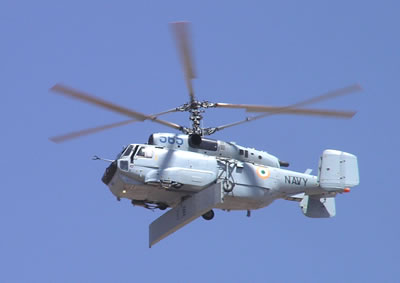
    Helicopters were always a big business in India, and Aero-India provided a venue to highlight some of the future trends in this domain. India is planning to buy up to 80 new Mi-17 helicopters from Russia. Boeing is also courting India for the sale of Chinook heavy lift helicopters to fulfill heavy lift requirements. The latest model of this helicopter, CH-47F was displayed at Aero India 2007. Russia is also expected to deliver to the Indian Navy six new Ka-32 naval helicopters, to be configured for anti-submarine roles.

    A modernized cockpit designed by IAI for the Mi-17 Mi172-3
    Realizing the limitation capabilities of the Russian made Mi-35 gunship to operate at high elevations and hot environment India is seeking to induct a light helicopter gunships capable of operating at these conditions. As a stop gap, The IAF has modified its Mi-17 medium lift transport helicopter by mounting machine guns and rocket launchers on board but India is planning to pursue an attack version of this helicopter, designed for operations at high elevations. While the Drhuv helicopters made their daily aerobatic displays at the flight line, HAL’s static exhibit focused on a full-scale mock-up of a future version of its attack helicopter, based on the advanced light helicopter (ALH). The Light Combat Helicopter (LCH) is designed to provide an effective, high altitude combat capability unattained by current helicopter gunships. LCH will be capable of operating at an altitude above 15,000 ft. loaded HAL displayed at Aero India 2007 a mockup of the Light Combat Helicopter (LCH)with guns, rockets and missiles and equipped with an integral, stabilized optronic turret. The new helicopter could augment the 12 ton Mi-35 only attack helicopter currently serving with the Indian Air Force. The new gunship is expected to have an avionic suite based on the ALH’s advanced cockpit. HAL is planning to roll out the LCH prototype in 2008.
    Under a parallel approach, Russia is set to unroll its own 10 ton class high-altitude helicopter gunships and is offering India to join the program as a co-development partner. Russian helicopter developer Kamov is already working on two designs, the Ka-60 and Ka-52. Kamov plans to roll out the new KA-52 helicopter gunship, which can be used at altitudes above 15,000 ft. The Mil design bureau is also working on a 10-ton class heavy lift troop carrying helicopter to be capable of operating at these elevations.

    Our Aero-India 2007 report will cover the following topics:

    New Missile Programs

    Aero India – 2007

    Encouraged by the successful conduct of the Bramos joint venture program, India and Russia are considering to expand their cooperation beyond the BrahMos missile, potentially pursuing a Hypersonic Cruise Missile (HCM). Meanwhile, BrahMos continue its flawless test program and is currently being prepared for initial deployment with the Indian Navy and land forces. The joint venture is expecting to produce about 1,000 missiles to satisfy Russian and Indian requirements and expect a potential sale of up to 2,000 missiles worldwide.
    An air-launched version of the missiles is currently being developed and integrated with Su-30 and Il-38SD maritime patrol aircraft.

    The Su-30 MkI will be able to carry a single BrahMos missile. India is considering another configuration, carrying three missiles on the Su-30 – one under the centerline and two under the wings, which will have to be strengthened to carry the extra load. BrahMos have been test fired from land based and surface ship launchers and India is believed to be ready to launch from a submarine by the end of 2007. Sofar the Indian Navy submarines do not have surface attack capability. However, BrahMos could provide such capability, as well as the Club missile, offered to India by Russia. India has already inducted the warship version of the 290-km range missile and the surface-to-surface version is also ready for induction in 2007. The Submarine-Launched BrahMos will be deployed in an eight missile package, configured for Russia’s Amur class submarines. These vessels are likely to compete for second-line of submarine construction at Mumbai’s Mazgaon Docks, parallel to the French Scorpene line.

    Other programs underway are the planned procurement of lightweight anti-tank missiles for Indian Army Special forces. The Army requires new man-portable, short range (2.5km) passive ‘fire-and-forget’ anti-tank missiles replacing the Milan. The Indian MOD approached several companies, but only two could meet the full specs – Raytheon, offering the Javelin and RAFAEL, proposing the Spike MR. Other exhibitors at Aero-India presented anti-tank and multi-purpose missiles to address future Indian plans. These include Lockheed Martin, promoting various types of Hellfire, and MBDA, highlighting the Milan ER.

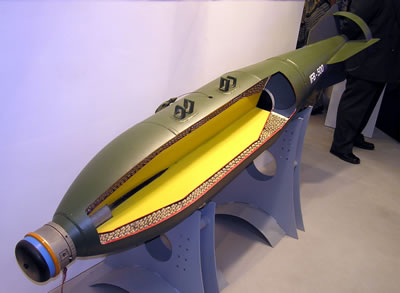
    IMI introduced at Aero India 2007 a new warhead designed to address an Indian Air Force requirement for enhanced lethality, air-burst weapon. Designed to match the both Russian made 500 kg bomb and Western Mk80 standard weapons, half the IFB-500 (below) is made of explosives, leaving ample weight for some 15,000 steel pellets surrounding the explosives. When the warhead is exploded, the pellets are scattered in a pattern annihilating any exposed target in a radius of 50 – 75 meters from the point of detonation. The bomb is fitted with a ground proximity fuse set to explode at a height of 6-8 meters, maximizing the fragmentation effect. The steel pellets can penetrate up to 10 mm of steel armor. The weapon was scheduled to conduct initial tests with Indian Air Force Su-30MKI in February 2007.

    Our Aero-India 2007 report will cover the following topics:

    Battle of the radars

    Aero India – 2007

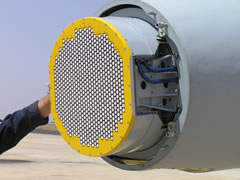
    A view of teh MiG-35 cockpitIndia declared that Active Electronically Steered Array ( AESA) radar technology will be a “must have” item for every MRCA contender. This requirement excited both aircraft and radar manufacturers, creating some odd combinations. One such combination is the rumored alliance between RAC-MIG and Israel Aerospace industries’ Elta Systems, developing a more advanced, powerful AESA radar that could be fitted into the MiG-35, as well as to future Indian fighters. While Russia is offering the Zhuk AE AESA radar for the MiG-35, the main advantage of the Israeli system could be its openness – Elta has not committed the radar to a specific platform, and therefore, India could gain access to the system’s programming code which is another requirement that some companies, particularly from the U.S., could find difficult to provide.

    AESA radars offer significant gains in reliability. By focusing power at specific directions, the pilot can gain more detection range providing “first detect” for air-to-air engagements, enabling first shoot/first kill by missiles fired Beyond Visual Range (BVR) mode. The longer standoff range also allows more time for persistent target observation, information sharing, tactical analysis and commander assessment before critical decisions are made.

    The Russian company Phazotron unveiled the Zhuk AE AESA radar installed on the MiG-35AESA radars are emitting not only radar signals, but can also be employed for non traditional ISR, as well as electronic attack. For example, some of the elements can transmit and receive signals modulated with datalink waveform, transferring large amounts of data (such as live video or aerial imagery) over high bandwidth datalinks. Similar techniques can be used for electronic attack, to jam or deceive electronic systems operated by enemy forces.
    The mechanical scanning systems used in previous systems were prone to failures, which grounded the entire aircraft. The new systems use solid-state technology and electronic scanning, to replace the mechanical systems but also introduce multiple elements to replace the single channel design of previous systems. Therefore, AESA radars can sustain certain degree of failure without grounding the aircraft or disabling the entire radar system. Furthermore, when designed with modular approach, AESA radars can be gradually upgraded, by replacing the solid-state receive/transmit modules based on Gallium-arsenide semiconductors technology with more advanced elements, thus significantly improving performance.

    Our Aero-India 2007 report will cover the following topics:

    Maritime Patrol Aircraft

    Aero India – 2007

    The flight display at Aero-India included several aircraft flown by the Indian Navy, including the modernized Ilyushin Il-38 and Tupolev Tu-142MK-E, showing the progress of the Indian naval aviation arm. All five Il-38s currently in Indian Navy service are being upgraded to the Il-38SD configuration. The aircraft carries the Russian made multi-function “Sea Dragon” (Morskoi Zmei) radar mounted in the belly bulge, offering surveillance range of up to 320 km from high altitude. This radar is also capable of detecting aircraft targets at about 100 km, while tracking up to 32 targets. The distinctive Electronic Support Measure (ESM) array mounted above the fuselage is produced by the Russian company Morskoi Zmei. ESM provides the capability to passively detect targets. A stabilized optronic payload is installed under the nose. Future modification of this aircraft could include new weapons, such as the BrahMos missile, of which each of the Il-38s could carry two.


    The Russian Tu-142MK-E Bear-F Mod 3 Export version operated by the Indian Navy are equipped with the Elta EL/M-2022A (V)3 maritime surveillance radar, capable of detecting and identify (by ship profile) large surface vessels at ranges up to 400km. It has a track-while-scan capability of up to 100 target track-while-scan capability. is quite a unique feature. Few years ago, India was interested in acquiring Russian Tu-22M3 Backfire bombers for long range maritime surveillance and strike. However, these plans have been shelved. The Indian Navy is interested in acquiring Airborne early Warning systems, to augment the limited capability provided by the Ka-28 Helix AEW helicopter deployed with the aircraft carrier INS Viraat currently operated by the Indian Navy. Northrop Grumman is proposing the E2D Hawkeye 2000 for this role, this aircraft could operate from larger carrier decks, such as that of the new aircraft carrier INS Vikramaditya, to be transferred from Russia in two years, or from the INS Vikrant, currently under construction at Cochin, slated for operational deployment by 2012.

    Indian aerospace activity is not limited to naval and air activities, but will soon extend to outer space. The Indian Air Force is in the process of establishing a space command, which will be responsible of operations and control of the country’s space based assets. The command will combine various components like satellites, radars, communications systems, and fighter aircraft and helicopters, IAF officers said.

    Our Aero-India 2007 report will cover the following topics:

    Skunk Works and XTEND Simplify Multi-Drone Command

    0
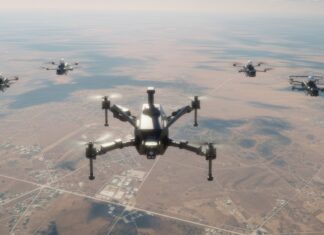
    Lockheed Martin Skunk Works® and XTEND have achieved a major milestone in JADC2 by integrating the XOS operating system with the MDCX™ autonomy platform. This technical breakthrough enables a single operator to simultaneously command multiple drone classes, eliminating the friction of mission handoffs. From "marsupial" drone deployments to operating in GPS-denied environments, explore how this collaboration is abbreviating the data-to-decision timeline and redefining autonomous mission execution.

    From Ukraine to Taiwan: The Global Race to Dominate the New Defense Tech Frontier

    0
    As traditional defense primes face mounting competition from agile “neoprimes” such as Anduril, Palantir and Helsing, the balance of innovation is shifting toward software-defined warfare and scalable, dual-use technologies, while global industry consolidation—marked by Boeing’s integration of Spirit AeroSystems and other strategic mergers—signals an intensified race to secure control over the defense technology value chain. Our Defense-Tech weekly report highlights these trends.

    Europe’s “Drone Wall”

    0
    In early October 2025, a coordinated wave of unmanned aerial system (UAS) incursions—widely attributed to Russia—targeted critical infrastructure across at least ten European nations. The unprecedented campaign exposed the fragility of Europe’s air defenses...

    Weekly Defense Update & Global Security Assessment

    0
    Executive Summary The past week (September 18-25, 2025) represents an inflection point where strategic defense concepts have transitioned from doctrine to tangible reality. An analysis of global events reveals four primary, interconnected trends shaping an...

    U.S. Air and Space Forces Push Next-Gen Programs at the AS&C 2025 Conference and...

    0
    At the 2025 Air, Space & Cyber Conference, U.S. Air Force and Space Force leaders unveiled major updates on next-generation fighters, bombers, unmanned systems, and space initiatives, highlighting both rapid innovation and critical readiness challenges as the services race to outpace global competitors. A short version is available here, with a more detailed version for subscribers.

    TADTE 2025: Reflecting Taiwan’s Strategic Themes

    0
    The Taipei Aerospace & Defense Technology Exhibition (TADTE) 2025 crystallized around four dominant strategic themes that collectively illustrate Taiwan's comprehensive approach to defense modernization amid escalating regional tensions. Based on a detailed report by Pleronix (available upon request). Includes a Podcast discussion on TADTE 2025's highlighting Taiwan's four strategic themes beyond the post's coverage.

    Iron Beam 450 Completes Testing, Soon to Join With Operational Air Defense Units

    0
    Israel’s Iron Beam 450 high-power laser system has completed final testing, marking a major leap in air defense. Developed by Rafael, it offers precise, cost-effective interception of rockets, UAVs, and mortars, and is set for IDF deployment by 2025.