Monday, December 22, 2025
More
    Home Blog Page 392

    Collaboration on the Battlefield

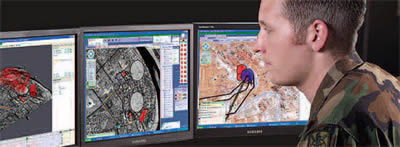
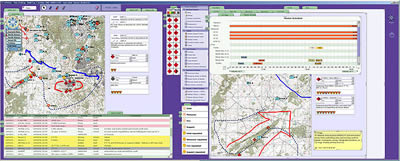
    Another highlight of AUSA 06 was the Command Post of the Future (CPOF). Much progress has been made in this program, which started at DARPA as a technology demonstrator. Over 500 units are fielded with U.S. forces in Iraq. CPOF employs a Commander Centric software environment enabling the distributed staff to support the commander’s decisions and situational picture anywhere on the battlefield.

    The system provides collaboration tools enabling commanders and staff at multiple locations to cooperate working on the same plan, track control operations in real time using advanced information processing tools. It utilizes a unique “information liquidity” feature enabling users to work with live data, process it and create the most suitable display for each user, without affecting the information itself. This capability enables multiple users to use different, live worksheets, utilizing the same information visualized in different ways. Commanders can monitor and understand the situation using ‘live’ situational pictures and graphs.

    Start < Page 2 of 4 >

    Unmanned Aerial Systems (UAS) at AUSA 06

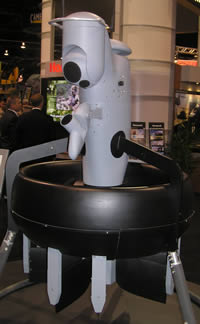
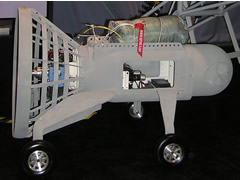
    Among the unmanned aerial systems (UAS) shown at AUSA 06 was the ducted fan Micro Air Vehicle (MAV), selected in 2006 to provide the basis for Class I UAV (man portable) for the FCS program, it is designed to closely support warfighters in both urban and open terrain. Honeywell also displayed a larger model, designed for DARPA’s Organic Air Vehicle II program (which also corresponds to the Class II UAVs under evaluation for the FCS program). It will be powered by a 40 hp heavy fuel engine, and carry 16 pounds (7.25 kg) of mission equipment package, on two hour missions at ranges up to 10 miles (16 km). It will incorporate an active collision avoidance system.

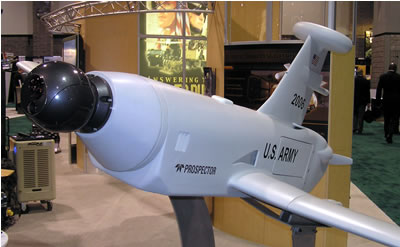
    The Israeli Skylite mini UAV developed by RAFAEL was displayed here. During the exhibition, the company reported the successful completion of a demonstration of an integration of the mini UAV, operated within a shared command, control and communications system with SPIKE ER multi-purpose guided missile, providing real-time targeting facilitating ultra-rapid kill chain. Teledyne Brown Engineering displayed a derivative of the German KZO UAV, fitted with a heavy fuel (JP8) engine. The company is proposing this vehicle for the US Army FCS Class III UAV program. Designated Prospector A1, the UAV is proposed of ISR, targeting, ECM/ESM and communications relay missions. The requirement for all-terrain operation is addressed by rocket assisted or catapult launch takeoff and parachute plus airbag retrieval system. The UAV weighs 355lbs (161 kg), flying missions of 6 hours at a loiter speed of 65 knots (120km/h). It can carry payload systems at a total weight 110lbs (50kg).

    Small UAVs are generally lacking persistence and payload carrying capacity for extended missions. A new concept of UAV is Micro LEAPP, based on the Altair’s “Parafoil” system. It weighs about 75lbs (34kg) and will be able to lift up to 30lbs (13.6kg) of payload for missions of four hours. A different concept for persistent presence is the Finder – an expendable UAV deployable from aerial vehicles such as the MQ-1 Predator was developed by SAIC. Finder is a low cost, (optionally expendable) vehicle autonomously navigating following pre-loaded waypoints, (can also receive new directions while on a mission). It can be launched from a runway, catapult or by air insertion from another aerial. Finder will be able to enhance the mission flexibility and effectiveness of the Predator UAV, by pursuing low level missions into high threat area. At a total weight of 60lbs (27.2kg), Finder can carry an EO payload of 11lbs (5 kg), has 100 watts of available power, and endurance of seven hours.

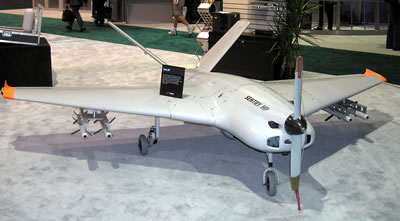
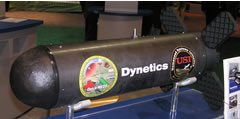
    Other expendable payloads carried by UAVs were displayed here. A lightweight weapon designed for UAVs is the Spike laser guided missile, carried by the Sentry HP UAV, developed by DRS. A different payload is the U-ADD payload carrier, which can be used as a weapon carrier deploying the Clean Area Weapon System (CLAWS), an augmented area effect weapon developed by Textron Systems. U-ADD can also be used for urgent delivery of critically needed supplies – packed with supplies and a parachute, to deliver urgently needed supplies to isolated ground forces. A similar concept called QuickMEDS was developed by Dynetics, responding to an urgent U.S. Army requirement. When delivering heavier supplies, a GPS based parafoil/parachute combination can be utilized for precision delivery. Systems such as the Onyx, developed by Altair, enable precision drops from high altitude (35,000 ft) well above the reach of enemy air defenses.

    Start < Page 2 of 3 >


    ISR Adapting to Support Time Critical Targeting

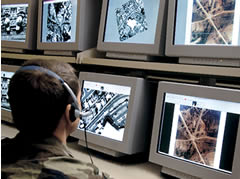
    Networked information systems are becoming critical elements for any military operation. At AUSA 2006, such systems covered different applications, ranging from integration and control of multiple sensors, fusion of disparate information sources, to collaboration systems, bridging distance and time gaps, enabling commanders and staff to operate cooperatively to plan, support, control and debrief complex combat operations in real time.

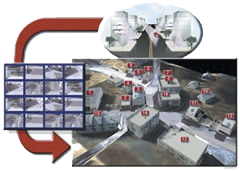
    Earlier in 2006 the Distributed Common Ground System version 10.2 (DCGS) was fielded with U.S. Air Force elements in USA and Middle East Theater. A similar system is now under development for the U.S. Army. DCGS integrates multiple ISR sensors and systems across the battlefield, drawing intelligence data from various sources, and correlates that data into an integrated picture of the battlespace. The DCGS-A (Army) will extend this capability to ground elements. It will be deployed with fixed sites as well as forward, tactical and deployed forces, including units on-the-move. DCGA-A will integrate threat, terrain and weather data into comprehensive intelligence products, utilizing sensors data, intelligence and analyst resources available in the rear and at the forward area, increasing the capacity and quality of intelligence products while minimizing the forward footprint of ISR.

    At AUSA 2006 Raytheon depicted the newly deployed Persistent Surveillance and Dissemination of Systems (PSDS2), which was established to address an urgent requirement for time sensitive targets engagement capability. The system was developed and fielded by Raytheon in 110 days. PSDS2 integrates various sensors, including artillery and mortar spotting radars, acoustic sensors, aerostat born RAID and PTDS systems and airborne UAVs. Automatic detection, cross cueing and correlation of sensors and fire units are employed. PSDS2 facilitates a centralized collection and storage of imagery and intelligence, supporting near-real-time and offline forensics and look-back for up to 24 hours.

    L3 Communications’ Com-Cept Division is offering the Network Enabled Situational Awareness – Army (NESA2) for the integration of sensors and ISR resources available at the brigade level and below. The system networks existing sensors to accelerate and improve target location. NESA2 links the brigade’s organic sensors such as artillery locating radars, Sentinel air defense radar, JSTARS ground control segment, Prophet SIGINT system and Shadow or Warrior UAVs as well as theater assets such as the Guardrail / ACS. The system will establish a self-forming, software based sensor to sensor connectivity that will allow sensors to cross-cue each other, based on a set of rules that reflect the tactical commanders ISR/Targeting priorities for the area of operation. The system links to existing Brigade C4 systems and provides inputs to command other intelligence and C4 resources such as DCGS-A and Command Post Of the Future (CPOF).

    When networks and automated processes are shaping the situational picture, where targets must be pursued and engaged rapidly, identification and tracking of friendly forces becomes a critical requirement. General Atomics introduced RF tags, providing reliable combat identification (CID) of friendly forces, when viewed by imaging radar sensors (SAR).

    Start < Page 1 of 4 >


    Robotic & Autonomous vehicles at AUSA 06

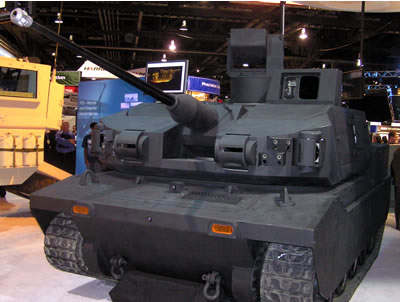
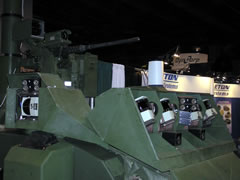
    Robotics is becoming an inherent part of modern warfare. AUSA 06 provided an insight into future developments pursued by the military. Combat proven platforms, represented here included the EOD and robotic scouts. Several R&D Technology Demonstrators were also displayed. Among the platforms unveiled here were the BAE Systems’ Black Knight, a robotic armored fighting vehicle currently tested as an unmanned “companion” for heavy armored combat formations.

    Black Knight could represent one of the directions to be pursued by the future heavy force, as an equivalent to the unmanned elements of FCS. These concepts are being evaluated under the Armed Robotic Vehicle (ARV) system development. Autonomous operations technologies developed for future programs robotics are already underway at the National Robotics Engineering Center (NREC) at Carnegie Mellone University. The center outlined advanced capabilities such as autonomous navigation, route planning and artificial perception, utilizing LADAR sensors developed for the latest 6×6 Crusher unmanned Ground Vehicle, which was also presented here for the first time.

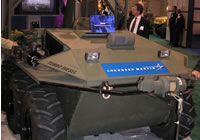
    The first prototype of the Multi-Function Utility Logistics and Equipment carrier (MULE), developed by Lockheed Martin was shown, demonstrating its various navigation, control and mobility features. MULE is designed to sustain the future warrior teams, operating within the FCS brigade combat teams (BCT). The vehicle is currently at a full-scale engineering evaluation phase.

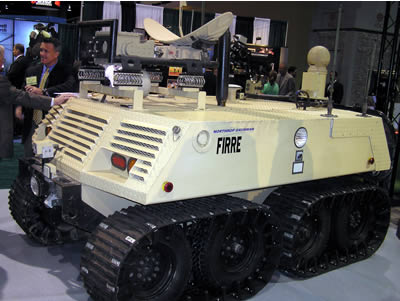
    At AUSA 2006 the company unveiled another unmanned platform, called Squad Mission Support System (SMSS), a robotic vehicle based on a turbo-diesel powered, high mobility six wheel all-terrain vehicle (ATV) capable of carrying 1,000 pounds (500 kg) of payload. Current platforms are utilizing a commercial platform converted for a surrogate SMSS role. Future versions will utilize specially designed platforms, optimized for the SMSS mission.

    Similar manned/unmanned platforms presented at the show included the Tactical Autonomous Chassis (TAC-C), developed by General Dynamics Robotics Systems, under an Army Research Lab (ARL) program. 

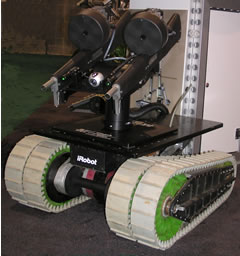
    Another robotic support vehicle is offered by John Deer and I-Robot, which have joined forces to develop the R-Gator, a robotic version of John Deer’s M-Gator 6×6 vehicle. I-Robot also unveiled its heavy EOD platform called Warrior currently under development.

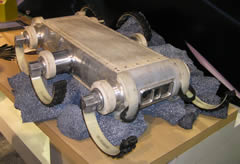
    Much smaller but undoubtedly unique was an odd looking flapper robot unveiled by SAIC. The RHex robot demonstrates an ISR sensor carrier capable of negotiating extremely difficult terrain. The unique mobility concept employs semi-radial flaps, constantly rotated to establish traction over rough terrain, including steep and slippery surfaces, small boulders, deep sand and mud. The movement is relatively slow but enables the system to advance safely toward its designated target. The robot is currently at a preliminary study phase, utilizing a configuration fitted with forward looking video sensor.

    Start < Page 1 of 3 >

    SU-34 Fullback

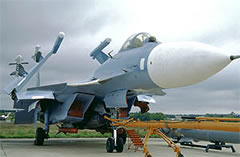
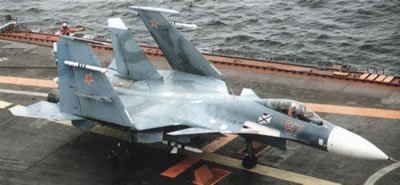
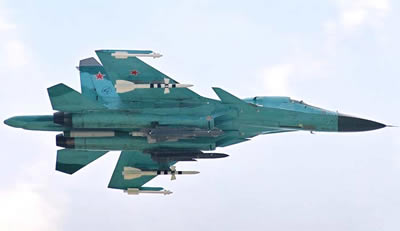
    The Sukhoi SU-34 (Fullback) is developed to address a Russian Air Force requirement to augment and replace SU-24/24B Fencer. Designed for supersonic penetration of enemy airspace at treetop level, SU-34 can carry eight tons of ordnance, and strike from a standoff range of 250km. Fitted with an armored cockpit, advanced countermeasures and effective standoff weapons, it will be able to survive missile’s fragments as well as direct hits from small caliber weapons. With external drop tanks, the aircraft has a combat radius of 1,500km, which can be extended by additional drop tanks or aerial refueling. At a gross takeoff weight of 45.1 tons, SU-34 can carry eight tons of external loads, including subsonic and supersonic air/ground missiles and unpowered weapons.

    It is equipped with a digital weapon delivery system enabling high precision weapon delivery (accuracy within few meters) at all weather conditions. The aircraft is designed to penetrate enemy airspace at tree-top level using terrain Contour Matching (TERCOM) capability, flying at 1,400 km/h. SU-34 has a top speed of Mach 1.8, slower than teh SU-30MKI Flanker. It is powered by two Salyut AL-31FM1 engines generating 13.5 tons of thrust.
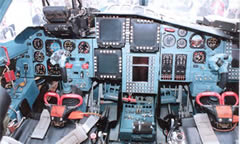
    Michail Simonov, chief designer of the aircraft, the sturdy, maneuverable and armored Su-34 resembled a flying tank. The aircraft has a spacious, armored cockpit, protected by 17mm steel cage shielding the crew and avionics from bullets and shrapnel. It is designed to comfortably seat the pilot and navigator side by side. the pilot or the navigator/systems operator can stand up and stretch their muscles or even take a nap in the aisle (while the plane is on autopilot or is steered by one man). They can even eat borsch from a vacuum flask or microwave meat. The plane also has toilet.

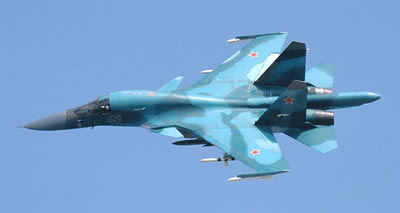
    The aircraft design, highlighted by the horizontal empennage, visible behind the cockpit ensures in-flight stability and reduces buffeting at low altitude. It is designed to have a small radar cross section, which, according to simonov, is equivalent to that of a supersonic cruise missile.
    The aircraft made its maiden flight in 1990 (called SU-27IB). According to Simonov, the prototype was not designed for such levels of comfort. “a prototype Su-27UB commanded by Nikolai Sadovnikov had completed an experimental flight from Moscow to the Okhotsk Sea and back during tests. The plane spent 16 hours in the air and refueled four times from air-force tankers. “All systems functioned without a hitch, but the gray-faced pilots looked very tired after they climbed out of the cramped cockpit. They did not look capable of engaging the enemy after such a long haul.” said Simonov.

    According to Simonov the extended range and crew comfort are of critical importance in Russia, as it usually takes a warplane in the Russian Far East seven days to reach Tajikistan because intermediate airfields are often closed due to bad weather, fuel is not delivered promptly and pilots do not have enough time to rest. But the crew-friendly Su-34 has eliminated all these problems.
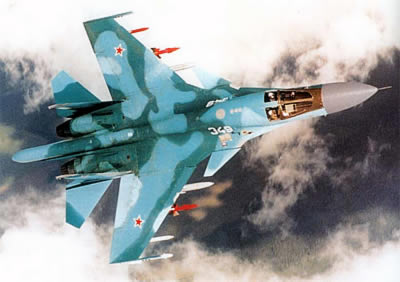
    The engines are designed for 1,000 operational hours between repairs. Unlike many of its counterparts, the Su-34 is not yet offered on the international market.

    2013 Update: The Air Force is due to get a total of 124 Su-34s by 2020 under two contracts with the Sukhoi holding. According to official data, 29 series-production Su-34s have been delivered to the Russian military so far. The aircraft will eventually replace all of the ageing Su-24 Fencer strike aircraft in service with the Air Force and the Navy. When the first Su-34 was delivered the Russian Air Force was operating 10 air regiments flying SU-24, which are considered to convert to SU-34 in the future.

    In 2013 the the Defense Ministry confirmed the Sukhoi aircraft maker is expected to deliver a total of 30 Su-34 Fullback strike aircraft to the Russian Air Force by the end of 2014. “The current [2013] year plan on the delivery of 14 [Su-34] aircraft under the state defense order will be fulfilled, and the plant has promised to deliver another 16 fighter-bombers next year,” the ministry said in a statement in October 11, 2013,  citing a report by the Novosibirsk plant.

    Related news by Novosti news agency. Images: www.airwar.ru

    SU-33 / Su-27K

    The single-seat, twin-engine Su-33 (also known as SU-27K) is the naval variant of the Su-27 Flanker fighter aircraft. Developed in the early 1980s for operating from the Soviet navy’s aircraft carriers, the Su-33 uses folding wings and uses an additional pair of canards to improve control at very low speed (useful for maneuverability, as well as for takeoff and on landing approach). China currently operates two variants of the Su-27 fighter family in its air force and navy: the Su-27SK/UBK fighter and the Su-30MKK fighter-bomber. The Su-33 would become the third variant of the family to be serving with the Chinese armed force.

    Russia and China are finalizing negotiations for the delivery of up to 50 Su-33 carrier based jet fighters, at a cost of US$2.5 billion. China is expected to get two Su-33 jets to be used for evaluation and operational trials on the on the ex-Soviet carrier Varyag China acquired from the Ukraine in 1999. The carrier is currently stationed at China’s Dalian Shipyard, being refitting since 2002. Once commissioned to service, the carrier will be able to operate the 12 aircraft of SU-33, which are included as the first option part of the current program. Eventually China could buy up to 50 aircraft of this type, to equip the first indigenous Chinese built aircraft carrier expected by 2010.(see original coverage at Sinodefence.com)

    “Despite Anticipated Reduction in Size, Military Helicopters to Still Have Large Market in Europe”

    According to a Frost & Sullivan Market Research

    The European military helicopter market is set to dwindle in size over the next ten years, but will still remain relatively large, and is valued at nearly US$26 billion between 2006 and 2015. According to a Frost & Sullivan report published this week, the market is currently at its peak, with major programs including NH90, Tiger and EH101 in production. With the completion of these projects, the market will return to a more ‘normal’ level as the decade progresses.


    Despite this reduction in size, the military helicopter market will be relatively healthy due to a number of new requirements, particularly in the naval market. These positive trends will be reinforced by the need to replace large numbers of surviving airframes dating from the 1960s and 1970s.

    Frost & Sullivan find that the European Military Helicopter Market will earn revenues of US$ 4.40 billion in 2006 and estimate that this will fall to US$1.5 billion in 2015. “The European military helicopter market will be determined by the demands of operations other than war (OOTW) for the next ten years,” observes Frost & Sullivan Defense Analyst Graham Cushway. “This generally means that they require a need for greater adaptability in terms of mission, and large carrying capacities. Subsidiary military helicopter markets, such as naval helicopters and attack helicopters will also be boosted by these requirements.”

    OOTW are characterized by small numbers of troops being moved rapidly around large areas to deal with larger numbers of insurgents. Helicopters are usually the best way to achieve this, being faster moving than ground vehicles and avoiding the hazards posed by improvised explosive devices (IEDs).

    At the same time, OOTW pose new problems in terms of military helicopter design, as they need to be reconfigurable for roles such as humanitarian aid and reconstruction, which require greater carrying capacities than simple troop transport aircraft.

    A major restraint in the market is that military budgets are shrinking, particularly in terms of maintenance and ground staff. This means that new military helicopter designs have to allow for a higher level of maintainability and ease of repair than would previously have been the case.

    Market participants need to educate end users and develop solutions that can bridge gaps in customer’s communication needs while meeting the growth requirements of an enterprise. By fulfilling these consumer requirements, participants can expect steady demand in the future. The deregulation of markets and the privatization of incumbent carriers combined with the availability of feature-rich hosted IP telephony platforms will also support revenue growth in this market.

    Moreover, in the current helicopter market, airframes are expected to greatly outlast mission systems through upgrades. This means that modern military helicopters might last 40 years, and less platforms need be purchased as a result.

    “An approach to airframe design which favors ease of upgrade by the incorporation of numerous commercial off-the-shelf (COTS) products into mission systems will encourage sales,” advises Mr. Cushway. “A priority in terms of military budget is to reduce the maintenance and logistic footprint for their forces, which means that helicopters need to be easy to maintain, with simpler models such as the NH90 enjoying a significant market advantage over the more complex V-22 and EH101.”

    Protection Against Shaped Charge IEDs – The Israeli Experience

    Start < Page 4 of 4 >

    Protection against IED in general, and particularly shaped charge based IEDs rely on several layers, including “soft kill”, passive, and active defenses:

    Electronic Protection

    A mobile electronic jammer is part of Elisra’s EJAB family of electronic jammers, designed to disrupt and deny remote activation of Improvised Explosive Devices (IEDs). Covering a wide frequency band from VHF, UHF and high cellular bandwidths, EJAB encounters all types of remote-controlled applications, from simple RC transmitters to the most sophisticated cellphones and wireless devices. The jammer can operate as stand-alone systems, and have proved themselves through years of combat operations in Lebanon and the current conflict, where they were they have successfully protected combat vehicles, convoys, and fixed facilities as well as protection of EOD teams and isolation of terrorist attack scenes.

    Passive Protection

    Lightweight composite armor suits offer some protection for soft vehicles against IED, fragmentation and small arms. Since basic IED charges have low penetration efficiency, one of the most important add-on protections for target vehicles are ballistic plate, made of steel or composite materials and blast mitigation material which absorbs the blast effect. Flexible composite fabric liners applied inside the fighting compartment of armored vehicles can also absorb much of the melted metal spall generated when a shaped charge penetrates through the main armor, therefore limiting the internal damage and casualties. For further protection, heavier ceramic protection is used.

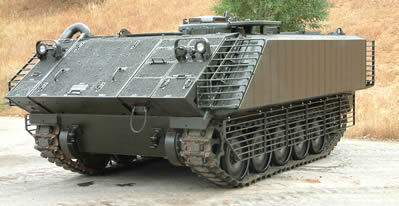
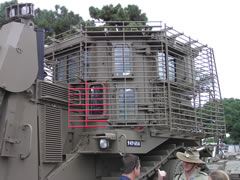
    These materials can be designed to withstand attacks of shaped charges munitions. Another passive protection method is “caging”, frames of slat armor used with the US Army Stryker armored vehicle in Iraq. This cage encircles the vehicle’s hull adding all-round protection, by causing the incoming RPG to ‘defuse’ between the cage and main armor. A similar system is already used by the IDF as part of the armor protection of D-9 Dozers, heavy APCs and newly up-armored M113.

    Standoff Laser Defeat Systems
    HIgh power, directed energy from a laser is capable of rapidly clearing unexploded ordnance and defeating IEDs by inducing a low-order burning or deflagration reaction in the explosive fill at safe stand-off ranges (see photos above). THOR developed by RAFAEL uses powerful, air cooled laser, and a coaxial 12.7mm M2 heavy machine gun firing single bullets like a sniper rifle, acting as a standoff disrupter, destroying fusing, thick-cased munitions and booby traps.

    Active Protection 

    Explosive Reactive armor (ERA) is utilized as an effective add-on protection, with modules conforming of thin explosive sheath covered by oblique metal plates. The explosive is activated when sensing an impact of an explosive charge, which raises the metal plate into the plasma jet, disrupting its formation and eliminates its energy before it hits the main armor. Among the most advanced protection systems are the Active Protection Systems (APS). Latest among these is the Israeli designed Trophy Active Defense System (ADS) which the US Army plans to introduce with every new and existing combat vehicle it fields in Iraq. The Trophy system has three elements providing – Threat Detection and Tracking, Launching and Intercept functions. The Threat Detection and Warning subsystem consists of several sensors, including flat-panel radars, placed at strategic locations around the protected vehicle, to provide full hemispherical coverage. Once an incoming threat is detected, identified and verified, the Countermeasure Assembly is opened and launched automatically into a ballistic trajectory intercepting the incoming threat at a relatively safe distance.

    Additional parts of this article:

    M707 Knight – Land-Based Target Acquisition System

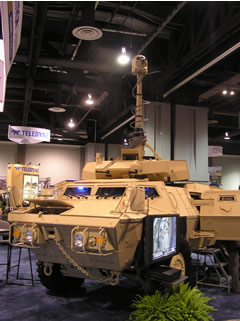
    Knight is a precision targeting system consisting of a laser designator / rangefinder, thermal imager, digital command and control , blended inertial / GPS navigation and targeting, and a self-defense weapon. Its mission is to provide precision far target location and laser target designation for both artillery and air-delivered general purpose and precision-guided munitions. It is used by Field Artillery Combat Observation and Lasing Teams (COLT) to carry out these missions. The current US Army production version integrates the base Knight targeting and communications package along with the AN/TVQ-2 Ground/Vehicular Laser Locator / Designator (G/VLLD) and the AN/TAS-4B thermal sight on two platforms. The payload provides the targeting accuracy sufficient to support precision-guided munitions, such as JDAM and Excalibur. The Knight system is mounted on the HUMVEE, Stryker and more recently, the M1117 Armored security Vehicle (ASV).

    DRS Technologies is the prime contractor for the M707 Armored Knight program. The Army has also fielded Knight systems with Humvee and Stryker platforms to equip forward observers in heavy and light divisions and Brigade Combat Teams (BCT).

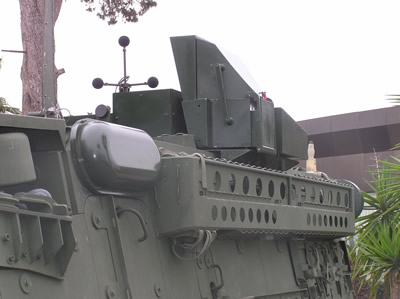
    In October 2006 the US Army ordered 64 Armored Security Vehicles (ASV) modified into “Armor Knight” (M707) configuration under a recent $35 million contract awarded to Textron’s marine & land systems. The total requirement for the program has been listed at 345 vehicles. The photo shows a modified ASV (M1117), equipped with an observation and target acquisition payload, mounted on a telescopic mast, on display at AUSA 2006.

    Vigilant Eagle – Land Based Aircraft Protection System

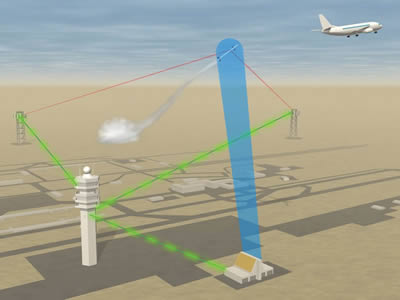
    Vigilant Eagle airport protection system was designed by Raytheon Company to protect aircraft from the threat of shoulder-fired missiles. The system aims a focused, precisely steered beam of electromagnetic energy at a missile that could threaten aircraft traffic near the airport, causing the missile to abort its intercept course. The system can protect all aircraft flying at the airport protected vicinity. Vigilant Eagle consists of a distributed missile detect and track system, a command and control system and the active electronically scanned array, which is a billboard-size array of highly efficient antennas linked to solid state amplifiers that provide the beam that diverts the missile. Raytheon claims that ground-based systems such as their Vigilant Eagle provide anti-MANPADS protection for a fraction of the cost of airborne systems being developed. Vigilant The system will have far lower false alarm rate than other systems and uses proven, mature technologies. “Raytheon’s Vigilant Eagle defeats man-portable missiles in seconds without any alteration to or involvement by the aircraft using the airport,” said Mike Booen, vice president of Directed Energy Weapons at Raytheon Missile Systems in Tucson, Ariz.

    Raytheon Company will demonstrate the ability the system under a US$4.1 million demonstration funded by the U.S. Department of Homeland Security (DHS) The program has an additional priced option for an $1.2 million. Raytheon will implement the system in a unique interoperability test bed, to be located at a site determined by DHS. The test should validate the system’s capability to defeat MANPADS, as an initial step to implement counter-MANPADS to protect flights at airports.

    Club S Naval Cruise Missile

    Club S submarine launched cruise missile family, includes the 3M-54E1 anti-ship missile and 3M-14E land attack versions, capable of striking land and naval targets from a range of 275km. The missile can be launched from standard torpedo tubes, from depth of 35 – 40 m’ (130 feet), cruise autonomously along a selected flight trajectory and, at a speed of 240 m/sec, at an altitude of 20 meters (70 feet), and when approaching the target, drops to a sea skimming level of 5 – 10 meters (20 – 30 feet).

    The missile is equipped with a 400kg (880 pound) warhead. One of the key elements in the effectiveness of the new Club S is its active radar seeker, the Args 14e designed by Radar MMS of St. Petersburg. This 40 kg system radar system is employed in the terminal phase, less than 20km ahead of the target, to provide target detection, selection and guidance. The seeker is designed for high resistance to ECM, and is designed to operate as a single missile or in salvos firing.

    Russia is promoting the Amur-950 (Lada class) diesel electric submarine, armed with the Club-S cruise missile system capable of hitting underwater, surface and land targets.

    CH-47F Improved Chinook

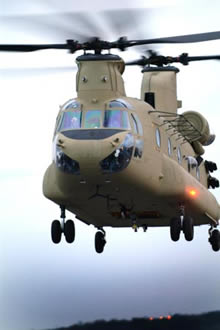
    First production Boeing CH-47F Chinook helicopter successfully completed its first flight on Oct. 23. Boeing will deliver the new CH-47F to the U.S. Army for operational testing before being deployed in 2007. CH-47F uses the same cockpit as the MH-47G operated by the Special Operations Command. It will also be used in the HH-47 which Boeing is proposing to the U.S. Air Force’s Combat Search and Rescue program.

    The CH-47F will provide crews with configurable flight displays for more efficient mission performance and a communications suite for greater situational awareness. The avionic system include terrain following / terrain avoiding radar and an integrated forward looking infrared system for nap-of-the-earth and low-level flight operations in reduced visibility conditions. The digital automatic flight control system will provide an enhanced and safer low speed flight capability, and the airframe enhancements will yield a safer and more reliable combat system.

    In December 2006 Boeing was awarded over US$1.5 Billion for the remanufacturing and new construction of up to 66 Chinook CH-47F helicopters. Over $624 million will be allocated for modification and ‘remanufacturing’ of nine Chinooks into CH-47F standard and construction of 16 new helicopters to be delivered within a year (early 2008). Additional $920 Million are allocated for options for remanufacturing of 19 and production of 22 additional new helicopters. Following the successful completion of U.S. Army acceptance and developmental flight testing in December 2006, the first production Boeing (BA) CH-47F Chinook helicopter has moved in February 2007, to the Operational Testing (OT) phase at Ft. Campbell, Ky. The flight tests will be conducted by Bravo Company, 7th Battalion, 101st Aviation Regiment, 159th Combat Aviation Brigade, 101st Airborne Division (Air Assault). The Army plans to field the first of 452 CH-47F helicopters in July 2007.

    In February 2007 The Defence Materiel Organization of the Dutch Ministry of Defense ordered six new-build CH-47F (NL) Chinook helicopters from the Boeing Company [NYSE: BA]. These Netherlands-unique version helicopters will offer advanced avionics, improved situational awareness and survivability features and special operations equipment. The aircraft will be delivered between July 2009 and January 2010. Their advanced cockpit avionics suite will be based on Honeywell’s Avionics Control and Management System (ACMS), an integrated forward-looking infrared capability and several other newly developed multi-mission features. The RNLAF Chinook fleet serves with the 298 Squadron based at Soesterberg Air Force Base and supports the Dutch Air Mobile Brigade, operated within NATO.

    ARTHUR Weapons Location Radar

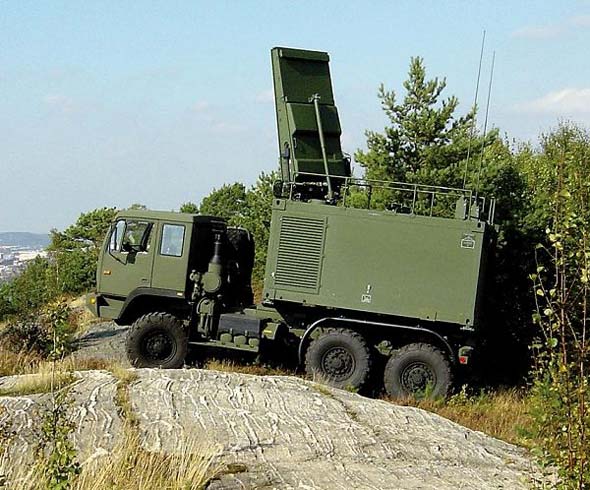
    The Artillery Hunting Radar (ARTHUR) Weapon Location System (WLS) was developed by Erricson Microwave Systems, which has been acquired in 2006 by the Swedish Saab group. The system provides ground units with early warning and accurate location of hostile artillery fires. The radar is effective at ranges up to 40 km, where it can detect small size targets.

    Within a few seconds of the initial detection, the system plots the launch site for counter-fire, and predicts the point of impact, to alert ground troops which could be endangered by the attack. A number of targets can be tracked simultaneously while search continues. After tracking, the launching position is determined and data on located batteries are transmitted on a data link to the artillery Fire Direction Centre.

    The ARTHUR system can rapidly be air lifted by C-130 and helicopters, making ARTHUR the leading weapon locating system for light forces and Peace Support Operations. Originally the system was installed in a cabin carried by a Hägglunds Bv 206 articulated tracked vehicle. The present version is an ISO-cornered container that can be carried by any cross-country truck with a 5 ton payload.

    The ARTHUR WLS also provides adjustment data for own artillery. In this mode, projectiles are tracked through the final part of their trajectory and the impact point is determined. The adjustment data and weapon locating modes can operate simultaneously. Special features are introduced to support peacekeeping operations, providing force protection, by detection of hostile fire and registering artillery fire in violation of the peace accords.

    Norway and Sweden have developed ARTHUR in collaboration and fielded the system on BV-206 vehicles in 1999. The system is also operational with Denmark, Greece, the Czech Republic and the British Royal Marines, which use the system as the “Mobile Artillery Monitoring Battlefield Radar program (MAMBA)” systems. Systems have also been leased to Canada and Italy in support of peacekeeping operations. Most recently, on December 2006, Spain ordered ARTHUR systems as part of a €59 Million (U.S. $78 million) order.

    Skyguard – Laser Based Counter- MANPADS / C-RAM System

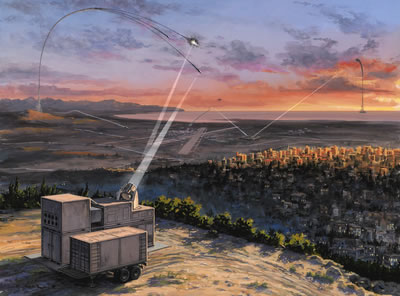
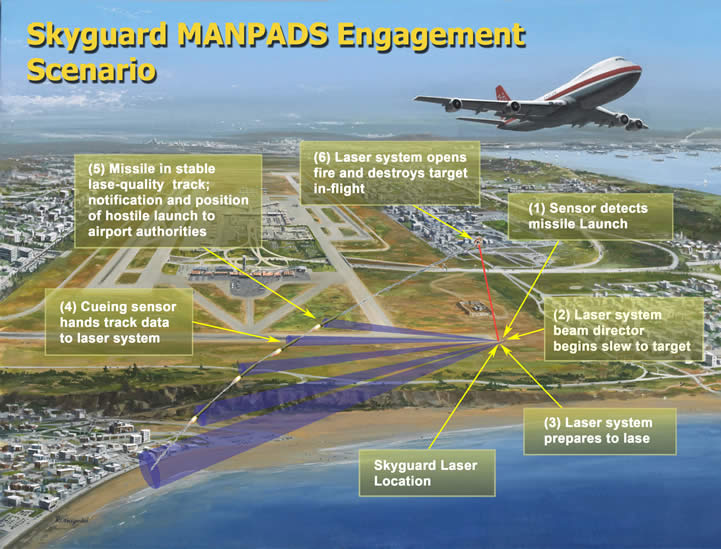
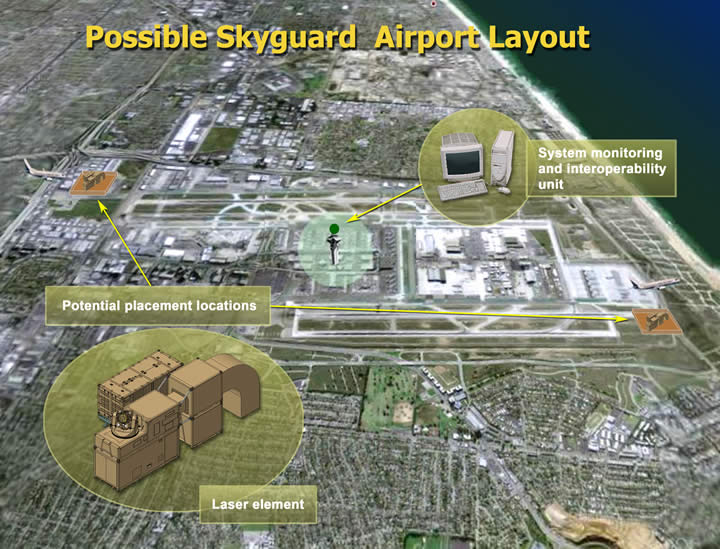
    Northrop Grumman is proposing a derivative of its high power chemical laser system to be used as a ground based interceptor of man-portable anti-aircraft missiles which could be used by terrorists trying to hit passenger aircraft. The new system, called Skyguard will use the high-energy chemical laser known as THEL, designed to protect against rocket, artillery and mortar (RAM) threats. Benefiting from significant technological advancements, Skyguard has higher power than heritage systems and a larger beam, making it a much more capable system, the company said.

    In fact, Northrop Grumman foresee a much wider role for Skyguard – with the system evolving into “laser-based air defense system for U.S. government agencies and allies that require near-term defense against short-range ballistic missiles, short- and long-range rockets, artillery shells, mortars, unmanned aerial vehicles and cruise missiles.” The company expects a single Skyguard system will be able to defend deployed forces, a large military installation, and/or a large civilian population or industrial area. One Skyguard system is capable of generating a protective shield of about 10 kilometers in diameter.

    Northrop Grumman is hoping to market the civilian system to the US homeland security sector and a military version of THEL to protect forward military installations from enemy and insurgents rockets, artillery and mortars attacks. The company already offered the system to protect Israeli towns faced with repeated attacks from Gaza and Lebanon, as well as for US forces in Iraq.

    According to a report published in Aerospace Daily, Skyguard could protect aircraft from man-portable air defense system (MANPADS) shoulder-fired rockets out to a range of roughly 20 kilometers (12.4 miles), while against harder RAM targets, the effective range is 5 kilometers (3.1 miles). Weather can degrade the system but not nullify it.
    According to Aerospace Daily, the cost could drop to $25 – $30 million apiece, if the system is ordered at sufficient quantities. each shot costs about $1,000 which represents the cost of consumable chemicals.

    One concern raised about chemical lasers was the toxic gases released during operations. According to Northrop Grumman, the system’s exhaust is not toxic, but mostly helium and steam. Therefore, the system requires a “keep out zone” of 30 meters, smaller than conventional rocket systems such as Stinger and Patriot. If users want to make the system totally safe, a scrubber can be added.

    On October 20, 2006 Northrop Grumman announced that the US Department of Homeland Security is funding an evaluation of Northrop Grumman’s land-based, counter-MANPADS laser system (Skyguard) with US$1.9 million. The 18 month program will evaluate the capabilities of the system to defeat typical missile threats to passenger. As part of the program, Northrop Grumman will develop a detailed operational concept for using ground-based high-energy laser systems in the civil aviation environment, perform component-level testing and assess life-cycle costs. A formal technology readiness level (TRL) assessment will be made of ground-based, non-DIRCM (directional infrared countermeasures) technologies in terms of their potential application in the civil aviation environment, the department noted, specifying that technology readiness levels of TRL6 or TRL7 are expected in the systems it chooses for further evaluation. Federal officials said the solutions they are seeking are based on existing component technologies, emphasizing that the program will not undertake the development of new elements.

    A recent article published by the Israeli online magazine Omedia provides an insight into some of the controversy the SkyGuard system faces in Israel, primarily within the MOD’s Defense Research & Development Directorate and local industries. Israel’s DDRD traditionally favored investment in offensive, deterrent systems and rejected most defensive systems with the exception of the Arrow system (which also met strong opposition in Israel, primarily with the Israel Air Force). In the article, Dr. Oded Amichai, former senior Rafael representative, counters arguments raised against the system, describe its advantages and reveals who is to blame for it not being in operation in Israel today.

    Skunk Works and XTEND Simplify Multi-Drone Command

    0
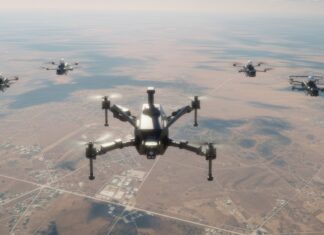
    Lockheed Martin Skunk Works® and XTEND have achieved a major milestone in JADC2 by integrating the XOS operating system with the MDCX™ autonomy platform. This technical breakthrough enables a single operator to simultaneously command multiple drone classes, eliminating the friction of mission handoffs. From "marsupial" drone deployments to operating in GPS-denied environments, explore how this collaboration is abbreviating the data-to-decision timeline and redefining autonomous mission execution.

    From Ukraine to Taiwan: The Global Race to Dominate the New Defense Tech Frontier

    0
    As traditional defense primes face mounting competition from agile “neoprimes” such as Anduril, Palantir and Helsing, the balance of innovation is shifting toward software-defined warfare and scalable, dual-use technologies, while global industry consolidation—marked by Boeing’s integration of Spirit AeroSystems and other strategic mergers—signals an intensified race to secure control over the defense technology value chain. Our Defense-Tech weekly report highlights these trends.

    Europe’s “Drone Wall”

    0
    In early October 2025, a coordinated wave of unmanned aerial system (UAS) incursions—widely attributed to Russia—targeted critical infrastructure across at least ten European nations. The unprecedented campaign exposed the fragility of Europe’s air defenses...

    Weekly Defense Update & Global Security Assessment

    0
    Executive Summary The past week (September 18-25, 2025) represents an inflection point where strategic defense concepts have transitioned from doctrine to tangible reality. An analysis of global events reveals four primary, interconnected trends shaping an...

    U.S. Air and Space Forces Push Next-Gen Programs at the AS&C 2025 Conference and...

    0
    At the 2025 Air, Space & Cyber Conference, U.S. Air Force and Space Force leaders unveiled major updates on next-generation fighters, bombers, unmanned systems, and space initiatives, highlighting both rapid innovation and critical readiness challenges as the services race to outpace global competitors. A short version is available here, with a more detailed version for subscribers.

    TADTE 2025: Reflecting Taiwan’s Strategic Themes

    0
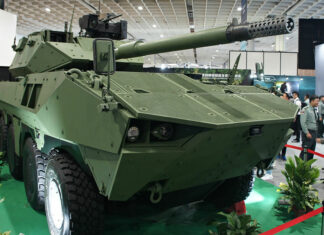
    The Taipei Aerospace & Defense Technology Exhibition (TADTE) 2025 crystallized around four dominant strategic themes that collectively illustrate Taiwan's comprehensive approach to defense modernization amid escalating regional tensions. Based on a detailed report by Pleronix (available upon request). Includes a Podcast discussion on TADTE 2025's highlighting Taiwan's four strategic themes beyond the post's coverage.

    Iron Beam 450 Completes Testing, Soon to Join With Operational Air Defense Units

    0
    Israel’s Iron Beam 450 high-power laser system has completed final testing, marking a major leap in air defense. Developed by Rafael, it offers precise, cost-effective interception of rockets, UAVs, and mortars, and is set for IDF deployment by 2025.