
Monday, December 22, 2025
More
    Home Blog Page 391

    Weapons and Munitions for the Special Forces

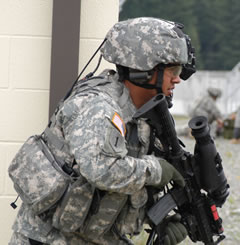
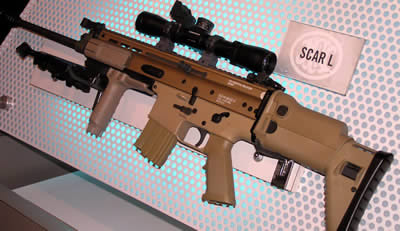
    The latest versions of SOF Combat Assault Rifle (SCAR) were on display by FNH USA. These included a sharpshooter configuration of the SCAR-L, displayed with the long barrel, a Leopold sniper scope, and bipod. A shorter version of SCAR-L was displayed with a short barrel chambered for 5.56×46 mm, a holographic sight from L3 EOTech, and the new Clip-On Night Vision Device – Thermal (CNVD-T) from Insight Technology. SCAR-H, configured for 7.62×51 mm ammunition, was shown with the Elcan Specter DR night sight. Also displayed was the 40mm LV grenade launcher.
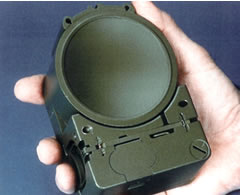
    An innovative device from MTC was the PARASCOPE, displayed by CERDEC and MTC Modern Technologies. This is an x1 optical sight coupled to a prism that allows the user to view the target from the side of the weapon. It also has a rear viewing port for alignment and conventional shooting. , The sight mounts on the 1913 Picatinny rail, behind the weapon sight enabling the user to operate red-tot, laser or holographic sights, as well as simple iron sight.
    Specialized weapon systems shown at AUSA 06, designed for Special Forces included the magnetic and infrared-activated improved M4E1 SLAM, developed by ATK and the FLY-K lightweight indirect fire weapon system, a portable indirect fire weapon system designed to fire 52mm mortar bombs from a quiet, low-signature launcher, at distances up to 800 meters. Other aspects of Special Operations support highlighted were the logistical support of remote teams, utilizing covert air delivery systems by air deliverable payloads dropped by UAVs. Examples shown at AUSA 06 include the U-ADD from Textron Systems, and QuickMEDs from Dynetics. Heavier loads of 30 – 500 lbs can be delivered from high altitude utilizing Altair’s Onyx guided parachute system.

    Armoring the Special Forces
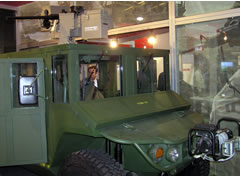
    A prototype of the all-terrain Flyer Light Tactical Vehicle was shown wearing the new ballistic protection, based on Ceradyne’s FlexKit modules. Two protection levels are available, utilizing various materials formed into modular kits, including ceramics, composites, steel and transparent armor. The armored Flyer retains its air transportability inside the V-22 aircraft, in support of special-forces operations.

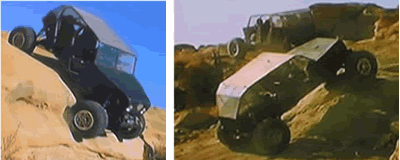
    Another all-terrain vehicle shown for the first time was the Stealth Reconnaissance Assault and Transport System (SRATS), developed by Utah based SRATS Inc. According to company sources, the vehicle was developed as ‘proof of concept’ platforms, but at least 10 examples are currently in production and will soon ship to Afghanistan to support special operations forces there. As a “rock crawler”, the vehicle has an outstanding mobility characteristics; it can be fitted with an armor kit weighing about 2,000 pounds (907 kg) bringing its maximum weight to 6,700 pounds (2.7 tons). Two SRATS vehicles can be lifted by a single CH-47.

    A different approach to the off-road mobility is pursued by the Land and Sea Special Operations (LASSO) diesel powered all-terrain vehicle (ATV). LASSO uses a unique chassis allowing it to transform from a 4×4 tactical vehicle into 6×6 logistical vehicle, with a quick removal of the rear wheel module. In the shorter configuration, LASSO can transport cargo up to 1,500 pounds (680 kg). The diesel powered LASSO is running on JP8 heavy diesel fuel.
    Start < Page 1 of 1 >

    Interceptor Body Armor

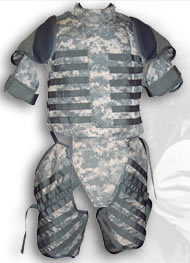
    The Interceptor Body Armor (IBA) is the current body armor provided to U.S. combatants. IBA uses a modular design, enabling periodical enhancements of subsystems and inserts. In the current version IBA consists of the Outer Tactical vest (OTV), made of a combination of cordura, Kevlar or Twaron. Pockets built into the fore and back of the OTV contain ergonomically designed kevlar backed composite ceramic panels (Small Arms Protective Insert (SAPI)/Enhanced SAPI (ESAPI) and other elements protecting the sides, shoulders and bicep. One of the leading producers of IBA components is Armor Holdings. At AUSA 06 the company introduced the LIMBS system, Lightweight Integrated Mobility Body Armor System. LIMBS provides enhanced protection to the shoulders, Bicep and Thigh while offering 25% less weight compared to existing systems. Its ergonomical design improves mobility, comfort and performance. The suite combines a shoulder-Bicep system.

    Start < Page 4 of 4 >

    Toward a “Cleaner” Battlefield?

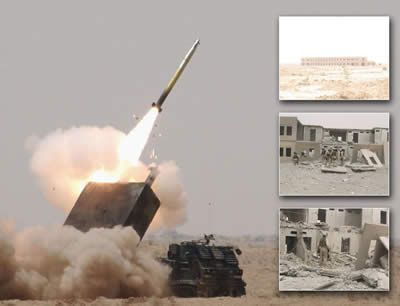
    Precision fires can be employed with all types of support weapons, including artillery rockets and missiles. When rapid and decisive response is required, Guided MLRS (G-MLRS) or even Army Tactical Missile System (ATACMS) are called for action. According to a Lockheed Martin briefing at AUSA 2006, over 100 G-MLRS rockets were fired in Iraq, in support of urban combat operations.

    Current artillery assets employed by the army and USMC are based on ‘statistical’ weapons, which require massive, widely dispersed fire to achieve a desired effect on the target. To compensate for the statistical error, dual purpose, improved conventional munitions (DPICM) grenades (designated M42/M46) are dispersed from the weapon (cargo projectile) to saturate the target area. While such weapons were widely used throughout all recent conflicts, since 1982, DPICM demonstrated a high failure rate, leaving many unexploded ordnance (UXO) in the field. Current efforts are underway to use “cleaner” weapons, reducing the long term post-war effects and minimizing UXO hazard to non combatants.

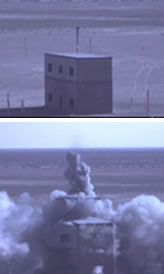
    One solution is to replace the cargo projectile or warhead (in rockets) with a unitary warhead. This concept is pursued with Enhanced Blast Warhead (EBW), developed for the Guided MLRS system; EBW demonstrated an area effect yielding 70-80% of the DPICM effect, without the hazards of unexploded duds. EBW also has devastating, localized effects inside buildings.

    Another approach calls for the improvement of the DPICM grenades, utilizing fail-safe fusing systems. ATK and IMI teamed to produce the XM242 fuses replacing the M223 fuses in existing M42/M46 grenades forming current DPICM ammunition. According to Israeli sources The IDF used cluster munitions of different types, mostly of US origin. Only part of these munitions were equipped with locally produced (IMI) self-destruct fuzes. Use of these advanced fuses could have contributed to a “cleaner” battlefield after the end of the recent hostilities, preventing the risk to explosive ordnance teams, as well as to civilian lives and properties currently experienced in the former combat area.

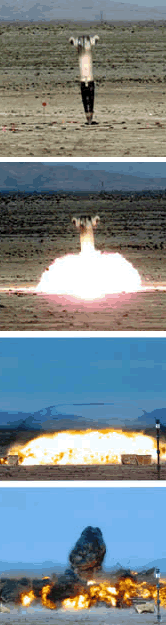
    A different weapon pursuing the “clean battlefield” initiative is the Clean Lightweight Area Weapon (CLAW)introduced by Textron Systems. Designed to accomplish the Anti-Personnel / Anti-Material (APAM) mission, a single 64 lb CLAW munition has the footprint and effectiveness of a 1000 lb (0.453 ton) legacy cluster bomb but without the risk of UXO. Each CLAW is designed for activation in a vertical position, oriented and stabilized by a parachute and activated at a preset height over the ground by proximity sensor. Utilizing Insensitive Munition (IM) explosive material, zirconium rings for enhanced incendiary effect and fragmentation assembly, CLAW maximizes the effect against dispersed unprotected personnel, material vehicles or storage areas.

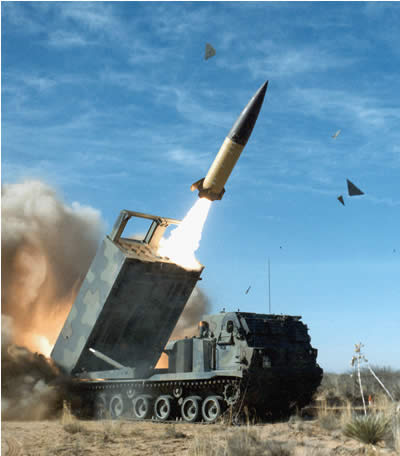
    High precision attack from extended range is also the domain of ATACMS, which was also used in during Operation Iraqi Freedom (OIF). ATACMS also started as an area saturation weapon but with improved guidance transformed into precision attack weapon. Between Operation Desert Storm (1991) and OIF the missile’s warhead was reduced, trading off some DPICM capacity for navigation and guidance hardware, enabling extended range and improved precision. During and after OIF, some 450 ATACMS were fired in Iraq, primarily against air defense and infrastructure sites. Missiles are fired from M-270A1 MLRS and HIMARS launchers. Since the missile can be launched from hundreds of kilometers away, it retains an element of surprise, maximizing the effect on target with a massive, localized strike.

    Lockheed Martin is currently producing Block 1A missiles to replenish depleted stocks, under a US$47 million order by the U.S. Army. One of the unique characteristics of the missile is its steep attack angle, resulting in a wide area fragmentation pattern, compared to standard rockets which follow ballistic trajectory and have non-optimized oblique terminal approach. A new version is a currently developed for deep penetration attacks, targeting deeply buried command posts and WMD facilities.

    To improve the precision effect of tube artillery, ATK is offering a simple but effective upgrade to the artillery munitions, introducing a Precision Guidance Kit (PGK) embedded into the fuse assembly of conventional projectiles. The kit uses a fixed canard design, which does not require complex activation or deployment of actuation. ATK claims the new guidance system will be able to reduce the calculated error point (CEP) below 20 meters (x10 time’s advantage over unguided artillery). The system will enable existing artillery to be used effectively against point targets, utilizing unitary warheads, rather then DPICM.

    Recent improvements made to mortar systems improved their accuracy and rapid response, thus becoming an effective weapon for modern asymmetric warfare. Operated at battalion level, 81 and 120mm mortars provide close fire support for troops, deploying smoke screens, illumination and precise lethal effects, utilizing computerized ballistic calculation for aiming and targeting. Soltam and Honywell have both displayed advanced mortar system improvements. With hundreds already supplied to the U.S. Army Stryker Brigade Teams, Soltam is now offering these capabilities to light and air-mobile users and Special Forces. The company demonstrated a new concept of a lightweight Cardom system, mounted on a trailer towed by a HMMWV. The system weighs 4,400pounds (2,000 kg) and can be airlifted by small transport aircraft and helicopters. It can accommodate 81mm or 120mm barrels, replaceable at field level. Honeywell displayed the computer control and navigation system employed with the 120mm mortars, utilizing the Talon Inertial Navigation System.

    Start < Page 1 of 2 >

    Advanced Infantry Weapons

    A few months ago, at Eurosatory 06, AAI displayed a model of the future Lightweight Small Arms Technology (LSAT) machine gun, under development as an Army Technology Development initiative since 2004. At AUSA 2006 AAI unveiled the machine gun prototype, and the unique telescoped and caseless ammunition designed for the system.

    The key objectives of the LSAT program are to reduce the weight of weapons carried by infantrymen by 35% and lessen the weight of ammunition by 40% while maintaining or improving lethality and reliability over current weapons.

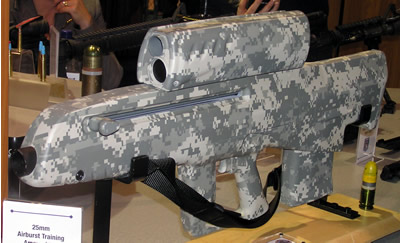
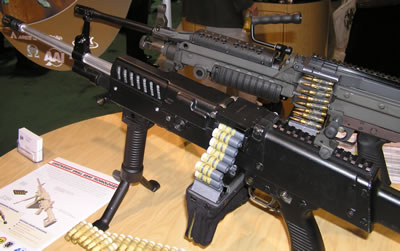
    XM25 Individual Airburst Weapon System is currently under development and intended to address the capability gap of defeating defilade targets. The weapon has the capability to hit point targets at a distance of 546 yards (500 meters) and area targets at 765 yards (700 meters). 25mm munitions currently in development include High Explosive Air-Burst (HEAB), armor piercing, door breaching, anti-personnel, and two types of non-lethal munitions – blunt and agent dispersing airburst. At AUSA 2006 the XM116 sight was displayed by L3 (Formerly Brashear). Two additional types of support weapons currently under development are the XM-307 25mm Advanced Crew Served Weapon which will use the same 25mm ammunition as the XM25. It will also have a lightweight machine gun derivative designated XM-312 firing standard and enhanced 0.50 Caliber (12.7mm) ammunition.

    Start < Page 3 of 4 >

    Air Warrior Program

    Air crews flying U.S. Army helicopters are using the Air Warrior aircrew ensemble, providing advanced life support, ballistic protection and Nuclear, Biological and Chemical (NBC) protection. Over 10,000 kits have been fielded. Currently used are the Block 1 systems, incorporating micro-climate cooling system, integrated survival gear and ballistic protection, improved over-water survivability and lightweight NBC protection.

    Further improvements are included in Block 2 upgrades, featuring an electronic data manager and aircrew wireless intercom system (Air Warrior will use Telephonics’ TruLink which has also been used with the Mounted Warrior program). Block 3 upgrades, currently at the early development phase, will incorporate improved situational awareness and survivability, enabling total transparency between day and night under full NBC (MOPP 4) environment. Further enhancements could also include cockpit installed crash protection airbag systems. The micro-climate cooling system maintains an air flow of cool air into a garment worn by the soldier directly against the skin. The air flow effectively dissipates body heat even at high ambient heat or sealed conditions (NBC protection). In 2005 500 of these micro-climate systems, developed by Foster-Miller, were modified to provide cooling for HMMWV crews in Iraq.

    Start < Page 3 of 3 >

    Evolving the Ground Soldier Systems (GSS)

    Within 4 – 5 years, LW will be enhanced by the Ground Soldier Systems (GSS) to become part of the Future Combat Systems (FCS). GSS will utilize many technologies developed and demonstrated during the Future Force Warrior advanced (FFW) technology demonstration program. GSS represents the future evolution of Land Warrior, introducing the future programmable radio (JTRS manpack), load carriage integrated with body armor and electronics and the ability to employ “netted lethality” by enabling individual warfighters to remotely direct weapons launched by other small unit members, or by network accessible joint platforms, beyond line of sight. Part of the program will be the integration of XM-104 weapon’s fire control systems and sights, with the commander’s and grenadier’s weapons. Within 10 years, one of the GSS objectives is to reduce the soldier’s fighting load by 50% and integrate it with all combat platforms. Currently in early evaluation phase, the program is scheduled to transition into system development and demonstration by 2008.

    The new wearable radio introduced by ITT is optimized for the dismounted soldier. Weighing only 1.2 lbs, the UHF radio transmits an average 5 watt power; the radio provides a range of 2 km in open area and 1 km in urban environment. It supports communications of voice, data and video, transferring up to 2.6 Mbps over a 1.2 MHz channel. The radio is simple to operate and supports dismounted soldiers with voice connectivity to Combat Net Radios (CNR) and FBCB2 situational awareness, as it automatically generating position report, without the need for an attached PDA.

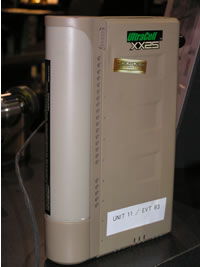
    Fuel cell technology is one of the promising directions for portable power sources. At AUSA 2006, the Army Research, Development and Engineering Command (REDCOM) demonstrated the Ultracell methanol-fueled soldier fuel cell, one of the systems pioneering this field. The system provides up to 20 watts of continuous power for 9 hours. The system feeds on lightweight fuel cartridges. Such fuel cells can power a dismounted command post or be used to recharge exhausted batteries for Land Warrior units. Unlike generators it has a low acoustic signature, but current systems still produce a significant heat.

    Start < Page 2 of 4 >

    Maturation of the Land Warrior Program

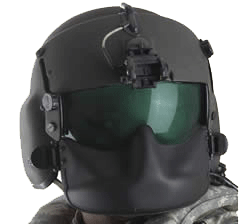
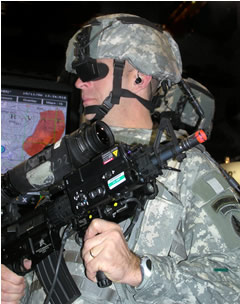
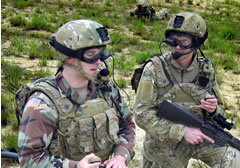
    Much progress has been made with the Land Warrior (LW) program and the Future Force Warrior. During the year, 587 kits have been delivered and tested by the 4th Battalion, 9th Infantry Regiment, 4th Stryker Brigade Combat Team, 2nd Infantry Division at Ft. Lewis. LW assemblies, include helmet mounted display and headset, soldier control unit, wearable computer, voice/data radio providing tactical internet connectivity, navigation module and GPS antenna and a rechargeable battery. Other LW elements are installed on the weapon, including a multifunction laser, daylight video sight and user controls. One of the new systems introduced at AUSA 06 was the “Fusion” element, developed by Computer Science Corp. (CSC). This wearable assembly combines the computer, navigation, helmet interface and soldier control unit, into a single ergonomic unit. Fusion 1.0 weighs 1.5 pounds (680 gr.) compared to 4.2 pounds (1.9 kg) aggregate weight of the four separate systems it replaces. Land Warrior kits are expected to enter service with current force Stryker Brigade combat teams in 2007 and 2008.

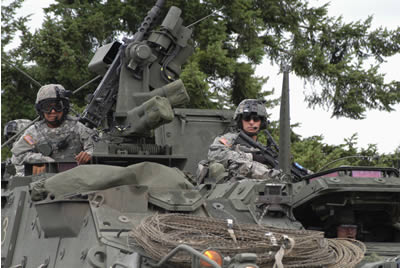
    Extending LW capabilities to the Stryker vehicles, Mounted Warrior program is providing the Stryker’s commander and driver with direct interfaces to the electronic systems on board, including FBCB2, driver’s vision enhancer (DVE) and remote weapon station (RWS). This integration contributes to their situational awareness, enabling communications with other mounted warrior and crewmembers. Future enhancement will introduce micro-climate cooling system, similar to those used with Air Warrior suits. A key element in the program is the Mounted Warrior helmet, comprising color OLED micro-display, and advanced audio headset.

    The system uses new cordless communications system, based on Telephonics’ TruLink data relay connecting crew members to the vehicle’s systems through a wearable wireless modem, transferring data at rates up to 72 Kb/sec. TruLink supports both voice and data, enabling hands free operation in high noise environments. The system also utilizes the Theramite Tactical Visual Computer (TVC) from Quantum 3D. The system establishes intercom functions with the crew members, and external communications, via push-to-talk radio. TrueLink provides access to low-frame rate video (10 fps) processed from sensor video, showing targeting and surveillance images from the driver’s vision enhancement systems, remotely controlled weapon stations, remote sensors or C2 applications such as FBCB2.

    Start < Page 1 of 4 >

    Precision Aerial Delivery

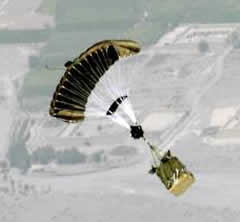
    Precision aerial delivery has also matured in recent years, with the availability of lightweight GPS navigation and flight control systems. Altair Aerospace introduced at AUSA 2006 an impressive range of precision parachute delivery systems, including the Onyx autonomously guided parachute system, capable of delivering payloads ranging from 500 up to 2,200 lbs from high altitude up to 35,000 ft within 50 meters of a pre-designated ground delivery point.

    The system is equipped with GPS unit and flight control system to navigate its flight path to the precise recovery point. The parafoil will carry the payload to a point over the designated target, where parachute opens, descending the payload to a soft landing. To support multiple deliveries of up to 50 payloads to a single point, Altair can utilize automatic formation flying, implementing collision avoidance techniques. In September 2006 Altair was awarded an U.S. Army contract for unspecified number of Onyx systems.

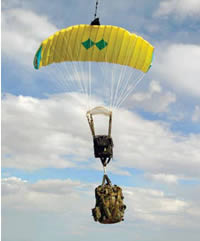
    When delivery of small but critical supplies is required, Micro Onyx can be used. The system uses an autonomously guided parafoil system designed to carry a payload of 20 lbs. Micro Onyx also employs collision avoidance, swarming/flocking flying rules to establish safe separation and formation flying, enabling delivery of multiple payloads to a single, or multiple designated locations. Micro Onyx delivery systems are proposed for precision emplacement of sensors as well as delivery of small munition payloads.

    Start < Page 2 of 3 >

    Future Heavy Lift for the Land Forces

    Aerial transportation is one of the critical capabilities required for the future force. Parallel to the development of ground combat elements of FCS, The U.S. Army is pursuing new technologies to significantly increase its air mobility. These technologies range from derivatives of existing capabilities, such as the Bell/Boeing Tilt Rotor system, to the X2 counter-rotating rotor system, which represents new potential for heavy lift capability.

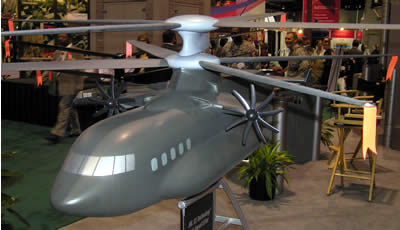
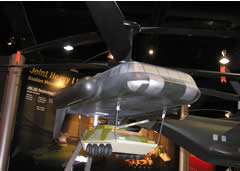
    At AUSA 2006, Sikorsky outlined the latest X2 technology applications for manned and unmanned applications, including the giant Joint Heavy Lift (JHL) flying Crane, and High Speed Lifter helicopter, both proposed as tactical heavy lifters for the FCS family of vehicles. Both the JHL crane and high speed heavy lifter will be able to lift around 40,000 lbs (around 20 tons). 

    The flying crane will be designed to carry outsized stores externally, utilizing a four point witch external load handling system flying at a top speed of 165 knots (305 km/h). The High Speed Lifter will be able to carry the same weight internally, flying at speed of up to 245 knots (453 km/h).

    In September 2005 Sikorsky Aircraft has been awarded two US government contracts to perform conceptual, preliminary design for two X2 Technology heavy-lift coaxial rotorcraft. The Concept Design and Analysis (CDA) awards from the U.S. Army’s Applied Aviation Technology Directorate (AATD) are in direct support of evaluating joint requirements and Joint Heavy Lift rotorcraft for the armed forces.

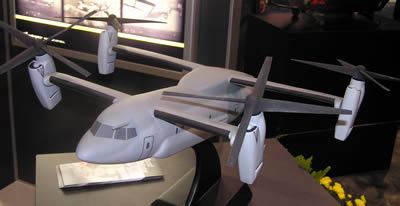
    Bell-Boeing displayed models of its heavy lifters, based on the tilt-rotor technology, already matured with the V-22. The Quad Tilt Rotor (QTR) aircraft is positioned as a “transformational Runway Independent Aircraft”. The aircraft will be capable of vertical takeoff, with cargo capacity similar to that of a C-130J. QTR will be able to carry 106 combat troops, vehicles and other loads weighing up to 25 tons. It will be capable of lifting 25 – 30 tons, fly 2,100 nm unrefueled with 11 tons of payload, cruising at a speed of 275 knots. Compared to rotary wing vehicles, QTR will be able to fly at higher altitude, up to 25,000 feet, well above the reach of anti-aircraft fire.

    A more futuristic concept pursued by Bell and Urban Aeronautics from Israel, is the X-Hawk, a “flying car” concept utilizing two lift fans and two turbine powered pusher propellers providing the vehicle lift, stability, lateral thrust and maneuverability for vertical and horizontal flight. Its unique capabilities are promising to revolutionize the approach to urban warfare, adding a vertical dimension to maneuverability in the ‘urban canyons’. X-Hawks will be able to assault a face of a building, enabling troops to assault inside through a window or evacuate the wounded for safety. Combined with other operational tactics, these capabilities could provide a truly force-multiplying effect.

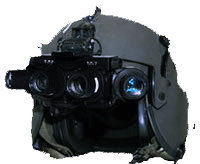
    Less futuristic but certainly welcome by all pilots is the Quadeye panoramic night vision system, from Kollsman, an Elbit Systems of America company. Quadeye provides a panoramic night vision goggles (PNVG) covering a central 40 deg. Binocular field of view plus monocular vision of an additional 30 degrees to either side. The extended view is similar to the normal eye’s peripheral vision and reduces the need and degree to which panning the head is needed when wearing goggles.

    Start < Page 1 of 3 >

    Armored Fighting Vehicles at AUSA 06

    The 2006 AUSA convention provided the showcase for armored vehicles manufacturers to discuss upgrades and modernizations proposed for current armored vehicles, and provide a glimpse into the future direction of AFV, particularly in relation to robotics, unmanned ground vehicles systems (UGV) and the Future Combat Systems (FCS) related programs.

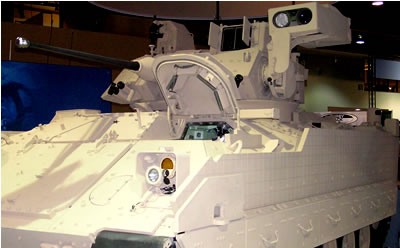
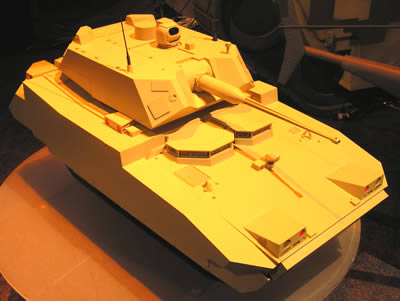
    One of the largest exhibitors was BAE Systems, displaying a new version of the modernized Bradley Armored Infantry Fighting Vehicle, fitted with remotely controlled turret, appliqué ceramic armor, peripheral vision, and new vetronics. BAE Systems also unveiled the future Infantry Combat Vehicle, which will become the tracked troop carrier of the FCS unit of action. General Dynamics Land Systems (GDLS) brought the latest Stryker model – Mobile Gun System (MGS), currently being supplied to the US Army Stryker Brigades. Other topics from GDLS were the latest improvements for the M-1A2 tanks. A modernized command version of the Light Armored Vehicle (LAV C2) developed by Lockheed Martin for the USMC. The vehicle is designed wit reduced visual signature, and integrates nine radios (including HF, VHF, UHF, Satcom and EPLRS) using only five antennas.

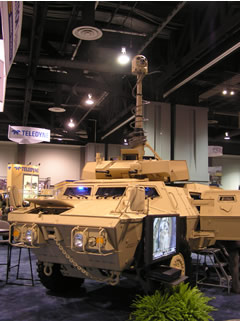
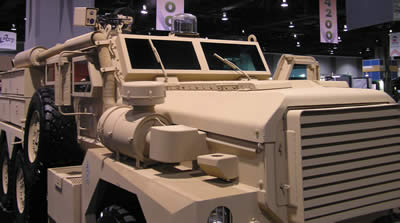
    Similar platforms were displayed by Textron Systems Marine and Land, which brought two of its vehicles – the M-1117 armored security vehicle, shown in a new scout configuration, and Dingo II all armored vehicle, a US version of the German Dingo armored vehicle, developed by Krauss Maffei Wegmann (KMW). Other armored wheeled vehicles included the new RG-33L protected vehicle, positioned to compete with the Buffalo and Cougars currently operated by the US Army and Marines. BAE systems also displayed the RG-32 light protected vehicle. Both vehicles are riding on the success of BAE’s RG-31, which has won the trust and confidence of warfighters in Afghanistan and Iraq, where they are operated by Canadian and U.S. forces. Force Protection Company is also beefing up its product line, with the addition of the Cheetah lightweight 4×4 protected vehicle, which is positioned to compete with BAE’s RG-31. However, at AUSA the company preferred to present their most popular platform, the Cougar 6×6, equipped with remotely controlled weapon station.

    Start < Page 1 of  5 >


    PDAs Based Applications

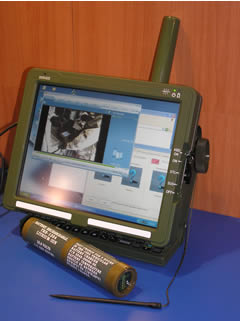
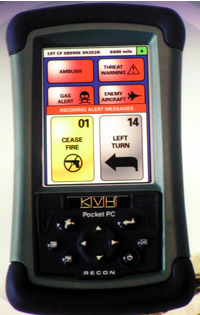
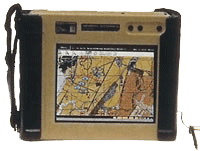
    Among the new hardware types at AUSA 06 were two military computing devices, the RPDA-57 and Tacter 31M introduced by Tadiran’s local subsidiary Talla-Tech. KVH unveiled a new Rugged Personal Digital Assistant (PDA) based application, combining hardware, software and communications. The system utilizes special purpose PDA called Convoy Comms, designed to provide an intra-convoy communications messaging system which provides the convoy commander with efficient situational picture based on the locations and status reports received from each vehicle. The system also enables rapid and effective distribution of alerts and commands.

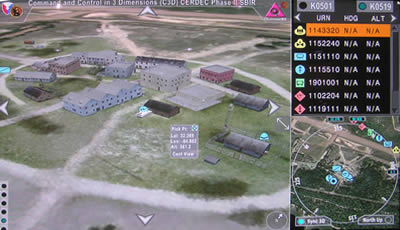
    A new version of Commander’s A different PDA application is the mortar fire control computer, developed by Soltam. The miniature system performs all the ballistic calculations necessary for accurate mortar fire and also provides logistics management for the fire unit. Commander’s Digital Assistant (CDA) is in development for General Dynamics Land Warrior program. While providing dismounted leaders with situational awareness picture derived by FBCB2, the system also maintains constant position reporting for non-line-of-sight blue force tracking. AAI and L3 Com displayed elements of the OSRVT / Rover III video datalink, used by U.S. forces to distribute UAV imagery in real time.

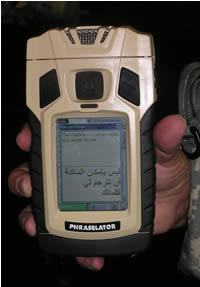
    PDAs are also used as “Smart translators”, solving language interaction issues created by foreign cultural and language barriers. In 2003, the first digital translator was introduced, to help U.S. soldiers translate simple village search commands from English to Pashtu and modern Arabic. The Speechguard system provided access to pre-recorded phrases, stored on a PDA in mp3 format. At AUSA 2006, more sophisticated implementation of this simple, yet effective product were demonstrated, part of the already deployed in the idle East. Phraslator P2, a system developed by VoxTec is currently available, supporting 40 languages. Phraslator can translate a series of predefined phrases, from spoken or written English to prerecorded phrases spoken in the local language. A standard military kit comes with six languages.

    Start < Page 4 of 4 >

    Communications On The Move

    WIN-T is the fundamental communications network developed for current/modular and Future Forces, providing the tactical and mobile enterprise network from theater through battalion and down to the Land Warrior squad. While existing networks support command posts on the halt, WIN-T will extend its services to all forces, while stationary and on the move. The system integrates satellite and line of sight waveforms providing capacity and efficiency over current transmission systems. General Dynamics, the prime contractor for WIN-T displayed various elements of the program.


    WIN-T will provide the basis for the FCS LandWarNet, but also support current and modular forces. The network operations policies will enable users to maintain communications under difficult conditions, enable network planners to tailor the system to address evolving requirements and conditions. Utilizing distributed network agents (DNA) embedded within all subscribers, the network will be able to proactively configure itself to establish links to each unit and automatically maintain a dynamic network throughout the theater of operation without soldier’s intervention. When required, the commander can ask to “thicken” a particular region of the network, to ensure consistent coverage in a specific maneuver space. Network Operations also provides dynamic health monitoring for the system, predicting connectivity to mobile elements and recommending proactive action to maintain and improve such links. Services tested during recent experiments including the use of teleconferencing, cellular network services over WIN-T.

    As users are relying on video and images, broadband connectivity becomes an essential service at all echelons. Providing wide-band connectivity to mobile and dismounted users still poses a technical challenge, requiring special terminals. Satellite On The Move (SOTM) capability requires a SATCOM terminal to maintain communications with the satellite, while on the move. This is achieved by stabilizing the antenna or utilizing electronic wave forming mechanism. Various antenna systems are being proposed for this application.

    One such system is the TracVision family from KVH. It uses gyro stabilized pedestal to keep the antenna pointing to a satellite. Originally designed for commercial Direct Broadcast Services (DBS) Ku band television services the system is designed as a low-profile antenna and is used for receive only. The company’s TracPhone systems employing Inmarsat services, are providing up to 128 kbps in uplink and downlink.
    General Dynamics C4ISR systems demonstrated the WIN-T POP Warfighter Information Network Terminal (WIN-T) Point of Presence (PoP) kit, an integrated set of systems enabling every command vehicle to hook up with the future WIN over Ku (commercial) or Ka (military) SATCOM links, at data rates of 64 to 512 Kb/s.

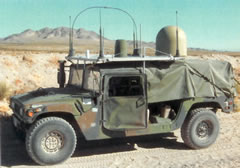
    The U.S. Marine Corps are also evaluating On the Move / Over the Horizon (OTM/OTH) capabilities for deployable maneuver elements, providing command and control elements with efficient, broadband connectivity for voice and data communications. The M2C2 systems, designed by Raytheon is comprised of an integrated communications suite carried on a HMMWV, and transportable with a single UH-60 class helicopter.

    Start < Page 3 of 4 >

    Modern Land Warfare Technology Trends – AUSA 2006 Review

    The annual meeting of the US Army Association (AUSA), held during the second week of October 2006 provided an excellent opportunity to assess the trends and opportunities of modern defense technology. The exhibition and presentations covered many topics, some are covered in the following briefs.

    In general, the highlights of this year’s exhibition followed the show’s slogan “boots on the ground”. Unlike past events, this year, exhibitors emphasized the products, services and technologies required to safeguard, and empower the warfighters on the ground, today and tomorrow. At the top of the agenda was force protection, addressing personal and vehicle armoring, counter IED techniques, threat location and engagement. These systems included gunshot detection and rapid counterfire, mortar location systems and means for precision engagement. Also highlighted were technological means assisting to overcome cross-cultural barriers, such as electronic translators, multimedia systems supporting collection, translation, and archiving of Arabic broadcast media and bi-lingual speech-to-speech translation supporting Arabic, Pashtu and English. On the logistical side, improved, better protected trucks, airborne delivery supply systems and new power sources, particularly those supporting regenerating energy were shown, promising to reduce transportation requirements, thus reducing convoy vulnerability to enemy attacks.


    Armor protection received special emphasis at AUSA 2006, covering passive, lightweight composite and ceramic based materials utilized for structural or appliqué armor kits. Heavier protection included the hybrid systems, combining passive and reactive armor – a typical composition of such a system was demonstrated by IMI. Various active protection systems were also addressed, including energetic “hard kill” as well as “soft kill” mechanisms.

    Obviously, longer term developments and R&D were discussed, focusing on the US army thrust to develop Future Combat Systems, including manned platformsroboticsUAVs and infantry combat suits. Other programs are underway to support current forces with improved platforms, weaponry and mobile command and control. Warfighter Information Network – Tactical (WIN-T) is one example, demonstrated here by several companies. Some of the advanced C4ISR systems, particularly those supporting the creation of situational picture and providing battlefield identification services are already being deployed and were highlighted by several exhibitors.

    Defense Update is covering AUSA 2006 through the following topics:

    Protection & Survivability

    Robotic & Autonomous systems

    The Aerial Dimension

    Fires and Effects

    C4ISR Systems

    Warrior Programs

    Special Forces Systems

    Remotely Operated Weapon stations at AUSA 06

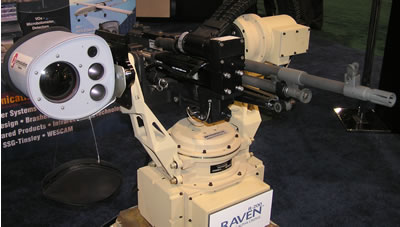
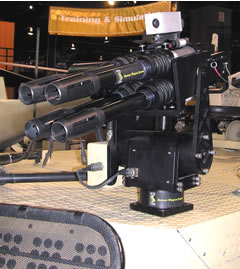
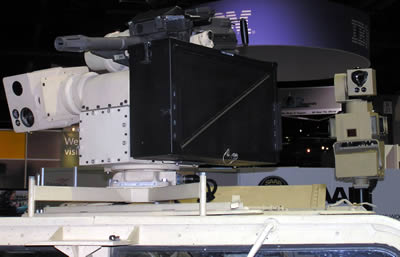
    While armed robotics still belong to the future, remotely controlled weapon stations are already saving lives in the combat zone, limiting warfighter’s exposure to enemy fire while maintaining vigilance and effective coverage of their surroundings. Although such systems are available from a number of manufacturers worldwide, AUSA 2006 was dominated by Recon Optical’s M101 Common Remotely Operated Weapon Station (CROWS), of which 300 examples have already been delivered to U.S. forces. Production of 580 units has been contracted between 2004 and 2006, The U.S. Army is planning to procure 3,000 additional systems under a new program currently under competition.

    A different stabilized weapon system which is expected to compete for the new Army program is the Protector Remote Weapon System (RWS). The first model was the M151, currently operational on some 1,300 U.S. Army Stryker armored infantry carriers. Protector is also available in a lighter version, with an “above the roof weight” of only 158 lbs (72 kg), including a loaded M240 weapon. The system uses the Protector’s electro-optical package, configured in a lower silhouette design. The Israeli company RAFAEL also unveiled a new lightweight weapon station, called Mini-Samson, mounting a light machine guns and electro-optical sensors. The system is proposed for the Merkava Mk 4 upgrade, which will include various protection improvements, including the Trophy active protection systems and remotely controlled weapon, operated by the loader.

    Sofar, remotely controlled weapon stations were provided only for vehicular platforms, but the US Marine Corps is evaluating the use of an ultra-light, man portable remotely operated weapon system for dismounted applications. The Telepresent Rapid Aiming Platform (TRAP) T-250D Mk IV system can be mounted on a vehicle, but can also be dismounted within few minutes, enabling users to remotely control a variety of weapons, sniper rifles and light machine guns. The system is currently undergoing tests with the Marines. Procurement decision is expected by mid 2007.

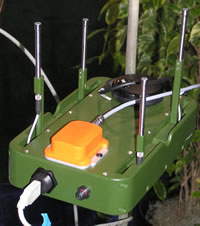
    One of the unique capabilities of remotely controlled weapon is the ability to aim at targets, based on external sensor cueing. One such example is the integration of gunshot detection system and CROWS. BBN, RAFAEL and AAI were among the companies addressing this requirement at AUSA 06. AAI’s Projectile Detection and Cueing (PDCue) system uses a tetrahedral array, or conformal microphones distributed at the four corners of the vehicle. Another acoustic gunshot detector is the Boomerang II, from BBN. Over 100 systems are already deployed in Iraq. The U.S. Army has contracted BBN to supply additional 106 such systems to equip more units in Iraq. The system was designed to operate in a noisy environment, such as on the HMMWV. Boomerang can automatically slew weapons or sensors to “close the loop” and rapidly engage the incoming fire with lethal counter effect.

    Acoustic gunshot detection systems are also becoming available in man-portable applications, providing early warning from a wide range of threats that can be characterized by an acoustic signature. Man-portable Acoustic Area Protection Systems (AAPS) were also displayed by General Dynamics C4. These systems were developed by the Australian based Land Warrior Acoustic Systems company. The system provides detection, classification and localization of acoustic signatures associated with various types of weapon discharges, from small-arms fire, through to mortars, RPG and artillery. AAPS is available as a wearable system, vehicle mounted units and as static, unattended ground sensors. The system provides continuous passive acoustic surveillance (no deaf periods) and is able to generate threat identification in both azimuth and elevation.

    Accurate detection and localization of sources of fire can be provided by electro-optical means. Overwatch, developed by the U.S. Army Space and Missile Command integrates two types of sensors, a staring thermal sensor covering wide area, and a narrow-field of view thermal sensor, used for threat identification and localization. Target information and imagery is disseminated via radio data communications, enabling immediate display of firing incidents on distributed FBCB2 situational pictures. In Israel, a similar system known as Spotlite II was developed for similar applications. Derivatives of this system have been operational for several years by the Israeli forces, providing protection and early warning from hostile attacks.

    Start < Page 3 of 3 >

    Skunk Works and XTEND Simplify Multi-Drone Command

    0
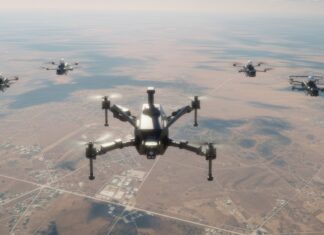
    Lockheed Martin Skunk Works® and XTEND have achieved a major milestone in JADC2 by integrating the XOS operating system with the MDCX™ autonomy platform. This technical breakthrough enables a single operator to simultaneously command multiple drone classes, eliminating the friction of mission handoffs. From "marsupial" drone deployments to operating in GPS-denied environments, explore how this collaboration is abbreviating the data-to-decision timeline and redefining autonomous mission execution.

    From Ukraine to Taiwan: The Global Race to Dominate the New Defense Tech Frontier

    0
    As traditional defense primes face mounting competition from agile “neoprimes” such as Anduril, Palantir and Helsing, the balance of innovation is shifting toward software-defined warfare and scalable, dual-use technologies, while global industry consolidation—marked by Boeing’s integration of Spirit AeroSystems and other strategic mergers—signals an intensified race to secure control over the defense technology value chain. Our Defense-Tech weekly report highlights these trends.

    Europe’s “Drone Wall”

    0
    In early October 2025, a coordinated wave of unmanned aerial system (UAS) incursions—widely attributed to Russia—targeted critical infrastructure across at least ten European nations. The unprecedented campaign exposed the fragility of Europe’s air defenses...

    Weekly Defense Update & Global Security Assessment

    0
    Executive Summary The past week (September 18-25, 2025) represents an inflection point where strategic defense concepts have transitioned from doctrine to tangible reality. An analysis of global events reveals four primary, interconnected trends shaping an...

    U.S. Air and Space Forces Push Next-Gen Programs at the AS&C 2025 Conference and...

    0
    At the 2025 Air, Space & Cyber Conference, U.S. Air Force and Space Force leaders unveiled major updates on next-generation fighters, bombers, unmanned systems, and space initiatives, highlighting both rapid innovation and critical readiness challenges as the services race to outpace global competitors. A short version is available here, with a more detailed version for subscribers.

    TADTE 2025: Reflecting Taiwan’s Strategic Themes

    0
    The Taipei Aerospace & Defense Technology Exhibition (TADTE) 2025 crystallized around four dominant strategic themes that collectively illustrate Taiwan's comprehensive approach to defense modernization amid escalating regional tensions. Based on a detailed report by Pleronix (available upon request). Includes a Podcast discussion on TADTE 2025's highlighting Taiwan's four strategic themes beyond the post's coverage.

    Iron Beam 450 Completes Testing, Soon to Join With Operational Air Defense Units

    0
    Israel’s Iron Beam 450 high-power laser system has completed final testing, marking a major leap in air defense. Developed by Rafael, it offers precise, cost-effective interception of rockets, UAVs, and mortars, and is set for IDF deployment by 2025.